

What do you think?

Nick Fury vs. S.H.I.E.L.D. #1-6
Nick Furia vs S.H.I.E.L.D.
Collects Nick Fury vs. S.H.I.E.L.D. #1-6.
S.H.I.E.L.D. faces its greatest threat - from within! All that stands in the way of its enigmatic inner agenda is Nick Fury himself...but Fury falls from grace when S.H.I.E.L.D.'s ruling council, commanded by the mysterious Deltite, frames him for treason and sends him running for his life. The network Fury built turns against him, and even he can't fight an army alone. Going underground, Fury gathers allies - but the Deltite's cult have targeted Fury's few remaining loyalists, replacing them with Life Model Decoy androids. Which agents are true to Fury? Which ones aren't even real? And which, if any, will survive? Must Fury destroy the organization to which he's devoted his life? In a world of lies that he constructed, who can a master spy trust?
S.H.I.E.L.D. faces its greatest threat - from within! All that stands in the way of its enigmatic inner agenda is Nick Fury himself...but Fury falls from grace when S.H.I.E.L.D.'s ruling council, commanded by the mysterious Deltite, frames him for treason and sends him running for his life. The network Fury built turns against him, and even he can't fight an army alone. Going underground, Fury gathers allies - but the Deltite's cult have targeted Fury's few remaining loyalists, replacing them with Life Model Decoy androids. Which agents are true to Fury? Which ones aren't even real? And which, if any, will survive? Must Fury destroy the organization to which he's devoted his life? In a world of lies that he constructed, who can a master spy trust?
304 pages, Paperback
First published October 28, 1991
About the author
Bob Harras
402 books13 followersRobert "Bob" Harras (born January 11, 1959) is an American comics writer and editor, who was editor-in-chief of Marvel Comics from 1995 to 2000 and currently serves as editor-in-chief of DC Comics.
Ratings & Reviews
Friends & Following
Create a free account to discover what your friends think of this book!
Community Reviews
Displaying 1 - 30 of 40 reviews

December 12, 2012
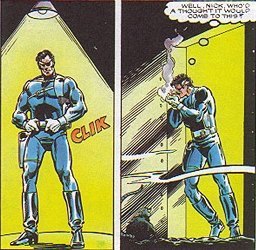
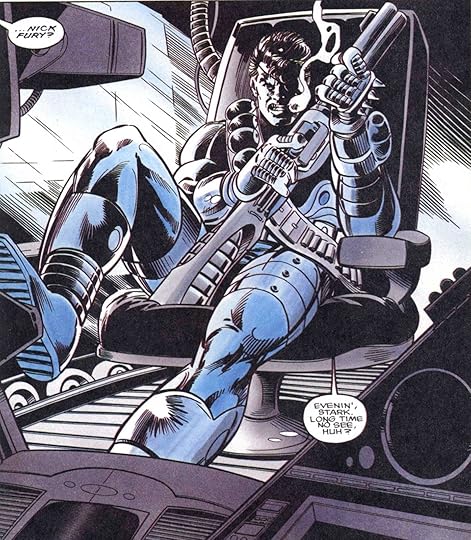
Maybe not an 80s milestone like Watchmen and The Dark Knight Returns, but this thrilling (and sometimes brutal!) action packed hi-tech spy story by the now DC comics editor-in-chief Bob Harras is just one of the best Marvel sagas of that period, so different by modern "Disney Channel" stories from the House of Ideas.
And storyline inspired a lot the "Captain America: the Winter Soldier" movie.
.
It's real good stuff, and it shocked for good this old reader here when he was a teen.
Just give it a try and enjoy.

June 21, 2017
42nd book read in 2017.
Number 331 out of 607 on my all time book list.
Number 331 out of 607 on my all time book list.

February 28, 2024
I read this in the individual monthly issues, published in 1988.
Bob Harras scripts a complex story with incredible depth and mystery. There’s a lot of content here, even after acknowledging the extra page count of each issue (48 pages), something you don’t see in modern comics. If published today, Marvel editors would instruct the creators to stretch this out across 16-24 issues and probably ask them to dumb it down a bit and add more fight scenes. Neary has to make his art fit within multiple-paneled pages and includes an incredible amount of detail in every scene. (A magnifying glass can attest to this).
Putting up with the mystery, confusion, and side plots/scenarios was worth it to get this pay-off in the final issue. Everything gets explained, and the origins of the Delta Project and breakdown with S.H.I.E.L.D. are revealed - - and the source is surprising and unexpected. Many of these items were devised to maneuver Nick Fury into position so the Infinity Formula within his veins could be tapped to create a master race that can regenerate their decaying, aging bodies at will, I don’t want to share anymore than that, in case you want to read it. Despite everything I’ve shared so far, you may still be surprised - - in a good way, Some really good story-telling on display here, with wonderful art and some great creators contributing covers.
Bob Harras scripts a complex story with incredible depth and mystery. There’s a lot of content here, even after acknowledging the extra page count of each issue (48 pages), something you don’t see in modern comics. If published today, Marvel editors would instruct the creators to stretch this out across 16-24 issues and probably ask them to dumb it down a bit and add more fight scenes. Neary has to make his art fit within multiple-paneled pages and includes an incredible amount of detail in every scene. (A magnifying glass can attest to this).
Putting up with the mystery, confusion, and side plots/scenarios was worth it to get this pay-off in the final issue. Everything gets explained, and the origins of the Delta Project and breakdown with S.H.I.E.L.D. are revealed - - and the source is surprising and unexpected. Many of these items were devised to maneuver Nick Fury into position so the Infinity Formula within his veins could be tapped to create a master race that can regenerate their decaying, aging bodies at will, I don’t want to share anymore than that, in case you want to read it. Despite everything I’ve shared so far, you may still be surprised - - in a good way, Some really good story-telling on display here, with wonderful art and some great creators contributing covers.

March 17, 2021
Bob Harras no será el editor más querido (y con justa razón), pero como guionista puede presumir un acierto: La miniserie NICK FURY VS S.H.I.E.L.D. (1988) pone al coronel Fury en jaque al descubrir que Hydra, IMA y Roxxon controlan su organización desde las sombras, dejándole como única opción enfrentarse a colegas y amigos para llegar al fondo. Un thriller de espías que destila intriga y conspiración, bien dibujado por Paul Neary (con portadas originales de Steranko, Bill Sienkiewicz y Joe Jusko, entre otros) y un trabajo de color que arriesga hacia el final de la serie. Una de las mejores historias sobre el agente del Escudo tras la etapa Steranko.

October 26, 2014
There are so many great little touches in this book. Interagency rivalries. Deep-cover secret agents that only report to the head of the service. Nick Fury hiding from his own agency in Central Station among the homeless. And when the book goes full-James Bond movie at the end, there are amazingly surreal moments like Fury taunting himself (from the subconscious of his enemy!) as he dies, which somehow, inexplicably, work. Highly recommended.

June 19, 2021
Absolutely fascinating - as well as being a very well written, large scale spy thriller there’s a definite sense that this has, ironically, infiltrated many other comics, films and TV shows since publication. First of all, it’s very well written: it’s paced exactly right and has a final issue that refreshingly doesn’t collapse into what Douglas Adams called Clackavoid, instead explaining the high concept very clearly and thusly demonstrating how it can be undone. I imagine for someone who was a fan of the older Fury comics, this would be even more enjoyable as old faces keep turning up throughout
Artistically it’s... a bit rough? Paul Neary’s pencils are probably excellent and there’s enough nods to Jack Kirby and vintage Steranko to feel like it’s paying attention to the masters. But unlike Neary when inked by someone of the talent of Alan Davis, Kim DeMulder has an annoying habit of making half the characters look the bloody same. It’s the only thing that really feels rushed and as such is incredibly frustrating
And as for the legacy of this - Secret Invasion particularly, and countless other Hydra/ AIM stories, just now feel like they’re basically rewriting this, and honestly this is better. There’s more emotional heft and sense of scope because it’s not rushed - and by god it should demonstrate to Marvel that these crossover events can just be limited series like this and not massive plot detailing gimmicks that they have become. I also suspect STRONGLY that Russell T Davies was thinking of this when he wrote Sound of Drums/ Last of the Time Lords but also completely forgot to pay attention to what Harras does so well - which is pace himself. In fact I imagine there’s a lot more things out there - Winter Soldier for example - that owes a lot to this. Fascinating
Artistically it’s... a bit rough? Paul Neary’s pencils are probably excellent and there’s enough nods to Jack Kirby and vintage Steranko to feel like it’s paying attention to the masters. But unlike Neary when inked by someone of the talent of Alan Davis, Kim DeMulder has an annoying habit of making half the characters look the bloody same. It’s the only thing that really feels rushed and as such is incredibly frustrating
And as for the legacy of this - Secret Invasion particularly, and countless other Hydra/ AIM stories, just now feel like they’re basically rewriting this, and honestly this is better. There’s more emotional heft and sense of scope because it’s not rushed - and by god it should demonstrate to Marvel that these crossover events can just be limited series like this and not massive plot detailing gimmicks that they have become. I also suspect STRONGLY that Russell T Davies was thinking of this when he wrote Sound of Drums/ Last of the Time Lords but also completely forgot to pay attention to what Harras does so well - which is pace himself. In fact I imagine there’s a lot more things out there - Winter Soldier for example - that owes a lot to this. Fascinating

November 19, 2014
This 'graphic novel' is a compilation of six comics written back in the late 1980s. It was a worthy attempt at showing how Nick Fury is the ultimate spy, I guess. I did not read the series when it first came out back when; I bought it on a whim [and because I got it dirt cheap] in this compilation form. I could not help but wonder if this series was a part of the inspiration of the second Captain America movie [starring Chris Evans]. Also, with the number of 'important' characters dying, I could not help but wonder if it was a 'stand-alone' series and outside of 'the Marvel Universe.'
It has a lot of activity in it. A LOT. There is some interagency riffing between the CIA and SHIELD; we see cameos of both East and West Coast Avengers as well as the Fantastic Four when Ben Grimm was in charge; .
We get to travel with Nick across the US, from New Mexico [I think] to NYC. From there, we go to Hong Kong, then the Himalayas. Leaving the Himalayas, we journey to outer space before returning to NYC. It comes across as an attempt to mimic James Bond and the exotic locales of the Bond movies, but seems to fall short. In fact, the entire series seems full of potential in an attempt to showcase Nick Fury's formidable talents. It just seems to fall short of reaching its goal. However, it was still an enjoyable ride despite falling short. I could not quite decide if it involved a plot to take over the world or a plot to provide humanity with a type of 'fountain of youth' that would allow everybody [or just a select group] to stay eternally young. At times, it seemed like the nameless, faceless enemy was aiming for global control; other times, it seemed like the goal was endless youth and never aging.
The coloring and artwork and what not reminded me of the 'bookshelf' format that Marvel toyed with for a while. I think it was called 'bookshelf'; Strikeforce Moritori went to a new format where their books were released once every three months, cost around three dollars, and were in a different format [as well as thicker] than regular comic books. I thought it did have some phenomenal artwork in spots in the book.
It felt like a stand-alone series yet had 'stuff' in it that came across as attempts to tie it into the regular Marvel U. As stated earlier, there were cameos of the FF and both teams of Avengers. Tony Stark also appears in some issues. The series starts off involving the SHIELD helicarrier that crashed in the desert [think it was the She-Hulk graphic novel]. Yet there were a few items in it that would indicate a stand-alone series [primarily because the events in this series had no lasting affect upon the Marvel U as a whole; not only that, we saw a similar storyline take place in the Avengers v. Invaders maxi-series].
Overall, I did enjoy the series. It got kind of wordy, in parts. Other times, it left a sense of nearly attaining 'greatness', but I still enjoyed reading the series.
It has a lot of activity in it. A LOT. There is some interagency riffing between the CIA and SHIELD; we see cameos of both East and West Coast Avengers as well as the Fantastic Four when Ben Grimm was in charge; .
We get to travel with Nick across the US, from New Mexico [I think] to NYC. From there, we go to Hong Kong, then the Himalayas. Leaving the Himalayas, we journey to outer space before returning to NYC. It comes across as an attempt to mimic James Bond and the exotic locales of the Bond movies, but seems to fall short. In fact, the entire series seems full of potential in an attempt to showcase Nick Fury's formidable talents. It just seems to fall short of reaching its goal. However, it was still an enjoyable ride despite falling short. I could not quite decide if it involved a plot to take over the world or a plot to provide humanity with a type of 'fountain of youth' that would allow everybody [or just a select group] to stay eternally young. At times, it seemed like the nameless, faceless enemy was aiming for global control; other times, it seemed like the goal was endless youth and never aging.
The coloring and artwork and what not reminded me of the 'bookshelf' format that Marvel toyed with for a while. I think it was called 'bookshelf'; Strikeforce Moritori went to a new format where their books were released once every three months, cost around three dollars, and were in a different format [as well as thicker] than regular comic books. I thought it did have some phenomenal artwork in spots in the book.
It felt like a stand-alone series yet had 'stuff' in it that came across as attempts to tie it into the regular Marvel U. As stated earlier, there were cameos of the FF and both teams of Avengers. Tony Stark also appears in some issues. The series starts off involving the SHIELD helicarrier that crashed in the desert [think it was the She-Hulk graphic novel]. Yet there were a few items in it that would indicate a stand-alone series [primarily because the events in this series had no lasting affect upon the Marvel U as a whole; not only that, we saw a similar storyline take place in the Avengers v. Invaders maxi-series].
Overall, I did enjoy the series. It got kind of wordy, in parts. Other times, it left a sense of nearly attaining 'greatness', but I still enjoyed reading the series.
July 15, 2022
Reprints Nick Fury vs. S.H.I.E.L.D. #1-6 (June 1988-November 1988). There is something rotten inside of S.H.I.E.L.D. With the theft of a classified power core, Fury realizes that there is a traitor inside S.H.I.E.L.D…but he’s quickly labeled as the turncoat. Now Fury’s on the run and trying to recruit loyal allies to help him uncover what is happening inside S.H.I.E.L.D. as something called Delta spreads its control over the secret organization.
Written by Bob Harras, S.H.I.E.L.D.: Nick Fury vs. S.H.I.E.L.D. is a Marvel Comics spy-espionage superhero series. Featuring art by Paul Neary, the six issue limited series was presented in prestige format and received positive reviews.
I read the Nick Fury series that followed Nick Fury vs. S.H.I.E.L.D. before I read these issues. When I finally got the issues, I realized how much I was missing from Nick Fury’s solo series. Nick Fury vs. S.H.I.E.L.D. is not only a high stakes comic book series, but it also serves to set-up Nick Fury and his allies for years to come.
The story isn’t always easy to follow. It starts out simple enough with Fury realizing there is a traitor in S.H.I.E.L.D. but then it starts to escalate with cloning, LMDs, and other craziness. The style (in general) of the series is that of a James Bond film with bigger and bigger events leading to an all-out battle in space.
I generally prefer Nick Fury as a supporting character, but this is one of the best examples of him as a leading character. The perfect spy is on the run (something that has been done more and more with the character since this series’ release), but the “for S.H.I.E.L.D.” type motivation for Fury also brings into question of what S.H.I.E.L.D. really is in the bigger picture…is it bigger than the United States and all the governments of the world?
I also like art of Paul Neary. The series has some fun covers, but Neary’s art inside is a good choice to express a “non-superhero” action book. The panels and story flows even if the comic is really wordy. Neary’s solid art helps guide the book’s direction.
S.H.I.E.L.D.: Nick Fury vs. S.H.I.E.L.D. is definitely a must if you are a fan of the character (though fans of the modern Nick Fury might be questioning who the old white guy is). While it does fit in the context of the Marvel Universe, it is more interesting to see a non-traditional non-superhero Marvel book…and this is one of the better ones. S.H.I.E.L.D.: Nick Fury vs. S.H.I.E.L.D. was followed by Nick Fury, Agent of S.H.I.E.L.D. Classic—Volume 1.
Written by Bob Harras, S.H.I.E.L.D.: Nick Fury vs. S.H.I.E.L.D. is a Marvel Comics spy-espionage superhero series. Featuring art by Paul Neary, the six issue limited series was presented in prestige format and received positive reviews.
I read the Nick Fury series that followed Nick Fury vs. S.H.I.E.L.D. before I read these issues. When I finally got the issues, I realized how much I was missing from Nick Fury’s solo series. Nick Fury vs. S.H.I.E.L.D. is not only a high stakes comic book series, but it also serves to set-up Nick Fury and his allies for years to come.
The story isn’t always easy to follow. It starts out simple enough with Fury realizing there is a traitor in S.H.I.E.L.D. but then it starts to escalate with cloning, LMDs, and other craziness. The style (in general) of the series is that of a James Bond film with bigger and bigger events leading to an all-out battle in space.
I generally prefer Nick Fury as a supporting character, but this is one of the best examples of him as a leading character. The perfect spy is on the run (something that has been done more and more with the character since this series’ release), but the “for S.H.I.E.L.D.” type motivation for Fury also brings into question of what S.H.I.E.L.D. really is in the bigger picture…is it bigger than the United States and all the governments of the world?
I also like art of Paul Neary. The series has some fun covers, but Neary’s art inside is a good choice to express a “non-superhero” action book. The panels and story flows even if the comic is really wordy. Neary’s solid art helps guide the book’s direction.
S.H.I.E.L.D.: Nick Fury vs. S.H.I.E.L.D. is definitely a must if you are a fan of the character (though fans of the modern Nick Fury might be questioning who the old white guy is). While it does fit in the context of the Marvel Universe, it is more interesting to see a non-traditional non-superhero Marvel book…and this is one of the better ones. S.H.I.E.L.D.: Nick Fury vs. S.H.I.E.L.D. was followed by Nick Fury, Agent of S.H.I.E.L.D. Classic—Volume 1.

Read
October 11, 2021I can't even count the reprises this story has had on page and screen, the number of times Marvel's top super-spy has realised his organisation is rotten, has been perverted from top to bottom. Forcing him to go underground, find the assets and allies unknown even to the other denizens of the shadow world of espionage, turn the tables by being even more devious, sometimes even more ruthless, and also just too damned stubborn to lay down and die. Despite all of which, despite knowing where this story was going from the start, the original still has a real paranoid power. Tipping these spy-fi characters of an earlier, simpler era over into the curdled mood of a Cold War that had lost whatever moral clarity it might once have possessed (and which, ironically, was on its last legs when this came out in 1989 – though in some ways the mood is more reminiscent of brittle seventies spy thrillers, albeit with a design sheen that's much more eighties). Shadowy controllers, psychedelic backgrounds turned somehow muted and dead in an age of bureaucrats. Cavernous underground facilities, now feeling more like tombs than cool Bond villain bases; old friends turned traitors. Neat little design tricks play their part, the same sort of clever stuff John Byrne was introducing to his Marvel work around the same time, as when the genre-standard countdown to a disastrous ignition is given new life by being stripped, in full, down the right-hand side of each page as it ticks closer to zero. Probably as close to Graham Greene as a Marvel comic has ever come, albeit minus the Catholicism (unless you count the scene of Fury crucified in a mankini) and with more rayguns, and also Greene tended to keep his apocalypticism more metaphorical. To be honest I'm increasingly unsure about that whole comparison, but there's just enough of something there that I'm going to let it stand. This is very good, anyway.
October 6, 2018
I think they got the concepts for both Captain America the winter solider and the first season of agents of S.H.I.E.L.D. from this series.
For shield being infiltrated in the captain America and the first season of agents of shield with Coulson being reanimated.
SPOILER!!!! FOR BOTH COMIC/TV SHOW:
Only instead of being infaltraited by hydra, shield was infaltraited by this maitance android that worked for shield and became self-awere. The android used the shield computer that had copies of the shield agents personalities and the used LMDs (life model decoy) to replace people. This play directly into what happened to coulson. The android used shield agents that where killed(by his agents or others) and made a copy of them based off the personality in the computer. Only in the tv show coulson was reanimated with kree(warrior aliens) blood instead.
I am a huge fan of both the Captain America movie and the agents of S.H.I.E.L.D. show, but I have to say I liked how this comic handled the story a lot more.
For shield being infiltrated in the captain America and the first season of agents of shield with Coulson being reanimated.
SPOILER!!!! FOR BOTH COMIC/TV SHOW:
Only instead of being infaltraited by hydra, shield was infaltraited by this maitance android that worked for shield and became self-awere. The android used the shield computer that had copies of the shield agents personalities and the used LMDs (life model decoy) to replace people. This play directly into what happened to coulson. The android used shield agents that where killed(by his agents or others) and made a copy of them based off the personality in the computer. Only in the tv show coulson was reanimated with kree(warrior aliens) blood instead.
I am a huge fan of both the Captain America movie and the agents of S.H.I.E.L.D. show, but I have to say I liked how this comic handled the story a lot more.
This entire review has been hidden because of spoilers.

January 4, 2026
Not being a game changer comic, I was greatly surprised for the use of very deep symbols here, and the whole idea of a mystic/tech organization that go beyond any government (idea further explored in S.H.I.E.L.D. By Hickman & Weaver Omnibus Gerald Parel Cover) very likely originated here. This seems to me a powerful inspiration for the movie Captain America: the Winter Solder, one of the best superhero movies of all time: the whole argument of the organization corrupted by the idea of perfect control through technology, and zeus-looking Fury going to be crucified for the secret of inmortality. However, there were a lot of pointless turns which ralentized the narrative. There could be more action in a lot of scenes, a better telling of the origins of the "villain", better use of iconic characters like Dum Dum and the Contessa. All in all, very enjoyable classic Marvel.
This entire review has been hidden because of spoilers.

December 2, 2018
I read it long time ago. Until today, this is the best story about Nick Fury and SHIELD. Paul Neary did an incredible job here, and Bob Harras wrote a corruption perfect story to create a new starting point for SHIELD and Fury.
It is more or less the kind of Marvel Knights line stories. But this story appeared a lot of years before MK.
**************
La leí hace mucho tiempo. Leí concretamente esta edición, la de esta misma portada.
Hasta ahora, esta es la mejor historia sobre Nick Fury y SHIELD. Paul Neary hizo un trabajo excelente y Bob Harras escribió una historia perfecta de corrupción para crear un nuevo punto de partida para SHIELD y Nick Fury.
Más o menos, es el tipo de historia con el tono más adulto que popularizara la línea Marvel Knights. Solo que esta historia apareció un montón de años antes de MK.
It is more or less the kind of Marvel Knights line stories. But this story appeared a lot of years before MK.
**************
La leí hace mucho tiempo. Leí concretamente esta edición, la de esta misma portada.
Hasta ahora, esta es la mejor historia sobre Nick Fury y SHIELD. Paul Neary hizo un trabajo excelente y Bob Harras escribió una historia perfecta de corrupción para crear un nuevo punto de partida para SHIELD y Nick Fury.
Más o menos, es el tipo de historia con el tono más adulto que popularizara la línea Marvel Knights. Solo que esta historia apareció un montón de años antes de MK.
Read
June 13, 2024Not that many know or at least wrote about this six issue prestige format miniseries in fact followed up on Marvel Graphic novel no. 18 She-Hulk from 1985. It was written and pencilled by John Byrne with Kim DeMulder as inker and colored by Petra Scotese. In this the SHIELD helicarrier crashed, and NickFuryvsSHIELD continues from this. Kim DeMulder carried over inking Paul Neary, really trying to capture the look of the She-Hulk graphic novel.
https://www.goodreads.com/book/show/1...
https://www.goodreads.com/book/show/1...

May 24, 2017
I remember reading this one the first time and loving it to bits. It seemed to be the best thing I have ever seen.
Now.... some nice art but man, do these characters talk alot! And have an inner dialogue going on and on.
But still... entertaining stuff.
Now.... some nice art but man, do these characters talk alot! And have an inner dialogue going on and on.
But still... entertaining stuff.

February 12, 2019
Classic spy story containing great espionage and double crossing at every turn. The art work is amazing and crazy at points, which surprised me because I expected a more straightforward spy comic. The dialogue is a bit heavy and there is a lot of it, but is still a fun read.

April 16, 2023
Excellent story, tight plotting made this a joy to read. I cannot go into much more detail other than the fact that ALL the old favorites are back in this story. I loved it, even the denouement. Art was up to the story in quality.

April 1, 2025
A minor masterpiece, taking the concept of SHIELD to its logical conclusion. Mostly gripping story which is particulary relevant to our current AI-obsessed times. Paul Neary is not the most exciting penciller you could have but some of the art here looks gorgeous, in classic Marvel-Kirby style.

June 24, 2018
A fun little Nick Fury spy thriller, that doesn’t entirely make sense but it has some really cool and fun action sequences, with some homages to the Jim Steranko era stuff.

April 5, 2019
a great spionage adventure !!!

April 28, 2020
A cool spy story with Nick Fury and a threat from inside S.H.I.E.L.D. that threatens to destroy everything.

May 1, 2021
Better than I expected. Neary's art improves with each book. All sorts of bonkers things happen. I'll probably need to read it again to figure out what was going on.

September 25, 2021
Weird, great shit. Even way too much talking and explaining in the final issue can't ruin it.
November 15, 2021
Good book of SHEILD and Nick Fury's agelessness.
LMDs, old friends, betrayal and more.
LMDs, old friends, betrayal and more.

December 15, 2019
Second time I read this series.
A good story, but maybe too long to tell it.
Good artwork in the begining. The close you are to the end, the word the artwork becomes.
Anyway, a real good spies story.
A good story, but maybe too long to tell it.
Good artwork in the begining. The close you are to the end, the word the artwork becomes.
Anyway, a real good spies story.

May 6, 2020
Ressenya en català:
https://www.elkraken.com/Comic_Cat/Su...
Reseña en castellano:
https://www.elkraken.com/Esp/Comic-es...
https://www.elkraken.com/Comic_Cat/Su...
Reseña en castellano:
https://www.elkraken.com/Esp/Comic-es...

March 22, 2013
As someone who's come very late to the party, and become interested in Nick Fury primarily through all the implications and unsaids in Brubaker Captain America (in particular)... I was hoping for, well, not sure really, but this wasn't really it. It's a lot of fun, in a Dan Dare sort of way, but not really soldierin' or spyin' and I really didn't expect the lead to be runnin' about in skintight blue rubber being all superheroey(or whatever). Not that I'm complaining - my inner 8-year-old Biggles Fan loved it... biffy and intrigue and unfathomable bad-guy technology and good guys who sorta win because Because. And at least now I know why some things have Fury with SHIELD and some divorced from it. I look forward to finding out how much of this feeds into other things elsewhere in the universe... however confusing that is. Three - okay, and a half - stars for sheer enjoyment, but bugger-all for completely failing to tell me anything about the hero - which is why I bought the damn thing in the first place. Swings and roundabouts, hey.

January 22, 2021
This story is excellent; incorporating elements of espionage and conspiracy, pushing Nick Fury into dangerous territory seldom trod for the master of spies.
Nick sees the organization he’a led for so long corrupted from within, and has all of his fancy resources stripped away.
Who can he trust? Seemingly no one.
Where can he turn? Some of the darker corners on Earth.
At the time a major turning point in Marvel continuity, it’s impact has been largely overlooked but it remains an excellent read.
This mini-series was hinted at as early as 1983, in the pages of Incredible Hulk, and hinted to again in West Coast Avengers. The previously released graphic novel “Sensational She-Hulk” by John Byrne is an incredibly effective lead-in.
This mini-series preceeds the 1989 Nick Fury And his Agents of S.H.I.E.L.D. Series.
Nick sees the organization he’a led for so long corrupted from within, and has all of his fancy resources stripped away.
Who can he trust? Seemingly no one.
Where can he turn? Some of the darker corners on Earth.
At the time a major turning point in Marvel continuity, it’s impact has been largely overlooked but it remains an excellent read.
This mini-series was hinted at as early as 1983, in the pages of Incredible Hulk, and hinted to again in West Coast Avengers. The previously released graphic novel “Sensational She-Hulk” by John Byrne is an incredibly effective lead-in.
This mini-series preceeds the 1989 Nick Fury And his Agents of S.H.I.E.L.D. Series.

July 28, 2015
Questa miniserie, qui raccolta in volume, presenta un punto di passaggio notevole nel mito di Nick Fury, l'agente segreto definitivo del cosmo Marvel. La storia è un misto di fanstascienza e complotto politico, non è decisamente una storia di super eroi, e le idee base verranno riesumate da Hickman per la sua recente, e ottima serie, Secret Warriors. A sua volta Harras ha ripreso alcune idee e suggestioni del Fury di Steranko.
Di fondo in questa serie assistiamo al risveglio di una intelligenza artificiale, un Life Model Decoy (LMD) evoluto che cerca la vera vita per se e per i suoi compagni, i famigerati deltiti, frutto del progetto delta, sostituendo via via gli agenti, alla ricerca della vita eterna contenuta nel sangue di Fury.
Una storia che merita di essere letta.
Di fondo in questa serie assistiamo al risveglio di una intelligenza artificiale, un Life Model Decoy (LMD) evoluto che cerca la vera vita per se e per i suoi compagni, i famigerati deltiti, frutto del progetto delta, sostituendo via via gli agenti, alla ricerca della vita eterna contenuta nel sangue di Fury.
Una storia che merita di essere letta.
December 14, 2020
Marvel Premiere Classic edition. This is probably the best one I've read so far, or it's at least tied with The Quest For Odin. Fury is Marvel's Batman in so many respects but especially in his ability to be interesting without having a legitimate superpower (although we find out in this that Fury does have a little more going on than meets the eye). Needless to say this Marvel Premiere Classic is an adventure: at no moment does this fade into melodrama it's just pure action all the way through. I know many writers and artists have butted heads with Harras as he became Marvels editor in chief but it's clear from this collection that he definitely had talent in writing exciting Marvel stories. Would highly recommend.
Displaying 1 - 30 of 40 reviews