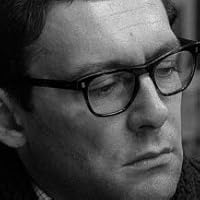
Nick Papadimitriou has spent a lifetime living on the margins, walking and documenting the landscapes surrounding his home in Child's Hill, North London, in a study he calls Deep Topography.
Part meditation on nature and walking, part memoir and part social history, his arresting debut is first and foremost a personal inquiry into the spirit of a place: a 14-mile broken ridge of land on the fringes of Northern London known as Scarp. Conspicuous but largely forgotten, a vast yet largely invisible presence hovering just beyond the metropolis, Scarp is a vast storehouse of regional memory. We join the author as he explores and reimagines this brooding, pregnant landscape, meticulously observing his surroundings, finding surprising connections and revealing lost slices of the past.
SCARP captures the satisfying experience of a long, reflective walk. Whether talking about the beauty of a bird or a telegraph pole, deaths at a roundabout or his own troubled past, Papadimitriou celebrates the poetry in the everyday. His captivating prose reveals that the world around us is alive and intrinsically valuable in ways that the trappings of day-to-day life lead us to forget, and allows us to re-connect with something more authentic, more immediate, more profound.
Scarp is a document of ‘deep topography,’ an offshoot of psychogeography caught up with memory, and the material dredged up by certain places with traumatic or nostalgic associations—instead of being shaken into a new awareness of the urban landscape, this discipline seems more masochistic and maudlin. Nick explores the region in which as a nihilistic teen he committed arson and was taken to prison, weaving his experiences into a poetic thicket of descriptive prose that includes strange drifts into fanciful historical fiction, accounts from curious figures in his past (including the hippie girl we’d all love to meet), and a trainspotter’s account of the area’s (deep) topographical make-up. Nick’s practice is too involved for this amateur psychogeographer. I will settle for losing myself in alien surroundings over the navelgazing torment involved in this lark.
This is one of the wackier books I’ve seen published by a corporate press in recent years. It is a mix of memoir, north of London local history and drug-fucked fantasy. It comes across as the written equivalent of a Godfrey Ho movie where various elements are cut together with a total disregard for narrative and logical sense. Does the Godfrey Ho school of exploitation film-making work on the written page? Well if you wanna know the answer you could do worse than check out Scarp.
My favourite line: “And the entire suburb is a groove sensation, a humming colony lit deep in ancient woodland.” That’s about Moor Park, which is just a bit south of Watford! Elsewhere Papadimitriou attempts to merge with the landscape and ‘become’ Middlesex...
Nick Papadimitriou wanders around the expanse of "Scarp", a region he has defined to the North East of London. Like Iain Sinclair the walking tour is a peg to which he attaches his own musings and recollections, mostly about a troubled adolescence in the 70s that ended in a spell in prison. We also get his imagined communings with the past, and pseudo-visionary passages. These don't convince in the slightest as anything more than fictions contrived at a writing desk miles away (as with all "psychogeography" in my opinion - city life would be unbearable if human beings could genuinely tune in for even a moment to the psychic agonies buried everywhere around them), but they are compellingly entertaining, though some of them owe more to TV drama conventions than any spiritual aura of special places. Unlike Sinclair he doesn't simply talk about his mates or the same worn-out literary connections that he's repeating from earlier books. IS has been a bore since "Rodinsky's Room", and I haven't bothered with his recent work, I notice the Hackney book got a few Amazon reviews that noted he only wrote about white middle-class counter-cultural colonists like himself. Iain does endorse this book, and so does Russell Brand, but don't let that put you off. Russell will probably grab a big role in any TV adaptation.
The obvious question: would I care for this book if I didn't know its subject matter? I can't answer that. I certainly read more vociferously the sections of places I knew better, researching every detail, recalling my own experiences, studying Google maps. And the sections of places I don't know at all, I enjoyed but didn't savour in the same way. I thought regularly about lending this next to friends from Finchley or Barnet (are you reading this Guy? My first review) but less so to friends from Grimsby or Huddersfield. Then again, who said books are meant to be universal?
For the most part, I believed in Papadimitriou's 'deep topology', the swift disorienting movement through time, the excavation of memory, the poetic renderings of geology, sewage. Maybe I would have liked a clearer history at points including the administrative changes in the region (most notably Middlesex and the Hundreds) but this wasn't the purpose of the book. The narrator wasn't necessarily likeable but why should he be? Maybe that's where it helped that I cared for his geography alongside his anecdotes. Certain fictional characters were simply too easy and lazy, crossing over into stereotype territory - if you are going to imagine voices to the land, you should imagine them a bit more multi-faceted. Papadimitriou's willingness to self-define this Scarp is creative, and encourages a creative and deep relationship with place, but he recognises his own prejudice in these matters in his refusal to go east. Recognising it doesn't make it less frustrating though. Cheshunt is on his map and yet he goes barely near it. Much of the book feels weighted towards Elstree, Stanmore, Pinner. These places are full of interesting geography and history and Papadimitriou renders them justice but the area of Scarp maybe promises more than we get.
Overall, the prosaic style had a big impact on me: I raced yet studied the pages. I flicked ahead and back multiple times to where South Mimms, Potters Bar, Borehamwood were mentioned, mapping the literature in my own head while staying attentive to the voice of the narrator. Posher areas further west, to which I've felt hostile in my life, were brought to life with rich histories, my eyes opened. In this regard, the book (re?)ignited a new attention to place, including those on the edge. Over a weekend back at my parents, I kept my eye on the detritus thrown from the M25 bridge down to a Catherine Bourne tunnel; the adjacence of the brooks to the sewage; the graves and phoneboxes of Ridge; the ascents and descents managed by modern roadway systems, the abandonments, old friendships, carried out on the 107 bus route.
Weird, leftfield, and slightly eerie, almost like a poetic version of the wasp factory - slipping into other minds and mini-stories that all blend into one larger and semi-somnolent awareness.. Lilting and dreamlike but also sharply observed, with a deep love for the location and years of exploration and research that weave through every scene.
I don't know what happened to this guy but he was around quite a bit two or three years back. I watched a video about him on Youtube and listened to a radio series he made about topography. Intrigued, I picked up a copy of this in a remainder bookshop for three quid and was astonished.
Scarp is an intensely powerful piece of writing. Centred on a sort of survey of a belt of high ground to the north of London, it also dips in and out of the author's personal life, particularly his adolescence. Papadimitriou has been pitched somewhat as a misfit oddball and instinctual topographer but I sense a degree of sophistication behind this work. He clearly knows a fair bit about a lot of different things - history, geology, flora and fauna and folk mythology just for starters and uses these to play cat and mouse with his reader.
The sections on his arrest for arson in 1977 strike me as bearing a naughty sense of humour underneath the 'tragic' events and I wondered if the whole thing wasn't a tall story.
His prose shifts between precise descriptions of hyper-particularities encountered in the landscape and passages of glorious delirium such as when he passes into the psyche of an eighteenth century botanist: Magic mushrooms, anyone? The final section of the book, supposedly a journal handed to him for annotation by a friendly rook (!) is another tall story. Perry Kurland's journal is a sequence of what are effectively modernist prose poems that hover between profundity and the hilarious.
Brilliant work. Comeback Mr Papadimitriou, all is forgiven.
Yes, there's some lovely bits here about the beauty of the disregarded, overgrown lands on London's margins, and the dubious charms of outer suburbia...but there are dozens of writers who can do that stuff, and too often this feels like a Pooter-style pastiche, Diary of a Psychogeographical Nobody. Sentences frequently collapse into bathetic details, and the attempts at ventriloquising local residents past and present would be embarrassing as creative writing class exercises. Ultimately, this is a genre in which you need to feel the writer makes a good walking companion, and for me, Nick Papadimitriou does not pass that test.
I was recommended this book by a librarian friend. It is a strange book, recording a journey along the escarpment of land around the north of London (much of which is familiar to me). The author also reviews his past, and family, reminiscing about his many misdemeanors. Some of the prose is interesting, and his observational detail is superb (often too detailed for me). It does get very surreal at times, and I lost interest later on, although I did finish it (I always do).
Extraordinary. Outsider art; outsider nature writing. A counterpoint to the English countryside books written by landowners with meadows and orchards that I will never have. A very bizarre and eccentric book. Disturbing sometimes.
The subject matter of this book is something that appeals to me a lot. It's the deep immersion in a place, a topography, its history and an observation in to what makes it really distinctive. But some of the more abstract flights of fancy in this book such as his imagined 'life as a rook' and the historical fiction, felt like a distraction from what would otherwise have been a more interesting read. The exception I'd say was Nick Papadimitriou's autobiographical passages about his childhood and early years but they were well narrated and did at least relate to his home environment and his interaction with the area. The book was much more fascinating when he was out exploring the landscape and nature of the North London fringe but sadly this seemed to be only a small proportion of the book.
Much better at being psycho than addressing geography. Was the latter just an excuse to be self-indulgent with the former? Was it all embellished anyway? Were the flights of fancy with outlandish characters just padding or did the author think he was digging deep with this imagined reality? Difficult to say, but leaving me with so many questions after writing about somewhere so ostensibly humdrum is a success of sorts.
At first glance you might take this for one of those quirky ‘walking memoirs’ that are fairly popular right now; the bright, handsome cover and accompanying blurb suggest something which occupies a similar territory to Roger Deakin or Rebecca Solnit; something that wouldn’t look too out of place amongst the Caught by the River collective, perhaps. I don't write any of this with disdain - all of the above are things I enjoy reading. I enjoy writing on nature and history that isn’t too technical or academic, and isn’t afraid of an intense subjectivity. But what I wasn’t prepared for was that this book would combine all that stuff with one of my other pet interests which is books that are, for want of a better description, really quite weird.
Like I said, this purports to be a book about nature. The chapters are arranged as a series of walks in the vicinity of what the author refers to as the ‘Scarp’, otherwise known as the North Middlesex/South Hertfordshire escarpment. An elevated region on the very furthest outskirts of London, just beyond what was once called ‘metro-land’, it’s the kind of place which tends to go entirely overlooked. A mix of brownfield sites and golf courses and commuter-belt housing and broken patches of woodland, to the author it is home turf, and the site of walks he has made and re-made many times over the years.
The book is about the land but also not about the land. It is, as you might expect, all about him; but the author remains a strangely elusive figure throughout. There are sections of personal memoir where the author describes his boyhood, his difficult relationship with his father after his mother’s death. He tells about how he burned down a house and, after confessing to the police, was sent to prison. We’re told a great deal about this arrest, but much of his life remains unclear; he is not especially interested in detailing his time in prison or afterwards. There are a few hints at spells of mental illness, but nothing much is said about work or family life, despite the intimate nature of that which he does bring up. It is all quite mysterious.
I remain curious because the fantastical aspects of this book are fascinating, and by far the best thing about it, and I wonder where it all comes from. The rambles across the landscape trigger something akin to an out-of-body experience in the author’s narration. Sometimes he becomes part of the landscape, some aspect of ancient geology or plant life informed by his rich knowledge of wild flowers and traditional herbology. Other times he trips into the body of another person and tells their story — that of a woman who falls under the spell of a cult leader; an obscure car accident at ‘suicide corner’; a tramp who is actually the reincarnation of a murderous magician who achieved immortality back in the eighteenth century. Strangest of all is a digression into the mind of a highly-intelligent rook named Merops, another everlasting character whose life spans centuries only to die under the wheels of a lorry while pecking at the guts of a freshly killed squirrel.
I don’t feel I am doing a very good job of describing this stuff, but it is extraordinary. Some of it is clearly based on the author’s own research and wide reading into the area, but other passages seem entirely imagined, and by the end I had pretty much lost interest in discerning the dividing line between the two: I was entirely absorbed in the world of the book. At times I was reminded of Iain Sinclair, but there’s none of the mania for bibliographical citation that I sometimes find an obstacle in that writer’s work. The style is also reminiscent of J.G. Ballard’s work after ‘Crash’ and ‘The Atrocity Exhibition’, but there’s nothing of that cold, surgical air here: this is deeply heartfelt stuff, sometimes rich to the point of absurdity. It’s defiantly unfashionable, exuberant and freewheeling, linking together apparently unrelated artefacts and events and nature and the living and the dead in a dense web of meaning.
How something quite so odd got published by a relatively unknown figure I am not sure. Ultimately, no comparison will suffice: this is one of those rare and peculiar books which will sit uneasily alongside pretty much anything else on the shelves. It is quite unique.
It's a long time since I felt the need to write about a book I'd read on here, at least as directly as this - but perhaps it's something I should do more often. The irony of reading "Scarp" in the middle of Glasgow, while the city moved quickly to take advantage of unexpected sunshine wasn't lost on me. George Square glistened in the light, pale skinned, blinking office workers emerging for their lunch break. Spending it with trouser legs and skirts rolled up, shades on while feet away, propped against a huge marble monument and just a little way from the huge metallic Olympic symbol erected for the summer, I sat devouring this curious book. In some ways, it's the book I wish I could write - part personal reverie, part hymn to the places around me. It delves deep into the landscape, and where current descriptions won't suffice creates a new map - you won't find "Scarp" identified anywhere I'm certain. But that's where this book plays its master stroke - we all invent our own maps and landscapes, but some of us do so more consciously than others. So "Scarp" is Papadimitriou's name for a mass of high-seated land which joins Chiltern Ridge to Lea Valley in a broad sweep across his beloved Middlesex. Buried in it are streams, lanes and byways which he has walked - often in dark times with all the associations they carry - to make sense of his county and his world.
Papadimitriou describes his work as deep topography and sets himself a little apart from the Psychogeographer. I was sceptical about the need to do so at first, but now I think I accept it a little more. He takes a sort of amalgam of old Ordnance Survey atlas, decommissioned guide book prose and personal recollection, and rewalks the landscape with no preconception. He accepts its stories, often it's casualties without judgement and most importantly without recourse to human sciences or politics to justify the links he makes. The prose is sometimes edgy, fast-paced and visceral - but is equally prone to longer passages of lush descriptive work - not least when Papadimitriou strays from a well-worn personal path and finds a new vista just feet from his more routine walks. The thrill of this is palpable in his writing, and having felt this same heart-leap at a sudden turn of a corner and never quite expressed it, it gave me huge pleasure to see it described in print.
Ultimately, "Scarp" is unresolved. We never get the end of the autobiographical thread which winds through the book, explaining perhaps why the author took to the edgelands and the streambeds - nor do we get to achieve the idea of "Scarp" as a whole. But that's because Papadimitriou hasn't yet managed that either. And it's likely he never will. There is both a luxury and a a risk in writing about such a specific and rarely trodden area. The post-cultural tourists who follow in the footsteps of the more famous psychogeographers probably won't stray this far up the Piccadilly Line, and this is perhaps a bit too redolent of the pylon, sewer outfall and business park to get the semi-professional walking set interested. But "Scarp" is a life's work, a labour of intense love for the landscape and a tribute to the land which sustains us, which we walk in difficult times, which links up homes, prisons, hospitals and bus stops. This is the landscape challenged and personified, but described in the loving detail of a botanist's catalogue. It's nothing short of a remarkable piece of work in that respect.
Scarp utilizes a decidedly unusual thematic throughout, and it's a mixture of memoir, travelogue, fantasy and psychogeography, all taking place within the 17-mile north Middlesex/south Hertfordshire escarpment . It seems from a cursory scan to be a haphazard patchwork of styles, but it is held together by some extraordinarily beautiful prose. The fragments of his personal history shed much needed light on the author’s current psychogeographic monomania.
Rather than pepper the book with bite-sized reminiscences of past excursions, the narrative is both dynamic and capable of rendering the most mundane of subjects as magical.
Despite my lustful noises about this book, there remains one caveat, albeit a modest one. The fantasy sections of Scarp where we see the landscape and life through the eyes of a notional person or creature leave me oddly unmoved, but the writing almost makes up for it.
I have simply never read anything like Scarp before, and despite the odd flaw, it remains an astonishing achievement.
This was an brillant and very strange book which for me turned into a multi-media experience where I traced the author’s wanderings on Google Streetview and Streetmap and also delved into the stories behind some of the nature writers, sewage farms, murders and road traffic accidents. I also ended up listening to some 1970s prog rock ( Kevin Ayers, Egg ) which was mentioned in the strange story of the Gloria Queen of the Psychedelic Ancients of Lower Saxony cult. Other shapeshifting spirits which appear in the book include Merops the Crow and broken-hearted husband of a witch drowned in a ducking pool in the eighteenth century in a village in the foothills of the Chilterns. Mixed in with all this are autobiographical elements including the author’s teenage truancy and pyromania and jail term and his quest to trace members of his dysfunctional family. Although fanciful, it all adds up to very fresh way of looking and history and landscape of the high ground Scarp of the defunct county of Middlesex - a take on psychogeography which Nick Papadimitrou has termed Deep Topography.
This is a strange book in so many ways, it a a physical journey around the escarpment of land around the north of London. But he also takes a wander through his past, and family, reminiscing about his avoidance of school, prison life and his drug experiences.
Some of the prose is beautiful; he has a wonderful turn of phrase, and his observational detail is superb. It does get very surreal at times, where the book reaches some of the darker depths of his mind. The writing reminds me of Ian Sinclair, in some ways, complex, layered and esoteric. The last one I read I could not get on with, but may have another go soon.
I'm very wary of people who describe books as 'journeys' but this one sort of is. A 'deep topographical' dive into the escarpment just south of where I grew up and where I spent a lot of time as a child. Papadimitriou finds all sorts of ways into Scarp and, in reading the book, you are pulled along across the miles and years. Both real and imagined, this history of the land mass most forgotten taught me more about the area then studying maps ever could. One of my favourite books, if not my favourite book I've read this year.
Read in bed and pubs, and finished whilst waiting for a lonely dinner celebrating good news.
I loved this book. The physical and mental ramblings of Nick Papadimitriou as he wanders the 'green belt' the half ruined half conserved countryside on the edge of London where I started my hiking career with my dad in the 1950s. Little stretches of sublime beauty merge into modern housing estates, pylons and people who would not think about a tree unless it blew down and hit them. It is a sort of saga of mindless modern Britain where people drive 300 yards and there seems to be a supermarket on each corner. He takes pride in his non conformity and uses language beautifully and ironically
This was an excellent book for a North Londoner, curious about the highways and byways of Edgware, Finchley, Southgate and such places. Nick Papadimitiou digs up some true crime shockers, some car crashes from old newspaper accounts, and manages to interweave these found materials with fictional and lyrical excursions, his own autobiography, the tracing of outflow pipes and buried rivers, and the naming of wildflowers. A heady mix. I read it much quicker than it took to walk.