

What do you think?

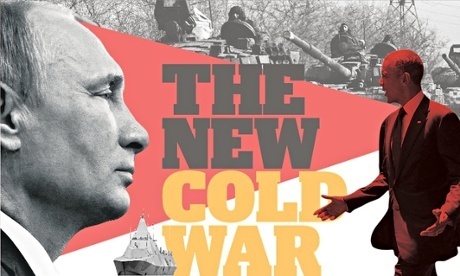
The New Cold War: How the Kremlin Menaces both Russia and the West
No longer the sick man of Europe, Russia is run by an authoritarian ex-KGB regime with the cash to put its ideas into practice. Under Vladimir Putin's autocratic rule, it silences its critics and bullies its neighbours. The murders of Anna Politkovskaya and Aleksander Litvinenko have sent a grim warning to other critics and the sham presidential 'election' in 2008 that put Dmitri Medvedev in the Kremlin as Putin's hand-picked successor showed how Russia's rulers, not the voters, dictate the country's political future. "The New Cold War" explains the Kremlin's use of energy blockades and trade sanctions, military sabre-rattling and propaganda wars against its neighbours - and why a divided and demoralised West is responding so feebly. Revised and updated following Russia's attack on Georgia, this is an incisive and disturbing account of why we are perilously close to defeat - and how we can still win.
'Essential reading for anyone who wants to understand Russia today' ANNE APPLEBAUM, AUTHOR OF GULAG
'An impressive polemic arguing that the West still underestimates the danger that Putin's Russia poses' SUNDAY TIMES
'If you need a convincing argument for a joined-up EU foreign policy, look no further' ANGUS MACQUEEN, GUARDIAN
'Perceptive and accurate ... the KGB regime is attempting to restore the Soviet Empire' VLADIMIR BUKOVSKY, FORMER SOVIET DISSIDENT
'Chillingly persuasive ... the best portrait to date of the the mentality of Putin's ruling class, the corrupted crony capitalism it has spawned and the uses, many of them hostile to the West, to which it is putting its fabulous war chest of oil and gas money' MARCUS WARREN, SUNDAY TELEGRAPH
'Essential reading for anyone who wants to understand Russia today' ANNE APPLEBAUM, AUTHOR OF GULAG
'An impressive polemic arguing that the West still underestimates the danger that Putin's Russia poses' SUNDAY TIMES
'If you need a convincing argument for a joined-up EU foreign policy, look no further' ANGUS MACQUEEN, GUARDIAN
'Perceptive and accurate ... the KGB regime is attempting to restore the Soviet Empire' VLADIMIR BUKOVSKY, FORMER SOVIET DISSIDENT
'Chillingly persuasive ... the best portrait to date of the the mentality of Putin's ruling class, the corrupted crony capitalism it has spawned and the uses, many of them hostile to the West, to which it is putting its fabulous war chest of oil and gas money' MARCUS WARREN, SUNDAY TELEGRAPH
350 pages, Paperback
First published January 1, 2008
About the author
Edward Lucas
9 books49 followersEdward Lucas is a British journalist. Lucas works for The Economist, the London-based global news weekly. He was the Moscow bureau chief from 1998 to 2002, and thereafter the central and east European correspondent. He has also been a correspondent for The Independent and the BBC. Lucas also writes occasionally for The Daily Mail.
Ratings & Reviews
Friends & Following
Create a free account to discover what your friends think of this book!
Community Reviews
Displaying 1 - 30 of 61 reviews

Want to Read
March 8, 2012UPDATE
I could not resist this photo's "charm".
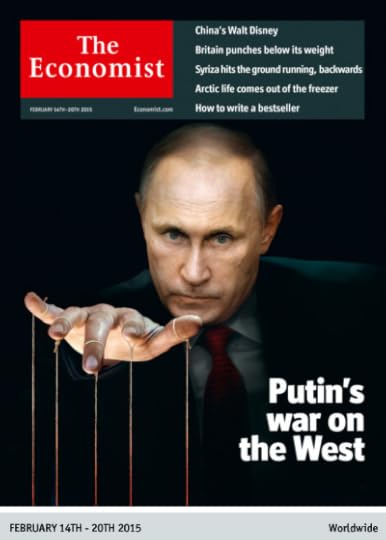
Back in 2012 Lucas gave an interview to The Economist; a talk about his book. Main points are as follow:
(1) Russian spies are busy as ever [forget about Cold War being over]
(2) The West let its guard down
(3) Putin is one of the richest and is surrounded by his cronies
(4) The economy is in a mess; there’s bribery and “brain-drain” in the field of education
(5) Don’t forget about the Anna Chapman case and the “ring of spies” uncovered; the Litvinenko (poisoned in the UK) case; the Sergei Magnitsky case, murdered because he had uncovered frauds perpetrated by senior officials.
(6) In conclusion: the SILOVIKI* men are in power.
---what has changed since 2012?
*(from WIKI)Silovik (Russian: силови́к; IPA: [sʲɪlɐˈvʲik]; plural: siloviki, Russian: силовики́; IPA: [sʲɪləvʲɪˈkʲi]) is a Russian word for politicians from the security or military services, often the officers of the former KGB, GRU, FSB, SVR the Federal Drug Control or other security services who came into power. It can also refer to security-service personnel from any country or nationality.
I could not resist this photo's "charm".
Back in 2012 Lucas gave an interview to The Economist; a talk about his book. Main points are as follow:
(1) Russian spies are busy as ever [forget about Cold War being over]
(2) The West let its guard down
(3) Putin is one of the richest and is surrounded by his cronies
(4) The economy is in a mess; there’s bribery and “brain-drain” in the field of education
(5) Don’t forget about the Anna Chapman case and the “ring of spies” uncovered; the Litvinenko (poisoned in the UK) case; the Sergei Magnitsky case, murdered because he had uncovered frauds perpetrated by senior officials.
(6) In conclusion: the SILOVIKI* men are in power.
---what has changed since 2012?
*(from WIKI)Silovik (Russian: силови́к; IPA: [sʲɪlɐˈvʲik]; plural: siloviki, Russian: силовики́; IPA: [sʲɪləvʲɪˈkʲi]) is a Russian word for politicians from the security or military services, often the officers of the former KGB, GRU, FSB, SVR the Federal Drug Control or other security services who came into power. It can also refer to security-service personnel from any country or nationality.

Want to Read
January 28, 2009Yesterday, the 27th of January I've attended the Round Table "Russia and the West. New cold war?" held at ISPI on the occasion of the italian release of the book by Edward Lucas "The New Cold War: Putin's Russia and the Threat to the West", published by "Università Bocconi Editore".
Attended as speakers: Aldo Ferrari, from ISPI and Ca' Foscari University of Venice, the author Edward Lucas from The Economist and the ambassador Sergio Romano from Corriere della Sera
Intolerance of dissent, open hostility towards the closest more democratic countries and a selective use of energy in order to divide the West are making Russia a danger, according to Edward Lucas.
Putin's Russia has been on a collision course with the West, but Europe and America seem to have not realised that. Under the label of "sovereign democracy" is developing an authoritarian system, the bearer of an antidemocratic and anti western ideology, not free from imperialist temptations, as demonstrated by the attack on Georgia in August 2008 and the trial of strength with the ' Ukraine for gas supplies. The murders of Anna Politkovskaya and Aleksandr Litvinenko, relevant due to the echo that they had in the West more than for their singularity, rather demonstrate the determination of the Russian regime not to tolerate dissent.
Much of the developement of these delicate relashionship will greatly depend on the President Barack Obama and the US orientation....
http://massimilianomauriello.blogspot...
Attended as speakers: Aldo Ferrari, from ISPI and Ca' Foscari University of Venice, the author Edward Lucas from The Economist and the ambassador Sergio Romano from Corriere della Sera
Intolerance of dissent, open hostility towards the closest more democratic countries and a selective use of energy in order to divide the West are making Russia a danger, according to Edward Lucas.
Putin's Russia has been on a collision course with the West, but Europe and America seem to have not realised that. Under the label of "sovereign democracy" is developing an authoritarian system, the bearer of an antidemocratic and anti western ideology, not free from imperialist temptations, as demonstrated by the attack on Georgia in August 2008 and the trial of strength with the ' Ukraine for gas supplies. The murders of Anna Politkovskaya and Aleksandr Litvinenko, relevant due to the echo that they had in the West more than for their singularity, rather demonstrate the determination of the Russian regime not to tolerate dissent.
Much of the developement of these delicate relashionship will greatly depend on the President Barack Obama and the US orientation....
http://massimilianomauriello.blogspot...

January 22, 2012
If you know nothing about contemporary Russian politics but are interested, then this is 'must read' for you. Excellent (and relatively short) summary of everything that happened over the last 10 years, during which Russia drifted from transition democratic state towards some sort of cleptocratic regime ruled by a group of persons usually associated with Putin. The book is written by the person who has followed Russian politics for fairly long period of time. I read it in 2009 and nothing has changed since then..
January 15, 2020
My review for The Business Standard (Jan 14, 2015)
Russia is at the forefront of geostrategic power shifts again. After witnessing impressive economic growth over the past 15 years, the Russian rouble has seen a dramatic fall, fuelling fears of a deep recession. This decline can be attributed to falling global oil prices and the European Union/United States sanctions in the wake of Russian aggression in Ukraine. The falling oil price has hit oil and gas export economies, like Russia, Iran and Venezuela, far worse than it has affected the nascent shale gas economy in the United States. On another front, Russia has also adopted a revised military doctrine that labels the North Atlantic Treaty Organization (Nato) build-up in East Europe as a "violation of international law".
At such a precarious juncture, The New Cold War gives an insight about the ideology, domestic political situation and foreign policy of Vladimir Putin's Russia. The author, Edward Lucas, is a senior editor at The Economist who has covered Central and Eastern Europe for more than 25 years. The book, originally written in 2008, has been republished in 2014 with an updated preface that covers the Crimean crisis. What adds value to the new edition is that although the author's predictions in 2008 have largely been upheld, the prospects of rapprochement with Russia remain just as bleak as the author had portrayed six years ago.
In the first two chapters, Mr Lucas traces the rise and rise of Mr Putin through the Yeltsin years. He begins by dividing the post-World War II Russia into three eras: the Soviet Russia, where political loyalty was at a premium; the Gorbachev/Yeltsin era, where talent and adaptability were rewarded; and the Putin era, which punishes only dissent. The communist ideology of Soviet Russia has very few buyers in Russia today, but it remains a powerful symbol of Russian domination. The Yeltsin era is seen as a painful period of transformation when the Kremlin sought to normalise relations with the West and transitioned to a free economy. The delay in realising the benefits of this churn combined with the subsequent oil price rise made it easier for Mr Putin, the successor, to stake claim to a stable, growing economy. This growth was a big deal for Russia, which faced a crippling financial crisis in 1998. Consequently, the Putin era emerged as a bullish and revisionist state that, in Mr Putin's own words, sees the collapse of the Soviet Union as a humiliating geopolitical setback the reversal of which was only a matter of time.
Domestically, the author equates Mr Putin's rise with the growing control of the KGB (or the FSB, to give it its new name) over all organs of the Russian state and economy. Mr Lucas mentions detailed instances that befit a Hollywood action thriller: murder in London with radioactive polonium, whistle-blowers going missing, orchestrated bomb blasts and so on. The author consistently reminds readers that dissent in any form is unacceptable to the Kremlin. An indicator of this phenomenon is the shrinking space for independent media houses. However, many Russians are extremely proud of their new found prosperity in the Putin era. This, combined with the growth of the projected personality cult of Mr Putin makes him the most popular figure in the country.
It is believed that unlike Soviet Russia, the New Russia has no ideology. The author disagrees. He refers to the governing ideology under Mr Putin's rule as "New Tsarism". This ideology has three main pillars. One, the growth of ethnic Russian nationalism, which finds its inspiration from the strength of the Soviet Union as a geopolitical giant. Second, religion and orthodoxy are very important to this ideology. Mr Lucas details the symbiotic relationship of the Russian Orthodox Church (ROC) and the KGB. The ROC's fear of Roman Catholicism nicely fits into the "belligerent West" conception of the KGB. Third, autocracy-sovereignty characterised by terms such as "derzhavnost" (meaning a strong centralised state) and "vlastnaya vertikal" (indicating Kremlin's omnipresent control) forms another important pillar of this ideology. As the Westphalian world view is assumed by default, The New Cold War fails to consider that this New Tsarism ideology might be a new civilisational world view altogether, akin to the Chinese or the Islamic worldview. Ideologues like Alexander Dugin have, in their writings, referred to the Russian conception of the world as the Eurasian world view.
The author sees Russian actions in Eastern Europe as a direct corollary to the New Tsarist ideology. It is here that the new cold war will be fought, he says. These countries, because of their Soviet Union history, have a large number of ethnic Russians. Here, the modern Russian state is at odds with the concept of the Russian nation. Russia's military doctrine explicitly warns against discrimination against its citizens in these countries. In 2001, this idea of a nation was further expanded to include all "compatriots" - meaning any Russian speaker in the former Soviet republics. Such a stance is bound to lead to conflicts. Estonia and Georgia are the hotspots of this conflict because it is here that "Russia's geopolitical ambitions, economical muscle and historical amnesia overlap". The sections on Ukraine, Belarus and the Central Asian "-stans" are a compelling read. The author believes that the best hope for a moth-eaten Ukraine, Georgia and Moldova is to make their remaining parts successful - economically, socially and politically.
Russia's growing strength in the neighbourhood is partly attributed to its status as the provider of natural gas and oil to energy-starved European nation-states of all hues. By acquiring private companies, the Russian state finds it easy to wield energy as a political weapon rather than a means of doing business. The details in the book on "pipeline geopolitics" should serve as a reminder of the threats to India if it is dependent on pipelines passing through hostile countries.
For ending this new cold war, Mr Lucas suggests that rules of finance, business and energy be rewritten so that countries can pose a joint opposition to Russia. The author is in favour of removing Russia from groups like the G8. Since the enemy is irreconcilable, he suggests an increase in Nato deterrence in Poland and the Baltic states. What needs to be noted, however, is that the foundation of Mr Putin's success over the last decade has been that only a few individuals and nations have lost but many others have gained. How this will change in the face of a looming deep recession might well determine the fate of Mr Putin's Russia.
Russia is at the forefront of geostrategic power shifts again. After witnessing impressive economic growth over the past 15 years, the Russian rouble has seen a dramatic fall, fuelling fears of a deep recession. This decline can be attributed to falling global oil prices and the European Union/United States sanctions in the wake of Russian aggression in Ukraine. The falling oil price has hit oil and gas export economies, like Russia, Iran and Venezuela, far worse than it has affected the nascent shale gas economy in the United States. On another front, Russia has also adopted a revised military doctrine that labels the North Atlantic Treaty Organization (Nato) build-up in East Europe as a "violation of international law".
At such a precarious juncture, The New Cold War gives an insight about the ideology, domestic political situation and foreign policy of Vladimir Putin's Russia. The author, Edward Lucas, is a senior editor at The Economist who has covered Central and Eastern Europe for more than 25 years. The book, originally written in 2008, has been republished in 2014 with an updated preface that covers the Crimean crisis. What adds value to the new edition is that although the author's predictions in 2008 have largely been upheld, the prospects of rapprochement with Russia remain just as bleak as the author had portrayed six years ago.
In the first two chapters, Mr Lucas traces the rise and rise of Mr Putin through the Yeltsin years. He begins by dividing the post-World War II Russia into three eras: the Soviet Russia, where political loyalty was at a premium; the Gorbachev/Yeltsin era, where talent and adaptability were rewarded; and the Putin era, which punishes only dissent. The communist ideology of Soviet Russia has very few buyers in Russia today, but it remains a powerful symbol of Russian domination. The Yeltsin era is seen as a painful period of transformation when the Kremlin sought to normalise relations with the West and transitioned to a free economy. The delay in realising the benefits of this churn combined with the subsequent oil price rise made it easier for Mr Putin, the successor, to stake claim to a stable, growing economy. This growth was a big deal for Russia, which faced a crippling financial crisis in 1998. Consequently, the Putin era emerged as a bullish and revisionist state that, in Mr Putin's own words, sees the collapse of the Soviet Union as a humiliating geopolitical setback the reversal of which was only a matter of time.
Domestically, the author equates Mr Putin's rise with the growing control of the KGB (or the FSB, to give it its new name) over all organs of the Russian state and economy. Mr Lucas mentions detailed instances that befit a Hollywood action thriller: murder in London with radioactive polonium, whistle-blowers going missing, orchestrated bomb blasts and so on. The author consistently reminds readers that dissent in any form is unacceptable to the Kremlin. An indicator of this phenomenon is the shrinking space for independent media houses. However, many Russians are extremely proud of their new found prosperity in the Putin era. This, combined with the growth of the projected personality cult of Mr Putin makes him the most popular figure in the country.
It is believed that unlike Soviet Russia, the New Russia has no ideology. The author disagrees. He refers to the governing ideology under Mr Putin's rule as "New Tsarism". This ideology has three main pillars. One, the growth of ethnic Russian nationalism, which finds its inspiration from the strength of the Soviet Union as a geopolitical giant. Second, religion and orthodoxy are very important to this ideology. Mr Lucas details the symbiotic relationship of the Russian Orthodox Church (ROC) and the KGB. The ROC's fear of Roman Catholicism nicely fits into the "belligerent West" conception of the KGB. Third, autocracy-sovereignty characterised by terms such as "derzhavnost" (meaning a strong centralised state) and "vlastnaya vertikal" (indicating Kremlin's omnipresent control) forms another important pillar of this ideology. As the Westphalian world view is assumed by default, The New Cold War fails to consider that this New Tsarism ideology might be a new civilisational world view altogether, akin to the Chinese or the Islamic worldview. Ideologues like Alexander Dugin have, in their writings, referred to the Russian conception of the world as the Eurasian world view.
The author sees Russian actions in Eastern Europe as a direct corollary to the New Tsarist ideology. It is here that the new cold war will be fought, he says. These countries, because of their Soviet Union history, have a large number of ethnic Russians. Here, the modern Russian state is at odds with the concept of the Russian nation. Russia's military doctrine explicitly warns against discrimination against its citizens in these countries. In 2001, this idea of a nation was further expanded to include all "compatriots" - meaning any Russian speaker in the former Soviet republics. Such a stance is bound to lead to conflicts. Estonia and Georgia are the hotspots of this conflict because it is here that "Russia's geopolitical ambitions, economical muscle and historical amnesia overlap". The sections on Ukraine, Belarus and the Central Asian "-stans" are a compelling read. The author believes that the best hope for a moth-eaten Ukraine, Georgia and Moldova is to make their remaining parts successful - economically, socially and politically.
Russia's growing strength in the neighbourhood is partly attributed to its status as the provider of natural gas and oil to energy-starved European nation-states of all hues. By acquiring private companies, the Russian state finds it easy to wield energy as a political weapon rather than a means of doing business. The details in the book on "pipeline geopolitics" should serve as a reminder of the threats to India if it is dependent on pipelines passing through hostile countries.
For ending this new cold war, Mr Lucas suggests that rules of finance, business and energy be rewritten so that countries can pose a joint opposition to Russia. The author is in favour of removing Russia from groups like the G8. Since the enemy is irreconcilable, he suggests an increase in Nato deterrence in Poland and the Baltic states. What needs to be noted, however, is that the foundation of Mr Putin's success over the last decade has been that only a few individuals and nations have lost but many others have gained. How this will change in the face of a looming deep recession might well determine the fate of Mr Putin's Russia.

March 10, 2022
If only Western leaders had read this book 12 years ago we might not be in the mess we’re in now. Putin always took geopolitics very seriously, Europe didn’t. Now look what’s happened.

February 26, 2012
The new Cold War is a right wing perspective on the threat that Russia plays to its neighbors and the west in the coming years. It focuses on the politics of Russia and how Putin has come to dominate the scene bringing a stability that has not been seen since before Gorbachev. Russia is in possession of a vast energy market and while not the military threat it once was it is terrorizing its neighbors in new ways. From Estonia to central republics of Asia the sleeping bear is rising one again. The main problem with this book and the reason it is only three stars is that as soon as it starts making good points it jumps to hyperbole and ridiculous suggestions of what the United States needs to do to check Russian power. If you are looking for a scholarly analysis of Russia’s current state in the world you will not find it here; however if you want a quick summary of Russia’s possible threat if a number of things should occur you can gleam some useful information from this book. Overall there are better reads out there on the subject and this one seems to be more popular press than scholarly work.
May 17, 2020
The only useful part of the book is the factual counting up and listing of transgressions made by the Russian elites up to 2008, when the book was published.
However, unfortunately, the analysis is lacking and the amount of value judgements and claims (unsubstantiated) made by Edward Lucas is striking. He consistently overreaches with his attempts to predict Russian behaviour, while not providing sufficient support to his arguments.
Which, truth be told, is understandable, since he is not an academic but rather a journalist. I guess the most fitting thing I can say is that the book lacks from an academic standpoint as far as its ability to explain the behaviours in-depth. It lacks the delving into the social psychologies and Social Identity Theory as explanations of Russian behaviours.
However, unfortunately, the analysis is lacking and the amount of value judgements and claims (unsubstantiated) made by Edward Lucas is striking. He consistently overreaches with his attempts to predict Russian behaviour, while not providing sufficient support to his arguments.
Which, truth be told, is understandable, since he is not an academic but rather a journalist. I guess the most fitting thing I can say is that the book lacks from an academic standpoint as far as its ability to explain the behaviours in-depth. It lacks the delving into the social psychologies and Social Identity Theory as explanations of Russian behaviours.

February 14, 2012
The book is extremely biased against Putin. Most of the material used to write the book was harvested from the Economist magazine and Financial Times newspapers-sister publications I must say-no real difference between the two. There nothing new in the book and that is disappointing given that Edward Lukas claims at being a former diplomat. I was expecting some inside track information that most of us (the public) don’t have easy access.
The author could not hide his resentment of Russia and Putin in particular. The good news is that I only bought the book because it was on sale!
No regrets it costs me next to nothing!
The author could not hide his resentment of Russia and Putin in particular. The good news is that I only bought the book because it was on sale!
No regrets it costs me next to nothing!

May 28, 2009
Lucas has a point of view and will hammer you with it until you agree with him. Not a great deal of substance beyond the propaganda. Then again,it may just be that we fail to see eye-to-eye on almost every issue he brings up in the book.

May 30, 2009
Interesting read; totally confirmed what I always hear about the man and the current "soviet" (small "S") state, that calls itself Russia. Hasn't changed much, as I recall from my time 20 years ago when I really studied the former Iron Curtain leader...

April 3, 2022
3,5
Good summary, and almost a prophecy. If this was read and taken seriously when it was published, maybe the massacre in Ukraine would not be happening. But alas, the West was too busy keeping its "growth".
Good summary, and almost a prophecy. If this was read and taken seriously when it was published, maybe the massacre in Ukraine would not be happening. But alas, the West was too busy keeping its "growth".

July 25, 2011
On one hand alarming, on the other hand, could be deemed a matter of perception... perhaps Russian exceptionalism is a fact that the world (read the West) must come to terms with

December 3, 2012
A good critique of Putin's Russia but becomes more interested in sucking up to the West. Dubious historical analysis is also present.
October 5, 2015
Must say couldn't finish this book. Once it had convinced me of the evils of Putin the rest became somewhat boring.

June 7, 2017
Opened my eyes to the new world order
August 4, 2017
Must read for a comprehensive record of Putin's foreign policy source and transgressions.

September 10, 2024
Книги, написані журналістами - це можливість поглянути на якусь проблему максимально широко, розібратись в кожній складовій, подьоргати за ниточки які потім ведуть до інших тем, інших проблем.
Дуже цікаво підняті теми внутрішньої і зовнішньої політики росії, її розвиток, починаючи від розпаду совєтського союзу і до 2008 року (рік видання книги). Проаналізовано і пояснено, які підґрунтя були для того, щоб ствердився авторитарний режим, як поступово до цього все йшло, чому люди радо прийняли путіна і його КГБ-шний підхід.
Як працювали з опозицією для того, щоб її не було, як знищувалась вільна преса, привласнювались державою найбільш вигідні компанії, а їх власники отримували десятки років в колоніях, або примусове психіатричне лікування, як за допомогою терактів і масових вбивств отримали прихильність пересічного росіянина до влади і мовчазну згоду на все, що буде відбуватись потім.
Пояснено, які важелі впливу має росія на Європу (а не навпаки, як хотілось би думати нам) і, чому насправді всім начхати на Донбас і Крим, проблеми з якими автор передбачив, хоч, нагадаю, сама книга 2008 року видання.
Мені було дуже цікаво читати про війну в Грузії і про становлення незалежності в країнах Балтії після розпаду совєтського союзу. Дам спойлер: мова була однією з ключових складових, чому вони зараз в НАТО і ЄС, а ми - там, де ми.
Чесно, кожна сторінка книги для мене відкриття. Я не знаю людей, яким вона могла б бути нецікавою. Місцями, для непідготовленого до такого аналізу читача, написана складно, але - це перша книга в моєму житті, яку я прочитала від першої по останню букву разом з усіма зносками, коментарями і посиланнями.
#yakaboobingoautumn2020 Yakaboo
#yakaboobingoautumn2020_20
#рецензії_Андріана

August 13, 2022
Written in 2008, this book is a bit outdated yet not irrelevant. Quite the opposite. We’ve been in the New Cold War with Russia for awhile now. I think it just took the war against Ukraine to get our attention. As Edward Lucas writes, presciently as it turns out, “if we do not win the New Cold War on terms of our choosing, we will fight at a time and place chosen by our adversary, and the odds will be tilted against us.”
The West has made the mistake of equating the fall of the Soviet Union with the end of the Cold War. The Yeltsin era - when the people running Russia wanted to join the West - may have been an illusion. We are facing people who want to “harm us, frustrate us, and weaken us,” according to Lucas. How are they doing that? First by splitting Europe and the United States. Second by exploiting our greatest weakness: money.
For more on that, see House of Trump, House of Putin, a horrifying overview of Trump’s ties to Putin, which go back to the 1980s when NY real estate offered the perfect money-laundering cover for Russians looking to unload their ill-gotten riches.
For the London-laundromat version, see Oliver Bullough’s book Moneyland, or take the short brilliant video tour on Twitter💷🧺: https://twitter.com/bydonkeys/status/...
The West has made the mistake of equating the fall of the Soviet Union with the end of the Cold War. The Yeltsin era - when the people running Russia wanted to join the West - may have been an illusion. We are facing people who want to “harm us, frustrate us, and weaken us,” according to Lucas. How are they doing that? First by splitting Europe and the United States. Second by exploiting our greatest weakness: money.
For more on that, see House of Trump, House of Putin, a horrifying overview of Trump’s ties to Putin, which go back to the 1980s when NY real estate offered the perfect money-laundering cover for Russians looking to unload their ill-gotten riches.
For the London-laundromat version, see Oliver Bullough’s book Moneyland, or take the short brilliant video tour on Twitter💷🧺: https://twitter.com/bydonkeys/status/...

August 16, 2022
I read the slightly updated edition of circa 2014 and not the one that came out in 2008 after the Georgia war. Putin hasn't changed, the book is a perfect description of Putin today, only the fear of what he is willing to do if he chose to act recklessly, is now very different.
In 2008 Putin was on the way to dominating Europe. Germany had dismantled their military, well they had personnel but not working weapons beyond very very few, but nothing of deterrence value, during the Social Democrat/Christian Democrat coalition (SPD/CD.) Russia was well on the way to be able to economically blackmail Europe into accepting any military action short of an existential threat and had started a military modernization.. As Radosław "Radek" Sikorski is quoted as saying that the Nord Stream pipeline deal signed by the previous SPD government was the equivalent of the Molotov Ribbentrop agreement deal as far as the independence of Eastern Europe, Radek's Poland included.
So in 2022 Putin carries out what was an existential threat, about 8 years too late when people knew what he wanted to do but just hadn't yet felt the fear: Cold coffee and a loud alarm.
In 2008 Putin was on the way to dominating Europe. Germany had dismantled their military, well they had personnel but not working weapons beyond very very few, but nothing of deterrence value, during the Social Democrat/Christian Democrat coalition (SPD/CD.) Russia was well on the way to be able to economically blackmail Europe into accepting any military action short of an existential threat and had started a military modernization.. As Radosław "Radek" Sikorski is quoted as saying that the Nord Stream pipeline deal signed by the previous SPD government was the equivalent of the Molotov Ribbentrop agreement deal as far as the independence of Eastern Europe, Radek's Poland included.
So in 2022 Putin carries out what was an existential threat, about 8 years too late when people knew what he wanted to do but just hadn't yet felt the fear: Cold coffee and a loud alarm.
December 25, 2016
Published in 2008, the Edward Lucas pulls multitudes of underlying events along with obvious signs together to conclude that we (the West) will head straight back into another long term, confrontational relationship with Putin's Russia. Behold, here we are. Excellently researched; although to be sure, the copy editing was a bit disgraceful. The author covered Eastern Europe for the Economist for 20+ years. Naturally, reads more like a textbook than a novel; awarded four stars due to high quality research and documentation.

May 13, 2019
See raamat on ühelt poolt hea, teisalt halb. See on hea kokkuvõte Venemaa kaasaegsest poliitikast ning vaatest teistele riikidele ja nende poliitikale, kuid teisalt on teemad kohati rasked ja vastikud. Alates inimsusevastastest tegevustest lõpetades tavainimesse suhtumisest. Ehkki tegemist on juba suhteliselt vana raamatuga (2008 ilmunud), on teemad endiselt aktuaalsed (mõnel juhul isegi rohkem, kui varem, nt impordipoliitika). Kui siia panna kõrvale ka "Putini Venemaa", saab kokku päris õõvastava pildil. Aga see on meie naaber.

January 17, 2025
Great book. Reading it in 2025 only highlights how much it was obvious for decades but ignored by the west. russia's involvement in Syria and its war against Ukraine, started in 2014, could have been prevented if only more would have read this book, from politicians to so-called "experts" in international relations.
Also, there is clear that these hybrid attacks (cables cut and so on) are not new, but, in fact, are decades old.
Also, there is clear that these hybrid attacks (cables cut and so on) are not new, but, in fact, are decades old.

April 1, 2018
Persuasive and still an important read for pretty much anyone, but especially for citizens of the EU and the US. He has tried to update the older edition with a foreword and afterword but it is still way out of date in most respects. I’d appreciate recommendations of well written and well argued books which are more up to date.

June 13, 2021
This book is amazing. It grows my awareness in many aspects. As a lithuanian, l feel the need to understand, how my aggressive neighbour act, or plan to act.
I would highly recommend it to everyone, who have the need to know, how the world (EU) around us works.
I would highly recommend it to everyone, who have the need to know, how the world (EU) around us works.

August 13, 2021
Even though the book is not the newest, it describes the workings of communism precisely. The scariest thong is that the same things are done by our leaders, Bidet and company...
April 18, 2022
Should be required reading in schools.

June 1, 2025
Excellent overview of early 2000s Russian politics. The book is twice as impressive when viewed in hindsight.

June 9, 2023
Asi bych dala i hodnocení čtyř, kdyby to nemělo občas takový obviňující tón, když Lucas poukazuje na to, čeho všeho je ruský režim schopen.
Jak sleduji dění na Ukrajině a dovzdělala jsem se během války určité reálie a historii, tahle kniha mé názory upřesnila a dodala jim detailnější náhled na určité události. V tom je kniha vážně dobrá. Jen si nemyslím, že jde o novou studenou válku. Svět je natolik jiný, že to již asi ani nejde - co by to mělo být - souboj kapitalismu versus oligarchismu? Nakonec je to asi hlavně zdánlivá podobnost a "clickbaitový" název knihy. To rozhodně ano. 3,5. Občas to bylo vykecávání a Lucas mohl být v nástinu úspornější.
Jak sleduji dění na Ukrajině a dovzdělala jsem se během války určité reálie a historii, tahle kniha mé názory upřesnila a dodala jim detailnější náhled na určité události. V tom je kniha vážně dobrá. Jen si nemyslím, že jde o novou studenou válku. Svět je natolik jiný, že to již asi ani nejde - co by to mělo být - souboj kapitalismu versus oligarchismu? Nakonec je to asi hlavně zdánlivá podobnost a "clickbaitový" název knihy. To rozhodně ano. 3,5. Občas to bylo vykecávání a Lucas mohl být v nástinu úspornější.

June 12, 2011
The end of the Cold War has been one of the watershed moments of the twentieth century. The tension between the Soviet Union and its allies on one hand, and the Western capitalist democracies on the other, has completely dominated all of international relations for almost half a century. The collapse of the Soviet Union had spurred hopes that the days of bipolar world and the constant threat of total nuclear holocaust are finally behind us. For some time it looked that Russia and a myriad other post-Soviet republics are firmly on a path of joining the West in emulation the institutions and practices of modern liberal democracies. Russia in particular, despite all of its massive economic troubles, seemed to be opening more and more and getting increasingly integrated in the international institutions and treaties. However, the beginning of the twenty-first century saw a dramatic reversal in political and personal freedoms within Russia and an increasing hostility and open challenge to the Western nations on international front. This renewed Russian belligerence and repression of political freedoms is the consequence of the arrival of Vladimir Putin on the scene, and his systematic attempts to reverse what is perceived by many in Russia as the whole scale national decline into chaos and lawlessness.
All of these developments and many others that are not so familiar to the western observers are chronicled with an unprecedented detail and thoroughness by Edward Lucas in "The New Cold war." Edward Lucas is one of the best journalists who specialize in Eastern Europe and the former Soviet republics. He relies heavily on his own journalistic contacts and experiences to weave a powerful and informative narrative of Putin's Russia and the power structures and mechanism that it employs. The picture is oftentimes very brutal and ugly, but this is just a reflection of the facts on the ground.
The second part of the book deals with the geopolitical threats that the resurgent Russia poses to its neighbors and the West. This part of the book is much shorter than the part that deals with internal Russian affairs, and the information is not as fresh and original. This is all rather unfortunate, since the book's title and the premise imply that the main focus of this book is on new Russia's foreign affairs and dealings, and how this constitutes a threat to the World on par with the Cold War. The reader takes home the message that Russia, despite its very sketchy and unsavory domestic and international politics is nowhere near to its erstwhile power to disrupt the peace and stability in the World. This may indeed be the accurate picture of the true potential and importance of Russia right now, but if the author wanted to alert the public to Russia's international aspirations then this book falls short. I truly hope to find the answer to this dilemma, and would like to read a book that is in fact entirely devoted to Russia's current diplomatic relations.
All of these developments and many others that are not so familiar to the western observers are chronicled with an unprecedented detail and thoroughness by Edward Lucas in "The New Cold war." Edward Lucas is one of the best journalists who specialize in Eastern Europe and the former Soviet republics. He relies heavily on his own journalistic contacts and experiences to weave a powerful and informative narrative of Putin's Russia and the power structures and mechanism that it employs. The picture is oftentimes very brutal and ugly, but this is just a reflection of the facts on the ground.
The second part of the book deals with the geopolitical threats that the resurgent Russia poses to its neighbors and the West. This part of the book is much shorter than the part that deals with internal Russian affairs, and the information is not as fresh and original. This is all rather unfortunate, since the book's title and the premise imply that the main focus of this book is on new Russia's foreign affairs and dealings, and how this constitutes a threat to the World on par with the Cold War. The reader takes home the message that Russia, despite its very sketchy and unsavory domestic and international politics is nowhere near to its erstwhile power to disrupt the peace and stability in the World. This may indeed be the accurate picture of the true potential and importance of Russia right now, but if the author wanted to alert the public to Russia's international aspirations then this book falls short. I truly hope to find the answer to this dilemma, and would like to read a book that is in fact entirely devoted to Russia's current diplomatic relations.

September 12, 2014
Ця книжка вперше була видана 2008 р. - після війни з Грузією. Проте більшість зроблених в ній висновків - актуальні як ніколи. Автор намагається зрозуміти логіку дій Кремля щодо країн Європи. І йому це гарно вдається. По-перше, він пояснює, чому Путін прийшов до влади, і чому його рейтинги не можна вважати "дутими". Насправді, росіяни тішаться з його твердої руки. І це результат не стільки брехні, скільки напів правди: 1990-і для Росії були кошмарним часом, а Путін навів порядок. Ціною прав і свобод, але порядок і стабільність виявилися ціннішими.
По-друге, він пояснює, яка ідеологія стоїть за Росією. Так, це не комунізм, від якого всіх нудило в часи СРСР. Це не чітка система догм з культом класиків, "священними писаннями" тощо. Але в "ідеології" путінської Росії є чотири складові: 1) історичний ревізіонізм (СРСР був великою державою, ніяких страшних злочинів не чинив, а тому слід пишатися цієї сторінкою своєї історії); 2) патріотизм (хоча це більше нагадує ревізіонізм, але щодо 1990-х рр., тобто заперечення демократизації, прозахідного мислення тощо, оскільки Єльцин слабак, а демократія - це "дермократия"); 3) ксенофобія; 4) православ’я. З такими чотирма "стовпами віри" Путін зберігає необхідний рівень довіри з боку населення.
Ця ідеологія для "своїх" доповнюється чіткою стратегією щодо "чужих": це не "гра м’язами" часів СРСР, а повільна економічна інфільтрація. Кремль тримає Європу в енергетичній залежності, причому намагається її тільки збільшувати: не допускає європейських фірм на російський ринок вуглеводнів, але сам намагається встановити контроль над європейським ринком. Ці дії завжди непрямі, приховані і ефективні, оскільки Кремль знайшов слабке місце капіталізму: принцип "гроші не пахнуть". Про це писали вже соціологи, що капіталізм знищить саме така "аморальність". Адже капіталізм тримається на ірраціональних основах (довіра, справедливість тощо). Проте витіснення цього ірраціонального раціональним (тобто перехід на позиції, що головним питанням
є прибуток) знищує капіталізм. У випадку з Кремлем це дуже гарний спосіб тиснути на ЄС: європейські країни миряться з "вибриками" Росії, бо хочуть прибутків. А прибутки можна отримати тільки граючи за правилами Кремля.
І тут автор пропонує простий рецепт виходу з кризи: ЄС має показати, що Захід - це не просто краща економічна система та рівень життя, а, перш за все, цінності. І ці цінності ЄС має відстоювати несхитно. Якщо цього не станеться, то Кремль зможе досягнути своєї цілі і здобути владу над колишніми країнами СРСР та соціалістичного табору. Або й просунеться далі...
По-друге, він пояснює, яка ідеологія стоїть за Росією. Так, це не комунізм, від якого всіх нудило в часи СРСР. Це не чітка система догм з культом класиків, "священними писаннями" тощо. Але в "ідеології" путінської Росії є чотири складові: 1) історичний ревізіонізм (СРСР був великою державою, ніяких страшних злочинів не чинив, а тому слід пишатися цієї сторінкою своєї історії); 2) патріотизм (хоча це більше нагадує ревізіонізм, але щодо 1990-х рр., тобто заперечення демократизації, прозахідного мислення тощо, оскільки Єльцин слабак, а демократія - це "дермократия"); 3) ксенофобія; 4) православ’я. З такими чотирма "стовпами віри" Путін зберігає необхідний рівень довіри з боку населення.
Ця ідеологія для "своїх" доповнюється чіткою стратегією щодо "чужих": це не "гра м’язами" часів СРСР, а повільна економічна інфільтрація. Кремль тримає Європу в енергетичній залежності, причому намагається її тільки збільшувати: не допускає європейських фірм на російський ринок вуглеводнів, але сам намагається встановити контроль над європейським ринком. Ці дії завжди непрямі, приховані і ефективні, оскільки Кремль знайшов слабке місце капіталізму: принцип "гроші не пахнуть". Про це писали вже соціологи, що капіталізм знищить саме така "аморальність". Адже капіталізм тримається на ірраціональних основах (довіра, справедливість тощо). Проте витіснення цього ірраціонального раціональним (тобто перехід на позиції, що головним питанням
є прибуток) знищує капіталізм. У випадку з Кремлем це дуже гарний спосіб тиснути на ЄС: європейські країни миряться з "вибриками" Росії, бо хочуть прибутків. А прибутки можна отримати тільки граючи за правилами Кремля.
І тут автор пропонує простий рецепт виходу з кризи: ЄС має показати, що Захід - це не просто краща економічна система та рівень життя, а, перш за все, цінності. І ці цінності ЄС має відстоювати несхитно. Якщо цього не станеться, то Кремль зможе досягнути своєї цілі і здобути владу над колишніми країнами СРСР та соціалістичного табору. Або й просунеться далі...
Displaying 1 - 30 of 61 reviews