

What do you think?

Sozinho ao redor do mundo
The classic travel narrative of a Don Quixote-of-the-seas—the first man to circumnavigate the world singlehandedly.
Joshua Slocum's autobiographical account of his solo trip around the world is one of the most remarkable—and entertaining—travel narratives of all time. Setting off alone from Boston aboard the thirty-six-foot wooden sloop Spray in April 1895, Captain Slocum went on to join the ranks of the world's great circumnavigators—Magellan, Drake, and Cook. But by circling the globe without crew or consorts, Slocum would outdo them all: his three-year solo voyage of more than 46,000 miles remains unmatched in maritime history for its courage, skill, and determination.
Sailing Alone around the World recounts Slocum's wonderful adventures: hair-raising encounters with pirates off Gibraltar and savage Indians in Tierra del Fuego; raging tempests and treacherous coral reefs; flying fish for breakfast in the Pacific; and a hilarious visit with fellow explorer Henry Stanley in South Africa. A century later, Slocum's incomparable book endures as one of the greatest narratives of adventure ever written.
Joshua Slocum's autobiographical account of his solo trip around the world is one of the most remarkable—and entertaining—travel narratives of all time. Setting off alone from Boston aboard the thirty-six-foot wooden sloop Spray in April 1895, Captain Slocum went on to join the ranks of the world's great circumnavigators—Magellan, Drake, and Cook. But by circling the globe without crew or consorts, Slocum would outdo them all: his three-year solo voyage of more than 46,000 miles remains unmatched in maritime history for its courage, skill, and determination.
Sailing Alone around the World recounts Slocum's wonderful adventures: hair-raising encounters with pirates off Gibraltar and savage Indians in Tierra del Fuego; raging tempests and treacherous coral reefs; flying fish for breakfast in the Pacific; and a hilarious visit with fellow explorer Henry Stanley in South Africa. A century later, Slocum's incomparable book endures as one of the greatest narratives of adventure ever written.
248 pages, Paperback
First published January 1, 1899
About the author
Joshua Slocum
90 books70 followersJoshua Slocum was the first man to sail single-handedly around the world. He was a Nova Scotian born, naturalised American seaman and adventurer, and a noted writer. In 1900 he wrote a book about his journey 'Sailing Alone Around the World', which became an international best-seller. He disappeared in November 1909 while aboard his boat, the Spray.
Ratings & Reviews
Friends & Following
Create a free account to discover what your friends think of this book!
Community Reviews
Displaying 1 - 30 of 879 reviews

September 5, 2013

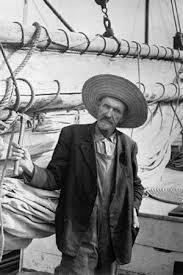
Check out how awesome this Joshua Slocum dude is. He's old, he's on a boat, he's got a badass straw hat. He doesn't care that he looks like a doofus with it on, which makes him that much cooler. He was the first person to circumnavigate the world alone (and that means to sail all the way around it, for you greenhorn scallawags out there).
When he was nearly a few scores old, he shoved off from Newport, Rhode Island (without his wife/cousin Henrietta or his many children) in his trusty Spray to reenact some of the Robert Louis Stevenson and Daniel Defoe novels he loved. He Old Man and the Sea-ed it up, if you'll allow me the liberty of verbing nouns.
There are people today who do cool stuff like this. But they don't do it with nearly the style of this guy. Katie Spotz is a person, barely a score old, who rowed across the Atlantic Ocean by herself. But the difference is that she is merely accomplishing a feat of endurance. If she ever writes a memoir, this is what it will be: "I rowed across the Atlantic and it was really hard. My arms got tired and I got sunburned and I was really thirsty too and lonely."
But this guy... Let me just try to summarize a few of the highlights: "I was married to my cousin and I left everyone to sail around the world by myself. I tried to keep a goat on board but he ate the only map I had. I met a group of savages who had never seen a white guy and some of them wanted to eat me and some of them wanted to worship me. I met up with Fanny Stevenson (wife of Robert Louis Stevenson) in Samoa. I don't even use a compass; I just point myself in the direction I think my destination is and hope I get lucky."
What happened to that pure sense of adventure? Is there nothing left to explore in the world?
P.S. I almost forgot to mention one of the most compelling things about this dude. In 1909, he joined the People Who Have Disappeared Without a Trace Club. He was on a routine voyage (alone) to South America and he never returned. Everyone thinks his ship must have been sunk by a whale, because he was too great a sailor and his boat was too seaworthy for any other explanation to be conceivable. But my guess is that he just decided he didn't want to come back. I'm willing to bet that he's still out there, sailing the seas and if you were to run into him today, he'd be 169 years old, but he'd look no more than a day over 120.

November 23, 2020
From "Sailing Alone Around the World" --
"But where, after all, would be the poetry of the sea were there no wild waves?"
I was taken sailing once in Bahstan Hahbah and it was not a pleasant experience. All I remember is it was very windy, and crowded with boats; I did not enjoy the company of our hosts and for all I know I had cramps. So I never set foot on another sailboat. But my GR friend Numidica, who sails, recommended the book and sailing with Joshua Slocum via the memoir of his solo sail around the world -- he was the first person to do it -- was a revelation and a treat.
Knowing nothing about boats (except Titanic, so I knew the most basic terms such as "hull" and "davit," like a child who knows the alphabet but can't yet make words) -- let alone sailboats, with their many parts, with all the jargon, and with Slocum using his own spelling for some words so the Kindle and Google couldn't help me, many times I repaid my GR friend Numidica's great rec with an ocean of DMs. Roughly 927 -- feel free to correct me if I'm underestimating -- to which he patiently responded. Having him as a resource enhanced my experience of the book. I came away with a deeper understanding of the love of the sailor for his boat and the symbiotic relationship they have, which I'm guessing explains why ships of all sorts are referred to as "she" and not "it."
There were so many parts to and on The Spray (and that's before engines and electronic equipment) and Unpredictable Things happened to them. So even when I had no idea what Slocum was referring to I went with it and was simultaneously at sea, so to speak, and rapt. This started from the beginning, as Slocum described building The Spray from the bones of another boat, and I have no idea what I'm talking about so I'll let Wikipedia do it --
"In Fairhaven, Massachusetts, he rebuilt the 36 ft 9 in (11.20 m) gaff rigged sloop oyster boat named Spray"
-- because I wouldn't know a "gaff rigged sloop oyster boat" from a teredo worm. Thanks to an answer to the possibly 926th DM I sent Numidica, I am now familar with teredo worms which are gross but also cool worms that live in the ocean and eat boat-bottoms. Just as boat owners do today, Slocum painted the bottom of The Spray with copper paint and touched it up at various ports to foil these foul yet adorable creatures.
Okay, then! If you know what a gaff-rigged sloop oyster boat is you've probably read the book or don't want to. If you haven't a clue and think this language is a deal-breaker, surprisingly it is not. That's because Slocum is very good at relating his story and there is so much else to enjoy besides the technical aspects and details.
Joshua Slocum comes across as a superbly capable, intelligent, cranky, joyful curmudgeon, full of wit and sarcasm. This is an adventure story a la Robert Louis Stevenson (whose widow he met in one port) for anyone who enjoys any sort of adventure. He's in love with the sound of his own words; this is a man who spent a lot of time talking to himself and those conversations are interesting, and he knows it, which for this reader increased his charm. I can't imagine how much confidence it takes to sail alone at all let alone around the world, so to me he earned his conceit. A humble man could not have written this great book, but possibly he's more humble than he lets on.
There are gales and hurricanes, high winds, huge waves:
"On this day the Spray was trying to stand on her head, and she gave me every reason to believe that she would accomplish the feat before night. She began very early in the morning to pitch and toss about in a most unusual manner, and I have to record that, while I was at the end of the bowsprit reefing the jib, she ducked me under water three times for a Christmas box. I got wet and did not like it a bit..."
Stand on her head, reefing the jib, Christmas box -- I have no idea what he's talking about but enjoy the telling. That was the case many times.
It frightened me to imagine winds and waves whipping The Spray about like in the above passage, but it was also exciting. Here it's Man against Nature: Slocum luffing and taffing repeatedly, fighting for his life, caught in an unexpected gale. Thrilling to read about him living it, knowing others every day do so too -- although now with the benefit of engines and other electronic equipment. The book is harrowing and also fun.
There were pirates. There were thieves, men waiting for him to leave the boat to socialize or give a talk at some port in this wide world to steal his stuff. So when he left Spray he'd strew carpet tacks all over the deck to protect his minimal possessions. Once when he felt threatened by men in another boat he went below and came back up having changed his clothes twice trying to make them think he was a crew of three. He didn't fool them but points for ingenuity.
There were torn sails, essential Things breaking. There were beautiful sunsets, spare meals he savored, dolphins and flying fish, the latter a lovely spectacle and a welcome dinner when they'd fly right onto the deck of The Spray. He met people of all cultures, visited every continent except Antarctica. In his quiet moments alone with the waves and wind and stars he read, he loved to read and brought along a lot of books. His book chronicles a remarkable undertaking and exciting adventure.
The reader feels the love and respect Slocum had for The Spray, this vessel he re-built and continuously worked so hard on that freed him from land, pit him against the ocean and his own skill and ingenuity, took him places most of us will never see, his ceiling most often the starry sky somewhere on the water with not another soul in sight. A man and his boat.
And a man and his goat. He was gifted a goat in one port. It did not go well.
"Clark, the American, in an evil moment, had put a goat on board, 'to butt the sack and hustle the coffee-beans out of the pods.' [whatever that means; sounds intriguing] He urged that the animal, besides being useful, would be as companionable as a dog. I soon found that my sailing-companion, this sort of dog with horns, had to be tied up entirely. The mistake I made was that I did not chain him to the mast instead of tying him with grass ropes less securely, and this I learned to my cost. Except for the first day, before the beast got his sea-legs on, I had no peace of mind. After that, actuated by a spirit born, maybe, of his pasturage, this incarnation of evil threatened to devour everything from flying-jib to stern-davits. He was the worst pirate I met on the whole voyage. He began depredations by eating my chart of the West Indies, in the cabin, one day, while I was about my work for'ard, thinking that the critter was securely tied on deck by the pumps. Alas! there was not a rope in the sloop proof against that goat..."
The goat ate his chart hahaha. Not to be condescending but I found Slocum cute when he was mad, especially at the goat:
"No sooner had it got a claw through its prison-box than my sea-jacket, hanging within reach, was torn to ribbons. Encouraged by this success, it smashed the box open and escaped into my cabin, tearing up things generally, and finally threatening my life in the dark...Next the goat devoured my straw hat, and so when I arrived in port I had nothing to wear ashore on my head..."
That's what made him a captivating narrator; he writes as though he was more upset about his hat than having his life threatened in the dark. As playful as he was, though, for all the frivolity and rants small and large this is serious and a terrific adventure book. As Joshua Slocum wrote, so beautifully:
"To face the elements is, to be sure, no light matter when the sea is in its grandest mood. You must then know the sea, and know that you know it, and not forget that it was made to be sailed over."
"But where, after all, would be the poetry of the sea were there no wild waves?"
I was taken sailing once in Bahstan Hahbah and it was not a pleasant experience. All I remember is it was very windy, and crowded with boats; I did not enjoy the company of our hosts and for all I know I had cramps. So I never set foot on another sailboat. But my GR friend Numidica, who sails, recommended the book and sailing with Joshua Slocum via the memoir of his solo sail around the world -- he was the first person to do it -- was a revelation and a treat.
Knowing nothing about boats (except Titanic, so I knew the most basic terms such as "hull" and "davit," like a child who knows the alphabet but can't yet make words) -- let alone sailboats, with their many parts, with all the jargon, and with Slocum using his own spelling for some words so the Kindle and Google couldn't help me, many times I repaid my GR friend Numidica's great rec with an ocean of DMs. Roughly 927 -- feel free to correct me if I'm underestimating -- to which he patiently responded. Having him as a resource enhanced my experience of the book. I came away with a deeper understanding of the love of the sailor for his boat and the symbiotic relationship they have, which I'm guessing explains why ships of all sorts are referred to as "she" and not "it."
There were so many parts to and on The Spray (and that's before engines and electronic equipment) and Unpredictable Things happened to them. So even when I had no idea what Slocum was referring to I went with it and was simultaneously at sea, so to speak, and rapt. This started from the beginning, as Slocum described building The Spray from the bones of another boat, and I have no idea what I'm talking about so I'll let Wikipedia do it --
"In Fairhaven, Massachusetts, he rebuilt the 36 ft 9 in (11.20 m) gaff rigged sloop oyster boat named Spray"
-- because I wouldn't know a "gaff rigged sloop oyster boat" from a teredo worm. Thanks to an answer to the possibly 926th DM I sent Numidica, I am now familar with teredo worms which are gross but also cool worms that live in the ocean and eat boat-bottoms. Just as boat owners do today, Slocum painted the bottom of The Spray with copper paint and touched it up at various ports to foil these foul yet adorable creatures.
Okay, then! If you know what a gaff-rigged sloop oyster boat is you've probably read the book or don't want to. If you haven't a clue and think this language is a deal-breaker, surprisingly it is not. That's because Slocum is very good at relating his story and there is so much else to enjoy besides the technical aspects and details.
Joshua Slocum comes across as a superbly capable, intelligent, cranky, joyful curmudgeon, full of wit and sarcasm. This is an adventure story a la Robert Louis Stevenson (whose widow he met in one port) for anyone who enjoys any sort of adventure. He's in love with the sound of his own words; this is a man who spent a lot of time talking to himself and those conversations are interesting, and he knows it, which for this reader increased his charm. I can't imagine how much confidence it takes to sail alone at all let alone around the world, so to me he earned his conceit. A humble man could not have written this great book, but possibly he's more humble than he lets on.
There are gales and hurricanes, high winds, huge waves:
"On this day the Spray was trying to stand on her head, and she gave me every reason to believe that she would accomplish the feat before night. She began very early in the morning to pitch and toss about in a most unusual manner, and I have to record that, while I was at the end of the bowsprit reefing the jib, she ducked me under water three times for a Christmas box. I got wet and did not like it a bit..."
Stand on her head, reefing the jib, Christmas box -- I have no idea what he's talking about but enjoy the telling. That was the case many times.
It frightened me to imagine winds and waves whipping The Spray about like in the above passage, but it was also exciting. Here it's Man against Nature: Slocum luffing and taffing repeatedly, fighting for his life, caught in an unexpected gale. Thrilling to read about him living it, knowing others every day do so too -- although now with the benefit of engines and other electronic equipment. The book is harrowing and also fun.
There were pirates. There were thieves, men waiting for him to leave the boat to socialize or give a talk at some port in this wide world to steal his stuff. So when he left Spray he'd strew carpet tacks all over the deck to protect his minimal possessions. Once when he felt threatened by men in another boat he went below and came back up having changed his clothes twice trying to make them think he was a crew of three. He didn't fool them but points for ingenuity.
There were torn sails, essential Things breaking. There were beautiful sunsets, spare meals he savored, dolphins and flying fish, the latter a lovely spectacle and a welcome dinner when they'd fly right onto the deck of The Spray. He met people of all cultures, visited every continent except Antarctica. In his quiet moments alone with the waves and wind and stars he read, he loved to read and brought along a lot of books. His book chronicles a remarkable undertaking and exciting adventure.
The reader feels the love and respect Slocum had for The Spray, this vessel he re-built and continuously worked so hard on that freed him from land, pit him against the ocean and his own skill and ingenuity, took him places most of us will never see, his ceiling most often the starry sky somewhere on the water with not another soul in sight. A man and his boat.
And a man and his goat. He was gifted a goat in one port. It did not go well.
"Clark, the American, in an evil moment, had put a goat on board, 'to butt the sack and hustle the coffee-beans out of the pods.' [whatever that means; sounds intriguing] He urged that the animal, besides being useful, would be as companionable as a dog. I soon found that my sailing-companion, this sort of dog with horns, had to be tied up entirely. The mistake I made was that I did not chain him to the mast instead of tying him with grass ropes less securely, and this I learned to my cost. Except for the first day, before the beast got his sea-legs on, I had no peace of mind. After that, actuated by a spirit born, maybe, of his pasturage, this incarnation of evil threatened to devour everything from flying-jib to stern-davits. He was the worst pirate I met on the whole voyage. He began depredations by eating my chart of the West Indies, in the cabin, one day, while I was about my work for'ard, thinking that the critter was securely tied on deck by the pumps. Alas! there was not a rope in the sloop proof against that goat..."
The goat ate his chart hahaha. Not to be condescending but I found Slocum cute when he was mad, especially at the goat:
"No sooner had it got a claw through its prison-box than my sea-jacket, hanging within reach, was torn to ribbons. Encouraged by this success, it smashed the box open and escaped into my cabin, tearing up things generally, and finally threatening my life in the dark...Next the goat devoured my straw hat, and so when I arrived in port I had nothing to wear ashore on my head..."
That's what made him a captivating narrator; he writes as though he was more upset about his hat than having his life threatened in the dark. As playful as he was, though, for all the frivolity and rants small and large this is serious and a terrific adventure book. As Joshua Slocum wrote, so beautifully:
"To face the elements is, to be sure, no light matter when the sea is in its grandest mood. You must then know the sea, and know that you know it, and not forget that it was made to be sailed over."

May 10, 2022
⛵️It is a slower read, but pirates are in the story along with brutal storms and glorious sunsets. Fascinates, especially if you love the ocean, what’s in it and what sails on top of it. A tremendous accomplishment, one man against the sea, but also at one with the sea. I learned to sail on the Pacific when I was very young⛵️

September 8, 2022
This book amazed me, as it has amazed many other readers lavishing it with four or five stars. For a book published in 1900 it is incredibly readable - to the point where I am left wondering if it has been tidied up in an edit to modernise (my edition is 1948, so my modernise I mean modernise by 50 years!
In short, Slocum takes us through his process of refurbishing a hundred year old sloop found in a farmers paddock in Fairhaven, near Boston, pretty much replacing every element, modifying and improving as he went. She was 36'9'' long, 14'2'' wide and 4'2'' deep in the hold, and she retained the name of the original sloop - Spray. Fully refitted and set up for fishing, Slocum spent a season, and was not a success, but set upon the idea of a solo journey around the world. The appeal of this was that it had not been done before - and his ship was perfectly suited to this task. He refitted her for this solo journey, he set off.
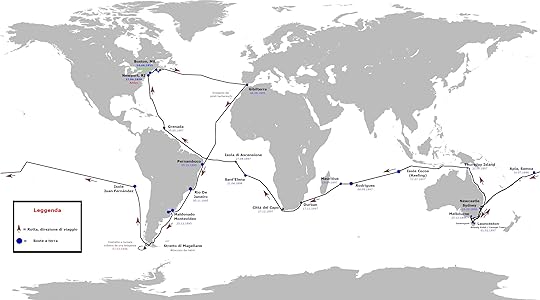
The route he follows (landfalls only, not those he merely passes by) - USA, Azores, Gibraltar, Brazil, Uruguay, Argentina, Chile, Samoa, Australia, Cocos Keeling Isl, Mauritius, South Africa, St Helena, Ascension Isl, Grenada, Antigua, USA. He departs Boston on 24 April 1895 and returns a little over three years later, on 27 June 1898.
Under financial constraint, Slocum had a modest selection of equipment. He was obviously a skilled man, as the things he did spend money on, were very efficient - his stove for example, or the old clock he used for navigation. The books is based on his ships log, which he quotes a few times, but obviously inspired his book. The writing is spirited, but comes across as authentic, and written with some humour (like the time he capsized the dory and 'forgot that he couldn't swim', or the goat he brought aboard for company, that ate his map), yet still records all the people he meets and places he visits, picking some pertinent facts to share from the exotic locations. I also chuckled each time he referred to himself as 'the crew' when on land.
There is plenty of excitement - but for such a long journey I think Slocum does really well to shorten the long legs where there isn't a lot happening - he can skip over a months travel in a sentence, or a long ocean crossing in a half page, so that there is no real loss of momentum with the narrative. He also does well to limit his use of too much nautical jargon - there is some, but I found it written in a way that is the word was unknown it didn't really effect the sentence. Overall the language wasn't archaic at all (as noted above, in my edition anyway).
Highly recommended - nothing not to like about this classic adventure tale.
5 stars.
In short, Slocum takes us through his process of refurbishing a hundred year old sloop found in a farmers paddock in Fairhaven, near Boston, pretty much replacing every element, modifying and improving as he went. She was 36'9'' long, 14'2'' wide and 4'2'' deep in the hold, and she retained the name of the original sloop - Spray. Fully refitted and set up for fishing, Slocum spent a season, and was not a success, but set upon the idea of a solo journey around the world. The appeal of this was that it had not been done before - and his ship was perfectly suited to this task. He refitted her for this solo journey, he set off.
The route he follows (landfalls only, not those he merely passes by) - USA, Azores, Gibraltar, Brazil, Uruguay, Argentina, Chile, Samoa, Australia, Cocos Keeling Isl, Mauritius, South Africa, St Helena, Ascension Isl, Grenada, Antigua, USA. He departs Boston on 24 April 1895 and returns a little over three years later, on 27 June 1898.
Under financial constraint, Slocum had a modest selection of equipment. He was obviously a skilled man, as the things he did spend money on, were very efficient - his stove for example, or the old clock he used for navigation. The books is based on his ships log, which he quotes a few times, but obviously inspired his book. The writing is spirited, but comes across as authentic, and written with some humour (like the time he capsized the dory and 'forgot that he couldn't swim', or the goat he brought aboard for company, that ate his map), yet still records all the people he meets and places he visits, picking some pertinent facts to share from the exotic locations. I also chuckled each time he referred to himself as 'the crew' when on land.
There is plenty of excitement - but for such a long journey I think Slocum does really well to shorten the long legs where there isn't a lot happening - he can skip over a months travel in a sentence, or a long ocean crossing in a half page, so that there is no real loss of momentum with the narrative. He also does well to limit his use of too much nautical jargon - there is some, but I found it written in a way that is the word was unknown it didn't really effect the sentence. Overall the language wasn't archaic at all (as noted above, in my edition anyway).
Highly recommended - nothing not to like about this classic adventure tale.
5 stars.

December 9, 2021
Needed a shorter audiobook and this sounded mildly entertaining. However I wasn't prepared for how much I actually ended up enjoying it. Need to find more books like this

September 22, 2011
This is the type of book that reaches out to you. I am not a sailor and much as I love and respect the sea, I usually get sea-sick. But it was an adventure to read this book, which is written with a precision and candidness that draws one to the tale.
Slocum didn't just accomplish an incredible feat, he left a written record of an age long gone. He writes of cultures that have now disappeared amidst the wave of consumerism. When he is at sea, I swear you can smell the salt air and hear the ocean. His tortuous trip via the Straits of Magellan is particularly spellbinding.
I justify five stars for a book when I get so absorbed, my meal turns cold. Such a book is this. Thar be splendor here.
Book Season = Summer
Slocum didn't just accomplish an incredible feat, he left a written record of an age long gone. He writes of cultures that have now disappeared amidst the wave of consumerism. When he is at sea, I swear you can smell the salt air and hear the ocean. His tortuous trip via the Straits of Magellan is particularly spellbinding.
I justify five stars for a book when I get so absorbed, my meal turns cold. Such a book is this. Thar be splendor here.
Book Season = Summer

January 18, 2026
It was awe-inspiring to read of this intrepid individual’s solo journey by sailing boat around the world, beginning in 1895 for 3 years, 2 months, and 2 days (page 186 my edition). It was also a welcome reprieve from the daily blast of doomsday news (and books I read)!
From his story, we gather he spent much of his life at sea, applying those experiences to his voyage and even built his sailing vessel almost from scratch (how many would be capable of doing that in this day and age?). He was 51 years old when he set out from Gloucester, near Boston.
Given the storms and oceanic turmoil he underwent, the author strikes me as pretty much unflappable, more so when he battled the straits of Tierra del Fuego. Upon exiting on the Pacific side, he was forced back into the straits from the strong waves and winds. Most people would likely have given up at that stage, but not our sailor! He succeeded on the second exit on entering the Pacific Ocean.
There are some rather crude and racist passages on Indigenous people he encountered.
I found him to be a rather enigmatic character. We don’t learn a great deal about his background. The Wikipedia entry mentions he was married and had children at the time of his voyage, but we never know this from his book. Sadly, he sailed solo into the Atlantic Ocean in 1909 and was never seen again.
The book is crowded with nautical terms, as if the author was more interested in navigation rather than observing the world and various people he encountered. There are some commentaries on those he met and the various landscapes he saw, but the nautical is predominant. It would be like travelling with a hiker who constantly describes the gear he wears and carries, instead of the scenery and fellow hikers.
Nevertheless, this is a captivating read of an overwhelming journey.
From his story, we gather he spent much of his life at sea, applying those experiences to his voyage and even built his sailing vessel almost from scratch (how many would be capable of doing that in this day and age?). He was 51 years old when he set out from Gloucester, near Boston.
Given the storms and oceanic turmoil he underwent, the author strikes me as pretty much unflappable, more so when he battled the straits of Tierra del Fuego. Upon exiting on the Pacific side, he was forced back into the straits from the strong waves and winds. Most people would likely have given up at that stage, but not our sailor! He succeeded on the second exit on entering the Pacific Ocean.
There are some rather crude and racist passages on Indigenous people he encountered.
I found him to be a rather enigmatic character. We don’t learn a great deal about his background. The Wikipedia entry mentions he was married and had children at the time of his voyage, but we never know this from his book. Sadly, he sailed solo into the Atlantic Ocean in 1909 and was never seen again.
The book is crowded with nautical terms, as if the author was more interested in navigation rather than observing the world and various people he encountered. There are some commentaries on those he met and the various landscapes he saw, but the nautical is predominant. It would be like travelling with a hiker who constantly describes the gear he wears and carries, instead of the scenery and fellow hikers.
Nevertheless, this is a captivating read of an overwhelming journey.

June 16, 2015
In a word, this book is delightful.
The author, Joshua Slocum, did something truly remarkable. He was the first human being to ever sail alone around the world. Yet, perhaps the best part of this story is his style of presentation. Slocum is laid back, self-effacing, and actually quite funny.
Some of the great lines were, "My singing has never inspired envy in others." and "He was a bearish man, and I've met a bear before." Upon coming across an uncharted island, Slocum promptly named it after a friend of his, and installed a sign on it that read, "Keep off the grass," which, he explains, "as discoverer, was within my rights."
He makes several remarks about his ship's crew, which of course, consists of only himself, talking about how fine the cook's meal was, or what needed to be done once all hands were on deck.
Even though he has done something amazing, something no one had ever done in history, he credits most of the success to his craft, the Spray, personifying her and congratulating her when things go well, and blaming himself when they do not. He also personifies the sense of good luck and fortune he experiences on several occasions in the captain of the Pinta who comes to his aid on several occasions.
Slocum just seems to be an all around great guy. Children flock to him, heads of state entertain him, and friends give him gifts wherever he goes. He can spin a good yarn, and has every right to make up grandiose sea stories along with the best of sailors.
As I've said, this book was delightful.
http://joshuarigsby.com
The author, Joshua Slocum, did something truly remarkable. He was the first human being to ever sail alone around the world. Yet, perhaps the best part of this story is his style of presentation. Slocum is laid back, self-effacing, and actually quite funny.
Some of the great lines were, "My singing has never inspired envy in others." and "He was a bearish man, and I've met a bear before." Upon coming across an uncharted island, Slocum promptly named it after a friend of his, and installed a sign on it that read, "Keep off the grass," which, he explains, "as discoverer, was within my rights."
He makes several remarks about his ship's crew, which of course, consists of only himself, talking about how fine the cook's meal was, or what needed to be done once all hands were on deck.
Even though he has done something amazing, something no one had ever done in history, he credits most of the success to his craft, the Spray, personifying her and congratulating her when things go well, and blaming himself when they do not. He also personifies the sense of good luck and fortune he experiences on several occasions in the captain of the Pinta who comes to his aid on several occasions.
Slocum just seems to be an all around great guy. Children flock to him, heads of state entertain him, and friends give him gifts wherever he goes. He can spin a good yarn, and has every right to make up grandiose sea stories along with the best of sailors.
As I've said, this book was delightful.
http://joshuarigsby.com

October 2, 2012
This was one of the most influential books that I have ever read. I read it while still in my teens. Growing up in a seafaring (Naval) family I was able to sail from age eight. At eighteen, when other teens were looking for their first car, I bought (from an eighty-two year old widow) my first yacht, a 1928, wooden hulled A Class gaff rigged sloop that had sunk at its moorings during a storm. With a lot of help, I raised it, refurbished it, and lived on it for the next eighteen months. I then joined the Navy and during my enlistment it once again sank during a storm. This time it was past salvage. After leaving the Navy I bought a Roberts Ketch and lived and sailed on it for twelve years. I have not circumnavigated the world in one pass, but I have sailed the Coral Sea - Pacific, North and South, the Indian Ocean and the Atlantic and ventured (but not thoroughly explored) into the Antarctic. I doubt that I would have done any of this if not for the influence this book had upon me.
I love the book and respect and admire Joshua Slocum. Like most of his era, he writes well (good schooling) and tells a good story. Well worth reading.
I love the book and respect and admire Joshua Slocum. Like most of his era, he writes well (good schooling) and tells a good story. Well worth reading.

Read
January 17, 2016HIS LUCKY NUMBER WAS THE 13...

"My voyages were all foreign. I sailed as freighter and trader principally to China, Australia, and Japan, and among the Spice Islands. Mine was not the sort of life to make one long to coil up one's ropes on land, the customs and ways of which I had finally almost forgotten."

"Perhaps he had heard of my success in taking a most extraordinary ship successfully to Brazil with that number of crew"

"To be alone forty-three days would seem a long time, but in reality, even here, winged moments flew lightly by"

"My diet on these long passages usually consisted of potatoes and salt cod and biscuits, which I made two or three times a week"

"I should mention that while I was at Melbourne there occurred one of those extraordinary storms sometimes called "rain of blood," the first of the kind in many years about Australia."

"On the 23d of June I was at last tired, tired, tired of baffling squalls and fretful cobble-seas.
...
And now, without having wearied my friends, I
hope, with detailed scientific accounts, theories, or deductions, I will only say that I have endeavored to tell just the story of the adventure itself"
This is a must-read, to be devoured; because it’s the first solo circumnavigation of the globe waters, by Captain Joshua Slocum.
He departed from the USA in 1895, when he was 51. The boat he used, he himself had fixed; a not brand new one, the “Spray”.
Azores, Gibraltar, Brazil and other South America nations, then the Pacific ocean and Australia, are the initial itinerary landmarks. Next, back to the west, till Saint Helena isle where Napoleon had been in prison.
The trip ended in Fairhaven (USA).


Yet he never made it back to the USA, as of 1909, when he set sails for the West Indies; he intended to explore the Orinoco, Rio Negro and Amazon Rivers.
He just “disappeared”. Only in 1924, was he declared "legally dead".
"My voyages were all foreign. I sailed as freighter and trader principally to China, Australia, and Japan, and among the Spice Islands. Mine was not the sort of life to make one long to coil up one's ropes on land, the customs and ways of which I had finally almost forgotten."
"Perhaps he had heard of my success in taking a most extraordinary ship successfully to Brazil with that number of crew"
"To be alone forty-three days would seem a long time, but in reality, even here, winged moments flew lightly by"
"My diet on these long passages usually consisted of potatoes and salt cod and biscuits, which I made two or three times a week"
"I should mention that while I was at Melbourne there occurred one of those extraordinary storms sometimes called "rain of blood," the first of the kind in many years about Australia."
"On the 23d of June I was at last tired, tired, tired of baffling squalls and fretful cobble-seas.
...
And now, without having wearied my friends, I
hope, with detailed scientific accounts, theories, or deductions, I will only say that I have endeavored to tell just the story of the adventure itself"
This is a must-read, to be devoured; because it’s the first solo circumnavigation of the globe waters, by Captain Joshua Slocum.
He departed from the USA in 1895, when he was 51. The boat he used, he himself had fixed; a not brand new one, the “Spray”.
Azores, Gibraltar, Brazil and other South America nations, then the Pacific ocean and Australia, are the initial itinerary landmarks. Next, back to the west, till Saint Helena isle where Napoleon had been in prison.
The trip ended in Fairhaven (USA).
Yet he never made it back to the USA, as of 1909, when he set sails for the West Indies; he intended to explore the Orinoco, Rio Negro and Amazon Rivers.
He just “disappeared”. Only in 1924, was he declared "legally dead".

March 29, 2022
“I was born in the breezes”(1844). Joshua Slocum was a unique character born in Nova Scotia and then naturalized as a US citizen. He came from a family with ties to the sea and boat building. After a life being everything from a cabin boy to a ship captain he was given what was basically the frame of a 36’ sloop, rebuilt The Spray by himself, and fitted the boat up on the cheap (a true Yankee).
Slocum decides to sail around the world solo, something not done before. Reading his book you learn a lot about how the boat was put together and something about navigation. He had to have been more than lucky. His navigational tools were few and very basic.
After testing The Spray he sails eastward in July of 1898 and arrives in the Azores without incident. Wherever he goes he is feted, takes on drinking water and is given or buys whatever food is fresh, available and cheap. After adventures in the Mediterranean with pirates he decides to head for South America and through the Straits of Magellan. The book obviously uses uses his ordinary ship’s log which he later developed into a “literary” piece. It works brilliantly. You can see from his writing how he charms people with his upbeat and humorous nature. He’s a natural story teller.
Not to rush things, but three years and two months later he completes his adventure, the first solo sailor to circumnavigate the globe. He survived rogue waves in which he climbed the mast and was able to see his sloop completely submerged in water (like many in his time he never learned to swim) survived doldrums and avid fans. He makes money as he goes. In one case he salvages a load of tallow from a recent shipwreck and later sells it to people who had never seen fried donuts. “In this way I made a reasonable profit.” As the trip goes on he becomes more and more of a legend and people pay to hear him speak about his adventures. He meets celebrities such as the widow of Robert L. Stevenson, Stanley the African explorer/journalist and visits the island where Selkirk (Robinson Crusoe) lived by himself 4 years.
I liked his style and humor. The book is good for people who are experienced and those who are just interested in the trip. Unfortunately on a later adventure in 1909 he disappeared off Grand Cayman but maybe that was the way to go for the old sailor.
Slocum decides to sail around the world solo, something not done before. Reading his book you learn a lot about how the boat was put together and something about navigation. He had to have been more than lucky. His navigational tools were few and very basic.
After testing The Spray he sails eastward in July of 1898 and arrives in the Azores without incident. Wherever he goes he is feted, takes on drinking water and is given or buys whatever food is fresh, available and cheap. After adventures in the Mediterranean with pirates he decides to head for South America and through the Straits of Magellan. The book obviously uses uses his ordinary ship’s log which he later developed into a “literary” piece. It works brilliantly. You can see from his writing how he charms people with his upbeat and humorous nature. He’s a natural story teller.
Not to rush things, but three years and two months later he completes his adventure, the first solo sailor to circumnavigate the globe. He survived rogue waves in which he climbed the mast and was able to see his sloop completely submerged in water (like many in his time he never learned to swim) survived doldrums and avid fans. He makes money as he goes. In one case he salvages a load of tallow from a recent shipwreck and later sells it to people who had never seen fried donuts. “In this way I made a reasonable profit.” As the trip goes on he becomes more and more of a legend and people pay to hear him speak about his adventures. He meets celebrities such as the widow of Robert L. Stevenson, Stanley the African explorer/journalist and visits the island where Selkirk (Robinson Crusoe) lived by himself 4 years.
I liked his style and humor. The book is good for people who are experienced and those who are just interested in the trip. Unfortunately on a later adventure in 1909 he disappeared off Grand Cayman but maybe that was the way to go for the old sailor.

December 20, 2025
Joshua Slocum's Sailing Alone Around the World stands as an amazing testimony to one man's quest for extreme adventure. For Slocum not only circumnavigated the globe solo 125+ years ago, becoming the first to do so, but over 13 months of labor he fabricated the 30 foot sloop he sailed on, the Spray, described as a 10 ton yawl, from cast off lumber that had once been part of another small vessel.
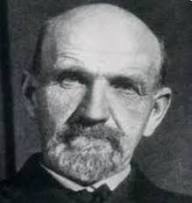
When one considers other heroic ventures, including Sir Edmund Hillary's first ascent of Mount Everest, together with his Sherpa guide, Tenzing Norgay, or the first moon-launch with John Glenn's epic walk on lunar terrain, these quests involved considerable support staff & technology in the background.
Slocum was quite alone, almost entirely dependent on his own wits & largely self-taught seamanship. As he put it, "I claim only to be one of the poorest of American sailors & having nothing else to do, made a voyage." Oddly enough, it was said that Joshua Slocum never learned to swim. However, as he stated it:
Eventually, especially after his wife's death, following the birth of multiple children & a dozen years of happy marriage and with the inroads of steam-powered ships, Slocum became to feel a sense of dislocation, lamenting the transition from ships dependent on sails alone.
A feeling of alienation set in & on long voyages, he began to converse with imaginary fellow mariners in an attempt to feel less alone. In Slocum's words: "Was the crew well? Was I not?"
While intrepid, during the circumnavigation, his hands bled due to the difficulty in handling the ropes, his sails were often mangled by storms and he had to be alert when in sight of pirates & warships. He depended on mussels & fish he caught and cooked but avoided killing a Muscovy Duck or other birds that alighted on deck, disdaining to take a life except in self-defense. Through it all, Slocum was said to react to changing winds like the conductor of an orchestra.
Many days at sea were rather less taxing, allowing Slocum to read books, many of them given to him by the widow of Robt. Louis Stevenson when Slocum visited Samoa where the author had died. He was often treated as a dignitary while ashore in the midst of his voyages and was even
invited to dinner at the White House by fellow-adventurer, President Teddy Roosevelt.
While in various ports during the long circumnavigation, Slocum gave lectures to paying patrons eager to hear about his solitary adventures, thus providing needed cash for food & repairs to the Spray.
Why would anyone choose to spend so very much time in an exceedingly hazardous, solitary adventure at sea, adrift in a self-made, seemingly only marginally seaworthy vessel? Perhaps, yachtsman Vincent Gilpin, who visited Joshua Slocum on board the Spray in Miami in 1908 put it best:
Following his circumnavigation and the publication of his book, in search of a final adventure, Joshua Slocum longed to reach South America and sail up the Orinoco River, the Rio Negro & eventually connect with the headwaters of the Amazon.
In mid-November 1909 Slocum set off from Tisbury, Massachusetts and was never heard from again. At some point, Slocum & the Spray apparently merged with the sea, in his view, the most heavenly of bodies.
A caveat: there is almost constant nautical terminology within the book that will readily baffle the landlubber. A glossary would have been immensely helpful. To be sure, Sailing Alone Around the World hardly stands as epic prose but it is a memorable tale of a formidable voyage by a most amazing adventurer.
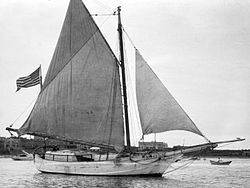
*Within my review are two images of Joshua Slocum, one in old age, also a photo image of the Spray & lastly, the route map for Slocum's circumnavigation. **Included is a rather interesting introductory overview of Joshua Slocum by Walter Magnes Teller.
When one considers other heroic ventures, including Sir Edmund Hillary's first ascent of Mount Everest, together with his Sherpa guide, Tenzing Norgay, or the first moon-launch with John Glenn's epic walk on lunar terrain, these quests involved considerable support staff & technology in the background.
Slocum was quite alone, almost entirely dependent on his own wits & largely self-taught seamanship. As he put it, "I claim only to be one of the poorest of American sailors & having nothing else to do, made a voyage." Oddly enough, it was said that Joshua Slocum never learned to swim. However, as he stated it:
I had studied the sea as few men had, neglecting all else. Next came shipbuilding and I longed to become a master in both professions; in time, I accomplished that desire. I had made calculations as to the size and sort of ship safest in all kinds of weather and seas. Thus the voyage I am about to narrate was a natural outcome not only of my love of adventure but of my lifelong experience.But prior to his solitary circumnavigation in 1895, the Nova Scotia born Slocum had served on sail-powered freighters and had become a ship's captain, almost always on foreign-bound vessels, sailing to China, Japan, the Azores, the Spice Islands & Brazil, meeting the woman who became his beloved wife who often sailed with him, while in port in Australia.
Eventually, especially after his wife's death, following the birth of multiple children & a dozen years of happy marriage and with the inroads of steam-powered ships, Slocum became to feel a sense of dislocation, lamenting the transition from ships dependent on sails alone.
A feeling of alienation set in & on long voyages, he began to converse with imaginary fellow mariners in an attempt to feel less alone. In Slocum's words: "Was the crew well? Was I not?"
While intrepid, during the circumnavigation, his hands bled due to the difficulty in handling the ropes, his sails were often mangled by storms and he had to be alert when in sight of pirates & warships. He depended on mussels & fish he caught and cooked but avoided killing a Muscovy Duck or other birds that alighted on deck, disdaining to take a life except in self-defense. Through it all, Slocum was said to react to changing winds like the conductor of an orchestra.
Many days at sea were rather less taxing, allowing Slocum to read books, many of them given to him by the widow of Robt. Louis Stevenson when Slocum visited Samoa where the author had died. He was often treated as a dignitary while ashore in the midst of his voyages and was even
invited to dinner at the White House by fellow-adventurer, President Teddy Roosevelt.
While in various ports during the long circumnavigation, Slocum gave lectures to paying patrons eager to hear about his solitary adventures, thus providing needed cash for food & repairs to the Spray.
Why would anyone choose to spend so very much time in an exceedingly hazardous, solitary adventure at sea, adrift in a self-made, seemingly only marginally seaworthy vessel? Perhaps, yachtsman Vincent Gilpin, who visited Joshua Slocum on board the Spray in Miami in 1908 put it best:
He was a good example of an old-line Yankee class boat-handler, as well as a former ship captain, besides being a shipwright-a very capable man & a lonely, unhappy man.Only at sea did Slocum feel truly in his element, fueled by a sense of oneness with nature's nautical boundaries, with only his mastery of the Spray and a bit of luck to keep him alive. He & the Spray were said to have grown old together.
Following his circumnavigation and the publication of his book, in search of a final adventure, Joshua Slocum longed to reach South America and sail up the Orinoco River, the Rio Negro & eventually connect with the headwaters of the Amazon.
In mid-November 1909 Slocum set off from Tisbury, Massachusetts and was never heard from again. At some point, Slocum & the Spray apparently merged with the sea, in his view, the most heavenly of bodies.
A caveat: there is almost constant nautical terminology within the book that will readily baffle the landlubber. A glossary would have been immensely helpful. To be sure, Sailing Alone Around the World hardly stands as epic prose but it is a memorable tale of a formidable voyage by a most amazing adventurer.
*Within my review are two images of Joshua Slocum, one in old age, also a photo image of the Spray & lastly, the route map for Slocum's circumnavigation. **Included is a rather interesting introductory overview of Joshua Slocum by Walter Magnes Teller.

May 15, 2020
May 15, 215pm ~~ Review asap.
May 16 ~~ This book, which tells of Captain Slocum's three years sailing around the world alone beginning back in 1885, is one of those magical volumes that help me go where I know I never will in real life. I am a rotten traveler and I would be the seasickest sailor ever, but oh, I do love a good sea voyage, and this one was fantastic.
Captain Slocum writes in such a friendly, down-home way. He doesn't try to dazzle you with his knowledge; he makes you feel like a partner in a grand and glorious adventure. For that is exactly what this was. Back in those days no one believed it possible to sail around the world alone. He proved them all wrong with his beautiful boat Spray.
The Captain had spent his life on the ocean, from the time he was eight years old when he had been "...afloat with other boys on the bay, with chances greatly in favor of being drowned." He was a cook on a fishing-schooner (until the crew tasted his first meal) and then joined the crew of a 'full-rigged ship on a foreign voyage' and over the years worked his way up to commander. He knew what he was doing, and he had been all over the world on his many voyages, so he was very qualified to undertake such a daring journey.
Sometimes books that describe ocean voyages are annoying to read. Perhaps the author doesn't fill his pages with enough personal items to allow the reader to make an emotional connection. Perhaps there is too much technical information or data about safe harbors, or the writing style feels like it was copied almost word for word from a logbook. I finished a book like that just before reading this one. I was ready to mutiny during that book, but I would willingly follow Captain Slocum wherever he sails.
May 16 ~~ This book, which tells of Captain Slocum's three years sailing around the world alone beginning back in 1885, is one of those magical volumes that help me go where I know I never will in real life. I am a rotten traveler and I would be the seasickest sailor ever, but oh, I do love a good sea voyage, and this one was fantastic.
Captain Slocum writes in such a friendly, down-home way. He doesn't try to dazzle you with his knowledge; he makes you feel like a partner in a grand and glorious adventure. For that is exactly what this was. Back in those days no one believed it possible to sail around the world alone. He proved them all wrong with his beautiful boat Spray.
The Captain had spent his life on the ocean, from the time he was eight years old when he had been "...afloat with other boys on the bay, with chances greatly in favor of being drowned." He was a cook on a fishing-schooner (until the crew tasted his first meal) and then joined the crew of a 'full-rigged ship on a foreign voyage' and over the years worked his way up to commander. He knew what he was doing, and he had been all over the world on his many voyages, so he was very qualified to undertake such a daring journey.
Sometimes books that describe ocean voyages are annoying to read. Perhaps the author doesn't fill his pages with enough personal items to allow the reader to make an emotional connection. Perhaps there is too much technical information or data about safe harbors, or the writing style feels like it was copied almost word for word from a logbook. I finished a book like that just before reading this one. I was ready to mutiny during that book, but I would willingly follow Captain Slocum wherever he sails.

September 6, 2007
This used to be required reading for Massachusetts high school students. Joshua Slocum was the first to sail solo around the world. Still crazy to this day. The story was great in detail and local interest for the places it dealt with. I love Slocum's writing at points, but like Moby Dick, at other times I feel I'm just pushing through to get to the good parts again. His historical detail and places he visits is not only a good story worth reading, but if you think about it for a moment, the time at which he visits some of these islands is a record which was thereafter erased by modern progress. He is a unique character, and if you grew up on Cape Cod, or have ties to Nova Scotia, the story should hold special interest because of Slocum's origins. It also deals with the tragic death of his first wife, later his son, something he never overcomes and in his later years is probably still a motivating force for him to fly solo in the end.

October 24, 2022
By storm and wind I’m tossed and driven
But still my little ship outbraves
The blust’ring winds and stormy waves.
Instead of thinking about retirement and bored with life ashore after decades of roaming over the oceans of the word, Joshua Slocum bought a ruined fishing sloop and set about rebuilding it from scratch with his own hands. His long experience as a navigator and as a ship owner came in handy in preparing for the voyage he had in mind.
I had resolved on a voyage around the world, and as the wind on the morning of April 24, 1895, was fair, at noon I weighed anchor, set sail, and filled away from Boston, where the ‘Spray’ had been moored snugly all winter.
I knew about his name and about his extraordinary first solitary voyage from my favourite Romanian writer – Radu Tudoran – who as a young man was inspired by Slocum’s account to go to the Danube Delta with a couple of friends, there to build a ship with their own hands and take it to the far corners of the world. Mr. Tudoran’s adventure ended prematurely with a shipwreck in the waters of the Levant, but his frustration was then channelled into a fictional adventure to the Tierra del Fuego, probably the most popular chap book in local literature.[Toate Panzele Sus]
So I was understandably eager to find out for myself what fired the imagination of this writer, more than half a century after Slocum’s circumnavigation. I have read more than my fair share of sea books, both fictional and biographical, and the thing that really stands out about Joshua Slocum is his amiable personality and his true talent as a writer.
There are no words wasted in this slim book that covers amazing feats of endurance and determination. His sense of humour, his modesty and his passion for the sea jump out of the page in evocative scenes that often make light of the hardships and the loneliness to focus instead on the unexpected friendships in far away places and on the moments of grace that make the whole gigantic effort worth while.
The captain may be fibbing on occasion, like any good spinner of fishing tales, but I was never bored for one second in his company. The impression he made on the people he met speak more truth about his personality than the occasional embellishment that plays to an eager audience.
At the age of eight I had already been afloat along with other boys on the bay, with chances greatly in favor of being drowned.
One of the most extraordinary aspects of the man, something mentioned also in the Patrick O’Brian novels, is that old-fashioned sailors never learned how to swim. It is probably the closing chapter that he wished for that Joshua Slocum sailed off one day in his beloved ‘Spray’ never to be heard from again.
He is a true legend and an inspiration.
>>><<<>>><<<
I am not going to describe the stages of the journey, neither the peaceful days, nor the terrible storms around Cape Horn and Cape of Good Hope. I believe Slocum’s own words are the best advertisement for picking up this book.
Don’t be afraid of the nautical terms: the book has an extended glossary of terms, and beautiful pen illustrations to enhance the experience even for landlubbers.
The waves rose high, but I had a good ship. Still, in the dismal fog I felt myself drifting into loneliness, an insect on a straw in the midst of the elements. I lashed the helm, and my vessel held her course, and while she sailed I slept.
><><
The time was when ships passing one another at sea, backed their topsails and had a ‘gam’, and at parting fired guns; but those good old days have gone. People have hardly time nowadays to speak even on the broad ocean, where news is news, and as for a salute of guns, they cannot afford the powder. There are no poetry-enshrined freighters on the seas now; it is a prosy life when we have no time to bid one another good morning.
><><
My time was all taken up those days – not by standing at the helm; no man, I think, could stand or sit and steer a vessel round the world: I did better than that; for I sat and read my books, mended my clothes, or cooked my meals and ate them in peace. I had already found that it was not good to be alone, and so I made my companionship with what there was around me, sometimes with the universe and sometimes with my own insignificant self; but my books were always my friends, let fail all else. Nothing could be easier or more restful than my voyage in the trade-winds.
><><
As I sailed farther from the center of civilization I heard less and less of what would and what would not pay. Mrs. Stevenson, in speaking of my voyage, did not once ask me what I would make out of it. When I came to a Samoan village, the chief did not ask the price of gin, or say, ‘How much will you pay for roast pig?’ but, ‘Dollar, dollar,’ said he; ‘white man know only dollar. Never mind dollar. The tapo has prepared ava, let us drink and rejoice.’
><><
... with a good stack of books on board I fell to reading day and night, leaving this pleasant occupation merely to trim sails or tack, or to lie down and rest, while the ‘Spray’ nibbled at the miles.
><><
Sailing on, the sloop was at once in the Arafura Sea, where for days she sailed in water milky white and green and purple. It was my good fortune to enter the sea on the last quarter of the moon, the advantage being that in the dark nights I witnessed the phosphorescent light effect at night in its greatest splendor. The sea, where the sloop disturbed it, seemed all ablaze, so that by its light I could see the smallest articles on deck, and her wake was a path of fire.
><><
on Keeling – Cocos Islands there will be ... children yelling: ‘The captain is eating coal-tar! The captain is eating coal-tar!’
><><
On Christmas 1897, I came to the pitch of the cape. On this day the ‘Spray’ was trying to stand on her head and she gave me every reason to believe that she would accomplish the feat before night. She began very early in the morning to pitch and toss about in a most unnatural manner, and I have to record that, while I was at the end of the bowsprit reefing the jib, she ducked me under water three times for a Christmas box. I got wet and did not like it a bit: never in any other sea was I put under more than once in the same short space of time, say three minutes. A large English steamer passing ran up the signal , ‘Wishing you a Merry Christmas.’ I think the captain was a humorist; his own ship was throwing her propeller out of water.
><><
about a goat he was gifted: Except for the first day, before the beast got his sea-legs on, I had no peace of mind. After that, actuated by a spirit born, maybe, of his pasturage, this incarnation of evil threatened to devour everything from flying-jib to stern-davits. He was the worst pirate I met on the whole voyage.
><><
about hardships, days becalmed and terrible storms Anyhow, a philosophical turn of thought now was not amiss, else one’s patience would have given out almost at the harbor entrance.
><><
She was again among her old old friends the flying fish, interesting denizens of the sea. Shooting out of the waves like arrows, and with outstretched wings, they sailed on the wind in graceful curves; then falling till again they touched the crest of waves to wet their delicate wings and renew the flight. They made merry the livelong day. One of the joyful sights on the ocean on a bright day is the continual flight of these interesting fish.
One could not be lonely in a sea like this. Moreover, the reading of delightful adventures enhanced the scene.
><><
Was it all worth it? As for aging, the dial of my life was turned back till my friends all said, ‘Slocum is young again.’And so I was, at least ten years younger than the day I felled the first tree for the construction of the ‘Spray’.
><><
What was he trying to prove?
The sea has been much maligned. To find one’s way to lands already discovered is a good thing, and the ‘Spray’ made the discovery that even the worst sea is not terrible to a well-appointed ship.

December 23, 2025
O prazer de regressar a uma grande narrativa de viagem.
O segundo livro centenário deste mês.
Que bom que é encontrar estas pérolas, de quando ainda era possível viajar… olhar para a abóbada Celeste e aí descobrir todas as indicações que nos fazem falta, um verdadeiro requinte.
Grato pela sugestão. Não conhecia.

October 24, 2014
One of the great maritime autobiographies, beginning in New Bedford--well, across the harbor in Fairhaven where Slocum reworked an unpromising old 34' oyster sloop (for a year or slightly more). It had been out of commission since 1885 when seven years later Slocum was offered it for free, moving it from Poverty Point up to his house on the Acushnet River, and renaming it eventually the Spray. He shiped out for the world in 1895.
I taught Sailing Alone a couple times to my Freshman Comp class at a community college with many students from Fairhaven, the last in a five book course that would include one Shakespeare play--usu a feminist one like Measure for Measure (because 2/3 of my students were women)-- a book of poems and songs, a book of short stories (often all by one author, like Vonnegut, VS Naipaul, Flannery O'Connor, Joyce or Katherine Mansfield) and one sustained narrative like Alice in Wonderland, Confederacy of Dunces, or Slocum.
Slocum is a first-class ironist, and he parodies such voyage stories as RH Dana's: "I found no fault with the cook...There was never s ship's crew so well agreed"(43). Many passages are well known, such his politically incorrect (but life-saving) use of tacks, and his adding a rear mast to sail N from Magellan Straits into the Pacific.
Then there are the barrels of fat he picked up and used to produce and sell donuts to the Islanders, at Valima, Samoa where R L Stevenson had lived. The Samoans thought he must have had other sailors with him, whom he'd eaten (153). Local descendants of Slocum vehemently denied that he'd ever made donuts; but I had taught the book several times, while they must not have completed it. Slocum needed money to continue his voyage, once catching a shark and charging the Melbourne Aussie residents to come aboard to view it.
Many things we learn from Slocum's voyage include: how a wounded dolphn avoids sharks (along with yellowfin, darting in different directions), the author sometimes shooting their pursuers (59); flying fish caught on deck at night, picked up from the lee scuppers; where the island was upon which Defoe based Robinson Crusoe; the Sydney Yacht Club's requirement barring the Spray's recognition because no letter from an American yacht club--and despite Slocum having caught and saved one of their members in a barrel; a dizzying variety of nautical terms of which I have a separate dictionary, with depictions; and, human threats to the author, such as Terra del Fuegian Black Pedro, whom Slocum asks, "'Do you know Captain Pedro Samblich?' said the villain, 'Yes, he is a great friend of mine.' 'I know it,' said I Samblich had told me to shoot him on sight."(116) But Slocum shared his beef jerky and other food with the women who accompanied Black Pedro, and Pedro feared the other three men Slocum had impersonated with multiple rifles out of portholes when they first sailed by the pirate a week earlier.
Late Victorian ceremonial aspects: even sailing Slocum dresses in a suit, sometimes with bowtie, his salutes to his vessel and the sunset. Chased by pirates off N Africa, a strong wind blew away his boom, but it entirely dismasted the pirates. On steep, rocky Ascension Island he learns from a Canadian and wife living near the top, "One cow would sometimes hook another over a preipice to destruction, then go on feeding unconcernedly"(260).
He becomes a vegetarian, pitying the creatures in desolate waters around Cape Horn, and later Mrs Robert Louis Stevenson in Samoa agreed with him that were he to carry chickens on the Spray "to kill the companions of my voyage would be next tomurder and cannibalism"(256).
Arriving back three years later at Newport Harbor on June 27, 1898, the harbor was mined for the Spanish American War which began a couple months earlier and ended a month later. But at night, he was also worried about being fired upon. When someone hailed him from the guardship at entry, "Spray ahoy!" he knew it to be the voice of a friend, so he could sail slower until anchoring.
I taught Sailing Alone a couple times to my Freshman Comp class at a community college with many students from Fairhaven, the last in a five book course that would include one Shakespeare play--usu a feminist one like Measure for Measure (because 2/3 of my students were women)-- a book of poems and songs, a book of short stories (often all by one author, like Vonnegut, VS Naipaul, Flannery O'Connor, Joyce or Katherine Mansfield) and one sustained narrative like Alice in Wonderland, Confederacy of Dunces, or Slocum.
Slocum is a first-class ironist, and he parodies such voyage stories as RH Dana's: "I found no fault with the cook...There was never s ship's crew so well agreed"(43). Many passages are well known, such his politically incorrect (but life-saving) use of tacks, and his adding a rear mast to sail N from Magellan Straits into the Pacific.
Then there are the barrels of fat he picked up and used to produce and sell donuts to the Islanders, at Valima, Samoa where R L Stevenson had lived. The Samoans thought he must have had other sailors with him, whom he'd eaten (153). Local descendants of Slocum vehemently denied that he'd ever made donuts; but I had taught the book several times, while they must not have completed it. Slocum needed money to continue his voyage, once catching a shark and charging the Melbourne Aussie residents to come aboard to view it.
Many things we learn from Slocum's voyage include: how a wounded dolphn avoids sharks (along with yellowfin, darting in different directions), the author sometimes shooting their pursuers (59); flying fish caught on deck at night, picked up from the lee scuppers; where the island was upon which Defoe based Robinson Crusoe; the Sydney Yacht Club's requirement barring the Spray's recognition because no letter from an American yacht club--and despite Slocum having caught and saved one of their members in a barrel; a dizzying variety of nautical terms of which I have a separate dictionary, with depictions; and, human threats to the author, such as Terra del Fuegian Black Pedro, whom Slocum asks, "'Do you know Captain Pedro Samblich?' said the villain, 'Yes, he is a great friend of mine.' 'I know it,' said I Samblich had told me to shoot him on sight."(116) But Slocum shared his beef jerky and other food with the women who accompanied Black Pedro, and Pedro feared the other three men Slocum had impersonated with multiple rifles out of portholes when they first sailed by the pirate a week earlier.
Late Victorian ceremonial aspects: even sailing Slocum dresses in a suit, sometimes with bowtie, his salutes to his vessel and the sunset. Chased by pirates off N Africa, a strong wind blew away his boom, but it entirely dismasted the pirates. On steep, rocky Ascension Island he learns from a Canadian and wife living near the top, "One cow would sometimes hook another over a preipice to destruction, then go on feeding unconcernedly"(260).
He becomes a vegetarian, pitying the creatures in desolate waters around Cape Horn, and later Mrs Robert Louis Stevenson in Samoa agreed with him that were he to carry chickens on the Spray "to kill the companions of my voyage would be next tomurder and cannibalism"(256).
Arriving back three years later at Newport Harbor on June 27, 1898, the harbor was mined for the Spanish American War which began a couple months earlier and ended a month later. But at night, he was also worried about being fired upon. When someone hailed him from the guardship at entry, "Spray ahoy!" he knew it to be the voice of a friend, so he could sail slower until anchoring.

April 1, 2011
For a trip with so much time at sea and so little ashore, Captain Slocum paints with some amazing words. This was, in my mind, so much easier to read (and enjoy) than either Gulliver's Travels or Robinson Crusoe, and at least as adventurous.
Of related interest, I am now reading Pole to Pole and looking forward to Around the World in 50 Years: My Adventure to Every Country on Earth.
Seasonal Reading Challenge 2018 Fall/au'TUM'n Task 5.2- The Tour de France (Wanderlust list) and URC-50 book "over 100 years old"
Of related interest, I am now reading Pole to Pole and looking forward to Around the World in 50 Years: My Adventure to Every Country on Earth.
Seasonal Reading Challenge 2018 Fall/au'TUM'n Task 5.2- The Tour de France (Wanderlust list) and URC-50 book "over 100 years old"

September 25, 2021
# Finished this tday. It is a revelation for those who love to sail in th same way Harry Potter was a revelation to those who love casting spells and flying sports. Plenty of technical information and jargon in both books for things most of us will never do.
If a story of adventure danger bad characters and savvy escapes and big hats is appealing — both books are for you. You don’t have to sail or do magic to enjoy either one. But if you do both you’re in for a treat with this true story…
See also: https://www.goodreads.com/review/show...
Awesome review, cool book. AMAZING HAT.
[spoiler alert involving th hat and a goat 🐐 avoid review above if you want to be surprised ;~}
.
If a story of adventure danger bad characters and savvy escapes and big hats is appealing — both books are for you. You don’t have to sail or do magic to enjoy either one. But if you do both you’re in for a treat with this true story…
See also: https://www.goodreads.com/review/show...
Awesome review, cool book. AMAZING HAT.
[spoiler alert involving th hat and a goat 🐐 avoid review above if you want to be surprised ;~}
.

August 1, 2021
This was one of the most boring, uninteresting books I've ever read. I really had to force myself to get through it, and it was only because I was stuck on a plane with no other books available that I could do it.
The event that this was based around was actually quite interesting, but this novel was written in a journal-esque form, and what's more is it was written by a sailor. Now, of course, I have nothing against sailors, but as a non-sailor who knows absolutely nothing about boats, it was really hard to read because of all the nautical terms that were used. I just couldn't fully understand what was happening when words like "yaw", "stanchion", "jibe", and "gaff" were used. Yes, I could look them up, but knowing what some boat part is from reading a definition and knowing what it is from experience are two very different things, and I feel as though a more nautically-inclined person could enjoy this book much more than I did.
Besides the fact that there were a lot of nautical descriptions throughout the novel, all the events that could have actually been exciting were almost made boring because of the way in which they were told. This guy actually saw and experienced some really amazing things, but his narration of them was so lackluster that even the exciting parts were ploddingly dull to read about.
I do think that what Joshua Slocum was able to do is incredible, that is, to sail around the entire world on a small boat he built with only himself as the crew. But I also think that it would have been more entertaining to read about in a history textbook than in this novel, and in the end, I would only recommend this book to someone with an extreme love of sailing.
The event that this was based around was actually quite interesting, but this novel was written in a journal-esque form, and what's more is it was written by a sailor. Now, of course, I have nothing against sailors, but as a non-sailor who knows absolutely nothing about boats, it was really hard to read because of all the nautical terms that were used. I just couldn't fully understand what was happening when words like "yaw", "stanchion", "jibe", and "gaff" were used. Yes, I could look them up, but knowing what some boat part is from reading a definition and knowing what it is from experience are two very different things, and I feel as though a more nautically-inclined person could enjoy this book much more than I did.
Besides the fact that there were a lot of nautical descriptions throughout the novel, all the events that could have actually been exciting were almost made boring because of the way in which they were told. This guy actually saw and experienced some really amazing things, but his narration of them was so lackluster that even the exciting parts were ploddingly dull to read about.
I do think that what Joshua Slocum was able to do is incredible, that is, to sail around the entire world on a small boat he built with only himself as the crew. But I also think that it would have been more entertaining to read about in a history textbook than in this novel, and in the end, I would only recommend this book to someone with an extreme love of sailing.

June 1, 2010
I picked this book off the shelf a few years back, because I realized it was the story behind a song that loved.
This book really didn't do anything for me. There was enough technical jargon to be confusing to a newbie like me to the sailing world, but not enough to give any real information on how he sailed. In fact, I'm not fully sure how he filled so many pages, because it felt like he hadn't said anything by the time I reached the end. It seemed to mostly be a story of hopping from port to port and meeting with the local dignitaries in each one. Where there could have been adventure, his "modesty" kept him from going into detail aside from making it clear all troubles were easily dispatched. There were occasional great anecdotes, such as the gift of a goat proceeding to gobble up his lines and charts, or the use of carpet tacks as defensive fortifications. This must have been a hell of a voyage. Clearly he is an incredible sailor. I could only wish he were as good a writer.
This book really didn't do anything for me. There was enough technical jargon to be confusing to a newbie like me to the sailing world, but not enough to give any real information on how he sailed. In fact, I'm not fully sure how he filled so many pages, because it felt like he hadn't said anything by the time I reached the end. It seemed to mostly be a story of hopping from port to port and meeting with the local dignitaries in each one. Where there could have been adventure, his "modesty" kept him from going into detail aside from making it clear all troubles were easily dispatched. There were occasional great anecdotes, such as the gift of a goat proceeding to gobble up his lines and charts, or the use of carpet tacks as defensive fortifications. This must have been a hell of a voyage. Clearly he is an incredible sailor. I could only wish he were as good a writer.

April 17, 2024
In 1895 Joshua Slocum set off to sail around the world alone in his boat Spray. It took him over 3 years and he succeeded in becoming the first man to do so. This account of his journeys and adventures is riveting and I highly recommend it.

October 7, 2019
Funny! The understated humor surprised and delighted me.
Joshua Slocum was the first person to circumnavigate the globe in a sailboat with a one-man crew.
"I suddenly remembered that I could not swim," he writes about an episode in a sinking dory.
Or, "it is well known that one cannot step on a tack without saying something about it."
"...sisal, a treacherous fiber which has caused a deal of strong language among sailors."
The book was a slow starter (probably more my circumstances than the book) but soon I was picking it up whenever I had a pocket of time. Slocum's tone was a good pitch: not too technical, nor overly dramatic, and with spare daily details to keep the momentum strong. I never felt becalmed while reading.
There's a short film about this feat that I plan to watch.
Joshua Slocum was the first person to circumnavigate the globe in a sailboat with a one-man crew.
"I suddenly remembered that I could not swim," he writes about an episode in a sinking dory.
Or, "it is well known that one cannot step on a tack without saying something about it."
"...sisal, a treacherous fiber which has caused a deal of strong language among sailors."
The book was a slow starter (probably more my circumstances than the book) but soon I was picking it up whenever I had a pocket of time. Slocum's tone was a good pitch: not too technical, nor overly dramatic, and with spare daily details to keep the momentum strong. I never felt becalmed while reading.
There's a short film about this feat that I plan to watch.

July 24, 2026
Este é o relato de uma volta ao mundo em solitário num veleiro reconstruído pelas próprias mãos por Joshua Slocum nos finais do século XIX.
É uma história verdadeiramente inspiradora, que nos recorda a nossa pequenez na vastidão dos oceanos e o pouco que necessitamos para ter uma vida realizada.
Slocum passou por muitos revezes antes desta viagem: ficou viúvo de uma mulher que era uma verdadeira companheira, perdeu filhos e sofreu naufrágios, mas nunca desistiu da vida.
Gostei mesmo muito.
É uma história verdadeiramente inspiradora, que nos recorda a nossa pequenez na vastidão dos oceanos e o pouco que necessitamos para ter uma vida realizada.
Slocum passou por muitos revezes antes desta viagem: ficou viúvo de uma mulher que era uma verdadeira companheira, perdeu filhos e sofreu naufrágios, mas nunca desistiu da vida.
Gostei mesmo muito.

August 15, 2020
Sometimes the edition of the book you read makes ALL the difference.
I got a copy that - no joke - had student responses bound in with the actual book. And the book was printed on computer paper and bound by one of those like... self-publishing companies. And not a very good one.
It was like a teacher had a google doc version of this book, had students write responses at the end of each chapter, realized the book was in the public domain - deleted the student responses (but forgot two chapters) and published the book from one of the self-publishers. I'm almost certain that's what happened.
From the end of Chapter One: "When you started reading novel at any part of the novel you are not realised that you boarded. While reading of the book you cannot fell lonely because the characters said a lot for a person not feeling lonely. When there is developing interest on the book it seems to be very curious what happen at the next. And the expectations level with the characters are very high at the time of reading. The language of the novel is very nice and simple and everybody can understand it and experience a nice story." ...There are 16 of those. And kudos to both the teacher and the student for giving it a shot, but I don't really want it in MY copy. I read enough of that when I grade my own student's work.
Compare that to my friend Ben's edition. Hardback. Gorgeous pictures and maps throughout. When we met at book club, I had a hard time putting it down. It was FANTASTIC. Five stars just for the edition, even if I didn't read a word of it.
And it would have been GREAT to have that book - if nothing else than for the map. Because he's sailing east. He's at the Straight of Gibraltar, he's going throu...wait... he's... approaching... Brazil. Wait? What? Did I read that right? I definitely should have bought a better edition than this. These chapters must be out of order. - They weren't. He crossed the Atlantic, then crossed again, this time heading west. He was probably a great father: all right kids, we're going to take a shortcut. It will save us a lot of time.
So anyway, we did read this for book club - and it reminded me so much of several other books we've read together: Longitude, The Old Man and the Sea, Moby Dick, The Art of Fielding, Cloud Atlas. And I found myself looking back on other books I've read on my own, like The Travels of Marco Polo, The Goldfinch, Around the World in 80 Days, or The Life of Pi. I love it when books connect like that. (I'm also currently watching the show Alone - which I heard about at book club. Man, Joshua Slocum would definitely take the 500,000 prize. OH: Alexander Selkirk would DEFINITELY take the 500,000 prize. Selkirk is brought up in here. The Robinson Crusoe guy.)
The technical aspects were tedious, but I loved them. I've only sailed a little, for a couple weeks - but it was enough for this book to evoke those memories of sailing around the Adriatic.
It's crazy that everybody knew about the voyage, and came out to greet him everywhere. (Well, except where they thought he was the Anti-Christ.) Like... does this happen anymore? Maybe the Olympic Torch?
Slocum wasn't really a protagonist. They were more just a bunch of little vignettes and anecdotes. This is where some guy created his own 40-woman seraglio. I've been travelling with a spider from Boston who kicked the crap out of this native species. Martin Alonso Pinzon (the pilot of the Pinta) is currently piloting my ship... That kind of stuff. It was a good book.
Finally, I can't have read this book without mentioning Billy Collins' "Sailing Alone Around the Room." It's probably my favorite collection of poetry. That reference was my first introduction to this book and as books do, one made me want to read the other - if for no other reason than to say I had. (Like sailing alone around the world.)
I got a copy that - no joke - had student responses bound in with the actual book. And the book was printed on computer paper and bound by one of those like... self-publishing companies. And not a very good one.
It was like a teacher had a google doc version of this book, had students write responses at the end of each chapter, realized the book was in the public domain - deleted the student responses (but forgot two chapters) and published the book from one of the self-publishers. I'm almost certain that's what happened.
From the end of Chapter One: "When you started reading novel at any part of the novel you are not realised that you boarded. While reading of the book you cannot fell lonely because the characters said a lot for a person not feeling lonely. When there is developing interest on the book it seems to be very curious what happen at the next. And the expectations level with the characters are very high at the time of reading. The language of the novel is very nice and simple and everybody can understand it and experience a nice story." ...There are 16 of those. And kudos to both the teacher and the student for giving it a shot, but I don't really want it in MY copy. I read enough of that when I grade my own student's work.
Compare that to my friend Ben's edition. Hardback. Gorgeous pictures and maps throughout. When we met at book club, I had a hard time putting it down. It was FANTASTIC. Five stars just for the edition, even if I didn't read a word of it.
And it would have been GREAT to have that book - if nothing else than for the map. Because he's sailing east. He's at the Straight of Gibraltar, he's going throu...wait... he's... approaching... Brazil. Wait? What? Did I read that right? I definitely should have bought a better edition than this. These chapters must be out of order. - They weren't. He crossed the Atlantic, then crossed again, this time heading west. He was probably a great father: all right kids, we're going to take a shortcut. It will save us a lot of time.
So anyway, we did read this for book club - and it reminded me so much of several other books we've read together: Longitude, The Old Man and the Sea, Moby Dick, The Art of Fielding, Cloud Atlas. And I found myself looking back on other books I've read on my own, like The Travels of Marco Polo, The Goldfinch, Around the World in 80 Days, or The Life of Pi. I love it when books connect like that. (I'm also currently watching the show Alone - which I heard about at book club. Man, Joshua Slocum would definitely take the 500,000 prize. OH: Alexander Selkirk would DEFINITELY take the 500,000 prize. Selkirk is brought up in here. The Robinson Crusoe guy.)
The technical aspects were tedious, but I loved them. I've only sailed a little, for a couple weeks - but it was enough for this book to evoke those memories of sailing around the Adriatic.
It's crazy that everybody knew about the voyage, and came out to greet him everywhere. (Well, except where they thought he was the Anti-Christ.) Like... does this happen anymore? Maybe the Olympic Torch?
Slocum wasn't really a protagonist. They were more just a bunch of little vignettes and anecdotes. This is where some guy created his own 40-woman seraglio. I've been travelling with a spider from Boston who kicked the crap out of this native species. Martin Alonso Pinzon (the pilot of the Pinta) is currently piloting my ship... That kind of stuff. It was a good book.
Finally, I can't have read this book without mentioning Billy Collins' "Sailing Alone Around the Room." It's probably my favorite collection of poetry. That reference was my first introduction to this book and as books do, one made me want to read the other - if for no other reason than to say I had. (Like sailing alone around the world.)
July 16, 2008
In 1895 Joshua Slocum, forced from the sea when square riggers finally lost their place permanently to steamships, rebuilt a small oyster smack and began to sail it around the world. Radio was in its infancy and the world was not quite completely at war yet. He left Boston and tried to sail around Cape Horn three times. Failing this, he went the other way, completely around the world.
Along the way he was greeted as a hero, feted by yacht clubs and navies, chased by pirates, buffeted by typhoons and visited by the ghost of Columbus. His boat Spray is almost as famous as he is.
He navigated with a tin clock using the celestial movements of the moon to find his position and tied himself to his mast during storms. He was the first person to sail around the world alone.
His memoir of the journey is personable and amusing, as well as instructive for those of us who dream sometimes of casting off. His language is laconic and spare but his personality is generous. As a story teller is a sure pilot.
This book is a classic and is thoroughly enjoyable.
Along the way he was greeted as a hero, feted by yacht clubs and navies, chased by pirates, buffeted by typhoons and visited by the ghost of Columbus. His boat Spray is almost as famous as he is.
He navigated with a tin clock using the celestial movements of the moon to find his position and tied himself to his mast during storms. He was the first person to sail around the world alone.
His memoir of the journey is personable and amusing, as well as instructive for those of us who dream sometimes of casting off. His language is laconic and spare but his personality is generous. As a story teller is a sure pilot.
This book is a classic and is thoroughly enjoyable.

December 29, 2014
One person's adventure is not necessarily another person's adventure.Sailing Alone Around the World is Joshua Slocum's self-narrated account of his solo voyage around the world in the 1890's. Everything about his voyage is worthy of being told. His voyage was made without radio, radar, GPS systems, or aircraft at the tail end of 19th Century. When Slocum sailed out over the horizon he was alone, known to no one, and to perish meant that he would simply disappear. But his narrative comes across as blasé and matter-of-fact.
Slocum was too good at sailing. He avoided many hardships and mishaps due to his experience. The overall result is a narrative full of story but short on the types of insights that can only be gained through through adversity. The human abilities to learn, adapt, and overcome are the things that make an adventure.
Overall, this is a wonderfully historical book, just not wonderfully adventurous.
Slocum was too good at sailing. He avoided many hardships and mishaps due to his experience. The overall result is a narrative full of story but short on the types of insights that can only be gained through through adversity. The human abilities to learn, adapt, and overcome are the things that make an adventure.
Overall, this is a wonderfully historical book, just not wonderfully adventurous.

November 3, 2009
Joshua Slocum, a New England sea captain, in his retirement built a sloop that he named the Spray. In it he set out in 1895 on a solo journey around the world. Three years later he again landed in New England having traveled some 46,000 miles circumnavigating the globe. This little book is his account of the journey. The style of the man and his writing is direct, humble, educated and thoughtful, the account of a man with oceans of schooling but little of the carefully prescribed learning prized today. His journey, his knowledge, his character connect him to the people, places, and creatures - and especially the sea itself - as he finds these at every point along his winding path. Even after more than a century, Slocum's journey and his tale give us a glimpse of the vast spaces of this remarkable planet and the remarkable human itch across its weathered skin.

December 7, 2019
This would have been a great book if it focuses more on the sea and sailing part instead of the land activities, meeting with island governors, natives and whatnots. The writer was clearly a great sailor and that is why I wished the seamanship part was explored more. He spent three years and two months sailing. How did he get through all those storms, gale, sleet and gigantic waves and the ever changing, redoubtable, mischievous winds?
Any recommendation of a sailing book that focuses only on the sea part?
Any recommendation of a sailing book that focuses only on the sea part?
April 30, 2023
Beh, diavolo: FAVOLOSO!
un libro FAVOLOSO in cui mi sono imbattuto quasi per caso, come dovrebbe poter capitare agli amanti dei libri di viaggio.
Io credo che se "il Piccolo Principe" fosse mai stato un uomo vivente e reale, allora avrebbe potuto essere Joshua Slocum.
Non sono particolarmente abile nel raccontate la trama del libro: basti dire trattarsi della prima circumnavigazione del globo su imbarcazione con un unico membro di equipaggio che a cinquant'anni suonati pensò bene di cimentarsi nell'impresa per tornare "all'una del mattino del 27 giugno 1898 dopo una crociera di più di quarantaseimila miglia attorno al mondo e dopo un'assenza di tre anni, due mesi e due giorni".
Un libro completamente impregnato della sua semplice saggezza, buonumore, pazienza, capacità e modestia.
"Quando ripenso ai miei modesti risultati, posso osservate come un insieme non troppo complicato di arnesi da falegname, una sveglia, e alcuni chiodi da tappezziere (non troppi in realtà) hanno reso possibile l'impresa descritta in queste pagine".
Proprio come l'autore de "il Piccolo Principe" Slocum scomparve in mare, salpato nel 1909 a sessantacinque anni ancora a bordo dello Spray ed ancora diretto alle Indie Occidentali e sud America.
un libro FAVOLOSO in cui mi sono imbattuto quasi per caso, come dovrebbe poter capitare agli amanti dei libri di viaggio.
Io credo che se "il Piccolo Principe" fosse mai stato un uomo vivente e reale, allora avrebbe potuto essere Joshua Slocum.
Non sono particolarmente abile nel raccontate la trama del libro: basti dire trattarsi della prima circumnavigazione del globo su imbarcazione con un unico membro di equipaggio che a cinquant'anni suonati pensò bene di cimentarsi nell'impresa per tornare "all'una del mattino del 27 giugno 1898 dopo una crociera di più di quarantaseimila miglia attorno al mondo e dopo un'assenza di tre anni, due mesi e due giorni".
Un libro completamente impregnato della sua semplice saggezza, buonumore, pazienza, capacità e modestia.
"Quando ripenso ai miei modesti risultati, posso osservate come un insieme non troppo complicato di arnesi da falegname, una sveglia, e alcuni chiodi da tappezziere (non troppi in realtà) hanno reso possibile l'impresa descritta in queste pagine".
Proprio come l'autore de "il Piccolo Principe" Slocum scomparve in mare, salpato nel 1909 a sessantacinque anni ancora a bordo dello Spray ed ancora diretto alle Indie Occidentali e sud America.
Displaying 1 - 30 of 879 reviews