Bu kitap, aynı zamanda “Gerçek büyük felaketler, kendimizi koruyabilmek için kelimelerle çevreleme eğiliminde olduklarımızdır” diyen bir yazarın, bu serüvenden bir içsel serüven, yeni bir dil ve edebiyat yaratma çabası...
Zor Bir Hayatın Hikâyesi, 2. Dünya Savaşı’nın, güvenli ve sevecen aile ortamından beklenmedik bir biçimde ayırıp gettolara, toplama kamplarına, yalnızlığa ve başıboşluğa sürüklediği bir çocuğun, Aharon Appelfeld’in kendisine düşman bu dünyada yolunu bulma mücadelesi.
Aharon Appelfeld (Hebrew: אהרן אפלפלד) is the author of more than forty works of fiction and nonfiction, including Until the Dawn's Light and The Iron Tracks (both winners of the National Jewish Book Award) and The Story of a Life (winner of the Prix Médicis Étranger). Other honors he has received include the Giovanni Bocaccio Literary Prize, the Nelly Sachs Prize, the Israel Prize, the Bialik Prize, the Independent Foreign Fiction Prize, and the MLA Commonwealth Award. He is a member of the American Academy of Arts and Sciences and has received honorary degrees from the Jewish Theological Seminary, Hebrew Union College-Jewish Institute of Religion, and Yeshiva University.
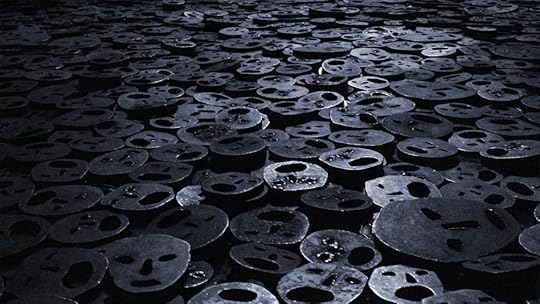
Museo Ebraico di Berlino: Shalechet – Foglie cadute. 10 000 volti in acciaio punzonato sono distribuiti sul pavimento dello Spazio Vuoto della Memoria, l'unico spazio vuoto dell'edificio di Libeskind in cui è possibile entrare. L'artista israeliano Menashe Kadishman ha dedicato la sua opera non soltanto alle vittime della Shoah, ma a tutte le vittime di guerra e violenze. I visitatori sono invitati a camminare sui volti e ad ascoltare il rumore prodotto dalle lastre di metallo che sbattono l'una contro l'altra e contro le persone che passano. Il frastuono e l'angoscia per tutti quei morti fanno desiderare di uscire al più presto dalla sala, senza poter smettere di calpestare le teste delle vittime della shoah.
In questo periodo sono fortunato, oppure scelgo bene: da un po’ di tempo a questa parte leggo solo bei libri. Non ci sono abituato, e mi piace.
Qui ho trovato frammenti di memoria e riflessioni che Appelfeld (nella lingua degli assassini di sua madre, il tedesco, significa letteralmente, campo di mele) deve aver faticato a tirare fuori: forse è proprio per questo che sono così interessanti e uncinanti.
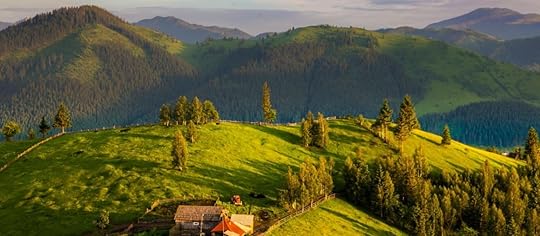
Bucovina, oggi divisa tra Romania, Ucraina e Moldavia.
Si comincia in una zona d’Europa che all’epoca faceva parte della Romania, la Bucovina, dove si parlava il ruteno e non il rumeno, il solito risiko della politica estera. Il viaggio è lungo: inizia da lì, attraversa tanta Europa, sosta in Italia, e approda in Palestina subito prima che diventi Israele.
Il piccolo Aharon ha un’immaginazione fervida e il mondo della sua infanzia è descritto a metà tra Eden e Oz: cresce circondato da verde, libri calore e amore. E con la stessa leggerezza, e lo stesso garbo dolente, racconta l’inizio della persecuzione, come se facesse ancora parte del mondo magico.
Di fiaba, per certi versi, si tratta, perché si fatica a credere che un’infanzia possa trasformarsi così: la mamma muore all’inizio della persecuzione, il padre lo accompagna fino al lager e sparisce, possiamo immaginare come, il bambino riesce “miracolosamente” a scappare. Le pagine dedicate ai giorni trascorsi nel ghetto, coi giochi fra i bambini e i matti lasciati liberi di girare per le strade, sono intense e indelebili; allo stesso modo non si dimenticano più alcune immagini del campo di concentramento (Kaltschund), per esempio quelle del recinto dove i pastori tedeschi da guardia sbranavano i bambini.
Il piccolo Aharon di sette anni comincia a vagare per la campagna, soprattutto per i boschi: vivendo nascondendosi nutrendosi come un animale – molto più a suo agio e al sicuro con le bestie del bosco che quelle umane. Sono anni di solitudine, di selvatichezza, di paura e sospetto, di attenzione vigile e guardinga, di silenzio, di distanza dalla parola, di minaccia nascosta in ogni ombra e gesto.
Aharon sopravvive, e accumula esperienza infinita. La guerra finisce, Aharon si è nascosto per sei anni e ha camminato mezza Europa: adesso ha 13 anni, arriva in Italia, rimane mesi nei campi profughi sulle spiagge italiane, dove c’erano molti bambini della sua età e con storie simili alle sue - proprio per questo erano posti frequentati da contrabbandieri e maniaci che cercavano di circuire i bambini per trasformarli in ladri, circensi, prostituti. Spesso ci riuscivano.
Arrivavano anche emissari del nascente paese degli ebrei: spingevano alla partenza, a imparare l’ebraico, a dimenticare non solo la lingua d’appartenenza, anche se yiddish, perfino i ricordi. Dimentica la diaspora e radicati nella terra, era il loro motto: i sopravvissuti, a tutte le latitudini, imbarazzano, finiscono presto con l’essere un impiccio, ricordano, impediscono di dimenticare, mantengono vivo il senso di colpa collettivo.
La seconda parte, nel paese d’arrivo (d’accoglienza?) mi ha trovato meno preparato, mi ha spiazzato. Una bella sensazione. Gli anni nel paese in trasformazione, le difficoltà, le pressioni, certe forme di ostracismo di fronte ai suoi primi tentativi letterari… un mondo ancora poco noto per me. Dopo essere sprofondati nella terribile notte novecentesca, in quei dodici anni che durarono un millennio, lentamente si torna a “riveder le stelle” intonando un bellissimo inno al valore dell’amicizia: i veri amici se hanno una parola giusta la porgono come un pezzo di pane in tempo di guerra, e se non ce l’hanno ti siedono accanto, e tacciono.
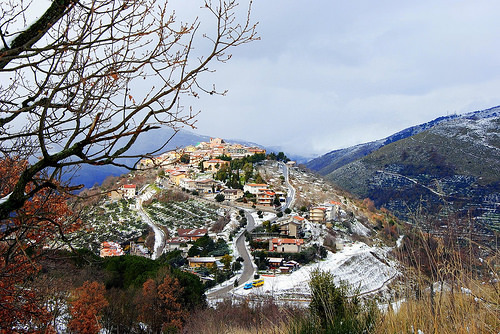
Campodimele è un paese dell’entroterra laziale a sud di Roma. Dopo l'armistizio dell'8 settembre 1943, la linea Gustav, che doveva fermare l'avanzata delle truppe alleate, passava proprio attraverso il territorio comunale, consentendo dalle sue alture il controllo della Valle del Liri e delle vie di comunicazione tra il Tirreno e l'entroterra frusinate. Questa situazione portò, il 10 gennaio 1944, alla deportazione di settecento abitanti (su 1400) e poi i soprusi, le miserie, i bombardamenti che caratterizzarono il fronte di Cassino. Infine, le violenze e gli stupri da parte dei marocchini del corpo di spedizione francese, che con gli anglo-americani conquistarono Monte Faggeto e quindi Campodimele tra il 18 e 20 maggio dello stesso anno. Questi episodi offrirono lo spunto per il romanzo “La Ciociara” di Alberto Moravia, che era sfollato proprio su un monte tra Fondi e Campodimele. Per queste vicende, Campodimele ha ricevuto la medaglia d’argento al merito civile.
Campodimele, in provincia di Latina.
Se mai un giorno dovessi avere voglia di leggere un libro di preghiere, ma spero che questo non avvenga mai, vorrei che fosse scritto così.
Everything that happened is imprinted within my body and not within my memory.
He prefers silence to words. He doesn't like to talk about emotions. He abhors sentimentality. He wants to cut himself off from memory. He wants a complete transformation of mind and soul. He wants to eradicate the reminders in order to be free of the past. He wants to forget.
Every night I tell myself: Forget more and more.
He was just 7 years old when he was imprisoned in a ghetto, then in a camp and later was made to march the Ukrainian steppes to his certain death only to escape and live in a forest all alone and in silence. But how can someone who has witnessed pain and death keep silent? How can he erase his memories and start a new life like nothing has happened?
The past lived inside me with a burning intensity.
So he wrote. He wrote about his life and his parents. He wrote about his friends and strawberries and people he encountered in the ghetto. He wrote about the bad, but also about the good. His writing style is restrained. He doesn't reminisce sentimentally. He only describes the struggle. And one feels a disconnection between the author and the events. As if it all happened to someone else. As if the author separated his soul from his body, hovered over it and then... simply wrote. Because "one cannot speak of great catastrophes in whispers."
Whoever held out a crust of bread or a can of water to you when you'd already fallen on your knees from sheer weakness- his is a hand you'll never forget. Wickedness is like generosity: neither needs words.
Aharon Appelfeld, filho único de pais judeus não religiosos, é originário da Ucrânia, onde viveu até aos 7 anos, quando se deu a invasão Nazi. Este livro é um conjunto de memórias que abarcam a vida no gueto, logo após a ocupação, depois no campo de trabalho, a perda dos pais, a fuga do campo, e a sobrevivência na floresta e nos campos ucranianos:
“Durante a minha errância pelos campos e florestas aprendi a preferir estas aos espaços abertos, os estábulos às casas, os doentes às pessoas sãs e os escorraçados das aldeias aos proprietários honestos.”
“Por vezes tenho a impressão que não foram as pessoas que me salvaram, mas os animais que encontrei pelos caminhos. Os momentos que passei na companhia de cachorros, gatos e carneiros foram os melhores durante a guerra. Apertava-me contra eles até me esquecer do que era, adormecia ao lado deles e o meu sono era então calmo e profundo como na cama dos meus pais.”
“Já reparei que as pessoas da minha geração, em particular os que eram crianças durante a guerra, desenvolveram um sentimento de desconfiança em relação aos seres humanos.”
Ao fim da guerra, seguiu-se uma longa viagem através da Europa, com outros refugiados, e o embarque, com apenas 12 anos, para Israel, onde a vida se veio a revelar tudo menos fácil:
A sua língua-mãe era o alemão, a língua dos assassinos da sua mãe, e sabia algo de iídiche, a língua falada pelos avós, que visitava nas férias. Mas a guerra interrompera o seu percurso escolar, que se ficou pela 1ª classe. O hebraico era-lhe totalmente desconhecido e tinha dificuldade em o aprender: “No barco, e mais tarde no campo de Atlit, onde os britânicos nos encerraram, aprendemos algumas palavras de hebraico. Pareciam-nos exóticas e difíceis de pronunciar. (…) a língua era-nos imposta à força. Quem falasse na língua materna era repreendido, ostracizado e por vezes mesmo castigado.”
E para terminar, uma frase de que gostei especialmente: “a literatura, quando é verdadeira, é a melodia religiosa que perdemos. A literatura contem em si todos os elementos da fé: a seriedade, a interioridade, a música e o contacto com o conteúdo secreto da alma.”
São 150 páginas de difícil digestão, mas que vale a pena ler.
The Story of a Life is a memoir of Aharon Appelfelt, an Israeli journalist and a holocaust survivor, written in a style that is uniquely his own. It is a tale a Jewish boy who survived the Nazi occupation despite desperate odds and a survivor who came to Israel (a country foreign to him) to build a new life for himself and a writing career in a language he yet had to learn. I already mentioned how this book is written in a distinct style. One the things I like so much about it is exactly the writing style. I'm really drawn to the way Aharon told his story, as much as I was drawn to the story itself.
Appelfeld's writing style made me think of short stories. As he retells his life in fragments, as he examines memory with care, he does it in a more modernistic than in a typical autobiographical way. Some subjects Aharon even avoids, offering his reader a more metaphorical passage instead. I will explain what I mean later on. First thing I want to say is that this memoir had me at foreword. I felt like two things were clear from the start, that Appelfeld is an amazing writer and that the story of his life is one of a kind. Why one of a kind? Not just because it is a story of an orphan who survived against impossible odds and a man who had lost all he has known and loved but managed to build a new life for himself. No, not just because of that but rather because it somehow something more than that, a tale of humanity and hope. This book, as bleak as its subject may be, gave me hope. If someone who has been so isolated for so long can find strength to write, to live, to love again, then there must be hope for all of us.
The author tells his life from his first memories. He is not always chronological nor does he always goes into detail. Somethings he doesn't want to talk about something yet this book feels like the most complete memoir I have ever read (and it happens to be one of the best). Sometimes it is not clear has something happened to him, has he witnessed it himself or experienced it through the eyes of other survivors? There was this chilling tale of German Sheppard who curiously took the liking to a brother or sister. The Nazi guards were amused at the fact that the dogs didn't want to injure the children. Eventually the dogs grew hungry and ate the two children. A horrible tale, but I don't doubt its truth. The only thing I'm uncertain of is whether he has witnessed it himself. Aharon has witnessed a lot. Jewish children being hunted like animals and turned in to the army. He escaped, again and again. Did he feel guilty because he was a survivor? At one point in the novel, he says it is hard carrying that burden of survivor. You want and feel the need to tell the truth about the horrors you witnesses and yet at the same time it kills you inside to retell and revive those experiences. Does anyone ever thinks of that? About the price that the victims of warms pay in telling their experiences? Perhaps it is not always best to talk about everything, always. Sometimes people have the right to their silences. Sometimes it is not selfish to keep something to yourself, sometimes it is necessary. I know it seems to be a popular opinion today, this need to talk about everything, but somethings cannot be overcome and some problems can't be solved when we are barely hanging on your sanity. Sometimes the victims need their time to grieve and we shouldn't pressed them for their tales. The survivors were fragile, as everyone must be in desperate conditions. Aharon tells about people who survived the worst tragedies only to be confronted with merciful questions. I really sympathized with those people.
Appelfeld found a way to talk about war in a way I quite frankly never thought possible. He doesn't try to hide its horrors but he doesn't brood over them as well. He is never sentimental yet he is always warm. This is after all a memoir of a survivor, someone who was not physically or psychologically beaten. He also focused on particular terrible aspect of any war and that is that post-war times. Yes, post war times can be especially hard because it is when all the human vices seem to come on surface. You think that the worst thing about war is the war itself. You'd be wrong. Post-war times when heroes are too tired or dead and everyone is devastated is when it all goes to hell. That was the most difficult thing to read about: tales of children being molested and taken away by smugglers.
There is a great deal more that can be said about The Story of a Life. The writer explores many issues and dilemmas, both personal and collective. His talk about languages I found particularly fascinating because linguistic is my area. However, I'm sure that it might be interest to others, as language is something we all share. He talks about finding himself in Israel, alone, orphaned, and the sadness that accompanied the loss of his mother tongue and the same time frustration that followed his inability to learn Hebrew , or perhaps better to say great difficulty because he eventually did learn it. Not only learned it, but mastered it and wrote in it. I'm sure it was difficult as first. Not just for him but for many others. Aharon is so honest and straight-forward in his prose. For someone who has literally lived a part of his life in silence (as a child hiding in the woods), his ability to express himself with words is most remarkable.
The Story of a Life is one of the most touching, warm, honest and complete memoirs I have ever read. Absolutely one of those life changing books. I feel such a connection with this writer, like he has showed me a piece of his soul. I can't thank him enough for sharing his story. I was very saddened to learn of his passing, but he certainly hasn't lived in vain. He was a remarkable person and a great writer.
Aharon Appelfeld s-a născut la Cernăuți, în 1932, și a copilărit în Bucovina, de unde i-au rămas o sumedenie de imagini legate de Munții Carpați, râul Prut și satul bunicilor, unde își petrecea vacanțele de vară. Avea doar șapte ani când a izbucnit al Doilea Război Mondial. Antisemitismul devenise oficial încă din 1937, iar lumea idilică a copilăriei s-a destrămat asemenea unui vis, pierzându-și dintr-odată reperele.
În cea mai mare parte, citim întâmplări adevărate. Totuși, pe parcurs ne dăm seama că unele amintiri sunt ficționalizate, depășind granițele unei simple mărturii. De altfel, autorul tratează tema Holocaustului într-un stil propriu. Pentru el, perioada războiului reprezintă un tunel întunecat, din care arareori se desprinde o amintire completă: „Eu nu aveam mărturii. Nu-mi aminteam nici nume de oameni, nici nume de locuri, ci doar întuneric, foșnete și mișcări. Abia mult mai târziu am înțeles că această materie primă este miezul literaturii.”
În cuvinte puține și bine alese, scriitorul vorbește cu sinceritate despre căutarea sinelui, inadaptare și condiția de scriitor, despre îmbrățișarea slăbiciunilor și ieșirea de sub tutela criticilor și a „cunoscătorilor”, despre greșeala de a anihila trecutul și de a construi pe ruinele lui o viață nouă.
This memoir had me at foreword. Two things were clear from the start, that Appelfeld is an amazing writer and that the story of his life is one of a kind. Why one of a kind? Not just because it is a story of an orphan who survived against impossible odds and a man who had lost all he has known and loved but because it somehow something more than that, a tale of humanity and hope.
I finished this book about 3 a.m this morning. Enough said. I couldn't put it down despite the fact that it (being the middle of a night) was freezing. The author tells his life from his first memories. He is not always chronological nor does he always goes into detail. Somethings he doesn't want to talk about yet this book feels like the most complete memoir I have ever read (and it happens to be the best). It is not always best to talk about everything, I know it seems to be a popular opinion with today's psychology but somethings cannot be overcome when we are barely hanging on your sanity...as everyone is in desperate conditions. He tells about people who survived the worst tragedies only to be confronted with merciful questions.
Appelfeld found a way to talk about war in a way I quite frankly never thought possible. He doesn't try to hide its horrors but he doesn't brood over them as well. He is never sentimental yet he is always warm. This is after all a memoir of a survivor, someone who was not physically or psychologically beaten. He also focused on particular terrible aspect of any war and that is that post-war times when all the human vices seem to come on surface. You think that the worst thing about war is the war itself. You'd be wrong. Post-war times when heroes are too tired or dead and everyone is devastated is when it all goes to hell. That was the most difficult thing to read about: tales of children being molested and taken away by smugglers.
There is a great deal more that can be said about The Story of a Life. The writer explores many issues and dilemmas, both personal and collective. His talk about languages I found particularly fascinating perhaps because linguistic is my area. He talks about finding himself in Israel, alone, orphaned, and the sadness that accompanied the loss of his mother tongue and the same time frustration that followed his inability to learn Hebrew , or perhaps better to say great difficulty because he eventually did learn it obviously.
Most touching, warm, honest and complete memoir I have ever read. Absolutely one of those life changing books.
Intitolare semplicemente "Storia di una vita" un romanzo che tratta della Shoah potrebbe sembrare una contraddizione. Appelfeld però narra la sua storia di sopravvissuto con semplicità, senza puntare il dito, concentrandosi sul proprio sentire di bambino, adolescente e adulto, ripercorrendo i passi della sua maturazione e rivivendo gli incontri con uomini e donne che si sono rivelati ora malvagi e crudeli, ora generosi e capaci di un'incredibile umanità. Forse è proprio questo il punto: le vicende di una vita e la storia stessa dell'umanità sono fatte dell'egoismo, della fratellanza, dell'empatia, della cultura, dell'ignoranza, dell'amicizia, della paura, dell'istinto e della fede di ciascun essere umano. In questo modo anche eventi globali e drammatici come l'Olocausto possono essere raccontati come "storie di una vita". Molto bello.
Avevo iniziato un paio di volte, e abbandonato, Badenheim 1939 . Non ce la facevo proprio, ma non riuscivo ad arrendermi: scrittore ebreo - li apprezzo- , periodo storico fra i miei più seguiti, autore premiato ed amato… Decisi di riprovare con un altro libro , fortunatamente trovato in libreria - gli altri bisogna ordinarli, ( non sarà commerciale ? ) : giusta intuizione . Con una scrittura asciutta e senza falsi sentimentalismi , Appelfeld è riuscito a conquistarmi pure scrivendo di argomenti dei quali avevo già letto parecchio. Quattro stelle.
Savaşa dair kısa değinmeler gayet etkileyici. İsrail'e döndükten sonra dilsiz kalışını da şahane anlatmış. Ancak derneği anlattığı kısım hariç yazarlık sürecinin kısa öyküsünün pek içine giremedim. İlk kısım Badenheim 1939 ile yarışacak kadar iyi olsa da genel olarak onun kadar vurucu değil. Ve ilk kısımda bir çocuğun savaş boyunca yaşadıkları göz önüne alındığında Büyük Defter de şaşırtmıyor artık insanı.
C'est un enfant qui, devant se cacher seul quelques années et se méfier de tous, inhibe l'usage des mots. Mais intuitivement, naturellement, la terre, les forêts et les animaux sont ses interlocuteurs.
C'est un adolescent errant envoyé en Israël pour débuter une nouvelle vie, sa lutte pour retrouver ses mots, ne pas perdre sa (ses) langue(s) maternelle(s) et adopter l'hébreu et son nouveau pays.
C'est un homme qui comprend que les langues sont et font sa culture, son histoire, ses émotions, alors, pour retrouver un langage fluide, il écrit.
C'est un livre qui dit que le parler est nécessaire à l'homme. Même s'il n'a rien à dire, s'il ne veut pas dire ou s'il ne peut dire.
Un enfant qui a grandi pendant une guerre, ne peut pas se souvenir des faits, seulement de sensations corporelles, et ne peut pas raconter. Ces sensations sont une part de ce qu'il est, il ne peut donc en faire abstraction. Adulte, en lui reste cet enfant non construit (car séparé de ses parents, maltraité, affamé, non instruit) qui échappa au monde par la contemplation intensive des autres, des forêts, et, en cas d'impossibilité, dans sa propre contemplation intérieure.
Par conséquent, dit Appelfeld, après-guerre, en Israël, beaucoup de jeunes adultes, furent muets, bègues, et/ou peu bavards, concis. Les adultes qui, eux, avaient des souvenirs d'avant guerre, et étaient construits en tant que personne, et souhaitaient démarrer une vie neuve, en oubliant le passé, étaient bavards. Quant à ceux qui voulaient dire, ils étaient privés de discours. On leur reprochait une passivité devant le danger, le manque d'esprit de rébellion. Il n'y avait pas les mots pour décrire le vécu de la déportation. Si des mots approchait un peu de la vérité, on ne les croyait pas.
Ayant été cet enfant, Aharon Appelfeld écrit de façon nette et précise. Ce n'est donc pas un hasard. Il revient sur ses premiers souvenirs (l'allemand parlé en famille, le roumain et le yiddish des grand-parents à la campagne, le langage de la prière), ses mois de travail domestique au service d'une prostituée dans la campagne ukrainienne (son parler vulgaire), les dangers de la Libération quand on est orphelin dans une Europe détruite : les pervers, les "impressarios" en recherche d'enfants savants à exploiter, les trafiquants en recherche de petits à utiliser, et les "professeurs" qui les défendent, les rassemblent, les instruisent.
Appelfeld poursuit avec sa difficile acclimatation en Israël. Il raconte quelques rencontres marquantes au fil des années,
Appelfeld affirme ne pas être un écrivain de la Shoah ,et c'est vrai. Ici pas de récit détaillé de camp de concentration, de détresse physique absolue, de marché forcée qu'il a pourtant vécus. C'est "l'histoire d'une vie", la sienne, avec cette enfance terrible.
J'ai lu, fascinée par la simplicité, la pertinence du récit. Fait agréable, Valérie Zanetti, la traductrice, était très proche de l'auteur, et cela se sent. J'ai hâte de lire d'autres livres de cet auteur.
This book contains very little biographical content about the author's war experiences. There are a few brief vignettes about his childhood and people who have crossed his path as he matured toward adulthood. It is predominantly about his path toward becoming a writer. He states that his early childhood and war experiences have molded his character, rather than leaving specific memories. Thus his childhood years from seven to thirteen are not detailed, and they are not chronologically presented. There is nothing about his camp experiences, and little about the ghetto or solitary hiding in the Ukrainian forests. He was born in Czernowitz, Ukraine, in 1932. This is in the Carpathian Mountains on the border to Romania. The region is called Bukovina, situated next to Galicia.
What it does have, and what makes the book clearly worth reading, are Aharon Appelfeld's thoughts concerning his philosophy on who he has become as an adult, on language and writing and memory. He insists that while others have started afresh after their war experiences, stamping out past memories, he has built his adult self on remembering his past, the good and the bad. It is a part of him he cannot ignore. He does not wish to suppress or eradicate his past:
I made a survey and a reckoning: every person I knew who was saved during the war was saved solely by the grace of someone who, at the time of great danger, extended a hand to him. It was not God that we saw in the camps, but good people. The old Jewish statement that the world continues to exist only by the virtue of a few righteous people is as true today as it was back then....
Everything that had happened to me or that was about to happen to me was connected to the world from which I had sprung. The moment I realized this, I ceased being an orphan dragging his orphanhood behind him and became someone who was able to confront the world. (page 141)
Concerning writing and those who have helped him become the the acknowledged writer he has become, he speaks of a librarian friend:
He knew what bothered me in a text even before I could point the spot out to him. He always found the hidden flaw. It was strange: we never spoke about content. His belief, like mine, was that the choice of words, the composition of sentences - the narrative flow - are the heart and soul of a work; the rest comes by itself. (page 193)
My, those underlined words strike a chord with me. That is exactly how I feel. I have added the underlining.
I will be reading more by this author. I think I would have enjoyed this book more if I were better acquainted with his writings. I will have to fix that.
In his terrifying and beautiful memoir, The Story of a Life, Aharon Appelfeld does more than tell his life story (although, with his elliptical style, which can be rather like a narrative form of Swiss cheese, it sometimes seems as if he does less than that, too): The Israeli writer and Holocaust survivor battles history itself.
It is a typically elliptical rendering of his life. This is not the breathless adventure story suggested by the book’s dust-jacket copy, where overwrought phrases like “extraordinary survival and rebirth” impose a narrative arc that doesn’t exist except in the minds of Oprah-influenced marketers. Instead, Appelfeld provides a series of wonderfully written and compelling vignettes interspersed with meditations on the difficulty of remembering. He gives us a boyhood home where there is “more quiet than talking,” and he gives us the camp not at all. (There is a camp, and it is gruesome, but is it Appelfeld’s? He doesn’t say.) There are also a few heartbreaking glimpses of the ghetto, where, he tells us, “children and madmen were friends.”
After lengthy study of the Holocaust, I thought I had heard that Appelfeld's book was all about the cruelty and inhumanity of the Holocaust, which is not exactly news. I was gravely mistaken. Appelfeld brings a great deal of new information on an intimate scale, but he's no "revisionist"--far from it.
I am picking away at this book. The prose is very beautiful and lovely to read. Anyone interested in Holocaust literature or history of Eastern Europe and children should read this one. The publisher's got it wrong though -- Appelfeld, not Applefed. Appelfeld survived pretty much in the woods during the war. His parents parished. His memory is vivid, concise, and starling.
I've read fiction by Appelfield - which always left me wanting to know more about his real, rather than fictional, life. Appelfield is a wonderful writer, lyrical, understated. In this book he explores his memories before his mother was killed and he, his father, and uncle were in the ghetto, a camp, and then - after escaping - on his own for the rest of the war. Since he was seven when his mother was killed his memories are those of a young child and then, after the war, holding on to what he could. Interesting that he says that one of the major things keeping him going in the woods and working for families, and hiding was his belief that - at the end - he would find his parents. Even though he had seen much death, dying and killing - and had heard his mother being shot - he stilled held onto a (lifesaving) belief that they would find him. His story of the aftermath of the war, and trying to find out how to live in Israel is equally moving. (After all, when he wanted an education in Israel, he had had only one year of school, at age 7!) A beautiful, sad and thoughtful book.
I started reading this book after finishing In the Garden of Beasts. It immediately caught me and held me through his chapters about the aftermath of the war on the people who had been released. I never knew about that part, and it was disturbing to read that they were further humiliated and taken advantage of by opportunists. The author lost me once he started writing at length about his writing process and struggles. I just couldn't finish the last 20% of this book.
This was a beautifully written memoire of a man who was a child during the Holocaust. Provides an eloquent perspective on struggling to pick up a life and move on while at the same time coming to terms with the reality of being in one of the world's deepest tragedies. Thanks to my friend helen - I got this at one of her book swap parties.
It's a Holocaust memoir but it's so much more; the implications of memory, generational continuity, and building a new home both physically and psychologically.
"Among the rest were the silent ones, those who barely uttered a word. The steam from the coffee and the haze of the cigarette smoke enveloped us for years and brought us to where we are today."
neyin eksik olduğunu tanımlayamadığım ama bir şekilde bazı noktaların eksik olduğuna emin olduğum bir kitaptı. genel hatlarıyla sevdim ama. otobiyografik bir metin olması ise ayrıca güzel ve okurken okuyucuyu sıkmıyor ki otobiyografik metinlerde bu önemli bir detay. nazi almanyası üzerine metinler okumaktan hoşlanıyorum. o yıkıcılığın tüm gerçekliğiyle bir şekilde tarihe not düşülmesinin çok önemli olduğuna inanıyorum. şans verilebilir bir kitap. 7/10
Il arrive que les titres des livres mentent. Celui-ci ne ment pas : il promet. C'est bien de "l'histoire d'une vie dont il s'agit", mais sans doute aussi de beaucoup plus encore...
Autour du parcours de l'auteur, de son enfance "dorée" à l'âge adulte, en passant par le chaos de la guerre et de la Shoah, se construit un roman d'apprentissage aux traits parfois épiques. La mémoire, qui se construit à partir de la somme des rencontres et des souvenirs en est le fil conducteur. Pour être tout à fait juste il faudrait dire, d'ailleurs, combien ce livre traite des mémoires plutôt que de la mémoire. Par dessus tout, le livre traite de la manière dont un homme, des Hommes se construisent au travers d'histoires qui leur sont à la fois propres et qu'ils ont en partage (sans le savoir, parfois). La seule véritable voie vers la construction de soi, apparaît être la mobilisation de la mémoire, une mémoire dénuée des soubresauts du lyrisme et de l'affliction. Les faits, seulement les faits, les origines, par-dessus tout les origines...
On découvre dans ce récit fleuve, ce que signifie être un "enfant de la guerre", de la guerre qui sème le chaos, sépare les enfants de leurs parents, les familles de leurs terres natales, les êtres de leurs destinées... On découvre comment une guerre (qui n'a pas besoin d'être nommée tant elle est présente et prégnante dans l'imaginaire collectif et universel) a contribué à fonder l'identité juive ("Après la guerre, l'appétit de vie était grand, et la prière méprisée"), l'histoire de l'Ukraine, celle des Carpates, celle de l'actuel État d'Israël... Et l'identité d'Aharon Applefeld lui-même.
Avoir une identité, être quelqu'un, quelque part est une chose complexe... Celle de l'auteur est faite de déracinement(s), d'une quête de religion et de savoirs. Les rencontres en tous genres (érudits, paysans, amis, ennemis, fous, destins de survivants, un joueur d'échec qui rappelle celui de Zweig...) tiennent une place de choix dans la construction de l'écrivain qu'est devenu Aharon Applefeld. Les rencontres les plus touchantes du livre sont, à mon sens, celles qu'il opère avec lui même et qui ne semblent pouvoir s'accomplir que dans d'absolues solitudes (celle des bois, celle de l'errance, celle du pépiniériste, celle de l'écriture...). "Laisse-moi, je suis obligé d'être seul avec moi-même", lui livrera un jour l'un des nombreux frères de déracinement qui jalonnent son parcours comme pour résumer les modalités de cette quête d'absolu et d'infini.
C'est aussi du "devenir écrivain" et du pouvoir de l'écriture que traite le livre. Construire un Homme est une chose complexe, construire un écrivain l'est au moins tout autant et s'opère au travers d'un rapport singulier aux mots, aux langages et aux souvenirs. "Le passé en lui-même est un très mauvais matériau pour la littérature. La littérature est un présent brûlant, non au sens journalistique, mais comme une aspiration à transcender le temps en une présence éternelle" finira par nous livrer l'auteur.
La quête d'Aharon Applefeld fait écho, pour moi, au très beau poème de Rudyard Kipling :
Si tu peux voir détruit l’ouvrage de ta vie Et sans dire un seul mot te mettre à rebâtir, Ou, perdre d’un seul coup le gain de cent parties Sans un geste et sans un soupir
[...]
Alors, les Rois, les Dieux, la Chance et la Victoire Seront à tout jamais tes esclaves soumis Et, ce qui vaut mieux que les Rois et la Gloire,
Tu seras un Homme, mon fils
Je pense aussi à ces quelques mots de Cocteau : "Le poète se souvient de l'avenir". Avancer, toujours avancer, savoir d'où l'on vient, tendre vers où l'on va.
Ma lecture est terminée, je sais que je viens de me confronter à une véritable vie d'homme, mais aussi à l'œuvre d'un poète. Ce fut un plaisir.
Applefield's book is a strange mix: part autobiography/memoir and partly a book about language, art, culture, and the struggles of a writer to find his authentic voice. The first part, chronicling the author's war years as a child who escaped from a camp and survived by hiding in the woods and passing himself of as a non-Jewish orphan, appealed to me most. However, Applefield's subsequent musings about his difficult adaptation to Palestine: socially, linguistically, vocationally, and spiritually are engaging as well. Ultimately, you applaud the fact that in the end the author overcame such steep obstacles, matured as a person and a writer, and was able to finally become the WRITER that he always believed himself to be.
Ovo je za mene prva knjiga koju sam pročitala od ovog pisca, a sigurno neće biti poslednja. To je u stvari memoar, ali ne uobičajeno hronološki napisan i ne sveobuhvatan. Pisac na početku pripoveda o svom detinjstvu u Černovicu, posetima babi i dedi na selu, odnose sa drugim članovima porodice, neke svoje doživljaje.... Onda ide u ne tako daleku prošlost i seća se svog dolaska u Izrael, kako je postao pisac, sve to uz unutrašnja razmišljanja, opet protkana sećanjima na djetinjstvo... Imao je 7 godina kada je rat počeo, a 13 kada je završio. Uspeo je pobeći iz logora smrti sam, onda se skrivao po šumama.... Ne ulazi u pojedinosti horora, samo priča svoju priču kao da meditira, pomalo nostalgično, ali horor i tuga su iza svake reči... Posebno mi se dopao njegov stil. Preporuke!
I have not previously read any of his books but am very curious now. This was a true stream of consciousness sort of book reflecting on his life and how he became and continued to be. I would have loved to have read the exact author's words, rather than translation. I hope she captured his true voice as this was beautiful, but again I wonder what he really sounds like? I have been immersed in a collection of WWII fiction particularly the persecuted victims and I feel very lucky in my life and time to know nothing first hand and only through the pages of books and in my classroom learning. I hope it to remain so as the horror is unimaginable.
The best memoirs are those that tell amazing stories of survival, without being sentimental or self-pitying. This is not easy, as this man lived alone, a child, in a FOREST by himself during the Holocaust. His comments about writing and life are too numerous to describe here, but as a teacher myself, when I highlight and underline a book I read for pleasure, that's a good book. Poignant and informative. I could go on and on. I'm so happy he survived.
I love how the story drew me in and is told from the point of view of an adult recalling his years and experiences as a child growing up during War years. As a child of Jewish heritage the memories of detail the horrific treatment of human as he was witness to remain clear. How far would you go to survive? And if you do-- how do you go on to live your life? This is a well told story that deeply touched me.