

What do you think?
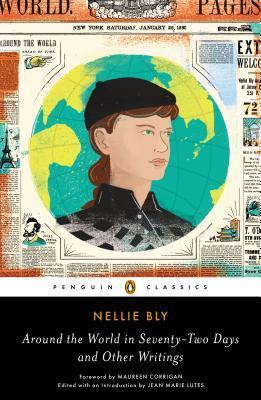
Around the World in Seventy-Two Days and Other Writings
Born Elizabeth Jane Cochran, Nellie Bly was renowned as America's first 'girl stunt reporter'. She was a pioneer of investigative journalism, including an exposé of patient treatment at a mental asylum and a travelogue from her record-breaking race around the world in emulation of Phileas Fogg. This volume, the only printed and edited collection of Bly's writings, includes her best-known works as well as many lesser-known pieces that capture the breadth of her career from her fierce opinion pieces to her remarkable World War I reporting.
331 pages, Paperback
Published April 29, 2014
About the author
Nellie Bly
59 books297 followersNellie Bly (1864-1922) was the pen name of pioneer female journalist Elizabeth Jane Cochran. She remains notable for two feats: a record-breaking trip around the world, in emulation of Jules Verne's character Phileas Fogg (Bly completed the trip in seventy-two days) and an exposé, in which she faked insanity to study a mental institution from within. In addition to her writing, she was also an industrialist and charity worker. Bly died of pneumonia at St. Mark's Hospital in New York City in 1922 aged 57.
Librarian Note: There is more than one author in the GoodReads database with this name. See this thread for more information.
Librarian Note: There is more than one author in the GoodReads database with this name. See this thread for more information.
Ratings & Reviews
Friends & Following
Create a free account to discover what your friends think of this book!
Community Reviews
Displaying 1 - 30 of 46 reviews

June 10, 2020
This account of trailblazing woman journalist Nellie Bly's 1889 attempt to beat fictional Phileas Fogg's record, of travelling Around the World in Eighty Days in Jules Verne's novel, was a fun book to listen to on my daily walks the past week or so, although there's more to it than that, and Mary Reagan's narration for the LibriVox edition was superb.
A great deal of Bly's trip was spent in the company of others travelling on the same ships and trains that she was taking and she shares amusing accounts of them, from an American family on her transatlantic ship whose dog was named "Home, Sweet Home" but called "Homie" for short, to a fellow passenger who sued the Peninsular and Oriental Steamship Line for the cost of hotel accommodations due to the ship arriving in Hong Kong two days early.
Some reviewers are disappointed that she doesn't treat in more detail with the people and cultures of the places she visited. Keeping in mind that she had one day's notice that she was going on the trip for her employer, Joseph Pulitzer's New York World, and that she was racing against the calendar so spent as little time as possible in any port, I think she did better than could be expected on this count.
She describes a charming meeting with Jules Verne and his wife at their home in Amiens, France, during which he marked her itinerary on a wall-mounted map that displayed Phileas Fogg's fictional journey. In addition to a very descriptive account of travelling through the Suez Canal, she provides a detailed report on its construction, noting that it was claimed that 100,000 workers died on the project.
Colombo, Ceylon seemed to her more beautiful than Newport, Rhode Island. Here, she tensely watched a snake charmer who successfully re-captured his cobra when it attacked him rather than danced, complaining that it was "too fresh". She found Hong Kong to be filthy and spent Christmas Day in Canton touring an execution ground, a court's torture chamber, and a leper colony, upset that one of the coolies that carried her chair distracted her because she could tell he was uncomfortable.
On her last foreign stop, she found paradise. She said that if she ever loved and got married, she would desert her native America for "Japan, the land of love - beauty - poetry - cleanliness." In Yokohama, Japanese children "always look happy and never seem to quarrel or cry." She is smitten by the Geisha girls who, upon her leaving after their performance, did her the honor of pressing "their soft, pouting lips to mine in parting". In a pretty blunt comparison, Bly opines that: "the Japanese are the most delightful of people, the Chinese the most disagreeable."
Which is a convenient segue to another criticism of the book, i.e. its racism. There's no getting around that Bly sees the world through the conventional lens of American racism of the time. While I would have noted the racism, but moved on from it pretty quickly in the past, I can't let it go that easily as I process the meaning of George Floyd's death at the hands of Minneapolis police two weeks ago. This book entertained me, but parts of it also bothered me, and, if you read it, I hope they bother you, too.
A great deal of Bly's trip was spent in the company of others travelling on the same ships and trains that she was taking and she shares amusing accounts of them, from an American family on her transatlantic ship whose dog was named "Home, Sweet Home" but called "Homie" for short, to a fellow passenger who sued the Peninsular and Oriental Steamship Line for the cost of hotel accommodations due to the ship arriving in Hong Kong two days early.
Some reviewers are disappointed that she doesn't treat in more detail with the people and cultures of the places she visited. Keeping in mind that she had one day's notice that she was going on the trip for her employer, Joseph Pulitzer's New York World, and that she was racing against the calendar so spent as little time as possible in any port, I think she did better than could be expected on this count.
She describes a charming meeting with Jules Verne and his wife at their home in Amiens, France, during which he marked her itinerary on a wall-mounted map that displayed Phileas Fogg's fictional journey. In addition to a very descriptive account of travelling through the Suez Canal, she provides a detailed report on its construction, noting that it was claimed that 100,000 workers died on the project.
Colombo, Ceylon seemed to her more beautiful than Newport, Rhode Island. Here, she tensely watched a snake charmer who successfully re-captured his cobra when it attacked him rather than danced, complaining that it was "too fresh". She found Hong Kong to be filthy and spent Christmas Day in Canton touring an execution ground, a court's torture chamber, and a leper colony, upset that one of the coolies that carried her chair distracted her because she could tell he was uncomfortable.
On her last foreign stop, she found paradise. She said that if she ever loved and got married, she would desert her native America for "Japan, the land of love - beauty - poetry - cleanliness." In Yokohama, Japanese children "always look happy and never seem to quarrel or cry." She is smitten by the Geisha girls who, upon her leaving after their performance, did her the honor of pressing "their soft, pouting lips to mine in parting". In a pretty blunt comparison, Bly opines that: "the Japanese are the most delightful of people, the Chinese the most disagreeable."
Which is a convenient segue to another criticism of the book, i.e. its racism. There's no getting around that Bly sees the world through the conventional lens of American racism of the time. While I would have noted the racism, but moved on from it pretty quickly in the past, I can't let it go that easily as I process the meaning of George Floyd's death at the hands of Minneapolis police two weeks ago. This book entertained me, but parts of it also bothered me, and, if you read it, I hope they bother you, too.

March 30, 2018
3.5 ⭐️ Encantada de haber conocido a esta intrépida y valiente periodista pionera que fue Nellie Bly, admirable por su arrojo, confianza en si misma y sobre todo por negarse a aceptar que el papel de una mujer tuviera que limitarse al ámbito doméstico y familiar, que denunció las condiciones de trabajadoras de fábricas dando voz a las mujeres en lucha por una igualdad lo que la convierte en un referente feminista.
Mi parte preferida y destacable del libro es sin duda, la entrevista que le realizó a la interesante Belva Lockwood, candidata a la elecciones presidenciales estadounidenses, que además de política, era abogada, activista por la paz y educadora feminista, y de su vuelta al mundo en la que no profundiza más allá de ir narrando la ruta que sigue y qué hace durante el transcurso de su estancia en cada país, más como una especie de diario de navegación, me gustó cuando se encuentra en Japón. Una cosa que me pilló muy por sorpresa de esta parte del libro dedicada al viaje es la falta más absoluta de empatía que se le detecta hacia otras culturas.
Deseando leer Ochenta días de Matthew Goodman para conocer con más detalle su carrera contra reloj en la que batió el récord ficticio de Phileas Fogg.
Nellie seguiría, a día de hoy, en su salsa y feliz cubriendo directos en tv como reportera, e infiltrada destapando injusticias sociales, vistiendo una Belstaff y con un móvil al lado de ese su frasco de crema facial dentro de, una mochila esta vez, o así me la imagino yo :D
Mi parte preferida y destacable del libro es sin duda, la entrevista que le realizó a la interesante Belva Lockwood, candidata a la elecciones presidenciales estadounidenses, que además de política, era abogada, activista por la paz y educadora feminista, y de su vuelta al mundo en la que no profundiza más allá de ir narrando la ruta que sigue y qué hace durante el transcurso de su estancia en cada país, más como una especie de diario de navegación, me gustó cuando se encuentra en Japón. Una cosa que me pilló muy por sorpresa de esta parte del libro dedicada al viaje es la falta más absoluta de empatía que se le detecta hacia otras culturas.
Deseando leer Ochenta días de Matthew Goodman para conocer con más detalle su carrera contra reloj en la que batió el récord ficticio de Phileas Fogg.
Nellie seguiría, a día de hoy, en su salsa y feliz cubriendo directos en tv como reportera, e infiltrada destapando injusticias sociales, vistiendo una Belstaff y con un móvil al lado de ese su frasco de crema facial dentro de, una mochila esta vez, o así me la imagino yo :D
February 19, 2018
Impossible de donner plus de 3 étoiles. Le livre est trop problématique, malgré sa grande valeur historique. Aucun doute sur le fait que Nellie Bly est un personnage incontournable de l'histoire de l'émancipation des femmes, c'est pour ça que les jeunes américain(e)s en entende beaucoup parler. Mais, comme bien d'autres sujets historiques, son discours a très mal vieilli. On parle donc d'elle dans les écoles, de sa personnalité de "daredevil", mais on ne la fait pas lire. Comment pourrait-il en être autrement, alors qu'il faudrait toujours remettre en contexte de nombreux passages comme: "The Chinese are not pleasing appearing people"? Le reportage qui l'a rendue célèbre, Around the World in Seventy-Two Days, est un cas d'espèce de ce paradoxe: à la fois un document fascinant sur la liberté féminine qui refuse de considérer les obstacles à une époque où le monde était totalement dirigé par des hommes, et le récit en direct des préjugés d'une jeune américaine et des affres de l'impérialisme (ici surtout britannique). En effet, quel projet magnifique et absurde simultanément que de faire le tour du monde le plus rapidement possible? Et Bly a réussi son défi: elle nous a montré à quel point les humains pouvaient maintenant (en 1889) courser contre le soleil lui-même tout en nous démontrant (dans ses angles morts) à quel point parler du monde quand on le traverse en trombes confine aux platitudes, à la condescendance et au racisme.

March 12, 2018
Finally, completed this after months of dragging through the pages.
Her remarkable stints at the madhouse (what an eye-opener!) and reporting directly from the firing line was clouded by her tone of disdain on her travels to lesser developed regions.
Her meeting with Jules Verne was a high point and her recount of her extraordinary travels definitely pales in comparison with the esteemed writer.
I find her strides in feminism impactful with her gung-ho and get-it-done attitude.
Her remarkable stints at the madhouse (what an eye-opener!) and reporting directly from the firing line was clouded by her tone of disdain on her travels to lesser developed regions.
Her meeting with Jules Verne was a high point and her recount of her extraordinary travels definitely pales in comparison with the esteemed writer.
I find her strides in feminism impactful with her gung-ho and get-it-done attitude.

June 27, 2016
The book was very well organized and annotated. While I enjoyed many of the articles, the primary work, "Around the World in Seventy-Two Days" was...well...boring. Setting aside the widely inappropriate racist comments as a product of the time period, the whole piece was self-serving and flat. I would have expected a young woman seeing the color, smells and sights of the wide-world to be a bit more curious and enthusiastic but that was not the case.
Nellie Bly was more interested in describing the condition of the roads at each port stop than she was the food, culture or people!
Nellie Bly was more interested in describing the condition of the roads at each port stop than she was the food, culture or people!
September 12, 2014
An enchanting, true account, of a brave and daring woman who endeavored to challenge the protagonist of Jules Vern's novel and travel around the world in less than 80 days. It was a pure delight to read! The writing style lovely and descriptive and her account chalk full of wonderful history! I especially loved her chapter that described her voyage on the Oceanic and captained by none other than Captain E.J. Smith!! All in all a delightful and much recommended read!

August 13, 2020
The greatest value of this is in being able to read about how Americans in the late 19th century thought about technology, other cultures, and feminism. It was interesting to see what has changed and what remains similar.
June 4, 2021
The earlier texts in the book provide a unique perspective on what life was like for women in the US in the 1880s. Nellie Bly champions women and helps to expose injustices towards them in the asylum on Blackwell's Island and in the box-making factories. However, despite her positive attributes shown in the earlier part of the book, the "Around the World in Seventy-Two Days" portion exposes a side of her that is difficult to like. She doesn't make any attempt to understand the cultures she encounters. She is so consumed by her desire to go around the world as quickly as possible that she doesn't seem to care about anyone else. For example, when they reach Malaysia, she laughs at the men who struggle to get back to shore, after loading coal onto the ship, because of the rough sea. Her description makes it seem as though their lives are in danger but she laughs, uses racial slurs against them and goes on to complain that they can't travel to Singapore that night because they have to slow down for the men to get back to shore. In fact, she often has a cruel sense of humour. At one point, when the sea is particularly rough and she is thrown across the deck, a man tries to help her up but ends up falling over himself. He lands on his face and breaks his nose. The doctor says he will be scarred for life, but she can't stop laughing at him.

January 30, 2017
Whoa Nellie. (Sorry I had to say that.) THE coolest lady journalist and a century before her time. This book was gripping (mostly). Really interesting to see her view of the world. As a woman and journalist, so cool to read a bit about how she got along. Torn between four and five stars (Goodreads, get half stars already!) But I know this is one I'll think on for a long while, in spite of the couple of lulls. DEFINITELY worth a read.


July 20, 2016
Heard at Forgotten Classics podcast, read winningly for us by Mary Reagan from LibriVox.
Intrepid woman reporter Nellie Bly sets out to see if she can beat Phileas Fogg's record from Around the World in 80 Days. All with one satchel, one dress, and a sunny spirit of determination.
As we can see from this book's title, she pulls it off. It is an exciting adventure and one that takes us back to the late 1800s. Thoroughly enjoyable.
Intrepid woman reporter Nellie Bly sets out to see if she can beat Phileas Fogg's record from Around the World in 80 Days. All with one satchel, one dress, and a sunny spirit of determination.
As we can see from this book's title, she pulls it off. It is an exciting adventure and one that takes us back to the late 1800s. Thoroughly enjoyable.

September 14, 2025
DNF 40%
I was so disappointed! I found the narrating of this trip so boring. The narrative is flat and superficial, showing none of the depth expected of a journalist. The idea of rushing around the world was so stupid anyway, just a silly dare that served no purpose at all. As for proving that a woman could do it on her own, it proved nothing at all as she was met by escorts at every stage of the trip. I'm sorry, but Nellie Bly is not a role model in my opinion and this trip was nothing but a publicity stunt that gave her no cultural understanding of the world's populations!
I was so disappointed! I found the narrating of this trip so boring. The narrative is flat and superficial, showing none of the depth expected of a journalist. The idea of rushing around the world was so stupid anyway, just a silly dare that served no purpose at all. As for proving that a woman could do it on her own, it proved nothing at all as she was met by escorts at every stage of the trip. I'm sorry, but Nellie Bly is not a role model in my opinion and this trip was nothing but a publicity stunt that gave her no cultural understanding of the world's populations!

May 17, 2017
Nellie Bly is a fucking hero and everyone should know her name and her story. What a badass. I've wanted to be like her for at least 14 years. Her example has allowed me to do everything I was scared of doing. I only wish her complete articles were available, and not just a selection. I'll be reading her biography soon and I'm really looking forward to it.


December 31, 2014
Nellie Bly's stunt style of journalism is nothing new to us. But in 1885 and NO internet her reporting was ground-breaking for her time. For me, the shocking thing about reading this was how even after a hundred years women, minorities, and immigrants continue to struggle for equal pay and equal rights. There have been major strides in women's rights, but women are still paid less than men and reading about it over a century ago makes it even more sad.
When Nellie brought up the idea of herself travelling solo around the world to her editor said:
"It is impossible for you to do it. In the first place you are a woman and would need a protector, and even if it were possible for you to travel alone you would need to carry so much baggage that it would detain you in making rapid changes. Besides you speak nothing but English, so there is no use talking about it; no one but a man can do this."
Nellie's response: "Very well. Start the man, and I'll start the same day for some other newspaper and beat him."
I was impressed with Bly's interview with Susan B. Anthony. I love what Anthony has to say about bicycling:
"Let me tell you what I think about bicycling. I think it has done more to emancipate women than anything else in the world. I stand and rejoice every time I see a woman ride by on a wheel. It gives woman a feeling of freedom and self-reliance. It makes her feel as if she were independent. The moment she takes her seat she knows she can't get into harm unless she gets off her bicycle, and away she goes, the picture of free, untrammelled womanhood."
When asked what the new women will be she replied" "She will be free. Then she'll be whatever her best judgement wants to be. We can no more imagine what the true woman will be than we can what the true man will be."
Nellie Bly remains fascinating and inspiring for young girls and women of all ages. Love her!
When Nellie brought up the idea of herself travelling solo around the world to her editor said:
"It is impossible for you to do it. In the first place you are a woman and would need a protector, and even if it were possible for you to travel alone you would need to carry so much baggage that it would detain you in making rapid changes. Besides you speak nothing but English, so there is no use talking about it; no one but a man can do this."
Nellie's response: "Very well. Start the man, and I'll start the same day for some other newspaper and beat him."
I was impressed with Bly's interview with Susan B. Anthony. I love what Anthony has to say about bicycling:
"Let me tell you what I think about bicycling. I think it has done more to emancipate women than anything else in the world. I stand and rejoice every time I see a woman ride by on a wheel. It gives woman a feeling of freedom and self-reliance. It makes her feel as if she were independent. The moment she takes her seat she knows she can't get into harm unless she gets off her bicycle, and away she goes, the picture of free, untrammelled womanhood."
When asked what the new women will be she replied" "She will be free. Then she'll be whatever her best judgement wants to be. We can no more imagine what the true woman will be than we can what the true man will be."
Nellie Bly remains fascinating and inspiring for young girls and women of all ages. Love her!

Read
October 27, 2015I loved reading about Nellie Bly in her own words! What a window into the time she was writing. I adored her no-nonsense attitude about it all, in the midst of a world that seriously did not take her seriously at first.

March 24, 2020
The four stars are for the person Nellie Bly, the book itself which is her writing would be a 3 star, IMO. Great set of experiences!

October 19, 2020
Not the best book I've ever read but an interesting historical window. Major issues with racism and colonial gaze, classism, sexism, as you'd expect from the date of publication.

October 20, 2025
3.5
Interesting though a bit long winded
Interesting though a bit long winded

December 11, 2025
Fantastic book about Nellie Bly's writing about different topics. I had read Madhouse so I was mostly interested in her trip around the world, and her views on the many things she had seen. I would easily recommend anyone reading about Nellie Bly, or her texts for the New York World. Nellie Bly has a captivating writing style, and very bold views for her time and her condition as a woman (not to mention her courage in making part of extreme situations). I think this is why she became as famous as she is now, apart from her trip around the world. She was a journalist who took an unconventional approach and who captivated citizens for her boldness and her writing style.
Around the World in 72 Days was the reason why I decided to read this book. Having read one or two stories from Jules Verne, and knowing about Nellie Bly, I decided to embark on this literary journey, and I surely don't regret it.
Nellie Bly was the first known person to challenge Jules Verne's original fictional story of Around the World in 80 Days. She wanted to prove that it was possible to go around for less days. When she arrived in America, after her trip, she was welcomed by more than 30 thousand American citizens, receiving a remarkable applause, making her one of the most famous people in the United States, at that time. As another man said to her one day: "even 6 year olds know your name".
Her original journey included: Southampton, in England, Boulogne-sur-Mer, in France, Amiens (where she met Jules Verne), Brindisi, in Italy, Port Said, and Suez Canal, in Egypt, Aden (which is now part of Yemen, which wasn't the case when Nellie Bly visited), Colombo, in Sri Lanka, Penang, in Malaysia, Singapore, Hong Kong, Yokohama, and Tokyo, in Japan, and back to the United States.
Although I don't really like the concept of "world races" because, in theory, they absolutely make no sense, I found this work, an important piece of American Journalism. I think getting in touch with other cultures, and knowing more about them, was definitely important in a time where knowledge wasn't as accessible as nowadays. However, it's with disapproval, but somehow expected disapproval, that I've read some Nellie Bly passages, which were common views from her time: her patronizing attitude towards the poor, when she wrote "they sat in a row…yelling ‘Have a dive!’…we gladly threw over silver to see them dive", or her nationalism and elitism, positioning herself as superior to others, for the simple fact that she was American, or her difficulty in empathizing, or the way she, without intent, viewed people outside America as exhibition pieces made for her enjoyment; "I did resist the temptation to buy a boy at Port Said and also smothered the desire to buy a Singalese girl at Colombo"; "As I traveled on and realized more than ever before how the English have stolen almost all, if not all, desirable sea-ports, I felt an increased respect for the level-headedness of the English government". When writing about people from non-Western or colonial cultures, her writing reflected the prevailing white, Western superiority complex of the Victorian Era, revealing a clear blind spot in her otherwise progressive worldview.
Although Nellie Bly has strong visions about power and unfairness, she often contradicted herself with opposing views. When she traveled to other countries, or ventured in a mental hospital, her views were often centered in what she thought was right or wrong, or the physical attributes of other people, especially people who didn't have many financial opportunities. Instead of using the chance to write about the political side, of each country, and the inequality of casts, she often focused on her own life-experience views and superficial observations.
At the time, journalism wasn't as conscientious as it is today, and her own newspaper was more sensationalist than many others, so it becomes clear as to why it is the way it is.
Despite all of this, Nellie Bly differentiates herself from other journalists of her time, due to her "controversial" opinions, and straightforward writing style. I would recommend, again, this book to anyone who wants to know what life was like, in the late 19th century, or to anyone who wishes to know more about journalism at this time, or American prominent figures.
Around the World in 72 Days was the reason why I decided to read this book. Having read one or two stories from Jules Verne, and knowing about Nellie Bly, I decided to embark on this literary journey, and I surely don't regret it.
Nellie Bly was the first known person to challenge Jules Verne's original fictional story of Around the World in 80 Days. She wanted to prove that it was possible to go around for less days. When she arrived in America, after her trip, she was welcomed by more than 30 thousand American citizens, receiving a remarkable applause, making her one of the most famous people in the United States, at that time. As another man said to her one day: "even 6 year olds know your name".
Her original journey included: Southampton, in England, Boulogne-sur-Mer, in France, Amiens (where she met Jules Verne), Brindisi, in Italy, Port Said, and Suez Canal, in Egypt, Aden (which is now part of Yemen, which wasn't the case when Nellie Bly visited), Colombo, in Sri Lanka, Penang, in Malaysia, Singapore, Hong Kong, Yokohama, and Tokyo, in Japan, and back to the United States.
Although I don't really like the concept of "world races" because, in theory, they absolutely make no sense, I found this work, an important piece of American Journalism. I think getting in touch with other cultures, and knowing more about them, was definitely important in a time where knowledge wasn't as accessible as nowadays. However, it's with disapproval, but somehow expected disapproval, that I've read some Nellie Bly passages, which were common views from her time: her patronizing attitude towards the poor, when she wrote "they sat in a row…yelling ‘Have a dive!’…we gladly threw over silver to see them dive", or her nationalism and elitism, positioning herself as superior to others, for the simple fact that she was American, or her difficulty in empathizing, or the way she, without intent, viewed people outside America as exhibition pieces made for her enjoyment; "I did resist the temptation to buy a boy at Port Said and also smothered the desire to buy a Singalese girl at Colombo"; "As I traveled on and realized more than ever before how the English have stolen almost all, if not all, desirable sea-ports, I felt an increased respect for the level-headedness of the English government". When writing about people from non-Western or colonial cultures, her writing reflected the prevailing white, Western superiority complex of the Victorian Era, revealing a clear blind spot in her otherwise progressive worldview.
Although Nellie Bly has strong visions about power and unfairness, she often contradicted herself with opposing views. When she traveled to other countries, or ventured in a mental hospital, her views were often centered in what she thought was right or wrong, or the physical attributes of other people, especially people who didn't have many financial opportunities. Instead of using the chance to write about the political side, of each country, and the inequality of casts, she often focused on her own life-experience views and superficial observations.
At the time, journalism wasn't as conscientious as it is today, and her own newspaper was more sensationalist than many others, so it becomes clear as to why it is the way it is.
Despite all of this, Nellie Bly differentiates herself from other journalists of her time, due to her "controversial" opinions, and straightforward writing style. I would recommend, again, this book to anyone who wants to know what life was like, in the late 19th century, or to anyone who wishes to know more about journalism at this time, or American prominent figures.

September 22, 2025
After reading Verne’s famous Around the world in eighty days and watching a couple of videos on it on Youtube, a short introduced me to Nellie Bly’s story and I became curious about her. I found out about her travel in 72 days including a visit to Verne himself! So I couldn’t resist reading this book that contains not only her writing but her newspaper’s announcements regarding her challenge. This edition includes other writings, including her famous ten days in an asylum pretending to be mad, interviews with notable women and the response to an article that catapulted her into journalism.
I read mainly the foreword, the introduction and the globetrotter section. It is funny to find the similarities and differences between William Fogg’s and her trip. He was as discrete as possible, didn’t bother to know the people, attractions or sights. Nellie, on the other hand, enjoyed herself during the trip. There are a lot of her comments that are extremely insensitive and today any of them would cancel any successful career: describing people as animals, talking about how filthy or dirty are they or their houses. Many of her behaviours didn’t help to make her likeable, for example when she bought a monkey from a poor man. I tried to keep in mind that it was written 135 years ago but even then I was continuously surprised by the way she thought and acted. On top of that, the newsletter that sent her World used a grandiloquent style to talk about a woman being on her own on a risky trip but all I could read was someone who was always escorted, cheered and protected by men. For being independent and feminist she didn’t seem to behave so much like that.
In summary, I think that it is an interesting read. Nellie Bly definitely is more similar to Dali or Yoko Ono than to Ada Lovelace. Or maybe to Oprah, Ellen or other contemporary celebrities in which their marketing is probably bigger than their merits. But we have to recognize her as being a pioneer in stunt journalism, travelling to Mexico (not alone, with her mother) and sending shallow reports, going to the Great War and defending the Central Powers instead of the Allies, daring to become the main character in a time that was almost impossible for a woman. And that takes courage and talent.
I read mainly the foreword, the introduction and the globetrotter section. It is funny to find the similarities and differences between William Fogg’s and her trip. He was as discrete as possible, didn’t bother to know the people, attractions or sights. Nellie, on the other hand, enjoyed herself during the trip. There are a lot of her comments that are extremely insensitive and today any of them would cancel any successful career: describing people as animals, talking about how filthy or dirty are they or their houses. Many of her behaviours didn’t help to make her likeable, for example when she bought a monkey from a poor man. I tried to keep in mind that it was written 135 years ago but even then I was continuously surprised by the way she thought and acted. On top of that, the newsletter that sent her World used a grandiloquent style to talk about a woman being on her own on a risky trip but all I could read was someone who was always escorted, cheered and protected by men. For being independent and feminist she didn’t seem to behave so much like that.
In summary, I think that it is an interesting read. Nellie Bly definitely is more similar to Dali or Yoko Ono than to Ada Lovelace. Or maybe to Oprah, Ellen or other contemporary celebrities in which their marketing is probably bigger than their merits. But we have to recognize her as being a pioneer in stunt journalism, travelling to Mexico (not alone, with her mother) and sending shallow reports, going to the Great War and defending the Central Powers instead of the Allies, daring to become the main character in a time that was almost impossible for a woman. And that takes courage and talent.

August 10, 2021
Before buying this, I couldn't find a detailed index of its contents. So here's one for future readers. In this book, you will find:
1. Bly's very first newspaper column "The Girl Puzzle." Published in the Pittsburgh Dispatch.
2. A short excerpt of an article describing part of her time in Mexico.
3. Bly's complete madhouse report. This is the original version that appeared in the newspaper, and is slightly different than the version later published as a book.
4. A column about women working in a box factory, "The Girls Who Make Boxes."
5. A column about political corruption, "The King of the Lobby."
6. An interview with Belva Lockwood, "Woman's Part in Politics."
7. A humorous column, "Should Women Propose?"
8. An interview with Susan B. Anthony, "Champion of her Sex: Miss Susan B. Anthony."
9. An edited (shortened) version of the famous "Around the World in Seventy-Two Days" series. Some short articles (by other writers) that appeared in the paper during the trip are interspersed with the original text.
10. A selection of Bly's World War One reports.
11. A short selection of articles from Bly's advice column from 1919.
12. Good footnotes throughout, and some biographical and contextual details before each text.
-
Overall, this is a great overview of Bly's career. I just wish the "Around the World" story was presented in whole. The edits are fairly minor, and probably saved the publisher just a few pages. What's the point? Meanwhile, one of the edits removes a humorous encounter between Bly an annoying family on the boat across the ocean. Perhaps one of the funniest moments in the whole story. Why cut that?
Anyhow, Bly is a very important figure in the history of journalism. I'm glad her work has been given the Penguin Classics treatment.
1. Bly's very first newspaper column "The Girl Puzzle." Published in the Pittsburgh Dispatch.
2. A short excerpt of an article describing part of her time in Mexico.
3. Bly's complete madhouse report. This is the original version that appeared in the newspaper, and is slightly different than the version later published as a book.
4. A column about women working in a box factory, "The Girls Who Make Boxes."
5. A column about political corruption, "The King of the Lobby."
6. An interview with Belva Lockwood, "Woman's Part in Politics."
7. A humorous column, "Should Women Propose?"
8. An interview with Susan B. Anthony, "Champion of her Sex: Miss Susan B. Anthony."
9. An edited (shortened) version of the famous "Around the World in Seventy-Two Days" series. Some short articles (by other writers) that appeared in the paper during the trip are interspersed with the original text.
10. A selection of Bly's World War One reports.
11. A short selection of articles from Bly's advice column from 1919.
12. Good footnotes throughout, and some biographical and contextual details before each text.
-
Overall, this is a great overview of Bly's career. I just wish the "Around the World" story was presented in whole. The edits are fairly minor, and probably saved the publisher just a few pages. What's the point? Meanwhile, one of the edits removes a humorous encounter between Bly an annoying family on the boat across the ocean. Perhaps one of the funniest moments in the whole story. Why cut that?
Anyhow, Bly is a very important figure in the history of journalism. I'm glad her work has been given the Penguin Classics treatment.
May 3, 2025
I was expecting to love this book, but I found it quite uneven. I was expecting Nellie Bly to be some kind of superlative person—I was aware of some of her biography, including her famous circumnavigation of the globe and her final work acting as a "sob sister" and generally helpful, kind person, but I don't think I would have actually liked her had I lived in her time and known her. I'll elaborate:
The book opens with her career-making exposé of an insane asylum in NYC, which she achieves by posing as a troubled young woman and getting herself committed the institution. I was disappointed in that one—it was not as compelling (IMHO) as I think most folks would expect such a piece to be. That said, her acting talents enabled her to hoodwink a notoriously corrupt city official and expose his methods of soliciting and obtaining bribes from the people he was supposed to serve without payment. THAT piece was crisp, exiting, important, and very satisfying. The excerpts from her reports from the front in WWI are equally as compelling.
Her account of her round-the-world race against time (trying to beat the time of fictional Phileas Fogg, hero of Jules Verne's novel Around the World in 80 Days, which she does, and by 8 days) is fascinating, especially, I think to modern readers due to how different even ocean voyages were then. BUT, again, she, herself, is so openly racist and kind of a prototype for the "ugly American" tourist that it completely put me off liking or even respecting her. Yes, she was young. And yes, that's the way many white people of means behaved in the gilded age (although she was no wealthy baron of industry), but it was off-putting to me nonetheless. I came away admiring most of her writing, but not Nellie Bly herself.
The book opens with her career-making exposé of an insane asylum in NYC, which she achieves by posing as a troubled young woman and getting herself committed the institution. I was disappointed in that one—it was not as compelling (IMHO) as I think most folks would expect such a piece to be. That said, her acting talents enabled her to hoodwink a notoriously corrupt city official and expose his methods of soliciting and obtaining bribes from the people he was supposed to serve without payment. THAT piece was crisp, exiting, important, and very satisfying. The excerpts from her reports from the front in WWI are equally as compelling.
Her account of her round-the-world race against time (trying to beat the time of fictional Phileas Fogg, hero of Jules Verne's novel Around the World in 80 Days, which she does, and by 8 days) is fascinating, especially, I think to modern readers due to how different even ocean voyages were then. BUT, again, she, herself, is so openly racist and kind of a prototype for the "ugly American" tourist that it completely put me off liking or even respecting her. Yes, she was young. And yes, that's the way many white people of means behaved in the gilded age (although she was no wealthy baron of industry), but it was off-putting to me nonetheless. I came away admiring most of her writing, but not Nellie Bly herself.

September 8, 2020
#SparkJoyReadathon
Book about someone traveling
Around the World in Seventy-Two Days and Other Writings is a reread for me.
When I first heard Elizabeth Cochran’s story, I knew I wanted to be a journalist. I wanted to know how a poor, skimpily educated teenager found the guts to transform herself into investigative report Nellie Bly, who changed the world by writing about it.
In the late 1800s, she committed herself to an insane asylum for 10 days to expose the horrid inhumane treatments of patients, who didn’t seem all that crazy. She set off with two days’ notice to try and beat a fictional record in traveling the world alone in under 80 days. She was an incredible journalist who was frustrated with covering gardens, fashion, and butterfly collections, and sought to cover more worthy topics, fought to cover them, and did. She wrote about topics nobody thought a woman could or should write.
Her incredible work inspired my career path today, and her work has made her a hero to girls, women, journalists and adventurers everywhere. If you haven’t read any of her work, I highly recommend you do!
#NellieBly #ElizabethCochran #FemaleJournalist #Journalism #Book #BookReview #AroundTheWorldInSeventyTwoDays #PenguinClassics #WomenWhoRead
Book about someone traveling
Around the World in Seventy-Two Days and Other Writings is a reread for me.
When I first heard Elizabeth Cochran’s story, I knew I wanted to be a journalist. I wanted to know how a poor, skimpily educated teenager found the guts to transform herself into investigative report Nellie Bly, who changed the world by writing about it.
In the late 1800s, she committed herself to an insane asylum for 10 days to expose the horrid inhumane treatments of patients, who didn’t seem all that crazy. She set off with two days’ notice to try and beat a fictional record in traveling the world alone in under 80 days. She was an incredible journalist who was frustrated with covering gardens, fashion, and butterfly collections, and sought to cover more worthy topics, fought to cover them, and did. She wrote about topics nobody thought a woman could or should write.
Her incredible work inspired my career path today, and her work has made her a hero to girls, women, journalists and adventurers everywhere. If you haven’t read any of her work, I highly recommend you do!
#NellieBly #ElizabethCochran #FemaleJournalist #Journalism #Book #BookReview #AroundTheWorldInSeventyTwoDays #PenguinClassics #WomenWhoRead
July 2, 2023
3.5 stars.
Despite it making up the largest portion of the book, Nellie's tale of her voyage around the world was my least favorite of her writings. Most of her descriptions of the places and people she encountered were brief, which makes sense given her goal. The descriptions she did give offered some interest but more often made me cringe. In regard to race, she was very much a person of her time, and it shows in her attitude toward most of the native populations. "Dirty", "filthy", "odd" were often used in her descriptions of them. Additionally, she shows little empathy toward them, though perhaps that was part of her personality as she reacted in a similar manner toward a fellow voyager when they broke their nose.
I thoroughly enjoyed the other sections: on her time in the insane asylum; tricking a politician; her interview with Susan B. Anthony; her WWI articles (though too short); and the two poignant pieces on helping, and failing to help, her readers find love through adoption and friendship.
Overall, definitely worth reading for the shorter sections alone. And the fact that Bly did travel around the world in 72 days, briefly holding the world record, in 1889/1890, is still pretty cool. More people should know about this remarkable, flawed woman.
Despite it making up the largest portion of the book, Nellie's tale of her voyage around the world was my least favorite of her writings. Most of her descriptions of the places and people she encountered were brief, which makes sense given her goal. The descriptions she did give offered some interest but more often made me cringe. In regard to race, she was very much a person of her time, and it shows in her attitude toward most of the native populations. "Dirty", "filthy", "odd" were often used in her descriptions of them. Additionally, she shows little empathy toward them, though perhaps that was part of her personality as she reacted in a similar manner toward a fellow voyager when they broke their nose.
I thoroughly enjoyed the other sections: on her time in the insane asylum; tricking a politician; her interview with Susan B. Anthony; her WWI articles (though too short); and the two poignant pieces on helping, and failing to help, her readers find love through adoption and friendship.
Overall, definitely worth reading for the shorter sections alone. And the fact that Bly did travel around the world in 72 days, briefly holding the world record, in 1889/1890, is still pretty cool. More people should know about this remarkable, flawed woman.
Read
March 23, 2024Investigative Journalist Nellie Bly’s 1890 real-life account of her solo trip around the world - in 72 days! 8 days quicker than Phileas Fogg’s more famous fictional account, eighteen years prior. Nellie starts off in New York, takes a steamer to London, goes to Paris, meets Jules Verne and his elegant wife, takes a train across Europe, takes some more steamships across the Mediterranean to Egypt, goes through the new Suez Canal, and onto Sri Lanka, Singapore, Hong Kong, Japan, and back to San Francisco for a cross-continental train trip back to good ol’ NYC. Along the way, she generally stays within the colonial reach of the still alive-and-well British empire, but plucky Nellie has a good time at it - she gets a pet monkey, has amusing encounters with fellow passengers, unfortunate asides about the locals (she loves Japan, doesn’t like China), some close calls with some sketchy male travelers, and otherwise lots of complaints about her travel accommodations. Her only regret was that she forgot her Kodak at home! It’s a fun account overall, and easy read. I discovered Nellie Bly from Alexandra Petri’s history parody, and glad I learned about this Victorian reporter who made it around the world, and lived to tell the tale!

March 22, 2019
A lot of this is fascinating--investigative journalism from the late nineteen century! But the title story killed my momentum. Nellie's journey around the world is complicated--I hesitate to call her racist, because she is a product of her time, but that time was pretty racist, so there we go. The only culture she didn't speak disparagingly of was the Japanese, and even while she enjoyed her time there she's viewing the people as zoo exhibits rather than actual people with lives and customs. She overlooks her enormous privilege and exhibits a lot of self-serving bias--the good things are due to her hard work and determination; bad things are due to weather and other circumstances.
This collection is edited from full pieces and it's possible I'm missing some context, but there are always problematic time that come up when you read things that happened in less enlightened times. I'm sure someone may read this a century-plus from now and wonder just what i was thinking.
This collection is edited from full pieces and it's possible I'm missing some context, but there are always problematic time that come up when you read things that happened in less enlightened times. I'm sure someone may read this a century-plus from now and wonder just what i was thinking.

February 14, 2021
Through Bly's journalism during the Gilded age (before women were allowed to vote) was ground breaking. She went places and did things that women had never done before. Her record-breaking trip around the world in 72 days with one dress on her person and one luggage was one of her most well known exploits. Her most daring undertaking was purposefully exposing the monstrosities that happen to women in Mental Institutions. Thus she got herself committed to a women's insane asylum for ten days in order to write a startling eposé of the abuses of the system. Bly also risked imprisonment in Mexico for writing critical pieces on the authoritarian government.
What Nelly Bly pioneered, is that facts alone don't change the world through journalism, but rather stories are what moves readers. So make your story as great as possible. Make your facts as enticing as possible. And little by little, you can change perspective's around the world.
What Nelly Bly pioneered, is that facts alone don't change the world through journalism, but rather stories are what moves readers. So make your story as great as possible. Make your facts as enticing as possible. And little by little, you can change perspective's around the world.
October 17, 2017
Nellie Bly is one of those women whose name is familiar but most people really don't know who she was. I had always thought she was just an unimportant celebrity of her day in the 1880's.
Actually she was a feminist who became a reporter in her 20's after writing an angry letter to the editor when a misogynistic article was published. As a journalist, she investigated lobbyists and corporate corruption, and was a war correspondent on the front lines of WWI. She helped make important changes in the treatment of the insane after faking insanity and was held in an asylum.
This book's title and cartoonish cover portrait emphasizes her travels around the world, marketing her for style rather than substance. However, the book includes all her important writing and puts her work into perspective.....
Actually she was a feminist who became a reporter in her 20's after writing an angry letter to the editor when a misogynistic article was published. As a journalist, she investigated lobbyists and corporate corruption, and was a war correspondent on the front lines of WWI. She helped make important changes in the treatment of the insane after faking insanity and was held in an asylum.
This book's title and cartoonish cover portrait emphasizes her travels around the world, marketing her for style rather than substance. However, the book includes all her important writing and puts her work into perspective.....

December 12, 2018
A collection of the writings of Nellie Bly, the American journalist who fought to break gender stereotypes in the late 19th and early 20th centuries. Among her adventures include posing as a mentally ill patient in order to get into a "madhouse" and expose the brutality within. On another of her great adventures, she seeks to race around the world in less than 80 days. Although the writing itself is fairly blunt and to the point, the book is interesting for what Bly represents; a breaking of traditional gender roles in journalism, and the world at large.
Displaying 1 - 30 of 46 reviews