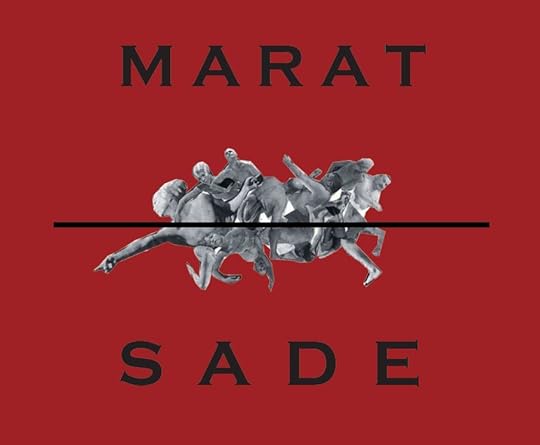
Persecución y asesinato de Jean-Paul Marat representados por el grupo teatral de la Casa de Salud de Charenton bajo la dirección del señor de Sade. Adaptación española de Alfonso Sastre.
Peter Ulrich Weiss was a German writer, painter, and artist of adopted Swedish nationality. He is particularly known for his play Marat/Sade and his novel The Aesthetics of Resistance.
Weiss' first art exhibition took place in 1936. His first produced play was Der Turm in 1950. In 1952 he joined the Swedish Experimental Film Studio, where he made films for several years. During this period, he also taught painting at Stockholm's People's University, and illustrated a Swedish edition of The Book of One Thousand and One Nights. Until the early 1960s, Weiss also wrote prose. His work consists of short and intense novels with Kafkaesque details and feelings, often with autobiographical background. One of the most known films made by Peter Weiss is an experimental one, The Mirage (1959) and the second one - it is very seldom mentioned - is a film Weiss directed in Paris 1960 together with Barbro Boman, titled Play Girls or The Flamboyant Sex (Schwedische Mädchen in Paris or Verlockung in German). Among the short films by Weiss, The Studio of Doctor Faust (1956) shows the extremely strong link of Weiss to a German cultural background.
Weiss' best-known work is the play Marat/Sade (1963), first performed in West Berlin in 1964, which brought him widespread international attention. The following year, legendary director Peter Brook staged a famous production in New York City. It studies the power in society through two extreme and extremely different historical persons, Jean-Paul Marat, a brutal hero of the French Revolution, and the Marquis de Sade, for whom sadism was named. In Marat/Sade, Weiss uses a technique which, to quote from the play itself, speaks of the play within a play within itself: "Our play's chief aim has been to take to bits great propositions and their opposites, see how they work, and let them fight it out." The play is considered a classic, and is still performed, although less regularly.
Weiss was honored with the Charles Veillon Award, 1963; the Lessing Prize, 1965; the Heinrich Mann Prize, 1966; the Carl Albert Anderson Prize, 1967; the Thomas Dehler Prize, 1978; the Cologne Literature Prize, 1981; the Bremen Literature Prize, 1982; the De Nios Prize, 1982; the Swedish Theatre Critics Prize, 1982; and the Georg Büchner Prize, 1982.
A translation of Weiss' L'instruction (Die Ermittlung) was performed at London's Young Vic theater by a Rwandan company in November 2007. The production presented a dramatic contrast between the play's view on the Holocaust and the Rwandan actors' own experience with their nation's genocide.
نخستین مواجهه با نمایشنامه مارا/ساد همانقدر غافلگیرکننده است که خود صحنه آغاز آن؛ تیمارستانی به نام شارنتون در فرانسه، اوایل قرن نوزدهم، جایی که بیماران روانی قرار است نمایشی درباره قتل ژان پل مارا را اجرا کنند. قتلی که توسط زنی جوان به نام شارلوت صورت گرفته است. در نگاه نخست، مخاطب گمان میکند با یک بازسازی تاریخی روبهروست، اما خیلی زود متوجه میشود که پیتر وایس، نمایشنامهنویس آلمانی-سوئدی، فراتر از تاریخ رفته و با کمک فرمی خلاقانه، بحثهای فلسفی، روانکاوانه و اجتماعی را در بستری تئاتری به تصویر کشیده است. پیتر وایس در مارا/ساد نشان میدهد که تئاتر تنها محلی برای روایت نیست؛ بلکه فضاییست برای تردید، بیداری، و مواجهه با ناخودآگاه تاریخی و فردی ما. اگر جرأت شنیدن داشته باشیم، این اثر میتواند آینهای دردناک اما صادق باشد از خود، از دیگری، و از جهانی که در آن زندگی میکنیم.
I have a co-worker, a sweet older lady, who is very interested in the French Revolution and enjoys literature about that period. I was going to loan her my copy of this play, but then I thought 'Maybe better reread it first. How racy was it exactly?' Upon rereading... Still enjoy this play tremendously, but it's not exactly the sort of thing you'd loan a grandmotherly type. Better not.
(Previous Review)
In preparation for this review, I bumped many of my five star reviews down to four. I will never again lavish a five star rating on a book that did not move me viscerally.
This is the profound effect "Marat/Sade" had on me.
At first glance, "Marat/Sade" is simply a play within a play. The inmates act out the final days of Marat, while Sade orchestrates the action from outside. The common people- who have withstood the French Revolution and the rise of Napoleon without any noticeable improvement of their lot in life- begin to rebel against the play itself. They either rehash censored bits or stray from the script itself. Meanwhile, the entire production is watched over by Coulmier, the bourgeois director of the asylum. As the representation of the new Napoleonic order, he tries to suppress the play's swing towards radicalism and anchor the asylum back into a pro-Bonaparte status quo. Marat and Corday, the two main figures of the play within, come across as doomed figures who were drafted into their roles by fate.
But most chilling of all is Sade himself. Detached and uncaring, he presides unflinchingly over the chaos he has created. Sade spends most of the play on his dais, watching over the shuffling inmates with a rather bemused look. But when he does descend into the inner play, "Marat/Sade" hits its best moments. Corday whipping Sade has become the most infamous scene of the drama, yet Sade's lengthy monologues with Marat are sublime.
I was unsurprised to learn that the playwright, Peter Weiss, was a Marxist. The play is all about revolutions. You know the kind- the sort of revolution that fills the common people with hope, appears to make vast strides, whips ardent fanatics into a fervor, racks up enormous piles of bodies in the name of progress, and then collapses into an even greater tyranny than before. The radical Marat may get some of the best lines of the play, but it is the common inmates, the people who live out lives of poverty and can at best hope to move from the chattel of a King to the chattel of an emperor, who steal the show.
Sometimes when I read, I can feel all the meaning going over my head. I associate this with reading Joyce, and I usually consider it an unpleasant experience. However, I grasped enough of "Marat/Sade" to realize that I was in the presence of a work of genius. I hope to encounter this play along the road, hopefully in the sort of dreaded literature class that dissects a text until it is a mangled heap of blood and bone. If not, I will just defy Goodreads and the looming deadline of my annual reading challenge. I'll just have to read this over and over again.
I read a lot of plays, and I've always found the experience a bit disappointing. Dialogue and a smattering of stage directions is usually not enough to have the sort of moving experience that marks good theater. But "Marat/Sade" works on two levels. The dialogue itself can be read as literature itself. It is profound and philosophical. The stage directions (inmates sing haunting death marches, are beat by sadistic nurses, are forced into nonsensical tasks like crossing the stage while hopping on one leg) suggest that in the hands of a good director, the play could be chilling. The delightfully disturbing production combined with the dizzyingly profound dialogue? I can only imagine it.
The Persecution and Assassination of Jean-Paul Marat, as Performed by the Inmates of the Asylum of Charenton, Under the Direction of the Marquise de Sade.
Isn't that it? Maybe spelling errors.
I saw this play performed at Arena Stage in Washington D.C. somewhere around 40 years ago. It was a great production of a very interesting play, which was all the rage back then. I should probably take another look at it, seeing as I now know at least a bit more about the French Revolution, which is the context of the play. The edition I have is not available on Goodreads, it was published by Atheneum in 1968, with the English version of the play done by Geoffrey Skelton.
What I find amazing, given my memory, is that the full title of the play has stuck with me all these years. Must have been pretty catchy, I guess. How could anyone forget it?
. . . . . . . . . . . . . . . . . . . . Previous review:Values in a Universe of Chance Random review:Hag-Seed Atwood does Shakespeare Next review:OverThe American Landscape at the Tipping Point
فکر میکنم بد نباشه که اینجا قسمتی از نوشتهی "شورش عابد" رو دربارهی این کتاب داشته باشم:
«...نمایشنامه در مورد یکی از مهمترین اتفاقهای آغازگر انقلاب فرانسه یعنی قتل ژان پل ماراست. نمایش نامهای در مورد نمایش قتل مارا. یک نمایش در درون یک نمایش. کارگردانی نمایش دوم بهدست یکی از مرموزترین نویسندگان تاریخ انجام میشود یعنی مارکی دو ساد. درواقع کارگردان در یک سطح دیگر به بازیگری در نمایش پیتر وایس تبدیل میشود. در کنار همهی اینها اجراکنندگان نمایش مارکی دو ساد دیوانگان تیمارستان شارنتون هستند و بازیگر نیستند اما دیوانگان پیتر وایس بازیگران واقعی هستند. همهی اینها را در کنار تابلوی معروف قتل مارا اثر ژاک لویی داوید بگذارید که در تمام خواندن نمایشنامه توی ذهنتان میچرخد با کاغذی در دستانش که احتمالا یک نامهی اداری ست و آن قتل غمانگیز توسط شارلوت کوردی در آن وان سرد. یک تعلیق بین نمایش و نقاشی در ذهن در کنار همهی آن چیزی که میخوانید و یک پادرهوایی بیشتر نیست. کارگردانی که بازیگر است، بازیگرانی که دیوانه هستند و خلق فضایی تودرتو که مدام از بیرون به درون و از درون به بیرون در هم میریزد و این همان جایی است که بهنظرم نمایش پیتر وایس را به شدت معمارانه میکند. یک فضاسازی کامل با تعلیقات پشت سر هم...»
A revolution set inside an insane asylum? "We'll kick the aristos asses!" hollers one lunatic. The Marquis de Sade really was confined to an insane asylum under Napoleon after being freed from the Bastille in July of 1789. He wrote and directed plays, including one based on the life of revolutionary martyr Jean-Paul Marat and his assassin Charlotte Corday. The cast members were all fellow lunatics. German playwright Peter Weiss intentionally blurs the line between truth and fiction, history and theater, sanity and lunacy, to force the audience to think on revolution and terror, the responsibility of literature, Marat's newspaper articles are what inflamed Corday, and whether all politics is, in the end, just stage-managing.
Possibly the most amazing play I've ever read. I have never seen it on stage but there is a riveting film under the direction of Peter Brooks that can be found on DVD with a little effort. But the reading of this play is a revelation in itself. It is very complex, a play-within-a-play, and works on so many social and philosophical levels that you come away dizzy. If you read the title, you've read the plot. But it is the ideas expressed in the play within the play that makes this a classic. Strange, a little challenging, and an unique experience.
There were few fieldtrips in high school, but one was quite memorable. I'd been to the Art Institute of Chicago before, certainly, but we were taken to see a travelling exhibit of the works of David. Of those paintings I was most struck by The Death of Marat, the image of which has remained clear. Jim Gottreich, the teacher of sophomore European history, introduced us to the study of the French Revolution which, of course, was so like our own. Looking for role models, I did not much attend to the Terror. By senior year and Tim Little's course in A.P. European, I had also become attracted to Marx and friends with a number of professed Marxists in the classes which had already gone on to college. Keeping with entrenched habits, I naturally favored Trotsky over Lenin and both of them over the communists who governed the Soviet Union's experiment in applied Marxism after Lenin's strokes. By then, Marat was more than a name, several of his journalistic pieces appearing in collections of literature of the period. He, like Trotsky and Lenin, was an idealist confronted with political opportunity who took the leap into practical action, if mostly rhetorical. It was some time in the beginning of that last year of secondary school that friends introduced me to the source of Judy Collins' song about Marat: Peter Weiss' play. Actually, it is more about the dynamics of revolutions with much more attention paid and voice given to the dark side than I had allowed myself in previous studies. Since Weiss was himself a Swedish communist and since his play, through the inmates acting in de Sade's production, gives voice to the interests of "ordinary" people, his allowing de Sade his arguments and demonstrations against the doomed Marat was acceptable. I "listened" and thought seriously about the fact that so many revolutionary movements, including our own, betrayed the common aspirations of many of their leaders and the common interests of the great masses of people in whose interests they were supposedly conducted and who, in fact, were the engines of transformation. Years later, in seminary, I had the opportunity to see the BBC teleplay, Marat/Sade, with Vanessa Redgrave and other members of the Royal Shakespeare Company and, so, actually listen to the play. Marat/Sade is brilliant. Unlike many plays, it reads well as literature, but if one has the chance, see it on stage also. Although requiring some knowledge of the French Revolution and although the more one knows about that, about Marat, about deSade and about Napoleon the more one will get from the reading, one will not be stymied by only a cursory understanding of the historical period on 1789-1808. The play works on its own terms well enough. Indeed, it is actually often very funny and the songs are catchy--I probably remember most of them. All commentaries agree that the German original is far superior to the English translation. If you know German, go for the original.
Every death even the cruelest death drowns in the total indifference of Nature Nature herself would watch unmoved if we destroyed the entire human race I hate Nature this passionless spectator this unbreakable iceberg-face that can bear everything this goads us to greater and greater acts
Once and for all the idea of glorious victories won by the glorious army must be wiped out Neither side is glorious On either side they're just frightened men messing their pants and they all want the same thing Not to lie under the earth but to walk upon it without crutches.
Peter Weiss lässt Marquis de Sade im Jahr 1808 im "Irrenhaus/Nervenklinik/Hospiz/totale Institution" von Charenton ein Stück über die Ermordung des Revolutionärs Jean Paul Marat (1793) inszenieren. Die Darsteller sind die Patienten der Anstalt. Das erzeugt eine ständige Spannung – man weiß nie, was zum Skript gehört und wann der echte Wahnsinn der Insassen durchbricht.
Das Stück ist im Kern ein Streitgespräch zwischen zwei Extremen. Marat - als der politische Erlöser - ist der radikale Optimist der Tat. Er glaubt, dass man die Welt durch Veränderung der äußeren Umstände (Revolution, Gesetze, Gewalt) heilen kann. Er sitzt fast das ganze Stück über in einer Badewanne (wegen einer Hautkrankheit), was seine verletzliche, fast märtyrerhafte Position unterstreicht.
Sade - als der radikale Individualist - hält Marats Bemühungen für naiv. Für Sade ist die Natur des Menschen grausam und unbezähmbar. Er glaubt nicht an gesellschaftlichen Fortschritt, sondern nur an die absolute Freiheit des Einzelnen – selbst wenn diese in die Selbstzerstörung oder Grausamkeit führt.
Sade: „Marat diese Gefängnisse des Geistes sind viel schlimmer als die tiefsten steinernen Verliese Ich sage dir es gibt keine Gerechtigkeit nur die Natur ist gerecht und sie kennt kein Mitleid Die Natur zerstört alles was sie geschaffen hat und wir wenn wir zerstören tun nichts anderes als die Natur nachzuahmen“
Als Leser wird man in eine unangenehme Position gebracht. Man versteht Marats Idealismus, aber man sieht auch, dass seine Revolution in Blut badet. Auf der anderen Seite ist Sades Ehrlichkeit bestechend, aber seine totale Ich-Bezogenheit zutiefst verstörend.
Peter Weiss liefert keine Lösung. Das Stück endet im Chaos. Die Patienten proben den Aufstand, die Grenze zwischen Spiel und Realität löst sich auf. Es ist eine Warnung davor, dass sowohl die reine politische Ideologie (Marat) als auch der reine Rückzug ins Private (Sade) in eine Sackgasse führen können, wenn sie den Bezug zur menschlichen Realität verlieren. Das Buch ist ein regelrechter Rausch aus Rhythmus, philosophischen Wortgefechten und ekstatischer Atmosphäre. Die Ekstase entsteht bei Weiss dadurch, dass die unterdrückten Insassen ihre Rollen mit einer Energie füllen, die über das bloße Schauspiel hinausgeht. Es ist eine Atmosphäre des permanenten Ausbruchs. Sade nutzt diesen Wahnsinn als Leinwand für seine radikale Philosophie, während die Anstaltsleitung (vertreten durch Coulmier) ständig versucht, diese ekstatischen Momente zu zensieren und zu glätten.
«و حتّا حالا هم میل دارم این زیباچهره را -به کورده اشاره میکند، او را جلو میآورند- که چنین در انتظار است، در اینجا به صحنه بیاورم و اجازه دهم بر گُردهام تازیانه بکوبد همچنانکه با شما از انقلاب میگویم.»
کورده در پیشصحنه قرار میگیرد و ساد تازیانهای کلفت و چند رشته را به او میدهد، پیراهنِ خود را پاره میکند و پشت به کورده، رو به تماشاچیان میایستد و از انقلاب میگوید: او که در ابتدا انقلاب را چنان فرصتی مناسب یافته بود برای طغیانِ عظیمِ حسّ انتقام؛ بزمی باشکوهتر از آنچه میتوان در رویا دید. او همزمان که حرف میزند، دردِ تازیانه را نیز تحمل میکند و از منجر شدن مسیر انقلاب به «زوالِ فردِ انسانی و حل شدنِ تدریجیِ او در تودهی همشکل، به مرگِ برگزیدگان و نابودیِ حقّ انتخاب، به انکارِ خود، به ناتوانیِ مرگبار در موقعیتی که از فرد فردِ آدمها پیوند بریده و سترون است» میگوید. روی حرف او با ژان پل مارا، سیاستمدار و نویسنده در دوران انقلاب فرانسه است؛ مردی پنجاه ساله و مبتلا به بیماریِ پوستی که بدنش با پارچهی بلند سفیدی پوشیده شده و نوارهای زخمبندیِ سفید دورِ سرش پیچیده است. او ساعات بسیاری را در لاوَکی پر از آب سر میکند تا سوزش تنش التیام یابد و انتظار میکشد تا شارلوت کورده، در روز سیزدهم ژوییهی 1973، سه بار بر در خانهاش بکوبد و به او خنجر بزند. *** بخشی از مرور کتاب «شکنجه و قتل ژان پل مارا به اجرای ساکنان تیمارستان شارنتون به کارگردانی مارکی دو ساد» در سایت آوانگارد که به قلم «سید احسان صدرائی» منتشر شده است. برای خواندن کامل مطلب به لینک زیر مراجعه فرمایید: https://avangard.ir/article/444
Marat Sade is probably the greatest single work composed to the norms of Antonin Artaud's theatre of cruelty. It is loud, energetic and thoroughly engaging. I had the good fortune to see it performed life by Poland's national theatre in Warsaw in 1982 in a production that was every bit as good as the one that was filmed, starring Glenda Jackson.
Weiss thesis that revolutions involve competing madnesses is very compelling. His treatment of French political thought during the period of the French Revolution is deft and erudite.
Do not bother to read his play. It is meant purely for the stage. Try to download or rent a copy of the movie directed by the great Peter Brook and featuring Glenda Jackson, Patrick Magee, and Clifford Rose.
Esta obra tiene algo interesante en cuanto a su forma, que llama la atención y demanda concentración para seguirla. Sin embargo, como al leerla no conocía los hechos históricos a los que hace referencia, sentí que me estaba perdiendo de lo interesante. Considero que puede ser un libro interesante, pero que es necesario conocer el contexto histórico al que hace referencia antes de leerlo, de lo contrario se hace difícil comprenderlo.
Maybe it would be more effective on the stage. Must have been, to have won the Tony Award. But despite the extensive stage directions, I struggled to picture the scenes and struggled even more to engage with the drama.
This play is so stylized as to be all style and negligible substance. I suppose we are to be horrified by mob rule and totalitarianism alike, but the play never got beyond scratching the surface of either.
The ridiculously long title tells you what it’s about, so I won’t waste effort on description. Perhaps if I were more familiar with the bit players of the French Revolution and the constantly shifting politics and alliances of the era, some of the dialogue would have been more pointed. Perhaps if I had been older than nine when the play was wriiten, I would pick up more of the Cold War allusions. But any play that relies so heavily on specific audience expertise has a limited lifespan.
And that’s before I get to the distastefulness of treating mental patients as puppets.
This was a couple of hours of my life that I’ll never get back.
همیشه حرف از تئاتر که زده میشه، این واقعیت در مورد این مدیوم باید اشاره بشه که این آثار برای اجرای روی صحنه نوشته شدن و نه برای خونده شدن. با اینکه با این موضوع مخالفی ندارم اما (احتمالا به خاطر محدودیتها) باور داشتم که خوندن نمایشنامه میتونه دست کمی از دیدنش روی صحنه نداشته باشه. تا حالا این دیدگاهم پابرچا باقیمونده بود تا اینکه با نمایش وایس مواجه شدم. دلیل نمره کمم به نمایش اینه که نتونستم ارتباط خاصی بگیرم باهاش و میدونم دلیلش محدودیت خوانش من بود. فکر میکنم این نمایش باید دیده بشه و نه خونده. هیچ خردهای به کار نیست و حتی صحنههای جذاب هم کم نداشت که لذت ببرم. موقع خوندن یاد تئاتر اپیک برشت میفتادم. فاصله من با متن خیلی زیاد بود و فکر میکنم از عمد این اتفاق افتاده بود. نفش مارکی دوساد شبیه بینندهای بود که از طرف ما ناظر اتفاقات روی صحنه بود و واکنشهاش به این مساله تاکید داشت. تاثیر روایی چندانی ازش ندیدم. مکثها و پرشهای بین صحنهها هم باز یادآور اپیک بودن نمایش بود. فرم دیالوگها هم باز از فضای رئالیستی دور میکرد کار رو. با این همه بعد از خوندن نمایش فهمیدم که نسخه سینمایی ازش ساخته شده که اگه پیدا بشه حتما میبینمش. درسته ارتباط خوبی با متن نگرفتم اما دلیل نمیشه نخوام ببینمش. امیدوارم پشیمون نشم و حدسم درباره مشکل متن بودن درست باشه.
یه روز توی گالری، بعد از اون اتفاقات غیرممکنی که افتاد، نشسته بودیم. هرکس یه طرف یه کاری میکرد، خودشم پنیر میزد روی نونببری میخورد. یهو گفت: مارا ساد. جدی مارا ساد نیست؟ این روزا هم که دچار بحران ورود به سال دوازدهم بودم، مارا ساد بود.
Antonin Artaud developed The Theatre of Cruelty, aimed to shock audiences through gesture, image, sound and lighting; and Weiss’ Marat/Sade I believe was one of the pinnacles of this genre. (It’s full title being probably one of the best I’ve heard.)
As the title fully explains, the play centres around the assassination of the French Revolutionary leader Jean-Paul Marat – famously murdered in his bathtub by Charlotte Corday (probably one of history’s least likely and yet most successful assassins).
However this is no straightforward historical reenactment. The play is set in an asylum 15 yrs after the events of 1793, performed by the inmates under the direction of none other than the Marquis de Sade himself.
This one was totally in my ball park from the word go. Based around events of the French Revolution, de Sade, Theatre of Cruelty with hints of the future Peter Greenway, and utterly bonkers.
The ideals of the French Revolution are certainly noble and worthy ones. However the reality was that it unfolded into a hot, bloody, mess. And Weiss uses his characters here, in their madness, to examine and question the very sanity of the whole revolution. And it’s pretty bloody genius.
In the photos I’ve included a chilling extract from the role Charlotte Corday, who in reality, aged only 24, after the assassination was almost immediately arrested and guillotined the next day.
Wie Weiss selbst in einem Nachwort zum historischen Kontext schildert, versucht er hier den im Titel verfolgten und ermorderten Jean Paul Marat als Vordenker des Sozialismus während der französisch Revolution zu rehabilitieren.
Besonders im zweiten Akt scheint mir dies deutlich zu werden, wenn Marats Talking Points durchweg von Patientengeschrei erstickt werden.
Das Setting des Hospizes, in dem der, ebenfalls im Titel erwähnte de Sade wirklich eingesessen und Theaterstücke produziert hat, ist dabei als eine Mischung aus Irrenanstalt, Hospiz und Gefangenenlager für politische Dissidenten zu lesen.
Die Worte des de Sade zum Ende des Stückes fand ich schön: "Marat diese Gefängnisse des Inneren sind schlimmer als die tiefsten steinernen Verliese und solange sie nicht geöffnet werden bleibt all euer Aufruhr nur eine Gefängnisrevolte die niedergeschlagen wird von bestochenen Mitgefangenen"
Sie stehen für mich für das von Weiss angestrebte Vordenkertum Marats.
Ich habe das Stück sehr gerne gelesen und würde es durchaus auch gerne auf der Bühne betrachten wollen!
Even in translation, Weiss's language is gorgeous, and my reading of this play was an extremely pleasurable experience. The play tells the story of the assassination of French Revolutionary leader Marat by beautiful young Corday. The cause of the assassination? Different ideals of change and love. Weiss later in life referred to this play as Marxist, but if that turns you off, fear not, because the play is kind of like a mirror: the "lesson" you will take away from it depends on your own views of revolutionary change and its concomitant violence.
The events depicted in the play take place within a play written by sadist de Sade while he was involuntarily confined to an insane asylum, but de Sade in real life wrote plays while involuntarily confined to an insane asylum. The conflict of the play seems to be between different goals of agents of the French Revolution, but the novel construction of Marat/Sade also sets up a conflict of control. Who controls the effect the play-within-the-play will have on its actors? The producer, Coulmier, who heads the asylum in which it's performed? The playwright, de Sade? The director, the unnamed Herald? Marat, whose own language is prominently featured in de Sade's play? This is the central tension of Marat/Sade, and only with this in mind will the ending bear its true power.
In this manner, Marat/Sade is really about the power and danger of theater, its need to be wielded appropriately, and the way in which artistic/theatrical representations of history can influence our understanding of our own place in it.
"Now it's happening and you can't stop it happening. The people used to suffer everything now they take their revenge. You are watching that revenge and you don't remember that you drove the people to it. Now you protest but it's too late to start crying over spilt blood. What is the blood of these aristocrats compared with the blood the people shed for you? Many of them had their throats slit by your gangs. Many of them died more slowly in your workshops. So what is this sacrifice compared with the sacrifices the people made to keep you fat? What are a few looted mansions compared with their looted lives?"
o eme ge menudo locotrón Peter Weiss,,, leer esto se sintió como tener 2 sueños con fiebre simultáneamente
Weiss’s play is set in an asylum. The Marquis de Sade is one of the inmates in this asylum, and he stages a play about the death of Marat, using other inmates in the asylum as actors.
The play employs Bertolt Brechtian distancing devices. In the prologue, for instance, we are told what the action of the play will be. Much of the exposition comes not from the actors acting, but from a herald who tells us about the characters (and about the asylum inmates playing the roles). The text is divided into sections that are numbered and titled. While the fact that the play is set in an asylum and includes the Marquis de Sade as a character might suggest to some the ideas of Antonin Artaud, this is Brechtian “epic theatre” rather than Artaudian “theatre of cruelty.
It isn't an easy play to review. It isn't literature that can be easily dissected to the semi-plot that the title of the play betrays. The beauty comes in the setting. It comes with the distance the main characters place themselves on stage - both physically and as characters. They share monologues, righteous moral standards and a prison between them. The verses are almost always philosophical meditations which can be seen as bunch of pretentious lines or Marxist agenda. As the underlying theme is necessity of revolution, Weiss touches upon people and their king and the madness it must take for a revolution to spring.
Oh, the irony of it all? The actors who are performing this play are in an asylum.
Funny how I haven't read this for years, but a few bits from the production I saw part of (TV version? watched in class) have stuck in my head, inc. "we want what we want and we don't care how/we want our revolution now!" and the singy-songy bit whenever the name Charlotte Corday pops up. Not that you run into a lot of references to Charlotte Corday outside the occasional Jeopardy! question.
A tragedy. A farce. A play within a play. A ferocious debate between Revolution and Reaction. Between collective upheaval and the micro politics of bodies. Between radical critique and aristocratic playfulness. Stunningly straightforward. But also full of ironic complexities. An agitational masterpiece.
вічноактуальна така п'єса. зрештою, історії бувають різні, а от люди переважно однакові, тому кожна історія – то в певному сенсі метафора іншої. але оцю конкретну я би зараз вручила кожному, хто живе в радіусі кількох сотень кілометрів. уже сама назва п'єси варта того, щоб її полюбити, але, як виявилося, в ній і крім назви є багато чудового.
Highly conceptualist theatre that somehow retains fluidity AND plumbs the septic clogs of modern politics. The eclecticism is not just for show, nor do the diatribes resolve into moral simplifications. The problems of performance are social, which is less noted than that politics are theatrical.