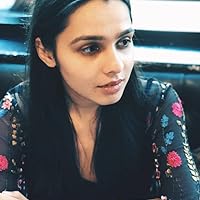
"Free of the habitual lyricism of Indian writers, [Doshi's] work is austere and beautiful. Her refreshing muscularity gives her a distinct voice, both as a woman and an Indian."--"The London Times""A work of a striking, emerging talent, who is prepared to take risks in pursuit of sensual, emotionally engaged and passionate poetry."--Judge's citation, Forward PrizeIn her second book of poetry--and her American debut--Tishani Doshi returns to the body as a central theme, while extending beyond the corporeal to challenge the more metaphysical borders of space and time. These new poems are powerful meditations born on the joineries of life and death, union and separation, memory and dream, where lovers speak to each other across the centuries and daughters wander into their mothers' childhoods."After the Rains""After the rainsthe temple flowerslie like fallen soldiers--dirtied and bloodied pink.I want to get downon bended knee,gather each broken petalto my chest.Out there--where the river meetsthe ocean's mouth,it would be calledthe kiss of life,a resuscitation.But herewith the world washed clean,it is nothing but a trampling."Tishani Doshi is an award-winning poet, journalist, and dancer. She has written for newspapers such as the "Guardian," "International Herald Tribune," "The Hindu Times," and the "Financial Times." Her first novel, "The Pleasure Seekers" (Bloomsbury, 2010), has been translated into several languages. She lives in Chennai (Madras), India.
Tishani Doshi (born 1975) is an Indian poet, journalist and dancer based in Chennai. Born in Madras, India, to a Welsh mother and Gujarati father, she received an Eric Gregory Award in 2001. Her first poetry collection, Countries of the Body, won the 2006 Forward Poetry Prize for best first collection.[1] She has been invited to the poetry galas of the Guardian-sponsored Hay Festival of 2006 and the Cartagena Hay Festival of 2007. Her first novel, The Pleasure Seekers, was published by Bloomsbury in 2010 and was long-listed for the Orange Prize in 2011,[2] and shortlisted for The Hindu Best Fiction Award in 2010.
She writes a blog titled "Hit or Miss" on Cricinfo,[3] a cricket-related website. In the blog which she started writing in April 2009, Tishani Doshi makes observations and commentaries as a television viewer of the second season of the Indian Premier League. She is also collaborating with cricketer Muttiah Muralitharan on his biography, to be published when he retires.[4]
She works as a freelance writer and worked with choreographer Chandralekha until the latter's death in December 2006.[5] She graduated with a Masters degree in creative writing from the Johns Hopkins University.
Countries of the Body was launched in 2006 at the Hay-on-Wye festival on a platform with Seamus Heaney, Margaret Atwood, and others. The opening poem, The Day we went to the Sea, won the 2005 British Council supported All India Poetry Competition; she was also a finalist in the Outlook-Picador Non-Fiction Competition.
Her short story Lady Cassandra, Spartacus and the dancing man was published in its entirety in the journal The Drawbridge in 2007.[6]
Her most recent book of poetry, Everything Begins Elsewhere[7] was published by Copper Canyon Press in 2013.
Her newest book, The Adulterous Citizen – poems stories essays (2015) was launched at the 13th annual St. Martin Book Fair by House of Nehesi Publishers, making Tishani Doshi the first important author from India to be published in the Caribbean.
About my 5-6th time reading this book. Stunning poetry. The best poetry for sure is coming from outside of the so-called west, keeping us in love with lyrical poetry and drenching us in enhanced images. Beautiful.
Ultimately, we will lose each other to something. I would hope for grand circumstance — death or disaster. But it might not be that way at all. It might be that you walk out one morning after making love to buy cigarettes, and never return, or I fall in love with another man. It might be a slow drift into indifference. Either way, we’ll have to learn to bear the weight of the eventuality that we will lose each other to something. So why not begin now, while your head rests like a perfect moon in my lap, and the dogs on the beach are howling? Why not reach for the seam in this South Indian night and tear it, just a little, so the falling can begin? Because later, when we cross each other on the streets, and are forced to look away, when we’ve thrown the disregarded pieces of our togetherness into bedroom drawers and the smell of our bodies is disappearing like the sweet decay of lilies — what will we call it, when it’s no longer love?
I'm obsessed. I keep going back to read the poems again and again. And it's just been a day since I found her amidst the dusty cobwebs of a second hand store in Hyderabad. I find beauty in the way the words are strung together in the poems, delicately. The nostalgia, sadness and longing bring this book to another dimension altogether.
I don't necessarily "get" poetry. I certainly don't have the tools to appreciate it. But when it's good, you can tell, even if you can't explain it well.
This collection absolutely bowled me over. I bought it on a whim at a small bookshop in Scotland, and I loved nearly every poem in the book. Sharp and original, terse lines but full of lyricism and deep reflections on humanity. A wonderful collection.
“We meet as lovers do, through births and deaths, worn-down nubs of thigh and breast, silent spaces of inadequacy.”
“it is like touching that sweetness called childhood”
“It’s desire after all that spins us Demands to be praised
as though it were new like the stillness before the first monsoon
when the hymen of the earth is torn into
and the brazen smell of damp fills the air”
“The house will open her doors for the dark, salty territory of night to enter on wet footstep... we must call in the lost, breathe shape into all that is vanishing.”
“After the rains the temple flowers lie like fallen soldiers — dirtied and bloodied pink.”
“Don’t become that woman, my mother said. By which she meant, don’t become that woman who doesn’t marry or bear children. That woman who spreads her legs, who is beaten, who cannot hold her grief or her drink. Don’t become that woman.
But that woman and I have been moving together for years, like a pair of birds skimming the water’s surface, always close to the soft madness of coming undone; the dark undersides of our bodies indistinguishable from our reflections.”
“This doctor with his rusty tools, this street cleaner, this mother laying down the bloody offerings of birth. This is not the cry of a beginning, or a river buried in the bowels of the earth. This is the sound of ten million girls singing of a time in the universe when they were born with tigers breathing between their thighs; when they set out for battle with all three eyes on fire, their golden breasts held high like weapons to the sky.”
“I imagine you resurrected into this uncertain world. It is midnight and the moon hovers close to the trees, who are your daughters and sons, planted in this desert so many moons ago. Those who knew you, who are still filled with astonishment, stand at the gate and say, She was everywhere.”
“You must let them pass into that wilderness and understand that soon, you’ll be called aside to put away your paper wings, to fall into that same oblivion with nothing. As if it was nothing.”
A 2013 volume of poems by the author, poet, and dancer, Doshi. In the poem, "Turning Off the Lights," her father tells the children, "Together, he says/ we must call in the lost,/breathe shape into all that is vanishing." (17) Many of her poems deal with loss and longing. Especially effective are the works that deal with specific events, as "Learning Mudras in Bhutan." The unusual detail and lyrical verse are compelling. A tad too much repetition, but otherwise enjoyable. The poet is both Indian and Welsh.
This collection wasn't really for me. Doshi drew on a lot of secondary sources for inspiration, quoted above the poems, but I didn't think this made for a distinct voice that set them apart. I did, however, enjoy the following poems: 'That Woman', 'Fisher-Price Men', 'Love Poem' and 'Memory of Wales'. None of these were inspired by other works and I felt that they were much stronger for it, particularly 'Fisher-Price Men' and 'Love Poem'.
A unique collection of poems that touched me in a way no other poem book has before. A book about the soul in an ephemeral body, longings, and the vast world surrounding the writer. My favorite poems are Lesson 3: Stillness, Lesson 4: Zero, or Infinity (Ramanujan), The Adulterous Citizen, The Immigrant's Song, Lines to a Lover from a Previous Century, The Art of Losing, and Love Poem Disguised as an Elegy.
Lovely selections covering a wide range of time and location. Easy to read and grasp - lessons, reflections and lamentations of important events. A solid collection showing range and ability to impact.
Lightness of touch disguises depth of feeling and seriousness of intent in this multi-faceted and rewarding collection. Doshi is particularly effective at conjuring lyricism out of the ephemeral.
"We turn inwards announce how patiently we’ve waited for this uprooting. Now that damaged petals of hibiscus drown the terrace stones, we must kneel together and gather. This is how desire works: splintering first, then joining." . . "They didn't know you could make perfume from rain, that human blood was more fattening than beer. But their fears were ripe and lucent, their clods of children plentiful, and God walked among them, knitting sweaters for injured chevaliers. Will you tell them how everything that's been said is worth saying again? How the body is helicoidal, spiriting on and on How it is only ever through the will of nose, bronchiole, trachea, lung, that breath outpaces any sadness of tongue" . . RATINGS: Everything Begins Elsewhere: 4.5/5 Girls Are Coming Out of the Woods: 5/5. . . I thought it prudent to include so many poems and excerpts of poems in a review about poetry to give a better sense of the poet's work as I find it hard to describe it in words myself. Tishani Doshi's poetry is unassuming in its quiet intensity and they sweep you off of your feet without you realising it. There is an emphasis on nature that is striking along with repeated reminders of our shared humanness. One of the reasons she is one of my favourite poets is because she has this capacity to seemingly effortlessly evoke deep emotion with just the turn of a line. There is a musical lyricality to her works that I rarely find in contemporary poetry. I have had the honour of listening her recite her poems live on multiple occasions; the performative aspect of her poetry makes it an even better experience. I highly recommend you to go and watch a session titled "Performance" from JLF 2019 on YouTube. I always feel grateful to the past version of me who bought her second collection randomly without thinking on Flipkart because it had a great discount. My copies of the two books, now signed, are something I will always cherish and I cannot wait for future collections.
Tishani Doshi weaves a world of vine, brainfever birds, teak, rain, jasmine, coconut husks, mudras,mosquitoes, Mohenjedaro’s brassy girls… Her background so entrenched in dance and journey comes out like a story and Asia is born. Take her interpretation of the seventh century Buddhist scholar Xuanzang’s journey along the Silk Route as he traverses past monasteries, loiters behind caravans, meets the Bamiyan Buddhas, the atmosphere of ‘scattered Sanskrit kisses’ lingering in her poems.....lovely book....
You may be convinced you've found the takeaway lines of the whole collection, until you turn the page. For any traveler who has ever left for long enough to feel torn between the new identity, network of friends, and cluster of memories formed while away and the nostalgic idea of home that has been lost in compromise.