la nuova edizione di un grande classico della letteratura del ‘900, sempre disponibile nel catalogo di DeriveApprodi. Vogliamo tutto è un ordigno linguistico di calcolata potenza e di trattenuta passionalità. Passione e ironia si intrecciano con dosaggio sapiente ed esplodono insieme, dando vita a un libro che si può leggere in molti modi: come un resoconto delle lotte sociali del proletariato metropolitano, come un controcanto incalzante e talora balzellante al diffondersi dell’autonomia degli operai, come uno sguardo distaccato, o come un gesto di simpatia del linguaggio per la vita. Pubblicato per la prima volta nel 1971, Vogliamo tutto è la storia di un operaio arrivato dal Sud nella Fiat in ebollizione, la storia della scoperta della metropoli, della violenza e dell’oppressione capitalistica, della comunità proletaria che si forma, della rivolta che serpeggia e poi esplode. Il romanzo racconta in prima persona le vicende dell’emigrazione dal Sud e quelle della lotta operaia a Torino. La prima persona narrante è quella di un operaio che Balestrini ha fatto parlare e registrato coscienziosamente per poi rimixare il parlato con un ritmo che si piega all’intenzione di una poetica variegata, policroma e polifonica. Quella realizzata è un’operazione che non ha nulla a che fare con il populismo o con il realismo descrittivo. Il lavoro di smontaggio e rimontaggio segue le linee di una metodologia combinatoria che si esercita integralmente sulla materia linguistica con un «procedimento» calcolato. È qui la caratteristica assolutamente originale di questo scrittore, nel suo operare attraverso prelevamenti di materiale verbale pre-esistente alla scrittura. In questo senso si potrebbe dire che Balestrini è il primo poeta che non ha mai scritto una parola sua, perché le parole per lui sono materiale da ricombinare. Il gesto del poeta consiste nel prelevare parole dallo smisurato territorio verbale circostante, nel predisporne il funzionamento, il ritmo e dunque la potenza emotiva.
Nanni Balestrini was an Italian experimental poet, author and visual artist of the Neoavanguardia movement. Nanni Balestrini is associated with the Italian writers movement Neoavanguardia. He wrote for the magazine Il Verri, co-directed Alfabeta and was one of the Italian writers publishing 1961 in the anthology I Novissimi. During the 1960s, the group was growing and becoming the Gruppo 63, Balestrini was the editor of their publications. From 1962 to 1972, he was working for Feltrinelli, cooperating with the Marsilio publishers and editing some issues of the Cooperativa Scrittori. Balestrini's political activities are also noteworthy: in 1968, he was co-founder of the group Potere operaio, in 1976 an important supporter of the Autonomia. In 1979, he was accused of membership in the guerilla and fled to Paris and later Germany. Balestrini got known by a larger public thanks to his first novel in the beginning of the 1970s We Want Everything. It describes the struggles and conflicts in the car factory of FIAT. In the following years, the social movements of his time continued to be his subject. With the book The Unseen, he created a literary monument for the "Generation of 1977". It shows the atmosphere of rapid social change during this years, concretising in house occupations, the creation of free radios and more, and also shows the considerable repression by the state of these movements. Other important works are I Furiosi, dedicated to the football supporters culture of the AC Milan, and The Editor, dealing with Giangiacomo Feltrinelli. His non-fiction book The Golden Horde, co-written with Primo Moroni, deals with the complex nature of the Italian communist movements of the 1960s and 1970s.
Nel 1967 quella band rivoluzionaria che quasi sessant’anni dopo suona ancora pazzesca, insuperabile, quella band che si chiamava The Doors, il cui leader (ben oltre il carismatico, quintessenza del mito) aveva una voce inconfondibile, scriveva testi da sballo (ed è sepolto al Père-Lachaise di Parigi) declamava - mentre l’organo di Ray Manzarek oltre che gareggiare con la chitarra sostituiva il basso mancante (mi pare l’unica band impostata in questo modo) – nella canzone When The Music Is Over, probabilmente la più incisiva e famosa di quel loro secondo album Strange Days, il re lucertola Jim Morrison celebrava: We want the World and We Want It NOW
Di fatto anticipando di quattro anni questo romanzo. Che comunque si appropriava di una frase, di un concetto, di un’utopia che era nell’aria da tempo: vogliamo tutto e lo vogliamo subito. [Io non credo di essermi evoluto molto oltre.]
Ma non è solo che Balestrini coglie come pochi “l’aria del tempo” – lui, intellettuale sempre all’avanguardia, dal Gruppo 63 ai cancelli di Mirafiori a parlare con gli operai, intervistarli, diventarne amico – c’è anche, e forse soprattutto, che adotta una lingua nuova, unica, e forse la inventa. Il suo protagonista, Alfonso Natella, disoccupato meridionale che emigra al nord per andare a lavorare in fabbrica, parla tutto il tempo, una prima persona pura: e parla non come si scrive, ma proprio come si parla. Si riduce la punteggiatura al minimo, spariscono le virgole, le si può immaginare, rimangono i punti, frasi brevi, gergo quotidiano, grammatica e sintassi sulla sufficienza, una spruzzata di turpiloquio. Vero, non si sente l’origine, non si rintraccia nulla di meridionale: ma è anche vero che in quegli anni l’Italia degli infiniti dialetti diventava l’Italia della lingua italiana, con folte masse di meridionali che si trasferivano al nord, suoni e accenti diversi, per capirsi bisognava per forze di cose attingere alla lingua nazionale, patrimonio comune (più o meno). La stessa lingua che si sentiva alla tivvu, alla radio, in parlamento.
In aggiunta alla lingua e agli umori, “l’aria del tempo” è anche ben presente in un altro aspetto: il libro è uscito poco dopo l’inizio delle lotte operaie e sindacali che sono passate alla storia come “autunno caldo”. Alfonso Natella rappresenta un altro aspetto saliente di quell’epoca: il rifiuto del lavoro, che di base serve soprattutto a ingrassare e arricchire i padroni; il rifiuto dell’asservimento alla catena di montaggio che trasforma l’operaio in ingranaggio, in macchina (proprio come diceva nella sua arringa ai colleghi e compagni operai Ludovico “Lulù” Massa, nella splendida interpretazione di Gian Maria Volonté, nel grande film, anche questo del 1971, firmato da Elio Petri La classe operaia va in paradiso, che l’anno dopo vinse il Grand Prix al Festival di Cannes). Un io narrante giovane e a suo modo spregiudicato, pronto e incuriosito dall’avventura, dalla vita un po’ così, come viene viene, ma che sia divertente, eccitante.
Però, quando arriva a Torino, quando entra in FIAT, anche questa “testa calda”, questo “scasafatiche”, questo giovane che respinge una vita basata sul lavoro sviluppa una sua coscienza politica. E passa dalla provocazione scherzosa nell’indimenticabile visita medica d’ammissione – durante la quale finge d’aver subito un intervento chirurgico al testicolo sinistro – lunga scena che evoca immediatamente quelle che si vedono nei film carcerari, la perquisizione, il denudamento, la perlustrazione degli anfratti corporali – passa dallo scherzo all’impegno, diventando un operaio dall’analisi “massatempolavorosalario”, come direbbe per provocare Filippo Scòzzari. E la sua “oralità” diviene letteratura di protesta,
Il successo editoriale di questo libro: è apparso prima con Feltrinelli, tre anni dopo con Garzanti, quattrodici anni ancora e usciva negli Oscar Mondadori, dopo altri undici anni per Bompiani, e infine nel terzo millennio con DeriveApprodi.
Che lì uno invecchia subito e muore presto. Per quei quattro soldi che non ti bastano mai è solo un ottuso un servo che può farlo. Restare per anni in questa prigione di merda e fare un lavoro che annienta la vita.
Very cool. Says proudly and out loud something the left is often afraid to admit: work sucks. Love the defiant tone throughout. Also that style of writing, where the first person singular gives way to the plural before returning? I quite like it. Captures the way people speak to each other, but you almost never see it in fiction. Kim Stanley Robinson is the only person I can think of who does it, and he also uses the passage of time in a similar way. He must be familiar with Balestrini.
Hay algunas veces en las que un libro parece haberse cruzado en tu vida en el momento exacto para dejarte huella, para salir de ahí distinto a como entraste. Eso me ha pasado a mí con este libro, con la sensación de haber pasado demasiado tiempo hasta leerlo.
«Porque no queremos pasar la mitad de nuestra vida en la fábrica. Porque el trabajo es nocivo. Porque queremos tener más tiempo para organizarnos políticamente». 💛
We created all this wealth by dying of work at Fiat or dying of hunger in the south...So now we say it's time to end it, because they don't know what to do with all this enormous wealth that we produce in the world other than waste it and destroy it. They waste it making thousands of atomic bombs or going to the moon. They destroy fruit, peaches and pears by the ton, because there's too much and it isn't worth anything. Because for them everything must have a price, it's the only thing they care about, products without value can't exist as far as they're concerned. It can't just be for people who don't have food, according to them. But with all the wealth that exists people don't need to die of hunger any more, they don't have to work any more. So we'll take the wealth, we'll take EVERYTHING!!!
Kuulin Nanni Balestrinin kirjasta Haluamme kaiken (Vogliamo tutto, 1971, suomentanut ja esipuheen kirjoittanut Janne Löppönen) ensimmäisen kerran, kun vuonna 2022 luin Rachel Kushnerin esseekokoelmaa The Hard Crowd, jossa Kushner kirjoittaa tästä teoksesta. Siitä lähtien olen palavasti halunnut lukea Balestrinin kirjan.
On erinomaista, että yli 50 vuotta ilmestymisensä jälkeen Balestrinin teos on Poesian toimesta vihdoin saatu myös suomeksi.
Onneksi odotin suomennosta, enkä lukenut Balestrinin kirjaa englanniksi, sillä Janne Löppönen kertoo esipuheessa, että englanninkielisessä käännöksessä We Want everything kirjan englannintanut Matt Holden on tehnyt ratkaisun, jossa välimerkkejä käytetään englanninkielisen proosan tapojen mukaisesti.
Tämä huomio on tärkeä, sillä Balestrinin kirjan rytmin kannalta on oleellisesta, että hän mm. ei käytä pilkkuja silloinkaan, kun kyse on luetteloinnista. Näin tekstiin syntyy omanlaisensa virta, joka muodostaa analogisen suhteen kirjassa kuvatun työläisten kapinoinnin ja taistelun kanssa. Kun lakkoilla on alettu, ei pysähdystä, vaan jatketaan tuli mitä tuli.
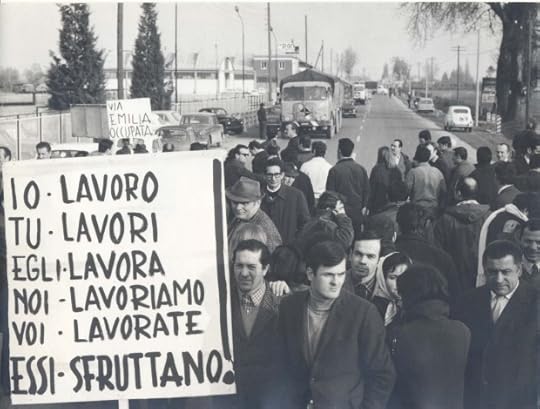
Haluamme kaiken kertoo Italiassa Fiatin Miraforin autotehtaalla Torinossa vuonna 1969 alkunsa saaneesta työtaistelusta. Teoksella on vahva todellisuuspohja, sillä se perustuu pitkälti Alfonso Natellan Balestrinille kertomaan. Romaani kuvaa työläisten yhdistymistä taisteluun Fiatin epäinhimillisiä ja epäoikeudenmukaisa työoloja ja tehtaan johtoa vastaan. Miraforin tehtaan työläisten taistelu on lähtölaukaus, jonka seurauksena muillakin tehtailla aletaan lakkoilla.
Erityistä työläisten lakkoilussa on, että se tapahtuu heidän omilla ehdoillaan irrallaan ammattiliitoista tai kommunistisesta puolueesta, joiden työläiset katsovat olevan lähinnä este todelliselle muutokselle.
Jos on lukenut romaanin esipuheen asemoituu Natella sen alussa nimettömän kertojan kautta romaanin päähenkilöksi, mutta tarinan edetessä kertoja kollektivisoituu ja muuntuu kaikkien työtaisteluun osallistuvien työläisten ääneksi. Teoksessa Italia on jakautunut köyhään etelään ja rikkaampaan pohjoiseen. Etelästä lähdetään työn perään pohjoiseen, mutta vastassa ei ole hyvinvointi, vaan monotoninen ja terveydelle usein vaarallinen liukuhihnatyö, jota Fiatin tehtaan pomot pyrkivät jatkuvasti tehostamaan.
Työntekijästä on tullut pelkkä väline, jonka arvo mitataan hänen valmistamiensa tuotantokappaleiden määrässä. Yhtä lailla kuin tavaroilla ja esineillä on hintansa on hintalappu Fiatin tehtaalla liimattu myös työntekijöiden selkiin. Karua kieltään työläisten oloista kertoo sekin, että monet heistä joutuivat yöpymään Torinon rautatieasemalla, johon heillä oli pääsy Fiatin henkilökorttia näyttämällä.
Osa työläisten nöyryyttämistä ovat työhaastattelut ja lääkärintarkastukset, jotka ovat pelkkää janten lain mukaista teatteria, sillä kaikki palkataan, koska työvoiman tarve on niin valtava.
Lehdistö sen sijaan haluttiin pitää kaikin keinoin tietämättömänä siitä, miten työläisten asiat oli järjestetty.
Balestrini kuvaa, miten pomot käyttävät taitavasti keinoja, jolla työläiset saadaan asettumaan myös toisiaan vastaan. On palkkaluokkia ja palkitsemisjärjestelmiä, joiden eduista pääsevät nauttimaan vain harvat ja hekin oman terveytensä uhraamalla. Peruspalkka on niin huono, että se ei riitä elämisen kustannuksiin.
"Työläisellä on vain kaksi vaihtoehtoa joko tappavan raskas työ silloin kun menee hyvin tai työttömyys ja nälkä silloin kun menee huonosti. En tiedä kumpi on pahempi. Mutta eihän työläinen sitä päätäkään vaan pomo päättää aina hänen puolestaan."
Rachel Kushner tunsi vuonna 2019 kuolleen Balestrinin henkilökohtaisesti. Essessään Kushner kertoo, miten Rooman Teatro Argentinassa pidettiin tunteja kestävä, nimeä "The greatest Nannis ouf our lives" kantava Balestrinin muistotilaisuus. Huomattavaa on, että tilaisuuden nimi ei kata pelkästään Balestrinia, vaan monikkomuodon kauttaa ottaa mukaan kaikki työläiset.
Kukaan Balestrinin laajasta ystäväpiiristä ei tuntenut Alfonso Natellaa ja monet epäilivät, oliko tämä Balestrinin mielikuvituksen tuotetta. Vaan kuinka kävikään? Balestrinin muistotilaisuuteen asteli eräs mies, joka halusi kunnioittaa Balestrinin muistoa. Mies oli Alfonso Natella.
Balestrinin romaania hallitsee vahva usko vallankumouksen voimaan. Haluamme kaiken on erityisen ajankohtainen myös suomalaisille lukijoille juuri nyt, kun työministerimme pistää parastaan kurjistaakseen niin työtä tekevien kuin työttömienkin olosuhteita sekä vähentääkseen ammattiliittojen valtaa.
Liukuhihnatyön monotonisuusden ja työtaistelun eri vaiheiden vimmaisen energisessä ja yksityiskohtaisessa kuvauksessa Haluamme kaiken on vertaansa vailla oleva työläisromaani, jonka ääni ei suostu vaikenemaan.
"Meidän on taisteltava ja taisteltava ja taisteltava jotta meillä olisi enemmän rahaa ja vähemmän työtä. Meidän on kumottava kapitalismi ja vaadittava että meitä kohdellaan ihmisinä eikä kuormajuhtina. Kapitalismi on mätä ja vanhentunut järjestelmä. Kukaan ei enää kestä sitä."
Wow wow wow. This is so good. "We want everything–all the wealth, all the power, and no work."
Taking place before The Unseen, Vogliamo tutto describes the Fiat uprising in 1969. While The Unseen can be read as a novel of repression, Vogliamo tutto is the story of when we were actually on the upswing. It's a story of workers rejecting their jobs, the unions, and the Parties. Balestrini's writing does am amazing job of capturing the energy and intensity of revolt and brings the reader to feel immersed in the fight itself. And it ends
For those not in Australia, this can be ordered from the publisher's website with free overseas shipping, which is probably a better deal than waiting for the American "radical" publisher with the rights to put out their overpriced hardcover edition.
Diceva che lui vendeva i fiori perché la gente comprava i fiori lassù nel nord. Era una cosa che a noi sembrava da pazzi che la gente comprasse i fiori. Lui diceva che vendeva i fiori che durante il giorno dei morti faceva settanta ottantamila lire di incasso. Ci sembrava incredibile. Adesso lui stava tentando di mettere su un negozio di fiori. Si stava prendendo la patente della macchina si voleva comprare un furgone per prendere i fiori a San Remo e portarli a Milano. Cose che sembravano fiabe ai fratelli ai vicini agli amici.
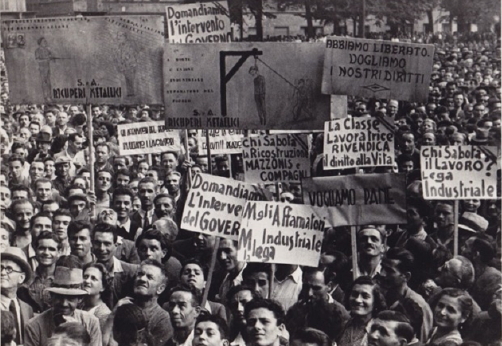
Chi voglia entrare in contatto con quello che è stato il '68 italiano dovrebbe prendere in considerazione questo libro. Seppure non sia né un saggio né un testo storico, la sua forma romanzesca è capace di restituire lo spirito di quegli anni.
Il testo ha uno stile molto particolare: prima di tutto Balestrini non fa uso di virgole. I pensieri, scritti in prima persona, sono formati da frasi unite in maniera paratattica. In più, il testo non è unitario ma è la risultante di vari paragrafi messi l'uno dietro l'altro e separati da uno spazio bianco. Il tutto per imitare il pensare essenziale, estremamente pratico, del tipico operaio meridionale giunto al Nord per lavorare. Ovviamente, ci ritroviamo di fronte a una costruzione letteraria: se Balestrini avesse ricercato un effetto realistico, avrebbe dovuto usare il dialetto, il linguaggio usato da quella classe sociale. Ma l'uso di un italiano essenziale, paratattico, che fa un uso limitato della subordinazione, restituisce fortemente quel modo di essere, riuscendo a unire necessità comunicative (scrivere in italiano permette a molti di accedere e di capire il testo) ed espressive (lo sperimentalismo di Balestrini permette un certo grado di immedesimazione in quella classe sociale).
La storia è semplice: l'evoluzione di un giovane meridionale che inizialmente cerca un lavoro solo per potersi permettere una vita consumistica, per poi maturare e diventare sempre più cosciente dei meccanismi perversi di controllo delle masse lavoratrici. Il processo evolutivo è descritto in maniera magistrale, riuscendo attraverso la storia del singolo a rappresentare il destino di molti.
La seconda parte è meno efficace della prima, infatti si inizia con un'analisi psicologica e sociale del protagonista per arrivare, nella seconda parte, a una cronaca delle lotte operaie di quegli anni. Seppure tutto ciò sia interessante dal punto di vista documentario, i passi sulle lotte dopo un po' risultano ripetitive. Notevole, però, è la capacità di Balestrini di descrivere i meccanismi del potere industriale ai danni degli operai. Per certi versi, in alcuni punti, il testo sembra assumere i tratti di un manuale sul potere ad uso e consumo della classi meno raffinate culturalmente. E non è poco.
La storia termina con il sopraggiungere dell'alba dopo una giornata di scontri con la polizia. E la visione di un 'grande sole rosso bellissimo' oggettiva la speranza di uno scrittore, squisitamente di parte, nei confronti della sua stessa epoca.
E' un testo onesto, perché non mostra l'operaio come un eroe, ma come un essere umano che rivendica il proprio desiderio di felicità. Una felicità fatta di piccole cose (sigarette, ristoranti, blue jeans, una casa dignitosa), che può essere raggiunta solo se i 'padroni' smetteranno di pensare che il vero operaio sia colui che si sacrifica in nome della produttività. Il lavoro è una merda, dice il protagonista, e che quindi venga giustamente ripagato. Basta con la retorica del lavoro come missione di vita, poiché è solo uno strumento per permettere all'individuo di guadagnare il necessario per il proprio sostentamento e per potersi dedicare alla propria vera vita: hobby, piaceri, studi, allargamento delle proprie conoscenze.
In questo testo si possono ricavare molte informazioni su di un'epoca che ha preparato la nostra: purtroppo, oggi, si assiste alla deriva di alcuni atteggiamenti tipici sia degli operai che dei potenti di quell'epoca.
Steve Wright’s storming heaven is obviously a historical masterpiece but if you want someone to get the gist of what workerism was all about you could do worse than give them this. Ballestrini himself has a nice accessible afterword that summarises the basic premises, clearly influenced by Bologna who seems to have held up best of all the workerists still writing. Many unfortunate wrong turns taken (imo) in operaismo/autonomia’s afterglow (FALC anyone?) but an interest of this period has greatly enriched my own political life (in which I would never indulge in such excesses or exuberant misreadings of our contemporary moment of course).
"Ma questo fatto che il tipo di lavoro che fa un operaio ha un valore diverso che cioè viene pagato di piú o di meno del lavoro di un altro operaio è tutta un'invenzione capitalistica. Che se lo sono inventati i padroni per avere in mano cosí un altro strumento di controllo politico sulla classe operaia. Non dimentichiamo che anche il partito e il sindacato sono d'accordo su questa invenzione capitalistica. Anche per loro è sempre giusto che i soldi che l'operaio riceve devono essere basati sulla diversa qualità del lavoro che fa."
A novel set in Italy's Hot Autumn in 1969, following the wildcat strikes at the FIAT factory. Fascinating structure, moving between the individual in part 1 and the collective we in part 2. Idk man, it's just a proper.. novel, you know?
Στην πιο φημισμένη (ημι-μυθοπλαστική) καταγραφή γεγονότων σχετικών με τη δεκαετή περίοδο οξυμμένης ταξικής πάλης στην Ιταλία, ο Μπαλεστρίνι αφηγείται την αρχή της εργατικής εξέγερσης στο εργοστάσιο της Φίατ στο Τορίνο, που οδήγησε στο ιστορικό "Καυτό φθινόπωρο" του 1969 και στη μαζικότερη απεργία της νεότερης Ιστορίας, με 20εκ. απεργούς, προσπαθώντας ταυτόχρονα να βρει τη δική του συγγραφική φωνή ως εξέχον μέλος του μοντερνιστικού λογοτεχνικού κινήματος της neoavanguardia. Ακολουθώντας μια άμεση κι απλή υφολογικά πρωτοπρόσωπη αφήγηση ο αναγνώστης έρχεται σε επαφή με την ιστορική πραγματικότητα και την προεξεγερσιακή κατάσταση στη Φίατ, έτσι όπως τη βίωναν οι εργάτες, καθώς και με τις αντιλήψεις που γεννημένες εντός της κατάστασης αυτής οδήγησαν στη διαμόρφωση του εργατισμού ως διακριτού μαρξιστικού ιδεολογικοπολιτικού ρεύματος, εκφρασμένου τότε από τις γραμμές της Potere Operaio. Ταυτόχρονα, η αναφερθείσα αφηγηματική πρακτική κάνει το μυθιστόρημα προσιτό κι απλό στην ανάγνωση. Το γέλιο, επίσης, δεν λείπει. Το ξεχωριστό ύφος του Μπαλεστρίνι εδώ δεν έχει αναπτυχθεί ακόμα, όπως στους ΑΟΡΑΤΟΥΣ, όμως ολόκληρο το κείμενο είναι ένα σημείο της κατεύθυνσης που θα ακολουθήσει. Η συνέχεια της "Τριλογίας της εξέγερσης", στην οποία καταγράφονται τα γεγονότα έως και το 1977 και το τέλος του "παρατεταμένου ιταλικού Μάη του '68", με τον ΕΚΔΟΤΗ και τους ΑΟΡΑΤΟΥΣ αναμένεται συναρπαστική...
«Για ακούστε σεις, αρχίζετε να το παρακάνετε. Εδώ πρέπει να έρχεται κανείς στην ώρα του, τώρα θα σας βάλω μισή ώρα πρόστιμο. Εγώ του απαντάω: Δεν πα' να κάνεις ό,τι θέλεις, αρκετά μου τα 'χετε πρήξει κι εσύ κι η Φίατ. Άντε γαμήσου, μη σου φέρω τίποτα στο κεφάλι. Να τα φτιάξετε μόνοι σας τα κωλοαυτοκίνητά σας, εγώ τα γράφω στα παλιά μου τα παπούτσια.[...] Παρατάω κι εγώ το πόστο μου, διασχίζω τις γραμμές, περνάω μέσα από κει που ήσαν όλες οι άλλες μηχανές κι ενώνομαι με τους συντρόφους. Τους φτάνω κι αρχίζω κι εγώ να φωνάζω μαζί τους. Φωνάζαμε τα πιο παράξενα πράγματα, τα πιο άσχετα, το μόνο που μας ενδιέφερε ήταν η ρήξη: Μάο Τσετούνγκ, Χο Τσι Μινχ, Εργατική Εξουσία. Κι ένα σωρό άλλα πράγματα, που δεν είχαν καμιά απολύτως σχέση, αλλά που μας άρεσε να τα λέμε.»
(να 'ναι καλά ο αγαπητός σύντροφος που μου το πρότεινε ως "ένα από τα καλύτερα πράγματα που έχει διαβάσει στη ζωή του")
Non è giusto fare questa vita di merda [...] Ora basta. Non ne possiamo più di essere della roba della merce venduta anche noi. Noi vogliamo tutto. Tutta la ricchezza tutto il potere niente lavoro. Cosa c'entriamo noi col lavoro. Cominciavano ad avercela su a volere lottare non perché il lavoro non perché il padrone è cattivo ma perché esiste.
“Because it's us, the proletariat of the south, us mass workers, an enormous mass of workers, the one-hundred-and-fifty-thousand workers of Fiat who have developed capital and its State. It is us who created all the wealth that exists, of which they leave us only the crumbs. We created all this wealth by dying of work at Fiat or dying of hunger in the south. And it is us, the great majority of the proletariat, who don't want to work and die any more for the development of capital and its State. We can't keep this crap going any more.
So now we say it's time to end it, because they don't know what to do with all this enormous wealth that we produce in the world other than waste it and destroy it. They waste it making thousands of atomic bombs or going to the moon. They destroy fruit, peaches and pears by the ton, because there's too much and it isn't worth anything. Because for them everything must have a price, it's the only thing they care about, products without value can't exist as far as they're concerned. It can't just be for people who don't have food, according to them. But with all the wealth that exists people don't need to die of hunger any more, they don't have to work any more. So we'll take the wealth, we'll take everything.”
Interesting, particularly in the context of "degrowth" type stuff.
Much is made in the introduction about the shift from "I" to "we" between part 1 and 2, and rightfully so, but I think what's equally important is the shift from the psychological internal alienation described in part 1 (not out of step with American "proletarian novels") but by part 2 it becomes much more *public* in its rhetoric, with sections addressed to "comrades" delivered like speeches.
Proletarian novel written by the guy Rachel Kushner based her anarchist in The Flamethrowers off of. Good as hell, and the afterword in the 2013 edition is really insightful.
“Sindicalistas, burocratas do Partido Comunista, falsos Marxistas-Leninistas, policiais e fascistas todos têm uma característica em comum. Têm muito medo da luta dos trabalhadores, da habilidade dos trabalhadores dizerem aos seus chefes e aos sevos dos seus chefes para irem para o inferno, e organizarem sua luta autonomamente, dentro e fora da fábrica”, argumenta o narrador de WE WANT EVERYTHING, romance do italiano Nanni Balestrini (Trad. Matt Holden).
O livro, originalmente de 1971, e que acaba de sair pela Verso, é um retrato do levante de um jovem operário numa Itália assolada por uma crise e ausência de oportunidades. Narrado em primeira pessoa, por um narrador sem nome, o livro é uma combinação de despertar de consciência de classe, com diário de uma greve e manifesto. A primeira parte acompanha o protagonista em busca de emprego até se dar conta das condições precárias em que trabalha.
Ele migra para o norte do país, onde espera trabalhar numa montadora, até que consegue – num processo de seleção bizarro, no qual todos são contratados – emprego na FIAT. O protagonista não tem muita noção do mundo e da dinâmica da exploração. Num dos episódios, ele se acidenta levemente, mas finge ser algo mais grave para conseguir uns dias em casa. Durante sua licença, não sabe o que fazer. Percebe que seu trabalho tomou toda sua vida. Isso se chama alienação. Mas não é preciso dar nomes, conforme diz Rachel Kushner numa introdução escrita para essa edição: “a experiência viva da exploração, [que] é demostrada aqui sem abstrações teóricas: é um relato oral da vida de uma pessoa; e isso é tudo”.
O diário da greve – segunda parte do romance – é inspirado nas greves de 1969 que aconteceram nas montadoras italianas, e construído de forma narrativa com cadência e tensão. O relato em primeira pessoa dá lugar, de tempos em tempos, a uma espécie de “camera eye” adotando um tom documental que registra os acontecimentos com precisão e riqueza de detalhes.
Ballestrini, que além de romancista, é poeta e participou da fundação do Gruppo 63 (um movimento de literário de vanguarda), e também artista plástico. Sua colagem Potere Operaio, de 1972, que também ilustra a edição da Verso, remete ao grupo político de extrema-esquerda do qual ele fez parte – ao lado de Antonio Negri e Valerio Morucci, entre outros. Seu romance, belo e poderoso, se alinha diretamente à sua ideologia. É um livro repleto de ideias, mas que também pulsa com vida e empolgação. É, ao mesmo tempo, uma história que jamais deixa de ser atual – ao menos enquanto houve exploradores e explorados.
What they said in my words: We want everything: the factory, the capitalists, power over production, the politicians, the entire GDP, limitless workers' rights, social services, autonomous organization, an end to corrupt trade unions, our voices multiplied over endless loudspeakers, control over all the means of production, the highest wages, an end to exploitation, the bosses to burn, an end to overproduction and overtime, the ability to decide when to work and where, basic sustenance, to work less and relax more, to feel fulfilled, to wreck and riot, to thrive as workers as women and men as husbands and wives as children and parents, to scream FUCK YOU, to end police violence, to control together, to control, together, to control as one, to control together, as one, our life. Vogliamo tutto. We want everything.
A powerful collective novel that chronicles the beginnings of the Italian autonomist movement in the turbulent 1960s. The workers' rage flows like a raging stream of lava throughout Fiat. Workers, mostly from the impoverished South of Italy, were tired of exploitation in Northern factories, too tired to compromise their own lives, too tired to risk anything. They wanted everything. They fought, they lost, but they drove fear into the hearts of the big bosses.
Balestrini loses himself in the anger and frustration of the narrative, but while that rage can detract from the quality of the novel, it reflects the imperfection of the movement, leaderless and passionate. Not for the faint of heart, We Want Everything painfully exposes, to the ultimate extreme, the agony that Italian workers felt. That undercurrent of pain is still there, but instead of too much work, now there isn't enough. In the age of chronic unemployment and austerity, a We Want Everything of the 21st century is inevitable. Recommended.
"But a new era is waiting for humanity, when it will be freed from the blackmail and the suffering of a forced labour that is already unnecessary and the enslavement to money, which prevent the free conduct of activity according to the aptitudes and desires of each and steal and degrade from the rhythm of life, at the same time that there is the real possibility of widespread and general wellbeing. This was the meaning, and could again be the meaning today and in the future, of that old rallying cry: Vogliamo tutto!" - Balestrini in the afterword of this EXCELLENT book
the power of a unified working class, of solidarity for all and insistence that the only way to rise is if everyone else rises too!!!! this novel—this struggle!—is moving and invigorating. in creating a nameless narrator (who reveals himself as real at Balestrini's funeral) Balestrini emphasizes the idea that it is not one exceptional man that matters in any struggle, but the collective and the truth that injustices are universal and the system is working as it should to fail people. A favorite line: "But now the thing that moved them more than rage was joy. The joy of finally being strong. Of discovering that your needs, your struggle, were everyone's needs, everyone's struggle."
VOGLIAMO TUTTO!!!!!!!!!! (we want everything! and i want you to read this book!)
The introduction by Sonya Jeffrey is excellent, the description of Nanni Balestrini's work and the shift in the ideological chart of the world from the 70's and onward. A book about the struggle at the Fiat Mirafiori plant and a descriptive journey of the rise of the poor in societies where the rich have it all. The title we want it all!
Formato divertido y las disputas en la fabrica así narradas son bastante graciosas pero así de echarte unas risas buenas como un gilipollas leyendo en el tren pero bueno se lo he dejado a un colega pero el tío no sabe leer así que como si hubiera tirado el libro a la basura en fin toda comedia tiene su drama.
The story is an interesting concept, but I loathed the writing style. And the main character (narrator) just seems to me like a lazy ass who joins a cause just so he doesn't have to work anymore. Could have been so much better. I would not recommend this book.