

What do you think?

The Spirit Level
A collection of poems from the winner of the 1995 Nobel Prize for Literature. The poems discover the possibility of a new beginning in many subjects and circumstances. Private memories, classical scenes and humble domestic objects are endowed with talismanic significance and friends and relatives are invoked for their promise and steadfastness.
80 pages, Paperback
First published January 1, 1996
About the author
Seamus Heaney
399 books1,145 followersWorks of Irish poet Seamus Justin Heaney reflect landscape, culture, and political crises of his homeland and include the collections
Wintering Out
(1972) and
Field Work
(1979) as well as a translation of
Beowulf
(1999). He won the Nobel Prize for literature in 1995.
This writer and lecturer won this prize "for works of lyrical beauty and ethical depth, which exalt everyday miracles and the living past."
Heaney on Wikipedia.
This writer and lecturer won this prize "for works of lyrical beauty and ethical depth, which exalt everyday miracles and the living past."
Heaney on Wikipedia.
Ratings & Reviews
Friends & Following
Create a free account to discover what your friends think of this book!
Community Reviews
Displaying 1 - 30 of 120 reviews
February 11, 2019
A Craftsman of Conjuring
To a Dutch Potter in Ireland
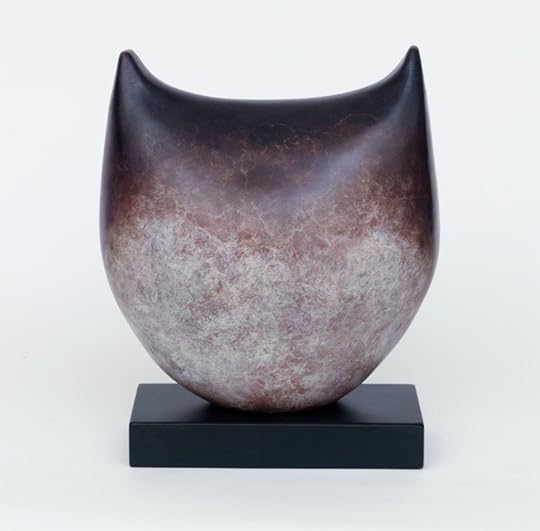
for Sonya Landweer*
Then I entered a strongroom of vocabulary
Where words like urns that had come through the fire
Stood in their bone-dry alcoves next a kiln
And came away changed, like the guard who’d seen
The stone move in a diamond-blaze of air
Or the gates of horn behind the gates of clay.
The soils I knew ran dirty. River sand
Was the one clean thing that stayed itself
In that slobbery, clabbery, wintry, puddled ground.
Until I found Bann clay. Like wet daylight
Or viscous satin under the felt and frieze
Of humus layers. The true diatomite
Discovered in a little sucky hole,
Grey-blue, dull-shining, scentless, touchable—
Like the earth’s old ointment box, sticky and cool.
At that stage you were swimming in the sea
Or running from it, luminous with plankton,
A nymph of phosphor by the Norder Zee,
A vestal of the goddess Silica,
She who is under grass and glass and ash
In the fiery heartlands of Ceramica.
We might have known each other then, in that
Cold gleam-life under ground and off the water
Weird twins of puddle, paddle, pit-a-pat,
And might have done the small forbidden things—
Worked at mud-pies or gone too high on swings,
Played ‘secrets’ in the hedge or ‘touching tongues’—
But did not, in the terrible event.
Night after night instead, in the Netherlands,
You watched the bombers kill; then, heaven-sent,
Came backlit from the fire through war and wartime
And ever after, every blessed time,
Through glazes of fired quartz and iron and lime.
And if glazes, as you say, bring down the sun,
Your potter’s wheel is bringing up the earth.
Hosannah ex infernis. Burning wells.
Hosannah in clean sand and kaolin
And, ‘now that the rye crop waves beside the ruins’,
In ash-pits, oxides, shards and chlorophylls.
***********************************
A “spirit level” or carpenter’s level is one of the most important tools of the house carpenter or home builder. In these richly layered and finely crafted poems, Heaney aligns himself with his people: makers and builders: neighbors, artists and craftspeople, parents and relatives — people who know pride in skilled handiwork, rare tastes of sweetness, ordinary lives sometimes punctuated or changed forever by violence associated with the Second World War and the Irish “Troubles.” Intimate, homely sensual details intertwine with wistful or traumatic memories. Incantatory words of prayers and Christian gospel run like the subtle drone of a bagpipe just below the surface of consciousness, effortlessly mixing with references from ancient Irish or Greek or other traditional stories. Several poems explore the difficulty of finding balance, equilibrium in life, how to hold up and not fall to despair, like the wobbling back and forth of the air bubble in the spirit level as the carpenter “trues up” the the posts, window- and door-frames of a home. Heaney’s mastery of language, diction, rhythm and rhyme make many of these poems a pleasure to read and re-read aloud.
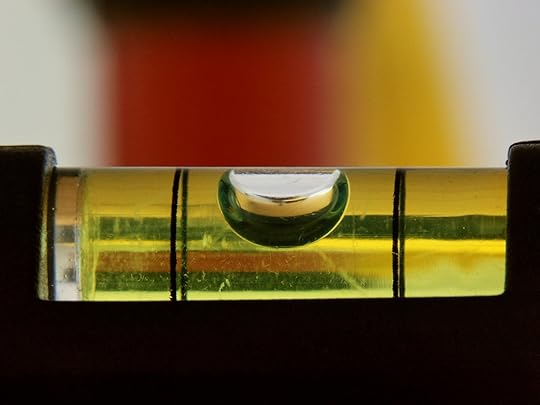
A tubular spirit level
At the Wellhead
Your songs, when you sing them with your two eyes closed
As you always do, are like a local road
We’ve known every turn of in the past —
That midge-veiled, high-hedged side-road where you stood
Looking and listening until a car
Would come and go and leave you lonelier
Than you had been to begin with. So, sing on,
Dear shut-eyed one, dear far-voiced veteran,
Sing yourself to where the singing comes from,
Ardent and cut off like our blind neighbour
Who played the piano all day in her bedroom.
Her notes came out to us like hoisted water
Ravelling off a bucket at the wellhead
Where the next thing we’d be listening, hushed and awkward.
That blind-from-birth, sweet-voiced, withdrawn musician
Was like a silver vein in heavy clay.
Night water glittering in the light of day.
But also just our neighbor, Rosie Keenan.
She touched our cheeks. She let us touch her braille
In books like books wallpaper patterns came in.
Her hands were active and her eyes were full
Of open darkness and a watery shine.
She knew us by our voices. She’d say she ‘saw’
Whoever or whatever. Being with her
Was intimate and helpful, like a cure
You didn’t notice happening. When I read
A poem with Keenan’s well in it, she said,
‘I can see the sky at the bottom of it now.’
*********************************
*Pottery by Sonja Landweer: http://www.peppercanister.com/sonja-l...
Spirit level image from Wikipedia
*********************************
Post-script:
At the center of this 82-page volume was a series of strong, bitter poems told from the point of view of the watchman in the ancient Greek play Agamemnon by Aeschylus. The watchman is a sort of corollary to Cassandra, the prophetess cursed by Apollo (for refusing his unwanted sexual advances) to have prophetic vision and voice that no one listens to. In contrast, the watchman sees and hears without being able to speak or intervene as fate unfolds around him. After a devastating war, the watchman sees no good, no innocence in anyone. Even Cassandra, Agamemnon’s war-captive, portrayed as a concentration camp victim and a rape victim, he sees as a conniving schemer, faking her victimhood. The poem about her plays with rhythm and meter in a way that I find highly disturbing given the subject. Here's an excerpt:
Cassandra
No such thing
as innocent
bystanding.
Her soiled vest,
her little breasts,
her clipped, devast-
ated, scabbed
punk head,
the char-eyed
famine gawk--
she looked
camp fucked
and simple.
People
could feel
a missed
trueness in them
focus,
a homecoming
in her dropped-wing,
half-calculating
bewilderment.
No such thing
as innocent.
I believe, or at least hope, that the perspective is deliberately ironic, condemning the attitudes of the victors' people to their victims, blaming them for their victimhood. To me this series, however brilliant, seemed mismatched with theme and tone of the rest of the collection; they are the only poems about fictional characters and don't have the intimacy and immediacy of the other poems about real people and relationships.
To a Dutch Potter in Ireland
for Sonya Landweer*
Then I entered a strongroom of vocabulary
Where words like urns that had come through the fire
Stood in their bone-dry alcoves next a kiln
And came away changed, like the guard who’d seen
The stone move in a diamond-blaze of air
Or the gates of horn behind the gates of clay.
The soils I knew ran dirty. River sand
Was the one clean thing that stayed itself
In that slobbery, clabbery, wintry, puddled ground.
Until I found Bann clay. Like wet daylight
Or viscous satin under the felt and frieze
Of humus layers. The true diatomite
Discovered in a little sucky hole,
Grey-blue, dull-shining, scentless, touchable—
Like the earth’s old ointment box, sticky and cool.
At that stage you were swimming in the sea
Or running from it, luminous with plankton,
A nymph of phosphor by the Norder Zee,
A vestal of the goddess Silica,
She who is under grass and glass and ash
In the fiery heartlands of Ceramica.
We might have known each other then, in that
Cold gleam-life under ground and off the water
Weird twins of puddle, paddle, pit-a-pat,
And might have done the small forbidden things—
Worked at mud-pies or gone too high on swings,
Played ‘secrets’ in the hedge or ‘touching tongues’—
But did not, in the terrible event.
Night after night instead, in the Netherlands,
You watched the bombers kill; then, heaven-sent,
Came backlit from the fire through war and wartime
And ever after, every blessed time,
Through glazes of fired quartz and iron and lime.
And if glazes, as you say, bring down the sun,
Your potter’s wheel is bringing up the earth.
Hosannah ex infernis. Burning wells.
Hosannah in clean sand and kaolin
And, ‘now that the rye crop waves beside the ruins’,
In ash-pits, oxides, shards and chlorophylls.
***********************************
A “spirit level” or carpenter’s level is one of the most important tools of the house carpenter or home builder. In these richly layered and finely crafted poems, Heaney aligns himself with his people: makers and builders: neighbors, artists and craftspeople, parents and relatives — people who know pride in skilled handiwork, rare tastes of sweetness, ordinary lives sometimes punctuated or changed forever by violence associated with the Second World War and the Irish “Troubles.” Intimate, homely sensual details intertwine with wistful or traumatic memories. Incantatory words of prayers and Christian gospel run like the subtle drone of a bagpipe just below the surface of consciousness, effortlessly mixing with references from ancient Irish or Greek or other traditional stories. Several poems explore the difficulty of finding balance, equilibrium in life, how to hold up and not fall to despair, like the wobbling back and forth of the air bubble in the spirit level as the carpenter “trues up” the the posts, window- and door-frames of a home. Heaney’s mastery of language, diction, rhythm and rhyme make many of these poems a pleasure to read and re-read aloud.
A tubular spirit level
At the Wellhead
Your songs, when you sing them with your two eyes closed
As you always do, are like a local road
We’ve known every turn of in the past —
That midge-veiled, high-hedged side-road where you stood
Looking and listening until a car
Would come and go and leave you lonelier
Than you had been to begin with. So, sing on,
Dear shut-eyed one, dear far-voiced veteran,
Sing yourself to where the singing comes from,
Ardent and cut off like our blind neighbour
Who played the piano all day in her bedroom.
Her notes came out to us like hoisted water
Ravelling off a bucket at the wellhead
Where the next thing we’d be listening, hushed and awkward.
That blind-from-birth, sweet-voiced, withdrawn musician
Was like a silver vein in heavy clay.
Night water glittering in the light of day.
But also just our neighbor, Rosie Keenan.
She touched our cheeks. She let us touch her braille
In books like books wallpaper patterns came in.
Her hands were active and her eyes were full
Of open darkness and a watery shine.
She knew us by our voices. She’d say she ‘saw’
Whoever or whatever. Being with her
Was intimate and helpful, like a cure
You didn’t notice happening. When I read
A poem with Keenan’s well in it, she said,
‘I can see the sky at the bottom of it now.’
*********************************
*Pottery by Sonja Landweer: http://www.peppercanister.com/sonja-l...
Spirit level image from Wikipedia
*********************************
Post-script:
At the center of this 82-page volume was a series of strong, bitter poems told from the point of view of the watchman in the ancient Greek play Agamemnon by Aeschylus. The watchman is a sort of corollary to Cassandra, the prophetess cursed by Apollo (for refusing his unwanted sexual advances) to have prophetic vision and voice that no one listens to. In contrast, the watchman sees and hears without being able to speak or intervene as fate unfolds around him. After a devastating war, the watchman sees no good, no innocence in anyone. Even Cassandra, Agamemnon’s war-captive, portrayed as a concentration camp victim and a rape victim, he sees as a conniving schemer, faking her victimhood. The poem about her plays with rhythm and meter in a way that I find highly disturbing given the subject. Here's an excerpt:
Cassandra
No such thing
as innocent
bystanding.
Her soiled vest,
her little breasts,
her clipped, devast-
ated, scabbed
punk head,
the char-eyed
famine gawk--
she looked
camp fucked
and simple.
People
could feel
a missed
trueness in them
focus,
a homecoming
in her dropped-wing,
half-calculating
bewilderment.
No such thing
as innocent.
I believe, or at least hope, that the perspective is deliberately ironic, condemning the attitudes of the victors' people to their victims, blaming them for their victimhood. To me this series, however brilliant, seemed mismatched with theme and tone of the rest of the collection; they are the only poems about fictional characters and don't have the intimacy and immediacy of the other poems about real people and relationships.

August 30, 2022
I found a signed edition of this by the Irishman himself at a used bookshop in Edinburgh. It was good to reread it tonight. As I was reading, I was reminded of when I first began to read Seamus Heaney years ago, and good memories of seeing his grave in Ireland, as well as the Seamus Heaney HomePlace, which was brilliant! Heaney will always be my favorite poet!
Heaney has this incredibly poignant way of writing about the mundane with a great sense of wonder, and his poems about his father, and the Irish culture, language, mythology, and landscape, always makes for a good read. My favorite poem from this collection is "Postscript." Do yourself a favor and read this book.
Heaney has this incredibly poignant way of writing about the mundane with a great sense of wonder, and his poems about his father, and the Irish culture, language, mythology, and landscape, always makes for a good read. My favorite poem from this collection is "Postscript." Do yourself a favor and read this book.

March 2, 2021
Another great collection of poetry from Seanus Heaney. I'm still really enjoying my journey through his collected work.
Two Lorries
It’s raining on black coal and warm wet ashes.
There are tyre-marks in the yard, Agnew’s old lorry
Has all its cribs down and Agnew the coalman
With his Belfast accent’s sweet-talking my mother.
Would she ever go to a film in Magherafelt?
But it’s raining and he still has half the load
To deliver farther on. This time the lode
Our coal came from was silk-black, so the ashes
Will be the silkiest white. The Magherafelt
(Via Toomebridge) bus goes by. The half-stripped lorry
With its emptied, folded coal-bags moves my mother:
The tasty ways of a leather-aproned coalman!
And films no less! The conceit of a coalman…
She goes back in and gets out the black lead
And emery paper, this nineteen-forties mother,
All business round her stove, half-wiping ashes
With a backhand from her cheek as the bolted lorry
Gets revved and turned and heads for Magherafelt
And the last delivery. Oh, Magherafelt!
Oh, dream of red plush and a city coalman
As time fastforwards and a different lorry
Groans into shot, up Broad Street, with a payload
That will blow the bus station to dust and ashes…
After that happened, I’d a vision of my mother,
A revenant on the bench where I would meet her
In that cold-floored waiting room in Magherafelt,
Her shopping bags full up with shovelled ashes.
Death walked out past her like a dust-faced coalman
Refolding body-bags, plying his load
Empty upon empty, in a flurry
Of motes and engine-revs, but which lorry
Was it now? Young Agnew’s or that other,
Heavier, deadlier one, set to explode
In a time beyond her time in Magherafelt…
So tally bags and sweet-talk darkness, coalman,
Listen to the rain spit in new ashes
As you heft a load of dust that was Magherafelt,
Then reappear from your lorry as my mother’s
Dreamboat coalman filmed in silk-white ashes.
My next book: Savage Avengers vol. 3: Enter the Dragon
Two Lorries
It’s raining on black coal and warm wet ashes.
There are tyre-marks in the yard, Agnew’s old lorry
Has all its cribs down and Agnew the coalman
With his Belfast accent’s sweet-talking my mother.
Would she ever go to a film in Magherafelt?
But it’s raining and he still has half the load
To deliver farther on. This time the lode
Our coal came from was silk-black, so the ashes
Will be the silkiest white. The Magherafelt
(Via Toomebridge) bus goes by. The half-stripped lorry
With its emptied, folded coal-bags moves my mother:
The tasty ways of a leather-aproned coalman!
And films no less! The conceit of a coalman…
She goes back in and gets out the black lead
And emery paper, this nineteen-forties mother,
All business round her stove, half-wiping ashes
With a backhand from her cheek as the bolted lorry
Gets revved and turned and heads for Magherafelt
And the last delivery. Oh, Magherafelt!
Oh, dream of red plush and a city coalman
As time fastforwards and a different lorry
Groans into shot, up Broad Street, with a payload
That will blow the bus station to dust and ashes…
After that happened, I’d a vision of my mother,
A revenant on the bench where I would meet her
In that cold-floored waiting room in Magherafelt,
Her shopping bags full up with shovelled ashes.
Death walked out past her like a dust-faced coalman
Refolding body-bags, plying his load
Empty upon empty, in a flurry
Of motes and engine-revs, but which lorry
Was it now? Young Agnew’s or that other,
Heavier, deadlier one, set to explode
In a time beyond her time in Magherafelt…
So tally bags and sweet-talk darkness, coalman,
Listen to the rain spit in new ashes
As you heft a load of dust that was Magherafelt,
Then reappear from your lorry as my mother’s
Dreamboat coalman filmed in silk-white ashes.
My next book: Savage Avengers vol. 3: Enter the Dragon

November 21, 2022
one of my favourites of Heaney's anthologies !
favourites: rain stick - to a dutch potter in ireland (my all time favourite poem and the inspo behind my only tattoo lol)- a dog was crying tonight in wicklow also - a call (another one of my all-time favourites) - postscript
favourites: rain stick - to a dutch potter in ireland (my all time favourite poem and the inspo behind my only tattoo lol)- a dog was crying tonight in wicklow also - a call (another one of my all-time favourites) - postscript

July 26, 2019
5 stars
Excellent as always. Seamus Heaney had a rare talent with words. I definitely reccommend not just this collection but the entirety of his work.
Happy reading!
Excellent as always. Seamus Heaney had a rare talent with words. I definitely reccommend not just this collection but the entirety of his work.
Happy reading!

February 12, 2014
I have to admit, even as I hate doing it, that the only Heaney I have read prior picking up this book is his translation of Beowulf.
To say that the poems in this collection are good would be correct. They are bag of Irish life, ancient myth, and family life. It is the Irish ones and “Mycenae Lookout” that tend to be the most powerful. The power of Mycenae Lookout is obvious. It is about Troy, told from various views, including a solider waiting for the return of his king and fellow soldiers even as he knows that the king’s welcome isn’t assured at all.
“Two Lorries” is about, well, two lorries, one whom was in fact. It is a powerful comment on the Troubles and the fight for Irish independence. It is the type of poem you read and cannot forget.
Reading this small volume you realize how great Heaney was.
Crossposted at Booklikes
To say that the poems in this collection are good would be correct. They are bag of Irish life, ancient myth, and family life. It is the Irish ones and “Mycenae Lookout” that tend to be the most powerful. The power of Mycenae Lookout is obvious. It is about Troy, told from various views, including a solider waiting for the return of his king and fellow soldiers even as he knows that the king’s welcome isn’t assured at all.
“Two Lorries” is about, well, two lorries, one whom was in fact. It is a powerful comment on the Troubles and the fight for Irish independence. It is the type of poem you read and cannot forget.
Reading this small volume you realize how great Heaney was.
Crossposted at Booklikes

March 3, 2018
"Mint"
It looked like a clump of small dusty nettles
Growing wild at the gable of the house
Beyond where we dumped our refuse and old bottles:
Unverdant ever, almost beneath notice.
But, to be fair, it also spelled promise
And newness in the back yard of our life
As if something callow yet tenacious
Sauntered in green alleys and grew rife.
The snip of scissor blades, the light of Sunday
Mornings when the mint was cut and loved:
My last things will be first things slipping from me.
Yet let all things go free that have survived.
Let the smells of mint go heady and defenceless
Like inmates liberated in that yard.
Like the disregarded ones we turned against
Because we’d failed them by our disregard.
It looked like a clump of small dusty nettles
Growing wild at the gable of the house
Beyond where we dumped our refuse and old bottles:
Unverdant ever, almost beneath notice.
But, to be fair, it also spelled promise
And newness in the back yard of our life
As if something callow yet tenacious
Sauntered in green alleys and grew rife.
The snip of scissor blades, the light of Sunday
Mornings when the mint was cut and loved:
My last things will be first things slipping from me.
Yet let all things go free that have survived.
Let the smells of mint go heady and defenceless
Like inmates liberated in that yard.
Like the disregarded ones we turned against
Because we’d failed them by our disregard.

Read
June 8, 2025I only read the poems included in Opened Ground: that is 42 pages (about half of the contents of the smaller book I estimate).
Did not like them, on the whole, as much as the poems from North, which I read last year. But there was still much to appreciate. The short poem "Poplar" was one of the ones left out and I wish it hadn't been. I am drawn to tiny poems and short forms.
Did not like them, on the whole, as much as the poems from North, which I read last year. But there was still much to appreciate. The short poem "Poplar" was one of the ones left out and I wish it hadn't been. I am drawn to tiny poems and short forms.

June 25, 2014
This collection of poems from 1996 was the first to be published after he won the Nobel Prize in 1995 and it didn't diminish his reputation at all. Highlights include "The Rain Stick", "Keeping Going", "Mycenae Lookout" and "Postscript". Good enough to "catch the heart off guard and blow it open".
March 24, 2017
My favorite line was from someone else - Horace: "Skies change, not cares, for those who cross the seas"

January 24, 2022
Seamus Heaney won a Nobel prize for literature in 1996, one year after publishing this collection. So how the heck can I even review it?
That could, perhaps, be all I’d need to say about this gathering of little monsters. And then I could bang down onto the virtual table the three stars that I’m giving The Spirit Level.
“Hold on, why only three stars?” you might ask or wonder or wake up in the dead of night screaming into your fading nightmarescape. But I want to explain myself for those who care to read such things.
There are some great poems here. “The Gravel Walks” is a great piece (in my mind) about striving to preserve nature while it is simultaneously being exploited that trips off even my syllable-slurring tongue. And “Mycenae Lookout” is a fantastic example of the poetic ambition that I think helped Heaney to later spin his excellent translation of Beowulf. Obviously, there’s no way I can deny the lasting power of a these and a few other pieces. But reading this collection has taught me that I don’t like poetry in which the poet is (or at least seems to be) too obviously sketching their poems with a checklist of certain “literary” qualities in mind.
Qualities like literary references, or possible verbal affectations, or formatting choices that feel (at least in retrospect) merely trendy. And, unfortunately, my very subjective opinion about this sample of a very subjective art form is that there are too many poems here that too blatantly follow that process.
Maybe, speaking as the subjective person often will, in generalities mistaken for hard and fast rules, this style of poem was what Baby Boomers thought made good poetry. But compared to the works of E. Pauline Johnson and the level of emotion expressed therein, this collection is basically a dude remembering his childhood and relating it to major goings on of his day. Which ain’t nothing, but isn’t something that I find particularly timeless.
Checklists and subjectivity aside, Heaney’s writing in this way locks it into a very specific time and place. And maybe it falls to readers of old poetry (like me!) to read up on the context of the poetry they read. Perhaps I would have come away from The Spirit Level raving about how Heaney did it, he got that new bubble right into that spirit level and made that bubble sit and stay in between the lines like a blue ribbon winning dog at an international championship show if only I had read about the ongoing Troubles in Ireland during his youth, how he grew up, what sorts of things he got into. I’ll also confess to some possible bias when it comes to Johnson because I already knew quite a bit more about the era in which she lived thanks to knowing more about Canadian history than I do about Irish history.
But to me, restricting poetry to its context like that is an admission of that poetry’s weakness. It’s a clear mark that the poetry in question isn’t meant to reach for something timeless whether it’s read the day it’s written or centuries later. Instead, that poetry is locked into its time and after that time has passed, it’s still possible to reach that abstract place where, maybe, some sort of grander human truth lives, but the chemicals involved in the necessary transportive reaction have solidified or separated or somehow lost their integrity and that reaction isn’t possible without the extra work of shaking up the individual canisters before pouring them together.
That’s not to say knowing a few things about a poet isn’t important for enjoying their work. I think that every great poem has the potential to give a reader that transcendent experience, but readers do need to get around the poet’s fingerprints to varying degrees (even between pieces by the same poet). Authors might be dead, but poets certainly aren’t. And that fact makes poetry volatile and difficult to generalize about.
In the case of The Spirit Level, some of the chemicals were fine despite their age, and the reaction happened smoothly and I was transported, if not while reading, then certainly on reflection. But another stumbling block for me is that the irregular rhythms and line lengths. In several instances I found myself wondering if some poems were just aligned and formatted to look good rather than as a reflection of how they would be read aloud, and these were the poems that, as a result, did nothing for me. After all, because of that aural disconnect, these poems’ meaning also didn’t hit what I took as their targets as truly as I think they should or could have based on the pieces in this collection that did resonate with me. Such is what kept “A Brigid’s Girdle” and “Two Lorries” from working for me for example. However, some other pieces (such as “Keeping Going”) have strong starts and excellent concepts and imagery within them but lost their charge for me because I thought that they simply stretched themselves too thin.
So, ultimately, this collection has some poems I would consider bangers, but it’s definitely not packed wall to wall with them by any means. Read it for a steady dosage of what perhaps was and certainly would become the stereotypical melancholy picture of mid-20th century Irish working class life cut with a few digressions into a broader array of images and ideas.
That could, perhaps, be all I’d need to say about this gathering of little monsters. And then I could bang down onto the virtual table the three stars that I’m giving The Spirit Level.
“Hold on, why only three stars?” you might ask or wonder or wake up in the dead of night screaming into your fading nightmarescape. But I want to explain myself for those who care to read such things.
There are some great poems here. “The Gravel Walks” is a great piece (in my mind) about striving to preserve nature while it is simultaneously being exploited that trips off even my syllable-slurring tongue. And “Mycenae Lookout” is a fantastic example of the poetic ambition that I think helped Heaney to later spin his excellent translation of Beowulf. Obviously, there’s no way I can deny the lasting power of a these and a few other pieces. But reading this collection has taught me that I don’t like poetry in which the poet is (or at least seems to be) too obviously sketching their poems with a checklist of certain “literary” qualities in mind.
Qualities like literary references, or possible verbal affectations, or formatting choices that feel (at least in retrospect) merely trendy. And, unfortunately, my very subjective opinion about this sample of a very subjective art form is that there are too many poems here that too blatantly follow that process.
Maybe, speaking as the subjective person often will, in generalities mistaken for hard and fast rules, this style of poem was what Baby Boomers thought made good poetry. But compared to the works of E. Pauline Johnson and the level of emotion expressed therein, this collection is basically a dude remembering his childhood and relating it to major goings on of his day. Which ain’t nothing, but isn’t something that I find particularly timeless.
Checklists and subjectivity aside, Heaney’s writing in this way locks it into a very specific time and place. And maybe it falls to readers of old poetry (like me!) to read up on the context of the poetry they read. Perhaps I would have come away from The Spirit Level raving about how Heaney did it, he got that new bubble right into that spirit level and made that bubble sit and stay in between the lines like a blue ribbon winning dog at an international championship show if only I had read about the ongoing Troubles in Ireland during his youth, how he grew up, what sorts of things he got into. I’ll also confess to some possible bias when it comes to Johnson because I already knew quite a bit more about the era in which she lived thanks to knowing more about Canadian history than I do about Irish history.
But to me, restricting poetry to its context like that is an admission of that poetry’s weakness. It’s a clear mark that the poetry in question isn’t meant to reach for something timeless whether it’s read the day it’s written or centuries later. Instead, that poetry is locked into its time and after that time has passed, it’s still possible to reach that abstract place where, maybe, some sort of grander human truth lives, but the chemicals involved in the necessary transportive reaction have solidified or separated or somehow lost their integrity and that reaction isn’t possible without the extra work of shaking up the individual canisters before pouring them together.
That’s not to say knowing a few things about a poet isn’t important for enjoying their work. I think that every great poem has the potential to give a reader that transcendent experience, but readers do need to get around the poet’s fingerprints to varying degrees (even between pieces by the same poet). Authors might be dead, but poets certainly aren’t. And that fact makes poetry volatile and difficult to generalize about.
In the case of The Spirit Level, some of the chemicals were fine despite their age, and the reaction happened smoothly and I was transported, if not while reading, then certainly on reflection. But another stumbling block for me is that the irregular rhythms and line lengths. In several instances I found myself wondering if some poems were just aligned and formatted to look good rather than as a reflection of how they would be read aloud, and these were the poems that, as a result, did nothing for me. After all, because of that aural disconnect, these poems’ meaning also didn’t hit what I took as their targets as truly as I think they should or could have based on the pieces in this collection that did resonate with me. Such is what kept “A Brigid’s Girdle” and “Two Lorries” from working for me for example. However, some other pieces (such as “Keeping Going”) have strong starts and excellent concepts and imagery within them but lost their charge for me because I thought that they simply stretched themselves too thin.
So, ultimately, this collection has some poems I would consider bangers, but it’s definitely not packed wall to wall with them by any means. Read it for a steady dosage of what perhaps was and certainly would become the stereotypical melancholy picture of mid-20th century Irish working class life cut with a few digressions into a broader array of images and ideas.

December 22, 2025
This was my introduction to Heaney, a Nobel Prize-winning collection from ‘95. Much to admire with a handful of poems that genuinely moved me, though I found myself disengaged at times. Especially for poems with classical references, and I encountered many of them here. Always disappointing when things like that go over my head. I like to think I’m an experienced reader but I (always) have more to learn. Anyway, I enjoyed this as a first taste and look forward to checking out his other work.

April 11, 2023
These were weirder than death of naturalist but also nice. A fair amount of references to older literature that went right over my head.

April 21, 2018
I have been working steadily through Heaney’s poetry in order of publication and this collection builds very comfortably on his previous work. His use of language is exquisite, especially when describing everyday situations, as in his description of a bricklayer at work in the poem 'Damsen'.
Over and over, the slur, the scrape and mix
As he trowelled and retrowelled and laid down
Courses of glum mortar. Then the bricks
Jiggled and settled, tocked and tapped in line.
As long as he writes like this, I am content to read volume after volume of his work, even if it were restricted to the utterly mundane and ordinary. In fact, the material is quite diverse, including ‘Mycenae Lookout’, a poem sequence that deals with aspects of the ancient Greek’s war against Troy.
‘Keeping Going’, a tribute to the steady and cheerful persistence of his brother as a farmer in a small community, would work as a reference to Heaney’s departure from this pleasant but perhaps restricted environment to be a teacher and poet, in the way that Patrick Kavanagh for example wrote of his need to leave farming for poetry, but jarringly this poem suddenly incorporates the drive-by shooting of a young acquaintance, targeted as an army reservist, giving a quite different sense to the quiet determination of his brother to simply keep going.
But you cannot make the dead walk or right wrong.
I see you at the end of your tether sometimes,
In the milking parlour, ...
The poem ‘Two Lorries’ employs a beautiful and whimsical account of a coal delivery to his mother, as a startling contrast to the use of a lorry loaded with explosives to “blow the bus station to dust and ashes.”
It would be possible to read through these two poems without being distracted from the generally benign tone of the collection, because there is no change of pace to signal the intrusion of sectarian violence into his rural scenes, and it is hard to determine the nature of his political commitment, other than the refusal to experience these atrocities in sectarian or ideological terms. It as though Heaney wishes – or feels obliged - to acknowledge the presence of this violence without being drawn into its frame on any level beyond the personal.
As in earlier collections, his silence is in fact very telling and I think appropriate. Nevertheless, these two poems in particular would be useful reading for those presently concerned with the UK’s Brexit negotiations and considering the risks of any return to the same political violence. It can become so banal, so unremarkable, which ought to terrify us.
Over and over, the slur, the scrape and mix
As he trowelled and retrowelled and laid down
Courses of glum mortar. Then the bricks
Jiggled and settled, tocked and tapped in line.
As long as he writes like this, I am content to read volume after volume of his work, even if it were restricted to the utterly mundane and ordinary. In fact, the material is quite diverse, including ‘Mycenae Lookout’, a poem sequence that deals with aspects of the ancient Greek’s war against Troy.
‘Keeping Going’, a tribute to the steady and cheerful persistence of his brother as a farmer in a small community, would work as a reference to Heaney’s departure from this pleasant but perhaps restricted environment to be a teacher and poet, in the way that Patrick Kavanagh for example wrote of his need to leave farming for poetry, but jarringly this poem suddenly incorporates the drive-by shooting of a young acquaintance, targeted as an army reservist, giving a quite different sense to the quiet determination of his brother to simply keep going.
But you cannot make the dead walk or right wrong.
I see you at the end of your tether sometimes,
In the milking parlour, ...
The poem ‘Two Lorries’ employs a beautiful and whimsical account of a coal delivery to his mother, as a startling contrast to the use of a lorry loaded with explosives to “blow the bus station to dust and ashes.”
It would be possible to read through these two poems without being distracted from the generally benign tone of the collection, because there is no change of pace to signal the intrusion of sectarian violence into his rural scenes, and it is hard to determine the nature of his political commitment, other than the refusal to experience these atrocities in sectarian or ideological terms. It as though Heaney wishes – or feels obliged - to acknowledge the presence of this violence without being drawn into its frame on any level beyond the personal.
As in earlier collections, his silence is in fact very telling and I think appropriate. Nevertheless, these two poems in particular would be useful reading for those presently concerned with the UK’s Brexit negotiations and considering the risks of any return to the same political violence. It can become so banal, so unremarkable, which ought to terrify us.

August 4, 2026
Even his most workaday poems have a tender, elegiac quality that I so enjoy.

August 16, 2007
I read this because Heaney had won the Nobel Prize. OK, time for a confession. I am not a voracious reader of poetry, but I enjoy it, and yet, because it deals largely with moments and its magic is spun out in phrases and clauses, it simply doesn't stay with me the way prose does.
I know this was good, and was certainly enough to pull me through, which is not necessarily easy with poetry. But the adhesion of the content? Not much.
I know this was good, and was certainly enough to pull me through, which is not necessarily easy with poetry. But the adhesion of the content? Not much.

September 11, 2018
2.5 stars
I've tried Heaney's poetry a few times and it's just not for me. I get the feeling that he's just trying too hard (...yes, I know that he won the Nobel Literature Prize...). I did enjoy his simpler poems (notably "Poplars" in this volume) but I find the rest hopelessly cluttered with too many metaphors and subjects.
I've tried Heaney's poetry a few times and it's just not for me. I get the feeling that he's just trying too hard (...yes, I know that he won the Nobel Literature Prize...). I did enjoy his simpler poems (notably "Poplars" in this volume) but I find the rest hopelessly cluttered with too many metaphors and subjects.

March 26, 2026
Heaney is a legend, so who am I to only rate this a 3 star collection? However, much of this is tough sledding and requires a deeper knowledge of literature that I do not possess, so many of his references are lost on me. One of my faves of his (Postscript) was the last poem in the book, so I'm glad I persevered! Also enjoyed The Walk and St Kevin and the Blackbird.

April 23, 2010
Pretty good collection, but the "Mycenae Lookout," is on entirely different level. To date, the best thing I've ever read by Heaney. Awesome, 6 stars!!!

June 12, 2013
This guy's pretty good. I am probably not the first person to note that. In this collection he gives us ordinary lives, illuminated and made beautiful.

March 29, 2024
I used to keep this book in my bag and take it with me everywhere, it’s like a little bible to me. Right now it lives in my studio, as I often go back to it when I find myself short of artistic inspiration, or feel that I have lost all appreciation for the world.
Its reflections on the landscape and people of where I call home have been an incredible cure for homesickness while I’ve been at university. Each poem has a lovely pace, and is timeless in the sense that each time you return to it, each time you share it with a friend, you will find something that you had missed before…
The opening poem, The Rain Stick, could not be more clever. A call to sit and listen. “You are like a rich man entering heaven through the ear of a raindrop. Listen now again.” There is a such a wonderful texture in his word choice here that is so captivating and reminiscent.
I feel that Heaney’s sense of humour is rarely acknowledged, often I see his poetry talked about as if it’s all dull or a drag, but I promise it’s worth the reflection. The Thimble is my favourite example.
His writings related to the political happenings in the north draw away from the bitterness of division and instead focus on the common man and his pain, his love and his fear. Mycenae Lookout is an incredible and comprehensive articulation of a long, horrific history.
Another favourite of mine is The Call, wherein Heaney is suddenly struck by the mortality of his father, “Next thing he spoke and I nearly said I loved him.”
I have more to say, but I will cut it short here. Impressive how much humanity can be stored in such a small collection.
I would like to be buried with this book : ) highly, highly recommend.
Its reflections on the landscape and people of where I call home have been an incredible cure for homesickness while I’ve been at university. Each poem has a lovely pace, and is timeless in the sense that each time you return to it, each time you share it with a friend, you will find something that you had missed before…
The opening poem, The Rain Stick, could not be more clever. A call to sit and listen. “You are like a rich man entering heaven through the ear of a raindrop. Listen now again.” There is a such a wonderful texture in his word choice here that is so captivating and reminiscent.
I feel that Heaney’s sense of humour is rarely acknowledged, often I see his poetry talked about as if it’s all dull or a drag, but I promise it’s worth the reflection. The Thimble is my favourite example.
His writings related to the political happenings in the north draw away from the bitterness of division and instead focus on the common man and his pain, his love and his fear. Mycenae Lookout is an incredible and comprehensive articulation of a long, horrific history.
Another favourite of mine is The Call, wherein Heaney is suddenly struck by the mortality of his father, “Next thing he spoke and I nearly said I loved him.”
I have more to say, but I will cut it short here. Impressive how much humanity can be stored in such a small collection.
I would like to be buried with this book : ) highly, highly recommend.

April 24, 2025
Oh he's very good! This one's playing to the literati more than his older stuff, but I suppose that's inevitable after you get a Nobel. Still some bangers in here, maybe even a few of the best single poems he's written (looking at you Mint! And you Rain Stick!!), but also a couple of longer sequences that require a classics degree and an A-Z map of Ireland to fully unlock. But I'm being overly negative here, to justify the missing fifth star. It's still a banger

June 28, 2020
Always worth a read or a re-read.

January 23, 2024
3.5 stars.

November 25, 2025
Very good with the excellent 'Postscript'.

May 11, 2026
i don’t tend to like older poetry but i really liked heaney’s writing. it’s not that it felt modern, bc there was a lot in the poetry that made it very clear it was dated, but the directness and specificity to which he speaks makes it so easy to follow. i also just think there r so many amazing lines.
i liked the second section of “to a dutch potter in ireland”, section three of “weighing in” (my fav), “a call”, the walk”, and “postscript”—and as heaney ends the collection with: “catch the heart off guard and blow it open” !!!
i liked the second section of “to a dutch potter in ireland”, section three of “weighing in” (my fav), “a call”, the walk”, and “postscript”—and as heaney ends the collection with: “catch the heart off guard and blow it open” !!!

June 14, 2026
Loved it. Frankly.

November 28, 2023
Ah, the way Seamus Heaney plays with language is breathtaking. I love reading his poems out loud just to feel the way they roll off the tongue. His poems are vivid images, tableaus of everyday existence in a heady, earthy Ireland, marred by echoes of childhood and violence.

September 26, 2024
Technically solid poetry, if not amazing.
Owen’s Review: 4/5 milk bottles. Ireland sounds like a complicated but pretty place.
Owen’s Review: 4/5 milk bottles. Ireland sounds like a complicated but pretty place.

April 30, 2012
The Spirit Level contains my favourite of Heaney's work, the 'Mycenae Lookout' sequence, based on the stories of the Iliad
I have loved Heaney's mixture of nature rhapsody, old English words (trindle, thrawn), family history and Irish history for years now. I have a thick collection on my shelves that I dip in and out of, but you get such a different feeling from reading a slim collection that is carefully put together, here spanning Heaney's life and experiences, from the Troubles to his childhood. This time round, it's the energy and the word-spills that capture me, as in these three poems.
The Rain Stick
A Dog was Crying Tonight in Wicklow Also
Two Stick Drawings
Some people wept, and not for sorrow - joy
That the king had armed and upped and sailed for Troy,
But inside me like struck sound in a gong
That killing-fest, the life-warp and world-wrong
It brought to pass, still augured and endured.
I have loved Heaney's mixture of nature rhapsody, old English words (trindle, thrawn), family history and Irish history for years now. I have a thick collection on my shelves that I dip in and out of, but you get such a different feeling from reading a slim collection that is carefully put together, here spanning Heaney's life and experiences, from the Troubles to his childhood. This time round, it's the energy and the word-spills that capture me, as in these three poems.
The Rain Stick
Up-end the rain stick and what happens next
Is a music that you never would have known
To listen for. In a cactus stalk
Downpour, sluice-rash, spillage and backwash
Come flowing through. You stand there like a pipe
Being played by water, you shake it again lightly
And diminuendo runs through all its scales
Like a gutter stopping trickling. And now here comes
a sprinkle of drops out of the freshened leaves,
Then subtle little wets off grass and daisies;
Then glitter-drizzle, almost-breaths of air.
Up-end the stick again. What happens next
Is undiminished for having happened once,
Twice, ten, a thousand time before.
Who care if all the music that transpires
Is the fall of grit or dry seeds through a cactus?
You are like a rich man entering heaven
Through the ear of a raindrop. Listen now again.
A Dog was Crying Tonight in Wicklow Also
When human beings found out about death
They sent the dog to Chukwu with a message:
They wanted to be let back to the house of life.
They didn't want to end up lost forever
Like burnt wood disappearing into smoke
And ashes that get blown away to nothing.
Instead, they saw their souls in a flock at twilight
Cawing and headed back for the same old roosts
(The dog was meant to tell all this to Chukwu).
But death and human beings took second place
When he trotted off the path and started barking
At another dog in broad daylight just barking
Back at him from the far bank of a river.
And that was how the toad reached Chukwu first,
The toad who'd overheard in the beginning
What the dog was meant to tell. 'Human beings' he said,
(And here the toad was trusted absolutely),
'Human beings want death to last forever.'
Then Chukwu saw the people's souls in birds
Coming towards him like black spots off the sunset
To where there were no roosts or nests or trees
And his mind reddened and darkened all at once
And nothing that the dog would tell him later
Could change that vision. Great chiefs and great loves
Obliterating light, the toad in mud,
The dog crying out all night behind the corpse house.
Two Stick Drawings
1.
Claire O’Reilly used her granny’s stick -
A crook-necked one - to snare the highest briars
That always grew the ripest blackberries.
When it came to gathering, Persephone
Was in the halfpenny place compared to Claire.
She’d trespass and climb gates and walk the railway
Where sootflakes blew into convolvulus
And the train tore past with the stoker yelling
Like a balked king from his chariot.
2.
With its drover’s canes and blackthorns and ashplants,
The ledge of the back seat of my father’s car
Had turned into a kind of stick-shop window,
But the only one who ever window-shopped
Was Jim of the hanging jaw, for Jim was simple
And rain or shine he’d make his desperate rounds
From windscreen to back window, hands held up
To both sides of his face, peering and groaning.
So every now and then the sticks would be
Brought out for him and stood up one by one
Against the front mudguard; and one by one
Jim would take the measure of them, sight
And wield and slice and poke and parry
The unhindering air; until he found
The true extension of himself in one
That made him jubilant. He’d run and crow
Stooped forward, with his right elbow stuck out
And the stick held horizontal to the ground,
Angled across the front of him, as if
He were leashed to it and it drew him on
Like a harness rod of the inexorable.
Displaying 1 - 30 of 120 reviews