John Turner, a young man with a checkered past, has been told he has just one year to live. He decides to use his remaining time in search of three very different men he met in the hospital during the war, each of them in trouble of some kind: a pilot whose wife had betrayed him, a young corporal charged with killing a civilian in a brawl, and a black G.I. wrongly accused of the attempted rape of a white English girl. As Turner discovers where these men have landed on the checkerboard of life, he learns about compassion, tolerance, and second chances, and overcomes his fear of death.
Nevil Shute Norway was a popular British novelist and a successful aeronautical engineer.
He used Nevil Shute as his pen name, and his full name in his engineering career, in order to protect his engineering career from any potential negative publicity in connection with his novels.
He lived in Australia for the ten years before his death.
Nevil Shute's wonderful look at mortality and the lessons that can be learned from others. John Turner has six months to live and finds himself unable to forget the three men he shared a 'prison' hospital ward with in 1943 for a brief time. As his fate rushes towards him he seeks to find out if, and how, they sorted out their troubles. A good novel that portrays how a man learns about forgiveness, tolerance and second chances as he gets to grips with his own mortality. 8 out of 12, Four Stars. 2013 read
'Tis all a Chequer-board of Nights and Days Where Destiny with Men for Pieces plays: Hither and thither moves, and mates, and slays, And one by one back in the Closet lays. Omar Khayyam - Rubayat
What would you do if you were told all of a sudden that you have only one year left to live? For many years I thought that Akira Kurosawa has given the best answer with his movie "Ikiru". Turns out he has a challenger, at least by my reckoning, in this slim novel published five years before the Japanese movie's premiere [1947].
Framed between two visits to a neurosurgeon, this is the story of James 'Jacky' Turner, and of how he spent the last year of his life. It is also a powerful condemnation of racism and prejudice, of separating people in black or white, good or bad, based on their skin colour, religion or social standing.
It all starts with World War Two, the cataclysmic event that did more than pitch armies against each other - a war that made people question and reject the old rigid social order that paved the way to the conflict, a war that made people search for answers in different places and different ideologies. In the particular case of Jacky Turner, the war put him in hospital with a grievous head wound when the plane that was bringing him from Africa to England is shot down over the Channel. He shares the ward with three other wounded men:
They were a bloody miserable lot - the miserablest lot of men I ever saw. But they were good to me. [...] They were sort of kind, do anything for me, they would. I reckon that I might have passed out that time, spite of all the doctors and the nurses, if it hadn't for them chaps sitting with me, talking. God knows they had enough troubles of their own, but they got time for me in spite of everything. One of them was a nigger from America. The last one to go out. He was the only one I ever see clearly - Dave Lesurier, his name was. Then there was Duggie Brent - he was a corporal in the paratroops. And then there was the pilot of the aeroplane, the second pilot I should say - Flying Officer Morgan. We was all in a mess one way or another excepting him, and yet in some ways he was in a worse mess than the lot of us.
Years after the war, Jackie's wound starts to give him trouble, and when the doctor gives him the bad news, Jackie's first thought is for his cantankerous wife, and his second for the men that treated him well in his hour of need. He's lost track of them and now he wonders if he could not somehow repay their kindness with help from his modest life savings. Later in the novel, a Buddhist priest will express the reason I cared so much about this simple man who is a bit of a crook, who loves beer and to tell dirty anecdotes in the pub, plays a weekly game of football pool and tends to doze in the afternoon in his small back garden with a newspaper over his face:
He is a good man, and will climb up to the Six Blissful Seats. He has known sin and trouble and it has not made him bitter; he has known sorrow and it has not made him sad. In these last months that have been granted to him he is trying to do good, not to avoid damnation, for he has no such beliefs, but for sheer love of good.
The quote also serves to explain why Nevil Shute sits at the top of my favorite authors list, and will likely remain there for the indefinite future. His heroes might be fictional, but they are people I would be proud to emulate and to call my friends - compassionate, instinctively doing the right thing, reliable, modest. Shute also writes some of the saddest yet most convincing love stories I have ever read. He believes that we show our truest nature not in our moments of happiness, but in the hour of strife. Grace Trefusis, one of the four women that will redeem the sins of their men in the novel, underlines this basic tenet of the writer's credo:
I don't think trouble hurts people so much. I think it kind of brings out what's best in them, don't you?
Through the quest of Jackie Turner to atone for his past indifference, we will learn the stories of each of the other three men that shared his hospital room in the war, and of how they dealt with the troubles they had at the time.
Morgan, the surviving pilot of the plane and the only one of them not under arrest, was unhappily married to a beautiful actress of loose morals and expensive habits. Jackie tracks him down to what was still called Burma in 1947. According to his bitter mother, Morgan is a lost soul who lives in poverty with a 'darkie' ( a local girl). The story arc, entertaining and informative on the subject of the Burma campaign towards the end of the war, serves even better as an expose of the prejudice the arrogant British upper class held towards their foreign subjects. It also touches on another theme dear to the author - inter-religious tolerance and respect for alternative beliefs. The interest in Oriental mysticism and reincarnation predates the Flower-Power fad by about two decades:
We have five elementary commandments; if you break them you will be reborn into a lower scale of life. You must not kill any living creature at all, you must not lie, you must not steal, you must not commit adultery, you must not touch any intoxicating drink. Those are the minimum commandments, the ones that everybody must observe if he wants to avoid being reborn as an animal. If you want to go forward you must do much more than that. explains Nay Htohn, the 'darkie' girl who is nothing like what Morgan's mother imagined.
An even deeper shade of discrimination is revealed in the story of Dave Lesurier, a black American soldier who was in hospital after an attempt to cut his own throat. I will try to be as vague as possible about the reasons for his despair, but it has to do with a young and shy English girl and with a white supremacist commander in his Unit. Nevil Shute points out in no uncertain terms the differences in attitude between the local villagers and the American officers from the Deep South. He is also careful not to condemn the whole allied country because of the actions of those bad apples.
A less clear-cut case is reserved for the last man in the ward, Duggie Brent, a paratrooper accused of murder, a crime that he actually committed, just like Jackie Turner was guilty of the charges of stealing from the Army supplies. The defence of Duggie rest on a controversial (for me) thesis that the war is responsible for exacerbating and encouraging normal young men to become unquestioning and instinctive killers. Before his temper snapped in a bar room fight, Duggie had been through several specialized training courses as an elite commando. Thinking of the incredibly large number of soldiers who return from the present day wars with PTSD and of the number of suicides among them, Nevil Shute's line of defence doesn't seem as far fetched as initially considered.
So far, I have focused on leaving the scene of life with dignity and on the various prejudices that drive us apart. I would like to finish my review on a more uplifting note, giving the women of the story their due for keeping the home fires burning and for their quiet, enduring strength of character. With his usual delicate touch when it comes to the most intimate exchanges between the sexes, Nevil Shute draws parallels between four women from different parts of the world and different social backgrounds, linking them through a common passion for American movies and for taking care of things that grow, like gardens and children.
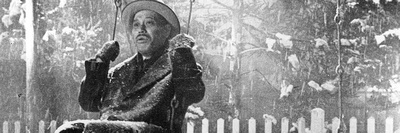
Since I mentioned in my introduction 'Ikiru' , I say goodbye to Jackie Turner with a peaceful image, an echo of Mr. Watanabe swinging in an empty playground on a snowy night.
They sat there on the lawn in the warm summer night, in the quiet grace of the moon, and the stars faint in the bright light. It was windless, still, and silent. Around them, in the dormitory suburb, the world slept.
The Chequer Board is my first foray into the works of Nevil Shute and I reckon it was pretty good. The story was easy to read and the story telling was engaging, with plenty of dialogue and nothing too fancy going on – it is a good story to get your teeth into, nothing more and nothing less.
The main character is a guy called John Turner, who’s a little dodgy – but not horrible. As a WWII solider he ends up in a military hospital with three other men. A British pilot who thinks a lot of himself, a lower rank soldier who is being accused of murder and an American black man accused of rape/sexual assault.
The reason Turner is in hospital is he has shrapnel fragments in his head which are inoperable. Many years later he is told he has a year to live. This is when things get interesting. Turner decides to find out what the three other men he was hospitalised with are up to and if they are doing okay. He feels some sort of obligation to assist them if they are struggling in life. The reason being, they helped him so much during his period of convalescence.
A considerable part of this book is about acceptance, particularly between white people and people of colour. It’s also about understanding – for example, those in the West assuming all people who live in so-called third world countries are miserable, uneducated and in need of rescuing. For those of us who have spent some time living with people in such countries we know that is far from the truth.
So this story about a man on a journey of self-discovery which is not unusual for a person who is given news they have a terminal illness. Chequer Board is a worthwhile read and it certainly wont be the last Shute book I delve into. Oh, one other thing, it did take me a while but I finally worked out what the title means – now I’ll check out the reviews of other GR members and see if I’m right!!
Personally, I think it is hard to know which of Shute’s books to read. He has many and some are much better than others. This is one of his best. Do not miss it.
Shute has a particular style which is easy to recognize once you have read a few of his. I am by no means saying the stories are similar or repeats of each other. The characters are sensible, ordinary people easy to relate to. Morality and good, common sense lie at their core. Factual details blend in and pepper the tales.
John Turner, on being told by his doctor that he has one year left to live, sets out to discover what has happened to the three other men with whom he shared the hospital ward in Penzance, Cornwall, England, after having been shot down by German aircraft during the Second World War. I am not going to tell you a lot about the plot, read the story instead!
Each man’s story is well told. You come to know the men as unique individuals with interesting and diverse life stories. The interweaving of the stories is well executed too. Few authors can tie separate stories together with such skill. The book as a whole is not lopsided. It holds together as an entity in itself.
No confusion arises in Shute’s telling. He makes the events clear and easy to follow despite there being four different stories. An American reading the story has no trouble with the British terms.
The legal defense of one of the men took my breath away. It was so eloquent! Where is the blame to be placed if a soldier, starting at a young age, has only been taught how to efficiently kill? So impressed am I by the sound reasoning and elegance of the prose here that I have considered giving the book five stars.
In a book focused on war and mixed marriages, the author was still able to add humor. Not an easy task! In one couple, husband and wife are of different races. In another, culture and skin color constitute the mix. Had there been a contagious bug in the ward they shared?! I hope you see the humor.
Shute, in this novel, also plays with words. As the story unfolds, we think about checkerboards, a chequer board, drafts, draughts and draftsmen. A metaphor is drawn. It is cleverly used and provides food for thought. Cultural similarities and differences are brought to the fore.
This is an excellent book. Character portrayal is strong. The prose is better than usual for Shute. Its antiwar stance and support of racial equality is effectively shown through the event as they play out in the tale. Also, the reader learns fascinating tidbits about Burma / Myanmar.
Can I think of something that should be improved? In fact, no!
The audiobook is very well read by Paul Panting. He doesn’t overdramatize, yet he consistently matches his intonation to the person speaking. The narration is also worth four or five stars. You choose. I can’t make up my mimd
This is an especially good one by Shute. Don't miss it. At the moment, I am thinking it is my favorite.
Nevil Shute has done it again. He's written a very interesting and captivating novel principally about second chances, dealing with death and man's humanity vs. inhumanity towards his fellow men. His usual old fashioned story telling is on display. With this book the main protagonist takes more than one journey. If the beginning seems a bit slow just keep reading and you'll become completely engaged in the life of several of the characters. Writing anything else will lead me into spoiler territory.
Warning: The N word is used a lot during one section of the book. It was disturbing but Shute was making an important point about racism in the states vs England during WWII.
Highly recommended, though not for first time readers of Shute.
The more books by Nevil Shute that I read, the more I come to recognize that he is one of the best story-tellers ever. I've enjoyed so many of his books so far; The Far Country, On the Beach, Pied Piper, etc and as I've been slowly exploring his works, I'm enjoying him more than ever. The Chequer Board, published originally in 1947 was no exception. It is set after WWII and tells the story of Capt (Ret'd) Turner. Turner was injured during the war, while on a flight from Africa to England to be tried for black marketeering. On the flight were other personnel, including a Negro American soldier (on his way to be tried for attempted rape), a young English Commando (on his way for court martial for murder) and the English co-pilot. These four survive the attack by German fighters. After the war, Turner is now being treated for the effects caused by his injuries (pieces of shrapnel still lodged in his brain). He is told that nothing can be done due to the location of the shrapnel and he has maybe a year to live. This starts Turner on a journey to find the other three men, all of whom kept him company while he recovered from his surgeries, and all of whom have moved on. it's a simple story, but the journey to find out what happened to these men and the internal journey of Turner, his past, his relationship with his wife, etc, makes for a fascinating and at times very emotional story. There are other issues that are touched on; the treatment of African - Americans in the US military, how the English impacted those countries that they ruled over, etc, but it is the stories of each man that is so interesting and the emotional stories as well. Shute has such a knack for addressing these emotional touches, that you probably don't realize how much you have found yourself becoming involved in the sub-stories, until the end. I do find that this story, like so many others Shute stories I've read, always strike my heart and soul, lovely to read and to think about. (5 stars)
Nevil Shute has by now, in this his twelfth book, broken into his stride and is indeed now ‘A Prince of Story Telling’. This is a beautiful read with scenes in exotic locations. It tells of a man, John Turner, who has not long to live. His past is a little chequered, as are those of the other characters. He decides to track down and help three men who had been good to him when he was down on his luck and at death’s door: One, an American black man accused of rape of white girl in Cornwall, another, an upper-class ne’er-do-well whose future looks bleak, and the last one, a British soldier accused of murder after beating a man to death after an argument in a London pub. Turner sets off to find these men and they each have a fascinating story to tell. Shute shows himself to be a man who cares about race relations, and well ahead of his time (this was written in 1946). He’d likely be sickened to see how race is used by politicians as a weapon day in and day out in today’s world.
Jackie Turner, has been experiencing blackouts and difficulty with his coordination, a result of having been injured in a plane crash during WWII (the book is set a year or two after the end of the war). When Turner is sent to see a specialist by his GP he learns that he has some shrapnel in his head from the crash that could not be safely removed. The doctor's diagnosis is that a piece of metal is causing the brain issues and that it remains inoperable -- Turner will die within a year or so.
Facing death, he realizes there are a few things he desperately wants to do before he goes -- primarily, to look up the three men who were in the hospital ward with him after the crash.
'The Chequer Board' was first published in 1947 and is a remarkably powerful stand against racism. It deals with both America's dismal treatment of its own black soldiers, and Britain's deplorable treatment of her colonies. Shute regularly uses the N-word (very regularly) but makes clear that it is offensive, and that his black characters perceive it as so. This was no doubt right for the time but in today's hopefully more enlightened age can be very off-putting and hard to read.
But be warned, despite Shute appearing to be fiercely anti-racist (in 1940s terms at least) he certainly doesn't appear to have been a feminist. However, I found Shute's writing style immensely engaging and if a little contrived the message was hopeful and inspiring with all the characters treated with sympathy. Overall I found it an enjoyable read.
I was initially puzzled about why this book would have been titled Chequer Board. By the end of it, I had a vision of my Daddy’s checkerboard in front of me, the alternate squares of black and white, and it all made sense.
Parts of this story made me very uncomfortable, mostly because of the language, and yet it was true to its time and therefore it is not the language that really makes you squirm, it is the reality of the situation. Even the kindly disposed here use the “N”epithet, and it reinforces how deep-seated the racial divide was in 1945.
As Shute often does, the chosen setting here is World War II Europe and the aftermath of that war for the soldiers who survived. Captain Turner has a head wound he received when a plane he was being transported in was shot down. The wound did not kill him during the war, but the shrapnel that was not removable is shifting and his days are now numbered. Along with his realization that he is not going to survive much longer comes a desire to know what has happened to the other three men that were in the hospital ward with him in Penzance and to render them help if it is needed, since he feels he has enough to share something before he goes. One of those men was a black American soldier who had been accused of raping a white girl, one a soldier accused of murder, and the third the pilot of the crashed plane, who deeply resented being on the same ward with the black man.
As the stories of the men unfold, the color line is explored and the prejudices of both the white Americans and the more-tolerant British are exposed. While the Americans are mostly made to seem vile and are largely caricatures, it is the British attitude and characters that interested me. Shute knew the British mindset and, while they were much more welcoming and accepting of the Black Americans, they were just as intolerant of people of color from their colonies. In this case a young lady from Burma is front and center.
I think when reading this kind of book, you absolutely must discard your modern perspective and try to imagine the times and the pressures of those times. It is a time of change and people who have never had any real contact with those of different ethnic backgrounds are suddenly surprised to find that what they have always believed is not necessarily the truth.
This is one man’s odyssey. He sets out to find one thing and ends up finding another. Shute’s nod is to the decency of the common man. Captain Turner is a great illustration of that.
As Nay Htohn says of him:
He is a good man, and will climb up to the Six Blissful Seats. He has known sin and trouble and it has not made him bitter; he has known sorrow and it has not made him sad. In these last months that have been granted to him he is trying to do good, not to avoid damnation, for he has no such beliefs, but for sheer love of good. Such a man will go on up the Ladder of Existence; he will not fall back.
Setting: England & Burma; 1940's/1950's. Originally published in 1947, this novel tells the story of John Turner and three other men that he met whilst in a hospital in Penzance, Cornwall in 1943. The novel begins with Turner attending the Harley Street surgery of specialist surgeon Mr Hughes after being referred by his G.P. In consequence of a wound he received in 1943 after his plane was attacked by a German fighter, which resulted in him being operated on in the Penzance hospital, Turner is now suffering increasingly debilitating symptoms. When Mr Hughes tells him that his condition is inoperable and he only has a year to live, Turner thinks back to the three men he shared a ward with in 1943 and wonders what has happened to them since then - one was a Black American G.I. who had attempted suicide after being accused of attempted rape, one was a paratrooper accused of murder and one was the second pilot in the plane that Turner had been travelling in and injured in the crash landing. Setting out to find these men to see if they are okay or need some help before he dies, Turner ends up relating or hearing the stories of each man, both before their hospitalisation and afterwards, even ending up travelling to Burma to visit one of them... This was an excellent story but very much of its time. It would appear to be an early, and pretty ham-fisted, attempt at denigrating racial prejudice and demonstrating that 'coloured people' are 'every bit as nice, if not nicer' than many white people - indeed, the black characters in the book are shown in a consistently good light whereas many of the white characters show various degrees of prejudice against them. What was quite shocking to me - and I then had to remind myself when it was written, but even so! - was the repeated use of the word 'n****r' and, if not that, 'N*g*o', which was really quite hard to take. Even when Turner, towards the end of the book, said to his wife that 'there don't seem to be nothing different at all between us and them, only the colour of the skin' (hallelujah!), his wife then had to point out that the characters he was referring to 'were educated ones' so probably 'different to the general run of coloured people' - OMG, talk about shooting your argument in the foot!!! Nevertheless, I did enjoy the stories of the various characters, clearly having to make allowance for the attitudes of the time when it was written - 8.5/10.
I have read quite a bit of Nevil Shute in the last few years, in part because the stories are very enjoyable, and in part because his characters have a romantic and very attractive quality about them. They are good people.
This story more than any other makes me wish I could have met the man and understood how he became such an unusual and frankly progressive voice.
Reading this book today, some might be put off by some language (liberal use of the N word by white characters) but it is an honest portrayal of mid-20th century language in small town UK. Others might find the story romantic to the point of sounding like a Pollyanna, until you recall that it was written in the late 1940's. His ideas about race and the ultimate unimportance of race when it comes to personal friendships were so far ahead of his time that I am curious to know how it was received then. According to one article, "In a letter written just before his death in 1960, Mr. Shute admits he thought that his handling of the racial issues would ruin book sales in America". Apparently it did not, which in itself would be an interesting story.
I highly recommend this book, and wish it were among the canon for Black History Month.
Warning....if you are uncomfortable with seeing the N-word in print, then you might struggle at times with this book. But it's only ever used to reveal prejudice and 1940s racial attitudes in America. Don't be put off or you will miss a little-known gem. I'd frankly never heard of this book until I started my current trawl through the Shute canon but I am delighted to have found it. This is a set of morality tales on a Chaucerian scale. Based on 4 disparate servicemen who end up in the same ward of a Cornish hospital, Chequer Board (2 of the characters play draughts, or chequers, in an allegorical reference to the book's inter-racial themes) tells their stories and that of several other minor characters during and after WW2. The action switches from isolated English villages through London suburbs to the Bay of Bengal and the jungles of Burma to point up a series of examples of why the least interesting thing about any of us is our skin colour or our tribal background. At times I felt this seemed a radical and untypical work for an author who came from a background of wealth and privilege.......or are my own prejudices showing?
It seems that every book I read by this author is better than the ones before. That's probably not true since I have thoroughly enjoyed all of them, including this gem. So far I have never been disappointed and plan to listen to all that are recorded as audiobooks. Perhaps, if I can ever find time to sit down and actually read a print book, I'll delve into even those that are not.
I am always sorry when I finish a Nevil Shute novel even though I compulsively listen as often and as long as I can which causes me to leave these wonderful characters sooner than I would like. And yet, each tale ends as it must and at the proper time. This one did as well.
What a treasured legacy this author has left, for me at least!
A lovely little book on how life deals with 4 down-on-luck young men who were together in a hospital. Brings your faith back on humanity and second chances. This is my first book by Nevil Shute. He has a very pleasing way of writing and the story moves forward smoothly. The characters are well drawn and they pull you in.
This book is straight out of the silver linings club and I am glad I read this. Every time you find yourself down and out, you draw strength from your reserves, for you hope you will be alright even if you don't see it then.
Captain Turner, now a civilian, has been diagnosed he has roughly a year to live due to an older war injury. He has come a long way since the injury in 1943 and can even accept he has enough to leave for his wife. To keep himself from being saddled down - he tries to find 3 people who shared a room with him at the hospital - to whom life had shared the worse cards. He wants to know how they are and help them out in anyway possible.
One of them is an RAF captain whose wife was cheating on him. Tracing him takes to Burma and this lion's share of the tale is a heart warming one of revising your biases.
The story of the black soldier who had attempted suicide when he was accused of rape in the town of Trenarth. This is one of the beautiful stories of a British town accepting and siding American black soldiers against the racism they face in the army.
The third patient was to be tried for murder of a civilian after a bar fight. And this story offers a brilliant legal argument.
The positivity in a seemingly melancholic tale is like the warm sun during a cold winter morning. And the attitude of the characters and the basic goodness is endearing. Despite set in the war times - this is not a story of war.
A brilliant read. Loved every bit of it. I still treasure my memories of A Town Like Alice which I read back in my teens. That and the blurb prompted me to BR this. I read it in paperback with a beautiful red cover which added to the pleasure. The storyline is simple. A man who is given only a few more months to live by his doctors goes in search of some comrades who had shared bad times with him. This is their story as well as his and each one had its charm. I thought that the Burmese woman had traces of the heroine in A Town Like Alice. My type of book.
This is...just a really, really good book. It looks at racism, and when I say "looks at", I mean that it plonks you down in front of it and says "This is what it looks like. This is what a racist looks like. And this is how they change. Very slowly, in some cases very painfully, but change can happen." It's an acknowledgement that the world moves on, that everything you've been taught can in fact be wrong, and the protagonist (who is dying) can find the strength to change his ways of thinking a bit even knowing that this changing world isn't going to be one he inhabits.
Please note that, as a book that deals with racism against Indonesians/Indians, Japanese, and African-Americans and was written by a white dude in 1947, there is a lot of horrible language, casual slurs, and turns of phrase repellent to a modern reader. However, as characters learn and grow, the language shifts, and there are several moments of "Is *that* what I sound like? UGH."
Another very touching and realistic story written by Nevil Shute.
5* A Town Like Alice 2* On the Beach 4* Pied Piper 4* Landfall 4.5* Most secret 4* Marazan 3* Requiem for a Wren 4* No Highway 4* The Chequer Board TR The Rainbow and the Rose TR Trustee from the Toolroom
Dear heart, I wasn’t ready for this one to end. I’ll write more later.
I adore Nevil Shute. He truly is a story teller; he draws me into the setting and the characters and I can visualize everything in the story. Sometimes I wake up early in the morning and read in bed and one morning I truly had to blink a few times when I stopped reading; I was in my own bedroom when I was sure I had just been in Burma. Shute is that good.
This is a story about love, forgiveness (one episode ranks right up there with the priest's forgiveness of Jean Valjean in Les Miserables), acceptance, and putting one foot in front of the other in difficult circumstances. It's about learning to see people and the world through different filters than those we've grown up with. (In my own life I call that learning to see people as God sees them).
This is a book that I would highly recommend. In fact, I look forward to re-reading it. It would be a superb Book Club read. And now for a caution; there is some language in this story that I find offensive but as one of my GR acquaintances says - Shute gets a 'sign of the times Hall Pass' for this language. Plus, unfortunately it is necessary to demonstrate what the thinking was like at that time. We won't progress unless we address difficult issues. And so unreservedly I give 5 stars.
Gripping from the first page. The tale of a terminally ill retired army man, who then tries to connect back to 4 of his mates with no contact since their army time together. The bonding they shared, and their background stories of how they all fared in life is heartwarming. Strong cultural references of Rangoon (now Burma)
The essence could be lost in modern day with superhumans on social media :)
Published four years previously, this novel in many aspects anticipates themes developed more fully in "Round the Bend": the necessity of change in traditional British class attitudes following the social upheavals of the Second World War, and the iniquities of and harm caused by racism and prejudices based on skin colour and nationality. It also explores the deepseated changes in people whose lives have been radically transformed by their personal experience of war.
The principal character, Jack Turner, is, as in the later book, a man of undistinguished origins and little education, who has found himself promoted through the fortunes of war to a responsible British Army officer's rank, only to find himself on the wrong side of the law when a dishonest moneymaking scheme - the latest of several, we are given to believe - is discovered and he is disgraced and sent home from his overseas posting for trial. The plane carrying him is shot down, and he suffers a serious shrapnel injury which necessitates hospitalisation. On a guarded ward he becomes acquainted with three other men in varying types of trouble - the pilot of his plane, who has a disastrous marriage; a Marine injured in a street fight in which he killed his adversary; and a black American GI who has attempted suicide after being accused of the attempted rape of a white woman. Three years later, after the end of the War and once more at liberty, he learns that his inoperable injury is causing progressive and fatal neurological damage, and conceives the notion of seeking out his hospital companions to find out what has happened to them before he dies.
The rest of the book deals, therefore, with the particular consequences of each man's personal circumstances both during and after the War. The pilot, Philip Morgan, betrayed by his cynical and selfish wife during his absence on service, has found himself in Burma where, shot down again, he befriends a group of local partisans fighting the Japanese invaders, while remaining deeply suspicious of their former British imperial rulers. He finds himself greatly in sympathy with their culture and religion, and falls in love with a young woman there. After the war and his repatriation he makes his way back and enters wholeheartedly into the life of this new home, overcoming in himself the ingrained colonial and ethnic prejudices of his background, and finding the stability and moral values of Burmese society far more congenial than that from which he has come. This is where Turner finds him, and it serves as an education to him as well. Although Turner himself is not portrayed as a man of much imagination or ambition, he has learnt a tolerance and openmindedness, perhaps as a result of his impending death, which enable him to sympathise with everyone with whom he comes into contact. A local Buddhist holy man proclaims him a genuinely good man, although the reader knows that Turner would have absolutely no idea why he should deserve that estimation.
The story of Dave Lesurier, the black GI, is without doubt the most distressing, and also the most difficult for a modern reader to take in. He is frequently referred to, even by those sympathetic to him, as 'the nigger', which, although it would have been a fairly common and thoughtless way for a white to describe a black person at the time, Shute almost certainly uses in a way which acknowledges its callous, objectifying, demeaning nature. The crime of which Lesurier is accused consists in nothing more than trying somewhat clumsily to kiss an inexperienced young woman with whom he has become infatuated, an incident deliberately and maliciously exaggerated and spun into something it was not by white Military Police officers determined to maintain segregation of black and white soldiers even in a civilian setting in the UK. The contrast between the racial attitudes prevalent among his fellow-countrymen, and the lack of these in a Cornish village which had probably never encountered black people before, forms the background to this story. The good-natured stubbornness of the local pub landlord, who refuses to agree to the 'colour bar' demanded by the US military authorities, and bans white soldiers from his premises instead, on the grounds that they behave badly in the presence of their black colleagues, is a touch of comic lightness in a serious situation.
The third man sought by Turner, Duggie Brent, does not get as much attention from Shute as the others, but his case is one that is nevertheless presented as relevant to what must have been the experience of many servicemen both during and immediately after the war. As a commando, he has been trained to kill unreflectingly in unarmed combat, a technique which makes him an efficient soldier but, in a non-combat situation, greatly blurs the line between intention and recklessness which distinguishes murder from manslaughter.
This, then, is, as always with Shute, a thoughtful and humane novel of flawed people and hard experience. Concentrating as it does on individual, localised experience, it shows their specific, practical responses to their conditions - not always clear-sighted, sometimes mistaken, but always believable. Nevil Shute had a great gift for making optimism convincing.
This is a really good story about four men who survive a plane crash during World War II and are together in a hospital ward in Cornwall, England.
Jack Turner is one of these men. He is operated on to remove shrapnel from his head. Unfortunately, three items are embedded deep in his brain and can't be removed safely. Many years later, this shrapnel begins to affect Jack's body and he starts to get bad headaches and lose the sight in one of his eyes.
He's given a year to live and decides to find out what happened to the three other people he was in hospital with. He discovers their stories and finds that they're happy, having overcome many obstacles in their lives. During this time, Jackie grows closer to his wife, even though his life is slowly ebbing away.
It's a heart-warming tale and shows what we miss when we lose contact with those around us and with friends from years ago.
I thoroughly enjoyed this story and Nevil Shute has used a pleasing technique to create this novel. It begins in a brain surgeons consulting rooms in England and he is visited by an ex-Army officer. It turns out that he was one of four men who were together for a short period of time in a hospital ward in England, following the crash-landing of an aircraft which occurred during WW2. Each of the men has a story and our ex-Army officer becomes the main character as he seeks to track down the other three and he has a very good reason to do so. One of the men now lives in Burma and our officer becomes rash enough to decide to fly there by flying-boat and see if he can locate him. Life in Burma is a completely new experience for him and it is well described. The man in Burma in his turn becomes the first person and we become involved with his life. Our ex-officer returns to the UK and we then have two further characters and their first-person stories. We also encounter the US armed forces living in a village in England as they build a new airport during the war. This exposes racial tensions, particularly amongst the Americans themselves. All links together in a very well-rounded story. This was the best of the set of stories by Nevil Shute that I read.
Shute is best known for On The Beach, a book many people hate because it begins with the understanding that all of the characters you're getting to know and understand are doomed to death quite soon. I've never seen that one as as bleak, because I never picked up that sentiment in his writing - I always saw the lives his characters lived to be lessons about getting the most meaning out of the days we have left. Because, as Jackie Turner says in this book, "It's all the same in a hundred years..."
So I'm glad Shute wrote another book centered around a dying character. Shute wasn't afraid to write plainly about the personal process of dying, and you know what else he wasn't afraid of writing about, in 1945-6? How messed up American race relations were.
There aren't many more Shute stories for me to read before I run out, but I'll probably start re-reading them all over again once that happens. They are simple stories, but they remind me to be human.
A novel written in 1947 yet still eminently readable today. It is really four stories in one. Four servicemen are hospitalised during World War II for various reasons and form an unlikely friendship as they chat and read to one of the men, Captain Turner, who has been temporarily blinded. After the war, Mr. Turner discovers that three pieces of shrapnel in his brain/skull cannot be surgically removed and that he will die in less than a year. He sets out to discover what has become of the other three men in the ward and their stories, both during and after the war, form the remainder of the book. It poses a number of questions - would one of the men have committed a violent act if he had not trained as a commando and given reflexes that enables him to kill an enemy quickly, silently and very efficiently? Would the black American GI have achieved the life he eventually does, not in the American Deep South but in a rural district in the UK where he is accepted for the good man that he is and where the colour of his skin is not an issue. Colour is a significant part of the story and it is interesting that, in the 1940s, the N-word was acceptable in literature, albeit used pejoratively, whereas the F-word that is now becoming commonplace in books and films was replaced by the words "muck" and "mucking" when used in an appropriate context in Shute's story. This is a gentle but interesting read.
Description: John Turner, a young man with a checkered past, has been told he has just one year to live. He decides to use his remaining time in search of three very different men he met in the hospital during the war, each of them in trouble of some kind: a pilot whose wife had betrayed him, a young corporal charged with killing a civilian in a brawl, and a black G.I. wrongly accused of the attempted rape of a white English girl. As Turner discovers where these men have landed on the checkerboard of life, he learns about compassion, tolerance, and second chances, and overcomes his fear of death.
TF An Old Captivity (1940) TF Pied Piper (1942) TF Pastoral (1944) TF Most Secret (1945) CR The Chequer Board (1947) 3* No Highway (1948) 4* A Town Like Alice (1950) 3* Round the Bend (1951) 3* The Far Country (1952) TF In the Wet (1953) 3* Requiem for a Wren (1955) 4* Beyond The Black Stump (1956) 4* On the Beach(1957) 5* Trustee from the Toolroom (1960)
Nevil Shute is one of my favorite mid-century novelists: his view of the world is refreshingly clear, if dated, the views of a white Englishman who has lived through world wars, designed aircraft, and has decided opinions about the value of work and the evils of prejudice.
This novel, about Jackie Turner, a somewhat feckless salesman who receives a terminal diagnosis and finds himself tracking down the men with whom he shared a hospital/prison ward during WWII, offers a straightforward plot and redemption for nearly all of its characters.
It's on the nose when talking about racism, even while characters use the historically-common n-word. Still, his sincerity, I think, in portraying the unfair treatment of Black servicemen in the US military may redeem the use of the word.
The Chequer Board is a novel about prejudice, racism, and intercultural/interracial marriages set during World War 2, and in the fifteen years after. Half the novel is set in England, and half is set in Burma. The novel is extremely inspiring as all the characters turn out to be exceptional men with interesting histories
Early in the novel, four men go through a difficult experience and are housed together in a hospital for about six weeks. About 15 years later, the main character is given less than a year to live, and decides to track down his former ward-mates from the hospital. Every bit of the story is fascinating. Definitely a five-star book, and very difficult to put down at each reading.
After a severe head injury suffered during World War II, ex-British soldier Jackie Turner learns he has a year to live. During that time, Turner is determined to visit the other patients who were with him in a military hospital: Morgan, a British RAF pilot; Brent, a British Commando accused of murder; and a Black American serviceman named Lesurier accused of rape. Much of what happens stretches believability, and while I admire Shute for addressing issues of racism, the novel has problems. The end result shows that everything in the story was orchestrated to lead readers to embrace Shute’s particular philosophy/worldview. (The book also includes heavy use of the N-word.)