

What do you think?

The Mirror Realm Cycle #1
The Pomegranate Gate
Two worlds bound by a pomegranate gate…
Toba Peres can speak but she can’t shout; she can walk but she can’t run; and she can write in five languages… with both hands at the same time.
Naftaly Cresques dreams every night of an orange-eyed stranger; when awake, he sees things that aren’t real; and he carries a book he can never lose and never read.
When the Queen of Sefarad orders all the nation’s Jews to leave or convert, Toba and Naftaly are forced to flee, but an unlucky encounter leaves them both separated from their caravan. Lost in the wilderness, Toba follows an orange-eyed stranger through a mysterious gate in a pomegranate grove, leaving Naftaly behind.
With a single step, Toba enters an ancient world that mirrors her own. There, she finds that her fate—and Naftaly’s—are bound to an ancient conflict threatening to destroy both realms.
Toba Peres can speak but she can’t shout; she can walk but she can’t run; and she can write in five languages… with both hands at the same time.
Naftaly Cresques dreams every night of an orange-eyed stranger; when awake, he sees things that aren’t real; and he carries a book he can never lose and never read.
When the Queen of Sefarad orders all the nation’s Jews to leave or convert, Toba and Naftaly are forced to flee, but an unlucky encounter leaves them both separated from their caravan. Lost in the wilderness, Toba follows an orange-eyed stranger through a mysterious gate in a pomegranate grove, leaving Naftaly behind.
With a single step, Toba enters an ancient world that mirrors her own. There, she finds that her fate—and Naftaly’s—are bound to an ancient conflict threatening to destroy both realms.
570 pages, Kindle Edition
First published September 26, 2023
Ratings & Reviews
Friends & Following
Create a free account to discover what your friends think of this book!
Community Reviews
Displaying 1 - 30 of 660 reviews
July 5, 2023
✨🪞🌿If you’re looking for a new fantasy series with delicious characters, world-building, and politics featuring queer and Jewish rep, what are you waiting for???🌿🪞✨
Thank you to the publisher for sending me an ARC of this book in exchange for an honest review!
The epic fantasy journey of City of Brass meets the atmospheric charm of Studio Ghibli in this opening to an immersive Sephardic Jewish fantasy trilogy.
I love this book’s blurb, so I won’t fix what isn’t broken: “Toba Peres can speak but she can’t shout; she can walk but she can’t run; and she can write in five languages… with both hands at the same time.
Naftaly Cresques dreams every night of an orange-eyed stranger; when awake, he sees things that aren’t real; and he carries a book he can never lose and never read.
The Queen of the Sefarad has ordered all Jews to convert, or be exiled with nothing. Toba, Naftaly, and thousands of others are forced to flee their homes. Toba, accidentally separated from their caravan of refugees, stumbles through a strange pomegranate grove into the magical realm of the Maziks: mythical, terrible beings with immense power. There, she discovers latent abilities that put her in the crosshairs of bloodthirsty immortals, but may be key to her survival. On the other side of the gate, Naftaly, intent on rescuing Toba, finds his new companions harbor dangerous secrets of their own.
Now, hunted by an Inquisition in both worlds, Toba and Naftaly must unravel ancient histories and ancient magics in order to understand the link between the two realms. More than their own lives might be at stake.”
Following Toba as she learns there may be more to herself than she’s known, Naftaly as he’s accompanied by unlikely companions on a quest to keep his book safe and find Toba, and a third character called the Courser—an assassin and the right hand man of the leader of the magical world’s military—this book takes us across worlds: mortal and magic alike.
The Pomegranate Gate is hard to assess as a story on its own. Whereas most individual books within a trilogy can stand as a complete narrative structure, Kaplan uses the trilogy format to stretch out a singular tale across a series. And so my impression is incomplete, as I am left to analyze only a fraction of a story, like taking in a painting that’s missing two-thirds of its canvas. I can certainly pick apart the brushstrokes or the technique, but without the completed frame, the whole image is still unclear. But despite this book feeling firmly like an Act 1, I absolutely adored this introduction to the Mirror Realm Cycle.
Because of this stretched out format, I won’t deny that the pacing was slow. But I personally love a slow pace when it serves a story, and this slow pace didn’t drag, but rather was reminiscent of a long-form of oral storytelling long forgotten to that of childhood bedtime stories. I think some people might find this pacing difficult, especially while juggling the constant overwhelming political cloud of a new fantasy world. But I found it enticing and it reminded me of Shaharazad, and the way she famously trailed her stories along like feeding someone a pomegranate seed by seed, teasing the listener with just enough of the tale to keep them hooked, but leaving them undeniably wanting more. Even at the times I found myself feeling a little directionless navigating this story, I couldn’t get the world and its characters out of my head, and found myself hungry for more.
Its elements are well-structured and bewitching, and despite my incomplete impression, I can comfortably gush about the many factors that have pulled me into this world.
Toba is a fascinating character with an unbelievably full circle plotline considering the unfinished nature of this story, centering an allegory for neurodivergency (and most closely autism). I did find some of her screentime (for lack of a better word) to poorly used at times, as many of her scenes were spent pining over a character in a way that made me feel more frustrated than anything. And considering the nature of these two's relationship, I doubt romance is in their future, so I'm not sure why SO much of her time was spent centering him. But I will say, the parts of Toba apart from him were incredibly fascinating and dynamic. Naftaly is no less endearing as a character, foolish and bumbling and stubbornly well-intentioned, and his romantic subplot is one for the ages (and one for the TikTok videos using quotes to sell a book). Seriously, his romance is SO DELICIOUS and definitely my favorite part—I love some sad pining gays. The Courser, though, might be my favorite POV, as I can’t help but obsess over a character who enjoys beheading men and turning them into apples. Are you a fan of women with swords? Let me introduce you to a woman with a sword-arm.
The plot is dense and heavily political, and per the usual experience of being first introduced to a new high fantasy world, will make you think: “wow this book has too much going on” until suddenly it all clicks together. This narrative arc is definitely one that catches its readers off-guard, lulling you in with its slow pacing, and surprising you with twists that will leave you crying at the right moments, laughing at the wrong moments, and with your jaw glued to the floor for all of it.
Its Jewishness is found in the large, sweeping strokes of the world-building: the backdrop of a fantasy version of the Spanish Inquisition, a cast of Jewish characters, politics that center discussions around imperialism and greed and oppression of belief. But it’s also found in the small things, tucked into the crevices of this world: in the way the characters say “Hashem,” in the pluralization of certain words by using “im” and “ot” rather than “s”, in the characters’ dedication to each other despite the world trying to tear them apart.
It still feels wrong to rave about a story with unfinished thoughts, but I am without a doubt that once I read the sequel and especially the final book, this will be a 5-star read, and one of my favorite high fantasies. I love books that feel like they were written to last, the kind that leave a stronger impact as time goes by, and this will definitely be one of those for me.
Full of humor and intrigue and complex politics atop a cast of characters you can’t help but root for, The Pomegranate Gate is not quite what I expected, and may have left me more hungry than satisfied, but is undoubtedly a story I can’t wait to read more of. Both my waking and dreaming hours will be spent pining for the sequel and thinking about these characters.
(credits to my friends Robin and Viktoria for helping me put my thoughts together for this review by sharing theirs)
Content Warnings: antisemitism, genocide, death, character death, violence, blood & gore, torture, decapitation, imprisonment, death of father, ableism (via metaphor), child abuse, kidnapping, drugging, stroke, fire, burning alive, child death, suicidal thoughts, death by childbirth (mention, past), alcohol consumption, emesis
Thank you to the publisher for sending me an ARC of this book in exchange for an honest review!
The epic fantasy journey of City of Brass meets the atmospheric charm of Studio Ghibli in this opening to an immersive Sephardic Jewish fantasy trilogy.
I love this book’s blurb, so I won’t fix what isn’t broken: “Toba Peres can speak but she can’t shout; she can walk but she can’t run; and she can write in five languages… with both hands at the same time.
Naftaly Cresques dreams every night of an orange-eyed stranger; when awake, he sees things that aren’t real; and he carries a book he can never lose and never read.
The Queen of the Sefarad has ordered all Jews to convert, or be exiled with nothing. Toba, Naftaly, and thousands of others are forced to flee their homes. Toba, accidentally separated from their caravan of refugees, stumbles through a strange pomegranate grove into the magical realm of the Maziks: mythical, terrible beings with immense power. There, she discovers latent abilities that put her in the crosshairs of bloodthirsty immortals, but may be key to her survival. On the other side of the gate, Naftaly, intent on rescuing Toba, finds his new companions harbor dangerous secrets of their own.
Now, hunted by an Inquisition in both worlds, Toba and Naftaly must unravel ancient histories and ancient magics in order to understand the link between the two realms. More than their own lives might be at stake.”
Following Toba as she learns there may be more to herself than she’s known, Naftaly as he’s accompanied by unlikely companions on a quest to keep his book safe and find Toba, and a third character called the Courser—an assassin and the right hand man of the leader of the magical world’s military—this book takes us across worlds: mortal and magic alike.
The Pomegranate Gate is hard to assess as a story on its own. Whereas most individual books within a trilogy can stand as a complete narrative structure, Kaplan uses the trilogy format to stretch out a singular tale across a series. And so my impression is incomplete, as I am left to analyze only a fraction of a story, like taking in a painting that’s missing two-thirds of its canvas. I can certainly pick apart the brushstrokes or the technique, but without the completed frame, the whole image is still unclear. But despite this book feeling firmly like an Act 1, I absolutely adored this introduction to the Mirror Realm Cycle.
Because of this stretched out format, I won’t deny that the pacing was slow. But I personally love a slow pace when it serves a story, and this slow pace didn’t drag, but rather was reminiscent of a long-form of oral storytelling long forgotten to that of childhood bedtime stories. I think some people might find this pacing difficult, especially while juggling the constant overwhelming political cloud of a new fantasy world. But I found it enticing and it reminded me of Shaharazad, and the way she famously trailed her stories along like feeding someone a pomegranate seed by seed, teasing the listener with just enough of the tale to keep them hooked, but leaving them undeniably wanting more. Even at the times I found myself feeling a little directionless navigating this story, I couldn’t get the world and its characters out of my head, and found myself hungry for more.
Its elements are well-structured and bewitching, and despite my incomplete impression, I can comfortably gush about the many factors that have pulled me into this world.
Toba is a fascinating character with an unbelievably full circle plotline considering the unfinished nature of this story, centering an allegory for neurodivergency (and most closely autism). I did find some of her screentime (for lack of a better word) to poorly used at times, as many of her scenes were spent pining over a character in a way that made me feel more frustrated than anything. And considering the nature of these two's relationship, I doubt romance is in their future, so I'm not sure why SO much of her time was spent centering him. But I will say, the parts of Toba apart from him were incredibly fascinating and dynamic. Naftaly is no less endearing as a character, foolish and bumbling and stubbornly well-intentioned, and his romantic subplot is one for the ages (and one for the TikTok videos using quotes to sell a book). Seriously, his romance is SO DELICIOUS and definitely my favorite part—I love some sad pining gays. The Courser, though, might be my favorite POV, as I can’t help but obsess over a character who enjoys beheading men and turning them into apples. Are you a fan of women with swords? Let me introduce you to a woman with a sword-arm.
The plot is dense and heavily political, and per the usual experience of being first introduced to a new high fantasy world, will make you think: “wow this book has too much going on” until suddenly it all clicks together. This narrative arc is definitely one that catches its readers off-guard, lulling you in with its slow pacing, and surprising you with twists that will leave you crying at the right moments, laughing at the wrong moments, and with your jaw glued to the floor for all of it.
Its Jewishness is found in the large, sweeping strokes of the world-building: the backdrop of a fantasy version of the Spanish Inquisition, a cast of Jewish characters, politics that center discussions around imperialism and greed and oppression of belief. But it’s also found in the small things, tucked into the crevices of this world: in the way the characters say “Hashem,” in the pluralization of certain words by using “im” and “ot” rather than “s”, in the characters’ dedication to each other despite the world trying to tear them apart.
It still feels wrong to rave about a story with unfinished thoughts, but I am without a doubt that once I read the sequel and especially the final book, this will be a 5-star read, and one of my favorite high fantasies. I love books that feel like they were written to last, the kind that leave a stronger impact as time goes by, and this will definitely be one of those for me.
Full of humor and intrigue and complex politics atop a cast of characters you can’t help but root for, The Pomegranate Gate is not quite what I expected, and may have left me more hungry than satisfied, but is undoubtedly a story I can’t wait to read more of. Both my waking and dreaming hours will be spent pining for the sequel and thinking about these characters.
(credits to my friends Robin and Viktoria for helping me put my thoughts together for this review by sharing theirs)
Content Warnings: antisemitism, genocide, death, character death, violence, blood & gore, torture, decapitation, imprisonment, death of father, ableism (via metaphor), child abuse, kidnapping, drugging, stroke, fire, burning alive, child death, suicidal thoughts, death by childbirth (mention, past), alcohol consumption, emesis

September 20, 2023
While this wasn't a perfect 5 star rating, It's one that I keep constantly thinking about and is definitely a standout fantasy of 2023 for me.
If you're a fan of The Winternight Trilogy by Katherine Arden or S.A. Chakraborty's Daevabad trilogy, then I think you'll find a lot to love about The Pomegranate Gate.
If you're a fan of The Winternight Trilogy by Katherine Arden or S.A. Chakraborty's Daevabad trilogy, then I think you'll find a lot to love about The Pomegranate Gate.

Read
June 3, 2024Magnificent. An alt Middle Eastern/Persian/Jewish fantasy novel, with all the wonder and magic and complexity of the best fantasy. Families, secrets, the politics of a djinn type realm, and the historical
pogroms and persecutions of our world make for a really terrific whole. I absolutely inhaled this: the characters are so compelling, the story paced just right, and I am desperate for the next part. Excellent, immersive, richly detailed, terrific.
pogroms and persecutions of our world make for a really terrific whole. I absolutely inhaled this: the characters are so compelling, the story paced just right, and I am desperate for the next part. Excellent, immersive, richly detailed, terrific.

December 15, 2023
This is well-written, entertaining, fast paced, fantasy novel with historical elements. It has likable characters, imaginative world building, a complex plot, mystery, suspense, a touch of romance, and a satisfying, open-ended conclusion. I found it difficult to put down each night, and looked forward to entering this fascinating world every day! I am looking forward to reading the next entry in this series with great anticipation. Many thanks to Kensington Books, from whom I received a copy of this wonderful novel as a member of their Between The Chapters book club. This is my honest opinion.

October 29, 2023
This book has a lot of things going for it, but I’m sorry to say that the whole is less than the sum of its parts.
The setting is a great one. It’s set in a fantasy version of Spain in 1492. The Reconquista is over, and Christian rule has been reestablished over the entire Iberian peninsula. The kingdom’s Jews, who had prospered under Muslim rule, have been presented with a choice: either convert to Christianity, or leave the land where you have centuries-deep roots (and leave your money behind, thanks very much). Any practicing Jews remaining after the designated time will die. And even those who choose to convert have a hard time of it; the Inquisition is keeping a *very* close eye on them, because for some reason they think people who converted under threat of death might not have been entirely sincere about it.
The main characters are Toba, orphaned granddaughter of a translator, sickly and with no particular prospects; and Neftaly, a remarkably inept tailor. During their journey from their hometown towards fantasy-Portugal, Toba is quietly pulled away from the group by a bandit. Neftaly sees, and follows, but cannot find her. Toba has stumbled through a mysterious portal in a grove of pomegranate trees, and is in a world that mirrors our own in some ways, and is very different in others.
The story proceeds along two lines from here. Toba falls in with (essentially) the Fae, while Neftaly is trying to both find and rescue Toba and survive in a country that is rapidly becoming a very deadly place to be a Jew. Along the way, they both begin to learn about themselves and their heritage (which, it is not surprising to learn, is not entirely human).
For the most part, this is decent. There are some parts that drag a bit, but it’s not too bad. But the books fails in one major area: motivations. Why is Neftaly working so hard to find Toba? They’re from the same town, but they only knew each other in the vaguest of ways. And why are the Fae that Toba stumbles into on the other side of the gate helping and sheltering her? It’s made clear that they’re doing so at some degree of risk to themselves.
These are serious questions, and the lack of any good reason in either case undercuts the entire novel. Ultimately I finished it, but I’m not interested in reading the sequel.
My blog
The setting is a great one. It’s set in a fantasy version of Spain in 1492. The Reconquista is over, and Christian rule has been reestablished over the entire Iberian peninsula. The kingdom’s Jews, who had prospered under Muslim rule, have been presented with a choice: either convert to Christianity, or leave the land where you have centuries-deep roots (and leave your money behind, thanks very much). Any practicing Jews remaining after the designated time will die. And even those who choose to convert have a hard time of it; the Inquisition is keeping a *very* close eye on them, because for some reason they think people who converted under threat of death might not have been entirely sincere about it.
The main characters are Toba, orphaned granddaughter of a translator, sickly and with no particular prospects; and Neftaly, a remarkably inept tailor. During their journey from their hometown towards fantasy-Portugal, Toba is quietly pulled away from the group by a bandit. Neftaly sees, and follows, but cannot find her. Toba has stumbled through a mysterious portal in a grove of pomegranate trees, and is in a world that mirrors our own in some ways, and is very different in others.
The story proceeds along two lines from here. Toba falls in with (essentially) the Fae, while Neftaly is trying to both find and rescue Toba and survive in a country that is rapidly becoming a very deadly place to be a Jew. Along the way, they both begin to learn about themselves and their heritage (which, it is not surprising to learn, is not entirely human).
For the most part, this is decent. There are some parts that drag a bit, but it’s not too bad. But the books fails in one major area: motivations. Why is Neftaly working so hard to find Toba? They’re from the same town, but they only knew each other in the vaguest of ways. And why are the Fae that Toba stumbles into on the other side of the gate helping and sheltering her? It’s made clear that they’re doing so at some degree of risk to themselves.
These are serious questions, and the lack of any good reason in either case undercuts the entire novel. Ultimately I finished it, but I’m not interested in reading the sequel.
My blog

July 16, 2023
As intricately woven and rich in detail as a renaissance-era tapestry, The Pomegranate Gate is a cleverly written epic fantasy (and first in a new series) that blends Jewish inspired folklore and history into a world full of ancient magic and deadly secrets that will appeal to fans of Ava Reid, Naomi Novik or Hannah F. Whitten.
Set in a mythical version of inquisition-era Spain (called Seafarad), Ariel Kaplan’s adult fantasy debut follows Toba and Naftaly, two interconnected characters who are forced to flee their homes when the realm’s Queen demands all Jews convert to Catholicism or face expulsion.
Who inadvertently find themselves bound by fate, when Toba accidentally stumbles through a magical gate into another world and Naftaly (in possession of a magical book he’s forbidden from reading) has vowed—both to himself and Toba’s grandmother to help find her… before the magical realm’s very own, mortal-hating Inquisition does.
I really enjoyed reading this and loved the lyrical, dark fairytale style of writing, which expertly explores the themes of power, oppression, found family and the trauma of religious persecution through an historical, fantasy-esque lens that kept me glued to my seat (and emotionally invested) the whole way through.
I adored Toba, who was such an inquisitive and surprisingly driven protagonist who, much like Beaty and The Beast’s Belle, finds herself bargaining with and making headaches for the house’s surly master, Asmel —whose role as Toba’s reluctant mentor led to some humorous and rather entertaining scenes.
Though I admit, Barsilay (Asmel’s heir) did steal the show a little with his flamboyant antics and charmingly flirtatious demeanour. As did the well meaning but hopelessly naive, Naftaly, whose idealistic outlook and drive to do the right thing gets him into more trouble than he can handle—much to the chagrin of his grandmotherly travel companions.
The pace was a little slow (so do bear this in mind if that’s something to you don’t enjoy) however, the level of detail in the word building, it’s unique magic system and the exploration in both Toba and Naftaly’s backstories definitely made up for it.
So, if you love multilayered (and multi-POV) epic, historical-based fantasy that’s full of emotion and magic then you don’t want to miss this!
Also, a huge thank you to Casey at Solaris Books for the wonderful proof.
Set in a mythical version of inquisition-era Spain (called Seafarad), Ariel Kaplan’s adult fantasy debut follows Toba and Naftaly, two interconnected characters who are forced to flee their homes when the realm’s Queen demands all Jews convert to Catholicism or face expulsion.
Who inadvertently find themselves bound by fate, when Toba accidentally stumbles through a magical gate into another world and Naftaly (in possession of a magical book he’s forbidden from reading) has vowed—both to himself and Toba’s grandmother to help find her… before the magical realm’s very own, mortal-hating Inquisition does.
I really enjoyed reading this and loved the lyrical, dark fairytale style of writing, which expertly explores the themes of power, oppression, found family and the trauma of religious persecution through an historical, fantasy-esque lens that kept me glued to my seat (and emotionally invested) the whole way through.
I adored Toba, who was such an inquisitive and surprisingly driven protagonist who, much like Beaty and The Beast’s Belle, finds herself bargaining with and making headaches for the house’s surly master, Asmel —whose role as Toba’s reluctant mentor led to some humorous and rather entertaining scenes.
Though I admit, Barsilay (Asmel’s heir) did steal the show a little with his flamboyant antics and charmingly flirtatious demeanour. As did the well meaning but hopelessly naive, Naftaly, whose idealistic outlook and drive to do the right thing gets him into more trouble than he can handle—much to the chagrin of his grandmotherly travel companions.
The pace was a little slow (so do bear this in mind if that’s something to you don’t enjoy) however, the level of detail in the word building, it’s unique magic system and the exploration in both Toba and Naftaly’s backstories definitely made up for it.
So, if you love multilayered (and multi-POV) epic, historical-based fantasy that’s full of emotion and magic then you don’t want to miss this!
Also, a huge thank you to Casey at Solaris Books for the wonderful proof.

July 28, 2023
The Pomegranate Gate is truly a wonderful beginning to what is sure to be an enthralling and immersive Jewish fantasy trilogy. Set during the Spanish Inquisition, it follows the story of Naftaly and Toba as they traverse myth and legend and the magical court behind it all. As a portal fantasy, I loved the interwoven aspects of whimsical libraries and atmospheric courts and the nuanced, thoughtful investigation of identity and politics. Kaplan’s writing is both incredibly beautiful and wholly captivating and will really appeal to readers who enjoy their fantasy to come with a side of gorgeous prose. Although the pacing is slightly on the slower end (which I personally love) it didn’t take long to suck me in and I read the entirely of it in two sittings, as I didn’t want to leave Kaplan’s gorgeous world and personable characters.
Both Toba and Naftaly were wonderfully endearing, the secondary characters even more so. Yay, found family! Although the romance only began to develop in the latter half of the novel it was so beautifully done I am *still* thinking about some of the gorgeous bits of yearning between the characters.
Overall, The Pomegranate Gate is everything I like in a book. Historically influenced that delves deeply into politics and identity, a romantic subplot full of yearning, whimsically poetic writing and deeply atmospheric. It will appeal to fans of Strange the Dreamer, The Starless Sea and the Daevabad trilogy. Needless to say I am absolutely desperate for the next instalment!
Both Toba and Naftaly were wonderfully endearing, the secondary characters even more so. Yay, found family! Although the romance only began to develop in the latter half of the novel it was so beautifully done I am *still* thinking about some of the gorgeous bits of yearning between the characters.
Overall, The Pomegranate Gate is everything I like in a book. Historically influenced that delves deeply into politics and identity, a romantic subplot full of yearning, whimsically poetic writing and deeply atmospheric. It will appeal to fans of Strange the Dreamer, The Starless Sea and the Daevabad trilogy. Needless to say I am absolutely desperate for the next instalment!

Did Not Finish
January 27, 2024I’m not going to give this book a proper star rating because I don’t feel like I’ve read enough of it to do so, but this one was unfortunately a DNF for me.
I pushed on for a while to see if I could get into the story, even skimming to get ahead but it just didn’t draw me in. It’s one of those books that I can tell isn’t for me and so there’s no use forcing it. If I was in a bookshop, I might have picked this book up based on the synopsis, sat down in an armchair to read the first few chapters and then swiftly put it back on the shelf with no desire to buy it.
It might be because neither of the characters appealed or intrigued me straight away. Both of them seemed a bit ordinary and lost and I didn’t feel like I wanted to find out more about their lives.
I also don’t think the marketing is upfront about it being another Fae book 🙄 My least favourite fictional realm, and I probably would have stayed clear if this was made apparent.
I received the ARC on NetGalley in exchange for an honest review
___________________
another novel compared to ‘the bear and the nightingale’. big words, big words …
I pushed on for a while to see if I could get into the story, even skimming to get ahead but it just didn’t draw me in. It’s one of those books that I can tell isn’t for me and so there’s no use forcing it. If I was in a bookshop, I might have picked this book up based on the synopsis, sat down in an armchair to read the first few chapters and then swiftly put it back on the shelf with no desire to buy it.
It might be because neither of the characters appealed or intrigued me straight away. Both of them seemed a bit ordinary and lost and I didn’t feel like I wanted to find out more about their lives.
I also don’t think the marketing is upfront about it being another Fae book 🙄 My least favourite fictional realm, and I probably would have stayed clear if this was made apparent.
I received the ARC on NetGalley in exchange for an honest review
___________________
another novel compared to ‘the bear and the nightingale’. big words, big words …

November 25, 2023
3 Reasons To Read
- When you want unique mythology world building to surprise and delight you. The Novik x Katherine Arden comps feel accurate for this.
- You’re looking for witty banter.
- When you want to see the side characters steal the show.
3 Reasons to Pass
- If you tend to DNF clunkier paced & plotted books. (Maybe it would feel less clunky in the audio experience?) I would be so wrapped up in a scene and then I’d be thrown in a room where I had to double check the list of characters… like even 400 pages in.
- You hate waiting between books. Book 2 is slated for Aug 2024.
- When you are trying to speed read- this book made me take mini-breaks so I could digest it better.
————
3 for pacing
But a 5 for pure delightful creativity. I can’t wait to see where Kaplan takes this. This is series where I *think* book 2 will be stronger.
- When you want unique mythology world building to surprise and delight you. The Novik x Katherine Arden comps feel accurate for this.
- You’re looking for witty banter.
- When you want to see the side characters steal the show.
3 Reasons to Pass
- If you tend to DNF clunkier paced & plotted books. (Maybe it would feel less clunky in the audio experience?) I would be so wrapped up in a scene and then I’d be thrown in a room where I had to double check the list of characters… like even 400 pages in.
- You hate waiting between books. Book 2 is slated for Aug 2024.
- When you are trying to speed read- this book made me take mini-breaks so I could digest it better.
————
3 for pacing
But a 5 for pure delightful creativity. I can’t wait to see where Kaplan takes this. This is series where I *think* book 2 will be stronger.

January 6, 2024
now. i really liked this. like, a lot? more than i was prepared to.
unfortunately, my negative book reviews will never be as good as positive book reviews, unless the author did something spectacular technically. i am a simple girl. if you reach some baseline competency on a craft level, then all you have to do is have the stuff in the book that makes the primal, monkey part of my brain light up. which, ding ding ding, this book did. we are so back.
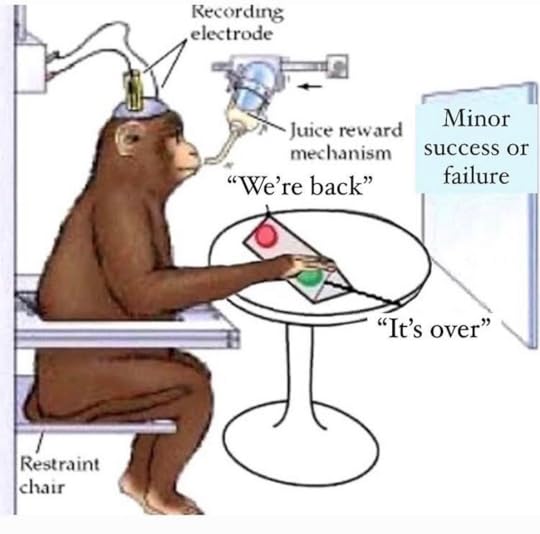
to me, the pomegranate gate was compulsively readable. very wonderful on audiobook. i simply press play and lulled into hours and hours of story that never felt too dragging or rushed. i was a bit apprehensive about the length because it's been a while since i listened to anything that long, but it was perfect. in fact, i was surprised it ended so soon.
i understand the comparisons to katherine arden. the style of the pomegranate gate reminded me a lot of the bear and the nightingale, though this book is much more involved and active than that one is. there is more going on, but it's languid in a way that makes you want to spend more time with the characters. i loved the main characters of toba and naftaly and their little crew. they were pookie to me.
the characters, by far, are the bright spots. the shining stars. if you do not vibe with them, you will not vibe with the book. on a structural level, honestly, their character arcs don't feel comprehensive or whole, but then again, the entire book feels like just the beginning of a much larger story. they're still endlessly engaging, mostly because each voice is distinct and bright and gives you a great sense for who they are. every interaction is bright and kept me wishing for more.
the external plot was kinda meh. there is a much larger political plot, but it feels so much less important than the internal stakes, what the characters wanted for themselves, so there was still a very strong driving force proppelling the novel forward.
though this is a jewish fantasy, the world and magic system feel very familiar. this could be a positive or negative for you, but i personally felt very neutral about it. the spanish inquisition is a particularly fansicnating era of history, and i appreciated the glimpse into that period from a jewish perspective, and how the book used its setting to prop up thematics.
also i'm gonna be 100% right now... the 11th hour yaoi got me so bad... not sure why i reacted the way i did. it really shouldn't have worked. but i think because i spent so much time with the characters apart, and they were put in such a vulenarable position together, that the escalation was believable. that entire third act gagged me so badly. oh i'm sick. that's what pushed it from a 4 to a 4.5 (rounded up).
this is a possible contender for my "joker for biracials" media list, but i will have to read the sequel to make sure. just found out this book came out like 3/4 months ago and feeling dangerously impatient. but i will wait.
unfortunately, my negative book reviews will never be as good as positive book reviews, unless the author did something spectacular technically. i am a simple girl. if you reach some baseline competency on a craft level, then all you have to do is have the stuff in the book that makes the primal, monkey part of my brain light up. which, ding ding ding, this book did. we are so back.
to me, the pomegranate gate was compulsively readable. very wonderful on audiobook. i simply press play and lulled into hours and hours of story that never felt too dragging or rushed. i was a bit apprehensive about the length because it's been a while since i listened to anything that long, but it was perfect. in fact, i was surprised it ended so soon.
i understand the comparisons to katherine arden. the style of the pomegranate gate reminded me a lot of the bear and the nightingale, though this book is much more involved and active than that one is. there is more going on, but it's languid in a way that makes you want to spend more time with the characters. i loved the main characters of toba and naftaly and their little crew. they were pookie to me.
the characters, by far, are the bright spots. the shining stars. if you do not vibe with them, you will not vibe with the book. on a structural level, honestly, their character arcs don't feel comprehensive or whole, but then again, the entire book feels like just the beginning of a much larger story. they're still endlessly engaging, mostly because each voice is distinct and bright and gives you a great sense for who they are. every interaction is bright and kept me wishing for more.
the external plot was kinda meh. there is a much larger political plot, but it feels so much less important than the internal stakes, what the characters wanted for themselves, so there was still a very strong driving force proppelling the novel forward.
though this is a jewish fantasy, the world and magic system feel very familiar. this could be a positive or negative for you, but i personally felt very neutral about it. the spanish inquisition is a particularly fansicnating era of history, and i appreciated the glimpse into that period from a jewish perspective, and how the book used its setting to prop up thematics.
also i'm gonna be 100% right now... the 11th hour yaoi got me so bad... not sure why i reacted the way i did. it really shouldn't have worked. but i think because i spent so much time with the characters apart, and they were put in such a vulenarable position together, that the escalation was believable. that entire third act gagged me so badly. oh i'm sick. that's what pushed it from a 4 to a 4.5 (rounded up).
this is a possible contender for my "joker for biracials" media list, but i will have to read the sequel to make sure. just found out this book came out like 3/4 months ago and feeling dangerously impatient. but i will wait.

December 31, 2023
I love Jewish inspired fantasy stories, and I also love ones with roots in Jewish folklore. As soon as I heard the synopsis of this story, I knew I had to read it.
This story takes place in a fantasy world and is based on the expulsion of Jews from Spain, as well as the Spanish inquisition. While this takes place in a fantasy world, Jews are still Jews in this world, complete with the same rituals and beliefs. It follows Toba and Naftalty, two Jews on an adventure as they are fleeing the land. Toba finds herself in another world, and Naftaly who has dreamed strange dreams his whole life, goes on a quest with two older women to try to find her. I preferred Toba's story to Naftaly's, but I enjoyed both and really loved several of the side characters. While this wasn't explicitly a humorous book, there were also several scenes that made me laugh out loud.
The best part of this book was seeing how the different story threads started to come together. I said to my friend I read it with that while this book wasn't perfect, I just knew that it would be even better upon rereading it as I would see even more clearly all the threads. I'm excited for book 2 and to see where this story goes!
This story takes place in a fantasy world and is based on the expulsion of Jews from Spain, as well as the Spanish inquisition. While this takes place in a fantasy world, Jews are still Jews in this world, complete with the same rituals and beliefs. It follows Toba and Naftalty, two Jews on an adventure as they are fleeing the land. Toba finds herself in another world, and Naftaly who has dreamed strange dreams his whole life, goes on a quest with two older women to try to find her. I preferred Toba's story to Naftaly's, but I enjoyed both and really loved several of the side characters. While this wasn't explicitly a humorous book, there were also several scenes that made me laugh out loud.
The best part of this book was seeing how the different story threads started to come together. I said to my friend I read it with that while this book wasn't perfect, I just knew that it would be even better upon rereading it as I would see even more clearly all the threads. I'm excited for book 2 and to see where this story goes!

July 27, 2023
Thanks to Erewhon Books and NetGalley for the ARC.
4.5/5 ⭐️
I adored this book. I saw a description that said it was Studio Ghibli-esque and I knew I had to read it. I am here to report that I think that’s an accurate description. It starts slowly and is very whimsical, and it really ramps up as it goes along. I loved all of the Jewish folklore that inspired this book, as well as the setting of the Spanish Inquisition which is an era I’ve never read a fantasy book set in.
I also found the Mazik (fae like people) to be a refreshing change to the standard fae type that we see in a lot of books these days. The most Ghibli-esque thing for me was the dream-related magic, which I thought really added to the whimsical quality of the whole story.
Can’t wait to read the next book. I’ll definitely be adding this one to my collection.
4.5/5 ⭐️
I adored this book. I saw a description that said it was Studio Ghibli-esque and I knew I had to read it. I am here to report that I think that’s an accurate description. It starts slowly and is very whimsical, and it really ramps up as it goes along. I loved all of the Jewish folklore that inspired this book, as well as the setting of the Spanish Inquisition which is an era I’ve never read a fantasy book set in.
I also found the Mazik (fae like people) to be a refreshing change to the standard fae type that we see in a lot of books these days. The most Ghibli-esque thing for me was the dream-related magic, which I thought really added to the whimsical quality of the whole story.
Can’t wait to read the next book. I’ll definitely be adding this one to my collection.

August 11, 2023
DNF bei 28 %
Unfortunately I had to DNF this book at about 30 % and it makes me really sad. I think it is a combination of personal well-being and being overwhelmed with the perspectives of this narration.
I really like the two main characters and their closer companions. They felt very interesting, complex and quite distinguished. Unfortunately for me the other perspectives that got thrown into the story didn't work. I got quite confused about the storyline of the Courser and couldn't put it in the greater picture of the storyline.
It is possible that a combination of not being in my mother tongue and the pre-formated form of the eBook made it difficult for me to comprehend more. I really with that this book gets translated to German so I can give it another shot.
Because there is so much that got my intrigue picked up: The parallel world behind the pomegranate gate, what will become of Toba, if Naftaly also gets into this realm and how their path will get mixed up again.
Unfortunately I had to DNF this book at about 30 % and it makes me really sad. I think it is a combination of personal well-being and being overwhelmed with the perspectives of this narration.
I really like the two main characters and their closer companions. They felt very interesting, complex and quite distinguished. Unfortunately for me the other perspectives that got thrown into the story didn't work. I got quite confused about the storyline of the Courser and couldn't put it in the greater picture of the storyline.
It is possible that a combination of not being in my mother tongue and the pre-formated form of the eBook made it difficult for me to comprehend more. I really with that this book gets translated to German so I can give it another shot.
Because there is so much that got my intrigue picked up: The parallel world behind the pomegranate gate, what will become of Toba, if Naftaly also gets into this realm and how their path will get mixed up again.

March 27, 2024
Conceptually, this should be the sort of book I'd like. I'm enthusiastic about Jewish folklore, and I even read Leaves from the Garden of Eden: One Hundred Classic Jewish Tales, one of Kaplan's primary sources, a couple years ago. I like portal fantasies and political plots.
Unfortunately, the characters never cohered for me; I didn't care about any of them, and I didn't understand why any of them cared about each other or were motivated to almost any of their actions. And I found the pacing glacial. I like slow-moving books where very little happens, but in this case I couldn't reconcile everyone's lack of urgency with the fact that everyone was in danger of imminent death.
The ending is, theoretically, a cliff-hanger, but I feel no compulsion to continue the series.
Unfortunately, the characters never cohered for me; I didn't care about any of them, and I didn't understand why any of them cared about each other or were motivated to almost any of their actions. And I found the pacing glacial. I like slow-moving books where very little happens, but in this case I couldn't reconcile everyone's lack of urgency with the fact that everyone was in danger of imminent death.
The ending is, theoretically, a cliff-hanger, but I feel no compulsion to continue the series.

June 13, 2025
The Pomegranate Gate is one of those Big Fat Fantasy books with long game plots, sweeping histories, and so many characters, both heroic and dastardly, that they require a glossary at the end. This book is worth the long page count, in my estimation. It’s based on Jewish folklore, and set in a medieval Spanish setting of the expulsion of the Jews during the time of Isabella’s consolidation of power and the Inquisition. The story follows two young friends - Naftaly, a failed tailor who wants to be seen as useful, and Noba, who can translate five languages with both hands, but can’t run or yell. As these two become refugees in the face of the Inquisition, they begin to learn of their connection to a second, magical realm.
I will admit that this book was not an easy read for me. I have tended to avoid “door stoppers” for the past several years, and frankly the first 10% of the book dragged for me, until Naftaly and Toba’s stories were fully underway. After that, however, I was fully invested in the story, and the reading became less a chore and all of a delight. I’m fully invested and will definitely read the next book in the series.
I will admit that this book was not an easy read for me. I have tended to avoid “door stoppers” for the past several years, and frankly the first 10% of the book dragged for me, until Naftaly and Toba’s stories were fully underway. After that, however, I was fully invested in the story, and the reading became less a chore and all of a delight. I’m fully invested and will definitely read the next book in the series.

September 28, 2023
The Pomegranate Gate reads like a classic beloved fantasy novel. The rich world-building and character driven journey was slow paced and charming.
I love a portal fiction, this was mixed with historical elements and Jewish folklore making it unique.
There’s politics, a plucky FMC, magic, different cultures clashing, books and family ties.
The dual POV works well fleshing out the world-building and different plot points. I did prefer some characters to others but I think with further development I will have new favourites.
Can’t wait to see where the journey goes from here, I’m intrigued and invested.
Thank you to NetGalley and Erewhon for an E-ARC. This is a voluntary review of my own thoughts.
I love a portal fiction, this was mixed with historical elements and Jewish folklore making it unique.
There’s politics, a plucky FMC, magic, different cultures clashing, books and family ties.
The dual POV works well fleshing out the world-building and different plot points. I did prefer some characters to others but I think with further development I will have new favourites.
Can’t wait to see where the journey goes from here, I’m intrigued and invested.
Thank you to NetGalley and Erewhon for an E-ARC. This is a voluntary review of my own thoughts.
March 4, 2024
"City of Brass" trifft "Spinning Silver".
Ich mochte die Atmosphäre und den märchenhaften Erzählstil sehr gerne. Teils war der Pace sehr langsam, dann wieder musste man aufmerksam dran bleiben, um die vielen Namen und Querverbindungen durch die Welten im Blick zu behalten. Für Band 2 ist noch ein bisschen Luft nach oben, aber ich freue mich schon darauf, Toba, Naftaly, Asmel und Barsilay wieder zu treffen.
Ich mochte die Atmosphäre und den märchenhaften Erzählstil sehr gerne. Teils war der Pace sehr langsam, dann wieder musste man aufmerksam dran bleiben, um die vielen Namen und Querverbindungen durch die Welten im Blick zu behalten. Für Band 2 ist noch ein bisschen Luft nach oben, aber ich freue mich schon darauf, Toba, Naftaly, Asmel und Barsilay wieder zu treffen.

June 2, 2023
Avis Lecture 🧐 📖 "The Pomegranate Gate", The Mirror Realm Cycle tome 1, Ariel Kaplan, Solaris Édition
SP-sortie le 20 juillet 2023 😍
C'était une des sorties que j'attendais le plus de l'année ! Une Fantasy Portail mêlée à de la Fantasy historique, dans une Espagne au XVeme siècle et évoquant la répression du peuple juif et le choix les obligeant à se convertir au catholicisme ou à l'exil. Ariel Kaplan nous entraîne sur les marches de l'histoire et revient sur le "Décret de l'Alhambra" de 1492 signé à Grenade (Pomegranate en anglais 😉 et oui tout est lié !).
The Pomegranate Gate nous raconte la vie de Naftaly, un jeune homme aux rêves étranges et possédant un livre mystérieux que son père lui interdit d'ouvrir et de lire. C'est également l'histoire de Toba, une jeune femme qui ne peut crier ni courir du fait, semble-t-il, d'une frêle constitution.
Lorsque l'ordre est donné au peuple juif de se convertir ou s'exiler, Toba et sa famille ainsi que Naftaly choisissent l'exil. Toba va alors suivre un mystérieux inconnu aux yeux brillants à travers une lumière et va se retrouver catapultée dans un autre monde où règne les Mazik des espèces de démons aux pouvoirs dangereux.
Je n'ai pas eu le coup de cœur attendu, mais quelle histoire géniale ! Je n'avais jamais rien lu de pareil en Fantasy, traitant des mythes et du folklore juif et j'en redemande ! 🤩 C'est plutôt un récit centré sur l'intrigue de ces mondes evoluant en miroir l'un de l'autre. J'ai eu plus de mal à m'attacher aux perso même si Toba a ma préférence. Mais pour moi il y a des rapidités, Naftaly qui part à la recherche de Toba alors qu'il ne la connaît pas vraiment. De la bonté d'âme peut être ? Et Toba qui semble oublier son monde et sa famille une fois passé de l'autre côté.
J'ai par contre trouvé la plume très belle, et j'ai juste ADORÉ le côté historique du cadre posé. J'ai appris énormément sur la période ainsi que certains mots provenant de l'hébreu et je remercie l'autrice et la ME d'avoir ajouté un Dramatis personae qui m'a bien été utile 😍
The Pomegranate Gate est un très bon premier tome d'introduction à un univers unique et rafraîchissant et que je continuerai à lire avec plaisir 😀 👍4,25 avis à venir 🤩👍
SP-sortie le 20 juillet 2023 😍
C'était une des sorties que j'attendais le plus de l'année ! Une Fantasy Portail mêlée à de la Fantasy historique, dans une Espagne au XVeme siècle et évoquant la répression du peuple juif et le choix les obligeant à se convertir au catholicisme ou à l'exil. Ariel Kaplan nous entraîne sur les marches de l'histoire et revient sur le "Décret de l'Alhambra" de 1492 signé à Grenade (Pomegranate en anglais 😉 et oui tout est lié !).
The Pomegranate Gate nous raconte la vie de Naftaly, un jeune homme aux rêves étranges et possédant un livre mystérieux que son père lui interdit d'ouvrir et de lire. C'est également l'histoire de Toba, une jeune femme qui ne peut crier ni courir du fait, semble-t-il, d'une frêle constitution.
Lorsque l'ordre est donné au peuple juif de se convertir ou s'exiler, Toba et sa famille ainsi que Naftaly choisissent l'exil. Toba va alors suivre un mystérieux inconnu aux yeux brillants à travers une lumière et va se retrouver catapultée dans un autre monde où règne les Mazik des espèces de démons aux pouvoirs dangereux.
Je n'ai pas eu le coup de cœur attendu, mais quelle histoire géniale ! Je n'avais jamais rien lu de pareil en Fantasy, traitant des mythes et du folklore juif et j'en redemande ! 🤩 C'est plutôt un récit centré sur l'intrigue de ces mondes evoluant en miroir l'un de l'autre. J'ai eu plus de mal à m'attacher aux perso même si Toba a ma préférence. Mais pour moi il y a des rapidités, Naftaly qui part à la recherche de Toba alors qu'il ne la connaît pas vraiment. De la bonté d'âme peut être ? Et Toba qui semble oublier son monde et sa famille une fois passé de l'autre côté.
J'ai par contre trouvé la plume très belle, et j'ai juste ADORÉ le côté historique du cadre posé. J'ai appris énormément sur la période ainsi que certains mots provenant de l'hébreu et je remercie l'autrice et la ME d'avoir ajouté un Dramatis personae qui m'a bien été utile 😍
The Pomegranate Gate est un très bon premier tome d'introduction à un univers unique et rafraîchissant et que je continuerai à lire avec plaisir 😀 👍4,25 avis à venir 🤩👍

November 15, 2023
Received an arc from NetGalley in exchange for honest opinion, thanks!
There are books that are pretty good, and there are books that are captivating beyond the point of understanding. "The Pomegranate Gate" is definetly the second type. Although I need to mark that I took a four months long break from reading (without particular reason, certainly not a problem of the book itself), so my opinion is partially based on trust in this story. Coming backto it after such period of time made catching with the plot harder – but, gods, if Ariel Kaplan can't serve, I am a Queen of England. Despite the break, despite months that passed, I was brought into this world again quicker than a thunder. It's magical. It's not afraid to take a long moment to unravel, but every stage is mesmerizing. The characters are great, they complement the world-building and vice versa. And the story - the story is so original, so different, and yet not overcomplicated, it's impossible to resist its charm. I loved it very dearly and regret a bit not reading it sooner.
There are books that are pretty good, and there are books that are captivating beyond the point of understanding. "The Pomegranate Gate" is definetly the second type. Although I need to mark that I took a four months long break from reading (without particular reason, certainly not a problem of the book itself), so my opinion is partially based on trust in this story. Coming backto it after such period of time made catching with the plot harder – but, gods, if Ariel Kaplan can't serve, I am a Queen of England. Despite the break, despite months that passed, I was brought into this world again quicker than a thunder. It's magical. It's not afraid to take a long moment to unravel, but every stage is mesmerizing. The characters are great, they complement the world-building and vice versa. And the story - the story is so original, so different, and yet not overcomplicated, it's impossible to resist its charm. I loved it very dearly and regret a bit not reading it sooner.
August 26, 2023
Thank you to Netgalley, Kensington Books and Ariel Kaplan for this eARC in exchange for my honest review.
I gave this book 4.5 stars out of 5. I loved this book! Once I started reading it, I could not put it down. This is the first book in the Mirror Realm Cycle and I am so excited to know that there is more to come. This first book is a Spanish Inquisition-era fantasy inspired by Jewish folklore. I really love reading fantasy based on folklore but have never read anything based on Jewish folklore and it was so magical!
We have two POV’s in the book. One is Toba. She can speak but not shout, sleep but not dream. She can write with both hands at once, in different languages, but she keeps her talents hidden at her grandparent’s behest. Then there is Naftaly. He sees things that aren’t real, and dreams things that are. Always the family disappointment, Naftaly would still risk his life to honor his father’s last wishes to protect a family heirloom book which he is told to never read. When Toba and Naftaly’s stories collide amid the chaos of the Jewish exodus amid the Inquisition, there is adventure in store in their realm and another! I fell in love with both of our MCs! I also adored the old woman who ended up traveling with Naftaly who I found to be hilarious in a dry dark humor way which is my favorite kind of humor.
Toba stumbles into the mirror realm of the Maziks, mythical immortals who have an inquisition of their own going on in their realm. I loved the Mazik characters Toba encountered and I was so drawn into their realm and wanted to know everything about it. The magic was enchanting! Naftaly ventures with Toba’s grandmother to find her and on the way they discover the secrets of the heritage of both families!
The end of the book absolutely gutted me in the best possible way. It was so poignant and somewhat sad yet hopeful. I need the next book ASAP! My only small complaint with this book was that there were so many characters in play by the end of the book that it was easy to get confused about what was going on. I had to reread several pages at a time to refresh who everyone was in my mind, mostly the numerous Mazik characters. However, it’s a wonderful book and I will be reading the next installment as soon as I can get my hands on it!
The Pomegranate Gate will be released on 9/26/23.
I gave this book 4.5 stars out of 5. I loved this book! Once I started reading it, I could not put it down. This is the first book in the Mirror Realm Cycle and I am so excited to know that there is more to come. This first book is a Spanish Inquisition-era fantasy inspired by Jewish folklore. I really love reading fantasy based on folklore but have never read anything based on Jewish folklore and it was so magical!
We have two POV’s in the book. One is Toba. She can speak but not shout, sleep but not dream. She can write with both hands at once, in different languages, but she keeps her talents hidden at her grandparent’s behest. Then there is Naftaly. He sees things that aren’t real, and dreams things that are. Always the family disappointment, Naftaly would still risk his life to honor his father’s last wishes to protect a family heirloom book which he is told to never read. When Toba and Naftaly’s stories collide amid the chaos of the Jewish exodus amid the Inquisition, there is adventure in store in their realm and another! I fell in love with both of our MCs! I also adored the old woman who ended up traveling with Naftaly who I found to be hilarious in a dry dark humor way which is my favorite kind of humor.
Toba stumbles into the mirror realm of the Maziks, mythical immortals who have an inquisition of their own going on in their realm. I loved the Mazik characters Toba encountered and I was so drawn into their realm and wanted to know everything about it. The magic was enchanting! Naftaly ventures with Toba’s grandmother to find her and on the way they discover the secrets of the heritage of both families!
The end of the book absolutely gutted me in the best possible way. It was so poignant and somewhat sad yet hopeful. I need the next book ASAP! My only small complaint with this book was that there were so many characters in play by the end of the book that it was easy to get confused about what was going on. I had to reread several pages at a time to refresh who everyone was in my mind, mostly the numerous Mazik characters. However, it’s a wonderful book and I will be reading the next installment as soon as I can get my hands on it!
The Pomegranate Gate will be released on 9/26/23.

April 4, 2023
I received an early proof from Solaris - thank you. My illustration: https://www.instagram.com/p/Cqv1XOZrw...
Beautifully plotted, this tale weaves its way through the lives of several people: connected in strange ways. History and myth are as subtly meshed together as the lives of the protagonists, which become more and more entangled as their choices, fates and heritage catch up with them...
Although this book is medium rather than fast-paced, I was unable to stop reading, as the story of a girl discovering who she truly is steps into the story of a young man fleeing violent persecution, underlaying a story of court politics and a long-hidden secret, and a savage inquisition raging in two worlds. It’s a wonderfully crafted jewel-box of a book, opening up with every page to give you new details and secrets as the truth begins to bloom. There’s high drama and subtle romance and dark tragedy, but also a good deal of humour and a deft tone, told in prose that is smooth without being flowery. I was completely enchanted and am hoping for a sequel!
Featuring this and so much more, with no context
- Jewish mythology
- a mysterious library
- reluctant mentor
- how do I master my magic??
- flamboyant rogue
- oh great now there are two of them
- lots of secrets and mysteries and bad decisions
Beautifully plotted, this tale weaves its way through the lives of several people: connected in strange ways. History and myth are as subtly meshed together as the lives of the protagonists, which become more and more entangled as their choices, fates and heritage catch up with them...
Although this book is medium rather than fast-paced, I was unable to stop reading, as the story of a girl discovering who she truly is steps into the story of a young man fleeing violent persecution, underlaying a story of court politics and a long-hidden secret, and a savage inquisition raging in two worlds. It’s a wonderfully crafted jewel-box of a book, opening up with every page to give you new details and secrets as the truth begins to bloom. There’s high drama and subtle romance and dark tragedy, but also a good deal of humour and a deft tone, told in prose that is smooth without being flowery. I was completely enchanted and am hoping for a sequel!
Featuring this and so much more, with no context
- Jewish mythology
- a mysterious library
- reluctant mentor
- how do I master my magic??
- flamboyant rogue
- oh great now there are two of them
- lots of secrets and mysteries and bad decisions

November 25, 2023
In 1496, the king of Portugal told all the Jews to convert to Catholicism or leave the country. The king was Manuel I, and in order to marry a Spanish princess he had to allow the Inquisition into Portugal. This fantasy is , in my opinion, based on this historical incident. The story itself is very good and the author has done a fantastic job of developing an historical event into a very enjoyable read. The land in which the character travel is similar to Spain and the city names have been altered but are recognizable as present day cities. It takes awhile to get a hold of the characters, wording and locations, but once you do it becomes an enjoyable book. The middle chapters tend to ramble and as such the book slows down and becomes repetitious , but the characters of Toba and Naftaliy are good.

July 24, 2023
A sweeping, dreamlike fantasy, that sets itself above the masses through its highly inventive and intricately crafted world.
The Pomegranate Gate follows a story across two worlds, one in the mortal world against the backdrop of the Spanish Inquisition in their persecution of the Jewish population, and the other, its mirror world, filled with magic, buchuks, dream worlds, and the square eyed Maziks. The book portrays ample fantasy elements, with world building that is slowly built upon throughout the novel. While this book is a slower paced read, its dreamy prose, and well established character arcs seem as if they were crafted for the slower pace in mind.
The inventiveness of both the world, and the plot were stunning, and the characters were fiercely lovable. Toba had a very transformative (and uniquely told) character arc as she learned to find her own agency in the world, while Naftaly remained such an endlessly kind soul throughout that I just adored him so much! ‘The old woman’ and Elena were both greatly compelling characters with their boldness and loyalty to their loved ones, I simply adored the dynamic formed between the two of them and Naftaly, and their presence made me come to the realisation that older women are considerably underutilised in fantasy novels.
The book leant quite heavily into political elements, which I adored, and while certain revelations weren’t exactly a surprise to me, the different threads slowly established were brought wonderfully together in the fast paced conclusion. This book doesn’t lend itself to be read as a stand alone, with its wide open ending leaving me desperate to read the next instalment of the series to know the ending for the wonderful characters. The wait until the next book is released is going to be awful!
All in all a wonderful start to a new fantasy series, built on a unique historical setting and filled with enchanting folklore.
A big thank you to Ariel Kaplan, NetGalley and Erewhon Books for the ARC!
The Pomegranate Gate follows a story across two worlds, one in the mortal world against the backdrop of the Spanish Inquisition in their persecution of the Jewish population, and the other, its mirror world, filled with magic, buchuks, dream worlds, and the square eyed Maziks. The book portrays ample fantasy elements, with world building that is slowly built upon throughout the novel. While this book is a slower paced read, its dreamy prose, and well established character arcs seem as if they were crafted for the slower pace in mind.
The inventiveness of both the world, and the plot were stunning, and the characters were fiercely lovable. Toba had a very transformative (and uniquely told) character arc as she learned to find her own agency in the world, while Naftaly remained such an endlessly kind soul throughout that I just adored him so much! ‘The old woman’ and Elena were both greatly compelling characters with their boldness and loyalty to their loved ones, I simply adored the dynamic formed between the two of them and Naftaly, and their presence made me come to the realisation that older women are considerably underutilised in fantasy novels.
The book leant quite heavily into political elements, which I adored, and while certain revelations weren’t exactly a surprise to me, the different threads slowly established were brought wonderfully together in the fast paced conclusion. This book doesn’t lend itself to be read as a stand alone, with its wide open ending leaving me desperate to read the next instalment of the series to know the ending for the wonderful characters. The wait until the next book is released is going to be awful!
All in all a wonderful start to a new fantasy series, built on a unique historical setting and filled with enchanting folklore.
A big thank you to Ariel Kaplan, NetGalley and Erewhon Books for the ARC!

December 22, 2023
Historical fiction, fantasy, and Jewish fokelore makes for a fun read. 3.5 stars.

June 15, 2023
The Pomegranate Gate is a fantasy novel interwoven with Jewish folklore and elements of the Spanish Inquisition. The book is told predominantly from the perspectives of a young woman, Toba Peres, and a young man, Naftaly Cresques.
Toba has always been sickly, unable to shout or run without becoming fatigued, but she loves helping her grandfather translate books–she knows several languages and is even capable of writing with both hands, in two different languages. Though this ability is something she keeps hidden because her grandparents do not want her to attract any unwanted attention, especially in these times in which the book is set.
Naftaly is the son of a tailor, expected to carry on the family business. Unfortunately for him, he is extremely bad at tailoring. Naftaly also has vivid, bizarre, and often clairvoyant dreams–a trait Naftaly’s father also shares, but refuses to discuss with Naftaly, no matter how troubling the dreams are.
The book opens with Toba’s and Naftaly’s community in turmoil after the Queen (who I don’t recall ever being named) decrees that every Jew in the country must either convert, or be banished and forfeit all of their possessions. They are among the thousands of Jews who flee their home, joining a caravan out of the country.
Toba and Naftaly each covertly take one possession with them, however, in defiance of the decree. Toba has an amulet that her grandparents have warned her to never take off for her own protection, and Naftaly has a book that has been in his family for generations and which his father has forbidden him to ever open or read. Toba becomes separated from the caravan and Naftaly, being the honorable and heroic type, attempts to go after her, finding that Toba has disappeared into the woods.
Toba, meanwhile, has stumbled into a pomegranate grove that leads to the mirror realm (series name!), where she meets the mythical Mazik, immortal and magically powerful beings who are embroiled in an Inquisition in their own world.
As the story progresses, Toba and Naftaly learn more about the Mazik, the connection to their respective family heirlooms, and the threat that the Inquisitions in each world pose. There are also chapters from the perspectives of Toba’s grandmother, Elena, and a mysterious figure known as The Courser.
The Pomegranate Gate does switch perspectives with each chapter, which was overwhelming to me at first, but ultimately necessary given that we are following events in two different worlds. The Courser’s chapters were especially cryptic at first, and so few and far between that I completely forgot about this character a couple of times. However, things do come together at the end and the payoff is worth it.
I loved the overlay of Jewish folklore onto a fantasy world, which is not something I have seen very often. The Mazik that Toba encounters were some of my favorite characters because they had such distinctive personalities. I also loved the character of The Old Woman (honestly, this is how the book refers to her exclusively) because she was such a great source of sarcastic, crotchety comic relief.
The Pomegranate Gate is definitely the first installment in a larger series, because there are still a number of unresolved questions and plot points (about which I have concocted some of my own, probably wrong, theories). I am eagerly awaiting the next installment!
I would definitely recommend The Pomegranate Gate to anyone who likes intricate fantasy novels, has an interest in Jewish folklore, or enjoys complicated characters who sometimes make questionable ethical choices.
I also want to thank Kensington Books, Erewhon Books, and NetGalley for providing me with an ebook copy in exchange for my honest feedback.
Toba has always been sickly, unable to shout or run without becoming fatigued, but she loves helping her grandfather translate books–she knows several languages and is even capable of writing with both hands, in two different languages. Though this ability is something she keeps hidden because her grandparents do not want her to attract any unwanted attention, especially in these times in which the book is set.
Naftaly is the son of a tailor, expected to carry on the family business. Unfortunately for him, he is extremely bad at tailoring. Naftaly also has vivid, bizarre, and often clairvoyant dreams–a trait Naftaly’s father also shares, but refuses to discuss with Naftaly, no matter how troubling the dreams are.
The book opens with Toba’s and Naftaly’s community in turmoil after the Queen (who I don’t recall ever being named) decrees that every Jew in the country must either convert, or be banished and forfeit all of their possessions. They are among the thousands of Jews who flee their home, joining a caravan out of the country.
Toba and Naftaly each covertly take one possession with them, however, in defiance of the decree. Toba has an amulet that her grandparents have warned her to never take off for her own protection, and Naftaly has a book that has been in his family for generations and which his father has forbidden him to ever open or read. Toba becomes separated from the caravan and Naftaly, being the honorable and heroic type, attempts to go after her, finding that Toba has disappeared into the woods.
Toba, meanwhile, has stumbled into a pomegranate grove that leads to the mirror realm (series name!), where she meets the mythical Mazik, immortal and magically powerful beings who are embroiled in an Inquisition in their own world.
As the story progresses, Toba and Naftaly learn more about the Mazik, the connection to their respective family heirlooms, and the threat that the Inquisitions in each world pose. There are also chapters from the perspectives of Toba’s grandmother, Elena, and a mysterious figure known as The Courser.
The Pomegranate Gate does switch perspectives with each chapter, which was overwhelming to me at first, but ultimately necessary given that we are following events in two different worlds. The Courser’s chapters were especially cryptic at first, and so few and far between that I completely forgot about this character a couple of times. However, things do come together at the end and the payoff is worth it.
I loved the overlay of Jewish folklore onto a fantasy world, which is not something I have seen very often. The Mazik that Toba encounters were some of my favorite characters because they had such distinctive personalities. I also loved the character of The Old Woman (honestly, this is how the book refers to her exclusively) because she was such a great source of sarcastic, crotchety comic relief.
The Pomegranate Gate is definitely the first installment in a larger series, because there are still a number of unresolved questions and plot points (about which I have concocted some of my own, probably wrong, theories). I am eagerly awaiting the next installment!
I would definitely recommend The Pomegranate Gate to anyone who likes intricate fantasy novels, has an interest in Jewish folklore, or enjoys complicated characters who sometimes make questionable ethical choices.
I also want to thank Kensington Books, Erewhon Books, and NetGalley for providing me with an ebook copy in exchange for my honest feedback.

August 19, 2024
What an absolute gem this book is!
I was sensing a reading slump just waiting around the corner ready to attack before I started Ariel Kaplan's The Pomegranate Gate, the first book in her Mirror Realm Cycle. Well, this book sent that slump packing and all it took was the very first page.
The Promegranate Gate is a gorgeously written fantasy tale based on Jewish mythology, which I found particularly fascinating because I admit I'm not at all knowledgeable about the subject. It's also rooted in actual Jewish history, which yes, made me immediately go into Wiki Binge Mode. I love it when books do that. The story itself is masterfully crafted, full of beautiful imagery, intrigue and completely unpredictable turns which, as someone who reads a lot of fantasy, is truly not the norm anymore. At one point I was actually thinking I knew where a certain character's story would lead because of the way another character developed, and I actively said to myself "no, books don't do that" and guess what, this book did that. There is so much nuance and beauty in the details, and while the plot doesn't feel as high stakes as it should considering the circumstances our characters find themselves in, I was never just once a little bit bored or distracted.
Kaplan writes with humour that just absolutely gets me, and the book comes off as almost whimsical in a fairytale-esque way because of it. It was simply a joy to lose myself in her story, and one major reason for that apart from the wonderful, lyrical writing style are the characters.
The characters in this book are just CHEF'S KISS. They are all so complex in often unexpected ways, and I felt connected to almost all of them. The two main characters, Toba and Naftaly, are so different from each other and both so incredibly loveable and flawed and allowed to feel so deeply that I rooted for them the moment I met them. They mostly have their seperate plots going on, but there is still an inherent connection from the very beginning that comes to fruition later in the story. Probably the biggest thing I hope for is that the sequels allow them to interact more. The side characters are also incredible and I still can't believe how much I care about all of them. Naftaly is, for most of the story, accompanied by two elder ladies that are simply amazing in their own rights, and Toba gets to deal with two powerful Mazik men that introduce us perfectly to Mazik society and are both a lot more complex than it might seem at the beginning.
There is romance, but it's not what the story focuses on - but I do have to say, I did not see the big love story for Naftaly coming at all and I am so incredibly invested in it already. It's just perfectly done, slowly built, tender yet incredibly painful and dramatic and I ate that up, my friends. These two and their connection came out of left field and hit me right in the heart.
So do I have any complaints at all? Honestly, no. I could nitpick about the pacing in the middle parts but I shall not nitpick today because I simply loved this book. I cannot wait to read the sequel (which I already have an arc of because I am a lucky lucky girl apparently) and I highly recommend this to, well, basically everyone who likes fantasy. It's unique, it's beautiful, it has fascinating characters, queer representation as the cherry on top and the very useful ability to heal reading slumps.
5 stars, easy.
Many thanks to Solaris and Netgalley for the arc!
I was sensing a reading slump just waiting around the corner ready to attack before I started Ariel Kaplan's The Pomegranate Gate, the first book in her Mirror Realm Cycle. Well, this book sent that slump packing and all it took was the very first page.
The Promegranate Gate is a gorgeously written fantasy tale based on Jewish mythology, which I found particularly fascinating because I admit I'm not at all knowledgeable about the subject. It's also rooted in actual Jewish history, which yes, made me immediately go into Wiki Binge Mode. I love it when books do that. The story itself is masterfully crafted, full of beautiful imagery, intrigue and completely unpredictable turns which, as someone who reads a lot of fantasy, is truly not the norm anymore. At one point I was actually thinking I knew where a certain character's story would lead because of the way another character developed, and I actively said to myself "no, books don't do that" and guess what, this book did that. There is so much nuance and beauty in the details, and while the plot doesn't feel as high stakes as it should considering the circumstances our characters find themselves in, I was never just once a little bit bored or distracted.
Kaplan writes with humour that just absolutely gets me, and the book comes off as almost whimsical in a fairytale-esque way because of it. It was simply a joy to lose myself in her story, and one major reason for that apart from the wonderful, lyrical writing style are the characters.
The characters in this book are just CHEF'S KISS. They are all so complex in often unexpected ways, and I felt connected to almost all of them. The two main characters, Toba and Naftaly, are so different from each other and both so incredibly loveable and flawed and allowed to feel so deeply that I rooted for them the moment I met them. They mostly have their seperate plots going on, but there is still an inherent connection from the very beginning that comes to fruition later in the story. Probably the biggest thing I hope for is that the sequels allow them to interact more. The side characters are also incredible and I still can't believe how much I care about all of them. Naftaly is, for most of the story, accompanied by two elder ladies that are simply amazing in their own rights, and Toba gets to deal with two powerful Mazik men that introduce us perfectly to Mazik society and are both a lot more complex than it might seem at the beginning.
There is romance, but it's not what the story focuses on - but I do have to say, I did not see the big love story for Naftaly coming at all and I am so incredibly invested in it already. It's just perfectly done, slowly built, tender yet incredibly painful and dramatic and I ate that up, my friends. These two and their connection came out of left field and hit me right in the heart.
So do I have any complaints at all? Honestly, no. I could nitpick about the pacing in the middle parts but I shall not nitpick today because I simply loved this book. I cannot wait to read the sequel (which I already have an arc of because I am a lucky lucky girl apparently) and I highly recommend this to, well, basically everyone who likes fantasy. It's unique, it's beautiful, it has fascinating characters, queer representation as the cherry on top and the very useful ability to heal reading slumps.
5 stars, easy.
Many thanks to Solaris and Netgalley for the arc!

November 30, 2023
This book could've been interesting but ultimately it was too long and dull.
The setting was the first interest point because it was like 1400s Spain, with the Inquisition in the story weeding out Jewish people and forcing them to either convert or leave and that's pretty much where the interest ended.
The primary issue with this was that it had too many ideas, some of which were actually cool, but they all went absolutely nowhere and it was made even worse by the bloated page count of this (and I listened to the audio so even worse).
- The characters being Jewish was something that I thought would have a bigger impact on the story and from what I can tell, that detail started and ended with being the reason for beginning the story. It's hardly ever mentioned, and I wasn't seeing how it added to the plot/development because you're immediately introduced to another group of magical people that just refer to all non-magical people are humans lmao. The Inquisition was just this force that was forcing the story to start, but they never had any negative interactions with them so again...what was the point of the detail?
- The characters were also boring and their motivations made zero sense. Why was Neftaly obsessed with finding Toba? He barely knows her? He was clinging to some random reason for making it his life's mission to find her but it came with zero true explanation. He was probably the most boring part of the story considering looking for Toba was all he had going for him. The side characters in his part of the plot were the saving grace.
- Toba was only marginally better. She finds herself in the world of the Mazik which.....I guess are like fae? She discovers that she's half Mazik and then proceeds to struggle and fail to learn how to do magic for a large, large part of the story. The little bit of magic she can do is just explained away as accidental even though it's always coincidentally hard to do 🙄. In addition to that, she had a weird dynamic with the guy teaching her magic (who's name I've forgotten. unshocking) and it almost was giving potential romance vibes which frankly, I wasn't feeling. Which leads me to ask why was he even helping her? According to the story, it was wildly dangerous and illegal for her to be alive but when he finds out what she is he's just like "no worries! you'll become my ward!" huh?
- The pacing was tedious. The beginning of this story made it seem like things were urgent, and then suddenly no one has urgency anymore. Everyone is just meandering and having side quests without ever addressing the primary plot of this story. Honestly, thinking about it I can't tell you the primary plot either so it wasn't just the characters!
- The POV changed EVERY CHAPTER but since nothing was happening in either realm, it all felt pointless. Like wow, more pointless storytelling!
I dont know. Some of the side characters were fun, and like, the premise is intriguing, but this was very much a "go girl give us nothing!!" story. It went on and on to nowhere and by the end of it all I'm asking myself why did I keep reading when I didn't care lol. I'm unsure how this is going to be a series, but frankly I won't be reading anymore of it so I guess it ultimately doesn't matter.
The setting was the first interest point because it was like 1400s Spain, with the Inquisition in the story weeding out Jewish people and forcing them to either convert or leave and that's pretty much where the interest ended.
The primary issue with this was that it had too many ideas, some of which were actually cool, but they all went absolutely nowhere and it was made even worse by the bloated page count of this (and I listened to the audio so even worse).
- The characters being Jewish was something that I thought would have a bigger impact on the story and from what I can tell, that detail started and ended with being the reason for beginning the story. It's hardly ever mentioned, and I wasn't seeing how it added to the plot/development because you're immediately introduced to another group of magical people that just refer to all non-magical people are humans lmao. The Inquisition was just this force that was forcing the story to start, but they never had any negative interactions with them so again...what was the point of the detail?
- The characters were also boring and their motivations made zero sense. Why was Neftaly obsessed with finding Toba? He barely knows her? He was clinging to some random reason for making it his life's mission to find her but it came with zero true explanation. He was probably the most boring part of the story considering looking for Toba was all he had going for him. The side characters in his part of the plot were the saving grace.
- Toba was only marginally better. She finds herself in the world of the Mazik which.....I guess are like fae? She discovers that she's half Mazik and then proceeds to struggle and fail to learn how to do magic for a large, large part of the story. The little bit of magic she can do is just explained away as accidental even though it's always coincidentally hard to do 🙄. In addition to that, she had a weird dynamic with the guy teaching her magic (who's name I've forgotten. unshocking) and it almost was giving potential romance vibes which frankly, I wasn't feeling. Which leads me to ask why was he even helping her? According to the story, it was wildly dangerous and illegal for her to be alive but when he finds out what she is he's just like "no worries! you'll become my ward!" huh?
- The pacing was tedious. The beginning of this story made it seem like things were urgent, and then suddenly no one has urgency anymore. Everyone is just meandering and having side quests without ever addressing the primary plot of this story. Honestly, thinking about it I can't tell you the primary plot either so it wasn't just the characters!
- The POV changed EVERY CHAPTER but since nothing was happening in either realm, it all felt pointless. Like wow, more pointless storytelling!
I dont know. Some of the side characters were fun, and like, the premise is intriguing, but this was very much a "go girl give us nothing!!" story. It went on and on to nowhere and by the end of it all I'm asking myself why did I keep reading when I didn't care lol. I'm unsure how this is going to be a series, but frankly I won't be reading anymore of it so I guess it ultimately doesn't matter.

June 20, 2023
— 𝐁𝐨𝐨𝐤 𝐑𝐞𝐯𝐢𝐞𝐰 —
𝐓𝐢𝐭𝐥𝐞: The Pomegranate Gate
𝐒𝐞𝐫𝐢𝐞𝐬: Book 1 of The Mirror Realm Cycle
𝐀𝐮𝐭𝐡𝐨𝐫(𝐬): Ariel Kaplan
𝐆𝐞𝐧𝐫𝐞: Fantasy
𝐃𝐚𝐭𝐞 𝐏𝐮𝐛𝐥𝐢𝐬𝐡𝐞𝐝: 20th July 2023
𝐑𝐚𝐭𝐢𝐧𝐠: 4.25/5
The Pomegranate Gate is a very intricate but endlessly entertaining first installment of a new fantasy series.
This book is written with such care and devotion, the wording was beautiful and the dynamics between the characters were compelling enough for me to want to keep reading. I found that the world building was deftly crafted and flush with detail—honestly, sometimes too much of it.
The plot is so intricately weaved so whilst it could get confusing, many of the subplots blossomed into satisfying arcs that kept me completely on my toes whilst drawing me in further and further into the story.
This novel has multiple points of view, mainly between Toba and Naftaly. I adored the characterizations of them both and the way the author revealed their potential breadcrumb by breadcrumb.
I also really enjoyed Naftaly’s romance, which was heartfelt and powerful, even though it occurred over a short period of time. Toba’s romance was not something that I felt invested in and actually felt quite disjointed to me even though Toba’s romance had a longer period of time in the story to develop. To be honest, I kept picturing her love interest as Dumbledore and her as a teen! Even now I cannot reconcile with that mental image. He was described as silver haired, described as ‘very old’, had a previous wife, and he took on a more paternal role to Toba in the story who was headstrong, argumentative, and willing to take risks.
The Pomegranate Gate is filled with Jewish folklore and I loved that I have learned so much about Jewish mythology during the course of this novel. I had no clue that pomegranates were such a large symbol of spirituality, not only for Judaism but for other religions too!
Overall, this gave me The Priory of The Orange Tree vibes because of the depth of the plot and the world building, and deserves to be read by all fantasy fans.
—Kayleigh🤍
@ Welsh Book Fairy🧚♀️✨
♡Booksta
♡Twitter
♡Blog
𝐓𝐢𝐭𝐥𝐞: The Pomegranate Gate
𝐒𝐞𝐫𝐢𝐞𝐬: Book 1 of The Mirror Realm Cycle
𝐀𝐮𝐭𝐡𝐨𝐫(𝐬): Ariel Kaplan
𝐆𝐞𝐧𝐫𝐞: Fantasy
𝐃𝐚𝐭𝐞 𝐏𝐮𝐛𝐥𝐢𝐬𝐡𝐞𝐝: 20th July 2023
𝐑𝐚𝐭𝐢𝐧𝐠: 4.25/5
The Pomegranate Gate is a very intricate but endlessly entertaining first installment of a new fantasy series.
This book is written with such care and devotion, the wording was beautiful and the dynamics between the characters were compelling enough for me to want to keep reading. I found that the world building was deftly crafted and flush with detail—honestly, sometimes too much of it.
The plot is so intricately weaved so whilst it could get confusing, many of the subplots blossomed into satisfying arcs that kept me completely on my toes whilst drawing me in further and further into the story.
This novel has multiple points of view, mainly between Toba and Naftaly. I adored the characterizations of them both and the way the author revealed their potential breadcrumb by breadcrumb.
I also really enjoyed Naftaly’s romance, which was heartfelt and powerful, even though it occurred over a short period of time. Toba’s romance was not something that I felt invested in and actually felt quite disjointed to me even though Toba’s romance had a longer period of time in the story to develop. To be honest, I kept picturing her love interest as Dumbledore and her as a teen! Even now I cannot reconcile with that mental image. He was described as silver haired, described as ‘very old’, had a previous wife, and he took on a more paternal role to Toba in the story who was headstrong, argumentative, and willing to take risks.
The Pomegranate Gate is filled with Jewish folklore and I loved that I have learned so much about Jewish mythology during the course of this novel. I had no clue that pomegranates were such a large symbol of spirituality, not only for Judaism but for other religions too!
Overall, this gave me The Priory of The Orange Tree vibes because of the depth of the plot and the world building, and deserves to be read by all fantasy fans.
—Kayleigh🤍
@ Welsh Book Fairy🧚♀️✨
♡Booksta
♡Blog

May 23, 2023
DNF- I received an advance reader copy courtesy of NetGalley and the publisher. All opinions are my own.
So I didn’t finish this book. I tried. I got a little more than halfway. I spent weeks forcing myself to continue reading and really trying to connect with the characters and I just…couldn’t. I’ll explain-
PLOT- honestly, what plot? I kept waiting for the big problem that needed to be solved, and all I got was Naftaly trying to save a girl he has literally never met and Toba failing to do magic for 150 pages. I just felt the stakes should have been higher and who knows, maybe it does get better father into the book but if I’m on page 225 and there is still no point, I can’t finish.
CHARACTERS- there’s nothing objectively wrong with any character, it’s just flat. There is glimmers of depth that peek out, but are immediately thrown out the window and the POV switches. Speaking of which, what the heck is the point of The Courser?! I couldn’t see how she would become relevant until probably book 2. I’m sorry.
WORLD BUILDING- I will say the world building is very good. I liked the tie in between the Spanish Inquisition and fantasy. The potential for a great story is 100% there, I just think this current story wasn’t great but I’d be interested in spin offs.
WRITING STYLE- I will say it is very well written. Even for an unproofed copy it was very clean and no noticeable trip ups in the writing. Well done 👏🏼
Overall opinion- I wanted to love it. Everyone else seemed to love it. Maybe I’m weird 🤷♀️. I would like to see the world expanded, just not this story.
So I didn’t finish this book. I tried. I got a little more than halfway. I spent weeks forcing myself to continue reading and really trying to connect with the characters and I just…couldn’t. I’ll explain-
PLOT- honestly, what plot? I kept waiting for the big problem that needed to be solved, and all I got was Naftaly trying to save a girl he has literally never met and Toba failing to do magic for 150 pages. I just felt the stakes should have been higher and who knows, maybe it does get better father into the book but if I’m on page 225 and there is still no point, I can’t finish.
CHARACTERS- there’s nothing objectively wrong with any character, it’s just flat. There is glimmers of depth that peek out, but are immediately thrown out the window and the POV switches. Speaking of which, what the heck is the point of The Courser?! I couldn’t see how she would become relevant until probably book 2. I’m sorry.
WORLD BUILDING- I will say the world building is very good. I liked the tie in between the Spanish Inquisition and fantasy. The potential for a great story is 100% there, I just think this current story wasn’t great but I’d be interested in spin offs.
WRITING STYLE- I will say it is very well written. Even for an unproofed copy it was very clean and no noticeable trip ups in the writing. Well done 👏🏼
Overall opinion- I wanted to love it. Everyone else seemed to love it. Maybe I’m weird 🤷♀️. I would like to see the world expanded, just not this story.

August 18, 2023
Thank you to Netgalley and the publisher for providing me with a free eARC in exchange for an honest review!
Wow, I don't know what I was expecting from this book, but I definitely wasn't expecting to love this as much as I did! This was just incredible, set across two mirrored worlds - one, the mortal world, in the time of the Spanish Inquisition and the persecution of Jewish people, and the other in the mirror world, full of magic and Maziks and dreams and books. And dreamy really is the word to describe this book - it is meandering and whimsical and beautiful and scary all at the same time. The slower pace really fits the story so well and I wish it hadn't ended.
The characters are all so well developed, and feel like real people from the get go, which I think is really impressive in such a high fantasy novel. Toba and Naftaly were so compelling, not to mention the side characters of Barsilay, Elena, Asmal, the old woman and more.
The author's writing is really beautiful and I was completely immersed in the story throughout. When I wasn't reading this book, I was thinking about it and I could not wait to pick it back up again. It had heavy political aspects going on, but it still found a way to include humour, and the inclusion of Jewish folklore into this fantasy world was so beautiful.
I thought this was a standalone book while I was reading it so now I am DEVASTATED at having to wait so long for the sequel, I need it in my hands RIGHT NOW.
Wow, I don't know what I was expecting from this book, but I definitely wasn't expecting to love this as much as I did! This was just incredible, set across two mirrored worlds - one, the mortal world, in the time of the Spanish Inquisition and the persecution of Jewish people, and the other in the mirror world, full of magic and Maziks and dreams and books. And dreamy really is the word to describe this book - it is meandering and whimsical and beautiful and scary all at the same time. The slower pace really fits the story so well and I wish it hadn't ended.
The characters are all so well developed, and feel like real people from the get go, which I think is really impressive in such a high fantasy novel. Toba and Naftaly were so compelling, not to mention the side characters of Barsilay, Elena, Asmal, the old woman and more.
The author's writing is really beautiful and I was completely immersed in the story throughout. When I wasn't reading this book, I was thinking about it and I could not wait to pick it back up again. It had heavy political aspects going on, but it still found a way to include humour, and the inclusion of Jewish folklore into this fantasy world was so beautiful.
I thought this was a standalone book while I was reading it so now I am DEVASTATED at having to wait so long for the sequel, I need it in my hands RIGHT NOW.
Displaying 1 - 30 of 660 reviews