

What do you think?

In the Palm of Darkness
Two men of very different cultures--American herpetologist Victor Griggs and his Haitian guide, Thierry Adrien--embark on a obsessive odyssey through the mountains of Haiti in search of a mysterious amphibian, the blood frog. First serial, Conjunctions. Tour.
181 pages, Hardcover
First published December 1, 1996
About the author
Mayra Montero
25 books52 followersWell-known Cuban-Puerto Rican author and columnist.
Ratings & Reviews
Friends & Following
Create a free account to discover what your friends think of this book!
Community Reviews
Displaying 1 - 30 of 43 reviews

January 13, 2019
Set in Haiti, the main theme is the disappearing frog population, worldwide. This is a real problem as you can see at this website. https://www.nytimes.com/2018/10/18/t-... Many chapters lead off with a scientific blurb about somewhere where frog populations have gone from thousands to zero in a just a decade or so: in Costa Rica, Hawaii, Colorado, Switzerland, Australia, Honduras, Puerto Rico and other places.
So, a young man, an American biologist, is hunting for rare or maybe extinct frogs with his local Haitian guide. In addition to the present-day frog hunt story, through reminiscences, we learn of their private lives.
The American man has a wife back in the states. It’s likely their marriage is over: they’re playing head games with each other and it looks like she’s ready to leave him for her woman friend.
The Haitian guide reflects back on his hard, complicated life growing up in a dysfunctional family. As an example, as a boy, he was hired by a wealthy German man to go into the jungle to find the German’s crazy wife who was living naked in the woods, hunting for frogs. When he finds her, they couldn’t communicate by language: “She didn’t understand the words from my mouth, but I know she was starting to understand the ones in my thoughts.”
One of the Haitian man’s brothers became a “Macoute.” Officially the Macoutes are Haitian soldiers/policemen, but unofficially they are terrorists, murderers, drug dealers and thieves. These terrorists play a role in every novel I’ve read about Haiti including The Kingdom of this World by Alejo Carpentier, the trilogy Love, Anger, Madness by Marie Vieux-Chauvet, and The Comedians by Graham Greene. Hopefully these older works are dated and things have improved, although Palm of Darkness was published in 1995.
The search for frogs is only part of the story. They are working in an area that’s apparently a drug area for the macoutes. They find skeletons from a massacre. The police hassle them in the city. The scientist is beat up. They are told their permits are invalid.
In the forest, the Haitian guide listens to the “loas” - the spirits - and he knows when it’s time to get out. They run into another group of scientists hunting frogs who do not take their advice to leave and they know they will all be killed the next day by the macoutes.
There is some good writing:
“My mother always said you had to look at life as if it were the suspicious start of a crime: tying up loose ends, finding clues, following the trail coldly, as if it didn’t even concern you. According to her nothing that happened was accidental and it was better to accept this before the suspect fled and the crime was left unsolved.”
“The pregnant belly of someone else’s woman is always like a part of the other man.”
It’s a good story and a quick read – less than 200 pages. The three story lines work (the frog hunt and the back stories of the personal lives of the two main characters) and it kept my attention all the way through.

The author, born in Cuba in 1952, fled as a young girl with her family to Puerto Rico. The book is translated from the Spanish. She is a journalist and new columnist who has written a half-dozen or so novels, one of which, The Captain of the Sleepers, I reviewed and thought was quite good.
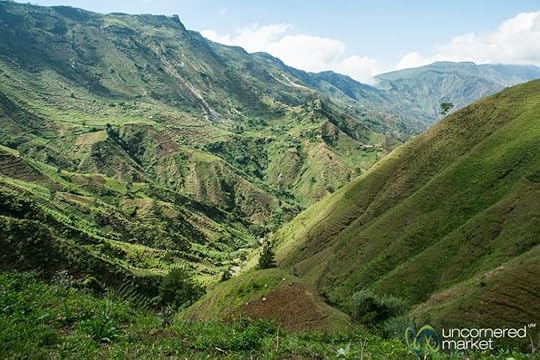
Photo of Haitian mountains from uncorneredmarket.com
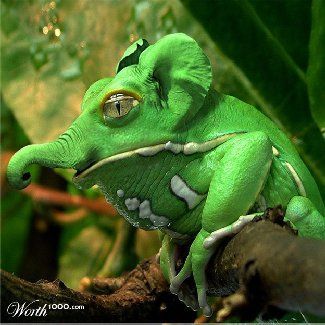
Extinct elephant frog from pinterest.com
Photo of the author from elnuevodia.com
So, a young man, an American biologist, is hunting for rare or maybe extinct frogs with his local Haitian guide. In addition to the present-day frog hunt story, through reminiscences, we learn of their private lives.
The American man has a wife back in the states. It’s likely their marriage is over: they’re playing head games with each other and it looks like she’s ready to leave him for her woman friend.
The Haitian guide reflects back on his hard, complicated life growing up in a dysfunctional family. As an example, as a boy, he was hired by a wealthy German man to go into the jungle to find the German’s crazy wife who was living naked in the woods, hunting for frogs. When he finds her, they couldn’t communicate by language: “She didn’t understand the words from my mouth, but I know she was starting to understand the ones in my thoughts.”
One of the Haitian man’s brothers became a “Macoute.” Officially the Macoutes are Haitian soldiers/policemen, but unofficially they are terrorists, murderers, drug dealers and thieves. These terrorists play a role in every novel I’ve read about Haiti including The Kingdom of this World by Alejo Carpentier, the trilogy Love, Anger, Madness by Marie Vieux-Chauvet, and The Comedians by Graham Greene. Hopefully these older works are dated and things have improved, although Palm of Darkness was published in 1995.
The search for frogs is only part of the story. They are working in an area that’s apparently a drug area for the macoutes. They find skeletons from a massacre. The police hassle them in the city. The scientist is beat up. They are told their permits are invalid.
In the forest, the Haitian guide listens to the “loas” - the spirits - and he knows when it’s time to get out. They run into another group of scientists hunting frogs who do not take their advice to leave and they know they will all be killed the next day by the macoutes.
There is some good writing:
“My mother always said you had to look at life as if it were the suspicious start of a crime: tying up loose ends, finding clues, following the trail coldly, as if it didn’t even concern you. According to her nothing that happened was accidental and it was better to accept this before the suspect fled and the crime was left unsolved.”
“The pregnant belly of someone else’s woman is always like a part of the other man.”
It’s a good story and a quick read – less than 200 pages. The three story lines work (the frog hunt and the back stories of the personal lives of the two main characters) and it kept my attention all the way through.
The author, born in Cuba in 1952, fled as a young girl with her family to Puerto Rico. The book is translated from the Spanish. She is a journalist and new columnist who has written a half-dozen or so novels, one of which, The Captain of the Sleepers, I reviewed and thought was quite good.
Photo of Haitian mountains from uncorneredmarket.com
Extinct elephant frog from pinterest.com
Photo of the author from elnuevodia.com

January 19, 2017
Mayra Montero and Edith Grossman have been telling some tales of the Caribbean and I'm just now finding out about it.
This one I thoroughly enjoyed.
Welcome to the Isle of Hispaniola.
A herpetologist (frog lovin man) enlist the services of a local guide to take him through the back country of Haiti in search of the island devil frog.
Both mens back story and new adventure ensues while danger leaps from all directions.
By the time this story takes place Papa Doc is long dead but his influence is still strong as well as his voodooing ways.

December 24, 2025
“A man repeats all his roads, he repeats them without realizing it, his illusion is that they’re new.”
An American scientist, Victor, travels to Haiti in search of a nearly-extinct amphibian. Many other species have already disappeared, gone to hide or let themselves die out. No one knows exactly why this extinction is happening. A local doctor tells Victor that the mute god Damballah has called the frogs back to the sea: “when Damballah desires it, the great flight will begin . . . The great flight has begun.”
Victor’s object, a mysterious, blood-red frog, is known to live in the Haitian mountains, but every potential habitat he approaches is closed off to him by violent gangs. As the scientist is chased from the mountains, so the earth itself is throwing us off. “You, darkness, enfolding the spirit of those who ignore your glory.” Not everything here is for us to catch, to hold, to study, to know. The other main character, Thierry the local guide, is far more aware of what is truly happening; his words are a poetic elegy to the world and its relationship with us.
An American scientist, Victor, travels to Haiti in search of a nearly-extinct amphibian. Many other species have already disappeared, gone to hide or let themselves die out. No one knows exactly why this extinction is happening. A local doctor tells Victor that the mute god Damballah has called the frogs back to the sea: “when Damballah desires it, the great flight will begin . . . The great flight has begun.”
Victor’s object, a mysterious, blood-red frog, is known to live in the Haitian mountains, but every potential habitat he approaches is closed off to him by violent gangs. As the scientist is chased from the mountains, so the earth itself is throwing us off. “You, darkness, enfolding the spirit of those who ignore your glory.” Not everything here is for us to catch, to hold, to study, to know. The other main character, Thierry the local guide, is far more aware of what is truly happening; his words are a poetic elegy to the world and its relationship with us.

May 13, 2012
There´s something about Haiti that mystifies and attracts, fascinates Cubans more than it does anyone else, even Haitians. This work is no exception. A short book, easy style, but still projecting that image of Haiti as the root of all things magical. An ordinary man with a somewhat ordinary life (it´s not as glamorous as it seems, y´all) encounters some very strange circumstances. I´ve read it more than once, and could again (probably will, since I´ve done a paper on the topic and am planning on re-working it.)Of all of her books, the one that I love the most.

August 12, 2019
An odd novel about a herpetologist collecting a rare frog in Haiti while forming a relationship with a native guide named Thierry. That, however, does not really explain this book.
There is a dreamlike quality to this book. The narration moves between the two men, sometimes in a confusing way. We learn about Thierry's life in a violent world, a violence that constantly surrounds the pair, threatening them, making their urge to find the frog more intense as time is running out.
The story is about love, sex, fidelity, infidelity. It is a story about zombies, cruelty, violence, and environmental destruction. There is tragedy at every turn. And all throughout, the loss of frogs all over the world, the extinctions of species, is ever present.
Definitely not an upbeat book, but a sobering look at a difficult world.
There is a dreamlike quality to this book. The narration moves between the two men, sometimes in a confusing way. We learn about Thierry's life in a violent world, a violence that constantly surrounds the pair, threatening them, making their urge to find the frog more intense as time is running out.
The story is about love, sex, fidelity, infidelity. It is a story about zombies, cruelty, violence, and environmental destruction. There is tragedy at every turn. And all throughout, the loss of frogs all over the world, the extinctions of species, is ever present.
Definitely not an upbeat book, but a sobering look at a difficult world.
February 3, 2024
An American biologist, more specific a herpetologist, goes on a search for a species of a frog that is threatened with extinction, in the Haitian wilderness: eleutherodactylus sanguineus. This expedition has to be done in the dark, when the animal is active. Through the stories of his local guide and others we get to know about the mysterious sides of life in the heart of Haiti, and the influence of the changing political climate. Those three elements mingle fantastically in this novel. JM

June 29, 2017
(This review is cross-posted on my book blog, OddReads.)
In the Palm of Darkness is a story narrated by two characters: the first is a white Australian scientist named Victor; the second is a black Haitian man named Thierry. In short, Victor is trying to find a species of frog believed to be nearly extinct with help from Thierry, who is local to the area where the frog was last seen.
I wanted very much to like this book. I have a passion for learning about every corner of the world, and this was my first time reading a story set in Haiti. Further, the story was about tracking down an endangered species of frog, and would be my first glimpse into ecological field work. Unfortunately, the book ended up being a bit of a disappointment.
Some things that I think Montero, the author, did reasonably well:
1) Describe field work. Everything from the ecology of frogs to the biology of rare plants seemed vivid and believable; Montero clearly did her scientific research.
2) Acknowledge the "colonialism" of academia, which is when western scientists go to less developed countries to study the local environment (and occasionally steal things), wrap up their analysis neatly in academic papers, and get credit for "discovering" things that were already there. Now, mind you, the issue is never explored in-depth, but I appreciate that the author mentions it a few times in passing, since it is the primary reason Victor is in Haiti to begin with.
However, some things that I think Montero didn't do so well:
I'll be blunt here: this book is of the driest, dullest books I've ever read -- worse than any instruction manual -- and the fault lies in the characterization of, well, everyone.
To start with, Victor is a middle aged man unhappy with his life, which is part of why he pauses his life in Australia to go frog-hunting in Haiti. Sadly, apart from the scientific passages in which he describes the frog, no part of his story is interesting. You know how, in creative writing, there's a famous saying to "show, not tell"? Well unfortunately, Victor's character only tells, because his narrative voice contains the same amount of emotion as that of a scientific paper. In fact, he mentions his strained marriage at several points, and all I could think of was how yes, his wife should divorce him already, he sucks! (A bit harsh, I know, but his chapters truly were painful to read.)
And then we have Thierry, the Haitian local who is employed as Victor's guide. Thierry's story should by all means be exciting because of the many background characters he introduces. Regrettably, his story is severely limited by the format Montero chose for him: narrating to Victor about events years or even decades prior. (This is because Victor records the stories Thierry tells him about his life in Haiti, just in case Thierry mentions any passing details about the frogs -- selfish, right? ) As in real life, unless Thierry were a specially trained storyteller with a photographic memory -- and he isn't -- his tale would have flaws and be void of many crucial details, which is the case here. Which is a shame, I think, because Thierry had a lot of potential as a character, and I would've liked to hear more from him and less from Victor.
Tangentially, I think Montero fails to properly balance the characters' perspectives and biases. For example, other than the academic colonialism/racism I described above, the book also had instances of xenophobia, homophobia, and plenty of misogyny/sexism, and none of it is addressed particularly well. Don't get me wrong: I understand fully well that not every corner of the world is as liberal as where I live, and that naturally, a person's biases would impact how they see the world. That makes sense to me. What makes less sense is why the author would choose to limit the narration to the two most privileged men in the entire set of characters, who never seem to question their position in the world, and thus are poor presenters of what would've been an emotionally-complex story. If I had to read through these tiresome instances of sexism, homophobia, etc. I'd have preferred to read them through the eyes of the women, LGBT characters, etc. in the background. I think these minority perspectives could've added much-needed depth to both the main characters and to the portrayal of Haiti, and I don't think it would've come at the expense of the science.
Lastly, I think Montero did an inadequate job of explaining the history and background situation in Haiti. At various points in the story, our main characters encounter violence (or the threat of violence) at the hands of some local men, which hinders their ability to go out and search for frogs. However, we are never given the reason for this violence: Are these men selling drugs? Laundering money? The henchmen for a repressive political regime? Perhaps just as importantly, we never get an in-depth description of these men beyond "thug", even though one of them is related to Thierry, so that could've been an easy transition for the author. Even the Haitian folklore, which is arguably one of the selling points of the book, isn't presented in a way that clearly indicates that it is superstition -- it just comes off as sexism/homophobia/etc.
TL;DR I didn't like the book because of its poor characterization, limited perspectives, and lack of contextual information.
In the Palm of Darkness is a story narrated by two characters: the first is a white Australian scientist named Victor; the second is a black Haitian man named Thierry. In short, Victor is trying to find a species of frog believed to be nearly extinct with help from Thierry, who is local to the area where the frog was last seen.
I wanted very much to like this book. I have a passion for learning about every corner of the world, and this was my first time reading a story set in Haiti. Further, the story was about tracking down an endangered species of frog, and would be my first glimpse into ecological field work. Unfortunately, the book ended up being a bit of a disappointment.
Some things that I think Montero, the author, did reasonably well:
1) Describe field work. Everything from the ecology of frogs to the biology of rare plants seemed vivid and believable; Montero clearly did her scientific research.
2) Acknowledge the "colonialism" of academia, which is when western scientists go to less developed countries to study the local environment (and occasionally steal things), wrap up their analysis neatly in academic papers, and get credit for "discovering" things that were already there. Now, mind you, the issue is never explored in-depth, but I appreciate that the author mentions it a few times in passing, since it is the primary reason Victor is in Haiti to begin with.
However, some things that I think Montero didn't do so well:
I'll be blunt here: this book is of the driest, dullest books I've ever read -- worse than any instruction manual -- and the fault lies in the characterization of, well, everyone.
To start with, Victor is a middle aged man unhappy with his life, which is part of why he pauses his life in Australia to go frog-hunting in Haiti. Sadly, apart from the scientific passages in which he describes the frog, no part of his story is interesting. You know how, in creative writing, there's a famous saying to "show, not tell"? Well unfortunately, Victor's character only tells, because his narrative voice contains the same amount of emotion as that of a scientific paper. In fact, he mentions his strained marriage at several points, and all I could think of was how yes, his wife should divorce him already, he sucks! (A bit harsh, I know, but his chapters truly were painful to read.)
And then we have Thierry, the Haitian local who is employed as Victor's guide. Thierry's story should by all means be exciting because of the many background characters he introduces. Regrettably, his story is severely limited by the format Montero chose for him: narrating to Victor about events years or even decades prior. (This is because Victor records the stories Thierry tells him about his life in Haiti, just in case Thierry mentions any passing details about the frogs -- selfish, right? ) As in real life, unless Thierry were a specially trained storyteller with a photographic memory -- and he isn't -- his tale would have flaws and be void of many crucial details, which is the case here. Which is a shame, I think, because Thierry had a lot of potential as a character, and I would've liked to hear more from him and less from Victor.
Tangentially, I think Montero fails to properly balance the characters' perspectives and biases. For example, other than the academic colonialism/racism I described above, the book also had instances of xenophobia, homophobia, and plenty of misogyny/sexism, and none of it is addressed particularly well. Don't get me wrong: I understand fully well that not every corner of the world is as liberal as where I live, and that naturally, a person's biases would impact how they see the world. That makes sense to me. What makes less sense is why the author would choose to limit the narration to the two most privileged men in the entire set of characters, who never seem to question their position in the world, and thus are poor presenters of what would've been an emotionally-complex story. If I had to read through these tiresome instances of sexism, homophobia, etc. I'd have preferred to read them through the eyes of the women, LGBT characters, etc. in the background. I think these minority perspectives could've added much-needed depth to both the main characters and to the portrayal of Haiti, and I don't think it would've come at the expense of the science.
Lastly, I think Montero did an inadequate job of explaining the history and background situation in Haiti. At various points in the story, our main characters encounter violence (or the threat of violence) at the hands of some local men, which hinders their ability to go out and search for frogs. However, we are never given the reason for this violence: Are these men selling drugs? Laundering money? The henchmen for a repressive political regime? Perhaps just as importantly, we never get an in-depth description of these men beyond "thug", even though one of them is related to Thierry, so that could've been an easy transition for the author. Even the Haitian folklore, which is arguably one of the selling points of the book, isn't presented in a way that clearly indicates that it is superstition -- it just comes off as sexism/homophobia/etc.
TL;DR I didn't like the book because of its poor characterization, limited perspectives, and lack of contextual information.

August 13, 2024
TWO NARRATORS stand before you: Victor is a white American academic, who is smart only academically and reserves his interest and excitement for frogs. It's indicative of his approach to life that although he suspects his wife is cuckolding him with her friend Barbara, he'd never be so uncouth as to say something about it. Narrating alternating chapters we have Thierry, Victor's Haitian guide and foil, whom Victor sees primarily as a useful frog-acquisition tool, along the order of a compass or a tent. Victor's lack of interest in the stories Thierry tells him is entirely damning and he doesn't even realise!! Common academic L.
The two narrative strands weave together beautifully and Montero's prose (in translation) is both lovely and gripping. Prepare to be emotionally suplexed by interstitial pages about the decline and extinction of various frog populations!
The two narrative strands weave together beautifully and Montero's prose (in translation) is both lovely and gripping. Prepare to be emotionally suplexed by interstitial pages about the decline and extinction of various frog populations!

February 26, 2009
Not one I'd really recommend. It could have been good if the author had decided what she wanted it to be about before starting to write it. Mostly it's about the alarming number of frog species that have gone extinct, with some interesting Afro-Caribbean folklore/superstitions thrown in, and some convoluted incestuous relationships in a Haitian family.
I had hoped there'd be a little more about Haitian zombie hunters.
There is kind of an interesting surprise at the very end, but otherwise a pretty muddy read. Excellent translation work, though, by Edith Grossman.
I had hoped there'd be a little more about Haitian zombie hunters.
There is kind of an interesting surprise at the very end, but otherwise a pretty muddy read. Excellent translation work, though, by Edith Grossman.

March 16, 2009
A strange little novel about chasing probably-extinct frogs through Haiti. I remember it as surreal and occasionally poetic.

April 27, 2017
I liked this book and would write a better review if I weren't just doing this to try to teach myself how to use this app better

August 27, 2012
A darkly, creepingly beautiful book, which strangely combines herpetology with voodoo and Haitian paramilitary gangs. The details on the study of frogs are improbably fascinating, and though vulgar, it has a near-poetic quality. A constant theme of mutilation and burning alive haunts the two main characters, who alternately narrate the chapters. A tale of the ultimate desperation of doomed men.

November 11, 2018
A really interesting read, but incredibly weird. It somehow combines frog hunting, climate change, ecocriticism, zombies, and voodoo into a really compelling book. It's pretty short and easy to read.

October 5, 2025
An important book, but not an easily digestible one.

August 23, 2021
A brooding tale of the downfall of biodiversity and political stability in Haiti as seen through the eyes of conservationists and common people. Beautifully written, even if its subject matter does not make for easy reading.

April 6, 2026
Grzesznicy ale zamiast muzyki bierzecie żaby a akcja dzieje się w Haiti

May 29, 2012
Il mio giudizio è viziato dal fatto che la cultura sudamericana proprio non è nelle mie corde. A volte ci riprovo, attratta, come in questo caso, dalla marginalità dei luoghi (Haiti) e dalla particolarità del soggetto (un biologo a caccia di rane in estinzione scopre un mondo incredibile e terrificante). E in effetti questo è un buon romanzo, che si legge con piacere ed è ben scritto. Però la passione dei sudamericani per le saghe famigliari (qui limitate per fortuna a un solo nucleo), la loro superstizione fatale e sudaticcia, la sessualità animalesca, il sudiciume delle matrone che esibiscono orgogliose i loro ciuffi di peli mi ripugnano. E mi sembra che ogni cosa sia priva di vigore e profondità. Chi, all'opposto, apprezza le atmosfere sopra descritte, saprà apprezzare anche questo breve romanzo della brava Mayra Montero.

April 14, 2018
Montero really gets a Haitian mindset, sometimes brutal, at other times sorrowful, bewildered, forgiving, lusty. In other words, human and complex. This is a brief sketch of the inner lives of the characters, but I felt as if the reader were required to fill in a lot of the gaps, which was great in this instance. Just enough scaffolding for one to imagine being in the lives of these characters.

October 22, 2019
heerlijke vermenging van wetenschapsjargon en duistere magische wouden, een combinatie die vaker zou moeten worden gemaakt
January 5, 2020
Well I found this book challenging but also enticing.
I found the two main characters were interesting but found I difficult to be sure of it who was speaking as the narration jumped around. I also found that none of the characters were very likable and while the energy and mystery of the book enticing,the characters themselves were uncompelling. I also found it a bit strange the way that Haiti itself was depicted, essentially oversexed, monsterous and grimy. A strange combination of nature, extinction and all of the above.
I found the two main characters were interesting but found I difficult to be sure of it who was speaking as the narration jumped around. I also found that none of the characters were very likable and while the energy and mystery of the book enticing,the characters themselves were uncompelling. I also found it a bit strange the way that Haiti itself was depicted, essentially oversexed, monsterous and grimy. A strange combination of nature, extinction and all of the above.

February 5, 2024
BORING. This was truly a hard and confusing book to read but I had to for class. BOOO. Literally would never willingly read this book. It is written in a very confusing manner and only becomes clear the narratives that it is attempting to tell towards the end. I semi liked the last 10 pages. Frou-Frou carried this book, I liked her story but other than that all of the subplots and overpopulation of characters made me wonder what I was reading about, they're not all connected at all and don't even neccessarly lead to the main two characters story arcs that much. I digress.

December 12, 2021
Interesująca rzecz. O poszukiwaniu żaby. Właściwie żaba jest tylko pretekstem, czego dowodzi choćby to, że w ogóle nie można jej znaleźć tam, gdzie szukali bohaterowie opowieści.
Książka bardzo fajnie napisana, plastycznym językiem, wręcz czytelnik widzi gorące, rozdygotane haitańskie powietrze. Ale, uprzedzam, to powieść dość brutalna i ze scenami seksu – dobrze podanymi, ale mało smacznymi.
WIĘCEJ:
https://seczytam.blogspot.com/2021/12...
Książka bardzo fajnie napisana, plastycznym językiem, wręcz czytelnik widzi gorące, rozdygotane haitańskie powietrze. Ale, uprzedzam, to powieść dość brutalna i ze scenami seksu – dobrze podanymi, ale mało smacznymi.
WIĘCEJ:
https://seczytam.blogspot.com/2021/12...

January 16, 2025
This book is one of those "there's something about it" kind of readings that are hard to explain but you know deep inside it's good, engaging, profound. Also contains all the main human condition themes like love, death (extinction even), brotherhood, family, nature, and the sorts. The pace of the narration, however, threw me off a little.
May 8, 2026
Gutsy yet beautiful language. I liked the narration swap every other chapter. Extinction is not a theme I’ve considered before, so it was good to reflect on the problems of life that make an unnatural end inevitable. The men were searching for a frog (the last of its kind) in remote Haitian jungles, but (of course) they were mourning extinction of love and family within their own lives.
October 31, 2021
A bit confusing if you have little knowledge of Haitian folklore. It requires some research, so if you're not well versed in Haitian culture it is not a leisurely read. It is very fun and interesting to try and analyze and interpret (I read it for a literature course).
May 26, 2024
IT'S A FROG HUNT! In 1970s Haiti, white scientists get fucked by alternative ways of knowing they don't have respect for. Lots of murder, mayhem, and sex. Translated with buttery prose, and set in a place that is vivid and altogether indifferent to our heroes. Perfect summer read.

March 7, 2025
En herpetologisk thriller fra Haiti om truede frøer, truede ægteskaber og truede befolkninger.
Læs min anmeldelse på K’s bognoter: https://bognoter.dk/2025/03/08/mayra-...
Læs min anmeldelse på K’s bognoter: https://bognoter.dk/2025/03/08/mayra-...

October 16, 2017
3.5 stars

February 10, 2020
Books that make you go hmm. . .
Displaying 1 - 30 of 43 reviews