

What do you think?

Peterson Field Guides #40
Peterson Field Guide to Medicinal Plants Herbs of Eastern & Central North America
Peterson The best-selling field guides of all time
Medicinal plants are increasingly well regarded as supplements and sometimes as alternatives for prescription drugs. Steven Foster and James A. Duke have used recent advances in the study of medicinal plants and their combined experience of over 100 years to completely update the Peterson Field Guide to Medicinal Plants. The clear and concise text identifies the key traits, habitats, uses, and warnings for more than 530 of the most significant medicinal plants in the eastern and central United States and Canada including both native and alien species. Seven hundred plus images, the organization-by-color system, and simplified warnings make identifying medicinal plants fast and easy.
Sponsored by the National Audubon Society, the National Wildlife Federation, and the Roger Tory Peterson Institute
Medicinal plants are increasingly well regarded as supplements and sometimes as alternatives for prescription drugs. Steven Foster and James A. Duke have used recent advances in the study of medicinal plants and their combined experience of over 100 years to completely update the Peterson Field Guide to Medicinal Plants. The clear and concise text identifies the key traits, habitats, uses, and warnings for more than 530 of the most significant medicinal plants in the eastern and central United States and Canada including both native and alien species. Seven hundred plus images, the organization-by-color system, and simplified warnings make identifying medicinal plants fast and easy.
Sponsored by the National Audubon Society, the National Wildlife Federation, and the Roger Tory Peterson Institute
480 pages, Paperback
First published May 24, 1990
About the author
Steven Foster
45 books22 followersSteven Foster was an American herbalist, author, photographer, and lifelong student of medicinal and aromatic plants. A self-taught botanist, he became a leading authority on herbal literature and plant identification, writing or coauthoring more than 15 books and hundreds of articles. He provided photographs for more than 500 herbs in the Peterson Field Guide to Medicinal Plants, coauthored with James A. Duke. His botanical photography was widely admired for its exceptional detail and beauty, while his generous mentorship influenced generations of herbalists, gardeners, and plant enthusiasts. Foster lectured extensively and contributed to publications including HerbalGram. His work combined careful research with an artistic appreciation of plants, establishing a lasting legacy in herbal education, botanical photography, and the preservation of herbal knowledge.
Ratings & Reviews
Friends & Following
Create a free account to discover what your friends think of this book!
Community Reviews
Displaying 1 - 30 of 44 reviews

July 31, 2025
Not Very extensive per plant. But still a great resource to use. Definitely a must have if you choose to homestead and produce natural medicinal remedies and tinctures for your home. This book will be well worn within the coming years in my house.

September 15, 2018
To put it mildly, I'm not a fan of identifying plants by color. By lacking any other passable plant guides for this continent (it's quite a regrettable gap in the US publishing tradition), it would do. It was useful for me on several occasions. Actually, it's the best botanical field guide I've seen here. But it's still so far from a really good guide, I can't give it more than three stars.
Read
March 19, 2022Skimmed, not read all the way through obviously. This book has lots of pictures and information on how plants have been historically used, but no info in how to actually prepare the different plants to be used. So it gives just enough information to be dangerous. Not what I'm looking for, for plant identification and use in the botany curriculum.
June 17, 2024
Peterson’s books are always high-quality and thoroughly researched. I'd bet my life on it. I already have done that when I was much younger. The only reason that I don't own this one is because I live out west.
December 25, 2020
My first and favorite from 20 years ago. It is one of the best field guides and I use it still to teach plant identification classes as well as use it on ally herb walks, and recommend it as top of the list and first book to buy if interested in truly wildcrafting or just knowing the abundance of what has historicaly been used as medicine. It also noted on the plants which have been used or currently being studied in the medical pharmacopeia world with cancer, nurologcal disorders even alrhiemers disease. Therefore draws interest to the skeptics . The guide is consice yet abundant with everything you need to properly identify and learn

August 11, 2012
My favorite new book; making me look at my backyard in a new way

January 31, 2020
Such a comprehensive guide. Maybe not a staple on every long haul trip, but pretty essential for laypersons such as myself in differentiating what things can go in tea and what shouldn’t go at all!

June 16, 2026
This is the third edition of the book, expanded to include 60 new species not found in previous editions. It features 531 species accounts covering 588 medicinal plant species and includes 705 color photographs by Steven Foster, with more than 88% of the images being new. Over two-thirds of the plants covered are native to Eastern and Central North America, while the remaining third are mostly non-native species introduced from Europe and Asia. [x]
I picked this up because I'm a sucker for survival-related topics, thanks in part to my love of horror, especially zombie apocalypse stories. That sent me down a rabbit hole of separating what's actually possible from what's pure fiction and wondering how people might cope if they lost access to modern medicine and technology. Along the way, I became fascinated by the historical and traditional uses of plants and wanted to get better at identifying the ones I encounter outdoors. My own backyard, which has been happily taken over by wild plants, seemed like a good place to start.
As a field guide, this book is packed with useful information on a wide variety of herbs and medicinal plants found in Eastern and Central North America. Each entry includes color photographs, identification details, habitat information, and summaries of historical and documented medicinal uses. The layout makes it easy to browse and compare species while out in the field.
However, it's important to know what this book is—and what it isn't. It's not a step-by-step manual on harvesting, preparing, or using plants medicinally. If you're looking for recipes, dosages, or instructions on treating medical conditions with wild plants, you won't find that here. Instead, the book focuses on helping readers identify plants and providing information about their historical and documented medicinal uses.
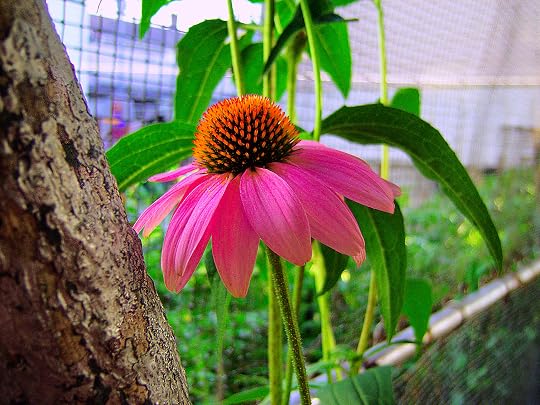
It's also worth keeping in mind that the guide isn't perfect. While the photographs are generally helpful, some species aren't shown at every stage of growth. For example, I'm familiar with coneflowers from my own garden, but someone encountering an immature plant in the wild might have trouble identifying it because the book doesn't always include photos of early growth stages. I ran into a similar issue with horseweed, whose photos didn't closely match what I was seeing, and with tall blue lettuce (Lactuca biennis), which doesn't include any photographs in the first place.
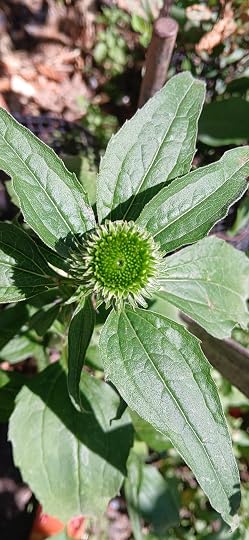
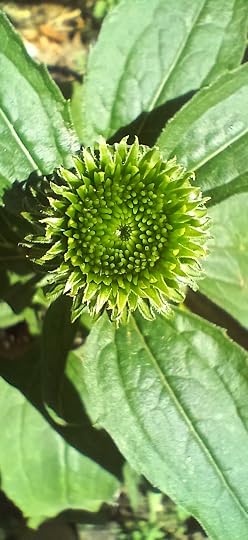
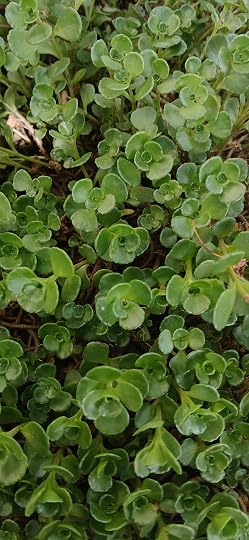
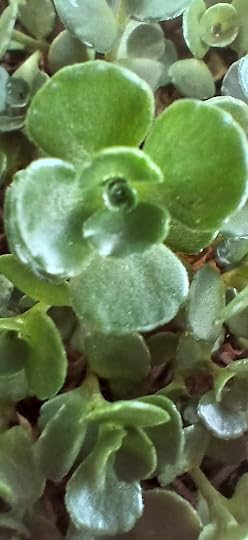
You may also come across plants that simply aren't included in the guide. In my backyard, for example, I have Phedimus spurius 'John Creech' (formerly Sedum spurium 'John Creech'), which isn't covered. That's understandable, since it's an ornamental cultivar rather than a medicinal plant and is not native to Eastern or Central North America. So if you can't find a particular plant in this book, it's often because it falls outside the guide's focus on medicinal species from the region.
In conclusion, I'm happy to have this book in my collection because it's an informative and well-organized field guide. Still, I wouldn't rely on it as my only resource. No single guide can cover every species or every stage of a plant's life cycle, so it's most effective when used alongside other field guides and reference materials to help identify unfamiliar plants.
I picked this up because I'm a sucker for survival-related topics, thanks in part to my love of horror, especially zombie apocalypse stories. That sent me down a rabbit hole of separating what's actually possible from what's pure fiction and wondering how people might cope if they lost access to modern medicine and technology. Along the way, I became fascinated by the historical and traditional uses of plants and wanted to get better at identifying the ones I encounter outdoors. My own backyard, which has been happily taken over by wild plants, seemed like a good place to start.
As a field guide, this book is packed with useful information on a wide variety of herbs and medicinal plants found in Eastern and Central North America. Each entry includes color photographs, identification details, habitat information, and summaries of historical and documented medicinal uses. The layout makes it easy to browse and compare species while out in the field.
However, it's important to know what this book is—and what it isn't. It's not a step-by-step manual on harvesting, preparing, or using plants medicinally. If you're looking for recipes, dosages, or instructions on treating medical conditions with wild plants, you won't find that here. Instead, the book focuses on helping readers identify plants and providing information about their historical and documented medicinal uses.
It's also worth keeping in mind that the guide isn't perfect. While the photographs are generally helpful, some species aren't shown at every stage of growth. For example, I'm familiar with coneflowers from my own garden, but someone encountering an immature plant in the wild might have trouble identifying it because the book doesn't always include photos of early growth stages. I ran into a similar issue with horseweed, whose photos didn't closely match what I was seeing, and with tall blue lettuce (Lactuca biennis), which doesn't include any photographs in the first place.
You may also come across plants that simply aren't included in the guide. In my backyard, for example, I have Phedimus spurius 'John Creech' (formerly Sedum spurium 'John Creech'), which isn't covered. That's understandable, since it's an ornamental cultivar rather than a medicinal plant and is not native to Eastern or Central North America. So if you can't find a particular plant in this book, it's often because it falls outside the guide's focus on medicinal species from the region.
In conclusion, I'm happy to have this book in my collection because it's an informative and well-organized field guide. Still, I wouldn't rely on it as my only resource. No single guide can cover every species or every stage of a plant's life cycle, so it's most effective when used alongside other field guides and reference materials to help identify unfamiliar plants.

April 23, 2021
I'm looking for field guides of the Driftless Region as I learn to forage, and this was recommended to me.
The layout is odd, the pictures and descriptors are very small. I also wish there was an indicator of where exactly these places grow. This would be a good supplemental book to a more thorough, detailed guide.
The layout is odd, the pictures and descriptors are very small. I also wish there was an indicator of where exactly these places grow. This would be a good supplemental book to a more thorough, detailed guide.

June 13, 2022
A godsend for any interested in herbalism as a whole, also provides info on what has and has not been scientifically verified, which is the only thing that was actually able to get me into herbal medicine, as it approaches it from a very scientific lens

March 15, 2020
Good info and photos in this book. Buy some day maybe

October 9, 2021
Very detailed and complete.
March 2, 2022
Good resource, lots of explanation. Wish there was more photos of each type of plant as some are so similar to naked eye.

July 19, 2022
Lots of really good information but unfortunately the print is so small I can hardly read it
October 27, 2022
A book I refer to time and time again. Have used for many years for research and general knowledge. Highly recommend!

January 5, 2023
A great plant identification book. Also gives you medicinal uses for the wild plants and herbs.

December 12, 2024
I highly recommend this book if you're looking for a good reference manual. It's handy to take into the woods with you when you're foraging for herbs!
November 25, 2025
great resource book

March 9, 2026
Part of my Peterson collection now

November 11, 2019
A good book for foraging
September 28, 2015
Great reference guide. It's small and compact enough to fit in your purse/bag, as well as to have in your hands while exploring. The colorful pictures of each plant and herb helps a lot. Many books typically come in black and white. The thorough explanation of each plant and herb is very informative; for instance: common names/scientific names/family names, plant part used for medicinal purposes, description, where to find them, medicinal uses, preparations, dosage, and most importantly - warnings! The warnings tell you whether a plant or herb is poisonous or whether to just be cautious of possible side effects. This little 456 page book is something I would never want to be without.

October 19, 2015
This is a great reference. I didn't read all 530 entries, but the book includes a great preface, how to use this book section, and index, and contains loads of illustrations and photographs. I learned a good deal while perusing the volume, reading the preface and how to, and reading the captions for all of the photographs. I am confident I will learn a lot on our next hike by taking this along. I already found pictures of plants we have encountered on past hikes and which we found noteworthy.

November 13, 2011
This guide warns that some plants look similar and can be deadly. For the severity of this warning, it has very hard to see pictures and poor descriptions. The organization, by flower color and plant type, would make more sense if you already knew what you were looking for. All in all I found it interesting to read the many uses for plants but could never see it being a practical guide to take out in the wild and harvest anything.

August 15, 2010
Gave me info on the plants The Harvester collected on his property, as well as others. It is amazing how God gave us these herbal plants to cure disease and common ailments.
January 10, 2015
This field guide is pretty good - all color photos, the essential info you might want. The book aims to be more extensive than thorough. I would prefer a field guide with larger and more photos of the plants themselves. Many of the photos do not provide very good leaf close-ups. This is why I only gave this guide 3 out of 5 stars.

October 25, 2008
This field guide unfortunately uses (sometimes poor) color photos instead of drawings to represent each plant. A thorough survey, but it will need to be supplemented with other guides for accurate ID.

July 22, 2011
This is an excellent field guide to medicinal plants. The information on how to use them is sketchy, as it lacks dosages and other information needed to confidently recommend herbs, but for a professional herbalist who understands how to prepare and use plants it's a great resource.
December 7, 2016
This guide was recommended at a herbal salve making class I took. I'm so glad I purchased it as it is a beautifully illustrated, informative, well organized reference on medicinal herbs and plants. It is also the perfect size for carrying with you on hikes. Highly recommended.

August 3, 2007
a great and easy to use field guide with many pictures.

October 11, 2007
Great little book. And I know guidebooks need to remain small enough to bring out into the field, but as always, I'd like more info packed in...
Displaying 1 - 30 of 44 reviews