Jump to ratings and reviews
Rate this book

The Evolution of Plants

Rate this book
Plants first colonized the land over 430 million years ago, having evolved from some of the most primitive forms of life. Since then, plants have played a major role in supplying the atmospheric oxygen we all need to survive. But how did plants evolve, how has their distribuion and diversity been affected by changes in climate over millions of years - and how can these processes be studied?

The Evolution of Plants blends evidence from the fossil record and data from biomolecular studies to tell the story of plant evolution from the earliest forms of life to the present day. Focusing on the key events during the evolution of plants - from the colonization of land to the first forests, the emergence of seed plants to the evolution of flowering plants - its straightforward explanations and clear illustrations provide the reader with the most accessible introduction to plant evolution available.

With stunning biome maps illustrating the global distribution of plants during the different periods of life on Earth, the book explains how the diversity of vegetation has changed in response to climate, reinforcing the close link between climate change and the process of biological evolution.

It is a contemporary account of a dynamic field, which is perfect for any student looking for a broad, balanced introduction to the subject.

Online Resource Centre
The Online Resource Centre to accompany The Evolution of Plants features
- figures from the book in electronic format, for use by registered adopters;
- Journal Clubs, which encourage students to critically evaluate and engage with published research related to topics explored in the book

408 pages, Paperback

First published December 19, 2013

5 people are currently reading
96 people want to read

About the author

Kathy Willis

13 books16 followers
Kathy Willis is the director of science at the Royal Botanic Gardens in Kew, England. She is also a professor of biodiversity in the zoology department at the University of Oxford and an adjunct biology professor at the University of Bergen. She has authored or co-authored more than one hundred scientific publications, including the landmark book The Evolution of Plants. This is her first book for younger readers.

Ratings & Reviews

What do you think?
Rate this book

Friends & Following

Create a free account to discover what your friends think of this book!

Community Reviews

5 stars
7 (33%)
4 stars
6 (28%)
3 stars
8 (38%)
2 stars
0 (0%)
1 star
0 (0%)
Displaying 1 - 4 of 4 reviews
Profile Image for Anshuman Swain.
265 reviews9 followers
March 10, 2022
One of the most wonderful textbooks I have read in past few years. Coming from outside paleobiology, this book built most concepts, names and ideas ground up (although you might need to know some basic ecology and geological timescale). The book was rigorous and conceptual - and covered a lot of ground. Even though you forget all the names and details sometimes, the authors strive hard to drive home the big picture. Really wonderful!
Profile Image for Caroline Ailanthus.
Author 5 books6 followers
November 11, 2025
Absolutely nothing wrong with this book, it does exactly what it says it's going to do--summarize what is known about the evolution of plants. Of course, it is dry as old toast, but that's to be expected, and if you're interested in the topic (which I am) it's OK. Particularly interesting to me were the discussion of various groups of gymnosperms that could have given rise to angiosperms and the curious fact that the big mass extinction events famous from animal evolution did not occur for plants.
Profile Image for Arne Sinnesael.
5 reviews
June 13, 2018
Nice summary of what is known about the evolving biogeography and evolution of plants.
I had hoped for a larger glossary of botanical terms
Profile Image for Yanick Punter.
316 reviews38 followers
March 17, 2021

What I found most interesting is:
Take a look at a list of tree species from temperate Europe, North America, and Asia and you will notice a glaring disparity. Whereas North America and Asia are home to something like 1000 tree species each, the European continent is home to just about 500 species. Why is this?
- In Defense of Plants
Because of Ice Ages, North-Western Europe lost the following tree taxa: Aesculus (paardenkastanje), Diospyros, Elaeagnus (olijfwilg), Epipremnum, Halesia (sneeuwklokjesboom), Karwinskia, Liquidambar (amberboom), Meliosma, Pistacia (pistache), Pseudolarix (goudlarix), Stewartia, Styrax, Zelkova, Nyssa, Actinidia, Euryalo, Liriodendron (tulpenboom), Magnolia, Proserpinaca, Taxodium (moerascypres), Sciadopitys (Japanse parasolden), Sequoia (mammoetboom), Phellodendron (kurkboom), Castanea (tamme kastanje), Ostrya (hopbeuk), Juglans (walnoot), Tsuga (hemlockspar), Carya (hickory), Parthenocissus (wingerd), Celtis (netelboom), Eucommia, Pterocarya (vleugelnoot), Staphylea (pimpernoot).


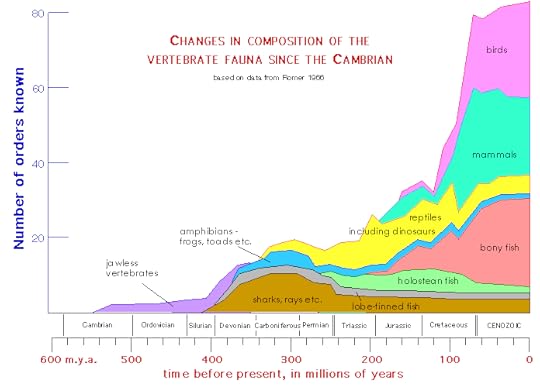
(The graphs are in the book, though the one with animals might be a slightly different one)
Displaying 1 - 4 of 4 reviews

Can't find what you're looking for?

Get help and learn more about the design.