This new and creative venture in systematic theology unearths the profound relation of God, prayer and 'sexuality' and ends up mapping a new landscape of theological endeavour. Accessible, clear and challenging, it will be of great interest to all scholars and students of theology.
Sarah Coakley is a theologian, philosopher of religion and a priest of the Church of England. She is Norris-Hulse Professor of Divinity at the University of Cambridge.
This book is the first installment of a projected series, and so Coakley devotes a substantial portion of it to various forms of methodological ground-clearing. She hops from one topic to another like an irritable fly, skipping off of many surfaces but never quite coming to rest on one. It is admittedly necessary in an academic work to carefully define one’s terms and outline the contours of one’s thesis, but for those of us who aren’t academics, this volume leaves frustratingly little to sink our teeth into.
That said, there are still some tantalizing morsels to nibble on. Coakley proposes to start with the current impasse in the Church (and in much of the secular culture besides) over issues of gender and sexuality, and to transcend this cultural stasis by proceeding up the chain of ontological priority to the inner life of the Triune God and articulating a new (but entirely orthodox) systematic trinitarian theology.
Desire is, as Coakley puts it, “the constellating category of selfhood, the ineradicable root of the human longing for God.” In classical Christian theology, rooted as it is in Platonic idealism, our actually-existing human desires, with their confused entanglements, unreflective physicality, and often selfish motivations of power and pleasure, are but a pale reflection of the ideal of desire, which is God’s desire for us as sharers in the divine image, and our own desire for God as the source of our creation. The transformation of Christian life in the Spirit involves a purgative disciplining and redirection of desire towards its true source.
Desire is more fundamental to human nature than “sex” (whether conceived as sexual differentiation or the act of sexual intercourse), because unlike sex, desire is “an ontological category belonging primarily to God, and only secondarily to humans as a token of their createdness ‘in the image’.” Sex cannot rightly be ontologized in this way because sexual differentiation and desire in humans entails a certain fundamental “lack” which we try fleetingly to fulfill in union with our “other half”. God, of course, lacks nothing.
In one of this volume’s more fascinating chapters, Coakley compares the thought of two major fourth-century theologians, one eastern and one western, as it pertains to matters of sexuality and sexual differentiation. The first, Gregory of Nyssa, might be said to ontologize union and equality between the sexes; while the second, Augustine of Hippo, ontologizes distinction.
Gregory took an ingenious reading of Genesis 1:27, splitting the Hebrew text into two clauses to suggest that the creation of humanity occurred in two parts: first, an “original” creation of an angelic humanity, unencumbered by sex or even by physicality itself; and only secondly, just prior to the Fall, the “creation” of male and female, or the differentiation of the sexes. Such a reading implies that the division of humanity into male and female was a step downwards, away from an original, and thus ontologically prior, non-sexed humanity.
Even more astonishingly, Gregory suggests in his treatise On Those Who Have Fallen Asleep that at the final resurrection our bodies will again lose their sexual differentiation and everyone will become “quasi-‘female’” vessels of the divine life. Thus for Gregory, sexual difference is to be transcended by a union of uni-sexed, and thus equal, beings.
Augustine, on the other hand, takes the same passage from Genesis to mean that humanity has “always” (in the ontological sense) had sexual difference, that the woman is ultimately dependent on the man, and that the sexes must live in an ordered hierarchy. While more irritating to our modern sensibilities, Augustine’s perspective has the merit of preserving the distinction of the sexes, and thus the “dignity” of human sexual differentiation as such.
Gregory and Augustine thus found themselves on opposite sides of a timeless dilemma for human sexual duality: how do we preserve the unity and equality of the sexes by virtue of their shared humanity, while also affirming that there is an inherent value in the fact that men and women are different? How do we preserve equality and difference at the same time?
Where else in Christian thought do we find this simultaneous emphasis on equality and difference? Of course, we find it in the Holy Trinity. The three hypostases are distinct from one another, but united in the Godhead; three persons in one essence.
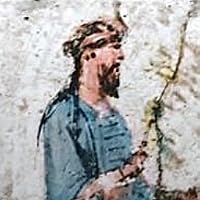
The key to transcending the aporia of equality and difference thus lies in a proper articulation of God’s trinitarian nature. For Coakley, this task is localized particularly in the elevation of the Holy Spirit to its orthodox position of coequality with the other hypostases. Early trinitarian theologians tacitly subordinated the role of the Spirit by espousing a “linear” understanding of the trinity, whereby the Holy Spirit was merely the first rung in a ladder of divine ascent leading ultimately to the contemplation of the Father and Son. Coakley devotes a chapter to historical representations of the Trinity in iconography to show how the Christian imagination has often fallen into the trap of making the Spirit a mere add-on to the dyad of Father and Son.
The Spirit certainly does lead one to the contemplation of the Father and Son; but as Coakley points out, it is equally true that Father and Son are met transformatively in the Spirit. It is necessary for Christians to reincorporate the coeternality of the Spirit into their life of prayer, and so recover an understanding of a God who pacifies the world by burning through every human wall marked “either/or”.
This is a magnificent work. Coakley has authored, what I believe to be the most important systematic theology since Robert Jenson (granted, far from an authority in the field). The Spirit of God is shot through the pages of this book.
Drinking game: Every time Sarah Coakley writes something like "If I'm right about this", take a shot. You'll get drunk, but it may help with the readability of this book.
First of all, I abhorred Coakley's writing style. The informal, chatty, "I wanna be your pal" tone may work in lecture halls (I can imagine it is quite engaging) but in writing it comes across as grating, prone to redundancies, and manipulative. Like most post-modern feminisms, Cokaley's "feminist theology" is more assertive than argumentative. She doesn't argue for her points, she asserts why you should agree with them at face value and by fragmenting them into a verbal soup.
Though she initially makes a big deal of her "theologie totale" it's exact function is somehwat obscure and by chapter 7 she seems to have forgotten about it almost completely and is just ranting about the patriarchy, throwing the word around as if it is going out of style, and making distinctly psycholinguistic arguments rather than theological ones.
Now, is this book all bad? No. If you can get past her writing there are interesting themes here. Coakley does well in tackling what she percieves as the three main objections to Systematic Theology, and she very fruitfully nuances past (uncharitable) interpretations of the patristic fathers.
Yet, the overall perception is that there are too many chefs in the kitchen. She flits from thinker to thinker without engaging truly and deeply with anyone, she'll suddenly drop in a completely redundant assessment from an ecologist, then drop it as if it never happened.
Her pneumatology is interesting, though I think she is unduly harsh towards the early and institutional church. I would agree with her that you can't just slap a "feminine" aspect onto the Trinity and then hope all objections go away, yet, at times it seems it is exactly what she does when she vehemently denounces the implicit primacy of the dyadic Father-Son, and exalts in the idea of the primacy of the Spirit instead. Which she has firmly rooted to risqué sectarianism, ecstatic experiences of the divine, and female political and sexual power.
Following in the usual trends of post-modern feminism she is obsessed with sex and gender and sees everything through this lens, which leads to some awkward overinterpretations and conclusions that are really only obvious if you agreed with her underlying presumptions before the assertions are made. It's very blunt and awkward metaphorical readings.
She takes a stand for gendered differentation, yet fails to properly define what this means to her, which muddles her point about it's cosmic lability and the problematic 'third' which is part of the realm of humanity as well.
In her suggestion that the East/West split is somewhat overexaggerated and false, which I can support or sympathize with, she somewhat curiously suggest that the definitional split is primarily down to a post-revolutionary Russian Orthodox need to separate itself from Western neo-Thomism. She seems then to equate all orthodoxy with Russian Orthodoxy, and only in the last chapter does she give a half-hearted "oh right, the filioque" discussion which she frankly seems bored with from start to finish and which only serves as an impetus to spend the final pages screeching "patriarchy".
In this sentence, were the words "scummy" and "patriarchal" necessary, especially scummy? Ugh, this is what puts me off feminism as a whole: "Its appropriateness inner-trinitarianly means that the TRUE meaning of 'Father' is to be found in the Trinity, not dredged from the scummy realm of human patriarchal fatherhood"
So, was it cogent? Not really. It's like she's thrown a ton of things into a bowl and is then trying to stitch it all together, but the final product is lumpy and uneven, and worse yet - it is sometimes unclear if Coakley has much original thoughts of her own, or if she's simply laboring to tie together other theologians thoughts with a modern feminist sensibility, trying to fit God into feminism. Her expressed goal was to give the objections to Systematic Theology a solid refutation in a theological framing, but she ultimately comes across as someone serving two masters, trying to have her cake and eating it too.
Much like Robert Jenson she seems to have a deep suspicion of early conciliary efforts and doctrinal formulations, yet at least the former digs into the history of it in a less reductionist way. Here it's most "church bad. Wants to rein in and control" - "spirit-lead path good! Sectarian and nebulous, but women, yay!" It just comes across as extremely one sided in Coakely at times, though she does nuance particular arguments against e.g. Augustine, she sheds no light on the nuances of doctrine, suggesting its beneficial aspects along with the problematic ones.
Ultimately, for me as a reader, if this is representative of why Systematic Theology is necessary, then I'm gonna be part of the crowd singing "hey hey, ho ho, Systematic Theology has got to go!" I'm being somewhat facticious here, it is probably Coakley's feminist theology I've no patience for, rather than the systematic aspects.
I hope I won't have to read Coakley again, and I'll only do so for an assignment. If you like Judith Butler and her kind, you'll probably find some interesting stuff in here. If you don't, then there are still a couple of pages which may be of interest. But I can't genuinely recommend it, it's floaty, verbose theory purporting contemplative practicality, yet contemplation is dropped after a couple of chapters and a lot of the writing is probably gibberish to people outside of academia. So basically, top-down gender theory hoping to help us "mind-shift" to pneumatological primacy. Thanks, but no thanks.
This is everything a work of theology should be and upon completing this book, Sarah Coakley has valued into my list of favorite theologians (yes, people like me have such lists). Granted, I have not read any of her other work, but I am looking forward to reading more. At the very least, I hope to read the rest of the volumes in this systematic theology when they are completed.
Is this a systematic theology? When I think of systematic theology books, I think of a glorified outline of all the major points of Christian faith, from God to angels to the Bible to end-times. Coakley’s book is about God, the Christian Trinitarian God to be precise, so it basically starts where you would expect a systematic theology to start. Yet it does not read like a systematic theology.
Its actually kind of fun and engaging.
I know, I know…systematic theologies CAN be engaging despite the stereotypes. What I appreciated about this book is Coakley wrote it for pastors and theologians. Thus, while it is profoundly deep, it is also engaging and well-written. This ties in with how she describes her purpose as what she calls theologie totale : a connecting of the rational (and usual) methods of theology with contemplative practice. True theology does not happen without contemplation:
“God’, by definition, cannot be an extra item in the universe (a very big one) to be known, and so controlled, by human intellect, will, or imagination. God is, rather, that without which there would be nothing at all; God is the source and sustainer of all being, and, as such, the dizzying mystery encountered in the act of contemplation as precisely the ‘blanking’ of the human ambition to knowledge, control, and mastery. To know God is unlike any other knowledge; indeed, it is more truly to be known, and so transformed” (44-45).
Further, she writes in such a way as to split the difference between two extremes. In contrast to a biblicist fundamentalism, she takes seriously the findings of sociology, psychology and especially movements in feminism. On the other hand, she recognizes where these fields may be deficient and where theology may have something fresh to say.
This is where one of the core points of the book can be found. She recognizes an entanglement between desire for God and sexual desire for other humans. Coakley argues that desire is more fundamental than sex. In this she says she is turning Freud on his head. Where Freud said our desires for God are actually sexual desires, Coakley argues our sexual desires point to a deeper desire for God.
Her argument developers over the course of seven chapters. The first two are mostly set up, as she recasts what systemic theology is and puts forth her plans for how she will do her work. The next three chapters look at desire from different angles. First she analyzes the patristics and praying in the Trinity, then she shares some findings form surveys with churchgoers in England and their prayer habits, finally she examines icons and Christian art. She wraps up the book with examinations of Augustine’s and Gregory of Nyssa’s writing on desire and of desire leading to spiritual growth into the mystical darkness (or light) beyond words.
There is so much more to be said, but one vital point to mention is in rethinking and reshaping our understanding of the Trinity, Coakley emphasizes the place of the Spirit. She shows how the Spirit is often demoted to third place, if the Spirit is mentioned at all. Often the Spirit just disappeared from portrayals of the Trinity in Christian art. Part of Coakley’s argument is if we reread the patristic writers and connect their ethical and practical writings on prayer and celibacy and such to their more theological writings we get a fuller picture of the Trinity. From this, our understanding of the Trinity shifts if we start with the Spirit praying in and through us (Romans 8).
In an exciting shift then, when discussing the procession of the Son and the Spirit from the Father and the whole filioque controversy, she imagines the equally true procession of the Father from the Spirit:
”What we discover in the adventure of prayer, in contrast to these other routes, is a gentle bu all-consuming Spirit-led procession into the glory of the Passion and Resurrection, a royal road to a ‘Fatherhood’ beyond patriarchalism. . . There can be in God’s Trinitarian ontology no Sonship which is not eternally ‘sourced’ by ‘Father’ in the Spirit” (332).
Overall, a smart and challenging read for any theologically minded folks. If you’re on the more conservative end, there is stuff in here to shake you up and make you question (or make you mad, I guess). To be fair, if you’re on the more liberal end, there is probably stuff in here to make you wonder too. Of course, in that I mean theologically conservative and liberal.
This book deserves a savoring read, the kind that is accompanied by a hot beverage, silence, and a dictionary. It's worth the investment of attention and focus. Coakley has written essays that served as precursors to her first of five planned extended essays on core systematic theology subjects and here we see the payoff of an extended treatment in her, frankly stunning, consideration of the Trinity.
If one has not read much in the way of systematic theology the magnitude of the contribution Coakley offers to the field might not register. In my opinion, Coakley has written something that should change the way systematic theologians approach dealing with the Trinity. In short, she puts forth a trinitarian theology that actually takes seriously issues of gender (Coakley argues that this is not peripheral to the trinitarian project but central) and the person of the Holy Spirit. Coakley shines a floodlight on these two neglected, gaping holes in trinitarian thought. It has a blinding effect in the sense that she makes it clear that the trinitarian project cannot move forward without dealing with those holes. She is right.
Coakley uses two unconventional methods to make her case, which in this case amounts to a more fully orbed theological approach. Like many of the early Christian trinitarian thinkers did in their own time (Basil of Caesarea comes to mind), Coakley turns to the liturgical practice of churches to work through what trinitarianism should be in the 21st century. She offers two case studies of charismatic communities to help navigate one of those gaping holes. As a charismatic myself, there was a certain amount of vindication to be found here as the charismatic movement has largely been brushed aside as not offering much by way of theological substance.
The second unconventional method addresses the other gaping hole in trinitarian thought: issues of gender. How do we speak of God? How do we image God? Because, whether we like it or not, Christians have been imprinting certain gendered qualities on the Trinity for centuries. Coakley draws upon an extended exploration of Christian visual art and depictions of the Trinity to demonstrate the Christian tradition's flexibility, creativity, and struggle with trinitarianism and gender. While Coakley treats the questions of gender and the Holy Spirit separately to a point, she pulls the threads of her whole argument together by engaging with Gregory of Nyssa and Augustine. Here she finds a 'prayer-based' model of engaging with the Trinity that reorients, re-situates, and grounds human desire in divine desire: "Desire . . .--even fallen desire--is the precious clue woven into the crooked human heart that ever reminds it of its relatedness and its source" (58-59). The payoff is that trinitarianism reconsidered can undercut damaging hierarchal understandings of God and shed light on the truly participatory relationship with the Trinity: "When humans come . . . into authentic relation with God as Trinity through the Spirit, their values and orders of 'hierarchy' change; they are not imitating God thereby, but rather being radically transformed by ecstatic participation in the Spirit" (321-22).
Very rarely do I get upset when reading theological books, but Coakley managed with that feat. Her theology totale is just incomprehensible to me. I don't see how it is in any way anything new. What is it that she wants to bring in? Is it the emphasis on the ordinary church congregation? If so, then I think it is a good thing. But very many theologians (even Barth, or particularly Barth perhaps) have made theology that is close to the ordinary Christian believer in a particular church context. If it is the inclusion of the Spirit then I think it is simply misleading. Coakley is misrepresenting some of the theological development in the 20th century in order to make a point. This is not rare, but it feels quite unacceptable when she so strongly reacts against the trinitarian "revival" because of their ignorance of certain trends in 20th century theology.
That comes to the thing that might have upset me the most. The critique against the trinitarian revival. In some sense I have a feeling that this is a book in reaction against Colin Gunton's theology. Gunton is not mentioned terribly often, but is certainly there between the lines. It is obvious that Coakley is a platonism, Gunton is an avid critique against platonism tendencies in theology. Gunton was (too!) critical against Augustine, Coakley wants to emphasise the similarities between Augustine and the Cappadocia fathers. Coakley stresses the apophatic and mystical tradition, particularly in Gregory of Nyssa, while Gunton argues that those parts are precisely the problems with the Cappadocian fathers. And the list can go on. Of course, theological debate and difference of opinion is fine and happens all the time. What really gets to me is how Coakley ends the book with a suggestion of a metaphysics, more or less based on the doctrine of the Trinity, and having critiqued the trinitarian revival(ists) for more or less that things.
It is to put things too strongly perhaps, but I don't feel like Coakley is intellectually honest, or fair in this book. I should also say, in fairness, that I am probably quite far away from Coakley theologically, but I have read many books that I disagree with much more than this and still walked away with some furthered knowledge and insights. I have learnt from this book too, particularly in terms of patristics where I think Coakley is very good and helpful. But if she critiques Zizioulas, Gunton and the likes for reading the Fathers with a particular bias, nothing in this book makes me convinced that Coakley is not doing the same. What is helpful is that her bias is different from Zizoulas, which is good in terms of a critical perspective on the personalist reading of the Cappadocians for example.
Reading this book has revived my faith in theological writing (dead the past 6 years, if you have to ask, you shouldn't) and overwhelmed me jn a good way. It's beautiful. Prayers. Holy. A living theology. I've never read anything like this. It's revolutionized my prayer life and my thoughts on theology. Read it. Slowly. Like you would a book of poetry. Sarah Coakley. We're not done. Here's to reading everything you wrote. Thank you. I never rate books 5 stars. This book is worth it.
A very fine book with rich claims about the ways that contemplative prayer may revise our view of the Trinity, particularly the messy imbrication in the ways that the doctrine of the Trinity interfaces with human erotic desire and gender hierarchy.
As a non-expert in theology, my engagement with the thesis was particularly aided by the structural metacommentary in the writing, the bibliographic notes, and the glossary.
Would have liked a fuller introduction to contemplation as part of it; there are very fine bibliographic notes on many of the other theological topics in the book. There is a glossary definition, but that's it. In addition, I found the hint about the way the source-role of the SPirit in the Trinity interrogates of the twoness of gender division in the last chapter intriguing, but WAAAAAY too coy. Also, I'll bet contemplation isn't the only way here.
Coakley's main point: Anything we say about God as Trinity is also talking about the God-given, God-leading desire that is bound up in turn with gender and power in our souls and relationships. It's an excellent point, one she's been building to for decades. As systematic theology, this is superlative work, both precise and accessible.
I'll leave it there for now, because I'm hoping to place a proper review in print later this year.
Dit boek (b)lijkt een zeer boeiend eerste ontwerp van wat de auteur een théologie totale noemt, en daarom ben ik benieuwd naar het bij herhaling aangekondigde – en tot nog toe uitgebleven? – vervolg (met drie delen). Het betoog van Coakley is goed te volgen en komt (ook) voor mij als geïnteresseerde leek overtuigend over. Toch vraagt zij wel wat van haar lezers, want de manier waarop verbanden worden gelegd tussen zowel de thema's als de bronnen die in dit werk aan de orde zijn, is niet per se gebruikelijk. In haar aanpak onderstreept Coakley het hypothetische karakter van haar benadering door veelvuldig gebruik van zinsdelen als "If I am right, then (...)". Dat valt op, maar is wat mij betreft behulpzaam bij het 'meegenomen worden' in haar ook overigens zorgvuldig opgebouwde systematiek. In de citaten hieronder klinkt naar mijn idee iets door van Coakley's werkwijze, stijl en 'agenda'.
__________ "[T]he three objections to the task of systematic theology turn out to have a shared, or at least tangled, root. Each presumes that the systematician idolatrously desires mastery: a complete understanding of God, a regnant position in society, or a domination of the gendered 'other'; and each presumes that the systematician will thereby abuse his knowledge, his power, or his 'male' mode of thinking, for purposes of intellectual, social, or sexual dominance." (p. 51)
"[W]ithout a critical and discerning use of the tools of social science, theology itself is 'beached' in an arid, and often disputatious, terrain, one eerily displaced from the turbulent seascape of actual lived religion." (p. 68)
"[T]he capacity to divest oneself of imperialistic impulses is not a mere matter of good intentions or rhetorical enunciation. It is, finally, a grace encountered in the patient waiting of prayer." (p. 84)
"[T]here can be little doubt in the reader's mind of this prevailing paradox in classic Christianity: the persistent orthodox refrain that God, qua God, is beyond gender; and the equally persistent appearance of gendered visual representations of that God, often in forms which vividly display cultural assumptions about 'normative' gender roles. Yet this unofficial gendered trinitarian visual story (...), in all its intriguing and sometimes disturbing variety, is not yet the whole picture." (p. 248-9)
"Why should Christianity and Platonism here not genuinely converge and intersect? It has indeed all along been the burden of this volume to suggest such." (p. 316)
"'Can a feminist call God Father', then? One might more truly insist that she, above all, must; for it lies with her alone to do the kneeling work that ultimately slays patriarchy at its root." (p. 327)
"Contemplation makes great ethical demands – to lose one's life in order to gain it, to turn the other cheek, to love one's enemies. It is not a form of disengagement, but of passionate reordered engagement." (p. 343)
Sarah Coakley is only my second or third author I have read who commits to a true “feminist theology.” While that’s disappointing on my end, I was very intrigued with her connection of sex, the body, and the Trinity. She is unique in that she holds to an orthodox theology while still advocating for a more egalitarian conception of the Trinity. This book will not address the current “issues” of Christian life but you will be introduced to a new perspective on sex and God. She also has a great chapter on iconography.
Outstanding stuff, if frustratingly preliminary at times. I did grow to appreciate the circling-around style and the way it builds up a powerful analysis and opens up all kinds of fruitful areas - but I also wanted the tight focus broadened out to explore those areas further, which I guess should come in future volumes. Could/should be the first step to something very special.
Technically well-written and with the promise of insight, I nevertheless did not find Sarah Coakley's work satisfactory for at least four reasons. First, despite lamenting how often methodology amounts to "throat clearing," she still spends a near-excessive amount of time detailing methodology.
Second, she ends up playing Paul in Romans 8 off of the church. The church-type (hierarchal authority) sees the mystical types as being dangerous. Yet Paul, she avers, encourages a deep, mystical experience of the Spirit that tends towards ecstatic experiences and words. But his words in Romans had been surprised by the hierarchy, the church-type movement.
Third, Coakley delays arguments to the point of frustration. Instead, she provides contexts for her argument or dismantles a sort of wrong impression one might have (e.g., of how the Eastern and Western Trinitarian theology supposedly opposes each other in the tradition). And much of this is helpful. And it constitutes a kind of argument. Still, her admittedly beautiful often failed to communicate clearly what it intended.
Related to this, often she notes that she will return to an argument. This particular foreshadowing technique appears often enough in Coakley's work that it might frustrate readers (as it did myself). Please, get to the argument, one might yell or write in the margins of the book—well, if they are as particular as I can be :).
Fourth, she lacked exegesis of scriptural texts (except some engagement of Romans 8). Some may not worry about this. But she does intend to engage the Christian tradition, which focuses squarely on the biblical text. Both Gregory Nyssan and Augustine whom she discusses in detail spent long hours pondering Scripture. And for a work like this on the Trinity to contribute to this tradition, it seems odd that she has not spent a bit more time on the text.
And while my three-star review might seem like I did not enjoy the book, consider that my scoring represents a positive impression (60%?). Much of her work in commendable. I think her chapter on the iconography of the Trinity is golden. It provides a powerful, visual example of trinitarian thought.
Despite these highlights, I am not sure that her argument that we ought to pursue a prayer-based trinitarianism by the Spirit via the fulfillment of sexual desire in God is quite right. I don't mind entirely wrong. Just not obviously following from her argument, from the biblical text, or from the tradition of patristic reflection.
Gorgeously written book. I never imagined I would enjoy reading academic theology so much. For me, the point was not so much coming into agreement with all the things Coakley lays out (because I don't), but allowing it to challenge my presumptions and myself (which it certainly did). I read this for the pneumatology, and it delivered. There's some beautiful sketches of the Trinity here, somewhat like William Blake's on the cover, but more importantly it pulled me into the "dazzling darkness" of God, which I cannot help but see as a beautiful alignment of apophatic theology and racial critiques of using words like "darkness" pejoratively. (I don't believe this is explicitly mentioned in the book, but Coakley seems like a very nuanced person to me. It personally reminded me of 'the veil' in W.E.B. DuBois' work and the art of Henry Ossawa Tanner.)
It compellingly makes a beautiful case for Spirit-led prayer and contemplation a la Paul's epistle to the Romans, and necessitates it in the face of pressing problems of oppression and the silencing of voices. Also I never thought I'd like reading into patristics so much. I want to get into some Gregory of Nyssa soon now. The chapter on sacred art was fascinating. And some of my favourite parts were Coakley's excursions into "equality" and "difference" within Trinitarian thought, and its implications with respect to gender. Her theological reflections imply non-binary gender-fluidity in beautifully surprising ways, that do not 'smuggle' secular notions into theology, but show how these 'secular' ideas begin from theological premises.
This first volume of systematic theology was delightfully expansive. I found maybe only two of the chapters difficult to get through. Most of it seemed surprisingly accessible to me, and I feel as though I'll be back for more.
I found the book's central argument--that prayer allows us to connect to the inner workings of the Trinity, that gender stereotypes are undone through prayerful relationship with God, that desire itself is bound up with our desire for God, and that we can know and experience these things through the work of the Holy Spirit--very compelling. The book was well written and beautifully argued, not just through the writings of the Church Fathers but also through Christian art and field work on the personal experience of Christians. I loved this book! My only complaints: too much time spent on meta-theological methods and not enough time spent on the implications of the theology for one's religious life. I can't wait to read the next book in her systematic theology series.
Absolutely excellent. This will be an enduring treatise on the Trinity, but even more on how one is to come into knowledge and worship of God as triune and to what exigencies follow from this. Further, it should be another “bomb on the theological playground” in that it realizes not just another way of doing theology but a vital aspect of theology that if not attended to could ruin the foundations of the Church. Magisterial Study.
This creative thesis is well argued, but also a bit of a truism. Honestly, I don't know how to feel about it until I see volume two. It's like she's building to something. I just don't know what yet. Worth reading.
Two stars, or rather two and a half. Sarah Coakley is writing in a sidelined field of academia, namely "feminist theology". The baggage this field of study drags with it is abysmal - it accepts the modern feminist theory, it is fully embraced in critical theory and it has an uncritical admiration for Freud and Lacan. All this is evident in both what she references in the text, but also in her very comprehensive(and admirable) biographical notes on the sources for further reading. In order to do this feminist theology then, she has to be very liberal toward history and earlier theological works. She has to embrace Derrida's deconstructionism - tearing down and building on a new foundation - something she chooses to call Théologie Totale in witch this work is the first in a part of a planned four.
From the let go, we are introduced to this very incomprehensible language that she claims will be sorted out during this work - but I know this is just part of the gibberish from the mentioned baggage of modern academia. Just read Judith Butler, and you will get the same initial hickup of uncomprehensive language for things that could be expressed much more simpler. Luckily, during the reading, it does become better as Coakley have to do history instead of just theory. The lack of wrestling directly with scripture doing theology is alerting as well.
Her idea begins with the introduction of desire as the basis for sexuality - sexual desire, which she then uses as the same emotion invoked in the trinitarian sense that is awakened in the desire for God by the Holy Spirit. I find this forced, as a jump from one thing to the other, as a way of briding eros with agape - simply because they both have a "desire" as a source and is so linked. This "messy entanglement" becomes her source for seeing trinity in the light of modern feminism and their never-ending obsession with sex and gender. Moreover, because of this liberal move, she can disentangle the modern feminism from theology as gender does not matter in the spiritual life because here there is a more fundamental goal, desire for God rather than the desire for each other.
Theology then becomes not a source of answers or clear defined structure, but a field of contemplation with the possibility of answers - the open-ended, critical theory critical to everything, view - not answering but, but looking at history, at God, at Trinity, at Theology with they eyes of modern theory. I do find Coakley very intellectual, knowledgable and even somewhat academically rigid.
I see myself as a person kind of familiar with the most of what she writes about, but even then it becomes too complicated(or rather, she complicates it all) for clear comprehension. Some parts still read easily, although the content is more accessible - the relation to the total is still fuzzy. I'm sure a theologian would find the book more readable and easier to criticize by more specified arguments on interpretations. Maybe even then the theologian has to also be very familiar with feminist theory as well to fully see what he reads. That is a very narrow audience.
Surprisingly enough, in the end, I find myself understanding something more than in the beginning, and in that sense, the promise in the preface was justified, although not at all completely.
I also finally finished a very dense theology book I have been working on called God, Sexuality, and the Self - An Essay ‘On The Trinity’ by Sarah Coakley. Definitely fit that category of deep work where there was plenty in it that was so specialized and over my head or just plain boring … but like all deep work, worth the effort … She spent a chapter exploring iconography of the Trinity and “the paradox in classic Christianity: the persistent orthodox refrain that God, qua God, is beyond gender; and the equally persistent appearance of gendered visual representations of that God.” What is more she points out that the spirit is often left off or obviously redundant.
So she concludes — “It might seem that our words and pictures need to change first to express the deeper reality of a Trinity beyond patriarchy. On the other hand, if words and pictures are merely changed by political and feminist fiat, however well intentioned, the purgative process of renewal in the Spirit is short-changed, the ‘renewal’ is spiritually faux and inevitably hijacked by passing worldly fashion. Ultimately there are not short cuts in the battle against repressive patriarchy: the demons have to be slain one by one, and indeed over and over; and it is the task of us all to slay our own demons.”
Further she says what it necessary is “a slow but steady assault on idolatry which only the patient practices of prayer can allow God to do in us: in the purgative kneeling before the blankness of the darkness which nonetheless dazzles, the Spirit at work … drawing all things into Christ and recasting our whole sense of how language for God works.”
This is interesting too … she talks about the danger in losing the Trinity for a Father-Son dyad, instead “trinitarian thinking at its most robust and daring … ontological threeness always challenges and ‘ambushes’ the stickiness of established ‘twoness’: of male and female, of ‘us’ and ‘other’, of ‘East’ and ‘West’, and even of God and world … in and through the Spirit we are drawn to place our binary ‘certainties’ into the melting pot of the crucible of divine—not human—desire."
A really challenging and engaging account of the Trinity rooted in ascetic prayer that is unlike anything I’ve encountered before. Likely the best work of modern theology I’ve read.
Coakley offers an answer to the question of “why three?” and the identity and role of the Spirit that orients our experience and view of the Trinity pneumatologically. Her “Spirit-first” trinitarianism finds its primary scriptural launching point in Romans 8, itself a remarkable and unique starting point for trinitarian reflection. She weaves a complex web of patristic theology, sociological fieldwork, and art interpretation that at times lost me a little, but comes together in her conclusion in a compelling way. Her feminist théologie totale brings together traditional and patristic commitments with contemporary and postmodern sex and gender concerns in a critical way that results in theological insights that require thoughtful engagement and conversation for contemporary theology wanting to stay rooted in the tradition while being able to speak to contemporary concerns raised by our culture. I hope she completes this planned four volume systematics.
“Instead of ‘God’ language ‘really’ being about sex, sex is really about God - the potent reminder woven into our earthly existence of divine ‘unity’, ‘alliance’, and ‘commingling’ that we seek. This in turn has profound ascetical implications, of course; for no one can move simply from earthly, physical love (tainted as it so often is by sin and misdirection of desire) to divine love - unless it is via a Christological transformation.” (316)
The nature of God and our relationship with the divine is the subject of this very comprehensive inquiry. Coakley writes with all the authority and experience of a professional theologian. It is an academic work and, as such, every statement is carefully based on thorough research and philosophical reasoning; so it is not an easy read. But there are rich rewards for those who persist. Coakley examines the various ways the divine Trinity has been represented in creed, poetry and pictures down the centuries and reveals a pattern of frequent new expressions disturbing a conservative establishment. These movements claim to be Spirit-led while the person of the Holy Spirit is often sidelined in mainstream orthodoxy. Coakley explores the nature of desire within God and God's desire for us and ours for God and the implications this has for human desire, gender and sexuality. She combines both a feminist approach, and an acceptance of traditional doctrine with an attempt at systematic theology. This will not satisfy those who require undiluted tradition or feminists who have abandoned all belief in a triune God with its male-centred symbolism; nor will her appeal to prayer and mediation through the person of the Holy Spirit go far enough for some contemporary Charismatics. But Coakley reminds us that it is important for theology to engage with input from all sources and directions – which describes as an exercise in ‘theologie totale’. This book is worth delving into even if not from cover to cover. Read with an open mind, it is guaranteed to take you deeper.
As one rather unfamiliar with the rhetoric and nuances of feminist theology, I found Coakley's work to be utterly illuminating. A confessing Anglican and an unapologetic lover of God, her project is largely a retrieval of Patristic doctrine which is filled with the 'messy entanglement' of human sexual desire and desire for God. Shedding light on the ways doctrine plays out politically and ecumenically (particularly with both a critical and sympathetic eye for feminist theory), Coakley draws the conclusion that what is more fundamental to our human ontologies -even more than gender or orientation- is our intrinsic longing for God. Only through prayer and an ascetic (i.e. sacramental) life are one's desires realigned to that of the Godhead in which they can flourish in both fulfillment and longing. This is a heady one, folks but written with a grounding and accessibility that sets it apart from the heaps of systematic volumes that leave you wondering if God, at the end of the day, has any actual bearing on life. I'm probably more likely to recommend chapters out of this work than the whole (simply because it is such a commitment) but nonetheless, an important and timely resource.
To begin with, this is not a book for the laity. I suspect that that author simply used what she said in class and made a book out of it. Some things written to be heard do not always translate well into something that is meant to be read, and I think this book suffers from that. It is a needlessly complicated tome. Early on the author would suggest something but insist she would have more on it later. One such nugget had us wait 300 pages before addressing it in a two sentence paragraph. This is a 340 page book that should have been an article. Perhaps in the classroom of a seminary, the need to argue for systematic theology and anticipate arguments from dead theologians is necessary, but it made the book a painful, frustrating read. My one star is not against the theology, in fact I would love it if someone did write a linear article or book that addressed the theology rather than the many side roads that the author went down.
Not for the faint of heart, this is rigorous, academic, well-developed and well-written systematic theology. Read it slowly with a dictionary in hand. I read this book to explore further her thesis that erotic desire and desire for God are messily entangled and said desires are purged and purified through contemplative prayer and ascetic practice. While I'm not sure I agree with everything she writes, it was a powerful presentation of the ways in which we bring our assumptions of gender and hierarchy to our understanding of the Trinity, and the role of the Spirit both purifies and subverts our idolatries. The chapter offering a brief survey of the art and iconography of the Trinity down through history was powerful for me. Looking forward to book 2.
This book is difficult to review. It does not read like the first volume of a systematic theology. It's more like a loosely related collection of essays. The book begins with the theme of desire, which the author attempts to explain in light of prayer and the priority of the Holy Spirit in trinitarian theology. All this is supposed to tell is something important about sexuality and gender. This collection of themes is ambitious and seems promising. Ultimately, the book succeeds in piquing interest in the subject with insights drawn from early Christian art and fourth century theologians. The comparison of Augustine with Gregory of Nyssa is particularly important here. I may check out the second volume when it is published.
Coakley is a beautiful writer, and offers a compelling vision of a new systematic theology, which she terms “théologie totale.” The central thrust of her theology uncovering the primacy of the Spirit, which she says has been lost/has never fully been comprehended. As such, Romans 8 appears throughout the book. As a whole though, the book seems a bit thin. Perhaps this is simply because it is only the first of a multi-volume systematics, but I would’ve liked a more sustained engagement with her sources. All in all, it’s a worthwhile read, and she has done enough in this volume for me to anticipate the second.
Some really good reflection on the trinity, especially in exploring ways of honoring the place of the spirit in our thought, discourse, and experience of the Trinity. I also appreciated the way she goes about feminist analysis even if I don't always agree with her. The chapter on the Trinity in art was particularly insightful and revealing.
I think her writing style is the biggest drawback from me. She's trying to write in a more approachable way, but I really don't think she accomplishes this. Her main points really get lost at times, I felt.
An excellent book that weaves together several threads involved in theological reflection on the trinity in what Coakley terms the theologie totale. She begins not from rational, philosophical speculation, but from the contemplative openness to the presence of God and divine desire. This approach opens an entire world of reflection on earlier theologians and on God, and what it means for us as human beings. This book is excellent and necessary reading for seminary students and up. (Not for beginners.)
This entire review has been hidden because of spoilers.
Coakley offers her usual strange orthodoxy, subverting the expected categories and answers, both radical and doctrinaire, with a return to the classical by way of an apophatic purgation. After reading this book, I know that the best way to comprehend the mystery of the Trinity is not through analysis but through contemplation, not through an easy return to the patristics but through the work of prayer. The Spirit is moving and if we open ourselves to wind of its work then we will find ourselves drawn back into the heart of the God that is one, Father, Son, and Spirit.