Jump to ratings and reviews
Rate this book

Micuta tobosareasa

Rate this book
Charlie, o tanara actrita frumoasa si talentata, este atrasa in „teatrul realului“ de un ofiter de informatii israelian. Fortata sa joace cel mai important rol al vietii ei, Charlie este implicata intr-o capcana inselatoare si delicata ce are ca scop prinderea unui terorist palestinian care le tot scapa printre degete.

608 pages, Paperback

First published February 12, 1983

2148 people are currently reading
16300 people want to read

About the author

John le Carré

370 books9,452 followers
John le Carré, the pseudonym of David John Moore Cornwell (born 19 October 1931 in Poole, Dorset, England), was an English author of espionage novels. Le Carré had resided in St Buryan, Cornwall, Great Britain, for more than 40 years, where he owned a mile of cliff close to Land's End.

Ratings & Reviews

What do you think?
Rate this book

Friends & Following

Create a free account to discover what your friends think of this book!

Community Reviews

5 stars
5,622 (33%)
4 stars
6,504 (39%)
3 stars
3,511 (21%)
2 stars
788 (4%)
1 star
250 (1%)
Displaying 1 - 30 of 1,026 reviews
Profile Image for Jeffrey Keeten.
Author 5 books252k followers
December 15, 2020
”What would it be like really and absolutely to believe? (...) To know, really and absolutely know, that there's a Divine Being not set in time or space who reads your thoughts better than you ever did, and probably before you even have them? To believe that God sends you to war, God bends the path of bullets, decides which of his children will die, or have their legs blown off, or make a few hundred million on Wall Street, depending on today's Grand Design?”

 photo LittleDrummerGirl_zpsb6d741d2.jpg
Joseph proved to be more than just a fan with flowers.

Charlie is an English actress who has been reasonably successful on the stage and is one good role away from becoming an established actress when she meets a man on a beach in Greece. He isn’t like any other man she has ever met before. He has scars, unusual scars, scars that denote the violence that has been done to him, and because he was still alive she could assume that he had perpetrated violence, effectively, against his enemies .

’That Joseph was Jewish she had not doubted since her abortive interrogation of him on the beach. But Israel was a confused abstraction to her, engaging both her protectiveness and her hostility. She had never supposed for one second that it would ever get up and come to face her in the flesh.”

Charlie’s head is full of half formed radical left wing ideas about politics and social issues. She is promiscuous, always needing a man in her bed, and pretty enough to never have to look far for candidates. She thinks she understands what men want, but Joseph is an enigma who runs hot and cold. He keeps her emotions rising and falling like a stock market beset by outside forces beyond her understanding.

He wants more than sex from her. He wants her life.

Joseph is an Israeli spy and his job is to reel Charlie in for his boss Martin Kurtz. Martin is known by many names. He keeps several identities carefully separated in different files in his mind. He is a sword for the cause of Israel. He will use anyone or anything to protect his country. He has hand selected Charlie for a very specific task.

”You are definitely bastards. Wouldn’t you say so?” She was still looking at her skirt, really interested in the way it filled and turned. “And you are the biggest bastard of them all actually aren’t you? Because you are the biggest bastard of them all actually, aren’t you? Because you get it both ways. One minute our bleeding heart, the next our red-toothed warrior. Whereas all you really are--when it comes down to it--is a bloodthirsty, landgrabbing little Jew.”

 photo notorious_zps010c58f7.jpg
Notorious with Ingrid Bergman and Cary Grant.

The relationship between Joseph and Charlie reminded me strongly of the Alfred Hitchcock movie from 1946…Notorious...which is one of my favorite Hitchcock films. T. R. Devlin (Cary Grant) plays a government agent who is tasked with recruiting Alicia Huberman (Ingrid Bergman) to infiltrate a Nazi organization. Alicia falls in love with Devlin and he with her, but the job takes precedence over any personal feelings he might have for her. He has difficulties fully trusting her very evident feelings for him because of her promiscuous past and he certainly doesn’t trust his own feelings for her either. There are some poignant scenes with rich, weighted dialogue where if either one would be completely honest with the other the personal would override the professional charade of their relationship. Alicia wants to be saved, but she also wants to please Devlin by doing what he wants. Joseph and Charlie find themselves in a very similar circumstances. Joseph would betray his country by saving her and Charlie would disappoint Joseph by refusing to go forward.

They interrogate Charlie, breaking down her past, her beliefs, and her personality to better weave her own life with the fabricated life they want her to assume. John Le Carre’s writing is simply brilliant in these scenes. It is painful to see Charlie having to face the reality of her own life and then having it wrenched and transfigured into a new reality that will best allow her to use her acting skills to convince an elusive Palestinian Bomber that she was once in love with his brother.

”She was holding back her tears with a courage they must surely admire. How could she take it? they must be wondering--either then or now? The silence was like a pause between screams.

Through it all she was praying that Joseph would stop them. She hoped he would be her savior, her protector, and shelter her from the violent world they were asking her to be a part of.

Like T. R. Devlin in Notorious Joseph remains silent.

”Joseph emerged…. He came to the foot of the steps and looked up at her, and at first it was like staring into her own face, because she could see exactly the same things in him that she hated in herself. So a sort of exchange of character occurred, where she assumed his role of killer and pimp, and he, presumably, hers of decoy, whore, and traitor.”

 photo JohnLeCarre_zps7a9d80e7.jpg
The Master Spy Novelist, John Le Carre.

John Le Carre transcends the genre with this book. This is not just a spy book. Readers who struggle with this book are expecting a page turning thriller along the lines of a Robert Ludlum book, but this is so much more. This is literary espionage that challenges the reader with intricate details including the thoughts of the interrogator and the thoughts of the one being interrogated moment by soul wrenching moment. The book also explores the deeper human elements of what it really means to die for an idea, for a cause. As the plot advances Charlie also experiences the changing alliances that can happen as one becomes intimate with people you once perceived as enemies. Walking in the shoes of those you don’t understand blurs the lines of who is right and who is wrong and the black and white world in your head becomes a paler shade of both.

 photo little_drummer_girl_zps5ed91de3.jpg
There is a 1984 movie starring Diane Keaton where Charlie is changed from an American actress instead of an English one. I have not seen the movie, but intend to very soon.

This is not an entertainment, but a marvelous piece of literary writing along the lines of Fyodor Dostoevsky or the very best of Graham Greene. I’ve read a lot of spy novels, and intend to read many more, but I must say without any reservation this is the best espionage/spy novel I’ve ever read and among one of the best books I’ve read from any genre.

If you wish to see more of my most recent book and movie reviews, visit http://www.jeffreykeeten.com
I also have a Facebook blogger page at:https://www.facebook.com/JeffreyKeeten
Profile Image for Fergus, Weaver of Autistic Webs.
1,270 reviews18.4k followers
May 3, 2025
When spy novelist John le Carré broke off from George Smiley’s complex world long enough to pen this terrifying thriller in 1979, it announced a New World of Terror.

So said The Guardian in October of 2018: they pronounced this the one book that best predicted our present paranoia.

Be that as it may, for me it was the stimulus that drove me to bury myself safely in a grey world of existential psychology.

For ‘the world (was) too much with (me)!’

Yes, with this novel the insularity of my little world was vanishing, and, like Wordsworth the real world suddenly lay too heavily on my shoulders.

But my concurrent reading suggested there was another escape - the subterranean thinking of an Underground Man - Dostoyevsky’s so-often-misunderstood modern Everyman.

Or Sartre, in whose densely abstruse circumlocutions I began to take refuge.

For though I was now an affluent home owner, I was uncomfortable in this too-in-your-face world of breaking news. But never as off-balance as this book now made me feel, cause it hit home.

I remember a long, bitter ride home on the crowded commuter bus into our new suburb.

The faces of all the strangers around me were as wrapped up as I was in the private anxieties of their office crises, the daily papers, or thrillers mirroring exactly the faceless dread of a new world of terror which this novel, which I was holding, was describing.

I read enough to squirm noticeably and VERY uncomfortably in my bus seat, and discarded it half-way through (I give it the four stars it surely merits, though!)

If existential burrowing into human psychology was to be my next big reading escape from reality, it was not the last.

But bestselling suspense novels were now on hold.

Political thrillers, like THIS one, had now, on that day, become like the Nazi dentist in Marathon Man, drilling right into my nerves.

Goodbye to all that!

So I said back then - but in reality I was just covering up my problem. You see, my real problem was my need for escape from life’s ever-variable anxiety.

And THAT was Symptomatic of a MUCH deeper problem... common to so many of us.

The workplace was driving me to near-despair.

As a junior manager, I was finding myself constantly HOUNDED - badgered and berated by privileged senior executives.

I felt cornered.

And isn’t this the same for us ALL, even if your job is not exactly like mine was? Office bullying is the name of the game - and a part of its power.

And there are Always Bigger Fish in the Sea of Life than us!

You know, God’s word and Man’s Law are essentially immutable and there seems to be no respite for so many of us so-called victims - unless Grace and Mercy rules your world.

But our moods and emotions are like quicksilver chameleons...

We’re so easily caught out over a detail - and then dead to rights. Easy prey for trickier people than us.

T.S. Eliot says it is a case of the Boarhound hounding the Boar - it’s all over the world, and there are fewer and fewer escapes.

But then, God speaks to us, us hopeless victims, in a still, quiet voice...

Forgive them ALL.

As many times as it takes. Over and over again. So often He says it...

Why, In the name of all that’s right?

So... that when the day finally dawns when we find the strength to FORGIVE ALL our oppressors, the whole Master/Slave dichotomy will COLLAPSE.

Just like that - at least in OUR OWN SOULS - where it Counts.

And we’ll see the Big Picture. Has it happened to you yet?

It’s something I just discovered recently, in my old age - and it has helped me enormously.

For if God is immutable - and doesn’t play favourites - who are WE to judge? We have to forgive. Our whining little case can’t help but collapse.

And can you believe this - it’s a GREAT feeling!

For at last we can talk about a ‘level playing field.’

THIS is true freedom.

The END of anxiety.

May it happen for you, too...

For on the day when that Freedom dawns, you’ll hear

...upon the sodden floor
Below, the Boarhound and the Boar
Pursue their pattern as before
But RECONCILED among the stars!
Profile Image for Candi.
707 reviews5,513 followers
January 31, 2020
"They wanted her. They knew her through and through; they knew her fragility and her plurality. And they still wanted her. They had stolen her in order to rescue her…"

I have already officially declared myself a devoted John le Carré fan. It truly seems he cannot write something bad or even mediocre as far as I’m concerned. I knew with The Little Drummer Girl I would be missing my favorite spy, George Smiley. I’ve gotten pretty accustomed to seeing him in the pages of my novels every few months, and I feared I’d feel the lack of his presence here. And I did miss him a bit. But no matter, this book blew me away! The behind-the-scenes mastermind of this adventure, Martin Kurtz, is a different sort of man altogether. He seemed to be made of sterner stuff.

"… he was too paradoxical, too complicated, made up of too many souls and colours… His power base was rickety and forever shifting, according to whom he had last offended in his quest for the expedient allegiance."

What I found really refreshing in this book was the appearance of a leading lady. Up until now, it seems the men have been the stars of le Carré’s stage. This time we have the pleasure of meeting a star of the London stage, Charlie.

"Her name was actually Charmian but she was known to everyone as 'Charlie,' and often as 'Charlie the Red' in deference to the colour of her hair and to her somewhat crazy radical stances, which were her way of caring for the world and coming to grips with its injustices."

Charlie is given the chance to act in the role of a lifetime - that of a double-agent in the Israeli-Palestinian conflict. There is a terrorist bomber out there that needs to be stopped in his tracks, and it needs to be done from the inside. Charlie may have flirted with radicalism before, but she is way out of her element in this one. Enter Joseph, her recruiter. The working relationship between these two is complex to say the least. I for one got completely caught up in the dilemmas presented by the roles both assumed in this very nuanced ‘theater of the real.’

"He’s come to collect my soul, she thought as she swung jauntily past him in order to demonstrate her immunity. Yet when did I ever promise him he could have it?"

This is far more than your typical espionage thriller. This is brilliant writing combined with moral complexities where the lines between good and bad are always blurred. This is first-rate characterizations combined with extreme tension and intrigue. It's a very unique and tragic love triangle of sorts. This is not le Carré standing up on his soapbox and forcing his political views on us. Rather, we are given the opportunity to look at the human element on both sides of an issue. It’s relevant even today, almost forty years since its publication. Without a doubt, it is a literary novel of the highest caliber. I’m not sure I’ll watch the movie adaptation starring Diane Keaton, but I am super eager to check out the BBC miniseries production released in 2018.

Update 1/31/2020: The BBC miniseries with Florence Pugh, Alexander Skarsgård, and Michael Shannon is brilliant!

"… the logic was the fiction, and the fiction was a web that enmeshed everyone who tried to sweep it away."
Profile Image for Matt.
1,052 reviews31.1k followers
February 3, 2020
“[W]e want to offer you a job. An acting job…The biggest part you ever had in your life, the most demanding, the most difficult, surely the most dangerous, and surely the most important. And I don’t mean money. You can have money galore, no problem, name your figure…The part we have in view for you combines your talents, Charlie, human and professional. Your wit. Your excellent memory. Your intelligence. Your courage. But also that extra human quality to which I already referred. Your warmth. We chose you, Charlie. We cast you. We looked at a big field, many candidates from many countries. We came up with you and that’s why you’re here…”
- Martin Kurtz, in John Le Carré’s The Little Drummer Girl


The spy novel is a very particular genre with a very particular audience. Generally, I don’t count myself a fan. When my book club read Alan Furst’s Spies of the Balkans, everyone loved it. As in, really loved it. They talked about it for hours. And I just sat in the corner with a fake smile on my face, wondering: What the hell did I miss? There is nothing wrong with spy novels. For the most part, there is nothing wrong with me. It’s just not my thing.

Thankfully, John Le Carré’s The Little Drummer Girl is far more than a spy novel. Oh, to be sure, there is espionage galore. But it is also a morality play, an exploration of belief, and a serious glimpse at both sides of the seemingly-endless conflict between Israelis and Palestinians.

This is a novel that hooks you from the first lines and never lets go:

It was the Bad Godesberg incident that gave the proof, though the German authorities had no earthly means of knowing this. Before Bad Godesberg, there had been growing suspicion; a lot of it. But the high quality of the planning, as against the poor quality of the bomb, turned the suspicion to certainty. Sooner or later, they say in the trade, a man will sign his name…


That man is Khalil, blamed for a series of bombings, including the one in Bonn that opens the proceedings. Hot on Khalil’s trail is Kurtz, an Israeli operative who cooks up a plan to find him. Kurtz is a very familiar character, the ultra-smart and utterly dedicated spinner of webs, entirely confident in every action he takes. Yet Le Carré draws him indelibly, so that though he feels an archetype, he is also inimitable:

Everywhere [Kurtz] went, he had been squaring things and checking out results, gathering help, persuading people, feeding them cover stories and half-truths, overriding the reluctant with his extraordinary restless energy and the sheer volume and reach of his advance planning, even when sometimes he repeated himself, or forgot a small instruction he had issued. We live for such a short time, he liked to tell you with a twinkle, and we are far too long dead. That was the nearest he ever came to an apology, and his personal solution was to relinquish sleep. In Jerusalem, they liked to say, Kurtz slept as fast as he labored. Which was fast. Kurtz, they would explain to you, was the master of the aggressive European ploy. Kurtz cut the impossible path, Kurtz made the desert bloom. Kurtz wheeled and dealed and lied even in his prayers, but he forced more good luck than the Jews had had for two thousand years.


The plan Kurtz devises, with the help of a younger protégé named Joseph, is to recruit an actress into the “theatre of the real.” That actress, a young Englishwoman named Charlie, will be convinced to portray the girlfriend of Khalil’s brother, Salim. The Israelis will then use her to get close to their prey. To tell you more would be – well, it would be a couple things. First, a spoiler. Second, impossible. The plot here is dense, multilayered, a maze overlaid on another maze.

Twists and turns are all well and good. What makes the unraveling worthwhile, though, is the characters. No matter how farfetched things get, no matter the number of crosses and double crosses, Le Carré grounds everything in his creations. Kurtz, of course, is unforgettable, but it is Charlie that must bear The Little Drummer Girl’s moral weight. She begins as a stereotype, a flighty actress with superficial left-wing politics. When the Israelis quiz her on her worldview, she has only glib responses with which to answer. As she sinks deeper into her role, however, she comes to see the Middle Eastern struggle firsthand.

This is what separates the good from the great; this is what makes The Little Drummer Girl an enduring book, a relevant book, 35 years after it was first published. On its face, Le Carré’s story is boilerplate: heroic Israelis track down mad Arab bomber. And to be frank, Le Carré stacks the deck in favor of his Israeli characters, especially the charismatic Kurtz, who gets the most reasonable speeches. Despite this, Le Carré works hard to present the Palestinian viewpoint as well. To give some insight into their plight, their worldview, their reality. In one sequence, Charlie goes to a refugee camp to train:

There is a terrible, yet pastoral peace that comes from living for a long time among the world’s real victims. In the camp, Charlie experienced at last the sympathy that life till now had denied her. Waiting, she joined the ranks of those who had waited all their lives. Sharing their captivity, she dreamed that she had extricated herself from her own. Loving them, she imagined that she was receiving their forgiveness for the many duplicities that had brought her here.
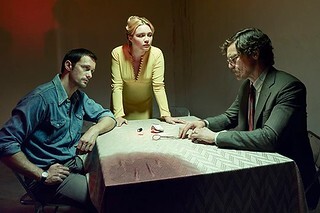

The farther she goes in impersonating Salim’s girlfriend, the harder it becomes for her to distinguish the simple binaries she had been taught. Who is right? Who is wrong? She becomes mired in a Dimmesdale-like quandary, losing track of her two faces, “bewildered as to which may be true.”

It is worth noting that Le Carré was friends with the American freelance journalist Janet Lee Stevens. She was sympathetic to the plight of Palestinian refugees, and visited the camps with Le Carré at her side. She was known, in the camps, as “the little drummer girl,” because of her passion for their cause. Stevens wrote powerfully about the massacre of the Sabra and Shatilla camps, perpetrated by Christian militias while the IDF looked on. Le Carré certainly makes an effort with The Little Drummer Girl to show both sides of a bloody coin. If he doesn’t find a perfect balance, it might be that that balance is not attainable.

There is a place in this world for the trashy novel, the guilty pleasure, the beach read. This is something I truly believe. As Kurtz would say, life is short and death is long, so you should enjoy it where you can. But it’s worth mentioning – and celebrating – the rare novel that can do both. A novel that can entertain and teach; that allows you to escape into false worlds, but also understand this one a little better.
Profile Image for Paromjit.
3,080 reviews26.3k followers
June 22, 2024
I first read this remarkable, smart and illuminating literary le Carre espionage novel in the 1980s, and on hearing it again on audio now, it is timeless in how it holds up today with its complex themes and issues. It is ably narrated by Adjoa Andoh, it demands concentration and patience for it is long, although I have to admit taking my time with it, relistening to parts as I savoured le Carre's intricate and captivating storytelling. You will find yourself drawn in by the unforgettable characters, the English actor Charlie, the perfect candidate, lured in by Israeli spy, Joseph, for an operation masterminded by his boss, Martin Kurtz. It is a joy to be once again immersed in the flawed characters, the focus on human nature, politics, relationships, intrigue, developments, and moral ambiguities that continue to resonate in our contemporary world. An extraordinary and superb novel, exquisitely written, suspenseful, surely one of the author's best, that I would urge readers to read, or engage in a rewarding reread, I can recommend listening to this audio. Many thanks to Dreamscape Media for the ALC.
Profile Image for Beata .
903 reviews1,385 followers
June 16, 2024
I have not read a book by the late David Cornwell which I have not enjoyed and this one is yet another proof that John Le Carre is the author for me. His plots are most complicated, and so are his characters. The Little Drummer Girl, with the Israeli-Palestinian conflict at its core, focuses on the moral dilemma which are still present. Thousands of innocent victims and revenge for killings which generates subsequent killings. I did not warm up to any characters and was surprised that little has changed since the 1980s or even since the 1940s.
I liked the narration although at time the lady narrator tried too hard. It is a long listen but worth your time.
*Many thanks to John Le Caree, Dreamscape Media, and NetGalley for a free audiobook in exchange for my honest review.*
- This is a new audiobook, unfortunately, it has not been added to GR yet.
Profile Image for Anne .
459 reviews469 followers
March 22, 2021
The Little Drummer Girl is a page-turning story set in the Middle East in 1979. Published in 1983 this novel is still relevant today. It is beautifully written literary fiction which takes on the Israeli/Palestinian conflict and portrays the complexity, brutality, and hypocrisy in both camps without taking sides. John Le Carre tells a sympathetic, exciting, at times heart-wrenching and completely absorbing story.

The narrative is as complicated as the situation in the Middle East. Le Carre’s mastery of dialogue, plotting and characterization puts the reader into the story and the minds of the characters. He portrays realistic emotional conflicts experienced by many of the characters in extremely difficult situations.

The main conceit of the novel is that Charlie, working as an actress in a second rate theater, is hired by an Israeli counterterrorism team to take part in the “theater of the real,” in which spies are actors and actors are spies, both trained to deceive.

Kurtz, the head of the Israeli team, has chosen Charlie because of her past attendance at talks supporting the Palestinians and other semi-radical causes and because she is an actress in a less than satisfying career. He wants to lure her with the offer of ‘the performance of her life” in the theater of the real and he wants someone who feels for the Palestinians whom he can send in to infiltrate one of their networks and whose empathy for their cause will be real. Is he worried that she may switch sides? Yes, but it is a risk he is willing to take.

Kurtz: “We want to offer you a job, Charlie, the biggest part you ever had in your life, the most demanding, the most difficult, surely the most dangerous, surely the most important and I don’t mean money. You can have money galore, it’s not a problem. Name your figure.“

Joseph, her handler and so much more warns her:

“There is no fear like it. Your courage will be like money. You will spend and spend, and one night you will look in your pockets and you'll be bankrupt and that is when the real courage begins.”

Charlie is not disuaded by the talk of fear and danger. She wants to do something exciting and important with her life. She takes the job, becomes the titular “little drummer girl,” and Kurtz and Joseph set her in motion in a brilliant and elaborate plan to catch the kingpin of recent Palestinian bombings.

One of the most powerful aspects of this novel is Le Carre’s treatment of both sides with sympathy, so that we are, like Charlie herself, by no means convinced that the Palestinians are completely wrong, or that Kurtz’s team is entirely justified in their actions. Who are the good guys or the bad guys is a complex matter of perception, morals and politics.
Profile Image for Murray.
Author 151 books745 followers
July 17, 2024
This is John Le Carré’s spy thriller about Israel and the Middle East. It has a great deal to do with the Palestinian people.

A British woman is an informant for the Israelis and falls into a relationship with a Palestinian man. She is in something of a relationship with her Israeli handler as well. Confused and conflicted, there is no good way out for her.

The author does not avoid taking sides and that is clear by the final page.

Tension and tragedy. An important story. Relevant for 2024. Absolutely. Though it was first published in 1983.
This entire review has been hidden because of spoilers.
Profile Image for Sara.
Author 1 book934 followers
January 26, 2020
"You want to catch the lion, first you tether the goat." - Misha Gavron

If a good book is one that immerses you in the fictional world it creates and makes you see and feel every moment of the characters lives and actions, then The Little Drummer Girl is a study in what a good book should be. I wondered if I would be swept up in it again as I was when I was young, romantic and impressionable. The answer is a resounding “yes”. I have long counted it as a favorite, unforgettable book, and I am happy to say I was right, it is that.

John le Carre does not write one dimensional stories or cliched characters. He is Janus and well able to show you both sides of the coin. He can make you feel that there is no right or wrong, good or bad, only very flawed people trying to fight the demons both inside and outside of themselves.

Charlie, our drummer girl, is an English actress, living the Western life and dabbling in political outrage, but in truth, naive and simple. How she comes to be deeply involved in the Middle East conflict between the Israeli and Palestinian factions is as complicated as the conflict itself, and John le Carre is a masterful writer to pull off this entanglement with all the detail and accuracy that is necessary to make it both believable and spellbinding.

Just as Smiley is not your typical British spy, Charlie is not your typical asset. In the midst of all this hatred, she is motivated by love. She is beyond her depth and she convinces herself that she can handle this by thinking of it as another role she is playing, but this is not a fantasy she can control. And what of Joseph, her handler; what does he feel, how much of this is just a role for him as well?

If I were making a short-list of underappreciated writers, John le Carre would be up at the top. He is one of those writers who can spin a tale that holds you enrapt, while beneath the fascinating story he always has an important issue to address, something worth saying that needs to be said. He is a purveyor of human nature, a soul-searching magician, a trafficker in literary style.

Yes, this one stays in my favorites folder, with all the enthusiasm and love that I felt for it the first time around. Couldn’t ask for more.
Profile Image for Σωτήρης Αδαμαρέτσος .
70 reviews60 followers
February 23, 2021
Εις μνήμη Τζον Λε Καρέ (1931-2020)
Κάθε αναγνώστης έχει την πετριά του. Για κάθε αναγνώστη υπάρχει ένας συγγραφέας, του οποίου τα έργα τα αντιμετωπίζει όπως τα εξ αποκαλύψεως κείμενα. Αυτουνού τα βιβλία κράτα σε ιδιαίτερο μέρος στην βιβλιοθήκη του, εύκαιρα δίπλα του, στην πρώτη στιγμή "ανάγκης", όταν αισθάνεται ότι θέλει να «χαθεί» πάλι μέσα στον κόσμο τους, σε αυτό το βασίλειο που κάθε άνθρωπος αισθάνεται μέρος του.
Όσο πεζό κι αν φανεί σε κάποιους, για μένα ο Τζον Λε Καρέ, κατά κόσμο David John Moore Cornwell, που πέθανε το Δεκέμβριο του 2020 ήταν ο άνθρωπος που ξεκλείδωνε σε κάθε έργο του την ωμη πραγματικότητα της ζωής! Που επιβεβαίωνε το μεγαλείο και την μικρότητα των ανθρώπων, την ικανότητα τους να στέκονται στο ύψος των περιστάσεων ή να υποκύπτουν στην δύναμη του εγωτισμού. Σίγουρα αυτό ξενίζει πολλούς που θα θεωρήσουν τα έργα του φτηνά κατασκοπευτικά του συρμού.
Αλλά δεν είναι έτσι, σας διαβεβαιώ.

Ο κόσμος του Λε Καρέ είναι ο κόσμος των μυστικών υπηρεσιών• αυτών των - και καλά σκοτεινών - κρατικών δομών που επεμβαίνουν στην ζωή των ανθρώπων δυνάμει μιας δήθεν κρατικής ή εθνικής κυριαρχίας. Όμως αυτό είναι ο καμβάς, που παίζει ρόλο φόρμας. Η αληθινή τέχνη του Λε Καρέ, και σε αυτό ήταν ανώτερος από πολλούς άλλους της εποχής του λογοτέχνες, ήταν να μπορεί να σκιαγραφεί με μοναδική πιστότητα τους πολλαπλούς χαρακτήρες των ανθρώπων. Να διεισδύει στην ουσία της ανθρώπινης φύσης με τέτοιο τρόπο που έκανε όσους τον διαβάζαμε να θεωρούμε τους ήρωες του αληθινούς. Με σάρκα και οστά, καθημερινούς δίπλα μας ανθρώπινους χαρακτήρες. Εξάλλου ήταν ένας κοσμογυρισμένος συγγραφέας, και πολλοί από τους ήρωες που δημιούργησε είναι εμφανές ότι αγγίζουν αυτήν την εμπειρία του της κατά πρόσωπο γνώσης. Όπως έλεγε και ο ίδιος, έκλεβε από κάθε άνθρωπο που συναντούσε…

Στον κόσμο των μυστικών υπηρεσιών το ψέμα και η προσποίηση είναι η δουλειά. Σε πολλές παραλλαγές, με κάθε τρόπο, οι ήρωες του Τζον Λε Καρέ παλεύουν να κρύψουν την πραγματικότητα με σκοπό να πετύχουν αυτό που σχεδιάζουν. Κάθε ήρωας καλείται στο υπηρεσιακό πεδίο να δείχνει μια δεύτερη ή και μια τρίτη προσωπικότητα, τις οποίες μπορεί να βγάλει από μέσα του κάθε στιγμή. Είναι ένα παιχνίδι με τον εαυτό του. Όμως αυτός ο σχεδόν θεατρικός χαρακτήρας του ήρωα με τις διαφορετικές προσωπικότητες, για τον Λε Καρέ ήταν αδύνατο να κατεβάσει απλά την αυλαία και να γίνει ο άνθρωπος που ήταν πριν. Συνεχίζει να επιβιώνει μαζί της, είναι πια, κυριολεκτικά,αυτός ο... «άλλος».

Η ικανότητα του συγγραφέα συνίστατο στο να μπορεί να διαβάζει ψηφίδα-ψηφίδα την μια προσωπικότητα μέσα στην άλλη, να μπορεί μέσα σε μια απλή φράση να δώσει αυτήν την εσωτερική πάλη του ήρωα του με το «άλλο» πρόσωπο, αυτό που υποδύεται, και θέλει να πείσει ότι είναι. Να δώσει μοναδικά πορτραίτα της διπλής διάστασης αγωνίας των ηρώων, που παλεύουν να πείσουν πρώτα τον εαυτό τους ότι είναι κάποιος άλλος, πριν πείσουν το υποψήφιο κάθε φορά θύμα τους. Είναι κάπως σαν να κοιτά ο ήρωας μέσα σε ένα καθρέφτη και αυτός απέναντι να δείχνει, εξωτερικά, εκείνον• τη ίδια στιγμή όμως συνειδητοποιεί ότι νιώθει, σκέφτεται, αντιδρά και είναι κάποιος άλλος. Και τελικά, είναι κάποιος άλλος. Στα έργα του Λε Καρέ, το ερώτημα του αναγνώστη, ποιος ήταν τελικά ο αληθινός χαρακτήρας του ήρωα, παραμένει πάντα αναπάντητο. Απομένει στον αναγνώστη να κατανοήσει την αληθινή φύση του ήρωα.

Ομολογώ ότι σπάνια κατάφερα να μην διασταυρώσω έναν χαρακτήρα του με ανθρώπους που συναντώ καθημερινά στην επαγγελματική μου ζωή. Στην δουλειά μου το πρώτο πράγμα που μαθαίνεις με την καθημερινή τριβή είναι πότε οι άνθρωποι λένε ψέματα. Όχι ψέματα σε μένα, σαν επαγγελματία που πρέπει να σχηματίσει την εικόνα μιας κατάστασης, μια δεδομένη στιγμή• αλλά όταν, εκείνη ακριβώς την στιγμή, λένε κυρίως ψέματα στον εαυτό τους. Γιατί οι άνθρωποι σχηματίζουν μια εικόνα που ο κάθε ένας θέλει να πιστεύει για τον εαυτό του και, προσπαθώντας να βιώσει αυτή την εικόνα ως αυτοπραγμάτωση, είναι πρόθυμος να παραδεχτεί το ίδιο του το ψέμα ως αλήθεια. Να πιστέψει ότι είναι κάποιος άλλος. Αρκεί να θέλει να πιστέψει αυτή την «αλήθεια».

Έχω «πιάσει» πλείστες φορές τον εαυτό μου, όταν μιλάω με κάποιον να προσπαθώ να καταλάβω αν μιλάει ο ίδιος ή ένας άλλος εαυτός. Αν βλέπω το πραγματικό του πρόσωπο ή έναν χαρακτήρα που υποδύεται εκείνη τη στιγμή. Συνήθως το κάνει κανείς στους άλλους για κοινωνικούς λόγους. Όμως, το κύριο ερώτημα είναι αν, στο τέλος, ο καθένας καταλήγει να μεταμορφώνεται, εκών άκων, σε αυτόν που υποδύεται. Και τελικά, γίνεται ξένος στον ίδιο του τον εαυτό. Αλλά μήπως αυτό δεν γίνεται και στην πραγματικότητα; Οποίος προσποιείται, χάνει ένα κομμάτι του κόσμου του.

Οι άνθρωποι προσποιούνται στον ίδιο τους τον εαυτό. Και ψεύδονται σε αυτόν. Το κάνουν από ανάγκη αυτοπροστασίας ή από ανάγκη να φανούν πιο δυνατοί απ΄ ότι πραγματικά νιώθουν. Ενίοτε, ταυτίζονται τόσο πολύ με τον άλλο τους εαυτό, που τελικά προτιμούν να μείνουν προφυλαγμένοι μέσα σε αυτή την άλλη προσωπικότητα. Ο Σαίξπηρ έλεγε ότι όλοι οι άνθρωποι είναι ηθοποιοί, εκτός ίσως από κάποιους ηθοποιούς. Κάθε μέρα συναντά κανείς τέτοιους ανθρώπους. Και είναι δική μας επιλογή να τους παρατηρούμε να συνεχίζουν πεισματικά να υποδύονται τον «ρόλο» που έχουν επιλέξει. Είναι κάπως λυτρωτικό να παρακολουθείς κάποιον να υποδύεται πως είναι κάποιος άλλος, όταν αντιλαμβάνεσαι τον αληθινό του χαρακτήρα. Στον κόσμο του Λε Καρέ η αποκάλυψη του ήρωα είναι συντριπτική. Στην πραγματική ζωή όμως είναι ανθρώπινο. Απλά, ανθρώπινο...
Profile Image for Blair.
151 reviews196 followers
November 11, 2021
A young, highly intelligent, English actress is recruited by Israeli intelligence and given a starring role in the 'theater of the real'. Used as bait to track down an elusive Palestinian terrorist, Charmian 'Charlie' Ross is thrust into the limelight, emotionally ill-prepared for such a new and dangerous role.
In this somewhat dated but still highly relevant novel, John Le Carré shines a light on the Palestinian/Israeli conflict and the machinations of intelligence agencies. But he also creates vivid, complex characters (Charlie, the main protagonist, is fully realized) and writes with a razor sharp intellect.
I've struggled with Le Carré in the past, finding his writing a bit dry for my taste, but determined to persevere, I found Little Drummer Girl not to be just another spy novel, but in fact, fiction of the highest merit.
And while I may not gobble up everything he has written, I hope there's a few more like this one.
Profile Image for Manny.
Author 48 books16.1k followers
January 16, 2015
I found this novel extremely disturbing, and the movie version starring Diane Keaton even more so. Perhaps it's because I'm half-Jewish, and family discussions regularly circle back to Israeli/Palestinian politics. The basic scenario in the book is that Mossad are concerned about a successful series of bombings carried out against Israeli targets by a Palestinian terrorist group. They want to infiltrate the organization, and recruit a young actress to help them. There are two scenes near the beginning that I quite often think of.

In the first, the Mossad agent who later becomes Charlie's controller is making the initial approach. She's in the middle of filming a drink commercial; she's sitting under a beach umbrella with a handsome young guy, smiling and laughing as they sip from their glasses. When she's done, he comes up and congratulates her on her performance. She replies breezily:

"Oh, it's easy. You just have to think that the wine's making you want to fuck."

I've never been able to watch a drink commercial the same way since.

The second scene isn't as amusing. She's been recruited, and the controller is coaching her for her role. She has to be able to look plausibly passionate about the horrors inflicted on Palestinians. He tells her a story from 1948, where Israeli tanks were used to destroy a Palestinian village. He goes into detail about the blood, the deaths, the suffering, the appalling injustice. She's quite shaken. Then she asks him how he knows all these details. He must have been somehow involved personally? And he replies,

"I was in one of the tanks."
Profile Image for Rob.
22 reviews1 follower
September 9, 2009
An amazing novel. I was a le Carre fan coming in, but this book's explorations of identity and morality blew my mind while simultaneously blowing up lots of other stuff. It's a story about Zionists, Palestinians, and bombs. And love and identity and morality. It's complex as hell; the identity stuff is on a PK Dick level, but goes there without drugs. The morality issue may be closer to common, as we are given Palestinians and Zionists and why they are who they are, but le Carre never overtly politicizes. Part of the point here is the complexity of the politics, but a greater point is how it affects people. And that's what this story comes down to: people. Fucked up beyond belief, often to a large extent by choice (because once you've chosen a political side and taken it to a certain point, you have no other choice).

The characters are fully drawn, developing as the story goes to the point that they develop the story, but they do it in the context of an intricately written plot.

This is a masterpiece. No Smiley, but the disappointment of his absence didn't last long. It's a beautifully written book, wry and harrowing.
Profile Image for El lector de l'antifaç.
110 reviews24 followers
December 13, 2020
Emocionante novela, de principio a fin como suele ser habitual en el maestro John Le Carré. A pesar del tiempo que hace que lo leí, recuerdo perfectamente la maestría del autor en el desarrollo de los personajes y en la magnífica contextualización en el marco de un lamentable conflicto que, desgraciadamente, todavía persiste y con escasas perspectivas de solución. Una extraordinaria narración. Totalmente recomendable.
Profile Image for Albert.
524 reviews62 followers
September 4, 2023
Around the time I was in college I read quite a few le Carré’s novels. I very much enjoyed most of them but for some reason did not think much of this one (I gave it two stars). Then comes Goodreads and I find that most of my GR friends think highly of this le Carré novel. Hmm... Why did my opinion differ so? I never minded being different, but I wanted to understand why. Did I read it at the wrong time or was it something else? So, I read it a second time and have now rated it four stars. My best guess is that on my initial read I was enjoying the le Carré Cold War novels that included George Smiley and The Little Drummer Girl just wasn’t what I was expecting.

In The Little Drummer Girl a Palestinian terrorist group is blowing up Zionists and the Israelis have been unable to get a handle on who is leading this effort. Kurtz (initially Shulman; the only challenging aspect of this novel is that most every character has two or more names) leads an Israeli effort to infiltrate the Palestinian organization. Charlie, an English actress who has been active politically, is chosen for this role in the “theatre of the real”. I thought the novel was excellent. The development of all the main characters was quite good. The suspense builds throughout the novel and is handled very well at the end. As many readers have mentioned, I felt sympathy for both sides of this conflict and thought le Carré did an excellent job of showing me the different points of view. Completely separate from the political conflict and how you feel about the two sides, you find yourself rooting for Charlie, which I thought was le Carré’s biggest achievement.

The complexity of this novel and its relevancy even today makes me want to go back and reread more of le Carré’s work, but I don’t know if I will.
Profile Image for Roman Clodia.
2,895 reviews4,646 followers
August 27, 2019
I'm having a hard time untangling my responses to this novel: part of me dislikes the dismissive way in which le Carré's female protagonist is portrayed: her childish 'I'm a rebel, me' politics, her self-absorption, her naivety, her arch dialogue: in le Carré's defence, I guess, we have to remember this was first published in 1983 and can't help but be shaped by the gender politics of the time.

I was also slightly amused that this is essentially a 'caper' plot, albeit more serious than that label frequently signifies. The civilian trained up by the security services, here Mossad, to infiltrate a terrorist cell is a mainstay of many commercial thrillers and always requires a certain level of suspension of disbelief - I particularly found it hard to swallow Charlie going from small-time actress to being able to resist two-day interrogation by hard-core Palestinian fighters in the snap of a finger.

Yet, for all that, this is a powerful book, all the more so for the slow build up of detail that so many of the negative reviews complain about. It's true, this doesn't have the immediacy and grab of so many of the Smiley novels and there were times when I was tempted to speed-read (especially since I started but abandoned the recent BBC production). With hindsight, though, it's the very slowness that hooks us, giving the story a depth and labyrinthine feel that comes from the accumulation of small moments, intricate details that may or not be important.

At the heart of the book is the tragic impasse that still exists in the Middle East (though with a renewed and heated resonance in 2019). The section set in Lebanon is especially powerful as Charlie has her rather easily-ingested and shallow views challenged in all directions. We do, too, as acts of terrifying violence are committed on both sides of the divide, as refugee camps are bombed, as children watch their father blown up by mines, as an Israeli moderate speaking out for a Palestinian homeland becomes, counter-intuitively, a target.

It's this sort of doubleness that gives rise to the most interesting part of the book: the way that Joseph/Michel, Israeli hero and Palestinian fighter, become layered onto the same person - and Charlie's relationship(s) to both men. While, ostensibly, one is 'real' and the other merely the product of acting, the whole thrust of the book questions that, not least with the continued repetition of the phrase 'theatre of the real'. Is 'Joseph' any more real than his Michel? Does Charlie's love story with him have any more foundation than the one he creates for her with Michel? What does that imply for the ending:

So this is slow and requires patience from its readers, with a sudden speed up of the plot towards the last 25% or so - but then this isn't trying to be an airport thriller and we need to adjust our expectations accordingly. It's the psyches of the combatants on both side of a seemingly unbridgeable divide that seem to be le Carré's real focus of interest: the instability of the deeply and irreparably wounded which leapfrogs any easy panacea of 'justice'.

Profile Image for mentor&muse.
8 reviews
May 23, 2013
John le Carrè’s The Little Drummer Girl is much more than a spy novel. At its heart is a compelling relationship – which just happens to be between an agent and her agent runner (or case officer) amid a fascinating plot to stop a terrorist bomber. But it’s the genius and complexity of the relationship that raises The Little Drummer Girl to heights far above the limits of the spy genre.

An intricate fiction is planned in order to infiltrate the bomber’s network and bring him down. Michel, the bomber’s deceased brother, will be used as the access point. Charlie, struggling English actress and ideological seeker, is recruited somewhat against her will to play the part of Michel’s grieving lover. But fabricating a history between the two won’t be easy. Not only must the bomber be convinced of the fictitious love affair, but also Charlie needs to be able to draw upon her memories of Michel and her feelings for him as if they are real.

Words have power, and in this tale we see the power of the spoken word, sound and breath, to summon, to establish memory where there is none. Meet Joseph: battle-scarred Israeli hero and “all that a girl adrift could wish for in her savior.” He’s an enigma, a conjuror, both warrior and poet. Standing in for Michel, he manipulates Charlie, even as he’s drawn to her. He walks her through scripted scenes of her imaginary life with Michel, making her go through the motions and say the lines he’s written for her. At first Michel appears only as a cutout, a hallucination. But through the power of words, fiction becomes truth. And Charlie’s lover becomes a chimera: Joseph and Michel superimposed one over the other, shifting in and out of sync, their outlines indistinct.

At the conclusion of the novel we’re so invested in this relationship that we want more. We want to continue beyond the final page, to see Charlie and Joseph heal and come into focus.

The Little Drummer Girl deserves a wider audience. I think many readers who don’t enjoy the spy genre probably just overlook it. And a note: don’t expect it to be about politics. le Carrè deftly avoids politics and manages beautifully to embrace characters on both sides of the Israeli-Palestinian conflict.
Profile Image for Darwin8u.
1,835 reviews9,034 followers
July 24, 2012
What happens when a woman loves two righteous men? Two feuding nations? A woman who is struggling with both her inner and outer world; her inner and outer dialogue. ''The Little Drummer Girl'' is the second best spy novel I've ever read, but I NEVER give first prizes. Charlie is a woman who incubates in the womb of her mind the warring ideals and pitiful trails of two imperfect people(s). We all have both angels and devils in our nature and the irony is that when we try to invent one, we end up becoming the other.

I love William F. Buckley's take:

''The Little Drummer Girl'' is about spies as ''Madame Bovary'' is about adultery or ''Crime and Punishment'' about crime. Mr. le Carré easily establishes that he is not beholden to the form he elects to use. This book will permanently raise him out of the espionage league, narrowly viewed.
Profile Image for Joy D.
3,128 reviews329 followers
March 29, 2025
Published in 1983, The Little Drummer Girl is a literary spy thriller that combines elements of psychology, politics, and moral ambiguity. Charlie is a young British actress with leftist sympathies who is recruited by Israeli intelligence to infiltrate a Palestinian extremist network. Under the guidance of a handler she comes to love, Charlie is thrust into an elaborate deception. She assumes the persona of a terrorist’s lover to attempt to lure his brother, a leader of the network, into capture. As Charlie is pulled deeper into the world of espionage, her loyalties and sense of self are tested to the breaking point.

The book offers a nuanced portrayal of the Israeli - Palestinian conflict. It explores the human costs of ideological commitment, political violence, and the manipulation of idealistic individuals. Both sides operate in morally compromised territory, driven by historical grievances and fears. Le Carré's prose is elegant. His gift for dialogue is evident in the verbal sparring among characters. The novel explores the idea that espionage is a form of performance. Charlie, as an actress, is uniquely suited to the world of deception required by intelligence work. The novel constantly questions whether she is merely playing a role or whether the role is reshaping her reality.

The Little Drummer Girl is more of a slow burn than a fast-paced thriller (though there are more than a few scenes of dramatic action). Le Carré constructs the novel with meticulous detail. It is well-planned and well-executed. He employs shifting perspectives and rich character development to create an almost cinematic experience. It continues to be relevant today, with its themes of terrorism, state-sponsored violence, and the continuing Middle East conflict. I found it intellectually engaging throughout.

4.5
Profile Image for Quirkyreader.
1,629 reviews10 followers
June 2, 2018
In this story LeCarre takes us on a trip into the schizophrenic world of creating legends and running spies.

It was set during the early 1980's when terrorist bombings had become common place in Europe. And there were characters in this story that reminded me of the BaderMinehoff(sp?) Group.

Even though some of the elements in this story are dated, it is still a powerful novel.

And after a spate of reading not so great Le Carre novels, this one was very refreshing.
Profile Image for Patricia Williams.
736 reviews209 followers
Read
November 7, 2018
I do not want to rate this book because I've given up on reading it and I know this author is greatly admired and read all over the world. I just could not get into the book and am moving on.
Profile Image for Tom Marcinko.
112 reviews14 followers
January 29, 2013
I have a vague memory of a column by George Will, back when I used to read him, about this 1983 novel. If memory serves, Will was upset that le Carré depicts the Palestinians as having a point of view, or maybe of just acknowledging that they exist. He likened the book to a Harlequin romance. He hated the dust jacket, and the typeface.

I don’t like any of the choices we’re given in the Middle East: choose one side or another, or say “a plague on both your houses,” or ignore it altogether. Le Carré doesn’t like them either, and offers no answers, easy or otherwise. He sees the big picture so well I wonder how well he sleeps.

Having only just read this novel, I’m surprised that it was so controversial. It could probably be published today without creating a ripple. Unfortunately, though, it would not feel dated.

I also remember not liking the movie with Diane Keaton. It seemed bowled over by its own premise: Wow, an actress, prone to fabulation, playing a part—in real life! A-and forgetting that she’s acting! Imagine that. But it’s been a long time, and maybe I should give it another shot.

As usual, though, as a novelist le Carré rocks. His gift for creating complex characters, for showing the small but telling gesture, his sense of humor, and his sympathy for his people…it’s all here. Sometimes I liked his characters, sometimes not, which I think is what was intended. Also, one of JLC’s less labyrinthine plots. He can make real drama out of a situation that a lesser writer (most of us, I’m afraid) would milk for just action or melodrama.

His 1993 introduction relates some of the footwork he did to research this novel. I hope he’s got a memoir in the works.

He is conceivably our George Orwell. Can I be the first to say that? Probably not. He also reminds me of Joseph Conrad.

As I’ve said before, I found him too subtle and patience-trying in my younger days but now I’m happily working my way through the catalog. Glad to have 7 or 8 unread JLC novels still ahead of me.

If any of them too pissed off George Will, then so much the better.

A few quotes and bits of business, typed out in the spirit of learning-by-doing, for the Aspiring Novelist’s/Working Writer’s Toolkit:

All Americans unsettled him; and most scared him, either by their knowledge or their ignorance, or both.

He had the answers children long for.

…deep down, like most rebels, she was only looking for a better conformity.

"Do you think we do not understand that your politics are the externalisation of a search for dimensions and responses not supplied to you when you most needed them?”

…she herself, that tiny gyroscopic creature deep inside that always managed to stay upright, tiptoed gratefully to the wings to watch.

“You’ve read Frantz Fanon. Violence is a cleansing force, remember? It frees us from our inferiority complexes, it makes us fearless and restores our self-respect.”

Briefly, they both smiled, though not at each other.

To resort to violence was to throw all their hard-earned goodwill out of the window. Besides, as professionals they deplored the very thought.

Under the compulsion of his presence, she had consigned her convictions to the dross of an earlier existence. She wanted none of them, unless he did.

“Our village was famous for its figs and grapes, for its fighters, and for its women, as beautiful and obedient as you are.”

“ … ‘The pogroms are about to begin,’ he said. I asked him—I, the smallest, who knew nothing—‘Father, what is a pogrom?’ He replied, ‘What the Westerners did to the Jews, so the Zionists now do to us. They have won a great victory and they could afford to be generous. But their virtue is not to be found in their politics.’ ”

…he was in the mood of a child who is criticising authority only in order to be reassured of its embrace.

He would set a straight course, only to look back and marvel at his degree of error.

If you have ever watched one, you know that an empty car is a truly stupid thing to stare at, and Litvak had watched a lot of them. With time, just by holding it in focus, you find yourself remembering what a fatuous thing a car really is without man to give it meaning. And what a fatuous thing man is to have invented cars in the first place. After a couple of hours it is the worst piece of junk you have ever seen in your life. You start to dream of horses or a world of pedestrians. Of getting away from the scrap metal of life, and returning to the flesh. Of your kibbutz and its orange groves. Of the day when the whole world finally learns the risks of spilling Jewish blood.

“What we call an unconscious agent.”

…there were enough armed men in different uniforms to begin their own war.

When he had finished, they asked her a number of grave questions about the chastity of Western women, of which they had heard disgraceful but not wholly uninteresting things.

I see this every day. I am a hardnosed Western journalist describing deprivation to those who have everything and are miserable.

Kurtz had asked a question; Minkel, who renounced all barriers to knowledge as unacceptable, proposed to answer it.

…from now on Khalil requires that there always be two things: two plans, two signs, in everything a second system in case the first fails; a second bullet in case the world is still alive.

She heard a woman’s wail rising to a clenched, beseeching sob; then a man’s urgent shout. Helga and Mario were advancing the revolution without her assistance.

The answer was in everything she had seen since the night she had signed on with the theatre of the real. For Palestine, it ran. For Israel. For God. For my sacred destiny. To do back to the bastards what the bastards did to me. To redress injustice. With injustice. Until all the just are blown to smithereens, and justice is finally free to pick herself out of the rubble and walk the unpopulated streets.


Profile Image for Kate O'Shea.
1,325 reviews192 followers
June 15, 2024
2.5 stars

Well this left me feeling completely flat. The saddest thing about this book is that it is as relevant now as it was 80 years ago. Israelis and Palestinians are still at war with no end in sight. More people die and there's no solution, which is pretty much what Le Carre presented us with in these pages.

It's a complicated story of double agents that is much better told by the synopsis than my poor efforts at being concise.

I listened to the new audio recording of this book and even though I've listened and loved several of Adjoa Andoh's narrations before this I'm afraid that this time she let the accents get the better of her. The rolling of r's on the Arab and Israeli characters got more and more pronounced whilst the Germans were positively barking by halfway through. As for Charlie, she had permanent Barbie/AQI disease. All in all I was quite disappointed. I'd have preferred a straight reading.

So in conclusion I didn't enjoy the reading and I wasn't convinced by the storyline. I have a chequered past with Le Carre though so if you love him unconditionally then you'll probably enjoy this. I was bewildered by the halfway through and once I'd listened to the audio I watched the BBC series just so I could figure out what had occurred. (And even though it was a good production I still felt miserable at the politics and wasn't convinced by Charlie at all).

Sorry, not for me.

Thanks to Netgalley and Dreamscape Media for the audio advance review copy.
Profile Image for MTK.
498 reviews36 followers
July 17, 2020
3,5 αστέρια. Ένα δυνατό πολιτικό θρίλερ, έξυπνο και καλογραμμένο, ένα μοντέρνο παραμύθι με ήρωες κακούς και δυστυχισμένο τέλος που δεν είναι καν τέλος. Αντίπαλοι είναι μια ομάδα Ισραηλινών κατασκόπων εναντίον Παλαιστίνιων τρομοκρατών, σε μια μάχη που καμία πλευρά δεν έχει το δίκιο με το μέρος της (ή έχουν και οι δύο, όπως το δει κανείς) και όλοι είναι ηθικά διεφθαρμένοι. Το ότι κυκλοφόρησε για πρώτη φορά αρχές της δεκαετίας του 1980, για εμένα προσωπικά προσέθεσε μια μοιρολατρική διάσταση στην πλοκή: παρακολουθούσα την εξέλιξη με κομμένη την ανάσα, ενώ ήξερα πολύ καλά ότι μακροπρόθεσμα λίγη σημασία θα είχε ποιος θα νικούσε αυτή τη μάχη, αφού 40 χρόνια μετά ο πόλεμος συνεχίζεται με αμείωτη ένταση. Το κυριότερο μείον είναι η πρωταγωνίστρια. Γεγονός είναι ότι οι γυναικείοι χαρακτήρες του ΛεΚαρέ είναι λίγο περισσότερο από κομπάρσοι στις ζωές των ανδρών που πάντα είναι οι ήρωες και σχεδόν δεν υπάρχουν έξω από τον δευτερεύοντα ρόλο τους στις ανδρικές ιστορίες. Αυτό από μόνο του είναι προβληματικό, αλλά όταν είναι δεύτεροι χαρακτήρες δεν επηρεάζει τόσο την πλοκή. Η Τσάρλι όμως είναι η αδιαμφισβήτητη πρωταγωνίστρια του δράματος και το γεγονός ότι είναι λίγο-πολύ ένα σκοτεινό κορίτσι του Τζειμς Μπόντ (όμορφη και ταλαντούχα, αλλά ψυχολογικά ασταθής, ηθικά χρεωκοπημένη και εύκολα προσαρμοστική στο ρόλο που την θέλει ο άνδρας που της επιβάλλεται με την προσωπικότητά του) θα μπορούσε να καταβαραθρώσει όλη την αφήγηση, εάν ο ΛεΚαρέ δεν ήταν μάστορας του είδους, γι' αυτό με το ζόρι του έβαλα το 4 αστέρι.

3,5 stars. This is an excellent political thriller, intelligent and well-written, a modern fairy-tale with only villains and unhappy endings that aren't really endings at all. It pits Israeli spies against Palestinian terrorists in a struggle where no side has right on their side (or both have, depending how you look at it) and everyone is morally bankrupt; the fact that it was published in the early 1980's added, for me, certain fatalistic potency: the modern reader follows the progress of the story breathlessly, even as we know that in the end it will hardly matter at all, because no matter who wins the battle, the war will still be raging on 40 years later. My main complaint is the protagonist: le Carre's female characters are barely worth the name, they are mostly props to support the men's stories and they basically stop existing as real people once a male stops looking at them. This is a serious flaw in his writing, but as long as they are only supporting actors in the narrative, it doesn't detract too much from the story. However, Charlie is the main character, and it is problematic that she is a dark version of a Bond girl: beautifull and talented, but emotionally unstable, morally defunkt and easily persuaded to devote herself (in the space of one night and against her previous inclinations) to the cause of the man who dominates her with the force of his personality. It could have sunk the whole storytelling if Le Carre wasn't as brilliant as he is, and even so, I gave the 4th star grudgingly.
Profile Image for Left Coast Justin.
612 reviews199 followers
November 19, 2020
This was actually one of the most suspenseful and exciting of Le Carre's books, but it took a long time to get to the exciting part, which means it doesn't quite land on my shelf of favorites. This is also one of the most plot-driven of Le Carre's works, and that makes it rather difficult to review without spoiling.

I was happy embarking on this journey, because it not only started in my old hometown, but in the very neighborhood of the town I lived in so happily. Then -- ooops -- a bomb went off. The rest of the book described the attempt to catch the person(s) who did it. But what the book really is, is one hot mess of a love story between two very troubled people.

The next stage of the book described the recruitment of the titular Drummer Girl, a low-self-esteem creature who gains her strength from acting. This is a very long book, and we spend a lot of time with three characters in particular -- the actress, the mastermind and the soldier.

There is a severe culture clash between this actress, trained in sensitivity, in the arts, in understanding people, and the mastermind, who "as some men may be seen to be in love, so Schulmann was possessed by a deep and awesome hatred." One senses that this is not going to end well. The beginning and the end of the book are set in Germany, and one of the principals, while flying from Munich to Berlin, notes that "Somewhere in that blackness was the railway line which had brought the goods train on its slow journey from the East; somewhere the very siding where it had parked for five nights and six days in the dead of winter to make way for the military transports that mattered so much more, while [he] and his mother, and the hundred and eighteen other Jews who were crammed into their truck, ate the snow and froze, most of them to death."

But this book isn't about the despicable events of WWII, but rather the clashes that arose from Zionism, i.e. the establishment of the Jewish state in the Middle East, on lands that had previously belonged to the Palestinians. (An excellent historical perspective in all this is given in Scott Anderson's book.).

The first half of the book dragged, and honestly, I fell asleep numerous times trying to force my way through it. This book was set in the 1970's, and if this story is indication, I really missed the party -- our heroine, finding herself with her cast in Greece, slept with all of the heterosexual members of the cast, and without thinking too hard about it, I remember four additional men in the book. I am not judgemental about this, but it just seems odd to somebody growing up in the post-AIDS era. The problem with all this is that the recruitment process took forever, despite the fact that "the secret world is of itself attractive." While I enjoy watching actors practice their art onstage, I find hanging out with them after hours somewhat wearying, and that's how I felt about the first half of this book.

Our heroine is somebody whose politics are strongly influenced by the men she interacts with. Had the other party in this conflict gotten to her first, the outcome could have been completely different. (Well, let's be honest: This is a book about Israelis and Palestinians, and it doesn't seem the the outcome is going to change any time soon.) There were some nice moments in this section, though. -- I like a description of the soldier when our lady leaned against him: "His shoulder was as hard as a cliff and about as intimate".

Finally, though, things start to happen, and to my great surprise, the tension was really racheted up. Le Carre's books are mostly about men pondering events happening far away, but in this case we're in the middle of the action, and he writes this really well. Our actress heroine is well aware that any mistake she makes can cost her life, and the sickening sense of dread that accompanies some of these scenes is deeply uncomfortable reading (as intended). This is aside from the moral dread of a woman who approaches the world heart first, but is surrounded by violent and hard men and women who simply want to get the job done.

The ending was wonderful. Well worth a read, but you may have to push yourself past the halfway point.
Profile Image for Pachelbel.
296 reviews16 followers
May 26, 2015
There is no fear like it. Your courage will be like money. You will spend and spend, and one night you will look in your pockets and you'll be bankrupt and that is when the real courage begins.

This book is possibly the most complex le Carré novel I've read to date. This is the story of Charmian ("Charlie" to her friends, though she doesn't keep them for long). She's a talented British actress who, like many other talented artists, is penniless and jobless. She follows her abusive boyfriend from place to place, into anarchist sermons and even into pseudo-militant camps to show their support for Palestine.

All of this makes her the perfect recruit for the Israeli intelligence outfit that is trying desperately to find the leader of a Palestinian terrorist cell. Gadi Becker (affectionately dubbed "Joseph" by Charlie) is sent to bring her in, despite the fact that three Israeli wars have burned him out and made him doubt his country. Charlie grows attached to him, to love him even--and that's when he sends her to deceive and help kill the people she once tried to help.

I could try and try to describe how heart-wrenching and intricate this novel was. My book has so many little post-it notes sticking out of it at points that really grabbed me, but taking any segment out of context to quote it robs it of its impact.

If you have any interest in what real spycraft is like, and if you only have the patience for one spy book, this should be it. Its an unflinching look at how brutal both sides of a conflict are, at how manipulative and dirty and cruel and somehow beautifully intimate it is.
Profile Image for Annette.
236 reviews30 followers
April 3, 2018
Brilliant. Unputdownable. One of his best novels and his female main protagonist is brilliantly realised. In awe of the writing craft displayed in this novel. Le Carre's skill at weaving backstory with a love story with a gripping political thriller is unique. Every time I read him I'm reminded again that he is a real novelist.

Those saying it is slow are idiots and clearly have short attention spans and are of low intellectual ability - try one of those gaming game thingys where everyone gets killed in a minute then you reset.

Basically, the great joy of le Carre, in all his novels, is the meticulous build up with superb characterisation and brilliantly written scenes. For me this is literary fiction at its very best with a thriller element. His writing is superb and reading him is to engage with ideas on so many levels.

The backdrop of the Palestinian/Israeli conflict is as relevant as ever. I can't wait for the TV series starring Florence Pugh coming sometime in 2019 I think.
Profile Image for Stratos.
979 reviews124 followers
January 12, 2019
"Το δις εξαμαρτείν ουκ ανδρός σοφού" Αφού δεν μου άρεσε ο Επιμονος Κηπουρός γιατί θέλησα να διαβάσω την Μικρή Τυμπανίστρια; Παρεπιπτόντως. Δεν κατάλαβα πως βγήκε αυτός ο τίλος και παρακαλώ εξηγήστε μου... Ατμοσφαιρικό βιβλίο, κατασκοπικό το θέμα, πλην όμως μας εξάντλησαν οι τόσες λεπτομέρειες προκειμένου να μας δοθεί η ατμόσφαιρα.
Το βιβλίο είναι καλό. Τουλάχιστον έτσι λένε κριτικές και αστεράκια. Η άποψη μας όμως παραμένει για ένα βιβλίο που ουδόλως μας συγκίνησε, που ουδόλως μας έβαλε στο κλίμα της εποχής. Ενδεχομένως η πολυδιαφημισμένη σειρά του BBC να μας λύσει και κάποιες απορίες από το story.
Profile Image for Paul Alkazraji.
Author 5 books225 followers
February 4, 2024
The-Little-Drummer-Girl-cast-31c8e49
Gadi, Charlie and Kurtz in the BBC drama of the book.

After watching the 2018 BBC adaptation of ‘The Little Drummer Girl’ with Alexander Skarsgard and Florence Pugh, I made this my next Le Carre novel of choice. It was a richly rewarding read.

Set against the backdrop of the Israeli-Palestinian conflict of the 1970’s, a terror group is bombing prominent Israelis in Europe to make the world listen and to ‘show the world Palestinian pain’. Enter Kurtz and his Israeli Secret Service team, racing against the military hawks at home to find a more incisive response than the reprisal bombing of another Palestinian refugee camp.

An English boarding school educated actress, Charlie, is recruited by the team to act out a role that will ensnare the cell’s lead Palestinian bomber Khalil. For her entree into the radicals’ circle, Charlie’s relationship with Khalil’s younger brother Salim is fictionally created, with Joseph her case officer, known as ‘Gadi’, acting out the part. The lines of truth and fabrication in this love affair are blurred as Gadi ‘dances with his shadows’ roleplaying the Arab adversary to cultivate her legend. And Charlie ‘wants to be a part of something’, to have adventure and to save lives. ‘After all her drifting, their straight line’ writes Le Carre. Then, in a very dangerous ‘theatre of the real’, she ‘pays out her courage like a currency’ until she is left spent and vulnerable in the final critical moments of trapping Khalil.

Known for the detailed research trips that give his works the full sensory experience of his stories' settings, we travel with Le Carre’s characters through Greece, Israel, Palestine, Germany and England. We go to where ‘the taverna was rougher than those on Mykonos, with a black-and-white television fluttering like a flag nobody saluted, and old hills men too proud to take an interest in tourists’. Then as Charlie drives a red Mercedes north from Greece she passes a border where ‘the flags of all nations are cooked to pale pastel by the sun’. Later as she is driven past the bombed out buildings of Beirut ‘a bit of moon, slipping from one hole to the next, kept pace with them’. Soon ‘across the valley a huge new Israeli settlement stood like the emissary of some conquering planet’.

These finely-observed details colour in the backdrop to a deeply absorbing plot. Like most books its depths stretch down well below the cold surface waters, but this one more so. There are many insightful observations of human nature too that ring true like the ‘competitive pride of village life’ and children holding Westerners’ hands on the street for the ‘prestige’ of it. The rationale of terrorism is given its frightening articulation here, and the Western revolutionaries who rally to its cause appear seedy.

The secret warrior Kurtz says in the BBC drama: ‘You cannot stop the devil, only the man performing his work’. In this conflict that goes back all the way to when Joshua first crossed the Jordan River, the methods of counter-terrorism are shown as brutal too.

John Grisham, who reads this book every four or five years for inspiration, has said that ‘his writing is off the charts’. You have to agree with him.

By this reviewer:
The Migrant by Paul Alkazraji
Displaying 1 - 30 of 1,026 reviews

Can't find what you're looking for?

Get help and learn more about the design.