For over a generation, shocking cases of censorship at America’s colleges and universities have taught students the wrong lessons about living in a free society. Drawing on a decade of experience battling for freedom of speech on campus, First Amendment lawyer Greg Lukianoff reveals how higher education fails to teach students to become critical thinkers: by stifling open debate, our campuses are supercharging ideological divisions, promoting groupthink, and encouraging an unscholarly certainty about complex issues.
Lukianoff walks readers through the life of a modern-day college student, from orientation to the end of freshman year. Through this lens, he describes startling violations of free speech rights: a student in Indiana punished for publicly reading a book, a student in Georgia expelled for a pro-environment collage he posted on Facebook, students at Yale banned from putting an F. Scott Fitzgerald quote on a T shirt, and students across the country corralled into tiny “free speech zones” when they wanted to express their views.
But Lukianoff goes further, demonstrating how this culture of censorship is bleeding into the larger society. As he explores public controversies involving Juan Williams, Rush Limbaugh, Bill Maher, Richard Dawkins, Larry Summers—even Dave Barry and Jon Stewart—Lukianoff paints a stark picture of our ability as a nation to discuss important issues rationally. Unlearning Liberty: Campus Censorship and the End of American Debate illuminates how intolerance for dissent and debate on today’s campus threatens the freedom of every citizen and makes us all just a little bit dumber.
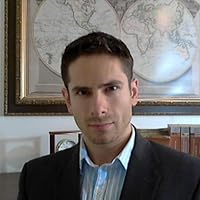
Gregory Christopher Lukianoff (born 1974) is the president of the Foundation for Individual Rights in Education (FIRE). He previously served as FIRE's first director of legal and public advocacy until he was appointed president in 2006.
Lukianoff has published articles in the Los Angeles Times, The Boston Globe, The Chronicle of Higher Education, The Atlantic, Inside Higher Ed, and the New York Post. His article in The Atlantic, "The Coddling of the American Mind" laid the groundwork for a nationwide discussion of whether or not trigger warnings are harming college health.
He is a blogger for The Huffington Post and served as a regular columnist for the Daily Journal of Los Angeles and San Francisco.[citation needed] Along with Harvey Silverglate and David A. French, Lukianoff is a co-author of FIRE's Guide to Free Speech on Campus. He testified before the United States Congress on the state of free speech on college campuses, and he appeared in the films Brainwashing 101 and Indoctrinate U on the same topic. He has made numerous appearances on nationally syndicated television shows.
As a Swede who's living under "hate speech" laws to which the nation as a whole is subject, I'm definitely interested in hearing about free speech in America. I'm so happy there's at least one country in the world where you have something like the First Amendment and can't be sent to prison for what you say unlike over here. I have however learned of speech codes and that sort of stuff on American universities, so for that reason I picked up this book.
It's definitely an interesting compilation of cases that I enjoy reading, but I can't help but to feel that the author is painting them in a sugarcoated way. Everything is oversimplified, as if he's presenting his case in a courtroom - which I often find lawyers like Lukianoff doing even when they're in the public arena - but which means that I as a reader don't get the complete picture. And it's pretty apparent that the selection of cases is suffering from bias in that he presents plenty of ones where students and faculty are punished for what they say about Islam and Muslims - yet not a single of the ones I've heard where someone has been punished for speaking about the state of Israel or the Israel lobby. I don't feel a book about censorship on American universities is complete without a mention of John Mearsheimer and Stephen Walt, who suffered persecution because of their book on this very lobby.
On a related note, I describe many of the cases where people have been sentenced to prison for their speech here in Sweden in my book The Madhouse: A critical study of Swedish society, if anyone is interested in reading about them. You can go to prison for up to four years for "expressing disrespect" for minorities here.
For over a generation, shocking cases of censorship at America’s colleges and universities have taught students the wrong lessons about living in a free society. Drawing on a decade of experience battling for freedom of speech on campus, First Amendment lawyer Greg Lukianoff, an acknowledged liberal democrat, reveals how higher education fails to teach its students to become critical thinkers by supercharging ideological divisions, promoting groupthink, and encouraging an unscholarly certainty about complex issues.
Lukianoff walks readers through the life of a modern-day college student, from orientation to the end of freshman year. Through this lens, he describes startling violations of free speech rights: a student in Indiana punished for publicly reading a book, a student in Georgia expelled for a pro-environment collage he posted on Facebook, students at Yale banned from putting an F. Scott Fitzgerald quote on a t-shirt, and students across the country banished to tiny “free speech zones.” But Lukianoff goes further, demonstrating how this culture of censorship is bleeding into the larger society. As he explores public controversies involving Juan Williams, Rush Limbaugh, Bill Maher, Richard Dawkins, and Larry Summers, along with campus uproars in which Dave Barry and Jon Stewart's The Daily Show played a role, Lukianoff paints a stark picture of our ability as a nation to rationally discuss important issues. Unlearning Liberty: Campus Censorship and the End of American Debate reveals how the intolerance for dissent and debate on today’s campus threatens the freedom of every citizen—and makes us all just a little bit dumber. Not sure if this book should be categorized as politics, or horror...
I'd never given weight to political correctness complaints. I'd always assumed people were trying to create trends from anecdotal outliers. Or that they were being disingenuous, essentially that the same people who ostracized the unpatriotic in the Bush years and feigned theatrical outrage over Obama's "they cling to guns or religion" statement were now portraying themselves victims of culture war hypersensitivity. I'd suspected that this was just a result of a greater variety of voices in the discourse. Privileged people who'd traditionally expressed themselves without being challenged were now bristling that women and people of color were disagreeing loudly and calling this new sort of dialogue political correctness. In short, I'd assumed it was just more conservative media bullshit.
This book challenged a lot of my assumptions. It's not that it revolutionized my beliefs as much as opened my eyes to something I'd been trying not to notice. In short, thought policing is happening on university campuses in the US. In the effort to right past wrongs and empower the traditionally disempowered, universities have decided that constitutionally protected free speech is less important than group harmony. While that may sound laudable, what Greg Lukianoff persuasively argues here is that higher education is where people should face beliefs that make them uncomfortable. Harmony does a disservice to university students, creating an environment where they fail to develop critical thinking skills and leading paradoxically to greater polarization, confirmation bias and echo chambers after graduation. Need proof? Read some of the contrarian clickbait nonsense that passes for culture commentary on websites like Salon, Slate or Jezebel. These are places where snark is considered a rhetorical mode and where dissenting views are deliberately mischaracterized as comically as possible. Lukianoff would argue that millennial writers for these publications default to this because they never actually encountered dissenting views in any meaningful way in their studies. It's a pretty damning indictment of higher education as well as contemporary discourse.
I'm sure a lot of conservatives will read this, but it's not for them. They have their own echo chamber saying some of the same things albeit less articulately. This book is for social liberals, written by a left wing atheist free speech lawyer. Liberals are already on the right side of social issues like gay marriage and affirmative action. Silencing opposition isn't winning the culture wars; it's perpetuating them. It's written for the traditionally disenfranchised as well as the privileged. You don't have the right not to be offended or to demand that viewpoints that offend you are silenced by punishment; you do, however, have the right to tell ignorant bigots to fuck off or better yet consider and then intelligently refute their claims. And, unfortunately, it is true that conservative Christian voices are most likely in the current climate to be censored as this book amply demonstrates. It's wrong because it's antithetical to free speech, but it's also intellectually problematic because it leads to all sorts of fallacious reasoning, ad hominem attacks and the vast inconsistencies inherent in buzzwords like privilege and intersectionality. Again, look at contemporary mass media for the implications.
I reserve five star ratings for books that change my thinking to the extent that I loan them out, reference them in conversations and mentally reference them in my understanding of what's happening in the world around me. I'd recommend this book for anyone interested in social justice and free speech, anyone who is socially liberal but uncomfortable about many of the methods occurring in our culture to silence divergent viewpoints.
If you had told me that the next really good book that I would read on anything even parenthetically related to politics or the constitution would have been written by a liberal atheist, I would have been very dubious. But this book about the attack on free speech on college campuses and the effect that it has on society as a whole was excellent. Greg Lukianoff didn't, as is so often the case, ignore the errors of those he agrees with. The book was an even-handed look at the way colleges infringe on students' rights and the alarming changes in attitudes toward free speech.
I have very mixed feelings about this book. On the one hand, I completely understand where the author is coming from, and he does make some excellent points. Being part of a democratic society should mean an open and free exchange of ides, even when those ideas are unpopular. The question everyone should ask themselves is this: Who gets to decide what is "right" and what is "wrong"? Is it yourself or the people you agree with? That's all fine and dandy, but what happens if things change and it's the people you disagree with who end up making the rules? As Lukianoff points out, the minority opinion does need to be protected, and we can learn things from others, even those who have wildly divergent viewpoints from our own.
That said, there were times when I thought the book was a little contradictory. There's a chapter taking universities to task for the justice system with regard to sexual assault. Now, I totally agree that universities should not be the arbiters of these things in the first place. They are criminal matters that should be handled in court. And while I don't doubt that there are innocent people accused of assault who end up suffering punishment, I think Lukianoff is really cherry-picking his cases here. Maybe he's taking the position that the whole system is invalid if even one innocent person is punished for something they didn't do, I don't know, but I think we all understand that no justice system is perfect, and that innocent people sometimes will be punished. Yet while Lukianoff points out that violations of people's first amendment rights are underreported, he doesn't mention that it's the same story when it comes to sexual assault. There are reams of documentation that prove this, and sexual violence on college campuses is a serious problem that universities often try their best to conceal from the public.
A lot of what this book describes is a slippery slope as well. Yes, everyone does have a first amendment right to free speech, but that doesn't make you immune from suffering the social consequences of expressing a view that others find offensive. Isn't that also part of the democracy Lukianoff wants to uphold? I agree that speech should be protected, but some of the issues addressed in this book seem to imply that the way people reacted to speech they found offensive was wrong. If someone is physically assaulted for expressing an unpopular opinion, then, yes, that's obviously wrong. However, if people take to Twitter in droves and tweet about how much they hated what you said, well, that's the possibility we all have to face.
I think this book also lacks a nuanced discussion about harassment. Most of the college speech codes he cites did strike me as far too heavy-handed, but there should also be an acknowledgement that it's difficult to write a description quantifying harassment. Let's suppose that a woman is in a college class and one person makes a single sexist joke. What if every last person in the class makes one? Yes, their speech is protected, but doesn't that create a hostile atmosphere for that woman? Replace the woman with a conservative Christian or a gay man or a member of a minority facing offensive jokes from every other person in the room, and you get the picture. Yes, universities have an obligation to protect minority opinions, but they also have an obligation to protect their students from hostile environments. Yes, they are often overreaching to that end, but I think that's a flaw of society as a whole, and rectifying it is a lot more complicated than telling universities they have to stop being so overbearing.
That's where the book fails for me, by not dealing with the nuances. Lukianoff uses a lot of egregious examples to make his point, but his argument is one-sided. We should definitely take a critical look at university policies to ensure they're not too onerous, and I was 100% appalled when I read his descriptions of residence programs that require students to do things like reveal when they discovered their sexuality. That certainly is no one's business, and universities do not have a right to violate a citizen's privacy or first amendment rights in the name of protection. I by no means am trying to defend actions like that. What I am trying to say, though, is that it's all well and good to claim free speech must be protected at all times, but the real world isn't quite that black and white.
I also did not like how Lukianoff inserted himself into the narrative. Reading this book felt like reading a court argument. I think he could have made a stronger case by taking a different stance, because injecting FIRE and himself into the book makes it obvious that he has a very firm position on the issue. That's fine, and I'm not saying authors shouldn't be allowed to do this, I'm just saying that the book didn't work for me personally because of its structure. Still, it was a very thought-provoking read, and I agree that Americans do need to stop dividing themselves into camps and lobbing verbal grenades at one another. And I firmly agree that students' rights need to be more firmly protected, not just at the college level but also at the high school level. We need more civics education; we can hardly be surprised that Americans are so illiterate about it when they're not being taught it.
I work in the administrative side of higher education, and have known about the Foundation for Individual Rights in Education (FIRE) for several years. Their attacks against speech codes and reeducation has garnered my support, and I was thrilled that their president, Greg Lukianoff, wrote a book highlighting many of the cases FIRE has participated in.
I've always seen FIRE as an ACLU-type organization designed for the higher education landscape. An organization that protects a student's, as well as faculty member's, speech even if the speech is something no one agrees with. I appreciated Lukianoff openening up personally at the beginning of the book and discussing his liberal worldview. I myself am conservative, so I suddenly became hesitant moving forward. However, there is clearly middle ground where a very liberal person and a very conservative person can stand together in unity in the protection of free speech and due process.
Lukianoff creatively sets the book up as if he is preparing a young man for the world of higher education. The student's excitement becomes subdued as he witnesses as well as experiences the devastation that Political Correctness has caused on campuses nationwide.
There is not institution too revered or too ignoble to lie outside the efforts of Lukianoff and FIRE. You will read about places like Harvard and Yale quelling free speech, community colleges that suspend students without due process, and all sorts of institutions doing all they can to protect one's feelings over one's First Amendment right. These stories will make you grimmace and shake your head, while Lukianoff's words will make you shout "Amen!"
"Unlearning Liberty" is an excellent book for anyone to read, but especially those who work in Student Conduct or Residence Life fields. We need to take an honest look at what our profession has done to student rights, and how we can best protect them in the future.
I listened to this book on Audible. It may have been better to read the book only because the quality of the audio for this book was lacking. The narrator was superb, but must have been reading the book with a faulty microphone given frequent highs and lows in volume throughout the tape.
Anyways, on to the book. Lukianoff is a liberal atheist, Huff Post contributor, and, more importantly, the current President of the Foundation for Individual Rights in Education (FIRE). FIRE, along with the ACLU and other organizations, often defend students, faculty, and staff on college campuses when their first amendment right of free speech has been infringed upon. This book offers in one sense a summary of FIRE’s work during the early 2000s and in another sense Lukianoff’s assessment of how a climate of censorship on American college campuses has eroded the classic idea of what higher education should do: create a public space wherein the exchange of ideas can introduce students to multiple perspectives on the world (many potentially offensive), hone their critical thinking skills, and inure them to the tendency to have knee-jerk reactions to speech that they find offensive or “hurtful.”
Lukianoff indicates that the burgeoning administrative class and bureacritization of colleges and universities in the United States has contributed more to a censorious climate than individual radical student groups or professors. Administrators often wield an inordinate amount of power to censor “hurtful” or “offensive” speech under campus “speech codes” that often adopt such broad and vague definitions of “offensive speech” or “hate speech” that almost anyone could be guilty of violating such policies on campuses. More often than not, administrators and college presidents use this power to censor those who criticize their administrations (e.g. Peace College alumnae), create student orientation programs that Lukianoff says are Orwellian in nature (e.g. see Michigan State University), and ruin the lives of faculty for offenses such as discussing the origins of racial epithets like “wetback.” Lukianoff also joins a growing chorus of public intellectuals who believe that we have entered an “education bubble,” believing that the price of college education (exceeding 50k/year at many private colleges) has risen much higher than its actual value in the market. He fingers the well-compensated campus admin class as the primary driver of rising tuition costs and argues that colleges are becoming more expensive just as they are becoming less well-equipped to educate. In one particularly egregious example (I can’t remember the particular college), the annual salaries for admins had risen 80% while the budget for faculty (those actually doing the teaching) had declined by 1 or 2%.
Lukianoff argues that part of the problem also stems from the fact that primary education (K-12) has failed students by not providing them with a robust knowledge of their constitutional rights. In particular, most graduating high school seniors, he says, have only a simplistic view of the First Amendment and Free Speech, which makes it far too easy for campus admins to violate their rights.
Perhaps the most insidious effect of all this has been to create ideological homogeneity among the faculty, graduate student population, and even among undergraduates. Currently, many universities have a decidedly liberal bent with conservative and Christian voices being the most consistent targets of censorship and harassment. Drawing on convincing social psychological research, Lukianoff argues that ideological “echo chambers” erode critical thinking and push those with like-minded viewpoints toward more radical points-of-view. This means that scholarship becomes more partisan, biased, and ultimately estranged from society. However, Lukianoff’s more far-sighted point is that when the power to ban speech rests in the hands of biased and flawed individuals (i.e. campus admins), censorious behavior can cut both ways affecting both liberals and conservatives. Lukianoff shows time and time again that liberal professors and students are often the target of censorship campaigns when they could not keep abreast of changes in identity politics and eventually ran afoul of some particular interest group. Maybe that my main take-away from this book: when campus admins and others attempt to ban constitutionally protected speech in an attempt to avoid “hurt feelings,” it becomes a very slippery slope because opinions and perspectives will almost always offend someone.
There is a lot more to this book that what I’ve managed to describe above. I would highly recomend it to anyone interested in what’s happening on college campuses in America today, although hopefully Lukianoff’s updated volume will offer even more insights.
I finished reading this book several days ago, and I’m still unsure of how to frame my thoughts on it. Not because it was bad, but because it gave me so much to think about that I’ve struggled with how to write a concise review without going off on a 5,000-word tangent.
And that’s exactly why I’d recommend Unlearning Liberty: because it invites thinking, debate, and discussion. Sometimes because I agreed with what Mr. Lukianoff was saying, sometimes because I disagreed strongly with what he was saying, and sometimes because I was disturbed by the stories he relayed (Having students line up by skin color? Really? We’re going to try and outdo The Office’s satirical episode on diversity training? Or a university expelling a student for reading an anti-KKK history because the cover, featuring a Klan rally, upset other students? I sincerely hope those same people never see some of the covers of books I read … )
Agree with him or not, Mr. Lukianoff offers several cogent arguments about the importance of freedom of speech (and I could list them, but then you might not read this book, and that would be a shame). Although he leans liberal, my guess is a lot of libertarians would love this book. Liberals probably would too. Even the moderates – pretty much any reader who wants to be engaged and informed, regardless of political and social leanings, would likely find something to like about this book.
Heck, I think third-world despots might even enjoy this book, if for no other reason than they might get some policy ideas from college administrators (how I wish I was exaggerating here).
Indeed, Unlearning Liberty’s wide appeal is part of why I found it so good. This book invites debate (I’d even go as far as to say that inviting debate was one of Mr. Lukianoff’s primary reasons for writing this book). He sheds light on an important, though largely unknown, problem on college campuses, explains why it matters to larger society, and doesn’t back down from a consistent drum beat for the importance of freedom of speech and expression, even when it puts him in controversial and/or unpopular positions. Plus, Mr. Lukianoff explained legal issues in a way that straddled the line between nuanced legal language and the generalities necessary for a wider audience.
In short, my review boils down to: read this book. And after you read this book, let me know so we can talk about it. Highly recommended.
"The road to hell is paved with good intentions" and "The ends don't justify the means."
Two sayings that summed up this book. I'd heard about problems on college campuses(and daily life) with regards to conflicts between political correctness and honest, constructive conversation for quite some time. but hadn't truly looked into the issue itself in depth. Given an interest in the idea of liberalism and the idea of freedom as espoused by thinkers such as John Locke and John Stuart Mill, I decided to take the time to investigate it more thoroughly, which lead me to this volume.
PC culture and righteous indignation coupled with regulation via an institution can stifle free speech, block necessary conversations, and lead to wider ideological gulfs between people by causing them to cluster in like-minded groups and echo chambers. That was the theme behind this book which was explored in detail, with example after example presented regarding numerous free speech cases on behalf of individuals who may have espoused or have been mistakenly judged to espouse unpopular views. I had thought the worst thing that could happen during discussions, should the degrade into arguments, within 'polite' company is a dismissal of friendship. The author made it clear that it was far from the worst case scenario. Expulsion from a university and/or societal estrangement were all-too real consequences faced by the many people who have had their cases cited within. It raised many questions that need to be carefully considered: Who would want to hold difficult conversations in this kind when 'polite' speech is desired? How can offense, being subjective to someone's class, ethnicity, social and cultural background be regulated? How can reasoned, nuanced and vitally important dialogue thrive? Do we force acceptable orthodoxy by Orwellian means onto people no matter how well-intentioned the aims, or do we debate and discuss to bring about change? What do we lose when we allow institutions to regulate and decide what 'polite, non-offensive speech' is?
All these themes are explored in this read. Very much worth reading and considering no matter what side of the issues, or political spectrum, one may fall on. It contains valuable insights for those who would like to see less polarization between people and more dialogue between interlocutors looking to bridge gaps and not widen them.
There are a lot of conservative screeds out there about the decline and corruption of US universities. But when a liberal atheist like Lukianoff is raising red flags, fellow liberals should listen. Lukianoff has the advantage of not being an alarmist. He doesn't call campus censorship an epidemic, but he acknowledges the steady corrosive effect on the purpose of a university of censorship, the punishment of speech, and the growing ideological homogeneity on campus.
While Lukianoff doesn't let radical leftist students or professors off the hook, the main enemy in this book is clearly admin. He has dozens of examples of the ever-expanding cadre of campus administrators micro-managing the classroom and the public square in order to avoid any semblance of hurt feelings or commotion. He makes the classic free speech case that when you give authority the right to censor in the hope that they will censor your enemies, they more often use that power against people who criticize or embarrass them. Moreover, empowering institutions with censorship powers means that whoever succeeds to those positions gets that power; so beware if your rivals someday take that position. This is why calls for censorship are so short-sighted. Lukianoff makes a good case that the university's bureaucratization has made them more censorious and meddling (and obviously expensive) but not necessarily better at educating.
This book puts forward a classic idea of the liberal arts university as a place for the open exchange of ideas and evidence. He argues that this idea has periodically come under assault by different waves of political correctness and left-wing ideology. He of course finds many of these changes to be beneficial, especially the inclusion of marginalized groups and their ideas and histories into mainstream education. However, he points out a number of disturbing trends. From the vantage point of 2014, the date of this book's publication, those include ideologically driven campus orientation activities (check out Michigan State's former program-Orwellian actually is not too strong a word), punishments for minimally offensive speech, endless speech codes barring everything from jokes to conservative viewpoints, professors making students sign ideological statements before taking classes, stealing campus newspapers, and myriad calls to censor speech you don't like. One of his best points is the faux outrage surrounding many of these incidents. People who can watch or take part in all manner of offensive or raunch activities suddenly become Puritans when a modicum of offense or mockery comes from the other side. He also makes the valid point that Christians and conservatives are disproportionately targeted by campus censors, professors, and fellow students for not fitting the ideological mold. This is one of the most insidious effects of campus censorship: the creation of ideological homogeneity, which produces useless, irrelevant, or partisan research.
Ultimately the core question of this book is about the purpose of higher education. Is is to create new soldiers in the culture war, committed to one viewpoint and determined to silence enemies? Lukianoff is a balanced guy, so he says we aren't there yet, but it is clear that some universities and departments are dangerously close. Or is it to encourage an open and civil exchange of ideas and arguments in which we accurately learn many perspectives and lenses on the world and build up an inner toughness in regard to offense and disagreement? Taking the latter route demands that campus censorship be minimized. Lukianoff builds a strong, JS Mill style case for the importance of free speech and inquiry for a free society. We don't need universities to encourage us to be narrow-minded, censorious, biased, and angry at those with whom we disagree. That kind of tribalism comes to us naturally, and far too many institutions are only piling on to that tendency. Rather, the ideal should be, in the Buddhist saying: "Little doubt, little enlightenment. Great doubt, great enlightenment" (or something like that). Getting out of your comfort zone over and over again is the purpose of education, and Lukianoff shows that higher ed all too often does not pursue this goal.
This is a balanced, ideologically fair, and well-documented book. For those who follow campus speech and ideology issues closely, a lot of it will be a review. Some parts of the book kind of read as a list of cases, and the narrative structure of the book is a little awkward. This is a good intro to the campus free speech problem, although I suspect Lukianoff and Haidt's new book in 2018 will tackle campus censorship in even more insightful ways.
I picked this up after reading Greg's collaboration with Jon Haidt, "The Coddling of the American Mind." If you enjoyed that book, this one offers a lot of similar content - tons of examples of attempts to stifle free speech from both the left and right sides of the political spectrum. Reading about these helped me trace the terrible current state of American political discourse back to universities, where the staff seems largely responsible for teaching students that speech should be suppressed if it is merely offensive (which is, of course, nonsensical because nearly everyone is offended by something, and the offensiveness of a statement says nothing of its truthfulness). The book offers fewer suggestions for remedying the problems it documents than "The Coddling of the American Mind", but it still offers great insight into how we reached 2019's state of rampant intolerance.
This book is a must-read for anyone who values rational discussion. I loved all the examples of overreach by administrators at colleges and universities. Most of these examples are stories most of us would never hear about in the news, and I appreciate the level of detail that the author gives. I have told everyone I know to read this book.
Unlearning Liberty: Campus Censorship and the End of American Debate is a provocative look at the rise of speech codes on college campuses, but I am not sure it's a convincing one.
Author Greg Lukianoff posits that as college campuses have more closely monitored expression by students, faculty and administrators our society has become more sensitive, polarized, and unable to discuss important issues. That's quite a claim, and it may be accurate, but Carl Sagan warned that "extraordinary claims require extraordinary evidence", and I don't think Lukianoff has provided such evidence. Yes, there is a certain tiresome speech policing in which liberals engage, but that's a far cry from the sort of Soviet-style censorship Lukianoff seems to believe is taking place. Lukianoff chronicles many instances of questionable application of speech codes, but many of these can be better explained by an arrogant administrative overreach and not some ideological quest to wipe out unacceptable opinions.
Lukianoff sets great store by various surveys in which college students and faculty say they do not feel safe holding certain opinions on campus, but those surveys don't indicate just what opinions those are. It's entirely possible that many of the respondents think their liberal views are unwelcome, which would run against Lukianoff's thesis. In addition, respondents often answer survey questions in ways you don't expect; for example, someone might tell a pollster he does not think the First Amendment should apply on college campuses yet still be an ardent supporter of free speech in other venues. Survey questions must be carefully crafted to ensure that the respondents a) understand the issue; and b) understand the question they're answering. I don't know if that was the case with any of the surveys Lukianoff cites.
Now that I've been a Negative Nancy for a while, I'll switch gears and address what I liked about Unlearning Liberty. Lukianoff is a solid writer with great passion for his cause, and he makes some excellent points about the value we should all place on free expression and the First Amendment. He also shines a light on the way college administrators patronize and infantilize their charges, who it should be recalled are adults. Finally, where I think Lukianoff is most effective is in demonstrating that any speech code, no matter how well intentioned and carefully crafted, can be used by administrators as a cudgel against students or faculty who have not shown proper deference to authority. That's a danger older than speech codes and college campuses, and one that is just as present today as ever.
So although I did not find Unlearning Liberty: Campus Censorship and the End of American Debate altogether convincing, the book has something to say that we all need to hear.
Highly recommended reading. This book was excellent, and really illustrates the culture that pervades campuses now. I've seen many of these things first hand and understand personally the chilling effects it can have on speech. Lukianoff makes a very compelling argument that today's youth are not only not being encouraged to have respect for free speech and open debate, but they are actively being discouraged, as evidenced by the fact that most students today cannot construct arguments for positions they don't personally hold - one of the most important elements of debate and critical thinking! (Note: Lukianoff states that this is true, but I'm not sure what the counter-factual is. Still, there is a strong prior probability that this would be the effect of the policies in place on campuses all around the country today). I cannot recommend reading this book enough - and also donating to FIRE.
As a side note, one of the most chilling things about this book was the deep parallelism between the tactics described therein and the tactics employed by the Soviet Union and its proxy states as described in Anne Applebaum's excellent book "Iron Curtain". If you have the time, read Iron Curtain first, then this book, to get a better sense of the implications of what it means for something to be "politically correct". It's downright eerie.
And finally, as I usually do in my reviews, a few nitpicks about what I didn't like. The overall style and flow makes this book very easy to read, so there wasn't much to criticize here, but the one thing that I didn't particularly appreciate was how much it came through that Lukianoff is a kind of nerdy dude (he strongly recommends us to all watch Firefly, for example), and, in fact, the fact that there's so much information about him personally - which isn't really relevant to the book. That said, that's just what I didn't like about it - I think it's clear that it was done to show that he's not some outsider criticizing the actions of school administrators because he doesn't like the results because by and large he politically agrees with the (largely) left-wing agendas that are being enforced on campuses! It's a shrewd move that I think he engages in knowingly but not cynically to show that this issue transcends politics, and so I'm willing to forgive what I see as irrelevant extraneous details, for the sake of people who will judge a book by its [ideological] cover, as it were.
“…she placed greater value on the emotional comfort of those with whom she identified than on the physical security of the women she assaulted.” UCSB Professor Mirielle Miller-Young assaulting a pro-life protester
Free speech, disinvitation, trigger warnings on campus.
In my view, this is the most pressing issue affecting the Academy. The American university system can be a bastion of free speech, inquiry, and intellectual growth, or it can be a madrasas of stultifying political correctness and infantilism. Lukianoff and FIRE are doing a thankless and indispensable task.
This book is chock-full of real-life examples of college administration exceeding their authority in constraint of the speech of their faculty, students, protesters, etc. Newspaper burnings by offended students. Groupthink and infantilism. It is predominantly a problem of the increasingly homogeneous political left on campus (Jonathan Haidt details this lopsidedness in his written and rhetorical work), although it is not exclusively a leftist problem.
If I have a critique – the chapter organization of the book is somewhat arbitrary. There are small openings to each chapter with a vignette of a fictional college student going through Free Speech Hell. He/she is punished for innocuous comments, put through sensitivity training, has his/her academic career at risk, and so on. But the vignettes sprinkled throughout have no firm structure. Speech violations are not patterned or identified except in chapter subheadings, and as a result I will find it difficult to refer back to specific cases except as outlines in my liner and title page notes.
Seeing Mr. Lukianoff on BookTV piqued my interest, so I ordered this book via ILL. The disappointing part is that there should be a second subtitle "... and how I (and FIRE) are fighting the good fight", because all too often he inserts himself into the narrative. It reads more as an advertisement for FIRE (and him) than is necessary.
Having said that, it is truly frightening how many of these codes and limitations are not only being promoted by colleges but are not being protested by students. When I was in college (early 80s) there were a few professors we knew brought their personal biases into class and that it was better to agree with them (or not publicly disagree with them) but that was a mere few... From what this book suggests, that ratio has flipped radically and we're now in a world where students must agree with their professor or face sanctions, and not (as was in our case) just a lower grade. The mandated sensitivity training sessions were even more disturbing. I probably would have been tossed out of my college within that first week because I would not have put up with that!
Very thorough overview of the state of affairs of free speech on college campuses over the last 25 years. Lukianoff especially highlights the hard work that FIRE has done, with a lot of successes and a few failures.
I have worked in student affairs at a university that (thankfully) is not mentioned in this book. Nonetheless, much of what Lukianoff writes hits home hard. Students, faculty, and administrators generally do not know the contours (or even the 'Cliff Notes') of free speech. Lukianoff explains how free speech is inherently valuable, and how it is constitutionally protected.
You can read this book from many perspectives, including:
- how public bureaucracies can and do defy constitutional rights with little to no punishment
- how public pressure can change the behavior of universities more quickly and forcefully than courts of law
I wish he would have spent more time on due process rights, because really that's where these things fall apart for students. But the focus is on free speech
Crucial, required reading for the entire college community. A very helpful guide making a strong case for free speech as law and custom, illustrating the range of outrageous and abusive examples from the left and right: Administrations and student governments punishing critics. Lack of due process. Authoritarian Residence Life programs. I changed my mind on some cases, but have questions. First, most of Greg’s examples are public colleges, and he mentions that private ones can impose different standards. I’m wondering about the range and limits. Can a private college legally impose harsh speech codes in the interest of catering to the most sensitive students? Second, the line between harassment and permitted speech seems unclear. Greg tacks the anti-bullying concerns to grade school (in comparison to college). Yet bullying in the workforce is clearly punishable speech, I think. Why would it be different in college, esp when a college community tries to make explicit rules for conduct?
Greg Lukianoff and his colleagues at FIRE have spent the last decade defending the first amendment rights of students and faculty across the United States. I have been in academia for 20 years and I had no idea things were so bad. If you care about where post-secondary education is heading in the U.S. you owe it to yourself to read this extremely well written and shocking book. I have been following FIRE for a few years. Nevertheless, the cases described in this book really surprised me. The incredible arrogance and shameful behavior on college campuses should concern everyone. Some of the cases are subtle such that you might find yourself wondering if it matters. Others are almost impossible to believe. If I hadn't been reading about some of these cases the last few years I'm not sure I would believe it. Highly recommended. But, you may lose some sleep.
As I was reading this book, a friend asked if the author wasn’t a bit boy who cried wolf. Maybe, but maybe not. Freedom of Speech issues really interest me, especially when at times I have seen a double standard (for instance a student refusing to state an opinion on anything or a student being mocked because she wanted to change her name when she got married). This is basically a Project Fire handbook. Fire focuses on freedom of speech issues, and it has more to do with the student view of freedom of speech as opposed to the teacher’s view of Academic Freedom. I found the part about speech and moral codes on campuses to be the most interesting and disturbing. At times the structure of imagine you are student, bored me but the book is thought provoking.
Fantastic book.... What is happening on the American campus is astounding. Whether studens, teachers or administrator, free speech has taken a back seat to censorship and polictal correctness. This book is filled with individual stories about the unlearning of liberty on our college campuses. Greg and FIRE should be awarded medals of freedom for their work and bring this ourrage to the public. Going to college? Read the book. Been to college? Read the book. Interested in what has happened to first amendment rights? Read the book. Whether you are liberal or libertarian, the book is for you. This book does not have a political agenda.
Are American universities contributing to the breakdown of public discourse and increased hyperpolarization? Greg Lukianoff, President of The Foundation for Individual Rights in Education (FIRE), points to the assault on a number of basic freedoms as threats to the honest exchange of ideas on campus.
From free speech codes and zones that quarantine unpopular speech to freshman orientation programs that force a left-wing world view on impressionable students to outright censorship and threats by Administrators to expel students and fire professors, Lukianoff’s new book, Unlearning Liberty, details dozens of blatant violations of the First Amendment and due process.
For instance, the University of Cincinnati attempted to corral Young Americans for Liberty to a free speech zone totaling an area less than 0.1% of the university’s 137-acre campus. With the help of FIRE and Ohio’s 1851 Center for Constitutional Law, students sued the university, and a federal judge overturned UC’s blatant violation of the First Amendment.
But not all violations make it to court. Lukianoff explains that FIRE often uses the court of public opinion to put pressure on universities to change policies before pursuing legal action.
Keith John Sampson, a nontraditional student who worked as a janitor at Indiana University-Purdue University Indianapolis, was brought up on charges of “racial harassment” for reading a book titled Notre Dame vs. the Klan: How the Fighting Irish Defeated the Ku Klux Klan. The book jacket depicts Klansmen burning crosses against a backdrop of Notre Dame’s campus.
The book details a 1924 confrontation between students and Klansmen in which the students prevailed. IUPUI administrators judged the book by its cover, and Sampson with it. Only after receiving public pressure from FIRE, media outlets, and bloggers did the university reverse its decision and publicly apologize.
These are two of the more high-profile cases Lukianoff highlights, but in a brief exchange on Twitter he explained that there are many cases that don’t receive the attention they deserve.
Vanderbilt University’s “all comers” policy has driven 13 religious groups off campus because it forces organizations to accept any student who wishes to join an organization, regardless of religious affiliation. The policy extends to all organizations, but is particularly detrimental to religious and political organizations, which can be infiltrated by members who don’t agree with the group’s stated beliefs. Lukianoff suggests this happens more than one might think.
Despite public pressure, Vanderbilt has not backed down in its effort to force its twisted notion of inclusion onto student groups.
Lukianoff further laments that the Student Accountability Community (SAC) program at Michigan State University didn’t receive the attention it deserved. SAC sought to intervene and correct aggressive behavior that could disrupt the university community. Sounds benign, right? Lukianoff describes how it worked:
The SAC program was essentially this: if you were caught speaking or behaving in a way that was not otherwise punishable but was deemed “aggressive” by a university administrator, you could be sentenced to treatment. You then had to sit in a room with an administrator for four sessions – for which you had to pay – in order to learn to take “accountability” for what you did. First, you wrote down what you thought you did wrong. By the looks of it, you could never come up with the right answer. (p. 135)
Administrators required offenders to describe their actions based on the program’s guidelines in what can be described as a truly Orwellian process. Punishable actions included offenses as minor as slamming a door or insulting a professor. After public pressure from FIRE, MSU discontinued the program.
These offenses barely scratch the surface of the cases Lukianoff outlines in Unlearning Liberty. Anyone interested in the state of higher education and public discourse should pick up this book.
Everyone benefits from an environment that is truly open to honest debate. We learn and are able to comprehend diverse viewpoints, while sometimes even sharpening our understanding of our own beliefs.
Administrators do a disservice by silencing dissent or forcing their moral or philosophical worldview on professors and students. And the consequences extend far beyond Academia.
Unlearning Liberty is a must-read for anyone interested in just how serious the threat to liberty is on the campuses of American universities. Lukianoff’s mixing of narrative and case studies make this book an easy and enjoyable read. Best of all, the proceeds from the sale of Unlearning Liberty go to further FIRE’s mission on campus.
Pick it up today, and follow Greg Lukianoff (@glukianoff) and FIRE (@TheFIREorg) on Twitter.
I have recommended this book to several people. If you are interested in (concerned might be a better phrase) the state of political discussion in society: the understanding of our rights among the youth; or the state of education in our colleges and universities, than this book is a must read.
The author, the president of FIRE (Foundation for Individual Rights in Education) is concerned about all of those things. He is worried that we are "unlearning" what liberty is, "unlearning" what our freedoms mean, and not passing the importance of vigorous debate (not mean or personal)in our educational and public institutions. Lukianoff, a confessed progressive, is indirectly maintaining what Ronald Reagan said not too long ago - "Freedom is never more than one generation away from extinction." If we do not teach to the next generation what freedom, liberty, due process, equal protection, the rule of law mean, for everyone, than they develop a warped understanding of what it mean to be a free people. It seems we are slowly being driven by a twisted desire to equality and social justice, which according to one Harvard sophomore, trumps academic liberty. A truly troubling sign coming from a student at one of the supposedly great universities.
Lukianoff examines several causes of this troubling trend, giving much time to addressing the rise of a massive administrative state in most colleges and universities. What we are seeing is increasingly more administrators, pulling down good salaries, with specific jobs to maintain equality or diversity, but not teaching. These become the gate keepers and work to protect their vassal holdings, at the expense of our childrens' education. This, coupled with a fear of lawsuit, makes many administrators reactive, and seemingly dictatorial, squashing any dissent on campus, right or left, to protect the endowment.
The other areas he examines are indoctrination at orientation, the seeming triumph of gender and sexual orientation enforced uniformity, and the triumph of speech codes, all used to squash any voices of opposition, again either left or right. An area of increasing concern is the issue of the rise of campus rape cases, which he documents comes from an Obama Justice Department memo which requires a lower standard of evidence to punish someone in a case of supposed rape. This trial all takes place in an administrative hearing, often without standards of due process and legal representation of the accused, who is more often referred to as the perpetrator, even before the completion of the hearing. (As positive note, is we are beginning to see lawsuits from young men thrown out of colleges under this faulty legal regime, against the college, and hopefully soon against the US DOJ.) The sad fact is that this trend towards kangaroo courts on our colleges, promoted by the DOJ, and supported by academia and the media. Sadly, NPR is one echo chamber in this crisis, repeating the dire warning of the crisis, sadly without any eternal criticism of the loss of rights and liberties of the accused.
This book is important. It is sounding a warning more need to listen to. The trend of the loss of understanding of our rights, how they function, and that they need to be protected for all, not the approved, vocal, minorities or supposed victims, gets to the critical heart of what type of nation we are and want to be. The author is correct in calling for the teaching of civil debate, and the need to hear all sides, allowing them to put forward their arguments and evidence in open forums, to be examined. Tucked in the book is another warning. If we do not allow more open debate, than we create a pressure cooker, where those whose rights are restricted will one day bust forward and fight for what they have been denied. The loss of rights by the majorities may become the civil rights issue of the future.
I've been a long-time fan of the Foundation for Individual Rights in Education (FIRE) and its mission - supporting student freedoms. In 246 pages, Greg Lukianoff provides example after example of how the value of freedom of speech is rapidly losing ground in American universities. From these examples it becomes clear that, in large part, the academy has been captured by lesser minds. The result is an intellectual cowardice running rampant through student bodies facilitated by bloated, insipid, and callow administrations. Some of the most frightening examples, however, are of student groups and administrations engaging in authoritarian and fascist actions to stop speech and speakers they don't approve of.
The book, at its core, is about the role universities are playing in hastening the utter abandonment of free speech principles and what it means for our culture. When an administration engages in viewpoint indoctrination, calls it "treatment", and advertises it as a benefit of campus life, they've lost the mission. Students are showing an eagerness to censor, accept censorship, and weaponize fragile egos.
"After decades of speech codes, bad examples from administrators, and omnipresent threats of censorship, students increasingly accept that eliminating the opinions they dislike is a legitimate option. If you have not been taught to debate but instead have learned that painful interaction with your fellow students is a sign of something gone wrong, it makes a primitive kind of sense to shut down and destroy opinions that you disagree with or view as offensive."
Read this book if you're thinking about attending college, or thinking of one day sending your children to college.
One of the most important books I have read recently. In short, this book argues that the greatest issue confronting education today is not its overt liberal bias, or its commitment to being "PC", or the rampant spread of hurtful and often demeaning speech. Rather, the author claims that we just do not understand the first amendment as a society anymore, and that it might ultimately lead to an era in which speech is approved by authoritarian structures like universities -- that "free" speech would be a thing of the past. This, he claims, is already creating universities that do not produce critical thinkers but "cultural crusaders" ready to take part in a perpetually destructive, and meaningless, "cultural war".
The overview of speech codes in this happily brief book was very enlightening and, as I'm sure other readers will agree, a source of elevated blood pressure. Speech codes, the outcome of "the will to be offended" and the desire to ensure that no one feels "hurt" or "uncomfortable", the author shows, have substantially replaced the first amendment at many universities. The book is somehow more persuasive coming from the mouth of a liberal atheist, who himself maintains beliefs that jive with much of the PC/liberal establishment that he so ruthlessly critiques.
"Among the college seniors in the survey sample [of 24,000 students], only 30.3% answered they strongly agreed that 'It is safe to hold unpopular views on campus.'
"Even more alarmingly, the study showed that students' sense of the safety of expressing unpopular views steadily declines from freshman year (starting at 40.3%) to senior year. College seems to be the place where bad ideas about free speech go to get even worse...
"Faculty members, who are often the longest-serving members of the college community and presumably know it best, score the lowest of any group--a miserable 16.7 percent!"
-Greg Lukianoff, Unlearning Liberty
"[T]he mandatory training session for all University of Delaware RAs...included this definition:
"A Racist: a racist is one who is both privileged and socialized on the basis of race by a white supremacist (racist) system. The term applies to all white people (i.e. people of European descent) living in the United States regardless of class, gender, religion, culture, or sexuality. By this definition, people of color cannot be racists, because as peoples within the U.S. system, they do not have the power to back up their prejudices, hostilities, or acts of discrimination."
The phrases "eye-opening" and "important" are usually ones that make me roll my eyes when I read a book review.
But this book is both important and eye-opening. Like many people, I thought the suppression of free speech on campus via speech codes was a 90s thing, an offshoot of the Political Correctness movement. I also thought that modern-day complaints about suppression of free speech via speech codes was simply Conservatives whining about being underrepresented on college campus. As this book makes clear, I was wrong on both counts.
Greg Lukianoff does a great job, and performs a great service, in demonstrating that speech codes and other forms of expression of free speech on campus is very much alive today and, in many respects, far more insidious than it was in the 90s P.C. Fashion. Further, he does a great job demonstrating why free speech and the free expressions of ideas is a vital part of every college or university, and how it's suppression has lasting effects on the young minds being formed at college.
This is in deed a very important book, one that needs to be widely read, and widely discussed.
I thought this was an excellent book, well researched, and quite shocking. A must read for any concerned citizen.
My only criticism... there was a bit of repetition... the reader doesn't need to be reminded every chapter how important the marketplace of ideas is to a democratic society.
Also, there were two areas where I felt that the defense of free speech is problematic - one is in the area of bullying, which Lukianoff seems to think is a problem only for children, not for students or adults for that matter. I think this is an area that needs to be further explored. Surely a person who posts an ugly personal attack on another person is not contributing to the "marketplace of ideas".
Similarly, while a person certainly has a right to express themselves, shouldn't a university have a right to fire a teacher/professor whose ideas are not supportable in terms of academic standards? Would a professor of history, for example, who is a holocaust denier be protected from being fired because of the first amendment? (this is not an example from the book, but there were things that came close). What about professor of physics who insists that the world is flat?
The cover designs and summary of this book do no justice to how important and game-changing this book is to modern American society. "Unlearning Liberty" is the most enlightening and immediately applicable non-fiction book I have ever read. In a completely understandable way, each chapter covers a different threat to our most important of First Amendment rights, our Freedom of Speech.
While the book is a slow read and is longer than I would have preferred, it is modern and engaging, many times leaving my heart pounding. Because of this book, I have a new-found need to learn more about the topics discussed, investigate for myself what is happening at our universities under all of our noses, and strive to become a better citizen by supporting discussion and debate.
I know that if I say "Every American should read this book," many will dismiss the suggestion, but it is the honest truth. Equally honestly, I'd love to tell anyone who's willing to listen more about the book. Maybe even discuss it with them. And maybe even engage in that now out-of-style action of meaningful debate :)