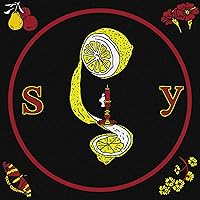
The first volume to appear in the Natural History series catalogues a group of spectacular drawings of citrus fruit in watercolour and gouache, most of which were commissioned to illustrate Giovanni Battista Ferrari's Hesperides, an ambitious attempt at a complete taxonomy and classification of the entire citrological world, which was published in Rome in 1646. Cassiano dal Pozzo played a fundamental role in this project: it was he who commissioned and supplied most of the drawings and then arranged for them to be engraved for Ferrari's projected work. The citrus drawings - grouped in the Catalogue under the headings of citrons, lemons, oranges, pummelos, hybrids, monstrosities and unidentified citrus fruit - are reproduced in full colour and are accompanied by a wealth of comparative material which includes the Hesperides engravings, additional drawings and photographs of actual specimens, mainly of the monstrous kind. In addition to detailed scientific descriptions of the specimens themselves, the catalogue also gives art historical information on watermarks, annotations, types of mount, provenance and literature. The introductory essays explain Cassiano's method of gathering information from a network of correspondents around Europe and consider the relationship between these drawings and other natural history subjects commissioned by Cassiano. The authors discuss the work of the artists involved in the project and assess the major contribution made the classification of citrus fruit by the collaborative efforts of Cassiano of Ferrari.
David Freedberg is Pierre Matisse Professor of the History of Art and Director of the Italian Academy for Advanced Studies in America at Columbia University, USA. Since July 2015 he has also been Director of the Warburg Institute at the University of London.
David Freedberg's book 'Citrus Fruit' is a beautiful look into a specific collection of natural history drawings. The narrative that surrounds this collection has very far reaching implications. I would recommend this book for anyone who is interested in the historical intersections of art and science. The accompany illustrations are amazing.