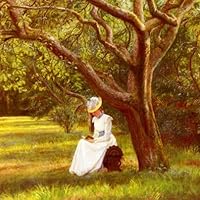
How important is the weather? Twelve year old Sarah, from the Province of Maine, is about to find out as she keeps her first diary during the extraordinary year of 1816. She writes of frozen apple blossoms in May, a snow storm in June and wearing a winter jacket to the Fourth of July picnic. Two hundred years later, New Englanders are still talking about that year and call it "1816 and darn near froze to death."
I won the book through a Good Read's giveaway, but I CHOSE to purchase the Kindle edition. Why? Well, because this book is hopefully destined to be part of a school-child's curriculum, and the e-book included some links to learning materials that the book did not have. I would recommend 1816: The Year That Summer Never Came for 5-8th grades.
This is a historical-fiction, young-adult novel, with focus on American history. The main plot of the story is the weather, which had been impacted by a massive volcanic eruption which had occurred 10,000 miles away from the New England area of the US. Because of the extent of the volcanic eruption, weather changed for years afterwards around the world.
This book is a diary from Sarah Whipple, a fictional character, based on a real person. The diary chronicles the daily life of her family and her village, an agricultural village, of the era. Each daily entry in the diary could be turned into a lesson plan. Sarah's diary depicts so many different aspects of colonial life, such as; soap-making, ice harvesting, getting sap from trees to make syrup, the housing of the schoolmaster for the town, and etc.
I found this book to be educational and entertaining. I can imagine so many different ways the concepts included in this book could be taught to students. For example, a group of school children could have their own mock "elections" to vote in the "selectmen" who run the village. The newly chosen "selectmen" could then be presented with a series of problems to solve that were typical of the era. How to pay for the schoolmaster? How to collect taxes?
Of course, already built into the e-book edition are links to learning activities. But, the website http://www.100peonyhouse.com contains student activities and teacher lesson plans.
I would highly recommend this book to teachers, parents, administrators and anyone else who is interested in children's education. This book would be an effective way to teach children about the effect weather has on agriculture, and to inform children about colonial American life.
I received this book through the Good-reads giveaway. Because of a volcanic eruption in April 1815 in Indonesia, volcanic ash ejected into the upper atmosphere circled the globe and adversely affected the weather worldwide. The author has utilized historic almanacs, diaries and biographies to create the fictional character of Sarah Whipple, her family and neighbors. Told in the form of young Sarah's diary entries, the year 1816, the year without a summer, unfolds. This book would be appropriate for upper elementary grades and middle school students. The text includes recipes of the day and describes the daily activities in which the family engages in their home, on their farm, in school and in their community as the months progress. A glossary of terms that might be unfamiliar to young readers is included. An appropriate purchase for elementary and middle school libraries.
I have seen some references through the years when I read history books and historical fiction, but never "followed up" to find out actual details.
This book, even though written at a young level, actually shared a lot of information. It is written as a diary of a 12 year old girl living on a farm in Maine, so gives a picture of farm life at the time (1816), as well as some of the effects of the volcanic eruption that took place in Indonesia, but were felt around the world.
I now know something about the year without a summer, and want to go investigating some more.
This story is written through the eyes of a twelve year old girl named Sarah living through the winter of 1816 in Maine. She chronicles the events of her everyday life in a diary. Her family struggles and works very hard just to survive this winter and although Sarah and her family are imaginary, the winter of 1816 was real. It's a very interesting book and well written. I received the book for free through Goodreads First Reads