

What do you think?
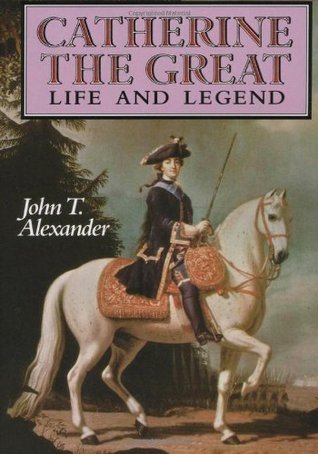
Catherine the Great : Life and Legend
One of the most colorful characters in modern history, Catherine II of Russia began her life as a minor German princess, until the childless Empress Elizabeth and Catherine's own scheming mother married her off to the Grand Duke Peter of Russia at age sixteen. By thirty-three, she had overthrown her husband in a bloodless coup and established herself as Empress of the multinational Russian Empire, the largest territorial political unit in modern history.
Portrayed both as a political genius who restored to Russia the glory it had known in the days of Peter the Great and as a despotic foreign adventuress who usurped the Russian throne, murdered her rivals, and tyrannized her subjects, she was, by all accounts, an extraordinary woman. Catherine the Great , the first popular biography of the empress based on contemporary scholarship, provides a vivid portrait of Catherine as a mother, a lover, and, above all, an extremely savvy ruler. Concentrating on her long reign (1762-96), John Alexander examines all aspects of Catherine's life and the brilliant political strategies by which she won the acceptance of a nationalistic elite; her expansive foreign policy; the domestic reforms with which she revamped the Russian military, political structure, and economy; and, of course, her infamous love life.
Beginning with an account of the dramatic palace revolt by which Catherine unseated her husband and a background chapter describing the circumstances of her early childhood and marriage, Alexander then proceeds chronologically through the thirty-four years of her reign. Presenting Catherine in more human terms than previous biographers have, Alexander includes numerous quotations from her reminiscences and notes. We learn, for instance, not only the names and number of her lovers, but her understanding of what many considered a shocking licentiousness. "The trouble is," she wrote, "that my heart would not willingly remain one hour without love."
The result of twenty years' research by one of America's leading narrative historians of modern Russia, this truly impressive work offers a much-needed, balanced reappraisal of one of history's most scandal-ridden figures.
Portrayed both as a political genius who restored to Russia the glory it had known in the days of Peter the Great and as a despotic foreign adventuress who usurped the Russian throne, murdered her rivals, and tyrannized her subjects, she was, by all accounts, an extraordinary woman. Catherine the Great , the first popular biography of the empress based on contemporary scholarship, provides a vivid portrait of Catherine as a mother, a lover, and, above all, an extremely savvy ruler. Concentrating on her long reign (1762-96), John Alexander examines all aspects of Catherine's life and the brilliant political strategies by which she won the acceptance of a nationalistic elite; her expansive foreign policy; the domestic reforms with which she revamped the Russian military, political structure, and economy; and, of course, her infamous love life.
Beginning with an account of the dramatic palace revolt by which Catherine unseated her husband and a background chapter describing the circumstances of her early childhood and marriage, Alexander then proceeds chronologically through the thirty-four years of her reign. Presenting Catherine in more human terms than previous biographers have, Alexander includes numerous quotations from her reminiscences and notes. We learn, for instance, not only the names and number of her lovers, but her understanding of what many considered a shocking licentiousness. "The trouble is," she wrote, "that my heart would not willingly remain one hour without love."
The result of twenty years' research by one of America's leading narrative historians of modern Russia, this truly impressive work offers a much-needed, balanced reappraisal of one of history's most scandal-ridden figures.
418 pages, Paperback
First published November 3, 1988
Ratings & Reviews
Friends & Following
Create a free account to discover what your friends think of this book!
Community Reviews
Displaying 1 - 30 of 35 reviews

January 1, 2018
Obscure German princess becomes Empress of all the Russias. Story about the horse is fake news.
February 10, 2026
John T. Alexander spells “Habsburg” with a “p” (that’s right, the “Hapsburgs”) and speculates a lot about Catherine II’s emotional state, which, after you run an Occam’s Razor over all options, leaves just one possibility poking out of smooth skin: he must be American.
Now, I’m three parts Polish and one part Austrian, and not even the Austrian feels anything. I don’t enjoy reading about emotions in novels, and I don’t expect to find them discussed in a biography of a historical figure.
This is because few reliable sources on emotions exist. Emotions expressed in an 18th century letter to baroness Margie correlate poorly with the truth. They are a tool of social engineering. So is, while we’re at it, putting your feelings down in a diary, which was so clearly intended to be read by others, the word “curated” doesn’t cover it. Floozies of Instagram put on less filter than Catherine.
And to my mind, a historian is beholden to historical sources.
There is but one man, who can dispense with all convenances, and write history exactly as he pleases – but what’s permissible for Christopher Hibbert, remains unattainable to most authors. Not everyone can be daddy.
Alexander diagnoses hypochondria and penis envy, and, oddly enough, interprets the Empress's early childhood play as masturbation. At one point, he claims Catherine II rode a horse astride, while hunting, because it was an expression of her sexual fetish.
Ah, can you smell that? It smells like hypocrisy.
Riding a horse at speed, over terrain: a) astride and in trousers or b) strapped in a side-saddle, wearing a dress – please, Mr Alexander, let’s not pretend those two options are equal.
And yet, for all his unsolicited Freudalysis, and, frankly, tedious recitation of historical facts, Alexander tells us nothing new. No new knowledge can be extracted from his telling. Alexander fails to address the core mechanics behind Catherine’s actions. And that’s a pity, because – as with any dictator – I want to know: what drives them?
In a world, where people cannot get out of bed in the morning, and depression burns through my very own friends, like a second coming of the bubonic plague, I need to know, what drives people to power. Power is exhausting and uncomfortable.
I want to lay morality aside for the remainder of this discussion.
Chubby-tubby Catherine could have had a very easy life. Even if her marriage to Peter failed completely, and she got shipped back to ma and pa in Stettin, she would have had a relatively easy life. She didn’t need to usurp the throne and live in a power struggle for the rest of her life. So why did she? What drove her to do it?
Surely, it was not her newly acquired Orthodox faith – surely, that was just a Prussian shtick.
Please don’t tell me, she did it, because she believed in herself. No intelligent person does.
Please don’t tell me, it’s because she was a narcissistic egotist. The ego is self-serving; it makes people weak: it wants to be safe, well-rested, and well-fed. Power, on the other hand, suffers no vacuum, so you *never* rest. Forsake all sleep, ye who enter here. People around you get very stabby, and life gets very dangerous. You need to kill a lot of people – this is upsetting. To hold power, you must, in fact, perform a self-immolation of the ego, until your mind and body become foreign to your own self; nothing more than tools in your quest.
So what is it – this inhuman force, which makes you do it anyway?
This is, of course, all beside the point. Alexander’s book seemed superficial, and not even Folio Society’s excellent edition could soften my disappointment.
But I like its crimson damask binding, and its goldleaf-on-leather spine; I enjoy the antique golden finish of its slipcase, and so, I keep it on my shelf, like a pretty thing.
Now, I’m three parts Polish and one part Austrian, and not even the Austrian feels anything. I don’t enjoy reading about emotions in novels, and I don’t expect to find them discussed in a biography of a historical figure.
This is because few reliable sources on emotions exist. Emotions expressed in an 18th century letter to baroness Margie correlate poorly with the truth. They are a tool of social engineering. So is, while we’re at it, putting your feelings down in a diary, which was so clearly intended to be read by others, the word “curated” doesn’t cover it. Floozies of Instagram put on less filter than Catherine.
And to my mind, a historian is beholden to historical sources.
There is but one man, who can dispense with all convenances, and write history exactly as he pleases – but what’s permissible for Christopher Hibbert, remains unattainable to most authors. Not everyone can be daddy.
Alexander diagnoses hypochondria and penis envy, and, oddly enough, interprets the Empress's early childhood play as masturbation. At one point, he claims Catherine II rode a horse astride, while hunting, because it was an expression of her sexual fetish.
Ah, can you smell that? It smells like hypocrisy.
Riding a horse at speed, over terrain: a) astride and in trousers or b) strapped in a side-saddle, wearing a dress – please, Mr Alexander, let’s not pretend those two options are equal.
And yet, for all his unsolicited Freudalysis, and, frankly, tedious recitation of historical facts, Alexander tells us nothing new. No new knowledge can be extracted from his telling. Alexander fails to address the core mechanics behind Catherine’s actions. And that’s a pity, because – as with any dictator – I want to know: what drives them?
In a world, where people cannot get out of bed in the morning, and depression burns through my very own friends, like a second coming of the bubonic plague, I need to know, what drives people to power. Power is exhausting and uncomfortable.
I want to lay morality aside for the remainder of this discussion.
Chubby-tubby Catherine could have had a very easy life. Even if her marriage to Peter failed completely, and she got shipped back to ma and pa in Stettin, she would have had a relatively easy life. She didn’t need to usurp the throne and live in a power struggle for the rest of her life. So why did she? What drove her to do it?
Surely, it was not her newly acquired Orthodox faith – surely, that was just a Prussian shtick.
Please don’t tell me, she did it, because she believed in herself. No intelligent person does.
Please don’t tell me, it’s because she was a narcissistic egotist. The ego is self-serving; it makes people weak: it wants to be safe, well-rested, and well-fed. Power, on the other hand, suffers no vacuum, so you *never* rest. Forsake all sleep, ye who enter here. People around you get very stabby, and life gets very dangerous. You need to kill a lot of people – this is upsetting. To hold power, you must, in fact, perform a self-immolation of the ego, until your mind and body become foreign to your own self; nothing more than tools in your quest.
So what is it – this inhuman force, which makes you do it anyway?
This is, of course, all beside the point. Alexander’s book seemed superficial, and not even Folio Society’s excellent edition could soften my disappointment.
But I like its crimson damask binding, and its goldleaf-on-leather spine; I enjoy the antique golden finish of its slipcase, and so, I keep it on my shelf, like a pretty thing.

August 1, 2012
This is the perfect book about Catherine the Great if you're looking for a detailed description of her life, reign and politics. But be warned that this is definitly an academic book: Alexander does discuss her private life, but mostly in connection with her political decisions or the motivation of her political enemies to circulate "scandals" in order to descredit her - there's no gossip, no romance and not much about her feelings. The author is a historian who writes in fascinating detail about Catherine's reforms, wars and political writings but someone looking for an easy read and some basic information will probably be bored to death. The book gives an excellent picture of the times and how Catherine, despite her relatively obscure origines and beeing a woman in an era dominated by men, managed to rule and expand a vaste empire. We do get some idea of her personality, character and emotions too, but - as probably was the case in her life too - this is always overshadowed by Catherine as a ruler and political figur.

February 17, 2020
A little similar to the Massie volume in being a good, at times, rollicking, narrative but light on analysis. Never less than entertaining & with high production values but not an in-depth study.
August 3, 2011
If you're looking for an introduction to the Empress Catherine, this book by John T. Alexander is not it. It is incredibly well researched and, in my estimation, was probably much longer before the editors got done with it.
If you're looking for a "what-made-her-do-it" psychoanalysis of the Empress Catherine, this is not it. It is understood that analyzing the motives of a living person are difficult, and that analyzing the mind of a subject long dead may be impossible. This book is very light on examining Catherine's personality and personal motivations, leaving the reader feel that much of the book is simply a listing of events. Not surprisingly, the events are very Russo-centric.
Many of the book's pages are devoted to very important policies and happenings that contributed significantly to Russia's development, such as the conquest of the Crimea and the access to warm-water ports on the Black Sea. But Alexander offers little insight as to why this was important and does not put it into international conquest or historical perspective. He does a good job describing her personal relationship with her predecessor, the Empress Elisabeth, but he intimates that Catherine's real interest was to be on a par with Pyotr the Great nearly a half-century earlier.
Perhaps that information was in the original manuscript but was edited out later. Instead, we are left with many, many Russian names; lists of men on Catherine's councils. Many of these names are visited only once, and it leaves a tedium with an English-speaking reader.
Finally in the epilogue does John T. Alexander deal with Catherine's legacy and that pesky urban myth. These final few paragraphs may be the most interesting of the entire work.
If you're looking for a "what-made-her-do-it" psychoanalysis of the Empress Catherine, this is not it. It is understood that analyzing the motives of a living person are difficult, and that analyzing the mind of a subject long dead may be impossible. This book is very light on examining Catherine's personality and personal motivations, leaving the reader feel that much of the book is simply a listing of events. Not surprisingly, the events are very Russo-centric.
Many of the book's pages are devoted to very important policies and happenings that contributed significantly to Russia's development, such as the conquest of the Crimea and the access to warm-water ports on the Black Sea. But Alexander offers little insight as to why this was important and does not put it into international conquest or historical perspective. He does a good job describing her personal relationship with her predecessor, the Empress Elisabeth, but he intimates that Catherine's real interest was to be on a par with Pyotr the Great nearly a half-century earlier.
Perhaps that information was in the original manuscript but was edited out later. Instead, we are left with many, many Russian names; lists of men on Catherine's councils. Many of these names are visited only once, and it leaves a tedium with an English-speaking reader.
Finally in the epilogue does John T. Alexander deal with Catherine's legacy and that pesky urban myth. These final few paragraphs may be the most interesting of the entire work.

August 12, 2016
Few women have been able to rule vast empires in their own right. Catherine the Great was one of these. Incidentally, I use the word “able” not in terms of ability, but the simple fact of access. Catherine achieved her status by removing her husband, Tsar Peter III, in a coup after which she initially justified her position in the name of her underage son.
Catherine ruled from 1762-1796. She corresponded with philosophes, expanded Russian boundaries and influence, and introduced a number of reforms, which didn’t last much longer than her reign. In her free time, Catherine had a succession of lovers. She has fascinated historians and popular culture.
John Alexander published his study of Catherine’s impact on Russia in 1989. It’s an academic, scholarly work. Alexander’s research is prodigious. His need to share everything understandable. The book is well worth reading. But I suggest reading it in small doses. It’s the kind of book to pick up and digest before putting it down again. I started it in January and have now finished in August.
Alexander chronicled an important period in Russian and European history, but he didn’t write a social, intellectual or personal history. Readers won’t learn much about individuals or social movements. But they will learn what happened when, and that’s not a bad result.
Catherine ruled from 1762-1796. She corresponded with philosophes, expanded Russian boundaries and influence, and introduced a number of reforms, which didn’t last much longer than her reign. In her free time, Catherine had a succession of lovers. She has fascinated historians and popular culture.
John Alexander published his study of Catherine’s impact on Russia in 1989. It’s an academic, scholarly work. Alexander’s research is prodigious. His need to share everything understandable. The book is well worth reading. But I suggest reading it in small doses. It’s the kind of book to pick up and digest before putting it down again. I started it in January and have now finished in August.
Alexander chronicled an important period in Russian and European history, but he didn’t write a social, intellectual or personal history. Readers won’t learn much about individuals or social movements. But they will learn what happened when, and that’s not a bad result.

September 11, 2013
Because life is too short to read boring books, I've had to stop reading this one after a month of trying to agonize my way through it. Having read several books about Catherine the Great, I was eager to add one more to my repertoire. Unfortunately, this book, besides being dry, offers little new information to the Catherine the Great research.
The subtitle ("Life and Legend") misrepresents this book because it is more a superficial take on the events surrounding Catherine II than a treatment of her life experience. The author is more interested with military maneuvers, political chess, and other highly objective factors. Rarely does the author let Catherine speak for herself or get inside her head. When he does attempt to talk about Catherine's personal experience, he makes odd choices, fixating on her sexual frustration and showing an embarrassing lack of ability to understand a female perspective.
While I am sure that some readers will appreciate the more stereotypically masculine approach of this book, I found it to be disappointing, the style of writing and information contained unworthy of a historical figure with such an interesting rise to power, a well-documented inner world, and the added trials of being a woman in a male-dominated world.
The subtitle ("Life and Legend") misrepresents this book because it is more a superficial take on the events surrounding Catherine II than a treatment of her life experience. The author is more interested with military maneuvers, political chess, and other highly objective factors. Rarely does the author let Catherine speak for herself or get inside her head. When he does attempt to talk about Catherine's personal experience, he makes odd choices, fixating on her sexual frustration and showing an embarrassing lack of ability to understand a female perspective.
While I am sure that some readers will appreciate the more stereotypically masculine approach of this book, I found it to be disappointing, the style of writing and information contained unworthy of a historical figure with such an interesting rise to power, a well-documented inner world, and the added trials of being a woman in a male-dominated world.

April 15, 2021
If you are looking for a book to introduce you to Catherine the Great, this is perhaps not the best selection. However, if you are looking for something that provides excellent research on the woman, this is the book for you. Contrary to the title - "Life and Legend," the book primarily focuses on the political aspects of her time as Empress with the occasional sprinkling of suggestions of her amorous life (whether there's any truth to such relations or not still remains unclear). While the text is easy to read, the flow becomes quite dense with the amount of information presented and the political focus. It is highly recommended to have some previous knowledge of Russian culture and history, and knowledge of Catherine herself, to fully comprehend what is presented and why it is important. Despite becoming a bit of a chore to get through, I still enjoyed learning more about the Empress and how she came to be such a prominent figure in royalty history.

November 24, 2016
A strangely flat and not particularly interesting biography. Given the wealth of material to be drawn from I would have expected a more life-like and fleshly figure to emerge. Instead it is a fairly dry chronology of Catherine's life with little in the way of context. I would have liked to have seen more on her reign vis-a-vis the other Enlightened Despots of the age as well as more on the changes undergoing Russian society at the time. Also missing was any detail as to her interest in the arts, in particular the significant collection of Western art that eventually came to reside in the Hermitage.
What does emerge is the familiar picture of a Russian ruler wrestling with the difficulties of ruling a vast empire with many of the problems that still beset Russia today. Plus ca change - or whatever the Russian equivalent is.
What does emerge is the familiar picture of a Russian ruler wrestling with the difficulties of ruling a vast empire with many of the problems that still beset Russia today. Plus ca change - or whatever the Russian equivalent is.

December 22, 2023
She's truly a fascinating woman, but unfortunately, this biography was not. There is a great deal of attention given to listing the names of people who attended particular meetings, without giving us any information about them so that it might be important to a reader who was not otherwise familiar with this stretch of Russian history.
There are also lots of paragraphs noting with precision the awards that Catherine awarded, typically to generals for having won some battle. Thus Ivan Kutosov (made up name) got a dagger with diamonds and rubies in the hilt, worth 20,000 roubles, together with a cash award of 100,000 roubles. How much was this in terms that a reader can understand, who is otherwise unfamiliar with the value of a rouble in the late 18th century. That's never made all that clear.
I also have a bit of a problem with the structure of this book. The middle section for example covers roughly Catherines middle age. But it does it by subject area. So we get a chapter on rebellions. Then another on her legislative initiatives, and another on her favorites (lovers). This makes academic sense, but it loses any narrative scope. They are different problems, and we don't get any real sense of how she was juggling all of these things at once.
By the end, I think I learned something about her as a person. It was striking to me that she always set up her political trials (trials for what amounted to treason) in a way that she would end up coming across as having been merciful. Her judges would recommend unimaginably horrible punishments, and she would reduce them to just the horrible. And this makes her come seem wise and just, though the prisoner who is knouted, made to walk the gauntlet twice, and then shipped of to Yakutsk for the remainder of their days in hard labor probably had other ideas about her mercy.
That said, it seems like she would have eliminated serfdom if she thought she could get away from it. She also seems generally opposed to the death penalty. And she had, given the times and her position as monarch, remarkably liberal views (in the old, Voltairian sense). She also appears to have been extremely smart, politically adept, and less ruthless than I would have thought. And she seems to have been a vibrant figure, full of life.
It's amazing that that still comes across in what is otherwise a fairly lifeless book.
There are also lots of paragraphs noting with precision the awards that Catherine awarded, typically to generals for having won some battle. Thus Ivan Kutosov (made up name) got a dagger with diamonds and rubies in the hilt, worth 20,000 roubles, together with a cash award of 100,000 roubles. How much was this in terms that a reader can understand, who is otherwise unfamiliar with the value of a rouble in the late 18th century. That's never made all that clear.
I also have a bit of a problem with the structure of this book. The middle section for example covers roughly Catherines middle age. But it does it by subject area. So we get a chapter on rebellions. Then another on her legislative initiatives, and another on her favorites (lovers). This makes academic sense, but it loses any narrative scope. They are different problems, and we don't get any real sense of how she was juggling all of these things at once.
By the end, I think I learned something about her as a person. It was striking to me that she always set up her political trials (trials for what amounted to treason) in a way that she would end up coming across as having been merciful. Her judges would recommend unimaginably horrible punishments, and she would reduce them to just the horrible. And this makes her come seem wise and just, though the prisoner who is knouted, made to walk the gauntlet twice, and then shipped of to Yakutsk for the remainder of their days in hard labor probably had other ideas about her mercy.
That said, it seems like she would have eliminated serfdom if she thought she could get away from it. She also seems generally opposed to the death penalty. And she had, given the times and her position as monarch, remarkably liberal views (in the old, Voltairian sense). She also appears to have been extremely smart, politically adept, and less ruthless than I would have thought. And she seems to have been a vibrant figure, full of life.
It's amazing that that still comes across in what is otherwise a fairly lifeless book.

August 5, 2022
Princess Sophie Friederike Auguste von Anhalt-Zerbst-Dornburg was born in the Kingdom of Prussia, part of the Holy Roman Empire in 1729. Her father, Christian August, Prince of Anhalt-Zerbst, belonged to the ruling German family of Anhalt. She was educated by tutors, as was the custom for royals at the time. She mastered her native German language, and also French. She was something of a tomboy and loved swords. In fact, she taught herself how how to master the use of a sword. Despite her royal bloodlines, her family was not really wealthy. Her best chance at wealth and position was marriage.
Unfortunately for her, she was pawned off onto her second cousin, Peter, who she met when she was ten. She disliked him immediately. She thought he was wan and ugly, and she was not impressed with his desire to consume alcohol. Sophie was sent to Russia in 1744, marrying Peter in 1745, when she was sixteen. She learned the Russian language quickly, turning her into a multilingual princess. She also developed a fondness for reading. She converted to the Eastern Orthodox religion before her marriage, and as a result of her conversion, her name was changed to Catherine. The marriage was not consummated for years, but she and her husband had lovers on the side. Empress Elizabeth, Peter's mother, told them they must produce an heir, and she did produce a son-but the father has been doubted. Peter rose to the throne and ruled for only six months before dying. Catherine was crowned in 1762 and reigned until 1796. She expanded the borders of Russia, had a commercial treaty with Great Britain, regulated merchant activities, had several different wars occur, and a host of other policies. She was received mostly favorably by her people, and is generally seen as a competent monarch.
This book was very well researched. I really enjoyed it. I wasn't bored at all. One really interesting thing that I learned in this book was that Catherine was the reason for the creation of one of the most amazing pieces of jewelry in the world. The Imperial Crown of Russia was designed specifically for her coronation, and was used until the last of the Romanovs. I liked this book a lot.
Unfortunately for her, she was pawned off onto her second cousin, Peter, who she met when she was ten. She disliked him immediately. She thought he was wan and ugly, and she was not impressed with his desire to consume alcohol. Sophie was sent to Russia in 1744, marrying Peter in 1745, when she was sixteen. She learned the Russian language quickly, turning her into a multilingual princess. She also developed a fondness for reading. She converted to the Eastern Orthodox religion before her marriage, and as a result of her conversion, her name was changed to Catherine. The marriage was not consummated for years, but she and her husband had lovers on the side. Empress Elizabeth, Peter's mother, told them they must produce an heir, and she did produce a son-but the father has been doubted. Peter rose to the throne and ruled for only six months before dying. Catherine was crowned in 1762 and reigned until 1796. She expanded the borders of Russia, had a commercial treaty with Great Britain, regulated merchant activities, had several different wars occur, and a host of other policies. She was received mostly favorably by her people, and is generally seen as a competent monarch.
This book was very well researched. I really enjoyed it. I wasn't bored at all. One really interesting thing that I learned in this book was that Catherine was the reason for the creation of one of the most amazing pieces of jewelry in the world. The Imperial Crown of Russia was designed specifically for her coronation, and was used until the last of the Romanovs. I liked this book a lot.

June 2, 2020
Well, I started watching the series 'The Great," on Hulu, and while it's completely enjoyable the history is just way off (the creators have no pretensions of being historical). But I know a bit of Russian history, but not enough to know exactly all that was wrong with the TV series. This bio had been taking up space on my shelf for many years. It's relatively short, and it provided the information I needed. It did get a bit dull, and I did find myself doing the old school trick of reading only the first and last sentences of paragraphs whenever the book offered more detail than I wanted. I was annoyed by a couple of things - well its really all the same thing: misogyny. This book was written in 1989 by a man. I do not think the author was a misogynist - its quite clear that he respects and admires Catherine. He does however devote an entire chapter to her lovers (12 by his count, generally younger, and generally well treated even after moving on). I don't recall reading a chapter quite like that in books I've read about male monarchs/leaders. Of course, the Male leaders' sex lives are discussed -- when they are relevant. Think Henry the VIII, his lust had lots of political impact. So, I'm certainly not saying that it is inappropriate to discuss a leaders sex life in their bio -- but I've never quite encountered a chapter in a male's bio where each lover was discussed in chronological order. And finally, there was an epilogue where the author discussed and debunks the rumors (oh, yes, the horse makes an appearance) about Catherine. He looks at Catherine's life in pop culture; some favorable, some not. He offers some speculation about why the rumors about her sex life abound; but he seems to ignore what to me is the number one reason: Catherine was a powerful and successful woman in a time and place when women weren't either of those things. The best way for a man to get even with a powerful and successful woman? Call her a slut. True then, just as its true today.

October 19, 2024
“The ‘campaign’ against Peterhof cast Catherine in a new role with scant precedent in Russia: a woman sovereign as commander-in-chief. It also challenged Peter II in the most direct fashion. A lifelong drillmaster imbued with ‘military mania’ he never saw action until confronted by his wife at the head of overwhelming forces. Catherine revelled in her military role. An expert horsewoman, she bestrode her white stallion, sabre in hand, dressed in the green uniform of the Preobrazhenskii Guards–the same rank Peter the Great had taken.”
The history of Catherine the Great, Empress of Russia 1762-1796. Faced with the prospect of arrest and incarceration by her husband Peter II, she turned the tables in an almost bloodless coup. She then ruled Russia for 34 years, fighting and winning wars against Sweden, Poland, the Ottoman Empire and Russian insurgents. She had no more lovers than a male monarch would have had but treated them a lot better, showering them with gifts and honours even after the romance was at an end. This stimulated male fantasies about her sexual exploits, including the one about the horse. The recent Television series: https://en.wikipedia.org/wiki/The_Gre... is based on some of these—and a lot funnier than this biography.
A lengthy and thoroughly researched account by an expert. It has pictures, maps, notes, bibliography and index. Also an appendix containing her love notes to Peter Zavadovskii. There are many other characters with extended Russian names but a Cast of Characters is provided to help sort them out.
I found the narrative fascinating—I rather liked Catherine, even if her sexual exploits were not what I’d been led to expect!
The history of Catherine the Great, Empress of Russia 1762-1796. Faced with the prospect of arrest and incarceration by her husband Peter II, she turned the tables in an almost bloodless coup. She then ruled Russia for 34 years, fighting and winning wars against Sweden, Poland, the Ottoman Empire and Russian insurgents. She had no more lovers than a male monarch would have had but treated them a lot better, showering them with gifts and honours even after the romance was at an end. This stimulated male fantasies about her sexual exploits, including the one about the horse. The recent Television series: https://en.wikipedia.org/wiki/The_Gre... is based on some of these—and a lot funnier than this biography.
A lengthy and thoroughly researched account by an expert. It has pictures, maps, notes, bibliography and index. Also an appendix containing her love notes to Peter Zavadovskii. There are many other characters with extended Russian names but a Cast of Characters is provided to help sort them out.
I found the narrative fascinating—I rather liked Catherine, even if her sexual exploits were not what I’d been led to expect!

November 6, 2022
Comprehensive biography of a German princess who survived court intrigue to overthrow her incompetent husband (Peter III) and become Empress of Russia. In most ways her story is extraordinary. Catherine ruled Russia for more than 30 years, enacted many social reforms, dealt with plots and would-be revolutionaries, successfully fought multiple wars, and extended Russia's territory. She became a model of the "enlightened despot," at least until the French Revolution unnerved her to point of stricter controls over speech and press. Her personal life was complex in the extreme, with many "favorites" who helped run her empire and who offered emotional and physical solace. The most important of these men was Grigorii Potempkin, whom Alexander speculates may have been secretly married to Catherine. The Empress' rocky relationship with her son and heir, Paul, is also addressed. Alexander effectively unpacks the sexist fantasy version of Catherine the Great that depicts her as a nymphomaniac and murderer. Finally, he debunks and deconstructs the craziest of these legends, what he discreetly calls "the horse story".

July 2, 2023
The introduction states that this book is intended as a depiction of Catherine the Great's rule, without the sexism that (apparently) commonly colours accounts of her life an reign. While this book seems to make a pretty good attempt at that, misogyny still seems to creep in at times, especially when discussing the monarchs health, body and rumoured romances. For instance, Catherine is said to have complained of headaches and back aches, which the author suggests were psychosomatic. Perhaps the source material does suggest her symptoms may not have been purely physical, but there's nothing in this text to explain that assumption. It served as a good reminder than no matter how consciously someone might try to avoid bias in history, a truly objective account isn't possible.
Despite falling slightly short of it's stated aims, the book does offer a detailed impression of the Empress, focusing more on her political, economic and military decisions than the more salacious rumours about her private life. By using snippets of her own correspondence, it also gives the reader a feel for her personality without letting the Empress dictate her own legacy.
Despite falling slightly short of it's stated aims, the book does offer a detailed impression of the Empress, focusing more on her political, economic and military decisions than the more salacious rumours about her private life. By using snippets of her own correspondence, it also gives the reader a feel for her personality without letting the Empress dictate her own legacy.

December 30, 2024
A really dense and dry biography of one of the most interesting women in the world. I was really disappointed with this. It’s clearly well researched and informed, but the storytelling is just not there and the narrative is unbelievably boring.
Also weirdly sexist????
A whole chapter dedicated to whether or not Catherine was a nymphomaniac was bonkers. The author wasn’t even trying to convey the general attitude at the time. It was literally just his opinion.
For example:
“Is it too simple to explain this pattern by nymphomania — a gargantuan appetite for sex and variety in sexual partners?“
Then the author goes on to say that during her reign (44 years!!!) she had a maximum of 12 lovers!! how does that connect to “gargantuan appetite for sex”???? Bffr a male ruler would never get this much scrutiny for the number of mistresses they have. By his own narrative it didn’t seem like anyone at the time gave a shit so IDK what this author was smoking.
Also this sentence took me tf out:
“In sexual terms, Grigorii Orlov epitomized the masterful male in the same way that Catherine personified the insatiable, penis conquering female.”
WHAT.
Also weirdly sexist????
A whole chapter dedicated to whether or not Catherine was a nymphomaniac was bonkers. The author wasn’t even trying to convey the general attitude at the time. It was literally just his opinion.
For example:
“Is it too simple to explain this pattern by nymphomania — a gargantuan appetite for sex and variety in sexual partners?“
Then the author goes on to say that during her reign (44 years!!!) she had a maximum of 12 lovers!! how does that connect to “gargantuan appetite for sex”???? Bffr a male ruler would never get this much scrutiny for the number of mistresses they have. By his own narrative it didn’t seem like anyone at the time gave a shit so IDK what this author was smoking.
Also this sentence took me tf out:
“In sexual terms, Grigorii Orlov epitomized the masterful male in the same way that Catherine personified the insatiable, penis conquering female.”
WHAT.

June 24, 2024
I really didn't know much at all about Catherine the Great before reading this book. Alexander sets out to try and present a fact-based assessment of Catherine's life that eschews all of the scuttlebutt, the revisionism, and the hagiography that has accumulated around her over the last few hundred years. In this he is mostly successful, although he does get bogged down at times going into excessive detail on her administrative and legal reforms. The end of the book is also unnecessarily padded out with discussions of films made about Catherine, and excerpts from some of her love letters.
Whenever you go to the expense of acquiring a Folio Society publication, you are entitled to expect a sumptuous presentation over and above the normal book. While the binding, paper and slip case were very nice, I didn't think that the internal illustrations were any better than what you'd commonly see in a normal work of popular fiction in paperback. So I didn't feel I really got my money's worth, and would not recommend going the Folio route for this work.
Whenever you go to the expense of acquiring a Folio Society publication, you are entitled to expect a sumptuous presentation over and above the normal book. While the binding, paper and slip case were very nice, I didn't think that the internal illustrations were any better than what you'd commonly see in a normal work of popular fiction in paperback. So I didn't feel I really got my money's worth, and would not recommend going the Folio route for this work.
February 27, 2024
Good Solid Well Written bio
Most people read the Massie bio. But this one is less cinematic and more organized as a good historian would. Also newer. For those interested in a well rounded look this is a good read
Most people read the Massie bio. But this one is less cinematic and more organized as a good historian would. Also newer. For those interested in a well rounded look this is a good read
August 11, 2025
A faithful and critical reading of Catherine's personality, motivations, and perception. Unfortunately, it drowns under its own detail and has little general historical value. Only worth reading if you are specifically interested in studying Catherine, less so if you enjoy history for its own sake.

June 12, 2023
Informative - even if the writing wasn't particularly enthralling.

October 8, 2024
3.5 stars rounded up. Catherine is such a fascinating person to me. This book is dry at times as it reading like a history textbook but the author definitely knows their stuff.

July 21, 2021
I adore Catherine the Great. She's my girl.
January 28, 2008
One of my current interests is Russian history, specifically Comtemporary Russia/Eastern Europe. I am interested in learning about the lives of the rulers of Russia; who they were, what they accomplished, how their reign has affected things in today's world, etc. So, I decided to read this book.
This book was an in-depth exploration of the life of one of Russia's most famous and powerful rulers. Events convered start when Catherine arrives in Russia, includes all of her reign, her lovers, legislative commission (which is quite boring), reforms, etc. The biography concludes with her death. Included are several paintings of Catherine and her family, as well as photographs of Catherine as portrayed in various films.
This book was good; a bit long, but overall very good. It is well written, and had interesting anecdotes. I would highly recommend this book for history buffs, people interested in Russian history, and anyone in search of a good biography.
This book was an in-depth exploration of the life of one of Russia's most famous and powerful rulers. Events convered start when Catherine arrives in Russia, includes all of her reign, her lovers, legislative commission (which is quite boring), reforms, etc. The biography concludes with her death. Included are several paintings of Catherine and her family, as well as photographs of Catherine as portrayed in various films.
This book was good; a bit long, but overall very good. It is well written, and had interesting anecdotes. I would highly recommend this book for history buffs, people interested in Russian history, and anyone in search of a good biography.

November 29, 2013
As other reviewers have said, this book is quite good on Catherine the Great as ruler, there's an especially interesting chapter on Catherine as a sort of enlightened monarch. Alexander describes how Catherine was influenced by the ideals of Enlightenment intellectuals, and corresponded with leading lights such as Voltaire. However other parts of the book aren't so great. The book has a salacious and pretty bizarre obsession with Catherine's sex life. Indeed much of the concluding chapter is devoted to this! in an OUP title no less. Despite this there's a lot of valuable information in the book, and countless quotes by diplomats, leaders and thinkers about Catherine, so it's still worth reading.
June 8, 2013
I read this in the '90's and liked it enough to keep it all this time. As I re-read it I still found it quite good. I generally prefer Massey for all things Russian, but this is definitely a well-written bio of Catherine. Much of the "Plain Jane" everyday detail that is often excluded from solemn biographies was here for us. To me, those inclusions tell you much about a person. This is often left out of the whole story of what made their lives the way they were. One negative note for biography fans: the author includes too many details about every person who was involved in the events he describes- still not too overwhelming to enjoy the book.

January 23, 2016
Getting through the book was a chore. I found it to be very "textbook" with a lot of 50-cent words and assumptions the reader was already intimate with Russian culture (e.g., "knout" was dropped in with no definition - it is a nasty whip created explicitly for punishment). That said, the work does a commendable job of educating about an impressive life. Catherine's reign was complex and long, offering tons of factoids to present and I came away feeling I had a reasonable appreciation for her many significant accomplishments.

July 13, 2008
Dense, fast-paced narrative. Overall entertaining, but suddenly skips from Elizabeth's death/Peter's coronation to the day AFTER Catherine's coup. What the heck?
I'm only about 65 pages in, but Catherine's already in her 30s, and this book is LONG. So I'm wary what the rest of the book will be about. May put down again soon.
I'm only about 65 pages in, but Catherine's already in her 30s, and this book is LONG. So I'm wary what the rest of the book will be about. May put down again soon.

June 18, 2010
Alexander does a great job -- his facts make better reading than the fancies and speculations of others. I especially enjoyed his ability to bring both Catherine and Russia into the greater European context. A great introduction to Russian history.
March 28, 2014
Reading this book was like taking a semester class in "Catherine", including the notetaking, vocabulary, and research. Unless you want to immerse yourself in detailed (with a capital D)study, I recommend you find a different book about this fascinating leader. I'm glad the semester is over.
April 2, 2008
Very informative, as a historical fiction reader this was a bit to dry for my taste.
Displaying 1 - 30 of 35 reviews