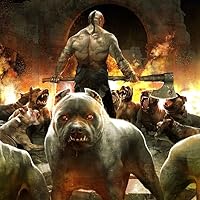
The electrifying conclusion to the Monarchies of God series finds the tentative alliance between the five Ramusian kingdoms severely tested as they prepare for battle against a shapeshifting immortal and his evil army of inhuman warriors. Original.
Paul Kearney was born in rural County Antrim, Ireland, in 1967. His father was a butcher, and his mother was a nurse. He rode horses, had lots of cousins, and cut turf and baled hay. He often smelled of cowshit.
He grew up through the worst of the 'Troubles' in Northern Ireland, a time when bombs and gunfire were part of every healthy young boy's adolescence. He developed an unhealthy interest in firearms and Blowing Things Up - but what growing boy hasn't?
By some fluke of fate he managed to get to Oxford University, and studied Old Norse, Anglo-Saxon and Middle English.
He began writing books because he had no other choice. His first, written at aged sixteen, was a magnificent epic, influenced heavily by James Joyce, Samuel Beckett, Robert E Howard, and Playboy. It was enormous, colourful, purple-prosed, and featured a lot of Very Large Swords.
His second was rather better, and was published by Victor Gollancz over a very boozy lunch with a very shrewd editor.
Luckily, in those days editors met authors face to face, and Kearney's Irish charm wangled him a long series of contracts with Gollancz, and other publishers. He still thinks he can't write for toffee, but others have, insanely, begged to differ.
Kearney has been writing full-time for twenty-eight years now, and can't imagine doing anything else. Though he has often tried.
Por las putas barbas del bendito Ramusio es brutal, sublime, épico, memorable, impactante, una maravilla y una auténtica gozada, que saga amigos y amigas, que saga!!
Antes de nada quiero dar mis infinitas gracias a Javir, Xabi, Cornapecha por todas sus reseñas de los libros de este autor, pues eso me lanzó directo, y hacia un autor tan GRANDE pero tan poco reconocido, muy poco, que no roza sino que toca profundamente lo irracional y la injusticia, quizás no lo hubiera encontrado. Mil gracias, por eso Goodreads es genial, de verdad, gracias.
Increíble pero cierto y sobretodo más que merecido, esta saga, está pentalogía es una joya, una saga 5 estrellas de principio a fin, sin altibajos. No puedo decir ni un solo error o algo que no me guste de ellos, nada, se leen todos del tirón, además la saga entera, un ritmo ágil, bien escrito que incluso notas que mejora y no pierden fuerza, calidad o el más mínimo interés hacia el lector, por si fuera poco, todos los libros tienen 250 o un poco más en el primero y último hablamos de páginas en las que cuenta tanto, en las que nada falta y nada sobra. Narrativa sublime, desde las tremendas escenas de acción a las intrigas y diálogos. Los personajes están muy trabajados, muestran personalidades propias, diferentes y bien trabajadas, notamos la evolución constante. En esta quinta entrega profundizamos más en algunos de ellos, en lo que son las consecuencias de la guerra, el de venir del futuro. Como consecuencia esta saga causa en el lector todo tipo de sentimientos, todo tipo de emociones. !LEEDLA Y GOZAD!
"La guerra es como atravesar el umbral del infierno. Rezo porque nunca tengas que experimentarla en persona"
Queridos amigos y amigas, todos por aquí conocemos o hemos leído sagas y autores que van desde, Canción de Hielo y Fuego, La Tierra Fragmentada, Crónica del Asesino de Reyes, La Trilogía del Vatídico, La Era de la Locura, Malaz El Libro de los Caidos, La Rueda del Tiempo, Dragonlance, La saga de Belgarath, Terramar, La saga de Geralt de Rivia, Solo el Acero, y la lista sigue, hablamos de los autores y autoras más famosas dentro de la fantasía, épica o el Grimmdark. Bien merecido sin duda, gustan a unos y otros no por supuesto. Bien, recalco, subscribo, subrayó una vez más, Paul Kearney, PAUL KEARNEY. Y sus jodidamente buenas ¡MONARQUÍAS DE DIOS! Nada tienen que envidiar a los mencionados, NADA, de hecho es mejor que algunas de ellas, para gustos. Hablamos de pura calidad, de momentos épicos, de una pentalogía que se lee de una sentada y voto a Dios porque una vez empezada la saga, se sigue, se continúa y se disfruta como enanos con un juguete nuevo. RECONOCIMIENTO Y GRANDEZA es lo que se merece este autor, pues el señor George Martin sacó su saga, se hizo superventas, televisión. Pues gente, aquí tenéis algo a la altura, puede que incluso mejor dependiendo de cuanto guste, porque con esta saga no es un gusta o no, sino CUÁNTO. Haceros un favor.. 😈
Si el señor George Martin y el señor Rothfuss no terminan sus respectivas sagas, que llamen a este autor que encima le quita 300 páginas al libro y te pone ahí un platazo. O a Abercrombie que es una fábrica de crudeza que le das a él Canción de Hielo y Fuego y monta una matanza.
Fácilmente la mejor saga que he leído hasta ahora. Paul Kearney domina la narración, tempo de batallas épicas, y descriptivas al detalle sin ser denso para el lector o abrumador. Todos los libros se mueven bastante rápido, las tramas son ágiles, sin pasarse, no paran de suceder cosas pero una vez más de manera eficiente. Libros llenos de tensión por la situación que viven los personajes y nos transmiten. Tenemos de todo aquí buenos, malos, grises y estúpidos. Desde la eficiencia, valentía y honor de unos a la enorme incompetencia de otros que tu mismo quieres arrancarles la puta cabeza.
Naves del Oeste, es difícil decidir si la batalla final de este libro o alguna de los otros cuatro libros, es la gloria bendita absoluta y suprema de esta saga, todas tienen un nivel alto, épico, brutal y desgarrador, pero aquí se ha coronado. Todo está impregnado de crudeza, aspereza, momentos satisfactorios, decisiones difíciles y últimos momentos épicos, en el que la crudeza predomina bajo el suelo sembrado de cadaveres, regado por la sangre y bilis de los cuerpos tendidos mirando al cielo.
Una tormenta de proporciones apocalípticas se cierne sobre las Monarquías de Dios, ella trae la cruel promesa de sangre, metal, magia, colmillos y polvora, un conflicto de tal magnitud que las guerras contra los merduk palidecen. Pues los bandos están formados en un pacto por un sentido de supervivencia en un mundo cruel.
La Gran Alianza, que es la unión de los estados heréticos. El Segundo Imperio, una mezcla tan impía entre la Iglesia, un poder temporal, y los cambiaformas venidos del Oeste. Formando los putos perros de Dios, que no tendrán compasión con nada ni nadie, la dominación se cierne sobre Las Monarquías, vivir o morir, luchar o rendirse. Supervivencia y dominación he ahí la última meta.
Inocentes y pecadores, buenos y malos, nada ni nadie en Las Monarquías se librará del pálido, brillante, afilado y dulce filo de la guadaña de la muerte, del silbido de las espadas golpeando el aire, del estrueno de la caballería haciendo temblar el suelo. Las armaduras ya engrasadas con la sangre de otros o propia.... ¿ A quienes señalará la blanca mano del destino cortando su hilo?
"Nada cambia. De repente los nobles te necesitan, de modo que te sacan de la alcantarilla, contemplan al pequeño ser que se retuerce entre sus dedos, y lo depositan sobre el gran tablero de juegos donde lo utilizarán. Bueno, este peón tiene sus propias reglas"
Corfe se había erigido como el personaje más interesante de la saga junto a Hawkwood, tengo que reconocer que sucede lo mismo aquí, pues se nota que es el pilar central de Kearney, y lo logra, no es un gran personaje, es un personaje memorable y hay un mundo de diferencia. Es carismático, leal, desinteresado, cruel si toca, en el campo de batalla es un sanguinario pero además con cabeza para las tácticas. Corfe sufre una evolución colosal a lo largo de la saga, atormentado, desertor, soldado, rey.. 👑
No sería nada justo hacer de menos al resto de personajes, bien trabajados con sus cambios que no ves venir. En "Naves del Oeste" todos afrontan destinos distintos. Paul Kearney no deja dudas en el desenlace y en el futuro de los personajes.Las Monarquías de Dios pasó de ser una saga en el primer y parte del segundo libro en la que la aventura y el descubrimiento eran la parte importante de la trama a ser una saga donde la épica brutal es el motor principal. El campo de batalla sólo tiene una dueña, a la que todos rezan para que se lleve a sus enemigos entregándole sus propias almas.💀
Paul Kearney dedicó varios años a escribir una saga de calidad literaria magnífica y en líneas generales el ritmo y el tratamiento/ evolución de los personajes, de todos ha sido muy, muy equilibrado y con sorpresas. Este último tiene una diferencia sustancial con respecto a los anteriores libros, y es que la historia y trama no sigue inmediatamente donde la dejamos en "El Segundo Imperio", si no decadas más tarde. Con nuevos personajes como una segunda generación.
Al terminar el libro me quedé muy satisfecho, emocionado, cargado de sentimientos entre ellos lástima de haberme ventilado ya a éste autor. Y alegría de haber sido testigo de esta aventura épica, de sus consecuencias. Después miró atrás y observo cómo he disfrutado de personajes como Corfe, Hawkwood, Abeleyn, Albrec, Murad, Jemilla. Bravo señor Kearney no puedo decir ya más, bravo. Una joya de saga. Que aquellos que la vayáis a leer ya sea por esta reseña, por otras o por cualquier otra razón del destino, la gozeis como muchos hemos hecho.👍
"El autoconocimiento era un don amargo de la madurez"
Acabado el último de la saga, Naves del Oeste. Me ha durado dos días de no poder soltar el libro.
La saga la concluye cerrando todos los cabos sueltos y tan sólo ha habido una frase entre una mago su discípulo que me ha roto un poco los esquemas del “cierre perfecto” de la saga. Por lo demás un cierre adecuado, ni dulzón – “y fueron felices y comieron perdices”- ni apocalíptico. Adecuado, correcto, deja la sensación de que acaba como debiera acabar.
Este último libro me ha gustado más que el anterior. Trata mejor a los personajes y la historia avanza, pasan cosas originales y a la vez se dirige hacia su final más lógico. No es uno de esos cierres que te harían pegar al autor tras varios libros penando, no. Creo que ya les gustaría a Martin o Rothfuss cerrar sus sagas con la dignidad con que lo hace Kearney.
Como resumen de todos sus libros, una saga de lo mejor que he leído –en su conjunto- en el último lustro : contenida en extensión y sin paja de relleno. Personajes atractivos y una historia en la que, por ponerle un “pero”, tal vez abuse un poco de las descripciones de las batallas.
Me sorprende que sus notas en Goodreads no sean más altas. Aunque mi nota es de 8,5/10 le pongo las 5 estrellas porque creo que la saga en conjunto merece más nota que ese "no llega a 4" que tiene ahora.
Libro final de la saga, con un cierre de tramas excelente. El ritmo es de infarto, quizá un poco apresurado, pero aun así, un final muy digno para una saga excelente. Muy buena lectura.
So, I don't think this book is very good and I'm actually going to recommend that anyone reading this series to stop after Book 4. Unlike the Shadow Campaigns--whose final book I also didn't enjoy much--this series completes the arc in the 4th book, leaving only one storyline unfinished. I think, however, leaving that one open is actually better than having it rushed like it is in this one.
The problem is that this is a single book, taking place 18 years after book 4, trying to wrap up the looming threat from the background of the first 4 books. New characters are introduced with no time to know them. Old characters are written off en masse with nary a thought. Entire important scenes occur in a page while we spend pages and pages dealing with people's dumb love triangle for entire chapters just standing there. I cared so very little for anything that was happening which is BIZARRE considering how invested I was in the previous books.
I really think that if this had been the 1st book in a new series that I would have enjoyed it, given the time to acclimate to this new world and these new characters and having a world-altering threat dealt with in a believable manner.
I still STRONGLY recommend this series. It was fantastic but I also very very much recommend stopping after 4. I did not feel like it enriched the previous books or characters in any way. Kearney is an excellent historical fantasy author and should definitely be getting more hype.
Última entrega de Las monarquías de Dios y 5 estrellas no solamente para este libro sino para toda la saga. Ha sido toda una sorpresa que nunca me hubiera leído si no fuera por los amigos de GR que me la han recomendado. Es bastante desconocida para el gran público y no tiene ningún premio. Pero han sido cinco libros que he disfrutado de principio a fin y me han reconciliado con la Fantasía de magia y espada a la que últimamente había dejado de lado porque no encontraba nada bueno.
Gracias a lo compacto de cada libro (apenas 300 páginas cada uno), tanto la trama como los personajes son atractivos, y si añadimos un lenguaje sencillo y una narración muy buena de la acción, y unos toques de Historia y religión que se asemejan a la realidad, Paul Kearney consigue un trabajo que no tiene que envidiar nada a los grandes.
En esta última historia se cierran todas las tramas, y aunque hayan pasado bastantes años desde el anterior tomo, no da la sensación de discontinuidad y me da la impresión de que solamente ha usado este recurso para poder tener nuevos personajes para cerrar perfectamente la trama.
Para los lectores que examinan los títulos de volumen de la serie Monarquías de Dios de Paul Kearney y se preguntan si deben gastar dinero en efectivo, Naves del oeste parecería un titulo un poco spoiler del final. No lo es, y cuanto más se adentran esos lectores en la serie, más se dan cuenta de lo impredecible que es la historia. Habiendo sido introducidas las piezas durante mucho tiempo y las batallas libradas de un lado a otro, Naves del oeste es un final de fantasía épico cerca de su mejor momento. En cuanto a la línea de tiempo, Naves del oeste es la más singular de la serie. Retomando eventos dieciséis años después del final de El Segundo Imperio, rompe la contigüidad creada por los primeros cuatro volúmenes. Casi todos los personajes principales aún viven, pero todos han madurado pero es Naves del oeste es de una acción ininterrumpida. Aunque las últimas cincuenta páginas parecen un poco apresuradas, Kearney cierra la historia del reino con un estilo elegante. El destino de ningún personaje está asegurado ni tampoco el estado del continente al comienzo de la novela. Usando algunos tropos típicos de fantasía, Kearney también mezcla muchos resultados realistas que evitan que la historia acabe embarrada en la tierra de los cuentos de hadas. En general, como una tragedia,los lectores leerán con inquietud cómo los personajes de la historia, personajes que han estado allí desde las primeras páginas de la serie, se enfrentan a todo pronóstico que hacen que Las Guerras de Hierro y El Segundo Imperio parezcan un juego de niños. Entonces, mientras Kearney continúa lidiando con la trama a expensas de la caracterización, la historia maestra que describió al principio llega a una conclusión épica digna del subgénero. Al final, Naves del oeste demuestra que la serie vale la pena. Hasta este punto, Kearney ha mostrado una mano firme en general en el timón de la historia y continúa usando este agarre para guiar la serie a una gran conclusión que responde a todas las preguntas y concluye todos los conflictos de personajes planteados. No entiendo por qué Monarquías de Dios no tiene una audiencia más amplia entre los lectores de fantasía épica. Completamente en línea con temas como Canción de hielo y fuego de Martin, El príncipe de la nada de Bakker, Leyenda de Gemmell, El mundo sin Dios de Ruckley y Nacido de la bruma de Sanderson, Monarquías de Dios es un serie que merece más atención. Si te consideras un fanático de la fantasía épica deberiás darle una oportunidad. No te defraudara.
Kearney's The Monarchies of God really rocked as a series, but the finale was a bit (a bit) of a let down.Ships from the West takes place about two decades after the last installment, which saw the end of the war between East and West. The world here is based on Europe in the 16th century or so, but with many differences. The remnants of Rome still exist as a separate state, biding their time, while six other states emerged from the ashes of the Empire.
The first volume saw Hawkwood embark on a journey across the Western ocean looking for a near mythical, or rather, fabled land, and indeed he found it. Yet, many others had made the voyage before him, largely the persecuted 'fay' folks, who have created a nation of sorts. Their leader has his eyes on returning to the Monarchies of God and taking power over them all. To do this, he assembles a vast armada of ships populated by shifters (werewolves and such) who are also mages.
The lands of 'Europe' have not been quiet however as the great schism of the church resulted in two 'popes' with the various states lining up behind one or the other. The 'heretic' pope has been amassing power and armies and is allied with the mages from the 'new world'; this, along with the great mage navy, are the key to take over the rest of 'Europe'. So, right from the get go, we know this will be a war to determine the future. Will the mages and the heretic pope win, or can the remaining powers fight them off for good.
Great setup, and I liked the focus on Hawkwood and Corfe, two characters firmly established in the previous volumes. My biggest issue is that the story felt rather rushed throughout. Yes, the previous installments moved at a frenetic pace, but this one? Even faster. This could have been two volumes easy given the major events taking place, but Kearney must of felt a need to wrap the series up in one slim volume. He still gives the reader lots of excellent battle scenes and such, but you kinda knew were it was going to go and there were some needless side plots that did not do much for the over all story. Still, I loved this series, even if the last volume did not live up to my expectations. 3 solid stars!
Último libro de la saga. En éste Kearney depura su estilo y lo lleva a su máximo esplendor. Si los otros son breves y rápidos, en este volumen la narración adquiere tal velocidad que el lector va con la lengua fuera siguiéndola. Si pestañeas te puedes perder un hecho decisivo, si te saltas una página cualquiera di adiós al hilo totalmente. En 290 páginas despacha una guerra de unas dimensiones colosales, un enfrentamineto que deja pequeña la guerra ramusianos-merduk de los cuatro anteriores...
Es cierto que hasta las virtudes llevadas al límite pueden ser errores. Y por esa velocidad, y por condensar en tan breve espacio un enfrentamiento tan espectacular, a veces da la impresión de que Kearney está a punto de fallar. Volvemos a lo de siempre, otros autores habrían hecho una saga de otra media docena de libros con esta guerra entre los reinos de Occidente y el Segundo Imperio. De hecho, hay autores famosísimos que lo hacen y con menos material.
Pero yo prefiero este estilo, breve, conciso, sincopado, a tragarme trescientas páginas de relleno, paja e historias secundarias en cada entrega de una decena de volúmenes. Queda mucho por contar, pero que cada lector lo imagine como quiera...
Y un último aviso a navegantes, no le cojan cariño a ningún personaje. En el universo de Kearney, como en la vida real, la Muerte no se anda con tonterías ni ceremonias y es ferozmente rápida. Los personajes mueren a un ritmo que RR Martin parece un autor de cuentos infantiles. A veces agobia tanta velocidad, pero a mi me ha ganado el estilo Kearney. Ahora la idea de volver a los libros interminables y las sagas sin fin me da una pereza terrible.
Lo que nos cuenta. Algo menos de veinte años después de los acontecimientos del libro anterior, el Segundo Imperio planea su ataque contra las naciones de la Gran Alianza de Normannia para subyugarlas bajo la teocracia aliada de las fuerzas ocultas del continente del Oeste. Una gran flota intentará detener la llegada del grueso de las tropas enemigas desde allí, mientras al este Corfe se dispone a ejecutar un plan arriesgado. Quinto y último libro de la pentalogía Las monarquías de Dios.
¿Quiere saber más de este libro, sin spoilers? Visite:
5⭐ para este quinto y último volumen de la pentalogía "Las Monarquías de Dios" de Paul Kearney. Con lo que la saga recibe más estrellas que una noche de perseidas!!
Objetivo único. Divertirme. BUAH. 100% conseguido. He podido vivir aventuras y emocionarme en un mundo fantástico-medieval, con personajes carismáticos, grandes batallas, magia, amoríos imposibles, seres de pesadilla y todo recubierto de un épica que me ha gustado mucho.
Menuda saga señor@s!! Ritmo alto. Tono épico, sí, ya lo he dicho pero es que ES ÉPICO!!. Cierre de tramas muy acertado, aunque algo precipitado a veces. En fin, poco más se le puede pedir a una saga de fantasía, que recordemos, apenas llega a las 300 páginas en cada volumen, algo MUY de agradecer para no encanecer demasiado intentando terminar la saga.
Gracias a Over, Xabi, Raquel por descubrirme esta joya. Y a usted, Mr. Paul kearney, mi eterno agradecimiento!!
Con este libro termina la saga, como era de esperar mantiene el nivel de los libros anteriores. Como había dejado todas las tramas abiertas, a veces da la sensación de que tiene que acelerar algunas cosas porque si no se le acaba el libro y no termina. Aquí las batallas, los movimientos de tropas y los viajes en barco suceden de forma más rápida y sin entrar en tantos detalles o penurias, a veces pasa por encima y va todavía más al grano. Me ha gustado esta saga.
Damn, the Monarchies of God is such a flawed masterpiece. One of the best military fantasy series I have ever read which is quasi unknown. Luckily Steven Erikson wrote a blurb for the first book and that's when it caught my eye.
The final book in the series is not as highly rated by readers. The reason for it is that it feels very rushed. Indeed, this should have easily been two books.
The book had a considerable time jump and then hurries to resolve all of the loose threads built up in the previous books all in 400 odd pages.
But for me this was still an amazing book. It had multiple great battles, crazy unexpected twists and a very satisfying ending. The battles of this flintlock fantasy are fantastic, one of the best in the genre.
Paul Kearney is now one of my favourite fantasy authors, up there with the greats like Erikson, Bakker or Martin.
I loved this series. I read each book immediately after finishing the one before, pored over each page, agonized with the characters. So it's nothing short of tragedy that I practically hated this book. After a long, even epic saga of war, love, magic, and exploration, Kearney clumsily wraps things up with this uninspired offering. It's a token effort, putting things to dissatisfying end without any of the heart or soul that made books 1-4 so appealing.
For four of its five books, The Monarchies of God was a series I was invested in almost like no other. Every instalment was an easy five stars from me; the world-building, the emotional stakes, the complex and relatable characters, the mysterious fantasy elements, the intriguing politics... not since discovering Robert E. Howard's Conan the Barbarian had I been so enthralled by a work of fiction.
That's why it breaks my heart to say that this book was little more than a huge disappointment. Paul Kearney built an incredible and believable world with Normannia, one that I was drawn into more and more with every instalment. Such a fantastic series deserved nothing less than a fantastic ending... but rather than delivering that, Ships From the West didn't really even come close. Instead, it failed to meet the standards of the previous instalments by some margin. In fact, this book left me feeling deflated and disconnected (much to my surprise, considering how invested I had been in this series until this finale) with an extremely rushed "conclusion" that tied some of its threads up in an unsatisfactory and anticlimactic manner, and left others open with more questions than answers.
Now, the rest of this review is going to include spoilers, so be warned...
It's hard to know where to begin, but I think the best example of why this final instalment was so disappointing is the demise of Abeleyn. This is a character we've grown to love more and more over the course of four novels. We've watched his struggles as king, followed him as he navigated the difficulties of power and politics, stood with him through battles in which his rule over Hebrion balanced on a razor's edge, and suffered with him as he teetered on the edge of death before finally reclaiming his throne in a deserved and heroic fashion...
And all that is completely wiped away in an instant. Abeleyn is killed off almost immediately in Ships From the West with an entirely off-page death that could not feel more anticlimactic had Kearney tried. In fact, I would have considered such a death anticlimactic for any character we've gotten to know and spent time with in any capacity, never mind a character who is arguably one of the three core players in the entire series. I genuinely spent the entire novel waiting for Abeleyn to reappear somehow, because I couldn't believe an author who had written so masterfully for four books could leave such a bitter taste in my mouth with such a poor decision. Even Golophin, the king's mage who drained himself dry trying to keep Abeleyn alive in previous books out of love and loyalty, barely bats an eyelid when his king dies. Even the characters in the book who love Abeleyn the most, who have stood by him fiercely through his trials and tribulations, barely have a moment's grief before moving on with business as usual.
This lack of care is reflected throughout the rest of the book. Characters we've loved and followed throughout the series are killed off as unceremoniously as possible, if not entirely forgotten and disregarded (we don't even find out what happened to or became of Avila, Aras, Himerius, Orkh, and a number of other once-central characters). Multiple other characters completely switch sides and join Aruan without even a bare minimum explanation as to why they would do so (and, in some cases, no explanation at all). Decisive battles and enormous plot elements are glazed over as though they're minor and inconvenient side details (entire kingdoms fall in the span of a couple of sentences, without a single word on what even happened to their rulers). And, overall, the book has a generally disconnected and emotionless feel that isn't remotely in keeping with what The Monarchies of God achieved prior to this final offering. It just feels empty and lifeless - which is such a stark contrast to how the world and story felt so vivid, realised, and passionate until this point.
And to top it all off, the ending doesn't even feel like an ending. The final chapter of Ships From the West ends immediately - and I mean immediately after the climax of the final battle. In fact, you could argue that the battle is still ongoing, as the chapter finishes with the arrival of the Fimbrians... and then, aside from a single-page epilogue, that's it. There's no real conclusion - the reader doesn't get even the slightest piece of insight into the state of Normannia after the final conflict, nor do we get to see what becomes of any of the characters who survived the ultimate conflict - and it all just left me feeling empty.
There are a few problems that led to this disappointing conclusion. One is that Paul Kearney himself has admitted he rushed this final book to meet a deadline, which is tragic in itself. The other, I believe, is the decision to have such a huge time-jump from The Second Empire to Ships From the West, alongside having the entire Merduk invasion reach its conclusion in The Second Empire too. Don't get me wrong, I think The Second Empire was absolutely fantastic... but I also think not having both the Merduk threat and the western threat happen simultaneously, and somehow reach an epic climax together, was a massive misstep. So many character arcs are completed in book four that, in some ways, book five almost feels unnecessary - save for the fact that the western threat still needed to be resolved somehow.
To add to this, I also think it was a mistake to have Hawkwood, Murad, and the threat they discover on the western continent take such a backseat during the third and fourth books - especially since, at first, it appeared as though this would be as much of a central focus as Corfe's storyline against the Merduks. It feels like the western plot point fades almost entirely into irrelevancy during The Iron Wars and The Second Empire... and this disconnect is felt heavily when the reader is thrust straight back into such a huge conflict against the neglected western threat - something that's had almost no bearing on the series for a couple of books, and thus no longer really feels like the most important and greatest conflict it was initially set up to be.
Regardless, even with the conclusion of the Merduk invasion in book four, the two decade time-jump afterwards, and the neglect of the western storyline in the previous two books, I do have a feeling that much of what happened in Ships From the West might have gone down more smoothly were it at least presented with the detail, attention, and passion as the previous four books. But unfortunately, that simply wasn't the case, and even the decisions I agreed with fell flat compared to what they could have been due to their rushed and detached delivery. Compare this to the fact that I was bawling my eyes out during the last few chapters of The Second Empire, and it's almost hard to believe.
All in all, this is quite heart-breaking for myself as a reader. I genuinely considered The Monarchies of God to be one of the greatest works of fiction I'd ever read, I devoured it unlike anything I've read before, and I was genuinely looking forward to re-reads before I'd even gotten around to finishing it the first time... but now I'm not so sure. I do still think this is a great series that is very much deserving of a read by anyone who loves the fantasy genre... but it stumbles so greatly at the final hurdle that I'll always see this series not as a masterpiece, but as a series that falls just shy of earning that title due to an ending that is far more unsatisfying than The Monarchies of God deserved.
Books one to four all get five stars from me. As such, I'm deeply saddened to give this book two stars, and I can't help but mourn what might have been had Ships From the West reached the standard of everything that came before it.
I close the book and don’t really know how to feel. In many ways this was thrilling, a breakneck madness from start to finish; in others, I see glaring holes and weaknesses to a book that was far too short for what it was.
I have to sit on this and ruminate. More thoughts to come on Inking Out Loud, but in the meantime, I think four stars is reasonable.
Series finales are always a tough one to land. Kearney had done a very good job in setting up multiple conflicts in the first four books of the series, but then for the finale, he immediately jars the reader by fast-forwarding eighteen years. Eighteen years! Book four ended with such intriguing storylines: Hawkwood, Bardolin and Murad were back in Hebrian, with all of the possibilities that that implied. Jemilla was about to give birth to her son, Corfe has just won a hard-fought peace with the Merduks, only to immediately have his heart crushed by meeting the Sultan's wife, his wife long-thought dead. And this is just scratching the surface of the possibilities for Book 5.
Instead of following up with all of those interesting storylines, we jump ahead eighteen years with seemingly no movement on any of those, except for Bardolin to join with the enemy, for no reason that's explored with any depth. We're introduced to new characters that are given the cursory of characterization, and the vast majority of characters we've followed for four books are dispatched with little fanfare.
The writing is still decent, with great descriptions of the battle scenes, but my biggest complaint is the ending battle. Corfe confronts Auran at the climax, and that's really not the confrontation that should be there. Corfe has had no direct conflict with Auran, it makes no sense for the climactic battle to be between two characters that have had no interaction in any other book. A much better conclusion would've been Hawkwood there with Corfe at the end and it forcing Bardolin to make a choice between Auran and the man that helped him through the journey back to Hebrian. That would've provided with some moral stakes instead of the flatness that this book ends on.
I still recommend the series overall. The first four books are very good and worth reading, even if the ending is flat.
This entire review has been hidden because of spoilers.
Ni aún sabiendo que el final de la saga tenía fama de apresurado, algo reconocido por el mismo autor y que parece que le gustaría subsanar algún día, estaba preparado para una decepción semejante. Las quejas de los críticos se centran en el tramo final pero es que a mí todo el libro me ha parecido una estampida desenfrenada con muerte tras muerte de personajes importantes dejados de lado en la cuneta como si fueran un montón de trapos, batallas apenas entrevistas cuando en el resto de la saga Kearney se recreaba lo justo y necesario con ellas y personajes presentados que quedan apenas silueteados. Valoro que el estilo de Kearney desafíe las convenciones de la fantasía tanto tradicional como moderna de tomos tochísimos y que no nos avasalle con toneladas de paja pero una cosa es esa y otra es acercar la llama a la pólvora y ver como el fuego lo devora todo dejando apenas cenizas.
Mi personalísima opinión es que un segundo libro para toda esta trama de salto temporal del Segundo Imperio con Aruan le hubiera venido muy bien. A pesar de todo se sigue llevando las tres estrellas por el mérito de la saga al completo, porque los personajes ya conocidos como Corfe o Hawkwood siguen partiendo la pana y porque cuando Kearney decide ponerse en serio con las batallas se pone serio de verdad.
La saga de "Las monarquías de Dios" me ha dejado un sabor agridulce, aunque tiene muchas más luces que sombras y algunos momentos realmente brillantes.
Dentro de (muy) poco... ¡reseña en Sense of Wonder!
Final de la pentalogía de las Monarquías de Dios. Esta entrega sucede como unos 20 años después de los eventos de los últimos libros y veremos un cambio de enemigo, los Merduk ahora juegan como aliados de Torunn y el enemigo a batir es Charibon y el segundo imperio. Repleto de criaturas de pesadilla, los reinos irán cayendo uno tras otro hasta que solo quede Torunn para defender el continente. Los tercios, al mando de Corfe, se vuelven a poner en marcha hacia la batalla final. Sin duda unos libros que merecen ser leídos, es un universo fantástico que no está muy visto, los libros son cortos y ágiles y los personajes memorables. Lo malo es que están descatalogados, pero en formato digital son relativamente fáciles de encontrar.
Jedna z lepších sérií, ktoré som mala možnosť čítať. Zaujímavý nápad, zaujímavé postavy a autor, ktorý si čitateľa nepodpláca postavami ako z telenovely. Postavy nie sú napísané tak, aby boli prvoplánovo páčivé a snažia sa najmä prežiť (až kým ich autorov zámer neskolí). Hoci je základom série "zrážka civilizácií" založených na náboženstve, kontext kvázirenesančnej Európy bol mierne prisolený mágiou a zároveň nevyústil do ďalšej vlny kníh o vlkodlakoch, mágoch, elfoch a trpaslíkoch (to je ale hnusný slovenský ekvivalent), zachraňujúcich svet. Teda séria mala potenciál na dostatočne dramatické veľké epické scény, ale ku koncu už autor nestačil ani s dychom a ani so "storytellingom", pretože monumentalita, ku ktorej mala príbehová línia vygradovať, pôsobila ako odležaná Coca-Cola: zvyšky chute zostali, ale bez bubliniek to už akosi nebolo ono :-). A hoci v rámci série mali slušne rozbehnuté k vygradovaniu "dramatických" oblúkov aj jednotlivé diely, Kearney za majstrami veľkej epiky (ako je Erikson) krivkajúc zaostáva (o počte mŕtvych na bojiskách sa to povedať nedá). Čitateľovi - aspoň teda v mojom prípade - zostane len prvý dojem. Na jednej strane sa mi triezve nepatetické skoro až kronikársky suché opisy bitiek páčili (uff, žeby to bol autorov zámer?), na druhej strane je trochu škoda, že koniec série vyznel takpovediac "do stratena". Nevadia mi nedopovedané osudy niektorých hrdinov, ale Kearneyho kronikárske rozprávanie Corfemu nedoprialo podobne "emocionálne monumentálny" a čitateľsky nezabudnuteľný obraz ako bol Coltainov Psí reťaz. Bitka sa skončila zásahom "deux et machina" v podobe dovtedy nerozhodnej vojenskej mocnosti a toto dramatiky príbehu nedôstojné riešenie autorovi umožnilo pridať scénu (ako) z rozprávky. Áno, príbehy v Bollywoode ( a indickej dráme) sa končia zmierlivo (divák nemal odchádzať s negatívnymi emóciami), ale nedalo sa to vymyslieť trochu lepšie?
Ha sido todo un viaje, uno que pocas veces emprendes. cinco libros del tirón, no cualquier autor logra semejante hazaña, y no cualquier lector la emprende.
Es cierto que la saga en su conjunto es más un acercamiento a la fantasía clásica con toque muy militarista y oscuro, no esta llena de capas y capas de entresijos y subterfugios, no tiene razas de aquí o acullá, no hay pasados ni dioses olvidados, no hay dragones ni espadas romperealidades. Es una fantasía más realista. Claro que hay magia y sus magos. pero la realidad es más fuerte que ellos.
La historia te atrapa, de principio a fin. Es una de esas que exige por derecho propio ser leída. Te importan los personajes, los odias y los amas. Y lo merecen. Esta saga amerita más atención del publico de la que tiene. Mucha. Hay mucha influencia del gran David Gemmell. Se parecen mucho.
Ahora luego de cinco libros. ¿diré yo también que este último libro ha sido «apresurado» y «rematado» por parte del autor? No. Es lo que debe ser.
Este libro te recuerda siempre algo;
«Memento mori» (recuerda que debes morir).
Ya sea en una gran batalla, rodeado de honores. O en un callejón olvidado, o en tu propia cama. Morirás algún día.
I was enthralled with the descriptive story-telling in the first 4 books. This one though still good was too condensed. Like the author struggled with the decision to either do 6 books or five. He mistakenly decided on 5. This 5th and final book in the series come after a massive time jump as well. There really were too many rushed plot lines to make this a successful finale. Such a shame. The plots were so well crafted in all the precursor books.
An acceptable end to the series, although I felt both that the ending was rushed and also that the series went on two books too long.
Having gotten to within 100 pages of the end of the book, I wondered how it might all be tied up so quickly as there were many threads left dangling, and the author's answer seemed to be to snip most of them off without a proper resolution. Also, this threat from the west which was dangled temptingly from book 1, turned out to be something of a damp squib. That whole part of the plot seemed to serve to just replicate what we'd already read with the war against the Merduks, except this time it was resolved all so quickly.
The story started out well enough, with a horrifying battle at sea, but much after this left me feeling like it was hurried along. We had characters who it seemed could become something; the offspring of characters, a princess with supposedly great magical powers etc, but none of it went anywhere.
Then there are the female characers: they exist in the story merely to support the men Close to them. None of them have a proper storyline of their own, and none seem particularly realistic as people. That said, Corfe and Hawkwood are more-or-less the same person, with events around them concerning their loved ones and secret offspring mirroring each other - but again, little of it went anywhere. I felt almost like the author had intended six books, but lost interest and decided to tie it all up as quickly as possible.
The battle scenes are well described, but I've come to find battles in books to be rather dull (particularly when it seems obvious from the outset that the goodies will win). None of the characters are particularly deep and are more like stock character types.
This sounds like a bad review, but the book is readable and the series as a whole is decent enough. Sadly, I feel that between Hawkwood's Voyage and this last installment that there is a drop in quality. I feel like the series would've been better served to focus morenon the threat from the west and to leave out the Merduk war (which was more interesting, but it could have been entwined with the western war so it didn't seem like reading the same business twice). I also feel that the magical western forces who were able to wipe out Hawkwood's men so easily in book 3 (or 4. I forget which), were somehow less imposin, mysterious, terrible or powerful toward the end. I was left wondering how Aruan had managed to conquer the kingdoms so easily as once he did so he seemed to rely entirely on the eastern forces to protect him.
In summary, on its own Ships from the West is not a great book (although the first 100 or so pages are great), but the five book series is a worthwhile read, and I suspect lovers of fantasy literature will overlook my picking apart its perceived faults.
"The Thrilling Conclusion!" Or so says the cover of the book. Was it thrilling? Maybe a little. Was it conclusive? No, not at all.
My initial impression of the book was that it was unnecessary. It starts off 15 years after the events of the first four books. The main plot of books 1 - 4, being the war with the Merduks, was concluded in The Second Empire. the whole time i was reading this book it felt more like the start of a new part of the series rather than a conclusion. the ending certainly wasn't conclusive at all and left a lot of loose ends.
A lot of this book was spent introducing the next generation, the children of the characters from the previous books, and filling in what's happened during the past 15 years. But, as is typical of most of the characters introduced in this series, the new people we are introduced to fall flat. They get so little of the spotlight that the reader never really gets to know them and what we do see of them is not essential to the overall plot of this book.
There is, however, a lot of action in this book. There's a lot of slaughter and death, so if you like any of the characters, don't get attached. they're probably going to die.
What saved this book and made it worth reading, for me, was the character of Corfe. He is my favorite of all the characters and really get the spotlight. His journey in the book is probably the only reason I kept reading.
I give Ships from the West 2/5 stars.
The series overall, I give 3/5 stars. It had a good amount of action to the keep the reader interested, and the battle scenes were amazingly described. I enjoyed the character of Corfe Cear-Inaf and the sort of sub plot of the tragic love between him and his wife, Heria. They both suffer a great deal and never truly let go of the pain of losing one another.
As for what I didn't like, I think this far outweighs the things I did like. There is a definite lack of strong female characters in this series. The female character I did like, gets very little page time, but at least what time she did get wasn't disappointing.
The third person omniscient pov that this series is told in is, for me, very irritating. I don't know which character is currently the focus from time to time and I find that confusing. I much prefer pov's that focus on one person at a time.
There were a lot of loose ends that were left over at the end of book five, (the conclusion) and little things that took place that just seemed unnecessary.
I'm happy to be finished this series, and while I don't regret reading it, this isn't a series that I will keep to reread in the future.
Let me reflect on the series as a whole: It's well-written enough that I kept turning pages, book after book. I'm not a fast reader, but this series I inhaled. Where are the 4- or 5-star ratings, then? Something has been missing throughout. The first book is very good, although very predictable. The following books however, their novelty worn off, felt shallow. Yes, the battle scenes are incredible and show a lot of research and insight into this kind of warfare. Some characters are very strong, but equally as much are filler.
And yet it's still predictable, and riddled with plot-holes.
This last book is no exception. We jump 16 years into the future, in which the mage Aruan has settled as the head of the Church. The Church that in book 1 was happily burning his very peoples at the stake. Why he has chosen to sign up with the very organization that's prosecuting his folk is never explained. From the very first pages the scene is set: all hope is lost, the Second Empire has the entire continent in its clutches. Familiar protagonists from the previous books are quickly wiped out to emphasize the dreadfulness of the current predicament. Of all people Murad survives and is enlisted, for no reason whatsoever, other than that the author probably liked the idea of a final stand-off between him and Hawkwood.
Through the course of the book the perspective changes from third-person to a bird's eye view filling in the reader of the larger-scale events. It feels rushed, and I feel detached from the characters I have come to know from the previous books.
In the end it doesn't really matter what happens to the characters anymore. Yes: the final battle is written very excitedly again, but it's more of the same. The Hounds, who we have been taught to fear above all else, are simply cast aside. They could've been omitted from the story entirely. The flying creatures are summoned late to the battle, when they can no longer make a difference.
And then it ends. The battle is won in the same way as all Corfe's battles: he's the superior underdog. There's a tiny little boss battle that involves Aruan, Golophin and Bardolin, but it's of no great concern. Come to think of it: it's not at all clear what kind of magic they actually possess. And thus it's not clear what kind of hold Aruan has over the entire Himerian church. Why is he successful? Other than being told that he's all-powerful, we don't really see much of it. How has he infiltrated the church? We don't know.
Anyways. I'm happy to leave this series behind. In conclusion: it's a collection of well-written scenes, glued together by an incoherent plot.
Paul Kearney's "Monarchies of God" Fantasy Reihe ist ab Mitter der 90er erschienen. Kearney hat hier viele Elemente, welche erst später in der Fantasy populär wurden, eingeführt.
Wir haben eine Welt, welche eng an unsere orientiert ist und im Mittelpunkt stehen die politischen Ränke. Die Geschichte ist sehr düster und voller überraschender Wendungen. Das Spätmittelalter und vor allem die Zeit der Kreuzzüge dient als Inspiration. Zentral in der Handlung ist der Glaubenskonflikt der beiden Religionen. Die ware Stärke sind aber die Charaktere. Die Charaktere sind grau gezeichnet und auch deren Überleben ist nicht garantiert. Die fantastischen Elemente sind kaum vorhanden und wenn doch dann "realistisch" beschrieben. Kearney macht vieles, was vor allem "das Lied von Eis und Feuer" später berühmt gemacht hat. Schön ist dass die komplette Reihe eher "kurz" ist und komplett abgeschlossen. Kein Buch der Reihe hat mehr wie fünfhundert Seiten. Das Pacing ist sehr flott. Kearney ist weniger an ellenlangen Beschreibungen seiner Welt interessiert sondern eher an den Charakteren. Literarisch erreicht das ganze, wenn man vergleichen möchte, nicht ganz das Niveau von George r.r Martin; ist aber mehr als ordentlich.
Die Reihe ist v.a. hierzulande gänzlich unbekannt muss sich aber auf keinen Fall vor den Großen des Genres verstecken. Absolute Empfehlung.
The weakest of the 5, perhaps the book should have ended at 4, or gone on for another book? Kearney's pace is frantic, and I couldn't help but feel the final few chapters were rushing. I think the weight of the story told deserved a longer epilogue/denouement, but but overall I'm quite happy I read the Monarchies of God. I don't think Hawkwood was as compelling a protagonist as the author intended, but Corfe's journey was easily the highlight, if a bit tropey. I also don't think every facet of the story melded together, there might just have been too much to weave, but the Merduk invasion and the religious implications behind it were compelling.
Another note - what is it with fantasy books and maps? I love maps - big, clear ones if possible. Here, the map is 115 pages in and isn't very legible...I always wanted to see where the action was taken place, but gave up due to inadequate detail on the map. Ah well.
I don't think this is a fantasy series that would have crossover appeal to readers who don't enjoy high fantasy, but for those that do, this will quench you thirst temporarily.
Considering that this fifth volume is supposed to be the heroic conclusion of an epic fantasy series it was a disappointment on almost all counts:
So, so many strands of the story were left unresolved, so, so many subplots went unanswered, a lot of the protagonists we've been following since day one acted very out of character, plottwists were not or not adequately explained, and the atmosphere in general was off throughout the novel. It felt as if, after crafting an elaborate story in the previous four volumes, the author didn't have enough motivation left for yet another book and thus ended things in the quickest (and crudest) way possible.
There were some few moments of merit in here, it is true, but they were drowned out by the general tide of lacklustreness of both plot and character development. This could have been so much more but none of the characters and not one single strand of the multifaceted storyline got the end they deserved. Also, I feel like the ending left too much unsaid and wasn't really a good ending point at all. As such, this novel was a deeply unsatisfactory read.
"Naves del Oeste", el quinto y último libro de la saga "Las Monarquías de Dios" es un final satisfactorio para una historia épica y llena de aventuras. Me encantó cómo Kearney logró enlazar todos los cabos sueltos y resolver la trama de manera coherente y emocionante. Sin embargo, debo admitir que algunas de las tramas de los personajes importantes se cerraron un poco rápido, lo que me dejó con ganas de más.
A pesar de eso, disfruté mucho la lectura del libro. La narrativa sigue siendo excelente y las escenas de batalla son impresionantes. En general, la saga es muy recomendable para aquellos que disfrutan de la fantasía épica y militar. Y aunque "Naves del Oeste" no sea el mejor libro de la serie, el primer libro, "Los Reyes Heréticos", es sin duda uno de mis favoritos.
En conclusión, "Las Monarquías de Dios" es una saga emocionante y bien escrita, con personajes complejos y tramas intrigantes. Si eres un amante de la fantasía épica, definitivamente deberías darle una oportunidad a esta serie.