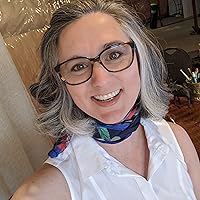
ICU nurse and bestselling author Tilda Shalof learns what nursing beyond the hospital really means. For the 350,000 professional nurses in Canada and 3 million in the US; readers of Atul Gawande's award-winning books and The American Nurse by Carole Jones.
In her latest book, ICU nurse Tilda Shalof leaves the hospital behind to accompany the nurses who work in homes, from mansions to shacks to the streets, all across the country. Working with the Victorian Order of Nurses, a Canadian not-for-profit organization that provides home and community care, Tilda meets a wide variety of nursing professionals who offer untraditional care, sometimes in unlikely settings. This book not only describes a personal journey, but it also brings to light new health care issues. North America is on the cusp of change as the needs of our aging population put pressure on our health care system; more people need care in their homes and community supports to stay well. Yet this book is not just about caring for our elderly; Tilda also discovers how nurses care for people with a home, living on the street, for teen parents, returning soldiers with PTSD, those with physical disabilities, sex trade workers, and complex pediatrics. Shalof tells her story with her usual engaging, conversational style, and with this book, she continues to enlighten, surprise, and entertain readers.
A portion of the proceeds from this book benefit The Victorian Order of Nurses.
I’ve read most of Tilda’s books and this is by far my favourite! I found myself relating closely to her positive experiences shadowing the work of nurses providing care in the “home”. Our family was very fortunate to have the support of VON’s in the early 80’s during our young mom’s tortuous battle with multiple myeloma. In particular, one vivid memory of a young nurse named Debbie who was on a mission to provide some bit of ‘normalcy’ by getting my mother into a wheelchair (no easy feat considering her fragile state) and outdoors. It was just a jaunt down the driveway but I’m certain it was the best day she’d had in a long, long time. Then there were the countless nighttime visits to provide pain meds by injection. Each time there was such care and love. Flash forward nearly 40 years and my experience witnessing the recent hospitalization and death of a dear friend in hospital where there was no privacy and the inconsistent care by nurses who were too rushed and overextended to even acknowledge her emotional needs. It makes me utterly sad when I think about it.
This was such an amazing book! I recommend it to everyone, those in healthcare and those who aren't! Though like most healthcare books be prepared to be mad at our system. I really enjoyed the part where the nurse talks about the need for symptom response kits and getting others on board to make it happen. In my work I've been around many SRKs so it was awesome seeing how they started.
I found the subject of this book very interesting but felt more could have been done with it. The observations were described at a surface level and could have had a deeper analysis. The book ended without a clear statement of how this anecdotal journey ultimate changed the author’s approach to nursing care.
3.5 stars I haven't read anything by Tilda in years. I was first introduced to her books when I was a nursing student, and I remember devouring them for every scrap of information I could on this world I was preparing to enter. So, I was excited to find out there was another book I hadn't yet experienced, but now with the eyes of a more seasoned nurse.
This book has a very important and powerful message. It's a message that needs to be brought to the forefront in today's society. The realities of healthcare beyond the hospital. The burdens of caregiving. Health promotion. De-stigmatizing addiction, homelessness, abuse. Relinquishing prejudices. This book addresses these themes and more through stories from health care providers on the front lines of home and community care, and their clients. It also introduces you to community resources and supports in Canada. I particularly enjoyed the piece about Sakura House - dignified deaths are paramount in today's technology driven hospitals and hospices can assist in achieving that. This book is full of stories that will open your eyes. Make you think and feel, and question yourself. It is a book especially for those in the medical profession, but not too technical that you have to have that background. In fact, I think more people of a non medical background should read this too.
While I did very much enjoy this book, there were also numerous spelling and grammatical errors that absolutely detract from the message. I can look past one or two, but this book was rife with them. In addition the book is largely in interview format which can be difficult to follow at times as it jumps around from persons and situations. While the interview format worked better in some situations, I would not have used that format for the entire book to allow for more fluidity.
In the end, I learned new things and interesting statistics. It made me reflect on the issues society faces, as well as my own nursing practice. I just really wish it was better edited.
It was lovely to hear Tilda's voice again. This time she tackles the world of home health care. She allows the reader to visit - with her - the diverse settings health care actually happens. It was an enjoyable trip but felt whirlwind and as if it lacked an overall theme or some chapters to tie it all together... Much of her revelations about home care were not surprising to me as they were to her, but perhaps that is because I attended nursing school in a different time. Did she convince me to jump ship from hospital acute care to home health care? Not really. But I suppose it's always there as a possibility along with many others. I'm still a baby nurse and the longview I once had of my career singlehandedly changing the world has shrunk to a telescopic minute view of my reality in order that I might survive one day to the next. We'll see what happens when I can come up for breathe and look around.
Neat concept and yes, home care is worthy of more attention and funding, but the book structure and all the heartwarming anecdotes gets very repetitive. Stronger writing could've elevated the inspiring material much higher and also given the book a better 'so-what' perspective on what can be done to preserve such an important aspect of care.