

What do you think?

Ο ταξικός αγώνας στον αρχαίο ελληνικό κόσμο: Από την αρχαϊκή εποχή ως την αραβική κατάκτηση
Τούτο το τόσο εμπεριστατωμένο και με πλουσιότατη τεκμηρίωση βιβλίο, αν και περιέχει πολλά που ασφαλώς θα είναι άγνωστα, και στους περισσότερους ιστορικούς των αρχαίων χρόνων καθώς και στους κλασικούς φιλόλογους, είναι γραμμένο κυρίως για τον "κοινό αναγνώστη", και τους ιστορικούς των μεσαιωνικών και των σύγχρονων χρόνων, τους κοινωνιολόγους, και για όσους ασχολούνται με τις πολιτικές ιδεολογίες, με την πρώιμη χριστιανική σκέψη, ή ακόμα και με τη μελέτη του μαρξισμού. Ξεκινώντας με την τάξη ως μία σχέση εκμετάλλευσης, θέλει να αποδείξει ότι οι έννοιες τάξη και ταξικός αγώνας, που ανέπτυξε ο Μαρξ εξετάζοντας κυρίως τον καπιταλισμό του δέκατου ένατου αιώνα, μπορούν να χρησιμοποιηθούν για να εξηγήσουν τις μεταβολές στην αρχαία ελληνική κοινωνία (συμπεριλαμβανομένης και της κατάρρευσης της δημοκρατίας) σε μία περίοδο πάνω από 1300 χρόνια (από το 700 π.Χ., περίπου, ώς το 640 μ.Χ.), που, σχεδόν στο μισό της, ο Ελληνικός κόσμος αποτελούσε ένα πολύ μεγάλο μέρος της ρωμαϊκής αυτοκρατορίας. Το βιβλίο αποδεικνύει ότι τέτοια θέση όχι μόνο δεν είναι αναχρονιστική, αλλά, αντίθετα, ανταποκρίνεται σχεδόν απολύτως με τη θέση που είχαν υιοθετήσει οι ίδιοι οι Έλληνες διανοητές, και πάνω απ' όλους ο Αριστοτέλης. Ένα κεφάλαιο είναι αφιερωμένο στον "ταξικό αγώνα στο ιδεολογικό πεδίο", που συμπεριλαμβάνει τις προσπάθειες που κατέβαλλαν οι άρχουσες τάξεις για να πείσουν όχι απλώς τους εκμεταλλευόμενους αλλά και τους εαυτούς τους ότι η εξουσία τους ήταν και δικαιολογημένη, κατ' αρχάς, και ωφέλιμη, στην πράξη. Επίσης εξετάζεται η πρώιμη χριστιανική στάση απέναντι στη δουλεία και στην ιδιοκτησία, στο γάμο, καθώς και στη ρωμαϊκή αυτοκρατορική τυραννία. Στο τελευταίο κεφάλαιο γίνεται προσπάθεια να εξηγηθεί "η παρακμή και η πτώση" μεγάλου μέρους της ρωμαϊκής αυτοκρατορίας, κατά την περίοδο που εξετάζει το βιβλίο.
840 pages, Paperback
First published January 1, 1981
About the author
G.E.M. de Ste. Croix
6 books22 followersGeoffrey Ernest Maurice de Ste. Croix, FBA, known informally as Croicks, was a British historian who specialised in examining the classical era from a Marxist perspective. He was Fellow and Tutor in Ancient History at New College, Oxford from 1953 to 1977, where he taught scholars including Robin Lane Fox, Robert Parker and Nicholas Richardson.
G.E.M. de Ste Croix was educated at Clifton College. There, he became proficient in Latin and Greek, and a talented tennis player. He won the under-16 South of England championship, and would go on to compete at Wimbledon in 1930, 1931, and 1932. He had once defeated Fred Perry in a minor tournament.
He left school at the age of 15 and became an articled clerk in Worthing, West Sussex, England. This allowed him to train for a legal career without a degree in law, and he was admitted as a solicitor in 1932. He practised in Worthing and then in London, until he was called up for war service in 1940.
During this time Ste. Croix became interested in politics. Though he had had, according to himself, received a "thoroughly right-wing upbringing", he was drawn to the left. He visited Russia in 1935 or 1936, but moved away from Stalinism in 1938. He would later join the Labour Party.
In 1940, Ste. Croix was called up for military service in the Second World War. On 18 July 1941, he was commissioned in the Royal Air Force (RAF) as an acting pilot officer (on probation) with seniority from 12 June 1941. destination of their aircraft. He served most of the War in the Middle East, stationed at Ismailia, Alexandria, and Cyrenaica: in Egypt he had the opportunity to expand his knowledge of ancient languages. An atheist, he fought for, and was eventually allowed, exemption from the required Sunday services.
In 1946, having been demobbed from the RAF, Ste. Croix matriculated into University College, London (UCL) to study ancient history: he preferred London over Oxbridge, because it offered a history course covering c. 3000BC to the death of Heraclius in AD641, not classics (with its focus on language and philosophy). His main tutor was A. H. M. Jones, the college's new chair of the Ancient History, who remained an influencing figure on Ste. Croix's work beyond his graduation. He graduated from University College, London with a first-class Bachelor of Arts (BA) degree in 1949. He was awarded a Doctor of Letters (DLitt) degree by the University of Oxford in 1978.
In 1950, Ste. Croix was appointed assistant lecturer in ancient economic history at the London School of Economics. He also taught at Birkbeck College and UCL. He struggled to attract students to his courses and was embarrassed to be a lecturer in "a subject which no one was required or wished to study". In 1953, he was elected fellow and tutor in ancient history at New College, Oxford:[9] he lived at Oxford for the rest of his life. Due to a long-standing agreement with his opposite number, C. E. Stevens, he led tutorials in Greek history for classicists from New College and Magdalen College, Oxford: Stevens, in return, taught Roman history. In 1964, he attempted to convince his college to become the first of Oxford's all-male colleges to accept women: he failed, but helped change attitudes through the university. Turning his hand to college administration, he served as Senior Tutor for a number of years. He also held a university lectureship, and give lecture series in Greek History and topics such as slavery, finance, and food supply. He gave the J. H. Gray lectures at the University of Cambridge for the 1972/73 academic year: these lectures developed into The Class Struggle in the Ancient Greek World (1981). He retired from full-time academia in 1977 and was appointed Emeritus Fellow: he college elected him an Honorary Fellow in 1985.
In 1972, Ste. Croix was elected a Fellow of the British Academy (FBA), the United Kingdom's national academy for the humanities and soc
G.E.M. de Ste Croix was educated at Clifton College. There, he became proficient in Latin and Greek, and a talented tennis player. He won the under-16 South of England championship, and would go on to compete at Wimbledon in 1930, 1931, and 1932. He had once defeated Fred Perry in a minor tournament.
He left school at the age of 15 and became an articled clerk in Worthing, West Sussex, England. This allowed him to train for a legal career without a degree in law, and he was admitted as a solicitor in 1932. He practised in Worthing and then in London, until he was called up for war service in 1940.
During this time Ste. Croix became interested in politics. Though he had had, according to himself, received a "thoroughly right-wing upbringing", he was drawn to the left. He visited Russia in 1935 or 1936, but moved away from Stalinism in 1938. He would later join the Labour Party.
In 1940, Ste. Croix was called up for military service in the Second World War. On 18 July 1941, he was commissioned in the Royal Air Force (RAF) as an acting pilot officer (on probation) with seniority from 12 June 1941. destination of their aircraft. He served most of the War in the Middle East, stationed at Ismailia, Alexandria, and Cyrenaica: in Egypt he had the opportunity to expand his knowledge of ancient languages. An atheist, he fought for, and was eventually allowed, exemption from the required Sunday services.
In 1946, having been demobbed from the RAF, Ste. Croix matriculated into University College, London (UCL) to study ancient history: he preferred London over Oxbridge, because it offered a history course covering c. 3000BC to the death of Heraclius in AD641, not classics (with its focus on language and philosophy). His main tutor was A. H. M. Jones, the college's new chair of the Ancient History, who remained an influencing figure on Ste. Croix's work beyond his graduation. He graduated from University College, London with a first-class Bachelor of Arts (BA) degree in 1949. He was awarded a Doctor of Letters (DLitt) degree by the University of Oxford in 1978.
In 1950, Ste. Croix was appointed assistant lecturer in ancient economic history at the London School of Economics. He also taught at Birkbeck College and UCL. He struggled to attract students to his courses and was embarrassed to be a lecturer in "a subject which no one was required or wished to study". In 1953, he was elected fellow and tutor in ancient history at New College, Oxford:[9] he lived at Oxford for the rest of his life. Due to a long-standing agreement with his opposite number, C. E. Stevens, he led tutorials in Greek history for classicists from New College and Magdalen College, Oxford: Stevens, in return, taught Roman history. In 1964, he attempted to convince his college to become the first of Oxford's all-male colleges to accept women: he failed, but helped change attitudes through the university. Turning his hand to college administration, he served as Senior Tutor for a number of years. He also held a university lectureship, and give lecture series in Greek History and topics such as slavery, finance, and food supply. He gave the J. H. Gray lectures at the University of Cambridge for the 1972/73 academic year: these lectures developed into The Class Struggle in the Ancient Greek World (1981). He retired from full-time academia in 1977 and was appointed Emeritus Fellow: he college elected him an Honorary Fellow in 1985.
In 1972, Ste. Croix was elected a Fellow of the British Academy (FBA), the United Kingdom's national academy for the humanities and soc
Ratings & Reviews
Friends & Following
Create a free account to discover what your friends think of this book!
Community Reviews
Displaying 1 - 27 of 27 reviews

March 9, 2013
It is refreshing to read a book that doesn't have a nostalgic view of the Ancient Greek and Roman worlds. These are worlds you wouldn't want to live in, and the longer these societies lasted the lower living standards got. Greek democracy (Athenian) does seems to have some redeeming features, at the very least those members of the ruling class who describe it describe it with hostility, which possibly means that it must have restricted them from over exploiting citizens too much, either through debt or taxation but it seems to have been the case that the ruling classes depended more and more on slavery to get their surplus, which eventually spelt the end for Greek democracy, though Greek democracy was very stable and lasted for over 200 years.
The Roman world doesn’t have any redeeming features. It was a giant system of robbery that went through various stages, republic, principate and empire. This robbery was conducted through, slavery, taxation of the peasant population and imperialism (the robbing of other ruling classes). The reason for the trajectory from republic to empire is because the ruling classes were a brotherhood of wolves and their greed and self interest often put their entire society at risk, the rule of an Emperor backed up by an army, restricted them from doing exactly what they liked, thus maintaining the system of exploitation for longer.
In this book, the fall of Rome isn’t a tragedy. Nor is it described as being entirely at the hands of barbarians. Rome in the 4th and 5th centuries was rotten to the core, the peasantry (the majority of the population) were over burdened with taxation. When various barbarians invade, they don’t defend the Empire, after all it couldn't have gotten much worse.
The Roman world doesn’t have any redeeming features. It was a giant system of robbery that went through various stages, republic, principate and empire. This robbery was conducted through, slavery, taxation of the peasant population and imperialism (the robbing of other ruling classes). The reason for the trajectory from republic to empire is because the ruling classes were a brotherhood of wolves and their greed and self interest often put their entire society at risk, the rule of an Emperor backed up by an army, restricted them from doing exactly what they liked, thus maintaining the system of exploitation for longer.
In this book, the fall of Rome isn’t a tragedy. Nor is it described as being entirely at the hands of barbarians. Rome in the 4th and 5th centuries was rotten to the core, the peasantry (the majority of the population) were over burdened with taxation. When various barbarians invade, they don’t defend the Empire, after all it couldn't have gotten much worse.

June 11, 2011
Two parts: first part is theoretical, working out the application of specific Marxist concepts to specific items of the ancient world. Second section is historical presentation using the concepts as worked out in part I. Historical argument gets into Eastern Empire a bit, but for the most part ends with the destruction of the Western Empire, attributed to the slave economy.
Text is pretty much the best example of rigor that I know, and it is difficult to overstate its value.
Text is pretty much the best example of rigor that I know, and it is difficult to overstate its value.

December 26, 2010
G.E.M. De Ste. Croix's magisterial historical materialist history of the Greco-Roman world spans nearly fourteen hundred years of history beginning with the Archaic Age (c. 700 B.C.) and ending with the Arab conquests of the Greek Near East, Asia Minor and North Africa. By seeking to understand how issues of class, exploitation and property-relations functioned and perpetuated themselves De Ste. Croix attempts to explain the vast social changes that occurred over the broad expanse of Classical history. The book thus divides itself into two units of four chapters each, the first dealing with theoretical issues behind how classes and economic relationships functioned during the period under investigation, and the second providing a more chronological narrative of the major events and social changes that occurred over that span of time.
Class, for De Ste. Croix and for Marx and Engels, is a social relationship not only to the means of production but one between classes - a relationship based on exploitation. With the development of urban civilization certain members of society take on other roles besides that of economic (i.e. agricultural) producers and these individuals (administrators, soldiers, educators, artists and scientists) must thus be maintained by the labor of the producers in order to fulfill their specialized functions. Exploitation then is the extraction of this 'surplus labor' from one class to the other. Considering the limited surplus the technologically primitive nature of classical economic production was able to produce, Greco-Roman civilization would have been impossible without this exploitation, which took place between the 'propertied' (primarily in land) and 'non-propertied' classes. Exploitation during this era is divided by the author into 'direct individual' and 'indirect collective' forms. The former (rendered from individual to individual) touched upon slaves, serfs, debtors, tenants and wage-laborers, while the latter (exacted by the state from individuals or a whole community) involved taxation, military conscription and compulsory services. These class divisions also corresponded to a separation of society into the 'polis' (the urban city) and its neighboring 'chora' (the agricultural areas and their corresponding villages), with the latter being exploited by the propertied members of the former. While in ancient Greece, 'polis' and 'chora' shared the same culture, in the colonized East the cities were made up of the Greek elite (and the indigenous but deeply Hellenized upper classes) while the 'chora' was made of poor native populations who did not share in Greek culture.
One of the book's central arguments is that while the vast majority of production in the ancient Greek world was done by free producers - small peasants, primarily, but also artisans and traders - who formed the majority of the population (until the great increase in state exploitation circa 300 A.D.), the ruling class extracted most of its surplus from the exploitation of unfree labor in the forms of slavery, serfdom and debt bondage. In the words of the author, "the most significant distinguishing feature of... each `mode of production', is not so much how the bulk of the labour production is done, as how the dominant propertied classes, controlling the conditions of production ensure the extraction of the surplus which makes their own leisured existence possible." There was no bourgeoisie or petit-bourgeois then existing to any significant degree beyond the subsistence level. Any merchant who managed to become financially successful would use his new-found wealth to retire and buy land (which was deemed necessary in order to achieve wealth, status and political power). Wage-laborers were rare and were thought of as little better than slaves.
I suspect that for most readers the most fascinating chapters will be the historical analyses which make up the second half of the book rather than the earlier theoretical ones. 'Part Two' takes us through the Archaic Age displacement of the king and his hereditary aristocracy by the 'tyrant' (most likely propped up by a city's hoplites) as Wealth overtook Nobility as the new true source of power; the pursuant overthrow of the tyrant by the poorer commoners; the glorious birth of Greek democracy, lead by Athens, which allowed all male citizens to rule directly, empowering peasants and artisans to defend themselves against previous levels of exploitation, and the tragic defeat of Greek democracy by the Greek propertied class in alliance with Macedonia and then Rome. While more concerned with the Greek East than with the Latin West the author also analyzes the journey that lead Rome to become mistress of much of the known world. The conflict between patrician and plebeian within the context of a system of patronage-clientship and territorial expansion; the impoverishment of the citizens, growth of slave estates and the decline of the peasantry; and the development of a split among the Roman ruling class which lead to the rise of the reformist 'populares,' the conservative 'optimates' and a series of catastrophic civil wars which lead to the rise of Augustus Caesar ("one of the ablest political figures known to human history") and the Principate. In other of the book's segments, De Ste. Croix fruitfully compares Aristotles' political sociology to that of Marx, investigates the role of propaganda in the class struggle, and later studies the impact of Christianity on the Greco-Roman world.
The most famous argument in this book in undoubtedly De Ste. Croix's Marxist interpretation of the decline and fall of the Roman Empire. As Rome's massive territorial expansion began necessarily to slow down a marked decrease in the number of wars bringing in large slave-hauls followed. The propertied class in turn turned to slave-breeding but this was found to be financially prohibitive as it required a great increase in the purchase of female slaves, many of whom could be expected to die in childbirth. Since the surplus labor extracted by the propertied classes derived ultimately from unfree labor, the decline in the availability of slaves lead to a significant crisis. The Roman Empire responded by intensifying exploitation of the free population, legally turning free peasants into serfs (people 'enslaved to the land'), vastly increasing taxation on all but the very wealthy, expanding the two-tiered justice system for the upper and lower classes and introducing legal torture and flogging to larger segments of the population, with not even the lower levels of the propertied classes immune from increased subjection. The results were a number of peasant revolts (the Bacaudae mentioned by various ancient sources) and a series of popular defections and instances of co-operation with the 'barbarian' invaders who were thus allowed to eventually conquer most of the Roman Empire. Among the defectors and collaborators could sometimes be found Christian minority sects seeking to flee the chastisement of the 'orthodox' Catholic Church. As the author summarizes his conclusion, "It was, I suggest, the combination of unlimited economic power and political power in the hands of the propertied class, their emperor and his administration which ultimately brought about the disintegration of the Roman empire." A more thoughtful, comprehensive and illuminating study of a civilization could not be asked for.
Class, for De Ste. Croix and for Marx and Engels, is a social relationship not only to the means of production but one between classes - a relationship based on exploitation. With the development of urban civilization certain members of society take on other roles besides that of economic (i.e. agricultural) producers and these individuals (administrators, soldiers, educators, artists and scientists) must thus be maintained by the labor of the producers in order to fulfill their specialized functions. Exploitation then is the extraction of this 'surplus labor' from one class to the other. Considering the limited surplus the technologically primitive nature of classical economic production was able to produce, Greco-Roman civilization would have been impossible without this exploitation, which took place between the 'propertied' (primarily in land) and 'non-propertied' classes. Exploitation during this era is divided by the author into 'direct individual' and 'indirect collective' forms. The former (rendered from individual to individual) touched upon slaves, serfs, debtors, tenants and wage-laborers, while the latter (exacted by the state from individuals or a whole community) involved taxation, military conscription and compulsory services. These class divisions also corresponded to a separation of society into the 'polis' (the urban city) and its neighboring 'chora' (the agricultural areas and their corresponding villages), with the latter being exploited by the propertied members of the former. While in ancient Greece, 'polis' and 'chora' shared the same culture, in the colonized East the cities were made up of the Greek elite (and the indigenous but deeply Hellenized upper classes) while the 'chora' was made of poor native populations who did not share in Greek culture.
One of the book's central arguments is that while the vast majority of production in the ancient Greek world was done by free producers - small peasants, primarily, but also artisans and traders - who formed the majority of the population (until the great increase in state exploitation circa 300 A.D.), the ruling class extracted most of its surplus from the exploitation of unfree labor in the forms of slavery, serfdom and debt bondage. In the words of the author, "the most significant distinguishing feature of... each `mode of production', is not so much how the bulk of the labour production is done, as how the dominant propertied classes, controlling the conditions of production ensure the extraction of the surplus which makes their own leisured existence possible." There was no bourgeoisie or petit-bourgeois then existing to any significant degree beyond the subsistence level. Any merchant who managed to become financially successful would use his new-found wealth to retire and buy land (which was deemed necessary in order to achieve wealth, status and political power). Wage-laborers were rare and were thought of as little better than slaves.
I suspect that for most readers the most fascinating chapters will be the historical analyses which make up the second half of the book rather than the earlier theoretical ones. 'Part Two' takes us through the Archaic Age displacement of the king and his hereditary aristocracy by the 'tyrant' (most likely propped up by a city's hoplites) as Wealth overtook Nobility as the new true source of power; the pursuant overthrow of the tyrant by the poorer commoners; the glorious birth of Greek democracy, lead by Athens, which allowed all male citizens to rule directly, empowering peasants and artisans to defend themselves against previous levels of exploitation, and the tragic defeat of Greek democracy by the Greek propertied class in alliance with Macedonia and then Rome. While more concerned with the Greek East than with the Latin West the author also analyzes the journey that lead Rome to become mistress of much of the known world. The conflict between patrician and plebeian within the context of a system of patronage-clientship and territorial expansion; the impoverishment of the citizens, growth of slave estates and the decline of the peasantry; and the development of a split among the Roman ruling class which lead to the rise of the reformist 'populares,' the conservative 'optimates' and a series of catastrophic civil wars which lead to the rise of Augustus Caesar ("one of the ablest political figures known to human history") and the Principate. In other of the book's segments, De Ste. Croix fruitfully compares Aristotles' political sociology to that of Marx, investigates the role of propaganda in the class struggle, and later studies the impact of Christianity on the Greco-Roman world.
The most famous argument in this book in undoubtedly De Ste. Croix's Marxist interpretation of the decline and fall of the Roman Empire. As Rome's massive territorial expansion began necessarily to slow down a marked decrease in the number of wars bringing in large slave-hauls followed. The propertied class in turn turned to slave-breeding but this was found to be financially prohibitive as it required a great increase in the purchase of female slaves, many of whom could be expected to die in childbirth. Since the surplus labor extracted by the propertied classes derived ultimately from unfree labor, the decline in the availability of slaves lead to a significant crisis. The Roman Empire responded by intensifying exploitation of the free population, legally turning free peasants into serfs (people 'enslaved to the land'), vastly increasing taxation on all but the very wealthy, expanding the two-tiered justice system for the upper and lower classes and introducing legal torture and flogging to larger segments of the population, with not even the lower levels of the propertied classes immune from increased subjection. The results were a number of peasant revolts (the Bacaudae mentioned by various ancient sources) and a series of popular defections and instances of co-operation with the 'barbarian' invaders who were thus allowed to eventually conquer most of the Roman Empire. Among the defectors and collaborators could sometimes be found Christian minority sects seeking to flee the chastisement of the 'orthodox' Catholic Church. As the author summarizes his conclusion, "It was, I suggest, the combination of unlimited economic power and political power in the hands of the propertied class, their emperor and his administration which ultimately brought about the disintegration of the Roman empire." A more thoughtful, comprehensive and illuminating study of a civilization could not be asked for.
February 26, 2007
The most comprehensive and best book on the Ancient World from a Marxist scholar. St. Croix's book takes into account the political struggles between sections of the ruling class, struggles of slaves against thier condition and struggles of other oppressed groups like women and small farmers. Unlike historians from the "history from below" school of thought he gives complete view of Greek and Roman societies while still shedding light on the little known struggles of ordinary people.
The beginning of the book has a discussion on class that is essential. St. Croix shows the primacy of the relations of production in determining the type of society in question. He brings this up in a debate with ancient scholars who say that Marx's idea that these societies were slave societies is gravely mistaken. St. Croix arguments on this score are essential for understanding Greek and Roman societies in particular and for understanding the Marxist concept of class society in general.
The beginning of the book has a discussion on class that is essential. St. Croix shows the primacy of the relations of production in determining the type of society in question. He brings this up in a debate with ancient scholars who say that Marx's idea that these societies were slave societies is gravely mistaken. St. Croix arguments on this score are essential for understanding Greek and Roman societies in particular and for understanding the Marxist concept of class society in general.

February 8, 2008
You don't know shit about the Classical Greco-Roman World until you've read this book. Forget the rest.

October 22, 2025
Really thorough, dense, and brilliant. A not-exhaustive list of some scattered thoughts/key insights:
Ruling class in antiquity effectively an idle, landowning gentry. Sometimes featured a hereditary aristocracy with a monopoly on political power, sometimes based exclusively on wealth.
Antiquity a slave society/mode of production not because slaves performed the majority of productive labour (majority in fact performed by free peasants, other independent producers, even some hired labourers) but because the primary extraction of surplus labour by the propertied class came from the exploitation of slaves.
Slavery a frequent recurrence in the ancient world due to the low level of productivity-increasing technology. The only remaining way to maximise surplus extraction is through physical compulsion, which requires the stripping of all legal rights from the labourer as the property of another i.e. slavery.
Slave revolts rare due to heterogenous cultural/language backgrounds of imported slaves (a deliberate tactic to avoid revolts). Most advanced slave revolts occurred where language/culture of the enslaved was largely homogenous e.g. Spartan Helots, 2nd BCE Sicilian slave revolts and Spartacus.
Some similarities in the political thought of Marx and Aristotle. People are primarily motivated by their economic (class) interests, in both their personal lives and politics. Therefore, a state ruled by one particular class will necessarily rule in the interests of that class. Therefore, both the content (policies) and form (various Greek “constitutions”: democracy (rule by the “whole people”) or oligarchy (rule by “the few”)) of a state is determined by which class controls it. Hence the classical Greek aspiration for a “mixed constitution” which mediates antagonistic class differences. History of revolution and counter-revolution in world of Greek cities.
The primary effect of Greek democracy was to provide legal protections for free citizens, allowing the lower free classes to mitigate or even completely avoid exploitation by rich citizens. However, this actually intensified the reliance on slave labour for the ruling class. Greek democracy (at least in Athens), the state of the greatest freedom in the ancient world for free citizens, therefore produced the most developed forms of slavery as its necessary counterpart.
Roman poor citizens unable to achieve democracy for various reasons, but largely due to looking to a section of the propertied class (the ‘populares’) to represent them instead. Class conflict an essential ingredient in the final era of the Roman Republic, but its end was primarily about competition for absolute power within the senatorial ruling class.
Form of Roman imperial rule - the Principate - a unique historical institution. An absolute monarchy disguised as a Republican commonwealth (less disguised as time went on). Rested on control of the military in hands of the emperor.
Greek ruling class willing to sacrifice independence to a Suzerein power - Macedonia or Rome - in order to ensure their class rule and the destruction of democracy. Destruction of democratic legal rights a necessary precondition for increased exploitation of the free population and their eventual lowering to unfree status, as serfs.
The key change from the Early to Late Roman Empire is not primarily a change in the form of government, but the enserfdom of the majority free peasant population and the general intensification of social exploitation necessary to uphold society after the Crisis of the 3rd Century. This intensifying exploitation/extreme inequality led to the ‘hollowing out’ of society, leaving the majority of the population totally indifferent to the collapse of much of the empire to internal and external pressures in 5th-7th centuries CE.
Ruling class in antiquity effectively an idle, landowning gentry. Sometimes featured a hereditary aristocracy with a monopoly on political power, sometimes based exclusively on wealth.
Antiquity a slave society/mode of production not because slaves performed the majority of productive labour (majority in fact performed by free peasants, other independent producers, even some hired labourers) but because the primary extraction of surplus labour by the propertied class came from the exploitation of slaves.
Slavery a frequent recurrence in the ancient world due to the low level of productivity-increasing technology. The only remaining way to maximise surplus extraction is through physical compulsion, which requires the stripping of all legal rights from the labourer as the property of another i.e. slavery.
Slave revolts rare due to heterogenous cultural/language backgrounds of imported slaves (a deliberate tactic to avoid revolts). Most advanced slave revolts occurred where language/culture of the enslaved was largely homogenous e.g. Spartan Helots, 2nd BCE Sicilian slave revolts and Spartacus.
Some similarities in the political thought of Marx and Aristotle. People are primarily motivated by their economic (class) interests, in both their personal lives and politics. Therefore, a state ruled by one particular class will necessarily rule in the interests of that class. Therefore, both the content (policies) and form (various Greek “constitutions”: democracy (rule by the “whole people”) or oligarchy (rule by “the few”)) of a state is determined by which class controls it. Hence the classical Greek aspiration for a “mixed constitution” which mediates antagonistic class differences. History of revolution and counter-revolution in world of Greek cities.
The primary effect of Greek democracy was to provide legal protections for free citizens, allowing the lower free classes to mitigate or even completely avoid exploitation by rich citizens. However, this actually intensified the reliance on slave labour for the ruling class. Greek democracy (at least in Athens), the state of the greatest freedom in the ancient world for free citizens, therefore produced the most developed forms of slavery as its necessary counterpart.
Roman poor citizens unable to achieve democracy for various reasons, but largely due to looking to a section of the propertied class (the ‘populares’) to represent them instead. Class conflict an essential ingredient in the final era of the Roman Republic, but its end was primarily about competition for absolute power within the senatorial ruling class.
Form of Roman imperial rule - the Principate - a unique historical institution. An absolute monarchy disguised as a Republican commonwealth (less disguised as time went on). Rested on control of the military in hands of the emperor.
Greek ruling class willing to sacrifice independence to a Suzerein power - Macedonia or Rome - in order to ensure their class rule and the destruction of democracy. Destruction of democratic legal rights a necessary precondition for increased exploitation of the free population and their eventual lowering to unfree status, as serfs.
The key change from the Early to Late Roman Empire is not primarily a change in the form of government, but the enserfdom of the majority free peasant population and the general intensification of social exploitation necessary to uphold society after the Crisis of the 3rd Century. This intensifying exploitation/extreme inequality led to the ‘hollowing out’ of society, leaving the majority of the population totally indifferent to the collapse of much of the empire to internal and external pressures in 5th-7th centuries CE.

May 24, 2021
A momentous scholarly achievement and an incomparable Marxist history of European classical antiquity. De Ste. Croix's magnum opus covers 1400 years of Graeco-Roman civilisation, cutting off at the Arab conquests of most of the Eastern Roman empire in the mid 7th century.
The first part of the book looks with great rigor at the various forms of labour, exploitation and political representation that predominated over the period. At most times the great majority of free Greeks and Romans were peasants living close to subsistence level, whereas the small land-owning propertied elite extracted an economic surplus from the large-scale exploitation of slave labour. De ste Croix concludes:
The political revolutions in several Greek city-states in the 6th & 5th centuries B.C. gave rise to an extraordinary and unprecedented new form of political organisation: democracy. It was not a full democracy - slaves, woman and foreign residents (metics) were excluded. But de Ste Croix argues democracy "was essentially the political means by which the non-propertied protected themselves against exploitation and oppression by the richer landowners." The eventual destruction of Greek democracy was also very much a product of the class struggles of the ancient world.
De Ste Croix's meticulous analysis of these and other class struggles in the Graeco-Roman world informs his explanation for the fall of the Roman empire itself. The slave economy became less productive by the 1st century C.E. as fewer slaves were brought into the empire from foreign conquests. Freed from democratic restrictions, the Roman propertied classes sought to make up for the declining returns from their unfree labour with merciless exploitation of the hitherto free lower classes (through taxation and gradual enserfment). De Ste Croix argues that the resulting indifference (and sometimes discontent, rebellion, and defection) of the great mass of people to the preservation of this rapacious imperial machine was a major cause of the collapse of the Western Roman empire in the 5th & 6th centuries and the loss of most of the Eastern empire to Arab armies in the 7th century.
I'm glad to have finished this book but I found it quite difficult to read: it took me several weeks. It's often dry and its discursive style makes it sometimes easy to get lost. Yet it's worth persevering with and rewards a close reading.
The first part of the book looks with great rigor at the various forms of labour, exploitation and political representation that predominated over the period. At most times the great majority of free Greeks and Romans were peasants living close to subsistence level, whereas the small land-owning propertied elite extracted an economic surplus from the large-scale exploitation of slave labour. De ste Croix concludes:
“It therefore seems realistic to me to describe slavery as the dominant form of ancient ‘unfree labour’, not in the quantitative sense that the propertied class actually derived its surplus at most times mainly from the labour of chattel slaves, but in the sense that slavery, with debt bondage (a condition which hardly differed from slavery in practice except being chronologically limited), was the archetypal form of unfree labour throughout Graeco-Roman antiquity...”
The political revolutions in several Greek city-states in the 6th & 5th centuries B.C. gave rise to an extraordinary and unprecedented new form of political organisation: democracy. It was not a full democracy - slaves, woman and foreign residents (metics) were excluded. But de Ste Croix argues democracy "was essentially the political means by which the non-propertied protected themselves against exploitation and oppression by the richer landowners." The eventual destruction of Greek democracy was also very much a product of the class struggles of the ancient world.
“Greek democracy, between the fourth century B.C. and the third century of the Christian era, was gradually destroyed – because it did not just die out, let alone commit suicide: it was deliberately extinguished by the joint efforts of the Greek propertied classes, the Macedonians and the Romans.”
De Ste Croix's meticulous analysis of these and other class struggles in the Graeco-Roman world informs his explanation for the fall of the Roman empire itself. The slave economy became less productive by the 1st century C.E. as fewer slaves were brought into the empire from foreign conquests. Freed from democratic restrictions, the Roman propertied classes sought to make up for the declining returns from their unfree labour with merciless exploitation of the hitherto free lower classes (through taxation and gradual enserfment). De Ste Croix argues that the resulting indifference (and sometimes discontent, rebellion, and defection) of the great mass of people to the preservation of this rapacious imperial machine was a major cause of the collapse of the Western Roman empire in the 5th & 6th centuries and the loss of most of the Eastern empire to Arab armies in the 7th century.
“As I see it, the Roman political system (especially when Greek democracy had been wiped out) facilitated a most intense and ultimately destructive economic exploitation of the great mass of the people whether slave or free, and it made radical reform impossible. The result was that the propertied class, the men of real wealth, who had deliberately created this system for their own benefit, drained the life-blood from their world and this destroyed Graeco-Roman civilisation over a large part of the empire…”
I'm glad to have finished this book but I found it quite difficult to read: it took me several weeks. It's often dry and its discursive style makes it sometimes easy to get lost. Yet it's worth persevering with and rewards a close reading.

November 8, 2025
i just read the 2nd half on ancient rome but again way better than my uni class

June 16, 2025
I never imagined I would one day write a review of this Marxist "concrete block" of analysis — and yet, here I am, having found both the time and the inclination.
The book under review is an immense (truly, a concrete block), ambitious endeavour to interpret the history of the Greek and Roman worlds through the (beloved-by-Marxists) lens of class struggle. At the heart of its analysis lies the Marxist idea that conflicts between social classes are the principal driving force of historical change — a premise that, one might argue, borders on the commonplace.
Ste. Croix is not particularly concerned with individuals or isolated events — otherwise, we might have expected something along the lines of Claude Mossé or Jacqueline de Romilly (or, indeed, the slightly comical Kargakos) — but rather with the structural logic that underpins social forms in antiquity: how wealth, labour, and political power are distributed and contested.
From the outset, the author makes it plain that he does not dogmatically adhere to Marx or his successors (and he takes a thoroughly enjoyable swipe at Stalinism, to the reader’s evident satisfaction). Instead, he develops a carefully adapted theory:
Class is essentially defined in terms of one’s relationship to the means of production and the exploitation of labour. (At the risk of sounding pedantic, I would raise my hand and point out that Marx himself never actually provided a formal definition of "class." But let us proceed.)
Exploitation is analysed primarily through land ownership and slaveholding, though not exclusively; there exist productive structures that, while not purely slave-based, are nonetheless clear manifestations of exploitation.
State power is understood as an instrument for enforcing the interests of the ruling class (or "elite," for those familiar with Marxist literature in translation).
Ste. Croix rejects "objective" or "moral" explanations of antiquity, insisting instead that the economic base fundamentally shapes ideology.
Beginning with the Archaic period and moving into Classical Greece, he analyses the structures of the city-state societies (especially Athens and Sparta), tracing the transition from aristocracies to tyrannies and eventually to democracies (though not, heaven forbid, in Sparta — what do you take us for?). These transitions are interpreted as outcomes of class pressures. The conflicts between rich and poor, the seisachtheia, land redistributions, and demands for political rights are all read as manifestations of class struggle.
As might be expected, given the sheer volume of historical material and Athens’ prominence (democracy, the Golden Age, the Athenian Empire), the Athens of the 5th and 4th centuries BC occupies a central place in the work.
The much-celebrated Athenian democracy is treated not as a "miracle" (dialectical materialism, after all, has a profound allergy to miracles), but rather as the product of social conflict. The crucial role of the poorer citizens, supported by public stipends, communal meals, and other social welfare measures, is highlighted and brought to the fore.
With a bold leap — one that would leave Kargakos still spluttering over Alexander the Great’s sexuality — Ste. Croix presents the Hellenistic world as even more starkly stratified by class.
In the Roman Republic, class conflict (between patricians and plebeians, wealthy landowners and landless citizens) emerges as an organic and defining characteristic. Eventually, republican experiments run aground, matters turn grave, and we enter the age of Octavian Augustus (who, although never officially styled as "emperor," effectively was one). The Republic breathes its last, and Empire arises.
And so to class:
Under Augustus, social inequalities are not abolished but institutionally entrenched (and, naturally, absorbed into the political framework). The taxation of farmers, the concentration of land in few hands, and the gradual "proletarianisation" of free citizens are seen as hallmarks of worsening class exploitation. (A reminder here that "proletarian" derives from the Latin proletarius, meaning one who owns no land or wealth, but is valuable to society chiefly through the production of offspring — proles.)
In later periods, as the Roman world endures as the Eastern Roman Empire (or "Byzantium," though no contemporary ever called it thus), class tensions mutate, and a combination of fiscal oppression and social immobility lays the groundwork for the Arab conquests.
Ste. Croix’s positions, often at odds (as Marxist interpretations tend to be) with traditional historiography, are undoubtedly stimulating:
The role of slavery: Ste. Croix argues that without the mass system of slavery, Athenian democracy would not have been possible. Participation in public life required time — time that, ordinarily, would be consumed by labour. Thus, it was the labour of slaves that enabled poor citizens to engage in democratic governance.
Critique of Christianity: While acknowledging the radical character of some early Christian movements, Ste. Croix contends that Christianity ultimately became a buttress of the existing class order — a pillar of power (sometimes quite literally a state within a state) — despite its origins as the religion of impoverished proletarians, slaves, and the oppressed.
Use of sources: Ste. Croix insists on a "critical reading" of classical texts, reminding us that ancient authors (Thucydides, Polybius, etc.) often reflect the worldview of the ruling classes and must therefore be approached with a certain hermeneutic reversal.
Undeniably, the work is monumental — both delightful and exhausting to read. Nevertheless, some criticisms naturally arise:
Certain chapters are exceptionally detailed, while others (such as those on the Hellenistic world) are noticeably briefer and more schematic. It is no easy task to sustain a consistent rhythm across a work of such scale (nor would we be overly harsh for that reason). It may also be that some periods simply provide richer material for analysis than others, or that external constraints dictated the treatment of certain topics.
Moreover, the exclusive application of class struggle as the explanatory key risks, for some readers, overshadowing other important factors (religious, cultural, ethnic). Yet Ste. Croix’s clear declaration of his Marxist framework from the beginning provides an unassailable justification: if one desires a more "classical" approach, there are others who provide it.
On the whole, this remains a classic and indispensable work of scholarship, despite any reservations. It offers a robust and coherent theoretical framework, challenges readers to reconsider many assumptions about ancient history, and "reminds" us that even in antiquity, economic inequality and the struggle for social justice were central forces of historical change. It also maintains a critical distance from Stalinism and the "orthodoxy" of 1970s Communist Parties — no small virtue (especially today, when Trotskyists and Stalinists might find themselves playing cards amicably at the same table).
The book under review is an immense (truly, a concrete block), ambitious endeavour to interpret the history of the Greek and Roman worlds through the (beloved-by-Marxists) lens of class struggle. At the heart of its analysis lies the Marxist idea that conflicts between social classes are the principal driving force of historical change — a premise that, one might argue, borders on the commonplace.
Ste. Croix is not particularly concerned with individuals or isolated events — otherwise, we might have expected something along the lines of Claude Mossé or Jacqueline de Romilly (or, indeed, the slightly comical Kargakos) — but rather with the structural logic that underpins social forms in antiquity: how wealth, labour, and political power are distributed and contested.
From the outset, the author makes it plain that he does not dogmatically adhere to Marx or his successors (and he takes a thoroughly enjoyable swipe at Stalinism, to the reader’s evident satisfaction). Instead, he develops a carefully adapted theory:
Class is essentially defined in terms of one’s relationship to the means of production and the exploitation of labour. (At the risk of sounding pedantic, I would raise my hand and point out that Marx himself never actually provided a formal definition of "class." But let us proceed.)
Exploitation is analysed primarily through land ownership and slaveholding, though not exclusively; there exist productive structures that, while not purely slave-based, are nonetheless clear manifestations of exploitation.
State power is understood as an instrument for enforcing the interests of the ruling class (or "elite," for those familiar with Marxist literature in translation).
Ste. Croix rejects "objective" or "moral" explanations of antiquity, insisting instead that the economic base fundamentally shapes ideology.
Beginning with the Archaic period and moving into Classical Greece, he analyses the structures of the city-state societies (especially Athens and Sparta), tracing the transition from aristocracies to tyrannies and eventually to democracies (though not, heaven forbid, in Sparta — what do you take us for?). These transitions are interpreted as outcomes of class pressures. The conflicts between rich and poor, the seisachtheia, land redistributions, and demands for political rights are all read as manifestations of class struggle.
As might be expected, given the sheer volume of historical material and Athens’ prominence (democracy, the Golden Age, the Athenian Empire), the Athens of the 5th and 4th centuries BC occupies a central place in the work.
The much-celebrated Athenian democracy is treated not as a "miracle" (dialectical materialism, after all, has a profound allergy to miracles), but rather as the product of social conflict. The crucial role of the poorer citizens, supported by public stipends, communal meals, and other social welfare measures, is highlighted and brought to the fore.
With a bold leap — one that would leave Kargakos still spluttering over Alexander the Great’s sexuality — Ste. Croix presents the Hellenistic world as even more starkly stratified by class.
In the Roman Republic, class conflict (between patricians and plebeians, wealthy landowners and landless citizens) emerges as an organic and defining characteristic. Eventually, republican experiments run aground, matters turn grave, and we enter the age of Octavian Augustus (who, although never officially styled as "emperor," effectively was one). The Republic breathes its last, and Empire arises.
And so to class:
Under Augustus, social inequalities are not abolished but institutionally entrenched (and, naturally, absorbed into the political framework). The taxation of farmers, the concentration of land in few hands, and the gradual "proletarianisation" of free citizens are seen as hallmarks of worsening class exploitation. (A reminder here that "proletarian" derives from the Latin proletarius, meaning one who owns no land or wealth, but is valuable to society chiefly through the production of offspring — proles.)
In later periods, as the Roman world endures as the Eastern Roman Empire (or "Byzantium," though no contemporary ever called it thus), class tensions mutate, and a combination of fiscal oppression and social immobility lays the groundwork for the Arab conquests.
Ste. Croix’s positions, often at odds (as Marxist interpretations tend to be) with traditional historiography, are undoubtedly stimulating:
The role of slavery: Ste. Croix argues that without the mass system of slavery, Athenian democracy would not have been possible. Participation in public life required time — time that, ordinarily, would be consumed by labour. Thus, it was the labour of slaves that enabled poor citizens to engage in democratic governance.
Critique of Christianity: While acknowledging the radical character of some early Christian movements, Ste. Croix contends that Christianity ultimately became a buttress of the existing class order — a pillar of power (sometimes quite literally a state within a state) — despite its origins as the religion of impoverished proletarians, slaves, and the oppressed.
Use of sources: Ste. Croix insists on a "critical reading" of classical texts, reminding us that ancient authors (Thucydides, Polybius, etc.) often reflect the worldview of the ruling classes and must therefore be approached with a certain hermeneutic reversal.
Undeniably, the work is monumental — both delightful and exhausting to read. Nevertheless, some criticisms naturally arise:
Certain chapters are exceptionally detailed, while others (such as those on the Hellenistic world) are noticeably briefer and more schematic. It is no easy task to sustain a consistent rhythm across a work of such scale (nor would we be overly harsh for that reason). It may also be that some periods simply provide richer material for analysis than others, or that external constraints dictated the treatment of certain topics.
Moreover, the exclusive application of class struggle as the explanatory key risks, for some readers, overshadowing other important factors (religious, cultural, ethnic). Yet Ste. Croix’s clear declaration of his Marxist framework from the beginning provides an unassailable justification: if one desires a more "classical" approach, there are others who provide it.
On the whole, this remains a classic and indispensable work of scholarship, despite any reservations. It offers a robust and coherent theoretical framework, challenges readers to reconsider many assumptions about ancient history, and "reminds" us that even in antiquity, economic inequality and the struggle for social justice were central forces of historical change. It also maintains a critical distance from Stalinism and the "orthodoxy" of 1970s Communist Parties — no small virtue (especially today, when Trotskyists and Stalinists might find themselves playing cards amicably at the same table).
October 29, 2025
very long, but worth it for the slanders against Cicero
June 16, 2025
I never imagined I would one day write a review of this Marxist "concrete block" of analysis — and yet, here I am, having found both the time and the inclination.
The book under review is an immense (truly, a concrete block), ambitious endeavour to interpret the history of the Greek and Roman worlds through the (beloved-by-Marxists) lens of class struggle. At the heart of its analysis lies the Marxist idea that conflicts between social classes are the principal driving force of historical change — a premise that, one might argue, borders on the commonplace.
Ste. Croix is not particularly concerned with individuals or isolated events — otherwise, we might have expected something along the lines of Claude Mossé or Jacqueline de Romilly (or, indeed, the slightly comical Kargakos) — but rather with the structural logic that underpins social forms in antiquity: how wealth, labour, and political power are distributed and contested.
From the outset, the author makes it plain that he does not dogmatically adhere to Marx or his successors (and he takes a thoroughly enjoyable swipe at Stalinism, to the reader’s evident satisfaction). Instead, he develops a carefully adapted theory:
Class is essentially defined in terms of one’s relationship to the means of production and the exploitation of labour. (At the risk of sounding pedantic, I would raise my hand and point out that Marx himself never actually provided a formal definition of "class." But let us proceed.)
Exploitation is analysed primarily through land ownership and slaveholding, though not exclusively; there exist productive structures that, while not purely slave-based, are nonetheless clear manifestations of exploitation.
State power is understood as an instrument for enforcing the interests of the ruling class (or "elite," for those familiar with Marxist literature in translation).
Ste. Croix rejects "objective" or "moral" explanations of antiquity, insisting instead that the economic base fundamentally shapes ideology.
Beginning with the Archaic period and moving into Classical Greece, he analyses the structures of the city-state societies (especially Athens and Sparta), tracing the transition from aristocracies to tyrannies and eventually to democracies (though not, heaven forbid, in Sparta — what do you take us for?). These transitions are interpreted as outcomes of class pressures. The conflicts between rich and poor, the seisachtheia, land redistributions, and demands for political rights are all read as manifestations of class struggle.
As might be expected, given the sheer volume of historical material and Athens’ prominence (democracy, the Golden Age, the Athenian Empire), the Athens of the 5th and 4th centuries BC occupies a central place in the work.
The much-celebrated Athenian democracy is treated not as a "miracle" (dialectical materialism, after all, has a profound allergy to miracles), but rather as the product of social conflict. The crucial role of the poorer citizens, supported by public stipends, communal meals, and other social welfare measures, is highlighted and brought to the fore.
With a bold leap — one that would leave Kargakos still spluttering over Alexander the Great’s sexuality — Ste. Croix presents the Hellenistic world as even more starkly stratified by class.
In the Roman Republic, class conflict (between patricians and plebeians, wealthy landowners and landless citizens) emerges as an organic and defining characteristic. Eventually, republican experiments run aground, matters turn grave, and we enter the age of Octavian Augustus (who, although never officially styled as "emperor," effectively was one). The Republic breathes its last, and Empire arises.
And so to class:
Under Augustus, social inequalities are not abolished but institutionally entrenched (and, naturally, absorbed into the political framework). The taxation of farmers, the concentration of land in few hands, and the gradual "proletarianisation" of free citizens are seen as hallmarks of worsening class exploitation. (A reminder here that "proletarian" derives from the Latin proletarius, meaning one who owns no land or wealth, but is valuable to society chiefly through the production of offspring — proles.)
In later periods, as the Roman world endures as the Eastern Roman Empire (or "Byzantium," though no contemporary ever called it thus), class tensions mutate, and a combination of fiscal oppression and social immobility lays the groundwork for the Arab conquests.
Ste. Croix’s positions, often at odds (as Marxist interpretations tend to be) with traditional historiography, are undoubtedly stimulating:
The role of slavery: Ste. Croix argues that without the mass system of slavery, Athenian democracy would not have been possible. Participation in public life required time — time that, ordinarily, would be consumed by labour. Thus, it was the labour of slaves that enabled poor citizens to engage in democratic governance.
Critique of Christianity: While acknowledging the radical character of some early Christian movements, Ste. Croix contends that Christianity ultimately became a buttress of the existing class order — a pillar of power (sometimes quite literally a state within a state) — despite its origins as the religion of impoverished proletarians, slaves, and the oppressed.
Use of sources: Ste. Croix insists on a "critical reading" of classical texts, reminding us that ancient authors (Thucydides, Polybius, etc.) often reflect the worldview of the ruling classes and must therefore be approached with a certain hermeneutic reversal.
Undeniably, the work is monumental — both delightful and exhausting to read. Nevertheless, some criticisms naturally arise:
Certain chapters are exceptionally detailed, while others (such as those on the Hellenistic world) are noticeably briefer and more schematic. It is no easy task to sustain a consistent rhythm across a work of such scale (nor would we be overly harsh for that reason). It may also be that some periods simply provide richer material for analysis than others, or that external constraints dictated the treatment of certain topics.
Moreover, the exclusive application of class struggle as the explanatory key risks, for some readers, overshadowing other important factors (religious, cultural, ethnic). Yet Ste. Croix’s clear declaration of his Marxist framework from the beginning provides an unassailable justification: if one desires a more "classical" approach, there are others who provide it.
On the whole, this remains a classic and indispensable work of scholarship, despite any reservations. It offers a robust and coherent theoretical framework, challenges readers to reconsider many assumptions about ancient history, and "reminds" us that even in antiquity, economic inequality and the struggle for social justice were central forces of historical change. It also maintains a critical distance from Stalinism and the "orthodoxy" of 1970s Communist Parties — no small virtue (especially today, when Trotskyists and Stalinists might find themselves playing cards amicably at the same table).
The book under review is an immense (truly, a concrete block), ambitious endeavour to interpret the history of the Greek and Roman worlds through the (beloved-by-Marxists) lens of class struggle. At the heart of its analysis lies the Marxist idea that conflicts between social classes are the principal driving force of historical change — a premise that, one might argue, borders on the commonplace.
Ste. Croix is not particularly concerned with individuals or isolated events — otherwise, we might have expected something along the lines of Claude Mossé or Jacqueline de Romilly (or, indeed, the slightly comical Kargakos) — but rather with the structural logic that underpins social forms in antiquity: how wealth, labour, and political power are distributed and contested.
From the outset, the author makes it plain that he does not dogmatically adhere to Marx or his successors (and he takes a thoroughly enjoyable swipe at Stalinism, to the reader’s evident satisfaction). Instead, he develops a carefully adapted theory:
Class is essentially defined in terms of one’s relationship to the means of production and the exploitation of labour. (At the risk of sounding pedantic, I would raise my hand and point out that Marx himself never actually provided a formal definition of "class." But let us proceed.)
Exploitation is analysed primarily through land ownership and slaveholding, though not exclusively; there exist productive structures that, while not purely slave-based, are nonetheless clear manifestations of exploitation.
State power is understood as an instrument for enforcing the interests of the ruling class (or "elite," for those familiar with Marxist literature in translation).
Ste. Croix rejects "objective" or "moral" explanations of antiquity, insisting instead that the economic base fundamentally shapes ideology.
Beginning with the Archaic period and moving into Classical Greece, he analyses the structures of the city-state societies (especially Athens and Sparta), tracing the transition from aristocracies to tyrannies and eventually to democracies (though not, heaven forbid, in Sparta — what do you take us for?). These transitions are interpreted as outcomes of class pressures. The conflicts between rich and poor, the seisachtheia, land redistributions, and demands for political rights are all read as manifestations of class struggle.
As might be expected, given the sheer volume of historical material and Athens’ prominence (democracy, the Golden Age, the Athenian Empire), the Athens of the 5th and 4th centuries BC occupies a central place in the work.
The much-celebrated Athenian democracy is treated not as a "miracle" (dialectical materialism, after all, has a profound allergy to miracles), but rather as the product of social conflict. The crucial role of the poorer citizens, supported by public stipends, communal meals, and other social welfare measures, is highlighted and brought to the fore.
With a bold leap — one that would leave Kargakos still spluttering over Alexander the Great’s sexuality — Ste. Croix presents the Hellenistic world as even more starkly stratified by class.
In the Roman Republic, class conflict (between patricians and plebeians, wealthy landowners and landless citizens) emerges as an organic and defining characteristic. Eventually, republican experiments run aground, matters turn grave, and we enter the age of Octavian Augustus (who, although never officially styled as "emperor," effectively was one). The Republic breathes its last, and Empire arises.
And so to class:
Under Augustus, social inequalities are not abolished but institutionally entrenched (and, naturally, absorbed into the political framework). The taxation of farmers, the concentration of land in few hands, and the gradual "proletarianisation" of free citizens are seen as hallmarks of worsening class exploitation. (A reminder here that "proletarian" derives from the Latin proletarius, meaning one who owns no land or wealth, but is valuable to society chiefly through the production of offspring — proles.)
In later periods, as the Roman world endures as the Eastern Roman Empire (or "Byzantium," though no contemporary ever called it thus), class tensions mutate, and a combination of fiscal oppression and social immobility lays the groundwork for the Arab conquests.
Ste. Croix’s positions, often at odds (as Marxist interpretations tend to be) with traditional historiography, are undoubtedly stimulating:
The role of slavery: Ste. Croix argues that without the mass system of slavery, Athenian democracy would not have been possible. Participation in public life required time — time that, ordinarily, would be consumed by labour. Thus, it was the labour of slaves that enabled poor citizens to engage in democratic governance.
Critique of Christianity: While acknowledging the radical character of some early Christian movements, Ste. Croix contends that Christianity ultimately became a buttress of the existing class order — a pillar of power (sometimes quite literally a state within a state) — despite its origins as the religion of impoverished proletarians, slaves, and the oppressed.
Use of sources: Ste. Croix insists on a "critical reading" of classical texts, reminding us that ancient authors (Thucydides, Polybius, etc.) often reflect the worldview of the ruling classes and must therefore be approached with a certain hermeneutic reversal.
Undeniably, the work is monumental — both delightful and exhausting to read. Nevertheless, some criticisms naturally arise:
Certain chapters are exceptionally detailed, while others (such as those on the Hellenistic world) are noticeably briefer and more schematic. It is no easy task to sustain a consistent rhythm across a work of such scale (nor would we be overly harsh for that reason). It may also be that some periods simply provide richer material for analysis than others, or that external constraints dictated the treatment of certain topics.
Moreover, the exclusive application of class struggle as the explanatory key risks, for some readers, overshadowing other important factors (religious, cultural, ethnic). Yet Ste. Croix’s clear declaration of his Marxist framework from the beginning provides an unassailable justification: if one desires a more "classical" approach, there are others who provide it.
On the whole, this remains a classic and indispensable work of scholarship, despite any reservations. It offers a robust and coherent theoretical framework, challenges readers to reconsider many assumptions about ancient history, and "reminds" us that even in antiquity, economic inequality and the struggle for social justice were central forces of historical change. It also maintains a critical distance from Stalinism and the "orthodoxy" of 1970s Communist Parties — no small virtue (especially today, when Trotskyists and Stalinists might find themselves playing cards amicably at the same table).
June 16, 2025
I never imagined I would one day write a review of this Marxist "concrete block" of analysis — and yet, here I am, having found both the time and the inclination.
The book under review is an immense (truly, a concrete block), ambitious endeavour to interpret the history of the Greek and Roman worlds through the (beloved-by-Marxists) lens of class struggle. At the heart of its analysis lies the Marxist idea that conflicts between social classes are the principal driving force of historical change — a premise that, one might argue, borders on the commonplace.
Ste. Croix is not particularly concerned with individuals or isolated events — otherwise, we might have expected something along the lines of Claude Mossé or Jacqueline de Romilly (or, indeed, the slightly comical Kargakos) — but rather with the structural logic that underpins social forms in antiquity: how wealth, labour, and political power are distributed and contested.
From the outset, the author makes it plain that he does not dogmatically adhere to Marx or his successors (and he takes a thoroughly enjoyable swipe at Stalinism, to the reader’s evident satisfaction). Instead, he develops a carefully adapted theory:
Class is essentially defined in terms of one’s relationship to the means of production and the exploitation of labour. (At the risk of sounding pedantic, I would raise my hand and point out that Marx himself never actually provided a formal definition of "class." But let us proceed.)
Exploitation is analysed primarily through land ownership and slaveholding, though not exclusively; there exist productive structures that, while not purely slave-based, are nonetheless clear manifestations of exploitation.
State power is understood as an instrument for enforcing the interests of the ruling class (or "elite," for those familiar with Marxist literature in translation).
Ste. Croix rejects "objective" or "moral" explanations of antiquity, insisting instead that the economic base fundamentally shapes ideology.
Beginning with the Archaic period and moving into Classical Greece, he analyses the structures of the city-state societies (especially Athens and Sparta), tracing the transition from aristocracies to tyrannies and eventually to democracies (though not, heaven forbid, in Sparta — what do you take us for?). These transitions are interpreted as outcomes of class pressures. The conflicts between rich and poor, the seisachtheia, land redistributions, and demands for political rights are all read as manifestations of class struggle.
As might be expected, given the sheer volume of historical material and Athens’ prominence (democracy, the Golden Age, the Athenian Empire), the Athens of the 5th and 4th centuries BC occupies a central place in the work.
The much-celebrated Athenian democracy is treated not as a "miracle" (dialectical materialism, after all, has a profound allergy to miracles), but rather as the product of social conflict. The crucial role of the poorer citizens, supported by public stipends, communal meals, and other social welfare measures, is highlighted and brought to the fore.
With a bold leap — one that would leave Kargakos still spluttering over Alexander the Great’s sexuality — Ste. Croix presents the Hellenistic world as even more starkly stratified by class.
In the Roman Republic, class conflict (between patricians and plebeians, wealthy landowners and landless citizens) emerges as an organic and defining characteristic. Eventually, republican experiments run aground, matters turn grave, and we enter the age of Octavian Augustus (who, although never officially styled as "emperor," effectively was one). The Republic breathes its last, and Empire arises.
And so to class:
Under Augustus, social inequalities are not abolished but institutionally entrenched (and, naturally, absorbed into the political framework). The taxation of farmers, the concentration of land in few hands, and the gradual "proletarianisation" of free citizens are seen as hallmarks of worsening class exploitation. (A reminder here that "proletarian" derives from the Latin proletarius, meaning one who owns no land or wealth, but is valuable to society chiefly through the production of offspring — proles.)
In later periods, as the Roman world endures as the Eastern Roman Empire (or "Byzantium," though no contemporary ever called it thus), class tensions mutate, and a combination of fiscal oppression and social immobility lays the groundwork for the Arab conquests.
Ste. Croix’s positions, often at odds (as Marxist interpretations tend to be) with traditional historiography, are undoubtedly stimulating:
The role of slavery: Ste. Croix argues that without the mass system of slavery, Athenian democracy would not have been possible. Participation in public life required time — time that, ordinarily, would be consumed by labour. Thus, it was the labour of slaves that enabled poor citizens to engage in democratic governance.
Critique of Christianity: While acknowledging the radical character of some early Christian movements, Ste. Croix contends that Christianity ultimately became a buttress of the existing class order — a pillar of power (sometimes quite literally a state within a state) — despite its origins as the religion of impoverished proletarians, slaves, and the oppressed.
Use of sources: Ste. Croix insists on a "critical reading" of classical texts, reminding us that ancient authors (Thucydides, Polybius, etc.) often reflect the worldview of the ruling classes and must therefore be approached with a certain hermeneutic reversal.
Undeniably, the work is monumental — both delightful and exhausting to read. Nevertheless, some criticisms naturally arise:
Certain chapters are exceptionally detailed, while others (such as those on the Hellenistic world) are noticeably briefer and more schematic. It is no easy task to sustain a consistent rhythm across a work of such scale (nor would we be overly harsh for that reason). It may also be that some periods simply provide richer material for analysis than others, or that external constraints dictated the treatment of certain topics.
Moreover, the exclusive application of class struggle as the explanatory key risks, for some readers, overshadowing other important factors (religious, cultural, ethnic). Yet Ste. Croix’s clear declaration of his Marxist framework from the beginning provides an unassailable justification: if one desires a more "classical" approach, there are others who provide it.
On the whole, this remains a classic and indispensable work of scholarship, despite any reservations. It offers a robust and coherent theoretical framework, challenges readers to reconsider many assumptions about ancient history, and "reminds" us that even in antiquity, economic inequality and the struggle for social justice were central forces of historical change. It also maintains a critical distance from Stalinism and the "orthodoxy" of 1970s Communist Parties — no small virtue (especially today, when Trotskyists and Stalinists might find themselves playing cards amicably at the same table).
The book under review is an immense (truly, a concrete block), ambitious endeavour to interpret the history of the Greek and Roman worlds through the (beloved-by-Marxists) lens of class struggle. At the heart of its analysis lies the Marxist idea that conflicts between social classes are the principal driving force of historical change — a premise that, one might argue, borders on the commonplace.
Ste. Croix is not particularly concerned with individuals or isolated events — otherwise, we might have expected something along the lines of Claude Mossé or Jacqueline de Romilly (or, indeed, the slightly comical Kargakos) — but rather with the structural logic that underpins social forms in antiquity: how wealth, labour, and political power are distributed and contested.
From the outset, the author makes it plain that he does not dogmatically adhere to Marx or his successors (and he takes a thoroughly enjoyable swipe at Stalinism, to the reader’s evident satisfaction). Instead, he develops a carefully adapted theory:
Class is essentially defined in terms of one’s relationship to the means of production and the exploitation of labour. (At the risk of sounding pedantic, I would raise my hand and point out that Marx himself never actually provided a formal definition of "class." But let us proceed.)
Exploitation is analysed primarily through land ownership and slaveholding, though not exclusively; there exist productive structures that, while not purely slave-based, are nonetheless clear manifestations of exploitation.
State power is understood as an instrument for enforcing the interests of the ruling class (or "elite," for those familiar with Marxist literature in translation).
Ste. Croix rejects "objective" or "moral" explanations of antiquity, insisting instead that the economic base fundamentally shapes ideology.
Beginning with the Archaic period and moving into Classical Greece, he analyses the structures of the city-state societies (especially Athens and Sparta), tracing the transition from aristocracies to tyrannies and eventually to democracies (though not, heaven forbid, in Sparta — what do you take us for?). These transitions are interpreted as outcomes of class pressures. The conflicts between rich and poor, the seisachtheia, land redistributions, and demands for political rights are all read as manifestations of class struggle.
As might be expected, given the sheer volume of historical material and Athens’ prominence (democracy, the Golden Age, the Athenian Empire), the Athens of the 5th and 4th centuries BC occupies a central place in the work.
The much-celebrated Athenian democracy is treated not as a "miracle" (dialectical materialism, after all, has a profound allergy to miracles), but rather as the product of social conflict. The crucial role of the poorer citizens, supported by public stipends, communal meals, and other social welfare measures, is highlighted and brought to the fore.
With a bold leap — one that would leave Kargakos still spluttering over Alexander the Great’s sexuality — Ste. Croix presents the Hellenistic world as even more starkly stratified by class.
In the Roman Republic, class conflict (between patricians and plebeians, wealthy landowners and landless citizens) emerges as an organic and defining characteristic. Eventually, republican experiments run aground, matters turn grave, and we enter the age of Octavian Augustus (who, although never officially styled as "emperor," effectively was one). The Republic breathes its last, and Empire arises.
And so to class:
Under Augustus, social inequalities are not abolished but institutionally entrenched (and, naturally, absorbed into the political framework). The taxation of farmers, the concentration of land in few hands, and the gradual "proletarianisation" of free citizens are seen as hallmarks of worsening class exploitation. (A reminder here that "proletarian" derives from the Latin proletarius, meaning one who owns no land or wealth, but is valuable to society chiefly through the production of offspring — proles.)
In later periods, as the Roman world endures as the Eastern Roman Empire (or "Byzantium," though no contemporary ever called it thus), class tensions mutate, and a combination of fiscal oppression and social immobility lays the groundwork for the Arab conquests.
Ste. Croix’s positions, often at odds (as Marxist interpretations tend to be) with traditional historiography, are undoubtedly stimulating:
The role of slavery: Ste. Croix argues that without the mass system of slavery, Athenian democracy would not have been possible. Participation in public life required time — time that, ordinarily, would be consumed by labour. Thus, it was the labour of slaves that enabled poor citizens to engage in democratic governance.
Critique of Christianity: While acknowledging the radical character of some early Christian movements, Ste. Croix contends that Christianity ultimately became a buttress of the existing class order — a pillar of power (sometimes quite literally a state within a state) — despite its origins as the religion of impoverished proletarians, slaves, and the oppressed.
Use of sources: Ste. Croix insists on a "critical reading" of classical texts, reminding us that ancient authors (Thucydides, Polybius, etc.) often reflect the worldview of the ruling classes and must therefore be approached with a certain hermeneutic reversal.
Undeniably, the work is monumental — both delightful and exhausting to read. Nevertheless, some criticisms naturally arise:
Certain chapters are exceptionally detailed, while others (such as those on the Hellenistic world) are noticeably briefer and more schematic. It is no easy task to sustain a consistent rhythm across a work of such scale (nor would we be overly harsh for that reason). It may also be that some periods simply provide richer material for analysis than others, or that external constraints dictated the treatment of certain topics.
Moreover, the exclusive application of class struggle as the explanatory key risks, for some readers, overshadowing other important factors (religious, cultural, ethnic). Yet Ste. Croix’s clear declaration of his Marxist framework from the beginning provides an unassailable justification: if one desires a more "classical" approach, there are others who provide it.
On the whole, this remains a classic and indispensable work of scholarship, despite any reservations. It offers a robust and coherent theoretical framework, challenges readers to reconsider many assumptions about ancient history, and "reminds" us that even in antiquity, economic inequality and the struggle for social justice were central forces of historical change. It also maintains a critical distance from Stalinism and the "orthodoxy" of 1970s Communist Parties — no small virtue (especially today, when Trotskyists and Stalinists might find themselves playing cards amicably at the same table).

June 7, 2019
This brilliant book was my first and the last (for now) suggestion for Turkish translation ten years ago. I am really proud of that one of my friends, Çağdaş Sümer did it perfectly. But the biggest applause is for Ste. Croix. In this book, he investigates the Classical, Hellenistic and Greco-Roman era with a Marxist “class struggle” approach and deep literary knowledge. As he often mentions in the book, whether slavery/paid labor is the primarily production style or not for the mentioned historical period, the main determinant and discussion topic is which style provides the most surplus for its beneficiaries.
By the way, before this book, you really should read Plato, Aristotle and Cicero at least for some information about the Classical era political atmosphere.
By the way, before this book, you really should read Plato, Aristotle and Cicero at least for some information about the Classical era political atmosphere.

December 23, 2013
Compelling perspective, dry read.

March 17, 2015
Way ahead of his time in terms of historical research
June 9, 2018
Brilliant analysis with many direct applications to modern world, e.g. the preference of the 1% for allowing the state and their society's social structure to decay rather than pay taxes themselves.
December 29, 2020
Such a good book. Not just for understanding Ancient Greek World but class analysis in general.

April 23, 2023
Deeply mimics the class struggle of today.

August 30, 2025
Using Marx's statement in the Communist Manifesto, "the history of all hitherto existing society is the history of class struggles," as a starting point, de Ste. Croix has written a very detailed history of the class struggle in the Greek world, from ancient times to late antiquity:
I think this book is quite singular; at least I don't know of any other writers who have analyzed classical Greek history through the lens of class struggle, and at the time of writing (originally published in 1981) de Ste. Croix didn't know of any either:
One thing of wider interest here is de Ste. Croix's definition of class. de Ste. Croix starts with the last, unfinished, chapter of Capital III (Chapter 52: Classes) and comes up with a simple and logical conclusion:
Overall I found de Ste. Croix's magnum opus extremely eye opening, fascinating, and a great example of historical materialism put to use:
But what I am primarily concerned to do at the moment is to make a plea for the relevance of Marx's general historical methodology to the study of ancient history. If it can make major contributions to history between the early Middle Ages and the twentieth century, and even in archaeology and anthropology, then there is good reason to expect that it may be able to shed light upon Classical antiquity.
I think this book is quite singular; at least I don't know of any other writers who have analyzed classical Greek history through the lens of class struggle, and at the time of writing (originally published in 1981) de Ste. Croix didn't know of any either:
As far as I am aware, it is the first book in English, or in any other language I can read, which begins by explaining the central features of Marx's historical method and defining the concepts and categories involved, and then proceeds to demonstrate how these instruments of analysis may be used in practice to explain the main events, processes, institutions and ideas that prevailed at various times over a long period of history here, the thirteen or fourteen hundred years of my 'ancient Greek world'.
One thing of wider interest here is de Ste. Croix's definition of class. de Ste. Croix starts with the last, unfinished, chapter of Capital III (Chapter 52: Classes) and comes up with a simple and logical conclusion:
Class (essentially a relationship) is the collective social expression of the fact of exploitation, the way in which exploitation is embodied in a social structure. By exploitation I mean the appropriation of part of the product of the labour of Others: in a commodity-producing society this is the appropriation of what Marx called 'surplus value'.
A class (a particular class) is a group of persons in a community identified by their position in the whole system of social production, defined above all according to their relationship (primarily in terms of the degree of ownership or control) to the conditions of production (that is to say, the means and labour of production) and to other classes. Legal position (constitutional rights or, to use the German term, 'Rechtsstellung') is one of the factors that may help to deter-mine class: its share in doing so will depend on how far it affects the type and degree of exploitation practised or suffered—the condition of being a slave in the ancient Greek world, for example, was likely (though far from certain) to result in a more intense degree of exploitation than being a citizen or even a free foreigner.
The individuals constituting a given class may or may not be wholly or partly conscious of their own identity and common interests as a class, and they may or may not feel antagonism towards members of other classes as such.
Overall I found de Ste. Croix's magnum opus extremely eye opening, fascinating, and a great example of historical materialism put to use:
If Marx's analysis, originally derived above all from the study of nineteenth-century capitalist society, turns out to be equally well adapted not merely to describe ancient society over a long period of many centuries but to explain its transformations and its partial disintegration (as we shall see it is), then its relevance for the contemporary world becomes very hard to ignore. Of course in some quarters it will be ignored. To quote Marx and Engels, addressing themselves sarcastically in 1848 to the ruling classes of their day:
"The selfish misconception that induces you to transform into eternal laws of nature and of reason the social forms springing from your present mode of production and form of property—historical relations that rise and disappear in the progress of production—this misconception you share with every ruling class that has preceded you. What you see clearly in the case of ancient property, what you admit in the case of feudal property, you are of course forbidden to admit in the case of your own bourgeois form of property."
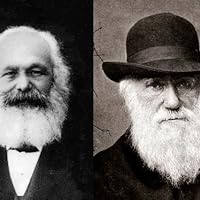
April 9, 2026
In the first half of this marvellous book, G.E.M. de Ste. Croix explains, using Marxist concepts, the class structure in the ancient world of Greece and Rome. He shows that the three main classes were the slave-owning, land-owning ruling class at the top; the slaves at the bottom; and the mass of small producers (peasants, craftspeople and traders) in between. (Many of the poorest of this last group were probably not much better off than some of the slaves.)
The system was based on exploitation, and Ste. Croix argues that even though slaves were not the majority of the population, their labour, especially on the big rural estates, provided most of the rulers' wealth.
Ste. Croix's view can be contrasted with that of another Marxist historian, Neil Faulkner. Faulkner describes himself as an unorthodox Marxist in that he rejects the traditional Marxist view that Roman society was based on the "slave mode of production". He instead describes it as being a system of "military imperialism", with the ruling class's surplus coming mainly from imperial plunder. (He has also argued that slaves were too diverse to be described as a class.) I am more convinced by Ste. Croix's view that Rome should indeed be described as a slave society, albeit one which of course relied on imperial expansion to provide the slaves.
In the second half of the book Ste. Croix applies the concepts developed in the first half to the history of the class struggle in the Graeco-Roman world. He shows, for example, how Athenian democracy, despite its limitations, was used by the free poor citizens to limit the power of the ruling class. Until..."Greek democracy was destroyed by the joint efforts of the Greek propertied class, the Macedonians and the Romans."
He also puts forward a convincing explanation of Rome's decline and fall. For centuries, Rome had been expanding. But at the beginning of the first century AD this expansion ground to a halt. Ste. Croix argues that the end of Rome's expansion led eventually to its decline.
Conquered provinces were a source of taxation in cash and kind. But they were also a source of slaves, especially during the process of conquest itself. But when expansion ceased, the supply of slaves began to dry up.
Ste. Croix argues that the decline in the number of imported slaves meant that Rome had to increasingly switch to the breeding of slaves. But this method was a more expensive method of providing slaves. Slaves therefore became less profitable for the Roman ruling class, so the rulers, to make up for this, began to increase the exploitation of "free" (i.e. non-slave) peasants.
These free peasants had always been exploited through taxation, but now they were gradually forced down into serfdom. Even the middle classes were squeezed. The bloated imperial bureaucracy was very costly to support. This worsening of the position of the free peasantry meant that they became indifferent to, or even welcomed, barbarian incursions. In some areas there were defections to the barbarians or peasant revolts. The Empire lost its backbone.
Of course, there were many other factors involved. For example, there was the strife and civil wars caused by provincial generals seeking the Emperor's crown. But it does seem that in the long run Rome could not stand still. It thrived on conquest: when that stopped, it had to squeeze the people within its boundaries harder and harder. Although the final collapse was a long time coming, the end of expansion marked the beginning of the end.
I don't agree with everything that Ste. Croix says: for example his view that women in the ancient world could be defined as a "class". But overall I strongly recommend this book. It is essential reading for anyone who has a serious interest in either the ancient world or Marxism, or both.
The system was based on exploitation, and Ste. Croix argues that even though slaves were not the majority of the population, their labour, especially on the big rural estates, provided most of the rulers' wealth.
Ste. Croix's view can be contrasted with that of another Marxist historian, Neil Faulkner. Faulkner describes himself as an unorthodox Marxist in that he rejects the traditional Marxist view that Roman society was based on the "slave mode of production". He instead describes it as being a system of "military imperialism", with the ruling class's surplus coming mainly from imperial plunder. (He has also argued that slaves were too diverse to be described as a class.) I am more convinced by Ste. Croix's view that Rome should indeed be described as a slave society, albeit one which of course relied on imperial expansion to provide the slaves.
In the second half of the book Ste. Croix applies the concepts developed in the first half to the history of the class struggle in the Graeco-Roman world. He shows, for example, how Athenian democracy, despite its limitations, was used by the free poor citizens to limit the power of the ruling class. Until..."Greek democracy was destroyed by the joint efforts of the Greek propertied class, the Macedonians and the Romans."
He also puts forward a convincing explanation of Rome's decline and fall. For centuries, Rome had been expanding. But at the beginning of the first century AD this expansion ground to a halt. Ste. Croix argues that the end of Rome's expansion led eventually to its decline.
Conquered provinces were a source of taxation in cash and kind. But they were also a source of slaves, especially during the process of conquest itself. But when expansion ceased, the supply of slaves began to dry up.
Ste. Croix argues that the decline in the number of imported slaves meant that Rome had to increasingly switch to the breeding of slaves. But this method was a more expensive method of providing slaves. Slaves therefore became less profitable for the Roman ruling class, so the rulers, to make up for this, began to increase the exploitation of "free" (i.e. non-slave) peasants.
These free peasants had always been exploited through taxation, but now they were gradually forced down into serfdom. Even the middle classes were squeezed. The bloated imperial bureaucracy was very costly to support. This worsening of the position of the free peasantry meant that they became indifferent to, or even welcomed, barbarian incursions. In some areas there were defections to the barbarians or peasant revolts. The Empire lost its backbone.
Of course, there were many other factors involved. For example, there was the strife and civil wars caused by provincial generals seeking the Emperor's crown. But it does seem that in the long run Rome could not stand still. It thrived on conquest: when that stopped, it had to squeeze the people within its boundaries harder and harder. Although the final collapse was a long time coming, the end of expansion marked the beginning of the end.
I don't agree with everything that Ste. Croix says: for example his view that women in the ancient world could be defined as a "class". But overall I strongly recommend this book. It is essential reading for anyone who has a serious interest in either the ancient world or Marxism, or both.
October 1, 2024
Δεν περίμενα ότι θα έγραφα ποτέ κριτική για αυτόν τον τσιμεντόλιθο μαρξικής ανάλυσης, αλλά, να που βρήκα χρόνο και όρεξη…
Το υπό κρίση βιβλίο είναι μια γιγαντιαία (είπαμε, τσιμεντόλιθος), φιλόδοξη προσπάθεια να αναλυθεί η ιστορία του ελληνικού και ρωμαϊκού κόσμου υπό το (αγαπημένο των μαρξιστών) πρίσμα της ταξικής πάλης. Στην καρδιά της ανάλυσής του βρίσκεται η μαρξι(στ)ική ιδέα ότι οι συγκρούσεις μεταξύ τάξεων αποτελούν την κινητήρια δύναμη της ιστορικής αλλαγής. Τι πιο σύνηθες, θα ρωτούσε κανείς.
Ο Ste. Croix δεν ενδιαφέρεται τόσο για τα πρόσωπα ή τα επιμέρους γεγονότα, αλλιώς θα μιλούσαμε για Κλωντ Μοσέ και Ζακλίν Ντε Ρομιγί (ου μην και τον λιγάκι αστείο Καργάκο), αλλά για τη δομική λογική που καθοδηγεί κοινωνικές μορφές μέσα στην αρχαιότητα: πώς ο πλούτος, η εργασία και η πολιτική εξουσία κατανέμονται και συγκρούονται.
Ο συγγραφέας δηλώνει ευθύς εξ αρχής και χωρίς περιστροφές ότι δεν ακολουθεί δογματικά τον Μαρξ ή τους επιγόνους του (τον δε σταλινισμό τον περνάει και ένα χεράκι που το φχαριστιέται ο αναγνώστης), αλλά διαμορφώνει μια προσαρμοσμένη θεωρία:
Η Τάξη ορίζεται ουσιαστικά με βάση τη σχέση προς τα μέσα παραγωγής και την εκμετάλλευση της εργασίας. Χωρίς να θέλω να γίνω εκείνο το παιδί, θα σηκώσω το χέρι μέσα στην αίθουσα και θα πω «κύριε, κύριε, άλλωστε ο Μαρξ, ουδέποτε έδωσε ο ίδιος ορισμό της «τάξης». Προχωράμε.
Η εκμετάλλευση αναλύεται κυρίως μέσω της ιδιοκτησίας της γης και της κατοχής σκλάβων, αλλά όχι μόνο. Υπάρχουν παραγωγικές δομές που χωρίς να χαρακτηρίζονται αμιγώς δουλοκτητικές, δεν παύουν να είναι σχέσεις σαφούς εκμετάλλευσης.
Η κρατική εξουσία θεωρείται ως εργαλείο επιβολής των συμφερόντων της κυρίαρχης τάξης (ελίτ, για τους πιο ψαγμένους στα μαρξιστικά πρωτομεταφρασμένα συγγράμματα).
Ο Ste. Croix απορρίπτει τους "αντικειμενικούς" ή "ηθικούς" όρους εξήγησης της αρχαιότητας και επιμένει ότι η οικονομική βάση διαμορφώνει και την ιδεολογία.
Ξεκινώντας από την Αρχαϊκή Εποχή στην Κλασική Ελλάδα, αναλύει τις δομές της κοινωνίας των πόλεων-κρατών (ιδίως της Αθήνας και της Σπάρτης), τη μετάβαση από τις αριστοκρατικές κοινωνίες στις τυραννίες και μετά στις δημοκρατίες (προς Θεού, όχι στη Σπάρτη, τι μας περάσατε;), τις οποίες και ερμηνεύει ως αποτέλεσμα ταξικών πιέσεων. Οι συγκρούσεις φτωχών και πλουσίων, οι σεισάχθειες, οι αναδιανομές γης, τα αιτήματα για δικαιώματα αναλύονται ως εκφάνσεις ταξικών αγώνων.
Όπως είναι λογικό, βάσει και όγκου ιστορικών αναφορών και «σπουδαιότητας» στον Ελλαδικό χώρο (βλέπε δημοκρατία, χρυσός αιώνας, Αθηναϊκή ηγεμονία) η Αθήνα του 5ου και 4ου αιώνα π.Χ. τραβάει πάνω της αρκετά από τα φώτα του βιβλίου.
Το πολυθρύλητο δημοκρατικό της πολίτευμα αντιμετωπίζεται όχι ως "θαύμα" (άλλωστε ο διαλεκτικός υλισμός έχει μια αλλεργία στα θαύματα), αλλά ως προϊόν κοινωνικής πάλης, ο ρόλος των φτωχών πολιτών που υποστηρίζονταν μέσω δημόσιων μισθών, συσσιτίων και άλλων θεσμών κοινωνικής ανακούφισης, τονίζεται και αναδεικνύεται.
Με ένα αλματάκι που θα άφηνε τον Καργάκο (ακόμη θα προσπαθούσε να πείσει για τη μη ομοφυλοφιλική σεξουαλικότητα του ΜΕγαλέξαντρου) άναυδο, παρουσιάζεται η ελληνιστική κοινωνία ως ακόμα πιο έντονα ταξικά διαστρωματωμένη.
Στη Ρωμαϊκή Δημοκρατία, η ταξική σύγκρουση (ανάμεσα σε πατρικίους και πληβείους, σε πλούσιους γαιοκτήμονες και ακτήμονες) είναι οργανικό χαρακτηριστικό.
Κάποια στιγμή, τα δημοκρατικά πειράματα τελειώνουν, η κατάσταση σοβαρεύει, έχουμε Οκταβιανό Αύγουστο (αν και δεν ανακηρύχθηκε ποτέ αυτοκράτορας επίσημα), η δημοκρατία πνέει να λοίσθια και η αυτοκρατορία αναδύεται. Πάμε στα δικά μας, τα ταξικά:
Υπό τον Αύγουστο, οι κοινωνικές ανισότητες δεν εξαλείφονται, αλλά υφίστανται μια θεσμική παγίωση (και φυσικά ενσωμάτωση).Η φορολόγηση των αγροτών, η συσσώρευση γης σε λίγα χέρια και η σταδιακή «προλεταριοποίηση» των ελεύθερων πληθυσμών θεωρούνται στοιχεία επιδείνωσης της ταξικής εκμετάλλευσης. Υπενθυμίζουμε εδώ, ότι η λέξη προλετάριος προέρχεται από τα λατινικά και πρακτικά σημαίνει “αυτός που δεν έχει γη ή πλούτο, αλλά θεωρούνταν χρήσιμος για την κοινωνία λόγω της ικανότητάς του… να παράγει απογόνους ("proles").
Σε μεταγενέστερους χρόνους, όταν ο ρωμαϊκός κόσμος επιβιώνει ως Ανατολική Ρωμαϊκή αυτοκρατορία (λέγε με «Βυζάντιο», αν και κανένας υπήκοός του δεν άκουσε ποτέ τη λέξη αυτή) οι ταξικές πιέσεις έχουν μετασχηματιστεί και η φορολογική καταπίεση σε συνδυασμό με την κοινωνική στασιμότητα ανοίγουν την πόρτα στην αραβική εξάπλωση.
Οι θέσεις του Ste. Croix, συχνά αποκλίνουσες (ως αποτέλεσμα μαρξικής ανάλυσης, προφανώς) από τις κλασικές ιστορικές τοποθετήσεις έχουν σίγουρα το ενδιαφέρον τους:
Ο ρόλος της δουλείας: Ο Ste. Croix υποστηρίζει ότι χωρίς το μαζικό σύστημα δουλείας, η αθηναϊκή δημοκρατία δε θα ήταν δυνατή. Η συμμετοχή στα κοινά απαιτεί χρόνο που συνήθως δαπανάται σε εργασία, ergo, ήταν οι δούλοι που επέτρεπαν στους φτωχούς πολίτες να συμμετέχουν ενεργά στη δημόσια ζωή.
Η κριτική στον Χριστιανισμό: Αν και αναγνωρίζει το ριζοσπαστικό χαρακτήρα κάποιων πρώτων χριστιανικών κινημάτων, θεωρεί ότι ο χριστιανισμός σε μεγάλο βαθμό τελικά υπηρέτησε την εδραίωση της υπάρχουσας ταξικής τάξης, έγινε το δεκανίκι της εξουσίας (και κράτος εν κράτει, ενίοτε και… επί κράτους), παρά το γεγονός της αρχικής του τοποθέτησης ως θρησκείας των φτωχών προλετάριων, δούλων, καταπιεσμένων.
Η χρήση των πηγών: Ο Ste. Croix επιμένει στην "κριτική ανάγνωση" των κλασικών κειμένων, υποστηρίζοντας ότι οι αρχαίοι συγγραφείς (Θουκυδίδης, Πολύβιος κ.λπ.) εκπροσωπούν συχνά τις απόψεις της άρχουσας τάξης και πρέπει να διαβάζονται με μια σχετική αναστροφή προοπτικής.
Αναντίρρητα το έργο είναι μεγαλειώδες, ταυτόχρονα απολαυστικό και εξοντωτικό στην ανάγνωσή του, μοιραία όμως ανακύπτουν κάποιες επικρίσεις.
Ορισμένα κεφάλαια είναι εξαιρετικά λεπτομερή, ενώ άλλα (όπως για τον ελληνιστικό κόσμο) πιο σύντομα και σχηματικά. Ίσως είναι δύσκολο να κρατήσει τον ίδιο ρυθμό ένα έργο τέτοιος έκτασης (και σίγουρα δε θα του στερήσουμε βαθμούς). Άλλωστε ίσως να μην παρέχουν όλες οι εποχές το ίδιο εύφορο έδαφος για ανάλυση, ή να μην ήταν στη διακριτική ευχέρεια του συγγραφέα να το πράξει…
Η εξήγηση όλων των ιστορικών φαινομένων με αποκλειστικό κριτήριο την ταξική πάλη δίνει σε κάποιους αναγνώστες την αίσθηση ότι παραγνωρίζει άλλες σημαντικές διαστάσεις (θρησκευτικές, πολιτισμικές, εθνοτικές). Ωστόσο, το γεγονός ότι η ανάλυση γίνεται μέσα από μαρξικό πρίσμα και αυτό αποσαφηνίζεται εξαρχής, είναι το απόλυτο άλλοθι (αν σας αρέσει, αλλιώς υπάρχουν κι άλλοι που τα γράφουν πιο «κλασικά»)
Σε γενικές γραμμές παραμένει ένα κλασικό έργο και έργο αναφοράς, παρά τις όποιες ενστάσεις. Προσφέρει ένα ισχυρό και συνεπές θεωρητικό πλαίσιο, προκαλεί τον αναγνώστη να αναθεωρήσει πολλά δεδομένα της αρχαίας ιστορίας και «υπενθυμίζει» ότι ακόμη και στην αρχαιότητα η οικονομική ανισότητα και η πάλη για την κοινωνική δικαιοσύνη ήταν κεντρικές κινητήριες δυνάμεις. Επίσης, κρατάει… αποστάσεις από το σταλινισμό και την «ορθοδοξία» των ΚΚ της δεκαετίας του 1970, κάτι όχι και τόσο αμελητέο (μην κοιτάτε σήμερα που γίναμε μαλλιά κουβάρια και θα δεις Τροτσκιστή και Σταλινικό να παίζουν πρέφα στο ίδιο τραπέζι).
Το υπό κρίση βιβλίο είναι μια γιγαντιαία (είπαμε, τσιμεντόλιθος), φιλόδοξη προσπάθεια να αναλυθεί η ιστορία του ελληνικού και ρωμαϊκού κόσμου υπό το (αγαπημένο των μαρξιστών) πρίσμα της ταξικής πάλης. Στην καρδιά της ανάλυσής του βρίσκεται η μαρξι(στ)ική ιδέα ότι οι συγκρούσεις μεταξύ τάξεων αποτελούν την κινητήρια δύναμη της ιστορικής αλλαγής. Τι πιο σύνηθες, θα ρωτούσε κανείς.
Ο Ste. Croix δεν ενδιαφέρεται τόσο για τα πρόσωπα ή τα επιμέρους γεγονότα, αλλιώς θα μιλούσαμε για Κλωντ Μοσέ και Ζακλίν Ντε Ρομιγί (ου μην και τον λιγάκι αστείο Καργάκο), αλλά για τη δομική λογική που καθοδηγεί κοινωνικές μορφές μέσα στην αρχαιότητα: πώς ο πλούτος, η εργασία και η πολιτική εξουσία κατανέμονται και συγκρούονται.
Ο συγγραφέας δηλώνει ευθύς εξ αρχής και χωρίς περιστροφές ότι δεν ακολουθεί δογματικά τον Μαρξ ή τους επιγόνους του (τον δε σταλινισμό τον περνάει και ένα χεράκι που το φχαριστιέται ο αναγνώστης), αλλά διαμορφώνει μια προσαρμοσμένη θεωρία:
Η Τάξη ορίζεται ουσιαστικά με βάση τη σχέση προς τα μέσα παραγωγής και την εκμετάλλευση της εργασίας. Χωρίς να θέλω να γίνω εκείνο το παιδί, θα σηκώσω το χέρι μέσα στην αίθουσα και θα πω «κύριε, κύριε, άλλωστε ο Μαρξ, ουδέποτε έδωσε ο ίδιος ορισμό της «τάξης». Προχωράμε.
Η εκμετάλλευση αναλύεται κυρίως μέσω της ιδιοκτησίας της γης και της κατοχής σκλάβων, αλλά όχι μόνο. Υπάρχουν παραγωγικές δομές που χωρίς να χαρακτηρίζονται αμιγώς δουλοκτητικές, δεν παύουν να είναι σχέσεις σαφούς εκμετάλλευσης.
Η κρατική εξουσία θεωρείται ως εργαλείο επιβολής των συμφερόντων της κυρίαρχης τάξης (ελίτ, για τους πιο ψαγμένους στα μαρξιστικά πρωτομεταφρασμένα συγγράμματα).
Ο Ste. Croix απορρίπτει τους "αντικειμενικούς" ή "ηθικούς" όρους εξήγησης της αρχαιότητας και επιμένει ότι η οικονομική βάση διαμορφώνει και την ιδεολογία.
Ξεκινώντας από την Αρχαϊκή Εποχή στην Κλασική Ελλάδα, αναλύει τις δομές της κοινωνίας των πόλεων-κρατών (ιδίως της Αθήνας και της Σπάρτης), τη μετάβαση από τις αριστοκρατικές κοινωνίες στις τυραννίες και μετά στις δημοκρατίες (προς Θεού, όχι στη Σπάρτη, τι μας περάσατε;), τις οποίες και ερμηνεύει ως αποτέλεσμα ταξικών πιέσεων. Οι συγκρούσεις φτωχών και πλουσίων, οι σεισάχθειες, οι αναδιανομές γης, τα αιτήματα για δικαιώματα αναλύονται ως εκφάνσεις ταξικών αγώνων.
Όπως είναι λογικό, βάσει και όγκου ιστορικών αναφορών και «σπουδαιότητας» στον Ελλαδικό χώρο (βλέπε δημοκρατία, χρυσός αιώνας, Αθηναϊκή ηγεμονία) η Αθήνα του 5ου και 4ου αιώνα π.Χ. τραβάει πάνω της αρκετά από τα φώτα του βιβλίου.
Το πολυθρύλητο δημοκρατικό της πολίτευμα αντιμετωπίζεται όχι ως "θαύμα" (άλλωστε ο διαλεκτικός υλισμός έχει μια αλλεργία στα θαύματα), αλλά ως προϊόν κοινωνικής πάλης, ο ρόλος των φτωχών πολιτών που υποστηρίζονταν μέσω δημόσιων μισθών, συσσιτίων και άλλων θεσμών κοινωνικής ανακούφισης, τονίζεται και αναδεικνύεται.
Με ένα αλματάκι που θα άφηνε τον Καργάκο (ακόμη θα προσπαθούσε να πείσει για τη μη ομοφυλοφιλική σεξουαλικότητα του ΜΕγαλέξαντρου) άναυδο, παρουσιάζεται η ελληνιστική κοινωνία ως ακόμα πιο έντονα ταξικά διαστρωματωμένη.
Στη Ρωμαϊκή Δημοκρατία, η ταξική σύγκρουση (ανάμεσα σε πατρικίους και πληβείους, σε πλούσιους γαιοκτήμονες και ακτήμονες) είναι οργανικό χαρακτηριστικό.
Κάποια στιγμή, τα δημοκρατικά πειράματα τελειώνουν, η κατάσταση σοβαρεύει, έχουμε Οκταβιανό Αύγουστο (αν και δεν ανακηρύχθηκε ποτέ αυτοκράτορας επίσημα), η δημοκρατία πνέει να λοίσθια και η αυτοκρατορία αναδύεται. Πάμε στα δικά μας, τα ταξικά:
Υπό τον Αύγουστο, οι κοινωνικές ανισότητες δεν εξαλείφονται, αλλά υφίστανται μια θεσμική παγίωση (και φυσικά ενσωμάτωση).Η φορολόγηση των αγροτών, η συσσώρευση γης σε λίγα χέρια και η σταδιακή «προλεταριοποίηση» των ελεύθερων πληθυσμών θεωρούνται στοιχεία επιδείνωσης της ταξικής εκμετάλλευσης. Υπενθυμίζουμε εδώ, ότι η λέξη προλετάριος προέρχεται από τα λατινικά και πρακτικά σημαίνει “αυτός που δεν έχει γη ή πλούτο, αλλά θεωρούνταν χρήσιμος για την κοινωνία λόγω της ικανότητάς του… να παράγει απογόνους ("proles").
Σε μεταγενέστερους χρόνους, όταν ο ρωμαϊκός κόσμος επιβιώνει ως Ανατολική Ρωμαϊκή αυτοκρατορία (λέγε με «Βυζάντιο», αν και κανένας υπήκοός του δεν άκουσε ποτέ τη λέξη αυτή) οι ταξικές πιέσεις έχουν μετασχηματιστεί και η φορολογική καταπίεση σε συνδυασμό με την κοινωνική στασιμότητα ανοίγουν την πόρτα στην αραβική εξάπλωση.
Οι θέσεις του Ste. Croix, συχνά αποκλίνουσες (ως αποτέλεσμα μαρξικής ανάλυσης, προφανώς) από τις κλασικές ιστορικές τοποθετήσεις έχουν σίγουρα το ενδιαφέρον τους:
Ο ρόλος της δουλείας: Ο Ste. Croix υποστηρίζει ότι χωρίς το μαζικό σύστημα δουλείας, η αθηναϊκή δημοκρατία δε θα ήταν δυνατή. Η συμμετοχή στα κοινά απαιτεί χρόνο που συνήθως δαπανάται σε εργασία, ergo, ήταν οι δούλοι που επέτρεπαν στους φτωχούς πολίτες να συμμετέχουν ενεργά στη δημόσια ζωή.
Η κριτική στον Χριστιανισμό: Αν και αναγνωρίζει το ριζοσπαστικό χαρακτήρα κάποιων πρώτων χριστιανικών κινημάτων, θεωρεί ότι ο χριστιανισμός σε μεγάλο βαθμό τελικά υπηρέτησε την εδραίωση της υπάρχουσας ταξικής τάξης, έγινε το δεκανίκι της εξουσίας (και κράτος εν κράτει, ενίοτε και… επί κράτους), παρά το γεγονός της αρχικής του τοποθέτησης ως θρησκείας των φτωχών προλετάριων, δούλων, καταπιεσμένων.
Η χρήση των πηγών: Ο Ste. Croix επιμένει στην "κριτική ανάγνωση" των κλασικών κειμένων, υποστηρίζοντας ότι οι αρχαίοι συγγραφείς (Θουκυδίδης, Πολύβιος κ.λπ.) εκπροσωπούν συχνά τις απόψεις της άρχουσας τάξης και πρέπει να διαβάζονται με μια σχετική αναστροφή προοπτικής.
Αναντίρρητα το έργο είναι μεγαλειώδες, ταυτόχρονα απολαυστικό και εξοντωτικό στην ανάγνωσή του, μοιραία όμως ανακύπτουν κάποιες επικρίσεις.
Ορισμένα κεφάλαια είναι εξαιρετικά λεπτομερή, ενώ άλλα (όπως για τον ελληνιστικό κόσμο) πιο σύντομα και σχηματικά. Ίσως είναι δύσκολο να κρατήσει τον ίδιο ρυθμό ένα έργο τέτοιος έκτασης (και σίγουρα δε θα του στερήσουμε βαθμούς). Άλλωστε ίσως να μην παρέχουν όλες οι εποχές το ίδιο εύφορο έδαφος για ανάλυση, ή να μην ήταν στη διακριτική ευχέρεια του συγγραφέα να το πράξει…
Η εξήγηση όλων των ιστορικών φαινομένων με αποκλειστικό κριτήριο την ταξική πάλη δίνει σε κάποιους αναγνώστες την αίσθηση ότι παραγνωρίζει άλλες σημαντικές διαστάσεις (θρησκευτικές, πολιτισμικές, εθνοτικές). Ωστόσο, το γεγονός ότι η ανάλυση γίνεται μέσα από μαρξικό πρίσμα και αυτό αποσαφηνίζεται εξαρχής, είναι το απόλυτο άλλοθι (αν σας αρέσει, αλλιώς υπάρχουν κι άλλοι που τα γράφουν πιο «κλασικά»)
Σε γενικές γραμμές παραμένει ένα κλασικό έργο και έργο αναφοράς, παρά τις όποιες ενστάσεις. Προσφέρει ένα ισχυρό και συνεπές θεωρητικό πλαίσιο, προκαλεί τον αναγνώστη να αναθεωρήσει πολλά δεδομένα της αρχαίας ιστορίας και «υπενθυμίζει» ότι ακόμη και στην αρχαιότητα η οικονομική ανισότητα και η πάλη για την κοινωνική δικαιοσύνη ήταν κεντρικές κινητήριες δυνάμεις. Επίσης, κρατάει… αποστάσεις από το σταλινισμό και την «ορθοδοξία» των ΚΚ της δεκαετίας του 1970, κάτι όχι και τόσο αμελητέο (μην κοιτάτε σήμερα που γίναμε μαλλιά κουβάρια και θα δεις Τροτσκιστή και Σταλινικό να παίζουν πρέφα στο ίδιο τραπέζι).
June 23, 2025
Slow starting, but once you get about 100 pages in, it hits a stride that only accelerates. Cuts quickly and deeply into the complete tragedy of ancient life for the vast majority, who normally get no time in the spotlight, and the simultaneous tragedy of their manipulation by such crude means as "god said I should be in charge". Contains the fascinating idea that women who are nominally of the property owning class could only partly be in that class, since they couldn't actually own any property, while women of the lowest class had an equal amount of rights to the men of that class... that amount being none.
While a long and technical book, its fairly approachable even for a novice to both Ancient Greek history and Marxist analysis. The only real difficulty is that there are many untranslated quotes (French, German, Latin), and while the majority of the book can be understood without them, it feels like a less than full experience. However, it seems to have been a common practice in G.E.M.'s era so I can't really call it out too badly.
Overall a great book, but my god the first hundred pages are dry. Bring several glasses of water and you'll survive to see the gems that come after. Or perhaps develop a kind of stockholm syndrome.
While a long and technical book, its fairly approachable even for a novice to both Ancient Greek history and Marxist analysis. The only real difficulty is that there are many untranslated quotes (French, German, Latin), and while the majority of the book can be understood without them, it feels like a less than full experience. However, it seems to have been a common practice in G.E.M.'s era so I can't really call it out too badly.
Overall a great book, but my god the first hundred pages are dry. Bring several glasses of water and you'll survive to see the gems that come after. Or perhaps develop a kind of stockholm syndrome.

March 19, 2023
Useful as a reference.

November 28, 2025
bir yıldız kırdım croix baba Marx'a iyi çalışmamışsın hatalar var, ama yine de harika bir iş çıkarmışsın bravo

September 23, 2026
Dry and dense, just how I like my classical history

September 17, 2022
El libro analiza las clases sociales de la Grecia y Roma antiguas para luego pasar a abordar los distintos estadios y sus transiciones en la lucha de clases bajo las distintas formas de gobierno o constituciones tanto en las polis griegas como en Roma.
Sainte Croix valora a la democracia griega como el momento en el que las las clases subalternas libres pero desposeidas tuvieron mayor cantidad de recursos institucionales para contrarrestar el poder de los propietarios y las tentativas oligarquías.
También remarca el papel clave de las potencias extranjeras (Macedonia, Persia y Roma) en las luchas internas en pos de la democracia o la oligarquía. Estás intervenciones foráneas son apoyadas por los grandes propietarios locales y cercenan poco a poco la vida democrática en las polis, siendo así que Atenas es la única que perdura, aunque tutelada, a partir de la hegemonía macedonica. Roma terminaría por sepultar completamente todo intento por reflotar este sistema.
El autor pasa del ámbito de las polis y griegas y la supeditación final a Roma a describir la composición de órdenes y clases de la Roma soberana. Habla de los patricios, grupo conformado homogeneamente por la oligarquía, y de los plebeyos como un bloque más bien heterogéneo, integrado por personas propietarias y ricas, y trabajadores libres, artesanos y comerciantes entre clasemedieros y pobres.
En ese esquema inicial de la antigua Roma tiene lugar una lucha entre ambos órdenes, producto del cual los plebeyos, gradualmente, ocupan espacios de poder manifestados en el tribuno de la plebe, un órgano que contrarresta el poder del Senado, dominado por patricios. Aunque luego el Senado mismo pasaría a incorporar a plebeyos, influenciado por los periodos en los que el cargo de cónsul recaía en el partido de los populares.
Pronto, con el pasar de las su eso así reconfiguraciones políticas, estos órdenes se desdibujaron en lo político, dominado por el antagonismo entre optimates y populares) y lo económico, con una nobleza formada por patricios y altos plebeyos, una clase de trabajadores, artesanos, comerciantes y campesinos libres, y la masa de esclavos con quienes los trabajadores libres disputaban el trabajo disponible.
El sistema político de la época de la república se encontraba sustentado por la elección popular de cargos territoriales, aunque el Senado tenía un poder preponderante y primaba una oligarquía hereditaria así como los favoritismos estructurados en el vinculo patron-clientela, que terminaban por viciar el proceso eleccionario.
El componente democrático limitado fue perdiendo lugar a medida que, posterior a la República, se consolidó el Imperio, primero a través del Principado y luego del Dominado, que sentó las bases del feudalismo con el colonato al que la masa de trabajadores libres fue sometida por necesidad e imposición de las clases militares y el sostenimiento financiero del aparato de poder imperial.
En la última parte se repasa como a causa de la intensificación de la coerción física e impositiva, el Imperio se desmorona al quedarse sin apoyo de la gente en el campo, que pasa a ser el nuevo eje social, y la ciudad, que salvo excepciones como Constantinopla y otros lugares más, deja de ser el nodo de la vida social, mientras que el bastión del poder político y militar se trasladaba hacia la parte oriental del imperio. De esta manera, la parte occidental se vio gradualmente barrida por la sucesivas migraciones de pueblos germánicos, bienvenidas por el llano sometido bajo la bota romana, mientras que la parte oriental, Bizancio, sobrevivió varios siglos más gracias a la riqueza de los territorios que controlaba, el comercio, una mayor cohesión social, menor intensidad de migraciones y mayor adaptación al modelo feudal.
Sainte Croix valora a la democracia griega como el momento en el que las las clases subalternas libres pero desposeidas tuvieron mayor cantidad de recursos institucionales para contrarrestar el poder de los propietarios y las tentativas oligarquías.
También remarca el papel clave de las potencias extranjeras (Macedonia, Persia y Roma) en las luchas internas en pos de la democracia o la oligarquía. Estás intervenciones foráneas son apoyadas por los grandes propietarios locales y cercenan poco a poco la vida democrática en las polis, siendo así que Atenas es la única que perdura, aunque tutelada, a partir de la hegemonía macedonica. Roma terminaría por sepultar completamente todo intento por reflotar este sistema.
El autor pasa del ámbito de las polis y griegas y la supeditación final a Roma a describir la composición de órdenes y clases de la Roma soberana. Habla de los patricios, grupo conformado homogeneamente por la oligarquía, y de los plebeyos como un bloque más bien heterogéneo, integrado por personas propietarias y ricas, y trabajadores libres, artesanos y comerciantes entre clasemedieros y pobres.
En ese esquema inicial de la antigua Roma tiene lugar una lucha entre ambos órdenes, producto del cual los plebeyos, gradualmente, ocupan espacios de poder manifestados en el tribuno de la plebe, un órgano que contrarresta el poder del Senado, dominado por patricios. Aunque luego el Senado mismo pasaría a incorporar a plebeyos, influenciado por los periodos en los que el cargo de cónsul recaía en el partido de los populares.
Pronto, con el pasar de las su eso así reconfiguraciones políticas, estos órdenes se desdibujaron en lo político, dominado por el antagonismo entre optimates y populares) y lo económico, con una nobleza formada por patricios y altos plebeyos, una clase de trabajadores, artesanos, comerciantes y campesinos libres, y la masa de esclavos con quienes los trabajadores libres disputaban el trabajo disponible.
El sistema político de la época de la república se encontraba sustentado por la elección popular de cargos territoriales, aunque el Senado tenía un poder preponderante y primaba una oligarquía hereditaria así como los favoritismos estructurados en el vinculo patron-clientela, que terminaban por viciar el proceso eleccionario.
El componente democrático limitado fue perdiendo lugar a medida que, posterior a la República, se consolidó el Imperio, primero a través del Principado y luego del Dominado, que sentó las bases del feudalismo con el colonato al que la masa de trabajadores libres fue sometida por necesidad e imposición de las clases militares y el sostenimiento financiero del aparato de poder imperial.
En la última parte se repasa como a causa de la intensificación de la coerción física e impositiva, el Imperio se desmorona al quedarse sin apoyo de la gente en el campo, que pasa a ser el nuevo eje social, y la ciudad, que salvo excepciones como Constantinopla y otros lugares más, deja de ser el nodo de la vida social, mientras que el bastión del poder político y militar se trasladaba hacia la parte oriental del imperio. De esta manera, la parte occidental se vio gradualmente barrida por la sucesivas migraciones de pueblos germánicos, bienvenidas por el llano sometido bajo la bota romana, mientras que la parte oriental, Bizancio, sobrevivió varios siglos más gracias a la riqueza de los territorios que controlaba, el comercio, una mayor cohesión social, menor intensidad de migraciones y mayor adaptación al modelo feudal.

November 5, 2012
Quite interesting
Displaying 1 - 27 of 27 reviews