"Money amongst its many other virtues, has a detergent quality ... [It] allows you to sit in an armchair, stretch out your legs and read the newspaper. It gives you those immaculate hands that emerge from starched white shift cuffs. It's no longer you prowling the night. You employ assistants and servants to trap, skin and kill the creates from which one obtains the vital ingredients for the Sunday stew.
[...]
It has taken only a few years for us to acquire that privileged status, the illusion that we are all lords and ladies of the manor, while in remote factories, working kill and skin and carve and package the animals we eat once they've become acceptably aseptic."
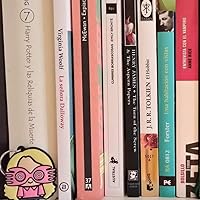
"On the Edge" was translated by the incomparable Margaret Jull Costa. I have more books written (because the translator writes the words we the non-native reader read) by her on my shelves than anyone else, more than 30, books translated from originals by such greats as Saramago, Marías, Pessoa, Lobo Antunes, Tabucchi, Atxaga,de Queirós, Giralt Torrente ... and errrrrhhh.... Paulho Coelho (presumably to pay the bills!).
Set in Olba, in Spain, in late 2010 after the property-boom led economic bubble had burst, "On the Edge" focuses on those on the fringes of society - socio-economically and geographically: Olba is on the coast, 60km from Valencia, where much of the frenzied property development took place, and indeed the Spanish title "En la Orilla" could be translated as on the shore or river bank.
The story centres on Estaban, 70 years old, proprietor of the family carpentry business ("a carpenter is expected to be a peaceful fellow, a cuckolded St Joseph"), forced into bankruptcy after he had sunk funds into a friend's property empire (said "friend" now having fled from his creditors, including Estaban).
The story is told in first-person monologues, mainly by Estaban, although he has an interlocutor who occasionally interjects, Liliana, who, until recently, cared for his father. Her thoughts, largely on the unfavourable comparison of Spain to her native Columbia, often interrupt his, without any marker in the text, mid paragraph, sometimes mid sentence, and given he has had to let her go, one suspects are imagined on his behalf from past conversations.
Other characters voices also interrupt the story, notably those of Estaban's workers, in even direr straits than he. Indeed their voices, and his account of him having to tell them the firm was bankrupt adds depth to Estaban's account - he is both downtrodden victim and yet part of the problem. An interwoven tale of his one true love, who eventually eloped with his more successful and rich friend also adds some personal poignancy to his otherwise rather sordid tale.
And the story is deliberately cynical and sordid - the focus is on immigrant workers, prostitutes ("the only bulge in your trousers she's interested in is the one made by your wallet") and illegal drugs, their pimps and traffickers ("Gypsies, Romanians, Colombians, Italian mafia, Russians.") and on crippling debts, bankruptcy ("what else is a bankrupt business but a transmissible disease that has never given pleasure to anyone?"), environmental degradation and endemic corruption, and on cynical marriages ("they used each other - economically, socially, eugenically").
It all makes for an effectively powerful but somewhat unpleasant read. The stream-of-thoughts style of the novel means it is best read in long sittings, but the subject matter and indeed length (400 pages) makes that difficult.
One interesting theme is how the aftermath of the Spanish civil war continues to corrupt into the present day, both at a personal and business level.
Estaban has a troubled relationship with his elderly father, a Civil war veteran who spent several years afterwards in jail. He is now suffering from dementia and, after an operation on his trachea, mute, and the target of many of Estaban's monologues.
"He always spoke harshly (spare the rod and spoil the child: always the threat of cruelty), drawing attention to my lack of skill and, above all, crushing any ambition I might have, just as life had crushed his. What the victors of the civil war did to him, he did to me, the only son he had handy."
And at a wider level, the book posits a strong link between those responsible for the boom and subsequent bust, and the victors from the Falangist era. For example, the remote lagoons where fugitive Republican soldiers hid were redeveloped in part to flush them out
"It wasn't all about repressions though. There was a business aspect too. On the excuse that they had to hunt down the poor wretches, the authorities encouraged the draining of the lagoos, promoted the idea of filling them in, giving swathes of land to a few friends and ex-combatants, granting them authority to drain and cultivate it. Greed was enough of an incentive to mobilise the volunteers for the hunts. Properties like Dalmau and La Citricola were born out of those re-distributions."
Another key theme for Estaban is how man is really nothing more than an animal and an unimpressive one at that, "all men are nothing but a bag of shit tied in the middle. I think it's this idea that makes my postcoital depression even worse: the sense that I'm drawn to that filth, that I've clasped one of those putrid bags of shit to me and released part of my own filth into it".
Estaban writes in honest but visceral prose about the ageing process:
"The worst of it is that the men who [once] sported necklaces with shark's teeth and shells or wore Mao collars are all dead - they were killed or they're past retirement age, they have grandchildren and great-grandchildren, hyperglycemia, triglycerides, high cholesterol, triple bypasses, pacemakers, varicose veins, prostate problems and osteoarthritis. Or else they're lying awake in the early hours wondering if they'll survive the chemotherapy for their colon cancer. They're old men like me - moon-faced, over-stuffed sausages - or doubles for a B-movie Dracula, thin and gray, sallow-complexioned, with deep lines crisscrossing their face, a profusion of bald heads, toothless mouths, huge dentures and white hair. Ruined prostates, with the proof of their radiotherapy sessions there in their dull gaze and in their sharp, frightened little eyes glancing cautiously about in case they should stumble into death."
It's the "detergent" effect of money - see the opening quote to my review - that enables the rich to convince themselves they have risen above this and avoid getting their hands dirty. Contrasting the squalor of illegal immigrant labourers with the nearby luxury estates they are constructing, Estaban opines that the the latter "don't care as long as the marauders don't throw their garbage over the wall and the smell of putrefaction doesn't reach their private terrace, the whole world can sink in the shit for all they care"
But as the opening quote also implies, in reality this illusion permeates much deeper into society's social classes.
The novel is perhaps on least safe ground when it enters into direct political views. The impassioned prose spills over into polemic and inaccuracies even emerge. For example, Estaban talks about the "Japanese" car company Hyundai - not clear if this is a deliberate error meant to expose the narrator's ignorance or an error of the authors.
The "villians" of the piece, the corrupt property developers and people traffickers, sometimes descend into caricature versus the worthy long-suffering workers. Of his card-playing companion Justino, Estaban observes that after he has had a few drinks:
"You do get a glimpse of the cannibal, our very own Hannibal Lecter. The predator. In Olba, he has continued to do more or less the same thing, just variants of slave-trading: taking vanloads of workmen to jobs he finds for them in exchange for keeping twenty or twenty-five per cent of what they earn. That’s just an example. He’s a protean being who has a finger in every pie: agriculture, construction, import-export, banking. And he dabbles in all the professions too: teams of orange-pickers, groups of bricklayers, electricians, plumbers, whole brigades of drivers. Not to mention the white-collar sector: customs men and port agents, superintendents, lawyers, notaries, town councillors, mayors. He makes them all employees in his service company which, of course, has no legal existence. He could be seen as a champion in the struggle against unemployment: he has all kinds of ways to keep other people working.
[But...] he moves amongst the shadows of the night, where evil lurks and where his succubi have their beds, the labourers who stoke our nightmares with filthy coal."
Plot-wise, the offering is thin indeed. The brief opening chapter has Ahmed, a Moroccan and one of Estaban's now redundant workers, stumble across a human body in the lagoon. This is followed by Estaban's monologues, set two days earlier and which span 370 of the book's 400 pages. Occasionally interspersed with this are ominous hints of something to do with his future "the future that is fast approaching and no longer includes me", (e.g. "that would be the final irony if I were to end up in jail, in clink. Although I'm pretty sure they won't arrive in time") and his father ("I'm fulfilling my anonymous role in the chain of history, I'm going with him so that in the final act he will lack for nothing, it's a decisive role, and one that he himself cannot undertake.") But what actually happens in the following days is left to the reader's imagination.
Overall, a powerful work but one that I felt went past realism into exaggerated realism, and, not a comment I often make on books, perhaps overstayed its welcome.
"On the Edge" was translated by the incomparable Margaret Jull Costa. I have more books written (because the translator writes the words we read) by her on my shelves than anyone else, more than 30, books translated from originals by such greats as Saramago, Marías, Pessoa, Lobo Antunes, Tabucchi, Atxaga,de Queirós, Giralt Torrente ... and Paulho Coelho (presumably to pay the bills!).


 Rafael Chirbes (1949 – 2015)