

What do you think?

The Story of India
This sumptuously illustrated book with its magical mix of history and travelogue will provide an unforgettable portrait of India.
In this lavishly illustrated companion to his BBC TV series, Michael Wood weaves a spellbinding narrative out of the 10,000-year history of India. Home today to more than a fifth of the world’s population, the subcontinent gave birth to the oldest and most influential civilization on Earth, to four world religions, and to the world’s largest democracy. Now, as India bids to become a global giant, Michael sets out to trace the roots of India’s present in the incredible riches of her past.
From the Khyber Pass and the Himalayas to the tropical jungles of India’s Deep South, this original and striking survey of Indian history provides vivid portraits of India’s regions and cultures, and new insights into some of history’s greatest the Buddha and Ashoka, Samudragupta and Akbar the Great, Nehru and Gandhi. It explores the ways in which Indian ideas and inventions have shaped the history of the world, and shows how some of ancient India’s conclusions about the nature of civilization have lost none of their relevance for our own times.
Dazzling colour photographs capture an extraordinary spectrum of landscapes, architectural splendours, customs, rituals and festivals. This sumptuously illustrated book from one of Britain’s best-loved historians and broadcasters is a magical mixture of history and travelogue, and an unforgettable portrait of India, past, present — and future.
In this lavishly illustrated companion to his BBC TV series, Michael Wood weaves a spellbinding narrative out of the 10,000-year history of India. Home today to more than a fifth of the world’s population, the subcontinent gave birth to the oldest and most influential civilization on Earth, to four world religions, and to the world’s largest democracy. Now, as India bids to become a global giant, Michael sets out to trace the roots of India’s present in the incredible riches of her past.
From the Khyber Pass and the Himalayas to the tropical jungles of India’s Deep South, this original and striking survey of Indian history provides vivid portraits of India’s regions and cultures, and new insights into some of history’s greatest the Buddha and Ashoka, Samudragupta and Akbar the Great, Nehru and Gandhi. It explores the ways in which Indian ideas and inventions have shaped the history of the world, and shows how some of ancient India’s conclusions about the nature of civilization have lost none of their relevance for our own times.
Dazzling colour photographs capture an extraordinary spectrum of landscapes, architectural splendours, customs, rituals and festivals. This sumptuously illustrated book from one of Britain’s best-loved historians and broadcasters is a magical mixture of history and travelogue, and an unforgettable portrait of India, past, present — and future.
256 pages, Hardcover
First published August 16, 2007
About the author
Michael Wood
260 books377 followersLibrarian Note: There's more than one author in the GoodReads database with this name. See this thread for more information.
Michael David Wood is an English historian & broadcaster. He's presented numerous tv documentary series. Library of Congress lists him as Michael Wood.
Wood was born in Moston, Manchester, & educated at Manchester Grammar School & Oriel College, Oxford. His special interest was Anglo-Saxon history. In the 70s Wood worked for the BBC in Manchester. He was 1st a reporter, then an assistant producer on current affairs programmes, before returning to his love of history with his 1981 series In Search of the Dark Ages for BBC2. This explored the lives of leaders of the period, including Boadicea, King Arthur, Offa, Alfred the Great, Athelstan, Eric Bloodaxe & William the Conquerer (& gave rise to his 1st book, based upon the series).
Michael David Wood is an English historian & broadcaster. He's presented numerous tv documentary series. Library of Congress lists him as Michael Wood.
Wood was born in Moston, Manchester, & educated at Manchester Grammar School & Oriel College, Oxford. His special interest was Anglo-Saxon history. In the 70s Wood worked for the BBC in Manchester. He was 1st a reporter, then an assistant producer on current affairs programmes, before returning to his love of history with his 1981 series In Search of the Dark Ages for BBC2. This explored the lives of leaders of the period, including Boadicea, King Arthur, Offa, Alfred the Great, Athelstan, Eric Bloodaxe & William the Conquerer (& gave rise to his 1st book, based upon the series).
Ratings & Reviews
Friends & Following
Create a free account to discover what your friends think of this book!
Community Reviews
Displaying 1 - 30 of 87 reviews

November 2, 2020
Cultural and Sociological History of the Subcontinent
A delightful find, Michael Wood's work is that of a Historian/ Travel Writer. It is quite different from the typical history book, and likewise not like most travelogues, but a mix of the two. What sets the work apart is that this British writer does not automatically discount legends and art from the past, but ties it all in with what we know from more credible written history. He does a great job of sharing the legends, and then fleshing them out with the known archeology record.
He covers the history of the peoples and religions of the Subcontinent: India, Pakistan, and Bangladesh, from prehistory to Partition, but he also brings in a bit of Iran and a couple other countries. I would class this as a big picture type of history book for the casual student to get an overview of South Asia's history and people groups. I learned much here that I did not know, and it did a great job of tying together much of what I had already read in Gandhi's autobiography and Midnight's Furies: The Deadly Legacy of India's Partition by Nisid Hajari (which I read for Pakistan and India respectively.) Ironically, this book took the opposite tack from Hajari's book. Where that one dramatically bore out the more recent violence, Michael Wood traced the history of nonviolence in India from Gandhi, back to earlier religions, revealing how this pluralistic society has managed to thrive for so many centuries.
I was unfamiliar with the author's work with BBC before finding this book. But, I can see why it is popular. I read it for my stop in Bangladesh with the Audible which is narrated perfectly, and with the hardback edition, which is filled with 100's of beautiful illustrations. It will definitely be a book to refer back to in the future. My next stop on my Journey Around the World in 2019-2020 is Burma.
A delightful find, Michael Wood's work is that of a Historian/ Travel Writer. It is quite different from the typical history book, and likewise not like most travelogues, but a mix of the two. What sets the work apart is that this British writer does not automatically discount legends and art from the past, but ties it all in with what we know from more credible written history. He does a great job of sharing the legends, and then fleshing them out with the known archeology record.
He covers the history of the peoples and religions of the Subcontinent: India, Pakistan, and Bangladesh, from prehistory to Partition, but he also brings in a bit of Iran and a couple other countries. I would class this as a big picture type of history book for the casual student to get an overview of South Asia's history and people groups. I learned much here that I did not know, and it did a great job of tying together much of what I had already read in Gandhi's autobiography and Midnight's Furies: The Deadly Legacy of India's Partition by Nisid Hajari (which I read for Pakistan and India respectively.) Ironically, this book took the opposite tack from Hajari's book. Where that one dramatically bore out the more recent violence, Michael Wood traced the history of nonviolence in India from Gandhi, back to earlier religions, revealing how this pluralistic society has managed to thrive for so many centuries.
I was unfamiliar with the author's work with BBC before finding this book. But, I can see why it is popular. I read it for my stop in Bangladesh with the Audible which is narrated perfectly, and with the hardback edition, which is filled with 100's of beautiful illustrations. It will definitely be a book to refer back to in the future. My next stop on my Journey Around the World in 2019-2020 is Burma.

December 18, 2015
Some nice photography, but I found the writing style very dry and irritating, like you would get from a crusty old professor. The layout of the book was also very disjointed jumping from subject to subject in a very haphazard manner. Wood always seems to paint an upbeat Pollyanna picture of the world full of rainbows and pink unicorns, without getting to grips with the subject at hand. He's one of these guys who thinks that by 'going native', (he's given his daughters Indian names), somehow he becomes a towering figure of authority and instantly 'knows' the inside story. And there is just so much waffle, it's nauseating ... e.g I quote the ending ... 'How we all started off as brothers and sisters, spread out across the world, created societies, achieved power and domination, erected our fences of imagined difference - language, ethnicity and religion - but now, in the end, must - and surely shall? - come back together again. '

January 13, 2009
A gorgeous, insightful, but unsatisfying, survey of Indian prehistory and history. The book's plan roughly correlates with its excellent BBC companion series, The Story of India. But this is not a book for beginners.
The author, British historian Michael Wood, assumes that the reader already has an decent understanding of the subcontinents' geography, languages, history, and culture. (An assumption that is undoubtedly more justified in the U.K. than in the the U.S., given England's colonial connection.) For example, in the text Wood uses alternative names for locations, rivers, and regions that are not listed on the maps included in the book. The book also spends little time giving the cultural context for why certain events were important, which is perhaps unavoidable given the goal of fitting the entire history of the subcontinent into 256 pages.
The author, British historian Michael Wood, assumes that the reader already has an decent understanding of the subcontinents' geography, languages, history, and culture. (An assumption that is undoubtedly more justified in the U.K. than in the the U.S., given England's colonial connection.) For example, in the text Wood uses alternative names for locations, rivers, and regions that are not listed on the maps included in the book. The book also spends little time giving the cultural context for why certain events were important, which is perhaps unavoidable given the goal of fitting the entire history of the subcontinent into 256 pages.

March 31, 2018
It's not entirely the story of India. It's just a political story of India. The "interpretation" by the author is nothing new, as it's same story taught in Indian schools. The history starts with Indus valley, and ends with"honourable" British. The caste system, villain Brahmins, Aryans, Dravidians. The interpretation is always foreign political players who "teach" how to unite a country called India. It was only a spiritual entity called India existed before the Mughals formulated the concept of political India, and the British who did it for the first time.
Of course the author is gracious enough to admit it as his theory. The 2 stars are for that alone.
Of course the author is gracious enough to admit it as his theory. The 2 stars are for that alone.

December 30, 2014
I am usually quite skeptical about books by non-Indian authors that attempt to recount the story of India. It can be a struggle for someone not exposed to the living culture of India to understand its mythology, separate facts from fiction and connect the dots. But Michael Wood has, in this regard, done a great job. The book is difficult to put down.

March 22, 2021
A short history of India, this one was a mixed bag for me...
Author Michael David Wood is an English historian and broadcaster. He was appointed Professor of Public History at the University of Manchester in 2013.
Michael Wood:
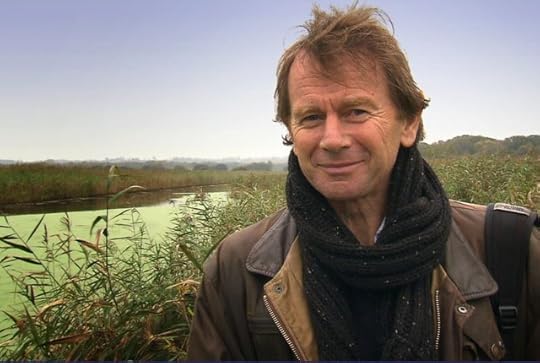
Wood mentions in the intro of the book that he has a great love of India, saying:
"I have made twenty or thirty journeys to the subcontinent during the last three decades, and feel that in some ways my life has become enmeshed with India...
...My wife and I fell in love in India and were married there; our children have Indian names. We have travelled together in India as a family..."
As its title implies, The Story of India is a brief history of the subcontinent, from pre-history, to the modern-day. Some of the topics Wood covers here:
* Early Indian societies.
* The origins of Buddhism.
* The Islamic conquest of and expansion into India.
* The East India Company.
* The British Raj.
* The post-WW2 Islamic partition of the subcontinent into Pakistan to the West, and later Bangladesh, to the East.
* Indian independence.
The writing here gets off to a slow start, as Wood goes over quite a lengthy telling of the early societies of India. Unfortunately, I found much of this writing to be very dry; a style that is somewhat typical of much British prose I've read.
Wood spends quite a bit more time detailing the early history of India than the later history. The period of "modern" India; since the involvement of the British East Indian Company in 1601 - is only briefly covered here.
Woods talks about the British involvement with India, writing:
I was excited to start this one, but Wood's rather flat telling of this story left much to be desired for me...
3 stars.
Author Michael David Wood is an English historian and broadcaster. He was appointed Professor of Public History at the University of Manchester in 2013.
Michael Wood:
Wood mentions in the intro of the book that he has a great love of India, saying:
"I have made twenty or thirty journeys to the subcontinent during the last three decades, and feel that in some ways my life has become enmeshed with India...
...My wife and I fell in love in India and were married there; our children have Indian names. We have travelled together in India as a family..."
As its title implies, The Story of India is a brief history of the subcontinent, from pre-history, to the modern-day. Some of the topics Wood covers here:
* Early Indian societies.
* The origins of Buddhism.
* The Islamic conquest of and expansion into India.
* The East India Company.
* The British Raj.
* The post-WW2 Islamic partition of the subcontinent into Pakistan to the West, and later Bangladesh, to the East.
* Indian independence.
The writing here gets off to a slow start, as Wood goes over quite a lengthy telling of the early societies of India. Unfortunately, I found much of this writing to be very dry; a style that is somewhat typical of much British prose I've read.
Wood spends quite a bit more time detailing the early history of India than the later history. The period of "modern" India; since the involvement of the British East Indian Company in 1601 - is only briefly covered here.
Woods talks about the British involvement with India, writing:
"These days some British historians put forward the argument that colonialism was a good thing, lighting the world’s path to progress. I have to say that I am not, by and large, of that persuasion. Over thirty-five years travelling in Asia, Africa and the Americas, seeing things on the ground, has given me a different perspective, and has left me with the conviction that its impact has been largely destructive.."Recognizing the complexity of the issue, and resisting efforts to paint history in a black-and-white manner, Woods also pays tribute to the legacy of the British here:
"This is not to deny the complex and profound legacy of the British: above all, the English language, but also English ideas of secular law, education and constitutional government, the first attempt comprehensively to solve one of the great issues of Indian history – the source of secular authority. For all the political struggles since 1947, Indian democracy has been a remarkable success in sustaining an open society and making astonishing inroads in such a short time into the deep-seated injustices of the caste system. In sixty years the idea of secular democracy has powerfully taken root.
Another legacy was practical: the communications network. India is a huge country; it is a 1000-mile journey by rail from Delhi to Calcutta, and the same distance from Calcutta down to Madras. Such developments also helped shape the political and psychological unity of India: indeed, perhaps the very possibility of a single Indian state only arose as a workable idea because the British made it so. But perhaps the most fateful legacy of the British was to open India irrevocably to a wider world: to force Indians to redefine their age-long civilization in terms of the secular ideals of the West..."
I was excited to start this one, but Wood's rather flat telling of this story left much to be desired for me...
3 stars.

July 19, 2017
to start with its a beautiful book. writer takes U into the heart of India. You get a deeper understanding of the thinking and customs of India.
pros-
it gives only a brief outline though, but goes into details in some of the lesser known aspects of Indian history - for example- You get to know much about kushans and especially kanishka. there are very few details about him in other standard books. they ruled India for almost 300 years and had great impact on Indian thought. though few people know about them.
It throws light on some rarely known facts like Ram word also means black in sanskrit, just like krishna. lanka means an island in sanskrit.
How Indian religious beliefs developed overtime from vedic to buddhist to puranic dieties, to bhakti movement and the islamic influence.
the best thing is the way of the author of telling the story of india. not the history its a story. U will feel like U are reading a story. author will take U to the places where the events actually occured. U will discover lost ruins with him. so it is a good book for those who want to know about indian history but dont want to read lengthy books.
U will find some of the still surviving trends and culture from the ancient times, even from the times of Indus valley civilisation.
cons- very few in comparison to plus points of the book. this is a very short book to explain the indian story indeed. few parts are completely skipped like that of delhi sultanate.
overall a very beautiful book. esp for those who genuinely want to know more about this country. the land of Gods. a must read for every Indian. I loved the book.
pros-
it gives only a brief outline though, but goes into details in some of the lesser known aspects of Indian history - for example- You get to know much about kushans and especially kanishka. there are very few details about him in other standard books. they ruled India for almost 300 years and had great impact on Indian thought. though few people know about them.
It throws light on some rarely known facts like Ram word also means black in sanskrit, just like krishna. lanka means an island in sanskrit.
How Indian religious beliefs developed overtime from vedic to buddhist to puranic dieties, to bhakti movement and the islamic influence.
the best thing is the way of the author of telling the story of india. not the history its a story. U will feel like U are reading a story. author will take U to the places where the events actually occured. U will discover lost ruins with him. so it is a good book for those who want to know about indian history but dont want to read lengthy books.
U will find some of the still surviving trends and culture from the ancient times, even from the times of Indus valley civilisation.
cons- very few in comparison to plus points of the book. this is a very short book to explain the indian story indeed. few parts are completely skipped like that of delhi sultanate.
overall a very beautiful book. esp for those who genuinely want to know more about this country. the land of Gods. a must read for every Indian. I loved the book.

August 28, 2013
Highly recommend this author!

April 24, 2021
Bit of a letdown after reading the story of China. I think the lack of context meant I was frequently lost, it was as if there was some prerequired reading I missed.

March 22, 2025
Probably very comprehensive, but even if I was much more interested by this than the specific year of 1776 in US history (I was looking for a complete history of the USA, and chose 1776, which finally was a pleasant surprise), I had problems keeping focused. Maybe reading would have been better (I listened to the audio version), and with a map of India next to me. It mostly felt like a long list of events, with some description of scenery mixed in to make it more interesting (it didn't work for me).

August 7, 2019
Very chatty. Not so good for getting a clear sense of the history and the issues. It works well with the BBC documentary on You Tube.
November 8, 2023
So I just binged a 6-hour docuseries and then followed it up with another 6-hour docuseries on China... Michael Wood's voice is amazing and his docuseries are great introductions to the study of history, especially for aspiring armchair historians like myself. The only reason I am givinig this four stars is because I got sick of Michael Wood referring to brutal, patriarchal leaders as great and amazing and cool, i.e. sensationalising them and then saying "but not everything was great, he also set his palace on fire, thereby burning alive the hundreds of concubines inside". So yeah... definitely worth watching the docuseries, but the sensationalising can be nauseating at times.
For myself and those interested I will write a little summary below from my notes:
1) The Beginnings of 'Mother' India
2) The Power of Ideas
3) Spice Routes and Silk Roads
4) Ages of Gold
5) The Meeting of Two Oceans
6) Freedom
Before I start I want to remind the Western reader that India and much of the 'Orient' were 'civilised' before colonisation and were doing much better off during the European Dark Ages . Furthermore, it is from these civilisations that we have derived our political systems, the foundation of many branches of science and much of foundational mathematics and astronomy.
So, Westerners, our ancestors were 'barbarians' essentially, just spend 20 minutes in a British museum and you'll see what I mean.
1) The Beginnings of 'Mother' India
India was an important stop for the migration of human populations from Africa to the broader world. This has been extensively studied in the fields of genetics, anthropology, ethnography etc. and you could probably learn more about this from Wikipedia than from me, so I won't go into much detail here ;)
The process of 'civilisation' in India began in 7000 BCE with the growth of large villages in Indus Valley, where Wood comments:
So we will take this definition at its face value because critical thinking is somewhat tiring *sigh*.
To find the origins of Indian civilisation, we must begin in Pakistan (once part of India before the British did British things). Like many of the ancient cities, Harappa was situated by a river (water is important for stuff). The beginnings of Harappa can be traced back to 3500 BCE (what happened between 7000 BCE and 3500 BCE I don't know, but anyways I'm more interested in modern history) and the high period of the Indus civilisation started from around 2900 BCE. At the height of its power, there could have been 200 000 people or more and modern evidence suggest that India had a great empire expanding from the Himalayas to the Arabian sea with over 2000 towns and villages and over 5 000 000 people, it was the world's biggest ancient civilisation. The Indus script is yet to be deciphered! (for a multilingual person like myself, this was particularly nice).
But then stuff happened and it collapsed (paraphrasing my paraphrasing below):
This isn't evidence that climate change isn't real for those tempted to tell me that "climate change has always existed bro",fuck off.
LINGUISTIC FUN FACTS
It's only a very short time after the end of the last Indus cities, around 1500 BC, that we get the first definite evidence of an Indian language and an Indian literature, SANSKRIT. if someone paypals me 50 USD I will learn Hindi fluently in 6 months. .
William Jones, a Welsh judge, admired Sanskrit and convinced a Brahmin scholar to teach him. Through learning Sanskrit, he noticed a very close similarity between Sanskrit, Latin and Greek and even to English and his native Welsh. O M G. But yeah, Indo-European languages and stuff... cool!
The Power of Ideas
"For Indian people the traditional goal of life is to live with virtue, dharma; to gain wealth and success, artha; to find pleasure, kama; but in the end, to seek enlightenment, moksha."
Okey that's all we need to know, next.
Just kidding, let's talk about Varanasi, one of India's most sacred cities. Formed in 500 BCE, here you can find living continuities with the old ritual order of Indian society. That order was founded on the caste system into which all Hindus are born, marry and die. The caste system divides people by birth, from high to low. It fixes their jobs and their place in society. The rituals also were very ordered and put a lot of emphasis on *drum roll* order, much like 5th century BCE society. Know your place in the order, perform the necessary rituals, fulfil your duty, whatever caste you're burn into.
However, during the 5th century many people were questioning these "natural orders", i.e. the Axial Age. The Greek, Lao Tzu, Buddha etc. think about how authoritarian rulers going to war with each other all the time isn't great.
Buddha
Buddha was one of the most important countercurrents during these times. He was young, newlywed, high caste, he had everything. But then he had a sudden realisation, he saw the reality of human life for everyone, suffering and death (ouch). So logically it follows that he left behind his family and wife and wandered for 6 years before arriving to Bodh Gaya. After meditating all night under a tree, the Buddha has crystalised in his mind what he called the four noble truths:
1. The truth of suffering (dukkha)
2. The truth of the cause of suffering (samudaya)
3. The truth of the end of suffering (nirhodha)
4. The truth of the path that frees us from suffering (magga)
My knowledge of Buddhism is somewhat limited and I am still investigating, so I won't pretend I know more than I do and leave this section without elaboration.
The Dalai Lama in an interview comments:
So Buddhism is a system based on pure morality, what we would call universal values, truthfulness, non-violence, that sort of thing. Furthermore, it's also atheistic, the logic of the Buddha's message is that belief in God itself is a form of attachment, of clinging, of desire and in the land of 33 million gods would eventually prove a step too far. The Buddha's story ends in an endearingly scruffy little town on the Ganges Plain, Kushinagar. One of his faithful disciples begged him not to die here, wanting a great funeral in a great place, but Buddha simply replied "a small place is fitting". SO IN SUMMARY, HE WAS A PRETTY COOL DUDE and left us with these words:
Anyways, let's get back to the history of India I guess:
It was waged between the might of the Persian Empire, which ruled as far as the Indus Valley, and an army that had marched from Greece under an "extraordinary" (sensationalising) young general, the 25-year-old Alexander the Great. As a young boy, Chandragupta Maurya was deeply impressed by Alexander the "Great". In time, Chandrugupta seized power, drove Alexander's successors out of India and ruled from Khyber to Bengal. (I'm sure there's a lot of history missing here, but you get the gist). He built a great empire (well the people do) and then a famine comes and Chandragupta renounced his kingdom and seeks moksha, eventually starving himself to death in a cave (nice).
King Asoka or Chand Asoka ("Asoka the cruel")
Asoka was also known for his brutal invasion of Kalinga, where 150 000 were taken captive, 100 000 killed in the wars and almost as many died aftwards. He also built a tortute chamber, which he called "hell on Earth" lol. However, after killing lots of people he realised that war wasn't good:
So like all good stories, Asoka goes on a trip across India to find a guru, and by the riverbank he met a Buddhist monk and the monk told him to go and sit beneath the bodhi tree where the Buddha had found enlightenment
He wrote some edicts which could be considered the forerunner to the UN human rights. The basis of these ideas was that "all humans are a family". Furthermore, these edicts are also considered the first animal rights laws in the world, because " since animals are powerless it shows your true nature in your interaction with them because since they can't do anything back to you and you don't have to be worried about anybody reacting, you can be your true self.". However, he also said some sketchy stuff like "it's hard to persuade people to do good". I hate this framing so much.
Anyways he moved Indian politics away from magic and religion and towards morality and reason and his wheel of law is on the Indian flag today.
For myself and those interested I will write a little summary below from my notes:
1) The Beginnings of 'Mother' India
2) The Power of Ideas
3) Spice Routes and Silk Roads
4) Ages of Gold
5) The Meeting of Two Oceans
6) Freedom
Before I start I want to remind the Western reader that India and much of the 'Orient' were 'civilised' before colonisation and were doing much better off during the European Dark Ages . Furthermore, it is from these civilisations that we have derived our political systems, the foundation of many branches of science and much of foundational mathematics and astronomy.
Unlike the West in the age of Galileo, India was not traumatised by the revelation that the universe is infinite and the human place in it tiny. That all things, the gods too, are subject to cycles of cosmic destruction over aeons of time and that human life is a pool of light in an infinite darkness.
So, Westerners, our ancestors were 'barbarians' essentially, just spend 20 minutes in a British museum and you'll see what I mean.
1) The Beginnings of 'Mother' India
India was an important stop for the migration of human populations from Africa to the broader world. This has been extensively studied in the fields of genetics, anthropology, ethnography etc. and you could probably learn more about this from Wikipedia than from me, so I won't go into much detail here ;)
The process of 'civilisation' in India began in 7000 BCE with the growth of large villages in Indus Valley, where Wood comments:
The word "civilisation" is a very problematical word with many shades of meaning, but to historians and archaeologists, it means living in cities, large-scale, highly organised societies, monumental architecture, law and writing.
So we will take this definition at its face value because critical thinking is somewhat tiring *sigh*.
To find the origins of Indian civilisation, we must begin in Pakistan (once part of India before the British did British things). Like many of the ancient cities, Harappa was situated by a river (water is important for stuff). The beginnings of Harappa can be traced back to 3500 BCE (what happened between 7000 BCE and 3500 BCE I don't know, but anyways I'm more interested in modern history) and the high period of the Indus civilisation started from around 2900 BCE. At the height of its power, there could have been 200 000 people or more and modern evidence suggest that India had a great empire expanding from the Himalayas to the Arabian sea with over 2000 towns and villages and over 5 000 000 people, it was the world's biggest ancient civilisation. The Indus script is yet to be deciphered! (for a multilingual person like myself, this was particularly nice).
But then stuff happened and it collapsed (paraphrasing my paraphrasing below):
Then after several centuries of stability, the cities declined, trade collapsed and urban life itself ended. Why the Indus cities died is one of the greatest mysteries in archaeology... They believe an ancient river dried up due to a declining strength in the summer monsoon, i.e. climate change shifted the centre of gravity of Indian history.
This isn't evidence that climate change isn't real for those tempted to tell me that "climate change has always existed bro",
LINGUISTIC FUN FACTS
It's only a very short time after the end of the last Indus cities, around 1500 BC, that we get the first definite evidence of an Indian language and an Indian literature, SANSKRIT. if someone paypals me 50 USD I will learn Hindi fluently in 6 months. .
William Jones, a Welsh judge, admired Sanskrit and convinced a Brahmin scholar to teach him. Through learning Sanskrit, he noticed a very close similarity between Sanskrit, Latin and Greek and even to English and his native Welsh. O M G. But yeah, Indo-European languages and stuff... cool!
The Power of Ideas
"For Indian people the traditional goal of life is to live with virtue, dharma; to gain wealth and success, artha; to find pleasure, kama; but in the end, to seek enlightenment, moksha."
Okey that's all we need to know, next.
Just kidding, let's talk about Varanasi, one of India's most sacred cities. Formed in 500 BCE, here you can find living continuities with the old ritual order of Indian society. That order was founded on the caste system into which all Hindus are born, marry and die. The caste system divides people by birth, from high to low. It fixes their jobs and their place in society. The rituals also were very ordered and put a lot of emphasis on *drum roll* order, much like 5th century BCE society. Know your place in the order, perform the necessary rituals, fulfil your duty, whatever caste you're burn into.
However, during the 5th century many people were questioning these "natural orders", i.e. the Axial Age. The Greek, Lao Tzu, Buddha etc. think about how authoritarian rulers going to war with each other all the time isn't great.
Buddha
Buddha was one of the most important countercurrents during these times. He was young, newlywed, high caste, he had everything. But then he had a sudden realisation, he saw the reality of human life for everyone, suffering and death (ouch). So logically it follows that he left behind his family and wife and wandered for 6 years before arriving to Bodh Gaya. After meditating all night under a tree, the Buddha has crystalised in his mind what he called the four noble truths:
1. The truth of suffering (dukkha)
2. The truth of the cause of suffering (samudaya)
3. The truth of the end of suffering (nirhodha)
4. The truth of the path that frees us from suffering (magga)
My knowledge of Buddhism is somewhat limited and I am still investigating, so I won't pretend I know more than I do and leave this section without elaboration.
The Dalai Lama in an interview comments:
Ultimately, inner happiness, inner satisfaction, must create by oneself. You could be a billionaire, but deep inside, very lonely person, very lonely feeling. So therefore, as a human being, regardless believe or non-believer these inner human value is very essential in order to have happier individual, happier family, happier society or happier nation[My grammar is fine, I quoted him literally with his grammar mistakes]
So Buddhism is a system based on pure morality, what we would call universal values, truthfulness, non-violence, that sort of thing. Furthermore, it's also atheistic, the logic of the Buddha's message is that belief in God itself is a form of attachment, of clinging, of desire and in the land of 33 million gods would eventually prove a step too far. The Buddha's story ends in an endearingly scruffy little town on the Ganges Plain, Kushinagar. One of his faithful disciples begged him not to die here, wanting a great funeral in a great place, but Buddha simply replied "a small place is fitting". SO IN SUMMARY, HE WAS A PRETTY COOL DUDE and left us with these words:
All created things must pass. Strive on diligently.
Anyways, let's get back to the history of India I guess:
One the 1st of October 331 BC, the greatest battle of antiguity was fought near the little village of Gaugamela. A true war of the worlds.
It was waged between the might of the Persian Empire, which ruled as far as the Indus Valley, and an army that had marched from Greece under an "extraordinary" (sensationalising) young general, the 25-year-old Alexander the Great. As a young boy, Chandragupta Maurya was deeply impressed by Alexander the "Great". In time, Chandrugupta seized power, drove Alexander's successors out of India and ruled from Khyber to Bengal. (I'm sure there's a lot of history missing here, but you get the gist). He built a great empire (well the people do) and then a famine comes and Chandragupta renounced his kingdom and seeks moksha, eventually starving himself to death in a cave (nice).
King Asoka or Chand Asoka ("Asoka the cruel")
Asoka was also known for his brutal invasion of Kalinga, where 150 000 were taken captive, 100 000 killed in the wars and almost as many died aftwards. He also built a tortute chamber, which he called "hell on Earth" lol. However, after killing lots of people he realised that war wasn't good:
"In war everyone suffers. There is killing and injury. People are cut off forever from the ones they love. War is a tragedy for everyone." said Asoka. Asoka had hit on one of the most dangerous ideas in history, non-violence and turned to Buddhism.
All we human beings, whatever our station in life, share the same human values. Love of parents, respect for elders, kindness and attachment to friends and neighbours, even to servants and slaves... from now on, I desire non-violence for all creatures and I resolve to conquer by persuasion alone
So like all good stories, Asoka goes on a trip across India to find a guru, and by the riverbank he met a Buddhist monk and the monk told him to go and sit beneath the bodhi tree where the Buddha had found enlightenment
He wrote some edicts which could be considered the forerunner to the UN human rights. The basis of these ideas was that "all humans are a family". Furthermore, these edicts are also considered the first animal rights laws in the world, because " since animals are powerless it shows your true nature in your interaction with them because since they can't do anything back to you and you don't have to be worried about anybody reacting, you can be your true self.". However, he also said some sketchy stuff like "it's hard to persuade people to do good". I hate this framing so much.
Anyways he moved Indian politics away from magic and religion and towards morality and reason and his wheel of law is on the Indian flag today.
July 8, 2022
Covering millennia of Indian history in just 295 pages is a big ask, but Michael Woods does a great job. He admits himself that it can only be a brief introduction to a history that is 'so vast, so rich and complex'. Necessarily it is episodic, with snapshots of places and moments in time, but it gives a flavour of the antiquity and continuity of the history of the sub-continent. I especially like the travelogue element of the book, and Wood gives vivid descriptions of people and places. You can see how the book tied into a TV series - although never having seen it is no disadvantage, but I will certainly watch it if I get the chance. It amused me how the British fit in, with a couple of pages in the chapter on the Mughals and rather more in the final chapter, much of which makes unhappy reading. Written in 2007, the book ends on an optimistic note; given developments over the past 15 years, I hope that optimism is still well placed.

December 5, 2017
We have studied a fair bit of Indian history in school, but because it was taught chronologically, the earliest periods were taught when we were really young and therefore was kept very simplistic. We started from the Indus Valley civilisations and there just two tiny cursory chapters that we learnt. And really it’s the very early period that I was keen on learning. I am glad this story starts from there. School history was somewhat detailed only from the late Mughal period for us. And because I hail from west of india, we mostly learnt only about Shivaji and Maratha kingdom in any satisfactory detail. That, really is a tip of a pin head on top of an iceberg as far as history of india goes. On the other head facts and figures about the independence struggle were dwelt into great detail, but the philosophies underlying the freedom were not discussed - though we might have been too young to appreciate them in school. This book filled in a lot of gaps in understanding of the history of my birthplace. Obviously, it doesn’t make me a scholar in any way, but i have a greater appreciation of my history. What this book is not, is an academic outlay if india’s history. So to that extent, it might not be as exhaustive as someone who wanted that might be looking for. But it compensated for that more than enough by being a lot more engaging in the story form. I thoroughly enjoyed listening to the book.

April 1, 2020
This book should really be titled “Cool Things I Learned On My Trip to India” by Michael Wood. I had hoped that this book would be an overview of Indian history, and it is, after a fashion. Instead, Michael Wood is very discriminating about the various periods of Indian history he describes, choosing those periods he seems to regard as particularly indicative of the Indian experience, or particularly pivotal in Indian history. If one is already familiar with the grand narrative of Indian history, then this book should add intriguing, further insights on the subject. However, without prior knowledge of the subject, this title will serve mostly to wet one’s appetite for Indian history and literature. Michael Wood, one of my favorite historians, addresses this subject with the enthusiasm, sympathy and humanity that so characterizes his writing style.

March 13, 2013
Wood struck a good balance here between sufficiency and brevity, which is a very difficult mark to hit when it comes to such an expansive history as India has. I would even say that for a casual exploration of India's history, this is probably your best choice.
The audiobook was especially enjoyable. Sam Dastor, the narrator, has a theatrical streak and actually mimics the voice and accent of those quoted (including Indians, Americans, and English voices). This struck me as a bit silly at first, but he actually does a pretty good job with these.
The audiobook was especially enjoyable. Sam Dastor, the narrator, has a theatrical streak and actually mimics the voice and accent of those quoted (including Indians, Americans, and English voices). This struck me as a bit silly at first, but he actually does a pretty good job with these.
November 25, 2015
I can honestly say it was a breath of fresh air to be able to read a book about India where the author actually had an affection for the country as oppose to all of the those of the British Raj era who seemed to loathe the country and despise it. Michael Wood's enthusiasm for India made me want to visit and the detailed history made me realise we take certain countries and their people for granted.
December 12, 2018
Very informative book focusing on key moments and figures of Indian history. Ideal for someone who wants to find their way around the rich, vast history of the subcontinent and the many cultures that shaped it. The author is well-informed, knowledgeable and manages to convey a passion for India to the reader that encourages you to keep learning about this huge land steeped in centuries of history and millennial traditions.

February 3, 2010
Had to stop listening to this one early. The book's focus is on ancient India, which is not what I was expecting going into it. I was hoping to learn more about Gandhi and the Indian Revolution. Instead I'm learning about archaeology - a subject I don't find particularly interesting.

Want to Read
January 6, 2009You can get the book and DVD at a discount from PBS and make a tax deductible donation at the same time/ $59.00

December 13, 2015
Fascinating overview. There is just so much to learn I feel like I need to read it again to solidify the events in my mind.
June 26, 2017
It's more a thought diary as the author travels through India and meets a lot of people (including architects and knowledgeable people), certainly it's not a thorough history book. It's a very shallow overview of Indian history and contains a lot of speculation, and it also flits around from topic to topic, rather than delving in detail into the difference aspects of a society or particular empire.
Even a highly regarded historian shouldn't speculate so much without evidential backing, but this guy doesn't seem particularly qualified other than describing himself as a historian. His travelogue style tends to make his claims seem even less creditable. He regularly makes broad sweeping statements which are set off alarm-bells in a history book and he discredits himself further with the false etymologies he gives. (i.e. eire - aryan and balcony -bhalakana).
His travelogue style of writing is also quite boring, he generally introduces each chapter and topic by describing his journey into a city or towards a site or something, this regularly had me zoning out and not paying attention until he got to the actual history.
The last chapter as I mentioned is particularly bad, he talks in a very vague fashion about the British Raj, rather than detailing its history and never actual describes the series of events that led to its establishment, what it was like during it and why it fell, except in the barest of barebones ways (i.e. by literally just mentioning the specific event), he seems to use the chapter as a thought log on religion in society, and a particularly uninformative one at that.
That all said, there is some information here, and I guess he's probably right on the main pieces of information he describes (I haven't checked), whether that's worth the purchase is up to you I guess.
Even a highly regarded historian shouldn't speculate so much without evidential backing, but this guy doesn't seem particularly qualified other than describing himself as a historian. His travelogue style tends to make his claims seem even less creditable. He regularly makes broad sweeping statements which are set off alarm-bells in a history book and he discredits himself further with the false etymologies he gives. (i.e. eire - aryan and balcony -bhalakana).
His travelogue style of writing is also quite boring, he generally introduces each chapter and topic by describing his journey into a city or towards a site or something, this regularly had me zoning out and not paying attention until he got to the actual history.
The last chapter as I mentioned is particularly bad, he talks in a very vague fashion about the British Raj, rather than detailing its history and never actual describes the series of events that led to its establishment, what it was like during it and why it fell, except in the barest of barebones ways (i.e. by literally just mentioning the specific event), he seems to use the chapter as a thought log on religion in society, and a particularly uninformative one at that.
That all said, there is some information here, and I guess he's probably right on the main pieces of information he describes (I haven't checked), whether that's worth the purchase is up to you I guess.

July 28, 2022
Michael Wood's Story of India is a sweeping 10,000+ year history of the many peoples that have arrived and inhabited the Indian continent, and how the cultures of the Indian peoples have evolved overtime in response to dialogue, trade and calamities. His commentary on the succession of historical actors on this grand stage is careful, humane as he describes the triumphs and tragedies of historical figures, fully aware of how controversial the historical figures are to contemporary politics. Sometimes this humane tone is used to point out ironic foibles of these people, such as when Mahmud of Ghazni, a devout Muslim, implies that he considered himself on par with The Prophet Muhammed and Allah on his minted coins which makes Mahmud look less of a holy warrior but more of a conceited Monarch who waged wars of aggression for his own gain.
The color of India is brought to life through the photography and the size of the book, with the size helping you to pick out the details in the photographs. The photography itself varies to sharply professional looking with it's stylish silhouettes of mysterious figures walking down a dock under a peach orange sunset to charmingly touristy, like where a multi color paint covered and blurry Michael Wood is smirking up at the camera during the Holi festival.
The book itself doesn't go into significant depth about the subjects as it surveys the broad historical movements across time. But if he were to go into great depth then this book would most likely end up being more than 1000+ pages long, which would defeat the purpose and advantage of the text, which is to be a broad survey of 10,000+ years of history to a public that doesn't know anything about India (like me) and I highly recommend this book to you if you are curious about India but desire to know more.
The color of India is brought to life through the photography and the size of the book, with the size helping you to pick out the details in the photographs. The photography itself varies to sharply professional looking with it's stylish silhouettes of mysterious figures walking down a dock under a peach orange sunset to charmingly touristy, like where a multi color paint covered and blurry Michael Wood is smirking up at the camera during the Holi festival.
The book itself doesn't go into significant depth about the subjects as it surveys the broad historical movements across time. But if he were to go into great depth then this book would most likely end up being more than 1000+ pages long, which would defeat the purpose and advantage of the text, which is to be a broad survey of 10,000+ years of history to a public that doesn't know anything about India (like me) and I highly recommend this book to you if you are curious about India but desire to know more.

June 2, 2021
I generally veer away from broad histories as I think they are too general to be really helpful. However, after going through Mr Wood’ ‘The Story of China’, I was positively surprised by his take. ‘The Story of India’, an older book, doesn’t live up to the same standards however. Most of this is very simple though indeed the author does manage to introduce some difficult and important topics.
I was most pleased by the early chapters that described Harappa but also Akbar the Great. Babur’s life was also noted very well (and made me want to read the Baburnama); there were also mentions of local literature every now and then, though mostly focussed in the earlier centuries. The literature and arts, where mentioned, were not described in the same depths as the Chinese classics in ‘The Story of India’, but moreover, there were less philosophers/thinkers who were brought out as individuals.
The problems… I appreciate that a broad take on history needs to make some generalizations, however, several chapters ended with lists of things that should have also been mentioned. I would much rather the author had extended this by a hundred pages to get in the mentions of those items, and this becomes really troublesome later on where important entities such as the Maratha and Vijayanagara barely get a mention. As the Maratha also provided a point of (Hindu) resistance against their Muslim neighbours, this is a conflict that is partially resurrected in modern Indian politics (as far as I understand) which should have been described in more detail.
The 20th century is also described relatively poorly. Both imperialist atrocities as well as the difficulties that India had in getting its independence should have been outlined better. Given that the Labour victory in 1945 is one of the important events that enabled Governmental approval of Indian independence, this, and how this featured into the realization of Independence, should have been detailed in even a broad overview as these relate directly to later troubles between India, Bangladesh, and Pakistan, as well as inside the country.
Overall, this is a broad overview of India, possibly useful for people who really don’t know much about the country. Even so, there are serious deficiencies in the book that could have been resolved for a better, more comprehensive, overview which I would be much more happy to recommend as a point of entry to the subcontinent.
This review was originally posted on my blog.
I was most pleased by the early chapters that described Harappa but also Akbar the Great. Babur’s life was also noted very well (and made me want to read the Baburnama); there were also mentions of local literature every now and then, though mostly focussed in the earlier centuries. The literature and arts, where mentioned, were not described in the same depths as the Chinese classics in ‘The Story of India’, but moreover, there were less philosophers/thinkers who were brought out as individuals.
The problems… I appreciate that a broad take on history needs to make some generalizations, however, several chapters ended with lists of things that should have also been mentioned. I would much rather the author had extended this by a hundred pages to get in the mentions of those items, and this becomes really troublesome later on where important entities such as the Maratha and Vijayanagara barely get a mention. As the Maratha also provided a point of (Hindu) resistance against their Muslim neighbours, this is a conflict that is partially resurrected in modern Indian politics (as far as I understand) which should have been described in more detail.
The 20th century is also described relatively poorly. Both imperialist atrocities as well as the difficulties that India had in getting its independence should have been outlined better. Given that the Labour victory in 1945 is one of the important events that enabled Governmental approval of Indian independence, this, and how this featured into the realization of Independence, should have been detailed in even a broad overview as these relate directly to later troubles between India, Bangladesh, and Pakistan, as well as inside the country.
Overall, this is a broad overview of India, possibly useful for people who really don’t know much about the country. Even so, there are serious deficiencies in the book that could have been resolved for a better, more comprehensive, overview which I would be much more happy to recommend as a point of entry to the subcontinent.
This review was originally posted on my blog.

March 27, 2021
How to you fit the Story of India into a small book. Michael Wood tries and does a reasonable job but, as you might expect, this is a whistle stop tour and doesn't have time for many details.
The first thing is that this is a book about the Indian Subcontinent and not the borders of modern day India... it is also written from a point of view of a westerner and so I imagine that there are many parts of the story missing, but it served as a good start for me to learn more about countries outside Europe & North America.
Starting at the earliest times using archaeology and other sources through the start of India as we know it now it skips quickly through the main historical pillars including the Moguls and the British Raj. I think the Raj may have got off lightly here, due to the short amount of space available, but given that it is the best documented of the periods covered it could have done with some fleshing out... also as this is a BBC book diminishing this part of Britain's involvement in India should have had more examination - the author did refer to the Empire as an 'accident' a few times. I'm not sure this view would be held by modern Indian historians.
None-the-less, an interesting primer into a fascinating peoples.
The first thing is that this is a book about the Indian Subcontinent and not the borders of modern day India... it is also written from a point of view of a westerner and so I imagine that there are many parts of the story missing, but it served as a good start for me to learn more about countries outside Europe & North America.
Starting at the earliest times using archaeology and other sources through the start of India as we know it now it skips quickly through the main historical pillars including the Moguls and the British Raj. I think the Raj may have got off lightly here, due to the short amount of space available, but given that it is the best documented of the periods covered it could have done with some fleshing out... also as this is a BBC book diminishing this part of Britain's involvement in India should have had more examination - the author did refer to the Empire as an 'accident' a few times. I'm not sure this view would be held by modern Indian historians.
None-the-less, an interesting primer into a fascinating peoples.

August 21, 2020
I first watched the BBC documentary narrated by Michael Wood in 2016. Only this year, after watching the series again, began to read this companion book. It is an incredible read and adds much to the topics covered in the documentary.
For an individual brought up in Western literary and historical traditions, studying Indian history can at first seem impenetrable. I found Micheal Wood's style of narration and writing to be exceedingly familiar, much like some of my favorite history professors and teachers. This was immensely helpful for the reader unaccustomed to the history of such a storied region and people(s).
Starting in early chapters of human history and ending with observations of post independence India, Pakistan, and Bangladesh, this book covers quite a lot of ground. In my view, it is a perfect first step into further reading about the history of this region. I feel that I have come away humbled by the people and places discussed.
For an individual brought up in Western literary and historical traditions, studying Indian history can at first seem impenetrable. I found Micheal Wood's style of narration and writing to be exceedingly familiar, much like some of my favorite history professors and teachers. This was immensely helpful for the reader unaccustomed to the history of such a storied region and people(s).
Starting in early chapters of human history and ending with observations of post independence India, Pakistan, and Bangladesh, this book covers quite a lot of ground. In my view, it is a perfect first step into further reading about the history of this region. I feel that I have come away humbled by the people and places discussed.

October 19, 2021
I enjoyed his narrative and presentation in the BBC series of the same name, however, as a book it falls short of my expectations.
Perhaps it had to do with the fact that, I already watched the series and it failed to keep the same interest, or it could be that the writing was dry and dull.
2 stars is probably harsh, one can easily give it 3 to 4 stars as well. But considering it took my some good part of a decade to finish this book (No! I wasn't savouring it ) so , for me it has to be 2. 1 star would be cruel for sure.
I will probably recommend it, with a caution, I am not to be blamed if you don't enjoy it.
Contentwise, it goes beyond coffee table read and just stops before you can call yourself a scholar, so that is rewarding and you do end up saying, "Well that wasn't a total waste of time, was it ! "
Perhaps it had to do with the fact that, I already watched the series and it failed to keep the same interest, or it could be that the writing was dry and dull.
2 stars is probably harsh, one can easily give it 3 to 4 stars as well. But considering it took my some good part of a decade to finish this book (No! I wasn't savouring it ) so , for me it has to be 2. 1 star would be cruel for sure.
I will probably recommend it, with a caution, I am not to be blamed if you don't enjoy it.
Contentwise, it goes beyond coffee table read and just stops before you can call yourself a scholar, so that is rewarding and you do end up saying, "Well that wasn't a total waste of time, was it ! "

May 24, 2024
بی بی سی کسی تعارف کا محتاج نہیں۔ یہ ڈاکو مینٹریز بھی بناتے ہیں اور ساتھ میں انہی ڈاکومینٹریز کی کتب بھی شائع کرتے ہیں۔ اس کتاب میں ہندوستان کی دس ہزار سال سے زائد تاریخ کا اجمالی جائزہ لیا ہے۔ اور ڈاکومینٹری بھی بنائی یے۔
اس طرح کی کتب میں ادارے کا ہاتھ زیادہ ہوتا ہے اور مصنف کا کم۔ بہرحال مائیکل وڈ نے صحافتی زبان میں ہندوستان کے علاقوں اور ان سے وابستہ تاریخ کو بیان کیا ہے۔
دس ہزار سال کی تاریخ کو جب تین سو صفحات میں بیان کیا جائے گا تو بہت کچھ نظر انداز ہو جائے گا اور بہت کچھ اشارے اور کنائے میں ہی بیان کرکے کام چلایا جائے گا۔ کیونکہ یہ ایک غیر ملکی نظر سے ہندوستان کی تاریخ بیان کی جارہی ہے تو یہ منفرد ضرور ہے لیکن کہیں نہ کہیں مغربی تہذیب کو مشرقی تہذیب سے برتر دکھایا گیا ہے کم از کم لہجے کی حد تک۔ مجموعی طور پر کتاب اچھی ہے اسے پڑھکر رضا علی عابدی کی کتاب جرنیلی سڑک یاد آتی ہے۔
از Faisal Majeed
اس طرح کی کتب میں ادارے کا ہاتھ زیادہ ہوتا ہے اور مصنف کا کم۔ بہرحال مائیکل وڈ نے صحافتی زبان میں ہندوستان کے علاقوں اور ان سے وابستہ تاریخ کو بیان کیا ہے۔
دس ہزار سال کی تاریخ کو جب تین سو صفحات میں بیان کیا جائے گا تو بہت کچھ نظر انداز ہو جائے گا اور بہت کچھ اشارے اور کنائے میں ہی بیان کرکے کام چلایا جائے گا۔ کیونکہ یہ ایک غیر ملکی نظر سے ہندوستان کی تاریخ بیان کی جارہی ہے تو یہ منفرد ضرور ہے لیکن کہیں نہ کہیں مغربی تہذیب کو مشرقی تہذیب سے برتر دکھایا گیا ہے کم از کم لہجے کی حد تک۔ مجموعی طور پر کتاب اچھی ہے اسے پڑھکر رضا علی عابدی کی کتاب جرنیلی سڑک یاد آتی ہے۔
از Faisal Majeed
May 25, 2024
بی بی سی کسی تعارف کا محتاج نہیں۔ یہ ڈاکو مینٹریز بھی بناتے ہیں اور ساتھ میں انہی ڈاکومینٹریز کی کتب بھی شائع کرتے ہیں۔ اس کتاب میں ہندوستان کی دس ہزار سال سے زائد تاریخ کا اجمالی جائزہ لیا ہے۔ اور ڈاکومینٹری بھی بنائی یے۔
اس طرح کی کتب میں ادارے کا ہاتھ زیادہ ہوتا ہے اور مصنف کا کم۔ بہرحال مائیکل وڈ نے صحافتی زبان میں ہندوستان کے علاقوں اور ان سے وابستہ تاریخ کو بیان کیا ہے۔
دس ہزار سال کی تاریخ کو جب تین سو صفحات میں بیان کیا جائے گا تو بہت کچھ نظر انداز ہو جائے گا اور بہت کچھ اشارے اور کنائے میں ہی بیان کرکے کام چلایا جائے گا۔ کیونکہ یہ ایک غیر ملکی نظر سے ہندوستان کی تاریخ بیان کی جارہی ہے تو یہ منفرد ضرور ہے لیکن کہیں نہ کہیں مغربی تہذیب کو مشرقی تہذیب سے برتر دکھایا گیا ہے کم از کم لہجے کی حد تک۔ مجموعی طور پر کتاب اچھی ہے اسے پڑھکر رضا علی عابدی کی کتاب جرنیلی سڑک یاد آتی ہے۔
از Faisal Majeed
اس طرح کی کتب میں ادارے کا ہاتھ زیادہ ہوتا ہے اور مصنف کا کم۔ بہرحال مائیکل وڈ نے صحافتی زبان میں ہندوستان کے علاقوں اور ان سے وابستہ تاریخ کو بیان کیا ہے۔
دس ہزار سال کی تاریخ کو جب تین سو صفحات میں بیان کیا جائے گا تو بہت کچھ نظر انداز ہو جائے گا اور بہت کچھ اشارے اور کنائے میں ہی بیان کرکے کام چلایا جائے گا۔ کیونکہ یہ ایک غیر ملکی نظر سے ہندوستان کی تاریخ بیان کی جارہی ہے تو یہ منفرد ضرور ہے لیکن کہیں نہ کہیں مغربی تہذیب کو مشرقی تہذیب سے برتر دکھایا گیا ہے کم از کم لہجے کی حد تک۔ مجموعی طور پر کتاب اچھی ہے اسے پڑھکر رضا علی عابدی کی کتاب جرنیلی سڑک یاد آتی ہے۔
از Faisal Majeed
January 9, 2020
Excellent
Michael Wood is one of my favourite modern historians and, having read most of his books, this is one of my favourites. The offspring of an English mother and Indian father, I was born and bred in Britain. I have never visited India and I speak no Indian language. My cultural knowledge and background is almost entirely British. Lately, wanting to learn more of my Indian roots, this is the first book about India I have read. Written in beautiful prose, it at times reads like poetry. Although written by a Brit, it is written by a man who loves India and the Indian people. I cannot think of a better introduction to India than this. His love and enthusiasm for India is contagious. Highly recommend.
Michael Wood is one of my favourite modern historians and, having read most of his books, this is one of my favourites. The offspring of an English mother and Indian father, I was born and bred in Britain. I have never visited India and I speak no Indian language. My cultural knowledge and background is almost entirely British. Lately, wanting to learn more of my Indian roots, this is the first book about India I have read. Written in beautiful prose, it at times reads like poetry. Although written by a Brit, it is written by a man who loves India and the Indian people. I cannot think of a better introduction to India than this. His love and enthusiasm for India is contagious. Highly recommend.
Displaying 1 - 30 of 87 reviews