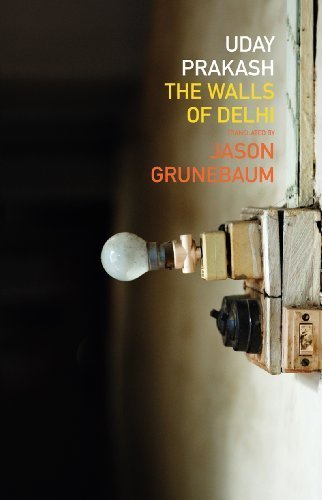
A street sweeper discovers a cache of black market money and escapes to see the Taj Mahal with his underage mistress; an Untouchable races to reclaim his life that’s been stolen by an upper-caste identity thief; a slum baby’s head gets bigger and bigger as he gets smarter and smarter, while his family tries to find a cure. One of India’s most original and audacious writers, Uday Prakash, weaves three tales of living and surviving in today’s globalized India. In The Walls of Delhi, Prakash portrays realities about caste and class with an authenticity absent in most English-language fiction about South Asia. Sharply political but free of heavy-handedness.
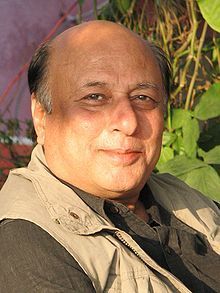
Uday Prakash is the author of poems, short stories, non-fiction, films, and documentaries. In 2010 he received the prestigious Sahitya Akademi literary award in India. He is professor-in-charge, Department of Mass Communication, Media, and Journalism, Indira Gandhi Tribal University, Amarkantak. He lives in Ghaziabad, India.
All the English-language writers in India may hang up their boots now, for they've got nothing on Uday Prakash.
"The police officer who supervised 'Operation Ramnivas' is a respected and powerful cop who owns a few homes and has one of those farm houses outside Delhi perfect for all-night parties. And when he throws one, he invites politicians, high-ranking cops, journalists, top intellectuals, and a few senior literary figures. They drink until they fall down on the floor. I'm sure you've seen their photos in all the local Delhi papers. These people are no longer like you or me - they've helped turn each other into name brands. If you read any poetry or stories coming out these days, you know what I mean when I say that you can smell the stench of liquor coming from the words they write. And underneath their sentences lies a pile of chicken and goat bones, and the skeletons of the innocent ones. If you poke the head of your broom into contemporary literature, you'll find a hollow wall full of money - impure, dirty money."
This collection of three stories features characters steeped in poverty. Every day is a struggle to make ends meet, to pay for food, rent and medicine, and yet, the tales do not leave the reader entirely wallowing in misery. Hope appears, again and again, in surprising and unusual ways.
The first story, The Walls of Delhi, is almost a fable about the consequences of spending ill-gotten gains. Mohandas, the second tale, is the real jewel in the crown, I think. Here the author tells of a poor man whom, when his identity is stolen, cannot afford to buy the justice he deserves. And in Mangosil, a baby, whose head and brain far outgrow his body, is also wise beyond his years.
Three heartbreaking and unforgettable tales by a master storyteller...this book is definitely worth a read.
[Note: I received this book as a Goodreads giveaway]
Whenever I sat down and opened book or to try to write something in those days, the full terror of my reality at home cast a long shadow. I saw strange, sinister hues on the faces of my wife and children that I couldn’t pinpoint or understand. Death, illness, penury, hearsay, and sorrow skulked through the house with heavy feet. At night sobbing sounds permeated the rooms and corridors. A cat screeched on the rooftop. The plaster was falling off the walls, and the doors opened and closed with a strange, sad groan.
This is Prakash himself speaking, who is very present in these stories. HIs own suffering in the corrupt Indian world, a result of his (1) being ‘imprisoned' in or committed to the Hindi language and (2) courageously calling out the bribe-takers and those who run roughshod over the poor, is echoed in the lives of his characters. Prakash had a comfortable childhood in a small village, but his family life fell apart in his teens and he spent decades in poverty and ill health as a struggling writer and filmmaker. His fame finally came with the middle story in this collection of three works, Mohandas. The afterword says he is now a rockstar writer, at least in terms of fame, a hero to the downtrodden.
In a bit of meta, at the very outset of the Mohandas story, Prakash calls attention to the similarities among the names of his characters and their village to those of Mohatma Ghandi, and insists it’s coincidence. In fact, he says, his Mohandas is a real person; just ask in any village in India: they all know Mohandas. India first seduces Mohandas with dreams of a better life, as it educates him, but then coldly refuses him every opportunity and hands them instead to those with pull or cash. It steals his chances, and eventually it steals his identity. The ‘justice’ system is just as corrupt as everyone else, so there is no recourse.
But amidst the suffering that approaches parody--what more can go wrong, who else can betray him--there is vibrant language. Beautiful descriptions of love --physical and emotional-- provide brief respites from despair among simple, loving people. A barrage of scatalogical slang is hurled at enemies in the story itself. And Prakash hurls an equally emotional barrage of asides, pointing out what is going on in the larger India and the world at large that echoes this corruption and power game.
Let’s stop here for a minute. I bet you’re thinking that I’m taking advantage of the one hundred and twenty fifth anniversary of the birth of Premchand, the King of Hindi fiction, to spin you some hundred-and-twenty-five-year old story dressed up as a tale of today. But the truth is that the account I am putting before you, in its old and backward style, manner, and language, is a tale of a time right after 9/11, in the aftermath of the collapse of the World Trade Center in New York; a time when two sovereign Asian nations were reduced to ash and rubble. It’s a tale of a time when anybody worshipping any gods other than the god of the US and Europe were called fascists, terrorists, religious fanatics. Gas and oil, water, markets, profit, plunder: to get all of this, companies, governments, and armies were killing innocent people every day all over the world.
So, nothing subtle here. But these "it was a time when” asides repeat as a motif throughout the story,and they point at India as often as outside:
This occurred at a time when the director of the selection committee of the public service commission took millions in bribes and then installed thousands of his own government employees all over the state, and who went on the lam after a CBI raid; when suitcases full of banknotes arrived at the residences of top ministers under heavy security protection, while ordinary citizens were barred entry; when …
These first strike one as heavy handed (and they certainly explain why Prakash has lost a lot of writing assignments over his career) but somehow by the end of the book they work. While I understand that it is Mohandas that resonated most powerfully with the powerless Indian of 2005, when it was published in a Hindi literary magazine, I found the most touching work to be the last story, Mangosil. I was actually lukewarm until this work filled in the holes and lent a deeper humanity to the other two stories. It describes the life of a couple who flee the sexual abuse of the woman at the hands of her husband and others, to create a tiny cubbyhole of happiness in Delhi. Prakash tells the tale as if he knows them and frequents their house, as they struggle after multiple miscarriages to have a healthy child in the filth and polllution of the slums. They finally do have a strange child, a seer of sorts. The suffering of the family and Prakash are very personal accounts of good people; they reach out and touch your heart.
It sounds like a downer, but there are many moments of beauty and love to redeem the individuals who struggle here. I recommend it as a street-level view of life in a world pervaded by corruption, a more gutsy, flinty, imaginative, first-person perspective then Katherine Boo’s Behind the Beautiful Forever.
There's a lot of great writing coming out of India these days that focuses on the nation's dark and not-so-hidden underbelly. Jeet Thayil's opium-addled 'Narcopolis' is up for just about every award going, and rightly so. Katherine Boo's 'Behind The Beautiful Forevers', a searing real-life survey of life in a Mumbai slum, carried off the Pulitzer Prize. They are both works of serious strength that in their own way, undermine their nation's claims to be a 21st century super-power. 'The Walls Of Delhi' by Uday Prakash, can more than hold its own in such elevated company. It's a blistering, harrowing account of the chronic poverty and endemic corruption afflicting so much of Indian society today. Its subject matter makes it no easy read, as Prakash is unflinching in his portrayal of life among some of India's invisible communities. But he writes with an almost folkloric zeal, and the kind of care for his characters that makes his prose absolutely compelling. If the Hindi tradition (I am told) is for story-telling deeply rooted in social realism, then Prakash has remained true to those roots, but added a magical twist. His writing has lost none of its urgency in its superb translation from the original Hindi by American Jason Grunebaum.
'The Walls Of Delhi' actually takes the form of three stand-alone novellas. In the eponymous opening tale, a sweeper stumbles across a room full of counterfeit money and whisks his underage mistress off on a trip to see the Taj Mahal: a trip underpinned by the unspoken acknowledgement that such lavish escapism can only ultimately lead to tragedy. In the deeply affecting 'Mohandas', a young man works hard to deny his low-caste fate through education, only to find his rightful job at the local coal mine has been denied him by a higher-caste rival who has stolen his identity. In 'Mangosil', a baby is born with a rare disorder that causes its head to continually expand. Its loving parents, unable to afford the bribes that will afford it a better chance of survival, become ever more desperate in their search for a cure. If the three stories are separate, they come together to paint a tremendously vivid portrait of life in India away from the economic boom and the stereotypical Slumdogs: the parts of the nation - be they city back-streets or destitute rural communities - the foreigners did not see when they flocked to Delhi for the 2010 Commonwealth Games. You can almost sense Prakash having put this collection together specifically to serve as a jab in the ribs to those who were temporarily blinded by the gloss of those Games. There is a fearlessness about his writing and his outspoken criticism of the establishment that positions him as something of an agent provocateur on behalf of the dispossessed: his 2008 novel 'The Girl With The Golden Parasol', which directly challenged some of India's most entrenched caste assumptions, led to him being effectively estranged from the literary and cultural establishment. Prakash, it appears, writes a lot from personal experience. That is to his own great credit, and his nation's shame. It's fantastic that this book has been recognised by the DSC Prize jury. For anyone with even a passing interest in India today, 'The Walls Of Delhi' ought to prove a thoroughly worthwhile read.
I have read a lot of translated novels, and The Walls of Delhi is one of the better ones. These three short stories were a sobering read. The second story almost had me bawling. I admit I was a little overwhelmed with the long Hindi names and titles, but soon became accustomed to it.
The writing is simple but deep. I was left engrossed in my thoughts regarding the stories for hours. This series of short stories holds many naked truths. While it was painful to read, I am glad that this novel has allowed me to become more aware of the issues that plague many of India's citizens.
Note: I received this book for free in exchange for an honest review.
Shortlist, 2013 DSC Prize for South Asian Literature
You ought to know the truth: there are only two reasons lives like ours are stamped out. One: our lives are left over as proof of past and present sins and crimes against castes, races, cultures; they always want to keep this as hidden as they can. Two: our lives get in the way of the enterprising city, or act as a road bump in the master plan of a country that thinks of itself as a big player on the world stage. Our very humanity threatens to reveal the wicked culture of money and means as something suspect and unlovely. That's why whenever civilizations once developing, now on the brink of prosperity, decide to embark on a program of 'beautification', they try to root out such lives, the same way the mess on the floor is swept outside.
Uday Prakash is one of India's most highly respected writers, due to his rich stories of modern life and his willingness to describe the corruption and caste prejudice that exists there. However, his career has been marked by harassment by government officials, which has caused him to be fired from numerous jobs and to become a jack of many trades in order to feed his family. He was born in the state of Madhya Pradesh in 1951, to a family of village landlords. After the premature deaths of his parents he obtained a university degree in Sagar, Madhya Pradesh, and taught comparative literature and Hindi at Jawaharlal Nehru University in New Delhi, where he has resided since 1975.
In the words of Jason Grunebaum, the narrator of this book, "In many of his stories, Uday Prakash shows how those who dare to dissent against a suffocating system are punished. But with his biting satire and delightful narrative detours he also demonstrates how humor and compassion ultimately provide the best means to fight back and escape."
The Walls of Delhi consists of three short stories, all set in Delhi at the end of the 20th and the beginning of the 21st century, about a person struggling against poverty and corruption, each one told through the eyes of a narrator that knows him well. In "The Walls of Delhi", Ramnivas Pasiya is a lower caste emigrant to Delhi who is barely able to support his young family as a part-time sanitation worker, in a neighborhood filled with street vendors, prostitutes and smackheads. One of his jobs is to clean a fitness club where wealthy Hindis go to lose weight, while the poor that surround them are engaged in a daily struggle to find sufficient food for the day. "Mohandas" describes the life of Mohandas Viswakarma, who becomes the first person from his village to obtain a university degree and graduates second in his class, yet finds that the expected pathways to success are closed to him, as less educated and talented men with personal connections or the ability to bribe officials obtain employment ahead of him. Finally, "Mangosil" is about a young boy from a poor family cursed with seven prior miscarriages, whose is born healthy but experiences massive and painful enlargement of his head in proportion to his body, while simultaneously developing unusual wisdom and intelligence. Doctors are willing to diagnose and treat him, but their fees are beyond the means of his parents.
These three stories are all suffused with both tragedy and humor, which prevents this book from being an overly depressing one, though it isn't a light or frivolous read. The narrator or characters make frequent and poignant comments about Indian society and its caste prejudice and rampant corruption that flow smoothly within each story. I could not put this book down once I started it, and I finished it in one sitting. The Walls of Delhi is a masterful book about modern India, which is a far better book than The White Tiger, Aravind Adiga's Booker Prize winning novel, and it deserves to be widely read and appreciated. (4-1/2 stars)
A beautiful set of three short stories. Mohandas and Mangosil stand apart both for the depth of the stories and the richness of the characters. All in all, a powerful critique of caste tyranny, the marginalization of the poor, and the horrific subordination of subaltern women and men by the powerful. For those who still live in the belief that casteism is a thing of the past, Prakash's passionate and incisive stories show mercilessly how casteism works with the class politics of urban transformation in Delhi, and how women and men in the margins of society, bear the worst costs of this "modernization."
Most poignantly and disturbingly represented, the shady grip of criminality where the powerful create and sustain alliances in their common project to keep the poor and marginalized, the Dalits and women of contemporary "shining" India, subordinated. The everyday terrorism of poverty is perhaps most powerfully demonstrated in Mangosil, a story that will leave you with a lump in your throat. I eagerly await more works in translation by Uday Prakash, truly a revolutionary writer, and a wonderful story-teller.
I received The Walls of Delhi as part of a Goodreads giveaway.
This small collection of three short stories describes life in modern India--the corruption, the caste system that is enforced if not in law then in practice, and the rich history that infuses day-to-day interactions.
A really engaging little set of stories. The protagonists are generally poor and have faced their fair share of hardships, and it is these setbacks--whether medical or financial or legal--that create the meat of the stories. Prakash does an excellent job of broaching heavy subjects like injustice and corruption with a light hand, and of creating characters that aren't stereotypes of what those who live in poverty "should" think, do, or act like.
A great collection that touches on contemporary social and political realities in India with an astute and almost whimsical touch. I'd be very interested to read more of Prakesh's books in the future.
A thoroughly enjoyable set of three stories by Uday Prakash set in contemporary India among the harsh realities of life in the country for the less fortunate. When I started the book, I didn't realise it contained three distinct stories so that was a very pleasant surprise.
The intricacies of human life, behaviour, relationships, the dark side of humans, and the elusive characters who are the narrators, all added a nice flavour to the book. Not a light read, but something you can get through very quickly, it took me about 2.5 days.
The stories are quite different in approach and are very interesting. The way the stories are written and told, shows great quality of plot and characters. I certainly like the book and want to read more of Uday prakash book's
A book of three engaging, memorable stories of modern India. A book with interesting characters and great storytelling. Highly recommended.
In ‘The Walls of Delhi’, Ramnivas, is a poor, married street sweeper with children. One day when trying to fix his broom, he hits a gym wall and discovers a hollow sound. Upon making a hole in the wall he finds a large amount of monetary notes. He takes a large amount of the notes and spends the money, buying property, household items for his family, and presents for his seventeen year old mistress. He decides to take a holiday with his mistress, staying in a nice hotel. Two police officers force their way into Ramnivas’s hotel room and Ramnivas’s life of blissfulness comes to an end.
In ‘Mohandas’, a talented and educated young man, Mohandas, applies for a government job and is eventually hired. However, the company does not actually employ him and after some time has passed, Mohandas learns that an upper caste man has stolen his identity, using Mohandas’s education qualifications and name to take the job from Mohandas! The story highlights the prevalence of corruption in Indian society.
‘Mangosil’ is about a ‘Suri’, a boy who suffers from an unknown condition where his head grows bigger and bigger and he gets smarter and smarter. Shobha, Suri’s mother, had been badly and repeatedly raped many times as a young woman. Shobha was fortunate in having Chandrakant fall in love with her and helping Shobha to escape from her tormentors. The couple move to another city, work hard, and establish themselves independently. Shobha falls pregnant seven times but none of her babies live past 4 months. Then along comes Suri, then Amar. Shobha and Chandrakant desperately seek a cure for Suri’s abnormal growth. Lack of money and knowledge of who to seek help from thwart their efforts in caring for Suri.
Are you paying attention to the fiction coming out of India these days? You should be, and I’m not talking about brushing up on the big-leaguer like Rushdie and Arundhati Roy (although, really, you should also read the full catalogues of both those names as well), but reading whatever you can get your English-speaking hands on. I don’t know what it is, but the whole ancient caste system’s place in this modern world and the impact it still – still – has on it’s stories, written in 2014, is absolutely fascinating.
Uday Prakash is no exception to this rule. He is, though, at a disadvantage; a Hindi writer, he relies on translators to get his words to English, but from what I’ve read, translator Jason Grunebaum did a fine job of transcribing Prakash’s latest short story collection, The Walls of Delhi.
A run down of the three stories contained here:
“The Walls of Delhi”: The title story, also the shortest. The tale of a simple street sweeper who finds a crack in the walls of Delhi, contained in which is more money than he could imagine. Never having resources like this before, he does what comes naturally: spends it as quickly as he can. By the time you get to the end of the piece, which, without spoiling for you, hands down the moral that the only way to make it in this bustling city is the find the money in the walls, it’s hard to separate what you’ve just read from the lyrics of an M.I.A. album.
“Mohandas”: You know how the ‘prince and the pauper’ trope is hard to translate into modern times? Eddie Murphy tried with “Trading Places,” which ultimately couldn’t do it fully; from a single glance, you can tell him from Dan Aykroyd. Here’s the thing: In India, where the caste system’s echoes are still in effect, this trope still resounds. In “Mangosil,” an Untouchable (contrary to how it sounds, Untouchable is not “Infallible,” Beyoncé-level flawless-ness, like “can’t touch this;” Untouchable literally means this person is so beneath the other levels, if you touch one you need to cleanse afterwards) is being targeted, hunted down because an upper-caste man is using his name and identity while committing crimes. The fun in most (good) prince-and-pauper tropes, though: It’s difficult to know which one will be dead in the end.
“Mangosil”: Hard to safely say, but probably the strongest story in the bunch. A child is born, to a poor family, with a strange medical condition that makes his head grow too big for his body. A virtual bubble-head, he learns to carry his head around with his hands as he walks. This great head is not just skull – from infancy on, this child is extraordinarily wise and insightful, and tragically serious. It seems as if he can read his parent’s thoughts, and even though, because of his illness, he is unable to attend school like his little brother can, the boy reads with a voracious appetite and create theories from these works that many adults never even bother to wonder about. He’s tragic, though – knowing his large head can’t be sustained forever, especially on his family’s budget, there’s a lingering fear each week could be his last; plus, on top of it all, this is a child dealing with MASSIVE topics like the oppressiveness of the English language. If you can read this story and not fall in love with the little boy, see a doctor, your heart is not working.
These stories are all so, so painful true to the human nature. Our flaws are exposed; faults and shortcomings shoved in our faces and forced to be looked at. At the same time, though, we are forgiven. We are pitied and adored and stroked like an infant all at once. They’re foreign, sure, but if you have a mind capable of metaphors, they’re the stories of you and your neighbors just as much as that of the characters.
Seriously, though: you finish each piece and it’s like a slap in the face of realization at what’s just occurred, and you can’t even feel the full sting until the next day or the next week when your mind has had some time to fully digest everything that’s happened.
Three stories about the lives of people who deserved more. You keep rooting for something good to happen to the characters in the story. Mohandas's story was absolutely heartbreaking and very well written. If the impact in the translated version was stunning, I wonder how it would have been in Hindi. The translator almost did a good job except for the parts where Hindi songs were translated to English, that was a bit off putting. Overall, a good read.
I received Prakash's book through a giveaway by the publisher. I read very little fiction--I'm one of those few people who find nonfiction a lot more engrossing--so it took a while to get into it. Part of it might have been Prakash's writing style. Unlike a lot of fiction authors, he doesn't use many sequences of back-and-forth dialogue that give the reader a fly-on-the-wall perspective of what's happening. Prakash opts instead for denser paragraphs with a more omniscient perspective, drawing in more of the context and interweaving social commentary from time to time.
Given my own limitations as a reader--not being the most adept at appreciating fiction, and even less so when it's in the somewhat unusual style Prakash employs--my review is largely rooted in my impression of the third story, "Mangosil." By the time I was reading it, I was more comfortable with Prakash's voice and style. The social commentary in "Mangosil" is both directly stated and metaphorical and definitely confirms what other reviewers have written about Prakash's way of emerging the reader in the experience of poverty and caste politics. In addition, it employs a Terry Gilliam-type imaginative flair that puts it in the company of some of the best magical realism. Scenes from "Mangosil" will definitely be seared into my memory for a long time to come.
"Mangosil" is the story of a child with an unusual condition that causes his head to grow faster than the rest of his body. His family's experiences finding a diagnosis for the problem--and a cure--gives the reader an intimate look at the everyday struggles of the marginalized.
Like Arundhati Roy, Prakash has caught some flak for his social commentary on India's and the world's social problems. It's a testament that he's doing something right.
This is a translation of three short stories of the Hindi author Uday Prakash by Jason Grunebaum. The central theme of these stories is highlight the various injustices and the hardships faced by the lower classes in India.
In the first story "The walls of Delhi" , a sweeper finds counterfeit currency hidden in the wall of a gymnasium where he goes cleaning everyday. He enjoys his wealth for some time till the system catches up with him.
Uday Prakash's most famous story, "Mohandas" deals with a low caste man with no connections,who fails to get employment in a coal mine after he aces the entrance exam. Later on he finds out that some other person has secured the same job using his certificates and his identity. He struggles to bring this fact to the authorities on various levels but is defeated by corruption every time.
The last story "Mangosil" deals with a couple who live in poverty and after having several abortions give birth to a kid with a large head (meningocele). After the doctors have declared that the kid will not survive beyond two years, the kid lives on and becomes peculiar in his ways. The story ends unexpectedly and has a sci-fi component.
I'm a reader who knows both Hindi and English. When I read this book I can appreciate the things which are lost in translation. The author also has a tendency to go off on a tangent. But overall it's a nice if sometimes a disturbing read.
What is the colour of fear? Is it the colour of dirt, or of stone? Is it yellow, charcoal? Or the colour of ash left over from a burning coal – ash that coats the coal still glowing red-hot, that still has its heat! Or a colour that masks a terrifying silence behind it? A small tear that exposes a frightful scream suspended behind.Have you ever seen the bloodshot, dying eyes of a fish thrown from an ocean or a river, onto a sandy bank or shore? That’s the colour.
The Walls of Delhi is a collection of three stories originally written by Uday Prakash in Hindi and translated into English by Jason Grunebaum. In the title story The Walls of Delhi, a sweeper discovers a cache of black money and escapes to see the Taj Mahal with his underage mistress. In the story Mohandas, a lower caste man struggles to reclaim his identity stolen by an upper caste identity thief. In Mangosil, a baby is born to an elderly couple with a rare disease in which the baby’s head gets bigger and bigger as he gets smarter and smarter, while his poverty stricken family struggles for a cure.
The three novellas of this collection are apparently the works Uday Prakash is most famous for.
The discovery by a janitor of millions of rupees stashed behind a false wall in Delhi's upmarket Saket market, his subsequent rise to the top of his social class and his eventual downfall when caught with his lover in a seedy Agra hotel is the central plot of the 'Walls of Delhi'.
In 'Mohandas', a Dalit graduate comes to grips with the fact that a government job to which he was selected has been usurped by a higher caste dimwit. His angst and efforts to fight the system leading to disaster leaves one feeling miserable and ashamed.
In the final novella 'Mangosil', Suryakant is born to his parents living in Delhi's Jahangirpuri slum with a dreaded affliction- his head grows disproportionately to his body. This physiological disorder is accompanied by an equally eerie development - an IQ that keeps pace with the increasing size of his head.
These three novellas somehow end up expressing the angst and sorrow within Prakash against a country that simply has no space for the joys and sorrows of it's suffering millions who scrape through by living on it's fringes.
I received this book as an advanced reading giveaway from Goodreads and enjoyed it very much. The author has a unique way of writing in that it seems like he is sitting across from you telling you the tale. In asides to the reader, he places the story in a time frame by indicating what was occurring in the world at that time or gives background to the events that are taking place in the story. The book deals with restrictions in the caste-centred culture of India where as one character states, there are only those who create injustice and those who bear it. Although the situations in the stories tend to seem rather hopeless, there is a comedic element that lightens them. The author is very insightful, as well as culturally and politically aware. There are elements of sarcasm and cynicism mixed with humour and pathos. A very readable book.
Wonder why I didn't pick pace earlier. It's a wonderful book that's broken into 3 stories. Books like these make me want to write long detailed reviews so that people pick up and read literature from India. We have so many stories to narrate and not just cheesy romance novels or Shashi Tharoor's English(I am not against it) that get all the attention.
The first talks about life of the unknown in Delhi. It's takes you through the streets and into the lives all the people we chose to conveniently ignore infact the wide spread literature too these days talk about the hardships of the middle class; but who is talking about the migrants scraping through and vanishing without a trace and nobody bothered to look out for them? Or them not existing in your eyes or in the record books? They are just there and then not.
The second is about an unemployed graduate from a village and the entire story angered me to no end. What do you do when the ones in power get their way? You can't do anything - reality is so. This is how it's been in India and that's how it still is. If I have to review the story - what do I say? The story moved me - the prose was crisp and the flow - well it just got to the point and the little excerpts from the author were the best. This won't do justice to the entire story. It's more than just that - it is powerful and emotional. It is filled with anger and determination and then ends in utter defeat. A man will fight injustice and a little glimmer of hope gives him the courage but there comes a time when power triumphs and you experience nothing but absolute defeat inspite of being on the right. That's when a man crumbles and that's the end of him.
The third story is pretty neutral - it did not make me angry or sad. Infact the flow too was perfect. I'll not even mention what's it about but it makes for a good read and takes you into the lives of the poor and how they live their lives in front of open sewers and houses so small - none of us can even fathom.
I just loved each story and urge each one to read it.
This entire review has been hidden because of spoilers.
This book is India for Indians, not India for the West.
"The Walls of Delhi" is a raw portrayal of class struggle and caste oppression in India. The collection of short stories features characters steeped in poverty: "A street sweeper discovers a cache of black market money and escapes to see the Taj Mahal with his underage mistress; an Untouchable races to reclaim his life that’s been stolen by an upper-caste identity thief; a slum baby’s head gets bigger and bigger as he gets smarter and smarter, while his family tries to find a cure." Uday Prakash's book introduces the complexity of caste inequality through the sub-genre of magical realist satire which adds color to the otherwise somber topic.
Translator Jason Grunebaum upholds this balance by creating space for pain and pleasure. I selected this book during the week of the 2020 United States Presidential Election, hoping for the latter — a light and comforting read — yet I am still processing the full sting of this book. While politicians do not single-handedly create systemic oppression, we can clearly see in India and the U.S. how elections and politics can further reinforce them. “The Walls of Delhi” exemplifies how, in India, politicians often speak to the sufferings of its poor and the struggle for South Asians to compete in globalization, but seldom talk about how the caste system is an inescapable layer within those problems.
This was a gift to me and I had never heard of the author before, and if this had been described to me, I probably wouldn't have picked this up. This book is a set of three novellas, set in modern day India (last twenty years or so 'modern') where the theme of each story is injustice and corruption and how hard it can be to fight against it when you're coming from a place of disadvantage. None of these stories end happily, which is not normally something I like, and yet this book was so compelling.
The writing style of this book was amazing, I especially liked how each story was told from the POV of someone who only came into the story properly right at the end and so it had a slightly distant air to the narrative because it wasn't happening to the narrator, and yet I was rooting for everyone in the stories straight away. The way the author was contrast what was happening in the characters' life to what was happening in India/the world as a whole was something I also liked and served to illustrate the theme of each story.
The stories were 'The Walls of Delhi', 'Mohandas' and 'Mangosil' and out of all of them, the last one was my favourite. I'm not sure whether I'll ever reread this, but I did really enjoy each one.
The Walls of Delhi, Uday Prakash “The system has collapsed, just like the twin towers. Now what’s left for the subject of the state and the poor is anarchy and calamity. As far as I’m concerned, we are facing totally new forms of capital and power. Mohandas is being denied justice because it’s something he can’t buy.” Three stories. Three different protagonists. Ramnivas of "The Walls of Delhi can very well be Mohandas of the second story. The names, here, are not important though the entire narrative complication of the second story "Mohandas" is because of an upper caste robs a Dalit of his name. What a unique story! Have you ever come across an upper-caste willing to dress himself in the borrowed robes of a Dalit? Mohandas encounters the crisis. And the one with power wins, as always. Poor Ramnivas craved for a decent life. He did get it. But he let go off it as well. A moment's mistake, committed in an inebriated state, robs him of his secured future. The extraordinary resemblance thar Ramnivas and Mohandas share rests in their poverty-stricken livelihood. And the third story? Mangosil? After such knowledge, what forgiveness!
This was a high 3. The short stories address similar concerns about survival on the fringes of modern India, each with a touch of the surreal, even if nothing explicitly magical occurs. The author communicates that the imbalance of power between the poor and rich leads to surreal situations, contrary to nature and expectations. He speaks for the mass of people who are affected by India's rapidly modernizing economy but do not benefit from it.
I think my hesitation is that while the concepts are compelling, it's very easy for these stories to slip into the polemical. That's understandable because the author is trying to express his frustration at an unfair system and speak for those who get caught up in its wake, but it doesn't always read as a story so much.
An impoverished sweeper, Ramnivas, discovers a seemingly unending trove of what turns out to be illegal cash, hidden in a hole within the wall of a gym in Delhi, where he goes to clean every day. He begins to take the money and his life is quickly transformed. He is suddenly popular, everyone wants to see him. He takes his girlfriend, Sushma, to Agra to see the Taj Mahal, staying in a luxury hotel, living a high life he could hardly have dreamt of. But, unlike Slumdog Millionaire, this is real life India and soon his good fortune will begin to run out.
“The Walls of Delhi” is the first of three extraordinary novellas published in this single volume, by the writer Uday Prakash, translated from Hindi into English by Jason Grunebaum. All three are beautifully crafted and hugely engaging. The stories relate the struggles of ordinary contemporary individuals, ignored (at best) by the authorities, fighting against politics and corruption, poverty, injustice and disillusionment. These are three different and often cruel tales, told in a realist voice with attention to detail, but also with a light touch and, on occasion, a reassuring sense of humour. Whilst each one deals with particular characters in specific situations, the reader will no doubt extrapolate from them to view the general inequality and distress of millions of Indians.
I would be hard pressed to choose a favourite story amongst these three stories by Uday Prakash. No sooner did I finish the volume, I ordered further collections of his short stories that have also been translated into English.
Three stories of corruption and the ugly side of caste system in India. These stories try to show how the marginalized are ignored in a fast growing economy like India. He is the modern Premchand who is not scared of exposing that side of Indian society which most of the Indians ignore or don't want to discuss. Though published 10 years back the topics are still relevant. I loved the first story 'The walls of Delhi' others were also heart breaking and laced with dark humor.
Only negative in my opinion would be translation part, though Jason Grunebaum has tried to capture the authors intentions well, I felt he was trying to directly translate from Hindi to English which left the text a bit bland and dry. Maybe reading the book in Hindi would have been more enjoyable.
This one might be the book of the year for me and it's just Jan!! I've wanted to read contemporary Hindi writers for quite sometime, with the belief that they, along with other regional language writers, are the only ones who have a story to tell. For most parts, English writers in India don't have tales left to tell. Not all of India is shining, and that's the tale Uday Prakash tells. He shakes you to the core, leaves you wondering if we stay in the same country. A note on the wonderful translation too. A must read
Uday Prakash is one of the modern day greats in Hindi writing. After reading one of the stories in Hindi, I turned to reading this book in English. The book explores the lives of lower caste/class people through urban and developing India, and how the background of these people prevent them from reaping the fruits of India's growth. The writing is masterclass and has some bits of dark comedy thrown in.