"This is what they want from me. And it's what I'm best at. Soon as someone's gotta be opened up who gets the call? And I let 'im. Let it define me. Let it lead to X-force. Team sized excuse to kill, to bring some friends with me. An Alcoholics Anonymous meeting with a mandatory drinking contest."
An intelligent and witty examination of the more violent side of superheroes, but one that never feels ashamed of what it is.
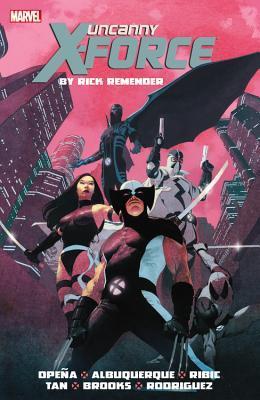
Wolverine, Psylocke, Archangel, Fantomex, and Deadpool form a new version of the edgy 90's idea of an X-men book, a team formed to proactively kill threats before they can truly become problems. A team made of hardened killers who will kill again. Their first target is a newly revived Apocalypse, to get to him they end up battling through Apocalypse's "Final Horsemen" in a brutality made beautiful thanks to Jerome Opena's art. But when they reach the end of the gauntlet they find that the newly revived Apocalypse is just a boy. The team hesitates, but only for a moment, Fantomex takes the shot, the mission was a success.
This is the inciting incident of the book, Fantomex may have pulled the trigger, but they're all still complicit in these actions, and this opens the floodgates to guilt and the consequences of their sins both old and new coming back to haunt them.
The rest of the book focuses on the toll this action, and the actions they have to take moving forward as a result. No one in X-force is truly good, but they're not complete monsters either, and the characters struggle between crossing that line. This is best brought out by the character dynamics.
Wolverine is the stalwart leader of the team, and the one most accustomed to this life. It takes until the end for his conviction to be truly tested, because it's that deeply rooted.
Archangel literally has a war going on inside his head between his two personalities.
Fantomex has the understandably the most guilt about his decision, and the actions he takes as a result of that guilt could pose as more of a threat than anything X-force itself does.
Psylocke arguably loses the most in this whole series, the world just takes and takes and takes from her, and despite all the violence and gore the hardest thing to see in this whole series is her breaking bit by bit.
Deadpool is the heart of the team, being the only one to openly condemn Fantomex, with the rest feigning acceptance for his acts, or at least not bringing it up.
Despite the books questions of "Is killing to prevent more killing an actual solution?", Nature vs Nurture, and what constitutes a good person, the book doesn't give very many clear answers, with the book's explosive final story putting each of it's (remaining) cast members in a different spot.
With a rotating cast of spectacular artists, the outlandish concepts that Remender plays with (They go to the moon, to the future, fight future cyborgs while still in the present, a lot of mind control stuff, Alternate Dimensions etc. etc.) never feels dull and the visual identity of the series is consistent but fluid.
It's just one of Marvel's best books ever, self-contained (Though admittedly drenched in X-men lore), hard hitting, well written, and having actual thematic weight. It's pretty much everything that people who don't read Superhero comics say that they aren't, while still never feeling like it's ridiculing the types of heroes and stories it's examining.