

What do you think?

Marvel Press Novels
The Death of Captain America
Steve Rogers is dead! Long live Captain America! He was a hero to millions, an inspiration to America's armed services and the representative of his nation's greatest ideals. He lived for his country - and now, he has given his last final measure for the nation he loved, shot down in cold blood. In the aftermath of his death, Cap's longtime partner, the Falcon, makes revenge his first order of business. Sharon Carter finds herself spiraling out of control, a capti ve of the Red Skull's minions. And Bucky Barnes, a.k.a. the Winter Soldier, must reconcile his own sordid past with the calling to become the new Captain America! Experience Marvel's blockbuster shakeup of the Captain America mythos like never before in this new adaptation!
322 pages, Hardcover
First published March 25, 2014
About the author
Larry Hama
2,003 books154 followersLarry Hama is an American writer, artist, actor and musician who has worked in the fields of entertainment and publishing since the 1960s.
During the 1970s, he was seen in minor roles on the TV shows M*A*S*H and Saturday Night Live, and appeared on Broadway in two roles in the original 1976 production of Stephen Sondheim's Pacific Overtures.
He is best known to American comic book readers as a writer and editor for Marvel Comics, where he wrote the licensed comic book series G.I. Joe, A Real American Hero, based on the Hasbro action figures. He has also written for the series Wolverine, Nth Man: the Ultimate Ninja, and Elektra. He created the character Bucky O'Hare, which was developed into a comic book, a toy line and television cartoon.
During the 1970s, he was seen in minor roles on the TV shows M*A*S*H and Saturday Night Live, and appeared on Broadway in two roles in the original 1976 production of Stephen Sondheim's Pacific Overtures.
He is best known to American comic book readers as a writer and editor for Marvel Comics, where he wrote the licensed comic book series G.I. Joe, A Real American Hero, based on the Hasbro action figures. He has also written for the series Wolverine, Nth Man: the Ultimate Ninja, and Elektra. He created the character Bucky O'Hare, which was developed into a comic book, a toy line and television cartoon.
Ratings & Reviews
Friends & Following
Create a free account to discover what your friends think of this book!
Community Reviews
Displaying 1 - 30 of 55 reviews
April 17, 2021
No it’s not great literature but it is very entertaining and who doesn’t love to have some great bad guys to hate while rooting for the good guys to save the day. Definitely some correlations with our current world. Where is Captain America when we need him??

July 27, 2021
This is the novelization of a comic story line. In this one, Captain America is killed. This book tells how the three people closest to him, Sharon, Falcoln, and Bucky, handle his death.
First off, let me say this is not from the Marvel movies as events are a little different from the movies. If you are coming from the movies you will easily recognize the characters but things play out a little different. I really wanted to like this book but unfortunately there were flaws. The biggest one was jumps in the plot which happened several times. There would be a major development in the plot but we never found out how it happened. The reader was suppose to accept these new developments as fact and just go along for the ride. Like I said this book comes from the comics. It felt like if I was reading the comic run I missed an issue. I wasn't totally lost but I had questions. With this flaw and the bad job of editing (like whole chapters being repeated right after each other) this book had the feeling that it was rushed to be put out on the market. I did like the concept of the story and its development along with the outcome. That is the only reason I am giving it two stars.
For me, the author never made this book his own. I understand it was coming from a comic run but I feel like the author never put his signature on it. It feels like this prose novel was verbatim from the comics. I chose to read the prose novel so I can have a more in depth look at the characters and the subject matter. Unfortunately I did not get that and I wish that I read the comic run instead so I could enjoy the artwork along with the story.
First off, let me say this is not from the Marvel movies as events are a little different from the movies. If you are coming from the movies you will easily recognize the characters but things play out a little different. I really wanted to like this book but unfortunately there were flaws. The biggest one was jumps in the plot which happened several times. There would be a major development in the plot but we never found out how it happened. The reader was suppose to accept these new developments as fact and just go along for the ride. Like I said this book comes from the comics. It felt like if I was reading the comic run I missed an issue. I wasn't totally lost but I had questions. With this flaw and the bad job of editing (like whole chapters being repeated right after each other) this book had the feeling that it was rushed to be put out on the market. I did like the concept of the story and its development along with the outcome. That is the only reason I am giving it two stars.
For me, the author never made this book his own. I understand it was coming from a comic run but I feel like the author never put his signature on it. It feels like this prose novel was verbatim from the comics. I chose to read the prose novel so I can have a more in depth look at the characters and the subject matter. Unfortunately I did not get that and I wish that I read the comic run instead so I could enjoy the artwork along with the story.

June 9, 2015
TL; DR Review:
4 stars. How dare this fucking audiobook remind me how emotional I am about Captain America.
More reviews @ The Bibliosantcum
Long Review:
I have been wanting to try a GraphicAudio production, which describes itself as a movie in your head, for quite some time. Among books listed there include many comics and books such as Mistborn, Dante Valentine, and Cemetery Girl. All their books include a full multi-voice cast, music, and action sound sequences.
I was impressed with the quality of the story that I decided listened to, which was the novelization of The Death of Captain America. I chose that book as a safety measure. This is my first venture into GraphicAudio, so I decided to go with content I was familiar with. I am very familiar with Marvel’s Civil War that led to the eventual death of Captain America. That is not a spoiler, so don’t get your underwear in a bunch. It’s right in the title, and it’s not some clever word play. Captain America’s death is not the denouement of this story. It’s a catalyst. His death plays a vital role in the emotions and decisions of those closest to him. It makes them face who they are and who they want to be in the wake of Captain America’s death. It shows their loyalty to one another even in precarious situations because something of the Captain lives in them all.
Before I get to the meat of the review, let me just make dying whale noises about Captain America while I emotionally spin in my chair.
What do you mean am I crying? I’m not crying. You’re crying. Leave me alone.
I read The Death of Captain America graphic novel, and I loved it. I enjoyed the audio narration of the events just as much. This audio presentation just filled out moment for me, adding more depth to an emotionally tense moment. I especially loved Bucky Barnes (Winter Soldier), Sam Wilson (Falcon), and Sharon Carter’s (Agent 13) role in this story as they dealt in their own ways with the tragedy from dignified acceptance because that’s what Cap would’ve wanted to outright wanting revenge against the people who they blame for his death (Tony Stark) while trying to pull together as support. I wasn’t the biggest fan of the Civil War angle, but I credit it with being the story that made me love Captain America without question. He went from being more than just an unwaveringly good guy and really became a hero in my heart. I still get goosebumps when I think about his iconic stand where he says he’s not the will of the government but the will of the people.
His death during Civil War was monumental for me, even though I knew Marvel would never allow him to actually stay “dead.” This story still meant a lot to me and touched my heart, and this book managed to capture so many of my feelings. The idea of Captain America in his final moments still trying to be that pinnacle of heroism while holding on to that empathy that still made him able to forgive even in his final moments. The fact that, even though he fought Tony, he never thought less of Tony or didn’t consider him a friend or someone he trusted beyond doubt. (Even though to it took me a long time to stop hating Tony Stark’s damn guts thanks to Civil War and again in Avengers vs X-Men) I’m going to quote something from my review of Captain America: The Chosen by David Morrell, which sums up how I feel about Captain America:
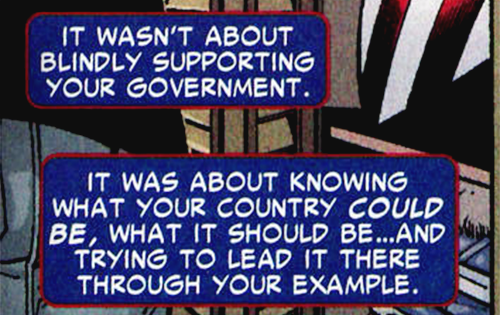
And this is Captain America in his purest form, who he’s always been. Captain America has always did his very best to embody virtues that everyone has and encouraged these same virtues in others. He’s not perfect, but he believes in standing up for what’s right, even when it’s not what others may want. Scenes like this touched me to my core with and reminded me why I love Captain America so much:
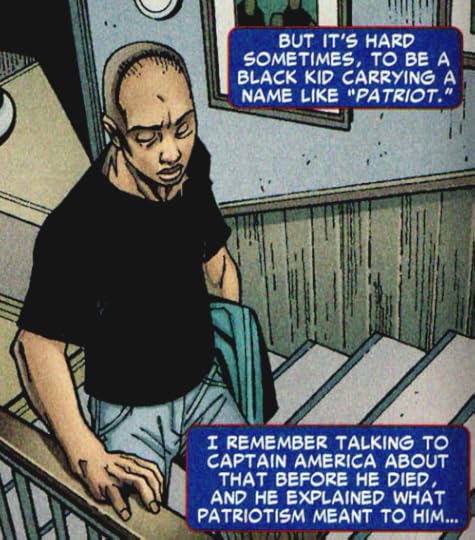

This audiobook continued to solidify what made the character special for me. Even in death, Cap’s influence is everywhere, leaving behind a legacy that tries to remind his friends and family that they don’t have to stoop to the level of their enemies to make a change. There were lovely scenes where Cap’s friends would basically ask themselves and each other, “What would Captain America do?”
An example. Bucky finds himself in a bar brawl after a veteran said that Captain America didn’t deserve a service funeral, that he was a traitor that hated his government and disrespected the uniform. After Bucky vented his frustrations on the guy with his fists, Sam asked him if that’s what Cap would’ve wanted. Bucky admits that Captain America would’ve stood up to the man and told him that if we always listened to our government we’d still have slavery and women wouldn’t have any of the rights they’ve fought so hard for and continue to fight for and he would’ve walked away from the man because Captain America was a stand up guy who followed his own advice: “It wasn’t about blindly supporting your government. It was about knowing what your country could be, what it should be… and trying to lead it there through your example.”
This was a well produced piece of work. The voice actors were excellent. I’m sort of bad about having a hard time getting over voices if they don’t sound like their actors in their cartoons or movies.I didn’t have that problem here. Sin’s maniacal laughter was so great and just fit her personality perfectly, and Sam’s voice gave me flutters. It was action packed and emotional. The only complaint I have, and this is a complaint I usually have for full productions like this, is that sometimes the music and action noises can make it hard to hear the dialogue. That’s only a little annoyance over the overall story. Another small little annoyance for me, which isn’t exactly this story’s fault, is that it doesn’t hold the same emotional impact it did when it’s graphic novel counterpart originally came out because, well, Captain America alive and well now. Also, as with any comic, especially comics from one of the Big Two, there’s some corniness here that might make you roll your eyes, but it’s not prevalent. Caveat: I can’t recommend this story to those who aren’t familiar with Civil War (and I may do something crazy and start a Road to Civil War read through since the next Avengers movie will take elements from it). You’ll miss a lot of context by trying to read this. Excellent work on this, though.

4 stars. How dare this fucking audiobook remind me how emotional I am about Captain America.
More reviews @ The Bibliosantcum
Long Review:
I have been wanting to try a GraphicAudio production, which describes itself as a movie in your head, for quite some time. Among books listed there include many comics and books such as Mistborn, Dante Valentine, and Cemetery Girl. All their books include a full multi-voice cast, music, and action sound sequences.
I was impressed with the quality of the story that I decided listened to, which was the novelization of The Death of Captain America. I chose that book as a safety measure. This is my first venture into GraphicAudio, so I decided to go with content I was familiar with. I am very familiar with Marvel’s Civil War that led to the eventual death of Captain America. That is not a spoiler, so don’t get your underwear in a bunch. It’s right in the title, and it’s not some clever word play. Captain America’s death is not the denouement of this story. It’s a catalyst. His death plays a vital role in the emotions and decisions of those closest to him. It makes them face who they are and who they want to be in the wake of Captain America’s death. It shows their loyalty to one another even in precarious situations because something of the Captain lives in them all.
Before I get to the meat of the review, let me just make dying whale noises about Captain America while I emotionally spin in my chair.

What do you mean am I crying? I’m not crying. You’re crying. Leave me alone.
I read The Death of Captain America graphic novel, and I loved it. I enjoyed the audio narration of the events just as much. This audio presentation just filled out moment for me, adding more depth to an emotionally tense moment. I especially loved Bucky Barnes (Winter Soldier), Sam Wilson (Falcon), and Sharon Carter’s (Agent 13) role in this story as they dealt in their own ways with the tragedy from dignified acceptance because that’s what Cap would’ve wanted to outright wanting revenge against the people who they blame for his death (Tony Stark) while trying to pull together as support. I wasn’t the biggest fan of the Civil War angle, but I credit it with being the story that made me love Captain America without question. He went from being more than just an unwaveringly good guy and really became a hero in my heart. I still get goosebumps when I think about his iconic stand where he says he’s not the will of the government but the will of the people.
His death during Civil War was monumental for me, even though I knew Marvel would never allow him to actually stay “dead.” This story still meant a lot to me and touched my heart, and this book managed to capture so many of my feelings. The idea of Captain America in his final moments still trying to be that pinnacle of heroism while holding on to that empathy that still made him able to forgive even in his final moments. The fact that, even though he fought Tony, he never thought less of Tony or didn’t consider him a friend or someone he trusted beyond doubt. (Even though to it took me a long time to stop hating Tony Stark’s damn guts thanks to Civil War and again in Avengers vs X-Men) I’m going to quote something from my review of Captain America: The Chosen by David Morrell, which sums up how I feel about Captain America:
But part of, maybe even a large part of, the traits that make Captain America who he is doesn’t have to do with physical conditioning, but his indomitable will and the virtues he holds close to his heart, and this was something he had even before he became Captain America. This is something that anyone can have and extends beyond beliefs, race, citizenship, etc. Captain America knew this and admired the people who didn’t have his conditioning, but performed their duties every day. He questioned if ordinary people could go out there and risk their lives to help others, what made him any different? What made him better? Just because he may be physically superior to them didn’t make him better. You don’t have be Captain America to embody the virtues of courage, honor, sacrifice, and loyalty. You can find these same “hero” traits in doctors, teachers, farmers, any average person in the world. Everyone has the potential to be a Captain America. It’s not always the strength of body that makes a hero.
And this is Captain America in his purest form, who he’s always been. Captain America has always did his very best to embody virtues that everyone has and encouraged these same virtues in others. He’s not perfect, but he believes in standing up for what’s right, even when it’s not what others may want. Scenes like this touched me to my core with and reminded me why I love Captain America so much:


This audiobook continued to solidify what made the character special for me. Even in death, Cap’s influence is everywhere, leaving behind a legacy that tries to remind his friends and family that they don’t have to stoop to the level of their enemies to make a change. There were lovely scenes where Cap’s friends would basically ask themselves and each other, “What would Captain America do?”
An example. Bucky finds himself in a bar brawl after a veteran said that Captain America didn’t deserve a service funeral, that he was a traitor that hated his government and disrespected the uniform. After Bucky vented his frustrations on the guy with his fists, Sam asked him if that’s what Cap would’ve wanted. Bucky admits that Captain America would’ve stood up to the man and told him that if we always listened to our government we’d still have slavery and women wouldn’t have any of the rights they’ve fought so hard for and continue to fight for and he would’ve walked away from the man because Captain America was a stand up guy who followed his own advice: “It wasn’t about blindly supporting your government. It was about knowing what your country could be, what it should be… and trying to lead it there through your example.”
This was a well produced piece of work. The voice actors were excellent. I’m sort of bad about having a hard time getting over voices if they don’t sound like their actors in their cartoons or movies.I didn’t have that problem here. Sin’s maniacal laughter was so great and just fit her personality perfectly, and Sam’s voice gave me flutters. It was action packed and emotional. The only complaint I have, and this is a complaint I usually have for full productions like this, is that sometimes the music and action noises can make it hard to hear the dialogue. That’s only a little annoyance over the overall story. Another small little annoyance for me, which isn’t exactly this story’s fault, is that it doesn’t hold the same emotional impact it did when it’s graphic novel counterpart originally came out because, well, Captain America alive and well now. Also, as with any comic, especially comics from one of the Big Two, there’s some corniness here that might make you roll your eyes, but it’s not prevalent. Caveat: I can’t recommend this story to those who aren’t familiar with Civil War (and I may do something crazy and start a Road to Civil War read through since the next Avengers movie will take elements from it). You’ll miss a lot of context by trying to read this. Excellent work on this, though.

March 28, 2017
The comic story from just after Marvel's Civil War (the first one) gets adapted to a novel. To end the War, Captain America gives himself up. But the Red Skull and mental manipulator Dr. Faustus have schemes within schemes, and Steve Rogers is shot on the steps of the courthouse he's to be arraigned in. Who shot him? What happens next?
On the one side, Sharon Carter, agent of SHIELD and Steve's love, along with Falcon, Black Widow, and Cap's former partner, now the Winter Soldier, dig in to the mystery amid the restrictions of the newly enacted Registration Act. On the other, the Skull has his psychotic daughter Sin, the mercenary Crossbones, and a surprise pawn from Faustus' past complicate the issue. In the end, new Director of SHIELD Tony Stark, founding Avenger Iron Man, must decide if Captain America is truly dead, or if it's time for someone new to take up the shield.
It's a good adaptation of a decent comics story. Recommended to comics fans. A warning to those who don't read comics, though. This is set in the continuity of the comics, not the Marvel Cinematic Universe, so if you only know the characters from the movies, this is going to be a bit different.
On the one side, Sharon Carter, agent of SHIELD and Steve's love, along with Falcon, Black Widow, and Cap's former partner, now the Winter Soldier, dig in to the mystery amid the restrictions of the newly enacted Registration Act. On the other, the Skull has his psychotic daughter Sin, the mercenary Crossbones, and a surprise pawn from Faustus' past complicate the issue. In the end, new Director of SHIELD Tony Stark, founding Avenger Iron Man, must decide if Captain America is truly dead, or if it's time for someone new to take up the shield.
It's a good adaptation of a decent comics story. Recommended to comics fans. A warning to those who don't read comics, though. This is set in the continuity of the comics, not the Marvel Cinematic Universe, so if you only know the characters from the movies, this is going to be a bit different.

September 8, 2018
Mais um, que eu curti dessa coleção.
A parte política dessa história. (Guerra Civil) é assustadoramente próxima da nossa realidade. E acho que é essa parte, que mais me chama atenção. E com essa continuação não foi diferente. E adorei saber mais de alguns personagens que não sei muito sobre.

April 18, 2022
The Death Of Captain America, By Larry Hama is a book adaptation of the Marvel graphic novel/comic series “The Death of Captain America” by Ed Brubaker and Steve Epting.
The superhero ‘Civil War’ is over, and Captain America has surrendered to the authorities. But as Steve Rogers prepares to stand trial, he is assassinated on the steps of the courthouse and is declared dead upon his arrival at the hospital. As America struggles with the death of a national hero, the question arises, who pulled the trigger? Now, as the dust settles, Sharon Carter and the Falcon try to find their way in a world without Captain America, while Bucky Barnes – the Winter Soldier sets his sights on Tony Stark. But as the new director of S.H.I.E.L.D., Stark has a more pressing concern – namely who will take up the shield and mantle of America’s greatest superhero.
The Death of Captain America focuses on the assassination of Captain America and the immediate fallout.
What I think is most notable about this story is the way Larry Hama forgoes Captain America sacrificing himself to save the world, and instead just has him assassinated in cold blood. His death isn’t spectacular or glamorous and references the assassinations of other American icons like JFK and Martin Luther King Jr.
It seems fitting, as it speaks to Cap’s stature not just as a hero, but also as a person in the Marvel Universe. It also means there’s not some big build-up to something the title has already told you will happen.
Straight out of the gate, first early chapters, four gunshots and that’s the end of Steve Rogers.
It’s crushing, both to the reader and even more so to the various characters, who are now left in a world seemingly without hope.
Seeing how each member of Cap’s supporting cast deals with such tragedy makes for some great dramatic moments, perhaps more so than most superhero stories.
There are costumed supervillain and the like lurking out, but a lot of Act One retains the espionage feel from the MCU movies like Captain America: Winter Soldier or the recent Black Widow movie and focuses on character first, theatrics second.
Their situation is easy to empathise with, as they all deal with grief in relatable ways, and for the most part, aren’t hampered by aliens or supervillain whose presence obviously isn’t felt in the real world. I am also a big fan of the development of Bucky and Black Widow’s relationship, and seeing it blossom across The book makes for a rollercoaster of a story. Subtle at first, but eventually devastatingly emotional.
The book then blends into Act 2, which examines the rise of Bucky Barnes as the new Captain America, which is something I personally loved.
He and Steve are both American heroes, but there’s so much tension in the fact that Steve made being Captain America seem so effortless; always having the right actions and words for the situation, whereas Bucky – an outsider of sorts, is highly capable but not cut out for public speaking or inspiring people.
We see him as he struggles to be the Captain America people expect while trying to make the role his own. His background as a soldier and assassin bleeds through, as he’s just as likely to shoot bad guys as he is to throw his shield at them. He has an edge to him that I think in some ways his more in line with the reality of what America is, as opposed to the ideals of America that Steve Rogers represents.
It’s especially interesting because stories like these often go one of two ways – they either build up a legacy character, or they highlight why the original was so great. Here, Larry Hama book adaptation does both; making you understand the longing for Steve Rogers’ return, but also hesitant to see it as you become invested in Bucky’s own journey.
This fact is cemented in Act Three, where everything, from Captain America’s assassination, and even before that, reaching back to the Red Skull’s opening salvo in Out of Time/Winter Soldier, is wrapped up, and the supervillain plot that’s been steadily building behind the scenes finally kicks off.
Now, thrust into a world he’s unfamiliar with, Bucky not only has to convince people that he’s Captain America, but also help foil a conspiracy plot by some of Captain America’s greatest foes – Red Skull, Arnim Zola, Doctor Faustus, Crossbones and Sin – Bucky is really put through a gauntlet of sorts, but the end result is a story that cements Bucky as the new Captain, while also retaining the same tone that the book has built so consistently. There’s no bombastic superpowered fights, just a man trying to do right by his country, its ideals, and the system he works in.
Overall, this book adaptation of this Captain America story arc does wonders for Captain America’s supporting cast, from Sharon Carter to Falcon to Tony Stark. Alongside Bucky and others, they all get some real standout moments, that also emphasizes why Steve Rogers is one of Marvel’s greatest heroes. I would definitely recommend this comic Novelization to any fan of Marvel superhero stories.
The superhero ‘Civil War’ is over, and Captain America has surrendered to the authorities. But as Steve Rogers prepares to stand trial, he is assassinated on the steps of the courthouse and is declared dead upon his arrival at the hospital. As America struggles with the death of a national hero, the question arises, who pulled the trigger? Now, as the dust settles, Sharon Carter and the Falcon try to find their way in a world without Captain America, while Bucky Barnes – the Winter Soldier sets his sights on Tony Stark. But as the new director of S.H.I.E.L.D., Stark has a more pressing concern – namely who will take up the shield and mantle of America’s greatest superhero.
The Death of Captain America focuses on the assassination of Captain America and the immediate fallout.
What I think is most notable about this story is the way Larry Hama forgoes Captain America sacrificing himself to save the world, and instead just has him assassinated in cold blood. His death isn’t spectacular or glamorous and references the assassinations of other American icons like JFK and Martin Luther King Jr.
It seems fitting, as it speaks to Cap’s stature not just as a hero, but also as a person in the Marvel Universe. It also means there’s not some big build-up to something the title has already told you will happen.
Straight out of the gate, first early chapters, four gunshots and that’s the end of Steve Rogers.
It’s crushing, both to the reader and even more so to the various characters, who are now left in a world seemingly without hope.
Seeing how each member of Cap’s supporting cast deals with such tragedy makes for some great dramatic moments, perhaps more so than most superhero stories.
There are costumed supervillain and the like lurking out, but a lot of Act One retains the espionage feel from the MCU movies like Captain America: Winter Soldier or the recent Black Widow movie and focuses on character first, theatrics second.
Their situation is easy to empathise with, as they all deal with grief in relatable ways, and for the most part, aren’t hampered by aliens or supervillain whose presence obviously isn’t felt in the real world. I am also a big fan of the development of Bucky and Black Widow’s relationship, and seeing it blossom across The book makes for a rollercoaster of a story. Subtle at first, but eventually devastatingly emotional.
The book then blends into Act 2, which examines the rise of Bucky Barnes as the new Captain America, which is something I personally loved.
He and Steve are both American heroes, but there’s so much tension in the fact that Steve made being Captain America seem so effortless; always having the right actions and words for the situation, whereas Bucky – an outsider of sorts, is highly capable but not cut out for public speaking or inspiring people.
We see him as he struggles to be the Captain America people expect while trying to make the role his own. His background as a soldier and assassin bleeds through, as he’s just as likely to shoot bad guys as he is to throw his shield at them. He has an edge to him that I think in some ways his more in line with the reality of what America is, as opposed to the ideals of America that Steve Rogers represents.
It’s especially interesting because stories like these often go one of two ways – they either build up a legacy character, or they highlight why the original was so great. Here, Larry Hama book adaptation does both; making you understand the longing for Steve Rogers’ return, but also hesitant to see it as you become invested in Bucky’s own journey.
This fact is cemented in Act Three, where everything, from Captain America’s assassination, and even before that, reaching back to the Red Skull’s opening salvo in Out of Time/Winter Soldier, is wrapped up, and the supervillain plot that’s been steadily building behind the scenes finally kicks off.
Now, thrust into a world he’s unfamiliar with, Bucky not only has to convince people that he’s Captain America, but also help foil a conspiracy plot by some of Captain America’s greatest foes – Red Skull, Arnim Zola, Doctor Faustus, Crossbones and Sin – Bucky is really put through a gauntlet of sorts, but the end result is a story that cements Bucky as the new Captain, while also retaining the same tone that the book has built so consistently. There’s no bombastic superpowered fights, just a man trying to do right by his country, its ideals, and the system he works in.
Overall, this book adaptation of this Captain America story arc does wonders for Captain America’s supporting cast, from Sharon Carter to Falcon to Tony Stark. Alongside Bucky and others, they all get some real standout moments, that also emphasizes why Steve Rogers is one of Marvel’s greatest heroes. I would definitely recommend this comic Novelization to any fan of Marvel superhero stories.

April 25, 2019
This novelization of the graphic novel was pleasant, but I did like the graphic novel version more. Sometimes it was obviously trying to describe things from the images. I wished Hama had moved farther from the original text to really make this its own product. The shifting perspectives were really interesting to follow the story.
April 4, 2020
3.25 stars
Not quite as well written as Civil War, this story picks up after Captain America turns himself in, only to be assassinated soon after. Not a bad read.
Not quite as well written as Civil War, this story picks up after Captain America turns himself in, only to be assassinated soon after. Not a bad read.

August 1, 2020
This Graphic Audio audio books are so cool! I think especially when it comes to a comic book style story, having the sound effects and different voice actors just really brings everything to life. I would rather listen to one of these than watch a movie of the same style any time.
As for the narrative content, I liked that a lot too. I've been reading a whole lot more DC than Marvel stuff recently. I grew up thinking I was more of a Marvel fan because of the X-Men, but my recent reading history might suggest otherwise. Regardless, I don't know much about Captain America beyond the movies. Even though the title doesn't suggest as much, this story succeeds the events of Marvel's Civil War. It essentially begins with Cap imprisoned from his recent surrender.
Overall I found everything about the pacing, the characters, and the overall story very enjoyable. I'm definitely interested in listening to a Graphic Audio rendition of whatever story comes next in this Marvel timeline.
As for the narrative content, I liked that a lot too. I've been reading a whole lot more DC than Marvel stuff recently. I grew up thinking I was more of a Marvel fan because of the X-Men, but my recent reading history might suggest otherwise. Regardless, I don't know much about Captain America beyond the movies. Even though the title doesn't suggest as much, this story succeeds the events of Marvel's Civil War. It essentially begins with Cap imprisoned from his recent surrender.
Overall I found everything about the pacing, the characters, and the overall story very enjoyable. I'm definitely interested in listening to a Graphic Audio rendition of whatever story comes next in this Marvel timeline.

October 30, 2020
I've really been enjoying these Marvel graphic audiobooks and this one was certainly no exception. The voice acting and audio production was excellent, and the story itself is pretty good too. This is probably one of the better ones I've listened to, as I think the material was handled well.
One of the small criticisms I have of these books (and this one in particular) is that it often feels like they're trying to recreate the Marvel Cinematic Universe style sense of humor and playfulness, and in a lot of cases it falls flat because the dialogue is cheesy and it feels forced. There were quite a number of those scenes in this book, which detracted from the strength of the story and characters otherwise.
That said, the production quality was great and, if you're a comic book fan, you most likely won't be disappointed spending a few hours listening to this. It's a decent interpretation of one of the most famous Marvel comic storylines.
One of the small criticisms I have of these books (and this one in particular) is that it often feels like they're trying to recreate the Marvel Cinematic Universe style sense of humor and playfulness, and in a lot of cases it falls flat because the dialogue is cheesy and it feels forced. There were quite a number of those scenes in this book, which detracted from the strength of the story and characters otherwise.
That said, the production quality was great and, if you're a comic book fan, you most likely won't be disappointed spending a few hours listening to this. It's a decent interpretation of one of the most famous Marvel comic storylines.
January 15, 2015
What's not to like? Familiar comic book characters whose stories are told by a large cast of actors. And there are sound effects and a full musical score that underline the action and tone. Interesting story, filled with action and vividly drawn characters.

September 2, 2019
A Review of the Audiobook by GraphicAudio
Performed by a multicast.
Duration: 5 hours, 35 minutes.
Unabridged.
Set in the days after the conclusion of the superhero Civil War, this book deals with the aftermath of the assassination of Steve Rogers (aka Captain America) on his way to a courthouse to face a judge for not complying with a superhero registration policy. If you are only familiar with the Marvel movie Captain America: Civil War , this movie will be confusing. The movie is inspired by this comic book series, but does not follow it.
The superhero world (and the regular people, too) is mourning the murder of Captain America. In particular, Bucky Barnes (aka The Winter Soldier) is on the hunt for the killer. He is not alone. Falcon, Black Widow, Nick Fury and Sharon Carter are also looking. Turns out that even though Captain America is gone, many of his oldest enemies are still on the prowl...
Read more at: https://dwdsreviews.blogspot.com/2019...
Performed by a multicast.
Duration: 5 hours, 35 minutes.
Unabridged.
Set in the days after the conclusion of the superhero Civil War, this book deals with the aftermath of the assassination of Steve Rogers (aka Captain America) on his way to a courthouse to face a judge for not complying with a superhero registration policy. If you are only familiar with the Marvel movie Captain America: Civil War , this movie will be confusing. The movie is inspired by this comic book series, but does not follow it.
The superhero world (and the regular people, too) is mourning the murder of Captain America. In particular, Bucky Barnes (aka The Winter Soldier) is on the hunt for the killer. He is not alone. Falcon, Black Widow, Nick Fury and Sharon Carter are also looking. Turns out that even though Captain America is gone, many of his oldest enemies are still on the prowl...
Read more at: https://dwdsreviews.blogspot.com/2019...

October 3, 2019
I came to this novelization having read the series of comics it was based upon over a decade ago and being fairly familiar with Larry Hama's work on the G.I. Joe comic series, particularly from three decades ago. I was pleased to see Hama take the excellent work laid down by Ed Brubaker et al and craft it into a remarkably easy and enjoyable read. I'm glad I read this book as it made much clearer my vague recollection of the storyline and also solidified and clarified several confusions I had. This has me itching to dig out both my old G.I. Joe comics as well as the original Death of Captain America series from my long boxes.

July 5, 2025
This is kind of tough to rate. It's a fast read, which can be a benefit. But it felt like the prose was very matter of fact in how the events of the comic storyline are described, not really giving the events much more depth. We do get to see Bucky try to adjust to his new role, and you'd think there would be more internal passages about this. And I gotta say, I'm bummed out by how the Sharon Carter pregnancy storyline went down. Why even include this in the original comic at all? This must've been a weird time for fans.
February 17, 2026
DNF.
Wanted to check out another of these novelizations after being pleasantly surprised by Secret Invasion.
This is competently written, but the audiobook is one of those overproduced deals with a soundtrack and sound effects and it’s a little obnoxious.
I was most interested to see how this would start, whether it would explain Civil War, and how much time it would spend with The Winter Soldier and the rest of Brubaker’s run up to this point. Turns out very little. It sort of assumes you know a lot already.
Wanted to check out another of these novelizations after being pleasantly surprised by Secret Invasion.
This is competently written, but the audiobook is one of those overproduced deals with a soundtrack and sound effects and it’s a little obnoxious.
I was most interested to see how this would start, whether it would explain Civil War, and how much time it would spend with The Winter Soldier and the rest of Brubaker’s run up to this point. Turns out very little. It sort of assumes you know a lot already.

July 18, 2021
Well, I picked this up in epub thinking this was the actual comic and curious of how I would be able to read it in my ebook reader, but it turns out it is actually a novelization of the comics, lol, go me!! XD
BTW it was pretty entertaining with some really good moments. Being English not my first language I had some minor problems understanding some of the technological stuff, but nothing too bad.
Also I love Bucky and I love Bucky and Natasha together even more, so all is good!
BTW it was pretty entertaining with some really good moments. Being English not my first language I had some minor problems understanding some of the technological stuff, but nothing too bad.
Also I love Bucky and I love Bucky and Natasha together even more, so all is good!

September 4, 2017
An ok tale but the writing is sometimes a bit hard work and sometimes my interest flagged. Unlike the Civil War prose novel the characters just seem to lack any depth or likablity so you sort of end up not caring what happens.
The tale ends pretty much where you expect at the start with no big plot points that make it worth the journey.
Only for die hard Marvel fans.
The tale ends pretty much where you expect at the start with no big plot points that make it worth the journey.
Only for die hard Marvel fans.

November 14, 2019
I enjoyed this book. I thought that it was a good representation of the comic story. Would have liked to see more of the falcon, but Sharon and Bucky weaved an interesting look at the story. Would love to see a sequel because this was really an enjoyable read and I'd like to see the stories finish.

January 10, 2020
Much better than the graphic novel it was based on. As long as you've read (or seen) Civil War, you're good to go on this follow up.
The GN was too scattered and disjointed, this prose novel (and the audio version I listened to) flowed much more smoothly. Good story, another great audio production!
The GN was too scattered and disjointed, this prose novel (and the audio version I listened to) flowed much more smoothly. Good story, another great audio production!
October 29, 2020
I listened to the audiobook from Graphic Audio. The full cast audio and the sound effects are quite good. This book would fit nicely in the MCU. This book does pretty well explaining the fight scenes and the accompanying sounds definitely make this a pretty good book. I was turned off by a few curse words (less than 4 the whole novel).

February 5, 2017
Death of Captain America is a great book, I loved it more then the Comics, and the Graphic Novel. It is a must read for all Captain America fans, and anyone that enjoys a great book.
I will have a Video Review up on my you tube channel soon https://www.youtube.com/channel/UCxzL...
I will have a Video Review up on my you tube channel soon https://www.youtube.com/channel/UCxzL...

January 6, 2023
No matter when you read it, The Death of Captain America is one of those rare Marvel Comics that blends major continuity implications with a fantastic story that holds up on its own. It’s the death of an American icon, and it gets appropriately emotional without getting sappy.
January 23, 2024
Novelização de um dos melhores arcos da Marvel comics. Com narração de Sharon Carter e pontos de vista do Soldado Invernal, a trama sabe extrair o melhor de cada personagem inserido. Um prato cheio para os fans da editora
December 19, 2017
This book was an absolute gem!! I loved it!!! Had me on the edge of my seat till the very end I highly recommend!!!!

November 20, 2018
I'm a big fan of Larry's. So I'm probably biased. I enjoyed the book a lot. I thought Larry was true to Captain America throughout the book. Well done.

June 19, 2019
Makes me want to go back and read the comics again, including all the tie ins.

Read
April 9, 2020Not sure why, but I just couldn’t get into this.
Well, one thing was that agent 13 was really annoying, but the rest didn’t really do much for me either.
Well, one thing was that agent 13 was really annoying, but the rest didn’t really do much for me either.
January 11, 2021
I enjoy these Marvel-themed graphic audiobooks. There’s a whole cast plus sound effects that is a welcome, fresh take on the audiobook experience.

April 12, 2021
A little weird reading a Marvel pandemic story during our times (2021 yikes!). The ending was a bit weird with the mystery voice reveal.

August 17, 2021
Story seemed jumpy and very wtf'ish
Displaying 1 - 30 of 55 reviews