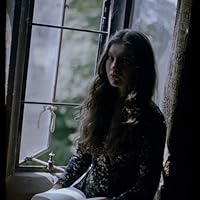
Mary Shelley's real-life friend Isabella Baxter Booth is seeing ghosts and meeting mysterious strangers. To escape her increasingly violent, deranged husband and her own murderous impulses towards him, she flees London for her childhood home in Scotland. There she meets a young doctor, Alexander Balfour, who is at the vanguard of the emerging science of psychiatry. Isabella intrigues him, and he becomes more involved than he knows he should. Gradually his troubled past and doubts about Isabella's true intentions overwhelm him. Will they cause him to commit the biggest mistake of his personal and professional life?
With its focus on madness and sexual politics in the 19th century, Unfashioned Creatures will appeal to those interested in Gothic literature, the history of our attitudes to mental health, and the lives of the Shelleys, as well as to readers of Hilary Mantel, Jeanette Winterson, Angela Carter and Michel Faber.
Lesley McDowell is an author and critic living in Scotland. She earned a PhD for work on James Joyce and feminist theory before turning to literary journalism. Her first novel "The Picnic" was published in 2007 and she is the recipient of a Scottish Arts Council award for a second novel, based on the life of a childhood friend of Mary Shelley. She reviews regularly for the Herald, the Scotsman and the Independent on Sunday.
It was not badly written, but I just did not engage with the story or the characters at all. Too much is explained, and I did not feel the tension as much as I would have liked to. I felt there may have been too many unnecessary scenes in the plot that drove me away from the story (for example, I do not see any use for Mary Shelley to appear here) But I liked the way the story is balanced on two point of views
The story just seemed to be going nowhere, too many explanations of every single detail and not a lot of plot movement. Just got bored of waiting for something to happen and lost interest all together.
Can anybody explain the ending to me? The very last page, I just find it hard to believe that David will ever refer to her as Bella? Or is this meant to be someone else. Have I missed the point?
I was initially intrigued most of all by the Gothic nature of this book. It's rare you see a novel written in the present, described in such a way in its blurb as would make Northanger Abbey's Catherine swoon with delight. It reminded me of a few previous reads, most notably Charlotte Perkins Gilman's 'The Yellow Wallpaper'. Therefore I hoped to find some of the tightly written psychological dysfunction here that I found in that novella.
For the most part I was not disappointed. There are many smoke and mirror moments here (perhaps too many), in a book told from two perspectives. We alternate between the historical figure of Isabella Baxter Booth and the fictitious Doctor Alexander Balfour - the former the wife of a man who is losing his mind and the latter a psychologically traumatised 'mind doctor' striving for the perfect subject on which to write a book, and not caring what means he must take in order to achieve his goals.
For the majority of the book I far preferred Isabella's chapters. I found the author captured her character better, kept the question as to whether Isabella, as well as her husband, was psychologically unstable hanging above us. This made me question every incident and scene, making the climax of the book all that more tense and enjoyable as a result. Although there were stand out moments in the Alexander sections, his tale had many flat pages, during which I couldn't wait to reach the next entry concerning Isabella. The plot sometimes slowed to a snail's pace, which is why this is a four star and not five star review. I think it had a lot to do with the author attempting to place a lot of period appropriate psychological study within Alexander's chapters, often glossing over the more interesting aspects of his psyche and past as a result.
Saying that, Lesley McDowell does a good job of keeping the flow of the story's period true. I thought that a few incidences were a little overly forced (the intimate connection to Mary Shelley and Mary Wollstonecraft felt a little out of place) but the attempt (often successful, sometimes not so much) to make Isabella a strong woman of independent thinking as opposed to a downtrodden wife was a pleasant change, in comparison to what novels written in the time depicted often offer.
There is a little romance but it is fleeting and not for the romantic at heart, with characters being used and abused left right and centre. In fact I would hesitate to call what comes to pass, between perhaps the great majority of the characters, romance at all. It is instead the endurance and manipulation of human feeling, practically always unrequited.
Unfashioned Creatures is not an easy read at times. However if you give it your patience you will be swept into a tale which is a mixture of psychological thriller, supernatural, gothic horror and period tale. It's definitely something uniquely different and, for fans of the Yellow Wallpaper, highly reminiscent (although not quite as powerful as) Gilman's work.
Lesley McDowell has written a book, with great compassion, about the life of Isabella Baxter Booth, a friend of Mary Shelley, The central thrust of the story is how people, and especially the medical profession, at the start of the nineteenth century dealt with madness. It is a compelling story that does not flinch from describing the brutality of the treatments available. It also tells how ambitious doctors, like the fictional Dr Alexander Balfour, were looking for cures, partly for the benefit of the patients, but mainly to enhance their own reputations. The interaction between Isabella and Dr Balfour is the motor for the plot, so I will not give further details.
The book, however, will force anyone with any understanding to ask if things have actually improved. What do we mean by madness? How do we define it? How do we treat it? It is not an easy read, but perhaps it is a necessary one.
I desperately wanted this book to enthral me. It had all the ingredients of a gripping gothic novel: insanity, ghosts, doubling, Machiavellian doctors, poets, scholars and the seething, brooding, atmospheric backdrop of London in the early 19th century.
I've read McDowell's 'Between the Sheets' and had high hopes. But this simply didn't do it for me. There was something awry. Was it trying too hard to be too clever? Was the deliberate ambiguity too ambiguous to give the tale any real cohesion?
I'm not sure; the jury is still out, as the saying goes. But it was an uneasy read for me. I'm pleased I stuck with it. I did get something from it but I'd hesitate to recommend it to a friend and I doubt I'll revisit its pages anytime soon.
As a whole, I have had a recent obsession with 19th century scientific discoveries regarding the mind, soul, sexual studies, supernatural theories and fictional books that include great minds such as Freud and Jung and their take on madness, asylums, methods to ease the troubled soul. It was also interesting to see a version of a female authors take on how women are more likely to have an affliction of the mind, which was what most renowned male psychologist believed in. It made me eager to read the book. And also having the creator of contemporary Fiction aka Mary Shelly mentioned in the book made it all the more interesting. Such an invigorating Gothic novel. Gothic novels which are good are very rare, and this one has proven its worth.
This was potentially a very interesting story but unfortunately I cannot say that its execution appealed to me. I found the novel overall too repetitive and I struggled to a great extent to stay focused.
Also, I found the main characters development a bit superficial - it might have skipped my attention but I could not understand how Isabella and Alexander's relationship came to develop in Montrose. It's really a shame because the subject of madness was really a good idea.
An interesting premise, but it felt like it hadn't fufilled its potential. The imbalance between first person and third person narratives for Isabella and Alexandre respectively didn't help. The ending was disappointing, and I didn't feel any emotion at the outcomes of each of their stories; both seemed quite happy with how it went, despite this not being a book that ends happily.
The style, especially in the dialogues, and in Isabella's narrative rang false in many places and seemed to try too hard.
An OK read to pass a long journey, but otherwise a bit pointless.
This entire review has been hidden because of spoilers.