Jump to ratings and reviews
Rate this book
Rate this book
Giovanni Battista, mantenedor de un sector de la inconmensurable torre, situada en un mundo imaginario, inicia un viaje en busca de explicaciones acerca de si su ingente labor tiene razón de ser, y respuestas acerca de la función verdadera de la colosal construcción.

Paperback

First published December 31, 1987

7 people are currently reading
369 people want to read

About the author

François Schuiten

141 books149 followers
François Schuiten was born in Brussels in 1956, as the son of two architects. He studied at the Saint-Luc Institute where he met Claude Renard. Together, they created the comics 'Aux Médianes de Cymbiola' and 'Le Rail', as well as three volumes of '9ème Rêve'. François also collaborated with his brother Luc on the series 'Terres Creuses' which was published in the legendary Pilote magazine. His final breakthrough into the mainstream of comics came with his transfer to the more adult Métal Hurlant magazine. In 1980, together with Benoît Peeters, he created the series 'Cités Obscures', in which his love of architecture is magnificently visible.

Ratings & Reviews

What do you think?
Rate this book

Friends & Following

Create a free account to discover what your friends think of this book!

Community Reviews

5 stars
261 (40%)
4 stars
256 (40%)
3 stars
93 (14%)
2 stars
24 (3%)
1 star
6 (<1%)
Displaying 1 - 30 of 50 reviews
Profile Image for Dream.M.
1,037 reviews647 followers
February 20, 2025
جلد سوم از #گرافیک_ناول شهرهای عجیب،  با عنوان برج سلام:
اگه اهل معماری، طراحی یا کلاً نگاه‌کردن به چیزای عجیب و خاص هستی، La Tour همون کتابیه که لازم داری. این کتاب بیشتر از اینکه یه داستان معمولی باشه، یه جور سفر تو دل معماری و معناست.
بیا تا برات روشن کنم این برج غول‌پیکر و داستانش چه حرفایی برای گفتن داره. (فقط قبلش بگم که اینجا با اینکه دیالوگ کمتره ولی بازم ممکنه نمره عینکتون بعد خوندن متن ها بالا بره)

قهرمان واقعی این داستان آقای برجه.
حقیقتش، تو این کتاب بیشتر از اینکه جیوانی باتیستا (نگهبان برج) شخصیت اصلی باشه، خود برج شخصیت اوله. این برج فقط یه سازه نیست؛ یه جور موجود زنده‌ست. هر طبقه‌ش انگار از یه دنیای دیگه اومده. یه‌جا حس و حال گوتیک داره، یه‌جا یاد معماری صنعتی می‌افتی، یه‌جا شبیه کلیساهای قرون وسطاست. طراحی‌های فرانسوا اسویتن کاری کرده که انگار داری خودت تو این برج پرسه می‌زنی.
داستان ساده به نظر میاد. جیوانی می‌خواد بره بالای برج تا ببینه اون بالا چه اتفاقی افتاده. اما هر چی بیشتر می‌ره بالا، برج براش پیچیده‌تر می‌شه. انگار هر طبقه یه معمای جدید جلوش می‌ذاره. اینجا دقیقاً می‌فهمی که معماری فقط سنگ و سیمان نیست؛ یه زبان بصریه که می‌خواد چیزی بهت بگه.
برج تو این داستان نماد خیلی چیزاست. مثلا تلاش بی‌پایان انسان برای بالا رفتن که مثل برج بابل هستش، یا حتی آسمان‌خراش‌های مدرن.
توی این کتاب، معماری به‌عنوان حافظ تاریخه. اینجوری که هر طبقه انگار یه تمدن گمشده‌ رو نشون می‌ده.
و اما نشون دادن پیچیدگی ذهن انسان؛ اینجوری که هر چی بالاتر می‌ری، برج عجیب‌تر و غیرقابل‌فهم‌تر می‌شه، مثل خود ما آدم‌ها.
جیوانی تو این داستان مثل خود ماست. کسی که گیر افتاده تو یه سازه‌ی عظیم که بیشتر از اینکه کمکش کنه، گیجش می‌کنه. اون دنبال جواب می‌گرده، اما بیشتر سوال پیدا می‌کنه. این حس تنهایی و سردرگمی، احتمالا همون حسیه که وقتی تو یه شهر بزرگ و شلوغ راه می‌ریم و به ساختمون‌های غول‌پیکر دورمون نگاه می‌کنیم، سراغمون میاد.
وای وای از طراحی ها که قلب تپنده کتابن.
ببینید فرانسوا اسویتن نابغه‌ست. جزئیاتی که تو طراحی‌های برج و محیط‌های داستان هست، دیوونه‌کننده‌ست. مثلاً زاویه‌هایی که پرسپکتیو رو به بازی می‌گیرن؛ راهروهایی که معلوم نیست شروعشون کجاست و تهشون به کجا می‌رسه؛ و ترکیب سبک‌های معماری مختلف که باعث می‌شه حس کنی تو یه فضای فراتر از زمان هستی.
تو این داستان، معماری فقط توی پس‌زمینه نیست؛ کل داستان داره ازش حرف می‌زنه. اینکه ما آدم‌ها چرا دوست داریم چیزای بزرگ و پیچیده بسازیم؟ چرا همیشه دنبال بالا رفتن هستیم؟ و آخرش چی؟ آیا این سازه‌ها قراره به ما کمک کنن یا بیشتر ما رو از خودمون دور کنن؟

بنظرم کتاب برج یه شاهکاره که طراحی‌هاش رو باید قاب کرد زد به دیوار.
پیشنهاد می‌کنم، بخونیدش و توش گم شید!
Profile Image for Warwick.
Author 1 book15.4k followers
November 14, 2014


An inspired literary and illustrative riff on art history, the fourth volume of the Cités obscures series digs back in time to tell a story from the legendary prehistory of the obscure world.

Giovanni Batista (who appears to be modelled physically on Orson Wells) is a mainteneur living somewhere near the top of a colossal structure known only as The Tower. The Tower is truly gigantic, although, since Giovanni himself lives well above the cloud line, we're never sure exactly how high it really is. His job is to carry out basic repairs and upkeep in his sector, and things are not going well – masonry is crumbling, stones are cracking, supplies are running out, and no one down below seems to be answering any of the urgent messages he sends. Living alone, talking to himself, and subsisting on eggs from a captive flock of geese, he eventually decides to do the unthinkable and abandon his position, setting out over the eroded staircases and crumbling tunnels to try and make contact with someone somewhere else in the vast edifice, and find some answers.


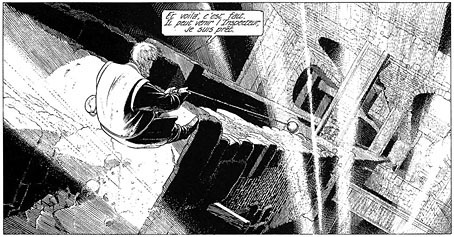
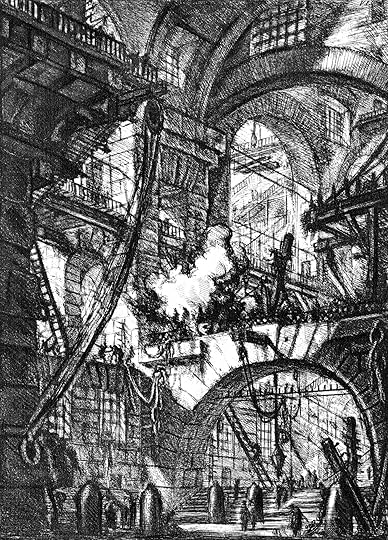
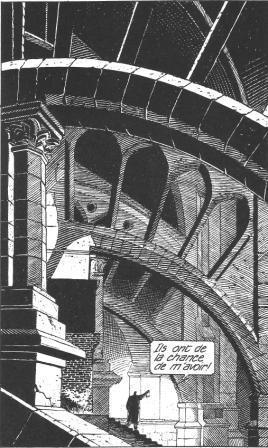
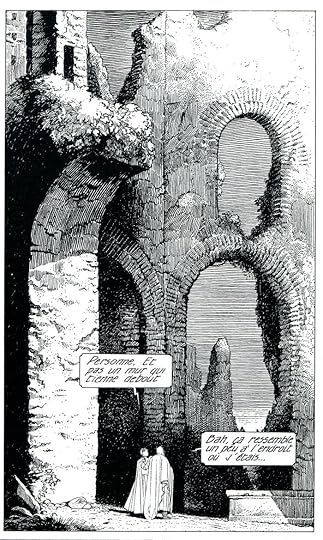
There are two presiding geniuses that hang over the world of La Tour – one is of course Brueghel, whose Tower of Babel bears a strong resemblance to the Tower here, and in a sense this whole book is just an imaginative project to place you inside the world of that picture. Giovanni Batista's name is the clue to the other major influence – Giovanni Battista Piranesi, whose etchings are a major influence for Schuiten. The interiors here are modelled in large part on Piranesi's ‘Prisons’ sequence – compare this, for instance


…to some of the panels in La Tour:


It's quite a change of pace after the previous three books, whose architectural styles seemed rooted in the early decades of the twentieth century; here the effect is much more ancient, Romantic even. The story is rich and dense and long – it covers more than a hundred pages, when the standard size of a French BD album is forty-something pages, and consequently it has a kind of immersive, rambling feel which contributes to the storytelling.


Also notable is a clever use of colour – the story is mostly in black-and-white, but near the end we discover that the whole world may not, perhaps, be that way. It's another very compelling volume in this series which yet again expands the universe in several ways, as well as being a foundational myth for the other books (years in the obscure world are, we will discover, dated AT – ‘after the Tower’). I'm sure there are a lot of visual references I'm missing too. Repress your vertigo, brush up on your art history, and climb aboard.
Profile Image for Armin Ahmadianzadeh.
97 reviews53 followers
January 7, 2025
I think this volume was somehow surreal to me. It triggered something that the previous two didn't. It was like I was venturing to reach the summit of the Tower.

Gothic architecture of the Tower was both perplexed and awe-inspiring to me.

Drawings in this graphic novel are masterpieces, and, moreover, the paintings within the plot of the novel are breathtaking. I would just stop and watch them for a long time like they were the abyss and soak up what my eyes were surprised to see.
Profile Image for Leonard Gaya.
Author 1 book1,172 followers
December 1, 2019
La Tour marque une rupture visuelle par rapport aux précédents volumes de la série des Cités obscures : alors que Samaris et Urbicande étaient inspirés par le style moderniste ou art déco, La Tour fait référence à la peinture, de la Renaissance au XVIIIe siècle, notamment Pieter Brueghel l’Ancien, dont les diverses toiles sur le thème de la Tour de Babel sont une influence majeure, mais aussi Piranèse, pour ses prisons imaginaires et ses vues des ruines romaines.

Le scénario, comme dans les autres albums, est bâti sur une idée très simple, développée de manière obstinée, jusqu'au délire : Giovanni, l'un des « mainteneurs » de la titanesque tour, vit en ermite dans un secteur reculé de celle-ci. Inquiet de l’état de délabrement du bâtiment et de l’absence de réponse de ses responsables, vivant dans les niveaux inférieurs de l’édifice, il décide de partir à leur recherche. À chaque instant, la corpulence du personnage, qui évoque le Falstaff d'Orson Welles, contraste avec la verticalité des perspectives de manière vertigineuse. La présence féminine de Milena, plus tard dans l’histoire, apporte un contrepoint et, disons-le, une horizontalité à la fois piquante et rassurante.

La quête de Giovanni l’amènera à parcourir la tour et à découvrir à la fois ses dimensions proprement cosmiques et son caractère indéchiffrable. Une métaphore, sans doute, du monde réel. La fin de l'album est à l'image de cette tour : une peinture dont le sens nous échappe.

Pour finir : j'ai été frappé de la proximité d’inspiration entre ce récit et la nouvelle Tower of Babylon, qui ouvre le recueil de Ted Chiang, Stories of Your Life and Others.
Profile Image for Hamed Manoochehri.
325 reviews37 followers
February 21, 2025
دقیقاً مثل جلد قبل، بعد از مکالمه و نظم دادن به یادداشتهام امشب میام مینویسم. بسیار تفکربرانگیز بود این جلد.
Profile Image for Drew Canole.
3,159 reviews43 followers
July 9, 2024
A comic book staring Orson Welles and apparently there was a bit of a collaboration between the creators and Welles shortly before his death in 1985.

The main character is a maintainer. Living in isolation he maintains his section of this enormous tower reminiscent of the Tower of Babel. After years of no communication and his section continuing its inevitable decay, he decides to make the journey down to civilization. Journeying down he sees that all the other maintainers have either died or abandoned their posts. He eventually makes it after a few near-death experiences... but the people there have no explanation for why the tower exists. So he decides to discover the secret of the tower by ascending all the way to the top.

The story is a fun mystery adventure ala Jules Verne. I love all the characters.

But really the artwork is the standout. Inspired by Bruegel's paintings of The Tower of Babel and the drawings of Piranesi depicting decayed stone interiors. The book is set in a medieval world reminiscent of the Renaissance.
Profile Image for Oscar.
2,235 reviews580 followers
January 6, 2025
"La Torre" es una novela gráfica de François Schuiten y Benoît Peeters, parte de la serie Las Ciudades Oscuras. La historia sigue a Giovanni Battista, encargado del mantenimiento de un sector de una inmensa torre en un mundo imaginario. A medida que avanza la trama, Battista emprende un viaje en busca de respuestas sobre la verdadera función de la colosal construcción y el sentido de su labor.

El dibujo de Schuiten destaca por su detallismo y el uso del claroscuro, creando una atmósfera que recuerda a los grabados de Piranesi. Las ilustraciones presentan edificaciones majestuosas y escenarios que combinan elementos del siglo XIX con artilugios atemporales e imaginarios. Esta obra ofrece una narrativa que se aleja de las estructuras clásicas, invitando al lector a interpretar y reflexionar sobre su significado.
Profile Image for Nati Korn.
253 reviews34 followers
September 3, 2024
זהו הספר השלישי שאני קורא מסדרת הקומיקס הפנטסטית "הערים המסתוריות" ועד עכשיו הוא המוצלח שבהם. העלילה כשלעצמה תמציתית כדרכם של ספרי קומיקס אבל היא מורכבת מבחינה רעיונית ואומנותית ובכך כוחה. הקומיקס כמובן אינו רק מילים אלא גם גרפיקה לכן אסקור בקצרה את שניהם.

שוב מתואר כאן מסעו של אדם (אליו תתלוה בהמשך גם דמות נשית, שכמו בספרים האחרים תפקידה מצומצם לדמות האהובה, המשיכה הארוטית וההבטחה לסוג של תובנה) בו הוא מנסה לחרוג מגבולות עולמו הצר ולחקור מה מסתתר מאחורי הדברים הנגלים. כמיטב המסורת הפוסמודרנית שכל הספרים האלו משתייכים אליה, הדבר לא ממש עולה בידו והוא ואנו נותרים עם התהיות, הסוריאליזם והקפקאיות. ג'ובאני בטיסטה, הוא מתחזק דרגה שלישית במגדל ענק ומבוכי. הוא חי ועובד לבדו בסקטור שלו. אי שם הרחק מתחתיו נמצאת הקהילה שהגיע ממנה והיכנשהו מעליו נמצאים החלוצים המגביהים את פסגת המגדל. אבל כבר זמן רב שמצבו של הסקטור, במיוחד באזורים הגובלים בסקטורים אחרים, מתדרדר. האספקה חדלה מלהגיע וג'ובני ממתין לשוא למפקח כמי שמחכה לגודו. בסופו של דבר הוא מתייאש ומחליט לרדת מן המגדל ולברר מה מתרחש. מסעו יעבור לאורכו ולרוחבו של המבוך יעפיל לפסגתו ויצלול למרגלותיו. הכל מאוד אלגורי. מתמזגים כאן ראשי פרקים בסגנון ז'ול וורן, פילוסופיות פוסט-סטרוקטורליסטיות, עלילה קפקאית סוריאליסטית, המיתוס של איקרוס, המיתוס של מגדל בבל, תחושה אפוקליפטית של סוף העולם וכמובן שאלת המשמעות של חיינו...

לכל זה מתלווה גם אומנות מרובת הרמזים. ראשית אציין שהאיורים יפיפיים ומדהימים – הושקעה כאן בשנות השמונים, טרום עידן הגרפיקה הממוחשבת, עבודת נמלים, מוקפדת מבחינת הפרטים והביצוע בכל מרובע ומרובע על ידי המאייר שהוא (שלא במקרה גם אדריכל). הסגנון מתחיל ברפרנסים לקתדרלות ימי ביניימיות, משתנה למשהו שמזכיר את הרנסנס – עם מכונה המזכירה את תרשימיו של דה וינצ'י, ומסתיים בסגנון רומנטי של ראשית המאה התשע עשרה. כמובן שהדבר מסמל גם סוג של התפתחות בהבנה שלנו ושל הגיבור. המגדל מתבסס על ציור מגדל בבל הידוע והאניגמטי של ברוייגל. בנוסף תמצאו כאן איורים המזכירים את אלו של אשר ובמיוחד את אלו של האמן האיטלקי הגאון בן המאה השמונה עשרה ג'ובאני בטיסטה פיראנזי (ששמו של הגיבור משקף את שמו) שנודע בהדפסי החורבות העתיקות שלו ותמונות בתי הכלא הדמיוניים המסתוריים שלו (עולם המגדל הוא סוג כזה של כלא). אם זה לא מספיק, לתיאורו של הגיבור השתמשו המחברים בדמותו של אורסון וולס (הוא גם מרבה לשתות כמוהו). הם אף טוענים, באחרית דבר, שהוא דגמן בעבור הספר באחרית ימיו והיה שותף לפרויקט (אתם רשאים להאמין לכך או לא להאמין כרצונכם). בנוסף האיורים בשחור-לבן מושפעים ממשחקי האור והצל וזוויות הצילום הגרנדיוזיות שוולס השתמש בהם בסרטיו ומהווים כמובן הרמז נוסף למוטיב החיפוש אחר משמעות נסתרת בסרטיו.
Profile Image for Helmut.
1,056 reviews66 followers
August 6, 2016
Auf, bauen wir uns eine Stadt und einen Turm mit einer Spitze bis zum Himmel...
...um ihn dann irgendwann verfallen zu lassen. Leider sind nicht alle "mainteneurs" so fleissig und zuverlässig wie Giovanni Battista, der seinen Sektor des Turms pflegt. Irgendwann wird ihm die Isolation zu groß, und er bricht auf, um mit den Leuten zu sprechen, die ihm seine Aufgabe übertragen haben. Doch der Turm ist groß, der Weg weit...

Schon der Name des Protagonisten ist Programm: "https://en.wikipedia.org/wiki/Giovann..." listet Dutzende von Malern, Bildhauern und Architekten dieses Namens auf. Ähnlich verwirrend ist die Architektur des Turms, man findet alle Baustile darin wieder, ordentlich aufrechterhalten oder zerfallend in Ruinen.
Der Herr zerstreute sie von dort aus über die ganze Erde und sie hörten auf, an der Stadt zu bauen.
Tatsächlich zerfällt der Turm, und auch die Bewohner haben sich gegenseitig nichts mehr zu sagen; teilweise wissen sie nicht voneinander, teilweise interessiert sie das Schicksal der anderen einfach auch nicht mehr.

Ein sehr gelungener, weil wirklich gut gemachter und überraschender Effekt sind die farbigen Bilder im sonst völlig schwarzweiß gehaltenen Comic. Ansonsten beeindruckt das Werk durch einen selten zu findenden sense of wonder, die unfassbare Größe des Bauwerks und den unglaublichen Aufwand, der in dessen Konstruktion gesteckt worden ist, erlebt der Leser hautnah mit - eine Welt für sich, die glaubwürdig und dabei gleichzeitig völlig fremdartig ist.

Um ehrlich zu sein, habe ich den Schluss mit den Armeen und deren Zusammenhang mit der Turmgeschichte nicht wirklich verstanden, es fehlt mir irgendwie ein Bindeglied zwischen diesen Bereichen, die nicht nur erzählerisch, sondern auch zeichnerisch weit auseinandergehen. Erkennt Giovanni nach Verlassen des Turms, dass der Turm selbst in seiner Riesenhaftigkeit nur ein kleiner Teil der Welt ist? Ist der schwarzweiße Turm im Gegensatz zur bunten Außenwelt ein Relikt aus der Vergangenheit? Kontrastiert der Friede und die Ruhe innerhalb des Turms mit dem wilden Krieg außerhalb? Die bunte Welt der Malerei gegen die klaren farblosen Striche der Architektur? Die Klarheit der Menschensiedlungen des Turms gegen die unerklärliche Gruppenbildung und Zerstreuung der Menschen außerhalb? Interpretationsbedarf - das mag nicht jeder Leser; doch wenn man sich auf die seltsame Atmosphäre der Welt des Turms einlassen kann, lässt einen der Gedanken um ein solches Bauwerk nicht schnell wieder los.

Ich schwanke zwischen 4 und 5 Sternen, doch schon allein diese nun in meinem Kopf herumschwirrenden Ideenfragmente zwingen mich dazu, die 5 Sterne für hervorragende Literatur, denn nur diese schafft so etwas, zu vergeben.
Profile Image for David Ramirer.
Author 7 books38 followers
January 8, 2014
schuiten und peters gelingt in diesem grafisch opulenten comic eine wunderschöne hommage an brueghels "turmbau zu babel", wobei die hommage weniger das originalbild selbst als vielmehr die menschlichen bezüge der zugrundeliegenden idee sichtbar macht: wie fühlt es sich an, an einem unbeendbaren bauwerk mitgearbeitet zu haben? wohin führt die hybris und was ist ihr nutzen?
weniger direkte oder gar pittoresk-simple antworten als eine emotionale herangehensweise an ein sehr altes thema sind hier zu finden, man kann im eigenen bild des turmes nach dem lesen dieses comics richtig spazierengehen und wird auch brueghels bild mit anderen augen betrachten.
Profile Image for Lotte.
414 reviews15 followers
November 14, 2021
Fantastic re-imagination of the myth of the tower of Bable. Schuiten's and Peeter's starting-off point is the Brueghel painting, to which they add other references, like Piranesi's prison etchings (Le caractérise d'Invenzione) and Orson Welles, who posed for the main character.

As with the other installments in this series, I enjoy the ominous atmosphere, the architectural environments and the voyage the characters undertake. Still not a fan of female representation: there is mostly only one girl, who likes to undress as quickly and possible and who seduces our main character ...
Profile Image for Titus.
427 reviews57 followers
April 16, 2022
This may be my favourite of the Obscure Cities comics I’ve read so far, which is high praise, as the others I’ve read (Les murailles de Samaris, La fièvre d’Urbicande and Brüsel) are all excellent.

The premise here is one that really captures my imagination. The story follows a man called Giovanni who appears to have spent most of his life in near-total isolation, inhabiting part of an impossibly immense stone tower, where he is in charge of maintaining and repairing the decaying masonry. The area under his watch (a mere fraction of the tower) seems to be about the size of a town, but Giovanni is its sole inhabitant. Access to neighbouring parts of the tower is limited by topography that’s difficult or impossible to traverse, leaving Giovanni largely cut off not just from the outside world, but also from the authorities in charge of the tower’s construction and maintenance. The whole comic is laden with mystery: not only are the tower’s origin and purpose unknown, but even its size, shape, number of inhabitants and state of completion are unclear. The sense of uncertainty is so effectively communicated that it’s genuinely thrilling to see Giovanni explore the gargantuan construction and delve into its secrets.

I suppose what I’ve described so far is a major appeal of many works in the fantasy genre – a sense of wonder at the idea of a world where much is left to be discovered. However, like the other Obscure Cities comics I’ve read, this is much more intellectually focused than any run-of-the-mill fantasy work – it’s driven by themes more than by plot. It’s an examination of human hubris, highlighting the potential for self-destruction inherent to utopian visions. It’s also an exploration of how people can work together to reach great goals – and of the tendency for such efforts to eventually fracture and fall apart. As such, it mocks byzantine bureaucracies and problematizes questions of political and societal organization.

In many ways this is very similar to the other Obscure Cities comics I’ve read. As well as exploring similar themes, it also employs what I now understand to be tropes of the series: the protagonist is a lonesome man who stumbles around, trying to make sense of the world around him, and along the way he develops a romantic interest in a younger woman. However, it does break the mould somewhat by making Giovanni more proactive and assertive: he takes his fate into his own hands rather than being swept along by events, and he displays a resourcefulness and practical-mindedness that the series’ protagonists usually lack. It's not a radical departure from the rest of the series, but it covers some interesting new ground.

As always, François Schuiten's drawing is great, with a high level of detail and realism. He's an expert at architectural design and at creating a sense of scale, so he manages to make the titular tower suitably awe-inspiring. His drawings of primitive technology are amazing too. As much of the comic involves torchlit exploration of shadowy halls and passages, he also has a chance to exhibit mastery of atmospheric lighting, and in general his artwork is central to making the whole comic so moody and engrossing.

In sum, this comic is a must-read for fans of the series and I think it would make a great entry point for curious newcomers. The premise is original, the story is intriguing, the art is fantastic, and the whole thing is immensely atmospheric.
Profile Image for Jason Furman.
1,399 reviews1,625 followers
July 13, 2024
A slightly surreal graphic novel about a man who is isolated for an extended period repairing a wall on a giant tower whose history, purpose and organization he does not fully understand. After failing to get spare parts or a visit from the inspector he embarks on a journey where he finds an entire system and set of processes revolving around it in strange ways. Mostly beautiful black and white etchings with some powerfully interspersed color. Will read more in this series.
Profile Image for Rubi.
57 reviews2 followers
May 10, 2023
I really like these series.
Profile Image for Alex.
794 reviews37 followers
March 16, 2020
After "The Walls of Samaris" and "Fever in Urbicand" I was expecting something at least great from the duo Schuiten/Peeters. This, wasn't. Ok, I've read it in an unofficial translation but apart from the art (which was really good but not as good as the first two), story was vague and abstract in a bad way, with no beggining or end, really tiring to read.

Ofc i'll continue on with "Les Cites obscures", 2 out of 3 is a fairly good percentage. :P
Profile Image for Marc Bosch.
212 reviews28 followers
April 11, 2020
Maravilloso relato a través del cual Shuiten-Peeters continúan expandiendo las similitudes entre las ciudades y los personajes arquetípicos que las habitan y que nos habitan. En este volumen, nos encontramos a Giovanni que abandona su reducido espacio de confort cuando su vida empieza a desmoronarse y empieza su particular búsqueda del sentido de la vida. Se encontrará en el camino a personajes que le orientan y otros que han perdido el norte. Giovanni tendrá que incorporar y dialogar con aquellos que son capaces de aportarle ayuda a la vez que se aleja de aquellos aspectos sombríos que le atan a la torre. En su particular búsqueda dejará atrás las zonas elevadas que no llevan a ningún sitio y junto con Milena se adentrará en un descenso a las profundidades del inconsciente para acabar encontrando una salida a la realidad de la existencia, justo en el lugar donde se desarrollan los combates cotidianos.
La ambientación, las constantes referencias a otros ámbitos de las artes así como las ilustraciones de Shuiten invitan a detenerse un largo rato en cada una de las viñetas. Una obra maestra.
This entire review has been hidden because of spoilers.
Profile Image for Anodos.
38 reviews3 followers
February 9, 2024
★★★★★★★★★★ 10/10 Art. It's just beautiful, bringing to mind the later works of Fumito Euda (𝘚𝘩𝘢𝘥𝘰𝘸 𝘰𝘧 𝘵𝘩𝘦 𝘊𝘰𝘭𝘰𝘴𝘴𝘶𝘴).
★★★★★★★☆☆☆ 7/10 Story. The English translations are notoriously poor; still, it's a charming journey story albeit with a surprisingly rushed ending.*
★☆☆☆☆☆☆☆☆☆ 1/10 𝘙𝘰𝘮𝘢𝘯𝘤𝘦. 𝘐𝘵'𝘴 𝘍𝘳𝘦𝘯𝘤𝘩-𝘢𝘶𝘵𝘩𝘰𝘳𝘦𝘥 𝘴𝘰 𝘰𝘧 𝘤𝘰𝘶𝘳𝘴𝘦 𝘺𝘰𝘶 𝘨𝘦𝘵 𝘢𝘯 𝘪𝘯𝘥𝘶𝘭𝘨𝘦𝘯𝘵𝘭𝘺 𝘨𝘳𝘢𝘵𝘶𝘪𝘵𝘰𝘶𝘴 𝘰𝘭𝘥-𝘮𝘢𝘯-𝘨𝘦𝘵𝘴-𝘵𝘩𝘦-𝘺𝘰𝘶𝘯𝘨-𝘨𝘪𝘳𝘭 𝘴𝘶𝘣𝘱𝘭𝘰𝘵.

This is my first visit to the obscure, marvelous world of Schuiten and Peeters. It won't be my last!


*EDIT: Watched a video on the philosophical themes of the book from a random YouTube recommendation of a channel "Living the Line" and have a deeper appreciation for the story now.
Profile Image for Tristan.
1,441 reviews18 followers
January 28, 2020
This is a beautiful graphic novel, mostly in black and white, in a style reminiscent of the engravings illustrating the original Jules Verne novels, just as the dialogue mimics the French spoken in Verne’s times and earlier. The artwork is truly exceptional with vertiginous perspectives and glorious architectural detail although the characters are a little stiff, as in engravings.

The very slender story follows a maintenance man, supposedly one of the first to be appointed and one of the last to have stayed in his post, working to keep the crumbling Tower standing, then seeking to complain to his absent bosses, and finally trying to make sense of the futility of his work, of his existence, and of the Tower’s unknowable purpose. It seems that the gigantic Tower has not existed long if its timescale is coterminous with the protagonist’s working lifetime, although that does not fit with the Tower’s impossible scale and decrepitude, nor does it fit with the quasi legendary nature of the ground civilisations, which are depicted in contrasting colour in paintings and then in what passes for reality at the foot of the Tower.

There’s a fair bit of philosophising about futility and hubris, a fair bit of travelogue, and a fair bit of female nudity (it’s a Franco-Belgian graphic novel after all), all wrapped up in flair and panache, but it’s rather light fare which leaves the reader intrigued but unfulfilled.

A great read nevertheless, time and again.
Profile Image for Victoria Haf.
290 reviews82 followers
April 19, 2013
Amo las escenografias de Shuiten, dibuja mundos que sólo hay en los sueños, y dibuja increíble en general, este comic me gustó porque toda la historia transcurre en blanco y negro y sólo los lienzos de los cuadros están a color
Profile Image for Nuno R..
Author 6 books72 followers
August 3, 2018
Babelian and intriguing. One of the best in the "Cité obscures" masterpiece series. Great character building and awe inspiring sense of magnitude.
Profile Image for Rick Ray.
3,545 reviews36 followers
November 23, 2023
Giovanni Battista has lived alone in a middle level of an immense, decaying tower that spans an incalculable height. Giovanni is a "third class maintainer" who is responsible for the monitoring of damage and repairs to the crumbling sections of the Tower. Living through this role for the better part of three decades, Giovanni begins to ponder when a resupply of building materials will arrive or whether any word from other inspectors will be sent his way. As his uncertainty ferments into curiosity, Giovanni begins to make his way to the base of the tower with hopes of contacting other maintainers or his own employers. Built on the intrigue and mystery behind the Tower's existence, this comic is a riveting journey through impossibly scaled tower designed by François Schuiten's impeccable linework.

Schuiten's imagination is just as immense as the Tower is itself, but the architectural influences are well worth observing after the read. An obvious nod to the Tower of Babel, Schuiten and Peeters do not linger too long on the biblical connotations. The key influence is clearly alluded to in the name of the protagonist - Giovanni Battista Piranesi. The famous Italian architect behind the round tower design has been fundamental towards understanding Schuiten's geometric approach throughout many of the other "Obscure Cities" stories, but it is front and center here. The interiors of the Tower here are transparent in their influence from the classic Piranesi prison design, and it really sets the stage for this ambitious and surreal narrative about a man questioning his reality. "The Tower" stands as one of the more grandiose entries of the series, and a clear indication of how much architecture influenced one of the great modern cartoonists of our time.
150 reviews
June 13, 2017
La tour est un univers assez fascinant : une sorte de tour de Babel délabrée dont on ne sait pas très bien où elle se situe par rapport aux Cités Obscures.

Sa base et son sommet sont si lointains qu'ils en sont presque mythiques et Giovanni, un vieux bourru part à la recherche d'une extrémité (laquelle ?) de cette structure infinie et incertaine. En chemin il tombe amoureux de la jeune et belle Milena et ce couple improbable finira par prendre la tête d'une armée napoléonienne.

Ce tome est assez fantaisiste, beaucoup plus délirant que les précédents, à l'image de l'architecture de la tour bien moins rigoureuse que celle d'Urbicande.

Il s'agit d'un vrai récit d'aventure, avec ses rebondissements et ses surprises, où de nouveau l'architecture joue un rôle central.

Très réussi
Profile Image for StrictlySequential.
3,965 reviews20 followers
October 7, 2023
FlexibleFormNorm = D.L. 04/1987 = A.I. 05/1987 N°3846 = eo

Fear not the #3- it reads on its own perfectly

Spectacular! They even gave a tender love story within all of the fantastic intensities. I loved endeavoring a tremendous amount of time thinking about philosophic aspects and identifying the plentiful metaphors.

The rating was not affected, but I think that newer editions will have improved the overall aesthetics significantly. Anything with a Schuiten name on it is so detailed, exacting and all-encompassing rendered that it's prone to magnify any reproduction limitations. I did know this but, since Casterman's three branches of ...(A SUIVRE) is my favorite series across the world, thus I must endure the wait for a dicey-condition price drop...
Profile Image for Jonathan.
278 reviews1 follower
April 26, 2025
Orson Welles-as-Falstaff inhabits a megastructure which is both Bruegel's Tower of Babel and Piranesi's Prisons. The story takes on an impossible quest for meaning that recalls Borges' Library of Babel. Through this pastiche of art and architecture Schuiten and Peeters have free reign to fully explore the drama of space and architecture in the way only they can. Unfortunately I felt a little underwhelmed by Milena, the female character who is little more than erotic eye candy. But the whole story has this dreamlike yearning and reaching for something just-out-of-reach that is very effective.
482 reviews3 followers
January 7, 2023
I was once bowled over by these (The Tower is only one of), and re-reading this 30 years later or so, the aesthetics of it is still hugely impressive. The size evoked, the height, the complexity of the tower: that remains. What I now find less impressive is the narrative itself at times, and - but that's inherent to the genre I'm sure - less development than I'd like. Still: I wish the series was translated into English to give it a much wider audience, which it deserves.
Profile Image for Casey Pace.
126 reviews3 followers
May 2, 2023
As someone who loves Piranesi and impossible architecture and ruins, the art of this was so stunning and the little essay at the end explaining the inspirations made me even more intrigued by this world and how it was even thought up and put to the page. Kind of a weird, bizarre story but that’s kinda what I love about stories with settings like this.
Profile Image for Carlos Filipe Bernardino.
365 reviews
June 27, 2025
Un bon livre de bande dessinée, où nous avons une narration intéressante en dialogue avec le dessin. Une œuvre où l'architecture est importante, avec des touches de romanesque, de gothique, de renaissance et un bel hommage à Giovanni Battista Piranesi. Enfin, la collaboration d'Orson Welles avec les auteurs pour servir de modèle à Giovanni-Battista.
Profile Image for Aaron.
Author 4 books20 followers
September 20, 2022
Many years ago I read a chapter of this in an old issue of Cheval Noir, and ever since then I’ve wanted to read the whole thing. Now that I’ve read all of it, it’s my favorite Cités Obscures volume, and I think it may be the greatest architectural comic ever.
Displaying 1 - 30 of 50 reviews

Can't find what you're looking for?

Get help and learn more about the design.