

What do you think?

Voyage of the Beagle
s/t: Charles Darwin's Journal of Researches
When the Beagle sailed out of Devonport on 27 December 1831, Charles Darwin was twenty-two and setting off on the voyage of a lifetime.
It was to last five years and transform him from an amiable and somewhat aimless young man into a scientific celebrity. Even more vitally, it was to set in motion the intellectual currents that culminated in the arrival of The Origin of Species in Victorian drawing-rooms in 1859. His journal, reprinted here in a shortened version, is vivid and immediate, showing us a naturalist making patient observations, above all in geology. As well as a profusion of natural history detail, it records many other things that caught Darwin’s eye, from civil war in Argentina to the new colonial settlements of Australia. The editors have provided an excellent introduction and notes for this Penguin Classics edition, which also contains maps and appendices, including an essay on scientific geology and the Bible by Robert FitzRoy, Darwin’s friend and captain of the Beagle.
When the Beagle sailed out of Devonport on 27 December 1831, Charles Darwin was twenty-two and setting off on the voyage of a lifetime.
It was to last five years and transform him from an amiable and somewhat aimless young man into a scientific celebrity. Even more vitally, it was to set in motion the intellectual currents that culminated in the arrival of The Origin of Species in Victorian drawing-rooms in 1859. His journal, reprinted here in a shortened version, is vivid and immediate, showing us a naturalist making patient observations, above all in geology. As well as a profusion of natural history detail, it records many other things that caught Darwin’s eye, from civil war in Argentina to the new colonial settlements of Australia. The editors have provided an excellent introduction and notes for this Penguin Classics edition, which also contains maps and appendices, including an essay on scientific geology and the Bible by Robert FitzRoy, Darwin’s friend and captain of the Beagle.
432 pages, Paperback
First published May 1, 1839
About the author
Charles Darwin
2,565 books3,601 followersCharles Robert Darwin of Britain revolutionized the study of biology with his theory, based on natural selection; his most famous works include
On the Origin of Species
(1859) and
The Descent of Man
(1871).
Chiefly Asa Gray of America advocated his theories.
Works of Jacques Martin Barzun include Darwin, Marx, Wagner (1941).
Charles Robert Darwin, an eminent English collector and geologist, proposed and provided scientific evidence of common ancestors for all life over time through the process that he called. The scientific community and the public in his lifetime accepted the facts that occur and then in the 1930s widely came to see the primary explanation of the process that now forms modernity. In modified form, the foundational scientific discovery of Darwin provides a unifying logical explanation for the diversity of life.
Darwin developed his interest in history and medicine at Edinburgh University and then theology at Cambridge. His five-year voyage on the Beagle established him as a geologist, whose observations and supported uniformitarian ideas of Charles Lyell, and publication of his journal made him as a popular author. Darwin collected wildlife and fossils on the voyage, but their geographical distribution puzzled him, who investigated the transmutation and conceived idea in 1838. He discussed his ideas but needed time for extensive research despite priority of geology. He wrote in 1858, when Alfred Russel Wallace sent him an essay, which described the same idea, prompting immediate joint publication.
His book of 1859 commonly established the dominant scientific explanation of diversification in nature. He examined human sexuality in Selection in Relation to Sex , and The Expression of the Emotions in Man and Animals followed. A series of books published his research on plants, and he finally examined effect of earthworms on soil.
A state funeral recognized Darwin in recognition of preeminence and only four other non-royal personages of the United Kingdom of the 19th century; people buried his body in Westminster abbey, close to those of John Herschel and Isaac Newton.
Her fathered Francis Darwin, astronomer George Darwin, and politician, economist and eugenicist Leonard Darwin.
(Arabic: تشارلز داروين)
Chiefly Asa Gray of America advocated his theories.
Works of Jacques Martin Barzun include Darwin, Marx, Wagner (1941).
Charles Robert Darwin, an eminent English collector and geologist, proposed and provided scientific evidence of common ancestors for all life over time through the process that he called. The scientific community and the public in his lifetime accepted the facts that occur and then in the 1930s widely came to see the primary explanation of the process that now forms modernity. In modified form, the foundational scientific discovery of Darwin provides a unifying logical explanation for the diversity of life.
Darwin developed his interest in history and medicine at Edinburgh University and then theology at Cambridge. His five-year voyage on the Beagle established him as a geologist, whose observations and supported uniformitarian ideas of Charles Lyell, and publication of his journal made him as a popular author. Darwin collected wildlife and fossils on the voyage, but their geographical distribution puzzled him, who investigated the transmutation and conceived idea in 1838. He discussed his ideas but needed time for extensive research despite priority of geology. He wrote in 1858, when Alfred Russel Wallace sent him an essay, which described the same idea, prompting immediate joint publication.
His book of 1859 commonly established the dominant scientific explanation of diversification in nature. He examined human sexuality in Selection in Relation to Sex , and The Expression of the Emotions in Man and Animals followed. A series of books published his research on plants, and he finally examined effect of earthworms on soil.
A state funeral recognized Darwin in recognition of preeminence and only four other non-royal personages of the United Kingdom of the 19th century; people buried his body in Westminster abbey, close to those of John Herschel and Isaac Newton.
Her fathered Francis Darwin, astronomer George Darwin, and politician, economist and eugenicist Leonard Darwin.
(Arabic: تشارلز داروين)
Ratings & Reviews
Friends & Following
Create a free account to discover what your friends think of this book!
Community Reviews
Displaying 1 - 30 of 699 reviews

April 14, 2014
“In conclusion, it appears that nothing can be more improving to a young naturalist, than a journey in distant countries.”
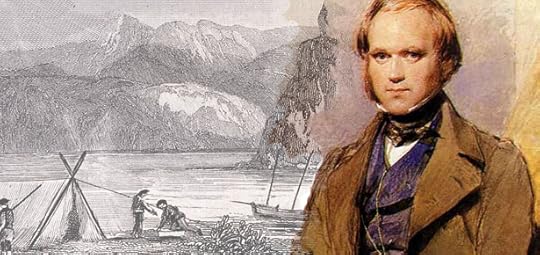
It might sound like a little dry to read a scientist's observations of an expedition, but that wasn't the case for me. Charles Darwin's Voyage of the Beagle provides a fascinating glimpse on Darwin’s early impressions of race, slavery, decolonization, the dichotomy of savagery and civilization, and the survival of the fittest (as well as his descriptions of a wide variety of fauna and stunning natural scenery). Very interesting!
It might sound like a little dry to read a scientist's observations of an expedition, but that wasn't the case for me. Charles Darwin's Voyage of the Beagle provides a fascinating glimpse on Darwin’s early impressions of race, slavery, decolonization, the dichotomy of savagery and civilization, and the survival of the fittest (as well as his descriptions of a wide variety of fauna and stunning natural scenery). Very interesting!

August 13, 2023
On October 24, 1831, 28 years before publishing his most remarkable work, The Origin of Species, the young Charles Darwin wrote the first lines of a diary he proposed to keep for five years.
In it, he would record his entire journey aboard the English ship HMS Beagle. At 22, the young man traveled to several countries in the southern hemisphere and left behind notes recording everyday facts, his observations, and analyses of what he witnessed.
The voyage on which Darwin took part – and, according to him, was the most important of his life – was the second of three expeditions led by the HMS Beagle. The trips updated coastal maps of Africa, Oceania, and South America - including Brazil.
Along his journey, Darwin faced storms, witnessed revolutions, survived an earthquake, explored uninhabited lands, and met indigenous groups. And above all, he collected many plant and animal specimens.
The Englishman's impressions of Brazil deserve to be highlighted. At the same time, Darwin was enchanted by the natural wonders here, and there was criticism of the Brazilians. "Brazilians, as far as my judgment goes, possess but a small amount of those qualities which give dignity to humanity," he wrote on July 3, 1832.
Darwin's voyage also marked his health. His diary records only a line about his illness in October 1834, when he fell ill in Mendoza, Argentina, likely infected by a kissing bug, the vector of Chagas disease.
In 1845, the Beagle could no longer sail for two years after the last expedition. It handed it over to the British Coast Guard, who used it as a military warehouse on the Roach River in Essex County (southeast England). The objective was to supervise the smuggling of products in the region, mainly brandy and tobacco. While it was a military outpost, the guards lived on board with their families. This outpost bothered the oyster fishermen – for them, the vessel in the middle of the channel made navigation difficult.
Then, in 1850, it moved the post to shore and remained anchored near the village of Paglesham until 1870, when the Beagle auctioned scrap metal to local merchants.
From then on, his trace was lost for more than a century. In 2000, Robert Prescott, one of the most prestigious marine archaeologists in the world, announced that he had found wood and ceramics, likely from the famous vessel, discovered under 5 meters of mud in a swamp near Potton Island.
It is one of Darwin's most exciting writings, especially for those not experts in zoology and biology. I highly recommend it to anyone interested in traveling to the places Darwin visited on the Beagle (the Canary Islands, Cape Verde Islands, South America, Cocos Islands, etc.) or in Darwin's thoughts.
In it, he would record his entire journey aboard the English ship HMS Beagle. At 22, the young man traveled to several countries in the southern hemisphere and left behind notes recording everyday facts, his observations, and analyses of what he witnessed.
The voyage on which Darwin took part – and, according to him, was the most important of his life – was the second of three expeditions led by the HMS Beagle. The trips updated coastal maps of Africa, Oceania, and South America - including Brazil.
Along his journey, Darwin faced storms, witnessed revolutions, survived an earthquake, explored uninhabited lands, and met indigenous groups. And above all, he collected many plant and animal specimens.
The Englishman's impressions of Brazil deserve to be highlighted. At the same time, Darwin was enchanted by the natural wonders here, and there was criticism of the Brazilians. "Brazilians, as far as my judgment goes, possess but a small amount of those qualities which give dignity to humanity," he wrote on July 3, 1832.
Darwin's voyage also marked his health. His diary records only a line about his illness in October 1834, when he fell ill in Mendoza, Argentina, likely infected by a kissing bug, the vector of Chagas disease.
In 1845, the Beagle could no longer sail for two years after the last expedition. It handed it over to the British Coast Guard, who used it as a military warehouse on the Roach River in Essex County (southeast England). The objective was to supervise the smuggling of products in the region, mainly brandy and tobacco. While it was a military outpost, the guards lived on board with their families. This outpost bothered the oyster fishermen – for them, the vessel in the middle of the channel made navigation difficult.
Then, in 1850, it moved the post to shore and remained anchored near the village of Paglesham until 1870, when the Beagle auctioned scrap metal to local merchants.
From then on, his trace was lost for more than a century. In 2000, Robert Prescott, one of the most prestigious marine archaeologists in the world, announced that he had found wood and ceramics, likely from the famous vessel, discovered under 5 meters of mud in a swamp near Potton Island.
It is one of Darwin's most exciting writings, especially for those not experts in zoology and biology. I highly recommend it to anyone interested in traveling to the places Darwin visited on the Beagle (the Canary Islands, Cape Verde Islands, South America, Cocos Islands, etc.) or in Darwin's thoughts.

January 2, 2025
I listened to the audio version, which was “included” with my Audible subscription. I probably wouldn’t have chosen it otherwise, but what a great choice it turned out to be. Darwin’s account far exceeded my expectations. Of course I knew the Beagle had taken him around the world and that the journey was of historic importance, but it didn’t necessarily follow that his account of the journey would be worth reading. It is!
The voyage took almost 5 years, of which Darwin spent far more time on land than at sea. The bulk of his time was spent in South America, with the Beagle visiting numerous locations in Brazil, Uruguay, Argentina, the Falkland Isles, Chile, and of course the Galapagos. This is not Darwin’s more famous book On the Origin of Species by Means of Natural Selection, (which I haven’t read) but that ground breaking text grew out of this journey, and you can tell from this book that he was beginning to formulate his ideas. Examining fossils in Patagonia, he marvels at how so many fossil species show intermediate characteristics between different modern species.
Of course his visit to the Galapagos is most well-known part of the voyage, with his famous observation about how the various islands had different species of finches, each adapted to the environment of their own island. He also noted that each island had a distinctive form of the Galapagos tortoise. Darwin was an extremely keen observer. Before this book I had been unaware of how much of an expert geologist he was. He also provides us with many fascinating descriptions of the societies he encountered. His account of the Yaghan natives of Tierra del Fuego is probably the second most famous part of the book, but he also describes the Tahitians and to some extent the Maori and the Australian aborigines. Generally he speaks in the restrained tones of the 19th century English gentleman, but sometimes his emotions burst through. Of his first day in Brazil he says, “The day has passed delightfully. Delight however is a weak term to describe the feelings of a naturalist, who for the first time has wandered by himself in a Brazilian forest.” By contrast he is revolted by slavery, describing how “the blood boils” at the sight of the cruelties inflicted.
I could go on for ever, but I’ll just say again how much I enjoyed this. I ought to say though that the audio version was 25 hours 17 minutes, so it does take a while. The previous audiobook I had was another long one, so I am up for something shorter next time.
The voyage took almost 5 years, of which Darwin spent far more time on land than at sea. The bulk of his time was spent in South America, with the Beagle visiting numerous locations in Brazil, Uruguay, Argentina, the Falkland Isles, Chile, and of course the Galapagos. This is not Darwin’s more famous book On the Origin of Species by Means of Natural Selection, (which I haven’t read) but that ground breaking text grew out of this journey, and you can tell from this book that he was beginning to formulate his ideas. Examining fossils in Patagonia, he marvels at how so many fossil species show intermediate characteristics between different modern species.
Of course his visit to the Galapagos is most well-known part of the voyage, with his famous observation about how the various islands had different species of finches, each adapted to the environment of their own island. He also noted that each island had a distinctive form of the Galapagos tortoise. Darwin was an extremely keen observer. Before this book I had been unaware of how much of an expert geologist he was. He also provides us with many fascinating descriptions of the societies he encountered. His account of the Yaghan natives of Tierra del Fuego is probably the second most famous part of the book, but he also describes the Tahitians and to some extent the Maori and the Australian aborigines. Generally he speaks in the restrained tones of the 19th century English gentleman, but sometimes his emotions burst through. Of his first day in Brazil he says, “The day has passed delightfully. Delight however is a weak term to describe the feelings of a naturalist, who for the first time has wandered by himself in a Brazilian forest.” By contrast he is revolted by slavery, describing how “the blood boils” at the sight of the cruelties inflicted.
I could go on for ever, but I’ll just say again how much I enjoyed this. I ought to say though that the audio version was 25 hours 17 minutes, so it does take a while. The previous audiobook I had was another long one, so I am up for something shorter next time.

September 23, 2013
To listen to this book review as a podcast, click below:
https://podcasts.apple.com/us/podcast...
__________________________
This book is really a rare treasure. Is there anything comparable? Here we have the very man whose ideas have revolutionized completely our understanding of life, writing with charm about the very voyage which sparked and shaped his thinking on the subject. And even if this book wasn’t a window into the mind of one of history’s most influential thinkers, it would still be entertaining on its own merits. Indeed, the public at the time thought so, making Darwin into a bestselling author.
I can hardly imagine how fascinating it would have been for a nineteenth-century Englishman to read about the strange men and beasts in different parts of the world. Today the world is so flat that almost nothing can surprise. But what this book has lost in exotic charm, it makes up for in historical interest; for now it is a fascinating glimpse into the world 150 years ago. Through Darwin’s narrative, we both look out at the world as it was, and into the mind of a charming man. And Darwin was charming. How strange it is that one of today’s most vicious debates—creationism vs. evolution, religion vs. science—was ignited by somebody as mild-mannered and likable as Mr. Darwin.
His most outstanding characteristic is his curiosity; everything Darwin sees, he wants to learn about: “In England any person fond of natural history enjoys in his walks a great advantage, by always having something to attract his attention; but in these fertile climates, teeming with life, the attractions are so numerous, that he is scarcely able to walk at all.”
As a result, the range of topics touched upon in this volume is extraordinary: botany, entomology, geology, anthropology, paleontology—the list goes on. Darwin collects and dissects every creature he can get his hands on; he examines fish, birds, mammals, insects, spiders. (Admittedly, the descriptions of anatomy and geological strata were often so detailed as to be tedious; Darwin, though brilliant, could be very dry.) In the course of these descriptions, Darwin also indulged in quite a bit of speculation, offering an interesting glimpse into both his thought-process and the state of science at that time. (I wonder if any edition includes follow-ups of these conjectures; it would’ve been interesting to see how they panned out.)
In retrospect, it is almost unsurprising that Darwin came up with his theory of evolution, for he encounters many things that are perplexing and inexplicable without it. Darwin finds fossils of extinct megafauna, and wonders how animals so large could have perished completely. He famously sees examples of one body-plan being adapted—like a theme and variations—in the finches of the Galapagos Islands. He also notes that the fauna and flora on those islands are related to, though quite different from, that in mainland South America. (If life there was created separately, why wouldn’t it be completely different? And if it was indeed descended from the animals on the mainland, what made it change?)
Darwin also sees abundant examples of convergent evolution—two distinct evolutionary lines producing similar results in similar circumstances—in Australia:
More surprisingly, Darwin finds that animals in isolated, uninhabited islands tend to have no fear of humans. And, strangely enough, an individual animal from these islands can’t even be taught to fear humans. Why, Darwin asks, does an individual bird in Europe fear humans, even though it's never been harmed by one? And why can’t you train an individual bird from an isolated island to fear humans? My favorite anecdote is of Darwin repeatedly throwing a turtle into the water, and having it return to him again and again—because, as Darwin notes, its natural predators are ocean-bound, and it has adapted to see the land as a place of safety. Darwin also manages to walk right up to an unwary fox and kill it with his geological hammer.
You can see how all of these experiences, so odd without a theory of evolution, become clear as day when Darwin’s ideas are embraced. Indeed, many are still textbook examples of the implications of his theories.
This book would have been extraordinary just for the light it sheds on Darwin’s early experiences in biology, but it contains many entertaining anecdotes as well. It is almost a Bildungsroman: we see the young Darwin, a respectable Englishman, astounded and amazed by the wide world. He encounters odd creatures, meets strange men, and travels through bizarre landscapes. And, like all good coming of age stories, he often makes a fool of himself:
At this point, I’m tempted to get carried away and include all of the many quotes that I liked. Darwin writes movingly about the horrors of slavery, he includes some vivid description of “savages,” and even tells some funny stories. But I’ll leave these quotes to be discovered by the curious reader, who, in his passage through the pages of this book, will indulge in a voyage far more comfortable than, and perhaps half as fascinating as, Darwin’s own. At the very least, the fortunate reader need not fear exotic diseases (Darwin suffered from ill health the rest of his days) or heed Darwin's warning to the potential traveler at sea: “If a person suffer much from sea-sickness, let him weigh it heavily in the balance. I speak from experience: it is no trifling evil which may be cured in a week."
https://podcasts.apple.com/us/podcast...
__________________________
This book is really a rare treasure. Is there anything comparable? Here we have the very man whose ideas have revolutionized completely our understanding of life, writing with charm about the very voyage which sparked and shaped his thinking on the subject. And even if this book wasn’t a window into the mind of one of history’s most influential thinkers, it would still be entertaining on its own merits. Indeed, the public at the time thought so, making Darwin into a bestselling author.
I can hardly imagine how fascinating it would have been for a nineteenth-century Englishman to read about the strange men and beasts in different parts of the world. Today the world is so flat that almost nothing can surprise. But what this book has lost in exotic charm, it makes up for in historical interest; for now it is a fascinating glimpse into the world 150 years ago. Through Darwin’s narrative, we both look out at the world as it was, and into the mind of a charming man. And Darwin was charming. How strange it is that one of today’s most vicious debates—creationism vs. evolution, religion vs. science—was ignited by somebody as mild-mannered and likable as Mr. Darwin.
His most outstanding characteristic is his curiosity; everything Darwin sees, he wants to learn about: “In England any person fond of natural history enjoys in his walks a great advantage, by always having something to attract his attention; but in these fertile climates, teeming with life, the attractions are so numerous, that he is scarcely able to walk at all.”
As a result, the range of topics touched upon in this volume is extraordinary: botany, entomology, geology, anthropology, paleontology—the list goes on. Darwin collects and dissects every creature he can get his hands on; he examines fish, birds, mammals, insects, spiders. (Admittedly, the descriptions of anatomy and geological strata were often so detailed as to be tedious; Darwin, though brilliant, could be very dry.) In the course of these descriptions, Darwin also indulged in quite a bit of speculation, offering an interesting glimpse into both his thought-process and the state of science at that time. (I wonder if any edition includes follow-ups of these conjectures; it would’ve been interesting to see how they panned out.)
In retrospect, it is almost unsurprising that Darwin came up with his theory of evolution, for he encounters many things that are perplexing and inexplicable without it. Darwin finds fossils of extinct megafauna, and wonders how animals so large could have perished completely. He famously sees examples of one body-plan being adapted—like a theme and variations—in the finches of the Galapagos Islands. He also notes that the fauna and flora on those islands are related to, though quite different from, that in mainland South America. (If life there was created separately, why wouldn’t it be completely different? And if it was indeed descended from the animals on the mainland, what made it change?)
Darwin also sees abundant examples of convergent evolution—two distinct evolutionary lines producing similar results in similar circumstances—in Australia:
A little time before this I had been lying on a sunny bank, and was reflecting on the strange character of the animals in this country as compared with the rest of the world. An unbeliever in everything but his own reason might exclaim, ‘Two distinct Creators must have been at work; their object, however, has been the same & certainly the end in each case is complete.’
More surprisingly, Darwin finds that animals in isolated, uninhabited islands tend to have no fear of humans. And, strangely enough, an individual animal from these islands can’t even be taught to fear humans. Why, Darwin asks, does an individual bird in Europe fear humans, even though it's never been harmed by one? And why can’t you train an individual bird from an isolated island to fear humans? My favorite anecdote is of Darwin repeatedly throwing a turtle into the water, and having it return to him again and again—because, as Darwin notes, its natural predators are ocean-bound, and it has adapted to see the land as a place of safety. Darwin also manages to walk right up to an unwary fox and kill it with his geological hammer.
You can see how all of these experiences, so odd without a theory of evolution, become clear as day when Darwin’s ideas are embraced. Indeed, many are still textbook examples of the implications of his theories.
This book would have been extraordinary just for the light it sheds on Darwin’s early experiences in biology, but it contains many entertaining anecdotes as well. It is almost a Bildungsroman: we see the young Darwin, a respectable Englishman, astounded and amazed by the wide world. He encounters odd creatures, meets strange men, and travels through bizarre landscapes. And, like all good coming of age stories, he often makes a fool of himself:
The main difficulty in using either a lazo or bolas, is to ride so well, as to be able at full speed, and while suddenly turning about, to whirl them so steadily about the head, as to take aim: on foot any person would soon learn the art. One day, as I was amusing myself by galloping and whirling the balls round my head, by accident the free one struck a bush; and its revolving motion being thus destroyed, it immediately fell to the ground, and like magic caught one hind leg of my horse; the other ball was then jerked out of my hand, and the horse fairly secured. Luckily he was an old practiced animal, and knew what it meant; otherwise he would probably have kicked till he had thrown himself down. The Gauchos roared with laughter; they cried they had seen every sort of animal caught, but had never before seen a man caught by himself.
At this point, I’m tempted to get carried away and include all of the many quotes that I liked. Darwin writes movingly about the horrors of slavery, he includes some vivid description of “savages,” and even tells some funny stories. But I’ll leave these quotes to be discovered by the curious reader, who, in his passage through the pages of this book, will indulge in a voyage far more comfortable than, and perhaps half as fascinating as, Darwin’s own. At the very least, the fortunate reader need not fear exotic diseases (Darwin suffered from ill health the rest of his days) or heed Darwin's warning to the potential traveler at sea: “If a person suffer much from sea-sickness, let him weigh it heavily in the balance. I speak from experience: it is no trifling evil which may be cured in a week."

October 26, 2021
The Voyage of the Beagle written by Charles Darwin is a collection of his travel memoirs, from the time he was 22 to 27 years of age, during which period he circumnavigated the globe with the second expedition of the HMS Beagle (1831-1836).
This hardcover edition is a physically beautiful book with coated paper full of watercolor, lithographic, and line engraving illustrations of the places, cultures, and specimens Darwin collected during his voyage. There are also more recent photographs of the scenery and landscapes depicted in the book. While, as always, the historical illustrations tell a more meaningful story.
Darwin's written observations resemble those of a geologist, ecologist, and even anthropologist with only a few occasional observations of an evolutionary biologist. There were scarcely any substantial hints that this Naturalist would become the greatest evolutionary biologist to have ever lived.
Nevertheless, in the travel journals, there were indications that Darwin had already begun to formulate his opinions on evolution and God; by referring to Lamarck's idea that acquired characteristics are gradually inheritable, as speculations. Also, mocking a few citizens of Chilenos and "like a few in England who are a century behindhand" for being entirely satisfied with the belief that geological formations were the sole acts of God.
Even though the book is aesthetically pleasing to the eye, the lamp light reflected off the glossy paper, at a certain angle, was irritating for my eyes. Additionally, the numerous inserts of the Beagle's Captain, Robert Fitzroy, travel journals, and excerpts of Charles Darwin's other works throughout the book were a distraction and interrupted the flow of my read.
Throughout Darwin's five-year journey on the Beagle, it's evidently noticeable in his journals how he has developed as a scientist. However, this book is not at the level of Darwin's later monumental work On the Origins of Species (1859) in which he presented to the world, which I am aware of now, not only his theory of evolution but to what incredible degree his knowledge and comprehension of life had reached.
This hardcover edition is a physically beautiful book with coated paper full of watercolor, lithographic, and line engraving illustrations of the places, cultures, and specimens Darwin collected during his voyage. There are also more recent photographs of the scenery and landscapes depicted in the book. While, as always, the historical illustrations tell a more meaningful story.
Darwin's written observations resemble those of a geologist, ecologist, and even anthropologist with only a few occasional observations of an evolutionary biologist. There were scarcely any substantial hints that this Naturalist would become the greatest evolutionary biologist to have ever lived.
Nevertheless, in the travel journals, there were indications that Darwin had already begun to formulate his opinions on evolution and God; by referring to Lamarck's idea that acquired characteristics are gradually inheritable, as speculations. Also, mocking a few citizens of Chilenos and "like a few in England who are a century behindhand" for being entirely satisfied with the belief that geological formations were the sole acts of God.
Even though the book is aesthetically pleasing to the eye, the lamp light reflected off the glossy paper, at a certain angle, was irritating for my eyes. Additionally, the numerous inserts of the Beagle's Captain, Robert Fitzroy, travel journals, and excerpts of Charles Darwin's other works throughout the book were a distraction and interrupted the flow of my read.
Throughout Darwin's five-year journey on the Beagle, it's evidently noticeable in his journals how he has developed as a scientist. However, this book is not at the level of Darwin's later monumental work On the Origins of Species (1859) in which he presented to the world, which I am aware of now, not only his theory of evolution but to what incredible degree his knowledge and comprehension of life had reached.

October 28, 2022
Charles Darwin set sail onboard the HMS Beagle on the 27th of December, 1831 and didn’t return to England until the 2nd of October, 1836. An accounting of this endeavor’s observations and discoveries was first published in 1839 as “Charles Darwin’s Journal and Remarks.” It was so popular that it was republished in 1845, this time as “Charles Darwin’s Journal of Researches,” and then again in 1905 as “The Voyage of the Beagle.”
Rather than digressing into some long winded synopsis of a book that has been Goodreads reviewed over 500 times, I am going to limit myself to just three elements that caught my attention (you’re welcome):
One. Even though Darwin’s theory of natural selection was far from being fully formulated and articulated (see On the Origin of Species, 1859), the fingerprints of species mutability (read: Evolution) are all over this book. For example:
“…Chionis alba [the snowy sheathbill] is an inhabitant of the Antarctic regions. It feeds on seaweed and shells on the tidal rocks. Although not webfooted, from some unaccountable habit it is frequently met with far out at sea. This small family of birds is one of those which, from its varied relations to other families, although at present offering only difficulties to the systematic naturalist, ultimately may assist in revealing the grand scheme common to the present and the past ages on which organized beings have been created.”
Two. Compared to his contemporaries, Darwin was quite politically progressive…
“…it is impossible to doubt but that the extreme liberalism of these countries must ultimately lead to good results. The very general toleration of foreign religions, the regard paid to the means of education, the freedom of the press, the facilities offered to all foreigners and especially, as I am bound to add, to everyone professing the humblest pretensions to science, should be recollected with gratitude by those who have visited Spanish South America.”
And Three. Darwin was undeniably a staunch opponent of slavery. His abolitionist assertions are reiterated over and over again throughout Voyage of the Beagle—so much so that I had a hard time choosing just one example…
“On the 19th of August we finally left the shores of Brazil. I thank God, I shall never again visit a slave-country. To this day, if I hear a distant scream, it recalls with painful vividness my feelings, when passing a house near Pernambuco, I heard the most pitiable moans, and could not but suspect that some poor slave was being tortured, yet knew that I was as powerless as a child even to remonstrate.”
To call Charles Darwin a “naturalist” is a time-saving summation—otherwise every biographer would have to write: biologist, geologist, anthropologist, biochemist, ecologist, paleontologist, botanist, zoologist, climatologist, ichthyologist, volcanologist, ornithologist, ethnologist, primatologist, etc., etc., etc.. All of these vocations are abundantly evident here; making this one of the best reads in history for science nerds (like me!).
Rather than digressing into some long winded synopsis of a book that has been Goodreads reviewed over 500 times, I am going to limit myself to just three elements that caught my attention (you’re welcome):
One. Even though Darwin’s theory of natural selection was far from being fully formulated and articulated (see On the Origin of Species, 1859), the fingerprints of species mutability (read: Evolution) are all over this book. For example:
“…Chionis alba [the snowy sheathbill] is an inhabitant of the Antarctic regions. It feeds on seaweed and shells on the tidal rocks. Although not webfooted, from some unaccountable habit it is frequently met with far out at sea. This small family of birds is one of those which, from its varied relations to other families, although at present offering only difficulties to the systematic naturalist, ultimately may assist in revealing the grand scheme common to the present and the past ages on which organized beings have been created.”
Two. Compared to his contemporaries, Darwin was quite politically progressive…
“…it is impossible to doubt but that the extreme liberalism of these countries must ultimately lead to good results. The very general toleration of foreign religions, the regard paid to the means of education, the freedom of the press, the facilities offered to all foreigners and especially, as I am bound to add, to everyone professing the humblest pretensions to science, should be recollected with gratitude by those who have visited Spanish South America.”
And Three. Darwin was undeniably a staunch opponent of slavery. His abolitionist assertions are reiterated over and over again throughout Voyage of the Beagle—so much so that I had a hard time choosing just one example…
“On the 19th of August we finally left the shores of Brazil. I thank God, I shall never again visit a slave-country. To this day, if I hear a distant scream, it recalls with painful vividness my feelings, when passing a house near Pernambuco, I heard the most pitiable moans, and could not but suspect that some poor slave was being tortured, yet knew that I was as powerless as a child even to remonstrate.”
To call Charles Darwin a “naturalist” is a time-saving summation—otherwise every biographer would have to write: biologist, geologist, anthropologist, biochemist, ecologist, paleontologist, botanist, zoologist, climatologist, ichthyologist, volcanologist, ornithologist, ethnologist, primatologist, etc., etc., etc.. All of these vocations are abundantly evident here; making this one of the best reads in history for science nerds (like me!).

June 18, 2023
There are plenty of reviews of this charming book on Goodreads, so I will not rant about it any more than absolutely necessary. Let me just express my astonishment at how interesting and instantly readable this book is. Never expected such a charming text from the man-icon Charles Darwin.
l loved his all encompassing curiosity. No object, creature or custom is too small or too insignificant to be included in his notes from the travels of the Beagle, which Darwin boarded as young curious naturalist and left five years later as a distinguished scientist. He is astounded and amazed by the wide world. He encounters odd creatures, meets strange men, and travels through bizarre landscapes and reflects in his journal among others on the nature of the plankton, fish, birds, mammals, insects, spiders, whales, reptiles, weather, geology, traditions, people and their hospitality.
It is the strangest thing to follow his remarks, theories and explorations before, what today is common knowledge. Before his own theory of evolution, before the theory of extinction of large mammals, before plate tectonics, origins of volcanoes, creation of coral reefs and islands, and so much more.
His curiosity and so apparent sense of wonder are contagious. My paperback edition unfortunately doesn’t contain notes and maps, which I would’ve very much appreciated. But most charming Mr Darwin, so pleased to make your acquaintance.
l loved his all encompassing curiosity. No object, creature or custom is too small or too insignificant to be included in his notes from the travels of the Beagle, which Darwin boarded as young curious naturalist and left five years later as a distinguished scientist. He is astounded and amazed by the wide world. He encounters odd creatures, meets strange men, and travels through bizarre landscapes and reflects in his journal among others on the nature of the plankton, fish, birds, mammals, insects, spiders, whales, reptiles, weather, geology, traditions, people and their hospitality.
It is the strangest thing to follow his remarks, theories and explorations before, what today is common knowledge. Before his own theory of evolution, before the theory of extinction of large mammals, before plate tectonics, origins of volcanoes, creation of coral reefs and islands, and so much more.
His curiosity and so apparent sense of wonder are contagious. My paperback edition unfortunately doesn’t contain notes and maps, which I would’ve very much appreciated. But most charming Mr Darwin, so pleased to make your acquaintance.

August 18, 2008
The Beagle was sent on a surveying mission by the Royal Navy; initially it was intended to last three years but it was extended to five and the ship circumnavigated the globe. The captain, Fitzroy, wanted a companion on the voyage and through a convoluted series of events, ended up with a youthful Darwin along, which so annoyed the official ship's Naturalist who was also the surgeon (as was common), that he resigned and left at the first port of call, part way across the Atlantic. Fortunately another surgeon was appointed at the same port.
Very little of what Darwin wrote actually talks about the oceans...this is because he was no great sailor and spent most of his time aboard acutely seasick. Which, in turn, is why Darwin contrived to spend three out of five years on land!
All this and more is discussed in an excellent introduction to this edition, which has printed the 1st edition, abridging Darwin's journal by approx. 1/3, however. I'm not sure how to feel about that; have I been saved from really dull stuff that would have made what is a pretty lively book a chore to read? Or have I missed out on some interesting material? Weirdly, having made this 1/3 chop, the original Naval orders for the mission are included along with Fitzroy's essay attempting to reconcile the Bible (specifically the Deluge i.e. the Noah story) with contemporary geology. Even more weirdly both of these appendices are worthwhile. The mission orders are very practical and sensible and as specific as practicable and not, as I imagined they would be, vague and bureaucratic.
Fitzroy's essay reminded me of the kind of thing that went on in Oxford and Cambridge in the Middle Ages, where people devoted themselves primarily to attempting to reconcile reality with the Classical philosophers and the Bible, deploying a lot of casuistry and not much else for the most part. (Roger Bacon being a notable exception and look what happened to him - yep, locked up by he Church for practising black magic.) The fact is that even at the time of Beagle's voyage, it was clear that the Earth had to be orders of magnitude older than the historical record (with Genesis taken at face value) suggested and literal belief in the Bible, particularly the Old Testament, was crumbling amongst the educated scientists. Christianity itself was still axiomatic for most, however and Darwin no exception at the time as cannot be mistaken from this book.
Getting back to Darwin and his book, the Voyage is a rarely dull, often vivacious account not only of the flora and fauna Darwin encounters but also of the geology, people and societies he encounters, too, the latter providing most of the funny and dramatic moments, of which there are many. I cannot recommend it to people uninterested in geology and biology, however. Readers who cannot cope with such entries as a detailed theory of the formation of coral reefs (still considered correct as far as it goes, I believe) will get bogged down quite often. That said, anyone who has successfully waded through The Origin of Species will find this an easy ride by comparison.
Darwin displays an interesting blend of progressive attitudes (e.g. anti-slavery) and typical-of-his-day Victorian Christian notions (e.g. Christian Western Europe is the pinnacle of human societies) whilst observing on the many different nations and cultures he encounters alongside the wildlife and geology. Apparently the people of Tierra Del Feugo are the "least improved" on the planet.
What you won't find here is a theory of evolution, the question of the origin of species arising only a few times and then very obliquely and in passing.
In conclusion, nowhere near as important as Origin of Species but much more fun to read.
Very little of what Darwin wrote actually talks about the oceans...this is because he was no great sailor and spent most of his time aboard acutely seasick. Which, in turn, is why Darwin contrived to spend three out of five years on land!
All this and more is discussed in an excellent introduction to this edition, which has printed the 1st edition, abridging Darwin's journal by approx. 1/3, however. I'm not sure how to feel about that; have I been saved from really dull stuff that would have made what is a pretty lively book a chore to read? Or have I missed out on some interesting material? Weirdly, having made this 1/3 chop, the original Naval orders for the mission are included along with Fitzroy's essay attempting to reconcile the Bible (specifically the Deluge i.e. the Noah story) with contemporary geology. Even more weirdly both of these appendices are worthwhile. The mission orders are very practical and sensible and as specific as practicable and not, as I imagined they would be, vague and bureaucratic.
Fitzroy's essay reminded me of the kind of thing that went on in Oxford and Cambridge in the Middle Ages, where people devoted themselves primarily to attempting to reconcile reality with the Classical philosophers and the Bible, deploying a lot of casuistry and not much else for the most part. (Roger Bacon being a notable exception and look what happened to him - yep, locked up by he Church for practising black magic.) The fact is that even at the time of Beagle's voyage, it was clear that the Earth had to be orders of magnitude older than the historical record (with Genesis taken at face value) suggested and literal belief in the Bible, particularly the Old Testament, was crumbling amongst the educated scientists. Christianity itself was still axiomatic for most, however and Darwin no exception at the time as cannot be mistaken from this book.
Getting back to Darwin and his book, the Voyage is a rarely dull, often vivacious account not only of the flora and fauna Darwin encounters but also of the geology, people and societies he encounters, too, the latter providing most of the funny and dramatic moments, of which there are many. I cannot recommend it to people uninterested in geology and biology, however. Readers who cannot cope with such entries as a detailed theory of the formation of coral reefs (still considered correct as far as it goes, I believe) will get bogged down quite often. That said, anyone who has successfully waded through The Origin of Species will find this an easy ride by comparison.
Darwin displays an interesting blend of progressive attitudes (e.g. anti-slavery) and typical-of-his-day Victorian Christian notions (e.g. Christian Western Europe is the pinnacle of human societies) whilst observing on the many different nations and cultures he encounters alongside the wildlife and geology. Apparently the people of Tierra Del Feugo are the "least improved" on the planet.
What you won't find here is a theory of evolution, the question of the origin of species arising only a few times and then very obliquely and in passing.
In conclusion, nowhere near as important as Origin of Species but much more fun to read.

March 8, 2019
This book is Charles Darwin's journal of his 5-year voyage on the HMS Beagle.

This journey marked the second of Captain Fitzroy and the Beagle but the first for 22-year-old Charles Darwin, who had decided to become a naturalist like Alexander von Humboldt.
Darwin had stopped studying medicine and refused to become a priest so the persuasion of an uncle was necessary for Charles' father to allow (and fund) the journey in the first place. But he did.
They went from England to Tenerife, Cape Verde, Bahia, Rio de Janeiro, Montevideo, the Falkland Islands, Valparaiso, Lima, the Galápagos Islands, before leaving South America to sail on to New Zealand, Sidney, Hobart (Tasmania) and King George's Sound in Australia, Cocos Island, Mauritius, Cape Town, then back to Bahia, Cape Verde and the Azores before returning to England.

Thus, they were on quite a tight schedule which explains why Darwin's time on the Galápagos was cut short - an important detail because he made his most profound discoveries there that later resulted in his most famous work and if he had had more time, maybe he would have remembered to label those finches and/or keep at least one tortoise for his studies (but more of that in my review for The Origin of Species).
While the Beagle was a relatively small ship, Darwin nevertheless filled her to the brim with specimen - some sailors getting enthused and helping him, much to the dismay of a few others.

He always kept a meticulous journal that served as a diary as much as a study book where he jutted down all his observations. Thus, we can not only see, while reading this book now, what he discovered but also what his thought process was like. We read of him being severely seasick at first, his fascination with nature, we find out that he was anti-slavery (sadly, not for the same pure reasons Humboldt had), what he thought of certain people he was with or encountered along the way.
We also see the influence of his paternal grandfather Erasmus Darwin, who had laid a few of the foundations of Darwin's theories just like Humboldt had.
A note on Darwin's view of indiginous people. Certainly, some thoughts he wrote down are cringeworthy from today's perspective and were especially disappointing after initially learning that he was anti-slavery. However, for a man of his day and age (not counting the unapologetic anomaly that was Humboldt) he was very progressive.
What I loved above all else was that we get to revel in Darwin's beautiful writing style that brings to life the sea, jungles and various animals and plants. He had a way of transporting the reader to the places he had been to and I felt as if I was making the journey with him while reading this.
This vivid writing style, that made this journal appear almost like a novel, really surprised and delighted me as I had not expected it. In fact, I got so swept up in the narrative that I found myself sitting at the edge of my seat whenever Darwin's musings showed him getting close to the scientific truth but not quite despite me knowing that it would take him a little longer yet.
A fantastic feat and I love that my edition shows sketches by Darwin himself as well as paintings of landscapes he's been to or animals (now extinct) that he encountered. However, for all those wanting the highlights of the journey, I can also recommend the audio version narrated by Dawkins which I listened to simultaneously (I know, ME endorsing an abridged version, the scandal)! ;)
This journey marked the second of Captain Fitzroy and the Beagle but the first for 22-year-old Charles Darwin, who had decided to become a naturalist like Alexander von Humboldt.
Darwin had stopped studying medicine and refused to become a priest so the persuasion of an uncle was necessary for Charles' father to allow (and fund) the journey in the first place. But he did.
They went from England to Tenerife, Cape Verde, Bahia, Rio de Janeiro, Montevideo, the Falkland Islands, Valparaiso, Lima, the Galápagos Islands, before leaving South America to sail on to New Zealand, Sidney, Hobart (Tasmania) and King George's Sound in Australia, Cocos Island, Mauritius, Cape Town, then back to Bahia, Cape Verde and the Azores before returning to England.
Thus, they were on quite a tight schedule which explains why Darwin's time on the Galápagos was cut short - an important detail because he made his most profound discoveries there that later resulted in his most famous work and if he had had more time, maybe he would have remembered to label those finches and/or keep at least one tortoise for his studies (but more of that in my review for The Origin of Species).
While the Beagle was a relatively small ship, Darwin nevertheless filled her to the brim with specimen - some sailors getting enthused and helping him, much to the dismay of a few others.
He always kept a meticulous journal that served as a diary as much as a study book where he jutted down all his observations. Thus, we can not only see, while reading this book now, what he discovered but also what his thought process was like. We read of him being severely seasick at first, his fascination with nature, we find out that he was anti-slavery (sadly, not for the same pure reasons Humboldt had), what he thought of certain people he was with or encountered along the way.
We also see the influence of his paternal grandfather Erasmus Darwin, who had laid a few of the foundations of Darwin's theories just like Humboldt had.
A note on Darwin's view of indiginous people. Certainly, some thoughts he wrote down are cringeworthy from today's perspective and were especially disappointing after initially learning that he was anti-slavery. However, for a man of his day and age (not counting the unapologetic anomaly that was Humboldt) he was very progressive.
What I loved above all else was that we get to revel in Darwin's beautiful writing style that brings to life the sea, jungles and various animals and plants. He had a way of transporting the reader to the places he had been to and I felt as if I was making the journey with him while reading this.
This vivid writing style, that made this journal appear almost like a novel, really surprised and delighted me as I had not expected it. In fact, I got so swept up in the narrative that I found myself sitting at the edge of my seat whenever Darwin's musings showed him getting close to the scientific truth but not quite despite me knowing that it would take him a little longer yet.
A fantastic feat and I love that my edition shows sketches by Darwin himself as well as paintings of landscapes he's been to or animals (now extinct) that he encountered. However, for all those wanting the highlights of the journey, I can also recommend the audio version narrated by Dawkins which I listened to simultaneously (I know, ME endorsing an abridged version, the scandal)! ;)

January 31, 2017
Darwin's own account of the, now almost legendary, five year voyage of the Beagle is an entertaining, illuminating and fascinating read. Darwin writes with such enthusiasm that it's difficult not to be swept up in the journey and the remarkable things he witnessed and studied as he circumnavigated the globe.
The only thing I found slightly disappointing was Darwin's attitude towards some of the peoples (or, as he refers to them, 'savages') he interacted with on his trek. Darwin was famously anti-slavery but it becomes painfully clear in the reading of this book that he did not object to slavery because he saw slaves as equal human beings suffering a horrific injustice but rather he objected to slavery in the same way somebody today might object to cruelty to animals. He took pity on slaves but he still regarded them as lesser beings. His views may have been progressive for his time but, perhaps unrealistically, I'd hoped for more.
The only thing I found slightly disappointing was Darwin's attitude towards some of the peoples (or, as he refers to them, 'savages') he interacted with on his trek. Darwin was famously anti-slavery but it becomes painfully clear in the reading of this book that he did not object to slavery because he saw slaves as equal human beings suffering a horrific injustice but rather he objected to slavery in the same way somebody today might object to cruelty to animals. He took pity on slaves but he still regarded them as lesser beings. His views may have been progressive for his time but, perhaps unrealistically, I'd hoped for more.

January 18, 2026
5 Stars for The Voyage of the Beagle (audiobook) by Charles Darwin read by David Case.
This is a wonderful treat to be able to get a glimpse into Charles Darwin’s discoveries. This was a really unique opportunity to see a young scientific mind at work. The twenty two year old Darwin was able to make his way on board the Beagle and he wrote down everything that he saw and after the five year voyage was done he ultimately changed how we see and understand the world.
This is a wonderful treat to be able to get a glimpse into Charles Darwin’s discoveries. This was a really unique opportunity to see a young scientific mind at work. The twenty two year old Darwin was able to make his way on board the Beagle and he wrote down everything that he saw and after the five year voyage was done he ultimately changed how we see and understand the world.

August 25, 2022
This book is a journal Charles Darwin made as he traveled the world on a ship. One can see how his observations from this journey led to his contribution to science.
This book is not my genre at all. I have a little rule that if a book is mentioned in one of the books I am reading I will read that mentioned book. It is a nice way for me to step out of my boundaries. I have read some terrific books that I would have never read. Unfortunately a book like this comes across my path too. This was a chore for me to read. It was so dry. I went lengths of reading time with just reading the words but not having them sinking in. I thought about putting a big DNF on this book and I never do that. I believe the problem was that it was too repetitive. How many times can Darwin point out a bird and be impressed by it? I will say if you are a zoologist or someone that enjoys nature this book is right up your alley. It was too factual for me and it never entertained me. I was bored throughout.
This review is not a fair review at all. It is not aimed for me at all and it showed in my enjoyment. I think I was expecting a little more contemplation about what the author was seeing. That really did not come until the end of the book and I was checked out by then. If you are into science and that type of stuff you might find this book fascinating. If you are like me and that doesn't do much for you and you are reading for escapism this book is not for you at all.
This book is not my genre at all. I have a little rule that if a book is mentioned in one of the books I am reading I will read that mentioned book. It is a nice way for me to step out of my boundaries. I have read some terrific books that I would have never read. Unfortunately a book like this comes across my path too. This was a chore for me to read. It was so dry. I went lengths of reading time with just reading the words but not having them sinking in. I thought about putting a big DNF on this book and I never do that. I believe the problem was that it was too repetitive. How many times can Darwin point out a bird and be impressed by it? I will say if you are a zoologist or someone that enjoys nature this book is right up your alley. It was too factual for me and it never entertained me. I was bored throughout.
This review is not a fair review at all. It is not aimed for me at all and it showed in my enjoyment. I think I was expecting a little more contemplation about what the author was seeing. That really did not come until the end of the book and I was checked out by then. If you are into science and that type of stuff you might find this book fascinating. If you are like me and that doesn't do much for you and you are reading for escapism this book is not for you at all.

November 14, 2015
This is not the correct edition. Mine is published by Recorded Books, read by John Franklin Robbins, & is just selections from the book, about 4.5 hours long, with additional material - a really good biography. It was short & to the point. It's been a long time since I last read this, but I think I liked it in audio better than in print. Darwin's prose is perfect for being read out loud.
Everyone always talks about Darwin's theories on evolution which makes it tough to remember that he was an all around natural philosopher. These selections actually contained more on geology & the natives than evolution. Of course, he uses both to support the theory of evolution & since we're all fairly familiar with it now, these selections really help show just how much knowledge he brought to bear.
He was incredibly well read & didn't come up with his theories in a void. He constantly refers to the work of others, many of them natural philosophers who had studied other areas & species. He & Wallace were just the first to unify this knowledge.
It was really interesting to listen to his opinions on native peoples, especially on slavery which was rampant around the world at the time. He mentions how children were bought for a mere button from some of the native tribes. As horrifying as that was, he was more horrified by how slaves were broken by their Spanish masters & yet he was remote when he described how some natives would cannibalize their old women for food before they would eat their dogs. If nothing else, this is an excellent reminder of how far the world has come in a mere 150 years.
I can't recommend this highly enough. After listening to this, I'm going to have to listen to the full book some time soon.
Everyone always talks about Darwin's theories on evolution which makes it tough to remember that he was an all around natural philosopher. These selections actually contained more on geology & the natives than evolution. Of course, he uses both to support the theory of evolution & since we're all fairly familiar with it now, these selections really help show just how much knowledge he brought to bear.
He was incredibly well read & didn't come up with his theories in a void. He constantly refers to the work of others, many of them natural philosophers who had studied other areas & species. He & Wallace were just the first to unify this knowledge.
It was really interesting to listen to his opinions on native peoples, especially on slavery which was rampant around the world at the time. He mentions how children were bought for a mere button from some of the native tribes. As horrifying as that was, he was more horrified by how slaves were broken by their Spanish masters & yet he was remote when he described how some natives would cannibalize their old women for food before they would eat their dogs. If nothing else, this is an excellent reminder of how far the world has come in a mere 150 years.
I can't recommend this highly enough. After listening to this, I'm going to have to listen to the full book some time soon.

January 28, 2009
Commanders in the Royal Navy could not socialize with their crew. They ate their meals alone-- then they met with the officers on board ship. This took it's mental toll on the ship's Captain's and so they were allowed a "civil" companion-- someone from outside the Navy who would be under their command but was not part of the crew. Captain Fitz Roy (age 26), a Nobleman and a passionate Naturalist chose Charles Darwin (a wealthy, upper-class Naturalist "enthusiast") to be his companion aboard the HMS Beagle for the five year voyage to map Patagonia and Tierra del Feugo and circumnavigate the globe.
What I found most interesting about this book was how easy it is to read and enjoy. It is the edited journal of Charles Darwin during his voyage on HMS Beagle, yes, but it reads like a travel channel show with Darwin as your host. This is not the old, "Origin of Species" Darwin with his long white beard and noble, wisely appearance. This is just-out-of-college Darwin, looking for adventure. He's 24 years old, he knows nothing, he wants to see everything, he is good natured, idealistic, and full of questions. It's like he's on a cruise ship (which happens to be a ship-of-war) and he only has a few days at each port to "party" and see all the sights ("Naturalist gone Wild!"). What makes the journals enjoyable is that this is not a young man who thinks he has all the answers. He is aware of his inexperience and unfamiliarity with every surrounding he finds himself in and relies on interviews with others (locals, magistrates, natives, scientists) to fill in the blanks. He is smart. He accumulates facts. He writes them down. He expresses brief opinions. He gathers more facts. He has adventures. And here and there a light clicks on. We see something start to dawn on him. He doesn't put it together (that will come years later) but all the information he needs to formulate his later theories is here-- he just doesn't see it. But we do! And that's the fun of reading these journals: watching this young man grow up on this five year voyage. What makes this an extraordinary read is that we know how it ends. This book is a little like watching The Sixth Sense a second time (after you know the twist) to watch all the clues missed the first time-- knowing that years later-- Darwin will see the twist.
What I found most interesting about this book was how easy it is to read and enjoy. It is the edited journal of Charles Darwin during his voyage on HMS Beagle, yes, but it reads like a travel channel show with Darwin as your host. This is not the old, "Origin of Species" Darwin with his long white beard and noble, wisely appearance. This is just-out-of-college Darwin, looking for adventure. He's 24 years old, he knows nothing, he wants to see everything, he is good natured, idealistic, and full of questions. It's like he's on a cruise ship (which happens to be a ship-of-war) and he only has a few days at each port to "party" and see all the sights ("Naturalist gone Wild!"). What makes the journals enjoyable is that this is not a young man who thinks he has all the answers. He is aware of his inexperience and unfamiliarity with every surrounding he finds himself in and relies on interviews with others (locals, magistrates, natives, scientists) to fill in the blanks. He is smart. He accumulates facts. He writes them down. He expresses brief opinions. He gathers more facts. He has adventures. And here and there a light clicks on. We see something start to dawn on him. He doesn't put it together (that will come years later) but all the information he needs to formulate his later theories is here-- he just doesn't see it. But we do! And that's the fun of reading these journals: watching this young man grow up on this five year voyage. What makes this an extraordinary read is that we know how it ends. This book is a little like watching The Sixth Sense a second time (after you know the twist) to watch all the clues missed the first time-- knowing that years later-- Darwin will see the twist.

July 2, 2021
I am pretty sure I read this as a teenager, about 40 years ago, and liked it, mainly for the illustrations. I decided to have another look…

Places Darwin visits with the HMS Beagle:
1. Chapter I: St. Jago–Cape de Verde Islands (St. Paul's Rocks, Fernando Noronha, 20 Feb.., Bahia, or San Salvador, Brazil, 29 Feb..)
2. Chapter II: Rio de Janeiro
3. Chapter III: Maldonado
4. Chapter IV: Río Negro to Bahia Blanca
5. Chapter V: Bahía Blanca
6. Chapter VI: Bahia Blanca to Buenos Aires
7. Chapter VII: Buenos Aires to St. Fe
8. Chapter VIII: Banda Oriental
9. Chapter IX: Patagonia
10. Chapter X: Santa Cruz–Patagonia
11. Chapter XI: Tierra del Fuego
12. Chapter XII: The Falkland Islands
13. Chapter XIII: Strait of Magellan
14. Chapter XIV: Central Chile
15. Chapter XV: Chiloe and Chonos Islands
16. Chapter XVI: Chiloe and Concepcion
17. Chapter XVII: Passage of Cordillera
18. Chapter XVIII: Northern Chile and Peru
19. Chapter XIX: Galapagos Archipelago
20. Chapter XX: Tahiti and New Zealand
21. Chapter XXI: Australia (Van Diemen's Land)
22. Chapter XXII: Coral Formations (Keeling or Cocos Islands)
23. Chapter XXIII: Mauritius to England
I read the first few chapters, then skimmed my way roughly to the middle of the book, looking at the illustrations and reading a bit here and there. The writing doesn‘t feel as dry and dated as I feared, but all together this didn‘t grab me enough to properly read it in full. That‘s just me though. I recommend reading the Goodreads review of my buddy Trish…
P.S.: I found a fun website detailing the voyage, with an interactive map: https://www.arcgis.com/apps/MapTour/i...
Places Darwin visits with the HMS Beagle:
1. Chapter I: St. Jago–Cape de Verde Islands (St. Paul's Rocks, Fernando Noronha, 20 Feb.., Bahia, or San Salvador, Brazil, 29 Feb..)
2. Chapter II: Rio de Janeiro
3. Chapter III: Maldonado
4. Chapter IV: Río Negro to Bahia Blanca
5. Chapter V: Bahía Blanca
6. Chapter VI: Bahia Blanca to Buenos Aires
7. Chapter VII: Buenos Aires to St. Fe
8. Chapter VIII: Banda Oriental
9. Chapter IX: Patagonia
10. Chapter X: Santa Cruz–Patagonia
11. Chapter XI: Tierra del Fuego
12. Chapter XII: The Falkland Islands
13. Chapter XIII: Strait of Magellan
14. Chapter XIV: Central Chile
15. Chapter XV: Chiloe and Chonos Islands
16. Chapter XVI: Chiloe and Concepcion
17. Chapter XVII: Passage of Cordillera
18. Chapter XVIII: Northern Chile and Peru
19. Chapter XIX: Galapagos Archipelago
20. Chapter XX: Tahiti and New Zealand
21. Chapter XXI: Australia (Van Diemen's Land)
22. Chapter XXII: Coral Formations (Keeling or Cocos Islands)
23. Chapter XXIII: Mauritius to England
I read the first few chapters, then skimmed my way roughly to the middle of the book, looking at the illustrations and reading a bit here and there. The writing doesn‘t feel as dry and dated as I feared, but all together this didn‘t grab me enough to properly read it in full. That‘s just me though. I recommend reading the Goodreads review of my buddy Trish…
P.S.: I found a fun website detailing the voyage, with an interactive map: https://www.arcgis.com/apps/MapTour/i...

September 8, 2023
A metà tra saggio naturalistico e diario di viaggio, la difficoltà principale è arrivare fino in fondo essenzialmente perché Darwin scrive per sé stesso. Le sue osservazioni, specie quelle sulla fauna e flora delle isole Galapagos, saranno fondamentali nell'impostare l'origine delle specie. La sua spiegazione sull'origine degli atolli è quella tuttora in uso. Bellisimi i disegni di quest'edizione pubblicata agli inizi del 1900 realizzati, credo, dal lui in persona. Dal racconto emerge il tratto di una persona liberale che prende posizione contro la schiavitù e il maltrattamento a qualsiasi livello, scientificamente curiosa e critica. Ma soprattutto immensamente innamorata della Natura e dei suoi fenomeni e già conscia del pericolo che l'uomo rappresenta per l'ambiente.

March 15, 2017
Der Erfinder der Evolutionstheorie, Charles Darwin, tritt mit diesem Werk in die Fußstapfen seines großen Vorbilds, Alexander von Humboldt.
Literarisch etwas begabter als der deutsche Naturforscher beschreibt er hier stellenweise sehr detailliert, was Flora und Fauna in Südamerika, Galapagos, Tahiti, Australien sowie Mauritius
zu bieten hat.
Für den Leser ist die Ausdrucksweise, wie sie Mitte des 19. Jahrhunderts üblich war und hier von Darwin praktiziert wird, etwas anstrengend, was die Qualität dieser Reisebeschreibung jedoch nicht schmälert.
Literarisch etwas begabter als der deutsche Naturforscher beschreibt er hier stellenweise sehr detailliert, was Flora und Fauna in Südamerika, Galapagos, Tahiti, Australien sowie Mauritius
zu bieten hat.
Für den Leser ist die Ausdrucksweise, wie sie Mitte des 19. Jahrhunderts üblich war und hier von Darwin praktiziert wird, etwas anstrengend, was die Qualität dieser Reisebeschreibung jedoch nicht schmälert.

April 8, 2026
I listened to the 25-hour "free" audiobook on Audible. It took me an entire year to finish. Here are my thoughts:
Darwin was truly a visionary. His keen observations of the natural world, and of humanity within it, remain impressive even today, nearly 200 years later.
Darwin held a firm anti-slavery stance. He was curious about the people he encountered on the voyage, and at times respectful toward indigenous people. Yet he had his limits: his worldview remained unmistakably rooted in that of a European colonizer.
What strikes me most is a sadness I haven’t anticipated: reading Darwin's vivid descriptions of the natural world makes the loss of biodiversity since his time feel worse.
Darwin was truly a visionary. His keen observations of the natural world, and of humanity within it, remain impressive even today, nearly 200 years later.
Darwin held a firm anti-slavery stance. He was curious about the people he encountered on the voyage, and at times respectful toward indigenous people. Yet he had his limits: his worldview remained unmistakably rooted in that of a European colonizer.
What strikes me most is a sadness I haven’t anticipated: reading Darwin's vivid descriptions of the natural world makes the loss of biodiversity since his time feel worse.

July 23, 2017
Eine lange Reise hat ihr Ende gefunden. :-)
Nach der Lektüre von "Das Floß der Medusa", bei dem es regelrecht abartig zuging, war ich vom gesitteten und angenehmen Klima auf der Beagle sehr angetan (natürlich wird hier die Geschichte von einem Mitglied der privilegierteren Gesellschaftsschicht erzählt). In fünf Jahren Reise verschlug es Charles Darwin in die entlegensten Winkel und Ecken der Erde, wo er sich auf alles stürzte, was im in die Hände und vor die Augen kam, um es zu beschreiben, zu vermessen, zu katalogisieren und zu sammeln. Bei über 600 Seiten werden die Beschreibungen zu Flora und Fauna, zu Gestein und Mineralien, zu Einheimische, Riten, Bräuche und Sprache für den Nicht-Wissenschaftler teilweise ein bisschen mühsam zu lesen. Auch gibt es ein paar Diskrepanzen, die mir immer wieder aufgefallen sind: so schreibt Darwin zwar überwiegend in einem herzlichen, warmen und sympathischen Ton (vor allem wenn er sich und seine Begeisterung für ein Objekt beschreibt), und man nimmt ihm seinen Eifer und die Freude, die er am Forschen hat, auch ab. Gleichzeitig kommt aber auch immer wieder diese typisch englische Über-Herren-Rasse-Eigenschaft durch, wenn er zum Beispiel sämtliche Naturvölker und die indigene Bevölkerung von Süd- und Nordamerika nie anders als "Wilde" beschreibt, die in der Mehrzahl eine hässliche Erscheinung abgeben, deren Sprache grässlich klingt und die vor allem darauf aus sind, die Reisenenden entweder einen Kopf kürzer zu machen, oder sie zu übertölpeln bzw. zu bestehlen. An einer Stelle wird sogar ein Indianderjunge zum Preis einer Perle gekauft. Gleichzeitig beschreibt er aber auch das Elend, mit dem die jeweilige Urbevölkerung von den Einwanderern drangsaliert und ausgemerzt wurde und wird. Darwin beschreibt seinen Abscheu, als ein Gouverneur in einer südamerikanischen Stadt mit Begeisterung auf "Indianerjagd" geht und eine ganze Gruppe davon auslöscht. Mit den Tieren ist es ähnlich: Pferde und Rinder gibt es im Überfluss, deshalb werden Stuten generell geschlachtet, weil kein wahrer "Mann" auf einem weiblichen Pferd reitet - sind dann aber die männlichen Pferde erschöpft oder verletzt, werden sie nicht geschont / gepflegt, sondern entsorgt.
So geht es munter weiter, über Stock und Stein, bis sich die Reise dem Ende nähert und man wieder die Heimat ansteuert. Dieses Buch ist eine Fundgrube für Liebhaber von Reiseliteratur, aber ab und an durch die schiere Menge an naturwissenschaftlichen Daten auch ein bisschen zäh zu lesen.
Nach der Lektüre von "Das Floß der Medusa", bei dem es regelrecht abartig zuging, war ich vom gesitteten und angenehmen Klima auf der Beagle sehr angetan (natürlich wird hier die Geschichte von einem Mitglied der privilegierteren Gesellschaftsschicht erzählt). In fünf Jahren Reise verschlug es Charles Darwin in die entlegensten Winkel und Ecken der Erde, wo er sich auf alles stürzte, was im in die Hände und vor die Augen kam, um es zu beschreiben, zu vermessen, zu katalogisieren und zu sammeln. Bei über 600 Seiten werden die Beschreibungen zu Flora und Fauna, zu Gestein und Mineralien, zu Einheimische, Riten, Bräuche und Sprache für den Nicht-Wissenschaftler teilweise ein bisschen mühsam zu lesen. Auch gibt es ein paar Diskrepanzen, die mir immer wieder aufgefallen sind: so schreibt Darwin zwar überwiegend in einem herzlichen, warmen und sympathischen Ton (vor allem wenn er sich und seine Begeisterung für ein Objekt beschreibt), und man nimmt ihm seinen Eifer und die Freude, die er am Forschen hat, auch ab. Gleichzeitig kommt aber auch immer wieder diese typisch englische Über-Herren-Rasse-Eigenschaft durch, wenn er zum Beispiel sämtliche Naturvölker und die indigene Bevölkerung von Süd- und Nordamerika nie anders als "Wilde" beschreibt, die in der Mehrzahl eine hässliche Erscheinung abgeben, deren Sprache grässlich klingt und die vor allem darauf aus sind, die Reisenenden entweder einen Kopf kürzer zu machen, oder sie zu übertölpeln bzw. zu bestehlen. An einer Stelle wird sogar ein Indianderjunge zum Preis einer Perle gekauft. Gleichzeitig beschreibt er aber auch das Elend, mit dem die jeweilige Urbevölkerung von den Einwanderern drangsaliert und ausgemerzt wurde und wird. Darwin beschreibt seinen Abscheu, als ein Gouverneur in einer südamerikanischen Stadt mit Begeisterung auf "Indianerjagd" geht und eine ganze Gruppe davon auslöscht. Mit den Tieren ist es ähnlich: Pferde und Rinder gibt es im Überfluss, deshalb werden Stuten generell geschlachtet, weil kein wahrer "Mann" auf einem weiblichen Pferd reitet - sind dann aber die männlichen Pferde erschöpft oder verletzt, werden sie nicht geschont / gepflegt, sondern entsorgt.
So geht es munter weiter, über Stock und Stein, bis sich die Reise dem Ende nähert und man wieder die Heimat ansteuert. Dieses Buch ist eine Fundgrube für Liebhaber von Reiseliteratur, aber ab und an durch die schiere Menge an naturwissenschaftlichen Daten auch ein bisschen zäh zu lesen.

May 18, 2010
For a long time (too long), it looked like it was going to take me longer to read this book than it took the Beagle to sail around the world. Darwin was a brilliant man, and a fine writer. But the genre of naturalistic travel writings is just not for me. In a similar vein, I've also read some of Thoreau's travel writings, a less brilliant man but a better writer, and came away with the same feeling.
In brief sections, I would find the book brilliant. But those brief sections would not be enough to drive me forward. So instead, I had to plunge through longer pieces at a time, and the brilliance somehow turns to a dull slog. After not too long, I simply lose interest in how many varieties of insect he found on that other side of some obscure mountain in South America. Yeah, and I know that's my failing.
In college, this book was required for several Freshman english classes, but thankfully not for mine. If I had been forced to read this in a couple of weeks or less, I might simply have dropped out.
I did find it interesting to see how thoroughly Darwin, who was otherwise extremely open minded, clung to the notion of British nobility and how it contrasted with savagery. I can almost see how the Social Darwinists would come to pervert his theories, because his notions about the superiority of civilization, and of British civilization in particular, seem to point in that direction (even if they are strictly speaking irrelevant).
The other thing that impressed me in this book was his acceptance that extinction is just part of the way of things. He blithely mentions the inevitable extinction of species at several points in the book. What a sharp contrast to the progressive environmentalists who seem to want to put an end to all extinctions, and think that it is somehow our duty.
I wish I had liked this book more. There's not a whole lot that I found wrong with it, given what it is and what it was trying to do. On that score, it is exceptionally good. The only problem is, I guess, that I just don't like that sort of book, and I refuse to learn my lesson and stop reading them.
In brief sections, I would find the book brilliant. But those brief sections would not be enough to drive me forward. So instead, I had to plunge through longer pieces at a time, and the brilliance somehow turns to a dull slog. After not too long, I simply lose interest in how many varieties of insect he found on that other side of some obscure mountain in South America. Yeah, and I know that's my failing.
In college, this book was required for several Freshman english classes, but thankfully not for mine. If I had been forced to read this in a couple of weeks or less, I might simply have dropped out.
I did find it interesting to see how thoroughly Darwin, who was otherwise extremely open minded, clung to the notion of British nobility and how it contrasted with savagery. I can almost see how the Social Darwinists would come to pervert his theories, because his notions about the superiority of civilization, and of British civilization in particular, seem to point in that direction (even if they are strictly speaking irrelevant).
The other thing that impressed me in this book was his acceptance that extinction is just part of the way of things. He blithely mentions the inevitable extinction of species at several points in the book. What a sharp contrast to the progressive environmentalists who seem to want to put an end to all extinctions, and think that it is somehow our duty.
I wish I had liked this book more. There's not a whole lot that I found wrong with it, given what it is and what it was trying to do. On that score, it is exceptionally good. The only problem is, I guess, that I just don't like that sort of book, and I refuse to learn my lesson and stop reading them.

February 11, 2018
The narrative takes you back in time and to some remotest and fantastic places on the planet. The most vivid description is given to that part the author enjoyed greatly himself, namely, Tierra del Fuego. Other places visited by Darwin on his voyage were judged as bleak, undeserving and weren't given a fair chance to impress him, which may be held against the author by the reader.

October 20, 2013
Per comprendere il valore di questo libro è opportuno dimenticare il Darwin barbuto e severo ritratto sui frontespizi e sulle enciclopedie: quando si imbarcò sul Beagle aveva soltanto ventidue anni. Non era autore di pubblicazioni scientifiche, non era celebre, non aveva idee rivoluzionarie; era un giovane inglese orgoglioso della sua patria e della sua cultura, fervente antischiavista, innamorato della magnificenza del Messiah di Händel (con il trasporto tipico della sua età) e dei libri di Alexander von Humboldt. La sua formazione era stata disordinata e discontinua, in parte frenata dalla sua passione semiclandestina per le scienze naturali. Non portò mai a termine gli studi di medicina, e quando accettò di partecipare alla spedizione del Beagle era ormai indirizzato, secondo il desiderio del padre, verso la carriera ecclesiastica. Non posso fare a meno di ammirare questo periodo della sua vita così ricco di studi, interessi e distrazioni; è stato meraviglioso riconoscerne le tracce nella sua scrittura.
Il capitolo diciassettesimo, dedicato alle isole Galapagos, è indicibilmente commovente. Si tratta, com'è facile immaginare, di uno dei capitoli più marcatamente scientifici; eppure mai come in quelle pagine si avverte che al giovane Darwin manca letteralmente il fiato per lo stupore; prova a dissimulare il suo smarrimento proponendo spiegazioni necessariamente errate, ben diverse da quella che, vent'anni più tardi, la sua ragione e il suo intuito lo porteranno a esporre nella sua opera più celebre.
Non mi sognavo nemmeno che isole distanti cinquanta o sessanta miglia, a portata di vista l'una dall'altra, fatte della medesima roccia, sottoposte al medesimo clima, e che s'innalzano quasi alla medesima altezza potessero ospitare faune e flore diverse; eppure vedremo che è proprio così. È destino di moltissimi viaggiatori di non scoprire ciò che è più interessante di una località se non quando se ne sono allontanati in fretta, ma forse devo considerarmi fortunato per aver raccolto materiale sufficiente a stabilire questa singolarissima circostanza nella distribuzione degli esseri viventi.
Immagino che Darwin scrisse quel capitolo con la mente rivolta all'enigma offerto da quel luogo, più attento all'importanza della sua esperienza professionale che alla forma espressiva: eppure quelle pagine sono, secondo me, tra le più poetiche. Si tratta di una qualità costante e indiscutibile di questo libro: i commenti sulla natura dei luoghi visitati, le descrizioni particolareggiate di specie animali e di formazioni geologiche, gli elenchi, le digressioni racchiudono tutta la passione di Darwin per il suo lavoro.
Le sue esperienze di viaggio sono più che avvincenti: attraversare i paesi dell'America latina non era un'impresa da poco. Ricorderò sempre la descrizione della confusione politica in Perù, dove quattro comandanti si contendevano il governo del paese:
L'altro giorno, per l'anniversario dell'indipendenza, venne celebrata una messa solenne e il presidente prendeva parte al sacramento. Durante il «Te Deum laudamus» i reggimenti non spiegarono la bandiera peruviana, ma ne inalberarono invece una nera con un teschio.
In Argentina il governo aveva affidato al generale Rosas il compito di sterminare le ultime tribù di indigeni, che infastidivano i proprietari terrieri. Darwin racconta diversi episodi emblematici della crudeltà di questa impresa, ma ricorderò soprattutto questo aneddoto, l'immagine di una fuga disperata:
[...] il cacicco balzò su un [...] vecchio cavallo bianco, prendendo con sé il figlioletto: il cavallo non aveva né sella né briglie. Per sfuggire alle fucilate, l’indiano cavalcava nella maniera caratteristica della sua gente, vale a dire con un braccio intorno al collo del cavallo e una gamba soltanto sul dorso. Così sospeso su un fianco del cavallo, gli carezzava la testa e gli parlava. Gli inseguitori fecero ogni sforzo per raggiungerlo; il comandante cambiò tre volte cavallo, ma invano: il vecchio indiano e il figlio fuggirono e furono liberi.
Il racconto di Darwin mi ha conquistato, con le tante notti trascorse nel silenzio della pianura, i pericoli dei ghiacciai sulle Ande, i deserti; i villaggi sperduti tormentati da guerre, povertà, schiavismo, terremoti; i fiumi inesplorati, abbandonati a malincuore per proseguire il lungo viaggio in nave; la costante presenza degli indigeni, rivelata da tracce silenziose: i resti di un accampamento, di un fuoco appena spento; impronte di piedi nudi nel fango. Ogni tappa del viaggio è occasione di riflessioni sulla storia naturale, di incontri o addii - e la qualità narrativa di questo libro è tale che spesso ho avuto la sensazione di poter conoscere quelle persone: coloni e indigeni, missionari, soldati e guerriglieri. La curiosità mi ha spinto a cercare come potevo i libri citati nelle note (soprattutto racconti di esploratori e di naufraghi dei secoli precedenti), a leggere la storia di quei luoghi e - cosa meravigliosa, affascinante e per me del tutto nuova - a informarmi sulle piante e gli animali descritti.
Alla sera piovve a dirotto; arrivati alla casa di posta il padrone ci disse che se non avevamo un passaporto regolare dovevamo andarcene, perché i ladri erano così numerosi che lui non si fidava di nessuno. Tuttavia quando lesse il mio passaporto che cominciava: "El naturalista don Carlos", il suo rispetto e la sua gentilezza non ebbero limiti così come non ne avevano avuti i sospetti di poco prima. Credo che né lui né i suoi compaesani avessero idea di cosa fosse un naturalista, ma probabilmente il mio titolo non perdette per questo di valore.
Il viaggio durò cinque anni; poco dopo il rientro in Inghilterra, e per il resto della sua vita, Darwin fu fortemente debilitato da una malattia cronica che lo costrinse a limitare i suoi rapporti sociali. Posso soltanto immaginare quale valore avesse per lui il ricordo delle sue passate fatiche, di un viaggio così avventuroso e fortunato dal punto di vista scientifico e umano - un privilegio riservato a pochi, senza dubbio. Scrisse questo libro trascurando l'ordine cronologico e dedicando ogni capitolo alle esperienze vissute in una particolare regione geografica, mostrando una sensibilità più prossima agli intenti di un narratore che alle esigenze di uno scienziato. Leggendo queste pagine si può intuire la sua personalità di quegli anni: intraprendente, piacevolmente ricca di contraddizioni, di pensieri diversi e liberi.
Il capitolo diciassettesimo, dedicato alle isole Galapagos, è indicibilmente commovente. Si tratta, com'è facile immaginare, di uno dei capitoli più marcatamente scientifici; eppure mai come in quelle pagine si avverte che al giovane Darwin manca letteralmente il fiato per lo stupore; prova a dissimulare il suo smarrimento proponendo spiegazioni necessariamente errate, ben diverse da quella che, vent'anni più tardi, la sua ragione e il suo intuito lo porteranno a esporre nella sua opera più celebre.
Non mi sognavo nemmeno che isole distanti cinquanta o sessanta miglia, a portata di vista l'una dall'altra, fatte della medesima roccia, sottoposte al medesimo clima, e che s'innalzano quasi alla medesima altezza potessero ospitare faune e flore diverse; eppure vedremo che è proprio così. È destino di moltissimi viaggiatori di non scoprire ciò che è più interessante di una località se non quando se ne sono allontanati in fretta, ma forse devo considerarmi fortunato per aver raccolto materiale sufficiente a stabilire questa singolarissima circostanza nella distribuzione degli esseri viventi.
Immagino che Darwin scrisse quel capitolo con la mente rivolta all'enigma offerto da quel luogo, più attento all'importanza della sua esperienza professionale che alla forma espressiva: eppure quelle pagine sono, secondo me, tra le più poetiche. Si tratta di una qualità costante e indiscutibile di questo libro: i commenti sulla natura dei luoghi visitati, le descrizioni particolareggiate di specie animali e di formazioni geologiche, gli elenchi, le digressioni racchiudono tutta la passione di Darwin per il suo lavoro.
Le sue esperienze di viaggio sono più che avvincenti: attraversare i paesi dell'America latina non era un'impresa da poco. Ricorderò sempre la descrizione della confusione politica in Perù, dove quattro comandanti si contendevano il governo del paese:
L'altro giorno, per l'anniversario dell'indipendenza, venne celebrata una messa solenne e il presidente prendeva parte al sacramento. Durante il «Te Deum laudamus» i reggimenti non spiegarono la bandiera peruviana, ma ne inalberarono invece una nera con un teschio.
In Argentina il governo aveva affidato al generale Rosas il compito di sterminare le ultime tribù di indigeni, che infastidivano i proprietari terrieri. Darwin racconta diversi episodi emblematici della crudeltà di questa impresa, ma ricorderò soprattutto questo aneddoto, l'immagine di una fuga disperata:
[...] il cacicco balzò su un [...] vecchio cavallo bianco, prendendo con sé il figlioletto: il cavallo non aveva né sella né briglie. Per sfuggire alle fucilate, l’indiano cavalcava nella maniera caratteristica della sua gente, vale a dire con un braccio intorno al collo del cavallo e una gamba soltanto sul dorso. Così sospeso su un fianco del cavallo, gli carezzava la testa e gli parlava. Gli inseguitori fecero ogni sforzo per raggiungerlo; il comandante cambiò tre volte cavallo, ma invano: il vecchio indiano e il figlio fuggirono e furono liberi.
Il racconto di Darwin mi ha conquistato, con le tante notti trascorse nel silenzio della pianura, i pericoli dei ghiacciai sulle Ande, i deserti; i villaggi sperduti tormentati da guerre, povertà, schiavismo, terremoti; i fiumi inesplorati, abbandonati a malincuore per proseguire il lungo viaggio in nave; la costante presenza degli indigeni, rivelata da tracce silenziose: i resti di un accampamento, di un fuoco appena spento; impronte di piedi nudi nel fango. Ogni tappa del viaggio è occasione di riflessioni sulla storia naturale, di incontri o addii - e la qualità narrativa di questo libro è tale che spesso ho avuto la sensazione di poter conoscere quelle persone: coloni e indigeni, missionari, soldati e guerriglieri. La curiosità mi ha spinto a cercare come potevo i libri citati nelle note (soprattutto racconti di esploratori e di naufraghi dei secoli precedenti), a leggere la storia di quei luoghi e - cosa meravigliosa, affascinante e per me del tutto nuova - a informarmi sulle piante e gli animali descritti.
Alla sera piovve a dirotto; arrivati alla casa di posta il padrone ci disse che se non avevamo un passaporto regolare dovevamo andarcene, perché i ladri erano così numerosi che lui non si fidava di nessuno. Tuttavia quando lesse il mio passaporto che cominciava: "El naturalista don Carlos", il suo rispetto e la sua gentilezza non ebbero limiti così come non ne avevano avuti i sospetti di poco prima. Credo che né lui né i suoi compaesani avessero idea di cosa fosse un naturalista, ma probabilmente il mio titolo non perdette per questo di valore.
Il viaggio durò cinque anni; poco dopo il rientro in Inghilterra, e per il resto della sua vita, Darwin fu fortemente debilitato da una malattia cronica che lo costrinse a limitare i suoi rapporti sociali. Posso soltanto immaginare quale valore avesse per lui il ricordo delle sue passate fatiche, di un viaggio così avventuroso e fortunato dal punto di vista scientifico e umano - un privilegio riservato a pochi, senza dubbio. Scrisse questo libro trascurando l'ordine cronologico e dedicando ogni capitolo alle esperienze vissute in una particolare regione geografica, mostrando una sensibilità più prossima agli intenti di un narratore che alle esigenze di uno scienziato. Leggendo queste pagine si può intuire la sua personalità di quegli anni: intraprendente, piacevolmente ricca di contraddizioni, di pensieri diversi e liberi.

June 20, 2020
The great Carl Sagan once said, “What an astonishing thing a book is. It's a flat object made from a tree with flexible parts on which are imprinted lots of funny dark squiggles. But one glance at it and you're inside the mind of another person, maybe somebody dead for thousands of years. Across the millennia, an author is speaking clearly and silently inside your head, directly to you." That's what The Voyage of the Beagle felt like to me, spending 25 hours along side the greatest naturalist the world has ever seen, Charles Darwin, as he sailed around the world and examined the flora and fauna in the places the HMS Beagle landed. Darwin is at the top of my list of admired humans and it was just fantastic to take this historic trip with him, a trip that inspired the book that changed the world.
I listened to the audiobook which was expertly read by Barnaby Edwards. My only regret is that I did not listen to this prior to my August 2018 visit to his house, the Down House in Downe England. The second story of the house was made in to a museum and it featured many of the items Darwin brought back from his HMS Beagle exploration as well as a re-creation of his room on the Beagle complete with a hologram of the great man himself!
The Voyage of the Beagle covers the five year journey and Darwin gives a detailed account of the people and geography of each location visited in addition to the flora and fauna which you would expect a young naturalist (he was only 22 when the voyage started) to spend a lot of time studying. Many of the locations he visited were still relatively wild. Through his observations and discoveries you get the feel of how great a mind Darwin had. His writing is profound, and easily digestible by a layman such as myself.
He did much more exploration on horseback over land than I was aware of and he spent a significant amount of time exploring the South American continent which was being colonized by the Spanish. He spent time exploring a number of continent's islands, most noteworthy of which were the Galapagos. The accounts of the extermination and enslavement of native South Americans by the Spanish was shocking and disturbing. Much of his writings about the treatment of the natives and the fauna by the colonizers was depressing, and he went so far as to predict many of the native animal species and native humans would soon be extinct as the Europeans spread throughout the continent. He was correct.
Another interesting port of call was in Australia. His observations of its unique fauna and prediction of the future greatness of the continent were particularly interesting.
The book ends on a high note with Darwin eloquently summarizing his experience. This is after going on a rant about slavery after visiting Brazil for a second time after sailing around Africa. He recalls some of the inhumane scenes he witnessed on his journey and after setting sail from Brazil ("a land of moral debasement") vows to never again visit a slave country.
In short this was an utterly fascinating and enjoyable travelogue written by one of the greatest scientists to walk the planet. I will look for a nice hard copy of this book at a used bookstore as I would love to have this book lying around the house to revisit again and again.
I listened to the audiobook which was expertly read by Barnaby Edwards. My only regret is that I did not listen to this prior to my August 2018 visit to his house, the Down House in Downe England. The second story of the house was made in to a museum and it featured many of the items Darwin brought back from his HMS Beagle exploration as well as a re-creation of his room on the Beagle complete with a hologram of the great man himself!
The Voyage of the Beagle covers the five year journey and Darwin gives a detailed account of the people and geography of each location visited in addition to the flora and fauna which you would expect a young naturalist (he was only 22 when the voyage started) to spend a lot of time studying. Many of the locations he visited were still relatively wild. Through his observations and discoveries you get the feel of how great a mind Darwin had. His writing is profound, and easily digestible by a layman such as myself.
He did much more exploration on horseback over land than I was aware of and he spent a significant amount of time exploring the South American continent which was being colonized by the Spanish. He spent time exploring a number of continent's islands, most noteworthy of which were the Galapagos. The accounts of the extermination and enslavement of native South Americans by the Spanish was shocking and disturbing. Much of his writings about the treatment of the natives and the fauna by the colonizers was depressing, and he went so far as to predict many of the native animal species and native humans would soon be extinct as the Europeans spread throughout the continent. He was correct.
Another interesting port of call was in Australia. His observations of its unique fauna and prediction of the future greatness of the continent were particularly interesting.
The book ends on a high note with Darwin eloquently summarizing his experience. This is after going on a rant about slavery after visiting Brazil for a second time after sailing around Africa. He recalls some of the inhumane scenes he witnessed on his journey and after setting sail from Brazil ("a land of moral debasement") vows to never again visit a slave country.
In short this was an utterly fascinating and enjoyable travelogue written by one of the greatest scientists to walk the planet. I will look for a nice hard copy of this book at a used bookstore as I would love to have this book lying around the house to revisit again and again.

April 16, 2009
Upon matriculating into Loyola University's MA/PhD program in philosophy during the late summer of 1980, I was assigned to Bill Ellos as his teaching assistant. Bill, a deep-cover Jesuit, had come to Chicago from Washington State, having done some work there with educational film as well as being a university professor. His interests were diverse to say the least. His doctoral dissertation from the Pontifical Institute in Rome was on Wittgenstein, but the work he had me doing originally was mostly in medical ethics, sociobiology and the foundations of evolutionary theory. That meant a lot of reading for me, both of Wittgenstein and of Darwin and Wallace. Most of it was close reading in that he expected me to follow themes, to create indices relevant to his work. This was fine. I often was learning more from the research assistantship than from classwork. Besides, we only met occasionally and he got me assistantships every summer so I could literally take the work to Michigan and the beach in the warm months.
Darwin's account of his researches while berthed as a gentleman scientist on HMS Beagle works as a travel book, but it is punctuated by the kinds of observations which led to his theory of natural selection. As such, it is recommended to anyone interested in the subject as an introduction to it. Too often we learn "science" from textbooks, presented as if received from on high as holy writ, and do not learn how the knowledge was obtained, the interpretations derived. "The Voyage of the Beagle" gives some of that background in a highly entertaining, even adventurous, fashion.
The theory of evolution was not, of course, new with Darwin. One finds such speculation in the ancient Greeks. Kant's "Anthropology" speculates about our descent from simian ancestors. What Darwin did was to hypothesize an agent, natural selection, for such evolution and provide detailed data supporting his theory.
I was fortunate to have four years and three summers of research assistantships at Loyola and doubly fortunate to be assigned, at least half-time, to Bill Ellos during most if not all of that period. Although I never took one of his medical ethics courses, he probably cared for my intellectual and professional development more than any other at the university. It was he who not only got me to read most of Wittgenstein, but also encouraged me to deliver a paper on the man and later publish it. It was he who got me interested and involved in fields beyond the ken of contemporary academic philosophy. Yet, throughout, I always had the sense that he was adjusting my work assignments somewhat, taking into account my own interests, potential interests and needs, not just his own.
Towards the end of these assignments I learned that one was expected to spend about 16-20 hours weekly on one's assistantship. I was amazed, having spent more like 40 hours weekly at the flat rate of pay we all received. Still, it was worth it. I would have done much of it for Bill and for myself without recompense.
At the end, after orals and after reaching the absolute limit on assistantship assignments, Bill took me out for dinner and conversation at a fine restaurant in Evanston. He needn't have done that, but the human touch, so characteristic of Bill, was much appreciated.
I have no idea where Bill is now.
Darwin's account of his researches while berthed as a gentleman scientist on HMS Beagle works as a travel book, but it is punctuated by the kinds of observations which led to his theory of natural selection. As such, it is recommended to anyone interested in the subject as an introduction to it. Too often we learn "science" from textbooks, presented as if received from on high as holy writ, and do not learn how the knowledge was obtained, the interpretations derived. "The Voyage of the Beagle" gives some of that background in a highly entertaining, even adventurous, fashion.
The theory of evolution was not, of course, new with Darwin. One finds such speculation in the ancient Greeks. Kant's "Anthropology" speculates about our descent from simian ancestors. What Darwin did was to hypothesize an agent, natural selection, for such evolution and provide detailed data supporting his theory.
I was fortunate to have four years and three summers of research assistantships at Loyola and doubly fortunate to be assigned, at least half-time, to Bill Ellos during most if not all of that period. Although I never took one of his medical ethics courses, he probably cared for my intellectual and professional development more than any other at the university. It was he who not only got me to read most of Wittgenstein, but also encouraged me to deliver a paper on the man and later publish it. It was he who got me interested and involved in fields beyond the ken of contemporary academic philosophy. Yet, throughout, I always had the sense that he was adjusting my work assignments somewhat, taking into account my own interests, potential interests and needs, not just his own.
Towards the end of these assignments I learned that one was expected to spend about 16-20 hours weekly on one's assistantship. I was amazed, having spent more like 40 hours weekly at the flat rate of pay we all received. Still, it was worth it. I would have done much of it for Bill and for myself without recompense.
At the end, after orals and after reaching the absolute limit on assistantship assignments, Bill took me out for dinner and conversation at a fine restaurant in Evanston. He needn't have done that, but the human touch, so characteristic of Bill, was much appreciated.
I have no idea where Bill is now.

May 12, 2024
I’ve had a very good reading year – exactly the opposite of the kind the world is having – and memories of this book remind me why it was so good. Imagine being a wealthy, curious young man given the opportunity to spend a few years just taking stock of the worlds you would encounter? Far from being a dry, nineteenth-century treatise, Charles Darwin’s account of his time on The Beagle is, at times, humorous, joyful, and above all, a celebration of the promise of youth.
We read to escape, to learn, to experience. We read to be surprised, confirmed, and just because we like it. We like to read about how people in bygone ages thought about the same things we do. We love narrative, poetry, prose, and didactically-preprepared anticipation. We get all of that in Darwin’s descriptions of travels, observations, and scientific skill while he spends extended periods of time exploring on the east and west coasts of South America, often with the support of local landowners and leaders. He collected enough information to keep him busy in his later studies for years.
His descriptions of riding and getting caught in storm with a group of locals in the Argentinian Pampas:
We read to escape, to learn, to experience. We read to be surprised, confirmed, and just because we like it. We like to read about how people in bygone ages thought about the same things we do. We love narrative, poetry, prose, and didactically-preprepared anticipation. We get all of that in Darwin’s descriptions of travels, observations, and scientific skill while he spends extended periods of time exploring on the east and west coasts of South America, often with the support of local landowners and leaders. He collected enough information to keep him busy in his later studies for years.
His descriptions of riding and getting caught in storm with a group of locals in the Argentinian Pampas:
We were here told a fact, which I would not have credited, if I had not had partly ocular proof of it; namely, that, during the previous night, hail as large as small apples, and extremely hard, had fallen with such violence, as to kill the greater number of the wild animals…To the deadpan summation of the aftermath of the storm, through a discussion of culinary superiority:
Having finished our dinner of hail-stricken meat…The Gauchos differ in their opinion, whether the Jaguar is good eating, but are unanimous in saying that cat is excellent.Darwin’s description of a return from an outing in Chile, however, demonstrates his literary prowess could rival his scientific insight:
The country became more and more barren. In the valleys there was scarcely sufficient water for any irrigation; and the intermediate land was quite bare, not supporting even goats. In the spring, after the winter showers, a thin pasture rapidly springs up, and cattle are then driven down from the Cordillera to graze for a short time. It is curious to observe how the seeds of the grass and other plants seem to accommodate themselves, as if by an acquired habit, to the quantity of rain which falls on different parts of the coast. One shower far northward at Copiapó produces as great an effect on the vegetation, as two at Guasco, and as three or four in this district. At Valparaiso, a winter so dry as greatly to injure the pasture, would at Guasco produce the most unusual abundance.

August 2, 2024
A great book, with flaws typical of its period. However, this is mainly a comment on the book description. It says that is about Darwin’s SECOND voyage.
No. It was the second voyage of the ship Beagle on a mission of exploration. And accurately determining of the exact latitude and longitude of anything in the sea or the coast that would be of nautical importance. A demanding job. The first captain got out of it by suicide, and that was the first voyage. Without Darwin.
No. It was the second voyage of the ship Beagle on a mission of exploration. And accurately determining of the exact latitude and longitude of anything in the sea or the coast that would be of nautical importance. A demanding job. The first captain got out of it by suicide, and that was the first voyage. Without Darwin.

May 21, 2008
What I wrote in my LJ while I was reading it.
_
So I've started reading The Voyage of the Beagle. I've only read a chapter or so so far, but it's very enjoyable. I just kind of wish I'd paid more attention to my geology classes in school. It's a lot more relaxed and not nearly as self-conscious and defensive as TOoS was. It's all along the lines of "Hi all! We arrived on Random Island today. The trees are pretty but the people didn't even give us coffee. Can you believe it?! Anyhoo, I found a rock that turned out to be bird shit, and a octopus spat in my face today. Yay! It was the happiest moment of my life. More tomorrow! Byeeee!"
Very adorable. He also keeps hitting things with his geological hammer.
_
I'm still reading the VotB as well, which really is a bit of an adventure novel, not in the least because it really reads like a diary, and because Darwin seems to have a healthy sense of humour about himself. Every other page he seems to make a fool of himself in some way or another. Also, he seems surprisingly humble and insecure in his naturalistic findings. He records and very tentatively makes links, but at this point most of the big work seems to be done by the people he sent his samples back to. He also really seems to fanboy Humboldt, to be a staunch abolitionist, and I am sure he really pissed FitzRoy off when he carried eight or nine dinosaur skeletons on board.
_
Also, another Darwin quote that I just read in the bath:
The captain at last said, he had one question to ask me, which he should be very much obliged if I would answer with all truth. I trembled to think how deeply scientific it would be: it was, "Whether the ladies of Buenos Ayres were not the handsomest in the world." I replied, like a renegade, "Charmingly so." He added, "I have one other question: Do ladies in any other part of the world wear such large combs?" I solemnly assured him that they did not. They were absolutely delighted. The captain exclaimed, "Look there! a man who has seen half the world says it is the case; we always thought so, but now we know it." My excellent judgment in combs and beauty procured me a most hospitable reception; the captain forced me to take his bed, and he would sleep on his recado.
This book is too fricking amusing.
____
Yet more Darwin, because I might as well keep you updated now.
We're in Patagonia and have just gone on an upriver hike/boatride to the Cordilleras. I've found out I read these books much like I read naval passages in Patrick O'Brian. It's not like I skip anything and I get the main gist and it makes sense while I'm reading, but I don't actually retain it all by a long, long, long shot. Impressions stay and I learn some new things if only through repetition, but a lot of it I lose again almost immediately. Darwin keeps referencing Jack Byron's accounts now and I feel so very guilty for not remembering a lot of these things.
So yes, aside from a series of clear impressions and a few remembered names for each region, there is disturbingly little I remember. Humboldt would have bitchslapped me long ago.
(At least I have the consolation that Darwin apparently always carried a few books with him to identify species with. That eases the sting a bit.)
Also, points to you, Wordsworth Editions, for not translating the French passages.
In any case, out of all the period accounts by naturalists that I've read so far, this is by far the most fun, the most entertaining, and the most readable. I'd recommend it to anyone who wants to play around with this natural science business, not in the least because Darwin shows so much of himself. Humboldt (much as I love him) only occasionally mentioned Bonpland and only very rarely himself. Darwin stays more in the tradition of; well, I'm tempted to say Stephen Maturin's journal. No romantic woes or anything, but scientific observations coupled with observations on the people he travels with coupled with "God, I'm so cold and wet and miserable and I just want to be shot of this place". It's nice. Also, animals are cute in this. From condors to spiders to foxes to armadillos. You get the feeling that if he'd known it, he would definitely have chosen "Boom de Yadda" as his personal theme song.
_
Ch 11 and 12 on the next leg of the journey with Darwin, leaving Patagonia and heading for Chile.
All I still want to remark upon on the Patagonian side (where he went on a very wide tangent on the heights of snow-lines and the descent of glaciers and his usual geological geekery and sort of lost me, though he did warn the reader they could skip this bit if they weren't interested, which is very civil in him), that apparently he's read all of the different accounts related to the loss of the Wager as well. Hee! He references Byron, Bulkeley and Cummins, and Anson! Be still, my squeeful heart.
Now we're in Valparaiso where *sings* the sky is blue, and all the leaves are green. The sun's as hot as a baked potato! And he probably feels like it's a shpadoinkel day.
And of course, fandoms cross again when he visits Cochrane's old hacienda of Quintero.
Also, this phrase just made me chortle: "...a relation of the great author Finis, who wrote all books!"
Oh Charlie, you dork. ^____^
_
Today in the life of Darwin.
Or rather, January 1835 in the life of Darwin.
Or more precisely, stuff what I just read in the bath.
Hokay, so we're still running around Chile visiting people, clambering through forests, and clocking animals with geological hammers in the time-honoured tradition of naturalists everywhere.
When... DISASTER! Earthquakes! Volcanoes erupting! Mayhem! Destruction! Death! And Darwin somehow has the gall to say this:
"From this circumstance Concepcion, although not so completely desolated, was a more terrible, and if I may so call it, picturesque sight."
Picturesque?! Picturesque? No, Darwin, you may not call it that. Idiota.
Anyway, this sets him off. Geology is his baby and there's now pages upon pages of gleeful rambling about fault lines and tectonic plates and the effect of time and islands raised and drowned etc etc.
Now there's two more chapters ahead of me inCochrane country Valparaiso and then heigh ho, off to the Galapagos to clock some finches, turtles and aquatic land animals.
_
Galapagos Chapter, everybody knows this.
_
Darwin. He's mopy and grumpy and really not liking Waimate, or anything about the south island of New Zealand at all, though most of New Zealand is getting shot down for being a bunch of war-crazy, ugly, uncivilized, filthy barbarians with ugly tattoos. He's not getting much work done and people keep randomly shooting at other people and he's in a funk. A deep funk. Stupid island. Stupid tattoos. Stupid orcs.
This in GREAT contrast to Tahiti which to him for just the little time he was there was heaven on earth. Everybody was friendly and smiling, there was food everywhere that tasted divine, the people were so much better looking than Westerners, and oh, he just adored the tattoos. I mean, he really really liked those Tahitian tattoos. Did he mention loving the tattoos yet? And how handsome people are? It must be the tattoos. He's not ready to say much in favour for against the missionaries there since he says he's read conflicting accounts by people who have been there for far, far longer than he has and therefore should know a lot better, but I think Darwin has left a tiny little piece of his heart there.
__
Hokay, I just had a bit of a longer reading session just now and finished the Voyage of the Beagle. By now I've sort of gotten used to reporting the good bits back to LJ here, so you try to keep them in your mind as you read on.
I was going to mention how some people at Waimate have partially redeemed New Zealand in his eyes, how very very mixed his impression of Australia was, I was going to go over his thoughts on atolls and barrier reefs (strangely uninteresting for someone who has grown up on the National Geographic channel and takes all these things for granted), his descriptions of Keeling Island, Mauritius and Ascension.
But then... oh then he went home. And that last chapter is so beautiful, people, you have no idea. It's personal, emotional and wonderful and just for the joy of reading this one chapter alone I would more than recommend this book. He talks with immense and very real regret about his inability to put into words all that he has seen, he launches into the most spirited rages and rants against the injustices of slavery, he remembers fondly the scenes he thought the most beautiful, the scenes he thought the most horrific, and the scenes he knew would be the most memorable in the end. He talks about the people he has met with such warmth of feeling, and at the very end he addresses any young, budding naturalists who might be reading.
I feel like it would be a great shame not to pass this on:
"But I have too deeply enjoyed the voyage, not to recommend any naturalist, although he must not expect to be so fortunate in his companions as I have been, to take all chances, and to start, on travels by land if possible, if otherwise, on a long voyage. He may feel assured, he will meet with no difficulties or dangers, excepting in rare cases, nearly so bad as he beforehand anticipates. In a moral point of view, the effect ought to be, to teach him good-humoured patience, freedom from selfishness, the habit of acting for himself, and of making the best of every occurrence. In short, he ought to partake of the characteristic qualities of most sailors. Travelling ought also to teach him distrust; but at the same time he will discover, how many truly kind-hearted people there are, with whom he never before had, or ever again will have any further communication, who yet are ready to offer him the most disinterested assistance."
Charles Darwin, I love you.
_
So I've started reading The Voyage of the Beagle. I've only read a chapter or so so far, but it's very enjoyable. I just kind of wish I'd paid more attention to my geology classes in school. It's a lot more relaxed and not nearly as self-conscious and defensive as TOoS was. It's all along the lines of "Hi all! We arrived on Random Island today. The trees are pretty but the people didn't even give us coffee. Can you believe it?! Anyhoo, I found a rock that turned out to be bird shit, and a octopus spat in my face today. Yay! It was the happiest moment of my life. More tomorrow! Byeeee!"
Very adorable. He also keeps hitting things with his geological hammer.
_
I'm still reading the VotB as well, which really is a bit of an adventure novel, not in the least because it really reads like a diary, and because Darwin seems to have a healthy sense of humour about himself. Every other page he seems to make a fool of himself in some way or another. Also, he seems surprisingly humble and insecure in his naturalistic findings. He records and very tentatively makes links, but at this point most of the big work seems to be done by the people he sent his samples back to. He also really seems to fanboy Humboldt, to be a staunch abolitionist, and I am sure he really pissed FitzRoy off when he carried eight or nine dinosaur skeletons on board.
_
Also, another Darwin quote that I just read in the bath:
The captain at last said, he had one question to ask me, which he should be very much obliged if I would answer with all truth. I trembled to think how deeply scientific it would be: it was, "Whether the ladies of Buenos Ayres were not the handsomest in the world." I replied, like a renegade, "Charmingly so." He added, "I have one other question: Do ladies in any other part of the world wear such large combs?" I solemnly assured him that they did not. They were absolutely delighted. The captain exclaimed, "Look there! a man who has seen half the world says it is the case; we always thought so, but now we know it." My excellent judgment in combs and beauty procured me a most hospitable reception; the captain forced me to take his bed, and he would sleep on his recado.
This book is too fricking amusing.
____
Yet more Darwin, because I might as well keep you updated now.
We're in Patagonia and have just gone on an upriver hike/boatride to the Cordilleras. I've found out I read these books much like I read naval passages in Patrick O'Brian. It's not like I skip anything and I get the main gist and it makes sense while I'm reading, but I don't actually retain it all by a long, long, long shot. Impressions stay and I learn some new things if only through repetition, but a lot of it I lose again almost immediately. Darwin keeps referencing Jack Byron's accounts now and I feel so very guilty for not remembering a lot of these things.
So yes, aside from a series of clear impressions and a few remembered names for each region, there is disturbingly little I remember. Humboldt would have bitchslapped me long ago.
(At least I have the consolation that Darwin apparently always carried a few books with him to identify species with. That eases the sting a bit.)
Also, points to you, Wordsworth Editions, for not translating the French passages.
In any case, out of all the period accounts by naturalists that I've read so far, this is by far the most fun, the most entertaining, and the most readable. I'd recommend it to anyone who wants to play around with this natural science business, not in the least because Darwin shows so much of himself. Humboldt (much as I love him) only occasionally mentioned Bonpland and only very rarely himself. Darwin stays more in the tradition of; well, I'm tempted to say Stephen Maturin's journal. No romantic woes or anything, but scientific observations coupled with observations on the people he travels with coupled with "God, I'm so cold and wet and miserable and I just want to be shot of this place". It's nice. Also, animals are cute in this. From condors to spiders to foxes to armadillos. You get the feeling that if he'd known it, he would definitely have chosen "Boom de Yadda" as his personal theme song.
_
Ch 11 and 12 on the next leg of the journey with Darwin, leaving Patagonia and heading for Chile.
All I still want to remark upon on the Patagonian side (where he went on a very wide tangent on the heights of snow-lines and the descent of glaciers and his usual geological geekery and sort of lost me, though he did warn the reader they could skip this bit if they weren't interested, which is very civil in him), that apparently he's read all of the different accounts related to the loss of the Wager as well. Hee! He references Byron, Bulkeley and Cummins, and Anson! Be still, my squeeful heart.
Now we're in Valparaiso where *sings* the sky is blue, and all the leaves are green. The sun's as hot as a baked potato! And he probably feels like it's a shpadoinkel day.
And of course, fandoms cross again when he visits Cochrane's old hacienda of Quintero.
Also, this phrase just made me chortle: "...a relation of the great author Finis, who wrote all books!"
Oh Charlie, you dork. ^____^
_
Today in the life of Darwin.
Or rather, January 1835 in the life of Darwin.
Or more precisely, stuff what I just read in the bath.
Hokay, so we're still running around Chile visiting people, clambering through forests, and clocking animals with geological hammers in the time-honoured tradition of naturalists everywhere.
When... DISASTER! Earthquakes! Volcanoes erupting! Mayhem! Destruction! Death! And Darwin somehow has the gall to say this:
"From this circumstance Concepcion, although not so completely desolated, was a more terrible, and if I may so call it, picturesque sight."
Picturesque?! Picturesque? No, Darwin, you may not call it that. Idiota.
Anyway, this sets him off. Geology is his baby and there's now pages upon pages of gleeful rambling about fault lines and tectonic plates and the effect of time and islands raised and drowned etc etc.
Now there's two more chapters ahead of me in
_
Galapagos Chapter, everybody knows this.
_
Darwin. He's mopy and grumpy and really not liking Waimate, or anything about the south island of New Zealand at all, though most of New Zealand is getting shot down for being a bunch of war-crazy, ugly, uncivilized, filthy barbarians with ugly tattoos. He's not getting much work done and people keep randomly shooting at other people and he's in a funk. A deep funk. Stupid island. Stupid tattoos. Stupid orcs.
This in GREAT contrast to Tahiti which to him for just the little time he was there was heaven on earth. Everybody was friendly and smiling, there was food everywhere that tasted divine, the people were so much better looking than Westerners, and oh, he just adored the tattoos. I mean, he really really liked those Tahitian tattoos. Did he mention loving the tattoos yet? And how handsome people are? It must be the tattoos. He's not ready to say much in favour for against the missionaries there since he says he's read conflicting accounts by people who have been there for far, far longer than he has and therefore should know a lot better, but I think Darwin has left a tiny little piece of his heart there.
__
Hokay, I just had a bit of a longer reading session just now and finished the Voyage of the Beagle. By now I've sort of gotten used to reporting the good bits back to LJ here, so you try to keep them in your mind as you read on.
I was going to mention how some people at Waimate have partially redeemed New Zealand in his eyes, how very very mixed his impression of Australia was, I was going to go over his thoughts on atolls and barrier reefs (strangely uninteresting for someone who has grown up on the National Geographic channel and takes all these things for granted), his descriptions of Keeling Island, Mauritius and Ascension.
But then... oh then he went home. And that last chapter is so beautiful, people, you have no idea. It's personal, emotional and wonderful and just for the joy of reading this one chapter alone I would more than recommend this book. He talks with immense and very real regret about his inability to put into words all that he has seen, he launches into the most spirited rages and rants against the injustices of slavery, he remembers fondly the scenes he thought the most beautiful, the scenes he thought the most horrific, and the scenes he knew would be the most memorable in the end. He talks about the people he has met with such warmth of feeling, and at the very end he addresses any young, budding naturalists who might be reading.
I feel like it would be a great shame not to pass this on:
"But I have too deeply enjoyed the voyage, not to recommend any naturalist, although he must not expect to be so fortunate in his companions as I have been, to take all chances, and to start, on travels by land if possible, if otherwise, on a long voyage. He may feel assured, he will meet with no difficulties or dangers, excepting in rare cases, nearly so bad as he beforehand anticipates. In a moral point of view, the effect ought to be, to teach him good-humoured patience, freedom from selfishness, the habit of acting for himself, and of making the best of every occurrence. In short, he ought to partake of the characteristic qualities of most sailors. Travelling ought also to teach him distrust; but at the same time he will discover, how many truly kind-hearted people there are, with whom he never before had, or ever again will have any further communication, who yet are ready to offer him the most disinterested assistance."
Charles Darwin, I love you.
June 25, 2023
Was this interesting as a historical document? Yes. Was Darwin an insufferable asshole pretty much the entire time? Also yes. In The Origin of Species he didn't talk about people, you see, so I was spared all the nasty commentary. In this one, it's pretty constant. He also picks on any animals he finds ugly and generally torments them. Sir, you do not need to keep pulling on the iguana's tail. I think you can do science without tail-pulling. The racism and misogyny were a lot. Essentially, standard Victorian British man behaviour when confronted with people who don't look or behave in whatever manner he deems appropriate, decorous or otherwise palatable. What an odious little person.

July 6, 2021
Ler este livro é fazer uma viagem, ao passado, a mundos imaginários por serem lugares longinquos, no espaço e no tempo e a toda uma história cheia de personagens e aventuras únicas. E o bónus, é que foi tudo verdade! Fantástico!!

March 24, 2020
Charles Darwin...he remains as of yet the only historical figure I would have loved to have had the chance to meet. He's a zoologist, a botanist, a geologist... Darwin is a scientist through and through...
Voyage of the Beagle...I loved the fauna, didn't really understand much about the flora, and had a bit of a love-hate relationship with the geology.
But what surprised me most, was the parts of Darwin's personality that shone through his writing...wit, sarcasm, humanitarianism...
This is definitely a book I will be keeping on my bookshelf, though I doubt whether I'll ever again read it from cover to cover.
Voyage of the Beagle...I loved the fauna, didn't really understand much about the flora, and had a bit of a love-hate relationship with the geology.
But what surprised me most, was the parts of Darwin's personality that shone through his writing...wit, sarcasm, humanitarianism...
This is definitely a book I will be keeping on my bookshelf, though I doubt whether I'll ever again read it from cover to cover.
Displaying 1 - 30 of 699 reviews