Colville y Francine, en su infancia, vivieron con su familia en un refugio subterráneo construido por una Iglesia, a la espera del fin del mundo, que ocurriría a fines de marzo de 1990. Mientras el barrio en el que vive Francine busca a una niña desaparecida (¿Caroline?), Colville aparece, después de muchos años, para ayudar en la búsqueda. Ese momento dispara múltiples recuerdos del tiempo en el que todos se preparaban para el apocalipsis.
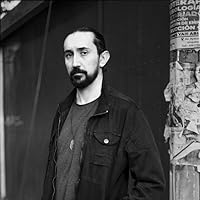
Peter Rock was born and raised in Salt Lake City. His most recent novel, Passersthrough, involves a murder house, a fax machine, communications between the living and the dead, and a mountain lake that moves from place to place. He is also the author of the novels The Night Swimmers, SPELLS, Klickitat, The Shelter Cycle, My Abandonment, The Bewildered, The Ambidextrist, Carnival Wolves and This Is the Place, as well as a story collection, The Unsettling. Rock attended Deep Springs College, received a BA in English from Yale University, and held a Wallace Stegner Fellowship at Stanford University. He has taught fiction at the University of Pennsylvania, Yale, Deep Springs College, and in the MFA program at San Francisco State University. His stories and freelance writing have both appeared and been anthologized widely, and his books published in various countries and languages. The recipient of a Guggenheim Fellowship, a National Endowment for the Arts Fellowship and an Alex Award, as well as a finalist for the PEN/Faulkner Award, he currently lives in Portland, Oregon, where he is a Professor in the English Department of Reed College. Leave No Trace, the film adaptation of My Abandonment, directed by Debra Granik, premiered at Sundance and Cannes and was released to critical acclaim in 2018. His eleventh work of fiction, Passersthrough, will be published in early 2022.
I'm clearly in the minority here, but my response is Boo, Hiss. Yes, he had an interesting set up and two pivotal and opposed characters to carry the reader through the "learning process" about the cult and its background, but if you are going to tie these characters so closely together and suggest that their two stories are actually going to meet and become one by the end of this story, the author completely bungles it. More important to me as a reader is that I'm willing to stick around through mysterious and vague pieces in the knowledge that everything is going to come together in a clear way at the end. In fact, I really like these suspenseful stories where you are handed pieces early but can't really see them for what they are without the larger context coming into focus, or without having all the pieces in your possession. This author royally pissed me off by not only stopping the the story without ending it, but in never putting all the pieces together at all. Nothing is more annoying as a reader than having your trust in the storyteller abused and played upon.
Peter Rock is one of my favorite authors. My Abandonment, which connects loosely to this novel, is a must read for lovers of nature. And while Rock's writing is just as good in this novel, as sparse and lyrical as the last, with intense observations on setting and a snowbound world, I felt that the author was not given the space he needed to fully flesh out this story. I read after I finished the book that it was originally 900 pp. The final copy is 211. I'm a huge fan of condensing in literature, but this time, too much was cut. Francine and Wells are hardly defined, and they needed to be to balance out the wonderful, deranged, sweet Colville. Sometimes a writer has to trust his or her own instincts. I would have gladly followed Rock through many more pages, he's that good.
Having said that, this is a unique, deftly plotted, carefully unbiased look at real cult life and its ravages and triumphs on the human spirit.
I read an advance copy of this spooky and brooding novel. It's filled with hidden worlds, secret languages and lost souls. Rock takes you to another world, one hidden beneath your feet, that's infused with silence and paranoia. I felt like a tomb raider when I'd finished. If you loved My Abandonment, you'll fall for this follow-up!
Rock is clearly a gifted writer, but the work feels unfinished, characters not fully defined, and a past of great importance to its characters without any emotional pull for the reader. Like Rock was too afraid of offending his (based on real events) subjects to examine and portray this cult and many of the book's themes with true grit.
Cheston Knapp (Managing Editor): Peter Rock’s new novel, The Shelter Cycle, follows the lives of several people who were brought up under the influence of the Church Universal and Triumphant, in Montana in the late-’80s, early-’90s. While the organization is often referred to as a cult, Rock remarkably manages to skirt all such judgment and, more importantly, avoid any whiff of parody. The characters earnestly search and you search with them. They’re haunted by the residue of their former beliefs, as are you. The prose is spare and lyrical and the book as a whole is strange and wild and luminous, often literally. I’ve been recommending it so much it sounds like I’m chanting. If you’re intrigued, check this out and this.
I love how by coincidence unrelated novels can sometimes flow together so perfectly. The cult here ties nicely with the last book that I read, Chevy Steven’s Always Watching. Though brief (just over 200 pages), this is both a strange and fascinating novel. Raised in an End-of-the-World-is-Coming cult in Montana, Francine now lives with her husband, Wells, in Montana. When a neighborhood girl is kidnapped, Francine’s childhood best friend, Colville suddenly arrives. Broken into Francine’s direct recollections and Wells and Colville’s present, the book unfolds in an engaging manner. Life in the cult is presented simply, with plenty of room for the reader’s own imagination to fill in the holes left in the plot and Francine’s memories. THis makes it a not entirely satisfying read, but a very well-written one. Personally, I prefer to have a bit more of a concrete plot and though the book’s description states that this is inspired by true events, even that connection is not fully explained in an author’s note or any other addendum. However, it is a very interesting book and one that I think that would do well in book clubs or classrooms as it would certainly evoke some lively discussions.
Esta novela es casi una precuela de Mi abandono: empieza con la desaparición de una niña, Caroline, pero revelando un detalle que cambia el sentido de ese primer libro y confirma las revelaciones de su final. Pero, en este caso, esa desaparición es solo el detonante de una historia que avanza en otra dirección, y sigue a su vecino Wells y su esposa embarazada Francine, así como a Colville, un amigo de la infancia de ella que reaparece tras quince años.
Francine y Colville crecieron juntos mientras sus familias construían refugios subterráneos para proteger a su culto del fin del mundo que ocurriría en 1990. Pero el mundo no se acabó, y ahora que ambos son adultos les toca lidiar con las consecuencias de haber sido criados por una comunidad religiosa y conspiranoica.
Cada uno se enfrentará a sus fantasmas y revisitará, siempre solos, esos lugares donde vivieron y fueron felices, y donde hubieran vivido si el mundo se hubiera acabado. Es una historia melancólica que retoma algunos temas recurrentes de Rock: la supervivencia en la naturaleza, los escondites, la infancia como un territorio extraño y la soledad, y todo con la misma pátina extraña que por momentos desdibuja la realidad.
Impossible to put down! The story intertwines with several of Rock's previous stories. So if you've read all of Peter Rock's books, you will really enjoy the hidden references to a couple of the former characters and some of the recurring props.
The author sheds light on the writings of Elizabeth Clare Prophet and her religious group's underground shelters that were last used on 3-15-1990.
Colville and Francine, childhood partners & friends, in the "Church Universal and Triumphant" group haven't seen each other since they were young. As adults they once again meet in the most odd of circumstances.
Rock reminds the reader of what it was like to be a child again--what it was like to accept your surroundings as normal and to find happiness from that normal. He also forces the reader to imagine what it's like for people who do not feel normal because as adults they live in ways that are not as they were raised. One is reminded to mesh the past with the present in order to find the greatest contentment.
The story meanders along a path, up the side of the mountain, down the other side, but all the while pausing to rest, reflect, and regroup. The paths were thought provoking, that I will say.
The Shelter Cycle by Peter Rock offers a glimpse into the world of the Church of the Universal and Triumphant which predicted that the world could end in the 1980’s and the lives of members since. I did not find it compelling. The story is about a pregnant woman, Francine, who writes about her childhood in the church as her pregnancy progresses. A man, Colville, who was her best childhood friend, visits her when a neighbor child of the woman’s disappears. The child seems to have something to do with the religion and the next end of the world, but Rock does not spell that out clearly. Francine goes to see her sister Maya who lives near where they grew up, and Francine visits the physical structure where the sect planned to take shelter when the end came. Colville stalks Francine, steals her dog and her baby, and then returns both. The baby talks to Colville as if the infant is a spiritual leader, but also functions like a dependent infant, so he gives the child to the sister of the missing girl. As I said, this is not a compelling book.
This entire review has been hidden because of spoilers.
Intriguing page turner, but in the end I was not connected to the characters and struggled with the ending. During our discussion with the author, we found out that the book was originally over 900 pages long. I understand the authors purpose of leaving the reader to think through the ending, but in my opinion it was way to abrupt.
Había leído “Mi abandono” hace unos años, y, si bien me había parecido un poco delirante por momentos, es cierto que me encantó. Recuerdo que me quedó esa sensación del tono de denuncia constante que hace que la historia tenga sentido o una dirección clara. Leí este libro creyendo que en algún momento le iba a enganchar la vuelta y no me pasó. (Lamento cuando me sucede esto, pero tal vez es porque puse mucha expectativa). Aún así, me gustó la construcción de los personajes, y eso característico de la literatura yankee de crear una atmósfera oscura, llena de bruma, en la que nunca terminas de entrar del todo. Seguramente sea una cuestión personal/subjetiva, pero se me hizo muy larga y aburrida esta novela, especialmente en esas partes de descripciones densas sobre el refugio y las caminatas de Colville.
I randomly picked this book out from the library using a series of random letters generated on a wheel. This is my essay I wrote about the book. Spoilers.
The Shelter Cycle by Peter Rock is a novel that explores the themes of faith, nostalgia, and the struggle between the old and new selves. Set in the snowy landscape of Montana, the novel follows three primary characters: a man named Wells, his pregnant wife Francine, and Francine’s childhood best friend Colville. The story begins with the beginning of a letter Francine is writing, it is unclear to whom, recounting an almost romantic moment between her and Colville when they were children growing up in the “Church Universal and Triumphant” cult. This cult, which is real and still exists, is a major topic of the novel, and the primary conflict of the novel is how Francine and Colville learn to cope with the memories of the cult, and Wells’s attempt to understand this mysterious piece of his wife’s past. This seems like the promising beginning to a fascinating novel, but Peter Rock wastes this premise on The Shelter Cycle, instead giving the reader a disturbingly nostalgic look at life in a cult, and the effects cult life can have on a person. Before the themes and issues discussed in the novel can be explored, here is a brief summary of the plot. We first meet Wells while he is participating in the manhunt for a missing 9-year-old girl. The girl was taken from her backyard, where she was spending the night with her younger sister “Della.” Eventually, he gives up on the search and returns home to his eight-months pregnant wife Francine. As they discuss the missing girl, a knock is heard at the door and a man identified as Colville enters the home. Colville and Francine engage in a cryptic and reminiscent conversation, while Wells looks on helplessly. It is clear from this interaction that Francine has shared very little with her husband about her childhood with the cult, and he is uncomfortable with the fact that it is a part of her Colville shares with her that he does not. Colville mystically tells Francine and Wells that a raccoon led him to this town to find the missing girl, and then he leaves without a word. Wells is confused and concerned, and Francine waves the interaction off as ‘good ole Colville.’ From this point to the end of the novel, there is a noticeable distance between Wells and Francine that gets worse before it gets better. That night, Francine wakes up, leaves Wells in bed, and begins writing the letter that opens the book. For the rest of the novel, a piece of the letter is inserted between each chapter. The letters detail life in “The Church Universal and Triumphant.” “The Church Universal and Triumphant” is a doomsday cult that believed nuclear war was coming at the end of the 80s. The cult separated themselves from society and built for themselves doomsday bunkers that they eventually sealed themselves in on the day of the prophesied apocalypse. The doctrines of the cult are vaguely discussed, and seem to be an odd blend of eastern mysticisms (chakras, good energy v.s. bad energy, etc.), Christianity (Jesus, Saints, and Prayers called “decrees”), and other fantastical elements. The cult is led by “the messenger,” a woman of godlike stature who communes with the “elementals” and who is, herself, an ascended being. At the time of the novel, the messenger lives on a farm with Alzheimer’s, and does not remember who she “was.” All this and more about the cult and Francine’s life within it is revealed across several installments throughout the book. Returning to the present, over the next few days, Francine continues to be distant and claims to be working more hours at the hospital. Instead, she goes to visit Colville at his hotel, and the two of them once again discuss their past together in the cult. Meanwhile, over these few days, Wells sees Colville walking by their house every morning and is concerned, as he believes Colville is crazy and potentially dangerous. He confronts Colville about it, asking him to stop walking by the house, and Colville agrees and decides to leave town that night. Then, for some inexplicable reason, Colville goes to Wells and Francine’s house and steals their dog Kilo from their backyard. Kilo is friendly and willingly joins Colville as they hike up the mountain behind the house and spend the night in a cave. It is in this cave that Colville has a conversation with Della (the sister of the missing girl), where they both agree that her sister is still alive, and he pledges to find her. Meanwhile, Francine lies to Wells and tells him that she is working extra shifts at the hospital, when in fact she drives several hours away to stay with her sister. Her intention is to go with her sister to visit the doomsday bunker built for her family. During this time, Colville hikes with Kilo to “The Heart,” the main central bunker for the cult, and sneaks in to live in the abandoned facility. Colville is led by what can only be described as “vibes,” following his mystical intuition as he goes. It is also made apparent that Colville has never stopped believing the teachings of “The Church Universal and Triumphant.” He says his decrees and seeks to follow the path the Elementals have laid out for him. Back at Francine’s house, Wells has begun to realize something is wrong when Francine does not come home as expected. He calls the hospital and immediately and is told that she has not worked today. Wells simply thinks that the nurse who answered the phone is mistaken, and he sits down and begins reading the letter that Francine has been writing. Meanwhile, Francine has arrived at her sister Maya’s house, and the two discuss their past in the cult. Maya tells Francine to tell Wells where she is, and she promises to do so, but never does. Francine asks Maya to go with her to the shelter, and she agrees, but must work first. The next day, Francine leaves by herself without Maya and goes to the shelter. On the way, she stops at the home of the now aged and mentally declined messenger. Maya returns to find her not at the house and drives to meet her at the bomb shelter. Meanwhile, Colville and Kilo arrive at “The Heart” and are secretly living in the facility. After a few days, Colville encounters a mysterious man named Jeremy. It is heavily implied that Jeremy is a supernatural figure. He seems to already know who Colville is and appears and vanishes without a trace several times. Kilo (the dog) also takes a great liking to Jeremy, and several of the times that Jeremy disappears, Kilo disappears with him. At this point, Wells is still not at all concerned by the fact that he has not seen Kilo in several days. Jeremy leads Colville through the forest where they come upon a clearing. In this clearing is a young girl, revealed to be Della’s sister, the one who was kidnapped. She is with a man, and together they are “practicing” balancing on a slack line. Colville initially prepares to rescue her, but Jeremy stops him and explains that “she is following her own path.” Colville agrees, and is content to leave the nine-year-old kidnapped girl with the strange adult man. Jeremy tells Colville that he knows what to do next, and Colville and Kilo make their way back to Francine’s house. Meanwhile, Francine has still not told Wells where she is. She has left Maya’s house after exploring the bomb shelter and is staying at a mountain resort on the way back. She has another nostalgic conversation about the cult with the mother of one of her friends that she happens to meet in the hot tub at this resort before decided it is finally time to head home. Back at home, Wells is growing increasingly worried, and concerned about his wife, especially after reading Francine’s letter, when he receives a call from Maya. Maya tells him to come as quickly as possible. Wells arrives at the hospital, where Francine and their five-weeks-premature daughter have been taken after she gave birth in her car. Wells finally speaks with Francine, where she apologizes for not telling him where she was going. He tells her he understands why she had to do what she did, and that he read her letter. The letter is revealed to have been written to the baby. On the way home, Francine teaches Wells how to “Decree” and they discuss names for the baby. The baby is never named throughout the book. Francine decides that she want to raise the baby, and teach her about what life was like in the cult, and how to decree and participate in some of the practices of the church, even though they are not currently members. Colville arrives back to town with Kilo, and Colville sneaks Kilo back into Francine’s backyard. He then, tells Kilo “You know what to do” and Kilo begins barking to cause a diversion. While Francine and Wells are distracted by the return of their dog, Colville sneaks into their house and steals the baby. He puts her into his backpack and carries her back to his hotel where he lays her on his bed. While Colville is trying to figure out what to do next, the baby begins speaking to him. The baby (still unnamed) commands Colville to never look at her while she is speaking, and teaches him how to take care of her. She also tells Colville that she will grow up to be a new messenger, and that she is “touched by the light,” which “fulfills” the “prophesy” told to Francine when she was a girl that she would bear someone “touched by the light.” Colville promises to obey the baby, and prepares to care for her for the next 30 years. The baby tells him of a hidden bunker filled with food, supplies, and weapons, that she will lead him to. At the last moment, however, Colville has a change of heart, and goes back into town and goes to the elementary school. There, getting out of school, he finds Della, and invites her to go into the woods with him. She refuses, and he tells her that he talked to her sister, that she is alive, and that she is happy. Della asks Colville to take her to her sister, that she wants to be there too. Colville just ignores this question, and instead hands her the baby, and tells her to return her to her parents. Della promises to never tell anyone who gave her the baby, and to claim that she just found her in the park, and the book ends with Colville hiking away and looking back at Della holding the baby. There are countless issues with this novel, but it is not without its charms. First, Peter Rock’s prose is very well-crafted, and his imagery is compelling. While many moments in the story were preposterous, and frankly unbelievable, the pacing is reasonable, the book is difficult to put down. As for my issues with the book, they are numerous. A few minor notes: Wells was not sufficiently concerned about either Francine or Kilo being missing. His very pregnant wife, was missing for several days without her phone, only days after a massive search effort to find their kidnapped neighbor. While his trust and confidence in his wife’s self-sufficiency can be potentially be considered admirable, his lack of concern for her wellbeing is reckless. In the same vein, Francine’s disregard for her husband and willingness to lie to him is very frustrating. At first, it seems that Peter Rock is gearing us up for an affair between Francine and Colville, but when that doesn’t occur, Francine’s secrecy in this case makes no sense. She really isn’t out to do anything she shouldn’t, and there is nothing in the character of Wells to suggest that he would be angry or unsupportive of her search for closure. To the contrary, Wells is portrayed as eager to better understand his wife’s past and to learn about her history with the cult. Their marriage is not healthy, yet, at the end of the novel, it is clearly meant to be interpreted as such. This odd lack of care for the other person, makes both characters somewhat unlikable, and it is difficult to know exactly what to root for. It is difficult to discern where to begin on the character of Colville. He is in no way treated as a sinister character, and yet it many of his actions are decidedly evil. For no explained reason he kidnaps Kilo, who, as far as one can tell serves him no true purpose beyond companionship. Perhaps the most diabolical action of his, is leaving the kidnapped girl with her kidnapper. It must not be overlooked that the child is only nine-years-old and has been taken by a cult member. Colville follows the vibes to find her, and once he sees her, decides that she has “chosen her path” and that she will be happy living along with a strange man in the woods. There is no defense for this, and it is representative of the books most egregious fault which will be discussed further. Finally, kidnapping the baby. This goes without explanation, but considering his relationship with Francine, there is no rational explanation that could justify his actions. This is all wrapped up in the biggest flaw with the book, which is that “The Church Universal and Triumphant” is never once portrayed in a negative light. Not by any character, not in any of Francine’s memories, not in any of Maya’s memories, and not in any of Colville’s memories. Every. Single. character remembers their time in the cult positively. The cult that told them as children that the entire world would be destroyed, that all their friends would be killed, forbade them from wearing red or black, and psychologically manipulated them with mystical doctrines of energy forcefields and evil spirits that would try to attack you, is looked at with nothing but nostalgia and longing for “the good old days.” Perhaps the goal is to show the depth and the grip that cult brainwashing retains on a person throughout their life. If so, why the implication that the teachings are true? Even if this was the case, in the event of an unreliable or biased testimony by a series of characters, the reality presented ought to contradict their testimony, or, the perspective of the characters ought to change. Instead, the reality seems to confirm the opinion of the characters, and there is no change in any character. From the beginning to the end, they remain unchanged. If any, they each shift to a more sympathetic position. Why does this matter beyond the art of story crafting? It matters, in part, because the cult really did exist. If Peter Rock were merely imaginatively creating this cult for the purposes of this story, the reader would be forced to take his word for it regarding the goodness of the cult in question. “The Church Universal and Triumphant,” however, really did exist. It really did have thousands of members, many of which gave up their money, and dedicated their lives to a lie. In real life, cults do immeasurable harm to those who become entrapped. Even in the book, regardless of whether or not this nine-year-old is “happy,” her parents will live the rest of their lives grieving their little girl who, without their knowledge, and without their (or her) consent has “chosen her own path.” Clearly, this cult is harmful to those who have been involved, and yet not one character acknowledges it. Even Wells, who, of all people, ought to be able to see the error of his wife’s nostalgia, only softens toward the cult as the book continues. If this is intentional, Rock does not effectively make this clear, and if not, it is a damning fault. There is one hope for this novel, that may redeem it, and it all centers around the character of Colville. If Colville is insane, and his actions are motivated by a mentally deranged belief that a raccoon has led him to Francine, and that a baby is speaking to him, then the book does become a dark and disturbing example of the dramatic mental toll a cult can take on a person. This theory has many problems, namely the fact that we are never truly told anything to suggest that Colville is clinically insane. Furthermore, these experiences which under this theory would be mere “hallucinations” do seem to be reliable sources of information. If they were only hallucinations, how could they have led Colville to the missing girl? While this interpretation potentially redeems the book thematically, it requires too many interpretive leaps to fit the actual text. Finally, one must consider how to interpret the novel if each supernatural experience is taken at its face value. What if the baby really did talk? What if Jeremy really was an ascended being? What if the kidnapped girl really was significant to the church, and her going with the stranger really was her “choosing her own path?” If each of these experience are interpreted as true supernatural experiences, then the teachings of the cult must be true. And the conclusions made by each character softening them toward the cult are actually them aligning themselves with the reality of the world in which they inhabit. This interpretation seems to be the best to match the text. This, of course, is faced with another problem: the real existence of “The Church Universal and Triumphant.” The cult is real. Is Peter Rock, through this novel suggesting that the teaching of this 1980s apocalyptic cult were true? Why would he entertain the reality of the teachings in this novel? For kicks and giggles? Why should any reader care? Perhaps the answer is they don’t need to, and this book is merely for entertainment value exploring the question “what if the teachings of this church were true?” It may never be known. In conclusion, this book was a compelling but preposterous exploration into the world of cults and baby-snatching, that ultimately is unclear in its central message and the proper interpretation of the events therein.
This entire review has been hidden because of spoilers.
How this book has an average rating over 3 I do not understand. It is an objectively bad book (thank goodness it was short). Characters underdeveloped, cult social structure not described, and not much compelling material (this last critique is a bit more subjective). The book starts you in the middle of a story and then ends without completing it.
If you liked this book, you would probably find Going Clear fascinating. But if you liked Going Clear, you won't necessarily like the Shelter Cycle (I fall into the latter group).
***Spoilers***
Two of the main characters grew up in a doomsday cult in Montana but then left and are now revisiting the belief system in early-to-middle adulthood. The belief system itself is uninteresting (feeling vibrations, saying prayers to various entities, etc.). Francine's struggle with coming to terms with her past seems to be driven by the soon-to-be-born baby she is carrying. Colville's re-embrace of the beliefs is mostly do to the fact that he is a wackjob (he hallucinates the existence of various people from the past, sees a girl floating in air, etc.). Maya (Francine's sister) makes the illuminating comment to Francine that she was happy in her childhood because she was 10 and 10 year olds tend to be happy (or, at least, we tend to remember those days fondly). This leads to my main critique of the book: making this book about having grown up in a cult does not make it substantially different from a book in which two characters come to terms with a false understanding of their childhood (such as their parents "making their marriage work" even though one of them was having an affair).
A few other thoughts: - conjecture: Colville kidnapped and killed (either inadvertently or on purpose) the girl living next door to Francine. I give this 80% chance of being true. - conjecture: Colville never actually left the town to visit the old cult compound. He only hallucinated it. I give this about a 40% chance of being true. - Colville just does things without motivation, as if he were an automaton (this makes him truly horrifying). Cases in point: stealing the dog and kidnapping Francine's newborn daughter. - Francine keeping her husband in the dark about her impromptu visit to her sister was super annoying (tension for the sake of tension) - Describing the cults beliefs without describing the rules and social structure of the cult makes the book much less interesting. - Having Colville give Francine's daughter to the neighbor's little girl to return to Francine seemed like the author's rushed attempt to give the book a happy ending. It would have been better to have Colville walk into the wilderness with the baby and end it there.
The best/most disturbing part is Colville's kidnapping of Francine's new daughter. The language is clipped and the reader is kept in suspense; very well done. This alone saves it from a one star rating.
Cults, and other groups that separate themselves from society, are often interesting because of the system of rules they institute in order to accomplish this separation. Without giving any details or even hints as to how the cult functioned, The Shelter Cycle fails to confront what actually makes cults different from other social groups.
The novel provides a strange and exhilarating look into the past and the remnants of the Church Universal and Triumphant. It is rare that a book so understated and intentional can move along at such a break-neck pace. The narrative has an intensity that at times makes it hard to breathe as you wait to find out what happens next.
The characters of Peter Rock's book are in many senses haunted by their past; a past that is foreign to most readers, but so close to the characters as to encroach on the present.It is not fear that causes these characters to re-engage with their origins, but a lurking suspicion that there is more than distant memories to what they left behind. They feel an unexplainable longing to return. Peter Rock's books are often filled with characters who function in socially unexpected and unacceptable ways. By their actions and attitudes, his characters step outside the everyday and experience the same world in a new way. Rock's generosity allows you to understand and feel for the characters even as their decisions spiral out and your own anxiety rises.
As these characters move towards the reamins of their childhood, the reader is presented with the strict detailing of objects and locations, and an almost obsessive recreation of space. Rock describes these objects in such a dead-pan manner that he does not drown out the other voices that hum behind his words, the voices that inhabit the spaces of the shelters. The text itself becomes haunted as, towards the middle of the book, the focus is displaced from the characters and onto the excavation of time and place. Here, in Peter Rock's newest novel, everything is allowed to speak for itself, a feat which requires an uncommon and uncanny quiet.
This exploration is only permitted for so long before the characters' desires come careening back into the foreground and race towards the conclusion of the novel.
This book is perfectly paced and voiced, making it from start to finish an excellent read.
In the land of half stars, I'd probably give this a 2 1/2, because I didn't feel much enjoyment while reading it, although I was interested in the beliefs of the religious group on which the novel is based. I wondered if it were a real religion, and the author's Acknowledgements gave me my answer: Yes. I was less interested in the characters and plot, although I have a greater appreciation for the former after participating in a Skype discussion with the author as part of an online book club. At the start of the novel, a girl's disappearance brings together one of her neighbors, a pregnant woman named Francine, and Francine's childhood friend Colville, who has decided he must look for the girl. I sensed from the beginning that the missing girl storyline would remain unresolved, and I was correct. Instead, the novel follows Colville and Francine separately as they take steps to rediscover the religion they were brought up in. It is an interesting religion, which the author out of necessity could only share so much of, but so much is the pity. In keeping with this faith, both characters are struggling to bring more Light into the world decades after their separation from the group, but both characters also bring about a degree of darkness in the attempt to do so, through deception in Francine's case and through unthinkable thefts in Colville's. The author artfully presents these missteps in such a way that the reader is disinclined to judge them too harshly, however. The end of the novel takes a mystical turn which I did not expect, but did appreciate, hence the bump up to 3 stars. Although many questions are left unanswered, I was engaged by the process of making my own interpretation of strange spirtiual events. Either the characters are crazy, or the world is magical, or both. You decide for yourself.
Peter Rock is a good writer, his style easy to read but lyrical, almost poetic at times. I was drawn to read this book because a family member once spent some time at the Montana ranch and was also involved with Elizabeth Clare Prophet's work in California. She left the Church like many others did when CUT fractured but still sometimes does the decrees for the energy. I know only what she has told me about her experiences, which has not been very much, but at least I had seen the most important images and texts before reading this book.
I found Rock's descriptions of the shelter interesting, the strangeness of the narrative engaging and intriguing. But I wonder if someone who doesn't know anything at all about the movement would "get it" reading this book. Granted, I only had an advanced readers copy to review. I hope the publisher will include the classic photos of the Messenger (Elizabeth Clare Prophet) and the Ascended Masters mentioned in the book (St. Germaine, El Morya, etc.) so readers can visualize them when reading the story.
Without spoiling it, I was glad the story ended the way it did.
3.5 I had not previously heard of the Church Universal and Triumphant, but I have heard of their leader who was Elizabeth Clare Prophet. They were a church in the seventies, that believed the world would end in the spring of 1990. In anticipation they built huge underground shelters in Montana, with enough supplies for seven years. Of course the world did not end so what happened to the people of this church, where did their teachings take them from here? This is the story of two such people, that were children at the time but had since grown up and had two disparate lives. I found this novel disturbing a feeling that its rather flat matter of fact tone enforced. The video of the author describing this book, was very helpful in that it explained where how and why the author became interested in this church. I also looked up this church on the good old wiki and still cant' quite understand these types of churches or cults or whatever. This book was short, but contained quite a bit. Very different.
Sucked in from page one, this book seems to insist on being read quickly. It stays with you while doing other things and found its way into my dreams. So few pages are used to tell such a long story, carefully weaving together different journeys in a natural way. Many thing are touched on: strong beliefs and commitments that usually fade over time; caring and protection of family and those we consider “ours”; the fine line between the rational and the irrational; the power of faith for good and bad; the need for shelter in our lives in its many manifestations. I find it fascinating that simply being told a story can reach within you, make you analyze your beliefs and leave you changed. Even a story so seemingly remote from our day to day lives can reflect some part of our world and our understanding of it.
Throughout this book I struggled to understand the emotions the characters were feeling and their motivations for their actions. I was never able to get a clear sense of who they were and what anything really meant to them, and this lack of connection made it hard to get into the book. I think the subject matter could have been turned into a much more compelling book. The most interesting parts were in Francine's writing--I felt more emotion from those sections than from any of Francine's chapters, and I could at least understand why she was writing them. The rest of the book left me frustrated because I didn't know what I was supposed to take away from it. To me it felt kind of cold and deserted, like one of those empty snowy landscapes the author keeps describing.
From the reviews it seems like a lot of people like this author. This was my first time reading anything by Rock, and while it was good, it felt a little unfinished - like there were big pieces of information I wanted and didn't get. I've always had problems with books that aren't tidied up at the end, though.
3.5 stars. What is the difference between a religion and a cult? Is a cult necessarily creepy just by being a cult? If the people are well-intentioned, is it just weird? And how do people live their lives after leaving one of these groups? An interesting read.
Interesting view on a fringe religion told from the perspective of children who lived through it and now are adults. Well written and interesting, especially if you are interested in that kind of stuff!
On paper, I should have loved this book. This book looks at life after being free from a cult, but it's not done as a "cult is bad. Non-cult is good". And the beloved cult leader is now an old woman suffering from dementia.
I liked the more objective review of this cult and the ways in which it holds a rather lovely concept of how each person sheds a certain amount of light from their soul, the more enlightened the brighter and more violet the light. Affirmations are wound into the work as well - all things I believe and support.
The main premise is that there is a missing girl - a teenager who has gone missing for a week or so by the time the story starts. The story is told from multiple perspectives, but largely from the POV of some neighbors of the missing child. A 30 year old man and his pregnant wife. The latter is a former member of the cult and still has some feelings for the cult. And she may still have feelings for a fellow cult member who is now still enthralled with the cult, years after the prophesied rapture did not happen.
THERE IS A SPOILER COMING HERE!!!
YOU"VE BEEN WARNED.
Late in the book, one of the still active cult member finds the girl. But he discovers she seems to be happy with an older guy and he decides to leave them alone and let them live their lives.
Additionally, the same guy kidnaps the child of the couple I mentioned before - pregnant wife, man who were neighbors. She eventually has the baby (after driving to where the cult used to be and heading to meet their leader, now protected by former cult leaders who now recognize her as a poor, demented old lady.
Why he kidnaps the kid is unclear - and more inexplicably, he gives the baby back a couple of days later. The kid inexplicably talks to him (in full adult sentences, letting him know when he needs burping, etc, but also ridiculing him for what he's doing wrong as a baby care taker).
This surrealism is also something I find intriguing in writing.
But..for whatever reason? I just couldn't get into it. I didn't really care about any of them - I mean. I was kind of interesting in finding the missing girl, but when they did it was like - well. She's fine. Leave her alone. Same with the baby kidnapping and returning. Very unclear why that happened.
Why? WHy didn't I care for it? I don't really know. The writing is well done, but I just never cared....
Francine y Colville son miembros de un culto religioso que esperaban el fin del mundo en 1990.
En la comunidad en la que crecieron, las familias compartían trailers mientras todos trabajaban en construir refugios subterráneos para poder sobrevivir al ataque nuclear que acabaría con el planeta, tal como lo conocemos.
Y la novela se sitúa 20 años después de esa fecha fijada, cuando se suponía que se acabaría el mundo, pero no se acabó. Y lo que trata de mostrarnos Peter Rock es cómo sigue la vida de estas personas.
Francine está casada y embarazada. Se fue de su ciudad de origen y se alejó del culto.
Sus vecinos viven una tragedia terrible, una de sus hijas desapareció. Mientras todos ayudan en la búsqueda, repentinamente aparece Colville, su gran amigo de la infancia, que irrumpe en su casa asegurando que él está destinado a encontrar a esa niña.
Todavía devoto, no sabe bien cuál es su misión, pero sabe que le ha sido asignada una.
La historia se va desarrollando entre presente y pasado y el lector se sumerge en la dinámica de los miembros de esta iglesia, no a través de un juicio sino de una mirada compasiva y empática. Y en esto Rock es bastante bueno.
Creo que el valor del libro reside en este hecho histórico y en la visibilidad que se le da a los miembros de este culto, gente que el mismo autor entrevistó y con quienes compartió para hacer posible este libro.
Esto es lo primero que leo de Peter Rock y la verdad no cumplió con mis expectativas. Lo que no significa que el libro no me haya gustado, solo no era lo que esperaba.
I read this novel because my kid just started at Reed College. Rock gave the convocation address. I was intrigued and decided to read one of his books.
I'm glad I read Shelter Cycle. It had an impact on me, an impact that left me feeling unsettled, which I think is what the novel is shooting for.
Two things immediately stuck out to me about the novel. First, the nearly invisible narrator. The narrator makes absolutely no effort to position reader response; the narrator merely tells--absolutely no showing. I personally tend to favor a more present narrator. I love a narrator (and narrative) that is ironic, self-referential, maybe even manipulative--a narrator that winks at me and sets me on the right or wrong path. But in this novel, the invisible narrator works well, helping to create that unsettling effect. Depictions of events--even horrible events--carry no moral valence. This produces a chilling effect.
The other thing that stuck out was the staccato prose style, Hemingwayesque: short sentences, simple sentences, occasionally a dependent clause or phrase. It was hard for my internal reading voice to find a rhythm. I was yearning for a compound-complex sentence or two. But here too, the style works really well for this story. It also contributes to the unsettling effect. Sentences reach an abrupt termination before I have time to process. The rhetorical effect of unadorned, understated, self-aborted sentences supplement the emotional impact of this chilling novel.
I'd like for my kid to take a creative-writing class with Rock.
Por momentos, cuando se lee a Peter Rock, puede parecer que es imposible advertir el cruce del umbral que conecta la realidad con el plano onírico. En la Naturaleza de Rock, la vida más allá del humano susurra, se mueve, se transfigura en sugerencias emitidas para oídos atentos. Las hojas caídas de un árbol o las huellas dejadas por un animal en la nieve son mensajes de lo que está por venir y de lo que ya pasó, y así el tiempo se mezcla hasta encontrar esa salida de un momento que puede habernos descolocado y ahora aparenta ser nada más que un recuerdo borroso. En Rock hay memorias y tensión, miradas sospechosas desde la oscuridad, encuentros y desencuentros hilvanados de modo estudiado, coincidencias que no lo son porque las coincidencias no existen. Leerlo siempre, siempre, me conmueve.