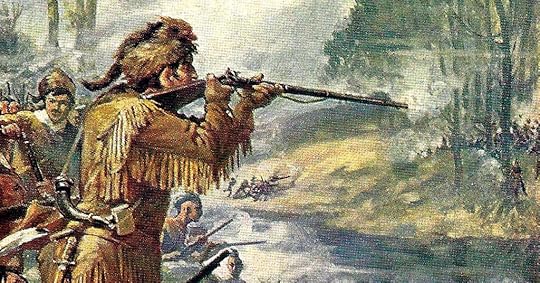
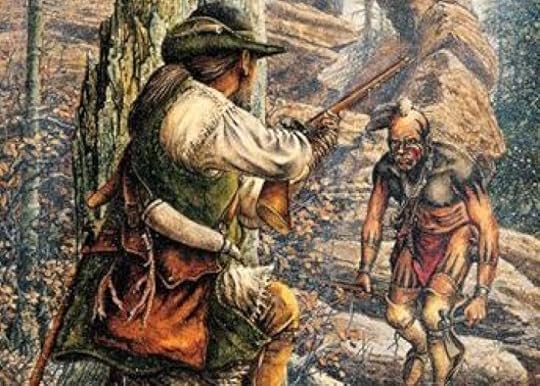
The Last Trail is the third and final novel in Zane Grey’s Ohio River trilogy. In many ways, this concluding volume of the saga is one of perpetuation. The wilderness along the Ohio has been rapidly disappearing. Forests have been replaced by farms. Woodsmen, hunters, and frontiersmen are becoming farmers. This is true, in fact, for almost everyone except that strange and wonderful character, the "mysterious, shadowy, elusive man, whom few pioneers ever saw, but of whom all knew," Lew Wetzel.
Known by the Indians as Death Wind, Wetzel and his partner, Jonathan Zane, are hard on the trail of white rustlers led by Simon Girty and Bing Leggitt. One night at their campfire, Helen Sheppard and her father, who have become lost in the forest on their way to Fort Henry, are approached by Wetzel and Zane. For Zane and Sheppard, this accidental encounter is the beginning of a romance that will be fraught with many dangers. Betty Zane, whose dash for gunpowder in the defense of Fort Henry during the Revolutionary War is now legendary, and her brother, Colonel Ebenezer Zane, are also among the characters in The Last Trail—older now, sharing their wisdom and experiences with a younger generation.
Pearl Zane Grey was an American author best known for his popular adventure novels and stories that presented an idealized image of the rugged Old West. As of June 2007, the Internet Movie Database credits Grey with 110 films, one TV episode, and a series, Dick Powell's Zane Grey Theater based loosely on his novels and short stories.
THE LAST TRAIL was originally copyrighted in 1909. My copy was the seventh printing in April of 1940. That showed me a copy of things. The author had some talent to have his work reprinted so many times. This was in no small part because it was accepted and enjoyed by people through the years. I say that because it has become the norm in some circles today to criticize so much of our country's past and the people who made it. This is a great country, and if it isn't, why does everyone want to come here or even stay here? My book is a hardback, so the wartime rationing was not in effect yet, otherwise it would have been a paperback. And the tanning of the brittle pages links me with the ages past. Even though the story when written was about a time period a hundred years before, it still gave a certain feel that connected me with the characters of long ago. In spite of any faults it is still a good piece of American history.
The story is about the taming of the Ohio Valley in the early 1800s. The characters speak of folks who fought in the Revolutionary War and trailblazers such as Daniel Boone which sets the tone. Life on the frontier was dangerous. Indians could be friendly, indifferent or hostile, sometimes all in the same day. Criminals were often more of a danger than hostile Indians. Horses were of such value that horse thieves were hanged. Women were a prized commodity in that a new woman in a community would have suitors lining up to woo her in the hope of winning a suitable wife. Life was hard in those days. Men and women had roles to fulfill. They needed each other to raise a family and sometimes just to survive.
In the story the keepers of the law were frontiersmen known as bordermen. The story is about two such men and a new woman to the village who has set her eyes on one of them. When an outlaw and Indians capture the woman because the outlaw desires her for a wife, the bordermen set out to rescue her. They are outnumbered, and as it was common for the Indians to kill captive women and children with their tomahawks rather than letting them be rescued, their undertaking would be most difficult.
"It was another dismal day, such a one was fitting for a dark deed of border justice."
2.5🌟's
Initial Thoughts
Time for some old school western action in the month of June with a new author to me...Zane Grey. He's a bit of a legend in the genre with this one...The Last Trail... published in 1909. One of the founding fathers and someone I was looking forward to experiencing. A fine notch on my western bedpost.
It's worth noting that this book is the third part of the Ohio River Trilogy. But I was recommended that it was a good place to start with this author and that it was pretty much a standalone. The thinking was I could always go back and read the remaining two if I had the urge.
The Story
This one takes place at Fort Henry, in the Ohio valley, shortly after the American Revolution. We follow two "bordermen," Jonathan Zane and Lewis Wetzel, who have the unenviable task of protecting the community and rescuing those unlucky enough to be taken captive by the natives. But Indians aren't all there is to worry about as outlaws look to steal and rob what isn't nailed down. Including some of the local women!
When /Helen Sheppard takes a shine to Zane she's determined to get her man and doesn't want to let his stoic outlook get in the way. Plus the fact that he doesn't show any interest in her whatsoever. He'd much rather go on a trek with his pal Wetzel. But nothing is going to prevent Helen from ruining this story by turning it into a romance!
The Writing
I was looking for a wild west adventure but, as you can already gather, Zane decided to take the romance route and that is definitely not my thing. Plus the pacing is really slow for a pretty short read. There's a lot of detailed description of the countryside and I did enjoy this at first. At times you really get a feel for it and it's almost like you're there. But I got to admit, at times it did start to get in the way of the story and almost put me to sleep.
It's not all bad though. When the action kicks off it goes full on Rambo style with shootouts and pitched battles mixed in with wilderness survival. The pacing and tension get ramped up and with the writing style I got to admit I was starting to really enjoy myself. But these scenes did take a back seat to the romance and the story definitely suffered for it.
"How dark it had suddenly become! The gray cloak of twilight was spread over the forest, and in the hollows night already had settled down. A breathless silence pervaded the woods."
The Characters
Although Zane isn't the greatest character writer, there were some good ones in The Last Trail. The standout being Wetzel who was tough as nails and an absolute nightmare for any outlaw. He added an element of excitement to any scene he was in, relentless in his pursuit as he moved unseen through the forest. He added a real air of mystery and intrigue to the bordermen.
"Trouble is the name of my ship, and she's a trim, fast craft."
Likewise Jonathan Zane was a fascinating character (interesting how the author gave him his name) but his involvement with Helen definitely did spoil his appeal for me. I know what the author was going for. Using the love element to pull him in two opposing directions. Jonathan had chosen to forgo personal attachments in order to focus on his role in protecting the pioneers. Would he continue with the solitary life of the borderman or go with the family life with Helen instead? It's just Helen was such a boring character, so much so that she dragged his character down with her.
Final Thoughts
There were elements of The Last Trail I enjoyed but overall, it was a pretty average read. And I don't like to waste my time with average. So I won't be in a rush to return to this author. Am I making a mistake? Let me know in the comments.
I enjoyed the historical aspect and the old fashioned feel of the prose, which added an element of authenticity. But to be honest I've read a few westerns lately and this was bottom of the pile. Give me Louis L'Amour any day!
Better luck next time hey? Next up for me Cormac McCarthy's Blood Meridian. Thanks for reading and...cheers!
I always like to give my caveats, so that all can understand my frame of reference and the panorama of what I believe is unique and special about a Zane Grey novel. Sure, the American Indians are referred to as savages. This was written in the early 1900s, (1909 to be exact) before political correctness and frankly, common decency were things that people found important. Grey was more enamored with the romantic aspects of frontier life where it was man against nature. Just read some of Grey's descriptive paragraphs (which he goes way overboard on description of the scenes in nature), and it is not a stretch to feel the intensity of love that he has for the wild in his westerns. This novel has two border men, Jonathan Zane and Lewis Wetzel that embrace frontier life and the protective lifestyle of the scout that they have no conception of romantic love or that women might actually find them interesting or attractive. The outlaws and Indians make life more difficult, but the border men are there to protect the people of the fort. There is a budding relationship between the border men and some of the women of the fort. This was an audiobook from Librivox and the deep, resonant voice of the narrator helped transport me there. It sounded as if we were sitting in rocking chairs on the porch of a log cabin in the Ohio valley smoking cigars with our Winchester rifles close at hand just passed sundown keeping watch. Almost perfect, if not for the language of a man from a less enlightened time. This is a classic as I define classic (more than 50 years old and exceptional in some way.)
The Last Trail by Zane Grey is a good example of American literature written in the early part of the last century. Traditions and family values play a large part in daily life. This book distinguishes between two types of frontiersmen, the pioneers and the border men. The first being settlers that move west into the Ohio River valley and the second the men that made the area secure from outlaws and local indignant Indian warriors. Love plays a large role in this story as it has in many stories both then and now. The descriptions of the endless wilderness sometimes tend to be a little over-flowery but fits in the novel and don’t distract from the story. The reader can’t help to think that much of what is mentioned and described is true to life on the frontier during the first two decades of U.S. history. Although it is set in an earlier time then most of Grey’s other work, I highly recommend it to all lovers of classical American history.
Zane Grey's work leaves me with a feeling of melancholy (in a good way). There is some romantic longing for a way of life which is long gone. Not that they were good old days--I think that life in the settlement days in Ohio were difficult, especially for women. Lots of hard work under poor conditions. Truly, I am glad to be a 21st century person--but the romance of Grey's writing always pulls at my heart strings.
The copy of the book, which is a reprint, was copywriter 1906. Of course, the setting is late 1700s in the Ohio Valley region. The struggles of both the Indians and white settlers is gut wrenching as because of the culture clash and knowing the change that will come. The Indian Wars took so many lives on both sides. The will to survive in the wilderness was a constant struggle. This book is third of a trilogy based on a journal written by the author’s relative, Colonel Zane . I found this, and the first book of the trilogy, Betty Zane, to be fascinating because the values of the time and the actual writing/speech of the time is so different from present day. This is an excellent history lesson!
This is a great trilogy of adventure and life during the very early years of our country by Zane Grey. People generally think of the “West” as Texas, Wyoming, New Mexico, etc. but these pioneers had no less of a hard time opening up the boarders moving into West Virginia and Ohio. There were ruthless criminals and unfriendly Indians, wild animals and no law to protect them. Books like, the Leatherstocking Series (James Fenimoe Cooper) and the Sackets series (Louis L’Amour) give you a very vivid view of life “on the border” as they call it, during those early years.
“Good morning, Colonel Zane, said Helen cheerily, coming into the yard where the colonel was at work. “Did Will come over this way?” “I reckon you’ll find him if you find Betty,” replied Colonel Zane dryly. “Come to think of it, that’s true,” Helen said, laughing. “I’ve a suspicion Will rn off from me this morning.” “He and Betty have gone off nutting.” Okay, so in contemporary idioms one would suspect that Colonel Zane just said something dirty about Betty and Will. But fear not. Because when Zane Grey is really writing about sex, he uses hyphens as a euphemism. “Betty, who was in the sitting room, sprang up and cried: ‘Oh! Eb! Eb! Don’t say she’s ---.’” Now at this point Helen has been rescued by frontiersmen (Border Men in this text) after having been kidnapped by Indians and renegades. But a century ago, Zane Grey couldn’t use words like “raped” or “molested,” so he substituted hyphens. Fear not, gentle reader, we are soon reassured that Helen’s hyphen is intact. Zane Grey’s early trilogy of frontier life in the Ohio river valley is allegedly based on records of his ancestors, the founders of Zanesville Ohio. But he’s also borrowing heavily from James Fenimore Cooper’s Leatherstocking Tales. I have to say, having read both, that Grey’s three novels in this vein hold up the best. (For a hilarious but accurate critique of Cooper, read Mark Twain’s essay “The Literary Offenses of Fenimore Cooper. I'm reminded of it because Grey's characters, also, are always stepping on twigs whenever "silence is worth two dollars a minute.") But Grey’s trilogy holds up pretty well. It’s dated, of course, but all three of these novels build nicely to exciting climaxes.
Set in the Ohio Valley, just as white settlers were beginning to come together in small settlements near military forts. This was "The West" at the time, and there were skirmishes with Indians and with bad white guys as well. The story revolves around a 16 year old "woman" ("We like to get them married young out here, to build up the population"), who moved into the settlement with her father and cousin. Of course she was beautiful ("those big eyes!"), spunky, and brave. She fell for the strong, silent borderman, who patrolled the borders of the settlement, trying to keep the settlers safe. He was married to his job, and so seemed to take little notice of her, though all of the other young fellers around vied vigorously for her attention. Plenty of tracking, skulking, shooting, and wonderful descriptions of the forest, streams, sunsets, and cliffs. First published in 1909. I downloaded this book for free from LibriVox.org. It was read beautifully by a talented reader.
Pearl Zane Grey (1872 - 1939), an American author and dentist, wrote and published 75 western novels during his lifetime. Zane Grey is the author that turned a literate 8-year-old country boy, muy, into a certified bookworm. I received 12 of them as a Christmas present that year and then collected all the rest. I still have those books today, and they’re among my prized possession. The Last Trail was the 52nd book he wrote and published.
The Last Trail brings life on the wild, unsettled frontier to life for the reader. The reader is transported back in time as the action comes alive on the pages. Unlike many modern authors of westerns that resort to gratuitous sex and violence to keep the reader turning the pages, Grey keeps it real and in doing so keeps the reader turning the pages. Every time I read one of his stories, I feel as if I’m living the story.
If you love real westerns but have never read Grey, you must read them and The Last Trail is great to start with.
Frankly, I was surprised that I enjoyed The Last Trail so much. I have always thought of Grey as a man's writer so I was taken aback at the centrality of the romance in this book. Since it is vintage fiction, there are VERY negative stereotypes of American Indians and also the unfortunate use of the "n" word (once). But it was a rollicking good story.
The women in the book are beautiful (but hardy) and teach Sunday School. The men cuss and kill injuns. But in spite of the stereotypes, the mild cussing, and the melodrama, I was hooked on the story from start to finish. Some of the dialogue is laugh out loud funny. Good vacation reading. And free on Kindle.
I have never read a Zane Grey book before and I have to say that I really enjoyed it. It is also a genre that I have never read before.
I enjoyed the story, the characters, his writing style and how real the story seemed as I was reading it. I am looking forward to reading more books by this author.
This is the third book in a series. It is about the Zane family living in Ohio, next to the Ohio River. The Bordermen have their hands full with theft and kidnappings. The Indian raids are grabbing both stock, killing people, and kidnapping women. The book contains a love story also. I enjoyed this book of the early West (just after the Revolution).
All I will say is that this part of American history is nothing but hardships and misery. At least this action packed Zane Grey exploits of settling the Ohio Valley, especially around Fort Henry was a blood bath. Settlers were killed/murdered by both unsavory whites and possibly rogue Native Americans, which they weren't referred as but as "savages. So the push farther West by pioneers searching/looking to live free to raise a family, or even become a WEALTH rancher. There were the ambushers, human trafficking and just outright murder, this story seems to emphasize how men became protectors of the innocent. These men were "bordermen" who sacrificed their lives to keep these settlers and wagon trains safe from the hoodlums who skunked around forests, you know folks mostly men who lived on the margins of society..not good, but that's life. The illustrations throughout this book are beautiful, they show all the different dress and situations they faced. There are Native Americans scenes, The fighting Calvary. This young United States has both a dark side and to move forward with a solid determination for improvement. Can't best that folks..right??
Author Zane Grey grew up in my hometown of Zanesville, Ohio. His books are ones I've read since a young girl. They contain no profanity, no sex, no horror, and are books parents let their children read. Like all his others, this one has one or more heroes, a heroine, villains, scenery and life styles of pioneers. An easy read, a relaxing day dedicated to reading is all you need to finish this book. The font is large as is the line spacing. There is no ISBN number in the volume I read and no publication date. Found in an antique store, it was published by the Saalfield Publishing Company of Akron, Ohio. Reading Zane Grey is such a pleasure,I didn't mind the loose binding and discolored pages. This book is one I have read previously, but so long ago I had forgotten the intricate details describing the forests and Native Americans of the southern Ohio border along the Ohio river. It was refreshing to read again to remind me of the early "bordermen" who acted as law enforcement near pioneer settlements. The Zane family is the main family of this adventure and love story. Highly recommended for an easy western read.
This is the final book of author Zane’s Ohio River trilogy. This trilogy covers the period of time during the American Revolution and immediately thereafter. This is the time period when pioneers from the east were heading west across the Allegany Mountains and settling in the Ohio River valley. These new migrants must carve out their settlements from Indians, renegades and outlaw bands. In this particular story, a gang of horse thieves and abductors of women threaten the safety of this new community. The Zane family and their folklore are prominently featured in this tale of danger and adventure. As with the first two books in this trilogy, plot twists, tension and suspense abound. Good guys as well as bad guys suffer death during the struggle for civilization and a lasting peace. Action scenes are plentiful and suspenseful. The landscape and its beauty are indeed part of this story as it explains some of the desire to move westward into this land of plenty. There is also a love story that helps to explain why these dangers that confront the pioneers must be endured.
It's not flashy or pretentious stuff. Very refreshing. I find the border life of the late 1700s and early 1800s to be terribly fascinating and romantic as told by Zane Grey. Border life was probably miserable, but it makes you wonder how crappy the British and French governments were, and then how crappy the colonial governments were to make people volunteer for this type of life. Anyway, it's written with real care for the characters. The heroes are well-rounded. Grey doesn't cover over the fact that the men who "tamed" the border were frigging first class killers, otherwise they wouldn't be around too long. I'm painting a pretty grim deal, unintentionally. This is a fun read with stakes, romance and a wild spirit that carries through the pages. It's good adventurous stuff. You'll breeze through it after a few paragraphs and find the ground beneath your feet. The world is simple but takes some quick mental adjustments, no big deal. Highly enjoyable.
The Last Trail, Zane Grey (western, historical fiction) Jeff Book Review #247
"As the menacing figures stood in the glare of the fire gazing at the party with shifty eyes, they presented a frightful appearance. Fierce lineaments, all the more so because of bars of paint, the hideous, shaven heads adorned with tufts of hair holding a single feather, sinewy, copper-colored limbs suggestive of action and endurance, the general aspect of untamed ferocity, appalled the travelers and chilled their blood."
So, Ohio friends, I see that Zanesville is named for Ebe Zane, a pioneer whose family blazed a trail through the area in the mid-1700's. Zane Grey, the famous early westerns author who wrote this book, was a great grand-nephew of Betty Zane, a Revolutionary War hero - https://en.wikipedia.org/wiki/Betty_Zane - who is a character in this story. This "The Last Trail" is an early Grey work first published in 1909 (!). The Zane family and frontier friends are trying to defend their part of the wilderness around 1780-era Fort Henry, which was located on the Ohio River near present-day Wheeling, West Virginia.
"The Last Trail" is more of a frontier romance than a western. While there are some tense moments driven by Grey's great prose and descriptions of the wild and its characters (an example is a quoted part of the book I lead this with), there are also his usual romantic interludes that dominate this story. We've got a female protagonist trying to break into the life of a borderman (Jonathan Zane) who serves the fort by being cut off from society and living like a superhero loner in the wilderness. He doesn't have time for all this women-stuff, but he can't help but love her, and she him. Blech. Then there's the realization that those tense moments only happen because the damsel in distress is looking for pretty leaves and flowers outside the fort while the Shawnee and Brits are menacing the area.
Verdict: I always have this sense when reading a Zane Grey novel that he's not actually trying to write a book. He's painting a picture, and this one came before TV or radio, so maybe he's envisioning a Mom or Dad reading this aloud to their family as a form of entertainment and trying to have stuff in here that boys, girls, Moms and Dads all can like or something, and that is quite admirable, but it doesn't really make waves for a modern day western reader like myself.
Jeff's Rating: 2 / 5 (Okay) movie rating if made into a movie: PG
I find it of interest that a book like this isn’t better well known. Zane Grey was a very important author for a long, long time. His depiction of life in a different era of our country is fascinating and useful to us as we attempt to move forward. The frontier of the United States and its settlement plays an important part in who we are and what our culture is.
This book is the third of a trilogy of the settlement of my home state of Ohio and I found it fascinating. I am reading in e-book format and the digitization sometimes causes mistakes that are found in the text. The prose is very good. The depictions of the characters are not like those we find today, but nonetheless are interesting and the overall read is highly entertaining to me and keeps me turning those pages.
I find it hard to believe that this book received less than a four-star review. The man is a legend, an artist with the written word! One reviewer wrote that the author tugged at her heartstrings but gave only a three-star review. That’s one of the reasons he is so great! Like other great American western writers, Zane Grey could paint a picture of the old west while transporting the reader back to that time in American history. He is truly one of the greats and deserves much more recognition and respect. I was given this free review copy audiobook at my request and have voluntarily left this review.
From the first book of this trilogy, Lewis Wetzel and his fellow bordermen are the most mysterious and fascinating characters. So, I was pleased to see the return of Wetzel in this story. The writing includes many beautiful and detailed descriptions of the majestic scenery as well as the lovely flowers and plants that ornament the natural landscape. The book, published in 1906, is certainly a product of the times: the Indians are often referred to as savages and actually say, "Ugh!" The romantic melodrama robbed a little of the mystery and satisfaction from the end, but I was definitely drawn into the beautiful setting and fast-paced action.
I did not read this edition. My book is printed by Hodder in 1963, so how similar it is with the one illusrated here I can't say. Certainly with the regular slurs made against the 'first peoples' in the story, it would not be to everyones taste. Not by any means the best of Zane Grey. But, I have not associated his writings before with such a romantic slant. His prose in describing not only the leading lady, but also the environs of the area in which the story is set he 'waxes exceedingly eloquent'.. Not a book which contains any value that would lead me to read it again...
We inherited several Zane Grey stories from grandparents on both sides, so figured they must be worth reading. This was my first.
It was a fun story, very predictable and followed the western stereotypes, including some racist Native American stereotypes. Nevertheless, it was entertaining and oh so noble. There was nothing challenging or unexpected and the writing wasn't notable, however it never claimed pretension. Overall, an enjoyable few hours! I think I'll read another!
Diminishing returns with this trilogy. Book one was great for the focus on Betty and the unique feel of the setting and the period. By The Last Trail most of what made the previous book, and the first one especially, so appealing was lost. It focused on the supporting characters of Wetzel and Jonathan Zane in a more generic tale. It felt like Grey wasn’t pulling from history as he did for the other installments which disappointed me a bit.
Another will written western adventure thriller short story by Zane Grey about the settling in the Ohio valley during the old frontier, with tales of love 💘, and the fight against the Indians. I would highly recommend this novella to readers of historical adventure novels 👍🔰. Enjoy the adventure of reading 👓 or listening 🎶 to Alexa as I do because of health issues. 2022 👒😉🏡🐕
This is not a normal book about the west but instead is set in the Ohio River valley in the early days of the US republic. It tells a tale of an early settlement along the river having to deal with bad men who want to steal horses. The heroine is pure, the good guys are faultless, and all is good in the end. The book drags a little but the ending is exciting and has a few twists and turns to keep you on your toes. The style is dated but the story line is pretty good.
I love Grey's description of the natural world. His rendering of a wooded glade with mosses and ferns surrounding a babbling brook or a natural pond are sweet and believable. His descriptions of human interaction is often laughable. The merest glance between two young people has them in love and ready to marry. Maybe that's the way it was in the late 1700s and early 1800s.
The third volume in Grey's Ohio River trilogy, Set in the late 18th century when the frontier of white settlement was at what is now western Pennsylvania, West Virginia and Ohio. Times were dangerous with conflict between whites and Indians. Based on actual events involving the Zane family that the author was descended from.
This isn’t one of the westerns that people usually associate with Zane Grey. It’s set earlier in time when Kentucky and Tennessee were considered “the West.” It has Grey’s trademark attention to detail and his ability to put the reader in the time and place of the characters. This is one of my favorite of his novels.