Over the past few weeks, I have been slowly making my way through the extended essays on Generation X Pop Classics book series by Canadian publisher ECW Press. I might not have ever picked these up were it not for their availability on Hoopla through my library and it popping up with a quick search for one of my favorite things in the world, Twin Peaks. From there, I realized that there was a series of books that explored some of my favorite obsessions, and I burned through all of the ones that were available that caught my attention. Below, find my reviews of the books I read this year in the order that I read them, starting with Twin Peaks...
WRAPPED IN PLASTIC” - Andy Burns on TWIN PEAKS (#4)
Andy Burns’ Wrapped in Plastic is the first of the Pop Classics series that I read, and entirely the reason I read them. I am a fan obsessed with Twin Peaks, as is Burns, and in the slim 100 pages of this book, we are treated to a beautiful love letter to Twin Peaks. Here is the thing... I started with this book, and I am already a complete fanatic of the series, so I found this to be a fun read and I loved Burns’ work only for a review and admiration of a lot of material I was already aware of... It wasn’t particularly illuminating to me, but to lesser fans might be. I loved it only because I appreciated it in the way Burns and my friends love the series. Plenty enough for me to read, savor, and enjoy this slim book. The books I followed it up with, however, were much more enjoyable in depth, scope, and craft.
“GENTLEMEN OF THE SHADE” - Jen Sookfong Lee on MY OWN PRIVATE IDAHO (#7)
One of my favorite films of all time, Gus Van Sant’s My Own Private Idaho was a piece beautifully lost to time that was finally re-released by Criterion when I got to see it. I am glad I waited, as my knowledge of what the piece was attempting would have been lost to my ignorance of the world and Shakespeare and everything else. It’s clear that Lee had the same feelings about the film, and this book contextualizes and studies the wonder and spectacular nature of Van Sant’s work that places it in a universe of its own. Lee manages to pick up the reins for all of us of the same generation and age – the gen-xers barely on the cusp that missed it but rewatched and experienced what is amazing about it, and are able to walk back into a piece that seems to wander through musical, pastiche, Shakespearean sendup, intercut sketch story, striking documentary, and wonderful gay prostitution drama. The dream world of Idaho is a dream world of the renaissance, and we live in a slant among all of the elements mentioned in my previous sentence where all of them can exist at the same time. It is a really cool movie, and while I felt like I understood it, Lee is able to partly attach her own biography to the piece and project her own experiences on this beautiful work of art that she then teases apart for us in the context of the film itself, life in the times it was released, and in the world she lived in. Overall an excellent book and a beautiful study on one of the most underappreciated films of our time.
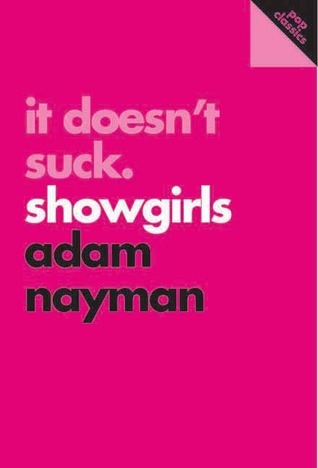
“IT DOESN’T SUCK” - Adam Nayman on SHOWGIRLS (#1)
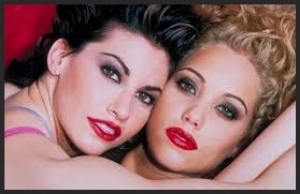
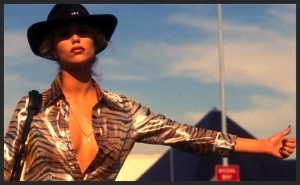
This was easily the best of the series - and surprisingly it was the first of the series. The book explores and contextualizes the film SHOWGIRLS – it's genesis, how Verhoeven constructed an extremely dry-as-a-saltine farce on par with his other films that were received in the manner that they were meant to: BASIC INSTINCT, ROBOCOP, TOTAL RECALL, and STARSHIP TROOPERS. In this book, Nayman does a stellar job at defending the film as a work of art that is intentionally, almost brilliantly bad and works as a satire for American life and culture as a whole. There are gorgeous examinations of the film scene-by-scene, but also in comparison to the contemporary films trying to do the same thing (Mulholland Drive) and its ill-fated, director-endorsed sequel that turns up the farce to ridiculous levels while dropping the budget to an inconceivable $30,000 (and is different than the film’s original sequel set in LA, BIMBOS). An excellent book that helps to understand one of the greatest flops in cinematic history, vindicating its very existence as what the author calls “A Masterpiece of Sh**.” The book ends with a lengthy and illuminating interview between the author and Verhoeven.