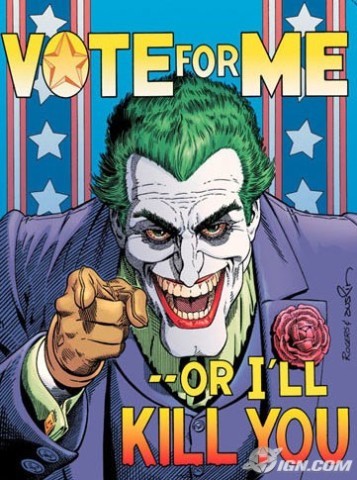
Celebrating Batman and Joker's seventy-five years as cultural icons, this hardcover Joker Anthology collects stories from the characters seven decades as the greatest villain in comics. Featuring stories from BATMAN #1, 5, 25, 32, 85, 163, 251, 427, BATMAN #15 (THE NEW 52), DETECTIVE COMICS #64, 168, 180, 475, 476, 726, 741, 826, DETECTIVE COMICS #1 (THE NEW 52), WORLD’S FINEST COMICS #61, SUPERMAN #9 and BATMAN: LEGENDS OF THE DARK KNIGHT #66.
Charles "Chuck" Dixon is an American comic book writer, perhaps best-known for long runs on Batman titles in the 1990s.
His earliest comics work was writing Evangeline first for Comico Comics in 1984 (then later for First Comics, who published the on-going series), on which he worked with his then-wife, the artist Judith Hunt. His big break came one year later, when editor Larry Hama hired him to write back-up stories for Marvel Comics' The Savage Sword of Conan.
In 1986, he began working for Eclipse Comics, writing Airboy with artist Tim Truman. Continuing to write for both Marvel and (mainly) Eclipse on these titles, as well as launching Strike! with artist Tom Lyle in August 1987 and Valkyrie with artist Paul Gulacy in October 1987, he began work on Carl Potts' Alien Legion series for Marvel's Epic Comics imprint, under editor Archie Goodwin. He also produced a three-issue adaptation of J. R. R. Tolkien's The Hobbit for Eclipse with artist David Wenzel between 1989 and 1990, and began writing Marc Spector: Moon Knight in June 1989.
His Punisher OGN Kingdom Gone (August, 1990) led to him working on the monthly The Punisher War Journal (and later, more monthly and occasional Punisher titles), and also brought him to the attention of DC Comics editor Denny O'Neil, who asked him to produce a Robin mini-series. The mini proved popular enough to spawn two sequels - The Joker's Wild (1991) and Cry of the Huntress (1992) - which led to both an ongoing monthly series (which Dixon wrote for 100 issues before leaving to work with CrossGen Comics), and to Dixon working on Detective Comics from #644-738 through the major Batman stories KnightFall & KnightsEnd (for which he helped create the key character of Bane), DC One Million , Contagion , Legacy , Cataclysm and No Man's Land . Much of his run was illustrated by Graham Nolan.
He was DC's most prolific Batman-writer in the mid-1990s (rivalled perhaps in history by Bill Finger and Dennis O'Neil) - in addition to writing Detective Comics he pioneered the individual series for Robin , Nightwing (which he wrote for 70 issues, and returned to briefly with 2005's #101) and Batgirl , as well as creating the team and book Birds of Prey .
While writing multiple Punisher and Batman comics (and October 1994's Punisher/Batman crossover), he also found time to launch Team 7 for Jim Lee's WildStorm/Image and Prophet for Rob Liefeld's Extreme Studios. He also wrote many issues of Catwoman and Green Arrow , regularly having about seven titles out each and every month between the years 1993 and 1998.
In March, 2002, Dixon turned his attention to CrossGen's output, salthough he co-wrote with Scott Beatty the origin of Barbara Gordon's Batgirl in 2003's Batgirl: Year One. For CrossGen he took over some of the comics of the out-going Mark Waid, taking over Sigil from #21, and Crux with #13. He launched Way of the Rat in June 2002, Brath (March '03), The Silken Ghost (June '03) and the pirate comic El Cazador (Oct '03), as well as editing Robert Rodi's non-Sigilverse The Crossovers. He also wrote the Ruse spin-off Archard's Agents one-shots in January and November '03 and April '04, the last released shortly before CrossGen's complete collapse forced the cancellation of all of its comics, before which Dixon wrote a single issue of Sojourn (May '04). Dixon's Way of the Rat #24, Brath #14 and El Cazador #6 were among the last comics released from the then-bankrupt publisher.
On June 10, 2008, Dixon announced on his forum that he was no longer "employed by DC Comics in any capacity."
This is a complicated rating for me. Perhaps the most complicated of the year.
See, the first 300 or so pages of this book are pretty much 1.5 stars. When I wasn't bored I was dreading turning the page because I was sure boredom was coming.
The last 150 or so pages are 5 stars.
I usually love older DC comics because if I'm not laughing at how campy the dialogue is (Dick, my son, I love you but you tell more dad jokes than Danny Tanner) I'm interested in the mystery. With the Joker, they started with a cold blooded, calculated killer. He made radio broadcasts about who was on his hit list and then he terrorized Gotham by sneaking in and killing his targets despite the police's best efforts. He drove Batman crazy and he was a force to be reckoned with.
Then the Comics Code came along and said "Yeah, you're scaring the kiddies. Get rid of him or lighten him up." So, they turned the Joker into a cheesy, goofball bank robber Batman '66 would be proud of. It was so goofy I put this book down several times. The art wasn't great either.
Then the 70's happened, the Comics Code lightened up and they flipped the switch and turned Joker into a monster again. Well, he killed people with his laughing gas again. Then he killed Jason Todd and it seemed like that was the worst he could do. For the 80's, beating a child to death with a crowbar was pretty damn bad.
Then we hit the millennium and it was like the writers said "You thought that was evil? Watch this!"
It got so much worse.
Violence wise. The writing got significantly better.
The most horrifying story, one that reminded me of that episode of Six Feet Under that me and most everyone could never sit through again, is the one where Tim unknowingly gets in the car with the Joker. He gasses Tim, ties him to the car seat and drives through the Gotham night with a dead married couple in the backseat. They've been Joker gassed to die with huge grins on their faces and Tim is rightfully horrified. He's trying to get out when he feels a toy car underneath the seat and he realizes this couple have a little boy that's been orphaned. He's forced to sit there as the Joker drives through the city hitting people indiscriminately. He kills several people, all the while telling Tim there's no way he'll be able to escape. The final straw is him driving closer and closer to a group of children sitting on Santa's lap. Tim's horrified and in a brilliant moment, tells a Marx joke and the Joker veers off course. He distracts the Joker with Groucho anecdotes and manages to escape. Tim's actually incredibly badass and relatable here.
It was that story and the portion from No Man's Land when he kills a woman trying to save the 80 babies he kidnapped that convinced me the writers were done with telling stories where the Joker is a clever figure and went straight into, he's a thoughtless killer. Watch what he does next!
The last stories are from the New 52, including the story where the Dollmaker cuts his face off. Not sure why he did that just to tape (?) it back on. It's grotesque, that's for sure. The last story follows him trying to track down Alfred during Death of the Family. I read that arc and I wasn't super impressed, not gonna lie. Anyway, the last page really stuck with me. The Joker does all of this because he thinks the Batfam is making Bruce weaker:
"It happens all of a sudden, just a tiny shift, but there it is. You stare back and you see it. The smallest flicker in the pupils, but still. And you say to yourself, see? Beneath it all he's just what you thought he was. A man. And ignore the fact that what you saw those tiny pupils do was expand. Expand for you after you stared back long enough. Ignore the fact that what you saw those black points expand with... was love."
They've been trying to build this relationship where the Joker has this twisted obsession with Batman. That he feels a kinship and a type of love for him but these last few stories are the only times I really got that feeling. Maybe if they'd focused on the issues that were more like that, I would've been more interested.
So, the first 300 pages get 1.5 stars. The last 150 or so get 5 stars.
There's a really great part of the story "Going Sane" where the Joker gets amnesia and thinks he's a man named Joseph Kerr. He meets a woman, falls in love and they share a life but he's having a mental breakdown and dreaming about being the Joker. It's so interesting because there's a voiceover from his girlfriend turned fiancée as he slowly reveals his true nature. It ends with her being hopeful for the future but we, the reader, know everything's going to hell.
This is my first experience with any of the Batman comics. I've known Joker for as long as I can remember (from the cartoons and then from the movies). And to speak the truth, I've always thought him to be kind of a joke. Now I'm not so sure anymore.
I found the early comics tedious. I disliked the art and I disliked Batman. He was... I don't know... funny?! The way he looked and his lines felt so, so bad. He almost seemed good-spirited. And I'm used to the dark, depressed Batman (the way he has been depicted in movies didn't help with that).
Anyway, this was never about Bats, it's always been about Joker. I love him and his insanity, his freedom from any empathy and/or remorse.
This is a five star book that could've been even better. The Joker is one of, if not the most notable or well known villains in all of comics, as well as pop culture as well. I think they easily could've chosen a couple of different stories, especially in the nineties, (Batman Adventures) But this is a most read for any Joker fan or Batman fan.
First time reading anything about the Joker, fell in love with him on the movie Suicide Squad along with Harley Quinn perfect couple, to bad they didn't make a movie together on how they met and their life story. I would have went to see the movie, this is 75 celebration graphic novel. My son brought this for me on my birthday. I have been trying to win everything on Harley Quinn and the Joker with no luck. Guess you could say I love a bad boy and his girlfriend. This was a great book to read everything about The Joker, a must read if you like The Joker like I do. 😍
Joker, Joker ... Harlekýn hrůzy Mistr zločinu Arcizločinec Svrchovaný mistr zla Pochmurný žertéř --> Král i blázon ......
Pokúsiť sa vymenovať všetky Jokerove prívlastky je priam majstrovske dielo, kedže on sám o sebe je exot, ktorý ich dostáva v každom diele požehnane - od tých ehm v zmysle komplimentu až po tie, ktoré nie sú akosi vhodné na vypisovanie xD
Je fajn, že som sa taktom dostala ku starým komiksom a vlastne ku začiatkom Jokera. Tiež po určitých častiach je niečo ako historická vsuvka, ktorá určite zaujme a poteší niekoho, kto sa chce dozvedieť viac.
Je to dobrý prehľad vývoja Jokera, stretávame sa tu s jeho začiatkami až po časti, ktoré sú priam notoricky známe a čitateš si tak môže aj porovnať rozdiely medzi grafikou, charakterom postáv a hlavne rozdiel v samotnom Jokerovi, ktorý prešiel naozaj veľkou (Jok)evolúciou.
Kniha, ktorú by mal mať každý znalec Jokera u seba doma. Doporučujem!
i thought it was all over the place in graphic wise and story wise it would go from escaping a asylum to holding children hostage to killing them off one by one
Holly cow! This was crazy! I loved this! So it was just so cool watching the progression of the Joker, from Clown Prince of Crime, to Crazy Psychopath. I mean wow, this was insane. The changes over the decades, were to cool to watch, the art, the plots, even the development of the characters. I loved it, it was such a brilliant collection of stories, I was a little bummed at the end how some of the stories were just experts from bigger books so I didn't get the complete story but for the price, it was just perfect, so many books all in one. I loved it! The Joker is one of my favorite villains, when he's not scaring the crap out of me, he's saying some creepy pun or line, that has me laughing despite myself. I was so excited to see where the writers would take them next. Beyond just the Joker it was interesting to see the different styles of Comics, how comics in general have changed, and I loved the little breaks they had between parts were they gave a brief description on the history of the Joker and how he had changed.
The very last words of this book gave me shivers, a perfect ending, for the collection!
The Joker was creepy even in the 40s. This collection is like the Batman 75th anniversary collect the highlights prove that the comics code damn near ruined comics in the 40s and 50s.
Once the 70s hit, though, Joker was better than ever. Nothing delves into the human condition quite like a madman.
The New 52, however, has turned the character into something I don't particularly care for: a sadist. In what seems to be an attempt to attract a generation that grew up on the Saw movies, they've turned Joker into a grotesque character. While I admit he was never above the macabre,m I'm sad to see such a cerebral character turn into a gross-out one.
But if I've learned anything in my years reading comics, it's nothing lasts forever. This too shall pass.
A must read for anybody who is a fan of the Joker. While it doesn't cover every aspect of the character (what single book could?) the book is great for anybody who wants to learn more about the incredible villain. The fascinating thing while reading this book is not just witnessing the evolution of the character, but also witnessing the evolution of American pop culture as well. To see Joker in the 40s, 60s, 90s, and 2000s is to see how evil itself has changed and the change, while grim, and vile, is something one cannot look away from, like a terrible car wreck, something I feel the Joker himself would view as a great compliment.
This books was simply awesome, being able to see how the Joker has changed throughout the years since the 1940's was pretty nice. Seeing how different writers and artists took this character and make him who he is today was well worth reading :)
Kdybych měla soudit komiks po komiksu, tak bych tomu asi dala nižší hodnocení, protože první polovina knihy jsou dost staré komiksy, které jsou tak trochu dětinské. Druhá polovina je ale skvělá. Obecně vidím hodnotu téhle sbírky, takže super.
The Joker is one of my favourite villains from across all types of media. It seems whether in a movie, a video game or on a comic book strip he embodies this wonderfully chaotic joy that stems from being so sinister and evil. Where as a lot of villains have a motive or justification to be so cruel, the Joker has no need for one. He does everything he does for the pure joy of it, he relishes in anarchy without a cause. There's something so scary about a entity that needs no reasoning to act so wicked as it makes it harder to understand and in turn defeat them.
This is the core of the relationship the Joker has shared with the Batman for the past 75 years. He is the ying to Batman's yang. Whereas Batman represents justice and order in Gotham city, the Joker reflects the opposite and relishes in causing turmoil and pain for the city's inhabitants. This is a back and forth dynamic that has spanned across the decades in all forms of media and it's a rivalry that will likely last even further into the future.
That's why I appreciated the collection of comic book stories that were held within this compendium book. Spanning 75 years from his first appearance all the way up to once his most latest, this book is a definitive outline of the history of the Joker across the decades. Starting from the 1940's, the book outlines the early roots of the Joker and how through the ages his killer actions were subject to change as the Comic Book Code Authority began to censor more violent elements in comic books. As it follows into the 70's we see how much the Joker storylines matured with the easing of censorship and influence from a much mature decade of media. We then finally cap it off with his latest outing in the New #52 era of stories in which he's taken to a very dark and unknown territory of storytelling which revitalised his position in the comic book industry quite a bit. I really appreciated how much I learned about the history of the Joker through these stories, you can see as the ages pass and the art styles evolve just how much Joker is a constant throughout all of it.
I think the collection of stories were quite varied as well. There was a nice mix of silly stories along with some more serious and gritty ones too. My only complaint is I feel the ratio of stories reflected in each decade weren't evenly balanced. I get that comes as a factor of comic book stories being a bit longer and in depth in the later decades but it's hard not to notice there were more stories present at the earlier sections of the book when compared to the latter parts. Plus with the earlier stories being short term comics you felt it was a complete story once you finished it. The more recent entries are individual parts from long spanning stories so it was easy to feel the narrative ended a bit abruptly there.
All in all though I had a lot of fun just seeing the evolution of The Joker across the eras. He's a definitive villain in nearly every medium he's in and it meant a lot to learn of his roots and how much story can be told through him, both comical and light as well as dark and brutal; here's to another 75 years to the Clown Prince of Crime.
The Joker: A Celebration of 75 Years is a compilation of some of the most notable Joker stories over the years to commemorate the seventy-fifth anniversary debut of one of the most iconic comic villains – at least in the Batman Family (2014). Over the years, there were many incarnations and depictions of The Clown Prince of Crime and this collection explores them all rather well.
This anthology is divided into five sections or more precisely comic era. The first section depicts the Joker in the Golden Age of Comics, then Silver, Bronze, Modern, and Rebirth Ages follow with each successive section.
It is very interesting to see how the Joker evolve or devolve from a simple Grim Jester to becoming Batman's chief archnemesis filled with madness and with deadly consequences. It was really interesting to see how the Joker was with his first appearance in Batman #1 and what he has become today.
As a whole, The Joker: A Celebration of 75 Years is a rather balanced book, showing each section rather evenly and not placing any favoritism in any of the eras. It gives us a nice perception of the era in which these stories were produced – a reflection of the times.
With anthologies like these, story selection would be the most difficult task – the Joker has been around for a long time and there are many stories with many having different favorites – in short it is impossible to please everyone. However, I think the editors picked a somewhat nice selection that shows the characteristic that is the Joker. So on the whole, I was really happy of which stories were presented.
All in all, I think The Joker: A Celebration of 75 Years is a wonderful selection of stories over the three-quarters of a century that this fiendish clown has been around. It is a good reference anthology for both the avid and subdued fan alike.
I’ve been a Joker fan since the early 90s, and I’ve read a lot of Joker books. I make a point of checking out these best of collections to make sure I have a handle on current interpretations of the character, how modern fans are defining the character, and what he industry sees as the best Joker stories. The tales chosen for each collection are pretty telling, and this is no exception.
The book starts with pretty standard choices: Joker’s first appearance and his reappearance in the 1940s, and some Golden Age selections like “Joker’s Millions.” These are good foundations for someone new to Joker and Batman’s dynamic and gives some good background before moving to newer stuff. The 70s-90s selections are particularly good: standards like “The Joker’s Five-Way Revenge” through “A Death in the Family.” There is some attempt to include standalone issues in larger tales that sometimes feel forced — part two of “Going Sane” feels a bit off here, especially considering the lack of Bruce Timm and Paul Dini, even Tim Sale Joker interpretations.
In the end, a good chunk of the book is dedicated to Rebirth Joker, which makes sense because it’s what DC wants to make popular. Rebirth is a bit like fetch though: you can’t just make it happen. It’s got a lot to offer, but shouldn’t be the main focus.
Overall, another great Joker collection. Definitely gives insight into the character and why he stands in a prominent position within pop culture and the DC Universe. I strongly suggest reading other books though afterwards. There are plenty of other great Joker stories out there that aren’t #edgy. Try “The Best Man” parts 1 and 2 (Batman #48-49, 2018) for example, Batman: White Knight, or Batman: The Dark Prince Charming. These are all very recent, relevant stories that get at more nuance.
If you like my reviews, check out my blog at MorbidSmile.com
We start off, of course, with the introduction of The Joker in the 1940's. Call me old fashioned (because I'm old) but this is the Joker I prefer. He seems to have more joie de vivre during this time. As we enter the Sixties, as noted in this book, the Clown Prince of Crime becomes more of a clown due to the popularity of the television series. (Cesar Romero is the best Joker ever and there is nothing you can do to change my mind. Absolutely nothing.) Joker manages to break out of Gotham City and even cause trouble in Metropolis. (I'm not up-to-date on my Superman lore but what happened to his cape we're not supposed to tug on?) Sadly, by the time we hit the Eighties and onward, Joker (i.e. the writers) becomes sicker. Here's a note for you comic book writers: 'sicker' does not equal 'more interesting.'
Confusing cuz this is a cover of another collection that has many of the same stories. But not all, like the realistic gray painted ones. Ones from the 40s are kinda hard to read the type but I love when they use that magenta grape color. Sections that go through the eras. A freaky Friday plot. Joker fish recolored cool.
I’ve read ones where Robin is beat with a crowbar but this one is in Africa where he meets his mother first! There’s one called Goin Sane about a woman who loved him as Joeseph Kerr (🙄) in an ugly typical sketchy art style. A few detective comics. It’s around this section the wobbly cursive is annoying to read. Forgot how silly the Xmas baby issue was. Then there’s the ok Robin Xmas car one. Then the New 52 one that ends at the giant steps and tall windows. The whole ghostly reattached face as a mask bit. Def leaves you feeling depressed.
This is a great collection. The Silver Age stories remain my favourites. I like that they include more narrative text. As much as I enjoy comic artwork, I really love the written word. It’s totally possible to tell a story only with images, but I find some of the more recent stories more difficult to follow because of the lack of text.
Anyway, the Joker might be the greatest comic villain of all time. He’s exceptionally versatile and his look is iconic. This is a collection well worth exploring.
This book is an anthology of Joker stories from different comic eras, and I enjoyed seeing the progression and transformation of the character from the early days to the crazed Joker we are now familiar with. Did not find the initial storylines are not that interesting, but I breezed through the latter half of the book. There are excerpts from some striking storylines like 'Death of the Family' and 'Clown Prince of Crime' which make me want to pick up the entire volumes. An entertaining collection overall.
It's funny to see how the Joker begins as a hokey character in watered down Batman comics, only to slowly evolve into an absolute maniac in the 70s and beyond. While the early comics were quick reads, the later ones evolve into page turners, led mainly by the anticipation of what crazy thing he'll do next.
Surprised by how many elements of the Joker mythos were present from the character’s inception. So much of the plot of Burton’s Batman was based off his first appearance. I also didn’t realize that the whole “Red Hood” backstory adopted by Moore in the Killing Joke was taken from the Golden Age version.
I will say it got really repetitive and tedious reading those Golden Age stories.
Nemám pocit, že by se sborníku dařilo ukázat změnu Jokera v průběhu času, o kterou se zjevně snaží. Často jej ukazují vybrané příběhy ze stejného období dost odlišně. Jako velkou přidanou hodnotu beru ukázání, že neumětelnost kresby ani vypravěčský um nejsou zcela závislé na období.
Haven't read some of these classic stories for years....wonderful read. The Joker is like Moriaty from the Sherlock Holmes stories. The only character to match with Batman.
Great book! The Joker is one of the most complex characters I've ever encountered, and his journey from clownster to extremely dark murderer is worth at least one book. Loved it!