Amos Oz’s masterpiece, My Michael, arrives in world literature not as a routine domestic drama of marital friction in 1950s Jerusalem, but as a profound excavation of human interiority. It is a novel born from the subterranean strata of human nature—a realm where raw thoughts, unspoken longings, and ancestral memory collide with the quiet tragedies of ordinary lives. Oz does not rely on catastrophic explosions or sensational betrayals; instead, he charts the slow, imperceptible erosion of vitality within a quiet domestic enclosure.
At first glance, some readers might wonder whether a woman or mother in Hannah’s position would truly think, feel, or withdraw in such complex and unvarnished ways. Such reactions are understandable when one approaches the text expecting a traditional, sanitized portrait of domestic life. Yet to view Hannah through a conventional lens is to miss the novel’s central revelation: behind the neat facades of household duty, maternal care, and polite social exchanges lies a vast, untamed wilderness of the human spirit that defies simple archetypes.
This deeper reality exposes the flaw in viewing Hannah Gonen as a passive figure—a character whose existence is merely a narrative device, a decorative ornament, or a bored housewife indulging in sentimental daydreams while sacrificing her aspirations for her husband’s career. Far from being a victim devoid of autonomy, Hannah possesses a formidable, brooding intellect and a distinct philosophy of existence. She works, makes deliberate choices, and navigates her internal abyss with stark self-awareness. Oz portrays her not as a flat caricature of female hysteria or through the lens of shallow melodrama, but as a fully realized human being capable of fierce warmth, sudden cruelty, cold detachment, and profound aesthetic sensitivity. When Hannah reflects on her childhood memories of the Arab twins Halil and Aziz, or her haunting visions of Captain Nemo’s Nautilus beneath frozen seas, she is articulating an existential hunger for intensity and freedom. Even in her darkest hours of psychological turbulence, Hannah THINKS. She refuses to romanticize her condition or her marriage, remaining an active, self-directed presence who confronts the weight of her choices.
To understand the full tragic weight of My Michael, one must re-examine Michael Gonen. Domestic grievance narratives rely on a clear antagonist—a cruel, neglectful, or domineering husband. But Michael is none of these things. He is a decent, hard-working, and conscientious man. He cooks, cleans the floors, fetches paraffin, stands in queue at the clinic, and uncomplainingly wakes at five in the morning to wash baby Yair’s diapers and warm his milk.
Oz’s structural brilliance lies in demonstrating that replacing Michael with another "good man"—a different husband with another profession or worldview—would alter nothing fundamental. Oz presents Michael not as a tyrant to be overthrown, but as an embodiment of rational order. As a geologist, Michael understands the world through neat taxonomies: lithosphere, Permian strata, and endogenic forces. He speaks with measured restraint, ending his explanations with a disciplined "I have finished."
The tragedy of the novel is not that Michael fails Hannah, but that even between two decent, well-meaning people who share a bed and love one another, the ultimate solitude of the individual soul remains unbridgeable. Humans are inherently social creatures who yearn for absolute union, yet each individual remains an island operating in an untranslatable interior language. Oz paints a portrait of two human worlds that can sit side-by-side in deep affection, yet remain forever incapable of fully merging.
The lazy critical inclination—famously echoed by blurbs comparing My Michael to a "modern Madame Bovary"—does a profound disservice to Oz’s artistic achievement. Gustave Flaubert’s Emma Bovary and Amos Oz’s Hannah Gonen occupy entirely different psychological and moral universes.
Flaubert observes his heroine from a distance, framing her restlessness as a byproduct of shallow romantic novels and trivial material longings. His critique centers on the folly of romantic self-delusion, requiring a foolish husband to drive the plot forward. Oz, writing as a young man undertaking the ambitious task of entering a woman’s consciousness, grants Hannah authentic intellectual gravity and existential weight. Her inner wilderness is not driven by frivolous dissatisfaction, but by memory, ancestral fate, and the brooding atmosphere of her surroundings. Where Flaubert constructs a hollow character with superficial expectations, Oz offers an empathetic excavation of existential solitude. To call Hannah a "modern Emma Bovary" is to mistake surface-level domestic unhappiness for structural and spiritual equivalence.
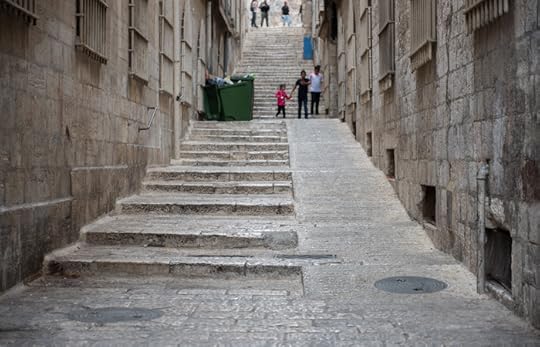
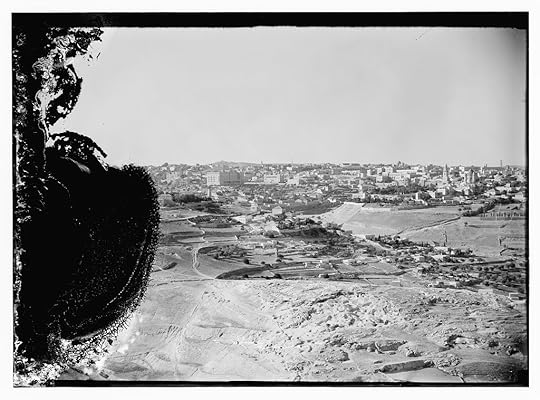
This isolation is mirrored in 1950s Jerusalem itself. In My Michael, Jerusalem is not a mere backdrop; it is an active extension of Hannah’s inner landscape. It is a city of cold stone walls, iron handrails, biting winter mists, and rustling pine trees—a "city of enclosed courtyards, her soul sealed up behind bleak walls." The physical borders, barbed wires, and divided quarters of the city mirror the emotional enclosures isolating each character.
Through this atmospheric landscape runs the terrifying thread of ancestral repetition. Oz explores the quiet tragedy of generations replacing one another, disguised in modern clothes and updated vocabularies, yet bound to the exact same fate. Hannah observes this loop with devastating clarity, feeling that human beings are like "one fresh draft after another... rejected and crumpled up and thrown in the wastebasket, to be replaced by a new, slightly improved version."
We watch Michael gradually adopt the stoop, phrases, and stoic cadence of his father Yehezkel. We observe their young son, Yair, inheriting his father’s emotional detachment and measured speech, already insisting on ending his statements with "I have finished."
In capturing this unbroken human loop, Amos Oz created a work of rare empathy and enduring power. My Michael does not offer neat resolution or easy consolation, because human life itself rarely affords them. Instead, it leaves us with an unforgettable testament to the quiet dignity of human interiority—a recognition that even in our deepest isolation, the beauty and complexity of our inner worlds remain entirely our own.
***
אני כותבת מפני שאנשים שאהבתי כבר מתו, ומפני שהזמן בירושלים איננו נח ואיננו מניח.
בימים ההם, בבניין טרה־סאנטה הקר, היה החורף חורף אמיתי. אבנים אפורות, חומות אטומות, וברזל חלוד המכוסה בערפילים נמוכים. ירושלים של חנה גונן איננה עיר של מילים קלות; היא עיר של חצרות סגורות, אשר נשמתה חתומה מאחורי שברי זכוכית דוקרניים.
מיכאל שלי, איש נוח ומתאפק, מודד את העולם בגאולוגיה, בשכבות של גיר וחרסית, ובמשפט הקצוב: אני גמרתי. אך מתחת לקרום הדיו והניירות של משרד המסחר והתעשייה, מתחת לשגרה הברוכה של שטיפת הרצפה וחימום החלב, גועשים הרי־געש תת־מימיים. בין שני בני־אדם טובי־לב, השוכבים זה לצד זה בלילות, משתרע מדבר־שממה אשר שום גשר לא יוכל לחצותו.
אין זו עלילה על קיומו של אי־סדר או על אהבה שנכזבה כבמחזה אירופי ישן. זוהי האלכימיה של הזיכרון. התאומים הערבים, חליל ועזיז, עודם מתאמנים ברימוני־יד בין צוקי מדבר יהודה; המשחתות דראגון וטיגריס עודן מסיירות במים הקפואים; והילד יאיר כבר לומד לשחזר את שתיקתו של אביו ואת צערו של סבו יחזקאל. הדורות מתחלפים, הניירות מתקמטים ומושלכים אל סל־הניירות, אך המעגל לעולם אינו נשבר.
מול החלון המואפל בירושלים עומדת חנה, חורתת באצבעה צורות באד הלח, ומביטה אל המרחקים. אין היא נסיכה מזויפת מרומן צרפתי, ואף לא בת־לוויה פסיבית. היא נפש ערה, צלולה וסגופה, המבינה כי בסופו של דבר, מול הזמן החולף והאבנים השותקות, כולנו נשארים עריריים ושלמים בתוך עצמנו.