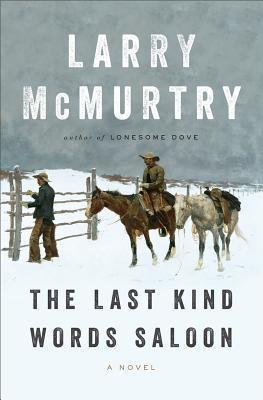
Larry McMurtry has done more than any other living writer to shape our literary imagination of the American West. With The Last Kind Words Saloon he returns again to the vivid and unsparing portrait of the nineteenth-century and cowboy lifestyle made so memorable in his classic Lonesome Dove. Evoking the greatest characters and legends of the Old Wild West, here McMurtry tells the story of the closing of the American frontier through the travails of two of its most immortal figures: Wyatt Earp and Doc Holliday. Opening in the settlement of Long Grass, Texas—not quite in Kansas, and nearly New Mexico—we encounter the taciturn Wyatt, whiling away his time in between bottles, and the dentist-turned-gunslinger Doc, more adept at poker than extracting teeth. Now hailed as heroes for their days of subduing drunks in Abilene and Dodge—more often with a mean look than a pistol—Wyatt and Doc are living out the last days of a way of life that is passing into history, two men never more aware of the growing distance between their lives and their legends.
Along with Wyatt's wife, Jessie, who runs the titular saloon, we meet Lord Ernle, an English baron; the exotic courtesan San Saba, "the most beautiful whore on the plains"; Charlie Goodnight, the Texas Ranger turned cattle driver last seen in McMurtry's Comanche Moon, and Nellie Courtright, the witty and irrepressible heroine of Telegraph Days.
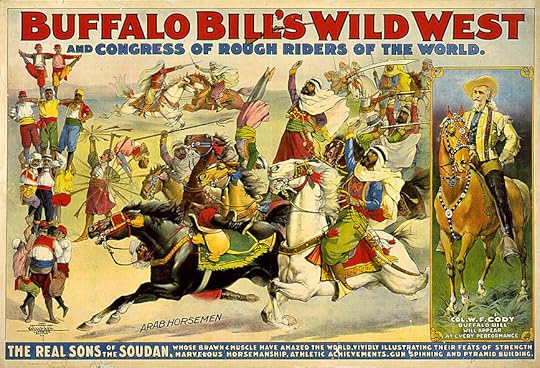
McMurtry traces the rich and varied friendship of Wyatt Earp and Doc Holiday from the town of Long Grass to Buffalo Bill's Wild West Show in Denver, then to Mobetie, Texas, and finally to Tombstone, Arizona, culminating with the famed gunfight at the O.K. Corral, rendered here in McMurtry's stark and peerless prose.
With the buffalo herds gone, the Comanche defeated, and vast swaths of the Great Plains being enclosed by cattle ranches, Wyatt and Doc live on, even as the storied West that forged their myths disappears. As harsh and beautiful, and as brutal and captivating as the open range it depicts, The Last Kind Words Saloon celebrates the genius of one of our most original American writers.
Larry Jeff McMurtry was an American novelist, essayist, and screenwriter whose work was predominantly set in either the Old West or contemporary Texas. His novels included Horseman, Pass By (1962), The Last Picture Show (1966), and Terms of Endearment (1975), which were adapted into films. Films adapted from McMurtry's works earned 34 Oscar nominations (13 wins). He was also a prominent book collector and bookseller. His 1985 Pulitzer Prize-winning novel Lonesome Dove was adapted into a television miniseries that earned 18 Emmy Award nominations (seven wins). The subsequent three novels in his Lonesome Dove series were adapted as three more miniseries, earning eight more Emmy nominations. McMurtry and co-writer Diana Ossana adapted the screenplay for Brokeback Mountain (2005), which earned eight Academy Award nominations with three wins, including McMurtry and Ossana for Best Adapted Screenplay. In 2014, McMurtry received the National Humanities Medal. In Tracy Daugherty's 2023 biography of McMurtry, the biographer quotes critic Dave Hickey as saying about McMurtry: "Larry is a writer, and it's kind of like being a critter. If you leave a cow alone, he'll eat grass. If you leave Larry alone, he'll write books. When he's in public, he may say hello and goodbye, but otherwise he is just resting, getting ready to go write."
“…at the end of the day, most places present mostly the same problems.”
“The Last Kind Words Saloon” is a short novel that is composed of very short chapters, that read as a series of loosely connected vignettes. The text circles (somewhat) around Wyatt Earp and Doc Holliday, but these are NOT the folks of the heroic myths. These men are intensely unlikable. The book ends with the famous gunfight at the O.K. Corral, but in this version it is basically an accident of chance, caused by ego. I am glad I read this novel, but it should not be one’s first exposure to Larry McMurtry. It is good, but nothing more. The characterization is tight, the writing is darn fine, but there is something missing. In fact the short text reminds me of an arty independent film. If Gus Van Sant made a western. Really this concise novel could easily be made into a script with very little tweaking. With such a great title, “The Last Kind Words Saloon” was a book I had to read, but I am hoping the other McMurtry’s on my “to read” pile are better.
I hate, hate, hate to say this because I love Larry McMurtry and consider Lonesome Dove to be the "Great American Novel," but I was disappointed in The Last Kind Words Saloon.
It felt rushed, it was too short, there was no plot, characters were introduced and seemed to be important to the story (before I realized there was no plot, just a series of events) and then just disappeared. It felt pointless to meet these people and then they didn't matter later on. That may be true to life but it's not how I like my fiction!
I am still not sure if this is supposed to be genre fiction (I expect a stronger plot in my genre stories) or literary fiction/character-driven (still doesn't work for me in that context).
I realize that the fight at the O.K. Corral only taking two paragraphs and feeling like an afterthought probably was truer to that incident in the life of Wyatt Earp, the real person, than what we have all come to know and love in the movie Tombstone. But the whole book seemed to be building to that moment and it was so anticlimactic when it actually happened.
The ending was also a bit of a letdown and depressing--I expect a McMurtry book to end on a nostalgic or melancholy note but this was really, really depressing. There may very well have been a point being made here about how America mythologizes our heroes vs. the stark reality...but yeah, still not working for me on that level either.
In the beginning Larry McMurtry says something to the effect that he chose to write about Wyatt Earp, the legend. But the Earp portrayed in this book felt...small, not legendary at all. So I am not sure what this would have looked like if he had chosen to write about Earp, the man. I didn't like or care what happened to McMurtry's Earp, and I was able to care deeply for Woodrow Call. That is saying something.
I guess my expectations were too high since a new book from McMurtry is such a long time coming. Will I buy his next book? Of course. Maybe I just did not 'get' what he was trying to do here.
Oh, he is still the master of the Creative Torture Scene. Nobody does it quite like McMurtry.
Beginning in Long Grass, (maybe Texas) this describes a tangential series of events following western legends Wyatt Earp and Doc Holliday. We also see Warren and Virgil, Buffalo Bill, Quinah Parker and then we end with a retelling of the shootout at the OK Corral.
McMurtry has captured the essence of the west, but in symbolic relief. This is a stage production and not filmed on location.
Whether it is history or legend or tall tale is left for the reader to decide, but McMurtry’s role as a unique and visionary bard of the old west is in no doubt.
I imbibed this in short order and found it an entertaining vision of the end of the American West as a wild frontier. McMurtry accurately captures its flavor in his preface as “a ballad in prose whose characters are afloat in time; their legends and their lives in history rarely match”. Quoting the director John Ford: “when you had to choose between history and legend, print the legend. And so I’ve done.”
Here a series of vignettes feature mostly Doc Holliday and Wyatt Earp, who have set up shop in Long Grass in the Texas panhandle (“not quite in Kansas, and nearly New Mexico”). It’s easy to see their comic performances are not history, but it’s hard to see the legend. Maybe we are getting a new legend. One where they are humble enough to admit they can’t shoot well and quick to discount the glory others see in their reputation from their time Abilene and Dodge (they feel all they did was subdue some drunks).
Nearly equal time is devoted to little sketches and patches of dialog of three other characters, which I enjoyed a lot while wishing for a lot more. These Wyatt’s ostensible wife Jesse, a feisty saloon keeper, Charles Goodnight, the famous and laconic cattle rancher, and Saba, a fictional brothel madam who was bought from a Turkish sultan by a wealthy English aristocrat and entrepreneur, Lord Ernle. They are all brought together by the initiation of a partnership between Ernle and Goodnight which represents the largest ranch enterprise in the world.
Some of the action here is slapstick, and often the dialog is silly but fun, as here: “Charlie Goodnight’s know to be irascible”, Wyatt said, to Doc. “It’s rare that he’s even polite.” “What did you say he was?”, Doc asked. “Irascible, clean out your damned ears,” Wyatt said. “It’s too much word for me, that’s all,” Doc protested. “Some days you just talk funny.”
Wyatt has his dark side in his temper, evident when he sometimes whacks Jesse, who takes it in stride: It took talent to make Wyatt lose his temper, but Jesse knew just how to do it, and did it mainly to have something happening. … But Jesse had no doubt that Wyatt would kill someone, someday, for something or nothing. There was something hard in Wyatt that wasn’t in his brother Morgan or his brother Virgil, tough they were actually lawmen for real, Morgan usually a sheriff and Virgil usually a deputy.
The theme of the taming of the West is modified by significant dangers that still exist. For example, a band of Kiowas not subdued on reservations make a brief appearance as marauders (“Torturing whites was a splendid way to spend the afternoon”). Also, wild weather continues to be a substantial hazard, and a storm here is linked to devastating, massive cattle stampede (“Doc was outraged. He had never been fond of cattle and could barely even tolerate horses.”)
Journalists hang around these last elements of the Wild West for stories to sell papers. Buffalo Bill Cody shows up to engage Wyatt and Doc as gunfighters for his travelling show. His fictional friend Nellie Cartwright, a telegrapher/journalist, also makes a delightful appearance. She was the lead character for a satisfying and more conventional novel with similar themes, “Telegraph Days.” Nellie catches the eye of Goodnight, who otherwise is obsessed with his work:
Goodnight considered Nellie to be both impudent and rash, like all women, and yet he thought of her often: more often than he thought about his own admirable wife, who certainly paid close attention to his behavior. He considered himself a man of certainties. He meant to speak to Mary about her constant scrutiny but every time he got ready to say something Mary got some comment in first. It made him wonder why he talked to Mary at all, since on most conversations he came away feeling like a fool.
Goodnight’s wife Mary is one final colorful character of note. When Charlie wonders why she invited a stinky skunk trapper to their dinner table, she fires back: “Company’s too scarce out here on the baldies,” Mary said, :”I can’t afford to be picky.”
If you lower your expectations for this short novel based on past reads from McMurtry, you might enjoy the ride better of an extended song of the West as proposed by the author. The shoot-out at the OK Corral in Tombstone is here. You will likely be left wondering is its brief portrayal is more in line with history or legend.
First of all, don't be fooled by the "page count" - this is more of a novella. It's one of those books where the publisher uses every physical trick in the book - pun intended - to s-t-r-e-t-c-h the manuscript into appearing longer than it is. I'd be a little upset, but McMurtry is such a favorite of mine that he can hardly do wrong in my eyes. The Last Kind Words Saloon is the last novel that he wrote, 7 years before dying this year. That makes this a sad moment for me, as I've read all of his previous novels. Unfortunately, it was something of a weak effort by his high standards - jokes repeated, nonsequitors, some dialogue not up to his benchmark-setting perfection, etc. I suspect that he felt that drop-off in ability or energy or both, and called it a day. What a day it has been for us McMurtry fans, though ! And despite the issues above, the plot of The Last Kind Words Saloon is pure McMurtry and I devoured the book in one day, unusual for me.
Once again McMurtry uses actual persons of the Old West to populate the story. Charles Goodnight (the cattleman whose actions in respect to his friend were the model for Woodrow Call's heroic transport of the dead Gus McCrae in Lonesome Dove) and an English nobleman join forces to set up the largest cattle ranch in the country. Goodnight's Black foreman Bose Ikard may have been the prototype for Deets of Lonesome Dove as well. Wyatt Earp and Doc Holliday, in the little town of Long Grass, Texas are, in the immortal words of The Artist Formerly Known As Prince, busy doing something close to nothing, but different from the day before. Wyatt is henpecked by his wife Jessie, and is loathe to say three words to anyone. Doc is loquacious and brash, but in the end a hell of a lot more levelheaded than Earp. While McMurtry's topic is ostensibly the West, and its demise, as always he is getting where he is going using the battle of the sexes. And few of his heroes and heroines consider themselves winners in that war - mostly they keep fighting.
Buffalo Bill Cody hires Wyatt and Doc to perform in his Wild West Shows in Denver. Nellie Courtright is an outspoken reporter who travels throughout the territory, infatuated with Cody. Virgil and Morgan Earp are already the law in Tombstone, and Wyatt and Doc decide to join them, physically, if not professionally.
One thing that I always enjoy in McMurtry's books is that his characters are curious about each other - that ups the ante every time. The saloon for which the book is named actually moves around with the characters and is reestablished in a different town. Not surprisingly, it doubles as a whorehouse, and a sign near the swinging doors (no doubt on the way to swinging drawers, as Merle Haggard would say) makes an intriguing offer to well-endowed cowboys.
Throughout, the backstory is the sorrow of watching the railroad bring elements that spell doom for the way things have been. McMurtry, referring specifically to Lonesome Dove, but potentially to his entire oeuvre, calls his work the Gone With the Wind of the West. He painted loving portraits of the end of an era.
It's been awhile since I last read a McMurtry novel. Of course its hard to compare anything he has written to his Pulitzer Prize winning Lonesome Dove which is probably my favorite novel of all time. And The Last Kind Words Saloon was definitely not Lonesome Dove but it was still an enjoyable look at the old west. It was a light, humorous, and fun read with McMurtry telling his own version of Wyatt Earp and Doc Holiday. He states on the back cover that "I had the great director John Ford in mind when I wrote this book; he famously said that when you had to choose between history and legend, print the legend. And so I've done." The novel takes Wyatt and Doc from the small settlement of Long Grass, Texas, then on to Denver where they briefly and comically play gunfighters in Buffalo Bill's Wild West Show. Then they finally make it to Tombstone through an apocalyptic sand storm. Along the way are other notables including Charlie Goodnight, the famous rancher who also appears in McMurtry's Lonesome Dove series; Nellie Courtright, the newspaper reporter who was the focus of McMurtry's novel Telegraph Days; Quanah Parker, the Comanche Chief; and the Clantons of Tombstone.
Overall, I did enjoy this for what it was: a "comically subversive work of fiction" as stated by Joyce Carol Oates in the New York Review of Books. Was this historically accurate? Of course not . . . for example the book has Buffalo Bill dying before the Earps get to Tombstone. But he actually died in 1917 while the gunfight in Tombstone happened in 1881. A mild recommendation for this one.
A curiosity - the polar opposite of McMurtry's epic, dense Lonesome Dove Saga novels, this is a brief series of sketches, skirting over the life of Wyatt Earp and Doc Holliday and their families, including the famous gunfight. Entertaining and pleasantly swift, can't help but being left with the feeling I would rather have had another epic to deal with such mythical figures.
I found all these bad reviews here on GR, so I bought it and let it sit on a shelf, expecting a poor novel. McMurtry HAS written poorly at turns...some quite awful (think: Rhino Ranch, When The Light Goes, Duane's Depressed, in that distinctly paradigmatic McMurtry reboot style, which always stamps out the same Middle Aged Eccentric Cadillac Jack archetype...autobiographical, one must wonder?). And yet he has written superbly (The Last Picture Show, Moving On, All My Friends Are Going To Be Strangers, Horseman Pass By).
"The Last Kind Words Saloon" is not a bad book! It's a very light, easy read, and a very engaging, re-vamp of the Earp/Holliday legend. Melancholy, humorous, legend-deflating (or that "unsentimental" texture we've come to know and expect). I enjoyed this story.
Which makes me wonder how all these bad reviews came to be! After going back over them, I'm seeing some common threads. Short vignettes, you say? 2-3 page chapters are a common McMurtry technique, and becoming more familiar with the McMurtry canon will make this clear. (And what's really wrong with short chapters?) The worst offender is this continual hearkening to LONESOME DOVE, and a lamentation on the inequality perceived. My friends, come now. This is an unfortunate irony. McMurtry would be saddened by this LONESOME DOVE aggrandizement that has become so commonplace in the western world.
The man himself has lamented in interviews the irony of LONESOME DOVE: written consciously as an "unsentimental" anti-western, in contrast to the guns & glory and romantic idealism of the American West, has become the paramount of its time and genre. Yes, the novel is top-tier western lit (though COMANCHE MOON might be better, and STREETS OF LAREDO right up there; though DEAD MAN'S WALK, a little weak overall), and the characters Call & Gus will stand among the most memorable, but to compare all subsequent material to this particular story cycle is myopic at best, and casts an unnecessary pall. Not to mention the author's deliberate aim to burst that romanticist bubble. Which is where we find ourselves now, reading his newest 19-century-era novel.
The ending might be abrupt and melancholy, but to me, that fits quite well with what McMurtry appears to be doing. He is re-working well known myths, pushing back from that "sentimentality" he has always found so distasteful. In classic McMurtry style. In "The Last Kind Words Saloon," he is in classic form.
I picked this book up at Powell's this weekend and absolutely fell in love with it. It's a short, spare, weird and funny novel about McMurtry's favorite Old West characters: Doc Holliday, Wyatt Earp, Bill Cody, Nellie Courtright. It's told almost entirely in crackling good dialogue and just reminded me of what a great book can do--pull you into its strange little world so that you never want to leave.
After I read it, I looked up the reviews and was astonished to find that so many critics didn't like it! Honestly, I didn't know McMurtry got bad reviews. Even here on Goodreads it's not wildly popular.
Well, I loved it, and maybe you will, too. Let me know if you do.
I so enjoyed Lonesome Dove that I thought I'd try this new work by Larry McMurtry. What a mistake! It is almost as if the publisher said "Larry, you need to get us something new." And Larry replied, "Well, let me see what I can dig up from my notes." He ought to have left it buried.
In fact, not far into the book, I wondered if he had passed away and some enterprising editor, anxious to squeeze a few more dollars from McMurtry fans, cobbled something together from notes as though it were a "previously undiscovered manuscript".
I will confess I did not finish the book. With so many good books out there waiting to be read, I don't waste my time with books I don't enjoy. If any of you read it and enjoy it, good for you. But it's not my cuppa.
This was disappointing, very disappointing. It's a slim and slight collection of vignettes that would never have been published unless it was written by Larry McMurtry. The author may be relaxed about this - after all, he's more than earned his spurs - but the publishers should know better.
I loved being immersed back into the world of Wyatt Earp and Doc Holliday.
Favorite passages:
Conversation between Wyatt Earp and Doc Holliday:
"I suspect you just ate skunk," Wyatt said. They had stopped to count the buildings in Mobetie, it didn't take long. "I just count seven," Wyatt went on, "And one of them's a barber shop."
"All you have to do to acquire a barber shop is shoot the barber, which I'll be glad to do," Doc said.
"It's my experience that people will shoots dentists even quicker than barbers," Wyatt said, "Let's find a saloon and soak our tonsils."
Conversation between Charlie Goodnight and his wife Mary:
"With women it didn't take long for things to slip out of kilter. "I mainly just said what a good trail boss he was."
"You managed to miss the point Charlie," she said.
"I don't even have a notion but I'm sure you're going to tell me what the main point is," he said, "I'll just await the news."
"Miguel's in love with San Saba, that's as plain as the nose on your face," Mary said just as she blew out the lantern."
Wouldn’t you like to visit a place named “The Last Kind Words Saloon?” For those of you who are fans of western novels, you are probably familiar with writer Larry McMurtry. His famous Lonesome Dove won the hearts of many through print, and later in the fabulous mini-series.
Well, McMurtry fans are not neutral about his latest work. They seem to love it or hate it. I was won over once again with McMurtry’s prose. It’s authentic, and the humorous dialogue between the two main characters is reminiscent of the beloved Gus and Call of the Lonesome Dove tetralogy.
The Last Kind Words Saloon is a short read, what one reviewer called “sparely written.” It is the story of a legend and the end of an era. Wyatt Earp, his brothers, and the legendary Doc Holliday are joined by Buffalo Bill Cody, in his final days, in a story that moves around from town to town through the boundaries of states that no one seems to know precisely and builds to the famous shootout at the OK Corral. The women are feisty and the inclusion of a Turkish madam and a wealthy English Lord give the book an exotic component. A few characters from other McMurtry novels give it familiarity.
Save your romanticism about this time, though. Long days, boredom, and hard living (and drinking) dominate. Cattle stampedes, Indian torture, and domestic violence scenes are there. Though you know the build up is approaching to the OK Corral showdown, I think McMurtry gives it the aestheticism it is due. That’s not the end of the book, however.
A wooden sign with the saloon’s name, a tangible symbol of an era, endures and comes to a pathetic end. Take heart. Though the Old West may not have survived, its legends do.
For this and many, many other western novels please amble on in to your local branch of the La Crosse County Library System. We’d be mighty pleased to serve you!
Find this book and other titles within our catalog.
Great opener, but distracting, disjointed plot structure & no real ending. Still, it's McMurtry, & I enjoyed it. Might reread it sometime.... Or not. For me, 3.5 stars, rounded up. McMurtry fan-boy that I am. Lots of others I'd reread before this one.
McMurtry's own comments on his last novel are unflattering. The novel, a comedy, is only 196 pages — and divided into 58 chapters. “You can read it at a stoplight,” McMurtry said.
Money is definitely the reason one of the book-tour stops was in Dallas in 2014 — “a second-rate city that wishes it were first-rate,” McMurtry wrote in a 2013 Texas Monthly piece — for the Dallas Museum of Art’s Arts & Letters Live series. “I want this book to have every chance to do well,” McMurtry said. “Plus, I want some money.”
“I worry about where the next million dollars is going to come from,” McMurtry, who has a well-documented addiction to buying books, said in early May 2014, only half-jokingly, in his Dallas hotel room. Source: http://grantland.com/hollywood-prospe... -- a *very* entertaining interview, also with Diana Ossana .
OK, here's the teaser, for LMcM & Diana Ossana's first date, in Tucson, circa 1985: “When I first met Larry, he was involved with about five or six different women,” Ossana said. “He was quite the ladies’ man. I was always really puzzled. One day I said to him, ‘So all of these women are your girlfriends?’ And he said, ‘Yes.’ And I said, ‘Well, do they know about one another?’ He said, ‘Nooo.’” McMurtry giggled as Ossana told this story [in 2014].
I love Larry McMurtry books, and I had never even heard of this one, and it was ok, but just ok.
This is a historical fiction with some of the great names of the west, the Earp brothers, Doc Holliday, Buffalo Bill Cody, Charles Goodnight, etc and there lives and interactions leading up to Tombstone’s fight at the OK Corral.
As I said it’s “ok”, it felt more like he owed a publisher a story and cranked this out quickly.
This is an irreverent retelling of the Wyatt Earp/Doc Holliday relationship from Long Grass to Tombstone. Wyatt and Doc are not very nice guys and the shootout at the O.K. corral is completely different from every historical reading that I have ever done. There is also a goodly amount of space spent on the rancher, Charles Goodnight and his wife. Not for everyone, this is a good change of pace.
The best writing is often the simplest. This is such a spare, austere read – I would hardly call it a novel – and yet Larry McMurtry achieves such a sense of melancholy, grace and life in all its bawdiness, terror and beauty, that the end result is simply breathtaking.
There are so many indelible moments here: an aged Wyatt Earp ruminating in a back yard filled with junk, a hail storm on the prairie, two people dancing together to the memory of distant music, the sign in the Orchid stating that 12-inch cocks get to fuck free, the Kiowa slicing open a teamster’s stomach and stuffing it with hot coals.
McMurtry begins slyly, with the Wyatt Earp and Doc Holliday pairing presented here more like Don Quixote and Sancho Panza, so broad and humorous are the strokes. The author himself concedes that his take on the classic story is more legend than history, a ballad in prose.
Then we get truly startling scenes like Jessie revving up Wyatt so that he can strike her, because she is so jaded by her job as barkeep. Short, sharp vignettes like these remind us just how caustic is McMurtry’s revisionist take on the Western mythos, taking in a range of characters from an English Duke to a journalist from the New York Times. What is also interesting here is the role of the women, from whores to wives and girlfriends.
I loved this book; it crept up on me quite unexpectedly. The tone is conversational, unhurried. (McMurtry’s experience as a screenwriter is abundantly on display in the rich dialogue, which is note perfect). There are few other living writers who can evoke full-bloodied characters in so few words, in addition to painting such a vivid backdrop. A true privilege to read.
The Last Kind Words Saloon by Larry McMurtry 4 stars 196 pp Publication Date: 2014
To be honest, I had a difficult time rating The Last Kind Words Saloon by Larry McMurtry, because while I enjoyed reading it I have expectations of a certain standard set by reading other McMurtry books as Lonesome Dove,Sin Killer, Buffalo Girls and By Sorrow's River and then there is the excellent book about Doc Holliday and Wyatt Earp by Mary Doria Russell, Doc and in my opinion The Last Kind Words Saloon did not measure up. However, I enjoyed every moment reading the book. I love the folksy prose and his short chapters worked well for my reading at the moment. I also considered that the author was writing to the legend rather than an exact history.
I think the book works as light entertainment and it is necessary to shift standards at the beginning of the read.
Everyone's always been really down on this book and I don't think it's all that fair. Sure, Larry will always suffer from the fact that any Western he writes, no matter how good, ain't gonna be Lonesome Dove (my favourite book).
It's a strange affliction, trying to continue writing in a genre that you've already bossed. But I do think this is how you do it. The Last Kind Words Saloon is a joke, it's a bit of fun, it's a satire of the western genre and the characters and events we think we know. It's not factually accurate and nor should it be (something that he never worried about in LD either).
As McMurtry says in his introduction, borrowing from the great John Ford, 'when you had to choose between history and legend, print the legend. And so I've done.'
Imagine having all these Western icons all on one stage: Wyatt Earp and his brothers Virgil, Morgan, Warren and (half-brother) Newton; Doc Holliday, Buffalo Bill Cody, Texas Ranger-turned-cattle rancher Charles Goodnight, Comanche chief Quanah Parker (son of captive of Cynthia Ann, who Goodnight "saved" from the Comanches after many years) and more? Just pick up Larry McMurtry's 196-page humorously written novel "The Last Kind Words Saloon."
It is superb. I found myself smiling in just about every paragraph because of McMurtry's prose. This tale presents sides of every character in a way we've never seen these icons presented. Gunman Wyatt Earp is basically a shy man, intimidated by this wife, in love with his whiskey, not fond of guns, but always willing to help his law-enforcement brothers when push comes to shove. As the book moves toward closure, the reader gets a view of the OK Corral shootout that is, well, hilarious.
While McMurtry provides his yarn amid real historical events, his portrayal of the personalities puts these icons almost into your own living rooms, where you learn to love them, hate them or pour whiskey and join them. I LOVED this book. Perhaps it's not a surprise that I do, because McMurtry wrote one of the finest novels I've ever read: Lonesome Dove, along with subsequent sequels and pre-sequels. McMurtry brings to life everything he touches.
Pick up "The Last Kind Words Saloon," pull up a chair and sit out front with Wyatt and Doc and the gang. You will enjoy yourself.
I don't think Larry McMurtry ever really got past Lonesome Dove. Is that good or bad? I don't know. It does seem that everything he's written since (except the memoirs) has tried to recapture that lightning in a bottle.
With The Last Kind Words Saloon, McMurtry gives us Wyatt Earpe & Doc Holliday as focal characters, as well as Charlie Goodnight (who first came our way in Lonesome Dove,) a passel of really interesting women, and a sign for the saloon that Wyatt carries from town to town, much like Gus's sign for the Hat Creek Cattle Company - minus its many embellishments.
Wyatt and Doc are as close to W.F. Call and Augustus McCrae as we can hope to get, one taciturn, the other loquacious, both drunk most of the time, and as close to each other as to be constantly one one another's nerves. They're totally sympathetic, and highly comic characters, as are the rest of the cast, minus the villains, who are necessarily dastardly. I admit to a life long fascination with Doc Holliday, a whiskey swilling, poker playing, gun slinging (though not much of a shot in this outing,) consumptive and Romantic dandy. (Think Val Kilmer in the movie Tombstone.) In this book, Doc, a dentist by trade, is constantly on the prowl for a tooth to pull in order to add to his income.
It's as quick a read as any of McMurtry's books have been over the past few years, and because he's having such a good time, and got his mojo working, it's also a hugely entertaining read.
This ballad and portrait of the by gone era of the nineteenth century and the cowboy lifestyle is written by a master writer who can bring all of the past and characters to life with a minimum of narrative prose.
They are living out the last days of a way of life in the west. It highlights the bond of friendship between Wyatt Earp and Doc Holliday despite their flawed characters and their gunslinger reputations. The buffalo are gone, the Indians have been defeated and cattle ranches are taking over the Great Plains. The novel wouldn’t be complete without the gun fight at the OK corral told without the glamour and drama usually depicted.
Mr. McMurty is the keeper of the flame for all the western writers and wonderful books we have treasured. He has a true genius to capture the west in all its glory and brutality.
Ok - yes a very short read - yes it is not as great as Lonesome Dove by any stretch of the imagination. But take it for what it is - a story of the legend of the west - all the characters including the Kiowa's and the one Comanche all existed and ranged through Texas in the waning days of the old west. I live in Amarillo - about 20 miles from the Charles and Mary Goodnight home and Palo Duro Canyon that was the last open range home to the Comanche.
This book though brief is like the men and women Larry writes about - people of action and few words - living is a rough and untamed country. You don't need character development - these people are legends - you just get to enjoy spending a few hours seeing their lives through the written word.
On an unassuming Wednesday morning in 1881, nine men--three sets of brothers, an unarmed ranch-hand from Mississippi, and a dentist--walked out into the streets of Tombstone, Arizona, and engaged in a shootout that lasted 30 seconds. When the firing ended, three of the men--Ike Clayton, Tom McLaury, and Frank McLaury--were dead, all of them outlaws. Two more men--the marshall and his assistant--were wounded, though not fatally. And two others--Wyatt Earp, brother to the marshall and his deputy, and Doc Holliday, one of Wyatt Earp's only friends--would become famous because of it. In fact, this one moment would come characterize the unsettled West as a place of common violence, lawlessness, and untamed brutish antagonism, defining an entire era in American history as something befitting the Hollywood depictions that were only decades away. By 1890--less than ten years after the shootout--all but two of the survivors would themselves be dead, either at the hands of other men or, in the case of Doc Holliday, tuberculosis. Virgil Earp, disabled by a gunshot to the arm almost exactly two months after the shootout, would die in 1905, and his brother Wyatt would pass away in 1929 at the age of 80, a senile old man living in a Los Angeles apartment with his third wife. It was there, in the heart of the burgeoning American cinema, that Earp would consult with the very same industry that would one day transform him into a caricature of himself: an ironic end to a man redefined in a blink of an eye, his legacy forged from shadows into reality.
Larry McMurtry, perhaps the more eminent Western writer working in America today, has written his most recent book about Wyatt and Doc. And of the nearly 200 pages that make up The Last Kind Words Saloon, the infamous occurrence at the OK Corral occupies just nine sentences at the end of the final chapter. On its surface, this event--the sole moment for which both men are today remembered--should be the focus of any study of Earp and Holliday; in McMurtry's hands, it is little more than an afterthought, and rightly so. Enough has been written about the mythologized men of Tombstone, he seems to be saying. Instead, he wants to imagine the men as they really were--not historically, mind you, but symbolically. In McMurtry's sparse, almost barren prose, Earp and Holliday--both of whom were in their thirties at the time--are exorcised from what they've since become and inhabited by the souls of aged porch-sitters, as though they are two old men who'd seen enough of the West to know more about the world around them than almost anyone else.
Except that, when the two men are not engaged in seemingly pointless conversations, they are behaving like immature teenagers aspiring to be much more: they join Wild Bill Cody's traveling show and fail miserably, unable to handle or shoot their weapons, and boring the crowd; they line up empty bottles behind a bar to practice their skills, at which they are embarrassingly bad; they express befuddlement over the local whorehouse's anatomical discount; they have troubles talking with women, and Earp not only punches his wife with frequency but cries afterward, ashamed; and so on. Both men are pulled in opposing directions, first by the images they have of themselves as tough gunfighters, and second by their total incompetence. When they sit on their various porches throughout McMurtry's novel, they are like children at play, their audience little more than each other; when they are forced to act, their performances come crashing down around them, and they are helpless, so much so that when the infamous shootout finally arrives, it is rendered in such unadorned prose--nine short, adjective-free sentences, as though drawn from a procedural report--that it's a shocking moment of awareness. The children have been jarred from their reverie, this time for good--this time with blood.
Which is McMurtry's point. His novel is not a celebration of the West or an appreciation of the men who inhabited it. Instead, this is an anti-Western, an attempt to depict the West not as it was but what we've made it into--namely, a fantasy of raging machismo, loose women, alcohol flowing like rivers, and gunfights abounding. Strip away the romantic adrenaline from the one remembered event in the lives of both Holliday and Earp, and we are left with two irresponsible young boys in a world of other young boys, all of them parading around as elders of the West.* And when we strip away the fictions of the West from our modern depictions of it--the high-noon duels, the desperadoes and bar-maids, the Indian attacks, guns that are ever-reliable and always shooting straight--we see just why this one simple embellishment has become such an important part of our country's narrative: it gives us permission to see ourselves as the gruff young country that has still not completely reformed itself, the rebellious young thing in a world of elders who can still outgun them. We can think of ourselves as tough, confident, and ruthless people. We can anoint ourselves sheriffs over any situation, claim any place or person as our own, can kill or pardon as we see fit, based on our own unspoken conscience. Others will abide by us, will revere and even fear us for what they know of us. We are the wild, untamed millions; when other nations relate their histories across the millennia, relate stories of endless wars and gruesome revolutions, we can think back to our uncivilized early years and be among them. And yet, this image is based on little more than a thirty-second scene, which has somehow been transformed by time and human intervention into a full-fledged play bearing little resemblance to the source materials.
The title of McMurtry's novel comes from a saloon sign that Wyatt Earp's brother Warren hauls around throughout much of the book; it is the name of his establishment in Long Grass, Texas, and when the Earps move across the undefined borders of the new American territories, Warren takes it with him, constantly in search of a new place to call his own, to adorn with his sign. He never does find a permanent saloon, and in the novel's epilogue, a reporter visits the ailing and elderly Wyatt Earp in his Los Angeles apartment. His wife tells the similarly aged reporter to not bother with questions about the gunfight, saying, "Wyatt don't remember much--there's days when he barely remembers me." On his front lawn, topping off a stack of old tires, is his brother's sign, beaten down by time but still in tact. The reporter offers to buy it, but Earp's wife refuses, giving her the sign for free. "Warren Earp drug it around all over the place," she says, adding, "We never did know what he meant by it." Warren's sign was, simply said, a promise that somewhere in the strange and uncharted West there would be a place for him. As the novel closes, the sign and Wyatt Earp are one in the same--two small, forgotten things stuck out of time, still searching for a home, for a reality in which they can simply be themselves and nothing more.
*The only true "old man" in the novel--the head of the Clanton outlaws--is actually referred to as Old Man Clanton in his various chapters, though he is quickly shot and killed by unknown assailants.
Easy-breezy read. Very engaging dialogue with interesting characters you love and hate at the same time. The ending was a bit lackluster, especially since I know the author's capabilities from Lonesome Dove.
3.5 Stars! Larry Mcmurtry succeeded in what he was trying to do with this book. He took the long standing glorified views of tough-guy, good-guy, quick-draw heroes and exposed them as false. He novelized what the real Wild West was most likely really like. This book is incredibly comically subversive. It is beautiful in a way what he did here (especially considering he did it in real life as well by helping the author pen the screenplay for Brokeback Mountain--yep you read that right. One of America's favorite western authors helped write the screenplay for a movie that featured two men in love. And why did this proud Texan Western author do that, because fuck homophobia, that's why!) This man loves challenging stereotypes and I love him for it. However just like the real life Wild West as he portrayed it, the book at times drags and also bounces around a lot like a ride in a horse-drawn carriage. Regardless, because I understood what he was doing and why, I enjoyed this book! I am now dying to go read Lonesome Dove again.
This was a major disappointment. I've heard a lot about McMurtry as an author. Saw this new book and decided to check it out. I'm very glad that I checked it out from the library instead of buying it. This was just awful. I'm not even sure what he was actually trying to do. It reminds me of one of those lousy westerns from the late seventies or early eighties. You know, the ones that liked to throw names around even though they didn't mean a thing. You might have Wyatt Earp and Buffalo Bill Cody save President Grant from a KKK army under the command of a Mexican General. In fact that plot might have been better than the one presented here. A near as I can tell we have an aging Wyatt Earp and Doc Holiday watching the days go by. Along the way they join up with Buffalo Bill, who loses his show, then dies. All of this before they head down to Tombstone. Never mind that at the time they went to Tombstone Earp and Holiday were in their early 30s. And that Bill Cody didn't die for another 30 years after this. And that somehow Wyatt's third wife becomes his second wife. And that this whole thing smells worse than the random character thrown into story whose entire vocation is skinning skunks. Do yourself a favor and skip this book. At least it's a short book, but I feel that Larry McMurtry owes me for the four to five hours of my life I lost to this dismal mess.