

What do you think?

The Lamplighter
Poor little Gerty is out in the snow with a high fever and no one to care for her until the old lamplighter comes by to light the street lamps. See how God fills the life of this dejected and neglected little girl with hope as she becomes a virtuous young woman.
256 pages, Hardcover
First published January 1, 1854
About the author
Maria Susanna Cummins
21 books15 followersMiss Maria Susanna Cummins (April 9, 1827 – October 1, 1866) was an American novelist.
Maria Susanna Cummins was born in Salem, Massachusetts, on April 9, 1827. She was the daughter of Honorable David Cummins and Maria F. Kittredge, and was the eldest of four children from that marriage. The Cummins family resided in the neighborhood of Dorchester in Boston, Massachusetts. Cummins' father encouraged her to become a writer at an early age. She studied at Mrs. Charles Sedgwick's Young Ladies School in Lenox, Massachusetts.
In 1854, she published the novel The Lamplighter, a sentimental book which was widely popular and which made its author well-known. One reviewer called it "one of the most original and natural narratives". Within eight weeks, it sold 40,000 copies and totaled 70,000 by the end of its first year in print. She wrote other books, including Mabel Vaughan (1857), none of which had the same success. Cummins also published in some of the popular periodicals of her day.
Cummins died in Dorchester after a period of illness on October 1, 1866.
(from Wikipedia)
Maria Susanna Cummins was born in Salem, Massachusetts, on April 9, 1827. She was the daughter of Honorable David Cummins and Maria F. Kittredge, and was the eldest of four children from that marriage. The Cummins family resided in the neighborhood of Dorchester in Boston, Massachusetts. Cummins' father encouraged her to become a writer at an early age. She studied at Mrs. Charles Sedgwick's Young Ladies School in Lenox, Massachusetts.
In 1854, she published the novel The Lamplighter, a sentimental book which was widely popular and which made its author well-known. One reviewer called it "one of the most original and natural narratives". Within eight weeks, it sold 40,000 copies and totaled 70,000 by the end of its first year in print. She wrote other books, including Mabel Vaughan (1857), none of which had the same success. Cummins also published in some of the popular periodicals of her day.
Cummins died in Dorchester after a period of illness on October 1, 1866.
(from Wikipedia)
Ratings & Reviews
Friends & Following
Create a free account to discover what your friends think of this book!
Community Reviews
Displaying 1 - 30 of 127 reviews

November 24, 2011
The Lamplighter, one of the more popular books in the country when it was released in the mid-19th century, is an engaging story of an undisciplined and unloved girl who has her life transformed, by Providence, through the love of strangers, whose ties to her are greater than anyone initially suspects. It is well told and well written. It does start off slow, but moves fast after the girl -- Gertrude, or "Gerty" -- grows up. The last half of the book is, in particular, hard to put down. The "surprises" in the book are predictable, but the predictability is made up for in joy and the rewarding of goodness. It is primarily a story of the fruit of gratefulness, and secondarily a love story, though some may reverse the two. It is a religious book; the Bible is appropriately exalted. But a warning: While the third-person narrator rightly declares very early in the book that Christ died for Gerty, the two subsequent statements to the young Gerty, from two of the most noble characters, about how she might obtain a heavenly home instruct her "if you're good" and "if you try to be good and love everybody." Such instructions, which no character bothers to correct, are a rejection of the gift offered in the form of Christ's fully effective atoning sacrifice on the cross, and perhaps stem from the author's position, according to one brief biography, as a Sunday School teacher in a Unitarian church.

February 14, 2013
This is a wonderful book! I read the Lamplighter edition first, then found the original unedited version later. It was like reading an entirely different book to read the full version...about a third of the book was taken out in the edited version. There were a few plot gaps in the edited version that aren't in the complete edition. I absolutely love this!

February 5, 2017
Another one of my favorite period pieces. I have read it numerous times and listened to it read aloud. This story is one I will treasure always and hope to pass on to my children someday.

September 17, 2018
This is a beautiful story that follows Gerty's life and its many twists and turns with the childhood of poverty, girlhood of opportunity, and womanhood of uncertainty. The characters are beautiful, the writing is high quality, and the plot is surprising yet satisfying. This is a classic not to be missed!

April 26, 2019
Going in, I expected this book to be a lot more about Gerty as a little girl than as a young woman. I was a little disappointed that we skipped over so many important formative years--although by the end, I agree that the story didn't need to be stretched out any longer than it was! However, I appreciated the strong, godly woman that Gerty grew into, although it would have been nice to see her struggle a little more with her reactions to the people who were unkind to her.
One area where this book excelled a lot of others from the period was in the portrayal of the antagonists. There were a lot of people who Gerty had to contend with, but they weren't all the dyed-in-the-wool villains that I've come to expect from this kind of book. They had reasons and prejudices and personalities that made sense, and a surprising number of them actually mellowed in one way or another before the end of the book. I really liked the depth there!
While I appreciated the strong Christian message, there were a couple of things that bugged me spiritually. I had no problem with the way Mrs. Sullivan interpreted her dream as the idea that her memory and the thought of her watching him might keep Willie safe from certain temptations. However, towards the end, the author seems to intimate that her spirit actually guided him through the danger, and not in an abstract sense. That bugged me a bit, especially as it was so unnecessary. However, my biggest problem was the way Christianity was presented to Gerty in the beginning and never clarified afterward. The idea of "trying to be good" so that you will please God without any mention of the sacrifice of Jesus for our sin and the power He gives to help us please Him is such a dangerous one, and all through the book, I couldn't get away from the feeling that both Gerty and Emily were much more focused on strengthening themselves to do what was right than on leaning on God for help. There was a lot of growth that was skipped over, so I'm not making the claim that they weren't true Christians, but it does bother me pretty substantially. It took me a long time to realize how much the "try hard to be good" mentality affected me as a child, and I'd be hesitant to hand this to a child who wasn't solidly grounded in the truth, as the gospel message is never clearly stated and all the talk about what makes a Christian seems to center around praying and trying to be good.
Other than that, the only thing I didn't really like was how dense some of the lengthy explanations of backstory got in the last few chapters; I had a bit of trouble keeping up. ;) But overall I enjoyed the story and, if not for the unclear portrayal of Christianity, I would rate it higher.
Content--brief mentions of drinking, smoking, and gambling; a child is beaten and abused; a kitten is scalded to death; some arguments and insults; "witches" and "sorcery" mentioned in teasing; deaths; mentions of disfiguring accidents; ; mentions of profanity; a few uses of "Lor'" and one of "my God" with questionable reverence
One area where this book excelled a lot of others from the period was in the portrayal of the antagonists. There were a lot of people who Gerty had to contend with, but they weren't all the dyed-in-the-wool villains that I've come to expect from this kind of book. They had reasons and prejudices and personalities that made sense, and a surprising number of them actually mellowed in one way or another before the end of the book. I really liked the depth there!
While I appreciated the strong Christian message, there were a couple of things that bugged me spiritually. I had no problem with the way Mrs. Sullivan interpreted her dream as the idea that her memory and the thought of her watching him might keep Willie safe from certain temptations. However, towards the end, the author seems to intimate that her spirit actually guided him through the danger, and not in an abstract sense. That bugged me a bit, especially as it was so unnecessary. However, my biggest problem was the way Christianity was presented to Gerty in the beginning and never clarified afterward. The idea of "trying to be good" so that you will please God without any mention of the sacrifice of Jesus for our sin and the power He gives to help us please Him is such a dangerous one, and all through the book, I couldn't get away from the feeling that both Gerty and Emily were much more focused on strengthening themselves to do what was right than on leaning on God for help. There was a lot of growth that was skipped over, so I'm not making the claim that they weren't true Christians, but it does bother me pretty substantially. It took me a long time to realize how much the "try hard to be good" mentality affected me as a child, and I'd be hesitant to hand this to a child who wasn't solidly grounded in the truth, as the gospel message is never clearly stated and all the talk about what makes a Christian seems to center around praying and trying to be good.
Other than that, the only thing I didn't really like was how dense some of the lengthy explanations of backstory got in the last few chapters; I had a bit of trouble keeping up. ;) But overall I enjoyed the story and, if not for the unclear portrayal of Christianity, I would rate it higher.
Content--brief mentions of drinking, smoking, and gambling; a child is beaten and abused; a kitten is scalded to death; some arguments and insults; "witches" and "sorcery" mentioned in teasing; deaths; mentions of disfiguring accidents; ; mentions of profanity; a few uses of "Lor'" and one of "my God" with questionable reverence

November 14, 2018
I just read through this one again and remembered how much I loved it. The plot was deeper and wider than I remembered from last time, and the characters were so awesome, especially Willie, Trueman Flint, and younger Gertie.) I could hear all the voices that dad gave them when he read it aloud all those years ago. My suggestion: Go read this book or better yet get your dad to read it aloud to you.
PS. Apparently this edition was edited by Mark Hamby and as a result is much easier to follow and more interesting than the original book. I personally haven't read the pre-edited version, but I would strongly recommend you read this edition.
PS. Apparently this edition was edited by Mark Hamby and as a result is much easier to follow and more interesting than the original book. I personally haven't read the pre-edited version, but I would strongly recommend you read this edition.

February 12, 2013
I didn't even finish this book. At 20% I had completely lost interest not only did a character I love die, the author kept skipping five-ten years every few chapters, making it very hard to keep up with.

January 21, 2014
When the story opens, Gertrude or Gerty is an eight-year-old orphaned girl in Boston, MA, who is being raised by a mean widow named Nan Grant, whose late husband Ben was a sailor and whose son Stephen is a scoundrel. Gerty finds a kitten to be her pet, but Nan kills it and then throws the sick little Gerty out on the street in the snow. The girl is adopted by the kindly old local lamplighter, Trueman, or True, Flint. He later becomes ill, and Gerty nurses him until he dies. The girl then moves in with their neighbor, Mrs. Sullivan, a widow whose father, the ailing Mr. Cooper, and son William or Willie also live with her. Willie and Gerty become good friends, but he receives employment by which he is sent to India for several years. Gerty then helps nurse Mr. Cooper and after him Mrs. Sullivan through their final illnesses and deaths.
With nowhere else to go, Gerty is adopted by a friend of Mr. Flint and the Sullivans, a charitable blind lady named Emily Graham, and eventually becomes a schoolteacher. While travelling in New York for Emily’s health, they meet a strange, melancholy man who identifies himself as Mr. Phillips. What kind of seemingly coincidental connections have apparently drawn all these people together? How will they affect Gerty and her future? And will she ever see her beloved Willie again? The Lamplighter was a sentimental novel written by Maria Susanna Cummins (April 9, 1827 – October 1, 1866) and published in 1854. It was Cummins's first novel and was an immediate best-seller, selling 20,000 copies in twenty days, 40,000 in eight weeks, and 65,000 within five months, second in sales only to Harriet Beecher Stowe's Uncle Tom's Cabin. It was the third American novel to sell over a million copies. One reviewer called it "one of the most original and natural narratives."
This is a wonderful book which we did as a family read aloud and everyone enjoyed. There are many good qualities displayed throughout the plot. Through the righteous influence of True Flint and then Emily Graham, the wild and hot-tempered Gerty is lovingly raised as she is taught virtues and religious faith. She becomes a godly woman who in adulthood is rewarded for her long suffering. In literary criticism, the story is considered a Bildungsroman, a novel of formation, education, or coming-of-age in which character change for the better is extremely important. There is a lot of emphasis on trusting in God, developing patience, and showing kindness to others. Even though True Flint is not really the main character from a plot standpoint, the book is so titled because the ripples of his thoughtful actions early on are felt throughout. As a result, readers will see how God fills the life of this neglected and dejected little girl with hope as she learns to be a virtuous young woman.
With nowhere else to go, Gerty is adopted by a friend of Mr. Flint and the Sullivans, a charitable blind lady named Emily Graham, and eventually becomes a schoolteacher. While travelling in New York for Emily’s health, they meet a strange, melancholy man who identifies himself as Mr. Phillips. What kind of seemingly coincidental connections have apparently drawn all these people together? How will they affect Gerty and her future? And will she ever see her beloved Willie again? The Lamplighter was a sentimental novel written by Maria Susanna Cummins (April 9, 1827 – October 1, 1866) and published in 1854. It was Cummins's first novel and was an immediate best-seller, selling 20,000 copies in twenty days, 40,000 in eight weeks, and 65,000 within five months, second in sales only to Harriet Beecher Stowe's Uncle Tom's Cabin. It was the third American novel to sell over a million copies. One reviewer called it "one of the most original and natural narratives."
This is a wonderful book which we did as a family read aloud and everyone enjoyed. There are many good qualities displayed throughout the plot. Through the righteous influence of True Flint and then Emily Graham, the wild and hot-tempered Gerty is lovingly raised as she is taught virtues and religious faith. She becomes a godly woman who in adulthood is rewarded for her long suffering. In literary criticism, the story is considered a Bildungsroman, a novel of formation, education, or coming-of-age in which character change for the better is extremely important. There is a lot of emphasis on trusting in God, developing patience, and showing kindness to others. Even though True Flint is not really the main character from a plot standpoint, the book is so titled because the ripples of his thoughtful actions early on are felt throughout. As a result, readers will see how God fills the life of this neglected and dejected little girl with hope as she learns to be a virtuous young woman.

September 26, 2020
5+ stars (6/10 hearts). This book wasn’t what I expected, but it was so good. I loved seeing how Gerty grew up, matured, and became a Godly woman. She is a wonderful example. I loved Willie so much (and I shipped him + Gerty so hard!!) I really liked Philip too. I loved how the different characters all tied together; I loved the touch of mystery/suspense (especially at the end, when I was pretty uncertain what would happen!) I loved the humour and the spiritual content. But mostly I loved Gerty for being such a Godly woman—patient, controlled, dutiful, & loving. <33
A Favourite Quote: “From the tomb of my buried joys sprang hopes that will bloom in immortality. From the clouds and the darkness broke forth a glorious light. Then grieve not, dear Philip, over the fate that is far from sad; but rejoice with me in the thought of that blessed and not far distant awakening, when, with restored and beautiful vision, I shall stand before God's throne, in full view of that glorious Presence, from which, but for the guiding light which has burst upon my spirit through the veil of earthly darkness, I might have been eternally shut out.”
A Favourite Humorous Quote: “...it kept Netta awake an hour or two, and made her fidgety.”
“An hour or two, Ellen!” cried Netta. “It was the whole night.”
“My dear sister,” said Ellen, “you don't know what a whole night is.”
A little sisterly discussion might have ensued about the length of Mr. Phillips' walk and Netta's consequent wakefulness, but, fortunately, the gong sounded for tea.
A Favourite Quote: “From the tomb of my buried joys sprang hopes that will bloom in immortality. From the clouds and the darkness broke forth a glorious light. Then grieve not, dear Philip, over the fate that is far from sad; but rejoice with me in the thought of that blessed and not far distant awakening, when, with restored and beautiful vision, I shall stand before God's throne, in full view of that glorious Presence, from which, but for the guiding light which has burst upon my spirit through the veil of earthly darkness, I might have been eternally shut out.”
A Favourite Humorous Quote: “...it kept Netta awake an hour or two, and made her fidgety.”
“An hour or two, Ellen!” cried Netta. “It was the whole night.”
“My dear sister,” said Ellen, “you don't know what a whole night is.”
A little sisterly discussion might have ensued about the length of Mr. Phillips' walk and Netta's consequent wakefulness, but, fortunately, the gong sounded for tea.

August 30, 2017
Usually I have already decided how many stars I'm going to give a novel by the time I'm halfway through it. This earned a solid 3 stars in my head, because even though it was kind of going nowhere, I liked the characters and especially loved the old English.
But then I reached the last 10 chapters or so, and...PLOT TWIST. And then ANOTHER TWIST. And TWIST SOME MORE! Until finally I finished the book and was left with a feeling of awe, as well as something resembling how I feel after riding Raging Bull at Great America. I was also smiling and stroking the cover; something that I catch myself doing after an especially satisfying read.
So, yes. This was one of the very first books I ever added to my to-read shelf here on Goodreads, and the 3 stars turned into 5 stars because of the marvelous, masterfully-sculpted ending. Read it!
But then I reached the last 10 chapters or so, and...PLOT TWIST. And then ANOTHER TWIST. And TWIST SOME MORE! Until finally I finished the book and was left with a feeling of awe, as well as something resembling how I feel after riding Raging Bull at Great America. I was also smiling and stroking the cover; something that I catch myself doing after an especially satisfying read.
So, yes. This was one of the very first books I ever added to my to-read shelf here on Goodreads, and the 3 stars turned into 5 stars because of the marvelous, masterfully-sculpted ending. Read it!
September 20, 2023
The story of Gertrude Flint is a must read work of the sentimental genre. The novel begins by plunging the reader into Gerty’s terrible world, but allows the reader to follow Gerty’s story until her happy ending.
Cummins’ writing is extremely intentional from the names she gives her characters to the subdued parallels with Biblical stories. Unlike with Warner’s The Wide, Wide World, the reader doesn’t learn alongside the main orphan girl but instead witnesses Gerty’s growth through her reactions to major events.
The novel follows Gerty from age 8 to approximately 20 and while much of the novel centers on domestic life, the reader is also exposed to mystery, romance, and a fiery shipwreck.
Cummins’ writing is extremely intentional from the names she gives her characters to the subdued parallels with Biblical stories. Unlike with Warner’s The Wide, Wide World, the reader doesn’t learn alongside the main orphan girl but instead witnesses Gerty’s growth through her reactions to major events.
The novel follows Gerty from age 8 to approximately 20 and while much of the novel centers on domestic life, the reader is also exposed to mystery, romance, and a fiery shipwreck.

January 2, 2010
OK, OK, so I had to read this for my dissertation, so is it really fair to review it?? But honestly, I just wanted to warn anyone who, for some peculiar reason, decides they want to waste precious hours of their life reading this book...it is bad. Turgid. No wonder Nathaniel Hawthorne was so annoyed that this book outsold his own. Give me "The Scarlet Letter" any day. This book is 400 pages long. I skipped fifty at some stage, and it didn't make a whit of difference. The plot, if you can call it that, moves so sloooooowly, that you can easily figure out what's going on. Highly unrecommended.

October 1, 2018
"If I had not had sorrows," said Gertrude. "I should not know how to feel for others; if I had not often wept for myself I should not weep now for you."
"It is only through the darkness of the night that we discern the lights of heaven, and only when shut out from Earth that we enter the gates of Paradise."
"It is only through the darkness of the night that we discern the lights of heaven, and only when shut out from Earth that we enter the gates of Paradise."

March 3, 2016
A nice, Dickens-esque read. I particularly enjoyed the first half and the relationship between the old lamplighter and the poor girl, Gerty, who he takes under his care. The second half settled into a rather slow romance.

April 23, 2025
I almost tossed the book out the window after the cat got thrown into boiling water, and I likely would have but I started this book based on a strong recommendation. I was assured that, even though the start of the book was slow going and tough to read, it really was worth wading through. I have to agree! If you can stick with it, this really is a beautiful story with so much to offer.
Mystery, romance, villains and heroes... this novel has it all, if you're patient enough to read it. There's a condensed version of this book available, but I read the original and I enjoyed it so much that I was glad for the extra "filler" just because I wasn't ready for the story to end.
The character development in this book is some of the best I've ever read. Even the worst villains had my sympathies toward the end of their story arcs.
Mystery, romance, villains and heroes... this novel has it all, if you're patient enough to read it. There's a condensed version of this book available, but I read the original and I enjoyed it so much that I was glad for the extra "filler" just because I wasn't ready for the story to end.
The character development in this book is some of the best I've ever read. Even the worst villains had my sympathies toward the end of their story arcs.

Want to Read
September 17, 2023dnf for now after a few chapters
Just kind of boring and I wasn't in the mood to read it.
Just kind of boring and I wasn't in the mood to read it.

January 1, 2021
Ahh where do I even begin!! I received The Lamplighter for Christmas in 2018 and read it the beginning of January in 2019 and I’ve read it every year since!! Making it a total of three times that I’ve read this wonderful story!! And every time I’ve come to love and cherish it all the more!! It’s such a beautiful story that it’s sure to make every reader get teary!! Every chapter gets better and better and the more you read the more you can’t seem to put it down!! At least in my case that’s how I felt!!
•
The Lamplighter is a sentimental novel written by Maria Susanna Cummins and published in 1854, and a best-selling novel of its era. The Lamplighter tells the story of Gertrude Flint, an abandoned and mistreated orphan rescued at the age of eight by Trueman Flint, a lamplighter, from her abusive guardian, Nan Grant. Gertrude is lovingly raised and taught virtues and religious faith. She becomes a moralistic woman. In adulthood, she is rewarded for her long suffering with marriage to a childhood friend.
•
Nathaniel Hawthorne wrote of the novel in an 1855 letter to William Ticknor: "What is the mystery of these innumerable editions of the Lamplighter, and other books neither better nor worse?" In this same letter Hawthorne made his infamous remark, "America is now wholly given over to a d—d mob of scribbling women." (He had censored the word "damned.") His letter today is posited as the primary "claim to fame" of the novel.
•
I highly recommend this novel with my whole heart, the kind heart of Trueman Flint, the beautiful and wise being of Emily Graham, to the loving companionship of William Sullivan!!!
•
The Lamplighter is a sentimental novel written by Maria Susanna Cummins and published in 1854, and a best-selling novel of its era. The Lamplighter tells the story of Gertrude Flint, an abandoned and mistreated orphan rescued at the age of eight by Trueman Flint, a lamplighter, from her abusive guardian, Nan Grant. Gertrude is lovingly raised and taught virtues and religious faith. She becomes a moralistic woman. In adulthood, she is rewarded for her long suffering with marriage to a childhood friend.
•
Nathaniel Hawthorne wrote of the novel in an 1855 letter to William Ticknor: "What is the mystery of these innumerable editions of the Lamplighter, and other books neither better nor worse?" In this same letter Hawthorne made his infamous remark, "America is now wholly given over to a d—d mob of scribbling women." (He had censored the word "damned.") His letter today is posited as the primary "claim to fame" of the novel.
•
I highly recommend this novel with my whole heart, the kind heart of Trueman Flint, the beautiful and wise being of Emily Graham, to the loving companionship of William Sullivan!!!

November 24, 2015
A good wholesome classic, there were 70,000 copies sold in the first year that the book was published in 1854. This was Maria Susanna Cummins (1827-1866) first novel. This story was set in the 1800's in Boston, MA.
Gertrude Flint 'Gerty', An 8 year old orphan girl; is raised by an unkind widow. For punishment Nan Grant, the widow throws the sick little girl into the cold snow outside. The lamplighter finds Gerty and takes her home with him. Mr. Trueman Flint 'True' raised Gerty who had never been taught manners, respect, kindness, or the love of God only disrespect and loneliness. Mr.True loved her and cared for her as his own daughter. She grew into a caring woman, taking care of others and giving love to all. She fell in love as a young girl with a young man that left her but returned years later, a true love story.
This is a very sentimental story, somewhat predictable but a beautiful story. It begins at first; a fast paced read but in the middle slows down, the end is outstanding and the author brings it altogether. The end is like reading poetry.
Maria Susanna Cummins was an American novelist, encouraged by her father to become a writer from an early age.
Gertrude Flint 'Gerty', An 8 year old orphan girl; is raised by an unkind widow. For punishment Nan Grant, the widow throws the sick little girl into the cold snow outside. The lamplighter finds Gerty and takes her home with him. Mr. Trueman Flint 'True' raised Gerty who had never been taught manners, respect, kindness, or the love of God only disrespect and loneliness. Mr.True loved her and cared for her as his own daughter. She grew into a caring woman, taking care of others and giving love to all. She fell in love as a young girl with a young man that left her but returned years later, a true love story.
This is a very sentimental story, somewhat predictable but a beautiful story. It begins at first; a fast paced read but in the middle slows down, the end is outstanding and the author brings it altogether. The end is like reading poetry.
Maria Susanna Cummins was an American novelist, encouraged by her father to become a writer from an early age.
Read
January 19, 2016Gironzolando per la rete alla ricerca di nuove letture, ho incontrato questo libro: vediamo un po' – mi sono chiesta – ma era proprio quello che a dodici anni avevo preso in prestito dalla biblioteca della scuola per divorarlo in pochi giorni? Il titolo italiano era 'La figlia del lampionaio', ed era pieno di emozionanti colpi di scena…
Ebbene, io, che sono sempre stata favorevole alle 'edizioni integrali', devo ammettere che la mano gentile che aveva risparmiato alla ragazzina di allora le decine e decine sermoni che infestano il volume aveva fatto un ottimo lavoro. Negli stessi anni in cui la Cummins si dedicava al suo puritano moraleggiare, le mie amate scrittrici inglesi, per quanto religiose, esibivano il loro più laico humour...
Ebbene, io, che sono sempre stata favorevole alle 'edizioni integrali', devo ammettere che la mano gentile che aveva risparmiato alla ragazzina di allora le decine e decine sermoni che infestano il volume aveva fatto un ottimo lavoro. Negli stessi anni in cui la Cummins si dedicava al suo puritano moraleggiare, le mie amate scrittrici inglesi, per quanto religiose, esibivano il loro più laico humour...

November 27, 2011
Another in the wonderful Rare Collector's series by Lamplighter Publishing, indeed the book which gave the company its name. This story was written in the 1800s when men had to light the street lamps in cities around the country. True, a old lamplighter, takes in an abused orphan named Gerty. His kindness and love give little Gerty a new lease on life. She finds herself to be more than she ever imagined she could be. A wonderful tale of Christian compassion and love, even in times of despair and sadness. The older style of writing may seem hard for some readers, but the story is its own reward.

September 10, 2008
This read started out a bit tedious for me, but I fell in love with it by the second half! I never thought I'd be so biased, but it was such a relief to actually feel good about reading this book-and that's because it's American. No horrible random racism thrown in to make me feel sorry about liking it-like with (let's be honest here) EVERY Victorian author (not to mention all British fantasists-is that even a word?).

October 14, 2013
Truly enjoyed. The Lamplighter is about an orphan and her life. It tells of events bad and good that lead to different outcomes in her life and how she overcomes. I listened by audio and found myself ready for the next traveling time to be able to listen again. For me personally the first chapter was a heart wrenching chapter.
June 23, 2007
This is really the 19th century American sentimental novel at its best. It's not deep, it's not profound, and it's not even all that believable, but I would definitely put it into the "snuggly" category, and those are my favorites.

December 22, 2014
The lamp lighter is the book that inspired the name of Lamplighter publishing, Mark Hamby loved it so much that he named his company after it. So it's not strange that I expected it to be amazing, but it was only good, if that. He should have named his company The Hidden Hand ;-)

March 7, 2016
O poveste interesantă despre credință, despre oamenii cu sufletul mare, despre viața unei orfane. Despre cum este abandonată, umilită de unii și iubită necondiționat de alții. Despre iertare, regăsire, reuniune, împlinire și fericire, până la urmă.
August 19, 2007
Long. Old. A good story but a good editor could cut 200 pages. At least.

May 15, 2017
Wow...almost unfinishable.
March 20, 2018
I read this book a long time ago.. but I still remember that I considered it one of my favorite books! A great classic written many, many years ago. Please give this one a shot!

July 17, 2018
The first part of the book was better. The second half kind of just got boring :(
June 17, 2026
3.25⭐
The theme of this novel focuses on the psychological, moral, and emotional growth of an abused orphan, Gerty Flint, whose life from childhood to adulthood is transformed through kindness, religious instruction, and steadfast love. Set in mid-19th-century Boston, the novel begins with eight-year-old Gerty, an unloved orphan living under the harsh care of Nan Grant. Grant being the landlord of her mother who when she died kept three-year-old Gerty strictly for her convenience. During Nan's frequent drunken rages, she would repeatedly beat and mentally abuse Gerty.
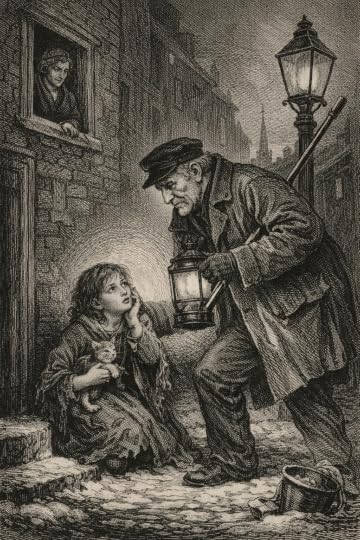
One of Gerty's few joys in life is watching Trueman Flint, the lamplighter, light the streetlamp outside her doorstep. each evening.
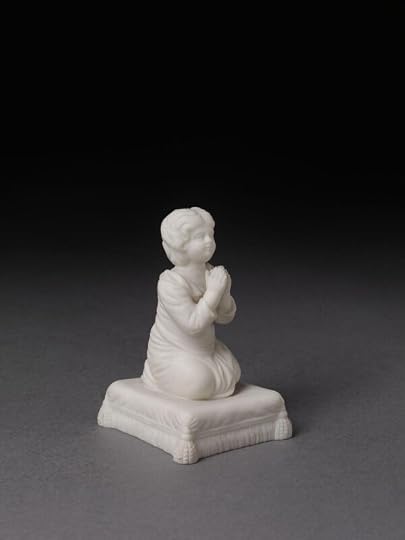
After a horrific incident in which Nan, in one of her drunken rages, kills Gerty’s kitten, Trueman rescues her and brings her into his modest home, promising to raise her as his own. Gerty falls ill but with the help of Trueman and Mrs. Sullivan, his widowed next-door neighbor she recovers. She learns housekeeping and friendship from Mrs. Sullivan and through a small figurine of Samuel at prayer (a gift from "Uncle True") learns the idea of God.
Gerty also forms a close bond with Willie Sullivan, Mrs. Sullivan's son who befriends her and helps her with her studies. She then meets Emily Graham, a blind young woman of deep piety and gentleness, who becomes Gerty’s moral guide. Emily teaches her forgiveness, self‑control, and spiritual discipline, gradually transforming Gerty’s fierce temper.
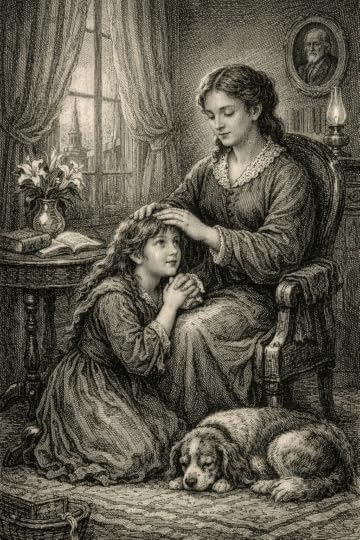
As Gerty matures, and after many trials and tribulations of loss she becomes a virtuous and moral woman, ultimately rewarded for her long suffering with marriage after a long separation to her childhood friend, symbolizing the triumph of goodness and perseverance over adversity as only a Victorian novel can deliver.
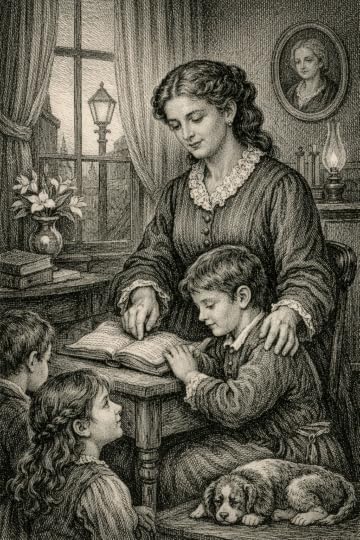
“Wherein the orphan child, once rescued from darkness, becomes herself a bringer of light.”
The theme of this novel focuses on the psychological, moral, and emotional growth of an abused orphan, Gerty Flint, whose life from childhood to adulthood is transformed through kindness, religious instruction, and steadfast love. Set in mid-19th-century Boston, the novel begins with eight-year-old Gerty, an unloved orphan living under the harsh care of Nan Grant. Grant being the landlord of her mother who when she died kept three-year-old Gerty strictly for her convenience. During Nan's frequent drunken rages, she would repeatedly beat and mentally abuse Gerty.
One of Gerty's few joys in life is watching Trueman Flint, the lamplighter, light the streetlamp outside her doorstep. each evening.
After a horrific incident in which Nan, in one of her drunken rages, kills Gerty’s kitten, Trueman rescues her and brings her into his modest home, promising to raise her as his own. Gerty falls ill but with the help of Trueman and Mrs. Sullivan, his widowed next-door neighbor she recovers. She learns housekeeping and friendship from Mrs. Sullivan and through a small figurine of Samuel at prayer (a gift from "Uncle True") learns the idea of God.
Gerty also forms a close bond with Willie Sullivan, Mrs. Sullivan's son who befriends her and helps her with her studies. She then meets Emily Graham, a blind young woman of deep piety and gentleness, who becomes Gerty’s moral guide. Emily teaches her forgiveness, self‑control, and spiritual discipline, gradually transforming Gerty’s fierce temper.
As Gerty matures, and after many trials and tribulations of loss she becomes a virtuous and moral woman, ultimately rewarded for her long suffering with marriage after a long separation to her childhood friend, symbolizing the triumph of goodness and perseverance over adversity as only a Victorian novel can deliver.
“Wherein the orphan child, once rescued from darkness, becomes herself a bringer of light.”
Displaying 1 - 30 of 127 reviews