
What do you think?
Rate this book

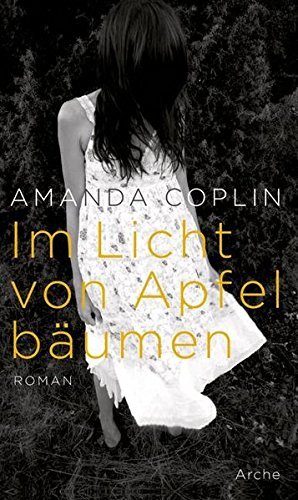
445 pages, Hardcover
First published August 21, 2012


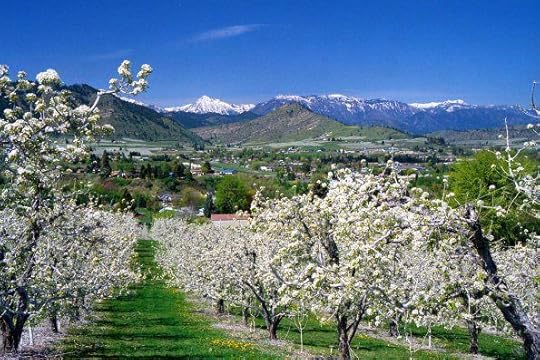
Talmadge had lived forty years in the orchard without any exceptional event happening to him, barring inclement weather or some horticultural phenomenon. Nothing to speak of in the human realm, really. And then this happened.He had had a tough time of it. After the mining death of his father in 1857, when he was nine years old, his mother traveled with him and his sister, Elspeth, north and west until they found a suitable piece of land in what is now Washington State. There they set up a farm. Three years later mom passes, and Talmadge and his one-year-younger sister are left on their own to run it. Oh, and toss in a bout of smallpox that he manages to survive a few years later. A year after that, at the ripe old age of 17, his sister takes off. Some childhood. When we meet Talmadge he is well into middle age. One day while at the market with his produce, he spots two filthy teen-age girls stealing some of his apples and everything changes.

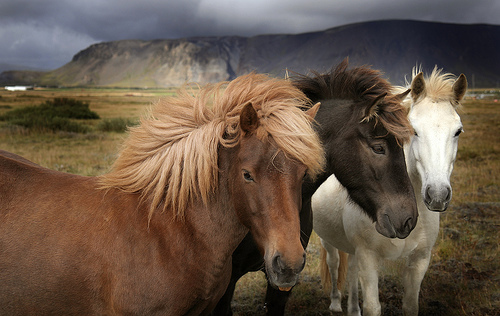
He did not articulate it as such, but he thought of the land as holding his sister—her living form, or her remains. He would keep it for her, then, untouched. All that space would conjure her, if not her physical form, then an apparition: she might visit him in dreams, and tell him what had gone wrong, why she had left him. Where did she exist if not on earth—was there such a place?—and did he want to know about it, if it existed? What was a place if not earthbound. His mind balked. He was giving her earth, to feed her in that place that was without it. An endless gift, a gesture that seemed right: and it need never be reciprocated, for it was a gift to himself as well, to be surrounded by land, by silence, and always—but how could this be, after so much time?—by the hope that she might step out of the trees, a woman now, but strangely the same, and reclaim her position in that place.The land itself is family. There are other manifestations of this connection between people and nature. The Nez Perce deal in horses and one of the girls becomes enamored of these animals the way Talmadge is bound to his orchard, seeing in the horses the same presence of a lost loved one that Talmadge sees in his land.
In my family, which is somewhat nontraditional (some of us are related by blood, some not) there is a history of domestic violence, and sexual and substance abuse. When I was growing up, only some of this was known to me—I sensed it without understanding what it was—but what was immediately before me, what was right in front of my face was the immense beauty of the landscape—orchards, wheat fields, forests—and people who did not hurt me, but loved me very much and were affectionate and kind. These elements—a child’s half knowledge of a painful family past, and sensitivity to the physical landscape—formed the book.There is such sadness here. We feel with Talmadge the loss of his sister, and it is hard not to choke up even when recalling this, long after having read the book. There is also the fire of hope that Talmadge guards, nurtures, that offers light by which to steer his course. He travels a hard road to find what he wants, needs, to give what he can, what he must. You cannot read this book without coming to feel for this man, and to admire the skill, and clearly love, with which he has been crafted.
There was no wilderness to lose oneself inside. She touched her face in the dark: she had her self. But then, she thought, her self was nothing. She was nothing.Later
A gentle wind, a kind of sighing, moved over the earth; and for a moment he felt as if his body had evaporatedAnd again
when she was alone, when she was working, it was as if she forgot about herself. It seemed strange to state it this way but it was as if she had no outline, no body, even though the work was very physical. Where did her mind go? Her mind was steeped in the task at hand. At such times she felt a depth of kinship with the earth…There are events that take place towards the back end of this tale that some readers might find a bit of a stretch. Would this person go that far to achieve the desired end? Maybe, maybe not. But it did not detract from the whole for me.


" The roses you gave me kept me awake with the sound of their petals falling. - Jack Gilbert.Main characters:
" writing silence over an overarching bigger silence. Insects were percolating in the grass in their private and intimate murmurings. The sun on the porous bank where she stood was lit up, incandescent, the minerals glittering and the dull mud peculiar and particular even in its dullness. Each pore and streak and detail was washed and brought forth as is a person's face by the light."

We do not belong to ourselves alone
He did not expect her to be happy - how that word lost meaning as the years progressed - but he only wished her to be unafraid, and able to experience small joys.


