

What do you think?

Russian Roulette: A Deadly Game - How British Spies Thwarted Lenin's Global Plot
In 1917, a band of communist revolutionaries stormed the Winter Palace of Tsar Nicholas II—a dramatic and explosive act marking that Vladimir Lenin’s communist revolution was now underway. But Lenin would not be satisfied with overthrowing the tsar. His goal was a global revolt that would topple all Western capitalist regimes — starting with the British Empire.
Russian Roulette tells the spectacular and harrowing story of the British spies in revolutionary Russia whose mission was to stop Lenin’s red tide from washing across the free world. They were an eccentric cast of characters, led by Mansfield Cumming, a one-legged, monocle-wearing former sea captain, and included novelist W. Somerset Maugham, beloved children’s author Arthur Ransome, and the dashing, ice-cool Sidney Reilly, the legendary Ace of Spies and a model for Ian Fleming’s James Bond. Cumming’s network would pioneer the field of covert action and would one day become MI6.
Living in disguise, constantly switching identities, they infiltrated Soviet commissariats, the Red Army, and Cheka (the feared secret police), and would come within a whisker of assassinating Lenin. As Giles Milton chronicles for the first time, in a sequence of bold exploits that stretched from Moscow to the central Asian city of Tashkent, this unlikely band of agents succeeded in foiling Lenin’s plot for global revolution.
Russian Roulette tells the spectacular and harrowing story of the British spies in revolutionary Russia whose mission was to stop Lenin’s red tide from washing across the free world. They were an eccentric cast of characters, led by Mansfield Cumming, a one-legged, monocle-wearing former sea captain, and included novelist W. Somerset Maugham, beloved children’s author Arthur Ransome, and the dashing, ice-cool Sidney Reilly, the legendary Ace of Spies and a model for Ian Fleming’s James Bond. Cumming’s network would pioneer the field of covert action and would one day become MI6.
Living in disguise, constantly switching identities, they infiltrated Soviet commissariats, the Red Army, and Cheka (the feared secret police), and would come within a whisker of assassinating Lenin. As Giles Milton chronicles for the first time, in a sequence of bold exploits that stretched from Moscow to the central Asian city of Tashkent, this unlikely band of agents succeeded in foiling Lenin’s plot for global revolution.
378 pages, Hardcover
First published January 1, 2013
About the author
Giles Milton
51 books616 followersBritish writer and journalist Giles Milton was born in Buckinghamshire in 1966. He has contributed articles for most of the British national newspapers as well as many foreign publications, and specializes in the history of travel and exploration. In the course of his researches, he has traveled extensively in Europe, the Middle East, Japan and the Far East, and the Americas.
Knowledgeable, insatiably curious and entertaining, Milton locates history's most fascinating—and most overlooked—stories and brings them to life in his books.
He lives in London, where he is a member of the Hakluyt Society, which is dedicated to reprinting the works of explorers and adventurers in scholarly editions, some of which he uses in his research. He wrote most of Samurai William in the London Library, where he loves the "huge reading room, large Victorian desks and creaking armchairs". At home and while traveling, he is ever on the lookout for new untold stories. Apparently he began researching the life of Sir John Mandeville for his book The Riddle and the Knight after Mandeville’s book Travels "literally fell off the shelf of a Paris bookstore" in which he was browsing.
Copyright BookBrowse.com 2007
Knowledgeable, insatiably curious and entertaining, Milton locates history's most fascinating—and most overlooked—stories and brings them to life in his books.
He lives in London, where he is a member of the Hakluyt Society, which is dedicated to reprinting the works of explorers and adventurers in scholarly editions, some of which he uses in his research. He wrote most of Samurai William in the London Library, where he loves the "huge reading room, large Victorian desks and creaking armchairs". At home and while traveling, he is ever on the lookout for new untold stories. Apparently he began researching the life of Sir John Mandeville for his book The Riddle and the Knight after Mandeville’s book Travels "literally fell off the shelf of a Paris bookstore" in which he was browsing.
Copyright BookBrowse.com 2007
Ratings & Reviews
Friends & Following
Create a free account to discover what your friends think of this book!
Community Reviews
Displaying 1 - 30 of 90 reviews

March 19, 2021
“Old-fashioned diplomacy had been shown to have serious limitations in times of crisis. A spy, working undercover and in disguise, could achieve more in a day than a frock-coated ambassador could hope to do in a year.”
In 1909 Mansfield George Smith Cumming

became Head of Secret Intelligence Service (SIS), Director of secret operations inside Soviet Russia. ”He was an unlikely candidate for espionage. An English baronet of the old school, he had been the Conservative Member of Parliament for Chelsea since 1910. Well-spoken, well-mannered, well-heeled, he was solidly conventional. Harrow and Oxford, old chap. Double first.” He soon established bureaux in Petrograd (St Petersburg), in Moscow and later also in Stockholm. ”This was a labyrinthine collection of offices close to the centre of government. Potential agents were led up six flights of stairs before entering a warren of corridors, passageways and mezzanines. Nothing was quite as it appeared. There were mirrors and blind corners and doors that seemed to lead to nowhere. Many recruits felt as if they were wandering through an optical illusion. One of them noted that by the time he reached C’s door, he had the distinct impression that he was back in the same place as when he had first arrived on the sixth floor.” Cumming (or ‘C’ as he was known) using some eccentric interviewing techniques, soon employed a substantial number of spies to work in Russia. These in turn employed couriers, etc. Among the spies discussed in this book are:
• Robert Bruce Lockhart (diplomat)
• George Hill (awarded the Military Cross)
• Sidney Reilly* (known as the Ace of Spies and also awarded the Military Cross)
• Somerset Maugham (author)
• Frederick Bailey** (loved butterflies almost as much as Vladimir Nabokov did)
• Arthur Ransome*** (a journalist)
• Paul Dukes**** (former conductor with the Imperial Mariinsky Opera), awarded a knighthood.
• Augustus Agar (received the Victoria Cross and the Distinguished Service Order)
Both Lockwood and Reilly were sentenced to death in absentia by the Russians
The first chapter, Murder in the Dark, deals with the assassination of the monk Rasputin at the end of 1916. Some British agents were implicated in the murder. 1917 brought the Russian Revolution(s) and in 1918 Tsar Nicholas II, his wife the tsarina, and their children were executed. WWI was still in full swing when the Russian Revolution***** started. Russia, together with Britain and France, was a key member of the Triple Entente during WWI. However, everything changed during 1917. The Revolution brought new challenges to the British agents, for example “‘The long and the short of it,’ wrote Maugham, ‘was that I should go to Russia and keep the Russians in the war.’” Vladimir Lenin “...demanded an immediate end to Russia’s participation in the First World War and made a dramatic call for revolution in the Western democracies.” But the British deemed it necessary to keep the Russians fighting the Germans in order to give the Allied forces breathing space elsewhere. The Russians also had their eyes on the bordering Islamic states as well as British India - this of course alarmed the British, and a concerted effort was made to keep Russia out of India.
Under the new leadership the very efficient and ruthless Cheka (the secret service) was created with Felix Dzerzhinsky at the helm. It became increasingly difficult for foreign agents to perform their tasks, and they had to simultaneously be more careful yet brazen to achieve results. Many spies, couriers and others were executed. ”In revenge for the attempt on Lenin’s life, they summarily executed five hundred well-known figures from the old regime, including politicians, businessmen, publishers and writers.”
Cumming’s spies were multi-lingual, quick-change artists who in different disguises and with faked sets of identity documents could seamlessly ‘become’ different personae. However, they could also be just another face in a crowd. ”Hill knew that fluency in the language was only the first step to perfecting an undercover existence. A spy could live incognito for a sustained period of time only if he learned to adopt ‘the habits and ways of thoughts of the people among whom his field of operations lies’. He also needed ‘a brain of the utmost ability, able to draw a deduction in a flash and make a momentous decision in an instant.’” They had a range of gadgets at their disposal, they experimented with and used invisible inks - there is an hilarious episode about invisible ink. Using codes created by a team of cipher experts they created microscopic documents which they concealed creatively. They created not only fake documents, but also fake news; lying and deception were the order of the day. Documents and telephone conversations were intercepted. There were dirty tricks and many lives were lost. Some extraordinary feats were accomplished for which the British government expressed their appreciation by means of awards, and in the case of Paul Dukes, a knighthood.
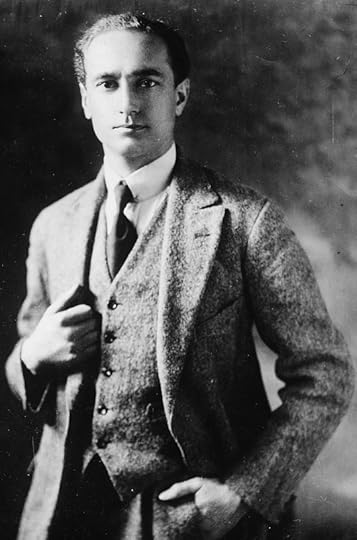
My eyes were glued to this nonfiction book for two days. It reads like a thriller, and these real spies were like the fictional James Bond 007, but on steroids. Some of them were as debonair as Bond and were as popular with the ladies. Robert Bruce Lockhart “... had fallen head over heels in love with the dazzlingly seductive Maria Zakrveskia, an old-style aristocrat possessed with charm, wit and unconventional good looks. Moura – that was what everyone called her – had previously been married to Count von Benckendorff, the Tsarist ambassador to London.” and Arthur Ransome loved Trotsky’s secretary Evgenia Shelepina whom he later married. But most of all I found the history and the politics very interesting. The narrative may read like a novel, but everything that is expected of a nonfiction work is there:
Maps of Turkestan, Russia and Central Moscow
List of Characters
List of Notes and Sources
Further Reading
Plates Section.
The Epilogue tells what happened to the main players.
###
*It was almost impossible to believe anything that Reilly said.
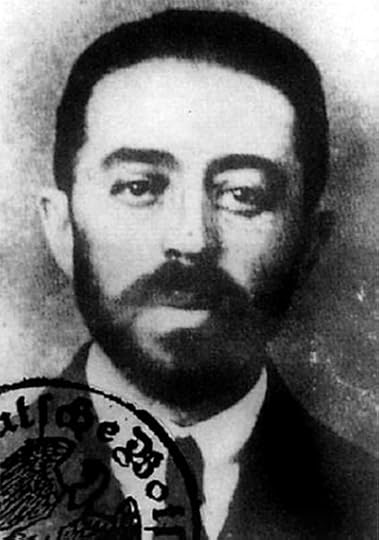
”Reilly was not, in fact, from Russian Poland and nor was his original name Reilly. He was born in 1874 in Odessa, in Southern Russia, and given the name Sigmund Georgievich Rosenblum. Both his parents were Jewish, although they had converted to Catholicism.”
“Reilly’s mastery of languages amazed all who met him, as did his ability to change identity at the flick of a switch. He could pass himself off as both a native Russian and a native German and he was able to blend seamlessly into a crowd.”
He was charming and believable. He was also reckless and brazen: He reached inside his pocket and felt for the forged Cheka papers of Sigmund Relinsky, the person he was pretending to be. Then, with characteristic brazenness, he approached one of the Cheka agents who was standing guard at the embassy gates. After showing his card, he asked for information. He was told that the Cheka ‘were endeavouring to find one Sidney Reilly and had actually raided the British Embassy in the hope that he would be there.’” He also saw himself as a Napoleon.
###
”They made frequent stops en route, for Bailey had brought his butterfly net and he now took the opportunity to pursue his passion for collecting rare specimens. Clouds of them rose from the grassland as they passed and he managed to capture more than a hundred different types, including a magnificent Himalayan Parnassus.”
“Bailey hit upon a second idea to help him in his escape attempt, one that was characteristically bold. He decided to apply for a job with the counter-espionage branch of the Cheka, known as Voivne Kontrol or Military Control Department. Its function was to track down foreign spies working inside Turkestan.
Within hours, Bailey was supplied with all the papers he needed. These included an open permit that allowed him to leave Tashkent and travel wherever and whenever he wanted.
Within minutes of arriving, he received a telegram from the Chief of the General Staff in Tashkent: ‘Please communicate all information you have regarding the Anglo-Indian Service Colonel Bailey.’ Bailey allowed himself an inner smile: he was being asked to spy on himself.”
###
***Due to his sympathising with the Bolshevik cause Ransome was regarded with suspicion by some, but he was able to acquire first class information: ”Ransome had told the Bolshevik leadership (truthfully, as it later transpired) that he was intending to write a history of the Bolshevik revolution. This opened many doors. Over the weeks that followed, Ransome was given free rein to attend meetings of the Executive Committee and interview all the most important political players.”
###
”Dukes saw the purge as an opportunity. With his new identity papers he now applied to join the party of the faithful. Acceptance brought him the status of a trusted loyalist. ‘My party ticket was everywhere an Open Sesame,’ he wrote.”
“Determined to profit from his remaining time in Russia, he also applied to join the Red Army. This would enable him to gather intelligence on soldier loyalty and how the army functioned. He was recruited into the automobile section of the Eighth Army, whose commander was one of his key contacts.”
#########
*****The British Ambassador to Russia, Sir George Buchanan and his family had a grand stand view from their apartment as events unfolded. Their daughter Meriel wrote a memoir, Petrograd the City of Trouble, 1914-1918 of what she saw and experienced during that time.
Six Weeks In Russia In 1919 a memoir by Arthur Ransome
Reilly: Ace of Spies by Robin Bruce Lockhart (Robert Bruce Lockhart’s son) which was adapted for television.
Ace of Spies: The True Story of Sidney Reilly by Andrew Cook
Moura: The Dangerous Life of the Baroness Budberg by Nina Berberova is a biography of Moura Budberg
The Woman of a Thousand Names by Alexandra Lapierre is a novel based on Moura Budberg’s life.
In 1909 Mansfield George Smith Cumming
became Head of Secret Intelligence Service (SIS), Director of secret operations inside Soviet Russia. ”He was an unlikely candidate for espionage. An English baronet of the old school, he had been the Conservative Member of Parliament for Chelsea since 1910. Well-spoken, well-mannered, well-heeled, he was solidly conventional. Harrow and Oxford, old chap. Double first.” He soon established bureaux in Petrograd (St Petersburg), in Moscow and later also in Stockholm. ”This was a labyrinthine collection of offices close to the centre of government. Potential agents were led up six flights of stairs before entering a warren of corridors, passageways and mezzanines. Nothing was quite as it appeared. There were mirrors and blind corners and doors that seemed to lead to nowhere. Many recruits felt as if they were wandering through an optical illusion. One of them noted that by the time he reached C’s door, he had the distinct impression that he was back in the same place as when he had first arrived on the sixth floor.” Cumming (or ‘C’ as he was known) using some eccentric interviewing techniques, soon employed a substantial number of spies to work in Russia. These in turn employed couriers, etc. Among the spies discussed in this book are:
• Robert Bruce Lockhart (diplomat)
• George Hill (awarded the Military Cross)
• Sidney Reilly* (known as the Ace of Spies and also awarded the Military Cross)
• Somerset Maugham (author)
• Frederick Bailey** (loved butterflies almost as much as Vladimir Nabokov did)
• Arthur Ransome*** (a journalist)
• Paul Dukes**** (former conductor with the Imperial Mariinsky Opera), awarded a knighthood.
• Augustus Agar (received the Victoria Cross and the Distinguished Service Order)
Both Lockwood and Reilly were sentenced to death in absentia by the Russians
The first chapter, Murder in the Dark, deals with the assassination of the monk Rasputin at the end of 1916. Some British agents were implicated in the murder. 1917 brought the Russian Revolution(s) and in 1918 Tsar Nicholas II, his wife the tsarina, and their children were executed. WWI was still in full swing when the Russian Revolution***** started. Russia, together with Britain and France, was a key member of the Triple Entente during WWI. However, everything changed during 1917. The Revolution brought new challenges to the British agents, for example “‘The long and the short of it,’ wrote Maugham, ‘was that I should go to Russia and keep the Russians in the war.’” Vladimir Lenin “...demanded an immediate end to Russia’s participation in the First World War and made a dramatic call for revolution in the Western democracies.” But the British deemed it necessary to keep the Russians fighting the Germans in order to give the Allied forces breathing space elsewhere. The Russians also had their eyes on the bordering Islamic states as well as British India - this of course alarmed the British, and a concerted effort was made to keep Russia out of India.
Under the new leadership the very efficient and ruthless Cheka (the secret service) was created with Felix Dzerzhinsky at the helm. It became increasingly difficult for foreign agents to perform their tasks, and they had to simultaneously be more careful yet brazen to achieve results. Many spies, couriers and others were executed. ”In revenge for the attempt on Lenin’s life, they summarily executed five hundred well-known figures from the old regime, including politicians, businessmen, publishers and writers.”
Cumming’s spies were multi-lingual, quick-change artists who in different disguises and with faked sets of identity documents could seamlessly ‘become’ different personae. However, they could also be just another face in a crowd. ”Hill knew that fluency in the language was only the first step to perfecting an undercover existence. A spy could live incognito for a sustained period of time only if he learned to adopt ‘the habits and ways of thoughts of the people among whom his field of operations lies’. He also needed ‘a brain of the utmost ability, able to draw a deduction in a flash and make a momentous decision in an instant.’” They had a range of gadgets at their disposal, they experimented with and used invisible inks - there is an hilarious episode about invisible ink. Using codes created by a team of cipher experts they created microscopic documents which they concealed creatively. They created not only fake documents, but also fake news; lying and deception were the order of the day. Documents and telephone conversations were intercepted. There were dirty tricks and many lives were lost. Some extraordinary feats were accomplished for which the British government expressed their appreciation by means of awards, and in the case of Paul Dukes, a knighthood.
My eyes were glued to this nonfiction book for two days. It reads like a thriller, and these real spies were like the fictional James Bond 007, but on steroids. Some of them were as debonair as Bond and were as popular with the ladies. Robert Bruce Lockhart “... had fallen head over heels in love with the dazzlingly seductive Maria Zakrveskia, an old-style aristocrat possessed with charm, wit and unconventional good looks. Moura – that was what everyone called her – had previously been married to Count von Benckendorff, the Tsarist ambassador to London.” and Arthur Ransome loved Trotsky’s secretary Evgenia Shelepina whom he later married. But most of all I found the history and the politics very interesting. The narrative may read like a novel, but everything that is expected of a nonfiction work is there:
Maps of Turkestan, Russia and Central Moscow
List of Characters
List of Notes and Sources
Further Reading
Plates Section.
The Epilogue tells what happened to the main players.
###
*It was almost impossible to believe anything that Reilly said.
”Reilly was not, in fact, from Russian Poland and nor was his original name Reilly. He was born in 1874 in Odessa, in Southern Russia, and given the name Sigmund Georgievich Rosenblum. Both his parents were Jewish, although they had converted to Catholicism.”
“Reilly’s mastery of languages amazed all who met him, as did his ability to change identity at the flick of a switch. He could pass himself off as both a native Russian and a native German and he was able to blend seamlessly into a crowd.”
He was charming and believable. He was also reckless and brazen: He reached inside his pocket and felt for the forged Cheka papers of Sigmund Relinsky, the person he was pretending to be. Then, with characteristic brazenness, he approached one of the Cheka agents who was standing guard at the embassy gates. After showing his card, he asked for information. He was told that the Cheka ‘were endeavouring to find one Sidney Reilly and had actually raided the British Embassy in the hope that he would be there.’” He also saw himself as a Napoleon.
###
”They made frequent stops en route, for Bailey had brought his butterfly net and he now took the opportunity to pursue his passion for collecting rare specimens. Clouds of them rose from the grassland as they passed and he managed to capture more than a hundred different types, including a magnificent Himalayan Parnassus.”
“Bailey hit upon a second idea to help him in his escape attempt, one that was characteristically bold. He decided to apply for a job with the counter-espionage branch of the Cheka, known as Voivne Kontrol or Military Control Department. Its function was to track down foreign spies working inside Turkestan.
Within hours, Bailey was supplied with all the papers he needed. These included an open permit that allowed him to leave Tashkent and travel wherever and whenever he wanted.
Within minutes of arriving, he received a telegram from the Chief of the General Staff in Tashkent: ‘Please communicate all information you have regarding the Anglo-Indian Service Colonel Bailey.’ Bailey allowed himself an inner smile: he was being asked to spy on himself.”
###
***Due to his sympathising with the Bolshevik cause Ransome was regarded with suspicion by some, but he was able to acquire first class information: ”Ransome had told the Bolshevik leadership (truthfully, as it later transpired) that he was intending to write a history of the Bolshevik revolution. This opened many doors. Over the weeks that followed, Ransome was given free rein to attend meetings of the Executive Committee and interview all the most important political players.”
###
”Dukes saw the purge as an opportunity. With his new identity papers he now applied to join the party of the faithful. Acceptance brought him the status of a trusted loyalist. ‘My party ticket was everywhere an Open Sesame,’ he wrote.”
“Determined to profit from his remaining time in Russia, he also applied to join the Red Army. This would enable him to gather intelligence on soldier loyalty and how the army functioned. He was recruited into the automobile section of the Eighth Army, whose commander was one of his key contacts.”
#########
*****The British Ambassador to Russia, Sir George Buchanan and his family had a grand stand view from their apartment as events unfolded. Their daughter Meriel wrote a memoir, Petrograd the City of Trouble, 1914-1918 of what she saw and experienced during that time.
Six Weeks In Russia In 1919 a memoir by Arthur Ransome
Reilly: Ace of Spies by Robin Bruce Lockhart (Robert Bruce Lockhart’s son) which was adapted for television.
Ace of Spies: The True Story of Sidney Reilly by Andrew Cook
Moura: The Dangerous Life of the Baroness Budberg by Nina Berberova is a biography of Moura Budberg
The Woman of a Thousand Names by Alexandra Lapierre is a novel based on Moura Budberg’s life.

May 3, 2021
If you made a film of these tales of derring-do you wouldn't begin to believe them. Even here, where Milton lets us know that these British adventurer-spies really existed, their plots read like stories from a Boys Own Annual – except that not all their schemes were successful.
Milton has condensed a mass of archival research from Europe, India and Central Asia to deliver a wild-ride of a story that covers fascinating territory quite new to me.
The British spies who aimed to disrupt, even maybe overthrow, the newly Communist regime in Russia from 1917 onwards, included writers Somerset Maugham and Arthur Ransome as well as the full time spy known part of the time as Sidney Reilly (he had multiple aliases). I remember the handsome Sam Neill playing the resourceful Reilly in the 1983 TV series Reilly Ace of Spies and see from a quick check in Wikipedia that his espionage and activities began way before 1917. https://en.wikipedia.org/wiki/Reilly,...,
The back-cover blurb says:
‘In 1917, an eccentric band of British spies is smuggled into newly-soviet Russia. Their goal? To defeat Lenin’s plan to destroy British India and bring down the democracies of the West.
These extraordinary spies, led by Mansfield Cumming, proved brilliantly successful. They found a whole new way to deal with enemies, one that relied on espionage and dirty tricks rather than warfare. They were the unsung founders of today’s modern highly professional secret services.’
And Simon Winchester, himself no slouch in the storytelling game, says ‘Marvellous, meticulously research and truly ground-breaking’. There’s an accolade for you.
Milton has condensed a mass of archival research from Europe, India and Central Asia to deliver a wild-ride of a story that covers fascinating territory quite new to me.
The British spies who aimed to disrupt, even maybe overthrow, the newly Communist regime in Russia from 1917 onwards, included writers Somerset Maugham and Arthur Ransome as well as the full time spy known part of the time as Sidney Reilly (he had multiple aliases). I remember the handsome Sam Neill playing the resourceful Reilly in the 1983 TV series Reilly Ace of Spies and see from a quick check in Wikipedia that his espionage and activities began way before 1917. https://en.wikipedia.org/wiki/Reilly,...,
The back-cover blurb says:
‘In 1917, an eccentric band of British spies is smuggled into newly-soviet Russia. Their goal? To defeat Lenin’s plan to destroy British India and bring down the democracies of the West.
These extraordinary spies, led by Mansfield Cumming, proved brilliantly successful. They found a whole new way to deal with enemies, one that relied on espionage and dirty tricks rather than warfare. They were the unsung founders of today’s modern highly professional secret services.’
And Simon Winchester, himself no slouch in the storytelling game, says ‘Marvellous, meticulously research and truly ground-breaking’. There’s an accolade for you.

September 28, 2017
A very readable account of the early espionage operation undertaken by the British Empire within Russia both in collaboration with the Tsarist Government and then against its Soviet successor in the period (roughly) 1916 to 1921. It suggests its own sequel so we may expect more.
It is popular history and sometimes too obviously reads like a thriller but Milton is a good historian as well as a good writer. His sources are clear and he has managed to weave a broadly truthful story out of difficult material.
There are two problems. The memoirs of some of the participants may be a tad fanciful in places to move books off shelves and an obsessive understandable secrecy of the interwar security community has extended into the modern day. Ridiculously, key MI6 files are still not available.
There is another flaw, also designed to move this book along by publishers. Milton has been encouraged perhaps to add thriller elements and has put in place standard issue Cold War motifs to please the Tory crowd in a way that can detract from understanding.
For example, he introduces Lenin as villain from the first chapter but in lurid terms - 'a peculiar looking individual ... he had the air of Scandinavian goblin'. This is clearly designed to hook the more excitable reader in the first few pages but it detracts from the seriousness of the book.
The book is otherwise excellent. Presented as a series of set pieces because the lack of MI6 files, and the partial reliance on memoirs perhaps, which drives the narrative in this direction, it is undoubtedly an exciting read with many insights for the detached observer.
The main takeaway is that we are seeing the first inklings of the ideological Deep State emerging in response to an undoubted (from a British Imperial perspective) threat. We see something of its ruthlessness and intelligence. There is some high functioning sociopathy here.
Perhaps more shrouded in mystery than most stories in the book, we see the British involvement in the assassination of Rasputin and Sidney Reilly's freebooting attempt to mount a coup against the new Soviet regime.
From a Soviet perspective, the British really were an enemy within plotting to overturn political change much as some Remainer politicians plot (no doubt in cahoots with EU politicians) to overturn Britain's revolution of June 23rd, 2016.
Because it is a narrative and not an analytical text, Milton presents a tale of derring do against an 'evil' regime but perhaps does not recognise that the later ruthlessness and brutality of the regime was in part a response to the very real threat presented by British political warfare within it.
As so often, there is a call and response with the British 'hawks', led by that dangerous war advocate Churchill, creating the conditions for a credible argument for terror which Dzerzhinsky and the Cheka fulfilled. The British threat was very real because its own Empire was at stake.
Similarly, the British clearly had many highly placed agents at the heart of the Soviet State, notably Boris Bazhanov, a key Politburo Secretary, who supplied secret high level reports until he had to flee. There were many others although the system's precise functioning is not laid out.
Once again, this gives a context for Stalin's purges. The regime was not being paranoid. It was under threat. The fact that the British worked so hard to unravel it perhaps came to justify functionally Stalin's purging of the system at every level to secure Russia for the next war.
Milton rarely puts this side of the story so we have to think for ourselves as we read the narrative and sometimes we do have to read between the lines. Milton is, for example, unable satisfactorily to explain how British agents were able to function and run couriers under constant Cheka pressure.
There was an untold infrastructure there that relied entirely on a network of probably middle class sympathisers, many of them young women and traders, able to move more freely in order to courier material and yet we re-emerge non the wiser as to its structure and capability.
Similarly with the emergent deep state aspects and lack of accountability (much of which was justified given the imperial aims). There are times when we sense that a new type of Government agent is emerging who makes policy rather than implements policy.
We also see early mass use of chemical weapons against the Soviets promoted by Churchill, and interference in the affairs of another State, the licence to kill, independent unaccountable action (as in Reilly's coup attempt) - everything that will become normal by the later Cold War.
The book covers two fronts - at the centre of Russian power (St. Petersburg/Petrograd and Moscow) and in Central Asia where the stakes were even higher because communism threatened to create an alliance with Islamism and sweep down into British India.
Although managed as part of a total strategy in London (alongside trade and diplomatic relations with Russia), the two fronts were entirely different in basic aims other than the preservation of the Empire. Both were co-ordinated at the Imperial Centre in London.
The takeaway from the Central Asian story is that the British Raj had already had a tradition of espionage against Russian incursion, famously described in Kipling's 'Kim' but going back further to Montgomerie's spy and surveying teams that entered Tibet in the 1860s.
Naturally, with his eye to the contemporary book market, Milton will imply a 'shock-horror' attitude to Bolshevik alliances with Islam and ideologically it always was absurd, especially as fanatic Muslim tribespeople (the Taliban of their day) would never become communists willingly.
However, what we really have is the same brutal clash of empires and world views with everyone using tools to hand much as we saw in Brzezinski's alliance with those same tribespeople seventy years later or FDR's strategic energy alliance with the House of Saud.
For the Bolsheviks in their early years of power, it was a war against imperialism and the British Empire's beating heart was an exploitative control over India. The Raj's vulnerability lay in the mobilisation of either India's Muslim or Hindu population or both from within.
It ain't rocket science. The British Empire saw communism not only as intrinsically dangerous (actually to the dominance of the empire at home by its trading classes) but as quite capable of doing what Napoleon did in his first onslaught on Europe, motivating through ideology.
In this situation, the creation of a London-based secret service offered one key service (the supply of data to assist in standard diplomatic and war policy) with a bit of black ops on the side but the Raj's already well established equivalent was engaged in direct warfare on its frontier
I think the reader might be staggered by the sophistication of the British Indian military in its handling of the threat. I leave him or her to ask their own questions about whether the second centre of the Empire was not more functionally advanced in some respects than the homeland.
Everything came together when the Trotskyist world revolutionary model came to a shuddering halt in both Poland and Central Asia but with the Soviet regime militarily and politically secure if economically shattered.
The British Raj had undermined the Communist-Islamist alliance so effectively (and incidentally built its own radical Islamist links) and the Secret Service was so good at supplying documentation and breaking codes that the Empire was able to get the right trade deal with Soviet Russia in 1921.
In effect, the Soviets bought space to lick their wounds and restore trade relations with the Empire (absolutely vital to its own survival) in return for committing to leave India and the rest of the Empire alone. This is the moment when Trotskyism is ready to die and Stalinism ready to be born.
This, of course, did not stop the Comintern engaging in proletarian and intellectual subversion or encouraging internally formed communist movements co-ordinated from Moscow but it did stop the emergence of large-scale military formations exploiting discontents directly.
The book is clear - the Secret Service both in its long established Raj and new London-based variants made a material contribution to the post-war survival of a shaky and vulnerable post-war Empire and ensured it lasted until the next cataclysm in the 1940s.
It is this success that explains why secret operations began to have such a hold on the political imagination, why governments ensured that Parliament was removed from their consideration (until recently) and why the secret services began to help to make policy.
A book well worth reading with the caveats about an unsophisticated ideological bias driven by contemporary cultural and media needs. As always there is no black and white - the Empire was served, the people perhaps ambiguously so and the seeds of weeds sown for the future.
As for the Soviet Union, it was contained but probably more by its chaotic internal contradictions than by external action. It was exhausted into stability. The legacy of the spies though may have been to give reason for regime paranoia that contributed to many lost lives.

October 23, 2022
So here's a funny thing. I picked this book off my brother's shelf more at less at random, just looking for a bit of historical escapism. The antics of British agents in revolutionary 1917 Moscow - seemed like escapism to me.
But the Universe had other ideas.
I was only a few pages in and I realised the book was totally about today. Picture this: unrest on the streets of Moscow - an unpopular, disastrous foreign war is robbing Russian mothers of their sons - talk of regime change is in the air - a new chapter is opening in the espionage 'Great Game' between Britain and Russia...
Am I talking about 1917 or 2022?
Exactly. Both.
I can heartily recommend Russian Roulette to anyone who likes disappearing into a different epoch, while periodically marvelling at the 'Plus ca change-' nature of historical cycles. This book is quite brilliant. It superbly fuses the very public history of the 1917 revolution and its (in-)famous Bolshevik leaders with the secret history of the spies who sought to undermine them. Perhaps the stand-out aspect of the book is the colourfulness of the characters who people it. Here's a good starting point for Goodreaders: among the spies that Britain dispatched to Russia were no less than three soon-to-be-famous authors: Compton Mackenzie (author of Whisky Galore), Somerset Maugham, and - most significant of all - Arthur Ransome (Swallows & Amazons).

Arthur Ransome's involvement was no accidental entanglement. Left-leaning, and sincerely interested in communist ideas, Ransome became a close confidante of Lenin and other Bolshevik leaders, while Trotsky's secretary was his mistress. Lenin & co all thought he was spying for them. All the while, though, Ransome was acting as a double (or do I mean triple?) agent, passing the most intimate details of the revolutionary government back to the newly formed MI6 in London.
The crazy thing is, he's far from the most colourful. That honour probably goes to Sidney Reilly, the so-called 'Ace of Spies'. Reilly worked up three different identities while living undercover in Moscow and St.Petersburg / Petrograd. He would routinely switch identity while travelling on the train from one city to the other. On one occasion, when the Cheka came to raid his flat, he escaped out the back of the building, sauntered back round to the front door and casually asked the Bolshevik guard what all the fuss was about? He was told they were looking for the infamous British spy, Sidney Reilly - at which he nodded thoughtfully, thanked the guard, and sauntered on his way.
Reilly's chutzpah didn't end there. Far from it. What marked him above his peers was his level of initiative and ambition. He wasn't content with just spying on a foreign power, he wanted to change it. Despising communism with a passion, he hatched a plot to kidnap Lenin and overthrow the Bolsheviks. He'd even recruited Lenin's personal Latvian bodyguard to his cause. The plan came within a day of success and was unseated by the most unlikely of reasons: a lone and unconnected assassin shot Lenin the day before, only narrowly failing to kill him and sending the entire administration into a frenzy of paranoia. You just can't make Reilly up. As Ian Fleming wrote a few decades later:
"James Bond is just a piece of nonsense I dreamed up. He's not a Sidney Reilly, you know!"
All sorts of other scarcely believable characters people this John Buchan world: Mansfield Cumming, the bluff, good-natured founder of MI6, Paul Dukes, the master of multiple disguises who to this day remains the only spy to have been knighted, George Hill, Frederick Bailey, Robert Bruce Lockhart and others. This book works vastly better than Milton's previous historical outing (Nathaniel's Nutmeg, which I reviewed here). If you're looking for a bit of escapism, tinged with parallels to the modern world, then this is the book for you.
But the Universe had other ideas.
I was only a few pages in and I realised the book was totally about today. Picture this: unrest on the streets of Moscow - an unpopular, disastrous foreign war is robbing Russian mothers of their sons - talk of regime change is in the air - a new chapter is opening in the espionage 'Great Game' between Britain and Russia...
Am I talking about 1917 or 2022?
Exactly. Both.
I can heartily recommend Russian Roulette to anyone who likes disappearing into a different epoch, while periodically marvelling at the 'Plus ca change-' nature of historical cycles. This book is quite brilliant. It superbly fuses the very public history of the 1917 revolution and its (in-)famous Bolshevik leaders with the secret history of the spies who sought to undermine them. Perhaps the stand-out aspect of the book is the colourfulness of the characters who people it. Here's a good starting point for Goodreaders: among the spies that Britain dispatched to Russia were no less than three soon-to-be-famous authors: Compton Mackenzie (author of Whisky Galore), Somerset Maugham, and - most significant of all - Arthur Ransome (Swallows & Amazons).
Arthur Ransome's involvement was no accidental entanglement. Left-leaning, and sincerely interested in communist ideas, Ransome became a close confidante of Lenin and other Bolshevik leaders, while Trotsky's secretary was his mistress. Lenin & co all thought he was spying for them. All the while, though, Ransome was acting as a double (or do I mean triple?) agent, passing the most intimate details of the revolutionary government back to the newly formed MI6 in London.
The crazy thing is, he's far from the most colourful. That honour probably goes to Sidney Reilly, the so-called 'Ace of Spies'. Reilly worked up three different identities while living undercover in Moscow and St.Petersburg / Petrograd. He would routinely switch identity while travelling on the train from one city to the other. On one occasion, when the Cheka came to raid his flat, he escaped out the back of the building, sauntered back round to the front door and casually asked the Bolshevik guard what all the fuss was about? He was told they were looking for the infamous British spy, Sidney Reilly - at which he nodded thoughtfully, thanked the guard, and sauntered on his way.
Reilly's chutzpah didn't end there. Far from it. What marked him above his peers was his level of initiative and ambition. He wasn't content with just spying on a foreign power, he wanted to change it. Despising communism with a passion, he hatched a plot to kidnap Lenin and overthrow the Bolsheviks. He'd even recruited Lenin's personal Latvian bodyguard to his cause. The plan came within a day of success and was unseated by the most unlikely of reasons: a lone and unconnected assassin shot Lenin the day before, only narrowly failing to kill him and sending the entire administration into a frenzy of paranoia. You just can't make Reilly up. As Ian Fleming wrote a few decades later:
"James Bond is just a piece of nonsense I dreamed up. He's not a Sidney Reilly, you know!"
All sorts of other scarcely believable characters people this John Buchan world: Mansfield Cumming, the bluff, good-natured founder of MI6, Paul Dukes, the master of multiple disguises who to this day remains the only spy to have been knighted, George Hill, Frederick Bailey, Robert Bruce Lockhart and others. This book works vastly better than Milton's previous historical outing (Nathaniel's Nutmeg, which I reviewed here). If you're looking for a bit of escapism, tinged with parallels to the modern world, then this is the book for you.

May 5, 2017
Беллетризованные приключения английских шпионов в России примерно в 1916–1920 гг. и основание MI6 от прекрасного популяризатора истории и пересказчика. Занимательно, что эта интрига выводится как часть Большой Игры (ибо серьезная коминтерновская угроза Британской Индии), но не только — в частности, арест Троцкого в Нова-Скотии был побочкой совместной агентурной работы англичан и американцев с фениями и индийскими радикалами в Нью-Йорке. Дальнейшего занимательного еще много: мы, к примеру, теперь точно знаем, зачем Сомерсет Моэм ездил в Россию через Владивосток, добавив себя к списку тех, кто побывал в родном городе и отобедал в ресторане «Гудок».
Из прочих знакомых — Артур Рэнсом и Брюс Локхарт. Помимо них и одиозного Сидни Райлли, конечно, много и других британских «солдат невидимого фронта», о которых я раньше не знал. Но общий флер — романтических времен наивного и джентльменского (по крайней мере, с британской стороны) аналогового шпионажа, это завораживает, конечно. Насколько все проще, циничнее и скучнее сейчас. Действия англичан настолько причудливы (в т.ч. и с технической стороны) и успешны, что советская паранойя и шпиономания, проникшая и в литературу, легко объяснима.
В общем — бесценно, несмотря на мелкие глупости в топонимике и ономастике.
Из прочих знакомых — Артур Рэнсом и Брюс Локхарт. Помимо них и одиозного Сидни Райлли, конечно, много и других британских «солдат невидимого фронта», о которых я раньше не знал. Но общий флер — романтических времен наивного и джентльменского (по крайней мере, с британской стороны) аналогового шпионажа, это завораживает, конечно. Насколько все проще, циничнее и скучнее сейчас. Действия англичан настолько причудливы (в т.ч. и с технической стороны) и успешны, что советская паранойя и шпиономания, проникшая и в литературу, легко объяснима.
В общем — бесценно, несмотря на мелкие глупости в топонимике и ономастике.

June 3, 2014
The cold war before it became cold
There’s something fascinating about spies and spy craft. “Russian Roulette” details the genesis of Britain’s Special Intelligence Services (later also referred to as MI6) as it began during the World War I in response to Russia’s Bolshevik movement. At that time Lenin and Trotsky and their cronies were attempting to socialize not just Russia but the entire world. Their first step was to murder the royal family and any citizens who didn’t agree with them. It was a bloodbath.
Mansfield George Smith Cumming was the first leader of this soon to be notorious spy network though his name was completely unknown at that time. In fact no one who worked for him knew his name addressing him only as Chief or C. For the protection of his operation and his operatives secrecy was essential. Milton’s writing flows wonderfully as he describes the exploits of these undercover geniuses. Often they landed in foreign places with only the sketchiest of missions…things like, ‘go over there, blend in, find out what’s going on, report back, don’t get caught’. Some of these early spies were the notorious Sidney Reilly, Arthur Ransome, Frederick Bailey and many others. Writer W. Somerset Maugham identified as Agent Somerville even gets a mention for his wartime sleuthing. This is where it all begins. I’m so glad that lots of this early information is finally becoming declassified. It’s interesting to learn about how undercover work began. “Russian Roulette” is a great place to start.
This reveiw is based on an advanced readers copy provided by the publisher.
There’s something fascinating about spies and spy craft. “Russian Roulette” details the genesis of Britain’s Special Intelligence Services (later also referred to as MI6) as it began during the World War I in response to Russia’s Bolshevik movement. At that time Lenin and Trotsky and their cronies were attempting to socialize not just Russia but the entire world. Their first step was to murder the royal family and any citizens who didn’t agree with them. It was a bloodbath.
Mansfield George Smith Cumming was the first leader of this soon to be notorious spy network though his name was completely unknown at that time. In fact no one who worked for him knew his name addressing him only as Chief or C. For the protection of his operation and his operatives secrecy was essential. Milton’s writing flows wonderfully as he describes the exploits of these undercover geniuses. Often they landed in foreign places with only the sketchiest of missions…things like, ‘go over there, blend in, find out what’s going on, report back, don’t get caught’. Some of these early spies were the notorious Sidney Reilly, Arthur Ransome, Frederick Bailey and many others. Writer W. Somerset Maugham identified as Agent Somerville even gets a mention for his wartime sleuthing. This is where it all begins. I’m so glad that lots of this early information is finally becoming declassified. It’s interesting to learn about how undercover work began. “Russian Roulette” is a great place to start.
This reveiw is based on an advanced readers copy provided by the publisher.

November 7, 2023
Excellent!

June 22, 2018
This year (2018) we commemorate the centenary of the ending of World War I — the so-called “war to end all wars”. The irony of that last phrase will not be lost on anyone contemplating the events of the last century…
This book reveals details of a different type of “war” going on at the same time: the secretive, hidden, dangerous war involving spies and espionage undertaken by British agents, particularly in the eastern regions of Europe, from the north of Russia to the Indian sub-continent. Milton bases his information on limited details of these operations available to him at the time of writing (the book was published in 2013) and so the work is linked to historical realities.
The writing, however, is greatly modified by adopting an approach which would appeal more to a reader of popular spy fiction novels than to an historian. On the whole, this combination works well enough. The historical facts, on the other hand, often enough insist on breaking the suspense illusion in some parts with the need for sudden shifts in personnel and locations which can be a little disorienting.
The sub-title of the book (“How British spies thwarted Lenin’s plot for global revolution”) indicates the particular bias of the book. The premise is simple: British spies are the “goodies”, and Russian ones are the “baddies” — and this simplistic duality propels the narrative. There is little attempt to provide any understanding of the whole, or of providing some suggestion that there might be grey areas in all this; here everything is presented as being only either black or white. All potentially dubious moral or ethical considerations to the contrary are basically rationalised within this dichotomy.
Furthermore, the world of espionage and its wars are never constrained by mere historical events: “battles” were being fought well after WWI officially ended. One hair-raising incidence in particular concerns Churchill’s pathological hatred of Bolshevism and his understanding of the implications of the Russian Revolution, resulting in his commissioning of 50,000 M Devices (exploding devices which released highly toxic arsenic-derived gases) for use as chemical warfare against the Bolsheviks; a total of 2,718 M Devices were deployed in August–September 1919, but their use was stopped when the full envisaged effectiveness of the offensive was negated by the terrain and the weather. The remaining 47,282 M Devices were too dangerous to ship back to England, so they were dumped into the White Sea, 30 miles north of the Dvina Estuary, where they remain on the sea-bed to this day. Churchill was unrepentant about his failure in this venture, regardless of the fact that his support for the anti-Bolshevik forces had cost 329 British lives and cost the government ₤100 million!
Incidents such as the above, of course, are not the function of espionage activities; these are more concerned with the provision of intelligence and other relevant information back to their respective governments for them to act on as they saw fit. The need for secrecy and deception is imperative, and makes the acquisition of relevant information dangerous in the extreme. Deception is at the core of the game. Secrecy, however, is not only required for the actual espionage agents, but often enough even between different departments of the commissioning government, and this adds a further level of suspiciousness and mistrust into the mix. It is also obvious that other players existed all over the place: there were, of course, Russian spies as well, but also at least German, French and even Indian ones, and not all of them were necessarily assisting each other.
All of this makes for bold, daring, courageous, adventurous, thrilling and exciting stories, and we relish them (so long as they are about “our side” winning). At the same time, we should also realise how sad it all is: the secrecy, deception, the preparedness for murder and assassinations, the undermining of foreign governments we perceive to be enemies, the erosion of human values where other individuals are mutually disposable and dispensable, the cold-heartedness and suspicions and mistrust between countries — the list goes on and on — and all this is done in the name of “peace”. Espionage has been with us forever; and reading this book in 2018, the actions and reactions on all levels, humane, social, political, religious, whatever, remain as obdurate and as unchanging as ever.
Milton’s book does not cover the latter sentiments: he is more concerned with boosting the British spirit and giving the reader a share in the thrill of the chase. From this perspective, I cannot help but feel that despite the adrenaline rush it vicariously provides, this book left me with a sick feeling in my stomach and an unpleasant taste in my mouth.
This book reveals details of a different type of “war” going on at the same time: the secretive, hidden, dangerous war involving spies and espionage undertaken by British agents, particularly in the eastern regions of Europe, from the north of Russia to the Indian sub-continent. Milton bases his information on limited details of these operations available to him at the time of writing (the book was published in 2013) and so the work is linked to historical realities.
The writing, however, is greatly modified by adopting an approach which would appeal more to a reader of popular spy fiction novels than to an historian. On the whole, this combination works well enough. The historical facts, on the other hand, often enough insist on breaking the suspense illusion in some parts with the need for sudden shifts in personnel and locations which can be a little disorienting.
The sub-title of the book (“How British spies thwarted Lenin’s plot for global revolution”) indicates the particular bias of the book. The premise is simple: British spies are the “goodies”, and Russian ones are the “baddies” — and this simplistic duality propels the narrative. There is little attempt to provide any understanding of the whole, or of providing some suggestion that there might be grey areas in all this; here everything is presented as being only either black or white. All potentially dubious moral or ethical considerations to the contrary are basically rationalised within this dichotomy.
Furthermore, the world of espionage and its wars are never constrained by mere historical events: “battles” were being fought well after WWI officially ended. One hair-raising incidence in particular concerns Churchill’s pathological hatred of Bolshevism and his understanding of the implications of the Russian Revolution, resulting in his commissioning of 50,000 M Devices (exploding devices which released highly toxic arsenic-derived gases) for use as chemical warfare against the Bolsheviks; a total of 2,718 M Devices were deployed in August–September 1919, but their use was stopped when the full envisaged effectiveness of the offensive was negated by the terrain and the weather. The remaining 47,282 M Devices were too dangerous to ship back to England, so they were dumped into the White Sea, 30 miles north of the Dvina Estuary, where they remain on the sea-bed to this day. Churchill was unrepentant about his failure in this venture, regardless of the fact that his support for the anti-Bolshevik forces had cost 329 British lives and cost the government ₤100 million!
Incidents such as the above, of course, are not the function of espionage activities; these are more concerned with the provision of intelligence and other relevant information back to their respective governments for them to act on as they saw fit. The need for secrecy and deception is imperative, and makes the acquisition of relevant information dangerous in the extreme. Deception is at the core of the game. Secrecy, however, is not only required for the actual espionage agents, but often enough even between different departments of the commissioning government, and this adds a further level of suspiciousness and mistrust into the mix. It is also obvious that other players existed all over the place: there were, of course, Russian spies as well, but also at least German, French and even Indian ones, and not all of them were necessarily assisting each other.
All of this makes for bold, daring, courageous, adventurous, thrilling and exciting stories, and we relish them (so long as they are about “our side” winning). At the same time, we should also realise how sad it all is: the secrecy, deception, the preparedness for murder and assassinations, the undermining of foreign governments we perceive to be enemies, the erosion of human values where other individuals are mutually disposable and dispensable, the cold-heartedness and suspicions and mistrust between countries — the list goes on and on — and all this is done in the name of “peace”. Espionage has been with us forever; and reading this book in 2018, the actions and reactions on all levels, humane, social, political, religious, whatever, remain as obdurate and as unchanging as ever.
Milton’s book does not cover the latter sentiments: he is more concerned with boosting the British spirit and giving the reader a share in the thrill of the chase. From this perspective, I cannot help but feel that despite the adrenaline rush it vicariously provides, this book left me with a sick feeling in my stomach and an unpleasant taste in my mouth.

April 10, 2014
Giles Milton ("Nathaniel's Nutmeg") writes with the infectious joy of your favorite uncle telling tall tales after a snort or two of good bourbon. With "Russian Roulette," Milton uses some real-life British spies as his Good Guys while Lenin and the Bolsheviks wear Black Hats in several tales of risking life and limb for God and country. Anyone who likes their history footnote-free and full of narrative will enjoy "RR."
It may be hard to believe in our cynical world, but at the dawn of the 20th century the concept of espionage was fairly primitive. The concept of "a gentleman does not read another gentleman's mail" still pervaded the halls of government . . . and this was a time when being a gentleman meant something. But Britain found itself dealing with a major new threat once the Bolsheviks tore apart the Russian monarchy and Lenin started his plan for global domination. Lenin, with his hatred of the West and his single-minded determination, actually serves as a viable villain for such a story, as one could imagine James Bond crossing swords with him.
Against Lenin, Britain plays such brilliant thinkers as Mansfield Cumming, reclusive nobleman and strategist who leads Britain's spy network, and brave field agents as Sidney Reilly, Arthur Ransome, Paul Dukes, and George Hill, who lived behind enemy lines for years. These agents, often working with a literal price on their heads, provided the British government with vital information of Bolshevik political developments, troop movements, supply chains, and other skullduggery that gave the Brits a vital check against the rampaging Bolsheviks.
For the Bolsheviks were looking to topple the western powers of Capitalism at a time those powers were exhausted by World War I. Energized by their successful revolution, the Bolsheviks were primed to make major inroads in their war against the West, most particularly through a campaign into India to oust the British from their valued colonial holdings. The British might say that this would not stand, but the reality was that the British military was not certain it could stop the Bolsheviks through sheer force of arms.
Enter the spies. These men and women (the men get more fame in this book, but there is a great book to be written about the women who are in these pages) risk everything to advance Britain's cause. Many of them are caught, and many pay the ultimate price.
Milton's book flies by as he is far more interested in story than analysis. But that's fine - not every book of history needs to be heavily footnoted. But Milton has clearly done his research as his story is steeped in intriguing details and revealing anecdotes. It is a little episodic, and except for the final chapter where the spies break the Indian campaign of the Army of God, there are few major incidents were Milton can say, "Look - the spies accomplished this." Much of the spies' successes came in getting the little bits of information back to Britain where they could be analyzed . . . this was a campaign of tiny victories leading to major coups.
Highly recommended, but Milton's book is limited in scope and purpose - it would hardly serve as a definitive account of British-Bolshevik antagonism or even British espionage in the early 20th century. But what a read!
It may be hard to believe in our cynical world, but at the dawn of the 20th century the concept of espionage was fairly primitive. The concept of "a gentleman does not read another gentleman's mail" still pervaded the halls of government . . . and this was a time when being a gentleman meant something. But Britain found itself dealing with a major new threat once the Bolsheviks tore apart the Russian monarchy and Lenin started his plan for global domination. Lenin, with his hatred of the West and his single-minded determination, actually serves as a viable villain for such a story, as one could imagine James Bond crossing swords with him.
Against Lenin, Britain plays such brilliant thinkers as Mansfield Cumming, reclusive nobleman and strategist who leads Britain's spy network, and brave field agents as Sidney Reilly, Arthur Ransome, Paul Dukes, and George Hill, who lived behind enemy lines for years. These agents, often working with a literal price on their heads, provided the British government with vital information of Bolshevik political developments, troop movements, supply chains, and other skullduggery that gave the Brits a vital check against the rampaging Bolsheviks.
For the Bolsheviks were looking to topple the western powers of Capitalism at a time those powers were exhausted by World War I. Energized by their successful revolution, the Bolsheviks were primed to make major inroads in their war against the West, most particularly through a campaign into India to oust the British from their valued colonial holdings. The British might say that this would not stand, but the reality was that the British military was not certain it could stop the Bolsheviks through sheer force of arms.
Enter the spies. These men and women (the men get more fame in this book, but there is a great book to be written about the women who are in these pages) risk everything to advance Britain's cause. Many of them are caught, and many pay the ultimate price.
Milton's book flies by as he is far more interested in story than analysis. But that's fine - not every book of history needs to be heavily footnoted. But Milton has clearly done his research as his story is steeped in intriguing details and revealing anecdotes. It is a little episodic, and except for the final chapter where the spies break the Indian campaign of the Army of God, there are few major incidents were Milton can say, "Look - the spies accomplished this." Much of the spies' successes came in getting the little bits of information back to Britain where they could be analyzed . . . this was a campaign of tiny victories leading to major coups.
Highly recommended, but Milton's book is limited in scope and purpose - it would hardly serve as a definitive account of British-Bolshevik antagonism or even British espionage in the early 20th century. But what a read!

October 1, 2022
This book feels like it was made for a movie. Utilizing documentation and records recently made available, the book covers two mostly independent British spy networks: one in St. Petersburg and Moscow and the other at nearly the opposite corner of the USSR at Tashkent. Lots of low technology, cleverly used (you’ll never guess how they made invisible ink) as the Bolsheviks take and solidify their grip on power in the Soviet Union.
The author makes this book easily accessible and I found it a fast and thrilling read as these spies try to stay one step ahead of the Cheka and other agencies. Highly recommended!
The author makes this book easily accessible and I found it a fast and thrilling read as these spies try to stay one step ahead of the Cheka and other agencies. Highly recommended!

February 12, 2023
I loved this book. It was absolutely gripping. It was about British spies in Bolshevik Russia gathering intelligence on the revolutionary regime and stymying Russian Comintern plans to destabilise British India and foment revolution there in the days of planned global revolution before the retreat to 'socialism in one country' under Stalin. The book was intoxicating and I loved listening to the stories of the spies living in the shadow of execution if uncovered and their approaches with false identities and ciphers and invisible ink and all the rest of the early espionage techniques. I suppose they must have relished the risk and danger but I personally am lily livered and would be terrified living that kind of life. The personalities of the protagonists were drawn very well and there was an element of suspense in the air the whole way through. An interesting time to read this in the context of Putin's Russia and Chinese spy balloons apparently getting shot down. Heaven knows what sort of espionage goes in today which we have no idea of but will be uncovered in fifty to one hundred years.

December 22, 2014
An interesting account of British Secret Service activities at the end and following the First World War. I have learned two interesting things:
- Sidney Reilly organised to kill both Lenin and Trotsky during the meeting of their Central committee. Unfortunately, just before there was an attempt on Lenin’s life and this changed all the security arrangements. Also, a French journalist of Le Monde informed Russians of the attempt, which forced Reilly to run away from Russia.
- Lenin was supporting setting up an army of Indians to attack English India and spread revolution outside Russia. British Secret Service under Mansfield Cumming, which released secret correspondence of Bolsheviks to British government, stopped this attempt. As at the time Russians were desperate to get economic cooperation with Britain, they agreed to disband the secret army.
Four stars out of five as the book is not based on any original research and relies on other already published sources.
BRITISH CHARACTERS
Frederick Bailey – an officer serving with the Indian Political Department, crossing Pamir Mountains
Steward Blacker – a major, crossing Pamir Mountains.
Ernest Boyce – Cumming’s principal agent in Moscow
Freddie Browning – A colonel, Cumming’s unofficial deputy
Sir George Buchanan – The British Ambassador to Russia
Wilfred Malleson – in charge of Indian and Punjabi troops on the border of India and Turkestan.
Mansfield Cumming – In charge of foreign intelligence for Britain. Based in London.
Paul Dukes – A courier working with British embassy.
Percy Etherton – appointed a British Council in Kashgar, crossing Pamir Mountains.
William Gibson –
Harry Grunner – British agent working at the border post between Russia and Finland.
Lord Hardinge – A British viceroy to India
George Hill – a member of Royal Flying Corps. Sent to train Russian pilots. Worked for Cumming.
Samuel Hoare – Chief of British spies in Russia
Alfred Knox – a colonel and military attaché at British Embassy.
Robert Lockhart – sent to coordinate Cumming’s agents in Russia. A womaniser.
Rene Marchand – journalist of Le Figaro, who betrayed a plot against Lenin to Dzerzhinsky
Somerset Maugham – given a mission to deliver money to Kerensky.
John Merrett – the British born owner of Petrograd engineering firm. Involved in helping 247 British nationals to escape Russia.
George McDonogh – Director of military intelligence at War Office. Unsuccessfully attempted to get Cumming’s team under his command.
Sidney Reilly – ex-arms dealer, a womaniser.
Arthur Ransome – A journalist with the Daily News. Got to know Radek. Married Evgenia Shelepina, Trotsky’s secretary
Oswald Rayner – A member of Hoare’s team. Involved in assassination of Rasputin. Apparently, the third and mortal bullet was fired from his revolver.
John Scale – Major, Cumming’s office chief in Stockholm.
Frank Stagg – another key member of Cumming’s team.
Robert Wilton – correspondent for the Times.
Harold Williams – a journalist
William Wiseman – a spy working in New York.
Oliver Wardrop – British Consul in Moscow. Humourless carrier diplomat.
- Sidney Reilly organised to kill both Lenin and Trotsky during the meeting of their Central committee. Unfortunately, just before there was an attempt on Lenin’s life and this changed all the security arrangements. Also, a French journalist of Le Monde informed Russians of the attempt, which forced Reilly to run away from Russia.
- Lenin was supporting setting up an army of Indians to attack English India and spread revolution outside Russia. British Secret Service under Mansfield Cumming, which released secret correspondence of Bolsheviks to British government, stopped this attempt. As at the time Russians were desperate to get economic cooperation with Britain, they agreed to disband the secret army.
Four stars out of five as the book is not based on any original research and relies on other already published sources.
BRITISH CHARACTERS
Frederick Bailey – an officer serving with the Indian Political Department, crossing Pamir Mountains
Steward Blacker – a major, crossing Pamir Mountains.
Ernest Boyce – Cumming’s principal agent in Moscow
Freddie Browning – A colonel, Cumming’s unofficial deputy
Sir George Buchanan – The British Ambassador to Russia
Wilfred Malleson – in charge of Indian and Punjabi troops on the border of India and Turkestan.
Mansfield Cumming – In charge of foreign intelligence for Britain. Based in London.
Paul Dukes – A courier working with British embassy.
Percy Etherton – appointed a British Council in Kashgar, crossing Pamir Mountains.
William Gibson –
Harry Grunner – British agent working at the border post between Russia and Finland.
Lord Hardinge – A British viceroy to India
George Hill – a member of Royal Flying Corps. Sent to train Russian pilots. Worked for Cumming.
Samuel Hoare – Chief of British spies in Russia
Alfred Knox – a colonel and military attaché at British Embassy.
Robert Lockhart – sent to coordinate Cumming’s agents in Russia. A womaniser.
Rene Marchand – journalist of Le Figaro, who betrayed a plot against Lenin to Dzerzhinsky
Somerset Maugham – given a mission to deliver money to Kerensky.
John Merrett – the British born owner of Petrograd engineering firm. Involved in helping 247 British nationals to escape Russia.
George McDonogh – Director of military intelligence at War Office. Unsuccessfully attempted to get Cumming’s team under his command.
Sidney Reilly – ex-arms dealer, a womaniser.
Arthur Ransome – A journalist with the Daily News. Got to know Radek. Married Evgenia Shelepina, Trotsky’s secretary
Oswald Rayner – A member of Hoare’s team. Involved in assassination of Rasputin. Apparently, the third and mortal bullet was fired from his revolver.
John Scale – Major, Cumming’s office chief in Stockholm.
Frank Stagg – another key member of Cumming’s team.
Robert Wilton – correspondent for the Times.
Harold Williams – a journalist
William Wiseman – a spy working in New York.
Oliver Wardrop – British Consul in Moscow. Humourless carrier diplomat.

May 13, 2014
Giles Milton in his latest book “Russian Roulette: How British Spies Thwarted Lenin’s Plot for Global Revolution details the formation and functioning of the clandestine British spy network that functioned throughout the downfall of Tsarist Russia and as the Bolsheviks assumed power and imposed their brand of rule on Russian society. Milton takes advantage of straightforward language to draw these fantastic pictures of these eclectic spies including Mansfield Cumming, George Hill and Sydney Riley among others. The depiction of the British spy network is first rate.
The problem comes in when we get to Lenin’s plan for global revolution. This plan does not get a proper introduction until the final 30-40 pages and it feels like it was rushed through. I would have liked to have seen Milton set Lenin’s plot for global revolution alongside the activities of the British spy network. As it reads right now, the British spies are operating as Lenin and his supporters attempt to consolidate the revolution within Russia itself. The international aspects of the Bolshevik Revolution are kind of treated as an afterthought.
Great description of a spy network, not so much effort on the global revolution part.
The problem comes in when we get to Lenin’s plan for global revolution. This plan does not get a proper introduction until the final 30-40 pages and it feels like it was rushed through. I would have liked to have seen Milton set Lenin’s plot for global revolution alongside the activities of the British spy network. As it reads right now, the British spies are operating as Lenin and his supporters attempt to consolidate the revolution within Russia itself. The international aspects of the Bolshevik Revolution are kind of treated as an afterthought.
Great description of a spy network, not so much effort on the global revolution part.

March 2, 2015
Interesting factual account of the dealings of British spies against The Soviets during and just after World War I. Some of the material here was only declassified in 2005 so it seems very fresh. Just another reminder that we'll never know the true story of anything that's happening now until years later. The section on the attempted war against British India is especially good. Great stuff! - BH.

January 13, 2020
How British spies thwarted the COMINTERN’s revolutionary ambitions for India
If you watched the 1983 television mini-series REILLY: ACE OF SPIES and acquired a taste for British espionage in the first three decades of the 20th century, this book is for you. The author, Giles Milton, has written a colorful and well-researched account of how Mansfield Cumming, the first head of the British Secret Intelligence Service (SIS, now known as MI6), and his stable of extremely capable spies, nearly overthrew the fledgling Bolshevik regime in Russia and later thwarted the COMINTERN’s plans to spread Bolshevism to British-held India.
The reader should be warned that the book presumes a basic knowledge of World War I, the Russian Revolution and the Russian Civil War. That is because RUSSIAN ROULETTE focuses on the SIS and its clandestine activities from the final days of Imperial Russia into the early 1920s. The culmination of these activities was the Anglo-Soviet Trade Agreement of 1921, a key condition of which was a Soviet renunciation of COMINTERN subversion against British colonial interests in Asia, extracted through the SIS’s irrefutable proof of that subversion.
Beyond its offering of tasty spy stories, RUSSIAN ROULETTE also offers colorful character sketches of Cumming and his key operatives, including Sidney Reilly, Robert Bruce Lockhart, George Hill, Paul Dukes and Arthur Ransome. Their exploits are told in detail, demonstrating how spy tradecraft advanced from relatively common-sense expedients toward modern professionalism. Their espionage coups, close escapes and dirty tricks make for suspenseful reading. And while the author presents his own perspective on several key figures of the times, like Cumming, and Winston Churchill, his views are well rooted in fact. This is because Giles Milton made extensive use of primary sources in the British government’s archives, some of which have not been available to researchers until recently.
The reader will also benefit from the book’s excellent maps, footnotes and bibliography, which make further research into the period easy to pursue.
RUSSIAN ROULETTE offers an excellent introduction to the “Great Game” played between Great Britain and the Soviet Union from the Bolshevik Revolution into the early years of the Soviet Union. And the spy stories will not disappoint.
If you watched the 1983 television mini-series REILLY: ACE OF SPIES and acquired a taste for British espionage in the first three decades of the 20th century, this book is for you. The author, Giles Milton, has written a colorful and well-researched account of how Mansfield Cumming, the first head of the British Secret Intelligence Service (SIS, now known as MI6), and his stable of extremely capable spies, nearly overthrew the fledgling Bolshevik regime in Russia and later thwarted the COMINTERN’s plans to spread Bolshevism to British-held India.
The reader should be warned that the book presumes a basic knowledge of World War I, the Russian Revolution and the Russian Civil War. That is because RUSSIAN ROULETTE focuses on the SIS and its clandestine activities from the final days of Imperial Russia into the early 1920s. The culmination of these activities was the Anglo-Soviet Trade Agreement of 1921, a key condition of which was a Soviet renunciation of COMINTERN subversion against British colonial interests in Asia, extracted through the SIS’s irrefutable proof of that subversion.
Beyond its offering of tasty spy stories, RUSSIAN ROULETTE also offers colorful character sketches of Cumming and his key operatives, including Sidney Reilly, Robert Bruce Lockhart, George Hill, Paul Dukes and Arthur Ransome. Their exploits are told in detail, demonstrating how spy tradecraft advanced from relatively common-sense expedients toward modern professionalism. Their espionage coups, close escapes and dirty tricks make for suspenseful reading. And while the author presents his own perspective on several key figures of the times, like Cumming, and Winston Churchill, his views are well rooted in fact. This is because Giles Milton made extensive use of primary sources in the British government’s archives, some of which have not been available to researchers until recently.
The reader will also benefit from the book’s excellent maps, footnotes and bibliography, which make further research into the period easy to pursue.
RUSSIAN ROULETTE offers an excellent introduction to the “Great Game” played between Great Britain and the Soviet Union from the Bolshevik Revolution into the early years of the Soviet Union. And the spy stories will not disappoint.

July 19, 2020
Fun to read. Now I really understand why during the famous WW2 meetings with the allies Stalin clearly hated the British and Churchill most of all.
This book was very well researched but I would still call it sensational. He consulted both official records and memoires spanning the thirties to the sixties. But people writing memoires have axes to grind, blame to shift, faulty memories and some are just compulsive liars (a group that includes politicians and I would guess spies. The book is certainly full of stories spies made at the drop of a hat and over longer periods to create fake personae and not just to mislead the Russians but also their fellows brits ( I am thinking of Reilly, who spoke several languages from the Russian empire almost fluently since he was a native of Odessa.)
I compared stories with Wikipedia. For example an explosive I had never heard of found in the French consulate (18 pounds, seems a lot) turned out to be a French derived name for nitrocellulose (there weren't many different explosives in 1918.) In 1918 nitrocellulose was dual use, also a plastic, so who knows if this was a frameup. The detailed story of the death of the British Naval attaché during a gunfight in the consulate according to Wiki was reported in one memoire by the cousin of a witness. Iffy as far as a historical record. The use one specific chemical weapon, the M-device, also opens up a legal and moral can of worms. Wiki lists it as an incapacitating agent rather than lethal agent but the author fails to make a distinction and implies lethal agent. But it was designed to make soldiers flee the battlefield and later get shot by the comissar rather than fall in battle. His descriptions are, of course, from a survivor and consistent with incapacitating agent. And there are two agents with very similar names and wiki and the author don't agree on which one was used. Who knows what the editors insisted on either: there is agreement Churchill over ruled his advisors and argued this agent just caused sneezing. Part of the confusion is that this is an arsenic based chemical and people assume all arsenical agents are lethal (autocorrect replaced arsenical with "Starbucks" my apologies ) There is more in this book to discredit Churchill judgement. Worth reading.
This book was very well researched but I would still call it sensational. He consulted both official records and memoires spanning the thirties to the sixties. But people writing memoires have axes to grind, blame to shift, faulty memories and some are just compulsive liars (a group that includes politicians and I would guess spies. The book is certainly full of stories spies made at the drop of a hat and over longer periods to create fake personae and not just to mislead the Russians but also their fellows brits ( I am thinking of Reilly, who spoke several languages from the Russian empire almost fluently since he was a native of Odessa.)
I compared stories with Wikipedia. For example an explosive I had never heard of found in the French consulate (18 pounds, seems a lot) turned out to be a French derived name for nitrocellulose (there weren't many different explosives in 1918.) In 1918 nitrocellulose was dual use, also a plastic, so who knows if this was a frameup. The detailed story of the death of the British Naval attaché during a gunfight in the consulate according to Wiki was reported in one memoire by the cousin of a witness. Iffy as far as a historical record. The use one specific chemical weapon, the M-device, also opens up a legal and moral can of worms. Wiki lists it as an incapacitating agent rather than lethal agent but the author fails to make a distinction and implies lethal agent. But it was designed to make soldiers flee the battlefield and later get shot by the comissar rather than fall in battle. His descriptions are, of course, from a survivor and consistent with incapacitating agent. And there are two agents with very similar names and wiki and the author don't agree on which one was used. Who knows what the editors insisted on either: there is agreement Churchill over ruled his advisors and argued this agent just caused sneezing. Part of the confusion is that this is an arsenic based chemical and people assume all arsenical agents are lethal (autocorrect replaced arsenical with "Starbucks" my apologies ) There is more in this book to discredit Churchill judgement. Worth reading.
December 25, 2019
I am a big fan of Giles Milton but tend to prefer his earlier writings over the more recent. I suppose no author wishes to be typecast, and Milton has indeed deviated into humorous fiction also, but I did really enjoy his earlier studies of great individuals largely forgotten by history and preferred this to his current oeuvre which tends to focus on 20th century European events. In this particular book one of the problems I found was that there was no single central character other than ‘C’ to tie it all together, and unfortunate;y C worked at HQ rather than in the field so was not really available as a heroic super spy type. For a while it seems that the book will focus on Ace or Spies Sidney Reilly, but after details about one of his plots, which must be considered a heroic failure, he disappears from view, the rest of the book beers between events in Petrograd and Moscow and also those in Turkmenistan, and these never really come together very well. The book is nice;y needed with how the previous chapters illustrate the coming together of the Secret Service (MI6) and how this brand of espionage proved its worth, but the main body is just a bit too episodic to make it one of Milton’s best.

March 1, 2018
Forget James Bond, who never uses disguises, announces himself by name, fights thugs for hours without so much as a scratch and kills a score of baddies with a gun fired over his shoulder yet is never hit, Milton recounts a number of remarkable real spies, the earliest spies in what was to become MI6. Starting with some Russian-speaking Brits in Russia at the time of the revolution, the embryonic organisation very quickly became very proficient at gathering valuable information from inside the regime and making harrowing escapes from the embryonic and also very proficient Cheka, predecessor to the NKVD and later KGB. British spies were also active in Tashkent monitoring the building of an army of Indian discontents planning to infiltrate and instigate uprisings in British India, a major risk at the time that most British forces were deployed on the western front.
Milton’s account is both fascinating for both bring together the accounts of the spies themselves and the political manoeuvrings of the time from memoirs and recently declassified official documents and presents it in a style which is very readable and thoroughly enjoying.
Milton’s account is both fascinating for both bring together the accounts of the spies themselves and the political manoeuvrings of the time from memoirs and recently declassified official documents and presents it in a style which is very readable and thoroughly enjoying.

May 16, 2018
This awesome book looks at the fallout from the Russian Revolution and the British secret agents sent in to stop world revolution. The efforts to stop the Bolsheviks included a raid against the Baltic Fleet, operations in Soviet Turkestan to stop Islamic Holy War propaganda, intelligence asessments in Petrograd and Moscow and even a coup aimed at toppling Lenin and replacing him with a candidate of Sidney Reilly's liking. An awesome book, it reads like fiction and is well illustrated with photographs.
If there is a flaw it is in the supposition that Britain's Secret Service had a hand in assassinating Rasputin. While the autopsy of the Mad Monk is at varience with what the conspirators reported there is only one agent's account that seems to put an agent in the building when it was happening. Also, Churchill's use of incapacitating gas near Archangel is played up more than it needs to be. Still, a great book!
If there is a flaw it is in the supposition that Britain's Secret Service had a hand in assassinating Rasputin. While the autopsy of the Mad Monk is at varience with what the conspirators reported there is only one agent's account that seems to put an agent in the building when it was happening. Also, Churchill's use of incapacitating gas near Archangel is played up more than it needs to be. Still, a great book!

February 4, 2026
Anyone who has ever seen a James Bond film will enjoy this book. Giles Morton tells the story of the origins of the British secret service during the years after World War I. Great Britain - along with the rest of the world - was deeply concerned about the communist revolution in Russia and the rise of the Bolsheviks. There was a lot of fear that Lenin, Trotsky and the rest of the Russian politburo would try to spread their revolutionary ideas across the globe. The British used secret agents to thwart this effort and the stories of these agents made for a most fascinating read. Their exploits were amazing. The ways that they disguised themselves, sent coded messages back to Britain and inserted themselves into the highest parts of the Russian political apparatus were truly remarkable. I could not put this book down. These spies were not just brave but they were incredibly creative and resourceful. I highly recommend this book! One of the best that I've read in a long time.
Read
May 22, 2026Britain vs. Russia
Chapter 3
1917 Lenin's Bolshevik revolutionaries overthrow Kerensky and install Leninist communism. Book states that days of friendly cooperation between Britain and Russia had thus ended and the two had officially become enemies. The book fails to mention that Kerensky was a Freemason (according to Wikipedia). So what they had there at the time was the start of a modern day struggle between Egypt and Israel.
I'M NOT TAKING ANY SIDES! I'm still on my own side. I'm still siding with myself. (More to come? IDK yet. Why bother?)
So far it seems this is going to be another book about the nobility class vs the peasant class. Again, where is the middle class, the pillars of society, the salt of the Earth? Have they been written out of history altogether or something?
Ha, ha! Plenty of times in the book the Brits are calling people "servants" and "coolies". While the Russians fight for LGBT, anarchy and chaos. Is anyone surprised they don't get along? I'm not!
Chapter 16 : It suddenly strikes me as remarkable that after being colonized by the British (and others), while being surrounded by communism and Islamic states on all sides, India has remained uniquely Indian after all these centuries, millennia even. They have more mettle and grit than I had realized. And they are traditionally pacifists.
Israelites are NOT Jews!
Chapter 3
1917 Lenin's Bolshevik revolutionaries overthrow Kerensky and install Leninist communism. Book states that days of friendly cooperation between Britain and Russia had thus ended and the two had officially become enemies. The book fails to mention that Kerensky was a Freemason (according to Wikipedia). So what they had there at the time was the start of a modern day struggle between Egypt and Israel.
I'M NOT TAKING ANY SIDES! I'm still on my own side. I'm still siding with myself. (More to come? IDK yet. Why bother?)
So far it seems this is going to be another book about the nobility class vs the peasant class. Again, where is the middle class, the pillars of society, the salt of the Earth? Have they been written out of history altogether or something?
Ha, ha! Plenty of times in the book the Brits are calling people "servants" and "coolies". While the Russians fight for LGBT, anarchy and chaos. Is anyone surprised they don't get along? I'm not!
Chapter 16 : It suddenly strikes me as remarkable that after being colonized by the British (and others), while being surrounded by communism and Islamic states on all sides, India has remained uniquely Indian after all these centuries, millennia even. They have more mettle and grit than I had realized. And they are traditionally pacifists.
Israelites are NOT Jews!

February 21, 2019
An insightful, well-researched history of British intelligence operations in Bolshevik Russia.
Milton looks at the creation of SIS during the Great War and its Russian contingent, first involved with assisting the tsar with tracking enemy troop movements (mostly through wireless intercepts), then with reporting on the revolutionary unrest in Petrograd, then with supporting the Whites, and finally with countering Bolshevik subversion abroad.
Milton looks at how vague the instructions for some of these missions were, and provides great portraits of the people involved. The narrative is entertaining and readable, and the flow of events is easy to keep track of. The best parts tend to be the operations in Moscow and Petrograd, while the sections on Central Asia seem to have narrower focus, perhaps too narrow.
At one point Milton speculates that the British may have had a hand in killing Rasputin, and seems to play up Churchill’s use of gas warfare near Archangel. The book relies heavily on the memoirs of the intelligence officers, and their reliability is unclear (interestingly, few of them suffered consequences for publishing them at the time) The title is also a bit grandiose.
An easy, informative and well-written work.
Milton looks at the creation of SIS during the Great War and its Russian contingent, first involved with assisting the tsar with tracking enemy troop movements (mostly through wireless intercepts), then with reporting on the revolutionary unrest in Petrograd, then with supporting the Whites, and finally with countering Bolshevik subversion abroad.
Milton looks at how vague the instructions for some of these missions were, and provides great portraits of the people involved. The narrative is entertaining and readable, and the flow of events is easy to keep track of. The best parts tend to be the operations in Moscow and Petrograd, while the sections on Central Asia seem to have narrower focus, perhaps too narrow.
At one point Milton speculates that the British may have had a hand in killing Rasputin, and seems to play up Churchill’s use of gas warfare near Archangel. The book relies heavily on the memoirs of the intelligence officers, and their reliability is unclear (interestingly, few of them suffered consequences for publishing them at the time) The title is also a bit grandiose.
An easy, informative and well-written work.
November 11, 2024
An account of the beginnings of British espionage in the early days of the Soviet Union. It also maps the beginnings of what became MI6, under Cummings “C” its first Head.
It is written in the style of a thriller rather than an academic history. This is fine, except that the book covers too much. Whole books could be, and have been, written on some of the characters involved, Cummings, Arthur Ransome, Reilly, Dukes etc. Separate books could have been written on the events in Moscow, Petrograd and Tashkent. By trying to cover it all and leaping from place to place, event to event, we miss a lot of detail. That detail would have brought events more to life and would have given us the thriller. Because it is all so brief, we go from “Oh dear, danger” to “they’re safe” in a matter of paragraphs.
A more detailed book or books might have been a better and more engrossing read.
It is written in the style of a thriller rather than an academic history. This is fine, except that the book covers too much. Whole books could be, and have been, written on some of the characters involved, Cummings, Arthur Ransome, Reilly, Dukes etc. Separate books could have been written on the events in Moscow, Petrograd and Tashkent. By trying to cover it all and leaping from place to place, event to event, we miss a lot of detail. That detail would have brought events more to life and would have given us the thriller. Because it is all so brief, we go from “Oh dear, danger” to “they’re safe” in a matter of paragraphs.
A more detailed book or books might have been a better and more engrossing read.
October 16, 2019
Interesting story about British efforts to undermine Bolsheviks influence. Author has clear explanation about how the events unfolded but this book has so many characters that sometimes makes you confuse. Also, sometimes timeline is jump so if you don't read closely you'll get lost. Overall the story and the characters in this book is so good that it almost feels like you read a novel even thought what you read here is a true story. You must read this in order t understand why communism doesn't took hold on global scale until after WW2. Very interesting book!

February 10, 2023
Giles Milton takes another historical account and brings it to life in his unique way. I found this book to be fascinating. I’m well aware of the espionage tales or WW2, so to see how that groundwork was laid by intrepid people during the WW1-era Russian Revolution was just tops. This book reads more like a page turner spy novel than the previous book of Milton’s i read with “Nathaniel’s Nutmeg”. The same adherence to historical facts and sources is still there, but the excitement and danger is palpable.
May 4, 2017
Enjoyable read about the birth of the British SIS and their first task of trying to slow, or stop, Lenin and his Communist regime. Interesting to see how early 20th century spies plied their trade and survived. It was also interesting to see the different types of "characters" that were employed to be spies.
If you enjoy British, Russian or espionage histories, its a good book for you.
If you enjoy British, Russian or espionage histories, its a good book for you.
May 30, 2018
Gripping and well written. Lots of interesting facts and the historical context is well put together. However, the effort to make the spies as total heroes of this chapter in history I don't completely agree. They did without a doubt an incredible job but if it would coincide with the Russian economical crisis the end of this would have been different.
Great book regardless.
Great book regardless.
May 17, 2019
I hugely enjoyed reading this book. Milton is a very engaging author, and the book is a lot of fun, rather than a dry historical analysis. He packs a lot into this book, shedding light on British secret service activity in Russia before, during and after the Russian Revolution through the stories of some of the spies who were on the ground, an eclectic collection of characters.

August 17, 2020
Another hit from Milton, this round diving into the fascinating world of espionage, sourced from newly public official documents - any author’s dream! The book is exciting, strange, and frightening, but excellently written. Gives a great sense of how things were during one of the most exciting and scary times in modern history.

February 14, 2021
The exploits of British spies operating in Russia just before, during and just after the Bolsheviks gained control of Russia. This is real 'gung-ho' stuff and if you did not know it to be a true rendition of actual events you would have thought the story line to have been taken straight out of a 'Boys Own Comic Book' together with the plots of a few unpublished 007 novels. Highly recommended.
Displaying 1 - 30 of 90 reviews