

What do you think?

When Britain Burned the White House: The 1814 Invasion of Washington
In August 1814, the United States Army is defeated in battle by an invading force just outside Washington DC. The US president and his wife have just enough time to pack their belongings and escape from the White House before the enemy enters. The invaders tuck into the dinner they find still sitting on the dining-room table and then set fire to the place.
September 11th, 2001 was not the first time the heartland of the United States was struck a devastating blow by outsiders. Two centuries earlier, Great Britain - now America's close friend, then its bitterest enemy - set Washington ablaze before turning its sights to Baltimore.
In his compelling narrative style, Peter Snow recounts the fast-changing fortunes of both sides of this extraordinary confrontation, the outcome of which inspired the writing of the 'Star-Spangled Banner', America's national anthem. Using a wealth of material including eyewitness accounts, he also describes the colourful personalities on both sides of these spectacular events: Britain's fiery Admiral Cockburn, the cautious but immensely popular army commander Robert Ross, and sharp-eyed diarists James Scott and George Gleig. On the American side: beleaguered President James Madison, whose young nation is fighting the world's foremost military power, his wife Dolley, a model of courage and determination, military heroes such as Joshua Barney and Sam Smith, and flawed incompetents like Army Chief William Winder and War Secretary John Armstrong.
When Britain Burned the White House highlights this unparalleled moment in American history, its far-reaching consequences for both sides and Britain's and America's decision never again to fight each other.
September 11th, 2001 was not the first time the heartland of the United States was struck a devastating blow by outsiders. Two centuries earlier, Great Britain - now America's close friend, then its bitterest enemy - set Washington ablaze before turning its sights to Baltimore.
In his compelling narrative style, Peter Snow recounts the fast-changing fortunes of both sides of this extraordinary confrontation, the outcome of which inspired the writing of the 'Star-Spangled Banner', America's national anthem. Using a wealth of material including eyewitness accounts, he also describes the colourful personalities on both sides of these spectacular events: Britain's fiery Admiral Cockburn, the cautious but immensely popular army commander Robert Ross, and sharp-eyed diarists James Scott and George Gleig. On the American side: beleaguered President James Madison, whose young nation is fighting the world's foremost military power, his wife Dolley, a model of courage and determination, military heroes such as Joshua Barney and Sam Smith, and flawed incompetents like Army Chief William Winder and War Secretary John Armstrong.
When Britain Burned the White House highlights this unparalleled moment in American history, its far-reaching consequences for both sides and Britain's and America's decision never again to fight each other.
320 pages, Hardcover
First published September 1, 2013
Ratings & Reviews
Friends & Following
Create a free account to discover what your friends think of this book!
Community Reviews
Displaying 1 - 30 of 59 reviews

August 18, 2014
Snow’s about the climactic event of the War of 1812 is a fine example of serious and literate popular history, a genre that has gained respectability and credibility in recent years as some of the best non-professional historians on both sides of the Atlantic have taken to writing it. It ranks with Anthony S. Pitch’s fine “The Burning of Washington” (2000) as among the best accounts of a war that hardly deserves to be forgotten.
Jonathan Yardley reviewed it for us: http://www.washingtonpost.com/opinion...
Jonathan Yardley reviewed it for us: http://www.washingtonpost.com/opinion...


August 31, 2013
From BBC radio 4 - Book of the Week:
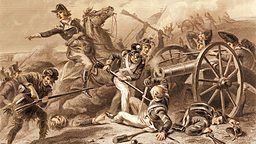
Peter Snow tells the story of the 1814 confrontation between Britain and the United States
Peter Snow tells the story of the 1814 confrontation between Britain and the United States

December 12, 2017
Interesting history well-written, and all the more interesting as it seems to be forgotten history--happening during the War of 1812--a forgotten conflict. Interesting also that the book is written by a British author. However, I feel Peter Snow was remarkably even-handed in this book. The invasion of Washington, DC, was a remarkable victory by an able British general. The Anglo-Irishman General Robert Ross was one of the British generals with Wellington's army fighting in the Peninsula campaign (in Portugal and Spain) against Napoleon's French troops. This was a general who had proven himself in hard fighting, who, with his battle-hardened "redcoats," was shipped to America to fight the "Yankees." Snow points out that the war was no "Second War of Independence" as Britain had no plans to reconquer America. However, the British felt that the Americans had back-stabbed them by declaring war on them while they were engaged in their fight for survival against Napoleon. They had a point--you could say England was fighting our fight too, as I think that, if Napoleon had somehow defeated Britain, America could have been next, as Napoleon would have liked to restore France's New World empire (even though he had sold Louisiana to the United States). Anyway, Britain wanted to give the Yanks " a drubbing"-- some punishment. This would also give them an advantage in negotiations so that they could pick up some territory, such as Maine, which would be a nice Maritime Province for Canada. So Gen. Ross was able to defeat a larger force of around 6,000 with his army of 4,500 veterans (at the Battle of Bladensburg, Maryland). The Americans were mainly militia who were undisciplined and led by one of the most incompetent generals in US history-William Winder. After driving the Americans from the field, the British were able to march into Washington and burn the public buildings there, such as the White House, the Congress, and the Treasury. A tragic event in American history to be sure, but I think it is most heartening to read that, after this disaster, the country rallied and, in the following campaign, the Americans were able to hold Baltimore against both a British fleet and Ross' army, Ross himself being killed by a sharpshooter. The successful defense of Fort McHenry gave the US the song-"The Star-Spangled Banner"- which would finally become its national anthem. So this is a story of a complete disaster followed by a tremendous victory. I have to add that I think the War of 1812-14 seems to have been a most useless and unnecessary war that President James Madison should never have led the republic into...but at least the United States and Britain have never gone to war with each other again since then.

June 20, 2014
Peter Snow's When Britain Burned the White House, is one of those books that you anticipate because you've always wanted to know more about the topic, but yet when you read it, you find you know more about some things, and even less about others. Difficult to understand? Well, it's difficult to explain. The reader will be aided immensely if you understand two things going in: 1. the subtitle is accurate, that is to say that it is focused mostly on the invasion Burning of Washington in 1814 and not really the rest of the War of 1812 and 2. be prepared for a narrative that dips in and out of straight-forward military history. Not to say that either of those are negative points, but they help in understanding in the beginning what you are about to read.
Snow is excellent in his research and presentation of events- and in some ways the narrative is somewhat refreshing in that it leads with a more British point of view. Not surprising as Snow is a British journalist. The author emphasizes that the British, fresh out of the Napoleonic Wars, have a bit of a score to settle; but that is not the only reason for one of the most misunderstood of American wars. The reader would be forgiven, if being wholly unfamiliar with the War of 1812, that they may still be confused after reading this; but remember, this book focuses on a chapter in that war. That's not to say that Snow is not evenhanded in his treatment. His narration is more that evenhanded and fair.
Meeting the different and lesser known figures of this story (on both sides) was intriguing, as was the brief, but informative background material given on some of the major and minor individuals. Sometimes a historian gives too much of a biography that takes away from the narrative. Snow is good about keeping the narrative and sequence of events flowing. His take on Dolly and James Madison is not ground breaking, but Madison doesn't exactly shine here, either. Snow is good guide and gets us through the event, but on occasion the writing bogs down a bit and seems more of a journeyman style in sections, that it fails to keep the rapt attention of the reader. On such occasions, I was readier to move a bit faster in pace and get to the next chapter.
I enjoyed being able to keep pace by consulting the maps that were included, but I would have like some more plates of the paintings of key figures, some of the famous paintings of the event, etc, but they aren't included. As this was an advance galley copy for review, I suspect that they may be present in the final volume, but cannot say for sure. Overall, a welcome volume to the shelf on the War of 1812, especially considering it is the bicentennial of the Burning of Washington this year. However, since this is mainly focused on 1814, if the reader wishes a more comprehensive look at the entire war, it definitely should be included with other books for the larger picture. 3.5 stars
Note: I received this as an Advanced Reader's Copy courtesy of the publisher through Goodreads.com.
Snow is excellent in his research and presentation of events- and in some ways the narrative is somewhat refreshing in that it leads with a more British point of view. Not surprising as Snow is a British journalist. The author emphasizes that the British, fresh out of the Napoleonic Wars, have a bit of a score to settle; but that is not the only reason for one of the most misunderstood of American wars. The reader would be forgiven, if being wholly unfamiliar with the War of 1812, that they may still be confused after reading this; but remember, this book focuses on a chapter in that war. That's not to say that Snow is not evenhanded in his treatment. His narration is more that evenhanded and fair.
Meeting the different and lesser known figures of this story (on both sides) was intriguing, as was the brief, but informative background material given on some of the major and minor individuals. Sometimes a historian gives too much of a biography that takes away from the narrative. Snow is good about keeping the narrative and sequence of events flowing. His take on Dolly and James Madison is not ground breaking, but Madison doesn't exactly shine here, either. Snow is good guide and gets us through the event, but on occasion the writing bogs down a bit and seems more of a journeyman style in sections, that it fails to keep the rapt attention of the reader. On such occasions, I was readier to move a bit faster in pace and get to the next chapter.
I enjoyed being able to keep pace by consulting the maps that were included, but I would have like some more plates of the paintings of key figures, some of the famous paintings of the event, etc, but they aren't included. As this was an advance galley copy for review, I suspect that they may be present in the final volume, but cannot say for sure. Overall, a welcome volume to the shelf on the War of 1812, especially considering it is the bicentennial of the Burning of Washington this year. However, since this is mainly focused on 1814, if the reader wishes a more comprehensive look at the entire war, it definitely should be included with other books for the larger picture. 3.5 stars
Note: I received this as an Advanced Reader's Copy courtesy of the publisher through Goodreads.com.

August 28, 2014
It is mostly history...but a very ineteresting find!!

April 17, 2023
It’s not exactly light reading and I’m sure I didn’t comprehend and won’t retain everything, but I really enjoyed learning more about this period of American history.
Key takeaways:
* The British were not trying to “reclaim” America. They wanted a bit of revenge and to give the Americans a “good drubbing” for burning the capitol of York (modern Toronto), Canada. There were squabbles over land possession; the British wanted Maine and the Americans wanted some parts of Canada.
* The Americans didn't have a good defense against the British advancing upon Washington and the city was easily taken over.
* The British were somewhat regretful of how much they burned, including books and so on in Washington.
* Francis Scott Key was aboard an English ship arranging for the release of a Doctor whom the British were detaining. Key wasn't allowed to leave since he knew too much about their plans.
* Once Washington was burned, the British moved on towards Baltimore, an even better prize in their eyes. This is where the battle of Ft. McHenry was and the "bombs bursting in air". The British cannons could reach up to 2 miles in range but were highly unpredictable upon their descent. The American's cannons only reached 1 mile out to the ships. The battle lasted about 25 hours but neither party was drastically put off. It was practically a stand still and the British finally decided to back off.
* Many think it was the Americans who pulled through and "won", however, the British decided not follow through with their land attack of Baltimore and retreated. They had New Orleans in their sight and knew if they lost too many men at Baltimore, future endeavors wouldn't be successful.
Key takeaways:
* The British were not trying to “reclaim” America. They wanted a bit of revenge and to give the Americans a “good drubbing” for burning the capitol of York (modern Toronto), Canada. There were squabbles over land possession; the British wanted Maine and the Americans wanted some parts of Canada.
* The Americans didn't have a good defense against the British advancing upon Washington and the city was easily taken over.
* The British were somewhat regretful of how much they burned, including books and so on in Washington.
* Francis Scott Key was aboard an English ship arranging for the release of a Doctor whom the British were detaining. Key wasn't allowed to leave since he knew too much about their plans.
* Once Washington was burned, the British moved on towards Baltimore, an even better prize in their eyes. This is where the battle of Ft. McHenry was and the "bombs bursting in air". The British cannons could reach up to 2 miles in range but were highly unpredictable upon their descent. The American's cannons only reached 1 mile out to the ships. The battle lasted about 25 hours but neither party was drastically put off. It was practically a stand still and the British finally decided to back off.
* Many think it was the Americans who pulled through and "won", however, the British decided not follow through with their land attack of Baltimore and retreated. They had New Orleans in their sight and knew if they lost too many men at Baltimore, future endeavors wouldn't be successful.
This entire review has been hidden because of spoilers.

February 16, 2018
An interesting piece of history! I knew next to nothing about the War of 1812 and the later invasion of Washington D.C., but I have been enlightened by this book.

September 20, 2019
The War of 1812 is one of those forgotten wars of American history, overshadowed by the American Revolution that proceeded it and the Civil War that followed decades later. And yet, it's one of utmost importance in our nation's history for being the first time an enemy invaded American territory to attack our capital and for inspiring our national anthem. Peter Snow's 2014 goes some way to rectify that, exploring the 1814 attack on Washington by British forces who eventually burned many of its prominent buildings to the ground. It also takes in the bombardment of Fort McHenry outside Baltimore which soon followed, the last major enemy attack on mainland America until 9/11. Snow writes an engaging piece of informative history, exploring the people behind the events as much as what happened, illuminating both in the process. The result is a fine read indeed.

February 19, 2014
I think I would have been tempted to emphasize even more the pointlessness and futility of this war with its attendant death and destruction. But within its emphasis on explaining the characters involved, this is a very engaging and illuminating account. It also efficiently puts the campaign in the context of American politics and the Napoleonic Wars--and explains nicely the drain it was on economic resources for both countries. And it's interesting not just how the events were experienced (and Snow is quite savvy in foregrounding the limitations of eyewitness accounts offered after the fact), but also received. Baltimore wasn't really a battle at all--the British withdrew out of prudence--but that didn't stop it being heralded as a great victory. Whereas even the British were ambivalent about the burning of public buildings in Washington (the British sportingly avoided damaging most private property). Many regarded it as uncivilized. It's hard not to agree with Wellington, who saw the whole war--which started over impressment by the Royal Navy of Americans that stopped anyway with their victory over Napoleon, and resulted in a peace treaty that left things precisely as they had stood before--as a waste of money and lives.

July 5, 2014
I was really looking forward to this book, having long been outraged at a vague tale I heard somewhere while living in Washington DC a few years ago, of the barbaric British burning the Library of Congress during the War of 1812. (The White House, I understand, but what reason could they have had to burn a library?Shame.) This was certainly a well-researched and very detailed account of the British march on Washington and the hapless American defense. But, in the end -- before the end, actually -- I lost interest. I'll keep my eye out for another book on the subject and hope it's more to my taste.

November 7, 2013
I was very excited to find this book. It's very well written and extremely detailed. For those interested in the American/English war of 1812 this is a must read. What I particularly enjoyed was the in-depth character development of the major protagonists. Snow used family letters to detail the characteristics and natures of Major General Robert Ross and other Generals. It was particularly helpful to have the maps of the area and the explanation of the battle plans.

January 28, 2015
Informative and interesting especially since it made me realize just how little I know about the War of 1812! A very easy read, my only personal problem was keeping everyone straight but Snow does a good job at helping you with it.

October 13, 2019
Since I know so little about the War of 1812, I found this book to be an easy read, and quite interesting. What really caught my attention is that there are two battle sites - The Battle of Bladensburg, and the Battle of North Point, that are within 20 or 30 miles of my house, and about which I had heard nothing. In both cases, there has been almost no preservation of the battlefield sites, which is unfortunate, since they are an important part of the history of the United States. I was also interested to learn some of the details about the occupation of Washington DC by the British, and the burning of the White House, the Capitol, the Library of Congress, and other public buildings. I also found the account of the uncoordinated and ineffective generalship around the occupation of Washington DC to be quite remarkable, and if it were more widely known, could serve as a textbook example of how not to manage military forces in a crisis. So, if you want to learn more about a war that has been largely forgotten in American history, then I would recommend this book as a good place to start.

September 29, 2019
A very interesting read in to a subject that many people doesn't know about. The author has written it in a way that makes it light and easy to read, that it isn't heavy like some history books can be. There's plenty of information to keep your interest as well as diagrams of the movements of each side, the British and the American.
Subjects like the burning of the White House, should be something taught in all school's, even if it was only for a short period of time in our history. It's our history at the end of the day, now I can't speak for American schools, but I know us British don't cover anything to do with the 1814 battle. Shame really as this would make a very good book to study while studying the subject.
Subjects like the burning of the White House, should be something taught in all school's, even if it was only for a short period of time in our history. It's our history at the end of the day, now I can't speak for American schools, but I know us British don't cover anything to do with the 1814 battle. Shame really as this would make a very good book to study while studying the subject.
June 5, 2025
This made (for me) an interesting read, as I am a student of history, especially revolutionary war period for this country. The accounting was told from notes taken from diaries of soldiers (and leaders) on both sides of the conflict. The burning was more symbolic (which all of the British commanders admitted in their diaries) than strategic. It is also interesting to think of the country at a time when you rode through the woods to go from the White House to Georgetown. For all intents and purposes, we abandoned Washington to the British and this served as a rallying cry for the remainder of the war. It is also interesting to see how "civilized" this war was; e.g. the British burned no homes where the residents offered no resistance, the British actually paid some residents for food, some residents actually invited the British high command into their homes and fed them.

July 18, 2017
This book is a pretty straight forward history of the 1814 invasion of Washington, D.C. and subsequent attack on Baltimore during the War of 1812. Though the prose isn't overly elegant or stimulating, Snow does a great job of using a variety of primary sources to illustrate the effect of the British campaign in Washington and Maryland. There are some stylistic quirks that are to be expected (British spellings, ' ' for quotes instead of " ", endnotes that are just tied to pages numbers), and there's basically no historiography. But for a popular history book it achieves its goal of providing a readable and informative look at the time when Britain burned the White House.

March 31, 2025
Published in 2013, 'When Britain Burned the White House' is a historical account of a raid carried out by British armed forces in 1814 against the US mainland, resulting in the burning of the White House and a number of other public buildings in the US capital. The book looks at the historical context of the raid, as well as other targets of the raid. Some may see it as an opportunistic use of units freed up for use by the end of the war in Europe, whilst others will see it as an act of vandalism with little military value. Regardless of that, what is important is that it happened, an here we have a detailed coherent account of just how the events unfolded. Read it and learn something.

April 25, 2024
An episode that both the UK and the USA try to avoid, or put in a forgotten corner. However, the war from 1812 to 1815, which ended in a draw, would have a profound impact on the United States and its foreign policies. Monroe was secretary of state, would become president and in 1823 articulated what we know today as the Monroe Doctrine.
Being a history book, it is written like a novel, making it easy and captivating to read, having an excellent base of documentation and bibliography, and an interesting analysis of the main protagonists of the period.
Being a history book, it is written like a novel, making it easy and captivating to read, having an excellent base of documentation and bibliography, and an interesting analysis of the main protagonists of the period.

June 16, 2022
I really dislike wrongly titled books. The burning of the White House really takes about five pages of this book. The rest is the battle beforehand and the attempted attack on Baltimore that followed.
It’s also really dry. Probably steer clear unless interested in this particular aspect of the war of 1812.
It’s also really dry. Probably steer clear unless interested in this particular aspect of the war of 1812.

October 9, 2017
a fairy tale masqueraded as history, peter snow seems to be very well aware of the outside termperature or what the individuals were thinking, yet knows nothing of the bigger picture. a romantic novel with some facts thrown in.

May 30, 2018
Great morsel of history here and reads like a pot boiler. Reminds me why I am addicted to history because it produces great « wow » moments and this has a few of those so well worthwhile.

January 9, 2021
Fascinating chapter of British/American history that I did not know much about. This book had a wide range of facts and information about this incident and the causes of it. Very well written.

Read
December 10, 2021October 2021, Carl, Non-Fiction

November 19, 2024
Nonfiction that reads like a novel. Good read for history buffs.
May 17, 2025
Schools should be teaching this
At over eighty years old I never what happened during this period of time.
I'm glad I found the book and read it.
At over eighty years old I never what happened during this period of time.
I'm glad I found the book and read it.

June 19, 2014
First off, I originally selected When Britain Burned the White House in a Goodreads First Reads giveaway because I thought it would be good to know more about the War of 1812. Even my college-level course barely glanced over it. I did win the copy I read and I was pleasantly surprised. This book was not only informative, but it was immaculately researched and written with a well-flowing prose. Plus it honestly read like a good adventure novel! I never expected to thoroughly enjoy reading this book!
Peter Snow, the brother-in-law of World War I historian Margaret MacMillan, focused in on the one month period from August 17 to September 13, 1814. The British had just defeated Napoleon and exiled him for the first time allowing them to turn their attentions towards their former colony. The two nations had been at war for the past two years with skirmishes occurring in Canada and at sea. The Americans had also burned York (modern-day Toronto), the British Canadian capital. Initially, the British fleet under Admiral Alexander Cochrane and the Army component it carried led by General Robert Ross were only to harass the American coast. However, Admiral George Cockburn (pronounced co-burn), whom had been raiding the coast already, convinced Ross to take things one step further and march on to Washington, D.C. And this book examines that influence, decisions made about the campaign, American response, and both sides thoughts about the conflict. Most famously focused on were the march on and burning of Washington, D.C. and the later bombing at Fort McHenry at Baltimore.
Readers will gain many understandings. They will see how Cockburn influenced Ross and other ranking commanders to do against orders from London. They will understand just how unorganized and unprepared the American military and militias were leading up to these events. Readers will see how President James Madison's cabinet bickered among themselves, causing much disorganization among the troops via conflicting orders and his reliance on Secretary of State James Monroe (whom during this month would also become Secretary of War). They will also see how tired and worn the British troops were after the European Peninsular campaign ended and how that also led to struggles within the British ranks once back on land.
Better yet, the political and military leaders were not the only focus. The experiences of the average solider on both sides were addressed. So were the noncombatants, such as the women who fled the capital or opted to remain and the American doctors who cared for both sides without hesitation. And remember the story of how Dolley Madison saved George Washington's portrait? It was told in her own words and those of her loyalest servant, a slave she later freed. And of this was done in such a way that it flowed naturally in the text; not once did it feel forced.
Snow used a brilliant technique by not simply retelling the story; he let the words of those who were there shine through. He uses extensive excerpts from letters, diaries, memoirs, battle reports, etc. to let history be told in the participants and observers own words. In cases where there are opposing viewpoints on a situation, he provided quotes from both sides so that readers can cast their own judgements. He uses his own words to summarize and describe events and connect them to the excerpts; sometimes these are mere sentences and other times pages. This technique also helped make the book feel more "personal" though sharing the observations of those who were there.
It is also important to note that the author's note points out that since the War of 1812 is infrequently studied, this is the first non-diary/memoir published on this campaign! It was written with the express purpose of filling a gap and because the author realized that the topic is often presented as a sideshow to the Napoleonic Wars and the American Revolution.
Peter Snow, the brother-in-law of World War I historian Margaret MacMillan, focused in on the one month period from August 17 to September 13, 1814. The British had just defeated Napoleon and exiled him for the first time allowing them to turn their attentions towards their former colony. The two nations had been at war for the past two years with skirmishes occurring in Canada and at sea. The Americans had also burned York (modern-day Toronto), the British Canadian capital. Initially, the British fleet under Admiral Alexander Cochrane and the Army component it carried led by General Robert Ross were only to harass the American coast. However, Admiral George Cockburn (pronounced co-burn), whom had been raiding the coast already, convinced Ross to take things one step further and march on to Washington, D.C. And this book examines that influence, decisions made about the campaign, American response, and both sides thoughts about the conflict. Most famously focused on were the march on and burning of Washington, D.C. and the later bombing at Fort McHenry at Baltimore.
Readers will gain many understandings. They will see how Cockburn influenced Ross and other ranking commanders to do against orders from London. They will understand just how unorganized and unprepared the American military and militias were leading up to these events. Readers will see how President James Madison's cabinet bickered among themselves, causing much disorganization among the troops via conflicting orders and his reliance on Secretary of State James Monroe (whom during this month would also become Secretary of War). They will also see how tired and worn the British troops were after the European Peninsular campaign ended and how that also led to struggles within the British ranks once back on land.
Better yet, the political and military leaders were not the only focus. The experiences of the average solider on both sides were addressed. So were the noncombatants, such as the women who fled the capital or opted to remain and the American doctors who cared for both sides without hesitation. And remember the story of how Dolley Madison saved George Washington's portrait? It was told in her own words and those of her loyalest servant, a slave she later freed. And of this was done in such a way that it flowed naturally in the text; not once did it feel forced.
Snow used a brilliant technique by not simply retelling the story; he let the words of those who were there shine through. He uses extensive excerpts from letters, diaries, memoirs, battle reports, etc. to let history be told in the participants and observers own words. In cases where there are opposing viewpoints on a situation, he provided quotes from both sides so that readers can cast their own judgements. He uses his own words to summarize and describe events and connect them to the excerpts; sometimes these are mere sentences and other times pages. This technique also helped make the book feel more "personal" though sharing the observations of those who were there.
It is also important to note that the author's note points out that since the War of 1812 is infrequently studied, this is the first non-diary/memoir published on this campaign! It was written with the express purpose of filling a gap and because the author realized that the topic is often presented as a sideshow to the Napoleonic Wars and the American Revolution.

January 14, 2016
Perspective is a peculiar thing. As the saying goes, "One man's terrorist is another man's freedom fighter." A common colloquialism is "it depends on whose ox is getting gored." A glass of milk can either be half full or half empty depending on how thirsty you are. The American perspective on the War of 1812 was a fight for national honor, against perceived diplomatic slights and the impressment of American citizens into the Royal Navy as well as trade restrictions with France. For the English, this was an irritant in the greater Napoleonic Wars that were going on at the time. The very last thing England wanted was to fighting another two-front war on opposite sides of the Atlantic.
Rather than focus on the whole war, Peter Snow instead focuses in on the two of the last battles of the war. Up to this time, the war had largely been fought to a stalemate, with England having something of the upper hand. America - fighting "Madison's War" - had assumed that its armies and militias were sufficient to make territorial gains in Canada where General Sir George Prevost was maintaining a defensive strategy in Lower Canada (southern Quebec and the Labrador region of Newfoundland). Prevost was forced into this posture from London, which could not spare the troops.
Snow dives right into the narrative of the sacking of Washington, D.C. The alleged reason for the sacking - retaliation for the American sacking and burning of Toronto - seems on shaky ground as British troops had already exacted a measure of revenge against Buffalo. After troops led by General Robert Ross (with an assist from Rear Admiral George Cockburn) defeated a hastily assembled and hilariously inept force at the Battle of Bladensburg, the path to Washington was clear. Snow keeps the story flowing with a copious attention to detail, including the heartache suffered by Captain Thomas Tingey to destroy the Naval Yard to prevent its contents from falling into enemy hands.
Once the destruction of Washington is complete, the English decide to move on to Baltimore. Here, at what would be America's darkest hour in light of the events in the capital, a nation - and specifically Maryland Militia Major General Samuel Smith - decided that Baltimore would not suffer the same fate. Given nearly two weeks to prepare, Smith has Fort McHenry beefed up and two other ad hoc forts built, as well as to deploy a land force to meet up with the army attacking from the east.
Here is where perspective comes in; the battle of Fort McHenry is widely regarding as a shining moment in American history, owing to the fact that Francis Scott Key penned what would be the National Anthem from an English ship in the harbor. From Snow's (English) perspective, this is considered "myth making". Given there was an asymmetrical battle (American cannons could not reach the British ships firing at them), Snow is not entirely off the reservation with his assertion. It is considered a truly American moment because - as we had a generation earlier - taken the best that the best military force in the world could offer, and remained standing. It is a quintessentially American moment.
Snow should be lauded for producing an in-depth look at the truly pivotal month in the War of 1812 and showing the events that led to the Treaty of Ghent. Given that the war was a sideshow for the English, the fact that a Englishman took up a study of this is commendable. The fact that the war basically ended in a stalemate without any truly defining moments in English history allows Snow to remain above his material and present an objective view of the actions of that time.
BOTTOM LINE: Necessary reading for early 19th century history buffs.
Rather than focus on the whole war, Peter Snow instead focuses in on the two of the last battles of the war. Up to this time, the war had largely been fought to a stalemate, with England having something of the upper hand. America - fighting "Madison's War" - had assumed that its armies and militias were sufficient to make territorial gains in Canada where General Sir George Prevost was maintaining a defensive strategy in Lower Canada (southern Quebec and the Labrador region of Newfoundland). Prevost was forced into this posture from London, which could not spare the troops.
Snow dives right into the narrative of the sacking of Washington, D.C. The alleged reason for the sacking - retaliation for the American sacking and burning of Toronto - seems on shaky ground as British troops had already exacted a measure of revenge against Buffalo. After troops led by General Robert Ross (with an assist from Rear Admiral George Cockburn) defeated a hastily assembled and hilariously inept force at the Battle of Bladensburg, the path to Washington was clear. Snow keeps the story flowing with a copious attention to detail, including the heartache suffered by Captain Thomas Tingey to destroy the Naval Yard to prevent its contents from falling into enemy hands.
Once the destruction of Washington is complete, the English decide to move on to Baltimore. Here, at what would be America's darkest hour in light of the events in the capital, a nation - and specifically Maryland Militia Major General Samuel Smith - decided that Baltimore would not suffer the same fate. Given nearly two weeks to prepare, Smith has Fort McHenry beefed up and two other ad hoc forts built, as well as to deploy a land force to meet up with the army attacking from the east.
Here is where perspective comes in; the battle of Fort McHenry is widely regarding as a shining moment in American history, owing to the fact that Francis Scott Key penned what would be the National Anthem from an English ship in the harbor. From Snow's (English) perspective, this is considered "myth making". Given there was an asymmetrical battle (American cannons could not reach the British ships firing at them), Snow is not entirely off the reservation with his assertion. It is considered a truly American moment because - as we had a generation earlier - taken the best that the best military force in the world could offer, and remained standing. It is a quintessentially American moment.
Snow should be lauded for producing an in-depth look at the truly pivotal month in the War of 1812 and showing the events that led to the Treaty of Ghent. Given that the war was a sideshow for the English, the fact that a Englishman took up a study of this is commendable. The fact that the war basically ended in a stalemate without any truly defining moments in English history allows Snow to remain above his material and present an objective view of the actions of that time.
BOTTOM LINE: Necessary reading for early 19th century history buffs.

June 16, 2022
Who knew that a full 30 years after the end of the American War of Independence, the UK returned and invaded the White House? And what's more, the Brits evicted then-president James Madison, and after eating his dinner, set the whole place ablaze so he would never live there again?
Truth stranger than fiction, told with Agatha Christie-like verve. I am holding back a mark because the history itself doesn't always get seen from both sides. In particular I would question the claims of the armies on their heroics (Snow does this inconsistently), as we often get uncritically left with the 'history written by victors'.
It's unquestionably fascinating, though, and for military history it's good that the women (notably Dolley Madison, the President's level-headed and charismatic wife) get equal-billing.
Truth stranger than fiction, told with Agatha Christie-like verve. I am holding back a mark because the history itself doesn't always get seen from both sides. In particular I would question the claims of the armies on their heroics (Snow does this inconsistently), as we often get uncritically left with the 'history written by victors'.
It's unquestionably fascinating, though, and for military history it's good that the women (notably Dolley Madison, the President's level-headed and charismatic wife) get equal-billing.

June 30, 2014
I received this book from the Goodreads First reads giveaway program. Thank you author/publisher for the opportunity to read and review your newest book.
When Britain Burned the White House: The 1814 Invasion of Washington by Peter Snow is a historical account of the Burning of the White House and the events leading up to it.
I am far from being any kind of history buff. I have been reading some fictional literature set around the time of the War of 1812. I had never even heard of the British burning the White House in 1814 .. and nobody else I had asked about it was aware of it either. So this book struck my interest only because I was shocked this event had even happened.
The book goes into detail of the prominent historical figures involved on both sides .. British and American. President at the time James Madison and his wife Dolly, and many military figures and leaders are also discussed.
August 24, 1814. British troops set the White House on fire. The White House was only fourteen years old at the time of the burning. Only the outside charred walls were remaining after the devastation. Unfortunately this was not the only public building burned...both houses of Congress, the Treasury, and the War Office were also burned. The reason given for the burning was retaliation for U.S. actions in Canada. The British did spare private residences.
Today the White House structure remains the same except for the added North and South porticoes.
There is so much more to this book than the burning of the White House the book then goes on to describe events afterwards... the creation of the Star Spangled Banner ..the Americans defeating the British in Baltimore ...followed by The Treaty of Ghent.
I really enjoyed the easy to read style of this book and pictures within the book. When Britain Burned the White House was a good historical read.
When Britain Burned the White House: The 1814 Invasion of Washington by Peter Snow is a historical account of the Burning of the White House and the events leading up to it.
I am far from being any kind of history buff. I have been reading some fictional literature set around the time of the War of 1812. I had never even heard of the British burning the White House in 1814 .. and nobody else I had asked about it was aware of it either. So this book struck my interest only because I was shocked this event had even happened.
The book goes into detail of the prominent historical figures involved on both sides .. British and American. President at the time James Madison and his wife Dolly, and many military figures and leaders are also discussed.
August 24, 1814. British troops set the White House on fire. The White House was only fourteen years old at the time of the burning. Only the outside charred walls were remaining after the devastation. Unfortunately this was not the only public building burned...both houses of Congress, the Treasury, and the War Office were also burned. The reason given for the burning was retaliation for U.S. actions in Canada. The British did spare private residences.
Today the White House structure remains the same except for the added North and South porticoes.
There is so much more to this book than the burning of the White House the book then goes on to describe events afterwards... the creation of the Star Spangled Banner ..the Americans defeating the British in Baltimore ...followed by The Treaty of Ghent.
I really enjoyed the easy to read style of this book and pictures within the book. When Britain Burned the White House was a good historical read.
Displaying 1 - 30 of 59 reviews