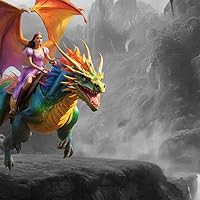
The first thing I do after pulling Volume Six of "The Best Horror of the Year" out of the Amazon box is flip to the copyright page to see who did that cover. Nice job, Pierre Droal! I'm not sure what's going on there, but I'm intrigued.
The second thing I do is check the Table of Contents. A couple of name brands. A couple of personal favorites. But mostly a lot of unknowns. This was a bad thing last year. Volume Five was loaded with newbies who needed a lot more time practicing their craft before graduating to a collection of the "best" in genre writing. But unfamiliar names carry the potential of an exciting discovery. Laird Barron was a nobody not too long ago. So let's keep an open mind, and see what editor Ellen Datlow has unearthed from the crypt for us this year.
Volume Six is off with a plod in "Apports," which begins as a child abuse revenge story, the kind of thing Andrew Vachss can crank out a half-dozen at a time, then veers into suggestions of the supernatural. Stephen Bacon lays down some good seedy scene-setting amid the British projects, but his characters blow the mood when they start making stilted, overly obvious declarations: "That's no excuse for what you did, but I think you're suffering in your own hell."
In "Mr. Splitfoot," an aging, ailing spiritualist drifts closer to an afterlife significantly darker and colder than the Elysian ideal she's sold her followers. Dale Bailey specializes in a horror-lite, the kind of polite, inoffensive fiction that fills up the stodgy genre digests. As "Mr. Splitfoot" starts to build up a head of scream (I'm sorry, these reviews bring out the Crypt Keeper in me), Bailey backs off to deliver a softer, gentler ending. In all fairness, perhaps he was constrained by historical record, but I often get the feeling Bailey is suppressing a nasty streak that I wish he'd indulge (in print, I mean; I don't want him to track me down and sock me in the mouth or anything).
In "The Good Husband," a man walks in on his wife's fourth and most successful suicide attempt and finds himself too worn out to save her. "She will never be happy," he realizes, and a repeat of previous rescue routines "would just be welcoming her back to hell." If she wants to die ... he'll live with it. Til death do us part? Well, not exactly. "The Good Husband" is a record of despair and the literal decay of a marriage haunted by "the ghost of a feeling." It's only the second Nathan Ballingrud story I've read, but already I'm realizing my inexcusable tardiness in getting a copy of his collection, "North American Lake Monsters."
In Nina Allan's "The Tiger," an ex-con moves into an apartment above a pub where he ponders his innocence. Dennis Croft's conviction in a child's murder was overturned, but after 10 years of being treated like a criminal in prison, he's not entirely cleared of the crime in his head. Like Bacon's opening story, "The Tiger" slinks amid the murk between horror and the British crime story, but Allan is more subtle and crafty in the way she doles out information, thereby upping the tension and unease. It's a shame that she breaks the mood by interrupting the story to namecheck its influences before punking out on the ending, but she almost had me.
"The Soul in the Bell Jar" reads like an extended Gahan Wilson cartoon. KJ Kabza applies a touch of the New Weird to the old, dark house in an oddball story honoring the traditions of the mad scientist, the child in danger, the coach ride through the haunted forest. And zombies ... of a sort. I couldn't decide whether to read this story in Universal black and white or garish Corman color.
"Bones of Crow," Ray Cluley's story of giant, man-eating birds in the projects (What's the British term for the projects?), began promisingly as kind of a twisted spin on Ken Loach's "Kes." But as the story got progressively goofier, it put me more in mind of "The Giant Claw," the '50s turkey that featured a turkey, a giant marionette goonybird that knocked toy planes from the sky and gobbled up parachutists. You'll remember it if you've seen it. "Crow," like "Claw," is worth a larf, but I'm not sure that was quite the effect Cluley intended.
In my day job, I got involved in a debate with a fellow editor about the word "meanwhile." It's a useless word, an authorial clearing of the throat onto the page. Skip the preamble, and write your sentence. I told my colleague that the only places I regularly encountered "meanwhile" were at work when I was deleting it and in comic books from the '60s. That night, I came home and read "The Tin House" and found it haunted by the ghost of "meanwhile," along with more malignant forces. Simon Clark was a mainstay during the Leisure cheezer days when that paperback publisher allowed authors to thrive without having to worry much about fussy copy editors. Clark was better than many, but his "meanwhiles," "try ands" and dialog that's "shrieked," "screamed," "bellowed," "gaped"(?) but seldom simply "said" mark him as a first-draft-and-done kind of pulpster. It's juvenile, sloppy, flabby and not exactly to my taste, but lots of readers like their horror quick and brainless, and it can be fun sometimes.
I'm something of an amateur expert on pop culture, and I know my horror history. But all must bow in awe before the body of knowledge regularly drawn from by Kim Newman, who has somehow managed to see every movie and read every book in the horror/SF genres while prolifically adding his own seminal works to the canon. All this, and he's a snappy dresser, too (I can grow a better mustache tho). Newman often brings this encyclopedic expertise to his fiction, drafting figures from history or characters from other people's novels to deploy them for his own evil purposes. Alfred Hitchcock gets repurposed in "The Only Ending We Have," a clever alternate cut of "Psycho," starring Janet Leigh's put-upon body double. (Is this Newman's tribute to Brian De Palma's tribute to Hitchcock?) In addition to incorporating winking references to most of Hitchcock's major works, Newman, ever the dapper gent, makes sure to give a proper nod to terror royalty -- Norman Bates' true creator, Robert Bloch.
Writers who define themselves by agendas run the risk of boring and irritating an audience that knows before the story even starts that it's going to bang on that agenda like a revivalist thumps his favorite Bible. So goes "Fine in the Fire." Within its opening pages, I knew what Lee Thomas was up to: what demons plagued all-star sports jock beloved golden boy character Toby and what his religious father was doing to "cure" him. But Thomas drags his story out for an unconscionable time before dropping his shocker of a denouement, exhausting my patience with his mix of predictability and preposterousness. "Fine in the Fire" follows Derek Kunsken's "The Dog's Paw," a "Twilight Zone"-type twist on Islamic extremism. Purveyors of this kind of preachiness, who try to use the genre as a tool to enlighten us poor benighted readers, often come off as tools themselves.
"Dream within a dream. ... Nothing mysterious or creepy about that," says the tough guy protagonist of Laird Barron's "Jaws of Saturn." As the oft-unsettled owner of an overactive unconscious myself, I must disagree. It might just be a matter of concurrently reading a Best of anthology from the '90s by Ellen Datlow's chief competitor as horror's most venerable editor, but "Jaws of Saturn" reminded me of the kind of stories Karl Edward Wagner was writing before he died: sexually explicit nightmares bleeding and blurring into the waking world. Another classic genre tradition Barron enlivens is that of "apartment horror." This is the second Barron story I know of about The Broadsword building. "Almost a century old, and enormous, its caretakers kept alive certain elements and traditions not often present in its modern counterparts." Grammatical flub aside, that sentence hints at caretakers somewhat more ominous than the landlady banging on the door to demand the rent, and in The Broadsword, neighborly disputes take on higher stakes than how late it's reasonable to crank Zeppelin on the stereo. Barron is perhaps setting up his own mini-mythos, similar to Roman Polanski's loose trilogy of urban dweller unrest.
A plane crash at sea would be harrowing enough, but Linda Nagata takes the worst-case scenario further in "Halfway Home." She spoils her ending early-on by mentioning biohazards and a passenger wearing a thick coat of makeup, but the story's a thrill for most of its duration, and it should make its more well-traveled readers rethink their frequent flier miles. Neil Gaiman also turns in a maritime disaster in the slight but finely sliced "Down to a Sunless Sea."
Best for last, right? Ellen Datlow often saves something special for the final slot in her annuals, and Brian Hodge gets the honored position this year with his novella "The Same Deep Waters As You." Kerry Larimer, an "animal whisperer," is recruited by Homeland Security to utilize her insight at "an older version of Guantanamo Bay. ... It's the home of the most long-term enemy combatants ever held in US custody." Kerry has been summoned to try to communicate with the inmates, 63 travesties of nature captured in the 1920s from a blighted little town called Innsmouth. After decades in slimy saltwater captivity, the prisoners sense the imminence of an event inconceivably apocalyptic, and the U.S. military would like a sneak peek. Too many Mythos acolytes cluster in their foetid little klatches to regale each other with the same old stories using the same old set of monsters described by the same old set of adjectives. (Look no further than the first volume of the anthology series Hodge's story was taken from.) The unspeakable, unfathomable cosmic unknown has become the toothless, tentacled, comfortable familiar. Hodge doesn't do comfortable, and if he's going to swim Lovecraft's fishman-infested waters, "full of secrets and unintended tombs," he's going to leave a singular ring around that tub. (That probably doesn't sound like a compliment.) I get downright irate that Brian Hodge isn't wildly popular and disgustingly successful. We all have our favorite obscure cult artists, but come on, people, he's way past due! This isn't an entirely altruistic wish. I just want my fair shot at getting a copy of his books before they go out of print.
Despite a batch of stories centering on the great oceanic unknown, "The Best Horror of the Year Volume Six" doesn't reach the series' high-water mark of Volume Four, but it's a league or two above last year's bottom feeder. Although there are few stories so exceptional that they warrant the appellation "best," there's a uniform solidity to the selections this year. The copy editing was more attentive (still leaving room for improvement), and even the worst tale of the bunch is quite readable and well-constructed. Datlow's picks may be overly safe -- shocks and shivers are in short supply. But they're solid. And there's particularly fine work from Nathan Ballingrud, Kim Newman and Brian Hodge.