Baker has written a novel that remaps the territory of sex--solitary and telephonic, lyrical and profane, comfortable and dangerous. Written in the form of a phone conversation between two strangers, Vox is an erotic classic that places the author in the first rank of America's major writers. "From the Trade Paperback edition."
Nicholson Baker is a contemporary American writer of fiction and non-fiction. He was born in Manhattan in 1957 and grew up in Rochester, New York. He has published sixteen books--including The Mezzanine (1988), U and I (1991), Human Smoke (2008), The Anthologist (2009), and Substitute (2016)--and his work has appeared in The New Yorker, The Atlantic, Harper's, the New York Review of Books, Best American Short Stories, and Best American Essays. He has received a National Book Critics Circle award, a James Madison Freedom of Information Award, the Herman Hesse Prize, and the Katherine Anne Porter Award from the American Academy of Arts and Letters. In 1999, Baker and his wife, Margaret Brentano (co-author with Baker of The World on Sunday, 2005), founded the American Newspaper Repository in order to save a large collection of U.S. newspapers, including a run of Joseph Pulitzer's influential daily, the New York World. In 2004 the Repository’s holdings became a gift to Duke University. Baker and Brentano have two children; they live on the Penobscot River in Maine.
It's a little dated. I mean, the whole book is a conversation on one of those adult chat lines (do they even exist now?). But on the other hand, not too dated. Plenty of people, even with technology at their disposal, still have phone sex. Er, I mean, that's the rumour I've heard, at least.
I found this book by accident. I was really looking for Nicholson Baker's U and I to continue to feed my obsession interest in John Updike, when I saw this little bit of glorious literary smut. Updike was quickly, unceremoniously, pushed to the side (not to worry, he understands).
The book is comprised of 100% dialogue. A conversation between Abby and Jim, two complete strangers who like the sound of each other's voice. Time to put the kids to bed, this ain't the kind of book you want them reading over your shoulder. Any random page has "cock" on it at least seven times.
So it's phone sex, and it's written by Nicholson Baker, so it's literary too. Should be a slam dunk for this reader, right?
Meh... let's say it has its moments (mmmm the jewelry maker, hmmmm the oil, ahhh the fringed blanket) but for the most part it's kind of annoying, and not terribly sexy.
Annoying, because not only do Abby and Jim ramble a lot, they sound like the exact same person. They speak in the same voice. Essentially, it sounds like Nicholson Baker is having a 160 page conversation with himself. And if you look at a photo of Nicholson Baker - well, that takes me to my next point - not sexy. Baker resembles the love child of Santa Claus and Wilford Brimley (I know, shoot me, but I'm not trying to be unkind here, just being honest), not the sort of guy I want to imagine dirty talking to me. Plus, his characters are a bit off-putting. Abby mentions having "yeast issues" multiple times. Jim is squeamish about naming body parts (he can't say breasts - he says frans - huh?). Many scenarios and fantasies they discuss are a little on the strange side. I couldn't help but wish they'd just get down to business, so to speak, so I could move on.
I did appreciate how the characters were able, through their anonymity, achieve a level of intimacy that many couples aspire to. They're just so open with each other, you have to admire it. And what with Abby's yeast issues, and Jim's indifference to intercourse (he's mainly obsessed with female masturbation), they're a perfect pair.
So, bravo to Baker for bringing the words literary and erotica together, even if it was kinda weird. Now I'm even more curious to know what he has to say about Updike!
There's such a diversity of opinions concerning this book that I can't bring myself to take sides. Instead, I present
Your cut-out-and-keep do-it-yourself Vox reviewing kit
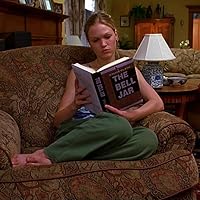
This (ground-breaking/tedious/overhyped/short) novel does for phone sex what (Last Tango in Paris/Lady Chatterley's Lover/Death in the Afternoon/The Bell Jar/Ben Hur) did for (sodomy/gamekeepers/bullfighting/suicide/chariot-racing). Nicholson Baker's book is (surprisingly/predictably/tediously/unnecessarily) (sensitive/pornographic/dull/engaging), and (shows how true intimacy is independent of medium/offers insightful commentary on sex in a post-AIDS society/presents a tired collection of masturbatory clichés/goes through the motions of pretending to entertain) as it builds towards a climax which (is both sexually arousing and emotionally moving/shows the protagonists coming noisily all over the page/should have happened 50 pages earlier/was as drearily predictable as the rest of the book).
(Warmly/Reluctantly/Not) recommended to (anyone who's ever been in love/dirty-minded pseudo-intellectual poseurs/teenagers with strict but short-sighted parents).
I’m not sure what I was expecting from this read but this wasn’t it. I think I was hoping for a little more depth. It was weird, sometimes absurd and erotic which I often like in a book, but it just didn’t do it for me this time. I am willing to try other books by the same author though
Vox… Sounds almost like an expletive... It’s Latin for voice… But also a US news website… A children’s book I read to my then eight-year old… Vox pop… Ultravox… and so back to voice.
This short book reads as the transcript of the conversation between two strangers, Abby and Jim, who connect, one-to-one, via a sex line in the early 1990s.
The brain is the sexiest organ, and the voice is a conduit from one mind to another: pitch, timbre, accent, and intonation determine the hearer’s response at least as much as the words themselves. The right voice can raise one’s spirits, heart-rate, and libido more than any oiled six-pack. As Marshall McLuhan said, “The medium is the message.” But reading about voices talking about intimate things… what’s that like?
“It excites me quite a bit to tell you that I’m going to tell you.”
It is inherently prurient and voyeuristic (but probably tame compared with Fifty Shades), and everything is at at least one remove: you read about the fantasy of hearing, or reading about, or watching other people talk about or act out their fantasies.
This is not my usual fare, and I’m too conflicted for my star rating to have any meaning. Hence, two short reviews in contrast:
Feeble Smut - for the Body
“When I come inside it feels mystical but muffled - it’s as if I don’t feel the perimeter of my cock anymore, because that’s merged with her, it’s melted away and all I feel is the technical interior conduit structure of the thing and the bulb of come swelling and all that - I lose a sense of outer boundaries.” Ugh.
Abby mentions yeast infections four times in thirty pages. How is that sexy? And there’s a long list of things that Jim is not aroused by, including: poolside shots, wet t-shirts, women’s feet, Victorian-style lingerie, pigtails, and having men nearby. They both have a distaste for certain sexual words, including breasts, ass, masturbation, and horny, for which they use alternatives: frans/Kleins, tock, dither/fiddle/strum, and porny/gorny/yorny.
Much of what Jim and Abby do, and the fantasies and past experiences they describe, are both banal and/or slightly strange, but not necessarily in an arousing way. The comical impracticalities of making an image of one’s cock on an office photocopier were diluted by the fact it’s such a cliché. And passé too, now that almost everyone has a smartphone with camera and SnapChat.
At first, I was a little frustrated at how slow it was. Nicholson Baker’s obsession with tiny details is captivating in the largely non-sexual The Mezzanine (see my parody review HERE), but in this context, it is often more of a distraction than an enhancement.
Things did heat up, but towards the end, I was feeling impatient again - a little bored even. I wanted Abby and Jim to hurry up, so I could move onto something else. Something better.
An oxymoronic anticlimactic climax.
And if anyone can explain or give me a link to “thin Europop electronic sex-music”, which is apparently “dimensionless”, I’d be fascinated and grateful. It might even be more of a turn-on.
Slow-Build Steamy Thrill - for the Mind
Most of the conversation felt natural and plausible: by turns, cautious, playful, intimate, mundane, jocular, and erotic. Abby had almost equal time, and it crescendoed nicely, with little dips along the way. I enjoyed the shower scenes, the oil, and even the fringed blanket. I’m not so sure about the circus elephants, though.
There are interesting musings on porn. This one made me smile: dubbed videos are better, “because you’ve got more layers - you’ve got the graphic stuff going on, but you’ve got mouths saying Italian sex words… and then American actors going ooh and aah”.
But better than videos is “written porn… it gives your brain a vaginal orgasm… [it] records thoughts rather than exclusively images… Telepathy on a budget.” Well, in theory.
What I liked most was the recurring exploration of vicarious pleasure - something Abby and Jim both indulge in many permutations. And then there’s Jim relishing second-hand romance novels:
“They weren’t identical, because every one of them had been read. They looked handled. All of their pages were turned… Turned by women… I felt as if I were lifting a towel that was still damp from a woman’s shower… Hundreds of female orgasms could be inferred from the books themselves… You didn’t need to invade anybody’s privacy… It was all there in the pliability and thumbedness of the book”
My copy is second-hand, pliable, and thumbed, but with no sign of more intimate interaction - before or after I read it.
The format and premise of this book is definitely going to be memorable for me. I read it because i'm currently in monkey brain mode after restore me and I can only handle easy, quick, smutty books. This book certainly delivered.
My main thought about this book is I wish I would've read it for a book club. I have so many thoughts and questions bumping around my head, and I almost wish I had a professor teaching it to me so I could fully delve into the subtleties and read in between the lines. Jim was such an interesting narrator, and even by the end of the book, I couldn't decide if he was creepy or respectable.
My only complaints are that sometimes the anecdotes the characters share are too dragged out and become cumbersome, and also for a book that takes place equally between two callers, it seems very male-centric. I wanted Abby's sex life to be fleshed out just as much as Jim's, but he took up a lot of the real estate on the call.
Maybe i'll lower my rating of this book the more it settles, but I did enjoy my reading experience. I underlined a lot of quotes about sex and porn that made me think.
When I read this I had no idea what Nicholson Baker looked like, and thought to myself before googling him that he'll end up resembling Charles Bukowski or some pervy looking guy or something, so got a bit of a surprise when I discovered he looked more like someone who might run one of those countryside walking clubs. Anyway, this book was pretty funny and pretty sexy too whilst reading it, but without any sort of lasting impression after their climax.
I’m sure this high rating probably reflects poorly on me, but I don’t care. I enjoyed the hell out of this smutty little book. Perhaps it’s only modesty and some form of self-conscious restraint that prevent me from awarding it the final star. The structure and dialogue reminded me of Richard Linklater’s Beyond Sunrise. Both have this awkward, yet somehow too-perfectly scripted flow, but nevertheless possess an endearing, unashamed honesty, which, despite the unrealistic nature of the fantasy, manages to capture something essentially sweet and human – in this case the simple need to talk, and to make an honest personal connection. Both Linklater and Baker wonderfully capture those anxious, beautiful moments of connecting profoundly and unexpectedly with someone for the first time. Maybe I’m just a softie, but this kind of thing just makes me effusively happy (Oh, and the sex stuff was pretty good too).
I liked this. Right now it’s 11.51PM (later when the review is complete) and I would rather be munching a shellfish platter than writing this review, but here goes. (That was not an innuendo, in case you were worried. However, it is a little known fact that men are attracted to oysters as it’s the closest they can get to cunnilingus in food form. I was told this at a marine snack-shack in Orkney). So. Two people dial a sex chat line, switch to a private room, and have a natural conversation that culminates in mutual masturbation. That is Vox. I think we can safely say, without a moment’s hesitation, this book is Romeo & Juliet for the postmodern age. Right. It’s now 11.54PM. I’m off to bed. I liked this.
A single conversation, about 170 pages long. Baker's exceptionally readable style renders the most mundane moments vivid. While the subject matter is titillating in some respects, the implicit aura of companionship, intimacy, and aesthetic appreciation shines light on humanity's capacity to intricately fantasize. This platonic grokking between two in-synch individuals is the novel's true, nutty center. Richard Bausch wrote a short story with this exact premise, where a call to a phone sex hotline develops into a deep relationship. I'll have to reread Bausch's collected stories just to locate it.
Baker's other novels stir occasional interest in me for their lack of plot, their relishing of the everyday extravagances of well-spoken narrators, and their unbelievably frank moments. More entertaining than most Philip Roth books I've read, and short enough to tolerate. Reading Baker also makes me want to revisit Bukowski for some reason. I won't reread Baker, neither would I recommend him to most, but I'll always value his close attention to character voice, nuance, and microscopic detail.
The theory in psychology is that a large portion of communication is nonverbal and an even larger portion of this is actually specifically facial. So what happens when you take seeing someone out of the picture? "I liked your voice" "What are you wearing" "which hand" and that sort of thing. I am left to wonder if perhaps phone sex party lines might be the reason men can no longer read body language. Gentleman, crossed arms means don't approach. This book is interesting in the sense that it takes place in a very small moment of time. Perhaps I missed the long craze but growing up I remember chat rooms and phone lines becoming a very big deal, and I mean they actually do still exist. I totally see commercials for them, but people don't use them in the same way. Not that people stopped hooking up, what with skype and all it seems silly that they shouldn't get a nice view as well. So this book carries with it a sense of nostalgia and innocence, yeah I said that. There is something more pure about the characters stepping away from the men asking about bra size, and yes the book is one long sexual fantasy but it isn't one that is terribly out of the ordinary, except perhaps the part about the painters. Where the french attempt to go bigger, brasher, and more Baker gives us only what truly exists for two people in the moment they exist. This is something anyone could have done maybe ten years ago. Before ASL and suicidegirls.
On the other hand this is one of those books I take on the subway and then pray that someone isn't reading over my shoulder. It happens... I had to stop reading de sade on the subway because of it.
What surprised me about this book was just how boring it was. I'd purchased it in college, after having gotten to know (as much as one can know someone you can't trust) over several months of almost daily calls the random phone sex caller at my college. And, as happens in this book, our talks ranged in subject from his religious views (which I found quite odd, considering how he'd found me) to philosophy to my negative views of myself. And so my expectations were very high when I found out about this book. I wanted to relive the experience I'd had or come to a better understanding of it. Instead, I got tiresome and unlikely dialogue between two dowdy and poorly dressed adults I knew it was safest not to visualize. In a book about a phone conversation, couldn't Baker have paid more attention to how conversations usually unfold? Why did the characters go into monologues each time they spoke, with the other patiently waiting their turn or transfixed by what I could not believe was transfixing? This is a speech-exchange between two very patient, very boring individuals. Good luck.
So the entire novel is a phone conversation held between a man and a woman who found each other on a sex hotline. It's supremely unsexy, so if you're looking for porn, look elsewhere. But it is at times an interesting conversation to eavesdrop upon. I've seen other reviewers who say things like, "the conversation isn't very lifelike" or "there's far less Christian Grey in this than I'd prefer", to which I'd say: "I don't think you get it". Nicholson Baker is a weird dude who likes to tap into the weird parts of people's sexuality. I think he probably does find a conversation like this really titillating, but the average reader won't. Hopefully you're not as much of a weirdo as Baker. But there are still times in the book where there are real insights into the human condition. Those moments are reminiscent of the moments in David Foster Wallace's Brief Interviews with Hideous Men where a hideous man lays bare his soul and the reader identifies with something universal and, if not powerful, then precious or pitiful.
Interesting tidbit (to me, at least): the characters mention at one point that the call is 95 cents per half minute. The audio version of this book is 4 hours and 44 minutes long, making it (assuming the audiobook is a reasonable representation of the actual amount of time spent on the phone) a $556.64 phone call. For their sake, I hope it was really worth it. It seems like it was fun for them, but I wonder if it was really that fun.
Vox...If you are a slang and vocabulary junkie who can read inappropriate adult material, then I very highly recommend Nicholson Baker as your new favorite author.
I laughed so hard out loud and alone while reading this book. I learned so many new terms for body parts and acts of sin from Vox.
Of course, ten years after the book came out, they're more common terms. Not between you and I, of course. We're too polite when we speak on an adult chat line to each other.
Vox is a very short book, less than a hundred pages, I believe. The whole book is one, just one, telephone conversation between a man and woman on an adult telephone chat line. Yet another book that I found a free copy of at Earthworks Recycling. Probably a first edition, cause mine is a hardback. I never would have found this book otherwise. God! I am so lucky. The junk business rules!
This book surprised me so much. One conversation for the whole book. Very direct vocabulary. The two characters are not shy and neither should you be if you read it. Give me a call and we'll talk about 'Vox'.
For a novel consisting completely of a conversation between two strangers on a phone system somewhere between phone sex hotline and early internet chat room (this was 1993), this is surprisingly delightful delving into its two characters' inner recesses. Part of a surprise tryptich in my reading with an aging Murakami's tiresome-to-absurdly-stupid male gaze (Killing Commendatore, a bad book), and an unexpectedly beautiful rendering of pleasure in Toni Morrison's harsh but precise debut The Bluest Eye (a wonderful book). Baker, by keeping his interrogation of connection and fantasy purely to the disembodied voice, avoids the more reductive aspects of male gaze erotica, and provides something a little more universal. Sometimes ridiculous, sometimes earnest, perhaps somewhat frivolously determined to stay within its narrow impulses, but always warmly human. For what is more human than the desire to reach another?
The cover says: "A brilliantly funny, perversely tender and technically breathtaking erotic novel." Inside the cover it says: "The most overtly feminist sex novel that anyone has attempted in years. I say feminist because the female character is on par with her male partner erotically. She is articulate, lusty, supplied with normal female caution but, just as normally, feminine curiosity and desire."
It was very foolish of me to put any stock in a description of feminism relying on stereotypes of femininity. And the former quote is from the New York Times, so boo on me there, too. Suffice it to say, Vox is neither of these things.
It isn't a horrible read, it's got too much of that mild 90s flavour to be grievously offensive. Some of the eroticism is well written, but as much as Baker seems to understand about erotic writing he seems also unaware of his own shortcomings and missteps common to writing eroticism. And some of these missteps he stumbles over are what make the novel--to be frank--a little gross.
At first he captures the tone of conversation between two people trying very hard to be erotic. And, for what it's worth, I think he's captured how a man involved in such a situation (and in such a set-up that is the plot of the book) would react to the conversation as it unfolds. Quickly (but, he probably thinks and must insist, how unusually quickly) opening up into his own view of eroticism and descriptions not only of what gets him off, but what should get people off. The tone, in the beginning, seems dead on. Then you realise that it is likely a happy accident. At best the two characters seem like they're conversing in text and not verbally, but more accurately it seems Baker made a critical fumble on how conversations sound. It isn't every third word, but it's often enough to show. Every now and then either character will say something that's too technical, too unwieldy for an erotic phone conversation. And the constant reflexive "outs" ("I was trying to photocopy my cock--incidentally my company is too cheap to buy a good brand of printer." "I was so wet trying to seduce him over dinner, incidentally you can make an excellent, cheap meal of microwaved beef whenever you want, I have it a few times a week") are too constant. The actors should be nervous for this conversation, but this is too nervous. And it lasts too long. Near the end of the book the two would be avoiding little pitstops like this as they get more comfortable with each other and with trying to get each other off.
But I mentioned the grossness so let me get to that. One thing Baker nails about eroticism and erotic writing is that it's all about the details. He understands that what gets people off is not just the rote in-your-face "sex stuff" but the weird non-sexual details around it. He understands further that people often fantasize about strange, impossible stuff when they get off. Like I say, the book isn't horrible and Baker does understand a decent portion of his subject matter. But the issue which comes to a head, and the reason this is in no way a feminist novel, is the bullish manipulation committed by Jim, the only man in the book.
He describes little erotic incidents that have happened in his life (Abby, the only woman, does the same), and this on its own is a good idea. But what he describes largely violates the consent of the women he insists in involving in his masturbatory fantasies. Now, he's all awash with self-deprecation and self-flagellation over this, but that only make it worse. Because in the context of the conversation he's having with Abby it's very clear he's trying to manipulate her into saying it's okay. And it's not just his past that this occurs in--the whole conversation is dominated by his perspective on sex, on women, on what is or is not erotic. He doesn't like the name of breasts, so they rename them "frans". He doesn't like this or that, so they change it. What might have been a commentary on how society labels, names, or conceives of--particularly--female anatomy comes off as a grown man who's too juvenile to use the actual names of the things he gets off to. And while Abby renames a thing or two as well, I recall her being largely egged into it; it's Jim who grabs the ball from her and runs.
And I touched on this above, the strange jilted parts of conversation. Well there is a much more jilting, though not inaccurate, thread running through the conversation. Jim, is not just describing his fantasies he is a pornography connoisseur. And that means that everything sexual he conceives of has to be particularly filed, labelled, and inventoried. A place for everything and everything in its place. He dissociates his own sexual drive by way of beauracratical file keeping. And so everything he finds erotic has to be followed with a puff of the pipe and a "Hmm, quite." It's a gross perspective.
And Jim has such a toxic view of everything. He talks about hating other men while masturbating because they can't appreciate women like he can. He hates the superficial, mainstream porn industry and "subverts" it by fetishizing particularly in his own way. This is... a good thing? For him it seems like it. He reminds me of so many real life men who fetishize women in a way that goes against the grain and want a pat on the head for it--sometimes for being "feminist" enough to jackoff to different kinds of women. Which is why printing the word "feminist" on the cover of Vox pisses me off so much. This guy isn't some monster on the other end of the phone he's a just the same kind of asshole who thinks his hard-on makes him enlightened.
And it's always about viewing women as an object, as a source of pornography rather than a sexual partner. He says near the end of the book that he doesn't even care about his own orgasm, "Exactly! See that? Who cares about my cock? It'll fend for itself. We're talking about your orgasm." Wow, what a hero. Later on the page he says:
"Any woman masturbates anywhere, I want to know about it. No woman is anything but beautiful when she is masturbating. Any plainness or overweightness of boniness or even a character flaw, an ungenerousness or something, everything it part of the recipe of her particular transfiguration, everything bad is pressed out of her when she shuts her eyes tight and comes."
Women for Jim are, essentially, jack-off fodder. He wants to see women masturbate and orgasm more than he wants to sleep with them, even. Nevermind his list of "flaws" a woman can overcome by performing for him, he places himself constantly in the position of voyeur and insists that it makes him morally better than those other, brutal men who want to actually engage women on a mutually sexual level.
Jim's made the mistake common to many men of hiding their own misogyny, their own sexist ideas, under the guise of "fantasy" and extending that guise as far as it needs to go with no critical oversight whatsoever. It would be one thing if his fantasies were especially voyeuristic or dark or offensive, but these things are spilling out into the real world and he insists again and again that it's okay because it's just a fantasy and he knows he's a good guy so it's aces. He talks about going to an explicit foreign film in a theatre years before and, hearing the shock of the couple in front of him when they realise how sexual it will be, tries to assure the woman that everything is okay:
"...I wanted women... to see why X-rated filmes were so wonderful, I still do in some ways, and it has happened, over the last fifteen years, with video, to a limited extent, though as you say you would still reach for the Victorian paperback if given the choice, and probably you are right--but I wanted to reassure this woman that it was okay, people like me were showing up at this theatre, nonviolent normal intelligent men, it wasn't the end of civilization..."
It's just this gross paternalistic insistence constantly presented by the novel.
I think I've said enough on the matter, but to sum it up: not only is the notion of this book as feminist laughable and irritating, even with that put aside the main player of the narrative is grating and off-putting. And I say main player because, while Abby is there and talks about her own experiences and desires, it's always driven by Jim and Jim's narrative.
The only other thing I'll say is that Vox is a fascinating period piece for the 90s. My god in heaven is this a 90s book. Maybe this was even a subversive novel back then, but I rather doubt it.
Sex is part of life,.and it is no surprise that virtually all writers write about it one way or the other, including Africans (Achebe, Ekwensi, Zakes Mda just two illustrious writers who have done so). Phone sex, which even now remains unpopular in Africa, is the theme of this book written many years ago by an American writer. At the time, smartphones were not the vogue, so this work comes across as old fashioned, and even awkward many times. The author did well to write a whole work of fiction weaved around what is after all, imaginary sex. The topics indicate intellectual mien and attention to minutae, though I daresay many might find it tedious and overworked. At the end there is some sort of catharsis, if it can be called that!
The Mezzanine made a Baker fan of me, and Vox has only served to deepen my admiration for his work. I found it funny, warm, brainy but breezy, romantic without sap, genuinely moving and extremely charming. And all of these positive adjectives regarding a novel consisting entirely of a long, uninterrupted conversation between two strangers on a phone sex line. Marvelous!
Highly recommended, especially if you need a little (exquisitely written) spice in your life. I’ll definitely be reading it again.
Have you ever wondered what it'd be like if Nicholson Baker could have phone sex with Nicholson Baker? Well friend, this book is the punishment you most certainly deserve.
After finishing up Double Fold, Baker's fantastic treatise on the phasing-out of paper (and therefore invaluable and irreplaceable archives) at important libraries here and abroad, I had to go back and revisit Vox, his very well-received phone sex novel. The book consists in a phone sex conversation between Jim and Abby, two adults who serendipitously meet through what is probably a more explicit version of LavaLife (anyone else see those late-night commercials?). This, I know, sounds like a lame plot device, but potential readers should be assured that although the conversation (obviously) moves towards the literal climax between the Jim and Abby, that climax is only as interesting and actually kind of incredible as the growing intimacy the two build through their conversation. Most reviewers saw this as related to the safe-sex revolution the early-nineties worked to enforce, but I see it more as a prescient vision of technology's ability to both enhance and obstruct intimacy. In fact, even though Vox was published way back in 1993, it feels totally relevant to today and the accelerated intimacy today's technology fuels. Unlike most other novels/movies that imagine technology's influence on relationships, Vox suggests that technology has a singular ability to build a kind of intimacy into an experience that it otherwise could not have. Basically, it's like a very smart (very) dirty book, and I highly recommend it.
Many years ago, I read Baker's The Fermata, and found it to be a masterful approach to the topic of Pure Filth. Vox... Vox was just boring. I get the idea that it's supposed to revolve around the intersection of the sexual and the mundane. But the mundane was just so, so mundane, and it turns out that hearing ordinary people whom you don't have any connection to discuss their exceptionally mild-mannered, uninteresting turn-ons is even more mundane. Generally speaking, I prefer my writing as chaste as a Puritan spinstress, or as sexually charged as a '70s Lower Manhattan leather bar, and not many points in between. This was middlebrow enough for Monica L. to give as a gift to Bill C. That should tell you enough.
Keep up with the Joneses that the fastest and the most convenient medium of making new friends is using Messenger , IG, Twitter, Blued, and all that jazz. All you need is a smartphone in which you can download the apps since free or paid data connection is accessible to everyone. In light of these modern media of social communication, straitlaced , Victorian , or blue nosed you may sound , deny it or not, you must be aware of the grim reality that people who find sexual thoughts and habits natural in their lives can also now easily pour out their suppressed and restricted desires through these backdoor outlets. This way of meeting new people to find someone to be in relationship with appears to be the modern way of ‘ sexual’ courtship. Back in my university, text messaging and ‘telebabad’, a Filipino nomenclature for having a long conversation over the phone, were the quite common things to do.
Vox is a short erotic novel about the two opposite sexes knowing each other for the first time through the telephone, talking about their sexual experiences and fantasies. In fact, this was published in 1992, and there is no question why the setting of getting along with each other is through the phone since “telebabad” was for all the rage.
The novel is loaded with steamy sexual descriptions. Every page is sexually page-turning. The wind of your imagination would drift out somewhere in the erotic world. You might prudishly cringe at every bizarrely sexual anecdote the characters share with each other. I was like reading an a sex magazine article and about to storm out of my room toward the relieving room. ( But I didn’t, of course! ) However, the ending is so tempting that I could throw it aside and abundantly squeeze out the seminal scenes that had still been lingering on in my mind. ( laughs) But I swear! I really brushed off that green stuff you might be playing now. That ending is not that as erogenous and pornographic as the other scenes I have internally devoured from the other pulp books, but that is quite simply beautifully written. I won’t forget that!
Warning: Young readers should never lay a finger on it. Otherwise, their ignorant and innocent mind would be polluted. That’s why I stashed it underneath the other books I consider worth reading to keep them out of genius children's reach. (laughs) Well, do not get me wrong. I am not that prudish either; let the children explore the world themselves. Besides, it should have been expurgated, but I doubt because it would have been boiled to a thinner version as the inside-the-box mind of the religious people inculcated in superannuated and ultraconservative teachings beyond logical and scientific understanding.
As far as I have learned, Nicholson Baker’s works are more on erotica. I’m not sure of why he is so monomaniac about such genre. So, it has still been a question to me about the essence of this book. What is his real intention? Did he just want to write something the sexually preoccupied ( SPO ) would patronize, and he would earn a lot of money at the same time? In fact, I have been trying to trace some quotable lines which could be the brainchild of his hidden motive, but after all, it could be a read for entertainment value. Apparently, it is all about the bird and the bees. Nevertheless, what I realized was that the desire to express one’s sexual desire. I could say that sex is an art. It is not a tabooing matter.
Before reading it, I didn’t have the foggiest idea of what the title Vox means. When I googled the word, there are many meanings which boggled but aroused my curiosity. It means voices or vocal or a telephone device. It is also an American news and opinion website established in 2014, younger than the book because it was published in 1992. When I came to understand the concept of the story, the stress on the capital X turns out to indicate that it is an X-rated novel.
Despite the meaning of the title is vocals or voice, I am still in a state of bewilderment about its connection to the concept of the story. Nevertheless, if I interpret it in a sexual context, I can understand that in order for someone hyper-sexualized to be sexually excited, he/ she has to hear the voice of the person he /she talks to over the phone, especially if both of them are sexually reciprocal. Well, I don’t opine that both characters are technically sick. They are just literally flirts.
While putting it aside for a while, abstinently preoccupied with the sex scenes playing in me, I could not stand nor perch still on my chair because all I wanted to do is to turn to someone I wanted to share it with , someone I miss talking with about such a taboo topic. Hahaha I miss you Baifern! :)
I have to give the author credit for bravery, for writing something this poorly and having no compunction or fear about putting it out there for all eyes to see and minds to ponder. It would be like me putting the first drafts of my own aborted novels out there; works that I simply couldn't bear having anyone look at. I learned a few things: that the discoloration of genitalia on Roman statues is due to people cumming on them, and that guys hang around the frozen food section of the store to see women's nipples harden. For some reason I was not aware of these things. As for the rest, I can't help thinking about the old '60s TV series "Green Acres." There's a character on that show named Mr. Kimble who could never give a straight answer, talking in endless, pointless, meaningless rambling tangents. That's sort of the way the conversations in this book play out.
This book is like having phone sex with Mr. Kimble....
------ UPDATE: I wanted to leave the review as it stood, on the devastatingly humorous note, but have to fess up and say the book does improve a bit about halfway through (eg., actual sexual content), although, on the whole, I have to say these are some of the feeblest erotic fantasies ever dreamed up. They all left me limp dicked. However, there is one thing Baker pens on page 126 that I wholly agree with and have thought about before myself: "...an orgasm in a complicated mind is always more interesting than one in a simple mind."
This is a book I expected to find precious and overly high-concept and ended up enjoying immensely, and thinking about for a long time after I was done. It is basically a transcript of a phone-sex conversation over the course of several hours, written down with absolutely minimal frills (no descriptions beyond the conversation, no verbs beyond "said" or "asked," no adjectives or adverbs to describe the voices of the two participants). And yet Jim and Abby (whose names I remember although they're only mentioned maybe twice in the book) are fascinating characters, and their conversation is funny, touching and thought-provoking. Also hot--this is, after all, a phone-sex conversation, and the participants spend a lot of time talking about sex and in fact masturbating (the climax of the book is the, well...). Their pornographic flights of fancy are not always "sexy," but that's kind of the point, it's an exploration of what these characters find sexy, and thus it's very idiosyncratic and sometimes intriguingly opaque. It's hard to capture what's so appealing about the book, beyond the fact that it's an intellectual discussion of sex, and a depiction of two intellects meeting and connecting, and that's always fascinating. I ended up having my fingers crossed for Jim and Abby after they hung up their phones.
030219 from 300911 from ??? 90s: i am now unable to hear on phones… or indeed when the face is obscured, so this book reminds me of those occasions before, when i had seduced her on the phone, how i had made bold claims of desire, how i could say things with invisible sincerity, how fun this was. but i know her already, it is shared idea, so it is a bit different here. single topic? i prefer baker’s mezzanine...
Not as much invention or variety as in other books by Baker that I've read, such as U and I. Still, have to hand it to him for persisting with the idea all the way through.
I actually really enjoyed this. I only picked it up at first because its one of the gifts Monica bought Bill. I'm kind of a star fucker when it comes to this kind of thing...
But its really a small accomplishment about over-intellectualizing sex and trying to preserve distance as well as having that distance thrust upon you by social- technological- constraints.
I mean, is there anyone out there in internet land who can really feel what I'm earnestly trying to say about all these books you might or might not have read from a complete and total stranger?
Haunting, beautifully written. I'm glad I got into it.
This entire review has been hidden because of spoilers.
i'd be willing to bet that nicholson baker got the idea for this book one day while simply staring closely at the word VOX. at the individual letters, at the whole word. it's all right there. kinda had to be done.