Jump to ratings and reviews
Rate this book

Literature and Revolution

Rate this book
“Roll over Derrida: Literature and Revolution is back in print. Nothing in the postmodern canon comes close to the intellectual grandeur of Trotsky’s vision of art and literature in an age of revolution, or his extraordinary meditations on the popular ownership of culture.”—Mike Davis

“Re-reading Trotsky on literature 40 years later is a delight.”—Tariq Ali

Leon Trotsky penned this engaging book to elucidate the complex way in which art informs— and can alter—our understanding of the world. Features new reader-friendly explanatory notes.

Leon Trotsky was a leader of the Russian Revolution in 1917 and is the author of My Life.

William Keach is a professor of English at Brown University. He is editor of Coleridge’s Complete Poems.

350 pages, Paperback

First published January 1, 1924

47 people are currently reading
1850 people want to read

About the author

Leon Trotsky

1,085 books796 followers
See also Лев Троцкий

Russian theoretician Leon Trotsky or Leon Trotski, originally Lev Davidovitch Bronstein, led the Bolshevik of 1917, wrote Literature and Revolution in 1924, opposed the authoritarianism of Joseph Stalin, and emphasized world; therefore later, the Communist party in 1927 expelled him and in 1929 banished him, but he included the autobiographical My Life in 1930, and the behest murdered him in exile in Mexico.

The exile of Leon Trotsky in 1929 marked rule of Joseph Stalin.

People better know this Marxist. In October 1917, he ranked second only to Vladimir Lenin. During the early days of the Soviet Union, he served first as commissar of people for foreign affairs and as the founder and commander of the Red Army and of war. He also ranked among the first members of the Politburo.

After a failed struggle of the left against the policies and rise in the 1920s, the increasing role of bureaucracy in the Soviet Union deported Trotsky. An early advocate of intervention of Army of Red against European fascism, Trotsky also agreed on peace with Adolf Hitler in the 1930s. As the head of the fourth International, Trotsky continued to the bureaucracy in the Soviet Union, and Ramón Mercader, a Soviet agent, eventually assassinated him. From Marxism, his separate ideas form the basis of Trotskyism, a term, coined as early as 1905. Ideas of Trotsky constitute a major school of Marxist. The Soviet administration never rehabilitated him and few other political figures.

Ratings & Reviews

What do you think?
Rate this book

Friends & Following

Create a free account to discover what your friends think of this book!

Community Reviews

5 stars
138 (33%)
4 stars
140 (34%)
3 stars
93 (22%)
2 stars
26 (6%)
1 star
9 (2%)
Displaying 1 - 28 of 29 reviews
Profile Image for Glenn Russell.
1,509 reviews13.3k followers
September 16, 2020


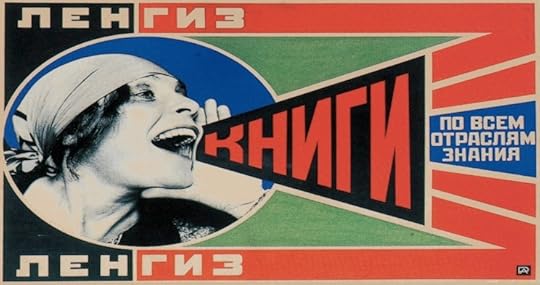
Artist Aleksandr Rodchenko created this work at the time Literature and Revolution by Leon Trotsky was published in 1924.

Since my interest is art and aesthetics, I wanted to read a book by an early 20th century Communist that is considered a major work in the field. I chose Leon Trotsky’s Literature and Revolution. Not being a Marxist myself, I have a number of questions posed either directly or indirectly in my comments following a Trotsky quote from the last chapter in the book – Revolutionary and Socialist Art. Are there any Trotskyites or Marxists in the crowd who would care to offer some insight?

“In the measure in which political struggles will be eliminated – and in a society where there will be no classes, there will be no such struggles – the liberated passions will be channelized into technique, into construction which also includes art. Art then will become more general, will mature, will become tempered, and will become, the most perfect method of the progressive building of life in every field. It will not be merely “pretty” without relation to anything else.” --------- Curiously enough, much modern art since 1924 in Europe, the United States and other areas of the globe has been anything but “pretty,” that is, modern art not following more traditional concepts of beauty. But, of course, such unbeautiful art is not the result of a classless society or the elimination of social struggles. But then again, who would claim modern art is “the most perfect method of the progressive building of life in every field?”

“Man will occupy himself with re-registering mountains and rivers, and will earnestly and repeatedly make improvements in nature. In the end, he will have rebuilt the earth, if not in his own image, at least according to his own taste. We have not the slightest fear that this taste will be bad.” ---------- Unfortunately nearly 100 years after these words were written, there are still forces at work intent on “improving nature” even after much of the warning signs such as global warming, depleted resources and the mass extinction of other species.

“Even purely physiologic life will become subject to collective experiments. The human species, the coagulated Homo sapiens, will once more enter into a state of radical transformation, and, in his own hands, will become an object of the most complicated methods of artificial selection and psycho-physical training. This is entirely in accord with evolution.” ----------This sounds like Nazi genetic engineering. Is there anybody who maintains such ideas today?

“Tragedy is a high expression of literature because it implies the heroic tenacity of strivings, of limitless aims, of conflicts and sufferings. In this sense, Stepun was right when he characterized our “on the eve” art, as he called it, that is, the art which preceded the War and the Revolution, as insignificant.” ---------- Has there been great tragic art created during the last 100 years as a consequence of the developments of Trotsky’s philosophy? Can other forms of literature, such as absurdist literature, reach an equally high expression as tragedy? To my way of thinking, it certainly can - such absurdist literature as that produced during the Soviet-era by Daniil Kharms has its own dimension of striving, limitless aims, conflicts and sufferings. Just because Kharms rejected Communist ideals does not disqualify his absurdist tales from the highest expression of literature.

“It is difficult to predict the extent of self-government which the man of the future may reach or the heights to which he may carry his technique. Social construction and psycho-physical self-education will become two aspects of one and the same process. All the arts – literature, drama, painting, music and architecture will lend this process beautiful form. More correctly, the shell in which the cultural construction and self-education of Communist man will be enclosed, will develop all the vital elements of contemporary art to the highest point.” ---------- Who is the greatest Communist artist and who is the greatest Communist writer? How does their art and literature compare with non-Communists?

“Man will become immeasurably stronger, wiser and subtler; his body will become more harmonized, his movements more rhythmic, his voice more musical.” ---------- One need only look at current day Olympic athletes compared with those athletes competing back in the 1920s to see modern athletes are much bigger, stronger, faster and more agile. But this is only a small part of the bigger picture – a major portion of society does not follow this pattern: the levels of obesity and general bad health, even among children and young adults is appallingly high. The major issue is millions of modern people simply do not follow a healthy lifestyle. No matter how sound or true the theory, given the choice, people refuse to be mandated or bullied into following ideals pronounced by others.

“The forms of life will become dynamically dramatic. The average human type will rise to the heights of an Aristotle, a Goethe, or a Marx. And above this ridge new peaks will rise.” -------- Although the general literary and education level in most countries has improved in the last 100 years, making a trip to my local convenience store, I haven’t yet encountered all those men and women who have risen to the level of Aristotle or Goethe. Perhaps if the background music played Beethoven rather than Muzak?


“If one cannot get along without a mirror, even in shaving oneself, how can one reconstruct oneself or one's life, without seeing oneself in the "mirror" of literature?”
― Leon Trotsky
Profile Image for Anastasiya Krachkovska.
6 reviews8 followers
May 29, 2015
With my great admiration both for Futurists and Formalists, and Trotsky's criticisms of them, I did not expect much from this book. Yet, Trotsky's brilliant exposee does not only utilize ideologemes to brand something as retrograde. His discussion of both Futurists and Formalists is enlightening because it gives these movements their due while at the same time criticizing them. Trotsky also suggest non passé thoughts on relations of art to politics and ideology in a very nuanced fashion. Very convincing
Profile Image for Ilia Tchanturia.
Author 2 books51 followers
June 7, 2020
ქართულად ძალიან ადრე ითარგმნა, ჯერ კიდევ მაშინ ტროცკის მარგინალიზება სანამ დაიწყებოდა, მერე ეს თარგმანი საერთოდ არც იშოვებოდა მგონი. ჰოდა, დროის სხვაობის გამო ცოტა გაუმართავი თარგმანია, ხელახლა თუ თარგმნის ვინმე, გამოსცემს და ჩანაწერებსაც დაურთავს, კონტექსტის ცოდნისთვის, ძალიანაც კარგი იქნება, აქ და ახლა რომ გვჭირდება, ისეთი ტექსტებია
Profile Image for Victor.
90 reviews30 followers
April 9, 2022
Belongs on the shelf of every Marxist literary nerd.
Profile Image for Georgina Koutrouditsou.
454 reviews
April 19, 2015
Ένα εξαιρετικά καλογραμμένο βιβλίο,με πολύ ενδιαφέρουσες απόψεις-οπτικές γύρω από την Τέχνη και όχι μόνο.Γραμμένο το 1923 εκφράζει μια αισιοδοξία για το μέλλον και το ρόλο των πνευματικών ανθρώπων,των ανθρώπων που ασχολούνται με την Τέχνη,τον Στόχο τους και τον Σκοπό τους.Και φυσικά τον Ρόλο της Τέχνης.
Τι έγινε όμως μετά ή καλύτερα τι επιβλήθηκε έρχεται να προστεθεί στην έκδοση του βιβλίου μέσω των Σκόρπιων Φύλλων που πρόσθεσαν οι εκδόσεις "Θεωρία".
Είναι ενδεικτικά τα κεφάλαια για τον Μαγιακόφσκι και το νέο του γύρω από την αυτοκτονία του,η κριτική του Τρότσκι γύρω από τον Τολστόϊ(και ταυτόχρονα η αναγνώριση του 2ου από τον 1ο).
Ξεχωρίζω το Γράμμα στη Τζόαν Λόντον,κόρη του Τζακ,και την αναφορά του Τρότσκι στην ανάγνωση του Σιδερένιου Τακουνιού,σχεδόν 30 χρόνια μετά την γραφή του βιβλίου.Ο Τρότσκι βρίσκεται εκείνη την περίοδο στο Μεξικό και με κάθε απλότητα περιγράφει μοναδικά το έργο και το νόημα του παραπάνω βιβλίου.
Τέλος το άρθρο του Τέχνη και Επανάσταση για το περιοδικό Partisan Review τον Ιούνη του 1938 είναι απλά μοναδικό.Σύντομο και περιεκτικό σε πληροφορίες,αλλά και προφητικό.
Profile Image for Leonardo.
Author 1 book81 followers
to-keep-reference
April 11, 2022
No hay ningún parámetro de hacer algo bien, independientemente de cómo está hecho por otros. Al final de su libro Literatura y Revolución, al describir cómo sería el hombre (con el tiempo) en una sociedad comunista, dice León Trotsky:

El hombre se volverá inconmensurablemente más fuerte, más sabio y más sutil; su cuerpo se volverá más armonioso y sus movimientos más rítmicos, su voz más musical. Las formas de la vida serán dramáticamente dinámicas. El promedio del tipo humano se elevará a las alturas de un Aristóteles, de un Goethe o de un Marx. Y sobre estas cumbres surgirán nuevos picos.

Si esto sucediera, la persona promedio, «tan sólo» en los niveles de Aristóteles, Goethe o Marx no pensaría que es muy competente o versada en tales actividades; tendría problemas de propia estima.

Anarquí, Estado y utopía Pág.159
Profile Image for Andrew Noselli.
694 reviews72 followers
August 3, 2023
If Wittgenstein is correct in saying that thinking cannot take place without language then, by extension, thinking itself must be tied to the function of literature, and this includes scientific and mathematical treatises as well as traditional logographic texts. After investigating the changing status of literature during my lifetime, with more than a passing interest in the development of Russian literature, it seems that the current place of reading activity in American culture is close to embodying what Trotsky envisions as the development of a literary culture which arises from a "stressless" proletarian culture that he felt would be a transitory phase before the adventure of a truly Socialist order. While the advancement of the working classes does not appear to be a major factor in the reading materials that it has been my experience to encounter as I navigated the pop-culture television-driven world of the 1980s and 1990s, it seems that the experience of reading in the liberal late-capitalist world I grew up in was deemed a privileged position according to the bourgeois or proletarian (I still can't decide) middle-class group I belonged to. Reading was an escape from reality, and reality definitely pulled its trump card with a vengeance after I graduated with my Bachelors and Masters Degree in English from Bard College & Wake Forest University in 1997. Like Howard Stern dreaming of himself broadcasting with a complete sense of freedom from his dark bedroom when he was growing up on Long Island, NY, I dreamed of having the ability to read and write as my fancies took me. The fact that both of these dreams came true is to me remarkably clear and evidently proof of God's willingness to have reality assume a form similar to our inner wishes. What Trotsky misses is his politically perceptive book is what Leo Tolstoy knew and espoused quite thoroughly in the religious books he wrote late in life, namely, that the flowering of consciousness necessary for true social change is dependent on an individual's heart, rather the plan of action of an evolving class-movement. Three stars.
Profile Image for Daniel.
284 reviews21 followers
July 18, 2019
Literature and Revolution is a 1924 work of literary theory not criticism, as Wikipedia has it. Trotsky surveys the major schools of Russian literature and their chief practitioners; someone who knows the terrain well is likely to appreciate this part of the book. What interests me is the overarching theoretical framework of the book. Trotsky describes the possibility for a genuine human culture freed of “class characteristics." Trotsky criticizes those who use the term “proletarian culture” uncritically, asserting that it's based on a fundamental misunderstanding about the direction of socialist society. He explains that the dictatorship of the proletariat is merely a transitional phase between capitalism and communism, and that there is not enough time for a proletarian culture to emerge because of the temporary nature of the proletarian state. Instead, Trotsky is interested in the culture that will arise in a communist society. Before that culture can emerge a decades-long transition must take place in which basic material comforts are made available to all (culture “feeds of the sap of economics”) and in which the toiling and illiterate classes are “prepared” and equipped to create a robust and full-bodied culture of their own in the cuture. It is only after this elongated process of material and cultural preparation that the people will be sufficiently well-equipped to begin creating anything like a vibrant new culture (again, not a “proletarian culture” but a classless culture). Trotsky seems almost to disapprove of writers and intellectuals who go about their work , attempting, supposedly, to forge artificial specimens of “working-class culture.” No, in this peculiar period of transition, Trotsky suggests that intellectuals and writers should devote themselves to equipping the masses with the cultural knowledge and background they need to, eventually, under better conditions, create a culture of their own. “Our proletariat,” he writes, “is forced to turn its energies towards the creation of he most elementary conditions of material existence and of contact with the ABC of culture—ABC in the true and literal sense of the word. It is not for nothing that we have put to ourselves the task of having universal literacy in Russia by the tenth anniversary of the Soviet Regime." Yet in educating the masses (and this is key) Trotsky thinks that it is essential that people familiarize themselves with the canonical or landmark cultural achievements of pre-revolutionary ages. They should read Shakespeare and Goethe and Dostoyevsky because even though these figures wrote in a world profoundly shaped by class divisions they still reveal insights into human nature. Artists under communism will use these insights and strategies to forge a culture of their own. Trotsky is extremely impatient with the kind of literalist only-literature-about-miners-and-peasants approach to culture that existed elsewhere in socialist circles. This point of view, as Trotsky says, is based on a fundamental misunderstanding of the “dialectic of successive styles”—how a culture can borrow certain strategies and approaches of past cultures, say, without adopting its ideology. So there you have it. Trotsky would have his proletarians-soon-to-be-“genuine humans” read Goethe, Shakespeare, Pushkin, and Dostoyevsky. In speculating about the kind of culture that citizens under communism will produce, Trotsky writes that “Tragedy based on detached personal passions is too flat for our days. Why? Because we live in a period of social passions. The tragedy of our period lies in the conflict between the individual and the collectivity, or in the conflict between two hostile collectivities in the same individual… This, of course, is much bigger than the child’s play of the ancients which was becoming to their childish age, or the mediaeval ravings of monks, or the arrogance of individualism which tears personality away from the collectivity, and then, draining it to the very bottom, pushes it off into the abyss of pessimism, or sets it on all fours before the remounted bull Apis.. the new artist will need all the methods and processes evolved in the past, as well as a few supplementary ones, in order to grasp the new life. And this is not going to be artistic eclecticism, because the unity of art is created by an active world-attitude and active life-attitude."

Trotsky ends his teatise with no less an extravagant claim as this:

“The average human type will rise to the heights of an Aristotle, a Goethe, or a Marx. And above this ridge new peaks will rise.” Oh, dear.
Profile Image for Alistar Flofsky.
25 reviews10 followers
April 14, 2021
Oтрывки из книги

Александр Блок

Все порывы Блока — в мистический ли вихрь или в вихрь революционный — происходят не в безвоздушном пространстве, а в весьма плотной атмосфере старой русской дворянско-интеллигентской культуры. Символизм Блока был преображением этой близкой и в то же время отвратной среды. Символ есть обобщенный образ реальности. Лирика Блока романтична, символична, мистична, бесформенна, нереальна — но под собой она предполагает очень реальный быт, с определившимися формами и отношениями. Романтический символизм есть уход от быта только в смысле отвлечения от его конкретности, от индивидуальных черт и собственных имен; в основе же своей символизм есть метод преображения и вознесения быта. Звездно-метельная, бесформенная лирика Блока отражает определенную среду и эпоху, ее склад, ее уклад, ритм и вне этой эпохи повисает облачным пятном. Эта лирика не переживет своего времени и своего творца. Блок принадлежал дооктябрьской литературе, но превозмог ее и вошел в сферу Октября «Двенадцатью», Поэтому он и займет особое место в будущей истории русского художественного творчества.

Андрей Белый

Игра на созвучных словах, замена логической или психологической мотивации словесным изломом или акустической связью, характеризует застойное, по самой своей сути средневековое мышление. Белый тем судорожнее цепляется за слова, тем неистовее насилует их, чем туже приходится его косным понятиям в среде, преодолевшей косность. Сильнее всего Белый в тех случаях, когда пишет плотный старый быт. Его манера и там утомительна, но небесплодна: вы ясно видите, что — Белый сам от этого старого быта, плоть от плоти и дух от духа его, что он насквозь консервативен, пассивен, умерен и что ритмика и словесные подергивания — это только средства, при помощи которых сорвавшийся с бытовой оси Белый тщетно борется с пассивностью и трезвенностью в себе.
[...]
Так в колебаниях между неутешительной астральной пустотой и богословскими прейскурантами и протекает духовное прозябание мистиков антропософского и вообще философского вероисповедания.

Николай Клюев

Клюев не мужиковствующий, не народник, он мужик (почти). Его духовный облик подлинно крестьянский, притом севернокрестьянский. Клюев по-крестьянски индивидуалистичен: он себе хозяин, он себе и поэт. Земля под ногами и солнце над головою. У крепкого хозяина запас хлеба в закроме, удойные коровы в хлеву, резные коньки на гребне кровли — хозяйское самосознание плотно и уверенно. Он любит похвалиться хозяйством, избытком и хозяйственной своей сметкой — так и Клюев талантом своим и поэтической ухваткой: похвалить себя также естественно, как отрыгнуть после обильной трапезы или перекрестить рот после позевоты. Клюев учился. Где и чему, не знаем, но распоряжается он знаниями, как начетчик и еще как скопидом.

Мариэтта Шагинян

Шагинян антиреволюционна в самом своем существе. Ее фаталистический христианизм, ее комнатное безразличие ко всему некомнатному — вот что примиряет ее с революцией. Она просто пересаживается со своим ручным багажом и философски-художественным рукоделием из одного вагона в другой. Может быть, ей даже кажется, что она таким путем вернее всего сохраняет индивидуальность. Но только от этой индивидуальности не протянуто никакой нити вперед.

Владимир Маяковский

Динамичность революции, ее суровое мужество гораздо ближе Маяковскому, чем массовидность ее героизма, чем коллективизм ее дел и переживаний. Как грек был антропоморфистом, наивно уподоблял себе силы природы, так наш поэт, Маякоморфист, заселяет самим собой площади, улицы и поля революции. Правда, крайности сходятся. Универсализация своего я стирает до известной степени грань индивидуальности и приближает к коллективу — с другого конца. Но только до известной степени. Богемски-индивидуалистическое высокомерие — в противоположность не смирению, которого никто не требует, а глазомеру и чувству меры, которые необходимы, — проникает собою «все написанное Маяковским». Патетичность достигает у него нередко чрезвычайнейшей напряженности, но не всегда за этой напряженностью сила. Поэт слишком виден, — событиям и фактам дается слишком мало автономии, — не революция борется с препятствиями, а Маяковский атлетствует на арене слова и иногда делает поистине чудеса, но сплошь и рядом с героическим напряжением поднимает заведомо пустые гири.
[...]
Главный порок футуристской поэзии, даже в лучших ее достижениях, это отсутствие чувства меры: салонную меру она утратила, а площадной еще не нашла. А найти необходимо. Если форсировать свой голос на площади, то неизбежно будут хрипота и визгливые срывы, которые подорвут впечатление слова. Надо говорить тем голосом, который тебе дан от природы, а не другим, более громким, которого у тебя нет, — но голос-то при умении может быть использован полностью. Маяковский слишком часто кричит там, где следовало бы говорить: поэтому крик его там, где следует кричать, кажется недостаточным. Пафос поэта подсекается надрывом и хрипотой.
[...]
Избыток стремительной образности приводит к покою. Чтобы движение воспринималось нами физически, а тем более художественно, оно должно находиться в соответствии с механикой нашего восприятия, с ритмом наших чувств. Художественное произведение должно давать наращение образа, идеи, настроения, завязки, интриги до максимума, а не швырять читателя из конца в конец, хотя бы и самыми изысканными тумаками боксерской образности. У Маяковского каждая фраза, каждый оборот, каждый образ хочет быть максимумом, пределом, вершиной. Оттого «вещь» в целом не имеет максимума. У зрителя такое чувство, как если бы его непрерывно заставляли растрачивать себя по частям, — целое ускользает от него. Подъем на гору труден, но он оправдывает себя. Ходьба по пересеченной местности дает не меньше усталости, но меньше радости. Произведения Маяковского не имеют вершины, они внутренне не дисциплинированны. Части не хотят подчиняться целому. Каждая хочет быть собою. Каждая развертывает собственную динамику, не считаясь с волей целого. Оттого нет целого и нет его динамики. Футуристская работа над словом и образом еще не нашла синтетического воплощения.
[...]
Не хватает таланта? Нет. Не хватает нервами и мозгом проработанного образа революции, которому были бы подчинены приемы словесного мастерства. Автор атлетствует, подхватывая и пошвыривая то один образ, то другой. «Мы тебя доканаем, мир романтик!» — грозит Маяковский. Правильно. С обломовской и каратаевской романтикой надо кончать. Но как? «Стар — убивать, на пепельницы черепа!» Да ведь это же есть самая настоящая романтика, хотя бы и со знаком минус! Пепельницы из черепов и неудобны и негигиеничны. Да и свирепость все-таки… немотивированная. Дава�� черепным костям столь несвойственное употребление, поэт сам как бы опутан романтикой, во всяком случае не проработал еще своих образов, не свел их к единству.

Индивидуальность

Индивидуальность есть сочетание родового, национального, классового, временного, бытового, — именно в своеобразии сочетания, в пропорциях пспхохимической смеси и выражается индивидуальность. Одна из важнейших задач критики — разложить индивидуальность художника (т. е. его художество) на составные элементы и обнаружить их соотношение.

Пролетарска�� культура

Пролетарской культуры не только нет, но и не будет; и жалеть об этом поистине нет основания: пролетариат взял власть именно для того, чтобы навсегда покончить с классовой культурой и проложить пути для культуры человеческой. Мы об этом нередко как бы забываем.
[...]
Бесформенные разговоры насчет пролетарской культуры, по аналогии-антитезе с буржуазной, питаются крайне некритическим уподоблением исторических судеб пролетариата и буржуазии. Плоский, чисто либеральный метод формальных исторических аналогий не имеет ничего общего с марксизмом. Нет материальной аналогии в исторических орбитах буржуазии и рабочего класса.
[...]
Буржуазия пришла к власти во всеоружии культуры своего времени; пролетариат же приходит к власти только во всеоружии острой потребности овладеть культурой. Задача пролетариата, завоевавшего власть, состоит прежде всего в том, чтобы прибрать к рукам не ему ранее служивший аппарат культуры — промышленность, школы, издательства, прессу, театры и пр. — и через это открыть себе путь к культуре.
[...]
У нас, в России, эта задача усугубляется нищетой всей нашей культурной традиции и материальной разрушительностью событий последнего десятилетия. После завоевания власти и почти шести лет борьбы за ее сохранение II упрочение наш пролетариат вынужден все свои силы направлять на создание элементарнейших материальных предпосылок существования и собственного приобщения к азбуке культуры — азбуке в подлинном, буквенном смысле слова. Недаром же мы ставим себе задачей ввести поголовную грамотность к десятилетнему юбилею Советской власти.
[...]
Прежде чем пролетариат выйдет из стадии культурного ученичества, он перестанет быть пролетариатом.
[...]
Тем и опасны такие термины, как «пролетарская литература», «пролетарская культура», что они фиктивно вдвигают культурное будущее в узкие рамки нынешнего дня, фальсифицируют перспективы, нарушают пропорции, искажают масштабы и культивируют опаснейшее кружковое высокомерие.
[...]
Но если отказаться от термина «пролетарская культура», как же быть с… Пролеткультом? Давайте условимся, что Пролеткульт означает пролетарское культурничество, т. е. упорную борьбу за повышение культурного уровня рабочего класса. Право же, значение Пролеткульта от такого истолкования не уменьшится ни на йоту.


Profile Image for Giorgi.
20 reviews
January 31, 2025
In defense of Trotsky: Sovlab-ის და მერაბ ღაღანიძის პრიმიტიულ/არასწორად ინტერპრეტირებული ანალიზის დედა მოვტყან.
Profile Image for Tabea Werhahn.
39 reviews3 followers
June 4, 2025
The powerful force of competition which, in Bourgeois society, has the character of market competition, will not disappear in a socialist society, but, to use the language of psychoanalysis, will be sublimated, that is, will assume a higher and more fertile form. There will be the struggle for once opinion, for once project, for one’s taste. In the measure in which political struggles will be eliminated and in a society where there will be no classes, there will be no such struggles, the liberated passions will be generalised into technique, into construction which also includes art. Art then will become more general, will mature, will become tempered, and will become, the most perfect method of the progressive building of life in every field. It will not be merely pretty without relation to anything else all forms of life, such as the cultivation of land, the planning of human habitations, the building of theatres, the methods of socially educate in children, the solution of scientific problems, the creation of new styles, Will vital and growth all and everybody. People will divide into parties over the question of a new gigantic kennel, over the distribution of the oasis in the Sahara, over the regulation of the weather and the climate, over a new theatre, over chemical hypotheses, over two competing tendencies and music, And over a best system of sports. Such parties will not be poisoned by the degree of class or case. All will be equally interested in the success of the whole. The struggle will have a purely ideologic character. It will have no running after profits, it will have nothing mean, no betrayal, no bribery, none of the things that form the soul of competition in the society divided into classes. But this will in no way hinder the struggle from being absorbing, dramatic and passionate. And as all problems in a socialist society, the problems of life which formally were solved spontaneously and automatically, and the problems of art which were in the custody of special Priestly cases Will become the property of all people, one can say with certainty that collective interest and passions and individual competition will have the wider scope and the most unlimited opportunity. Art, therefore, will not suffer the lack of any such explosions of collective, nervous energy, and of such collective psychic impulses which make for the creation of new artistic tendencies and for changes in style. It will be the aesthetic schools around which parties will collect, that is, associations of temperament, of taste and of moods. In a struggle so disinterested intense, which will take place in a culture whose foundations are steadily rising, the human personality, with its invaluable basic trait of continual discontent, will grow and become polished at all its points. In truth, we have no reason to fear that there will be a decline of individuality or an impoverishment of art in a socialist society.
Profile Image for Jonathan Hinckley.
23 reviews2 followers
January 26, 2021
While I was never able to fully immerse myself in the particulars of the subject at hand (I've read literally one of the authors mentioned-it's focusing specifically on Russian Literature from the immediately pre and post revolutionary era), it's the generals where Trotsky's vision shines. Trotsky is an amazingly visionary thinker and his broader claims towards post-revolutionary art (and man) are beautiful. While Marx was hesitant about 'writing recipies for cookshops of the future', Trotsky dabbles here in imagining a world beyond, and the result is an unbounded, utopian horizon.
Parralel to his literary flourshes (Trotsky is very good at metaphors), there is a keen adherance to the method and each section of analysis remains entirely rooted in an intimate grappling with its historical context.
One of the most fraught questions of Marxism is the place of individuality and uniquness in relation to the forces of objective reality, and in this piece Trotsky walks this dialectical tightrope excellently.

"No one can jump beyond himself. Even the ravings of an insane person contain nothing that the sick man had not recieved from the outside world. But it would be insanity of another order to regard his ravings as the accurate reflection of an external world. Only an experienced and thoughtful psychiatrist, who knows the past of the patient, will be able to find the reflected and distorted bits of reality in the contents of his ravings. Artistic creation, of course, is not a raving, though it is also a deflection, a changing and a transformation of reality, in accordance with the peculiar laws of art. However fantastical art may be, it cannot have at its disposal any other material other than that which is given to it by the world of three dimensions and the narrower world of class society. Even when the artist creates heaven and hell, he merely transforms the experience of his own life into his phantasmagorias, almost to the point of his landlady's unpaid bill.
Profile Image for Jon.
420 reviews20 followers
December 14, 2022
Trotsky's focus here is on what new literary forms the revolution will create, and scaning the Russian literary output of the day, he does not see it anywhere. To be sure there are "hints and attempts at it":

Does such an organic interrelation exist between our present-day proletarian poetry and the cultural work of the working class in its entirety? It is quite evident that it does not. Individual workers or groups of workers are developing contacts with the art that was created by the bourgeois intelligentsia and are making use of its technique, for the time being, in quite an eclectic manner. But is it for the purpose of giving expression to their own internal proletarian world? The fact is that it is far from being so. The work of the proletarian poets lacks an organic quality, which is produced only by a profound interaction between art and the development of culture in general. We have the literary works of talented and gifted proletarians, but that is not proletarian literature. However, they may prove to be some of its springs.


He puts this down to the transitional nature of the time and speculates it may even be a century before a new literature is realized.

One thing I found quite interesting is a decade and a half later, while in exile in Mexico City, the issue was still on his mind when he co-wrote Manifesto for an Independent Revolutionary Art with André Breton (though signed in Trotsky's place by his friend Diego Rivera), which still claims many of the the same aspirations:

https://www.marxists.org/subject/art/...

Literature and Revolution offers a very unique historical perspective from a very unique historical actor. This books was written on the victorious conclusion of the civil war in 1923 and reflects Trotsky's positive, or better said utopic, vision of the future of that moment.
Profile Image for Sinan Öner.
396 reviews
Read
September 13, 2019
Sovyet Rus Tarihçi, 1917 Sovyet Ekim Devrimi liderlerinden Leon Trotsky'nin Çevirmen Yazar Hüsen Portakal tarafından çevrilmiş "Edebiyat ve Devrim" kitabı bu alanda yayınlanmış en iyi kitaplardan biridir. Trotsky, "Edebiyat ve Devrim"de, Rus ve Sovyet edebiyatının önemli Şairlerinin ve Yazarlarının eserlerini inceler, eleştirir, tartışır! Trotsky, Rus ve Sovyet Edebiyatı ile Avrupa Edebiyatı'nı "karşılaştırmalı" olarak "Edebiyat ve Devrim" kitabında araştırmıştır. Trostky, Sovyet Devrimi'nin aynı zamanda bir "Kültür Devrimi" olduğunu okurlarına birçok yazılarında açıklar. Trotsky, "Kültür Devrimi"nin yürütülmesinde ve başarısında, Rus ve Sovyet Edebiyatı'nın - roman, öykü, şiir, tiyatro, felsefe gibi edebiyat sanatlarında- merkezî bir rol oynadığını yazar, Trotsky'nin yazarlardan istediği, Karl Marx'ın istediği gibi, "iyi yazmak"tır!
Profile Image for Alicia Fox.
473 reviews24 followers
November 15, 2018
Trotsky's criticisms are harsh yet fair. He knew his stuff. It's an optimistic look at the literature to follow the revolution, with acknowledgement that so far, it wasn't very good but showed promise.

My only criticism of this book is that, at the end, he has a lot to say about people refashioning nature, of the idea popular a hundred-plus years ago, of the age of dam- and canal-building, etc. It doesn't hold up to modern environmental realities. Of course, at the time, Russia was not only vast but largely undeveloped, so no one there was particularly worried about losing natural beauty. Earth-moving meant progress and betterment of life, and no one considered the ecological impact. It's a minor thing and not really worth being too hard on him for.
Profile Image for Alessandro Henrique Rodrigues.
9 reviews
Currently reading
November 15, 2022
trótski sempre fora um grande intelectual, de palavras complexas, mas de grande conhecimento e valor. por fim eu acabei por ''dropar'' esta leitura infelizmente. ele é incrível em muitos pontos, entretanto sua leitura é um pouco exaustiva e pode ser bem entediante. não digo que não haja conhecimento o suficiente na obra, eu seria tolo ao dizer isto, mas digo que este livro necessita de uma leitura clara, sucinta, crítica e cuidadosa. coisa que por ora não estou a poder dá-lo.
Profile Image for Mattschratz.
540 reviews15 followers
August 21, 2023
Some of what Trotsky says about this or that poet is for fans only; I don't think everyone must necessarily have a firm take on Akhmatova. But his attitude--his belief in what culture for everyone could do, his contempt for the culture-makers who insist on supporting a world that would not be for everyone--is indispensable.
Profile Image for Lector Común.
6 reviews1 follower
June 7, 2022
Este Trotsky era brillante... Duro, profundo, inteligente... Los comunistas casi siempre están haciendo el ridículo, pero, cuando no, son de lo mejorcito que hay para leer...
Profile Image for Wyatt Browdy.
76 reviews1 follower
March 13, 2025
“Move over Derrida, Trotsky is back!” - the great Mike Davis
32 reviews1 follower
January 7, 2022
5 stars because it gives me a better idea of the singular power of the communist program for transforming the world. If I had read this as a young man in the years following WW I, I can imagine being captivated by it. I admire the absolute conviction that Trotsky had in the inevitable correctness of the Revolution, but it so very frightening in light of the violence and destruction it required.
Profile Image for Adam Balshan.
672 reviews18 followers
November 8, 2022
0.5 stars [Politics]
Trotsky writes about revolutionary literature as it pertains to the Bolshevik Revolution of 1917. This is an awful book in several respects.

For one thing, a considerable portion of this work is childish ad hominem against poets, authors and literary movements of his day. Imagine a highly educated 16-year-old calling his schoolmates names too refined for their comprehension, and you could formulate half the book. Some of the simpler ones: a 'never-has-been' (p24), a "property-owning witch" (p30), a bunch of "empty zeroes" (p34), and, of Christianity, life's "fictitious solution" (p241).

Another element which makes it awful is that it is an early work of Deconstructionism--one of mankind's dumbest philosophic inventions of all time--where a second author comes along and translates an original author's work into "what he really meant" or "what he should have meant." Such is Trotsky's handling of these other authors when he isn't calling them names.

Literature and Revolution, as expected, lays out some of the foundations of socialism. Through the retrospective eye of history, a reader may marvel at the monumental irony of Trotsky's sociology: his prescription of improvements for the new Soviet man of course proved lacking--often with the exact opposite behavior. Prepare yourself for superfluous wording, almost no linear thought process, and plenty of utopian rhetoric.

This is one of the worst books I'll ever recommend, along with The Communist Manifesto. It is good to be conversant in opposing ideologies, even if they are intellectually bankrupt, and written with pompous hatred. Pseudo-intellectuals are fond of citing a magnum opus or the genius of its author as an Appeal to Authority fallacy to win an argument. (Few people wish to spend their time wending through tortuous inanity, so this usually goes unchallenged.) If you have read Trotsky's book, you can rejoin that actually you have read it, and that it is asinine.
Profile Image for Robbie Herbst.
92 reviews1 follower
July 18, 2025
I think that Trotksy is a more engaging writer than Lenin, and the subject matter is more interesting to me as well. Very interesting that he chose to write this book in the lead up to his political exile - I think it underscores how all true politics seek to supercede the necessity for politics i.e. the point of struggle is to secure for all people comfort and dignity and, of course, art. He is very thoughtful in laying out the relationship of literature to a society, and takes care to situate even the authors he doesn't fully like in the historical moment. He can also be savage at times. Clearly a man of taste and of a belief in the human spirit - obviously I can relate. Anyway, he got domed with the adze of an ice ax and still fought back bravely against his attacker. He died in agony, his movement crushed, and the hope of the revolution died long before then. Reading this offers a strange sense of melancholy - it was basically written 100 years ago, and where are we now? The dialectic has taken some odd turns. And yet his words feel still relevant, still prescient.
Profile Image for Syazrul Aqram.
26 reviews4 followers
September 15, 2016
Sebuah buku kritikan sastera, sosial dan falsafah yang bagus untuk dibaca oleh pembaca-pembaca di Malaysia terutama yang ingin berfikiran lebih jauh dalam berkarya. Juga bagus dibaca oleh penerbit, individu yang berangan-angan atau bercita-cita jadi penerbit, penerbit baru, pengkritik penerbit, pengkritik penulis, penulis, penulis baru, dan individu yang berangan-angan atau bercita-cita jadi penulis.
Profile Image for Reem Cherif.
9 reviews35 followers
January 5, 2015
It's very difficult to view art through materialist perspective. Trotsky offers a great vision towards a free revolutionary art but still can't get himself out of didacticism, and i always have a major proplem when art is related to morality and utilitarian functions.
Profile Image for Philip J.
58 reviews
February 15, 2016
Trotsky shares his great knowledge and understanding of literature of the world . His belief of greater ideas for mankind thru open literature and discussion of new ideas and theories.
Profile Image for Афина.
30 reviews10 followers
August 8, 2012
My favorite.
I wish there were more stars for this book.
The marxist logic about arts.
Displaying 1 - 28 of 29 reviews

Can't find what you're looking for?

Get help and learn more about the design.