

What do you think?

Love and Rockets Library #10
Luba and Her Family
Gilbert Hernandez’s sprawling family saga focuses on the United States, where newly immigrated Luba and her sisters, body-builder Petra and therapist/film star Fritz, find their families’ and friends’ lives becoming more and more intertwined. As the three sisters have “memories of sweet youth,” the next generation finds the spotlight: Luba’s adult daughter
Doralís emcees the proceedings in her role as mischievous host of a children’s TV show, while Petra’s little girl, Venus, has adventures with her aunt Fritz and her best friend Yoshio. At her mother’s urging, Venus also writes missives to her fierce, one-armed cousin Casimira, who’s back in Palomar. In these stories — never before collected together — Venus tells it like it is!
Doralís emcees the proceedings in her role as mischievous host of a children’s TV show, while Petra’s little girl, Venus, has adventures with her aunt Fritz and her best friend Yoshio. At her mother’s urging, Venus also writes missives to her fierce, one-armed cousin Casimira, who’s back in Palomar. In these stories — never before collected together — Venus tells it like it is!
312 pages, Paperback
First published June 16, 2014
About the author
Gilbert Hernández
448 books427 followersGilbert and his brother Jaime Hernández mostly publish their separate storylines together in Love And Rockets and are often referred to as 'Los Bros Hernandez'.
Gilbert Hernandez is an American cartoonist best known for the Palomar and Heartbreak Soup stories in Love and Rockets, the groundbreaking alternative comic series he created with his brothers Jaime and Mario. Raised in Oxnard, California in a lively household shaped by comics, rock music and a strong creative streak, he developed an early fascination with graphic storytelling. His influences ranged from Marvel legends Jack Kirby and Steve Ditko to the humor and clarity of Hank Ketcham and the Archie line, as well as the raw energy of the underground comix that entered his life through his brother Mario.
In 1981 the brothers self-published the first issue of Love and Rockets, which quickly drew the attention of Fantagraphics Books. The series became a defining work of the independent comics movement, notable for its punk spirit, emotional depth and multiracial cast. Gilbert's Palomar stories, centered on the residents of a fictional Latin American village, combined magic realism with soap-opera intimacy and grew into an ambitious narrative cycle admired for its complex characters and bold storytelling. Works like Human Diastrophism helped solidify his reputation as one of the medium's most inventive voices.
Across periods when Love and Rockets was on hiatus, Hernandez built out a parallel body of work, creating titles such as New Love, Luba, and Luba's Comics and Stories, as well as later graphic novels including Sloth and The Troublemakers. He also collaborated with Peter Bagge on the short-lived series Yeah! and continued to explore new directions in Love and Rockets: New Stories.
Celebrated for his portrayal of independent women and for his distinctive blend of realism and myth, Hernandez remains a major figure in contemporary comics and a lasting influence on generations of artists.
Gilbert Hernandez is an American cartoonist best known for the Palomar and Heartbreak Soup stories in Love and Rockets, the groundbreaking alternative comic series he created with his brothers Jaime and Mario. Raised in Oxnard, California in a lively household shaped by comics, rock music and a strong creative streak, he developed an early fascination with graphic storytelling. His influences ranged from Marvel legends Jack Kirby and Steve Ditko to the humor and clarity of Hank Ketcham and the Archie line, as well as the raw energy of the underground comix that entered his life through his brother Mario.
In 1981 the brothers self-published the first issue of Love and Rockets, which quickly drew the attention of Fantagraphics Books. The series became a defining work of the independent comics movement, notable for its punk spirit, emotional depth and multiracial cast. Gilbert's Palomar stories, centered on the residents of a fictional Latin American village, combined magic realism with soap-opera intimacy and grew into an ambitious narrative cycle admired for its complex characters and bold storytelling. Works like Human Diastrophism helped solidify his reputation as one of the medium's most inventive voices.
Across periods when Love and Rockets was on hiatus, Hernandez built out a parallel body of work, creating titles such as New Love, Luba, and Luba's Comics and Stories, as well as later graphic novels including Sloth and The Troublemakers. He also collaborated with Peter Bagge on the short-lived series Yeah! and continued to explore new directions in Love and Rockets: New Stories.
Celebrated for his portrayal of independent women and for his distinctive blend of realism and myth, Hernandez remains a major figure in contemporary comics and a lasting influence on generations of artists.
Ratings & Reviews
Friends & Following
Create a free account to discover what your friends think of this book!
Community Reviews
Displaying 1 - 23 of 23 reviews

November 5, 2021
Luba and Her Family is a collection of Love and Rockets stories featuring Luba, her sisters Petra and Fritzi, and her niece Venus.
I somehow missed out on Love and Rockets back in the day but I've been gnawing my way through the omnibuses through most of 2021.
Anyway, this one has less serious moments than Beto's last couple collections. Venus takes center stage, a precocious preteen who reads comics and sees more than the grownups think. Doralis, Luba's daughter, is the closeted host of a kid's show. Fritzi is a therapist with her share of lovers. Petra is a bodybuilder, also with her share of lovers.
I like what Beto is doing with Luba meeting up with her sisters after leaving Palomar for America but I would mind if the stories shifted back to that timeless town one of these days. Either there was more sex in this volume than the previous one or my memory is foggy. Beto is good at showing Luba and her sisters as multifaceted characters with both good and bad qualities. The rest of the stories spin out of that.
The art is as crisp as ever. I wonder if the Hernandez brothers were born clutching pencils. They definitely have this comic thing down.
Luba and Her Family is another great entry in the Love and Rockets library. Four out of five stars.
I somehow missed out on Love and Rockets back in the day but I've been gnawing my way through the omnibuses through most of 2021.
Anyway, this one has less serious moments than Beto's last couple collections. Venus takes center stage, a precocious preteen who reads comics and sees more than the grownups think. Doralis, Luba's daughter, is the closeted host of a kid's show. Fritzi is a therapist with her share of lovers. Petra is a bodybuilder, also with her share of lovers.
I like what Beto is doing with Luba meeting up with her sisters after leaving Palomar for America but I would mind if the stories shifted back to that timeless town one of these days. Either there was more sex in this volume than the previous one or my memory is foggy. Beto is good at showing Luba and her sisters as multifaceted characters with both good and bad qualities. The rest of the stories spin out of that.
The art is as crisp as ever. I wonder if the Hernandez brothers were born clutching pencils. They definitely have this comic thing down.
Luba and Her Family is another great entry in the Love and Rockets library. Four out of five stars.

November 24, 2023
Luba and her family are all in the USA now. Luba is the eldest sister, and seemingly the parental figure, to her sisters and a pretty big extended family with all the kids. Most of the stories are quite short - little vignettes of the day-to-day life.
The supporting cast in includes:
-Luba's sister Fritz, a psychotherapist with a lisp
-Luba's sister Petra - very strong and mother to Venus and Marie
-Petra's daughter Venus is the star in a lot of these strips, making up probably half the book. She's a young girl who likes the old 50's romance comic books.
-Luba's daughter Doralis who is the star of a kid's TV show (she's also a lesbian and worried about coming out to Luba)
-Pipo - produces Doralis's TV show
-Sergio is Pipo's son and a champion soccer player
-Lubas's husband Khamo - a burn victim who's trying to get into the country but held up because of his past.
-Luba's daughter Maricela
-Luba's daughterGuadalupe who has a husband Gato and son Jimmy.
-Luba's cousin Ofelia, an older woman who was in Luba's past adventures
-Luba's younger kids include Socorro, Casimira (who has a prosthetic arm), Joselito, Conchita
It's actually a lot of characters but they all have their own personalities - although it does get confusing to figure out the relationships between everyone.
The supporting cast in includes:
-Luba's sister Fritz, a psychotherapist with a lisp
-Luba's sister Petra - very strong and mother to Venus and Marie
-Petra's daughter Venus is the star in a lot of these strips, making up probably half the book. She's a young girl who likes the old 50's romance comic books.
-Luba's daughter Doralis who is the star of a kid's TV show (she's also a lesbian and worried about coming out to Luba)
-Pipo - produces Doralis's TV show
-Sergio is Pipo's son and a champion soccer player
-Lubas's husband Khamo - a burn victim who's trying to get into the country but held up because of his past.
-Luba's daughter Maricela
-Luba's daughterGuadalupe who has a husband Gato and son Jimmy.
-Luba's cousin Ofelia, an older woman who was in Luba's past adventures
-Luba's younger kids include Socorro, Casimira (who has a prosthetic arm), Joselito, Conchita
It's actually a lot of characters but they all have their own personalities - although it does get confusing to figure out the relationships between everyone.

September 13, 2014
Once again, I enjoyed the art in this book more than the actual story. Though there where some improvements between this book and the last one I read by this author, High Soft Lisp. Having read that book, and another before it, I'm now at the point where I feel like I know these characters a bit better. It certainly was easier to tell them apart this time. There is just way too much history here. I know that is a lot coming form a guy who reads superhero comics, where some characters have so much history parts of it fly right in the face of other parts, but this is a story mostly grounded in reality. It just makes it hard to follow. It also does not help that the stories move around in time. There are times when you are reading a story and the move from one panel to the next is a timespan of 30 years, but nothing in the story indicates it. It seems to be left up to the reader to figure it out. You better be paying attention to all the characters faces to see how old they are, and heaven help you if you don't know all there names because it could be a story about them when they were just a child.
I still enjoyed this book more than I disliked it. Gilbert's art just blows me away. I love they way he draws muscular women. He makes them powerful, but still sexy. Most artist can not make a women attractive unless they are super skinny with giant tits. Gilbert can draw women of many sizes and shapes and he captures the beauty in them all. He also does very well with the men. There is one character all the girls are going crazy for, and Gilbert draws him to be very handsome. Again he isn't the super ripped square jawed character most artist would draw. He is just a good looking man.
Gilbert does have skills as a writer, even though the stories seem to struggle with clarity at times. I love how he understands that children and adults live in two separate worlds. To children magic is real. It exist to them, and to question that would be like asking an adult to question the existence of cars. When a character finds a rock with Frankenstein's name written on it, it's CLEARLY the grave of Frankenstein's Monster. Or when they run into a mysterious spirit that can't stand Figs, it's completely real to the kids. The adults live in a different world though. It's a world of responsibility, and sex, and worrying about the effects your actions will have on friends and family. It's great to read stories like that.
I still enjoyed this book more than I disliked it. Gilbert's art just blows me away. I love they way he draws muscular women. He makes them powerful, but still sexy. Most artist can not make a women attractive unless they are super skinny with giant tits. Gilbert can draw women of many sizes and shapes and he captures the beauty in them all. He also does very well with the men. There is one character all the girls are going crazy for, and Gilbert draws him to be very handsome. Again he isn't the super ripped square jawed character most artist would draw. He is just a good looking man.
Gilbert does have skills as a writer, even though the stories seem to struggle with clarity at times. I love how he understands that children and adults live in two separate worlds. To children magic is real. It exist to them, and to question that would be like asking an adult to question the existence of cars. When a character finds a rock with Frankenstein's name written on it, it's CLEARLY the grave of Frankenstein's Monster. Or when they run into a mysterious spirit that can't stand Figs, it's completely real to the kids. The adults live in a different world though. It's a world of responsibility, and sex, and worrying about the effects your actions will have on friends and family. It's great to read stories like that.

August 16, 2022
This is the first volume where we really pull away from Palomar. Usually in the other books, there is time spent elsewhere, but eventually it would lead back to the small town. THis one was set primarily in the states, and deals with Luba and her family and how they are adjusting to their new lives outside of Palomar.
Its interesting because as much as it's not fair to compare the two Hernandez brothers' works, I found myself thinking that this volume was closer to Jaime's style than Gilbert's usual style. Where Gilbert usually was much more focused on storylines set in the town of Palomar, Jaime's always felt more aloof and free flowing. And this volume feels like that. There's no major plot point, nothing we are driving towards, it's just snapshots of the Luba and her daughters, sisters, and family's lives. And it was fantastic.
That more casual approach actually humanized the characters a bit more. Which is weird because as the previous volumes have shown us, these are very human characters to begin with. But by seeing them just.... live - instead of just being characters in a drama - in a play, so to speak, it allows us to see them as just ordinary people doing ordinary things and dealing with ordinary every day drama. And it was great.
This volume was a refreshing, more casual approach to Gilbert's side of things. Let's see how he ends things in the last volume of Palomar.
Its interesting because as much as it's not fair to compare the two Hernandez brothers' works, I found myself thinking that this volume was closer to Jaime's style than Gilbert's usual style. Where Gilbert usually was much more focused on storylines set in the town of Palomar, Jaime's always felt more aloof and free flowing. And this volume feels like that. There's no major plot point, nothing we are driving towards, it's just snapshots of the Luba and her daughters, sisters, and family's lives. And it was fantastic.
That more casual approach actually humanized the characters a bit more. Which is weird because as the previous volumes have shown us, these are very human characters to begin with. But by seeing them just.... live - instead of just being characters in a drama - in a play, so to speak, it allows us to see them as just ordinary people doing ordinary things and dealing with ordinary every day drama. And it was great.
This volume was a refreshing, more casual approach to Gilbert's side of things. Let's see how he ends things in the last volume of Palomar.

June 21, 2020
Ditching the socio-political allegories of previous collections Gilbert focuses on the ageing Luba's extended family in the United States, especially her two sisters and her wondrous niece Venus. This is a collection of yet more superb craftsmanship, super magical realism, 'feck, superb realism. 10 ou tof 12, Five Star read.

Read
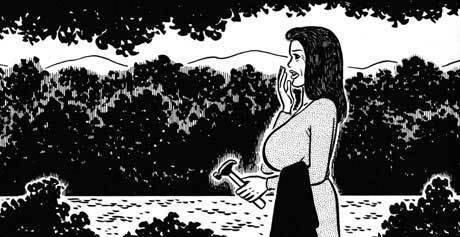
December 18, 2023This volume in Gilbert Hernandez's Luba/Palomar storyline is light in comparison with the previous two collections, but that's only because they were so very dark. In this phase of Beto's 40 years+ story, Luba has moved from Palomar to Los Angeles to join her daughters, her two half-sisters Fritz and Petra, her fellow Palomarian émigré Pipo, and their families. As with Pipo, Luba has no interest whatsoever in assimilating to American ways: she refuses to learn English or to wear makeup, and she still carries her signature hammer - her message to the world not to f*ck with her - wherever she goes. As ever, what carries her through the world is her formidable self-possession. When the world sees her, it essentially sees a pair of breasts on legs. However, a lifetime of weathering the constant mistreatment and dismissal that has come from this has made her skin tough as iron. The only chink in her armor as she accustoms herself to life in America is that her husband Khamo has been unable to emigrate from Palomar with her because of his youthful involvement with the drug trade. As everyone else in the Palomar diaspora to L.A. lives their (often complicated) lives in America, Luba is faced with the difficult task of navigating a foreign land so that she can be reunited with Khamo again.
The heart of this volume, though, is Luba's niece Venus, Petra's daughter. Many of the stories here are told from Venus' perspective, and Beto does a fantastic job of revealing events in the adult world through Venus' uncomprehending eyes. Venus is stalked by a child predator and lurks around her girlhood crush - as it happens, the record store clerk with whom her mother is having a torrid affair. Her cousin Doralis struggles with the question of whether to come out as lesbian, her aunt Fritz carries on a secret romance with Pipo's son Sergio, and Pipo herself spirals for a time into anorexia. However, sheltered from the struggles of the adult world, Venus is gleefully ignorant of all this, inhabiting a whimsical world of surreal daydreams and the 1950s romance comics on which she has an eccentric fixation. The contrast to the children whom we've witnessed grow up in Palomar is striking, and that's perhaps the best testament to just how drastic a change these people have undergone in coming to the US: their children have the luxury of growing up innocent.
When seen in light of these stories, Beto's overall storyline - one he'd already been developing across two decades when they were first published - paints a portrait of how the history of violence and exploitation that links the US and Latin America has in the 20th and 21st centuries profoundly shaped the lives of people in both places.
The heart of this volume, though, is Luba's niece Venus, Petra's daughter. Many of the stories here are told from Venus' perspective, and Beto does a fantastic job of revealing events in the adult world through Venus' uncomprehending eyes. Venus is stalked by a child predator and lurks around her girlhood crush - as it happens, the record store clerk with whom her mother is having a torrid affair. Her cousin Doralis struggles with the question of whether to come out as lesbian, her aunt Fritz carries on a secret romance with Pipo's son Sergio, and Pipo herself spirals for a time into anorexia. However, sheltered from the struggles of the adult world, Venus is gleefully ignorant of all this, inhabiting a whimsical world of surreal daydreams and the 1950s romance comics on which she has an eccentric fixation. The contrast to the children whom we've witnessed grow up in Palomar is striking, and that's perhaps the best testament to just how drastic a change these people have undergone in coming to the US: their children have the luxury of growing up innocent.
When seen in light of these stories, Beto's overall storyline - one he'd already been developing across two decades when they were first published - paints a portrait of how the history of violence and exploitation that links the US and Latin America has in the 20th and 21st centuries profoundly shaped the lives of people in both places.

October 18, 2016
After reading Heartbreak Soup and Human Diastropism (I skipped over Beyond Palomar because I don't own it), Luba and Her Family was a disappointment. The first two books made me feel like Palomar was like the Central American version of William Faulker's mythical Yoknapatawpha County, rich in local color, the grotesque, and the fantastic. Fritzi and Petra, two characters, for all their flaws, I had found endearing in Human Diastrophism, became both annoying, reprehensible, and, worst of all, uninteresting. Petra's daughter Venus does offer a tincture of redemption in this collection, however, by giving a child's interpretation of the events that surround her from her narratives, particularly in "Letters From Venus."
As for the art, it's not as gritty as the first two books, and I'm reminded of the pencil work of post-Golden Age Archie comics.
As for the art, it's not as gritty as the first two books, and I'm reminded of the pencil work of post-Golden Age Archie comics.

July 17, 2022
I'm not a fan of the format: individual comics put together. It makes it harder to judge how much anything that happens has any impact. As in to say, how serialised the story is. And thus whether it's worth all the time reading this series.
Nevertheless, the story and characters are broad, complex and have a lot going on in their lives. Perhaps the choppy effect of reading this in volumes illustrates how life doesn't always flow in coherent, linear fashion.
The stories purport to be serialised, but they aren't, really. You therefore lose any threads of development that you pick up on. 'The author likes enormous tits' is more or less the only thing I ended up getting from this. So much potential...
Nevertheless, the story and characters are broad, complex and have a lot going on in their lives. Perhaps the choppy effect of reading this in volumes illustrates how life doesn't always flow in coherent, linear fashion.
The stories purport to be serialised, but they aren't, really. You therefore lose any threads of development that you pick up on. 'The author likes enormous tits' is more or less the only thing I ended up getting from this. So much potential...

May 27, 2014
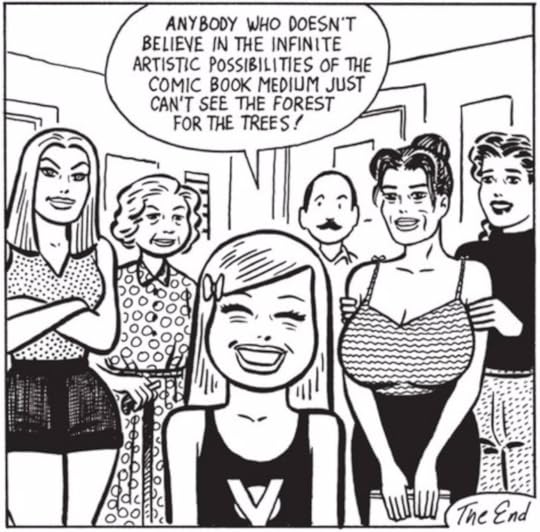
Wow! What a sensitive/crude, surreal/mundane, thoughtful/crazy, complex/simple, sentimental/harsh, cutesy/sexy and wonderful, diverse, satisfying and mature collection. Well summed up in the final panel of the final strip in the book http://thedailycrosshatch.com/wp-cont...

September 11, 2018
Many generation of weird female characters, related by blood in sometimes confusing ways. I loved the part at the end where you realize Luba doesn't wear makeup and the story where Venus is sick and wobbles like a blob out of bed to hear Marie's first words.


August 19, 2020
As Gilbert’s saga moves outside of Palomar, the storylines get a bit more lighthearted. Still fantastic, compelling reading.

March 17, 2024
Following the initial Love and Rockets run, Gilbert Hernandez shifts his focus away from Palomar to flesh out the outer edges of his beloved corner of the landmark American alternative comics series. Despite the title of this omnibus edition, the focus is less on Luba and more on the family part. A substantial portion here focuses on the sisters Fritzi and Petra, who are both half-sisters to Luba, Palomar's tragic and world weary matriarch. Luba's precocious niece, Venus, is also featured prominently here.
Kicking this volume off is the Venus-centric adventures which depict the twelve-year-old daughter of Petra and her love of comics. Venus' endearing characterization is amongst Beto's best work to date; she's knowing and wise for her age, but still demonstrates the jubilant naiveté that is expected of a child. Shifting focus to Petra and Fritzi in subsequent chapters shows that the two women navigate their respective careers as bodybuilder and therapist, respectively, whilst also going through their fair share of lovers. Promiscuity is not uncommon in a Gilbert joint, but coming back to this after reading Beto's later works like Garden of the Flesh or Blubber shows that he's more than capable of depicting sex with more heart if he chooses too.
We catch up to Luba roughly halfway into this volume, and we're met with an older and wearier version of the character. Her fiery temper and resolve has melted away into something more fearful and distrusting. It's a tragic turn for Palomar's once mighty matriarch, but the true strength of Love and Rockets is the usage of time to develop compelling character arcs.
As always, Gilbert's handle on his controlled linework is as pristine as ever. His ability to juggle realism with surrealism is really why he's one of my all-time favorites, just simply by incorporating the right amount of whimsy into a story that otherwise feels very real.
Kicking this volume off is the Venus-centric adventures which depict the twelve-year-old daughter of Petra and her love of comics. Venus' endearing characterization is amongst Beto's best work to date; she's knowing and wise for her age, but still demonstrates the jubilant naiveté that is expected of a child. Shifting focus to Petra and Fritzi in subsequent chapters shows that the two women navigate their respective careers as bodybuilder and therapist, respectively, whilst also going through their fair share of lovers. Promiscuity is not uncommon in a Gilbert joint, but coming back to this after reading Beto's later works like Garden of the Flesh or Blubber shows that he's more than capable of depicting sex with more heart if he chooses too.
We catch up to Luba roughly halfway into this volume, and we're met with an older and wearier version of the character. Her fiery temper and resolve has melted away into something more fearful and distrusting. It's a tragic turn for Palomar's once mighty matriarch, but the true strength of Love and Rockets is the usage of time to develop compelling character arcs.
As always, Gilbert's handle on his controlled linework is as pristine as ever. His ability to juggle realism with surrealism is really why he's one of my all-time favorites, just simply by incorporating the right amount of whimsy into a story that otherwise feels very real.

March 6, 2025
This is my favourite of the Luba and Palomar series so far! It's entirely down to the protagonist. Most of the stories here - not all of them, but a good seventy per cent or so (she says, not having counted but simply giving an impression) - are told from the point of view of Venus, the young daughter of Petra. Venus loves comic books and her little sister, so a lot of the various comics here are... less complex, perhaps, than some of those collected in previous volumes?
I'm not sure less complex is the right phrase. Maybe I'm just getting used to this enormous cast of characters and so am less in need of the cheat sheet in the back telling me who everyone is (and who they're related to), but because the stories are so child-focused, in that Venus herself is narrating them, there's a lot less sex and violence than usual in this series. The adults around Venus and her sister and her younger cousins tend to care about them and look after them, and so anything Venus can glean from their behaviour is not necessarily reliable. Balancing what a child protagonist sees and understands with what the reader sees and understands is a very hard thing to do as a writer, which is why I'm not sure that "less complex" is fair. Either way, I still enjoyed it.
I'm not sure less complex is the right phrase. Maybe I'm just getting used to this enormous cast of characters and so am less in need of the cheat sheet in the back telling me who everyone is (and who they're related to), but because the stories are so child-focused, in that Venus herself is narrating them, there's a lot less sex and violence than usual in this series. The adults around Venus and her sister and her younger cousins tend to care about them and look after them, and so anything Venus can glean from their behaviour is not necessarily reliable. Balancing what a child protagonist sees and understands with what the reader sees and understands is a very hard thing to do as a writer, which is why I'm not sure that "less complex" is fair. Either way, I still enjoyed it.

December 8, 2024
An unfortunately disappointing volume of L&R. Much of that is because what feels like the majority of the volume is about Venus, Luba's niece. Her stories are cute and fun to read, but they feel more Peanuts than L&R. Beyond that, there's almost no plot, or really anything important happening in the whole volume. A Luba in America storyline that should have been transformative is entirely forgettable. Some Petra & Fritz stories are probably the highlight, because they better reveal who these sisters are.
Was it worth reading? Maybe. Would it be worth including in a reread? No, except maybe one story that reveals a bit about Petra & Fritzs' childhood.
Was it worth reading? Maybe. Would it be worth including in a reread? No, except maybe one story that reveals a bit about Petra & Fritzs' childhood.

January 8, 2024
publicada na lendária revista love and rockets, essa hq lembra gabriel garcía márquez. o autor é americano, mas descende de mexicanos. conta a saga de gerações de habitantes da cidade fictícia de palomar, em algum lugar da américa do sul
hernandez tem uma sensibilidade ímpar p/ retratar minorias; escreve grandes personagens negros, com deficiências, homossexuais e, principalmente, mulheres. a história segue o ponto de vista delas.
palomar também tem toques de realismo mágico e de intensa sexualidade.
hernandez tem uma sensibilidade ímpar p/ retratar minorias; escreve grandes personagens negros, com deficiências, homossexuais e, principalmente, mulheres. a história segue o ponto de vista delas.
palomar também tem toques de realismo mágico e de intensa sexualidade.

December 6, 2018
I'm a huge fan of the art style of this book. Clear, clean lines that still have hand-drawn character, a believable setting, and a varied cast of characters. I learned a little ways through that this was the fourth book in a series, so that does have a lot to do with how disorienting the book could be at times. It's often unclear at what point in the timeline different chapters occur in.

August 14, 2024
Lacks the development of the longer stories from earlier volumes, so I found myself much less engaged.

November 11, 2025
Not bad, but probably the most whatever L&R book i’ve read? Venus is very endearing as Peanuts-esque protagonists go but I don’t really feel like Beto had anything to say with this one.

May 20, 2015
This was lent to me by a friend. I had never read any of Gilbert's Love and Rockets stories, strictly Jaime, so I didn't know much about Luba's background, and here I am learning about the peripheral characters in her life. As it turns out, it doesn't matter. Venus, Petra, Fritzi, Pipo, and the rest are all very interesting in their own right, and I really enjoyed reading this. Now, on to Heartbreak Soup!

November 9, 2014
I love the Hernandez Bros.
July 28, 2016
3.5 stars

December 29, 2014
3 and a half stars.
Displaying 1 - 23 of 23 reviews