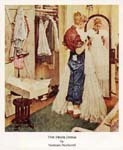
One of the most powerful and compelling figures of all history, Isabel of Spain was a force with which to be reckoned, and should rightfully eclipse the better-known Elizabeth of England, both as a woman and a national leader. The first full scholarly biography of Queen Isabel in English for nearly seventy-five years, Isabel is extensively annotated and eminently readable.
Queen Isabel the Catholic, far from being a mere ceremonial ruler, was the most effective and accomplished female monarch of all time, and one of the most impressive of either sex.
In the year 1492, she believed in Christopher Columbus when no one else did and financed the voyage that would reunite the peoples of both halves of the world after millennia apart. In that same year, she completed the re-conquest of Spain after almost 800 years of Islamic rule (albeit an Islamic rule that was diminishing with each passing century as the re-conquest move southward across Spain).
It is well known that Columbus, being a gifted navigator and explorer, was nevertheless a terrible administrator who failed to reign in his men as they pillaged and raped the hapless inhabitants of Hispaniola and even attempted to enslave them. What is lesser known is that Queen Isabel firmly opposed the enslavement of the indigenous peoples of the Americas and the Canary Islands throughout her reign. Her reasoning was simple: They would not convert to Christianity if maltreated. Unfortunately, the Americas were at the end of the known world, and the Spaniards who went there, caring more about gold than the salvation of souls, were difficult to manage from Isabel’s location.
When Isabel became queen, the re-conquest had not made any progress for over a hundred years, and the southern kingdom of Granada was still under Moorish rule. Isabel made the re-conquest of Spain her top priority until that fateful year when Islamic rule in Spain vanished forever. Mass was celebrated publicly in Granada for the first time since the Moors invaded in 711 AD. The Christians of Granada were liberated, and their chains were hung in San Juan de Los Reyes (the church that Isabel had built in Toledo and dedicated to St John, after whom her firstborn son was named).
After the re-conquest, the Moors were initially allowed to remain in Spain and practise their faith. But after a series of Moorish uprisings in Granada, things changed. Acting on his own initiative, the Archbishop of Toledo, Francisco Jimenez de Cisneros, gave the rebellious Moors two options: Either accept baptism or leave Spain. While a small number left Spain, the vast majority accepted baptism, becoming "Moriscos." Although some bishops were appalled at Cisneros ultimatum, thinking it to be an abuse of the sacrament of baptism, Isabel put her confidence in him.
Cisneros was Isabel’s choice to reform the Spanish Church. After obtaining approval from (the exceedingly corrupt) Pope Alexander VI, she presented Cisneros with a letter naming him as Primate of Spain. In shock, Cisneros let the letter slip from his hands and fall to the floor, and he begged the queen to reconsider her decision. But Isabel chose him not because he was a man of the world, but specifically because he was a man of prayer. As in the case with Columbus, her judgement paid off. After getting himself together, Cisneros set off to reform the morally bankrupt Spanish Church. The result was that Spain would be largely immune to the upcoming Protestant revolt because its Church had already been reformed. In fact, Cisneros’ reform became a blueprint for the Council of Trent, which was the Church’s response to the Protestant “Reformation.”
Nevertheless, Cisneros gave the Moors a terrible ultimatum, and Isabel acquiesced. Of course, one must not imagine that Christians had never been expelled from Islamic Spain. To give just one example, the city of Granada's entire Christian dhimmi population was deported to Africa after a failed uprising in 1126. Note that the ruling Almoravids gave an ultimatum not unlike the one given by Cisneros and accepted by Isabel: Either convert to Islam or be expelled. And after almost 800 years of Islamic rule in Spain, and with new Moorish uprisings threatening future Islamic conquests, Isabel must have reasoned that Spain could not afford to take any chances.
As a result, Spain became the only country in history to ever fully re-conquer itself after an Islamic invasion and takeover (along with modern-day Israel, to a certain extent). Queen Isabel is to thank for that.
Of course, far from thanking Isabel, many people condemn her instead, thinking that Islamic Spain demonstrated more tolerance than she did. However, the truth is that Islamic Spain was not tolerant. Church buildings were torn down and converted into mosques. Christian women and children were enslaved and their husbands killed if they resisted Islamic conquest and rule. Those who did submit became second class citizens, or “dhimmis,” in their own country, forced to pay the onerous “jizya” tax in humiliating ceremonies where they were held by the throat and insulted, all in exchange for the freedom to practice their own religion (albeit only in private). Christians were sometimes made to wear special belts in public so that they could be recognized and marginalized. And on multiple occasions, as mentioned before, entire populations of Christian dhimmis were deported to Africa for threatening Islamic rule. Given the circumstances, some Christians converted to Islam to avoid persecution. In fact, one need only observe the state of Christians in the Islamic world today to get the picture: They are the most persecuted people on earth.
But what about Queen Isabel's establishment of the Spanish Inquisition?
When Isabel ascended the throne, the greatest obstacle to Spain’s flourishment was its own lawlessness. Robbery, murder, rape, and general mayhem were the norm. In response, Isabel established the Holy Brotherhood to root out criminals and bring them to justice. Acting as Spain’s police force, it quickly gained support from the vast majority of the queen’s subjects. The choice was between order and chaos.
But did she introduce too much order?
Although there were some Moriscos who made a genuine conversion to Christianity (or a reversion to their ancestral faith), others presumably did not. Instead, their conversion was nominal at best, and their motivation was to seek advancement in Spanish society (mirroring the Christians who had converted to Islam in previous generations to avoid dhimmi status) or to avoid persecution and exile after Cisnero's ultimatum. In private, however, they continued to practice their former religion, and fear grew that they would use their concealed position in to weaken Spain from within, perhaps even allying themselves with hostile external forces. (The Ottoman Empire was Europe's greatest threat at the time.)
Hence, the Spanish Inquisition had no jurisdiction over Muslims per se. Instead, it was an internal Church affair whose very purpose was to root out false Catholics. Contrary to popular belief, Jews, Muslims, and Protestants could not be brought before the Inquisition. This would happen only if they had converted to Catholicism but were suspected of practicing their former religion in secret. In other words, only people who were ostensibly Catholic could be brought before the Inquisition.
The initial focus was on second or third generation "Conversos." Their ancestors had been forcibly converted to the Catholic faith by vigilantes who incited anti-Jewish pogroms in the streets of Barcelona in the late 14th century. However, since forced baptisms were contrary to the faith, Church authorities allowed them to return to the practice of Judaism once the rioting settled down. Some did, but others remained Conversos. By the mid-15th century, Converso numbers had grown, and although most were genuine in their conversion, there is evidence that some perhaps were not. Nevertheless, widespread rumours painted all of them with the same brush, accusing them of clinging to their ancestral faith in an attempt to overthrow Spain from within. As mentioned before, the Moriscos would come to fall under the same suspicion.
The persecution of the Conversos was condemned by Pope Sixtus IV; but Ferdinand and Isabella insisted that the Spanish Inquisition remain in their hands, believing the rumours to be generally true. Unfortunately, far from being the secret enemies of the Church, many Conversos were actually playing a key role in the evangelization of the Jews, and the Catholic monarchs may have inadvertently hampered this movement. Since the Conversos tended to retain certain Jewish cultural practices, especially regarding food and dress, and since they continued to live in Jewish quarters and associate with Jewish friends and relatives, they tended to fall under suspicion. Moreover, the fact that they were relatively accomplished and wealthy made them susceptible to resentment and envy. Many Conversos made false confessions in order to avoid execution, but this only added strength to the rumours.
The Spanish Inquisition deserves criticism, but it can nevertheless be said that the image of the Spanish Inquisition has been unfairly distorted by the enemies of the Church through the “black legend.” At a time when Catholic Spain and Protestant England were competing world superpowers, it was in the interest of Protestant propagandists to vilify Spain by exaggerating the abuses of the Spanish Inquisition, claiming that tens of thousands, if not hundreds of thousands, of people were killed.
However, after Franco died in 1975 and the archives of the Spanish Inquisition were open to the public for the first time, it was discovered that the inquisitors kept better-than-expected records of the cases they heard. By the 1990’s it had become clear that only about three thousand people died under the Spanish Inquisition, and mostly during the first two decades of its 350 year existence. To put that in perspective, more than twice as many priests and nuns were killed by Marxist atheists in just six months of the Spanish Civil War simply because they were Catholic, and more English and Irish Catholics were killed under the Tudor dynasty alone for the same reason.
In addition to a lower-than-expected death count, the archives demonstrated that the vast majority of cases (about 98%) were resolved without capital punishment, and most of those who were found guilty were let go after a confession of sins and public penance. Only repeat offenders were sentenced to death. Moreover, when the rest of Europe was burning witches at the stake by the thousands, the Spanish inquisitors seemed not to believe in witches.
Whether these recent findings are enough to vindicate Queen Isabel in the minds of most people is doubtful: After all the Spanish Inquisition is still the Spanish Inquisition, and even one execution would have been one too many.
Nevertheless, Carroll (the author of this biography) believes that Queen Isabel deserves a place in the canon of Christian saints. While a saint is anyone who is united with God in heaven, a “canonized saint” is a saint who has been included in the official canon of saints by the Church because they have set an edifying example of holiness. Miracles or martyrdom are typically required to prove that the person is in heaven.
Should Queen Isabel be canonized? Carroll would acknowledge that although she set a good example in some ways, she was not without fault. For example, he condemns her expulsion of the Jews. But since one's sins can be absolved, they are not necessarily an obstacle to canonization anymore than they would be an obstacle to heaven.
Why did Isabel expel the Jews from Spain? Perhaps the expulsion of the Jews went hand in hand with the expulsion of the Moors. After all, the Jews assisted the Moors in their conquest of Spain, thinking that Moorish rule would be better than the Visigothic rule that they were living with. As the Moors made their way across Spain, they put the Jews in charge of each newly conquered city before moving on to the next. In this way, almost all of Spain was under Islamic rule within ten years. (Only Asturias in the north survived, and it was from this mountainous region that Pelayo began the re-conquest at the Shrine of Our Lady of Covadonga.) It was simple divide and conquer. Unfortunately for the Jews, this friendliness from the Moors was not consistent throughout the centuries: Once the conquest of Spain was secure, dhimmi status was imposed on the Jews as it had been on the Christians.
Or perhaps the expulsion of the Jews was based on the centuries-old blood libel that accused Jews of murdering Christian children in Satanic rituals. Or perhaps there was a general lack of appreciation for the economic role of middlemen minorities, as Thomas Sowell argues. But the most likely explanation is that Isabel and Ferdinand became convinced that the Jews were making the Conversos abandon Christianity and return to Judaism in secret in order to overthrow Spain from within. Although the extend to which this was true is debatable, the rumours were overwhelming at the time.
Of the approximately 80,000 Jews who were in Spain at the time, about half converted to Christianity, and the rest choose exile. Some went to Italy, where they were granted protection in the Papal States. But the rest went to the Maghreb, where prejudice against them turned violent, and for this Isabel bears responsibility. It was not until the Second World War that Jews were allowed back into Spain when Franco provided them with asylum from the Holocaust in the tens of thousands.
All that being acknowledged, there is still evidence of Isabel as a conscientious ruler. She lived during a Machiavellian age when rulers, both secular and religious, would feign piety when it served their interests but were in reality far from God. Queen Isabel, on the other hand, actually believed that she was accountable to God. Perhaps the best evidence of this was her constant opposition to the enslavement of the Indigenous peoples of the Americas and the Canary Islands when many other monarchs would not have cared (her only anterior motive being evangelization). Tragically, the logistical challenges of enforcing her will from half way across the world were difficult to overcome.
Commenting on her effectiveness in this regard, Father Bartolomé de las Casas (Defender of the Indians) writes in his "Brief Account of the Destruction of the Indies" :
"But here it is observable, that the desolation of these isles and provinces began after the decease of the most Serene Queen Isabel, about the year 1504. For before that time, very few of the provinces situated in that island were oppressed or spoiled with unjust wars, or violated with general devastation as after they were, and most if not all these things were concealed and masked from the Queen's knowledge (whom I hope God hath crowned with Eternal Glory). For she was transported with fervent and wonderful zeal, nay, almost divine desires for the salvation and preservation of these people, which things so exemplary as these, we having seen with our eyes, and felt with our hands, cannot easily be forgotten."
One can also see Isabel’s character in her familial relationships. She genuinely loved her husband Ferdinand, who genuinely loved her in return. Through their marriage, the kingdoms of Aragon (Isabel) and Castile (Ferdinand) were united. She of course also loved her children and suffered the most heartbreaking tragedies that a mother can experience, but with a stoic demeanor.
Her firstborn son, John, who was set inherit the throne, fell ill and died shortly after marrying and conceiving a child. That child could have inherited the throne, but there was a miscarriage. Meanwhile, Isabel’s firstborn daughter, also named Isabel, lost her first husband shortly after their marriage; and after marrying a second time, she died herself in childbirth at the age of 27. That child, Miguel, was set to inherit the throne, and he was adopted by Queen Isabel herself, who attended to him personally. Unfortunately, he died in her arms when he was less than two years old.
Isabel’s youngest daughter, Catalina, commonly known as Catherine of Aragon, married Arthur Prince of Wales, who promptly died. So it was arranged that she would marry Arthur’s younger brother, Henry, and the rest is history: After 24 years of marriage, Henry VIII broke with the Catholic Church – starting the Church of England — so that he could divorce Catherine and marry his mistress, Anne Boleyn, whom he eventually beheaded, marrying four more times over the course of his life. Out of all of Isabel’s children, Catherine of Aragon was the most like her in appearance and character. Whether her unwavering fidelity to faith and marriage will lead to her own canonization is yet to be seen.
But the worst tragedy befell Isabel’s second daughter, Joanna, nicknamed “the mad.” After the death of Isabel’s other children and grandchildren, Joanna was set to inherit the throne with her husband, Philip the Handsome from the Netherlands. Unfortunately, Joanna slowly began losing her mind, even to the point of lashing out erratically at her poor mother, who observed her mental deterioration with horror. To make things worse, Philip the Handsome showed no signs of caring at all about Spain, even to the point of refusing to visit, or avoiding visits as much as possible. Unfortunately, as Joanna’s mental health deteriorated, so did her marriage, and Philip the Handsome eventually found a mistress, making Joanna’s deteriorating condition even worse.
In 1504, Isabel’s 53rd year, the queen, overburdened with grief, died without the consolation of knowing that the future of Spain was secure, but knowing that Joanna was seriously unwell. Her husband, Ferdinand, continued to rule without her until his death in 1516; but without Isabel at his side, things began to deteriorate. When Philip the Handsome died prematurely at the age of 27, Joanna “the mad” removed his coffin from its tomb and kept his mouldering corpse with her for two years. In 1509, Fernando finally took the corpse away from her and locked her up in a castle for the rest of her life.
Fortunately, Joanna's son, Charles V, who was King of Spain and Holy Roman Emperor, was a more competent ruler. Following in the footsteps of his grandmother, he defended the Catholic faith against the Protestant revolt; he called for Church reformation, which came through the Council of Trent under his patronage; he provided moral support to Catherine of Aragon in her ordeal with King Henry VIII; and working with Father Bartolomé de Las Casas (Defender of the Indians), he passed the "New Laws of the Indies for the Good Treatment and Preservation of the Indians."
Unfortunately, these "new laws" were promptly opposed and did not achieve their end. It was not until the 19th century that the abolitionist movement gained widespread support in Europe, or anywhere else in the world for that matter. But on this issue, Queen Isabel the Catholic was ahead of her time.
Superbly great and detailed book; Dr. Carroll thoroughly explains what made Isabel such a great ruler and Catholic, while also explains the challenges she faced during her lifetime. He also convincingly argues for Isabel's potential connonization.
Warren H. Carroll’s Isabel of Spain: The Catholic Queen is a clearly written, well-researched, and easy to follow historical book. However, Carroll may need to brush up on the definition of biography, as his portrait of Isabel is obscured by other topics. The author’s thesis is made painfully clear – Queen Isabel should be canonized as a Saint. However, this is not his only thesis, and thus he gets bogged down by crusades and family drama. Carroll’s thesis is ultimately unsuccessful, as he scrambles to make much of Isabel’s role in Church events with insufficient records, while deflecting her role in a very large block to sainthood – the forced conversion of millions of Jews and Muslims under pain of death. While the author executed a fascinating book of Spanish history, it is not successful in what it claims to be – a biography of Isabel the Catholic, and one that argues for her sainthood based on her holiness in and out of the crown.
Long sections where Isabel’s name is not even mentioned, along with missing personal details and pertinent facts about the Queen, make the book feel more like an overview of the rule of Isabel and Ferdinand, or a chronicle of crusade and New World exploration. Almost no detail is given about how she managed the royal household or the education of her children or how she managed the pomp and dress of Spanish ceremony (oft mentioned by the author). The pertinent facts to Carroll’s thesis are glossed over – like how she was a Third Order Franciscan and wore the habit under her royal robes! It must be acknowledged that historical biographies are difficult to write, with many personal details lost to time, but Isabel’s life was well documented by contemporaries, and the glimpses given by the author show that he could have provided more on her personal and spiritual life. Instead, she is obscured by his interest in the mechanics of crusading armies, plots of scheming nobles, and an extended look at Christopher Columbus. These elements, combined with the undeniably strong faith of Isabel, make for a great book – but not the biography of a potential saint.
Warren Carroll writes history so you can read it like a novel. He expains the Inquisition from a Catholic point of view. He makes a good point in the following paragraph:
The modern world regards heresy as not a crime, but a joke. But the vast majority of the immense slaughters of men, women, and children by totalitarian regimes in our twentieth century have been carried out by men who bitterly hated Christianity and never hesitated to say so. They would not have been free to operate in a time which would have taken them at their word and knew the cost and consquences of such hatred, which many of those condemned by the Inquisition also nourished. Hitler was an apostate Catholic, Stalin an apostate Orthodox seminarian. Betweeen them they took at least 25 million lives-beside which the grand total of executions by referral from the Inquisition over its entire 300-year history is hardly measurable by comparison. Tomas de Torquemada would have known how to deal-and to deal early -with Hitler and Stalin.
-Warren Carroll This book is full historical information and yet it is an easy read.