

What do you think?

On Strike against God
A lost feminist masterwork by feminist and speculative fiction icon, Joanna Russ, about a young lesbian’s coming-to-consciousness during the social upheaval of the 1970s. When Esther, a recently divorced professor, has her first lesbian love affair, the fallout brings her everyday miseries into focus and precipitates a personal crisis. She flees her small, upstate New York college town, grapples with gender confusion and the ghosts of therapists past, and fumbles her way through comedic sexual self-discovery, oscillating all the while between visionary confidence and debilitating self-doubt. Confronted with the homophobia of straight feminists and the misogyny of gay men, Esther is left to forge a language for her feminism and her burgeoning lesbian desire. On Strike Against God is quintessentially experimental but accessible, alternately wry and earnest, poignantly didactic, playful, and emotionally charged. This new critical edition of On Strike Against God includes additional materials from Russ’s archive. An introduction by Russ scholar Alec Pollak opens the edition, and essays by contemporary writers Jeanne Thornton and Amal El-Mohtar grapple with Russ’s enduring influence on feminist authors today.
320 pages, Paperback
First published January 1, 1980
About the author
Joanna Russ
188 books522 followersJoanna Russ (February 22, 1937 – April 29, 2011) was an American writer, academic and feminist. She is the author of a number of works of science fiction, fantasy and feminist literary criticism such as How to Suppress Women's Writing, as well as a contemporary novel, On Strike Against God, and one children's book, Kittatinny. She is best known for The Female Man, a novel combining utopian fiction and satire. [Wikipedia]
Ratings & Reviews
Friends & Following
Create a free account to discover what your friends think of this book!
Community Reviews
Displaying 1 - 30 of 99 reviews

June 5, 2010
I am so frustrated by not taking note of, or action on, this at the time, but I read something the other day that referenced something being "catty," in a "second wave feminist" way. What the fuck. How can I not remember where I read something so appalling? This book is Joanna Russ's only non-sci fi novel. It's subtitled, in some places, "A Lesbian Love Story," which it both is and isn't. It is a lesbian love story, a coming out story, and a look inside the mind of a brilliant second wave feminist who is really fucking angry and funny. And it is so relatable to me in so many parts, just trying to be out socially and going fucking nuts inside your head about every single sickening dynamic and then having the choose whether or not to "ruin" everyone's "good time" by talking about those dynamics. And all that kind of bullshit. And she's funny funny funny. And I read a bit of criticism about how this book works as an alternative to the 2 stories that are always told about women, we either Find Love or Go Mad. And both are themes referenced throughout, played with, and then a third way is found. Loved it. I've loved 2 of her SF novels that Tish loaned me, loved this, and will be reading all her stuff. How the fuck is this out of print? And how the fuck has second wave feminism gotten such a bad name, beyond legit criticism to referencing it as a TYPE OF "CATTINESS?" This book was so relatable and made me think how much we need to keep reading this stuff, and what a crime it is to have this propaganda infiltrate the popular imagination, propaganda that serves to separates us from our very recent history and make us think it's boring or yucky to read 1970s/80s feminist stuff. YAY JOANNA RUSS.

February 25, 2016
Very good. A kind of transitional 2nd-3rd wave feminist love story of sorts, very well written. What critiques I might have of her stance some 30 years after the fact are pretty much irrelevant.
“Oh, Esther, I don’t want to be a feminist. I don’t enjoy it. It’s no fun.”
“I know,” I said. “I don’t either.” People think you decide to be “radical,” for God’s sake, like deciding to be a librarian or a ship’s chandler. You “make up your mind,” you “commit yourself.” (Sounds like a mental hospital, doesn’t it?)
I said, “Don’t worry, we could be buried together and have engraved on our tombstone the awful truth, which some day somebody will understand:
WE WUZ PUSHED.” (37)
************
“What did we talk about?
I don't remember. We talked so hard and sat so still that I got cramps in my knee. We had too many cups of tea and then didn't want to leave the table to go to the bathroom because we didn't want to stop talking. You will think we talked of revolution but we didn't. Nor did we talk of our own souls. Nor of sewing. Nor of babies. Nor of departmental intrigue. It was political if by politics you mean the laboratory talk that characters in bad movies are perpetually trying to convey (unsuccessfully) when they Wrinkle Their Wee Brows and say (valiantly--dutifully--after all, they didn't write it) "But, Doctor, doesn't that violate Finagle's Constant?" I staggered to the bathroom, released floods of tea, and returned to the kitchen to talk. It was professional talk. It left me grey-faced and with such concentration that I began to develop a headache. We talked about Mary Ann Evans' loss of faith, about Emily Brontë's isolation, about Charlotte Brontë's blinding cloud, about the split in Virginia Woolf's head and the split in her economic condition. We talked about Lady Murasaki, who wrote in a form that no respectable man would touch, Hroswit, a little name whose plays "may perhaps amuse myself," Miss Austen, who had no more expression in society than a firescreen or a poker. They did not all write letters, write memoirs, or go on the stage. Sappho--only an ambiguous, somewhat disagreeable name. Corinna? The teacher of Pindar. Olive Schriener, growing up on the veldt, wrote one book, married happily, and ever wrote another. Kate Chopin wrote a scandalous book and never wrote another. (Jean has written nothing.). There was M-ry Sh-ll-y who wrote you know what and Ch-rl-tt- P-rk-ns G-lm-an, who wrote one superb horror study and lots of sludge (was it sludge?) and Ph-ll-s Wh--tl-y who was black and wrote eighteenth century odes (but it was the eighteenth century) and Mrs. -nn R-dcl-ff- S-thw-rth and Mrs. G--rg- Sh-ld-n and (Miss?) G--rg-tt- H-y-r and B-rb-r- C-rtl-nd and the legion of those, who writing, write not, like the dead Miss B--l-y of the poem who was seduced into bad practices (fudging her endings) and hanged herself in her garter. The sun was going down. I was blind and stiff. It's at this point that the computer (which has run amok and eaten Los Angeles) is defeated by some scientifically transcendent version of pulling the plug; the furniture stood around unknowing (though we had just pulled out the plug) and Lady, who got restless when people talked at such length because she couldn't understand it, stuck her head out from under the couch, looking for things to herd. We had talked for six hours, from one in the afternoon until seven; I had at that moment an impression of our act of creation so strong, so sharp, so extraordinarily vivid, that I could not believe all our talking hadn't led to something more tangible--mightn't you expect at least a little blue pyramid sitting in the middle of the floor?”
**************
“That not all men are piggy, only some; that not all men belittle me, only some; that not all men get mad if you won’t let them play Chivalry, only some; that not all men write books in which women are idiots, only most; that not all men pull rank on me, only some; that not all men pinch their secretaries’ asses, only some; that not all men make obscene remarks to me in the street, only some; that not all men make more money than I do, only some; that not all men make more money than all women, only most; that not all men are rapists, only some; that not all men are promiscuous killers, only some; that not all men control Congress, the Presidency, the police, the army, industry, agriculture, law, science, medicine, architecture, and local government, only some.
I sat down on the lawn and wept.” (32-33)
“Oh, Esther, I don’t want to be a feminist. I don’t enjoy it. It’s no fun.”
“I know,” I said. “I don’t either.” People think you decide to be “radical,” for God’s sake, like deciding to be a librarian or a ship’s chandler. You “make up your mind,” you “commit yourself.” (Sounds like a mental hospital, doesn’t it?)
I said, “Don’t worry, we could be buried together and have engraved on our tombstone the awful truth, which some day somebody will understand:
WE WUZ PUSHED.” (37)
************
“What did we talk about?
I don't remember. We talked so hard and sat so still that I got cramps in my knee. We had too many cups of tea and then didn't want to leave the table to go to the bathroom because we didn't want to stop talking. You will think we talked of revolution but we didn't. Nor did we talk of our own souls. Nor of sewing. Nor of babies. Nor of departmental intrigue. It was political if by politics you mean the laboratory talk that characters in bad movies are perpetually trying to convey (unsuccessfully) when they Wrinkle Their Wee Brows and say (valiantly--dutifully--after all, they didn't write it) "But, Doctor, doesn't that violate Finagle's Constant?" I staggered to the bathroom, released floods of tea, and returned to the kitchen to talk. It was professional talk. It left me grey-faced and with such concentration that I began to develop a headache. We talked about Mary Ann Evans' loss of faith, about Emily Brontë's isolation, about Charlotte Brontë's blinding cloud, about the split in Virginia Woolf's head and the split in her economic condition. We talked about Lady Murasaki, who wrote in a form that no respectable man would touch, Hroswit, a little name whose plays "may perhaps amuse myself," Miss Austen, who had no more expression in society than a firescreen or a poker. They did not all write letters, write memoirs, or go on the stage. Sappho--only an ambiguous, somewhat disagreeable name. Corinna? The teacher of Pindar. Olive Schriener, growing up on the veldt, wrote one book, married happily, and ever wrote another. Kate Chopin wrote a scandalous book and never wrote another. (Jean has written nothing.). There was M-ry Sh-ll-y who wrote you know what and Ch-rl-tt- P-rk-ns G-lm-an, who wrote one superb horror study and lots of sludge (was it sludge?) and Ph-ll-s Wh--tl-y who was black and wrote eighteenth century odes (but it was the eighteenth century) and Mrs. -nn R-dcl-ff- S-thw-rth and Mrs. G--rg- Sh-ld-n and (Miss?) G--rg-tt- H-y-r and B-rb-r- C-rtl-nd and the legion of those, who writing, write not, like the dead Miss B--l-y of the poem who was seduced into bad practices (fudging her endings) and hanged herself in her garter. The sun was going down. I was blind and stiff. It's at this point that the computer (which has run amok and eaten Los Angeles) is defeated by some scientifically transcendent version of pulling the plug; the furniture stood around unknowing (though we had just pulled out the plug) and Lady, who got restless when people talked at such length because she couldn't understand it, stuck her head out from under the couch, looking for things to herd. We had talked for six hours, from one in the afternoon until seven; I had at that moment an impression of our act of creation so strong, so sharp, so extraordinarily vivid, that I could not believe all our talking hadn't led to something more tangible--mightn't you expect at least a little blue pyramid sitting in the middle of the floor?”
**************
“That not all men are piggy, only some; that not all men belittle me, only some; that not all men get mad if you won’t let them play Chivalry, only some; that not all men write books in which women are idiots, only most; that not all men pull rank on me, only some; that not all men pinch their secretaries’ asses, only some; that not all men make obscene remarks to me in the street, only some; that not all men make more money than I do, only some; that not all men make more money than all women, only most; that not all men are rapists, only some; that not all men are promiscuous killers, only some; that not all men control Congress, the Presidency, the police, the army, industry, agriculture, law, science, medicine, architecture, and local government, only some.
I sat down on the lawn and wept.” (32-33)

March 10, 2019
I find this book to be cracklin-full of common sense, expressed with occasional brilliance, about what it's like to be female and living in a world with men in it.
In other words, I think about half the people who find a copy of this possibly-out-of-print novel, and give it a go, will find themselves reading along with their heads nodding sagely, and they will be thinking: "Joanna Russ, I know EXACTLY what you're talking about."
And then, after I learn that Russ was booed offstage at science fiction conferences in her day for being so recklessly and indelicately anti-male, I think: well, maybe "progress" is real, because Russ isn't saying anything here that isn't obvious to just about any female living today, and no one would boo her offstage for saying it these days.
But then, I remind myself I'm in the middle of writing a novel in which all men are infected by an extraterrestrial organism that turns them all into a vast algal bloom, and my last novel wasn't so kind to men, either, so you can take my views on men, and common sense, with a grain of salt or two.
In other words, I think about half the people who find a copy of this possibly-out-of-print novel, and give it a go, will find themselves reading along with their heads nodding sagely, and they will be thinking: "Joanna Russ, I know EXACTLY what you're talking about."
And then, after I learn that Russ was booed offstage at science fiction conferences in her day for being so recklessly and indelicately anti-male, I think: well, maybe "progress" is real, because Russ isn't saying anything here that isn't obvious to just about any female living today, and no one would boo her offstage for saying it these days.
But then, I remind myself I'm in the middle of writing a novel in which all men are infected by an extraterrestrial organism that turns them all into a vast algal bloom, and my last novel wasn't so kind to men, either, so you can take my views on men, and common sense, with a grain of salt or two.

Want to Read
March 6, 2023Michael Swanwick liked this 1980 novel a lot:
http://floggingbabel.blogspot.com/202...
Excerpt:
Joanna managed the near-miraculous feat of writing prose that was simultaneously white-hot with anger and laugh-out-loud funny. Here, from a description of the protagonist's conversation with a male academic whose attentions she does not want:
"You're strange animals, you women intellectuals. Tell me: What's it like to be a woman?"
I took my rifle from behind my chair and shot him dead. "It's like that," I said." No, of course I didn't.
I inadvertently sold two copies of the book at Boskone by quoting that passage. Women, it seems, still have reason to be angry, and find it hilarious.
Hoopla ebook avail. No paper copies.
http://floggingbabel.blogspot.com/202...
Excerpt:
Joanna managed the near-miraculous feat of writing prose that was simultaneously white-hot with anger and laugh-out-loud funny. Here, from a description of the protagonist's conversation with a male academic whose attentions she does not want:
"You're strange animals, you women intellectuals. Tell me: What's it like to be a woman?"
I took my rifle from behind my chair and shot him dead. "It's like that," I said." No, of course I didn't.
I inadvertently sold two copies of the book at Boskone by quoting that passage. Women, it seems, still have reason to be angry, and find it hilarious.
Hoopla ebook avail. No paper copies.
Want to Read
October 15, 2011To-read for this quotation:
“Oh, Esther, I don’t want to be a feminist. I don’t enjoy it. It’s no fun.”
“I know,” I said. “I don’t either.” People think you decide to be “radical,” for God’s sake, like deciding to be a librarian or a ship’s chandler. You “make up your mind,” you “commit yourself.” (Sounds like a mental hospital, doesn’t it?)
I said, "Don’t worry, we could be buried together and have engraved on our tombstone the awful truth, which some day somebody will understand:
WE WUZ PUSHED.” (37)
“Oh, Esther, I don’t want to be a feminist. I don’t enjoy it. It’s no fun.”
“I know,” I said. “I don’t either.” People think you decide to be “radical,” for God’s sake, like deciding to be a librarian or a ship’s chandler. You “make up your mind,” you “commit yourself.” (Sounds like a mental hospital, doesn’t it?)
I said, "Don’t worry, we could be buried together and have engraved on our tombstone the awful truth, which some day somebody will understand:
WE WUZ PUSHED.” (37)
October 10, 2024
Five stars for the brilliant novel itself, and for Alec Pollak's new critical edition, via Feminist Press, which includes a wonderful introduction, critical commentary, an interview with Samuel Delaney (!!) and letters from the archive by Joanna Russ and Marilyn Hacker. What all this paratext ultimately confirms is that this crucial piece of lesbian fiction - previously neglected and allowed to fall out of print - deserves careful, critical reading and analysis. It should be studied in schools. It should spark essays and conversations. It should be read and read again.

May 3, 2011
One of the best books I've ever read.

February 24, 2025
My rating is for the introduction which is at times very weird, rather than Russ's book.
The good: it sorts out the public biography (although it doesn't tell us anything we didn't actually know). If gives us contextfor On Strike Against God
The weird.
The Female Man was *not* 'Russ's 'first deliberate, concerted attempt to use science fiction to speak the unspeakable and think the unthinkable' (6)
Nor did science fiction's 'old guard' disparage it: it was well received by many contemporary admirers.
I found the idea that 'Russ has been perceived for decades as a one hit science fiction wonder' (12) laughable.
She was not 'thrust into the public eye by The Female Man' (12): she was a well respected, award nominated writer, with a name as a critic.
And as for this comment: 'Quarantined in science fiction, Russ's legacy remains safe but stagnant' (12) with the implication that On Strike Against God will rescue her.... I do agree that there is an issue of Quarantine. Russ's absence from studies of modernism and American Jewish writing is because she wrote science fiction. But stagnant it is not.
The essays by Jeanne Thornton and Mary Anne Moharaj are worth reading, as is the int4erview with Delany and the letters exchanged with Mariyn Hacker. But the introduction is spolied for me by the weird anti sciencce fiction vibe.
The good: it sorts out the public biography (although it doesn't tell us anything we didn't actually know). If gives us contextfor On Strike Against God
The weird.
The Female Man was *not* 'Russ's 'first deliberate, concerted attempt to use science fiction to speak the unspeakable and think the unthinkable' (6)
Nor did science fiction's 'old guard' disparage it: it was well received by many contemporary admirers.
I found the idea that 'Russ has been perceived for decades as a one hit science fiction wonder' (12) laughable.
She was not 'thrust into the public eye by The Female Man' (12): she was a well respected, award nominated writer, with a name as a critic.
And as for this comment: 'Quarantined in science fiction, Russ's legacy remains safe but stagnant' (12) with the implication that On Strike Against God will rescue her.... I do agree that there is an issue of Quarantine. Russ's absence from studies of modernism and American Jewish writing is because she wrote science fiction. But stagnant it is not.
The essays by Jeanne Thornton and Mary Anne Moharaj are worth reading, as is the int4erview with Delany and the letters exchanged with Mariyn Hacker. But the introduction is spolied for me by the weird anti sciencce fiction vibe.
January 27, 2025
second wave feminist ramblings with a bit of lesbian awakening thrown in for good measure. going to read all joanna russ’ work now and see why she was thrown out of sci-fi panels for being “too anti-men.”

Read
July 14, 2025love

May 17, 2024
possibly one where i enjoyed the writing about the novella more than the novella itself
Rep: lesbian mc & li
Rep: lesbian mc & li
April 19, 2019
After a while you tame your interior monsters, it's only natural. I don't mean that it ever stops; but it stops mattering.This is a very self indulgent piece that I was not indulged enough by to merit giving it a higher rating. Certain portions resonate and other portions delight, but Russ' rhapsody predictably swamped in radfem territory one too many a time, and a fixation on Black people that increasingly popped up, amongst the odd Jewish confabulation, made the whole thing into one of those forced diversity spectacles at times, wherein the main story's all of a whole piece until the writer freaks out about what her audience might think about her cottage cheese social-scape. As such, I rated this as high as I rate most mixed bags, and while I'm still interested in We Who Are About To..., after that fourth tome of hers, I don't see myself reading her any further. She doesn't transcend her period as the great authors and writers on justice and equity do, and I wouldn't feel comfortable recommending this to the majority of my community. Not the greatest or most useful piece, then, but it did come in handy one of this year's reading challenges, so I'm not complaining about that.
I wasn't really sure what to expect upon starting this book. My reaction to Russ has ranged from generally appreciative to lackluster to justifiably irate, so I was suspect of any positive incliantions I felt that weren't fully grounded in a decent amount of critical thinking. Pieces started falling into place as the narrative progressed, but the lessening passivity in the ideologies of the narrator resulted in an increase in the hit or miss quality of the writing, so I wasn't able to sympathize with any of the less narrow-minded conclusions without wincing at the constant swathe of said narrow-mindedness. As such, there's some very nice queer bits here and there, but it is rather needlessly full of itself at times, and it does end up trailing off into the sort of BuzzFeed motivational post that is, for the most part, pathetically embarrassing when not pulled off correctly. Cis white lesbian woman (there's that thing about Jewishness in the first half of the narrative, but I don't know how seriously to take it) and all that jazz after the first bigoted mess I encountered, and much like Rich's Of Woman Born and Faderman's Odd Girls and Twilight Lovers, the hate isn't explicitly laid out (although it sure comes close in Faderman), but it'd be real easy to connect the dots and be left with a right winger with a feminist hat. A nasty thing to have to be wary of, especially in these political times, so I should probably continue my prolonged break from these kinds of authors until further notice.
Another revisited writer who didn't exactly inspire this time around, but as my average reception of her previous work was less than stellar, it's about on par with what I'd expect, depressing an idea as that may be. I'll look for that last namedropped work of Russ' above, but I really do expect more from purported sci-fi with glorious average ratings than a mix of fantastic flights and awkwardly phrased drops as this one was. I know that's a rather vague and noncommittal judgment, but I'd rather not throw the baby out with the bathwater, as I truly enjoyed some of the more queer moments and sympathized with some of the main character' travails, but not enough to pass by the nastier implications of some of the soliloquies. Ah well. Still not as tedious as Foundation, with the bonus of being even shorter.
They got to my mother and made her a woman, but they won't get me.

February 1, 2025
This was a total bookstore impulse buy and another reminder why browsing independent bookstores is the best way to find recommendations! First published in 1980, this is a feminist novel from science fiction writer Joanna Russ that centres queer love and desire. The 2024 re-issue from Feminist Press does a great job contextualizing this work and the writer, who certainly was a product of her time in some regards, but pushed the envelope of what was being written about and published in many others. The story itself is insightful, unflinching, and at times quite funny. I had no idea Joanna Russ has impacted so many other writers like Imogen Binnie, Larissa Lai, Octavia Butler, and Torrey Peters. I wish all classics got such a thoughtful re-issue and am so glad to have picked this up!

April 25, 2020
“‘What’s it like to be a woman?’
I took my rifle from behind my chair and shot him dead.”
Beautifully cynical yet tender account of submitting to the necessity of delicate queerness and indispensable feminism. Smart but unpretentious. Just gals being gals, begging to be carefree.
I took my rifle from behind my chair and shot him dead.”
Beautifully cynical yet tender account of submitting to the necessity of delicate queerness and indispensable feminism. Smart but unpretentious. Just gals being gals, begging to be carefree.

December 7, 2016
Back and forth on this one between four and five stars. The way she uses civil rights movement to talk about women's lib is annoying but it's such a smart, sharp book w a lesbian heroine

September 6, 2026
reading books like this feels…perfectly tuned guitar string, vibrating note. arrow in the center of the target, thunk. walking up to the bus stop right as the bus pulls up. it feels right, it feels true. why does only ANGRY WOMEN do that for me right now. only anger feels true.
but that would be selling it short, because the angry is only so sharp, can only burn as hot as it does, because of the love. oh, the love in this book. i’ve been all of these people and none of these people. (polemics, you see.) it’s so short and you can tell it came right from her brain and the feelings it captures, conveys, describes. could tear a person apart if they let them.
but that would be selling it short, because the angry is only so sharp, can only burn as hot as it does, because of the love. oh, the love in this book. i’ve been all of these people and none of these people. (polemics, you see.) it’s so short and you can tell it came right from her brain and the feelings it captures, conveys, describes. could tear a person apart if they let them.
July 17, 2025
Found this on the ground. Pretty good

December 18, 2024
Wow. This was so special, is special. Joanna is me and you, and all of us, and also my inner monologue and also an illusion and also a time capsule. We all have our Jeans. Which is almost soothing. Joanna expresses those indescribably painful, confusing, ecstatic, infuriating, heartbreaking, downright psychotic and simultaneously liberating emotions that come with the experience of being a lesbian before being a woman. To love and lust and feel. To just be. I want to write exactly like this!! So unapologetically true to stream of consciousness. Prose that I’ve seen before with Vonnegut but she just freaking gets it tenfold.
“You’re strange animals, you women intellectuals,” he said.
“Tell me: what’s it like to be a woman?”
I took my rifle from behind my chair and shot him dead.
“It’s like that,” I said.
No, of course I didn’t.
“I do not want a better deal. I do not want to make a deal at all. I want it all. They got to my mother and made her a woman, but they won’t get me.”
“I’ve pulled my kitchen chair so close that I can smell her, which makes me want to cry.”
“Faith is not, contrary to the usual ideas, something that turns out to be right or wrong, like a gambler’s bet; it’s an act, an intention, a project, something that makes you, in leaping into the future, go so far, far, far ahead that you shoot clean out of Time and right into Eternity, which is not the end of time or a whole lot or time or unending time, but timelessness, that old Eternal Now. So that you end up living not in the future (in your intentional “act of faith”) but in the present. After all.”
“I wanted to take off all my clothes and step out of my underwear. And then take off my hair and fingernails and my face and my flesh and finally my very bones. Just to step out of it. All the way out of it”
“You’re strange animals, you women intellectuals,” he said.
“Tell me: what’s it like to be a woman?”
I took my rifle from behind my chair and shot him dead.
“It’s like that,” I said.
No, of course I didn’t.
“I do not want a better deal. I do not want to make a deal at all. I want it all. They got to my mother and made her a woman, but they won’t get me.”
“I’ve pulled my kitchen chair so close that I can smell her, which makes me want to cry.”
“Faith is not, contrary to the usual ideas, something that turns out to be right or wrong, like a gambler’s bet; it’s an act, an intention, a project, something that makes you, in leaping into the future, go so far, far, far ahead that you shoot clean out of Time and right into Eternity, which is not the end of time or a whole lot or time or unending time, but timelessness, that old Eternal Now. So that you end up living not in the future (in your intentional “act of faith”) but in the present. After all.”
“I wanted to take off all my clothes and step out of my underwear. And then take off my hair and fingernails and my face and my flesh and finally my very bones. Just to step out of it. All the way out of it”
May 26, 2014
I loved this book so hard! The first few pages were a little rough going, but like reading any Joanna Russ fiction, once I'm into it, her writing is some of my favorite. This was knowledgable and sexy and angry and original, and how often do you get to say that about a romantic lesbian story you find at the library?

December 30, 2013
If even a tiny bit of you is still utopian, read Joanna Russ. If even a tiny bit of you is still afraid, Read Joanna Russ. Read Joanna Russ.
January 4, 2026
A coming-out tale, a romance, a feminist awakening, a dissection of man hate. I loved this.
Plot stuff: Esther falls in love with a younger woman and they start an affair. After some incredibly honest (i.e. awkward) sex scenes, the affair ends abruptly which prompts Esther to find solace in various friends (spoiler - she doesn't). Throughout, Esther encounters men and women who usually take issue with her politics. The bit in the blurb about gun-toting radicals threw me a little - guns aren't a big part of the story. I think Russ just likes the idea of guns leveling the playing field a bit. So yeah, later on there's some guns.
I was worried for a bit that I had strayed too far into pure literary realist territory (I like a bit of sensation in my books). But Russ is so engaging and funny and weird that I loved it nonetheless. The last ten pages or so are phenomenal: forming a declaration of love from Esther/Russ (they form a committee in writing the book apparently, which is classic Russ) to all women in their immense variety.
The somewhat embarrassing sex scenes, along with the generally neurotic narrative style, reminded me of Barry Malzberg a bit (though he is no feminist!). But Russ is less nihilistic than Malzberg, and wittier.
2nd wave feminism gets a bad rap sometimes, often (I think) because it wasn't intersectional enough, which is fair, but there's no reason to throw the bath water out with the baby (or w/e). This is some good shit. And Russ is definitely not blind to the parallels (and differences) between oppression of different groups. She does however take issue with ‘male allies’ (particularly liberals!), because they can be patronising AF (I get it).
And on that note, who the hell wants to hear what I (a white man - historically speaking the worst kind of human) has to say about this book (no one). So I will shut up and just finish by saying that I'd happily read whatever Russ has written, whether it's fantastic or realist, because her fantastic stuff is so chocked full of reality, and her realism is so goddamn fantastic.
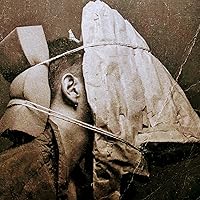
Also, how perfect is that cover illustration of Russ?
Plot stuff: Esther falls in love with a younger woman and they start an affair. After some incredibly honest (i.e. awkward) sex scenes, the affair ends abruptly which prompts Esther to find solace in various friends (spoiler - she doesn't). Throughout, Esther encounters men and women who usually take issue with her politics. The bit in the blurb about gun-toting radicals threw me a little - guns aren't a big part of the story. I think Russ just likes the idea of guns leveling the playing field a bit. So yeah, later on there's some guns.
I was worried for a bit that I had strayed too far into pure literary realist territory (I like a bit of sensation in my books). But Russ is so engaging and funny and weird that I loved it nonetheless. The last ten pages or so are phenomenal: forming a declaration of love from Esther/Russ (they form a committee in writing the book apparently, which is classic Russ) to all women in their immense variety.
The somewhat embarrassing sex scenes, along with the generally neurotic narrative style, reminded me of Barry Malzberg a bit (though he is no feminist!). But Russ is less nihilistic than Malzberg, and wittier.
2nd wave feminism gets a bad rap sometimes, often (I think) because it wasn't intersectional enough, which is fair, but there's no reason to throw the bath water out with the baby (or w/e). This is some good shit. And Russ is definitely not blind to the parallels (and differences) between oppression of different groups. She does however take issue with ‘male allies’ (particularly liberals!), because they can be patronising AF (I get it).
And on that note, who the hell wants to hear what I (a white man - historically speaking the worst kind of human) has to say about this book (no one). So I will shut up and just finish by saying that I'd happily read whatever Russ has written, whether it's fantastic or realist, because her fantastic stuff is so chocked full of reality, and her realism is so goddamn fantastic.
Also, how perfect is that cover illustration of Russ?
December 25, 2023
Really enjoyed her voice—full of yearnings, humor, and fury.
I like her observations—
“Without love there's nothing to bring into focus what's outside oneself, like (let us say) the soul of things non-human as manifested in the quiet clearness of a hillside in late winter, the place I live now…”
I like how desperate Esther’s wanting is in love and for womankind:
“Waiting for Jean is fortunate: that she will come at all makes you feel blessed.
Waiting for Jean is exasperating: I can't wait much longer.”
I like the academic humors and frustration and inspirations—
“Scholars don't usually sit gasping and sobbing in corners of the library stacks.
But they should. They should.”
I like her observations—
“Without love there's nothing to bring into focus what's outside oneself, like (let us say) the soul of things non-human as manifested in the quiet clearness of a hillside in late winter, the place I live now…”
I like how desperate Esther’s wanting is in love and for womankind:
“Waiting for Jean is fortunate: that she will come at all makes you feel blessed.
Waiting for Jean is exasperating: I can't wait much longer.”
I like the academic humors and frustration and inspirations—
“Scholars don't usually sit gasping and sobbing in corners of the library stacks.
But they should. They should.”
May 3, 2025
“Why bother, why bother. I want the matriarchy. I want it so badly I can taste it.”
Lots of very quotable parts of this book but it was this part that for some reason made me very suddenly just want to cry.
I love Joanna Russ. I love radical feminism. I loved this book. Sometimes I find other radical feminists harder to relate to through their writing but Joanna Russ gets it and I know we would be best friends.
I really enjoyed the commentary and extra essays that came with this edition.
Lots of very quotable parts of this book but it was this part that for some reason made me very suddenly just want to cry.
I love Joanna Russ. I love radical feminism. I loved this book. Sometimes I find other radical feminists harder to relate to through their writing but Joanna Russ gets it and I know we would be best friends.
I really enjoyed the commentary and extra essays that came with this edition.

May 4, 2026
‘"You're strange animals, you women intellectuals. Tell me: what's it like to be a woman?" I took my rifle from behind my chair and shot him dead. "It's like that," I said.’
JOANNA RUSS YOU ABSOLUTE BRILLIANT WOMAN! I ENVY YOUR GENIUS !!!
JOANNA RUSS YOU ABSOLUTE BRILLIANT WOMAN! I ENVY YOUR GENIUS !!!

August 26, 2026
Certainly not a mass appeal book but very enjoyable for this lesbian. Very reflective of its time (in a good way). I am really interested to read the accompanying essays and introduction in the new edition from The Feminist Press.

January 7, 2025
Such a clever and strange and funny story/novella about an English professor living in Upstate New York and her first lesbian love affair.
Read
February 24, 2026“What’s it like to be a woman?”
I took my rifle from behind my chair and shot him dead. “It’s like that,” I said.
I took my rifle from behind my chair and shot him dead. “It’s like that,” I said.

September 26, 2024
This was awesome & fun & so much more than I thought it would be. Joanna Russ forever.

October 13, 2025
5 Sterne sind nicht genug!! Ich war schon lange nicht mehr so traurig darüber ein Buch beendet zu haben.

June 2, 2019
11/5 stars
Oh my fucking god. This book is fucking hilarious. Three words to describe the type of humor in this book: Laugh-out-loud, outrageous, dark. The kind of medicine I needed right now.
So, I read this because Kameron Hurley wouldn't shut up about it in her book of essays, The Geek Feminist Revolution, and as you know, I respect the shit out of Kameron Hurley (despite my disagreements with her about certain things). When I asked her on Twitter to recommend me some feminist science fiction, she told me (in what was probably an annoyed fashion, which I think is understandable, given that I'm just some random douche on the internet that came at her out of nowhere) to just read her damn book of essays, in which she recommends the shit out of things like that. And so I did read her book of essays, urgently, because I desperately needed some good feminist science fiction, and that led me here. To this book. This fucking book.
This book is almost intolerably good. Like, what the fuck. Where has this book been all my life?
First of all, the flying dead therapist with fangs, nagging at her to repress her sexuality and shit. The fuck. Yes. Yes! Fuck therapists! Not all of them, obviously. But a lot of them!
Second of all, why is this book so hard to find? It's not on Audible. I'm not even sure it's on Kindle. There was only one vendor on Amazon selling a physical copy, and I literally purchased the last one. Also, it was a used copy. I've never encountered a book before that was so obscure that there was only one vendor selling it on Amazon, and there was only one used copy of it left. What does that mean? Does that mean that people don't know about this book? Do people not know about Joanna Russ? If that's true, we need to change that. Fast.
The story is told first person as Esther's stream of consciousness. Paragraphs take up full pages, thoughts go zigzagging. Conversations happen in Esther's mind. Sometimes they happen with real people, but only in her head. She says things to people, but not aloud. Disjointed events.
Some people might not like Joanna Russ's writing because of this, and I'll admit, it took me a while to get used to it, to fall into the storytelling rhythm. But if you can make it through the first few pages, I'm telling you- it's worth it it.
Esther is a divorced English teacher. She's tormented by her thoughts about gender, like I am. She is a talented scholar, but people perceive her only as a woman. She doesn't want to be a "woman," though- she wants to be a person, not the "other" that being a woman implies. She's slowly discovering that she's a lesbian. She falls in love. Her heart gets broken. She learns to love herself instead.
I needed to read this book so, so, bad. Thank you Joanna Russ, for writing this. Thank you Kameron Hurley, for directing me here.
I'm going to read this again. This might be one of my favorite books of all time.
Oh my fucking god. This book is fucking hilarious. Three words to describe the type of humor in this book: Laugh-out-loud, outrageous, dark. The kind of medicine I needed right now.
So, I read this because Kameron Hurley wouldn't shut up about it in her book of essays, The Geek Feminist Revolution, and as you know, I respect the shit out of Kameron Hurley (despite my disagreements with her about certain things). When I asked her on Twitter to recommend me some feminist science fiction, she told me (in what was probably an annoyed fashion, which I think is understandable, given that I'm just some random douche on the internet that came at her out of nowhere) to just read her damn book of essays, in which she recommends the shit out of things like that. And so I did read her book of essays, urgently, because I desperately needed some good feminist science fiction, and that led me here. To this book. This fucking book.
This book is almost intolerably good. Like, what the fuck. Where has this book been all my life?
First of all, the flying dead therapist with fangs, nagging at her to repress her sexuality and shit. The fuck. Yes. Yes! Fuck therapists! Not all of them, obviously. But a lot of them!
Second of all, why is this book so hard to find? It's not on Audible. I'm not even sure it's on Kindle. There was only one vendor on Amazon selling a physical copy, and I literally purchased the last one. Also, it was a used copy. I've never encountered a book before that was so obscure that there was only one vendor selling it on Amazon, and there was only one used copy of it left. What does that mean? Does that mean that people don't know about this book? Do people not know about Joanna Russ? If that's true, we need to change that. Fast.
The story is told first person as Esther's stream of consciousness. Paragraphs take up full pages, thoughts go zigzagging. Conversations happen in Esther's mind. Sometimes they happen with real people, but only in her head. She says things to people, but not aloud. Disjointed events.
Some people might not like Joanna Russ's writing because of this, and I'll admit, it took me a while to get used to it, to fall into the storytelling rhythm. But if you can make it through the first few pages, I'm telling you- it's worth it it.
Esther is a divorced English teacher. She's tormented by her thoughts about gender, like I am. She is a talented scholar, but people perceive her only as a woman. She doesn't want to be a "woman," though- she wants to be a person, not the "other" that being a woman implies. She's slowly discovering that she's a lesbian. She falls in love. Her heart gets broken. She learns to love herself instead.
I needed to read this book so, so, bad. Thank you Joanna Russ, for writing this. Thank you Kameron Hurley, for directing me here.
I'm going to read this again. This might be one of my favorite books of all time.
Displaying 1 - 30 of 99 reviews