Written in 1936 and published the following year, this brilliant and profound evaluation of Stalinism from the Marxist standpoint prophesied the collapse of the Soviet Union. Trotsky employs facts, figures, and statistics to show how Stalinist policies rejected the enormous productive potential of the nationalized planned economy engendered by the October Revolution.
Russian theoretician Leon Trotsky or Leon Trotski, originally Lev Davidovitch Bronstein, led the Bolshevik of 1917, wrote Literature and Revolution in 1924, opposed the authoritarianism of Joseph Stalin, and emphasized world; therefore later, the Communist party in 1927 expelled him and in 1929 banished him, but he included the autobiographical My Life in 1930, and the behest murdered him in exile in Mexico.
The exile of Leon Trotsky in 1929 marked rule of Joseph Stalin.
People better know this Marxist. In October 1917, he ranked second only to Vladimir Lenin. During the early days of the Soviet Union, he served first as commissar of people for foreign affairs and as the founder and commander of the Red Army and of war. He also ranked among the first members of the Politburo.
After a failed struggle of the left against the policies and rise in the 1920s, the increasing role of bureaucracy in the Soviet Union deported Trotsky. An early advocate of intervention of Army of Red against European fascism, Trotsky also agreed on peace with Adolf Hitler in the 1930s. As the head of the fourth International, Trotsky continued to the bureaucracy in the Soviet Union, and Ramón Mercader, a Soviet agent, eventually assassinated him. From Marxism, his separate ideas form the basis of Trotskyism, a term, coined as early as 1905. Ideas of Trotsky constitute a major school of Marxist. The Soviet administration never rehabilitated him and few other political figures.
Written in 1936, Trotsky provides a Marxist analysis of the fate of the Russian Revolution after Lenin's death (1924). Which was, obviously, a total totalitarian bureaucracy nightmare, yes. Marx and Lenin would be the very first to say so.
Good read for all the smug fuckers who like to say "well, socialism doesnt work, look at Russia". It was precisely because Stalin and co abandoned the October ideas and principles - including freedom - that this great historic opportunity turned into a massive pile of shit. "Under a nationalized economy, quality demands a democracy of producers and consumers, freedom of criticism and initiative - conditions incompatible with a totalitarian regime of fear, lies and flattery." (And Stalin and co could only rise to power because fucking Social Democrats betrayed the revolution in Germany, but that's another story.) As always, witty and funny writing, sharp abalyses and utmost inspiring. <3 Trotsky.
This is a most excellent book for all of those who want to know the difference between False Communism and true Communism, International Freedom Fighter Leon Trotsky un-masks the Hypocrisy of the Stalinist Dictatorship in Russia after the Death of Lenin.
worst case of sour grapes in world history. it's not cool to pooh-pooh the entire bureaucratic-bonapartist project just because you got chased outta town by an icepick-wielding madman, dude.
Trotsky makes good criticisms of the Soviet Union but consistently draws the wrong conclusions, mostly because of his (ultimately Menshevik in tone) desires for a multi-party or at least openly factional system. He keeps coming back to this. In fact somewhat amusing in hindsight of Pierre Broué’s discovery of the confirmed “bloc” in the Trotsky Archives is his tacit admittance of there being underground “resistance” in this very book while he also spent all this time going around openly denying it and scoffing. His conclusions frequently seem to be a on a mistaken basis that was torn apart by Lenin as far back as Jan. 1921 in his “Once Again on the Trade Unions” pamphlet. Which makes Trotsky’s constant quoting of Lenin and essentially assuming that he is his proper heir, all the more laughable. Criticism of current policies within Stalin’s USSR were not unheard of, it’s the particular invective with which Trotsky makes them that makes them heinous in hindsight. Interestingly, the most valid criticisms of the USSR he makes can be applied most concretely to the post-Stalin era, which anti-revisionists argue was the real dawning of a triumph of the bureaucrats.
Outmaneuvered out of power and out of Russia by Stalin and threatened with death, Trotsky takes refuge in his original and radical Marxist ideology and in a merciless critique of the power structure in the Stalinist Russia. One cannot but admire Trotsky’s insights and lucidity in understanding how things got out of hand following Lenin’s death and how they will continue to do so in the near future in Russia and all over the world. It almost seems like Orwell’s books were inspired by this one. Trotsky keeps to his original Marxist radicalism and denounces the return of Stalin’s Russia to some of the old feudal privileges and to some of the customs of any bourgeois society. When compared with Trotsky’s attitude and insights - fashionable Marxists like Sartre and his clique 10-20 years later seem quite stupid, idealists, and ridiculous. Trotsky, like Lenin, was a brilliant and total politician - and thus there was only one way out of politics for him: death. Stalin will make sure of this a few years later after this book is finished.
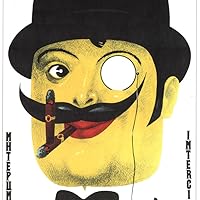
His analysis of the Soviet Union's development from the Great October Revolution's inception is a surprisingly well-balanced, materialist one. Going into the book, judging from (my copy's) picture of a scowling Stalin and the title (which I've heard was originally when Trotsky wrote it "The Revolution Deformed"), I imagined it was going to be anti-communist ravings, when it wasn't. The Trotsky I was familiar with until actually reading what he had to say, as opposed to Trotskyist parties of the West. Chris Harman, Tony Cliff, and ones like them claiming title to the Trotsky legacy have proven to be little more than petit-bourgeois enemies of socialism. "Trotskyists" and Leon Trotsky have little more in common than a horse has with a plate of green beans. They tout the line of "state capitalism", which Trotsky dismisses clearly as nonsense. They cheered on the fall of the Socialist Bloc in Europe, while Trotsky upheld the Soviet Union's proletarian class character.
You might question ol' Lev "Leon Trotsky sounds less Jewy, doesn't it?" Bronstein's motivations. After all, Stalin got the brass ring, he didn't. Instead, he got exiled to Mexico to do some failed rabble-rousing and occasionally bone the eyebrow lady.
But if we ignore the question of motive, it's actually a pretty decent analysis of the USSR as it fucked up, and was one of the first texts to provide a wide-ranging criticism of the Soviet system from a Marxist perspective. What's odd to me is how unpopular an opinion this was at the time. He also might have said a few things about some bad things coming to fruition in Germany around the time of writing that were unheeded by the German left of the time -- and, well, we all know how that ended.
تحلیل تروتسکی از آنچه بر سر انقلاب اکتبر آمد در توضیح بستر و شرایط تاریخی و بررسی نیروهای موجود در جامعه و همچنین پیشبینی مسیر تحولات شوروی (هر دو مسیری که ممکن میدانست) جامع و آگاهیبخش است. همچنین در ترسیم مرز میان ارتجاع و نیروهای پیشرو آن زمان در شوروی و متهمکردن طبقهی حاکم در برپایی تشکیلات بوروکراتیکی افسارگسیخته که در زمان نوشتن این کتاب هنوز با وحشتناکترین روزهای خود فاصله داشت. بنابراین این نوشته میتواند برای آگاهی از بستر تاریخی منتهی به وقایع مخوف شوروی تحلیلی دستاول به شمار برود اما از آنجا که درسال۱۹۳۶ نوشته شده است، از ترسیم یک تصویر کلی از استالینیسم ناتوان میماند.
Mr Trotsky, I think valorisation might still be going on here? We might also not have succeeded in ‘smashing’ the state? Hopefully it all turns out alright.
This whole essay can be summed up with the statement "bureaucracy bad." What's bizarre though, is at almost no point does Trotsky admit to his significant role in setting up the bureaucracy he decries in this essay or at least recognises that the actions he took during 1917-1927 (before his expulsion from the party) would lead/led to the creation of one. Still, he is one of the greatest writers of the 20th century and this is evident in his analysis of the USSR's economy, which is excellent as it is statistically focused and holistic. His critiques of the military, agriculture and culture are also well done. His polemic writing style is enjoyable to read regardless of the content. Interestingly, he seems to recognise the dangers of Hitler's rise to power (this was written in 1936) before many in the West do.
Overall, this is an essay that laments bureaucracy, demands democracy be brought to the USSR which happens to be written by someone who explicitly defends the use of state terrorism on "enemies of the revolution". Go figure. A conflicting read by a conflicted man.
Trotsky, like Lenin, was deeply confused on the class nature of the Russian countryside, both before and after the Revolution, and throughout this work he continues to erroneously - and with an increasingly lesser basis in reality as time went on - see the greatest danger to the October Revolution in the possibility of capitalist restoration from "the Right", in the spectre of the "kulak" and return of small-scale agrarian private property. Thus the worst sections of this book involve a partial defence of the horrors of forced collectivisation and the "Five-Year-Plans", with Trotsky reduced to quibbling about means (the pace of the transition and violent methods) rather than ends. However, he, and this text, are redeemed by its most powerful sections, which both serve as a methodical exposure of the counter-revolutionary degeneration of the new "Soviet" ruling class - the bureaucracy and one-party-state headed by the intellectual and historical non-entity that was Stalin - and as a cri de coeur in defence of the human values and democratic principles of authentic revolutionary socialism.
I have rather ambiguous feelings on this one. On the one hand, I'm not some right-wing cold warrior who believes that Lenin = Stalin in any straightforward manner. I wouldn't reject every continuity between the two leaderships, but I also believe the differences were important. Nor do I see Lenin as a psychopath merely out for his own power and influence and therefore no different from Stalin. So on this particular point, there would be at least some agreement between me and Trotsky.
My problem is more with the Stalin as representative of the bureaucracy element to the book. I'm not sure I entirely agree, because I think this is, how shall we say, an excessive mechanical reduction of the leadership to class forces as it were. While I would agree that one cannot explain the Soviet Union merely by reference to personality, I think in this book Trotsky goes too far in the other direction and seems to ignore the personality of Stalin too much. The other problem I have is that (and this is understandable as the text was written before the Great Terror and the Show Trials, but makes it flawed for understanding Stalinism in the modern day) is that it ignores how Stalin was able to use Terror/the NKVD as a means to control the bureaucracy. Funnily enough I think Trotsky's argument becomes perhaps more plausible after the ditching of the NKVD as a means to control society and the state post-Stalin (as after Stalin there was no mass random terror, or course it was still used against dissidents etc., but it's a big difference). That said overall I'm not convinced that Trotsky fully explains the nature of Stalinism effectively.
In conclusion I would say that I definitely found this book an interesting read, but was not fully convinced by the arguments in some respects. 3.5/5.
"The motor force of progress is truth and not lies." Trotsky is an interesting political figure from the 20th century. He was the 'Left Opposition' to Stalin; and a political scapegoat for nearly every catastrophe that befell the Soviet Union after Lenin's death. In this book, Trotsky uses wit and cold facts to dismantle the bureaucratic mess that was the U.S.S.R.
It's not that Trotsky disagrees with the objectives; he's just highly skeptical of the "new aristocracy" that had built itself upon the dictatorship of the proletariat. It seems that Marxists of various stripes are awfully good at criticism; but their solutions are fantastically unimpressive.
This is probably one of the most important books on the Soviet Union. If you are interested in its degeneration and the future collapse of the Eastern block, this is the perfect book to start with. As was the case with the most genuine revolutionaries, Trotsky tended to overestimate the revolutionary potential of the masses. In this book he professes that either there will be a new workers' revolution or capitalism will be restored in Russia. Well, guess what happened at the end.
Heavily biased perspective on the Russian Revolution and Stalin's leadership. Beautifully written and an important primary source for people interested in the Soviet Union and Trotsky.
Una de las mejores críticas sobre la degeneración de la URSS durante el reinado de Stalin. Con extraordinaria lucidez, Trotsky describe el proceso mediante el cual la burocracia se convierte en la nueva clase dominante y cómo evoluciona el régimen posteriormente. Demuestra claramente porque no se puede hablar de socialismo (mucho menos de comunismo) en la URSS después de la toma del poder por parte del 'zar rojo'.
Altamente recomendable para cualquiera que le interese leer una crítica de primera mano sobre el estalinismo y los años más oscuros del país de los soviets.
Не являюсь поклонником Льва Троцкого, но книгу эту прочитал с большим удовольствием. Здесь говорится об одном из самых интересных (лично для меня) периодов истории России - 20-30-х годах XX века. Троцкий даёт довольно подробный анализ тогдашней ситуации в СССР, показывает несоответствие сталинских лозунгов реальному положению дел и утверждает, что сталинская стройка даже отдалённо не напоминает коммунизм. Для меня, интересующегося историей, многие факты были в новинку, а уже известные - предстали в совершенно ином свете. Конечно, за этим текстом видится личная обида (всё-таки борьбу Троцкий Сталину проиграл), но, в целом, объективность от этого страдает не сильно. На мой взгляд, баланс между публицистичностью и научностью соблюдён идеально. Конечно, сам Лев Давидович был далеко не ангелом, но осознание этого факта не должно помешать читателю разобраться вместе с автором в причинах тогдашней трагедии нашей страны. P.S. Есть ощущение, что Оруэлл тоже читал "Преданную революцию".
Leiba Bronstein (aka Trotsky) was an excellent demagogue and orator crafty in deceit; he also was one of the most ruthless enemies of the Russian people and Christian church, sadistic killer and rabid agent of Zionism (famous law on death penalty for anyone voicing anti-jewish sentiments); who knows what would happen to the Mother Russia, should he win over Stalin (also not squeamish in eliminating people)? “Adolf Hitler read Trotsky’s autobiography as soon as it was published. Hitler’s biographer, Konrad Heiden, tells in ‘Der Fuehrer’ how the Nazi leader surprised a circle of his friends in 1930 by bursting into rapturous praise of Trotsky’s book […] ‘Brilliant!’ cried Hitler, waving Trotsky’s ‘My Life’ at his followers. ‘I have learned a great deal and so can you!’” (Kahn and Sayers 216).
کتاب یادوار مصائبی هست که شوروی از پیروزی انقلاب اکتبر تا سالهای قبل از جنگ دوم باهاش دست پنجه نرم میکرده نویسنده کتاب در تبعید و فرار از دست ادمکش های استالین درحالی که کمتر کشور بهش پناه میداد.. روند شکل گیری و قبضه کردن قدرت به وسیله استالین بعد از مرگ لنین رو شرح میده هم تلاش میکنه روایت یک دست از انچه که مارکس در در راه رسیدن مرام کمونیست رو بیان میکنه رو عرضه کنه با توضیح این مطلب که زمانی جامعه ارمانی شکل میگیره که حکومت یا دولت به وسیله کارگران از بین رفته و همه برابر باهم تحت لوای جامعه بدون طبقه زندگی بکنند و این زمانی ممکن هست که جامعه سوسیالیستی به مرحله از پیشرفت هم پای حکومت های کاپیتالیستی سرمایه داری رسیده باشه
One of the most important political works of the 20th century. Explains what the Soviet Union started out as, and what it became. Essential reading for anyone interested in the history of socialism. As Trotsky wrote, the Soviet Union was not a communist country, and not even a socialist one; it was half way between capitalism and socialism.
From a certain perspective, this is Trostky's What Happened. One shouldn't expect many admissions of guilt from him as he explains how he and his faction lost power and ultimately were purged first from the Bolshevik party and then from the USSR as a whole. Unsurprisingly, then, much of the book avoids the mechanics of Stalin's (and the bureaucracy's) seizure of power and instead focuses on the factional debates over policy taking place within the Soviet Union. Unlike most (non-)mea culpa books, Trotksy actually has something to say about these arguments besides defending his legacy (though there's plenty of space devoted to that as well). The result is a wide-ranging and insightful survey of Soviet history and policy between the October revolution and the mid-1930s.
Trotsky is most effective when discussing economics, politics, and interactions between the two (though his discussion of women's place in the USSR is also impressive even by today's standards). The first several chapters are devoted to establishing the state of the Soviet economy in the run up to WW2 and the path taken there. This allows us to review the civil war and "military communism", liberalization under the NEP, and the abrupt turn to a more centralized economy. While modern readers might find much to disagree with here, even mainstream economists will be surprised by how much they agree with Trotsky's emphasis on productivity, technological advancement, and production quality as important inputs to assessing the economy. To Trotsky, having the most advanced economy in the world is a necessary condition for socialism. However, Trotsky is not sanguine about the USSR's economic miracle; despite skyrocketing production, productivity and the quality of goods remained well behind the leading capitalist countries.
This economic backwardness, according to Trotsky, following basic Marxian logic, led directly to political backsliding into a "bureaucrat's state". The Bolsheviks might have established the world's first worker's state, but they were incapable of keeping it as one without either rapidly advancing material conditions or help from (never to arrive) more advanced socialist states. This raised the central dispute between Trotsky's Left Opposition and Stalin's faction: whether to risk inciting world revolution or to focus on the preservation of the USSR. That Stalin's faction won and immediately bent the global socialist movement to the goal of preserving the USSR doomed any hope of not only world revolution, but even the development of communism in the USSR. It's a good argument and, I think, reflects similar debates in communist China several generations later.
Trotsky is a fantastic writer and has a clear theoretical basis for his analysis. But, as always, it's much easier to comment from the sidelines. How would he have balanced the USSR's post-war economic devastation with plans of global revolution? It seems he would have been led either to an international posture similar to Stalin's or a completely mismatched conflict with the world's great powers. Had he succeeded Lenin, my take is that he would have precipitated the USSR's dissolution through his aggressive stance. If there's one easy criticism of Trotsky's arguments, its an over-reliance on (or blinding ideological belief in) orthodox Marxist predictions, particularly about the process of global revolution. Trotsky's own historical relevance, as a leader in the revolutionary capitalist backwater, attests to the limits of these predictions. Politics, in essence, human agency, has a role to play even if the broad strokes of history can be traced to material conditions.
In the end, Trotsky's analysis is interesting but not hopeful for the USSR's future. He turned out to be right in his pessimism. Anyone interested in understanding the Soviet Union would benefit from learning his reasons, laid out persuasively in this book.