

What do you think?

Le supplici
A shrine is stronger than a tower to save, A shield that none may cleave. Step swift thereto, And in your left hands hold with reverence The white-crowned wands of suppliance, the sign Beloved of Zeus, compassion's lord, and speak To those that question you, words meek and low And piteous, as beseems your stranger state,
97 pages, Paperback
First published January 1, 464
About the author
Aeschylus
1,379 books1,165 followersGreek
Αισχύλος
, Esquilo in Spanish, Eschyle in French, Èsquil in Catalan, Eschilo in Italian, Эсхил in Russian.
Aeschylus (c. 525/524 BC – c. 456 BC) was an ancient Greek tragedian often described as the father of tragedy. Academic knowledge of the genre begins with his work, and understanding of earlier Greek tragedy is largely based on inferences made from reading his surviving plays. According to Aristotle, he expanded the number of characters in the theatre and allowed conflict among them. Formerly, characters interacted only with the chorus.
Only seven of Aeschylus's estimated 70 to 90 plays have survived. There is a long-standing debate regarding the authorship of one of them, Prometheus Bound, with some scholars arguing that it may be the work of his son Euphorion. Fragments from other plays have survived in quotations, and more continue to be discovered on Egyptian papyri. These fragments often give further insights into Aeschylus' work. He was likely the first dramatist to present plays as a trilogy. His Oresteia is the only extant ancient example. At least one of his plays was influenced by the Persians' second invasion of Greece (480–479 BC). This work, The Persians, is one of very few classical Greek tragedies concerned with contemporary events, and the only one extant. The significance of the war with Persia was so great to Aeschylus and the Greeks that his epitaph commemorates his participation in the Greek victory at Marathon while making no mention of his success as a playwright.
Aeschylus (c. 525/524 BC – c. 456 BC) was an ancient Greek tragedian often described as the father of tragedy. Academic knowledge of the genre begins with his work, and understanding of earlier Greek tragedy is largely based on inferences made from reading his surviving plays. According to Aristotle, he expanded the number of characters in the theatre and allowed conflict among them. Formerly, characters interacted only with the chorus.
Only seven of Aeschylus's estimated 70 to 90 plays have survived. There is a long-standing debate regarding the authorship of one of them, Prometheus Bound, with some scholars arguing that it may be the work of his son Euphorion. Fragments from other plays have survived in quotations, and more continue to be discovered on Egyptian papyri. These fragments often give further insights into Aeschylus' work. He was likely the first dramatist to present plays as a trilogy. His Oresteia is the only extant ancient example. At least one of his plays was influenced by the Persians' second invasion of Greece (480–479 BC). This work, The Persians, is one of very few classical Greek tragedies concerned with contemporary events, and the only one extant. The significance of the war with Persia was so great to Aeschylus and the Greeks that his epitaph commemorates his participation in the Greek victory at Marathon while making no mention of his success as a playwright.
Ratings & Reviews
Friends & Following
Create a free account to discover what your friends think of this book!
Community Reviews
Displaying 1 - 30 of 206 reviews

March 21, 2021
50 mujeres negándose a seguir la norma convencional que se espera de ellas: casarse.
Me ha gustado y me parece innovador (para la época en que se escribió) este tipo de personajes femeninos atípicos. Aquí se siente un poco esa libertad de poder escoger tu propio camino, y más aún tomando a la mujer como un ser independiente del hombre que puede forjar sus propias desiciones.
Me ha gustado y me parece innovador (para la época en que se escribió) este tipo de personajes femeninos atípicos. Aquí se siente un poco esa libertad de poder escoger tu propio camino, y más aún tomando a la mujer como un ser independiente del hombre que puede forjar sus propias desiciones.

Read
April 29, 2026Compared to his successors Sophocles and Euripides, the central theme in Aeschyles' tragedies remained limited to a single one: respect the gods, even if their will is sometimes inscrutable. The mythical and the religious always take precedence for him, although the religious must be understood in a broad sense: he is more concerned with a kind of general divine order, which is translated into the works of specific deities and can be known through circulating mythical stories.
This is also the case in this tragedy, which is dated around 463 BCE. Aeschyles tells the story of a group of 50 women (sisters!, indeed) who have fled Egypt to escape their 50 cousins (sons of their father's brother) who claim them as wives. They request asylum (as suppliants) in the city of Argos, but encounter a wavering ruler there, for the 50 cousins are on their way with an army to assert their claim. I found *The Suppliants* to be one of the weaker tragedies again, with many long-winded passages, little action, and side stories that slow down the pace. However, the play does indirectly touch upon a number of essential themes, such as migration, the duty of hospitality, the female condition, and the relationship between leader and people. More on that in my History account on Goodreads: https://www.goodreads.com/review/show...
Disclaimer: I'm reading and reviewing all classic ancient Greek plays, more or less in chronological order. But I'm not giving a rating. How could I, given their age? I'll make an exception only when a play is exceptional and still strikes an emotional and/or intellectual chord.
This is also the case in this tragedy, which is dated around 463 BCE. Aeschyles tells the story of a group of 50 women (sisters!, indeed) who have fled Egypt to escape their 50 cousins (sons of their father's brother) who claim them as wives. They request asylum (as suppliants) in the city of Argos, but encounter a wavering ruler there, for the 50 cousins are on their way with an army to assert their claim. I found *The Suppliants* to be one of the weaker tragedies again, with many long-winded passages, little action, and side stories that slow down the pace. However, the play does indirectly touch upon a number of essential themes, such as migration, the duty of hospitality, the female condition, and the relationship between leader and people. More on that in my History account on Goodreads: https://www.goodreads.com/review/show...
Disclaimer: I'm reading and reviewing all classic ancient Greek plays, more or less in chronological order. But I'm not giving a rating. How could I, given their age? I'll make an exception only when a play is exceptional and still strikes an emotional and/or intellectual chord.

August 6, 2025
پناهجویان
شاه مصر میخواهد پنجاه پسرش را به پنجاه دختر برادرش قالب کند. دخترها نمیخواهند، پدرشان هم مخالف است. پس تصمیم میگیرند سوار کشتی بشوند و بروند به یونان، سرزمین مادرِ پدربزرگِ بزرگشان! [این که این جدّهی رنجدیده، ایُو، اول انسان بوده که بعد زئوس عاشقش شده و بعدتر توسط زن حسود زئوس به گاو تبدیل شده و بلاخره خرمگسی آنقدر نیشش زده و اذیتش کرده که مجبور شده تمام راه را شناکنان و پیاده از یونان تا مصر بیاید خودش داستان دیگریست. بُسفُر، تنگه معروف بغل استانبول، یعنی «گدارِ گاو».] دخترها و پدرشان، دانائوس، امیدوارند که شاه یونان به آنها پناه بدهد.
آمدم ای شاه پناهم بده
تاریخ و افسانههای عامیانه پُرند از مجرمینی و تعقیبشدگانی که در مکانی مقدس بست نشستند تا مجازاتشان لغو شود یا دست کم به تاخیر بیفتد. تراژدینویسها علاقهی زیادی به بستنشینی داشتند چون مایهی خوبی برای پردازش چالش اخلاقی و سیاسی بهدست میداد. (مثلن پیرنگ روایی فرزندان هراکلس بسیار شبیه همین پناهجویان است و این مضمون در الاهگان انتقام و مدهآ هم وجود دارد.) از یک طرف بستنشینی سنتی بسیار قدیمی بود و البته که سنت هم یکی از ستونهای محکم جامعهی آتنی. نسلاندرنسل اینطور بود که اگر کسی دستش به خون آلوده میشد و فرار میکرد و در قلمرو دیگری به محراب زئوس پناه میآورد، پادشاه آن سرزمین او را در پناه خود میگرفت. در شکلی دیگر، اگر در میانهی جنگ رقیب شما سپر میانداخت و بهپایتان میافتاد، دور از جوانمردی بود که او را بکشید. این حکم اخلاقی نژاد و رنگ پوست هم نمیشناخت. مثلن اینجا دختران دانائوس تیرهپوستند و لباسهایی —به زعم یونانیان— عجیب دارند. اما نهایتِ تاثیری که این موضوع روی پادشاه یونان دارند اندکی تعجب است و بعد نه فقط پادشاه، که تمام مردم میپذیرندشان.
از طرف دیگر، با عوض شدن زمانه و قوی شدن دولتشهرها و جدی شدن رقابت بینشان —بهخصوص آتن و اسپارتا— پناه دادن به مجرم سرزمین همسایه، دیگر نه فقط یک واجب اخلاقی، که دخالت در نظام سیاسی آنها بود و در مواردی اعلان جنگ. این را بگذارید کنار دموکراسی نوپدید و حاکمانی که باید پاسخگوی مردم میبودند. پناه دادن به پنجاه نفر، اگر منجر بشود به مرگ پنج هزار نفر، باز هم اخلاقیست؟
[انگار که جدال سنت و مدرنیته، یا به عبارتی همهشمولتر، نظم نو و کهنه، مخصوص زمانهی ما نیست و همیشه گریبان انسان را گرفته بوده. در بستر همین تضاد است که بستنشینی، بهعنوان مفهومی ضدمدرن و راهی برای فرار از قانون، بهتدریج چهرهای قانونی به خود میگیرد و میشود حق پناهندگی در اعلامیهی حقوق بشر.]
نه یعنی نه
اما در اینجا تفاوتی ظریف وجود دارد. پنجاه دختر دانائوس مجرم نیستند، یا حداقل در معنای رایجش. گناه آنها این است که به تملک خانوادهی پادشاه درنیامدهاند. دلیل خواست آنها اول طالعیست که پدرشان دیده (که این ازدواجها شوماند) و دوم خواست خودشان برای این دوشیزگان خادم الههی باکره —آرتمیس— بمانند. با این که در این دلایل عاملیتی برای زن دیده نشده، اما حضور آنها در نمایش به شکل دیگری برجسته میشود. اول اینکه خودشان با پادشاه وارد گفتوگو میشوند و بعد برای شناساندن خودشان به پادشاه، تبار خودشان را به یک زن میرا میرسانند و نه یک مرد یا خدا. دیگر اینکه در قالب همسرایان حرف میزنند؛ همه برای یکی، یکی برای همه. (تنها تراژدیای که همسرایان در آن نقش اول را دارند.) و بلاخره این که در دیالوگهای خواهران زیرمتنی از شوریدن علیه یک نظم مردسالار وجود دارد. اینکه یک زن آگاهانه از ازدواج سرباز بزند (و مجازات نشود) چیزی غریب در دنیای باستان است، چه برسد به اینکه پنجاه زن با هم!
و البته آنها برای رسیدن به مقصودشان ابزارهای ترسناکی هم دارند.
البته که استواری آنها به نتیجه نمیرسد و در قسمتهای بعدی سهگانه که بسیار هیجانانگیزتر است و به ما نرسیده، مجبور به ازدواج میشوند، اما اجباری خودش چالشهای اخلاقی و تراژیک بیشتری میسازد.
— خواندهشده از ترجمهی کوثری
شاه مصر میخواهد پنجاه پسرش را به پنجاه دختر برادرش قالب کند. دخترها نمیخواهند، پدرشان هم مخالف است. پس تصمیم میگیرند سوار کشتی بشوند و بروند به یونان، سرزمین مادرِ پدربزرگِ بزرگشان! [این که این جدّهی رنجدیده، ایُو، اول انسان بوده که بعد زئوس عاشقش شده و بعدتر توسط زن حسود زئوس به گاو تبدیل شده و بلاخره خرمگسی آنقدر نیشش زده و اذیتش کرده که مجبور شده تمام راه را شناکنان و پیاده از یونان تا مصر بیاید خودش داستان دیگریست. بُسفُر، تنگه معروف بغل استانبول، یعنی «گدارِ گاو».] دخترها و پدرشان، دانائوس، امیدوارند که شاه یونان به آنها پناه بدهد.
آمدم ای شاه پناهم بده
تاریخ و افسانههای عامیانه پُرند از مجرمینی و تعقیبشدگانی که در مکانی مقدس بست نشستند تا مجازاتشان لغو شود یا دست کم به تاخیر بیفتد. تراژدینویسها علاقهی زیادی به بستنشینی داشتند چون مایهی خوبی برای پردازش چالش اخلاقی و سیاسی بهدست میداد. (مثلن پیرنگ روایی فرزندان هراکلس بسیار شبیه همین پناهجویان است و این مضمون در الاهگان انتقام و مدهآ هم وجود دارد.) از یک طرف بستنشینی سنتی بسیار قدیمی بود و البته که سنت هم یکی از ستونهای محکم جامعهی آتنی. نسلاندرنسل اینطور بود که اگر کسی دستش به خون آلوده میشد و فرار میکرد و در قلمرو دیگری به محراب زئوس پناه میآورد، پادشاه آن سرزمین او را در پناه خود میگرفت. در شکلی دیگر، اگر در میانهی جنگ رقیب شما سپر میانداخت و بهپایتان میافتاد، دور از جوانمردی بود که او را بکشید. این حکم اخلاقی نژاد و رنگ پوست هم نمیشناخت. مثلن اینجا دختران دانائوس تیرهپوستند و لباسهایی —به زعم یونانیان— عجیب دارند. اما نهایتِ تاثیری که این موضوع روی پادشاه یونان دارند اندکی تعجب است و بعد نه فقط پادشاه، که تمام مردم میپذیرندشان.
که این جایگاه شما را رویینه سپر است
و از حصار و بارو ایمنتر
از طرف دیگر، با عوض شدن زمانه و قوی شدن دولتشهرها و جدی شدن رقابت بینشان —بهخصوص آتن و اسپارتا— پناه دادن به مجرم سرزمین همسایه، دیگر نه فقط یک واجب اخلاقی، که دخالت در نظام سیاسی آنها بود و در مواردی اعلان جنگ. این را بگذارید کنار دموکراسی نوپدید و حاکمانی که باید پاسخگوی مردم میبودند. پناه دادن به پنجاه نفر، اگر منجر بشود به مرگ پنج هزار نفر، باز هم اخلاقیست؟
پس در کار شما نه عهدی میبندم و نه ملامتی بر خود میپسندم
زان پیشتر که با مردمان رای زنم و رای ایشان بهکار بندم
[انگار که جدال سنت و مدرنیته، یا به عبارتی همهشمولتر، نظم نو و کهنه، مخصوص زمانهی ما نیست و همیشه گریبان انسان را گرفته بوده. در بستر همین تضاد است که بستنشینی، بهعنوان مفهومی ضدمدرن و راهی برای فرار از قانون، بهتدریج چهرهای قانونی به خود میگیرد و میشود حق پناهندگی در اعلامیهی حقوق بشر.]
نه یعنی نه
اما در اینجا تفاوتی ظریف وجود دارد. پنجاه دختر دانائوس مجرم نیستند، یا حداقل در معنای رایجش. گناه آنها این است که به تملک خانوادهی پادشاه درنیامدهاند. دلیل خواست آنها اول طالعیست که پدرشان دیده (که این ازدواجها شوماند) و دوم خواست خودشان برای این دوشیزگان خادم الههی باکره —آرتمیس— بمانند. با این که در این دلایل عاملیتی برای زن دیده نشده، اما حضور آنها در نمایش به شکل دیگری برجسته میشود. اول اینکه خودشان با پادشاه وارد گفتوگو میشوند و بعد برای شناساندن خودشان به پادشاه، تبار خودشان را به یک زن میرا میرسانند و نه یک مرد یا خدا. دیگر اینکه در قالب همسرایان حرف میزنند؛ همه برای یکی، یکی برای همه. (تنها تراژدیای که همسرایان در آن نقش اول را دارند.) و بلاخره این که در دیالوگهای خواهران زیرمتنی از شوریدن علیه یک نظم مردسالار وجود دارد. اینکه یک زن آگاهانه از ازدواج سرباز بزند (و مجازات نشود) چیزی غریب در دنیای باستان است، چه برسد به اینکه پنجاه زن با هم!
راستی را چگونه تواند پاک ماند
آن مرغی که خورش از گوشت مرغان دیگر میجوید؟
چگونه توان پاک ماند مردی که کام از زنی میخواهد
و آن زن از در میراندش
و البته آنها برای رسیدن به مقصودشان ابزارهای ترسناکی هم دارند.
ما را ریسمان دار خوشتر میآید
اگر خدای آسمان گوش بر زاریمان ببندد
البته که استواری آنها به نتیجه نمیرسد و در قسمتهای بعدی سهگانه که بسیار هیجانانگیزتر است و به ما نرسیده، مجبور به ازدواج میشوند، اما اجباری خودش چالشهای اخلاقی و تراژیک بیشتری میسازد.
— خواندهشده از ترجمهی کوثری

December 11, 2022
The usual stuff of Greek tragedy; a chorus implores both mortals and divines to save them from forced incestual (cousins) marriage. Reasonably interesting plot but absolutely outstanding for the first use of the phrase willy-nilly. Aeschylus, I salute you.
Aboard, perforce and will-ye nill-ye, go!
Aboard, perforce and will-ye nill-ye, go!

Read
April 29, 2026Even a less intense and successful tragedy can expose relevant aspects of classical Greek civilization, as in this play by Aeschyles. For instance, there is the issue of refugees—in this case, a group of women (sisters) who have fled from Egypt and are seeking refuge in the Greek city of Argos. Following the proper procedure—they arrived at a sanctuary with olive branches—they request asylum. The local king, Pelasgus, is therefore obliged to offer them hospitality, a sacred duty in Ancient Greece.
However, he hesitates, for an Egyptian fleet (the men, their cousins, claiming them) is en route, and the asylum could therefore have serious consequences for his city. In his struggle, Pelasgus refers several times to the people of his city whose opinion he is bound by: “if the people do not consent, I cannot do so, even though I am ruler” (v. 399-400), an interesting reference to the relationship between leader and people and to democratic principles. Only after the explicit threat that neglecting the duty of hospitality might cost the city even more—through the wrath of the gods, does the popular assembly of Argos relent. At the same time, the refugees are all too aware of their precarious position and urge each other to act with restraint: “a foreign group must first stand the test of time. For immigrants, every man has his evil tongue ready; slandering them with a word is easy.”
Naturally, the issue of women's vulnerability comes emphatically into focus amidst all this. However, it is striking that Aeschyles primarily lets their father Danaus speak in this regard, and much less the women themselves. He constantly urges them to be realistic and to exercise restraint.
Finally, there is also the “exotic” aspect: the women come from Egypt (although they do have a blood tie to Argos), and they also arrive—as Aeschyles explicitly states—in Egyptian attire. We know that ancient Greece maintained intensive contacts with Egypt (a country held in very high esteem throughout the Near East because of its culture, which was already more than 2,000 years old at the time) certainly from the 6th century BCE onwards, and that there were even Greek cities and foundations in the Delta and Nile Valley region. The confrontation with the cousins reveals that, according to Aeschyles, for the Egyptians the duty of hospitality did not take precedence over “marital” duties. In other words, the "otherness" of the Egyptians (though even have Greek roots) is displayed. And that gives him the opportunity to once again play upon his favorite theme of the sacred order of the gods to the Greeks.
As indicated, not really an enticing play, but still, there are elements that tells us about Greek society and culture.
However, he hesitates, for an Egyptian fleet (the men, their cousins, claiming them) is en route, and the asylum could therefore have serious consequences for his city. In his struggle, Pelasgus refers several times to the people of his city whose opinion he is bound by: “if the people do not consent, I cannot do so, even though I am ruler” (v. 399-400), an interesting reference to the relationship between leader and people and to democratic principles. Only after the explicit threat that neglecting the duty of hospitality might cost the city even more—through the wrath of the gods, does the popular assembly of Argos relent. At the same time, the refugees are all too aware of their precarious position and urge each other to act with restraint: “a foreign group must first stand the test of time. For immigrants, every man has his evil tongue ready; slandering them with a word is easy.”
Naturally, the issue of women's vulnerability comes emphatically into focus amidst all this. However, it is striking that Aeschyles primarily lets their father Danaus speak in this regard, and much less the women themselves. He constantly urges them to be realistic and to exercise restraint.
Finally, there is also the “exotic” aspect: the women come from Egypt (although they do have a blood tie to Argos), and they also arrive—as Aeschyles explicitly states—in Egyptian attire. We know that ancient Greece maintained intensive contacts with Egypt (a country held in very high esteem throughout the Near East because of its culture, which was already more than 2,000 years old at the time) certainly from the 6th century BCE onwards, and that there were even Greek cities and foundations in the Delta and Nile Valley region. The confrontation with the cousins reveals that, according to Aeschyles, for the Egyptians the duty of hospitality did not take precedence over “marital” duties. In other words, the "otherness" of the Egyptians (though even have Greek roots) is displayed. And that gives him the opportunity to once again play upon his favorite theme of the sacred order of the gods to the Greeks.
As indicated, not really an enticing play, but still, there are elements that tells us about Greek society and culture.

September 9, 2025
No es la primera tragedia, pero sí la escribió el mismo hombre.
En esta obra, la trama gira en torno a las cincuenta Danaides, hijas de Dánao, que huyen de Egipto porque se niegan a casarse con sus cincuenta primos, sabiendo que ese matrimonio equivaldría a volverse sus esclavas. Con su padre viajan a Argos, de donde era su ancestro Ío, para suplicar al rey por refugio y protección. El dilema del rey es central: si las acoge, expone a su pueblo a una guerra segura con Egipto; pero si las rechaza, lo arriesga a la ira de Zeus, dios de la justicia y protector de los suplicantes, que castiga incluso más allá de la muerte. Y en el medio de todo, Esquilo gritaba: ¡Viva la democracia!, él quería asamblea, él quería un gobierno de soviets.
La obra me terminó gustando, aunque tengo que admitir que, siendo tan corta, tardó bastante en ponerse interesante.
Es un poco irónico: estamos frente a una tragedia, un verdadero drama, y el tema principal es… la prudencia. Cómo comportarse como extranjeras, cómo ser suplicantes, siempre manteniendo la calma y el juicio. Esa actitud, aunque lógica en el argumento, le resta muchísima tensión dramática a más de la mitad de la historia!!!
En mi opinión, Homero sigue ocupando el primer puesto en lo que respecta a una buena tragedia (aunque Aristóteles diga que sus obras no cuentan como tales y que las tragedias fueron un avance respecto a la épica previa; solo basándome en esta obra, NO LO VEO). Y también, por ahora, Homero se sigue quedando con la copa de oro en lo que respecta a la mejor súplica.
No me malinterpreten: las Danaides hicieron un excelente uso de su epíteto. Fueron espectaculares e incansables: supieron mostrarse sumisas, miedosas, respetuosas para con los dioses, persuadieron al freaking rey de Argos con astucia y hasta llegaron a amenazar con AHORCARSE colgadas de las estatuas divinas. En eso, impecables. Geniales. Fantásticas.
Peeero tampoco voy a mentir: la cosa se puso interesante recién cuando — alerta spoiler — entraron en escena los egipcios, y ellas, REINAS, empezaron a gritar a Zeus y a los dioses para que respondieran sus súplicas mientras el heraldo egipcio las arrastraba de los pelos. Eso sí fue cine. Me niego a morirme sin ver alguna vez una buena representación de teatro en vivo que esté a la altura.
En fin, no me resultó una obra muy memorable ni emocionante. Creo que sería mucho mejor si pudiéramos acceder a la continuación, como para equilibrar tanta prudencia, vieron… con un casamiento forzado y sangriento. Fua, lo que nos perdimos ahí.
Una última cosa que no pienso dejar pasar: yo en todo momento me imaginé a las Danaides de diez a trece años, porque ni idea de a qué edad se las casaba en aquella época. Y me pareció copado que se les haya dado el protagonismo en una obra, y que Dánao como padre las haya apoyado en no casarse y huir. Pero… ¿el final? ¿¡Dánao pidiéndoles a sus hijas que no lo “avergüencen” con sus “dotes” capaces de seducir a cualquier hombre!? Man, they are kids, Jesus.
En esta obra, la trama gira en torno a las cincuenta Danaides, hijas de Dánao, que huyen de Egipto porque se niegan a casarse con sus cincuenta primos, sabiendo que ese matrimonio equivaldría a volverse sus esclavas. Con su padre viajan a Argos, de donde era su ancestro Ío, para suplicar al rey por refugio y protección. El dilema del rey es central: si las acoge, expone a su pueblo a una guerra segura con Egipto; pero si las rechaza, lo arriesga a la ira de Zeus, dios de la justicia y protector de los suplicantes, que castiga incluso más allá de la muerte. Y en el medio de todo, Esquilo gritaba: ¡Viva la democracia!, él quería asamblea, él quería un gobierno de soviets.
La obra me terminó gustando, aunque tengo que admitir que, siendo tan corta, tardó bastante en ponerse interesante.
Es un poco irónico: estamos frente a una tragedia, un verdadero drama, y el tema principal es… la prudencia. Cómo comportarse como extranjeras, cómo ser suplicantes, siempre manteniendo la calma y el juicio. Esa actitud, aunque lógica en el argumento, le resta muchísima tensión dramática a más de la mitad de la historia!!!
En mi opinión, Homero sigue ocupando el primer puesto en lo que respecta a una buena tragedia (aunque Aristóteles diga que sus obras no cuentan como tales y que las tragedias fueron un avance respecto a la épica previa; solo basándome en esta obra, NO LO VEO). Y también, por ahora, Homero se sigue quedando con la copa de oro en lo que respecta a la mejor súplica.
No me malinterpreten: las Danaides hicieron un excelente uso de su epíteto. Fueron espectaculares e incansables: supieron mostrarse sumisas, miedosas, respetuosas para con los dioses, persuadieron al freaking rey de Argos con astucia y hasta llegaron a amenazar con AHORCARSE colgadas de las estatuas divinas. En eso, impecables. Geniales. Fantásticas.
Peeero tampoco voy a mentir: la cosa se puso interesante recién cuando — alerta spoiler — entraron en escena los egipcios, y ellas, REINAS, empezaron a gritar a Zeus y a los dioses para que respondieran sus súplicas mientras el heraldo egipcio las arrastraba de los pelos. Eso sí fue cine. Me niego a morirme sin ver alguna vez una buena representación de teatro en vivo que esté a la altura.
En fin, no me resultó una obra muy memorable ni emocionante. Creo que sería mucho mejor si pudiéramos acceder a la continuación, como para equilibrar tanta prudencia, vieron… con un casamiento forzado y sangriento. Fua, lo que nos perdimos ahí.
Una última cosa que no pienso dejar pasar: yo en todo momento me imaginé a las Danaides de diez a trece años, porque ni idea de a qué edad se las casaba en aquella época. Y me pareció copado que se les haya dado el protagonismo en una obra, y que Dánao como padre las haya apoyado en no casarse y huir. Pero… ¿el final? ¿¡Dánao pidiéndoles a sus hijas que no lo “avergüencen” con sus “dotes” capaces de seducir a cualquier hombre!? Man, they are kids, Jesus.

July 26, 2024
من تا ابد میتونم نمایشنامه های یونانی بخونم و خسته نشم.
اولین اجرا برای ۴۶۳ ق.م بوده.
یه چند تا ویژگی بارز داره این نمایشنامه:
• شخصیت های کم ، نسبت به بقیه نمایشنامه های نویسنده.
• انگار شخصیت اصلی نداریم ، چرا که همش همسرایان رو می بینیم که دارن دیالوگ میگن.
• بیشتر اوقات درحالِ نیایش کردن هستن
• تعداد همسرایان رو در اوایل تراژدی ها مشخص میکنه
و تریلوژی بوده ، اما از دوقسمت دیگه چیزی نداریم (منظورم اصل اون هاست )
به خاطر همین من آخرش منتظر ادامه ماجرا بودم.
داستانِ دراماتیک خیلی خیلی قشنگی داره که توی خود نمایشنامه هم بهش اشاره میکنه.
اولین اجرا برای ۴۶۳ ق.م بوده.
یه چند تا ویژگی بارز داره این نمایشنامه:
• شخصیت های کم ، نسبت به بقیه نمایشنامه های نویسنده.
• انگار شخصیت اصلی نداریم ، چرا که همش همسرایان رو می بینیم که دارن دیالوگ میگن.
• بیشتر اوقات درحالِ نیایش کردن هستن
• تعداد همسرایان رو در اوایل تراژدی ها مشخص میکنه
و تریلوژی بوده ، اما از دوقسمت دیگه چیزی نداریم (منظورم اصل اون هاست )
به خاطر همین من آخرش منتظر ادامه ماجرا بودم.
داستانِ دراماتیک خیلی خیلی قشنگی داره که توی خود نمایشنامه هم بهش اشاره میکنه.

February 10, 2019
Esta foi a terceira obra de Ésquilo que li. Antes de iniciar esta leitura encontrava-me um pouco dividida, uma vez que as impressões que ficaram das duas obras anteriormente lidas, são antagonistas. Se por um lado, Prometeu Agrilhoado foi uma leitura incrível e que muito recomendo a todos os leitores, já Os Persas não se revelou uma leitura marcante.
Ao iniciar esta leitura, estava pois expectante sobre para qual dos pratos da balança este livro iria contribuir.
Infelizmente a balança pendeu mais para o lado de "Os Persas" do que para o lado de "Prometeu Agrilhoado". Foi uma leitura agradável mas não especialmente marcante.
A história mitológica que Ésquilo escolheu para a tetralogia da qual "As Suplicantes" seria a primeira tragédia, é muito interessante. Trata-se da história das Danaides, as cinquenta filhas de Dánao e da sua fuga do Egipto para a Argólida.
Dánao e suas filhas fogem de barco para Argos onde pedem refúgio ao rei Pelasgos. Fugiam dos casamentos a que no Egipto seriam forçadas, com os cinquenta filhos de Égito, seus primos, filhos do irmão gémeo de Dánao, que pretendia assim a unificação dos territórios que se encontravam divididos entre ele e o irmão.
Em As Suplicantes, conta-se a primeira parte dessa história, da sua fuga e dos seus apelos a Pelasgos para que as acolhessem em Argos. O rei de Argos vê-se assim perante um dilema, cuja resolução é difícil. Se por um lado Dánao e suas filhas têm direito a habitar em Argos por serem descendentes de uma princesa de Argos (Io, que por Zeus se ter apaixonado por ela, acabou desterrada no Egipto, que é uma outra história da mitologia grega bastante interessante), por outro permitir-lhes a entrada poderia significar uma guerra, caso os cinquenta filhos de Égito as tivessem seguido e invadissem Argos para reclamar as suas noivas. Pelasgos chega inclusivamente a pedir opinião ao seu povo, algo muito relevante históricamente, pois ocorre antes da instalação dos governos democráticos na Grécia.
Calculo que a tetralogia completa deveria ser maravilhosa, pois a história das Danaides é uma das mais trágicas e sangrentas da mitologia grega, mas a tragédia As Suplicantes acaba por ser apenas uma introdução a essa tão grandiosa história, que por si só (na minha opinião, é claro) não resulta bem como história separada. O leitor fica em suspenso e a querer mais. Fiquei com imensa pena que as outras peças que completam esta tetralogia não tenham chegado até aos nossos dias. Ainda assim e como sempre digo acerca destes textos maravilhosos, é sempre um enorme privilégio que no séc XXI se possa ter acesso a uma obra do século V a.C.
Aqui a minha opinião em video.
Aqui o post completo sobre este livro, no meu blog LinkedBooks.
Ao iniciar esta leitura, estava pois expectante sobre para qual dos pratos da balança este livro iria contribuir.
Infelizmente a balança pendeu mais para o lado de "Os Persas" do que para o lado de "Prometeu Agrilhoado". Foi uma leitura agradável mas não especialmente marcante.
A história mitológica que Ésquilo escolheu para a tetralogia da qual "As Suplicantes" seria a primeira tragédia, é muito interessante. Trata-se da história das Danaides, as cinquenta filhas de Dánao e da sua fuga do Egipto para a Argólida.
Dánao e suas filhas fogem de barco para Argos onde pedem refúgio ao rei Pelasgos. Fugiam dos casamentos a que no Egipto seriam forçadas, com os cinquenta filhos de Égito, seus primos, filhos do irmão gémeo de Dánao, que pretendia assim a unificação dos territórios que se encontravam divididos entre ele e o irmão.
Em As Suplicantes, conta-se a primeira parte dessa história, da sua fuga e dos seus apelos a Pelasgos para que as acolhessem em Argos. O rei de Argos vê-se assim perante um dilema, cuja resolução é difícil. Se por um lado Dánao e suas filhas têm direito a habitar em Argos por serem descendentes de uma princesa de Argos (Io, que por Zeus se ter apaixonado por ela, acabou desterrada no Egipto, que é uma outra história da mitologia grega bastante interessante), por outro permitir-lhes a entrada poderia significar uma guerra, caso os cinquenta filhos de Égito as tivessem seguido e invadissem Argos para reclamar as suas noivas. Pelasgos chega inclusivamente a pedir opinião ao seu povo, algo muito relevante históricamente, pois ocorre antes da instalação dos governos democráticos na Grécia.
Calculo que a tetralogia completa deveria ser maravilhosa, pois a história das Danaides é uma das mais trágicas e sangrentas da mitologia grega, mas a tragédia As Suplicantes acaba por ser apenas uma introdução a essa tão grandiosa história, que por si só (na minha opinião, é claro) não resulta bem como história separada. O leitor fica em suspenso e a querer mais. Fiquei com imensa pena que as outras peças que completam esta tetralogia não tenham chegado até aos nossos dias. Ainda assim e como sempre digo acerca destes textos maravilhosos, é sempre um enorme privilégio que no séc XXI se possa ter acesso a uma obra do século V a.C.
Aqui a minha opinião em video.
Aqui o post completo sobre este livro, no meu blog LinkedBooks.

May 19, 2018
Hear us, you gods of marriage: let Justice triumph;
Let wild youth not accomplish
Its wicked lust; let pride
Be quelled by your abhorrence;
Fulfill for us such wedlock as is right.
Even for those who fly the trampling of battle
There is an altar of refuge from destruction,
Where reverence for the gods will keep them safe.
the Chorus of the fifty Danaeds – lines 80 ff
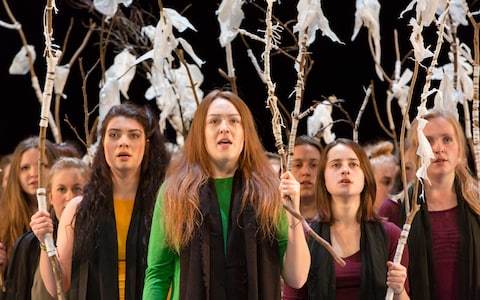
The Suppliants (or The Suppliant Maidens, or The Suppliant Women) , is another of Aeschylus' plays written as a part of a trilogy. (Actually part of a tetralogy. ) The trilogy probably included the lost plays The Egyptians and The Daughters of Danaus (also called The Danaids).
These "suppliant maidens", the Danaids, were the legendary daughters of Danaus, himself a legendary son of Epaphos; Epaphos being the legendary offspring of the legendary Io and the legendary god Zeus (who coupled with Io after she finally reached Egypt, where Hera's cruelty vis a vis the legendary gadfly finally ceased to torment Io. This legendary coupling (finally) of Zeus and Io produced Epaphos, who himself bore not only the son Danaus, but another son, Aegyptus, both of whom lived in Egypt ().
Legend has it that Aegyptus produced fifty sons, and Danaus fifty daughters. Further, it is said that the fifty sons all determined to wed the fifty daughters, their cousins (!). The daughters refused these entreaties, urged on by their father Danaus, and fled to Argos, the original home of their great grandmother Io.
So, the play is about the Danaids' arrival in Argos, pursued by their suitors, and their pleading for sanctuary in this city.
Here we get to an idea that has currency in our own legendary time, in which "sanctuary city" has come to once again have some poignant meaning.
The Danaids beseech Pelasgus, King of Argos, to offer them protection from their refused cousins. It is put to a vote of the citizens of Argus. The decision is an unhappy, even enraging, one which is delivered to the Herald representing the males.
and what about the after?
What about those other two plays? And what about the legend itself that Aeschylus used, that would have made what he was writing of familiar to his audience?
Edith Hamilton Mythology gives this play itself as the main source to us moderns for the legend of the Danaids. But first she exclaims
That is, apparently, a break in the details of the myth-story of the Danaids. For, rather inexplicably, the continuation finds them back in Egypt (though note that the Introduction to the plays, see below, places Aeschylus' 2nd and 3rd plays in Argos, not in Egypt), preparing to wed their fifty cousins, apparently at the behest of their father Danaus, who had helped them flee to Argus in the first place, rather than marry his brother's sons. Did the fifty sons besiege Argos? At the end of The Suppliants it seems as if they have already landed, when the Chorus says,
Still I fear those men's relentless rage,
Their bitter cruelty, the bloody wars they threaten.
Why are they so successful in pursuit,
With a fair wind to speed their voyage?
Well, to complete what we know about the mythical Danaeds. Their father has apparently not actually resigned himself to the coupling of his daughters with their cousins, nor have they. He supplies each daughter with a knife, and they understand what they should (and want) to do with it on their wedding night. (No, not that!) They murder their new husbands. But there's an exception. Hypermnestra has mercy on her sleeping bride, Lynceus, finds that she loves him. So the two of them escape before the forty-nine murders become known. She was, the Latin poet Horace says, "splendidly false [to her promises to her father and sisters]."
Her father throws her into prison for her treachery. One version of the story says that she is somehow reunited with Lynceus, and they have a son Abas, the great-grandfather of Perseus. Other versions are non-committal about the ultimate fate of Hypermnestra.
But all versions "tell of the unending futility of the task of the forty-nine Danaids are compelled to pursue in the lower world as a punishment for murdering their husbands. At the river's edge they filled forever jars riddled with holes, so that the water poured away and they must return to fill them again, and again see them drained dry." A Sisyphean task.
and Aeschylus?
In the Introduction, is the following:
Let wild youth not accomplish
Its wicked lust; let pride
Be quelled by your abhorrence;
Fulfill for us such wedlock as is right.
Even for those who fly the trampling of battle
There is an altar of refuge from destruction,
Where reverence for the gods will keep them safe.
the Chorus of the fifty Danaeds – lines 80 ff
The Suppliants (or The Suppliant Maidens, or The Suppliant Women) , is another of Aeschylus' plays written as a part of a trilogy. (Actually part of a tetralogy. ) The trilogy probably included the lost plays The Egyptians and The Daughters of Danaus (also called The Danaids).
These "suppliant maidens", the Danaids, were the legendary daughters of Danaus, himself a legendary son of Epaphos; Epaphos being the legendary offspring of the legendary Io and the legendary god Zeus (who coupled with Io after she finally reached Egypt, where Hera's cruelty vis a vis the legendary gadfly finally ceased to torment Io. This legendary coupling (finally) of Zeus and Io produced Epaphos, who himself bore not only the son Danaus, but another son, Aegyptus, both of whom lived in Egypt ().
Legend has it that Aegyptus produced fifty sons, and Danaus fifty daughters. Further, it is said that the fifty sons all determined to wed the fifty daughters, their cousins (!). The daughters refused these entreaties, urged on by their father Danaus, and fled to Argos, the original home of their great grandmother Io.
So, the play is about the Danaids' arrival in Argos, pursued by their suitors, and their pleading for sanctuary in this city.
Here we get to an idea that has currency in our own legendary time, in which "sanctuary city" has come to once again have some poignant meaning.
The Danaids beseech Pelasgus, King of Argos, to offer them protection from their refused cousins. It is put to a vote of the citizens of Argus. The decision is an unhappy, even enraging, one which is delivered to the Herald representing the males.
and what about the after?
What about those other two plays? And what about the legend itself that Aeschylus used, that would have made what he was writing of familiar to his audience?
Edith Hamilton Mythology gives this play itself as the main source to us moderns for the legend of the Danaids. But first she exclaims
These maidens are famous – far more so than anyone reading their story would expect. They are often referred to by the poets and they are among the most prominent sufferers in the hell of mythology, where they must forever try to carry water in leaking jars. Yet except for one of them, Hypermnestra, they did only what the Argonauts found the women of Lemnos had done: they killed their husbands. Nevertheless, the Lemnians are hardly ever mentioned, while everyone who knows even a little mythology had heard of the Danaids.Then she writes that, "At this point there is a break in the story."
That is, apparently, a break in the details of the myth-story of the Danaids. For, rather inexplicably, the continuation finds them back in Egypt (though note that the Introduction to the plays, see below, places Aeschylus' 2nd and 3rd plays in Argos, not in Egypt), preparing to wed their fifty cousins, apparently at the behest of their father Danaus, who had helped them flee to Argus in the first place, rather than marry his brother's sons. Did the fifty sons besiege Argos? At the end of The Suppliants it seems as if they have already landed, when the Chorus says,
Still I fear those men's relentless rage,
Their bitter cruelty, the bloody wars they threaten.
Why are they so successful in pursuit,
With a fair wind to speed their voyage?
Well, to complete what we know about the mythical Danaeds. Their father has apparently not actually resigned himself to the coupling of his daughters with their cousins, nor have they. He supplies each daughter with a knife, and they understand what they should (and want) to do with it on their wedding night. (No, not that!) They murder their new husbands. But there's an exception. Hypermnestra has mercy on her sleeping bride, Lynceus, finds that she loves him. So the two of them escape before the forty-nine murders become known. She was, the Latin poet Horace says, "splendidly false [to her promises to her father and sisters]."
Her father throws her into prison for her treachery. One version of the story says that she is somehow reunited with Lynceus, and they have a son Abas, the great-grandfather of Perseus. Other versions are non-committal about the ultimate fate of Hypermnestra.
But all versions "tell of the unending futility of the task of the forty-nine Danaids are compelled to pursue in the lower world as a punishment for murdering their husbands. At the river's edge they filled forever jars riddled with holes, so that the water poured away and they must return to fill them again, and again see them drained dry." A Sisyphean task.
and Aeschylus?
In the Introduction, is the following:
It is probable that The Egyptians began with the defeat of the Argive army. It must have included the negotiations for the marriage, and had for its climax the plot to murder the fifty bridegrooms…
The third play must have opened with the discovery of the forty-nine murders, and the declaration of Hypermnestra that she had spared her husband for love. This is a situation which the State of Argos must deal; for the murder of the city's guests has brought pollution and will invite revenge. But Danaus and forty-nine of his daughters will certainly regard Hypermnestra as the criminal and traitress, and Lynceus as the enemy. Decision will lie with the Argive Assembly, who in The Suppliantscondemned the defiance of Zeus Hikesios (Zeus God of Suppliants), and will know surely condemn the defiance of Zeus Xenios (Zeus God of Hospitality). But if the Danaids are condemned for their crime, what of the pity which we felt for them in the first play, when they were helpless victims? What is to happen to them? It is this dilemma which requires divine intervention of Aphrodite. How she solved it we do not know; but the solution most likely included both their reconciliation to marriage and their purification for blood-guilt; and illustrated again the belief that Zeus combines force with benevolence in teaching human beings the right path of life.
. . . . . . . . . . . . . . . . . . .
Previous review: A Child's Garden of Verses
Next review: Shakespearean Tragedy
Older review: The Stranger
Previous library review: Prometheus Bound
Next library review: The Odyssey tr. Emily Wilson

March 7, 2012
The history of the Daenids
24 April 2012
My classics lecturer mentioned that this play was rather ho-hum and in a way I am inclined to agree. However, we still need to consider that it is an Aeschylus play, which means that it was at least a generation earlier than the plays of Sophocles and Euripides. Aeschylus is considered to be one of the great dramatists of Classical Greece, however since we only have plays from two other tragedians that doesn't really say much.
Aeschylus' plays do tend to be more primitive than those of Sophocles and Euripides and generally focus more on the myth rather than making any particular comment on society. However, each of the three playwrights (and I do not include Aristophanes in this group as he wrote comedy, not tragedy) have their own styles and purposes. I like to compare them with modern directors and would suggest that Aeschylus would be close to a Frank Capra, Sophocles would be a Ron Howard (or a Stephen Spielberg) while Euripides would be a Martin Scorsesee (or a Quentin Tarantino). I've probably said that before, but I like the comparison (though I would love to hear from you if you disagree).
This play is about the Daenids, who happen to be the daughters of Daenus (which is probably pretty obvious). The story goes that after Io was transformed into a bull by Hera (simply because Zeus slept with her – isn't it interesting that the victim, not the perpetrator, is the one punished) and was tormented by a gadfly, forcing her to flee to Egypt. She settled down in the land of the black earth (which is what the Egyptians called Egypt) and from her descendants came the brothers Daenus and Aegyptus. Daenus had fifty daughters, and Aegyptus had fifty sons, and the sons wanted to marry the daughters. However, the daughters did not want a bar of them, so they fled with their father to Argos for sanctuary, and the entire play is about the conflict between the sons of Aegyptus and the daughters of Daenus. In a way it is not all that thrilling. However it is not Aeschylus that we criticise, but rather the people that decided to include this as one of the plays that would survive.
So, first I will talk a bit about Argos. Having read through some of these plays I have noticed that the Mycenean Greeks (the period in which the plays are set) refer to the Greeks as Argives or Achaeans. Now, Argos (the land from which the Argives come) lies on the northeastern corner of the Peloponese and Achaea lies on the northwest. As such it is only a part of the whole Greek world. But, during the Mycenean period, Argos was the centre of Greek life. While there were other city states (such as Athens and Thebes) the powerbase during this period lay in Mycenae, which is located in Argos. This is probably why we see the Argives being referred to as Greeks (though Greek is actually a Latin term, the Greeks refer to themselves as Hellenes).
Then there is the idea about Egypt. Remember, the world revolved around the Greeks and as such it was the Greek race that gave birth of humanity. Here it is suggested that the Egyptians originally came from Io, a Greek, however we know a lot differently now. Consider the date of the play: 500 BC. By this time Egypt was a province of the Persian Empire, having collapsed as an independent entity after being invaded by Babylon (and Assyria before that). Yet, if we move earlier to Mycenaen Greece, we set the time at around 1500 BC to 1100 BC. Once again we are in the New Kingdom of Egypt, and archaeology proves that Egypt had been around for a lot longer (in fact much longer than the Greeks). Well, the Greeks weren't scientists though, nor did they have sophisticated archaeological techniques (they had only just developed the discipline of writing history), but in the end it is all irrelevant because this is mythology, and mythology is generally skewed to support a point that the mythmaker is trying to make (we see it all the time in our society – it is called propaganda).
24 April 2012
My classics lecturer mentioned that this play was rather ho-hum and in a way I am inclined to agree. However, we still need to consider that it is an Aeschylus play, which means that it was at least a generation earlier than the plays of Sophocles and Euripides. Aeschylus is considered to be one of the great dramatists of Classical Greece, however since we only have plays from two other tragedians that doesn't really say much.
Aeschylus' plays do tend to be more primitive than those of Sophocles and Euripides and generally focus more on the myth rather than making any particular comment on society. However, each of the three playwrights (and I do not include Aristophanes in this group as he wrote comedy, not tragedy) have their own styles and purposes. I like to compare them with modern directors and would suggest that Aeschylus would be close to a Frank Capra, Sophocles would be a Ron Howard (or a Stephen Spielberg) while Euripides would be a Martin Scorsesee (or a Quentin Tarantino). I've probably said that before, but I like the comparison (though I would love to hear from you if you disagree).
This play is about the Daenids, who happen to be the daughters of Daenus (which is probably pretty obvious). The story goes that after Io was transformed into a bull by Hera (simply because Zeus slept with her – isn't it interesting that the victim, not the perpetrator, is the one punished) and was tormented by a gadfly, forcing her to flee to Egypt. She settled down in the land of the black earth (which is what the Egyptians called Egypt) and from her descendants came the brothers Daenus and Aegyptus. Daenus had fifty daughters, and Aegyptus had fifty sons, and the sons wanted to marry the daughters. However, the daughters did not want a bar of them, so they fled with their father to Argos for sanctuary, and the entire play is about the conflict between the sons of Aegyptus and the daughters of Daenus. In a way it is not all that thrilling. However it is not Aeschylus that we criticise, but rather the people that decided to include this as one of the plays that would survive.
So, first I will talk a bit about Argos. Having read through some of these plays I have noticed that the Mycenean Greeks (the period in which the plays are set) refer to the Greeks as Argives or Achaeans. Now, Argos (the land from which the Argives come) lies on the northeastern corner of the Peloponese and Achaea lies on the northwest. As such it is only a part of the whole Greek world. But, during the Mycenean period, Argos was the centre of Greek life. While there were other city states (such as Athens and Thebes) the powerbase during this period lay in Mycenae, which is located in Argos. This is probably why we see the Argives being referred to as Greeks (though Greek is actually a Latin term, the Greeks refer to themselves as Hellenes).
Then there is the idea about Egypt. Remember, the world revolved around the Greeks and as such it was the Greek race that gave birth of humanity. Here it is suggested that the Egyptians originally came from Io, a Greek, however we know a lot differently now. Consider the date of the play: 500 BC. By this time Egypt was a province of the Persian Empire, having collapsed as an independent entity after being invaded by Babylon (and Assyria before that). Yet, if we move earlier to Mycenaen Greece, we set the time at around 1500 BC to 1100 BC. Once again we are in the New Kingdom of Egypt, and archaeology proves that Egypt had been around for a lot longer (in fact much longer than the Greeks). Well, the Greeks weren't scientists though, nor did they have sophisticated archaeological techniques (they had only just developed the discipline of writing history), but in the end it is all irrelevant because this is mythology, and mythology is generally skewed to support a point that the mythmaker is trying to make (we see it all the time in our society – it is called propaganda).

October 11, 2020
Reading Ancient Greek plays can still be rewarding today, even more than two millennia after they were originally performed. Across the vast chasm of time and culture, some of these plays remain compelling and still speak eternal wisdom with beauty, even to modern man.
This is one of the others.
This is one of the others.

October 19, 2016
Cool story. The usual Greek dilemma: two bad choices and yet you must choose one anyway. Realism.

April 5, 2021
Danaj sa svojih 50 kćeri beži od seksualnog nasilja (od Egiptovih 50 sinova), uzrokuje izbegličku krizu na obalama grčke i skoro pa međunarodni incident. Ko kaže da grčke tragedije nisu aktuelne?
"Od srodnika pobegosmo same,
na udaju zgadismo se kletu -
na sinove Egiptove.
Volela bih da s užeta,
kobne zamke, smrt me snađe,
pre no kleta muška ruka
dotakne se tela moga!
Pre da Had nas mrtve grli!
Ta hridina biće svedok
skoku mome dubokome,
pre no brak me preko volje
za te mrske veže ljude."
Ima ova tragedija svetlih trenutaka. Delovi u kojima grčki vladar Pelazgo brani pribeglice koristeći reči koje bi trebalo ponavljati u današnjoj ponegde negostoljubivoj Evropi, na primer. Ili kad izvređa egipatske vojnike na osnovu pića koje piju: "Muškarcima i ovaj obiluje kraj, al' ne piju ti loša vina ječmena." Ali, sve u svemu, mlako i pomalo dosadno. A i - nema tragedije?!
Festival grčke tragedije (za jednog gledaoca)
Tako. 10 pročitanih, ostaje još 23. Potrajaće ovo, ali ne smeta.
1. Car Edip (Sofokle)
2. Iphigenia in Aulis (Euripid)
3. Agamemnon (Eshil)
4. Antigona (Sofokle)
5. Eumenides (Eshil)
6. Bahantkinje (Euripid)
7. The Libation Bearers (Pokajnice - Eshil)
8. Pribjegarke (Eshil)
9. Ifigenija na Tauridi (Euripid)
10. Oedipus at Colonus (Sofokle)
"Od srodnika pobegosmo same,
na udaju zgadismo se kletu -
na sinove Egiptove.
Volela bih da s užeta,
kobne zamke, smrt me snađe,
pre no kleta muška ruka
dotakne se tela moga!
Pre da Had nas mrtve grli!
Ta hridina biće svedok
skoku mome dubokome,
pre no brak me preko volje
za te mrske veže ljude."
Ima ova tragedija svetlih trenutaka. Delovi u kojima grčki vladar Pelazgo brani pribeglice koristeći reči koje bi trebalo ponavljati u današnjoj ponegde negostoljubivoj Evropi, na primer. Ili kad izvređa egipatske vojnike na osnovu pića koje piju: "Muškarcima i ovaj obiluje kraj, al' ne piju ti loša vina ječmena." Ali, sve u svemu, mlako i pomalo dosadno. A i - nema tragedije?!
Festival grčke tragedije (za jednog gledaoca)
Tako. 10 pročitanih, ostaje još 23. Potrajaće ovo, ali ne smeta.
1. Car Edip (Sofokle)
2. Iphigenia in Aulis (Euripid)
3. Agamemnon (Eshil)
4. Antigona (Sofokle)
5. Eumenides (Eshil)
6. Bahantkinje (Euripid)
7. The Libation Bearers (Pokajnice - Eshil)
8. Pribjegarke (Eshil)
9. Ifigenija na Tauridi (Euripid)
10. Oedipus at Colonus (Sofokle)

May 4, 2024
Tragedia rappresentata nel 463 a.C., probabilmente avrebbe dovuto essere il primo dramma di una trilogia comprendente “Gli Egizi” e “Le Danaidi”.
Il tema de “Le Supplici” è singolare, il rifiuto del matrimonio da parte delle donne era da ritenersi inconcepibile nell’antica Grecia e le motivazioni che hanno portato Eschilo ad affrontare questo argomento sono diverse; la più probabile è che volesse, nel resto della trilogia, parlare delle conseguenze che l’atto delle Danaidi avrebbe scatenato. Le Danaidi rappresentano dei personaggi femminili nuovi, che decidono per loro stesse e agiscono di propria volontà, rinnegando il dominio maschile poiché caste e devote ad Artemide, respingendo gli Egizi peccatori di ὕβρις e loro cugini, evitando così di commettere incesto. Eschilo evidenzia continuamente le differenze che caratterizzano gli Egizi e le Danaidi: tracotanza-moderazione, scelleratezza-pudore, assoggettamento della donna all’uomo-orgogliosa ricerca della libertà femminile. Le donne sono protagoniste indiscusse dell’opera, energiche e decise dominano la scena, mentre gli altri personaggi non sono altro che comprimari.
Il tema de “Le Supplici” è singolare, il rifiuto del matrimonio da parte delle donne era da ritenersi inconcepibile nell’antica Grecia e le motivazioni che hanno portato Eschilo ad affrontare questo argomento sono diverse; la più probabile è che volesse, nel resto della trilogia, parlare delle conseguenze che l’atto delle Danaidi avrebbe scatenato. Le Danaidi rappresentano dei personaggi femminili nuovi, che decidono per loro stesse e agiscono di propria volontà, rinnegando il dominio maschile poiché caste e devote ad Artemide, respingendo gli Egizi peccatori di ὕβρις e loro cugini, evitando così di commettere incesto. Eschilo evidenzia continuamente le differenze che caratterizzano gli Egizi e le Danaidi: tracotanza-moderazione, scelleratezza-pudore, assoggettamento della donna all’uomo-orgogliosa ricerca della libertà femminile. Le donne sono protagoniste indiscusse dell’opera, energiche e decise dominano la scena, mentre gli altri personaggi non sono altro che comprimari.

April 13, 2011
There's something so vital about Greek invocations. Their figurative language is so crisp, precise, and yet allusive. Aeschylus was the great innovator of tragedy, taking to heart the spirit of fearless meddling that infected all Greek genius. 'The Suppliants' is a brief but solid example of his power.
Cookson's translation transmits the evocation and originality of the work, but his penchant for rendering the chorus with rhyme is awkward and not true to Greek traditions. English is too large, complex, and variable to respond well to couplets. It is a wild and many-fathered bastard of a language, made easily silly by such constraints if they linger for more than a sonnet's length.
For me, the effect is that of a bright-colored mix of fonts and interchanging capitals: it may be technically legible, but detracts more meaning from the text than it adds. I will not go as far as Milton and declare it
"the Invention of a barbarous Age, to set off wretched matter and lame Meeter"
but I do agree that it should be used sparingly. For verse, English is better served by alliteration, meter, and more subtle sound-play, sparing rhyme--as Shakespeare did--for the occasional unmistakably heavy accent.
It is one thing to rhyme in a language like Italian, where the musicality and continuous aesthetic make such a thing natural, even inescapable, as it might flow from everyday speech. To try to transfer that directly to English is like a painter who, desiring to produce the visual equivalent of a song, paints his canvas in strips of verses and identical choruses; there are methods which are more effective and less artificial.
Cookson's translation transmits the evocation and originality of the work, but his penchant for rendering the chorus with rhyme is awkward and not true to Greek traditions. English is too large, complex, and variable to respond well to couplets. It is a wild and many-fathered bastard of a language, made easily silly by such constraints if they linger for more than a sonnet's length.
For me, the effect is that of a bright-colored mix of fonts and interchanging capitals: it may be technically legible, but detracts more meaning from the text than it adds. I will not go as far as Milton and declare it
"the Invention of a barbarous Age, to set off wretched matter and lame Meeter"
but I do agree that it should be used sparingly. For verse, English is better served by alliteration, meter, and more subtle sound-play, sparing rhyme--as Shakespeare did--for the occasional unmistakably heavy accent.
It is one thing to rhyme in a language like Italian, where the musicality and continuous aesthetic make such a thing natural, even inescapable, as it might flow from everyday speech. To try to transfer that directly to English is like a painter who, desiring to produce the visual equivalent of a song, paints his canvas in strips of verses and identical choruses; there are methods which are more effective and less artificial.

December 1, 2024
The joy of being a completist is that you discover hidden gems you might not otherwise have discovered. The perils of being a completist is that you eventually start wading your way through things without much joy just because you want to complete them. In the case of The Suppliants it was more peril than joy. None of what one expects from Greek tragedy is in this play—no hero, no fall, no action, not really much of anything except lots and lots of chorus. The introduction says this is particularly beautiful Greek poetry but my tastes don’t really run in that direction. But now that Aeschylus is complete I can go back to the amazing, stunning Oresteia.

February 18, 2021
Um grupo de 50 mulheres, filhas de Dânaos ( as Denaides) fogem do Egito para Argos na Grécia e pedem abrigo ao rei para fugir de casamentos forçados com os 50 filhos do irmão gêmeo de seu pai.
O rei de Argos fica dividido entre cumprir o dever da hospitalidade e tentar evitar uma possível guerra. Por fim ele acaba dando sua proteção as mulheres.
Esta peça é o que sobrou aos nossos tempos da tetralogia de Ésquilo, com a qual ele venceu o festival Ateniense.
O rei de Argos fica dividido entre cumprir o dever da hospitalidade e tentar evitar uma possível guerra. Por fim ele acaba dando sua proteção as mulheres.
Esta peça é o que sobrou aos nossos tempos da tetralogia de Ésquilo, com a qual ele venceu o festival Ateniense.

August 23, 2019
Οι 50 κόρες του Δαναού βρίσκονται στο Άργος μαζί με τον πατέρα τους για να ξεφύγουν από την καταδίωξη τους από τους ισάριθμούς γιούς του Αιγύπτου-ξαδέρφους τους που θέλουν να τους παντρευτούν...Κεντρικό θέμα ο "αθέλητος" γάμος κατά τα λοιπά από τις λιγότερο ενδιαφέρουσες τραγωδίες.

December 5, 2025
I wonder if the rest of the Danaid Tetralogy survived if this would be elevated.
But as much as Aeschylus’ micro-narratives that appeal to the larger Greek mythopedia feel arthouse to my modern sensibilities, I have to land on an okayness for this play.
But the longing for the other three dramas persist, especially with the foreshadowing in Prometheus.
But as much as Aeschylus’ micro-narratives that appeal to the larger Greek mythopedia feel arthouse to my modern sensibilities, I have to land on an okayness for this play.
But the longing for the other three dramas persist, especially with the foreshadowing in Prometheus.

February 22, 2021
In my opinion, this is one of the best plays I have read from him till now. This text talk about many interesting topics as women rights of their own bodies, democracy, politics and the fear to gods. Is a tragedy without a tragic end, and also it does not have a male heroic character, instead of that we can find the danaides the figure of power, tragedy, love and bravery and that is amazing. These women want to decide on their bodies, on love, and they prefer to die, to kill themselves before being forced to marry. Also, this play have a really beautiful and interesting way to show how democracy works. The glory of Athens is portrayed in how the king of Argos and its population decide to help the danaides and fight with the Egyptians. The text has a lot of music and dance, is really filled totally with it and is marvelous. Also, the amount of references to gods, the sorrow and pleas they make to them transform it in a wonderful testimony of Greece and its beliefs

January 3, 2016
Not a particularly engrossing play, or one with very complex or intriguing characters. A bit of a disappointment for me personally, being this is the first play I've read by Aeschylus. It's not bad, by any stretch, it's just very dull. It could have been the particular translation I read, but something about trying to find investment in a nameless, faceless choir is a bit of a chore since the actual Suppliant Maidens just aren't that interesting. Neither are the events that surround their lives. This play could have been a very short play by itself, but in itself this would-be short and simple play feels very drawn-out.

January 19, 2020
Women flee sexual violence. Would you offer them sanctuary and go to war to protect them?

July 5, 2024
Every one of them and their father choose the bear
March 3, 2022
Az Oltalomkeresők a Perzsákhoz hasonlóan egy egészen apró szeletét dramatizálja a mitológiának. Valószínűleg a darab egy tetralógia egyik része volt, Aiszkhülosz egyik igen kései műve. Vendég és idegen, befogadás és elutasítás kérdését boncolgatja, Karsai György beavató színháza az előadást éppen aznapra hirdette, amikor a 2016-os menekültellenes kvótanépszavazás volt, így az időzítés kiváló apropót teremtett a darab felelevenítéséhez.
Danaosz király ötven lánya, a Danaidák Aigüptosz király fiaival való kényszerházasságot elkerülendő Egyiptomból Argoszba menekülnek. Tegyük hozzá, hogy a házasság kényszer része főképp abból fakadt, hogy Aigüptosz a nagybátyjuk volt, Danaosz testvére/ikertestvére, így az ő ötven fia az unokatestvérük, a "rokon-nász" pedig már abban az időben sem volt valami népszerű... Danaosz király amennyire tudjuk, nemigen bánta ezt a rokonkérdést, amint a fiúk sem, annál inkább berezelt Apollón miatt, akinek egy jóslata szerint ha nem cselekedett, saját vérei lázadtak volna fel ellene, halálát okozva. Éppezért Danaosz az egész pereputtyot hajóra pakolta az éj leple alatt és megszöktek az Aigüptosz fiúktól, Egyiptomból, ami nekik is szülőhazájuk volt. Hova mehetne ötven szökésben lévő leányzó, ha nem egy kedves távoli rokonhoz?
Így is tettek, így kötöttek ki Argoszban. Akkor érkezett az argosziak királya, Pelaszgosz, aki megkérdezte, mégis mi az istennyilát keresnek itt? Erre kifejtették egy rövid, pattogós párbeszédben, hogyhátugye Ió tánti az nekik rokonuk volt, megugye Pelaszgosznak is, úgyhogy legyen már kedves befogadni őket.
És akkor itt közbeékelődött egy rövid Ió-exkurzió, amiben levezették jó genealógusokként, hogy ők mind rokonság. Ió ugyanis Inakhosz, argoszi király leánya volt, annak idején az argoszi Héra szentélynek a papnője, aztán Zeusz ugye megkívánta, de azért, Héra ne sejtse, mi történik a földön, nagy felhőkbe burkolta az eget, de hát Héra attól Héra, hogy észrevegyen ilyen dolgokat. Szó szót követett, Zeusz aztán tehénné változtatta szegény királylányt, Héra meg égre földre kereste, de amikor rájött a turpisságra, kedvesen elkérte Zeusztól a kis tehénkéjét, Zeusz meg ugye, mondta, hogy nem kéne, de persze Héra megszerezte. A féltékeny asszony akkor szépen idehozta Argoszra, ahol az Argosz nevű szörny >>árgus<< szemekkel őrizte (mind a százzal, teszem hozzá). Hermész aztán lekaszabolta a szörnyet, megszöktette a leányt Zeusz parancsára, mert hát ő is belátta, szeretőkkel sem érdemes ilyetén módon bánni. Héra aztán így is megtalálta, ráküldött egy bögölyt, csípje, szúrja, ahol éri, aztán ez a bögöly végigűzte a fél világon, míg megérkezett Prométheuszhoz, ahol beszédbe elegyedtek, ennek a beszélgetésnek a részleteit a következő, Leláncolt Prométheusz dráma reviewjában fogom megírni.
De summa summarum kifejtették, hogy Ió fia Epaphosz volt, aki Zeusz szerelméből született (nevének jelentése is érintés), és Ió Egyiptomban, a Nílus partján szülte őt meg. Epaphosz Memphisznek lett férje, aki Nílus folyamisten leánya. Namármost ezeknek lett egy leánya, Lübia, aki már megint a tűzzel (vagyis inkább a vízzel) játszott, mert Poszeidónnal kavart, és ebből született egy ikerpár, Belus és Agenor. Belus fia volt Danaosz és Aigüptosz. Agenornak pedig a gyermekei között van Kadmosz, aki majd elveti és sárkányfogakat és megalapítja Thébát, az ő tesója pedig Europé, akinek az unokája pedig Minósz lesz majd.
Pelaszgosz pedig szintén Ió szüleinek, Inakhosznak és feleségének, Meliának a leszármazottja. Ió tesója volt Phoróneosz, aki ilyen argoszi Prométheusz, állítólag ő civilizálta az embereket meg adott nekik tüzet stb., aki összeszűrte a levet Kerdó nimfával, ebből pedig született Pelaszgosz, aki egyébként befogadta Démétért, amikor az bebolyongta a fél világot, hogy lányát, Perszephonét előkerítse, ezért hálából Démétér megtanította Pelaszgoszt a búzatermesztésre. Ő egyébként a pelaszgok ősapja is, akik még a görögök előtt uralták a vidéket, de melléknévként a neve jelent egyszerűen ősit is, később a pelaszg egyet jelentett a göröggel.
Van itt némi eltolódás, mert Pelaszgosznak elvileg nagynénje volt Ió, Danaosz viszont Ió ükunokája, de hát kit lepnek meg ilyen apróságok a görög mitológia családfájában.
Visszatérve a vendégkérdésre, a xenos egyszerre jelent idegent és vendéget, a vendégeknek pedig jár a vendégbarátság ősi joga. Pelaszgosz egy darabig vakarta a fejét, aztán mondta, jól van, meglássuk, ő ebben egyedül nem dönthet (dehogynem), ezért elszalad a városba egy szavazást tartani a polgárokkal, befogadják-e a lányokat. Amíg ez megtörtént, addig pedig szelíden beterelte őket egy szentélybe, ott várakozzanak, ezek az élelmes leánykák meg kitalálták, ha az argosziak nem fogadják be őket, istenuccse ők a kis selyemszalagjaikkal felkötik magukat a szentély szobraira. Végül visszatért Pelaszgosz, hogy rendben van, befogadják őket, van egy halom palotájuk, rendezkedjenek be. Ekkor érkezett az Aigüptosz fiak hírnöke, hogy ejnye lánykák, hova mentetek, már kezdte volna terelni őket a hajókra, amikor kiderült, hogy az argosziak védelmezik őket.
A dráma valahol ennek a magasságában ért véget, de azért az hozzátartozik a sztorihoz, hogy a mitológia szerint végül Pelaszgosz meghal, a háborút elvesztik, és hogy, hogy nem, Danaosz lesz az argosziak új királya, apuka pedig azt mondja az Aigüptosz fiaknak, hogy egye fene, beadom a derekam, vigyétek a lányokat. Mindeközben Danaosz kioktatja gyermekeit, hogy tessék, itt egy tőr, mindenki legyen kedves a nászéjszakán ezzel kinyírni a vőlegényét. Ezt meg is teszik nagy örömmel negyvenkilencen, kivéve Hüpermnésztra, aki valamilyen rejtélyes oknál fogva beleszeret az uncsitesójába, Lünkeoszba, úgyhogy életben hagyja, amit ez a drága lélek azzal viszonoz, hogy kinyírja a másik negyvenkilencet, Hüpermnésztrát meg bíróság elé citálják, hogy megszegte az apai parancsot. Végül Aphrodité kimenti, és ők ketten lesznek az őszinte és örök szerelem szimbólumai, Danaosz halála után Lünkeosz lesz Argosz királya, haláluk után pedig Zeusz oltára mellé temették őket közös sírba.
Sajna a másik negyvenkilenc megszívta, mert az Alvilágban is büntetést szabtak ki rájuk, így halálukig lyukas hordóba kell vizet meregetniük. Erről írt Babits egy csodálatosan fantasztikus verset, kedvenc költeményeim egyike, aki azonban következetesen ötven lányról beszél... Mondjuk, nem biztos, hogy a tenger hullámzásának ritmusa jól bírja a negyvenkilencezést. Tessék:
BABITS MIHÁLY: A DANAIDÁK
Lenn a csöndes alvilágban, szellőtlen, bús alvilágban, asphodelosok között, hol asphodelos meg se moccan, gyászfa nem bókol galyával, mákvirág szirmát nem ejti, mert a szél ott mélyen alszik, alszik asphodelos ágyban, mélyen alszik, nem beszél,
hol a tók acéltükörként mozdulatlan elterülnek, pillák könnyen szenderülnek, mert a pillák legyezője, habszövetnek fodrozója sohase jár ott, a szél:
óriási amphorákba, alabastrom amphorákba ötven asszony, bünös asszony karcsu vázát megmeritve, majd meritve, majd üritve kárhozott bús ötven asszony mindörökre töltöget,
ötven kárhozott bus asszony óriási alabastrom amphorákba mindhiába töltögeti drága nedvét, drága Léthéből meritett sohasem elég vizet.
Óriási karcsu gyászfák ágaikat sohse rázzák: [minden águk egy-egy lélek, öngyilkos bús régi lélek, mely most néma fán tenyész;
érzőn, mégis öntudatlan nyujtja lombát mozdulatlan, mozdulatlan és sötéten, át a réten,
át a réten, hol a Léthe (ez a rét a Léthe réte) száz belémosott bünöktől szennyes vizzel, elfelejtett ős bünöktől szennyes vizzel körbe folyva nem enyész,
nem enyész, nem ér tengerbe, hanem hétszer körbe-körbe, vissza önmagába]: ottan ötven asszony kárhozottan ötven órjás amphorába mindhiába, mindhiába tölti könnyét és vizét.
majd merítve, majd üritve, mindhiába, mert az ötven bűvös edény tölthetetlen mint a tenger önmagától megapad és elhuzódik és az ötven bűnös asszony Léthe vízét alabastrom amphorákba mindörökre csak hiába tölti szét.
Ötven asszony, alabastrom testtel, ébenszinü hajjal érzőn, mégis öntudatlan öntögetve szakadatlan félig értett dalra kel,
ötven kárhozott bus asszony felvilágból lehozott és lelkeikbe visszajáró félig értett félemléket fojtott hangon énekel:
"Meggyilkoltuk férjeinket, ötven daliás nagy férfit és szerettünk, csak szerettünk, Isten tudja, kit szerettünk, vágykancsóból meritettünk, meritettünk, üritettünk, fenn a zöldvilágu földön, az aranyos nap alatt -
Régi szavak járnak vissza elsötétült lelkeinkbe, mint sötétben nagy szobákba utcáról behullott fények; mit jelentenek? hiába próbálunk rá emlékezni; mit jelent az, hogy: szeretni? mit: kivánní? és: ölelni? a homályban mindhiába kérdezzük az árnyakat.
Csak daloljunk: Meggyilkoltuk - s emlékezzünk: férjeinket - csak daloljunk, bár nem értjük, és meritsünk és üritsünk; úgy sem tudjuk abbahagyni; és daloljunk, bár nem értjük, mert különben némaság van, és a némaság oly félős! néma, rengeteg sötétség: a sötétség nem beszél -
Igy dalolt az ötven asszony, ötven kárhozott bus asszony, egymáshoz mind oly hasonló ébenfürtü, alabastrom testü ötven testvérasszony igy dalolt a Léthe-réten, lélekfák közt, mákvirág közt, óriási amphorák közt, Léthe mellett, hol a szél
lenn a csöndes alvilágban, szellőtlen bus alvilágban alszik asphodeloságyban, mélyen alszik, nem beszél.
És a végére, de tényleg csak egy icipicit, hadd szúrjak be nehány kedves idézetet:
78-83 (Kar)
Halljatok, őseim istenei,
látva ügyét az igaznak,
bár nincs földön erő
tenni a végzet ellen,
gyűlölve a gőgöt, a vétket,
oltalmazzatok [ettől a násztól].
84-89 (Kar)
Bárcsak jóra vezetne az ég.
Zeusz akaratját
nem fürkészi ki ember. Mindenütt beragyogja,
sötétben is, fekete
sors idején, a halandót.
90-102 (Kar)
Biztosan megesik, nem inog
semmi, amit Zeusz
elvégzett a fejében.
Árnyas, sokszövevényü
ösvénye terveinek,
rajta szem át sose láthat.
Tornyos reményei
csúcsáról a gonoszt leveti,
de erőszakhoz soha nem nyúl;
nincs akadály isten előtt:
gyorsjárásu gondolata
minden vétket nyomban elér,
bár szent helyét el sose hagyja.
123-126 (Kar)
Az isteneké fogadalmi áldozatom, ha
megfordul a sors, nem ér a halál;
ó, ó, ó balirányu szelek,
vajjon e hullám merre vezet?
133-139 (Kar)
A tengertől védelmező
vitorlás és evezős faház
vihartalanul hozott a szelekkel.
Nem keseregnék,
csak vinné sorsomat
mindent látó atyánk
szerencsés révbe majd.
211 (Karvezető)
Ha ő akarja, mind e baj jó véget ér.
338 (Karvezető)
Könnyű búcsúzni attól, kit balsors kisér.
362-265 (Kar)
Jó sors éri, ki esdeklőt befogad,
valamennyi isten
örömmel nézi a tiszta
ember áldozatát.
381-384 (Kar)
A magasságból nézőre tekints,
fájdaloműzte halandók
őrére; esdve hozzá járulunk,
ha nem találunk törvényes jogot.
406-409 (Pelaszgosz)
Csak mélyenjáró gondolat menthet meg itt;
igazságot, mint búvár, mélységben keres
a látó és nem borgőz-fátyolozta szem.
417 (Pelaszgosz)
Mely gondolat vezet kiútra? Nem lelem.
418-422 (Kar)
Hát keress, s légy igaz, jámborul
mint barát, úgy fogadj;
el ne hagyd, ki űzetett,
messziről istentelen
üldözés kergeti.
468-471 (Pelaszgosz)
Nehézség tornyosul fölém mindenfelől,
bajok soka tör, akár folyónak árja, rám;
balsors mély tengerére vetve, jó utat,
a vésztől biztos öblöt nem lelek sehol.
490-491 (Danaosz)
Sokat jelent nekünk az értékes barát,
ki vendéglátón, tisztességesen fogad.
732-733 (Danaosz)
Ne csüggedj; megbünhődik egyszer, egy napon
az istenek törvénye ellen vétkező.
770 (Danaosz)
A bölcs hajósban aggodalmat kelt az éj.
777 (Kar)
Ó jaj, te dombos föld, méltán dicsért!
993-995 (Danaosz)
Az ismeretlen csak sokára nyer hitelt;
más földről jöttre könnyü rosszat mondani,
a nyelv gonosz beszédre simábban forog.
1048-1050 (Szolgálók kara)
Ami végzet, az lesz úgyis a sorsunk,
ki se látja be Zeusz akaratját,
ösvényeit úgysem járja be ember.
1072 (Közös Kar)
Jog kövesse jog szavát.
Danaosz király ötven lánya, a Danaidák Aigüptosz király fiaival való kényszerházasságot elkerülendő Egyiptomból Argoszba menekülnek. Tegyük hozzá, hogy a házasság kényszer része főképp abból fakadt, hogy Aigüptosz a nagybátyjuk volt, Danaosz testvére/ikertestvére, így az ő ötven fia az unokatestvérük, a "rokon-nász" pedig már abban az időben sem volt valami népszerű... Danaosz király amennyire tudjuk, nemigen bánta ezt a rokonkérdést, amint a fiúk sem, annál inkább berezelt Apollón miatt, akinek egy jóslata szerint ha nem cselekedett, saját vérei lázadtak volna fel ellene, halálát okozva. Éppezért Danaosz az egész pereputtyot hajóra pakolta az éj leple alatt és megszöktek az Aigüptosz fiúktól, Egyiptomból, ami nekik is szülőhazájuk volt. Hova mehetne ötven szökésben lévő leányzó, ha nem egy kedves távoli rokonhoz?
Így is tettek, így kötöttek ki Argoszban. Akkor érkezett az argosziak királya, Pelaszgosz, aki megkérdezte, mégis mi az istennyilát keresnek itt? Erre kifejtették egy rövid, pattogós párbeszédben, hogyhátugye Ió tánti az nekik rokonuk volt, megugye Pelaszgosznak is, úgyhogy legyen már kedves befogadni őket.
És akkor itt közbeékelődött egy rövid Ió-exkurzió, amiben levezették jó genealógusokként, hogy ők mind rokonság. Ió ugyanis Inakhosz, argoszi király leánya volt, annak idején az argoszi Héra szentélynek a papnője, aztán Zeusz ugye megkívánta, de azért, Héra ne sejtse, mi történik a földön, nagy felhőkbe burkolta az eget, de hát Héra attól Héra, hogy észrevegyen ilyen dolgokat. Szó szót követett, Zeusz aztán tehénné változtatta szegény királylányt, Héra meg égre földre kereste, de amikor rájött a turpisságra, kedvesen elkérte Zeusztól a kis tehénkéjét, Zeusz meg ugye, mondta, hogy nem kéne, de persze Héra megszerezte. A féltékeny asszony akkor szépen idehozta Argoszra, ahol az Argosz nevű szörny >>árgus<< szemekkel őrizte (mind a százzal, teszem hozzá). Hermész aztán lekaszabolta a szörnyet, megszöktette a leányt Zeusz parancsára, mert hát ő is belátta, szeretőkkel sem érdemes ilyetén módon bánni. Héra aztán így is megtalálta, ráküldött egy bögölyt, csípje, szúrja, ahol éri, aztán ez a bögöly végigűzte a fél világon, míg megérkezett Prométheuszhoz, ahol beszédbe elegyedtek, ennek a beszélgetésnek a részleteit a következő, Leláncolt Prométheusz dráma reviewjában fogom megírni.
De summa summarum kifejtették, hogy Ió fia Epaphosz volt, aki Zeusz szerelméből született (nevének jelentése is érintés), és Ió Egyiptomban, a Nílus partján szülte őt meg. Epaphosz Memphisznek lett férje, aki Nílus folyamisten leánya. Namármost ezeknek lett egy leánya, Lübia, aki már megint a tűzzel (vagyis inkább a vízzel) játszott, mert Poszeidónnal kavart, és ebből született egy ikerpár, Belus és Agenor. Belus fia volt Danaosz és Aigüptosz. Agenornak pedig a gyermekei között van Kadmosz, aki majd elveti és sárkányfogakat és megalapítja Thébát, az ő tesója pedig Europé, akinek az unokája pedig Minósz lesz majd.
Pelaszgosz pedig szintén Ió szüleinek, Inakhosznak és feleségének, Meliának a leszármazottja. Ió tesója volt Phoróneosz, aki ilyen argoszi Prométheusz, állítólag ő civilizálta az embereket meg adott nekik tüzet stb., aki összeszűrte a levet Kerdó nimfával, ebből pedig született Pelaszgosz, aki egyébként befogadta Démétért, amikor az bebolyongta a fél világot, hogy lányát, Perszephonét előkerítse, ezért hálából Démétér megtanította Pelaszgoszt a búzatermesztésre. Ő egyébként a pelaszgok ősapja is, akik még a görögök előtt uralták a vidéket, de melléknévként a neve jelent egyszerűen ősit is, később a pelaszg egyet jelentett a göröggel.
Van itt némi eltolódás, mert Pelaszgosznak elvileg nagynénje volt Ió, Danaosz viszont Ió ükunokája, de hát kit lepnek meg ilyen apróságok a görög mitológia családfájában.
Visszatérve a vendégkérdésre, a xenos egyszerre jelent idegent és vendéget, a vendégeknek pedig jár a vendégbarátság ősi joga. Pelaszgosz egy darabig vakarta a fejét, aztán mondta, jól van, meglássuk, ő ebben egyedül nem dönthet (dehogynem), ezért elszalad a városba egy szavazást tartani a polgárokkal, befogadják-e a lányokat. Amíg ez megtörtént, addig pedig szelíden beterelte őket egy szentélybe, ott várakozzanak, ezek az élelmes leánykák meg kitalálták, ha az argosziak nem fogadják be őket, istenuccse ők a kis selyemszalagjaikkal felkötik magukat a szentély szobraira. Végül visszatért Pelaszgosz, hogy rendben van, befogadják őket, van egy halom palotájuk, rendezkedjenek be. Ekkor érkezett az Aigüptosz fiak hírnöke, hogy ejnye lánykák, hova mentetek, már kezdte volna terelni őket a hajókra, amikor kiderült, hogy az argosziak védelmezik őket.
A dráma valahol ennek a magasságában ért véget, de azért az hozzátartozik a sztorihoz, hogy a mitológia szerint végül Pelaszgosz meghal, a háborút elvesztik, és hogy, hogy nem, Danaosz lesz az argosziak új királya, apuka pedig azt mondja az Aigüptosz fiaknak, hogy egye fene, beadom a derekam, vigyétek a lányokat. Mindeközben Danaosz kioktatja gyermekeit, hogy tessék, itt egy tőr, mindenki legyen kedves a nászéjszakán ezzel kinyírni a vőlegényét. Ezt meg is teszik nagy örömmel negyvenkilencen, kivéve Hüpermnésztra, aki valamilyen rejtélyes oknál fogva beleszeret az uncsitesójába, Lünkeoszba, úgyhogy életben hagyja, amit ez a drága lélek azzal viszonoz, hogy kinyírja a másik negyvenkilencet, Hüpermnésztrát meg bíróság elé citálják, hogy megszegte az apai parancsot. Végül Aphrodité kimenti, és ők ketten lesznek az őszinte és örök szerelem szimbólumai, Danaosz halála után Lünkeosz lesz Argosz királya, haláluk után pedig Zeusz oltára mellé temették őket közös sírba.
Sajna a másik negyvenkilenc megszívta, mert az Alvilágban is büntetést szabtak ki rájuk, így halálukig lyukas hordóba kell vizet meregetniük. Erről írt Babits egy csodálatosan fantasztikus verset, kedvenc költeményeim egyike, aki azonban következetesen ötven lányról beszél... Mondjuk, nem biztos, hogy a tenger hullámzásának ritmusa jól bírja a negyvenkilencezést. Tessék:
BABITS MIHÁLY: A DANAIDÁK
Lenn a csöndes alvilágban, szellőtlen, bús alvilágban, asphodelosok között, hol asphodelos meg se moccan, gyászfa nem bókol galyával, mákvirág szirmát nem ejti, mert a szél ott mélyen alszik, alszik asphodelos ágyban, mélyen alszik, nem beszél,
hol a tók acéltükörként mozdulatlan elterülnek, pillák könnyen szenderülnek, mert a pillák legyezője, habszövetnek fodrozója sohase jár ott, a szél:
óriási amphorákba, alabastrom amphorákba ötven asszony, bünös asszony karcsu vázát megmeritve, majd meritve, majd üritve kárhozott bús ötven asszony mindörökre töltöget,
ötven kárhozott bus asszony óriási alabastrom amphorákba mindhiába töltögeti drága nedvét, drága Léthéből meritett sohasem elég vizet.
Óriási karcsu gyászfák ágaikat sohse rázzák: [minden águk egy-egy lélek, öngyilkos bús régi lélek, mely most néma fán tenyész;
érzőn, mégis öntudatlan nyujtja lombát mozdulatlan, mozdulatlan és sötéten, át a réten,
át a réten, hol a Léthe (ez a rét a Léthe réte) száz belémosott bünöktől szennyes vizzel, elfelejtett ős bünöktől szennyes vizzel körbe folyva nem enyész,
nem enyész, nem ér tengerbe, hanem hétszer körbe-körbe, vissza önmagába]: ottan ötven asszony kárhozottan ötven órjás amphorába mindhiába, mindhiába tölti könnyét és vizét.
majd merítve, majd üritve, mindhiába, mert az ötven bűvös edény tölthetetlen mint a tenger önmagától megapad és elhuzódik és az ötven bűnös asszony Léthe vízét alabastrom amphorákba mindörökre csak hiába tölti szét.
Ötven asszony, alabastrom testtel, ébenszinü hajjal érzőn, mégis öntudatlan öntögetve szakadatlan félig értett dalra kel,
ötven kárhozott bus asszony felvilágból lehozott és lelkeikbe visszajáró félig értett félemléket fojtott hangon énekel:
"Meggyilkoltuk férjeinket, ötven daliás nagy férfit és szerettünk, csak szerettünk, Isten tudja, kit szerettünk, vágykancsóból meritettünk, meritettünk, üritettünk, fenn a zöldvilágu földön, az aranyos nap alatt -
Régi szavak járnak vissza elsötétült lelkeinkbe, mint sötétben nagy szobákba utcáról behullott fények; mit jelentenek? hiába próbálunk rá emlékezni; mit jelent az, hogy: szeretni? mit: kivánní? és: ölelni? a homályban mindhiába kérdezzük az árnyakat.
Csak daloljunk: Meggyilkoltuk - s emlékezzünk: férjeinket - csak daloljunk, bár nem értjük, és meritsünk és üritsünk; úgy sem tudjuk abbahagyni; és daloljunk, bár nem értjük, mert különben némaság van, és a némaság oly félős! néma, rengeteg sötétség: a sötétség nem beszél -
Igy dalolt az ötven asszony, ötven kárhozott bus asszony, egymáshoz mind oly hasonló ébenfürtü, alabastrom testü ötven testvérasszony igy dalolt a Léthe-réten, lélekfák közt, mákvirág közt, óriási amphorák közt, Léthe mellett, hol a szél
lenn a csöndes alvilágban, szellőtlen bus alvilágban alszik asphodeloságyban, mélyen alszik, nem beszél.
És a végére, de tényleg csak egy icipicit, hadd szúrjak be nehány kedves idézetet:
78-83 (Kar)
Halljatok, őseim istenei,
látva ügyét az igaznak,
bár nincs földön erő
tenni a végzet ellen,
gyűlölve a gőgöt, a vétket,
oltalmazzatok [ettől a násztól].
84-89 (Kar)
Bárcsak jóra vezetne az ég.
Zeusz akaratját
nem fürkészi ki ember. Mindenütt beragyogja,
sötétben is, fekete
sors idején, a halandót.
90-102 (Kar)
Biztosan megesik, nem inog
semmi, amit Zeusz
elvégzett a fejében.
Árnyas, sokszövevényü
ösvénye terveinek,
rajta szem át sose láthat.
Tornyos reményei
csúcsáról a gonoszt leveti,
de erőszakhoz soha nem nyúl;
nincs akadály isten előtt:
gyorsjárásu gondolata
minden vétket nyomban elér,
bár szent helyét el sose hagyja.
123-126 (Kar)
Az isteneké fogadalmi áldozatom, ha
megfordul a sors, nem ér a halál;
ó, ó, ó balirányu szelek,
vajjon e hullám merre vezet?
133-139 (Kar)
A tengertől védelmező
vitorlás és evezős faház
vihartalanul hozott a szelekkel.
Nem keseregnék,
csak vinné sorsomat
mindent látó atyánk
szerencsés révbe majd.
211 (Karvezető)
Ha ő akarja, mind e baj jó véget ér.
338 (Karvezető)
Könnyű búcsúzni attól, kit balsors kisér.
362-265 (Kar)
Jó sors éri, ki esdeklőt befogad,
valamennyi isten
örömmel nézi a tiszta
ember áldozatát.
381-384 (Kar)
A magasságból nézőre tekints,
fájdaloműzte halandók
őrére; esdve hozzá járulunk,
ha nem találunk törvényes jogot.
406-409 (Pelaszgosz)
Csak mélyenjáró gondolat menthet meg itt;
igazságot, mint búvár, mélységben keres
a látó és nem borgőz-fátyolozta szem.
417 (Pelaszgosz)
Mely gondolat vezet kiútra? Nem lelem.
418-422 (Kar)
Hát keress, s légy igaz, jámborul
mint barát, úgy fogadj;
el ne hagyd, ki űzetett,
messziről istentelen
üldözés kergeti.
468-471 (Pelaszgosz)
Nehézség tornyosul fölém mindenfelől,
bajok soka tör, akár folyónak árja, rám;
balsors mély tengerére vetve, jó utat,
a vésztől biztos öblöt nem lelek sehol.
490-491 (Danaosz)
Sokat jelent nekünk az értékes barát,
ki vendéglátón, tisztességesen fogad.
732-733 (Danaosz)
Ne csüggedj; megbünhődik egyszer, egy napon
az istenek törvénye ellen vétkező.
770 (Danaosz)
A bölcs hajósban aggodalmat kelt az éj.
777 (Kar)
Ó jaj, te dombos föld, méltán dicsért!
993-995 (Danaosz)
Az ismeretlen csak sokára nyer hitelt;
más földről jöttre könnyü rosszat mondani,
a nyelv gonosz beszédre simábban forog.
1048-1050 (Szolgálók kara)
Ami végzet, az lesz úgyis a sorsunk,
ki se látja be Zeusz akaratját,
ösvényeit úgysem járja be ember.
1072 (Közös Kar)
Jog kövesse jog szavát.

February 19, 2023
Die Danaiden fliehen von Ägypten nach Griechenland (Argos), um einer Zwangsverheiratung zu entfliehen und suchen Asyl. Sie finden Zuflucht in einem Tempel und verhandeln abschließend mit der Stadt und dem König der Argeier Pelasgos. Es folgt eine spannungsreiche Auseinandersetzung, in dem die Schutzbitte der Flüchtlinge und das Stadtinteresse von Argos miteinander konfligieren. Am Ende werden die Danaiden gegen ihre aus Ägypten nachgekommenen Feinde verteidigt und erhalten sozusagen ein Staatsbürgerrecht. Der Chor als tragende Instanz der Handlung stellt ein schutzsuchendes Kollektiv im Mittelpunkt, wodurch nicht einzelne Protagonist:innen, sondern eine gesamte Gruppe simultan ein Sprachrohr bekommt. Das Athen des 5. vorchristlichen Jahrhunderts versteht sich in diesem Stück als asylfreundlich und vermittelt eine karikative Besinnung für das Wohlwollen aller Menschen.

March 23, 2025
The Suppliants or The Suppliant Maidens is the earliest of Aeschylus’ extant seven dramas. The plot is pretty simple here:
A group of women descended from Zeus and Io have been living in exile (thanks to Hera) in Egypt. Now, they are being forced to marry their cousins. Therefore, they flee to their ancestral home of Argos, begging the gods, the king, and the citizens for mercy and protection. If the Greeks refuse, the women threaten to hang themselves from the statues of their gods. The king agrees to protect them, but the play ends with the Egyptians arriving to make war.
This was the first of a three-part tragedy. Unfortunately, the other two parts are lost to history.
A group of women descended from Zeus and Io have been living in exile (thanks to Hera) in Egypt. Now, they are being forced to marry their cousins. Therefore, they flee to their ancestral home of Argos, begging the gods, the king, and the citizens for mercy and protection. If the Greeks refuse, the women threaten to hang themselves from the statues of their gods. The king agrees to protect them, but the play ends with the Egyptians arriving to make war.
This was the first of a three-part tragedy. Unfortunately, the other two parts are lost to history.

March 28, 2025
In the spirit of this play I let a homie stay the night (he was a suppliant fr). Xenia seems to be a driving force in Greek society, even inviting war into your walls isn't enough to break a hospitable host. Omer, even though you snore like a fucking animal, you were a suppliant I had to take you in pookie

January 26, 2025
Todas las críticas al matrimonio >>>>>
Las Danaides prefieren morir que casarse
Las Danaides prefieren morir que casarse

Read
May 10, 2024read for internship whee, the lust of men does suck !

September 27, 2013
A beautiful play by the great Ancient Greek Aeschylus! Its style is older and more different from Aeschylus’ other tragedies; for instance, the fifty daughters of Danaus (Danaides), the protagonists, are also the chorus in the play; and the play is full of lyrics with less action. Also, there is no tragic end or a tragic fall of a hero in the play, as can be seen in other following tragedies. The main theme of the play is centered on the refusal of the Danaides the forced marriage to their own Egyptian cousins, a marriage imposed by their father’s twin brother Aegyptus; hence, with the help of their father they all flee their county Egypt, along with their father, and seek a refuge and protection in Argos, where they receive the shelter and protection of the king of Argos, who took action after asking about the opinion of his Argive people. A great point I particularly like about this wonderful play, is the hints to the democratic practice, as can be seen in the deed of the King of Argos, Pelasgus, who was reluctant to make any personal decision and take action prior asking about the decision of his people in this regard. Unfortunately, the two other plays of the trilogy could not survive, so we could learn more about the turn of the plot. Finally, the lyrical language is fascinating and the whole plot, story, and theme are unique.
Displaying 1 - 30 of 206 reviews